




Abstract
Research and intervention efforts for autistic people have disproportionately focused on negative mental health. This has resulted in a shortage of interventions addressing the promotion of positive emotional (hedonic) and psychological (eudaimonic) states. Therapeutic photography, which refers to self-initiated photo-taking paired with mindful reflections of the photographs, has the potential to provide an accessible and scalable approach to promote positive mental health for autistic people. This study employed a mixed-methods design to investigate the development and feasibility of a novel therapeutic photography intervention intended to promote hedonic and eudaimonic well-being among autistic youth. Forty-one autistic youth between 16 and 25 years of age were recruited. Findings indicated that therapeutic photography was a feasible intervention in terms of demand, implementation, acceptability, and practicality. There was also preliminary evidence suggesting that therapeutic photography may be a promising intervention for the promotion of different aspects of hedonic and eudaimonic well-being. Suggestions for future intervention adaptations to better address the needs of autistic youth are also featured.
Lay Abstract
Past research has mostly focused on the challenges and negative mental health experiences of autistic young people, leading to a lack of strategies aimed at increasing positive emotions and experiences. To address this gap in the literature, we developed a therapeutic photography intervention that aimed to increase positive aspects of well-being for autistic youth. With the help of two autistic advisors, we recruited 41 autistic people, between the ages of 16 and 25 years, and asked them to take photos of positive experiences and write short reflections about their photos, for the duration of 4 weeks. We then asked participants about the benefits and challenges of the intervention. We also asked participants about any challenges they had in engaging with therapeutic photography and any changes and additional supports they would recommend for the intervention. Our results showed that autistic young people found the intervention to be interesting, doable, acceptable, and practical. We also found some evidence for the potential benefits of the intervention for the well-being of autistic youth. Participants had different ideas for adapting the design of the intervention to better meet the needs of autistic youth in the future.
Keywords
Well-being involves both the absence of negative mental health states and the presence of positive emotional and psychological states (Keyes, 2005). These states are broadly categorized into two domains: hedonia (i.e. emotional well-being: positive emotions and life satisfaction, and the absence of negative emotions) and eudaimonia (psychological well-being: environmental mastery, meaning and purpose, personal growth, relationships; Deci & Ryan, 2008). In the general population, interventions that target both domains appear most effective in promoting positive outcomes (Carr et al., 2021). In contrast, research and intervention efforts for the well-being of autistic people have been primarily centered on the incidence and deterrence of only negative mental health symptoms, thereby not striking a balance with also including positive states (Lai, 2023; Pellicano & den Houting, 2022). Although there is emerging literature with reference to positive constructs related to well-being among autistic people, such as flourishing and life satisfaction (Bailey et al., 2020; Weiss & Burnham Riosa, 2015), and more recent interventions for autistic youth have focused on some positive aspects of well-being (e.g. Hatfield et al., 2018), no interventions have targeted both hedonic and eudaimonic well-being. This narrow focus has overshadowed the multifaceted nature of well-being within the autism literature and fails to address calls from the autistic community for interventions that target multiple domains of well-being (Pellicano & Heyworth, 2023) and foster “a good life” (Chapman & Carel, 2022).
Autistic individuals face challenges across both hedonic and eudaimonic domains during their youth—a critical developmental period spanning late adolescence to the mid-twenties (United Nations, 2007)—making it a crutial time to support their well-being. Namely, autistic youth experience fewer positive emotions (Lord et al., 2020) and more mental health concerns (Bennett et al., 2018; Weiss et al., 2018) compared with their non-autistic peers. Autistic youth also struggle to find meaning in life, manage new expectations, and maintain meaningful relationships (Cheak-Zamora & Odunleye, 2022; Creswell et al., 2019). Importantly, as autistic youth transition to adulthood, they experience a significant loss of support services and confront numerous service access barriers, such as financial burden (Ghanouni & Seaker, 2022; Malik-Soni et al., 2022; Roux et al., 2015). Considering these challenges, the development of accessible and feasible interventions that enhance well-being in autistic youth is crucial and timely (King et al., 2020).
Therapeutic photography (TP) may help to address the shortage of interventions for the well-being of autistic youth. TP involves self-initiated photo-taking activities paired with mindful reflections of the photographs. TP interventions are self-guided and do not require the involvement of a therapist (Loewenthal, 2023), which increases accessibility and cost-effectiveness (Saita & Tramontano, 2018). TP has demonstrated positive outcomes among non-autistic people, such as reductions in depression and anxiety, increases in self-determination, and posttraumatic growth (Kurtz, 2015; Read et al., 2023; Tourigny & Naydenova, 2020). Notably, despite the aforementioned benefits, research on TP remains sparse, and the mechanisms of change involved in the intervention are thus far unknown (Read et al., 2023). However, the potential of photography to facilitate creative self-expression, critical reflection, and meaning-making has been highlighted in the literature (Buchan, 2020; Milasan, 2024; Stevens & Spears, 2009). With reference to the autism literature, to date there is only one case study documenting the use of TP to promote self-efficacy and identity exploration among autistic adults (Gibson, 2018); however, photography has been repeatedly successfully employed in research practices with the autistic community, such as photo-elicitation studies (e.g. Cheak-Zamora et al., 2016; First et al., 2019; Lam et al., 2020; Teti et al., 2016). The accessibility of TP and the general acceptability of photography as a research methodology among autistic people support its potential as a therapeutic approach for autistic youth.
Current study
The current study had three objectives: (1) to describe the development of a novel TP intervention; (2) to evaluate the feasibility of TP for promoting the well-being of autistic youth; and (3) to inform future adaptations for TP according to the perspectives of autistic youth. Feasibility was evaluated according to the five domains of feasibility most suitable for novel interventions, as identified by Bowen et al. (2009): (1) demand (i.e. the interest expressed toward an intervention by the target population); (2) implementation (i.e. the extent to which an idea can be successfully delivered to a target population); (3) acceptability (i.e. how acceptable and appropriate an intervention is deemed to be); (4) practicality (i.e. the extent to which an intervention can be carried out using existing resources); and (5) preliminary effects (i.e. changes in domains of hedonic and eudaimonic well-being). A mixed-methods approach was employed to ensure a holistic understanding of participants’ experiences and prioritize autistic perspectives. Findings aim to support the development of accessible interventions for the well-being of autistic youth, created in collaboration with the autistic community, that transcend the deficit-focused interventions currently prevalent in the literature.
Methods
Participatory methods
As the voices of the autistic community have frequently been omitted from the literature, feasibility studies are particularly relevant in the development of new interventions for autistic people (Poulsen et al., 2022). Accordingly, a primary consideration in the development of our intervention was ensuring that it aligned with the values and needs of autistic people. Intervention development, measurement selection, and study design were undertaken in collaboration with two autistic advisors, who are research assistants in our lab. Our autistic advisors reviewed the research process, including recruitment materials, measures, and study and intervention procedures. They were also employed as research assistants in the project and were involved in data collection, intervention orientation sessions with participants, and semi-structured interviewing postintervention. Following their input, the wording of surveys and journal prompts (outlined below) was altered to increase clarity, autism mental health resources (compiled by one of the advisors) were provided to participants at the end of their first visit, and adjustments were made to our lab space and procedures to increase accessibility (e.g. low lighting and a white noise machine were used to account for potential sensory sensitivities, and a visual schedule provided at the beginning of participants’ visits). Advisors also helped with participant recruitment by developing visuals for online advertisements, reaching out to several online community groups, and designing materials to orient potential participants to the research process and visit to the university. Community involvement was also captured through a prestudy consultation.
Prestudy community consultation
Prior to recruitment efforts, autistic people and family caregivers were invited to anonymously share their thoughts about the proposed intervention using a questionnaire shared through social media. After providing informed consent, respondents reviewed a description of the intervention and study procedures and answered questions surveying their interest, access, and comfort with different aspects of the study. Ninety-three individuals responded to the survey, although the response rates to specific questions varied, including 64 autistic people (68.8%) and 29 family members (31.2%), between 13 and 56 years of age (M
Participants
Inclusion criteria for the current study were met if participants indicated that they (1) self-identified or were diagnosed by a professional as autistic; (2) were between 16 and 25 years; and (3) resided in Ontario, Canada. Forty-one participants between 16 and 25 years of age (M = 20.87, SD = 2.84) expressed interest and either provided informed consent (n = 34) or assent (n = 7; informed consent obtained by caregivers for participants below the age of 18 and those who could not provide consent due to reported cognitive limitations), and completed baseline measures, and 37 (90.2%) completed the intervention. Participants reported a range of gender identities, ethnicities, and household incomes. As shown in Table 1, those who completed the intervention were on average 21 years of age and had an estimated Full-Scale IQ (FSIQ) of 109 (SD = 17.08, range = 58–140) as assessed by the two-subtest composite (FSIQ-II) of the Wechsler Abbreviated Scale of Intelligence (WASI-II; Wechsler, 2011). Receptive language scores, as assessed by the Peabody Picture Vocabulary Test (PPVT-5; Dunn, 2019), ranged from 67 to 127 (M = 106.86, SD = 12.97), and scores on the Autism Spectrum Quotient–Short Form (AQ-S; Hoekstra et al., 2011) ranged from 57 to 106 (M = 79.11, SD = 11.74). Participants also reported many formal mental health and neurodevelopmental diagnoses, including high rates of anxiety disorders (71%), attention deficit hyperactivity disorder (ADHD) (43%), depression (45%), and post-traumatic stress disorder (PTSD) (22%). Participants completed the intervention independently or with the help of a support person.
Participant demographic and clinical characteristics.
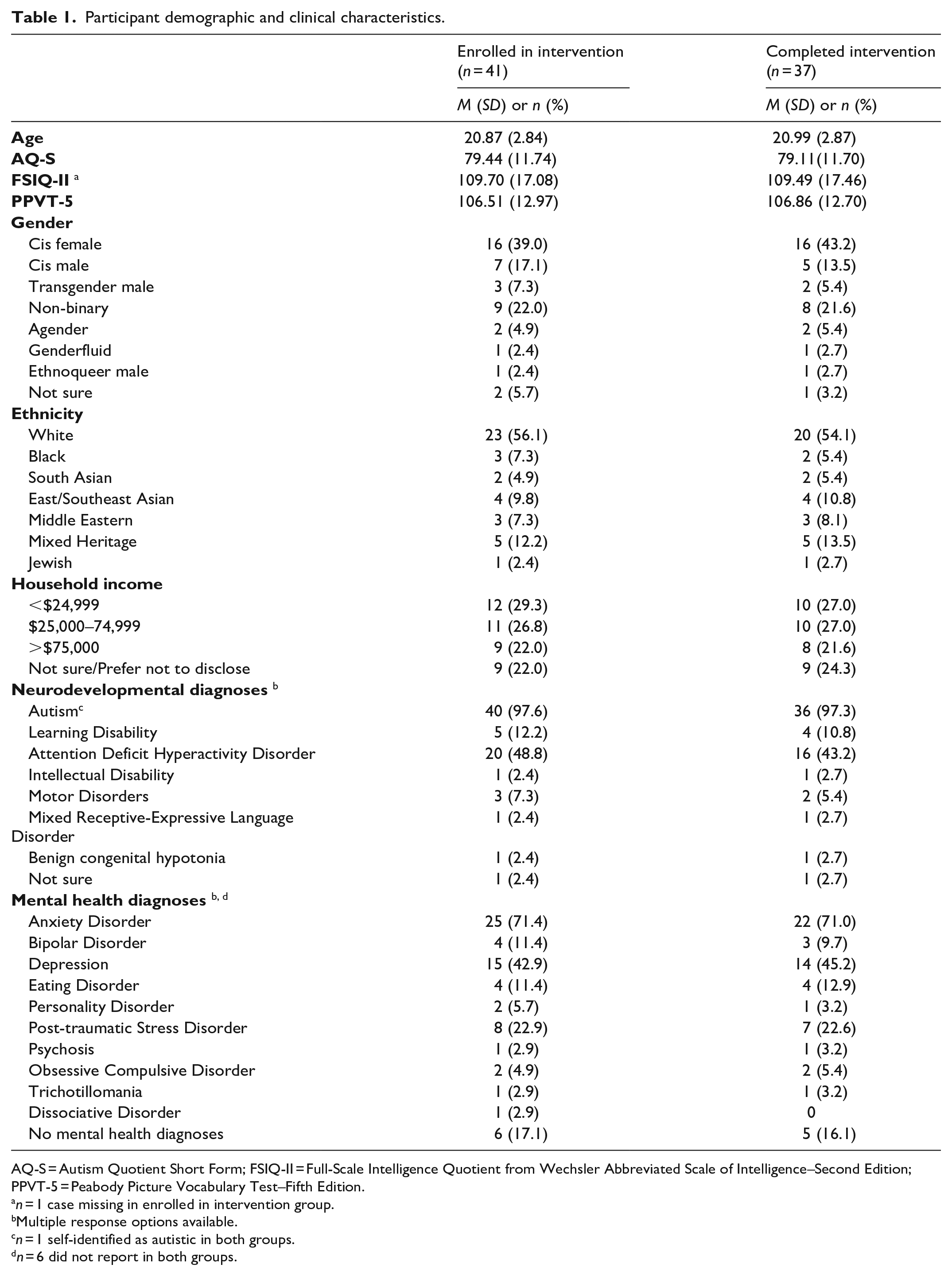
AQ-S = Autism Quotient Short Form; FSIQ-II = Full-Scale Intelligence Quotient from Wechsler Abbreviated Scale of Intelligence–Second Edition; PPVT-5 = Peabody Picture Vocabulary Test–Fifth Edition.
n = 1 case missing in enrolled in intervention group.
Multiple response options available.
n = 1 self-identified as autistic in both groups.
n = 6 did not report in both groups.
Procedure
Intervention
The primary step in the development of the intervention was finding a framework of well-being to serve as its basis, which was challenging because an autism-specific one has not been developed. The EPOCH Framework for Adolescent Well-Being (Kern et al., 2016) was chosen because it combines aspects of hedonia and eudaimonia and adopts a definition of well-being that is non-developmental in nature. The EPOCH conceptualizes well-being according to five constructs: Engagement (i.e. feeling absorbed in tasks), Perseverance (i.e. pursuing one’s goals in the face of obstacles), Optimism (i.e. envisioning a positive future, framing negative events as temporary), Connectedness (i.e. feeling satisfied, cared for, loved, and valued in one’s relationships), and Happiness (i.e. experiences of positive mood and life satisfaction). The items of the EPOCH are general enough to reflect positive experiences across contexts and be relevant to respondents of different ages, which was seen as an advantage as many autistic people experience developmental challenges and exclusion from many contexts. Participants received one individual in-person orientation to TP, which involved reviewing simple definitions and sample photos for each EPOCH domain and instructions for completing reflections and uploading photos.
Following this orientation, participants photographed experiences related to different EPOCH domains across 4 weeks: Week 1: Happiness, Week 2: Connectedness, Week 3: Optimism, and Week 4: Engagement and Perseverance (the two constructs were combined due to their perceived conceptual overlap). At the end of each week, they uploaded four of these photos and answered four questions for each photo: (1) What emotions were you feeling when you took this photo?, (2) What led you to choose to take this photo?, What were you trying to capture in the situation by taking it? (3), What is it about this photo or the situation that was important to you?, and (4) is there anything else you want to tell us about this photo or the situation? Participants received email reminders including the weekly domains and prompts for journal submissions. Participants were given the options to use their smartphones or a lab-provided camera and were able complete their reflections in the form of written or voice memos.
Study design
Ethical approval was obtained from the Human Participant Review Committee of York University. Participants were recruited through flyers sent to local organizations and social media advertisements. Respondents to the community consultation were also invited to participate. Recruitment took place between July 2023 and January 2024. Interested individuals contacted the research team via email and were provided with a link to an online consent form, and a video introducing the intervention and research process. After completing informed consent, they completed an online demographics questionnaire and were scheduled to come to the university for their baseline (pre-intervention) session.
During their baseline visit, participants completed questionnaires (described below), the WASI-II, and the PPVT-5. They then participated in the TP orientation. After completing the 4 weeks of intervention, participants returned to the university and completed postintervention questionnaires, followed by a semi-structured interview (M = 10.08 days post-intervention, SD = 8.85, range = 3–46 days). Most participants completed the interview in-person speaking aloud, except for one participant who typed their responses and two participants who completed their interviews via telephone. All participant visits were conducted by two of the following lab members: three research assistants (including our two autistic advisors), a research coordinator, and two graduate students. On average, visits lasted approximately 1.5 hours and participants received a $200 Canadian Dollar (CAD) gift certificate at the end of each visit (i.e. participants who completed both visits received a total of $400 CAD).
Measures
Feasibility domains
A priori criteria for the feasibility domains were defined based on the criteria presented in Prime et al. (2023) (see Supplemental Table 1). Provided the heterogeneity of an autistic sample, a priori criteria were not used in a pass/fail way, but as a way to understand our findings in the context of other feasibility studies (Teresi et al., 2022).
Demand
Implementation
Acceptability
Practicality
Preliminary effects
Semi-structured interview
A semi-structured interview was used to survey participants’ experiences with TP. Questions included (1) What challenges did you experience while participating in therapeutic photography?, (2) What benefits did you experience while participating in therapeutic photography?, (3) What would you change about this intervention?, and (4) what additional supports would have been helpful for practicing therapeutic photography?
Data analysis
A convergent parallel mixed-methods design was adopted. As such, quantitative and qualitative data were collected concurrently, initially analyzed separately, and then integrated for interpretation (Creswell & Plano Clark, 2011).
Quantitative analysis
Statistical analyses were performed using IBM SPSS Version 29.02. Assumptions of normality and linearity were inspected, and no major violations were noted. Each variable was inspected for outliers, resulting in one data point being winsorized (Tukey, 1977). Feasibility outcomes, including demand, implementation, practicality, and acceptability, are reported using descriptive statistics. Change scores were calculated for all well-being outcomes by subtracting post-intervention from pre-intervention scores for the 36 participants who completed the intervention. Correlations were calculated to identify any demographic and clinical characteristics related to change scores (i.e. age, cognitive functioning (FSIQ-2), receptive language abilities (PPVT), autistic traits (AQ-S), number of support needs, and mental health diagnoses). Correlations were also calculated between changes in positive domains of well-being (i.e. EPOCH and PROMIS-MP) and baseline measures of mood and anxiety (i.e. PHQ-9, GAD-7) as well as change scores in mood and anxiety. Paired-samples t tests were used to evaluate pre- to postintervention changes in EPOCH-related outcomes, the domains of anxiety, mood, and meaning and purpose. An alpha level of 0.05 was used and Cohen’s d was used to calculate within-subject effect sizes.
Qualitative analysis
Qualitative analysis of interview responses was conducted using Robinson’s (2022) structured tabular thematic analysis (ST-TA) approach—a thematic analysis approach tailored to brief texts. A hybrid inductive and deductive approach was adopted. Namely, an inductive approach was used in the analysis of reported challenges and intervention adaptations and a deductive approach was used when analyzing the benefits of the intervention, focusing on hedonic and eudaimonic facets of well-being as defined by Deci and Ryan (2008). Qualitative analyses were conducted in the following steps: (1) interview responses were audio-recorded and transcribed verbatim; (2) the first and second authors immersed themselves in the data by extensively reading and re-reading transcripts; (3) transcripts were broken down into smaller meaningful segments corresponding to each of the interview questions; (4) the first author generated initial codes using semantic coding (i.e. the reflecting on the explicit meanings in participants’ reports), which were aggregated to develop the themes and subthemes included in the codebook shared with the second analyst (see Supplemental Tables 2–4); and (5) a random sample of 20 responses was selected and scored independently by the two analysts to calculate inter-analyst agreement using the tabular approach described by Robinson (2022). Initial inter-analyst agreement for all themes and subthemes ranged from 85% to 96%; therefore, themes were finalized following the first coding iteration. The two coders further held a meeting to discuss any discrepancies in their coding and further refine the theme/subtheme definitions included in the coding book; however, provided the high level of initial agreement, further alterations were not made to themes. Finally, the first author selected quotations for each of the themes.
Results
Demand
Participant recruitment was completed in the allotted timeframe (i.e. more than 25 participants were recruited prior to January 2024). As shown in Figure 1, of the 56 individuals who expressed interest and were invited to participate in the intervention, 41 completed baseline measures. Interest in TP varied among those enrolled in study: 21 (51.2%) were very interested and 11 (26.8%) were slightly interested.
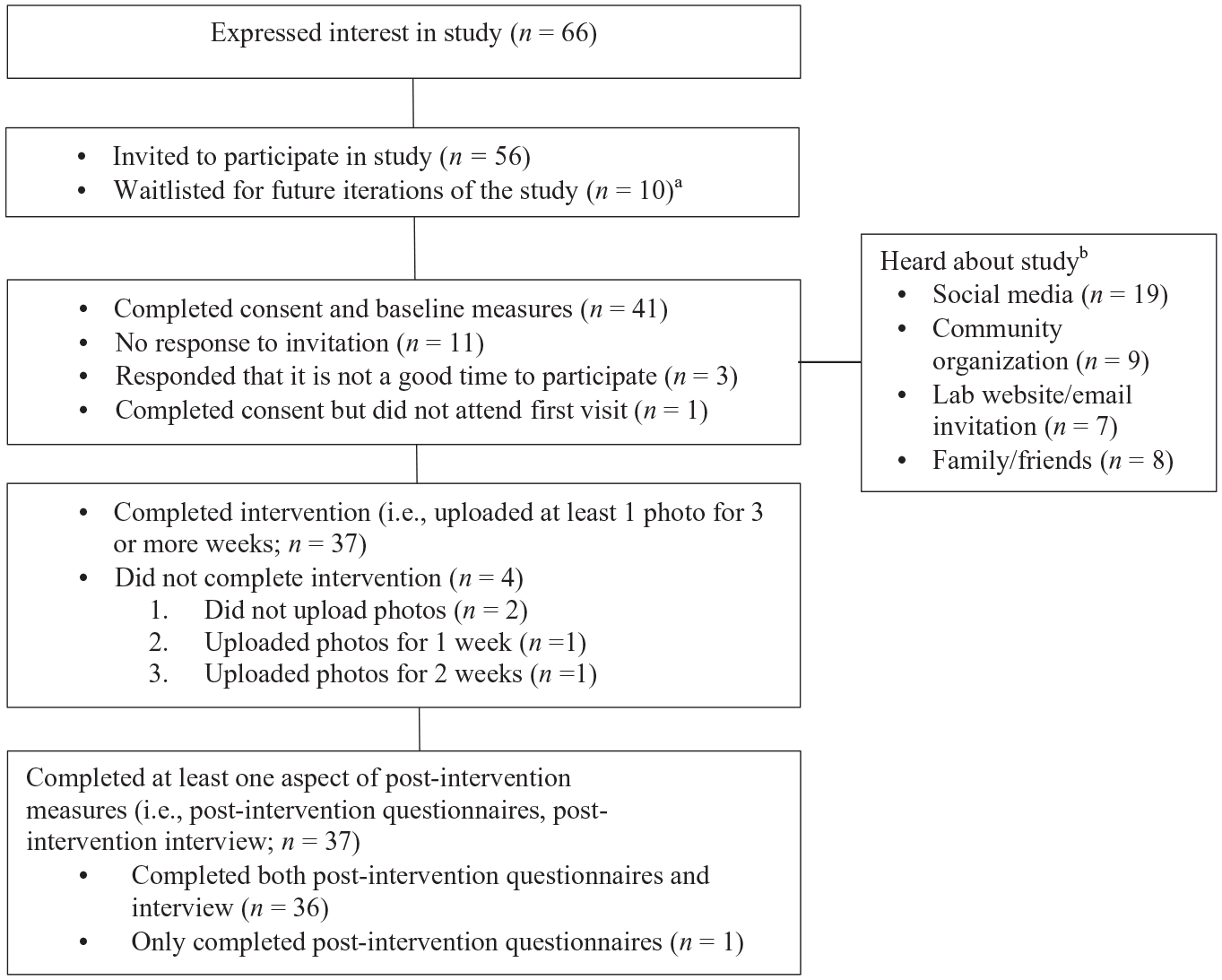
Flowchart of participant recruitment.
Implementation
Intervention adherence was high, with 37 participants (90.2%) providing at least one reflection in at least 3 out of the 4 weeks (all 37 provided reflections across the 4 weeks). Regarding engagement, only two (4.9%) participants did not provide reflections for any of the weeks, one (2.4%) provided reflections for 1 week, and one (2.4%) for 2 weeks. On average, participants uploaded approximately 13 (SD = 4.44) reflections (81.3% of the 16 required reflections). Regarding retention, most (90.2%) completed at least one part of postintervention measures. High levels of implementation feasibility were reported on the FIM (M = 4.28, SD = 0.63); participants found TP implementable, possible, doable and easy to use (see Table 2).
Implementation, acceptability, and practicality outcomes (N = 36).
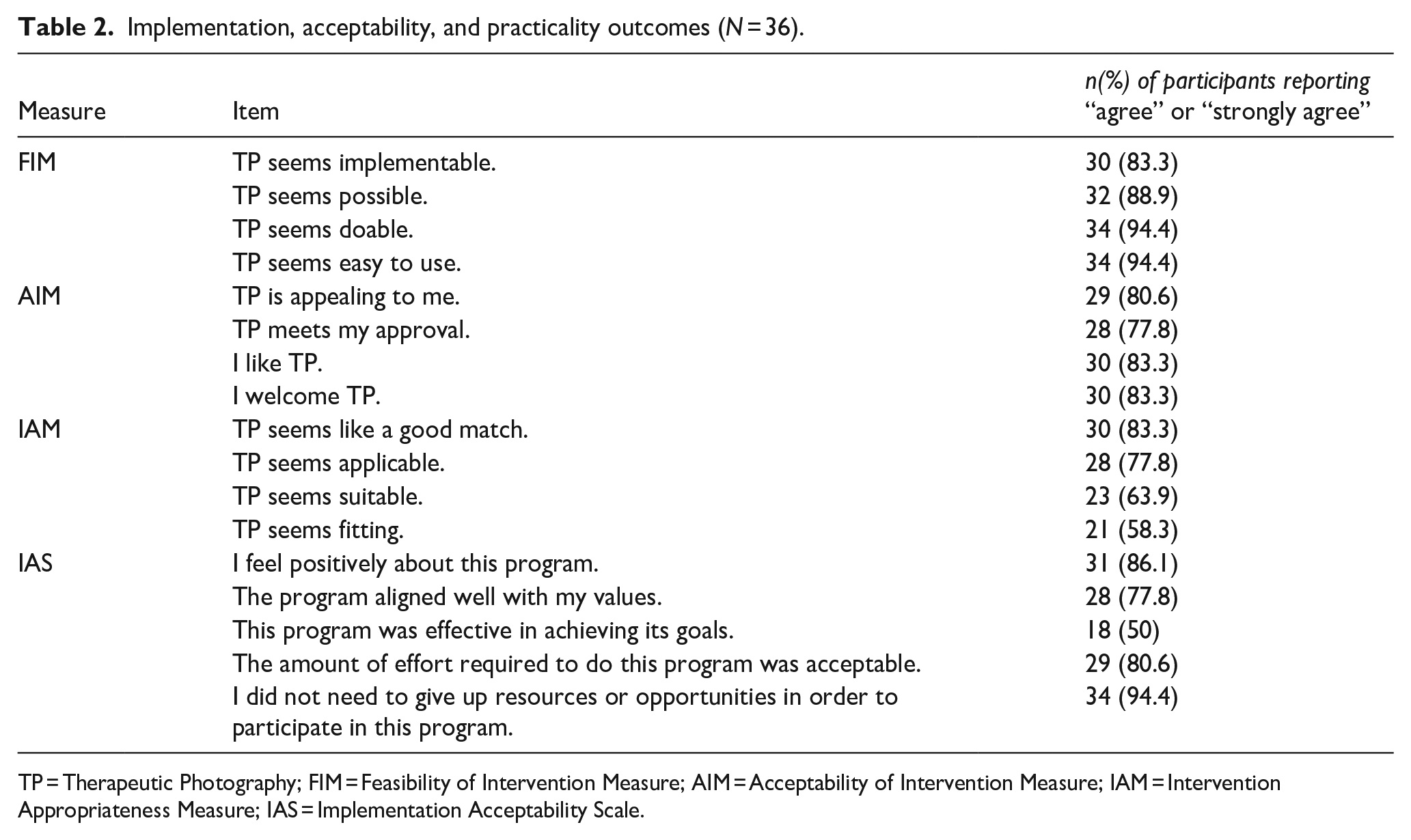
TP = Therapeutic Photography; FIM = Feasibility of Intervention Measure; AIM = Acceptability of Intervention Measure; IAM = Intervention Appropriateness Measure; IAS = Implementation Acceptability Scale.
Acceptability
Participants indicated high levels of acceptability on the AIM (M = 4.06, SD = 0.80). They liked and welcomed TP and “agreed” or “strongly agreed” that the intervention was appealing and met their approval. High levels of intervention appropriateness were reported on the IAM (M = 3.86, SD = 0.90). Most found TP to be a good match and applicable; however, a smaller proportion found TP to be suitable and fitting. On the IAS, participants indicated that they felt positively about TP and considered it aligned with their values; however, only half of the participants agreed that the intervention was effective (see Table 2).
On the NEQ, 33 participants (91.7%) reported negative effects related to external circumstances and 15 (41.7%) attributed at least one negative effect to TP. The frequency of negative effects related to TP ranged from 0 to 9 (M = 1.25, SD = 2.17). The most reported intervention-related adverse effect was an increase in symptoms (e.g. stress; endorsed by 25% of participants); however, the average negative impact of this effect was very low (M = 0.67, SD = 1.43). Other negative effects attributed to TP included concerns about the quality of the intervention (endorsed by 22.2%; negative impact: M = 0.48, SD = 1.18), experiences of stigma (11.1%; M = 0.25, SD = 0.77), and feelings of hopelessness (8.3%; M = 0.42, SD = 1.65; see Supplemental Table 5).
Practicality
Most participants who completed baseline measures (n = 41) reported that they had access to a computer for uploading their photos (94.4%) and a device with a camera for their photo-taking activities (100%). One participant (2.4%) opted to use a lab-provided camera, despite having access to a photo-taking device, to facilitate a more authentic photography experience. They reported that they felt comfortable using their devices to take photos (97.2% reported feeling “moderately” or “very comfortable”) and uploading their photos (91.7%). On the IAS, those who completed postintervention measures noted that they did not have to give up resources to participate in TP and found the amount of effort they had to put into TP acceptable (see Table 2).
Preliminary effects
With the exceptions of FSIQ and age, demographic and clinical characteristics were not significantly correlated with changes in well-being (p > 0.05; see Supplemental Table 6). A significant negative relationship was found between age and changes in Perseverance (ρ = –0.41, p = 0.01). Furthermore, higher FSIQ was correlated with increases in total EPOCH (r = 0.49, p = 0.002), Engagement (r = 0.49, p = 0.002), Optimism (r = 0.35, p = 0.03), and Connectedness (r = 0.40, p = 0.02). Baseline depressive and anxiety (i.e. pre-intervention PHQ-9 and GAD-7) and changes in depressive and anxiety symptoms were not significantly correlated with changes in EPOCH and PROMIS-MP scores (p > 0.05). The frequency of negative effects from external circumstances on the NEQ was associated with increases in anxiety postintervention (ρ = 0.36, p = 0.03).
As shown on Table 3, paired-samples t tests revealed significant improvements postintervention in experiences of meaning and purpose (i.e. PROMIS-MP). No significant differences were between pre- and postintervention in anxiety, depressive symptoms, or any EPOCH-related construct. Given that correlations were observed between FSIQ and EPOCH change scores, we also calculated repeated measures analyses of covariance (ANCOVAs), controlling for FSIQ, to evaluate changes in EPOCH domains (see Supplemental Table 7). Although the inclusion of the covariate resulted in statistically significant changes, this was primarily due to a suppressor effect (Martinez Gutierrez & Cribbie, 2021). Specifically, the covariate reduced irrelevant variance, clarifying but not altering the small actual differences observed from pre- to postintervention. Consequently, while statistically significant, these differences were not clinically meaningful.
Results of paired-sample t tests (N = 36).
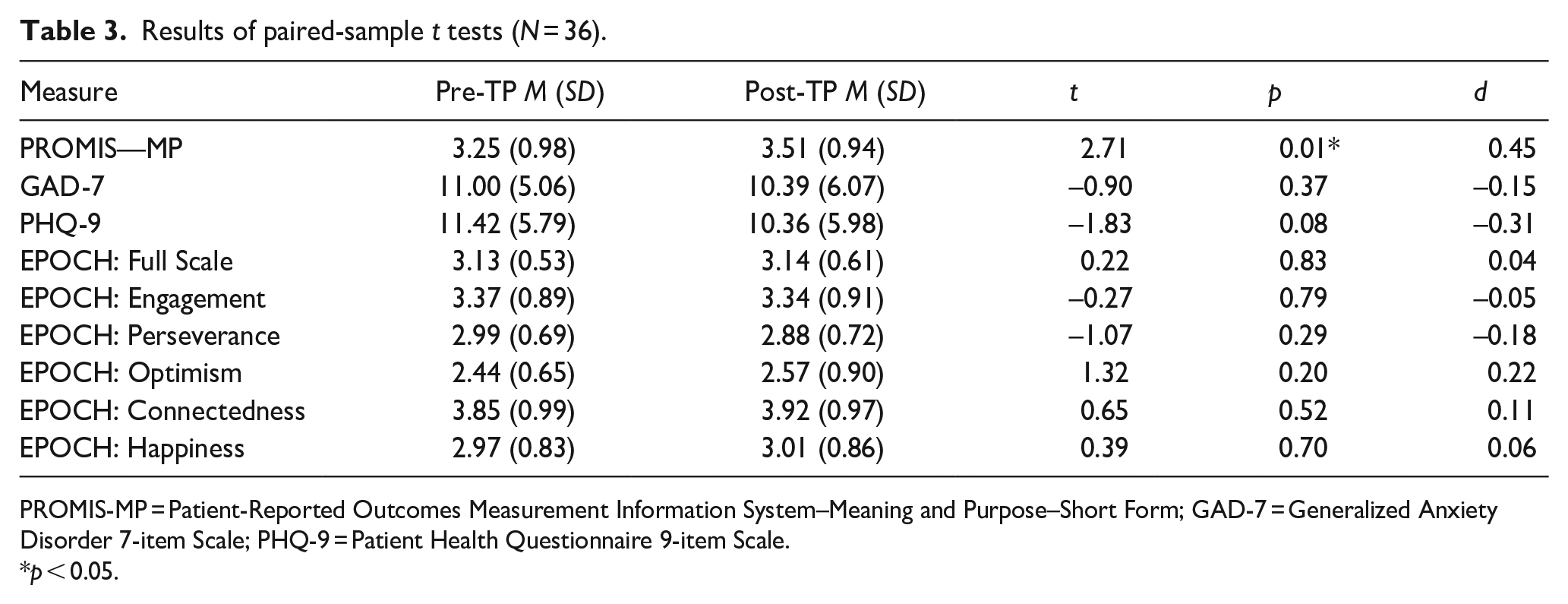
PROMIS-MP = Patient-Reported Outcomes Measurement Information System–Meaning and Purpose–Short Form; GAD-7 = Generalized Anxiety Disorder 7-item Scale; PHQ-9 = Patient Health Questionnaire 9-item Scale.
p < 0.05.
Benefits
Theme 1: Benefits related to hedonic well-being
Several participants reported experiencing changes in their experiences of positive affect (Subtheme 1). Many referred to non-specific increases in positivity, while others referred to the amplification of specific positive emotions, such as happiness or excitement: “I felt like I was happier in the moment more. . .and even out of the moment.” Some participants indicated reductions in negative mental health states (Subtheme 2), such as anxiety and stress, and increases in coping self-efficacy, which allowed them to feel more “grounded” or “in control” of various stressors.
Theme 2: Benefits related to eudaimonic well-being
Several participants reported experiences of purpose and meaning (Subtheme 1) through the completion of the weekly goals and contribution to research. Participants noted an increased awareness of the “positive aspects” of their lives and started finding meaning and value in the “small things” leading some to a narrative reconstruction: “I think the biggest benefit was . . . realizing that my life is truly not boring, and I do have moments that I want to capture and remember” (TaP_002). Similarly, another participant highlighted, “[TP] fostered a greater appreciation for my little corner of the world” (TaP_033). Participants referred to different aspects of personal growth (Subtheme 2), such as improvements in their capacity for introspection, greater insight regarding their emotions, thoughts, and behaviors, experiences of self-efficacy, and a motivation to pursue new experiences: “I was able to identify my feelings in certain situations more clearly and that then helped me value those situations more and seek them out more, so that was nice” (TaP_022). Furthermore, some noted increases in optimism (Subtheme 3), including feeling more hopeful, anticipating future positive experiences, and feeling like they were on an “upward slope.” Participants reported experiencing a greater sense of connectedness (Subtheme 4) as they became more appreciative of the positive relationships and supports in their lives and felt more “involved” in their communities: “I felt more supported the week I was taking the supportive photos because I was looking around for support my life” (TaP_013).
Challenges
Theme 1: Challenges related to the selected domains of well-being
As shown in Figure 2, participants reported challenges in identifying and differentiating experiences related to the selected domains of well-being (Subtheme 1). For some, this was related to a general difficulty in naming and attaching emotions to their experiences (i.e. alexithymia). For others, this was attributed to the specific domains of well-being selected for the intervention (e.g. optimism and perseverance), which for some were too difficult to distinguish, or felt unfamiliar, irrelevant, or inauthentic to their experiences: “In a way, many of the photos from the first few weeks were less natural than I expect would’ve been the ideal for this intervention” (TaP_033). Participants also indicated that they lacked opportunities to experience some of the selected domains of well-being (Subtheme 2), which for some was associated with feeling negative emotions (e.g. worried/embarrassed):
I wasn’t leaving the house much so there weren’t as many opportunities to take very exciting photos like being out with people or doing things out in the world. It was mostly stuff at home, so I think I felt a sense of embarrassment that all the photos were gonna mostly be like inside activities and stuff. (TaP_036)
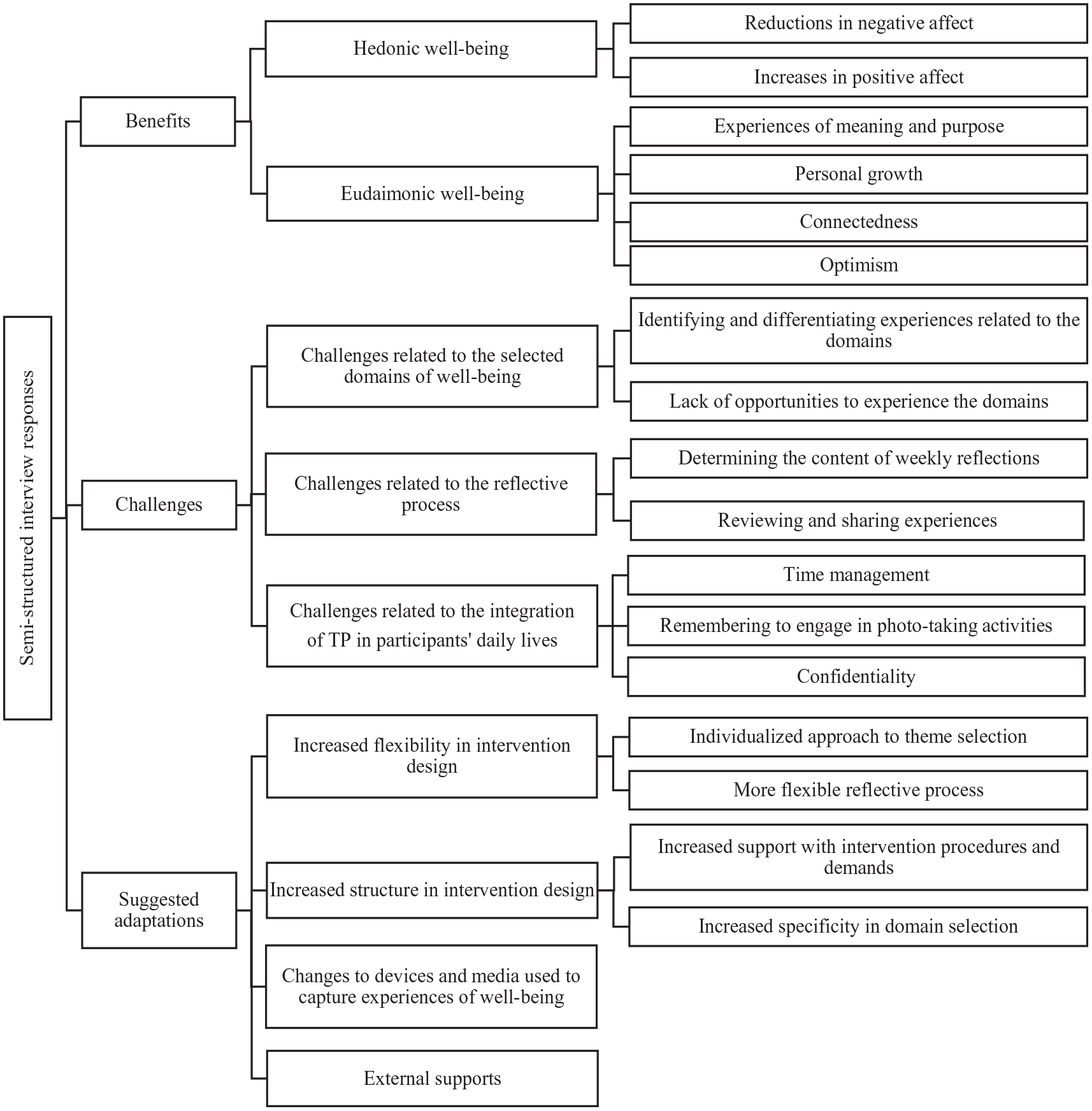
Thematic maps of reported challenges, benefits, and suggested adaptations.
Theme 2: Challenges related to the integration of TP in participants’ daily lives
Some participants had challenges with time management (Subtheme 1), including adhering to weekly timelines, finding time to take photos within busy schedules, or experiencing the reflective process as “time-consuming.” Some also found it challenging to remember to engage in photo-taking opportunities (Subtheme 2), especially those who did not habitually engage in photography: “I am not someone who thinks to take out my phone and take a photo when something happens, so I frequently missed the moment. . .” (TaP_023). Some participants reported that they often forgot to photograph their experiences because they were immersed “in the moment.” The provided photo schedules and reminder emails helped some respondents to remain engaged in photo-taking. Participants also experienced challenges related to confidentiality (Subtheme 3). Some indicated that requesting permission to photograph experiences in public spaces felt “scary” or “embarrassing,” while others noted that they feared that their photo-taking activities might lead to an “outing” of their autistic identity.
Theme 3: Challenges related to the reflective process
Participants reported challenges related to determining the content of their weekly reflections, including the selection of their photos and the synthesis of their responses (Subtheme 1). Some reported that it was challenging to “narrow down” their photos and determine which photos best “embodied” the selected weekly themes. Others referred to a difficulty in “formulating the words” for their reflections, synthesizing their thoughts, and determining the length of their reflections, in both written and voice formats. Although most participants enjoyed the reflective process, a small number indicated that it was challenging to review and discuss their experiences (Subtheme 2). One participant reported that they found some of their photos to be “cringy” when reviewing them and another highlighted that reviewing their photos occasionally led to rumination: “Sometimes it feels like you’re ruminating you know; wishing that those kinds of moments [would] happen again” (TaP_037).
Suggested intervention adaptations
Theme 1: Increased flexibility in intervention design
To address challenges in identifying and differentiating between domains of well-being, some participants proposed an individualized approach to domain selection (Subtheme 1), including the addition of new domains, or simply capturing personally meaningful experiences, as opposed to specific domains. Participants also wanted more flexibility in their reflective process (Subtheme 2) with reference to timelines and reflection prompts (i.e. more flexible timelines for the completion of reflections, the removal of reflection prompts to facilitate a more authentic journaling experience, and the removal of limitations on the number of photo uploads and reflections).
Theme 2: Increased structure in intervention design
In contrast, other participants wanted more structure in the intervention, such as increased specificity in domain selection (Subtheme 1), including more detailed and unambiguous definitions and examples of the domains. Those who wanted more structure also indicated a desire for more support with intervention procedures (Subtheme 2), such as “more in-depth instructions” for the intervention, having a specific character limit for weekly reflections, additional reminders, and/or a more active involvement of the research team to facilitate the reflective process.
Theme 3: Changes to devices and media used to capture experiences of well-being
Some participants recommended using additional media, such as videos and music, to capture and communicate experiences of well-being. Participants also suggested the use of a digital gallery dedicated to TP to facilitate easier access to photos and concentration on the reflective process.
Theme 4: External supports
Some wanted external supports, such as additional family involvement or the “integration” of TP with formal therapy, to facilitate their engagement with the intervention. The development of peer support groups to facilitate the reflections was also identified as a next step for the implementation of TP.
Discussion
This mixed-methods study presents an evaluation of the feasibility of a novel TP intervention for the well-being of autistic youth. Following a positive psychology approach, we adopted a multifaceted conceptualization of well-being, highlighting the hedonic and eudaimonic domains and offering an alternative to the dominant focus on negative mental health in the current autism literature (Pellicano & Heyworth, 2023). Findings supported the feasibility of TP in terms of demand, implementation, practicality, and its preliminary effects. Suggestions for future adaptations to better address the needs of autistic people were also explored. A key strength of the current intervention was centering the perspectives of autistic people in informing its relevance and design. Stakeholder reports recommend the development of self-guided interventions (Benevides et al., 2020) and a focus on positive well-being (McVey et al., 2023). Our high rates of participant adherence, engagement, and retention are noteworthy as challenges with attrition and low levels of engagement have been reported in other self-guided interventions for autistic youth (e.g. Hartley et al., 2019; Wickberg et al., 2022). In line with the literature on self-guided mental health interventions (e.g. Gulliver et al., 2020), our favorable outcomes were likely facilitated using email reminders, flexible methodology (i.e. completion of post-intervention interviews and questionnaires remotely), reasonable financial incentives, participant interest, and low intervention demands.
Findings were mixed in terms of the appropriateness of the intervention. For instance, although most participants found TP to be a good match and applicable, some participants noted that some of the constructs were not a good fit and questioned the effectiveness of the intervention. This may be related to our conceptualization of well-being as our framework was not specifically developed for use with autistic people (Robeyns, 2016). Furthermore, our investigation of negative intervention effects is a significant strength of the current study, as it is often neglected in the autism literature (Bottema-Beutel et al., 2021). It is encouraging that while participants attributed some negative effects to TP, the reported impact of those effects was rated as very low. It is common in therapeutic processes to experience some degree of stress and challenge as an inevitable component of personal growth. Other authors note that challenges, or negative effects, related to new interventions can be associated with concerns with trusting the process, dissonance of learning new concepts and modifying beliefs, or exposures to uncomfortable emotions, contexts, and behaviors (Dobson, 2021; Frank & Frank, 1991; Horvath & Bedi, 2002; Tedeschi & Calhoun, 2004), although these themes did not emerge in our qualitative interviews. It is also important to note the negative effects related to the intervention structure, such as concerns about confidentiality, time management, and understanding the definitions for the selected domains of well-being.
With reference to preliminary effects, most participants indicated improvements across domains of hedonic and eudaimonic well-being in their qualitative reports, although this was not reflected in pre–post changes across most quantitative measures. It is important to note that one of the primary outcome measures, the EPOCH, has thus far not been validated with autistic people, and some EPOCH subscales (e.g. Perseverance) demonstrated poor internal consistency with the current sample. It is possible that some of the EPOCH domains may not be relevant to autistic people’s well-being or framed in a manner that is too abstract from an autistic point of view. In addition, the observed relationships between FSIQ and changes in EPOCH-related outcomes may indicate that the current research design may not be developmentally appropriate for people with lower cognitive functioning, which warrants further investigation. Furthermore, participants qualitatively reported several benefits which were not captured by the included outcome measures, such as improvements in self-knowledge and personal growth. Accordingly, the EPOCH may not have been an appropriate measure to capture quantitative intervention-related changes. Future research could employ more comprehensive autism-informed and validated measures to explore the potential benefits of TP. For instance, subsequent studies may investigate the impact of the intervention on participants’ perceptions of their autistic identity, which has been linked to psychological well-being in the literature (Cooper et al., 2023). Furthermore, considering the high incidence of external stressors reported by participants (i.e. the majority noted negative effects due to external factors unrelated to TP), it is encouraging that anxiety scores did not increase postintervention, which may indicate that TP helped participants cope. Further research is needed to evaluate the efficacy and effectiveness of TP for the promotion of well-being and coping self-efficacy, particularly given the large number of stressors experienced by autistic youth in their transition to adulthood (Cheak-Zamora & Odunleye, 2022). Finally, since longer positive psychology interventions are associated with larger reductions in negative mental health symptoms (Carr et al., 2021), future studies could explore the optimal length of positive mental health interventions for autistic young people.
Relevant to adaptations, participants reflected on the benefits of individualized approaches to TP, which are generally favored by youth (Achilles et al., 2020). Some participants wanted a more structured approach and others wanted more flexibility, which is fitting given the heterogeneity of autistic needs. Notably, choice-making and person-centered approaches have been reported to foster positive outcomes for intervention implementation, acceptability (Batterham et al., 2018), empowerment, and perceptions of autonomy (Ryan et al., 2024), all of which have been indicated as intervention priorities by autistic people (Tesfaye et al., 2023). Furthermore, since choice-making and personal planning are integral parts of transitioning to adulthood, an individualized approach would be especially beneficial and developmentally relevant for autistic emerging adults (White et al., 2024).
Limitations and future directions
This study has several limitations. First, while our sample had an estimated IQ as low as 58, the mean was well in the average range with only one participant having reported an intellectual disability. Additional work on the feasibility of this intervention for autistic people with intellectual disabilities is warranted. Working to address this limitation is important as the exclusion of people with intellectual disability in autism research has contributed to a misrepresentation of the heterogeneity of the autistic community and is associated with several ethical concerns (Cascio et al., 2021; Russell et al., 2019). Furthermore, in consideration of the reported challenges with the reflective process, it will be important to explore the suitability of the intervention for individuals with diverse verbal abilities. Second, although our sample was quite diverse, it is important to note that many participants identified as cis-gender females, which may limit the generalizability of our findings. Third, given the exploratory nature of our study and general lack of consensus with reference to the therapeutic mechanisms involved in TP, we did not investigate potential mechanisms of change related to the observed improvements in well-being. Notably, participant reports mirror several aspects of savoring (i.e. attending to and appreciating positive experiences), which has been linked to the promotion of different facets of hedonic and eudaimonic well-being among neurotypical adolescents (Chadwick et al., 2021). It will be important for future research to investigate savoring along with other potential mechanisms of change and their relationship with different intervention outcomes among autistic young people. Finally, our study had a small sample size and lacked a control group, both of which are often inherent limitations in feasibility research. Considering our findings, studying the feasibility of a randomized controlled trial (RCT) is warranted to further assess the intervention. In this context, future studies may investigate the acceptability of randomization, retention within treatment as usual and identifying the ideal primary outcome measure.
Conclusion
TP is a promising novel intervention for the promotion of well-being in autistic youth. Our findings indicate that TP is a highly feasible intervention in terms of demand, implementation, practicality, and has potential benefits. Future adaptations of the intervention may include the development of more individualized approaches, the use of additional media, and increased community involvement in the delivery of TP. Future research efforts should be invested in the development of an autism-tailored framework for well-being and prioritize the recruitment of autistic people with intellectual disability, along with examining RCT feasibility and exploring mechanisms of change.
Supplemental Material
sj-docx-1-aut-10.1177_13623613251359196 – Supplemental material for “It fostered a greater appreciation for my little corner of the world”: A feasibility study of a therapeutic photography intervention for the well-being of autistic youth
Supplemental material, sj-docx-1-aut-10.1177_13623613251359196 for “It fostered a greater appreciation for my little corner of the world”: A feasibility study of a therapeutic photography intervention for the well-being of autistic youth by Marina Charalampopoulou, Alaa Ibrahim, Heather Prime, Nicole Eddy, Larissa Panetta, Heather Brown, Shital Desai, Kylie Gray, Meng-Chuan Lai, Peter Langton, Yona Lunsky, Carly McMorris, Paul Ritvo, Kate Tilleczek, Ami Tint and Jonathan A. Weiss in Autism
Supplemental Material
sj-docx-2-aut-10.1177_13623613251359196 – Supplemental material for “It fostered a greater appreciation for my little corner of the world”: A feasibility study of a therapeutic photography intervention for the well-being of autistic youth
Supplemental material, sj-docx-2-aut-10.1177_13623613251359196 for “It fostered a greater appreciation for my little corner of the world”: A feasibility study of a therapeutic photography intervention for the well-being of autistic youth by Marina Charalampopoulou, Alaa Ibrahim, Heather Prime, Nicole Eddy, Larissa Panetta, Heather Brown, Shital Desai, Kylie Gray, Meng-Chuan Lai, Peter Langton, Yona Lunsky, Carly McMorris, Paul Ritvo, Kate Tilleczek, Ami Tint and Jonathan A. Weiss in Autism
Footnotes
Acknowledgements
We thank the autistic young people and their caregivers who generously provided their time and valuable feedback for this intervention. We are also grateful to our autistic advisors, Jessica Cuciurean and Caspian James Bane, for providing their insights on the intervention design, measure selection, and data collection processes.
ORCID iDs

Ethical considerations
This study was approved by the Ethics Committee of York University (Certificate Number: e2022-383) on November 9, 2022.
Consent to participate
Thirty-four participants provided written informed consent to participate in this study. Seven participants provided assent, following their caregiver’s written informed consent.
Author contributions
Funding
The author(s) disclosed receipt of the following financial support for the research, authorship, and/or publication of this article: This work was funded by the Government of Canada’s New Frontiers in Research Fund (NFRFR-2022-00490). M.C. was supported by a Social Sciences and Humanities Research Council Canada Graduate Scholarship.
Declaration of conflicting interests
The author(s) declared no potential conflicts of interest with respect to the research, authorship, and/or publication of this article.
Data availability
Supplemental material
Supplemental material for this article is available online.
References
Supplementary Material
Please find the following supplemental material available below.
For Open Access articles published under a Creative Commons License, all supplemental material carries the same license as the article it is associated with.
For non-Open Access articles published, all supplemental material carries a non-exclusive license, and permission requests for re-use of supplemental material or any part of supplemental material shall be sent directly to the copyright owner as specified in the copyright notice associated with the article.
