




Abstract
Emerging evidence supports the use of strengths-based approaches for autistic students, yet limited research has explored these approaches from the perspectives of autistic adolescents in mainstream high schools. This study used a descriptive phenomenological methodology to examine the perspectives of 16 autistic adolescents who were either in high school or had recently completed high school in Australia. Semi-structured interviews were conducted and analysed using a modified seven-step Colaizzi method. Eight themes were identified, grouped under two overarching categories: (1) benefits of leveraging strengths and interests, and (2) support needed for strengths application and development. Adolescents described increased engagement and motivation when learning aligned with their interests, the value of connecting with like-minded peers, and the role of strengths in shaping future aspirations. They also highlighted supports they found helpful, including trusting teacher-student relationships, opportunities for autonomy through accommodations, interest-driven and hands-on learning, structured social experiences, and future-focused planning. These findings provide new insights into how strengths-based approaches can be implemented in high schools. Including autistic adolescents’ voices is essential to bridging the gap between inclusive education theory and classroom practice. This study offers actionable guidance for developing strengths-based approaches that foster motivation, confidence, and long-term success for autistic students.
Lay abstract
This study explored autistic adolescents experiences and perspectives of strengths-based approaches in mainstream high schools. While there is growing support for recognising and building on students’ strengths, little is known about how these approaches are understood and experienced by autistic students themselves. We interviewed 16 autistic adolescents in Australia who were either still in high school or had recently finished. They shared their experiences in one-on-one conversations, and their insights were carefully analysed using a method designed to highlight key themes in how people describe their lived experiences. Autistic students described how learning became more engaging and meaningful when it connected with their interests and strengths. They valued being with like-minded peers and felt more motivated when they could see a link between their strengths and future goals. They also identified helpful supports, such as having teachers who understood them, being given choices in how they learn, doing practical or interest-based tasks, opportunities to build social skills, and support with future planning. By listening directly to autistic students, this study shows how schools can better support them to thrive. The findings offer practical ideas for making high schools more inclusive, motivating, and future-focused for autistic students in Australia and around the world.
Introduction
High school represents a pivotal period of development where students undergo significant cognitive, emotional, and social changes. This stage of life is marked by increased academic demands, greater social complexities, and the development of a stronger sense of identity and autonomy (Inchley et al., 2020). Collectively, experiences during high school are essential in preparing youth for the transition to adulthood.
While high school can prove to be a difficult developmental period for all youth, the complex social and academic demands of high school can pose particular challenges for autistic students (Hedges et al., 2014; Odom et al., 2013). Autistic students express a strong motivation to learn, deep interests in particular subjects, and a desire for meaningful inclusion (Brownlow et al., 2021; Tomlinson et al., 2020), yet experience many challenges to participating in mainstream education. Differences in communication, sensory sensitivities, and difficulties with executive functioning can contribute to challenges in participating and learning in the classroom (Bottema-Beutel et al., 2020; Howe & Stagg, 2016; Jacobs et al., 2021). Classroom environments are often experienced by autistic students as incompatible with their needs (Goodall, 2018; Hedges et al., 2014; Williams et al., 2019), while learning processes, transitions, and expectations can feel inconsistent and difficult to navigate (Hedges et al., 2014). Autistic students frequently report negative attitudes from others, feeling misunderstood by teachers, and being socially excluded and bullied by peers (Bailey & Baker, 2020; Goodall, 2018; Hummerstone & Parsons, 2021; Humphrey & Lewis, 2008). During this time many students develop a negative self-perception as ‘different’ which can erode self-esteem and contribute to camouflaging behaviours in efforts to be accepted, further increasing stress (Goodall, 2018). Combined challenges result in autistic students reporting school as anxiety-provoking, lonely, draining and unsuited to their needs, with some students in Goodall (2018) reporting that they approached school with dread.
High school experiences can also significantly impact autistic students’ long-term outcomes into adulthood, particularly in areas such as social relationships, education, employment, and independent living (Carter et al., 2013; Clarke et al., 2021; Hendricks & Wehman, 2009). Autistic individuals often face substantial hurdles in adulthood, including underemployment, unemployment, and poor mental health outcomes (Howlin & Magiati, 2017), highlighting the urgent need for early and effective interventions and support during the high school years. This window of time has been described as a critical time when support systems and learning experiences can profoundly influence future success and well-being (J. L. Taylor & Seltzer, 2011). Skills developed during high school experiences, such as problem-solving, communication, and self-regulation, are foundational for essential life skills, coping mechanisms, and social connections that influence future opportunities and overall quality of life (Hume et al., 2018). High school experiences, thus, play a crucial role in influencing academic, social, and emotional outcomes for autistic youth during this critical developmental period.
It is within this context that strengths-based approaches have been explored as a means of improving school experiences and school-related outcomes for autistic adolescents. Strengths-based approaches focus on identifying and leveraging the strengths and interests of autistic students rather than solely addressing their deficits (McCashen, 2017; Wehmeyer, 2023), and emphasise the importance of self-determination, focusing on autonomy, dignity, and self-advocacy (Ward & Meyer, 1999; Wehmeyer, 2019). Strengths-based approaches may align with the neurodiversity movement, an alternative to the traditional medical model, which views autism as a natural variation of human neurological development rather than a disorder (Dwyer, 2022; Fletcher-Watson, 2023). This perspective promotes the recognition and celebration of neurological differences, rather than pathologizing them, and emphasises the importance of understanding and leveraging the strengths, abilities, and interests of autistic individuals (Donaldson et al., 2017).
This paradigm shift is supported by emerging evidence suggesting that when educational strategies align with students’ abilities and passions, they experience greater engagement, motivation, and success (Happe & Frith, 2020). For instance, autistic students often exhibit strong skills in areas such as pattern recognition, attention to detail, and specific subject matter interests, which can be harnessed to enhance their learning experiences and academic outcomes (Wood, 2019). By focusing on what students can do, and providing support, strengths-based approaches can foster a more inclusive and supportive educational environment. Examples of strengths-based approaches in the school environment may include specialised instruction drawing on a students’ area of strength, and providing opportunities for interest-based learning (White et al., 2023).
Despite the potential benefits of strengths-based approaches, there remains a notable gap in current research regarding its implementation in school environments, especially from the perspectives and experiences of autistic adolescents themselves. Indeed, the negative school experiences of autistic students suggests that despite growing inclusive education policies, a gap often remains between policy intent and the everyday realities of autistic students (Pellicano et al., 2014). To date, most research on inclusion for autistic students has primarily focused on the perspectives of educators, parents, and specialists, with insufficient attention given to the voices of the students who are directly experiencing and affected by these practices (Roberts & Simpson, 2016). With an increasing number of autistic students attending mainstream high schools, understanding autistic students’ firsthand experiences is crucial for developing and implementing effective practices that truly meet their needs (Aubineau & Blicharska, 2020; Gillespie-Lynch et al., 2017). Therefore, this study aimed to explore how autistic adolescents experience and make meaning of strengths-based approaches in secondary school settings. To better understand how strengths-based approaches influence the experiences of autistic adolescents, this study draws on two key theoretical frameworks: self-determination theory (SDT) and the Bioecological Model of Development. SDT (Ryan & Deci, 2000) provides insight into how students’ intrinsic motivation, well-being, and engagement are shaped by the satisfaction of three basic psychological needs, autonomy, competence, and relatedness, which are highly relevant to strengths-based education. Meanwhile, the Bioecological Model (Bronfenbrenner, 1986; Bronfenbrenner & Morris, 2006) highlights the importance of contextual factors, such as relationships with teachers and peers, school culture, and broader societal attitudes, on student development. These frameworks help illuminate not only the individual impacts of strengths-based approaches but also the environmental conditions that enable or constrain their implementation.
Methods
Research design
This study is underpinned by a constructivist epistemology, which emphasises that knowledge is co-constructed through individuals’ interactions with their environments and experiences (Crotty, 1998). Drawing on this epistemological stance, we adopted a descriptive phenomenological design to explore the experiences of strengths-based approaches from autistic adolescents’ viewpoints. Grounded in the importance of perception in shaping human experience, descriptive phenomenology differs from interpretive phenomenology in that it prioritises pure description. Rather than incorporating the researcher’s interpretation, it seeks to set aside preconceptions and allow participants’ voices and lived experiences to take precedence (Matua & Van der Wal, 2015). This approach enables researchers to delve deeply into the subjective experiences of those who are involved, offering a richer and more comprehensive understanding of the phenomenon (Sohn et al., 2017).
Ethics considerations
Ethical approval for this project was obtained from the Human Research Ethics Committee at Curtin University (Approval number: HRE2018-0750). All participants gave written informed consent. Consent was also provided by parents or guardians for participants under 18 years of age.
Community involvement
The first author is an autistic researcher. Autistic adolescents and parents of autistic adolescents were consulted and provided feedback on the initial interview guide.
Participants
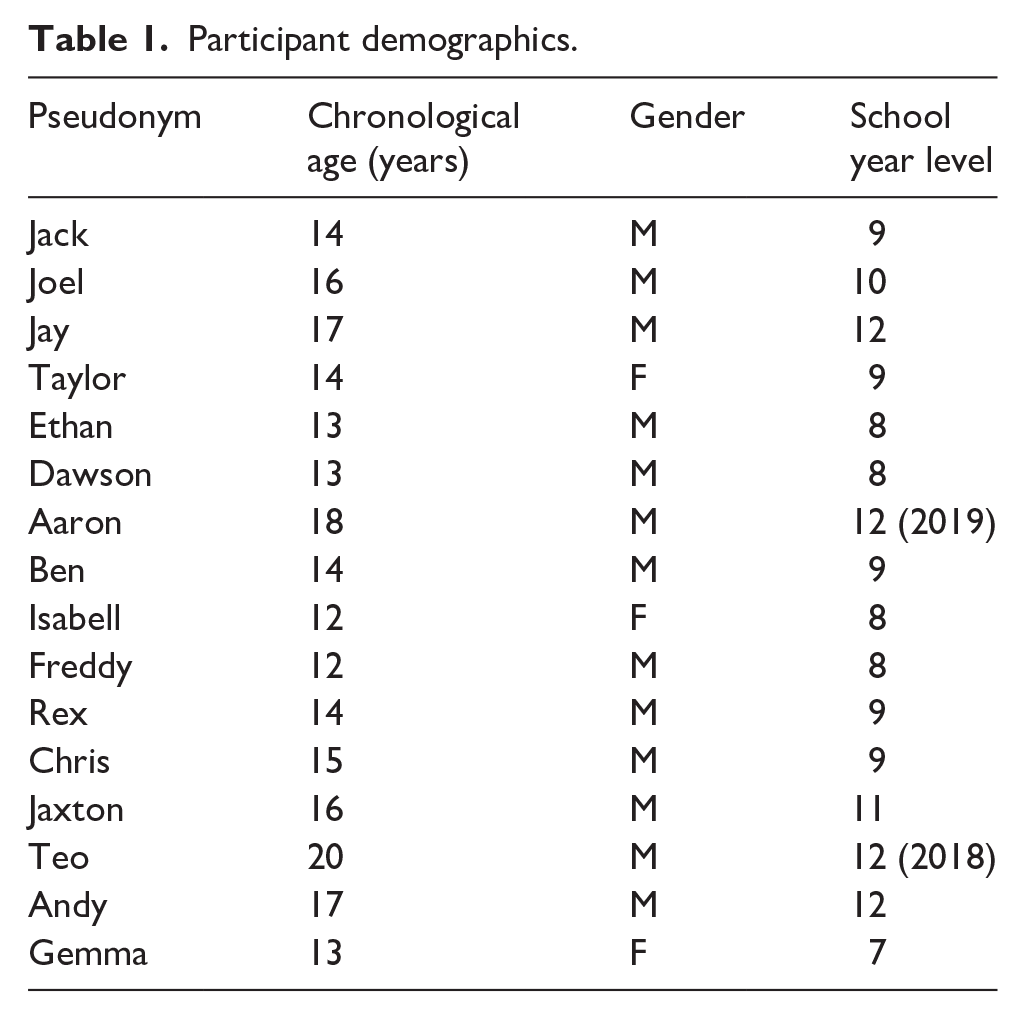
Purposive sampling was used to recruit autistic adolescents who were either attending high school or had completed high school within the last five years at the time of the interview were eligible to participate in the study. High school was defined based on the Australian education system, thus youth enrolled in grade levels 7 to 12 were eligible. Attendance or experience attending mainstream education in any of the Western Australian school sectors (Government, Independent, Catholic) was required. Recruitment was undertaken via a network of community reference groups, researchers, autism open day events, and university outreach programmes for autistic youth. Data collection continued until thematic saturation was achieved, defined as the point at which no new themes or significant variations emerged in the data. Saturation was assessed through ongoing team discussions, with the final interviews reflecting previously established codes and categories. This approach aligns with guidance from Guest et al. (2006), who note that saturation can often be achieved with relatively small samples when the participant group is relatively homogeneous and the research aims are focused. In total, 16 autistic adolescents (male = 13; female = 3) who self-reported a formal diagnosis of autism were included in this study (Table 1). Fourteen of these adolescents were still in high school at the time of the study, while two had graduated within the past 5 years.
Participant demographics.
Data collection materials
Basic participant information, including sociodemographic details such as age, gender, school type, and year level, were collected using a sociodemographic questionnaire. A semi-structured interview guide was designed for this study to enable participants to share their perspectives and experiences, allowing the interviewer to follow a set of predetermined questions while retaining flexibility for follow-up questions (Patton, 2015). The guide included open-ended questions with prompts, covering four main areas: students’ general school experiences, their interests and strengths, strategies teachers used to support them, and perceptions of support and inclusion within the school environment. An initial interview guide was drafted and reviewed by two autistic adolescents to ensure the wording and the depth of the topics were appropriate (Fayette & Bond, 2018). The interviews explored autistic adolescents’ overall experiences with strength-based approaches, including perceived benefits and available support (refer to supplement for interview guide).
Procedure
Semi-structured interviews were conducted either in person (n = 12), in familiar environments for the adolescents (such as their club venue), or in a quiet room on a university campus, based on participant preference. In addition, one interview was conducted over the telephone, and two were completed online, offering flexibility to meet the interviewees’ choices. Interview durations ranged from approximately 15 to 120 minutes, with an average of 30 minutes. During the interviews probing techniques and cross-checking was used to maintain flexibility and allow the participants’ experiences to shape the conversation. All interviews were audio-recorded.
Data analysis and data availability
All audio-recorded data were transcribed verbatim, de-identified, and imported into NVivo 12 (QSR International, 2018) for analysis. Data were analysed following a modified version of Colaizz’s seven-steps for phenomenological analysis (Colaizzi, 1978), as adapted in previous phenomenological research (e.g. Finlayson et al., 2018). Initially, the authors familiarised themselves with the data by thoroughly reading all participants’ descriptions to gain a comprehensive understanding of their experiences. Significant statements directly related to the phenomenon were identified and highlighted. These statements were then interpreted to uncover underlying meanings, moving from the explicit statements to their implicit meanings. The formulated meanings were subsequently grouped into clusters of themes that represent various aspects of the phenomenon. An exhaustive description of the phenomenon was then compiled, integrating all the themes and meanings derived from the data. This description was subsequently condensed into a concise statement that encapsulates the essence of the phenomenon. Examples of how significant statements from participants were interpreted to uncover underlying meanings and then grouped into thematic clusters are provided in the supplement.
The final step in Colaizzi’s method, which involves returning the findings to participants for validation, was not conducted. Instead, member-checking was performed during interviews, with the interviewer confirming and clarifying their understanding of the participants’ responses (Birt et al., 2016). A number of other strategies were employed to increase the study’s trustworthiness, including maintaining a reflexive journal by the primary researcher, regular peer debriefing, and the development of a clear audit trail (Nowell et al., 2017). The use of pseudonyms ensured participant confidentiality. We have chosen not to share the interview data publicly in order to protect participant confidentiality, as individuals could potentially be identified through the transcripts.
Results
Eight themes, grouped under two major categories, were identified to describe autistic adolescents’ experiences and perspectives of strengths-based approaches in schools. The first category, ‘benefits of leveraging strengths and interests in school’, highlights how engaging with strengths supports academic engagement, peer relationships and career aspirations. The second category, ‘support needed for strengths application and development in school’, emphasises the contextual elements that facilitate or hinder the effective use of strengths and interests. Together, themes reflect both what autistic adolescents valued about using their strengths in school, and what supports they perceived were necessary for such approaches to be successful. Thematic connections were evident between the two categories; for example, while strengths fostered engagement and social connection, students also described the need for teacher understanding and flexible learning environments to sustain these benefits. An overview of the themes is provided in Figure 1. This structure is designed to reflect both the benefits autistic students experienced when their strengths were supported, and the enabling conditions they identified as critical for these approaches to be effective. All quotes presented are drawn from student participant. Pseudonyms are used to maintaining confidentiality.
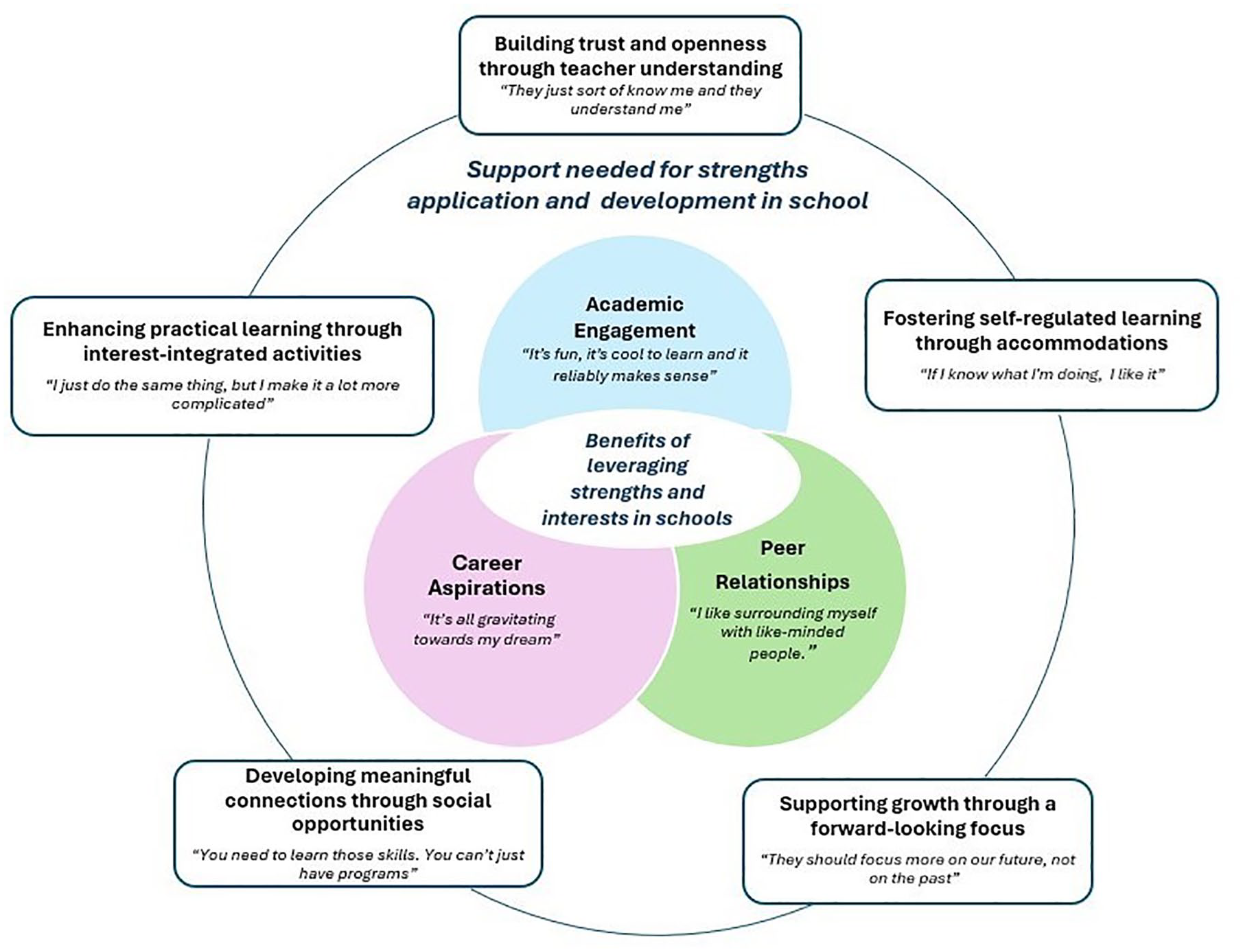
Identified themes.
Benefits of leveraging strengths and interests in school
The ‘benefits of leveraging strengths and interests in school’ category describes the perceived benefits of applying strengths and interests to the autistic adolescents’ school experiences and beyond, including academic engagement, peer relationships, and future career aspirations. This category includes three themes: (1) Academic engagement: ‘It’s fun, it’s cool to learn and it reliably makes sense’ (Jack); (2) Peer relationships: ‘I like surrounding myself with like-minded people’ (Teo); and (3) Career aspirations: ‘It’s all gravitating towards my dream’ (Taylor).
Academic engagement: ‘it’s fun, it’s cool to learn and it reliably makes sense’
Autistic adolescents described a wide range of interests and areas of strengths, which shaped their engagement in learning. Subjects that aligned with their strengths and passion were not only more enjoyable, but also more meaningful and motivating. Students described these subjects as being ‘fun’, ‘cool’ or satisfying, but underneath these descriptors were deeper insights into the cognitive and emotional experiences of learning when it resonated.
For many, engagement stemmed from a sense of clarity and structure. Coding, programming, and STEM subjects were particularly appealing to several students due to their logical nature and consistent rules. Jack looked forward to programming every day because ‘it’s fun, it’s cool to learn and it reliably makes sense’. He appreciated its predictability and transparency: ‘if you write the code correctly, it’ll do what it’s supposed to do’. The sense of reliability, that effort would lead to a correct or meaningful outcome, gave students a feeling of mastery and control, which may be especially important for learners who often experience unpredictability in other parts of school life.
Subjects involving problem-solving were described as similarly engaging for some autistic adolescents. Rex, for instance, described Science and Mathematics as satisfying, because they were ‘mainly about solving problems’, which helped him focus. For Aaron, subjects like Physics and Mathematics were enjoyable because they involved ‘doing questions’ and required ‘less memorising’. These preferences reflected a pattern where students were drawn to tasks that rewarded reasoning over rote learning, and that offered logical pathways to understanding, again aligning with the desire for consistency and cognitive stimulation.
At the same time, students also expressed deep engagement in creative, expressive and hands-on domains. Jaxton enjoyed Psychology and English, while Gemma, Isabell, and Taylor described writing as a strength and a passion. Isabell enthusiastically shared ‘I can write my stories and imagine it. Oh my God, it’s legend, and just really, really fun’. Chris similarly described Media and Digital Technology as rewarding because of his love for filmmaking. In these examples, engagement was linked to self-expression and the opportunity to pursue interests in a personalised way.
Some students also gravitated towards physical activities or sensory-rich learning. Ethan and Andy were drawn to Physical Education, as Andy put it, ‘I like to be active’, while Freddy enjoyed cooking in the Design and Technologies classes, noting that he was ‘good at remembering the recipes and stuff to do it’. These activities provided practical forms of engagement, connecting learning to real-world skills and movement-based strengths.
Taken together, these accounts illustrate that academic engagement for autistic adolescents is multifaceted. What connects these experiences is that autistic adolescents were most engaged when they were able to draw on their personal strengths and interests in ways that felt meaningful and intrinsically motivated.
Peer relationships: ‘I like surrounding myself with like-minded people’
Autistic adolescents reported that their strengths and interests helped them connect with peers based on shared interests, reciprocal support, and mutual respect. For many, shared interests provided a natural starting point for conversations and interactions with friends. Joel, for example, mentioned that although he was not very social otherwise, he enjoyed engaging in conversations with peers about shared interests. Andy and Teo also described how they used their character strengths to develop peer relationships and friendships with others in the school environment.
When provided with the opportunity to leverage their strengths in class, adolescents found that these strengths created opportunities for reciprocal peer support and enabled them to interact more confidently and comfortably with their peers. For example, Freddy leveraged his strengths in Mathematics and Science to assist classmates, noting that his expertise made it easier for peers to approach him for help: ‘In my old Maths class, my friends asked me, “can you help with this question?”’ Similarly, Aaron also shared, ‘If my friends were having trouble doing the question, they would usually ask me to find out how to do it, and if I did, I would help them’.
These experiences illustrate how autistic adolescents use their strengths not only as tools for learning but also as social bridges. By engaging in shared activities and supporting their peers, they navigated social connections with greater confidence. These interactions were often spontaneous and interest-driven, rather than structured, demonstrating how strengths-based learning environments can naturally encourage positive peer relationships.
Career aspirations: ‘it’s all gravitating towards my dream’
Interests and strengths in specific areas not only motivated autistic adolescents to engage more deeply academically and socially at school, but also provided a sense of purpose and direction in their educational journey and future pathways. In this theme, adolescents shared how the school environment and experiences played a pivotal role in helping them identify and develop their interests and strengths into something that they could work towards the future, career aspirations in various fields like technology, art, writing, sports, and law.
Many students used their technical and analytical strengths to envision futures in technology-focused careers. Rex, for example, dreamed of becoming either an ‘IT person or a pilot’, based on his passion of coding and problem-solving in STEM areas. Creative strengths also guided the career aspirations for some adolescents. For Taylor, her dream of becoming a Manga artist provided a sense of direction, as she explained, ‘it’s all gravitating towards my dream’, a goal nurtured in the school library where her passion for Maga art started. Teo, on the other hand, was drawn to a legal career, motivated by his interest in ‘arguing’, ‘finding loopholes’ and advocating for justice. He aspired to become a barrister defending vulnerable clients, particularly autistic individuals. With this goal in mind, Teo had a clear plan for his studies and career path after high school.
Overall, these examples illustrate how aligning school experiences with students’ interests and strengths can empower them to envision and work towards meaningful futures.
Support needed for strengths application and development in school
The category of ‘support needed for strengths application and development in school’ includes the types of support autistic adolescents identified as essential for fully utilising and developing their strengths within school and beyond. It comprises five themes including (1) Building trust and openness through teacher understanding: ‘They just sort of know me and they understand me’ (Chris); (2) Fostering self-regulated learning through accommodations: ‘If I know what I’m doing, I like it’ (Dawson); (3) Enhancing practical learning through interest-integrated activities: ‘I just do the same thing, but I make it a lot more complicated’ (Chris); (4) Developing meaningful connections through social opportunities: ‘You need to learn those skills. You can’t just have programs’ (Teo); and (5) Supporting growth through a forward-looking focus: ‘They should focus more on our future, not on the past’ (Taylor).
Building trust and openness through teacher understanding: ‘they just sort of know me and they understand me’
The adolescents’ relationships with their teachers varied widely, with some describing good teachers as ‘welcoming’, ‘understanding’, ‘respectful’ and ‘authentic’. Teacher understanding was perceived as an important foundation for building relationships and shaping autistic adolescents’ willingness to engage, open-up and share their strengths and interests. When students felt understood, they described their learning environment as more comfortable and supportive, fostering a sense of trust. As Chris shared, ‘There’s understanding. They just sort of know me and they understand me’. Jaxton echoed this sentiment, saying, ‘I feel like they’re just more understanding and offer more help for the people who clearly learn differently’. For some students, this understanding was not just about learning needs but also about personal connections and shared interests. Isabell, for example, noted that she liked two teachers because ‘they both like Harry Potter’, which was her passion. This common ground helped bridge social gaps, creating a sense of ease and mutual recognition. Similarly, Ben mentioned that his science teacher was the only teacher who knew his interests, because ‘three years in a row she’s had me . . . she knows me more than most of my new teachers’. Consistent interactions over time allowed teachers to develop a more nuanced awareness of students’ strengths, learning styles, and personalities.
However, when teachers lacked understanding or engagement, students often felt disconnected and hesitant to share their interests or needs. Freddy expressed frustration that ‘none of them (teachers)’ knew about his hobbies, making school feel impersonal. Similarly, when asked whether his teachers had asked about his interests, Dawson responded ‘no. They just want to teach’. The absence of this connection sometimes led to deeper misunderstandings of autism itself. Jaxton described situations where ‘teachers are less helpful to me because there’s something wrong with me in their eyes’. Andy, too, reflected on experiences of not feeling heard, commenting, ‘I wouldn’t explain it to them, because I know what they would be like, so . . . I kind of don’t want to share’.
These experiences highlight the critical role of teacher understanding and willingness to connect with students can have on the trust and openness of autistic adolescents. When teachers made an effort to connect with students and recognise their interests, strengths, and ways of learning, students were more likely to feel valued, respected, and engaged. Conversely, a lack of understanding could lead to disengagement, reluctance to communicate, and perceptions of exclusion. For autistic students, the presence, or absence, of teacher understanding directly influenced their willingness to engage in a strengths-based learning approach.
Fostering self-regulated learning through accommodations: ‘if I know what I’m doing, I like it’
Autistic adolescents shared that teachers who understood their learning needs were more willing to provide structure and flexibility, and tailor teaching strategies, tasks, and environments to support them. These accommodations helped the students develop self-regulation of their learning, offering more opportunities to demonstrate their academic strengths and potential.
A common need expressed by many autistic adolescents was having clarity and structure in both learning environments and instructions. As Dawson commented, ‘if I know what I’m doing, I like it’. Several students emphasised the value of clear, consistent rules and structures. As Teo mentioned, ‘there needs to be clarity. There needs to be rules in place. I feel as though stress can come from when there are unexpected things, or the understanding that unexpected things could arise’. For Andy, frustrations occur when different teachers had varying rules, as he explained, ‘If it’s different, if one teacher says, ‘yeah, that’s fine’, and then one teacher (says) that’s (not allowed). It’s just confusing to me . . . I can’t choose both to make grey. I only can choose one colour’. Teo compared high school learning to university, he liked university learning ‘because they have unit outlines, so I know what’s expected. I can prepare. Everything’s very predictable, and, thus, provides the parameters. It’s clear how to succeed in it’.
Scaffolding was also mentioned as an effective strategy to help autistic students start and progress in tasks. Aaron shared that it was very helpful when teachers ‘usually tried to give me a lot of examples’ to get him started. Similarly, Freddy recalled struggling with starting a science poster assignment, and how his teacher ‘. . . gave me a sheet that had a bunch of ideas of a project you could do’, which helped him generate ideas. Jack underscored the importance of breaking down complex tasks, explaining, ‘I need to explain things A and B; in order to make thing C make sense’.
Students also appreciated a balance between structure and freedom, as Jaxton commented, he found it helpful when ‘they (teachers) have some level of leeway . . . but not enough that the student’s going to go off course or start doing their own thing or disrupt other people’. Andy also shared that teacher flexibility was important for his ability to manage his workload and self-regulate. For instance, he shared how we entered an agreement with a teacher to enable him to study: ‘I made a deal with the head teacher of that unit . . . I won’t have it on in other classes, but I will have my headphones on in guided study’.
Overall, these examples show how structured, strengths-based accommodations and flexible support empower autistic adolescents to become more self-regulated, confident learners who can demonstrate and build on their unique abilities.
Enhancing practical learning through interest-integrated activities: ‘I just do the same thing, but I make it a lot more complicated’
Autistic adolescents shared positive reflections on activities that align with their interests and strengths, offering hands-on, practical experiences where they found meaning, relevance and real-world connections.
Several students highlighted the motivational impact of projects tailored to their passions, supporting deeper learning and engagement. For instance, Chris, with advanced skills in coding, media, and technology, expressed pride in opportunities to work on personal projects where he would ‘up the levels like a hundred times. I just do the same thing, but I make it a lot more complicated’. His project-based learning extended beyond the classroom, where he was often asked to help with coding, filming, and photography projects, expressing feeling gratified that the school ‘would love to have me there when I leave school’.
Real-world applications of knowledge were also mentioned as effective learning approaches, especially when teachers provided structured guidance. For instance, Freddy’s enthusiasm for a ‘Market Day’ project in Humanities and Social Sciences illustrated this, as students engaged in a real-world economics exercise by running their own market and selling products to other students. He shared, ‘We were learning about Economics . . . we made our own little idea of an economy . . . and then the primary school students would come over to our school’ and even hosted primary students to ‘buy things from us’ This practical experience connected learning with the economics concepts with everyday skills.
Similarly, in his Career and Enterprise class, Andy and his peers set up a food business, made and sold their brownies and other products, simulating real business practices. Reflecting on the experience, Andy explained, ‘We created our own little one (business), so in the future, if we create our own, then we know what to do’. This approach allowed him to develop real-world skills while staying engaged in the curriculum. In contrast, Isabell described her Mathematics learning as ‘boring’ because
three to four years I’ve learned maths through PowerPoints, so I’m used to learning maths through a PowerPoint and looking at it a couple of times before going straight to the worksheet . . . For me it’s boring. When I’m bored . . . I’m like, “I’m not going to try”.
Jaxton further highlighted the value of practical learning in his Technical and Further Education (TAFE) course delivered as part of his secondary education. These courses are programmes delivered to Year 10, 11 and 12 students as part of their Western Australian Certificate of Education (WACE). This programme differed from the traditional high school curriculum, allowing students to learn practical skills and gain insights into workplace needs. Jaxton appreciated the course’s project-based structure, which provided greater freedom, autonomy, and ownership over his learning. He commented that ‘just being treated as an adult, that is what helps make it a good experience’.
These examples underscore the value of interest-integrated activities that provide practical engagement, allowing students to apply their knowledge in meaningful ways and fostering both academic and personal growth.
Developing meaningful connections through social opportunities: ‘you need to learn those skills
You can’t just have programs’.
While strengths and interests played a role in forming peer relationships, under this theme, autistic adolescents highlighted the importance of structured social opportunities that were actively supported by schools. Many adolescents reported difficulties navigating social interactions and bullying, especially when students felt unsupported by teachers. Andy expressed frustration that teachers often failed to intervene effectively, recalling how some teachers ‘don’t follow it up’ when he was bullied ‘because of my autism’. Taylor, too, recalled instances where peers used ‘autistic’ as an insult. Not receiving support from the teacher about this left Taylor feeling hurt.
Similarly, Taylor described how peers weaponised the term ‘autistic’ as an insult, leaving her feeling hurt and unsupported. While some teachers made efforts to encourage socialisation, their approach was often too generic or out of touch with established social dynamics. Taylor noted, ‘[Teachers try to help by] prompting me to go into a group, but it’s kind of hard because the groups have been the same for three years and you can’t exactly walk up to someone after three years’.
Adolescents emphasised that meaningful social connections were best fostered through interest-based social opportunities rather than rigid or prescriptive programmes. For example, Isabell suggested that schools could offer pottery and yoga sessions as part of a girls’ club, helping students bond over shared activities. Chris, based on his love of technology, proposed, ‘a club for kids with autism who like coding’, where students could develop skills alongside peers with similar interests. Teo, however, cautioned against overly protective or artificial interventions, arguing, ‘you can’t just have programs . . . that would be a saving grace’. Instead, he advocated for social opportunities that allow students to interact organically within real-life school contexts.
These insights highlight the importance of providing interest-based extracurricular activities where autistic adolescents can engage in social learning without forced interactions. By designing inclusive, strengths-based opportunities, schools can create environments where students feel empowered to build relationships on their own terms, fostering authentic and lasting social connections.
Supporting growth through a forward-looking focus: ‘they should focus more on our future, not on the past’
Under this theme, adolescents discussed the support they found helpful in exploring and preparing for future career options, highlighting this as an essential component of a strengths-based approach. For example, Freddy emphasised the importance of resources such as a job board at his school that lists available positions for Year 11 and 12 students, helping them understand the types of jobs they can apply for immediately. This resource served as a direct bridge between their current studies and potential career pathways.
Tailored career guidance and support are also considered crucial in helping autistic students focus on their futures. Jaxton’s school provided personalised services for students with disabilities, assisting them in finding jobs or pursuing further education through TAFE courses. This kind of structured, individualised support ensured that students could explore future pathways that align with their abilities and interests.
Inspiring future possibilities were also crucial for autistic adolescents. Taylor recalled an experience she found helpful, where students were asked to share their long-term goals in small groups. ‘So, yeah, of course I’m going to bring up Maga artist’, she said. Taylor appreciated this activity because it allowed her and other students to share their ambitions and envision their ideal lives, explaining, ‘They should have more stuff on what we want to be, rather than just random stuff that the Education Department has given us . . .’. Taylor also suggested implementing an ‘inspirations class’ where speakers, including individuals with disabilities, could share their career experiences, providing students with direction and motivation to envision future opportunities. As Taylor expressed, ‘They should focus more on our futures, not on the past . . . Everyone should be able to choose their own path’.
The transition from school to work was also a source of concern for autistic adolescents, who expressed the need for continued guidance as they moved from a structured school environment into more independent career settings. Andy, for instance, worried about the lack of guidance in the workplace, stating, ‘it’s like a big life change, because you don’t get guidance when you are at work . . . It’s not like a teacher’s going to teach you what to do. So, I’m worried about that a lot’. Taylor added that this kind of guidance should begin early, ‘I’m not talking from end of year 12. I’m talking about now, when we actually have the imagination and freedom’.
Overall, these insights highlight the importance of future-focused, strengths-based support systems that empower autistic adolescents to envision and prepare for meaningful, independent futures.
Discussion
This study explored how autistic adolescents experience and make meaning of strengths-based approaches in high school settings. By centring the voices of autistic adolescents, we identified both the autistic adolescents’ perceived benefits of strengths-based approaches for academic, social, and future-oriented engagement, and the key supports required to make them meaningful in practice. We interpret the findings through two complementary theoretical lenses: SDT, which offers insight into the personal experiences and outcomes of strengths-based approaches, and the Bioecological Model of Development, which helps situate these experiences within their immediate and broader school environment and systemic contexts.
Benefits of leveraging strengths and interests in school: explained through SDT
Findings from this study suggest that strengths-based approaches may support positive educational and social outcomes for autistic adolescents by promoting their basic psychological needs for autonomy, competence, and relatedness – key constructs of SDT (Ryan & Deci, 2000), where satisfying these needs is essential for promoting intrinsic motivation, well-being, and optimal functioning. The theory has been applied to various areas, including education, health care, and work organisations (Deci & Ryan, 2008; Ryan & Deci, 2000).
Autonomy
Insights from autistic adolescents suggest that strengths-based approaches can foster feelings of autonomy when enabling students to engage in ways that align with their strengths and interests. Opportunities to make choices and follow their interests in learning contributed to a stronger sense of agency. These findings align with SDT’s emphasis on autonomy as a critical driver of intrinsic motivation and well-being. When students had the freedom to engage on their own terms, they reported greater ownership of their learning, which in turn supported deeper engagement and academic satisfaction. Previous studies also revealed that autonomy was crucial for autistic adolescents, contributing to improved social inclusion, quality of life, and academic competence (Hodgetts et al., 2017; Hume et al., 2014).
Competence
Strengths-based approaches also appeared to enhance students’ sense of competence in their abilities in both academic and social contexts. Students reported feeling proud when engaging in tasks that reflected their abilities and passions, whether in art, technology, or writing. Importantly, these learning experiences often helped them envision meaningful future pathways. Many participants described career aspirations that were directly informed by their strengths and interests, suggesting that competence is not only about present success but also about shaping confidence in future potential (Ryan & Deci, 2017).
Relatedness
Findings indicate that strengths-based approaches may also support the third need of SDT, relatedness, by providing an avenue through which students can connect with their peers and teachers via their interests and use their competencies to facilitate social bonds. Previous studies also demonstrated that incorporating autistic students’ preferred interests into activities can increase their social initiation and engagement with peers (Koegel et al., 2012, 2013), and that engaging in reciprocal peer interactions can improve self-esteem and social satisfaction (Bradley, 2016).
Support needed for strengths application and development: explained through the bioecological model
While SDT provides a useful framework for understanding how strengths-based approaches can positively impact autistic students’ lived experiences, the Bioecological Model of Development (Bronfenbrenner, 1986; Bronfenbrenner & Ceci, 1994; Bronfenbrenner & Morris, 2006) enables us to examine the environmental factors that influence the implementation and effectiveness of these approaches. This model considers multiple, interacting systems, including the micro- (where direct interactions occur such as the classroom, schools, families), meso-(relationship between different microsystems), exo- (contexts that do not directly involve but has indirect influences on the individual), macro- (overarching cultural values, believes and societal politics) and chrono- (time both across an individual’s life and within historical context) systems.
At the microsystem level, teachers and their interaction with adolescents played a critical role in the application of strengths-based approaches and the perceived benefits, impacting all three SDT needs of competence, autonomy, and relatedness. Teachers and student-teacher interactions are situated within the microsystem of the classroom, but they are influenced by broader institutional practices (meso and exo- systems) and societal attitudes (macro system) towards autism and neurodiversity (Vidal et al., 2023). Here students emphasised the importance of teachers understanding and engaging with their strengths and the importance of flexibility and accommodation in the classroom. These findings align with previous research which highlights the importance of tailored support to create conditions where students can apply their strengths effectively (Roth et al., 2007). Enabling flexibility in strategies and opportunities to develop strengths and interests was important to meeting the needs of both competence and autonomy. It is also worth noting that many of these approaches – such as scaffolding, differentiated instruction, and interest-based learning – are widely recognised as beneficial for all learners, not only autistic students. In this sense, the principles of strengths-based approaches extend beyond autism-specific interventions and contribute to inclusive, high-quality teaching practices that enhance engagement and learning for all students.
Findings also revealed the need to reconsider which strengths are acknowledged and supported. Autistic adolescents shared a wide range of interests and strengths that went beyond commonly held perceptions of autistic strengths. This variety highlights that autistic adolescents have a wide array of interests and strengths that go beyond stereotypical perceptions of ‘autistic strengths’ (E. C. Taylor et al., 2023, p. 1834). These findings align with recent research suggesting that strengths-based education should move beyond narrow conceptions of autism-specific traits and adopt a more flexible, individualised approach that includes general strengths present across neurotypes (E. C. Taylor et al., 2023). The emphasis placed on recognising diverse and unique profiles reflects the influence of the macrosystem, where societal narratives, cultural values, and educational discourses shape how strengths and differences are perceived. Where a neurodiversity-affirming culture prevailed, students were more likely to feel validated and empowered in their learning.
Peers, another key component of the microsystem, were identified as critical for supporting social connection and reinforcing strengths. Adolescents shared that relationships were more likely to develop when peers recognised and valued their interests and abilities. However, as with teacher relationships, peer dynamics were situated within cultural norms. The way difference is interpreted and social inclusion is enacted is often influenced by macrosystemic cultural expectations (Chen, 2012). In some cultural contexts, conformity may be prioritised, potentially limiting opportunities for students to express or be recognised for unique strengths. In other cultural settings, individual expression and interest-based learning may be more readily supported.
The role of broader school and societal system was also emphasised. Although individual teacher and peer interactions are important, they are situated within and influenced by broader school and societal systems. While educators can individually implement strengths-based practices, our findings suggest that schools need to adopt more flexible and school-wide approaches to teaching that recognise and nurture autistic students’ strengths (Roberts & Webster, 2020). This could include professional development for teachers to better understand neurodiverse learning styles (Sullivan, 2018) and the creation of school policies that prioritise inclusive, strengths-based approaches (Vlachou, 2004). Crucially, these school-level efforts are embedded within, and heavily influenced by governmental and political structures that shape how inclusive education is prioritised, resourced, and enacted. National education frameworks, curriculum policies, and funding decisions directly impact the extent to which strengths-based practices can be supported and sustained. Thus, while individual educators remain essential change agents, our findings underscore the need for robust system-level support to ensure that strengths-based approaches are implemented equitably, sustainably, and at scale.
Adolescents also expressed a strong desire for a future-oriented focus, including early and ongoing opportunities to connect their strengths with career exploration and goal setting. These findings highlight the relevance of the chronosystem. Previous research has similarly emphasised the importance of early career-planning services and strengths-aligned vocational guidance in supporting long-term outcomes for autistic students (Cheriyan et al., 2021). Findings suggest that schools should focus more on students’ futures rather than past challenges, which highlights the importance of future-oriented, strengths-based guidance for autistic students, through for instance, technology-based programmes (Dunn et al., 2015), and offering early career-planning services (Hatfield et al., 2018).
Implications for practice
Overall, when understood through the lenses of the SDT and the Bioecological Model of Development, our findings highlight the need for coordinated action across multiple ecological levels to support the effective implementation of strengths-based approaches. At the classroom level, educators can foster autonomy, competence, and relatedness by embedding students’ interests into the curriculum, offering flexible choices, and using strengths to support social inclusion. At the school level, leadership should enable a whole-school culture that values neurodiversity, support professional learning on inclusive pedagogies, and adopt flexible structures for teaching, learning, and assessment. At the policy level, education systems must provide dedicated funding, infrastructure, and implementation frameworks that translate inclusive values into practice. National commitments to inclusion, such as the Salamanca Statement, must be reflected in policies that enable personalised, strengths-focused learning for all students.
Take-home message
Strengths-based approaches are most effective when it is ecologically informed and systemically supported. Recognising and nurturing autistic students’ strengths requires more than isolated classroom practices, it demands an alignment of relationships, environments, and policies. When inclusion is understood as a multi-layered, systemic commitment, schools are better positioned to support the long-term engagement, well-being, and success of all learners.
Limitations
This study has several limitations. First, the sample was gender imbalanced, with the majority of the participants being male. Thus, the findings cannot be assumed to represent the experiences of autistic female or gender-diverse adolescents, who are under-represented in this study. This limits the transferability of results. As research shows that autistic female can have different experiences to autistic males (Gosling et al., 2023), and that individuals who are gender-diverse are more likely to be autistic and may face unique challenges in school contexts (Warrier et al., 2020), future research should deliberately seek to examine the perspectives and experience of females and gender-diverse participants and should adopt a gender-sensitive approach to better understand the varied experiences across gender identities. Second, as all participants were from Western Australia, the study may reflect the cultural norms and values specific to Western Australian context. Consequently, the findings may be limited to this particular educational and cultural setting and not generalisable to other contexts. On the other hand, Australia is a signatory of the Salamanca Statement along with 92 other governments and 25 international organisations, which aims to promote inclusive education for students with disabilities (Ainscow et al., 2019). In this way, the context in which this study was undertaken may be similar to other countries also implementing inclusive education practices. Third, there is a potential for sampling bias in terms of which autistic adolescents chosen to participate. Autistic adolescents who agreed to take part may have been more engaged, more confident in communicating, or more reflective about their experiences. This may have excluded the perspectives of non- or minimally speaking autistic students, whose perspectives on strengths-based approaches may differ significantly from those of the participants in this study. As a result, the findings may reflect particular subset of the autistic adolescent population. Future research could explore alternative recruitment and communication strategies to include a broader range of voices and support more diverse modes of participation in research. Fourth, demographic data on participants’ ethnicity were not collected. As a result, the findings may not account for how cultural or racial background intersects with autistic identity and school experiences. Future research should include this information to better understand diverse experiences within the autistic community. Finally, a limitation relates to the variation in interview settings, which were chosen based on participant preference to ensure comfort and accessibility. While we believe that flexibility was ethically and practically important, it may have introduced variability in the data where environmental factors such as familiarity, privacy, or potential distractions could have influenced participants’ responses or their level of engagement.
Conclusion
Including autistic students’ voices is essential for addressing gaps between inclusive education theory and practice. The findings of this study underscore the transformative impact of strengths-based approaches on autistic students’ academic, social, and future career engagement. Gaining an understanding of the perspectives of adolescents ensures the success of strengths-based practices. Schools can create a more inclusive environment by offering teacher training focused on neurodiversity and implementing flexible, student-centred practices. By prioritising strengths and interests, educators can better support autistic students’ school experiences and long-term success.
Supplemental Material
sj-docx-1-aut-10.1177_13623613251348557 – Supplemental material for ‘We think differently, we learn differently, but at the end of the day we’re not that different’: Strengths-based approaches in high school from the perspectives of autistic adolescents
Supplemental material, sj-docx-1-aut-10.1177_13623613251348557 for ‘We think differently, we learn differently, but at the end of the day we’re not that different’: Strengths-based approaches in high school from the perspectives of autistic adolescents by Jia White, Sarah McGarry, P John Williams and Melissa H. Black in Autism
Supplemental Material
sj-docx-2-aut-10.1177_13623613251348557 – Supplemental material for ‘We think differently, we learn differently, but at the end of the day we’re not that different’: Strengths-based approaches in high school from the perspectives of autistic adolescents
Supplemental material, sj-docx-2-aut-10.1177_13623613251348557 for ‘We think differently, we learn differently, but at the end of the day we’re not that different’: Strengths-based approaches in high school from the perspectives of autistic adolescents by Jia White, Sarah McGarry, P John Williams and Melissa H. Black in Autism
Footnotes
Authors’ note
All researchers take full responsibility for the integrity of the work.

Author contributions
Funding
The author(s) disclosed receipt of the following financial support for the research, authorship, and/or publication of this article: The authors acknowledge the financial support of Autism CRC, which was established under the Australian Government’s Cooperative Research Centres Programme. The authors also wish to acknowledge the financial support of Curtin University to Jia White through the Australian Postgraduate Award Scholarship.
Declaration of conflicting interests
The author(s) declared no potential conflicts of interest with respect to the research, authorship, and/or publication of this article.
Supplemental material
Supplemental material for this article is available online.
References
Supplementary Material
Please find the following supplemental material available below.
For Open Access articles published under a Creative Commons License, all supplemental material carries the same license as the article it is associated with.
For non-Open Access articles published, all supplemental material carries a non-exclusive license, and permission requests for re-use of supplemental material or any part of supplemental material shall be sent directly to the copyright owner as specified in the copyright notice associated with the article.
