




Abstract
Mainstream secondary school can be a challenging environment for autistic students, in part due to social and sensory factors. Research to date has focussed on identifying the negative aspects of school experience; however, few studies have identified factors that promote positive experiences. We take a neuro-affirmative approach when exploring how schools can support autistic students, informed by both the social and the human rights models of disability. We conducted a systematic review of qualitative studies in which autistic adolescents and adults identified factors that related to positive experiences in mainstream secondary school. We identified 117 relevant studies and 36 met inclusion criteria. Through thematic synthesis, we developed overarching themes: ‘Understanding and Acceptance’, ‘Environments that suit me’ and ‘Agency to meet my needs’, with additional subthemes. This study identified that agency, understanding and acceptance by both staff and peers, as well as access to engaging activities, were key factors in creating a positive and supportive environment for autistic students. Adaptation to both the social and sensory contexts were important to meet the needs of autistic students. The findings suggest that policy and practice should focus on creating a positive environment in schools for autistic students, in addition to addressing current challenges.
Lay abstract
Research has shown that many autistic students do not thrive in mainstream secondary schools. Often studies focus on the challenges autistic people face rather than what supports thriving. We reviewed published articles, exploring what factors helped autistic people create a positive experience in school from their own perspective. We identified 36 studies and analysed the direct quotes made by autistic adolescents and adults in these studies. Factors important for positive experience included the autistic student feeling understood and accepted by adults and peers in school, being able to shape sensory and social environments in ways that suited them and accessing engaging activities. This review highlighted ways in which schools can become more inclusive and positive environments for autistic students.
Background
Schools are often not inclusive environments for autistic adolescents 1 with current mainstream provision failing to meet their needs (Goodall, 2019; Gray et al., 2023). School can be stressful for autistic students (Hill, 2014; Saggers et al., 2011), presenting difficult sensory environments (Humphrey & Lewis, 2008; Jones et al., 2020) and negative social experiences, including high incidences of isolation and bullying (Humphrey & Symes, 2010). Autistic school children have a greater risk of poor outcomes, including poorer academic performance (Williams et al., 2019) and increased school exclusion (Brede et al., 2017), compared to their non-autistic counterparts.
There is a lack of research focussing on factors that promote positive experiences in school for autistic students, with research focussing on the challenges that autistic people face (Milner et al., 2019). In addition, most studies prioritise non-autistic perspectives (from parents or school staff) over autistic adolescent lived experience (Mogensen & Mason, 2015). Research in this field has been dominated by a medical deficit approach (Fletcher-Watson & Happé, 2019), with a focus on ‘impairments’ to explain challenges encountered by autistic people. Recently there has been a shift towards understanding autistic experience with a more positive, neuro-affirming perspective, for instance the ‘neurodiversity’ paradigm (commonly attributed to Singer in the 1990s, although discussed further in the study by Botha et al., 2024) and the social model of disability (SMD; Oliver, 1983). The ‘neurodiversity’ paradigm recognises an intrinsic diversity in human brain function and values different ways of thinking (Gillespie-Lynch et al., 2017), and this informs the more recently termed neurodiversity- or neuro-affirmative approach (discussed in full by Hartman et al., 2024).
The SMD argues that physical and attitudinal barriers underlie disability in society, rather than a person’s differences. Therefore, rather than social communication issues arising solely from the autistic individual, one should consider the social environment around the person (Mandy, 2022; Milton, 2012). The SMD focusses on anti-discrimination and ensuring equal opportunities within the environment around the autistic person. Complementing these principles (Lawson & Beckett, 2020), the human rights model of disability (HRM) evolved during the development of the United Nations Convention on the Rights of Persons with Disabilities (UNCRPD, 2006). In the HRM, autistic people are viewed as having the right to equity in accessing society rather than being subjects of welfare and charity (Lawson & Beckett, 2020). These models suggest that the environment and society must adapt to the individual. Environments consist of physical, social, and attitudinal elements (World Health Organization [WHO], 2004) and act as mediators for autistic adolescents in social participation (Krieger et al., 2018). Each person’s environment and needs may be unique, highlighting the need for ‘person-environment fit’, a term coined by French et al. (1974) and discussed in the study by Lai et al. (2020).
This study focusses on mainstream schools rather than special schools. A special school is defined as ‘specially organised to make special educational provision for pupils with SEN’ (section 337, Education Act 1996). Within the literature, mainstream schooling is ill-defined and can mean a variety of models. In this study, the term mainstream is used to mean any school that is not a special school.
There is some limited evidence regarding factors associated with positive school experience for autistic students. Factors that support a positive school experience include having good relationships with staff (Danker et al., 2019), positive peer relationships (Saggers, 2015; Williams et al., 2019) and developing a sense of belonging (Horgan et al., 2023; Osborne & Reed, 2011). Recommendations to promote positive autistic experience include increasing staff training and confidence in working with students (APPGA, 2017) and encouraging a positive image of autistic difference (Crane et al., 2020; Tierney et al., 2016). Adaptations, such as interactive teaching styles and an inclusive ethos within the classroom, benefit autistic students but also the class as a whole (Dillon et al., 2016).
This systematic review aimed to identify the psycho-social and environmental factors, which autistic people report as being important for positive student experiences in mainstream secondary schools. The SMD and HRM models were guiding principles that aligned with the neuro-affirmative approach and informed the analysis. The data extracted prioritised the voices of autistic people and the resulting themes were grounded in lived experience. Data interpretation was influenced by the SMD, so that enabling and disabling aspects of the school environments could be developed, as well as by the HRM, which focusses upon equal participation for people experiencing disability so that social justice can be achieved (Degener, 2014).
The study was based on a constructionist epistemology (Berger & Luckmann, 1966), which complements the focus on lived experience by approaching the data from an assumption of the individual’s active construction of human knowledge. Constructionism asserts that all knowledge is constructed, allowing for varied perspectives to be developed from social interaction.
Methods
The methods we utilised were informed by the Joanna Briggs Institute approach and reported using the Preferred Reporting Items for Systematic Reviews and Meta-Analyses (Page et al., 2021). The lead author, M.M., carried out the review, in consultation with the research team.
We worked through a thematic synthesis methodology (Thomas & Harden, 2008), which is one type of qualitative evidence synthesis (QES). QES aims to systematically bring together primary qualitative research findings, achieving a richer interpretation of an individual or group’s experience (Flemming & Noyes, 2021).
Eligibility criteria
The review included qualitative or mixed method primary studies (qualitative component), written in English, and published in peer-reviewed journals (any year, any country). Studies were included if they focussed on self-report from autistic adolescents or adults reflecting on positive experience in secondary school. Fee- and non-fee paying schools were included as we centred the autistic report of school experience regardless of the specific setting. Current or retrospective student report were included (following Bottema-Beutel et al., 2020). Participants were diagnosed as autistic (or ‘Asperger’s Syndrome’, a term no longer in use), with or without co-occurring conditions, and all genders were included.
Studies were excluded if they reported only quantitative data, were ‘grey literature’ or PhD theses, were not available in English or had no reference to autistic positive student experience of secondary mainstream. Non-mainstream education settings (e.g. special school, home learning) and primary/ higher education were excluded. After an initial literature scope, the research team decided to exclude studies with no autistic self-report (e.g. studies with staff or parent report only).
Information sources
Between May and December 2021, we searched electronic databases: EbscoHost, ERIC, Medline, PsycArticles, APA PsycINFO, Web of Science and Cochrane library. We checked the citations of retrieved articles, key journals (e.g. Journal of Autism and Developmental Disorders, Molecular Autism, Autism Research, Research in Autism Spectrum Disorders), and Google Scholar. In June 2023, this process was repeated to locate articles published since May 2021. Scopus was searched at this time (years 0–2023), using the subject areas: Psychology, Social Sciences, Health Professions, Arts & Humanities, Multidisciplinary & Undefined.
Search strategy
The PRISMA diagram (see Figure 1, Supplementary material) details numbers of included and excluded articles at each stage of the process. We searched for single and then combined terms in the Title, Abstract and Descriptor (DE): (autis* OR asd OR asperger* OR pdd OR ‘pervasive developmental disorder*’ OR ‘autism spectrum disorder’) AND (teen* OR adolesc* OR ‘young adult’) AND (school OR education OR learning OR classroom OR inclus* OR ‘secondary school*’ OR ‘secondary education’ OR ‘high school*’ OR ‘comprehensive school*’ OR ‘grammar school*’ OR ‘junior high’ OR ‘secondary school pupil*’)
We developed criteria with the University librarian, which captured data about autistic adolescents or adults reflecting on their positive secondary school experience. A scoping review assessed which inclusion criteria achieved this purpose, criteria were adjusted and the scoping review was repeated in an iterative process. Due to the exclusion of valuable data when the criteria were narrow, broad search terms with wide inclusion criteria were used.
Selection process
Articles were stored and systematised using the reference management system, Zotero. After completing the initial search in May 2021, M.M. deduplicated articles and screened all titles and abstracts to determine article eligibility (as per Eligibility Criteria). The second reviewer D.T. screened all titles and abstracts, leading to discussion and consensus around refining inclusion criteria (e.g. excluding studies with secondary and primary school data combined together). Thereafter M.M. and D.T. achieved 100% agreement regarding articles to include. M.M. screened the remaining full texts and D.T. screened eight of these, with conflict resolved through discussion.
Quality assessment
The priority was to report participant quotes; therefore, none were excluded based on design quality (Thomas & Harden, 2008) and points were not deducted for presentation of findings or implications. The aim of quality assessment was to raise any significant methodological issues that may have an impact on the quality of the review findings. Although there is little consensus around what makes a good quality qualitative study, there are certain criteria that can be used indicatively (for a discussion, see Butler et al., 2016).
We used the Critical Appraisal Skills Programme checklist (CASP, 2018), enhanced with a scoring system (Toye et al., 2013) to raise points of discussion around methodological issues in the field (e.g. aims, design, data collection), analysis, researcher reflexivity and ethics (see Table 1, Supplementary material). Researcher transparency and reflexivity are viewed as essential and an integral part of the research process and findings (Galdas, 2017). Frequent omissions were statements of author positionality and how this influenced the study (including data collection and findings), and specifics of ethical conduct (e.g. confidentiality, effect on participants).
Data extraction and synthesis
In line with thematic synthesis guidelines (Thomas & Harden, 2008), M.M. extracted key information from the included studies onto a spreadsheet, and then extracted qualitative data (Flemming & Noyes, 2021). The extracted data were stored and coded in NVIVO 10 software. In terms of Schütz’s constructs (Kuhinka, 1963), we included only ‘first-order constructs’ as data: direct quotes from autistic adolescents and adults reflecting on their school experience. Contrary to common practice, we did not include ‘second-order constructs’, as the researchers’ interpretation would detract from a focus on autistic perspective. Toye et al. (2013) warns against assuming that first-order constructs are truly objective, as participant quotes are chosen by the researcher to illustrate their own second-order interpretations. In addition, individual study findings are de-contextualised and concepts identified in one setting may not be applicable to others (Thomas & Harden, 2008). Ethical issues arise when conducting systematic reviews and using other researchers’ data for purposes for which they were not generated. In this review, we follow Suri’s (2020) guidelines by having informed subjectivity and reflexivity (our positionality statement and analytic technique), purposefully informed selective inclusivity (inclusion of data which met eligibility criteria) and transparency.
In the current synthesis, M.M. undertook the process of identifying and translating key concepts from one context to another, checking validity through discussion with the research team. Line-by-line coding of quotes generated 250 codes that were organised into related areas – these ‘descriptive themes’ reflected the original study findings, and were then interpreted further, generating new ‘analytical themes’ (Thomas & Harden, 2008).
The constructionist approach, adopting a bidirectional understanding of the language and experience relationship, meant that ‘meaning and experience were interpreted to be socially produced and reproduced via an interplay of subjective and intersubjective construction’ (Byrne, 2022, p. 1395). When coding data, the research team focussed on meaning rather than recurrence of ideas as the central criteria for the development of codes and themes (Byrne, 2022). Therefore, the frequency of a theme or subtheme was not recorded, as individual experience is of itself valid. Prior to and throughout the data interpretation and theme development process, we carried out critical evaluation of how our positionalities shaped our perspectives.
Positionality and community involvement
The research process, including data collection, interpretation and theme development, has been influenced by our positionalities. We have aimed for transparency through interrogating our positionalities and being explicit in the research tools used to select and analyse data. We have prioritised autistic student perspectives regarding mainstream secondary school experiences.
The research team are members or allies of the autistic community, and we have a variety of lived experience including being autistic, neurodivergent and/or being the family member of an autistic person. We take a neuro-affirmative approach which inevitably leads us to perceive autistic young people as experts in their own experience whose voices should be prioritised in any discussion about how needs can be better met in school.
Results
Study selection
In May 2021, our search identified 6334 studies following deduplication, with 117 articles deemed relevant by title. Screening by title/abstract then yielded 78 articles and 31 articles were eligible on full article assessment. In June 2023, the process was reiterated and Scopus searched. After assessing 29 full articles for eligibility, a further 5 articles fitted criteria. In total, 36 articles met eligibility criteria.
Study characteristics
Data extracted from studies included study location, participants, school context and other key characteristics (see Table 1, Supplementary material). Twenty-one studies reported data from autistic participants only: autistic adolescents only (n = 16), autistic adult only (n = 1) and combined adolescent and adult report (n = 3). Sixteen studies were multi-informant, including data from parents and staff. Four studies compared autistic adolescents with peers who had no diagnosis (n = 2), a specific learning difficulty, for example, dyslexia (n = 1), or a mix of no/specific diagnosis (n = 1). The majority of studies were located in Western societies, described male and/or female gender, with unspecified or White British ethnicity, and 35 used verbal interviews (online survey only n = 1). A small minority of studies presented findings from non-Western countries and a more diverse range of ethnicity and gender. Only six studies utilised non-verbal data collection techniques (e.g. photos, drawing).
Study authors generally did not define their use of the term ‘mainstream’, but used a more general term (e.g. ‘high school’ – Bottema-Beutel et al., 2020) or included a mix of private and public schools (n = 2). Nine studies referred to specialist support provision, which autistic students could access within the school. Themes were similar across school context and support options and were consistent across the studies reported.
Results of thematic synthesis
Through a process of thematic synthesis, we constructed three overarching themes: ‘Understanding & Acceptance’, ‘Environments that suit me’ and ‘Agency to meet my needs’. The first theme, ‘Understanding & Acceptance’, consisted of three subthemes: ‘My needs are understood by adults’, ‘Positive connection with peers’ and ‘Knowing & Accepting myself’ (see Figure 1).
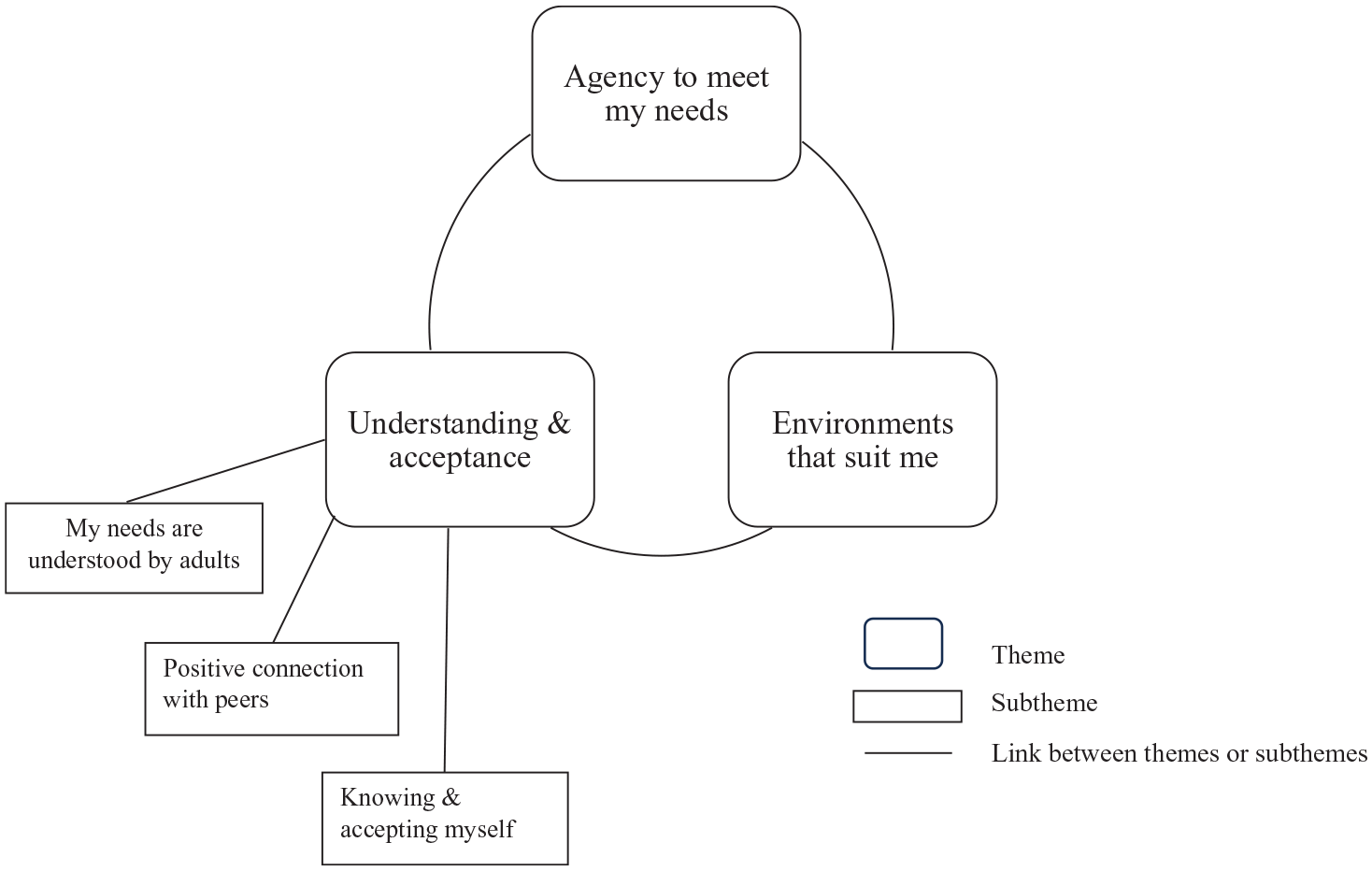
Thematic map.
In the following description of themes, the term ‘participant’ refers to autistic adolescents or adults reflecting on their own school experience, who participated in the original studies. Their direct quotes are presented in italics and quotation marks and were selected to highlight the themes we constructed.
Theme 1: understanding and acceptance
The theme of ‘Understanding & Acceptance’ encapsulated a sense of positive autistic student experience when feeling understood and accepted by others in school. For some, this led to increased self-acceptance in the school environment.
Subtheme 1: my needs are understood by adults
This subtheme captured the positive autistic student experience when feeling understood by adults in school and appropriate support was given based on acceptance.
Adults in school could facilitate coping, and build trust and positive rapport with autistic students: ‘Miss understands everyone’s [autism] and all the staff know what they’re doing’ (Halsall et al., 2021, p. 2081), ‘specific teachers who really took the time to get to know me, encourage me and cared about my future [made a difference]’ (Crane et al., 2022, p. 39). Even challenging academic work was accepted with a supportive adult: ‘you can relate to them, they can relate to you and then they can help you through the hard work’ (Saggers, 2015, p. 41). Staff could offer protection and security: ‘Teachers contributed by keeping me safe, giving me company, and just generally being kind to me’ (Bottema-Beutel et al., 2020, p. 3412).
Consistent, appropriate staff support was reported as positive and empowering: ‘I’m really comfortable with the support I’m getting . . . If I don’t understand . . ., they could just explain it to me, like they do now’ (Tobias, 2009, p. 157). However, support should adapt to fluctuating needs, with boundaries respected: ‘I am at a point where I have so much help that sometimes this is an overdose of these aids . . . I have a threshold, a threshold we should not exceed’ (Aubineau & Blicharska, 2020, p. 545).
One student voiced the negative implications of support, conveying a struggle between wanting support but fearing negative judgement from peers: ‘Regarding school work, I’d say it’s better when she’s here and regarding social aspects, I’d say it’s worse . . . Seeing me with an adult like this who gets under my feet everywhere. It’s a bit weird!’ (Aubineau & Blicharska, 2020, p. 548). Other adults played important roles in enhancing the school experience, including a school psychotherapist who ‘basically sorts my life out for me’ (Tomlinson et al., 2021, p. 11); or advocating parents (Jacobs et al., 2021) or professionals: ‘I did see a big difference in my education when [my social worker] was there to advocate for me versus after she stopped working with me’ (Crane et al., 2022, p. 38).
Subtheme 2: positive connection with peers
This subtheme highlighted that positive connection with peers was strongly related to more enjoyable experiences in school.
Autistic adolescents and adults recognised that having friends as allies in school provided them with a valuable support network: ‘friends were my rock. They listened and comforted me when I needed it’ (Bottema-Beutel et al., 2020, p. 3405). Friendships were mutual, friends ‘understood each other’ (Poon et al., 2014, p. 1076), and provided reciprocal support: ‘they were taking care of me, . . . and I can help them during the lesson’ (Poon et al., 2014, p. 1077).
Friends connected autistic students with other adolescents, helping them to feel included and ‘part of the scene’ (Bottema-Beutel et al., 2020, p. 3405), or feel more comfortable working in a group because ‘[my friend] knows more people than me’ (Dillon et al., 2016, p. 6)’. Friends could support understanding, ‘Friends can be clearer than teachers sometimes’, or made school feel ‘safer and better’ (Dillon et al., 2016, p. 6). They could also help manage anxious feelings: ‘If there was something I am worried about at school, . . . I say to my friends “I am a bit anxious today can I talk to you about my feelings”’ (Costley et al., 2021, p. 8).
Autistic students spoke positively of friends who accepted them, with whom they could be their ‘true 100% self and to not have a restraint about what I can say and how I can act’ (Aubineau & Blicharska, 2020, p. 549). ‘They respect me, they didn’t tease me, they didn’t bully me’ (Poon et al., 2014, p. 1077). Described as a ‘fresh start’, one participant described high school as an opportunity: ‘I could find my own’ (Skafle et al., 2020, p. 3). Disclosing their autistic identity was reported as positive by some: ‘I think it helped me get along better with my classmates . . . and the fact that there were no secrets also made it easier for me emotionally’ (Zakai-Mashiach, 2023, p. 4265).
Shared interests provided a valuable connection and impacted on mood: ‘It makes you happier – you’re not a loner or a geek’ (Dillon et al., 2016, p. 6). Having friends with shared interests could make it ‘very easy to talk to each other because we like very similar things’ (Cage et al., 2016, p. 17), and also feel part of a group: ‘I felt that I was not the only girl that Biology was her whole life” (Zakai-Mashiach, 2023, p. 4265). A shared group identity could enhance the feeling of belonging: ‘[It’s] a group thing. It’s like there’s a group feel of . . . being athletic’ (Haegele & Maher, 2022, p. 7); or could be a point of collective pride: ‘We all do the same thing, we are geeks. This is the traditional activity’ (Aubineau & Blicharska, 2020, p. 543). Feeling a connection with others who also viewed themselves as different may work well: ‘[my friends] didn’t really care too much what other people thought, which is a lot like what I am . . . that’s probably why I got along with them so much’ (Cook et al., 2018, p. 7). Shared interests could run contrary to gender stereotypes: ‘I get along better with boys than the girls because . . . I’m into boys stuff like soccer and skateboarding’ (Cridland et al., 2014, p. 1265). When skills were acknowledged by peers, one participant felt: ‘proud of myself’ (Humphrey & Lewis, 2008, p. 32).
Subtheme 3: knowing and accepting myself
A positive sense of self was expressed when autistic people spoke with understanding and acceptance of their own unique strengths, needs and preferences in the school environment.
Some expressed their autistic identity with acceptance and positivity: ‘I’m fine with [being autistic], . . . it gives me all these bonuses’ (Humphrey & Lewis, 2008, p. 32). A positive self-image could stem from a sense of autistic belonging, associated with a respected role model: ‘it’s possible Albert Einstein is also autistic; he is great, I can just be as promising’ (Poon et al., 2024, p. 1075). There was awareness that difference in perspective and skillset could be valued: ‘I produce a distinctive music because the way I see things is different from everyone else . . . It’s like a particular gift’ (Aubineau & Blicharska, 2020, p. 543). Some considered aspects of being autistic as advantageous in school: ‘[My autism] probably helped in terms of making me a better reader because I was just really interested in the stuff my teacher . . . taught’. (Cohen et al., 2022, p. 8).
Increased positive experience could be related to self-awareness of personal preferences and needs, such as social preferences (‘I like being with my friends and sometimes all by myself’, Cage et al., 2016, p. 17); when to seek adaptations within an environment (‘I like to work on the computer which has no emotions’, Connor, 2000, p. 290); or a preference for routine and structure: ‘ I do like a routine, I like to know that I’ve got everything sorted out’ (Costley et al., 2021, p. 8), ‘I like being in the same chair, with my pencil case, neatly’ (Cage et al., 2016, p. 17).
Some expressed positive emotion while acting against school social norms, defiantly asserting a positive sense of identity:
‘People seem to follow people around all because it will make them popular . . . Well, I think I am who I am, . . . you are not going to change me. And if you have a problem with that, that is your own problem’. (Cage et al., 2016, p. 16)
Theme 2: environments that suit me
This theme captured the idea that certain environments in school were reported as beneficial for autistic students.
Some environments provided a respite space during the school day in which autistic students found comfort and an opportunity to recuperate. These safe spaces consisted of specific contextual elements including social, sensory and structural aspects (e.g. time, place, routine events). The predictability of the space helped: ‘Everything is the same at school, every day, so I don’t feel worried’ (Costley et al., 2021, p. 8). The preferred social makeup of this space varied; there could be familiar peers (‘people that you know are there’, Danker et al., 2019, p. 136), no peers, or staff providing support. Respite spaces included a club, music room or school library. A support base was frequently referenced as a positive space and used for lessons, exams, breaktime or generally as a ‘calm and relaxing’ (Hill, 2014, p. 84) place to go. ‘This is where I go (smiles broadly). It’s nice and quiet there and only students who are allowed can go there’ (Hill, 2014, p. 85). The support base was viewed by some as accessible, and providing social opportunities with peers: ‘We often go there, . . . it works very well. I met some of my friends there’ (Danker et al., 2019, p. 136).
A significant factor was having a sensory environment which suited individual preferences. Physical aspects included ‘green spaces’: ‘whenever I feel anxious . . ., I can just sit out there and look at all the wildlife’ (Tomlinson et al., 2021, p. 8); or visual features – artwork on walls ‘makes me feel really calm (and) . . . inspired’ (Tomlinson et al., 2021, p. 8). Being familiar with a sensory space was positive: ‘You know it better, so you know what all the posters say’ (Hill, 2014, p. 84). Auditory stimuli could be a powerful, positive coping strategy: ‘I listen to music to help me with math . . . Music sort of calms me down’ (Saggers et al., 2011, p. 10).
Positive sensory experience was reported such as being with a school pet: ‘We have tortoises, they’re very calming’ (Tomlinson et al., 2021, p. 11). A space could be a positive or negative sensory experience depending on social factors: ‘I don’t mind tight spaces unless its people, making me feel uncomfortable and claustrophobic’ (Jacobs et al., 2021, p. 10). Different contexts could be soothing: ‘(Exam day is) usually the best day of my life because the others are stressed, they don’t speak . . . the happiness of being peaceful. Silence is gold’ (Aubineau & Blicharska, 2020, p. 544).
Sensory preference could fluctuate depending on the situation: touch was problematic ‘only when I’m stressed’, visual stimuli ‘can make me feel happy . . . (or) sad, depends on the situation’ (Howe & Stagg, 2016, p. 1660).
Theme 3: agency to meet my needs
Positive autistic experience was associated with feelings of agency in adapting school contexts to suit needs, changing social and sensory aspects and accessing engaging activities.
Autistic people were aware of, and actively implemented, strategies which improved their school experience. Communication strategies increased others’ understanding of needs and preferences, and could reduce social demands. A ‘pupil passport’ explained individual needs to staff: ‘teachers who read it understand it’ (Tomlinson et al., 2021, p. 6); and traffic light colours could shape verbal engagement: ‘I can flip it (my wristband to green or red) and people know whether to talk to me’ (Tomlinson et al., 2021, p. 11). Strategies were used to improve coping in the classroom: ‘I’ve got a card which says I need help or I’m OK’ (Tomlinson et al., 2021, p. 9), and for students to support themselves emotionally: ‘a time out pass . . . (so) if I’m getting stressed or angry . . . I can just step outside for 10 minutes’, ‘I bring [some stuff] I can fidget with under the table . . . it helps to keep my mind away from the situation’ (Costley et al., 2021, p. 8). Other strategies were used to improve the logistics of moving around school: ‘I leave five minutes early for each lesson’ (Tomlinson et al., 2021, p. 11), ‘I go through (this area) in the morning and when I finish school. Cos in other entrances there’s quite a lot of people’ (Hill, 2014, p. 84). A strategy combined with a strong interest was successful, for example making use of technology to aid with writing: ‘the computer would be like a penguin in water: I go really fast. And as soon as I come back to the pen: it’s like putting a penguin on the floor’ (Aubineau & Blicharska, 2020, p. 545).
Autistic students actively sought out respite spaces, acting to increase positive sensory experience or reduce exposure to negative stimuli, such as noise and social demands from others: ‘Sometimes I just went to the toilet to sit and breath . . . and get away from all the noise and pressure’ (Goodall, 2019, p. 24). Respite may be ‘becoming lost’ in an interest: ‘I can do Mr Men & this . . . makes me happy’ (Hill, 2014, p. 85). Actively managing unstructured times increased positive experience in school, for example playing sport at lunchtime (Connor, 2000, p. 290), or one student enjoyed playing ‘with blocks and stuff’ (Danker et al., 2019, p. 136). The strategy used may be unsatisfactory but a preferred option: ‘I’ve been staying in every day . . . Not the best solution, but one I’m happy with’ (Hebron & Humphrey, 2014, p. 21).
Engaging with academic work could be enjoyable and purposeful: ‘I like chemistry and physics because it talks about laws and how things work’ (Hebron & Humphrey, 2014, p. 23). Academic achievement could be motivating: ‘I want to achieve and do well at school’ (Bradley, 2016, p. 281); as well as future prospects: ‘My advice: focus . . . on your future profession, . . . for me it’s working well’ (Aubineau & Blicharska, 2020, p. 543).
Discussion
This systematic review explored autistic student lived experience of factors important for positive experience in mainstream secondary school. All studies highlighted a need to improve support, with similar themes being identified from different school contexts (e.g. models of support or country), and between autistic adolescent and adult report. Our research approach aligned with the SMD and HRM of disability, and the resulting themes we have developed incorporate our approach. Factors which promoted positive experience included feeling understood and accepted by adults and peers, accessing engaging activities and school environments suiting autistic student needs – including a sense of agency in changing their environments, particularly social and sensory aspects.
Social identity and forming support networks were important to achieve a sense of belonging, protection and enjoyment in shared experience. This directly counters the social motivation theory of autism (Chevallier et al., 2012), which described autistic children as uninterested in social involvement. Existing research shows that autistic children (Bauminger & Kasari, 2000; Calder et al., 2013) and adults desire friendships and to belong as much as non-autistic people do (Umagami et al., 2022), benefitting from connection with others (Camus et al., 2024; Maitland-Warne et al., 2021).
The disabling and discriminatory barriers identified in school environments were in line with the SMD, and how these impacted on positive experience. The HRM embraces the concept of impairment and support within disability (Degener, 2014) and supports that all students should have equitable access to education and reasonable accommodations. The data highlighted the need for support at the right level, at the right time, delivered in a sensitive and appropriate manner.
The data also revealed that a mismatch of self and environment can be surmounted in schools by a sense of belonging and position of agency. The environment around the autistic student can be adapted to be more enabling, thereby improving the person–environment fit for the young person. For instance, at breaktime, being able to roam freely did not ensure positive experience. Our data identified that positive experience was associated with having the agency to develop respite spaces among supportive others. Thus highlighting the importance of putting the student at the centre of design and creating environments that are suitable for everyone.
The identified themes demonstrate a layering of power lying first within adults who can create a school culture of inclusion, then peers who interact with the autistic student, leading to self-acceptance at the individual level. Autistic participants displayed agency both in how they navigated school environments in which they actively problem-solved challenges and sought positive experience; as well as engaging with researchers, showing self-awareness and expressing their own perspective. The HRM acknowledges the power imbalance that exists between different groups of people in society. Viewing autistic adolescents as active and able to participate corresponds with the HRM, but this sense of agency is often missing from autism research.
Notable was the lack of research into positive sensory experience, contrasting with the frequently mentioned factors associated with negative stimuli. Autistic students reported actively seeking out physical, visual or auditory stimuli in school which provided positive experiences, such as feeling calm (Tomlinson et al., 2021), and could significantly impact on learning (Hummerstone & Parsons, 2021). In the study by Howe and Stagg (2016), autistic young people reported that their experience of sensory stimuli could fluctuate, with impact mediated by stress and context (e.g. touch is problematic ‘only when I’m stressed’). In addition, at times, being aware of negative stimuli could alleviate stress and anxiety, possibly related to a greater feeling of being in control.
Limitations
Limitations included a lack of uniformity in the models of education and support provision examined by studies. Some autistic students were full time in mainstream classrooms, whereas others spent time in a resource base within mainstream school. In addition, we were unable to assess how age or school stage affected autistic student experience due to insufficient report of these factors in the literature.
The relatively broad eligibility criteria used in terms of demographics were compatible with the qualitative research method, in that demographics were reported rather than interrogated. In this study, the central characteristic for participants was that of the experience of being autistic in mainstream secondary school. We included studies from across diverse settings and this allowed a range of lived experience to be represented. Thomas and Harden (2008) discuss the value and issues around synthesising findings from individual studies across contexts. In our findings, while autistic student characteristics were heterogeneous, analysis showed that their lived experiences in mainstream schooling were similar, regardless of the reported demographics.
Navigating author subjectivity within studies was problematic as researcher positionalities were often not stated. In all studies, aims suggested a perspective along the lines of the SMD, as environments were explored around the autistic student. However often medical deficit terminology was used, autistic negative experience was derived as stemming from the individual’s ‘impairment’ and there was minimal reference to what worked well for students. It is recognised that researchers use the terminology and discourse available to them at the time and until recently the prevalent conception of autism was defined in terms of ‘disorder’.
Our own preconceptions about the concept of positive experiences will have influenced our findings. In this study, the authors made a subjective decision about the nature of positive experience in school. We deliberately used general terms in the literature search (e.g. ‘autistic’, ‘school’). In the coding process, judgements were made to include data based on positive language (e.g. I like, makes me happy), with ambiguous data discussed.
Finally, few articles in the field explored intersections of autism with other marginalised identities (e.g. participants with a wide range of gender, sexuality or ethnicity), as well as alternative communication users or those with intellectual disability.
Implications for future research, policy and practice
This review demonstrates the value that qualitative analysis can bring to educational policy and practice, by identifying factors which contribute to a supportive environment for autistic students. The voices of autistic adults and young people, as experts of their own experience (Fletcher-Watson & Happé, 2019), should contribute to priority setting and design of education systems. In collaboration with the autistic community, research design and methodology should continue to be developed to capture a diverse range of lived experience. Participatory and accessible practices can ensure that autistic students are represented in studies.
Educational policy and practice for supporting autistic people have been dominated (as in research) by the medical deficit model, with systems based on a student body conforming to prescribed social norms and educational standards (Hummerstone & Parsons, 2021). Realistic alternatives to these systems can be developed by combining the work of researchers, the autistic community and those on the ground supporting autistic young people. Progress has been made at international policy level with agreements such as the UNCRPD (UN Convention on the Rights of Persons with Disabilities; Bray et al., 2023). By incorporating inclusive principles into education design, such as Universal Design for Learning (Meyer et al., 2014), educationalists are working to promote more equitable provision for every student (Sewell et al., 2022). Resources such as Learning About Neurodiversity at School (LEANS, Alcorn et al., 2022) aim to promote a neurodiversity affirming culture at every level of the school system. Aligned with this approach, the current review has highlighted that the SMD and HRM of disability can provide theoretical underpinning in the task of conceptualising inclusive education for autistic students.
The question is raised regarding how to evaluate the success of an intervention aiming to increase autistic student positive experience, and this should be explored further. The current review highlights that evaluation outcomes should be determined by the autistic student, and factors contributing to positive experience are unique to an individual. The review identified several areas for research, including how to promote a whole school approach in creating a culture of understanding and acceptance, with more emphasis on belonging, self-advocacy and agency. Autistic identities may be positively affirmed by autistic students coming together, as adults have reported the benefits of autistic community connectedness (Botha et al., 2022). Sensory factors that promote positive autistic experience in school and how students could be more empowered to adapt their sensory experience, are important to explore. Notably absent was reference to self-regulatory behaviours such as stimming, which may be an avenue to investigate, as autistic adults report this can enhance coping (Kapp et al., 2019). Further research is also required regarding the impact of education context, such as varying models of support, as well as how student perceptions of what helps in school evolve over time.
Conclusion
This is the only thematic synthesis, of which we are aware, to have focussed on the perspectives of autistic adolescents and adults regarding factors important for positive experience in mainstream secondary schools. Our research approach was grounded in the SMD and HRM of disability. We focussed on identifying disabling and discriminatory barriers in the school environment and looking beyond this, to the individual experience of autistic students, whom adults in power have an obligation to support.
Mainstream schools can be challenging environments for autistic students in social, sensory and physical terms. However, participants across studies showed self-awareness about actively managing challenges in the school environment, and how they could enhance positive experience when they had the agency and were supported in doing so. This study identified that adaptation to both the social and sensory contexts were important to meet autistic needs. Agency, understanding and acceptance by both staff and peers, as well as having access to engaging activities, were key factors in creating a positive and supportive environment for autistic students.
Supplemental Material
sj-doc-1-aut-10.1177_13623613241285974 – Supplemental material for A systematic review: Which psycho-social-environmental factors do autistic students identify as being important for positive experiences in mainstream secondary school?
Supplemental material, sj-doc-1-aut-10.1177_13623613241285974 for A systematic review: Which psycho-social-environmental factors do autistic students identify as being important for positive experiences in mainstream secondary school? by Marisa McKinlay, David Thorpe, Eilidh Cage, Catherine Grainger, Carol Jasper and Mary Stewart in Autism
Supplemental Material
sj-docx-1-aut-10.1177_13623613241285974 – Supplemental material for A systematic review: Which psycho-social-environmental factors do autistic students identify as being important for positive experiences in mainstream secondary school?
Supplemental material, sj-docx-1-aut-10.1177_13623613241285974 for A systematic review: Which psycho-social-environmental factors do autistic students identify as being important for positive experiences in mainstream secondary school? by Marisa McKinlay, David Thorpe, Eilidh Cage, Catherine Grainger, Carol Jasper and Mary Stewart in Autism
Footnotes
Author contributions
M.M. was the lead author and carried out the systematic review. E.C., C.G., C.J. and M.S. acted in an advisory role for all aspects of the review, including drafting the article. D.T. carried out a second reviewer role.
Declaration of conflicting interests
The author(s) declared no potential conflicts of interest with respect to the research, authorship, and/or publication of this article.
Funding
The author(s) received no financial support for the research, authorship, and/or publication of this article.
Registration and Protocol
This review is registered with the PROSPERO database, registration number CRD42021272633. The review protocol can be accessed at PROSPERO (york.ac.uk).

Supplemental material
Supplemental material for this article is available online.
Notes
References
Supplementary Material
Please find the following supplemental material available below.
For Open Access articles published under a Creative Commons License, all supplemental material carries the same license as the article it is associated with.
For non-Open Access articles published, all supplemental material carries a non-exclusive license, and permission requests for re-use of supplemental material or any part of supplemental material shall be sent directly to the copyright owner as specified in the copyright notice associated with the article.
