




Abstract
Kazakhstan has witnessed a significant increase in the number of Autism Spectrum Disorder cases due to the implementation of mechanisms for early detection. At the same time, the government has implemented various policies to address the impact of Autism Spectrum Disorder on the labour market, especially for parents of children with Autism Spectrum Disorder and registered disability status. However, the effectiveness of these policies needs to be evaluated. Therefore, this article aims to estimate the loss of productivity, specifically the labour market cost of Autism Spectrum Disorders in Kazakhstan in 2022, by calculating the cost of non-working for parents of children with Autism Spectrum Disorder. To achieve this goal, we integrate data from official sources and a survey conducted by the project team to estimate the loss of productivity using human capital models. In addition, we conduct policy simulations to assess the impact of the recent policies implemented in Kazakhstan to mitigate the effects of Autism Spectrum Disorder on parents’ working experience. Our results reveal that the productivity loss is substantial, being mothers of children with Autism Spectrum Disorder and disability particularly affected. Furthermore, based on the outcomes of the policy simulations, it becomes evident that policies solely targeting parents of children with Autism Spectrum Disorder and disability are insufficient to address the labour market gaps and the consequent loss of productivity.
Lay abstract
Kazakhstan has witnessed a significant increase in the number of Autism Spectrum Disorder cases due to the implementation of mechanisms for early detection. However, despite these efforts, accessing quality services and effective interventions for individuals with Autism Spectrum Disorder remains challenging. While the government has implemented various policies to address the impact of Autism Spectrum Disorder on the labour market, especially for those with disabilities, the effectiveness of these policies needs to be evaluated. Therefore, this article aims to estimate the loss of productivity by calculating the cost of non-working for parents of children with Autism Spectrum Disorder. To achieve this goal, we combine data from official sources with data from our own survey to estimate the loss of productivity using human capital models. In addition, we conduct policy simulations to assess the impact of the existing policy implemented in Kazakhstan that recognises the time of caring for children with Autism Spectrum Disorder and disability as working in the paid labour market. Our results reveal that the productivity loss is substantial, with mothers of children with Autism Spectrum Disorder being particularly affected. Furthermore, based on the outcomes of the policy simulations, it becomes evident that policies solely targeting parents of children with Autism Spectrum Disorder and disability are insufficient to address the labour market gaps and the consequent loss of productivity. To effectively mitigate the impact of Autism Spectrum Disorder in the labour market, a more comprehensive approach is needed. This approach should encompass a broader range of interventions and support mechanisms, including those for individuals without disabilities and parents of children with Autism Spectrum Disorder.
Keywords
Introduction
Autism Spectrum Disorder (ASD) significantly influences individuals worldwide, bringing about substantial caregiving challenges, particularly during childhood. The responsibility of providing care often falls on parents, mainly mothers, resulting in a significant impact on their daily lives. Families of children with ASD encounter challenges in maintaining workforce participation, as evidenced by findings from Liao and Li (2020), reporting that 43.3% of Chinese families with ASD children underwent job changes or resignations due to caregiving demands. A similar scenario has been observed in the United States, where Saunders et al. (2015) reported that caregivers of children with ASD had to cease working due to childcare challenges.
The impact on employment is markedly greater for primary caregivers of children with ASD compared to those caring for children with other special needs, such as mental health conditions (Vohra et al., 2014). This discrepancy is attributed to the intricate and demanding needs of children with ASD, requiring caregivers to allocate more time per week to coordinate and arrange home-based care. Consequently, caregivers often experience reductions in working hours and wages (Liao & Li, 2020).
An essential consideration is the disparate effect of raising a child with ASD on mothers and fathers. In the United States, Ganz (2007) highlights that mothers of children with ASD face a 55% likelihood of unemployment, with 25% working part-time, and only 20% working full-time. This unemployment rate increases to 60% if the child with ASD also has any kind of disability, with 30% opting for part-time work. In addition, having a child with ASD may affect mother’s wages. Cidav et al. (2012) shows that mothers of children with ASD earn from 35% to 56% less than mothers with children that have other health limitations or without health limitation, respectively.
In contrast, the effects on fathers are significantly lower. Only 10% of fathers of children with ASD experience unemployment, and this percentage increases to 20% if the child with ASD also has a disability (Ganz, 2007). Moreover, Cidav et al. (2012) emphasise that the effects on fathers are not statistically significant, indicating that fathers are less likely to experience significant changes in their employment status due to their child’s ASD diagnosis.
This observation underscores the challenges faced by mothers in balancing their caregiving responsibilities with their careers, which may have significant implications for their health-related quality of life (Vohra et al., 2014). To mitigate these asymmetries, targeted interventions and policy measures are imperative.
ASD landscape in Kazakhstan
As the prevalence of ASD has evolved globally (Elsabbagh et al., 2012; Maenner et al., 2021; Zeidan et al., 2022), understanding its changing landscape becomes crucial. While high-income countries have shown significant increases in ASD prevalence rates, due to developed diagnosis practices, low-income and middle-income countries 1 lack known prevalence rates (World Health Organization [WHO], 2023). The impact of socio-economic factors, access to diagnostics, cultural attitudes, and awareness levels may influence the detection and reporting of ASD cases in these regions.
Kazakhstan is a middle-income and developing country with distinct characteristics owing to its post-Soviet Union history and used to exhibit a significantly lower estimated prevalence of ASD at 2.6 per 100,000 children in 2018, as reported by the official data provided by the Ministry of Healthcare of the Republic of Kazakhstan (Perfilyeva et al., 2019). This prevalence stands in stark contrast to rates observed in other countries (GBD 2019; Li et al., 2022; Mental Disorders Collaborators, 2022), suggesting potential variations in ASD reporting and diagnosis practices between nations.
The historical under-recognition of ASD in Kazakhstan is intricately tied to the enduring influence of the Soviet institutional legacy. This legacy, characterised by a predominant reliance on hospital-based psychiatric treatments rather than community-oriented care, significantly shaped the perception and classification of mental health disorders, including autism (Somerton et al., 2022). Within this institutional framework, autism was initially misunderstood and erroneously categorised as part of the symptom complex associated with schizophrenia (Sorokin, 2015).
This initial misclassification, compounded by inadequate diagnostic practices and a limited awareness of evolving diagnostic approaches, has resulted in a notably low number of officially registered autism cases in the region (Ustinova et al., 2022). Furthermore, the persistent legacy of stigmatisation and the isolation of individuals with various disabilities, encompassing intellectual disabilities, within extensive residential care institutions, have further contributed to the historical under-recognition of autism (Gevorgianienė & Šumskienė, 2017).
However, in recent years, Kazakhstan’s government has claimed the improvement detection as well as the commitment to improve quality of life of children with autism and their families (An et al., 2020; Minister of Health, 2020; Prime Minister, 2020). This resulted in a huge increase in 10 years of registered cases of children with ASD from 872 in 2012 to 12.087 in 2022 (data from Republican Centre for Psychological Medico-Pedagogical Committee of Ministry of Education in Kazakhstan and National Scientific-Practical Centre for Special and Inclusive Education Development in Kazakhstan). From 2020, the M-CHAT-R/F tool started to be implemented in Kazakhstan, which can, at least partially, explain this increase.
As An et al. (2020) mention, the government in Kazakhstan also claims to improve the quality of life of children with ASD and their families in the different spheres, including labour market. In particular, to address the challenges faced by parents of children with ASD, mentioned before, starting from July 2023, the government of Kazakhstan provides a preferential category for non-working individuals caring for a disabled child (including children with ASD) recognising their time caring as working experience, that is, paying their social security contributions and paying a subside that is set in 1.4 times the minimum wage.
From a policy perspective, well-designed subsidies can play a crucial role in reducing labour market costs, that is, that main caregivers do not need to leave their work or reduce the working hours, while inadequately designed subsidies may create further difficulties and costs for families of children with ASD. Therefore, understanding the effects of these policies is essential to examine and enhance their design.
The aim of this article is to estimate the productivity loss in Kazakhstan due to the loss of income experienced by families of children with ASD, as the primary caregiver, usually women, may be compelled to leave employment. To achieve this, we combine data from official sources, such as the Bureau of National Statistics, Ministry of Education, and Ministry of Labor and Social Protection, to calculate prevalence and disability rates. In addition, we analyse the percentages of parents who either stop working or reduce their working hours when they have a child with ASD from our own database to estimate the loss of productivity based on human capital models. Expanding on this baseline model, we simulate the existing policies in Kazakhstan to evaluate the extent of their influence.
Through this research, our objective is to understand the economic consequences arising from the challenges that families of children with ASD encounter within the labour market. Moreover, the knowledge acquired from this study has the potential to guide the creation of enhanced policies, fostering inclusivity, and providing better support for both individuals with ASD and their families in Kazakhstan’s employment landscape.
Materials and methods
As we previously mentioned, our study uses the human capital approach to estimate the costs of lost productivity. The human capital model, explained by Mincer (1958), attributes wage differentials to years of schooling. Training enhances productivity, but delays higher levels of earnings to the future. To take this factor into account, Becker (1964) included post-school investments like ‘experience’ in the earnings model, with earnings estimated as a declining function of time since schooling completion. Empirical evidence shows that incorporating years of labour force experience improves the explanatory power of earnings models compared to using schooling alone.
Even with just two variables – years of schooling and experience – the model explains wage variation effectively, comparable to more complex models. Human capital models assume that wages equal marginal productivity, so lost productivity corresponds to the average wage parents forgo when they leave their job. In this article, we proxy experience with age and assume having a child with ASD is unrelated to education level, making the average level of education representative for the women population.
Given the limitations in data availability, we adopted a modular approach, as described in Knapp et al. (2009), to estimate the loss of productivity. This approach involved combining the following information:
A. Prevalence
B. Personal characteristics: age and intellectual disability
C. Data on cost per individual
Prevalence
The prevalence of children with ASD in Kazakhstan was estimated using official data. In 2022, the Repub-lican Psychological-Medical-Pedagogical Consultation Committee Centre of the Ministry of Education and National Scientific-Practical Centre for Special and Inclusive Education Development reported 12,087 children with ASD between the ages of 0 years and 17 years. During the same year, the total number of children in the country was recorded as 6,485,507 by the Bureau of National Statistics of the Republic of Kazakhstan.
By dividing the number of children with ASD (12,087) by the total number of children (6,485,507), we calculated an incidence rate of 0.19%. This rate is then used to estimate the number of adults with ASD in each age group.
Reliance on these official numbers allows us to provide a reliable estimate of the prevalence of ASD in both children and adults in Kazakhstan. This information is important for understanding the impact of ASD on the population and developing effective policies to support individuals with ASD and their families in the country.
Personal characteristics: age and disability
Identification of personal characteristics such as age and disability is crucial in estimating the incidence of ASD with disability, as their needs and associated costs differ. In our article, we consider children with ASD and disability who have been registered in the official databases from Kazakhstan. Enrolling in the Central database of individuals with disabilities under the Ministry of Labor and Social Support and acquiring the status of ‘a child with a disability’ is a voluntary process where families need to apply for. This registration, in turn, provides access to various privileges such as access to subsidies and special educational programmes. According to the Agency for Strategic Planning and Reforms and the Bureau of National Statistics in Kazakhstan, a minor with disabilities, below 18 years old, is someone facing health conditions resulting in daily life constraints that warrant social protection.
In Kazakhstan, disability determination follows the Rules for Medical and Social Expertise by the Ministry of Labour and Social Development. Initiated at a local medical organisation, diagnostic and therapeutic measures, including inpatient care, precede referral to Medical and Social Expertise (MSE) after 4 months of persistent disorders and no earlier than 4 months from the onset of temporary disability.
MSE, conducted by the Labour, Social Protection, and Migration Committee at the regional level, assesses impairment and disability collectively. The chairman of the medical advisory commission decides referral, with MSE taking place at residences or other settings based on the Medical Advisory Board’s recommendations.
Official data from the Ministry of Labour and Social Protection of the Republic of Kazakhstan indicates that 5633 children have been recognised to have a disability, with 46.6% of children with ASD having a disability and 53.4% not having one. In this study, according to provided statistical data, the disability status is considered without distinction between the type of a disability, intellectual or physical. 2
Furthermore, age cohorts play a significant role in assessing the productivity loss, as it can proxy the level of accumulated experience and its depreciation, 3 leading to different potential wages and productivity levels. The parents’ age cohorts of children with ASD were derived based on available wage data by age groups from the Bureau of National Statistics of the Agency for Strategic Planning and Reforms of the Republic of Kazakhstan. The selected cohorts include ages from 25 to 28, 29 to 34, 35 to 44 and 45 to 54. We exclude estimating the productivity loss for age cohorts between 16 and 24 and those above 55, as individuals usually enter and leave the labour force at different ages due to educational pursuits or retirement.
To estimate the productivity loss for parents of children with ASD, we distribute the number of children with ASD in 2022 (12,087) among the specified age cohorts. We use the share of children with ASD with a mother or father in each cohort, based on data from a survey conducted in Kazakhstan by the authors of the article, which includes 388 observations.
Integrating these personal characteristics and age cohorts into our study is essential, as it allows us to gain a comprehensive understanding of the economic impact and difficulties encountered by caregivers of children with ASD. This approach enables us to identify potential areas for intervention and develop focused policies aimed at enhancing support and enhancing the quality of life for families of children with ASD in the country.
Data on cost per individual
Loss of productivity for non-working caregivers of children with ASD
In this article, we calculate the loss of productivity in 2022 for parents of children with ASD due to the disrupted employment to take care of their children. We use data from the Bureau of National Statistics from the Agency for Strategic planning and reforms of the Republic of Kazakhstan on monthly wages by sex and age cohort for 2022. Based on average wage for men and women, we simulate the wage loss for those who interrupt their labour life because of taking care of children with ASD and the reduction of hours by assuming a different range of average time reduction. 4 We will use the share of fathers and/or mothers who have to resign the job or reduce the number of hours by age cohort from a survey developed by the project team combined with average wages to simulate the loss of productivity, as we detail in the following point. This approach allows us to estimate the loss of productivity for caregivers of children with ASD who have had to leave their jobs to provide care and support.
Labour market effects for parent of children with ASD
The baseline estimations are adjusted taking into account that parents of children with ASD who quit their job or reduce the number of hours to become the main caregiver of the child.
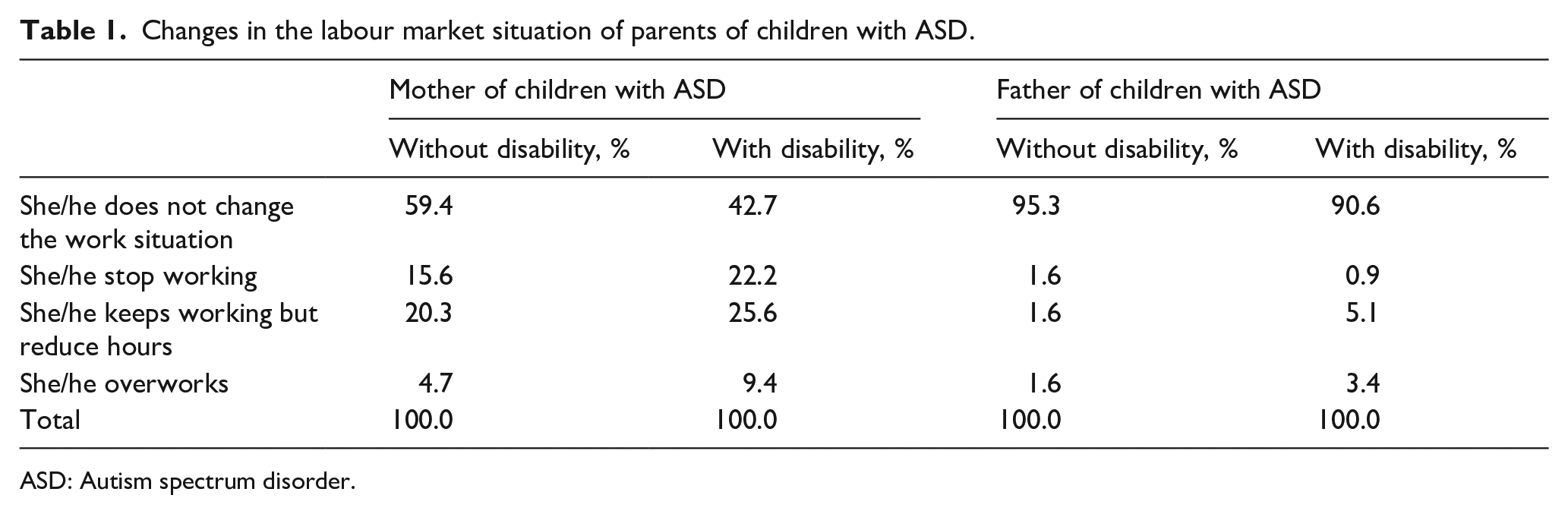
Table 1 shows the distribution of fathers or mothers depending on how their labour market situation changes after having a child with ASD. Shares are calculated based on a survey done by the team’s members in an association of parents of children with ASD within Kazakhstan. The survey has a random sample of 446 observations where respondents correspond to one family member of children with ASD. The sample size was calculated from the population (total number of children registered 12,087) with 5% accuracy, 95% confidence interval, and 20% increase in potential loss. Initially, the sample size was estimated at 446 respondents. Respondents were selected in collaboration with National Scientific-Practical Centre for Special and Inclusive Education Development that operates under the Ministry of Education of Kazakhstan and registered 12.087 children with ASD applying random numbers to their register. After the data were analysed, 406 respondents’ answers were considered valid and included into the survey. Table 1 results based on the question about if someone in the family has changed the labour market situation. The number of respondents to this question is 208.
Changes in the labour market situation of parents of children with ASD.
ASD: Autism spectrum disorder.
Data show that, as in the literature, the changes in the labour market are much higher for mothers than for fathers (which maynot even be statistically significant) and for parents of children with disability than of children without. 5 The share of mothers of children with ASD who stop working (from 15.6% to 22.2%) are lower than in papers such as Ganz (2007) which indicates 55%–60% but higher than in a recent paper of Zhao et al. (2023). For fathers, the effects are much lower than mothers and aligned with the literature where the effect goes from 0% to 10% for fathers of children without disability and from 0% to 20% for fathers of children with disability, and tends to be non significant in some cases.
Policies in Kazakhstan
In Kazakhstan, the government provides subsidies to parents of children aged 0–18 years who are not working amount to 1.4 times the subsistence minimum or living wage. In the first quarter of 2023, according to Minimum Calculated Indexes provided by the Government of the Republic of Kazakhstan, this subsidy reached 56,793.8 tenge. From July 2023, the government provides a preferential category for these non-working individuals caring for a disabled child and receiving this subsidy, persons who have been caring for people with disabilities since childhood, and disabled individuals. Thus, the government recognises the specific circumstances of these people and time spent caring for a disabled child below the age of 16 can be included in the calculation of seniority for working people, particularly women, when determining her eligibility and the amount of pension payments she may be entitled to receive. For this reason, the government pays a Social Security Contributions Rate of 4505.6 tenge monthly in addition to the subsidy of the 56,793.8 acting as their wage. This allows caregivers to balance their caregiving responsibilities with employment opportunities.
Since the policy aims to recognise the caregivers as workers covering a part of salary and social security contributions as this will be a real salary so we simulate the productivity loss because they are receiving a ‘wage lower than the average’ of the wage they should receive.
Community engagement
The outcomes presented in this article form a component of a broader initiative in Kazakhstan that engages associations representing families of children with ASD. These associations actively took part in the survey we previously alluded to, which aided in categorising the count of children among different age groups of parents as well as to understand how family labour market situation changes after having a child with ASD. The findings derived from this study are openly communicated within the community.
Results
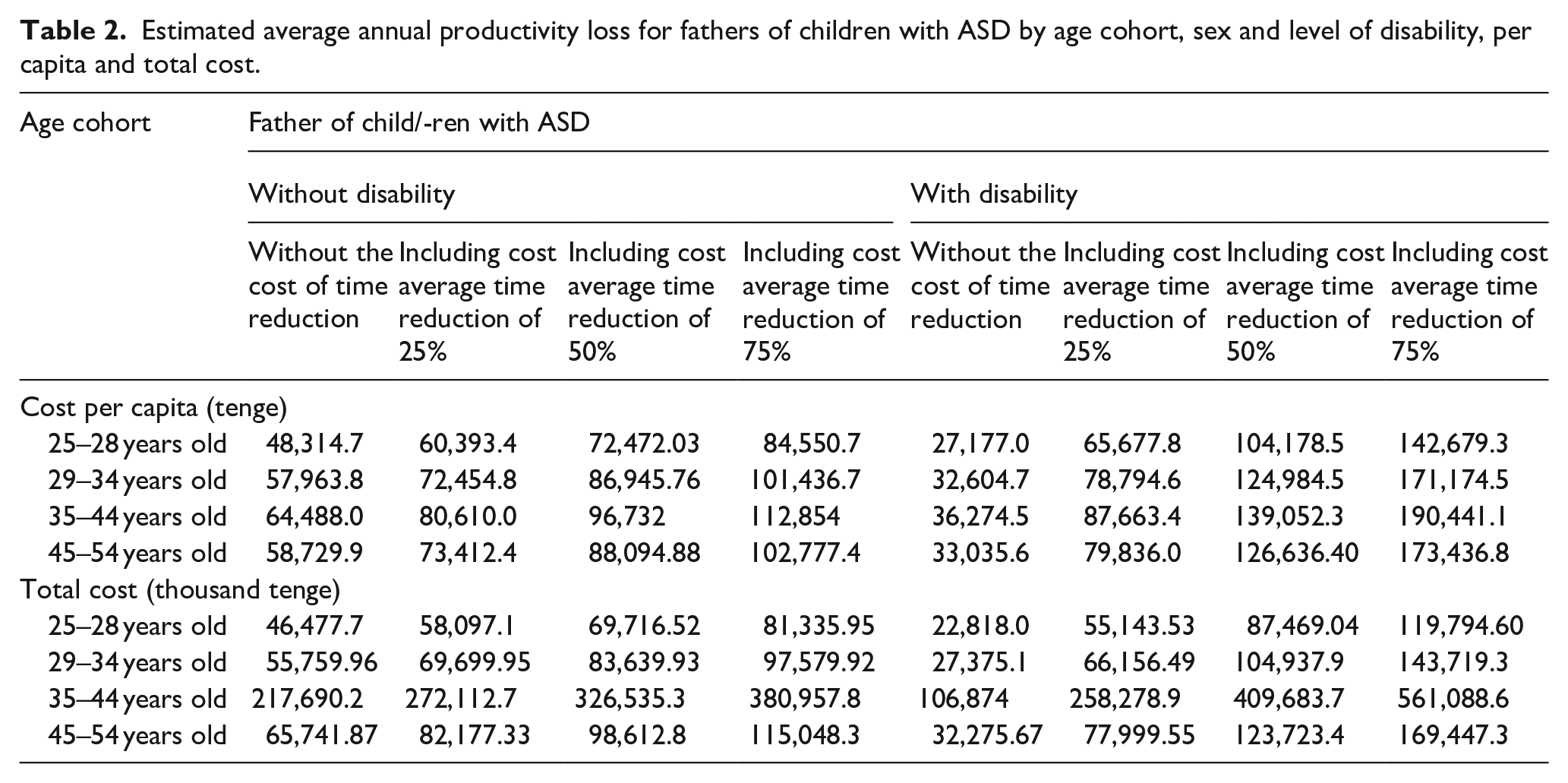
The loss of productivity resulting from parents having to leave their jobs to care for children with ASD incurs significant costs (Tables 2 and 3). Particularly noteworthy are the costs for mothers with a child with disability (Table 3) within the age cohort of 35–44 years old, amounting from 899,643 to 1,302,282 tenge per capita annually in 2022. When considering the cumulative effect across all age cohorts, this specific age group has the highest prevalence of children with ASD, resulting in a total cost of 2,560,241 to 3,706,084 thousand tenge in 2022.
Estimated average annual productivity loss for fathers of children with ASD by age cohort, sex and level of disability, per capita and total cost.
Estimated average annual productivity loss for mothers of child/-ren with ASD by age cohort, sex and level of disability, per capita and total cost.
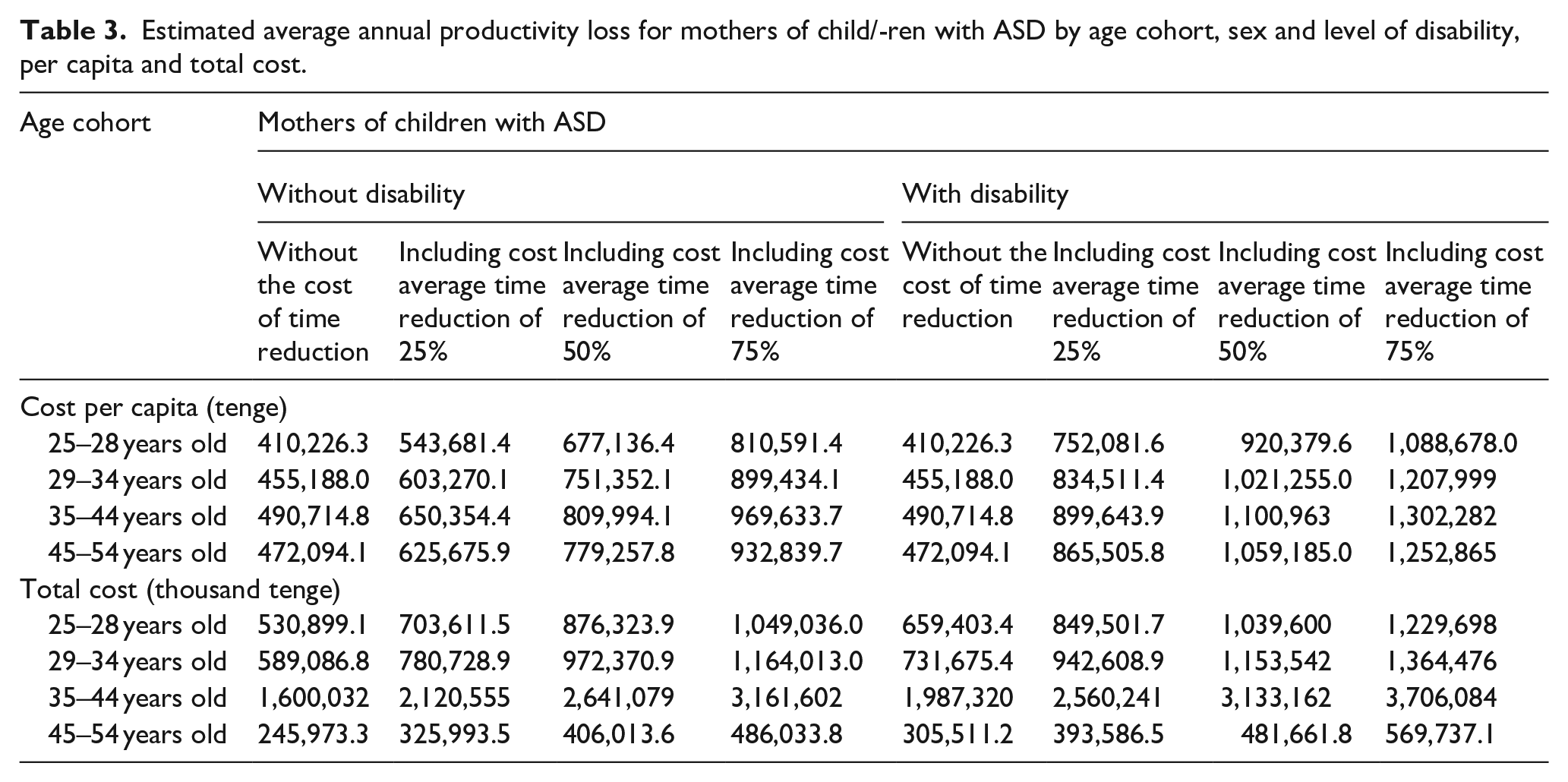
Costs for parents differ significantly based on gender, with mothers bearing higher costs as they are often the main caregivers and more likely to leave their jobs. Actually, as the literature states fathers quitting jobs may be not significant and consequently the estimated cost is quite small. The estimated cost per capita for fathers without considering time reduction reaches 64,488 tenge compared with 490,714.8 tenge for mothers of the same age cohort from 35 to 44 years old. Disability does not raise the likelihood of fathers stopping work but of reducing hours, and in that case, the cost per capita can reach from 87,663.4 to 190,441.1 for the age cohort 35 to 45 years old and the costs are still much lower than those of mothers.
Based on data in Tables 2 and 3 estimated cost of fathers and mothers stopping work to care about their child with ASD, we simulate the effects of policy in Kazakhstan recognising the working experience of the main caregivers with disability. To simulate the policy we impute the cost of each person stopping working by the difference between the wage that they would receive in the labour market and the subsidies they are receiving. Figures 1 and 2 show the effects of the policy in terms per capita and the total effect. Only caregivers of children with ASD and disability are eligible for the subsidy and, for this reason, the loss of productivity of children with ASD without disability does not change with the policy. As we can see, in Figure 1, the effect reduces the loss of productivity of parents of children with ASD and disability. However, this means for fathers to reduce the gap on productivity loss of having a child with ASD with or without disability and for mothers to actually reverse the gap. For mothers, policy should address both mothers of children with ASD with or without disability. Otherwise, the policy just addresses part of the problem.
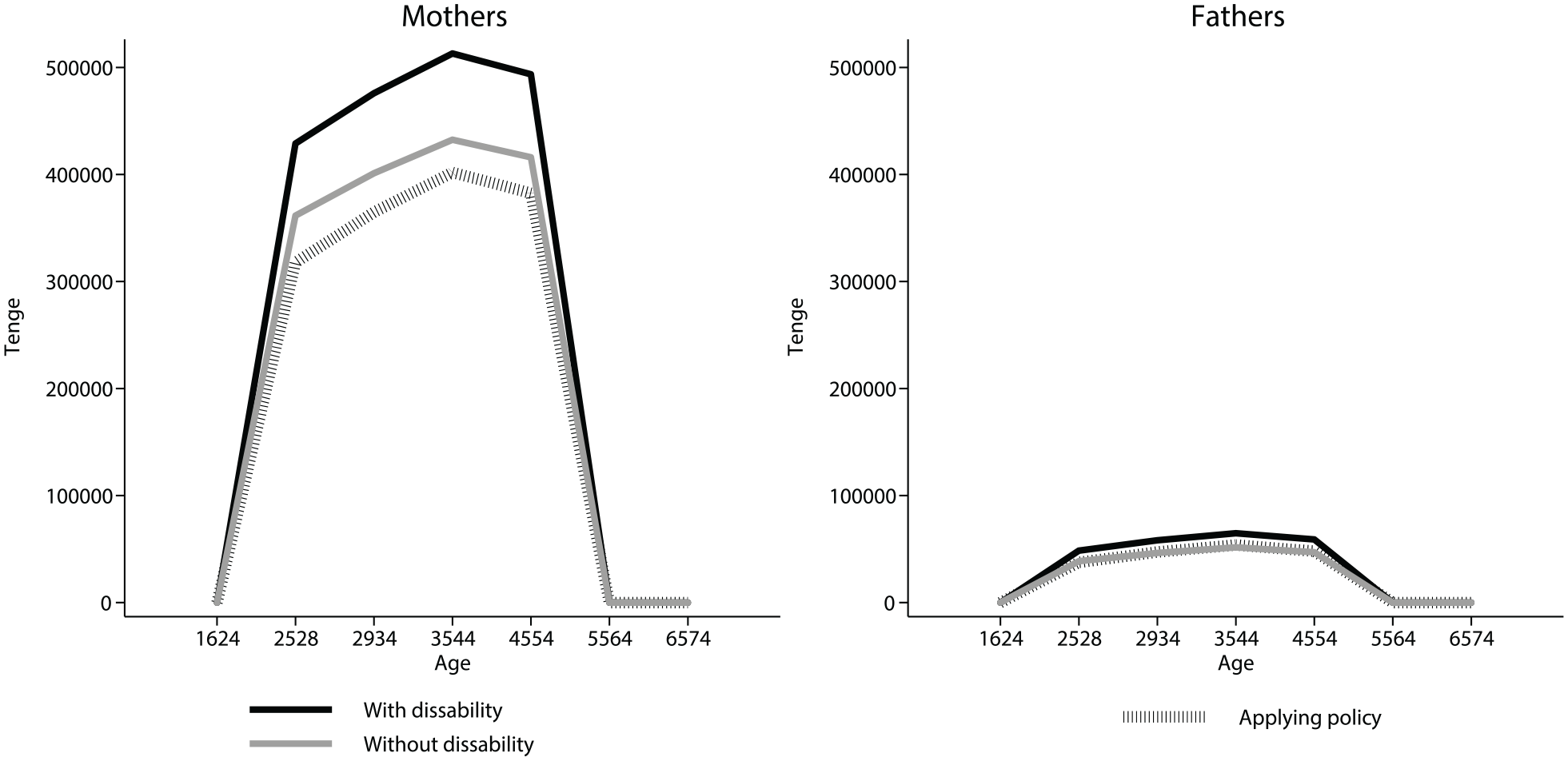
Estimated average annual loss of productivity per capita for parents of children with ASD by age cohort, sex and level of disability and effects of the policy recognising labour experience of the caregivers (Tenge, 2022).
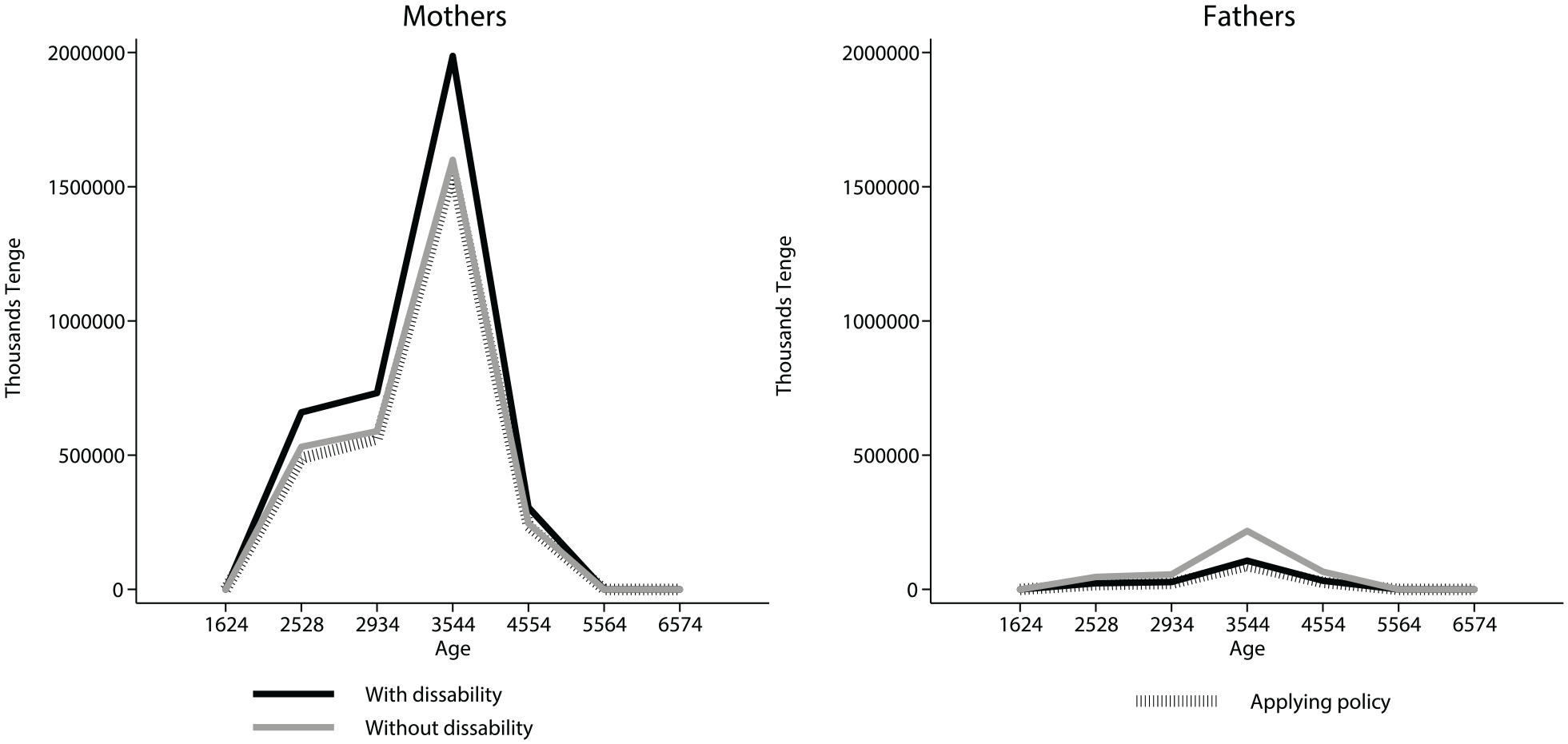
Estimated average annual loss of productivity for parents of children with ASD by age cohort, sex and level of disability and effects of the policy recognising labour experience of the caregivers (Thousand of Tenge, 2022).
As we can see in Figure 2, the main effect of the policy will be for the age cohort of 35–44 where most of the parents of children with ASD are.
Robustness
In this section, we run some robustness checks to assess how the results would change by modifying the values of our parameters. First, we do a sensitivity analysis on the share of fathers and mothers who quit their jobs when they have a child with ASD since these parameters may be conditioned by our database, and actually the policy implemented in Kazakhstan may aim to modify them. For the sensitivity analysis, we use the minimum and maximum share from the literature as boundaries for the estimation and we identify where Kazakhstan is set. As we have mentioned earlier, as in Kazakhstan in the literature the effect of quitting a job is much larger for mothers than for fathers (which may be even not significant) and for parents of children with disability than of children without. Based on Ganz (2007), 55% mothers of children with ASD without disability and 60% for mothers of children with ASD and disability are not working. We compare these numbers with the average rates of not participating rates for mothers in 2007 to calculate the share of women quitting jobs. As a result, the share of mothers of children with ASD without disability who quit the job is 21.4% and 26.4% with disability. 6 For fathers, the effects are much lower and range goes from 0% to 10% for fathers of children without disability and from 0% to 20% for fathers of children with disability. 7
As we can see in the Figure 3, the results of Kazakhstan are consistent by changing the percentage of parents of children with ASD quitting jobs according to the rates in the literature. The effects of the policies are consistent with the results presented in the previous section.
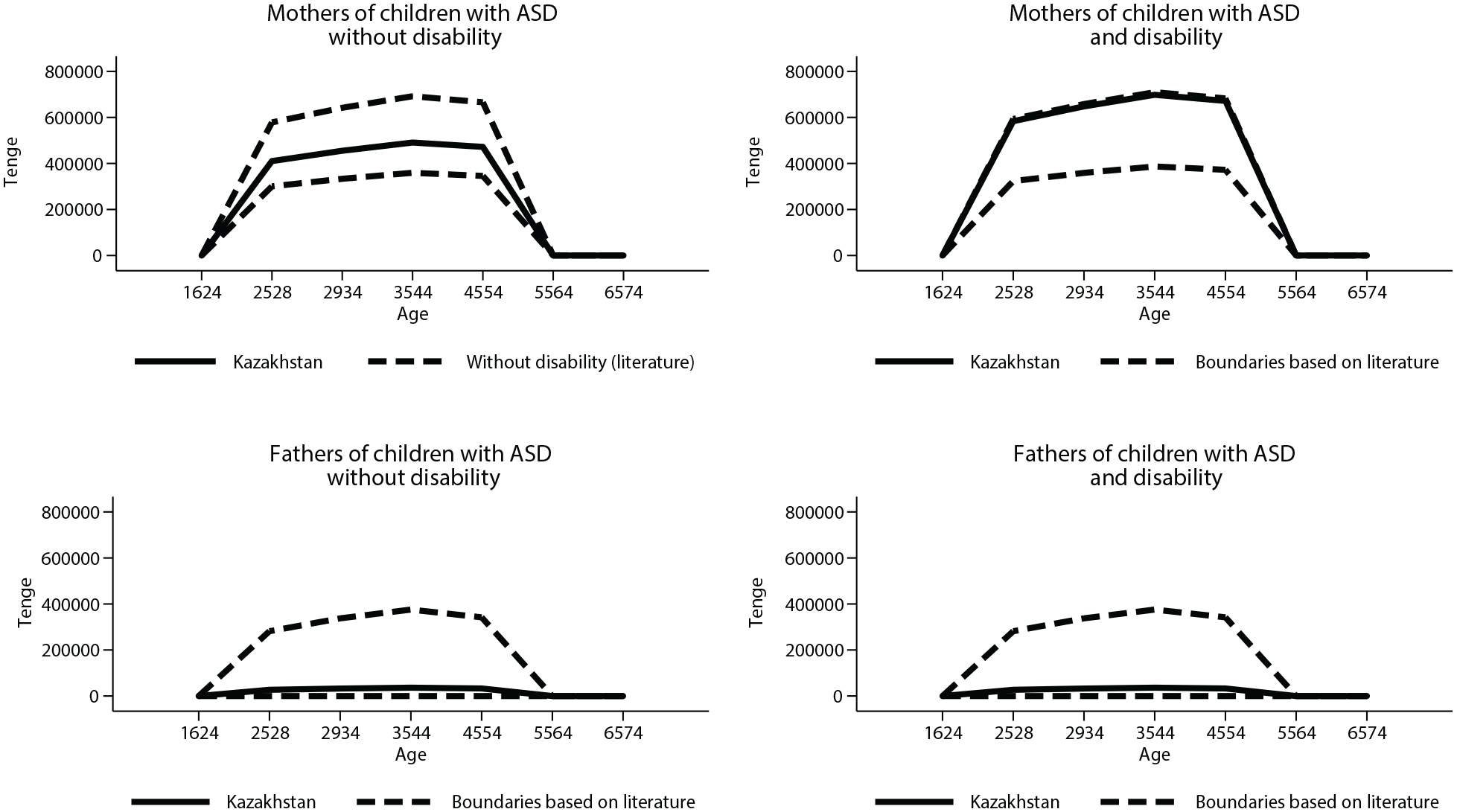
Estimated average annual loss of productivity per capita for parents of children with ASD by age cohort, sex and level of disability and effects of the policy recognising labour experience of the caregivers (Tenge, 2022). Simulations of changes on rates that parents quit the job.
As a second robustness check, we consider how the results change if the share of children with ASD recognised with or without disability. This is also an important point because the policy only affects the parents of children recognised with disability and the share in Kazakhstan is lower than rates in other papers. Papers such as Knapp et al. (2009) and Baird et al. (2006) estimate that around 55% of people with ASD have disability and 45% have not, and we will use these rates to repeat the calculations and analyse how the results change. Note that the share of children with disability affects the calculations of the average annual productivity loss and not the per capita results.
The increase of children with disability increases the annual cost due to productivity loss for parents of children with disability and decreases the annual cost of children without disability (Figure 4). Since the share of mothers quitting jobs is higher for mothers with children with ASD and disability status is higher than for children without disability, the gap between them increases and on aggregate levels, the loss of productivity is higher. For fathers, the gap between fathers of children with ASD and disability and without reduces and the aggregate levels are lower although the differences are not significant. Results are explaining by the fact that men tend to reduce the number of hours instead of quitting the job when they have children with ASD and disability and in the robustness check we do not take into account reduction in hours.
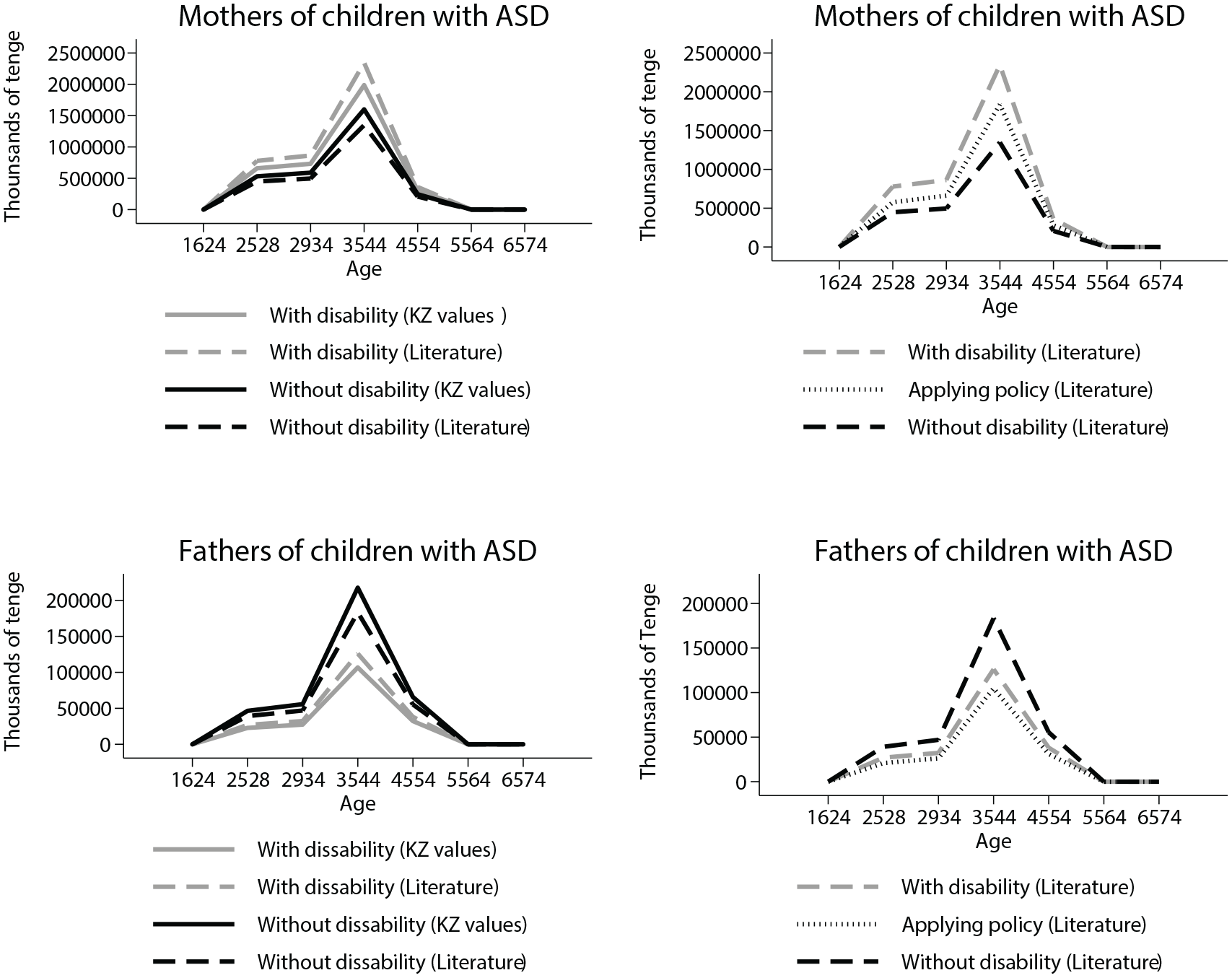
Estimated average annual loss of productivity for parents of children with ASD by age cohort, sex and level of disability and effects of the policy recognising labour experience of the caregivers (Thousand of Tenge, 2022) . Simulations changing the share of children with ASD recognised with disability.
The application of the policy, as we mentioned earlier, reduces the gap between mothers of children with ASD and disability and those without. In the case of fathers, the policy increases the gap although the results are not significant.
Discussion
Kazakhstan, is a post-Soviet state in Central Asia, that inherited the Soviet classification of diseases and previously ASD was classified as psychiatric disease and treatment was provided in closed health facilities. Nowadays, Kazakhstan implemented mechanisms of ASD early detection which have increased enormously the number of cases. Case detention increases the effectiveness of the policies addressing ASD and influences estimations on the productivity loss. 8 Government has recently implemented policies that can mitigate the effects of ASD in the labour market however we should test their potential effectiveness. For this reason in this article, we have first estimated the loss of productivity for parents of children with ASD in the labour market in order to simulate the effects of policies based on this baseline model.
Loss of productivity reaches quite important values for the family members of children with ASDs, in particular, for mothers who tend to be the main caregivers, reaching 1,302,282 tenge per capita annually in 2022. To have a disability is an important determinant on the estimated cost for parents of children, as the children with ASDs have higher caring requirements. This loss may revert to an important cost for the economy, for the public sector as unpaid social security contributions as well as loss of income for families.
The impact of ASD on the main caregiver, particularly mothers, creates a significant gender gap in the labour market. This gap arises not only due to the loss of potential income but also the loss of work experience after an extended period of absence. In line with Zhao et al. (2023), our study also confirms the existence of a gender division of labour, wherein mothers of children with ASD face higher opportunity costs, particularly when the child has a disability.
To address these challenges, Kazakhstan implemented policies recognising the main caregiver of a disabled child below 18 as a working person eligible for a subsidy of 1.4 times the living wage (Law of the Republic of Kazakhstan No. 63 and No. 39-III ZRK), which aims to reduce the gender gap in terms of income loss and work experience. This policy may have potential positive effects on women’s employability when they re-enter the workforce or even on their future pensions. However, it is important to note that this policy only partially addresses the broader labour market gender gap as it is limited to parents of children with disabilities.
Starting from January 2021 (Vlast, 2019), the government of Kazakhstan took a significant step by officially recognising ASD as a disability factor. This recognition led to substantial changes in the ‘Rules for conducting medical and social expertise for determining disability terms in children under eighteen years of age’ in 2023. As a result of these changes childhood autism, Asperger’s syndrome, and atypical autism are now classified as mental development disorders, which may or may not be accompanied by impaired intellectual development or speech function. Consequently, children diagnosed with these conditions may be eligible for an initial period of invalidity lasting up to 5 years (Minister of Labor and Social Protection of the Population of the Republic of Kazakhstan, 2023). However, obtaining disability status could be quite challenging, given the diverse characteristics and complexities associated with ASD. Moreover, bureaucratic procedures may impede timely access to benefits, further exacerbating the difficulties faced by families seeking support. In addition, now that ASD is officially diagnosed as a mental development disorder, parents may be less likely to pursue a diagnosis due to the social stigma and resistance associated with mental health labels.
Availability of appropriate schools may reduce the need for caregivers to resign their job, allowing them to work some hours while the child is attending the school. In addition, quality education and interventions aimed to improve the child’s development would ease caregiving participation in the labour market. Kazakhstan is committed to advancing inclusive development, as demonstrated by the proactive measures outlined in the Minister of Education and Science’s Order No. 6, dated January 12, 2022, and registered as No. 26513 with the Ministry of Justice on January 18, 2022. This initiative addresses the diverse needs of children, including those with ASD. Official data reveal that strategically established educational institutions, such as specialised preschools (44), specialised schools (99), Psycho-Medical-Pedagogical Consultations (92), Psycho-Pedagogical Correction Units (208), rehabilitation centres (14), and autism centres (10) are specifically designed to meet the requirements of children with autism (Central Communication Service, 2023).
Inclusive education practices are actively integrated into mainstream schools and kindergartens, ensuring that children with special educational needs receive education and nurturing within their local communities. Complementing these efforts, more than 640 inclusive support classrooms and over 1600 speech therapy points operate alongside schools. The provision of special groups and classes within general educational institutions further contributes to creating a supportive environment. Nevertheless, the absence of precise data on autism prevalence introduces uncertainty regarding the effectiveness of these institutions in meeting the actual needs of the autistic community.
The analysis of costs and cost-effectiveness of interventions is crucial to ensure evidence-based decision-making for resource allocation (Knapp et al., 2009). Policymakers must have a good understanding of the consequences of their decisions, as emphasised by Rogge and Janssen (2019). This article results will be the first step in that direction for Kazakhstan. Coordinated action between different stakeholders, including the government, individuals with ASD, families, associations, schools, researchers and society at large, is essential to establish better policies.
Limitations
The research faced data limitations, which necessitated the use of human capital techniques to simulate and estimate the model. Productivity loss was estimated using monthly wages based on human capital principles, potentially resulting in a higher estimate than other available methods (Knapp et al., 2009). To mitigate errors, we have used several assumptions on the time reduction experienced by main caregivers. The goal was not to pinpoint the exact number of productivity losses but to establish upper and lower bounds that enable policy simulations.
However, it is acknowledged that the estimation may underestimate productivity loss in certain aspects. For instance, the productivity loss for age cohorts below 25 and above 54 was not estimated due to variations in workforce participation caused by education or retirement. In this case, we assume the productivity loss, when we calculate the policy effects would be underestimated since more of the people will be working in a completely different area than their own work, losing on-job skills and experience in the labour market.
As noted by Zhao et al. (2023), mothers’ educational levels may influence their resignation and job adjustments. Although this aspect is intriguing, it fell outside the scope of this article’s simulation.
Despite these limitations, the research provided a realistic estimation of the boundaries of productivity loss due to ASD, considering gender and disability level, and allowed for valuable policy simulations.
Conclusion
This study represents a pioneering effort in examining the policy impact of subsidies for caregivers of children with ASD and estimating their productivity loss, considering gender and disability status. A salient aspect of our findings revolves around the intricate interplay between delayed ASD detection, official diagnosis and the protracted bureaucratic processes entailed in the recognition of disability status. This temporal lag, often spanning several years, serves as a formidable barrier, impeding families from expeditiously accessing entitled benefits. The multifaceted challenges inherent in this complex journey significantly contribute to the social and psychological toll on parents navigating the intricate landscape associated with the care of children with ASD.
Our findings highlight the disproportionate responsibility shouldered by mothers, who are more likely to leave their jobs due to the challenges of caring for children with ASD. Disability status also significantly influences the level of productivity loss, with families of children with both ASD and disability experiencing greater impacts.
However, it is crucial to acknowledge the diverse nature of ASD and the need for a comprehensive approach to address the unique needs and challenges faced by individuals within this spectrum. While policies targeting people with ASD and disabilities show progress, they only scratch the surface of the complex issues at hand. The existing model inherited from the Soviet Union should evolve to embrace a more inclusive perspective, encompassing the diverse experiences and circumstances of the entire ASD population beyond those traditionally classified as disabled.
Embracing inclusivity, Kazakhstan can foster a supportive and compassionate environment that empowers individuals with ASD to thrive and make meaningful contributions to society. Policy initiatives should go beyond subsidies for caregivers, encompassing comprehensive support systems, inclusive education practices, and tailored employment opportunities. Raising awareness and understanding of ASD across all sectors of society can play a vital role in reducing stigma and promoting acceptance.
In the context of policy recommendations, it is imperative to emphasise the significance of periodic reviews and revisions. The dynamic nature of challenges associated with ASD necessitates a proactive approach in policy-making. As the landscape of ASD evolves over time, along with emerging research and changing societal attitudes, policies must be regularly reassessed to ensure their continued relevance and effectiveness.
This call for periodic revision aligns with the commitment to adaptive governance and ongoing improvement. Recognising that the needs of the ASD community may shift, and the prevalence of ASD may change, regular policy reviews become essential for maintaining policies that are responsive to the nuanced and evolving nature of ASD.
Incorporating a mechanism for the periodical revision of policies reflects a commitment to staying abreast of the latest developments in the field, thereby enhancing the overall effectiveness of strategies in place. This approach contributes to the creation of a resilient and adaptive policy framework that genuinely meets the needs of individuals with ASD and their families.
In conclusion, by acknowledging the multifaceted impact of ASD and adopting a more inclusive approach, Kazakhstan can pave the way for a more equitable and compassionate society, where individuals with ASD can lead fulfilling lives and reach their full potential. Collaboration between policymakers, researchers, advocacy groups, and communities will be essential in shaping evidence-based policies that truly uplift and empower individuals with ASD and their families. A collective effort towards a more inclusive and accepting society can yield long-lasting positive outcomes for everyone.
Footnotes
Acknowledgements
Authors wish to acknowledge the comments of two anonymous referees which helps to improve the paper as well as the financial support from Science Committee of the Ministry of Science and Higher Education of the Republic of Kazakhstan.
Funding
The author(s) disclosed receipt of the following financial support for the research, authorship, and/or publication of this article: This research has been funded by the Science Committee of the Ministry of Science and Higher Education of the Republic of Kazakhstan (Grant No. BR18574199 ‘Integrating children with autism spectrum disorder into the social and educational environment based on comprehensive support: challenges and benefits’).
