




Abstract
Anxiety is a common co-occurring condition for autistic students; however, little is known about how anxiety may affect their social or academic outcomes in an educational setting. Furthermore, the perspectives of students themselves have rarely been included in the literature. Using Q-sort method, 45 autistic participants aged 7 to 17 years identified the outcomes they perceived were most impacted by their anxiety in the educational setting. The three outcomes most highly rated as being impacted by anxiety overall were academic outcomes. Using by-person factor analysis, six distinct factors, or ‘viewpoints’, were identified. These viewpoints reflect different combinations of outcomes affected by anxiety, including missing school or activities, reduced interactions with friends, reduced classroom communication and finding it harder to complete schoolwork. This study adds to the literature by using Q-sort method to enable autistic children and adolescents to report the impacts of their anxiety. Anxiety has additional impacts on the social and academic outcomes of autistic students, highlighting the need for increased awareness and training for parents and professionals, an individualised approach to student support and further research regarding the relationship between anxiety and academic outcomes.
Lay abstract
Many autistic students experience anxiety, but there is little research that explores how anxiety might affect autistic students in the school environment. In this study, 45 autistic students, aged 7 to 17 years, completed an online sorting activity to tell us how anxiety impacts them at school. The students were given 21 statements about possible social and academic effects of anxiety (for example, ‘When I’m worried it’s hard to start my schoolwork’ or ‘When I’m worried I talk less to my friends or other students’), and sorted them based on how much they agreed each statement was true for them. The three statements most highly rated as being impacted by anxiety were difficulties related to schoolwork. By comparing the information provided by students, six smaller groups of students were identified who sorted the statements in a similar order. These groups show that anxiety affects different autistic students in different ways, including missing school or activities, communicating less with friends and teachers and finding it harder to complete schoolwork. This online sorting activity enabled autistic students themselves to report how anxiety affects them at school. The results suggest that it is important to provide individualised support for autistic students who experience anxiety at school, to reduce the impact of their anxiety on their participation, communication and interactions, and schoolwork. Further research about the effects of anxiety on the academic outcomes of autistic students is also needed.
Autistic children frequently experience co-occurring anxiety, with approximately 40% of autistic children meeting the criteria for a clinical anxiety diagnosis (Hallett et al., 2013; van Steensel et al., 2011), and up to 80% experiencing impairing anxiety symptoms (Wijnhoven et al., 2018). Approximately one-third of autistic children with anxiety only experience symptoms consistent with the criteria defined within the Diagnostic and Statistical Manual of Mental Disorders (5th ed.; DSM-5; American Psychiatric Association, 2013) for anxiety, while the remainder experience autism-distinct presentations of anxiety either separately from or in combination with Diagnostic and Statistical Manual of Mental Disorders (DSM)–defined anxiety symptoms (Kerns et al., 2021; Kerns & Kendall, 2012). In addition, anxiety and autism characteristics can overlap and interact (Moskowitz & Braconnier, 2021), adding to the complexity of the presentation of anxiety for autistic children.
The impact of anxiety on social and academic outcomes
Despite advances in our understanding of anxiety in autistic children, little is known about the impact of anxiety across different settings (Zaboski & Storch, 2018). In particular, few studies have examined the impact of anxiety in the educational setting (D. Adams, Simpson, & Keen, 2019). Autistic students are reported to have poorer social outcomes than non-autistic students, including differences in aspects of friendships (Black et al., 2022; Chang et al., 2019), increased loneliness (Deckers et al., 2017) and higher rates of bullying victimisation (Sreckovic et al., 2014). Although anxiety has been shown to impact social outcomes in non-autistic students (de Lijster et al., 2018), including social skills and friendships (Langley et al., 2014; Pella et al., 2016), for autistic children these outcomes have generally been attributed to the social communication differences that are characteristic of autism (Yavuz et al., 2019). However, a systematic review identified a potential relationship between anxiety and the social outcomes of autistic children, including social competence, social relationships and peer victimisation (Ambrose et al., 2021). This was later confirmed by a meta-analysis which revealed a small but significant negative relationship between anxiety and social competence in autistic children (D. Adams et al., 2023).
Ambrose et al. (2021) also highlighted the paucity of research exploring the relationship between anxiety and academic outcomes for autistic children. Although anxiety is one of the factors reported to impact the academic outcomes of non-autistic students, including increased academic difficulties (Nail et al., 2015), poorer academic performance (Swan & Kendall, 2016), higher rates of school refusal (Tekin & Aydın, 2022) and reduced school attendance and perceived school functioning (de Lijster et al., 2018), Ambrose et al.’s (2021) systematic review only identified three studies that considered the relationship between anxiety and academic outcomes for autistic children. Of these three studies, two found a significant negative relationship between anxiety and child- and parent-reported school functioning (D. Adams, Clark, & Keen, 2019; D. Adams, Clark, & Simpson, 2019). Studies published since that review also suggest anxiety is associated with poorer parent-reported school functioning (Schneider et al., 2022) and attendance (D. Adams, 2021). Only one study to our knowledge has examined the direct relationship between anxiety and academic outcomes in autistic children; Oswald et al. (2016) found that higher test anxiety was negatively but not significantly correlated with math problem-solving skills. While these studies indicate that anxiety may be correlated with, or predicting, some academic outcomes of autistic students, a more detailed examination of the impact that anxiety has on academic outcomes is warranted, particularly from the perspective of autistic students.
Autistic children’s self-report of their anxiety experiences
In contrast to studies of anxiety in non-autistic children which tend to utilise child self-report as the main source of data (de Lijster et al., 2018), the current literature reporting on anxiety in autistic children largely utilises parent-report or teacher-report (D. Adams, Young, & Keen, 2019; Ambrose et al., 2021; van Steensel et al., 2011). While useful informants, parents may not always be well-placed to observe their child’s experiences at school, and teachers’ responses may be influenced by diagnostic overshadowing and a lack of well-validated multi-informant anxiety measures that are appropriate for autistic participants (D. Adams, Young, & Keen, 2019). Documented differences in the triggers and symptoms of anxiety in autistic children, compared with children who are not autistic, such as worry about changes to routine (Kerns et al., 2014), anxiety related to uncertainty (Rodgers et al., 2016) and unusual phobias (Belardinelli et al., 2016), preclude generalisations about the impacts of anxiety from non-autistic samples. In addition, there is a growing awareness that autistic children can provide valid and valuable reports of their internal experiences (Stratis & Lecavalier, 2015). For example, autistic children aged 5–8 years were able to describe their experiences of anxiety in computer-assisted interviews (Simpson et al., 2021), and autistic children aged 6 to 14 years were able to report their anxiety symptoms across home, school and community settings using a standardised anxiety questionnaire designed for autistic children, and additional closed- and open-ended questions (D. Adams, Simpson, & Keen, 2019). Importantly, 83.2% of children reported feeling anxious at school, but only half (50.5%) of those felt that others (e.g. teachers) were able to recognise their anxiety in the school setting (D. Adams, Simpson, & Keen, 2019), highlighting the importance of self-report to extend our understanding of anxiety at school.
In designing developmentally appropriate methodologies to elicit the views of autistic students regarding their experiences of anxiety, modifications may be required to accommodate their needs and strengths (Hagopian & Jennett, 2008; Lai et al., 2022). Tesfaye et al. (2019) recommend strategies to support self-report with autistic children, including providing a safe and comfortable environment, using visual supports and engaging participants through active participation rather than verbal communication. Some of these modifications have been applied in qualitative studies utilising semi-structured interviews, demonstrating that some autistic children can provide rich and detailed data regarding their school experiences (Zanuttini, 2023), and their anxiety (Costley et al., 2021; Simpson et al., 2021) with tailored supports. Nevertheless, even with modifications, semi-structured interview methods restrict samples to autistic children without significant differences in verbal language and communication (Zanuttini, 2023). Therefore, a range of studies offering different approaches are needed to allow autistic children with varying communication and cognitive skills to report their experiences.
Research questions
The aim of this study is to identify the autistic students’ views on the impacts of anxiety on their social and academic outcomes in the educational environment. The research questions are the following:
Which social and/or academic outcomes do autistic students report to be most and least impacted by their anxiety in the educational setting?
Do autistic students report similarities in their perspectives of social and/or academic outcomes most and least impacted by anxiety?
Method
This study used an online Q-sort research method. The limited previous research regarding the experiences of anxiety of autistic children and adolescents at school, combined with the potential for a range of DSM-5-consistent and/or autism-related anxiety triggers, signs and impacts, led to the selection of a research design that provides scaffolding but extends beyond what can be learnt through standardised questionnaires alone. The selection of the Q-sort methodology enabled a wide range of possible experiences to be incorporated into the Q-sort design (Mantzalas et al., 2023), which was then administered in a structured, visually presented activity in which participants responded by manipulating the written statements on a grid in an online platform. Q-sort has been used with autistic adolescents and adults in previous studies (Arnell et al., 2023; D’Arcy et al., 2021; Thompson et al., 2019), with the reported benefits including the ability to explore and describe detailed perceptions while providing a more structured framework than alternative methods such as interviews. This methodology may be particularly suited to eliciting the views of autistic children, as it relies on visual information presented using a technological device, thus utilising the cognitive strengths and activity preferences, and accommodating the communication challenges, that characterise some autistic individuals (Clark & Adams, 2020; Courchesne et al., 2015; Dawson et al., 2007; Duret et al., 2018).
Q-sort requires a two-stage approach. Stage 1 requires development of the ‘Q-set’, a set of written statements relevant to the topic, representing a wide range of possible experiences. This enabled an exploratory approach due to the limited previous research in this area. Stage 2 comprises the administration of the Q-sort activity. The participants are presented with the Q-set and asked to sort the statements according to the relevance of each statement to their own experience. The relative position of each statement in the participant’s Q-sort provides the data for a range of analyses. In order to support participation from autistic students across a broad geographical region, the Q-sort activity was administered through an online platform, allowing participants to complete the activity in their preferred environment. The method for each of these stages is described in turn below.
Ethical clearance was provided by Griffith University (ref. 2020/823).
Stage 1: development of the Q-set
Three groups of participants were sought for the interview stage of this study: autistic adults aged 18 to 25 years, professionals who work with autistic children and parents of autistic children. Each of these groups was specifically selected in order to capture differing perspectives regarding the potential impacts of anxiety for autistic children. Interview participants were recruited via advertisements on social media (such as university pages Facebook) and completed an online questionnaire to provide demographic information and confirm eligibility. All interview participants were resident in Australia to ensure consistency with the child participants in Stage 2, who were also resident in Australia. The sample comprised autistic adults aged 18 to 25 years (n = 6), professionals who work with autistic children (n = 5) and parents of autistic children (n = 19). Inclusion criteria for these participants can be viewed in Supplemental Appendix 1, and demographic information can be viewed in Supplemental Appendix 2. Semi-structured interviews were conducted via a video conferencing platform. Open-ended interview questions (such as ‘When (you/your child/the child) feels worried, what differences, if any, have you noticed in the way he/she learns or completes tasks?’) focused on whether, and how, autistic children’s social and/or academic outcomes were affected by anxiety (the interview schedule can be viewed in Supplemental Appendix 3).
Interview recordings were transcribed, and the raw interview data were analysed using inductive content analysis as described by Dey (1993) and used in previous autism research to categorise qualitative responses (D. Adams et al., 2018). The interview data were divided into units of meaning or codes (based on any description of an impact of anxiety), and similar codes were grouped into categories to best represent the data. An independent researcher was assigned 20% of the initial codes to verify the validity of the categories, and Cohen’s kappa of 0.84 indicated strong agreement between the two researchers. Feedback on the codes and categories was sought from a neurodivergent parent of an autistic child, and an autistic child with a diagnosis of clinical anxiety, and feedback was incorporated into the refinement of the categories. The 20 categories that were most frequently endorsed across all interview participants were rephrased as statements, and these statements were selected for the Q-set (the statements that the participants will rank in the Q-sort). One additional statement was added to represent the view that anxiety does not impact any social or academic outcomes. The Q-set of 21 statements was piloted with two autistic child participants. The first author provided the instructional materials to the participants, and then observed the participants completing the online Q-sort activity. An observation schedule enabled the researcher to document any difficulties in completing the activity. The pilot participants also completed the online feedback questionnaire, and their feedback regarding the statements and the online sorting procedure was incorporated into the online sorting activity. The final Q-set, derived from the interviews, comprised 21 statements that reflect a range of potential social and academic impacts of anxiety, and can be viewed in Supplemental Appendix 4.
Stage 2: Q-sort activity
Procedures
Autistic children (aged 5–17 years) were recruited via their parents through social media advertisements on Facebook (initially on a university autism department page). These advertisements included an eye-catching clip art graphic, the research aims and a brief summary of what parents and children would be asked to do, along with a link to an online portal that provided further information about the project, an online consent form and a parent questionnaire (demographics, an autism screening measure and an anxiety measure). When parents completed the online forms, parents of eligible children were then sent an individual link for their child to access an online platform for the Q-sort activity. Parents were also provided with child-friendly written and pictorial instructions regarding how to complete the Q-sort activity, and a list of the statements included in the Q-set, so that child participants could read them in advance. An instructional video was also provided on the online Q-sort platform to demonstrate how to complete the activity. Child participants provided assent prior to beginning the online Q-sort activity.
Participants
Eligibility criteria for the Q-sort activity stage stated that children had to be aged 5 to 17 years, with both a parent-reported diagnosis on the autism spectrum and a score above the recommended cut-off on an autism screening measure (AQ-10; Allison et al., 2012). In addition, children were required to be currently attending school (full- or part-time) in Australia and able to read short phrases in order to complete the Q-sort activity. Fifty-two participants completed the Q-sort activity. Six participants were excluded who did not meet the eligibility criteria for a score of 6 or above on the AQ-10, and one child was excluded based on parent-reported reading ability below the required level. A total of 45 participants were included in the study.
The majority of parent informants were mothers (95.6%) and all parents reported that English was the main language spoken at home. Forty percent of parent informants reported a diagnosis of a mental health disorder. Child participants ranged between 7 and 17 (M = 11.98, SD = 2.91) years; 42.2% were female. School setting was determined by the setting that the student spent the majority of the week, and 82.2% attended mainstream (general) school settings, while 11.1% attended special school settings specifically for students with autism or disabilities. Thirty-five children (77.8%) experienced some challenges with school attendance. The most frequently reported formally diagnosed co-occurring conditions were attention deficit hyperactivity disorder (ADHD) (53.3%) and anxiety disorder (53.3%) with 35.6% of participants diagnosed with both ADHD and anxiety disorder. Open response formats were provided for questions regarding the child’s gender identity and ethnicity. Parent and participant characteristics can be viewed in Table 1.
Child and family characteristics based on parent report (N = 45).
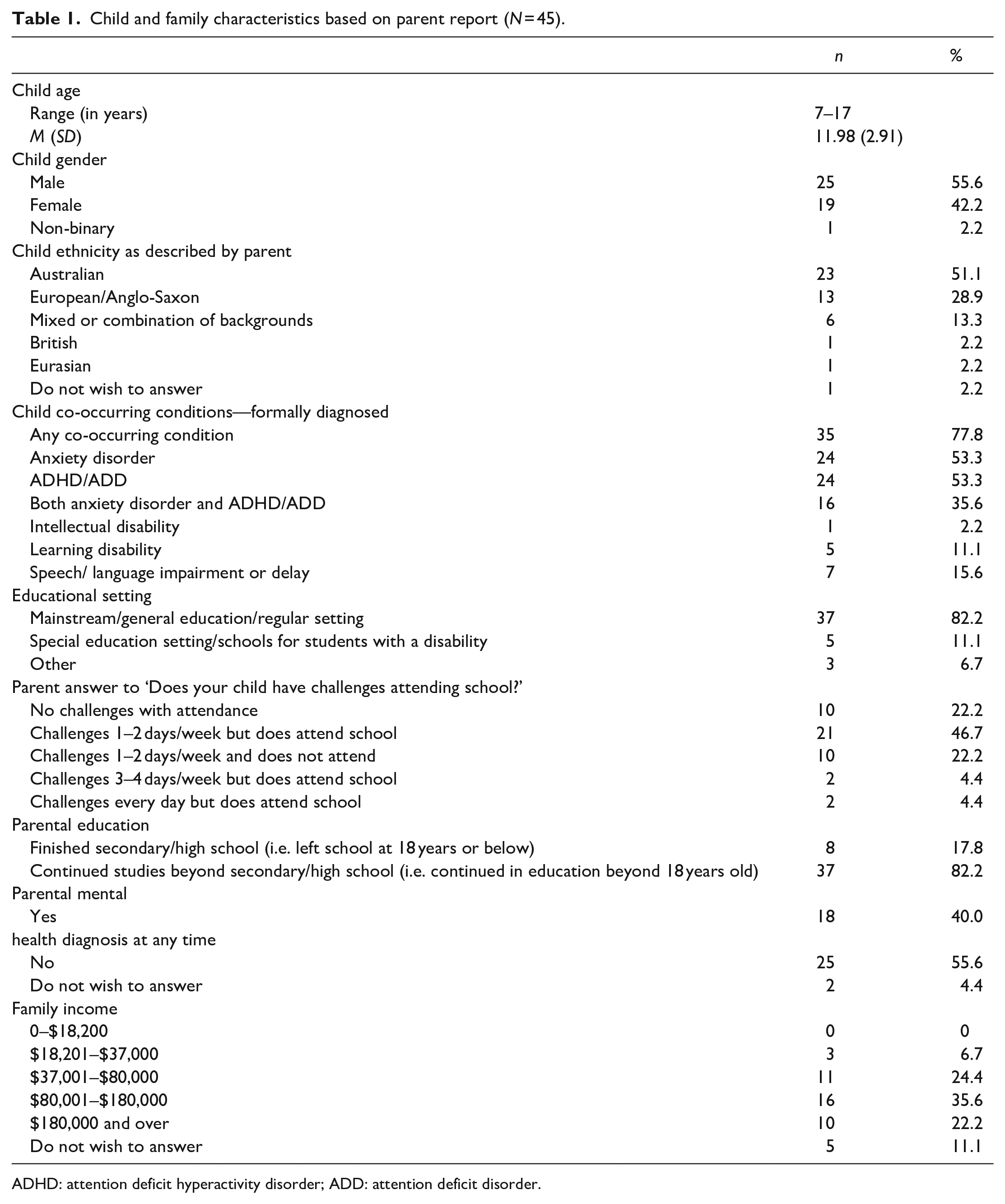
ADHD: attention deficit hyperactivity disorder; ADD: attention deficit disorder.
Measures
Autism Spectrum Quotient–Child and Adolescent Versions
The Autism Spectrum Quotient (AQ-10; Allison et al., 2012), a 10-question Likert-type scale parent-report questionnaire, was utilised in this study to support the parent-reported diagnosis of autism spectrum disorder and reduce the risk of fraudulent participants completing the Q-sort measure. Parents of children aged 5 to 11 years completed the child version, while parents of children aged 12 years and over completed the adolescent version. Using a cut-point of score of 6, the AQ-10 has a sensitivity of 0.93 (adolescent version) and 0.95 (child version) and specificity of 0.95 (adolescent version) and 0.97 (child version).
Anxiety Scale for Children With Autism Spectrum Disorder–Parent Version
The Anxiety Scale for Children With Autism Spectrum Disorder–Parent Version (ASC-ASD-P; Rodgers et al., 2016) was used to document and describe the anxiety symptoms of the participant sample. This measure was adapted from the Revised Child Anxiety and Depression Scale (Chorpita et al., 2000) to document anxiety symptoms in autistic children. The ASC-ASD-P comprises 24 items scored on a 4-point Likert-type scale (0–3) with a maximum possible score of 72. The authors have suggested that a total anxiety score >24 indicates ‘more specific indication of significant anxiety’; therefore, as per D. Adams, Clark and Keen (2019), this threshold was used to identify children with elevated anxiety.
The ASC-ASD-P has good psychometric properties, including good internal consistency, validity, and 1-month test–retest reliability (r = 0.84) (Belardinelli et al., 2016; Rodgers et al., 2016), convergent reliability with other established measures of anxiety (den Houting et al., 2018), and divergent reliability with measures of autism characteristics (Keen et al., 2017). The internal consistency for this sample was excellent (α = 0.93).
Q-sort
The online Q-sort activity comprises the Q-set of 21 statements (derived from the most frequently reported items collected in Stage 1 interviews) and a quasi-normal distribution grid with 21 places. Participants are asked to sort the statements depending on their personal experience, from +4 (‘most true for me’) to −4 (‘least true for me’) (see Figure 1). Participants move statements, which appear on screen one at a time, onto the grid by clicking on the desired grid position. All statements must be sorted before the activity can be submitted. Following the Q-sort activity, participants were presented with an optional feedback questionnaire regarding the Q-sort activity.
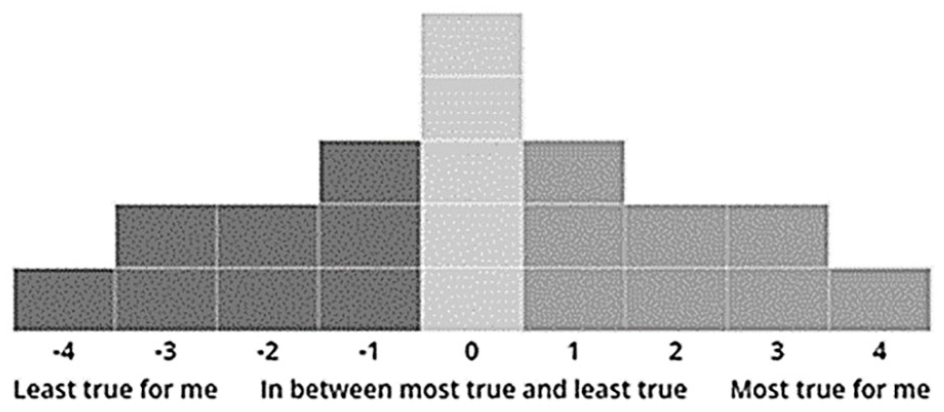
Diagram of the Q-sort distribution grid.
Data analysis
Data were screened for missing data prior to analyses, and only complete data sets for the measures of interest were included in analyses. Descriptive analyses were conducted to provide mean scores for the ASC-ASD-P total score and the percentage of participants meeting the cut-off score of >24 for total anxiety, indicating elevated anxiety, was calculated.
To answer Research Question 1, the Q-sort data were analysed to determine which statements were rated the highest or lowest by the child participant group. For each participant response, each statement in the Q-set was allocated a value from −4 to +4, depending on participant placement of the statement within their Q-sort grid (see Figure 1). As depicted in Figure 1, the number of statements that can be placed into each column of the Q-sort grid varies, so there was only one statement that is given a value of −4 or +4, but five statements that receive a score of 0. To enable a comparison of the statements based on the overall level of agreement, the −4 to +4 values were then recoded as 1 to 9, where 1 represents the least agreement (previous value of −4) and 9 represents the highest agreement (previous value of +4). The total score for each statement was then calculated for the entire participant sample and used to determine a mean score for each statement across the participant group.
In order to answer Research Question 2, by-person factor analysis of Q-sort data was conducted, where individuals’ responses are correlated with those of other participants to find factors that comprise groups of participants who sort the statements in a similar way. Analyses of the Q-sort data were performed using the Q-sort software, Q-method. In the first step, Pearson correlations were calculated for each Q-sort, and these correlations were used to extract the factors. The process of factor extraction enables participants who have responded in similar ways, that is, ranked the statements similarly, to be grouped together on the basis of a statistical procedure (i.e. without human interpretation). A range of methods are available for factor extraction, but in this study the principal component analysis method was selected to maximise the sum of factor loadings, or in other words, to enable the maximum number of factors to be extracted from a mathematical (rather than a theoretical) perspective, as described by Dziopa and Ahern (2011). Each factor was then examined to determine which factors would be retained for further analyses. While Q-sort method enables the researcher to retain factors based on a mathematical and/or theoretical rationale, the limited previous research in this field precluded decisions regarding factor retention to be made from a theoretical perspective. Factors were retained if at least three participants loaded onto the factor, the factor met the Kaiser–Guttman criterion (an Eigenvalue greater than 1) and the factor met the criteria for Humphrey’s rule. These criteria were utilised to ensure the factors that were retained explained most variance; two factors were excluded that did not meet these criteria. The remaining six factors were rotated using Varimax rotation, which serves to simplify the interpretation of the factors, by maximising the number of Q-sorts included within each factor and to ensure the factor solution optimally accounts for the variance. These factors were then identified as viewpoints for interpretation. For each retained viewpoint, a composite Q-sort (or ‘factor array’) was generated as an exemplar that best represents the grid position of each statement in that factor.
Viewpoints were interpreted using data from the factor analysis and demographic data, as outlined in Watts and Stenner (2012). Interpretation of each viewpoint considered most and least characteristic statements, consensus and contention statements, and statements which were ranked differently for that viewpoint compared with other viewpoints. For each viewpoint, characteristics of participants that loaded onto that viewpoint were analysed to identify any potential relationships with anxiety profiles from the ASC-ASD-P, or demographic profiles (specifically age, gender, school setting and co-occurring conditions).
Community involvement statement
Autistic representation was included in multiple stages of the study. The views of autistic adults and members of the autism community informed the Q-set via interview data collected in Stage 1. Consultation with a neurodivergent researcher and parent of an autistic child during the content analysis of interview data to develop the Q-set, and consultation with autistic children in the pilot stage for the Q-sort activity, provided feedback which was incorporated into the research design.
Results
Levels of anxiety within the participant group
As the focus of the study was on the impact of anxiety, the ASC-ASD-P scores were used to describe the anxiety levels across the sample. Forty-three (95.6%) participants met the cut-off score of >24 for parent-reported total anxiety, indicating that the majority of participants experience elevated anxiety. The remaining two participants had scores of 16 and 21.
Frequency of outcomes reported by participants
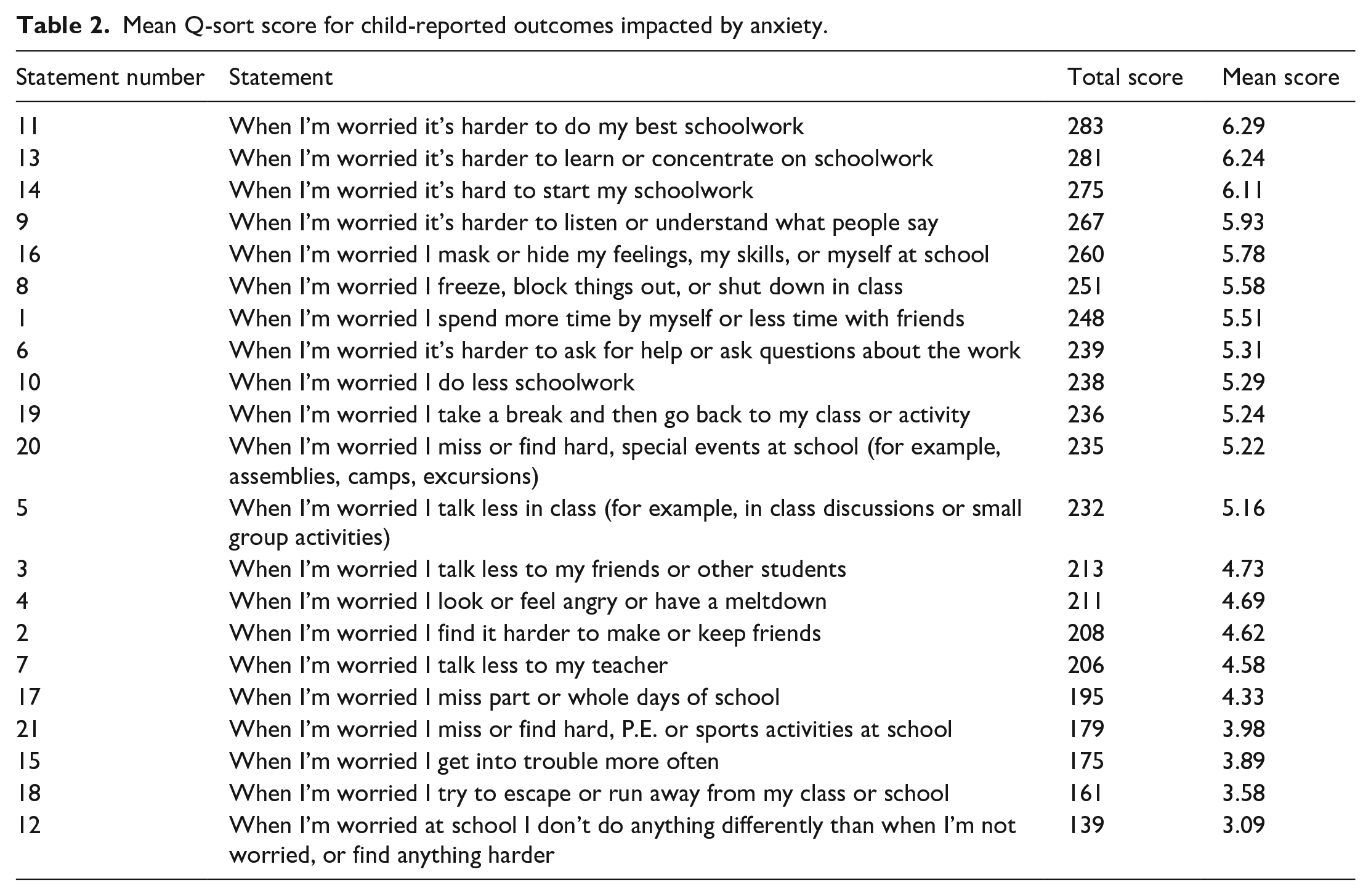
Total and mean scores for each Q-sort statement were determined by recoding rank values (−4 to +4) as a score on a scale of 1 to 9 and then calculating the sum of these scores for each statement across all participants; higher scores indicate a higher level of agreement with the statement overall, while lower scores indicate lower overall agreement. The mean scores for each statement, ordered from highest to lowest agreement, can be viewed in Table 2.
Mean Q-sort score for child-reported outcomes impacted by anxiety.
Viewpoints derived from Q-sort
Six factors were retained based on the criteria detailed in the ‘Data analysis’ section and rotated using Varimax rotation. These factors were then identified as viewpoints for interpretation and relevant demographic information was calculated for the participants that loaded onto each factor. Factor values and demographic information are provided in Table 3.
Demographic and factor analysis information for total sample and each factor.
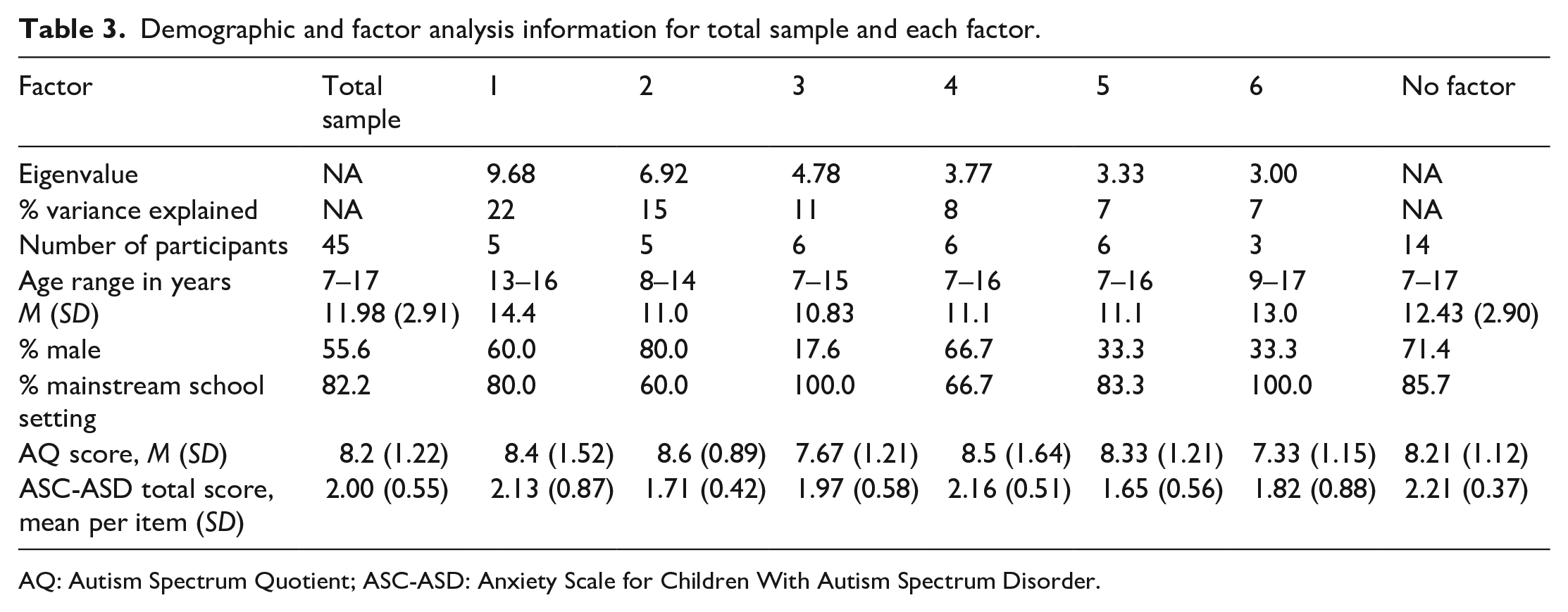
AQ: Autism Spectrum Quotient; ASC-ASD: Anxiety Scale for Children With Autism Spectrum Disorder.
Factor interpretation
Viewpoints were interpreted using data from the factor analysis and demographic data. Statement numbers within parentheses in the interpretation correspond to the statement numbers in Table 2 and the rank position (ranging from +4 to −4) of that statement within the factor array (or composite Q-sort) for that viewpoint. Demographic characteristics of participants that loaded onto each viewpoint can be viewed in Supplemental Appendix 5.
Viewpoint 1: mask and freeze but join in activities (n = 5)
The five participants who load onto this viewpoint are all aged 13 to 16 years, and four attend a mainstream school. They are most likely to mask or hide their feelings when anxious at school (16;+4) but are also likely to freeze, block things out, or shut down in class (8;+3). This group finds it harder to start their work (14;+3) and report increased challenges with learning or concentrating on schoolwork (13;+2) when they are worried. These academic outcomes may be further impacted by other highly ranked items related to classroom communication, such as difficulties listening (9;+2) and asking for help with their work (6;+1). They continue participating in special events (20;−3) and sports activities (21;−4) despite feeling anxious.
Viewpoint 2: I look or feel angry and get into trouble more often (n = 5)
This group of participants are mostly male, aged 8 to 14 years, with a lower mean age than the total sample. Participants in this viewpoint attend special (n = 2) and mainstream (n = 3) settings. The group has a relatively higher mean AQ-10 score compared with the other viewpoints. These participants are most likely to look or feel angry or have a meltdown when they are worried (4;+4), and also have increased difficulty with listening (9;+3) which may explain why they also agreed more with the statement that they get into trouble more often when they are worried (15; +2) compared with the other groups. They also report finding it harder to learn and concentrate on schoolwork (13;+3), but that this does not result in doing less work (10;−3). Parents reported that four of these five participants experience challenges with school attendance, which resulted in non-attendance 1 or 2 days a week for two participants. However, participants report that the least true impact of anxiety for them was missing whole or part days of school (17;−4), suggesting that other influences may better explain student absences for this group.
Viewpoint 3: mask, freeze and miss activities (n = 6)
The six participants who load onto this viewpoint are aged 7 to 15 years, five are females and all attend mainstream schools. Although this group shares similarities with Viewpoint 1 in masking their feelings (16;+4), freezing (8;+3) and finding it harder to start their schoolwork when they were worried (14;+3), there are some distinct differences. These participants are highly unlikely to miss school (17;−4), but do take a break from activities (19;+2), and report missing or finding hard, special events (20;+2) and sports activities (21;+1) when anxious, compared with other groups. Participants in this viewpoint are unlikely to look or feel angry (4;−3), or to get into trouble (15;−3) and are less likely to report communication difficulties when they are anxious (3;−1, 5;−1, and 6;−1) than other groups.
Viewpoint 4: I don’t go to school when I’m worried (n = 6)
In this viewpoint, there are four males and two females, aged 7 to 16 years, in both mainstream and special settings. Both AQ-10 and ASC-ASD-P scores tend to be above the mean for the total sample. These participants report they are most likely to miss part or whole days of school when they are anxious (17;+4), which may explain parent-reported challenges with school attendance 1 or 2 days per week for all participants in this group, resulting in non-attendance for three of these participants. When anxious, these participants find communicating in class more difficult than other groups (5;+2 and 7;0), and also report that it is harder to ask for help (6;+3). These communication challenges may have a further impact, as the participants in this group also report that when they are worried, it is more difficult to start their work (14;+3). They are unlikely to take a break (19;−3), get into trouble (15;−3), or escape from the classroom (18;−4).
Viewpoint 5: I take breaks, but schoolwork is still hard (n = 6)
The participants in this group are aged 7 to 16 years, and the majority are female and in mainstream schools. The demographic characteristics of this group are similar to those in Viewpoint 3, and, like those in Viewpoint 3, they report that missing school is the least likely impact of anxiety for them (17;−4), but they are likely to take a break from activities (19;+4),. In contrast to Viewpoint 3, however, these participants report anxiety is more likely to impact their schoolwork, as they find it harder to do their best work (11;+4) and learn and concentrate on schoolwork (13;+3), and they report doing less work due to anxiety (10;+2). Despite a tendency to lower ASC-ASD-P scores relative to the total sample, this group identifies anxiety impacts them at school (12;−3).
Viewpoint 6: I engage less with my friends (n = 3)
Although only three participants load onto this factor, it represents a distinct viewpoint regarding the impact of anxiety on friendships. These participants are most likely to spend less time with friends (1;+4), talk less to friends (3;+3) and find it harder to make or keep friends (2;+2) when they feel worried. As all of these participants have co-occurring ADHD and formal anxiety diagnoses, and attend mainstream settings, there may be a unique interaction between these characteristics that has a particular impact on their friendship experiences. Compared with the other groups, this group is more likely to report that nothing is different when they are anxious (12;+1), and to escape from class or school (18;0). These participants are the least likely group to miss school as a result of anxiety (17;−4), consistent with parent reports that while all participants in this group experience challenges with school attendance, these challenges do not result in absence. These participants are also unlikely to get into trouble when they are anxious (15;−3) and report relatively few difficulties communicating with teachers (7;−2), listening (9;0) or doing schoolwork when they are worried (11;0, 13;0 and 14;−1) compared with other groups.
Acceptability of the online Q-sort activity
At the end of the Q-sort activity, participants were asked to provide feedback regarding the activity. Responses to closed-ended questions are presented in Table 4, which shows that 82.2% of participants rated the activity at three or more stars out of five. The majority of participants reported the instructions were clear; however, less participants reported that the activity was easy, suggesting that some participants found ranking their experiences somewhat difficult.
Participant feedback about the online Q-sort activity.
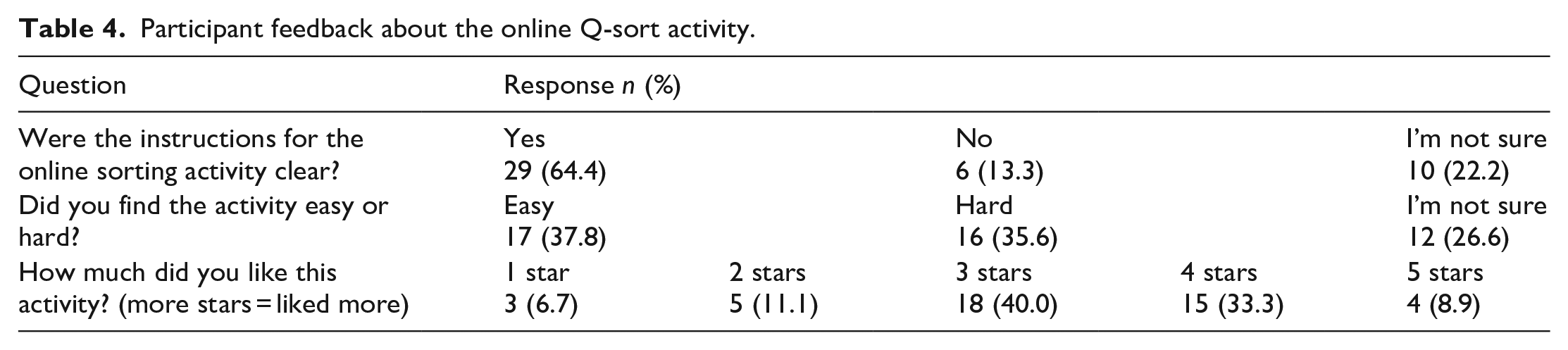
Participants also provided open-ended responses to the question, ‘Is there anything we could do to make this sorting activity easier?’. Nineteen (42.2%) participants wanted to have more spaces on the grid, rather than a forced distribution, and 3 (6.6%) participants expressed they would have preferred to rate each item separately rather than rank them relative to each other.
Discussion
This project adds to the small but growing body of research documenting the impact of anxiety on autistic students’ social and academic outcomes. The online Q-sort method required no spoken output from child participants, and enabled children to participate from their own home with no need for direct interaction with the (nonfamiliar) researchers. Such an approach enabled 45 autistic students to share insights into the impacts of their anxiety in the school setting. Furthermore, participants included children and adolescents across a wide age range, in different school settings and geographical locations, all of whom experienced some parent-reported anxiety symptoms, and 95.6% of these met the criteria for elevated anxiety symptoms. This enabled the identification of the impacts of anxiety that were most (and least) highly ranked, as well as six distinct ‘viewpoints’ or profiles of impacts of anxiety on social and/or academic outcomes.
Social and academic outcomes impacted by anxiety in the educational setting
The three most highly ranked impacts of anxiety across the entire sample were related to schoolwork: When participants were worried, it was harder to do their best schoolwork, to learn or concentrate on schoolwork and to start their schoolwork. This is an important finding given the dearth of literature that has considered the impacts of anxiety on the academic outcomes of autistic students (D. Adams et al., 2021; Ambrose et al., 2021). In non-autistic students, anxiety is also associated with increased academic difficulties such as impaired concentration on school tasks (Nail et al., 2015) and poorer academic performance (Pellizzoni et al., 2022; Swan & Kendall, 2016). It is thought that anxiety reduces attentional control and cognitive resources such as working memory in children, as proposed by cognitive theories (Eysenck et al., 2007; Owens et al., 2008), thereby affecting academic skills (Pellizzoni et al., 2022; Wood, 2006). In autistic children, anxiety may impact schoolwork via these cognitive pathways, and/or through other mechanisms.
An additional factor for autistic students may be anxiety related to uncertainty, which is frequently reported in autistic children (South & Rodgers, 2017) and has been found to affect school functioning (D. Adams, Clark, & Keen, 2019). Specifically, uncertainty related to schoolwork has been identified in autistic children and may present a barrier to students attempting or completing tasks (Goodwin et al., 2022). These findings suggest that anxiety may be an important factor in explaining the high rates of discrepancy between student abilities and academic outcomes (Ashburner et al., 2010; Estes et al., 2011; Keen et al., 2016) and merits further investigation.
Finding it more difficult to listen or understand what people say was also highly ranked across the sample. As this may have a fundamental effect on the classroom behaviour, academic progress, and friendships of autistic children (Hogan et al., 2014; Menting et al., 2011), it is surprising that this outcome has not gained more attention in the literature to date. Although receptive communication differences have been implicated in the development of anxiety in autistic children (Davis et al., 2011), the extent to which anxiety may impact listening has not been explored. It is possible that, despite the removal of language differences from the DSM criteria for autism (American Psychiatric Association, 2013), parents and professionals view receptive language difficulties as characteristic of autism rather than an additional impact of anxiety. Masking or hiding their feelings, skills or themselves when anxious was also highly ranked overall, and may, in part, explain why many autistic children report their anxiety is unrecognised at school (D. Adams, Simpson, & Keen, 2019). However, the item, ‘When I’m worried at school I don’t do anything differently than when I’m not worried, or find anything harder’ was the lowest ranked, suggesting that the participants in this study recognise that anxiety impacts them at school. These findings combined highlight the importance of children’s self-report in both individual and research contexts to further our understanding of the impacts of anxiety.
Q-sort viewpoints/profiles
The identification of six distinct viewpoints demonstrates that anxiety can impact autistic students in multiple ways, including freezing and shutting down, missing school or activities and finding it harder to complete schoolwork and maintain friendships. Although the literature to date has primarily focused on the presence of social and/or academic skills and challenges in autistic children, rather than taking a wholistic view of the student’s functioning in the school environment (Ambrose et al., 2021), in this study most of the viewpoints included both social and academic outcomes in the highest ranked statements. For example, those in Viewpoint 2, ‘I look or feel angry and get into trouble more often’, also agreed that listening and learning or concentrating on schoolwork were harder when they were anxious. These findings support the emerging literature suggesting that social and academic outcomes are intertwined for autistic students, for example, friendship difficulties and bullying victimisation have been associated with poorer academic performance (R. Adams et al., 2016; Black et al., 2022) and school engagement (Garcia & Hahs-Vaughn, 2021), while reading comprehension is linked to social knowledge (Brown et al., 2013) in autistic students. Furthermore, anxiety may affect the social communication of autistic children in multiple ways (Briot et al., 2020; Duvekot et al., 2017; Khaledi et al., 2022), compounding differences in classroom communication such as asking for help (Zorn & Puustinen, 2022), thereby impacting academic outcomes. The Q-sort method was a novel approach that provided rich findings regarding multiple social and academic impacts that characterise each viewpoint, and in future qualitative research may help to clarify how these outcomes may be linked.
In both Viewpoints 1 and 3, participants identified masking their feelings, freezing, blocking things out or shutting down and difficulty starting schoolwork as the most characteristic impacts of their anxiety. This cluster of impacts suggests that participants in both viewpoints experience a ‘freeze’ response, that is, a passive response to threat (Roelofs, 2017) when they are anxious at school, rendering them unable to take action, and more likely to shut down. However, those in Viewpoint 1 continue to join in activities, while those in Viewpoint 3 were likely to miss special events and sports activities when they were anxious. Participation has been linked to anxiety in autistic children, along with other individual, family and contextual factors, including communication skills, sensory differences and the social and physical environment (Ambrose et al., 2022; Simpson et al., 2019, 2022), and complex interactions between these factors may determine how anxiety affects a child’s participation in sports and activities. In interpreting these viewpoints, it is also important to consider that participants were asked to report the outcomes most impacted by anxiety, rather than the relative importance of the outcome to them. Missing activities may not necessarily always be perceived as a negative outcome by autistic children, as participation in activities is a subjective and individual experience (Simpson et al., 2022). In an intervention to improve school participation of autistic children, participants reported increased anxiety post-intervention (Hodges et al., 2022), suggesting that increased classroom participation may not improve the well-being of autistic children. Further research regarding desirable outcomes in the educational environment from the perspective of autistic students may be useful in assisting parents, professionals and researchers to target the priorities of autistic children.
In Viewpoint 4, ‘I don’t go to school when I’m worried’, students identified the impact that anxiety can have on their school attendance. School non-attendance, particularly due to school refusal, is common in autistic children (Totsika et al., 2020). Although it has been established that anxiety impacts the school attendance of non-autistic students (de Lijster et al., 2018; Finning et al., 2019), and anxiety has been associated with school non-attendance in autistic children (D. Adams, 2021; Munkhaugen et al., 2019), it has been suggested that additional factors may be associated with school refusal in autistic children (D. Adams et al., 2022). Another impact of anxiety that was ranked highly by these students was classroom communication, specifically, when participants are worried they talk less in class, talk less to the teacher and it is harder to ask for help or ask questions. While it was beyond the scope of this study to examine potential relationships between the multiple impacts ranked highly within each viewpoint, it is possible that additional communication challenges experienced by these participants when they are anxious creates a further barrier to school attendance. Future research could consider whether communication skills mediate the relationship between anxiety and school non-attendance.
Although six distinct viewpoints were identified in this study, roughly one third of participants provided a unique Q-sort that did not share similarities with other participants, and thus did not load onto a viewpoint. There were no notable differences in the demographic characteristics, school attendance, total anxiety scores or autism characteristics between those who did, or did not, load onto a Viewpoint. These findings highlight the heterogeneity of experiences, in addition to the multiple, interwoven social and academic impacts of co-occurring anxiety for autistic students.
Implications for practice
Considering the multiple barriers to support (D. Adams & Young, 2021) and lack of school-based, evidence-supported mental health interventions for autistic students (Hugh et al., 2021), increasing teachers’ knowledge of anxiety and its impacts for autistic students is an important step in building supportive environments. The findings of this research emphasise that there can be a wide range of impacts of anxiety in the school setting, and awareness of these differences can encourage teachers and educational staff to look beyond stereotypical or expected presentations and impacts of anxiety, especially in autistic students. In addition to the ‘intrinsic, intuitive, and inclusive’ practices that educators report using to support students with anxiety generally (Carter et al., 2023), our findings indicate that there is no one-size-fits-all approach to supporting autistic students; rather, understanding a student’s individual anxiety profile can then inform tailored school-based supports. These accommodations may be able to introduce ways to reduce anxiety based on the individual’s needs, but the viewpoints in this study also demonstrate the need for individualised strategies that teachers can explore to reduce impact of anxiety for autistic students. For example, based on the viewpoints, recording lessons or providing written instructions may assist those who find it hard to process auditory info when anxious, while others may benefit from the provision of structure to start their work, or adjustments in order to attend excursions. Furthermore, considering anxiety as a potential underlying factor in a student’s profile and recognising that a student’s social and academic skills and support needs may change depending on their anxiety levels, will help to inform educational practice that supports each individual autistic student.
The findings also raise implications for practice regarding the ways adults develop an understanding of the student’s individual anxiety profile. The potential for students to mask or camouflage their anxiety, and additional challenges with communication when they are anxious, highlight the importance of school staff taking a proactive approach to identifying student needs. Students may benefit from being offered a range of ways to communicate with teachers, and the Q-sort activity, which could be easily adapted for use in the school environment, demonstrates one way that teachers could support student communication regarding their anxiety at school. An integrated, multidisciplinary approach, incorporating the student, education and allied health staff, and family (Saggers et al., 2019), may enable the sharing of information, and generate other creative ways to support individual students to report their own anxiety triggers, symptoms and impacts.
Q-sort as a method for obtaining insights from autistic children
Overall, participants in this study provided positive feedback regarding the Q-sort activity, and the activity was easily administered; therefore, this method may be a promising addition to current tools for eliciting the views of autistic children, in both research and clinical settings. As the Q-set can be adapted to a wide range of topics, Q-sort is well-suited to an exploratory approach, providing an alternative to qualitative methods such as interviews (Ozsivadjian et al., 2012), and yields quantitative data which could inform the development of standardised measures designed specifically for autistic children in future. It should be acknowledged that feedback from some participants expressed a preference for a rating-style activity, which highlights the need for the development of a wider range of formats for self-report for autistic children.
Limitations and future directions
Recruitment for this study involved advertising the research topic, which may explain the higher rates of parent-report child anxiety in this sample than community samples using the same anxiety measure (e.g. D. Adams, Clark, & Simpson, 2019; den Houting et al., 2018). While these participants were well-placed to report the impacts of their anxiety, it is acknowledged that subclinical anxiety symptoms may still be associated with impairment (Wijnhoven et al., 2018), and future studies may explore the potential impacts of a varying levels and types of anxiety in more detail. Written, pictorial and video instructions were provided to enable children to complete the tasks independently, but as with any online study methodology, it is possible that parents assisted their child to complete the activity. This study occurred before there was discussion around fraudulent participants in autism research; however, future studies using online Q-sort methods need to consider the possibility of potential scammer participants (Pellicano et al., 2023). The study incorporated autistic children with a wide range of ages, school settings and co-occurring conditions, thereby including some sub-groups of autistic children who have traditionally been under-represented in the literature. As the study was conducted online, formal reading assessments were not feasible, and children with parent-reported lower reading ability were excluded; future studies may consider how best to identify the views of this group. In this sample, 42.2% were female, which is higher than current estimates of the sex ratio in autism (Loomes et al., 2017). A higher proportion of females has been identified in autism research that uses social media to recruit participants (Rødgaard et al., 2022), including studies with autistic children (Simpson et al., 2021), which has been attributed to sampling bias. While male–female differences in anxiety symptoms have generally been found to be less pronounced in autistic children compared with non-autistic children (Ambrose et al., 2020), the sex ratio in our sample should be noted when considering the generalisability of the findings.
Q-sort method is designed to record and represent the views of the specific participant sample, and therefore the findings of this study are not necessarily representative of wider samples. While the complexity of some of the students’ individual profiles potentially make it more challenging for students to report anxiety, the findings provide important information about the subjective experiences of anxiety of autistic students, as well as providing a foundation for future research. Consideration of additional macro- and micro-level factors will help to further develop our understanding of the impacts of anxiety on autistic students. For example, the findings of this study suggest there may be interactions between anxiety and other individual and contextual factors on the social and academic outcomes of autistic children, as well as between outcomes themselves, and these warrant further investigation. It is possible that additional co-occurring conditions, such as learning differences, may influence the ways that anxiety impacts autistic students, and this could be a focus of future studies with larger samples. In addition, the range of impacts identified in this study for each participant, regardless of gender, school setting, age, autism characteristics or co-occurring conditions, highlight the need for the development of targeted and accessible anxiety prevention strategies and social and academic support at school.
Conclusions
In this study, an online Q-sort activity enabled a wide range of autistic students to report the impacts of their anxiety in the educational setting. Academic impacts were most highly ranked overall, highlighting the importance of academic support for autistic students with anxiety, and the need for further research in this area. Other ‘viewpoints’ demonstrated that anxiety can affect a range of outcomes, including friendships, classroom communication and school attendance. The additional impacts of anxiety on the outcomes of autistic students are broad and complex, underscoring the need for increased awareness and training for parents and professionals, and an individualised approach to student support.
Supplemental Material
sj-docx-1-aut-10.1177_13623613241231607 – Supplemental material for Using Q-sort method to explore autistic students’ views of the impacts of their anxiety at school
Supplemental material, sj-docx-1-aut-10.1177_13623613241231607 for Using Q-sort method to explore autistic students’ views of the impacts of their anxiety at school by Kathryn Ambrose, Kate Simpson and Dawn Adams in Autism
Footnotes
Funding
The author(s) disclosed receipt of the following financial support for the research, authorship, and/or publication of this article: The authors acknowledge the financial support of The Cooperative Research Centre for Living with Autism (Autism CRC; Project 2.007), established and supported under the Australian Government’s Co-operative Research Centres Program. The views expressed are those of the authors and not necessarily those of any funding bodies.

Supplemental material
Supplemental material for this article is available online.
References
Supplementary Material
Please find the following supplemental material available below.
For Open Access articles published under a Creative Commons License, all supplemental material carries the same license as the article it is associated with.
For non-Open Access articles published, all supplemental material carries a non-exclusive license, and permission requests for re-use of supplemental material or any part of supplemental material shall be sent directly to the copyright owner as specified in the copyright notice associated with the article.
