




Abstract
Researchers from Brazil reached out to a researcher in the United States to co-develop and evaluate the psychometric properties of a Brazilian version of an autism stigma (social distance) scale and a Participatory Autism Knowledge-Measure (Study 1) and to assess the impact of an online training on autism stigma and knowledge in a Brazilian sample (Study 2). In a psychometric study, 532 Brazilians completed the stigma (EARPA) while 510 completed the knowledge scale (ECAT). In Study 2, 79 Brazilians (mostly white, female university students) participated in a quasi-experimental training evaluation. Exploratory graph analysis revealed one cluster on the EARPA and four clusters on the ECAT (intervention, diagnosis and etiology; autism in adulthood; repetitive behaviors and restricted interests; and socio-communicative development). The training evaluation revealed improvements across most EARPA and ECAT items, as well as changes in all centrality indicators assessed through the network analysis, suggesting that autism stigma and knowledge improved with training. Both scales are promising instruments and may be useful in future Brazilian and cross-cultural studies. The training could be used more widely to improve autism understanding in Brazil. Further cultural adaptations will likely be needed to make the training well-suited to the myriad cultural contexts present within Brazil.
Lay abstract
To promote the full inclusion of autistic people, we must change the knowledge and attitudes of non-autistic individuals. Unfortunately, access to autism information and support remains limited in Brazil, and stigma is also common. Brazilian researchers reached out to a researcher in the United States to co-develop Brazilian surveys to measure autism stigma and knowledge. Together, they made Brazilian versions of stigma and knowledge surveys which autistic people in the United States had helped make. They also adapted an online autism training used in other countries with help from three Brazilian autistic people and the mother of an autistic child. They used the new measures to see if the autism training improved autism stigma and knowledge among Brazilians. The surveys, called EARPA and ECAT in Brazil, were translated into Portuguese in a previous study. In the first study in this article, 532 Brazilians completed the stigma measure and 510 completed the knowledge measure. The researchers used exploratory graph analysis, which uses the connections between items in a survey to understand which items belong together. Seventy-nine Brazilians participated in the training. They were mostly white, female university students. The EGA showed that the stigma survey measured one big idea while the knowledge survey measured four ideas: diagnosis/cause; socio-communicative development; stimming and special interests; and autism in adulthood. Both scales are promising and may be helpful in future Brazilian and cross-cultural studies about autism. Participants reported more knowledge and less stigma after the autism training, which has been found in other countries too.
To promote the full inclusion of autistic people, we must change the knowledge and attitudes of non-autistic individuals (Fletcher-Watson et al., 2019; Gillespie-Lynch et al., 2015; Kim et al., 2022; Milton, 2012). Autistic people around the world experience stigma, which means that some people label autistic people as “different,” make assumptions about “differences,” distinguish between “us” and “them,” and discriminate against “them” (Goffman, 1963; Jones et al., 2022; Link & Phelan, 2001). Stigma reduces access to material opportunities, such as jobs, for autistic people (Johnson & Joshi, 2016). Stigma can also be internalized, which means that people come to believe that they are less than others. Internalized stigma contributes to poor mental health among autistic individuals (Botha & Frost, 2020). Experiencing discrimination (e.g. bullying) puts autistic people at heightened risk for suicidality (Holden et al., 2020).
Given its negative impacts on the lives of autistic people and their families, there has been increasing interest in understanding and changing factors that contribute to stigma toward autistic people. Although autism stigma is a global problem, it seems to be heightened in some cultural contexts (e.g. South Korea, Japan, Lebanon, and Malaysia) relative to others (e.g. the United States or the United Kingdom; de Vries et al., 2020; Kim et al., 2022; Obeid et al., 2015; Someki et al., 2018). While some factors appear to contribute to autism stigma similarly across cultures (e.g. less accurate autism knowledge and reduced quality and quantity of contact with autistic people), other factors, such as the strength of social norms, may only be associated with stigma in some cultural contexts.
In addition, the aforementioned comparisons of stigma across countries greatly oversimplify culture. Not only is there great variation in attitudes within a given country at a particular point in time, culture is always changing. Indeed, some evidence suggests that attitudes toward autistic people may be improving over time, at least in the United States (White et al., 2019). Therefore, to understand the cultural influences on autism stigma and knowledge, we need measures that can begin to capture dynamic and shifting relationships between different aspects of both autism stigma and knowledge. In the current study, we examine autism stigma and knowledge in a cultural context where relatively little autism research has been conducted, Brazil, to develop a strategy for assessing autism knowledge and stigma that can better capture the dynamic nature of attitudes and understanding about autism. In Study 1 (a psychometric study), we use exploratory graph analysis (EGA), which is used to identify dimensions underlying multivariate data, to understand how different aspects of autism knowledge and stigma are conceptually linked in a Brazilian sample. To the best of our knowledge, this study is the first application of EGA to beliefs and attitudes about autism. In Study 2, we apply network analysis to examine dynamic shifts in the connections between different aspects of autism knowledge and stigma following an online autism training.
Why focus on autism understanding and stigma in Brazil?
Although stigma toward autistic people in Brazil remains underresearched, diverse stakeholders have expressed pronounced concerns about discrimination toward autistic people in Brazil (Rios & Costa Andrada, 2015). By Federal Constitution in 1988, Brazil established specific laws about the rehabilitation of individuals with disabilities, such as the Psychiatric Reform (Law No. 10,216/2001) and the National Policy for People with Disabilities (Ordinance No. 1.060, of June 5, 2002). The International Convention on the Rights of Persons with Disabilities (ICRPD), approved by the United Nations General Assembly in 2006, was ratified by Brazil in 2008 as a constitutional amendment, through Decree 6949 (Brasil, 2009). The ICRPD aims to enhance opportunities for people with disabilities to participate in all aspects of social and political life including access to education, health care, information, employment, justice, public transport, and the built environment. In response to intense advocacy by parents of autistic people in Brazil, the National Policy on the Rights of People with Autism Spectrum Disorder was passed in 2012 (Law No. 12.764; Rios & Costa Andrada, 2015). This law decreed that autistic people in Brazil are entitled to the same legal rights as people with other disabilities (Possamai, 2021). In 2015, the Brazilian Law for the Inclusion (BLI) of People with Disabilities, also known as the Statute of the Person with Disabilities, was passed (Law No. 13,146; Brasil, 2015). This law formalizes a legal framework to counteract stigma toward people with disabilities in Brazil including support for employees with disabilities, higher education opportunities reserved for people with disabilities, prison terms for people who discriminate against those with disabilities, and an inclusion database to collect information about the barriers to enforcing their rights that people with disabilities in Brazil experience.
Parent and mental health professional advocacy groups in Brazil often share a common aim of promoting inclusion and combatting discrimination toward autistic people. However, Brazilian parents fought for autism to be recognized as a disability to be able to more effectively advocate for supports while many Brazilian mental health professionals, particularly psychodynamically oriented ones, rejected diagnostic categories such as autism, describing the diagnostic categories themselves as a source of discrimination (Rios & Costa Andrada, 2015). By recognizing autism as a part of autistic people’s identity, the advocacy efforts of Brazilian parent groups appear to be better aligned with the international neurodiversity movement than the efforts by Brazilian mental health professionals to combat stigma by rejecting a disability identity. However, this contrast is overly simplistic given that some Brazilian parent groups endorse stigmatizing pro-cure narratives about autism while others, such as the Brazilian Association for Action for the Rights of People with Autism—ABRAÇA, encourage autistic people to advocate for themselves.
The neurodiversity movement, which reframes autism and other neurological differences as valuable aspects of human diversity, is a key factor that may be contributing to improvements in attitudes toward autism around the world (Grinker, 2020; Kapp et al., 2013; Singer, 2016). Neurodiversity advocates condemn efforts to “cure” or otherwise eliminate autism and other neurological conditions and instead advocate for recognition that autism is often a valued aspect of people’s identities and support to help autistic individuals thrive. In Brazil, perspectives from the neurodiversity movement gained hold quite early (Antunes, 2018), but academic publications about this are scarce. Through a systematic review, Junior et al. (2021) found only eight articles that dealt with the topic in Brazilian Portuguese published until 2020.
Access to autism information and support remains limited in Brazil; stigma is also common. The first multisite study from the Red Espectro Autista Latinoamerica Network aimed to identify barriers to care and to map stigma among families of autistic individuals living in Latin America (Paula et al., 2020). A total of 2942 caregivers from Brazil, Argentina, Chile, Uruguay, Venezuela, and the Dominican Republic completed an online survey. Caregivers frequently reported experiencing stigma; feeling helpless for having an autistic child was more common in Brazil (51.2% of the 1232 Brazilian participants) than the other countries. Although the vast collaboration was groundbreaking, the internal consistency of the items measuring affiliate stigma was very low (α = 0.49), highlighting a need for measures that can assess autism stigma reliably in Latin America.
Researchers who investigate autism knowledge and stigma in Brazil usually use questionnaires and interviews. For example, Sanini and Bosa (2015) interviewed one early childhood teacher about her autistic student’s development; content analysis revealed that the teacher initially knew nothing about autism. Soares et al. (2020) used a semi-structured questionnaire consisting of 32 questions divided into five domains, one of which was called “knowledge about autism spectrum disorder (ASD)” to assess the autism “knowledge and burden” of 20 parents of autistic children. Most of the parents described having no knowledge about autism when their child was diagnosed. No information was provided about the internal consistency or specific items in the questionnaire. Together, these findings highlight a need for (1) training to educate Brazilians about autism and (2) psychometrically strong measures to assess autism knowledge and stigma in Brazil. The current study was designed to begin to address these needs.
It is important to understand that Brazil is a continental-sized country, and most of the research about autism stigma and knowledge happened in specific contexts of the country, such as specific schools and courses (Lemos et al., 2016; Sanini & Bosa, 2015; Taveira, 2020). For example, Taveira (2020) investigated the knowledge and attitudes of 377 medical students from a public university in the state of Maceió, using a questionnaire of attitudes toward autism, which includes 23 questions structured on a six-point scale divided into four domains: opinions about autism; feelings and attitudes about autism; familiarity or experience with people with autism; and the interviewee’s profile. The students had different levels of knowledge about the etiology of ASD, displaying a higher average for the item about unaffectionate relationships between parents and children, indicating obsolete thinking about the causes of autism (Taveira, 2020). The study also showed that university students have a considerable level of stigma toward autistic people, with the feeling of pity frequently reported (Taveira, 2020). In addition, the questionnaire used by Taveira (2020) presented questions that may sound biased; for example, asking whether feelings such as fear, pity, and anxiety, among others are generated through contact with autistic people. Other research focused on the self-stigma of parents and caregivers (Olivati & Leite, 2019; Paula et al., 2020).
Given the history of different perspectives about autism jostling with one another for dominance in Brazil, measures of autism knowledge and stigma designed for use in Brazil (and most, if not all, cultural contexts) should be designed to capture malleable and potentially shifting viewpoints. As discussed briefly previously, knowledge and stigma about autism are influenced by different factors, so they can be understood as complex systems (Cilliers, 2016) that can be measured from a network model. These variables show different individual properties that interact in nonlinear and dynamic ways. Network models reflect a paradigm adopted for different science fields (Barabási, 2013) and recently adopted in psychometrics (Borsboom et al., 2021).
The network paradigm is guided by the principle that observed characteristics (in this case, the stigma of a person or the level of knowledge that they can show about autism) form a network of mutually influenced entities, connected by casual relations (Marsman et al., 2018). This paradigm allows one to observe the role that a specific variable can exercise inside the network. A central premise of the current study is that studying knowledge and stigma about autism using a network paradigm could contribute to the expansion of discussions about the interactive and dynamic set of variables that compose such phenomena (Hevey, 2018).
Changing perspectives on autism
Brief online trainings have been used in varied cultural contexts, including Japan, Lebanon, and the United States, to improve understanding and attitudes about autism (e.g. Gillespie-Lynch et al., 2015; Obeid et al., 2015; Someki et al., 2018). Autism trainings were initially developed with minimal autistic input. More recently, researchers have learned from evidence that autistic people tend to be more knowledgeable about autism than non-autistic people and developed trainings that highlight autistic perspectives and insights (e.g. Gillespie-Lynch et al., 2017; 2022; D. R. Jones, DeBrabander, et al., 2021; S. C. Jones, Akram, et al., 2021). A recent study which compared a participatory autism training developed in collaboration with autistic students to a training developed without substantive autistic input revealed that the participatory training was more effective at improving autism knowledge and stigma than the non-participatory training (Gillespie-Lynch et al., 2022).
Aims of the current study
The current two-study article aims to (1) evaluate the psychometric properties of Brazilian adaptations of an autism stigma (social distance) scale and an autism knowledge measure (Study 1) and (2) assess the impact of a brief online autism training (adapted from Gillespie-Lynch et al., 2022) on autism stigma and knowledge in a Brazilian sample (Study 2). We focused, in particular, on a novel dynamic measure of improvement, or increasing connections within networks of variables assessing autism stigma and knowledge, respectively (assessed using EGA). Researchers from Brazil reached out to a researcher in the United States to co-develop Brazilian versions of autism stigma and knowledge scales that had initially been developed in collaboration with autistic college students in the United States. In Study 1, we used EGA to examine the psychometric properties of these scales in a Brazilian sample. In Study 2, we again used Network Analysis, and commonly used comparisons of pre- and post-test means, to examine the impact of training on autism stigma and knowledge in a Brazilian sample. We hypothesized that participation in the training would be associated with improved autism knowledge and stigma.
Overall method
Design
For the psychometric study (Study 1), we used social network analysis of quantitative data. For the intervention study (Study 2), an initial pilot assessment of the training was used to improve its adaptation for the cultural context. Then, a quasi-experimental single-group design compared pre- and post-test before and after the training (Dancey & Reidy, 2018; Shaughnessy et al., 2012).
Recruitment
The research project was approved by the (omitted information) ethical committee, under the protocol (omitted information). Participants did not receive any compensation; participant compensation is illegal in Brazil. The data were collected exclusively online on the platform Qualtrics.com between May and August (Study 1) and February 2021 (Study 2). The participants were recruited on social media (i.e. Facebook and Instagram). The Informed Consent Form, questionnaires, and intervention were hosted on Qualtrics. For both studies, inclusion criteria were as follows: (1) participants were students; (2) with Internet access. Participants were excluded from Study 1 according to this criteria: (1) being from Indigenous race (In Brazil, to include indigenous people in research, specific approval from an ethics committee is required, which was not carried out in this research; n = 2); (2) not answering completely at least one of the scales (did not respond to ECAT (n = 224); did not respond to EARPA (n = 220)); and (3) aged less than 18 years (n = 1). For Study 2, participants who did not stay the minimum estimated time to complete the required activities were also excluded (n = 57; details below).
Community involvement
The original English versions of the autism knowledge and stigma measures that were adapted to become the EARPA and ECAT and the online autism training were developed in collaboration with autistic people (Gillespie-Lynch et al., 2022). Brazilian autistic individuals and a mother of an autistic adolescent participated in the construction and quality assessment of the Brazilian version of the online training (Study 2). Initially, the training was translated and adapted to Brazilian Portuguese by the authors of the research with the collaboration of a bilingual translator and an author of the English training. To help the recipients of the training understand cultural issues, during the training adaptation process, three Brazilian autistic people (two males and one female) without cognitive or linguistic co-occurring conditions were invited to record a video for the training. The following criteria were considered for choosing the autistic individuals to record the videos: (1) same gender as the autistic individuals in the original training; (2) autistic people who disseminated content on social networks about topics addressed in the original training; and (3) accepted the invitation to participate in the research. In response to pilot feedback, one mother of an autistic teenager was invited to record a training video addressing the diagnostic process for her child and the challenges of caring for a non-speaking autistic teenager with an intellectual disability. The mother of the autistic boy was selected intentionally based on the aforementioned characteristics of her child and her availability and openness to talk about her child’s diagnostic process.
Study 1
Method
Measures
Study 1 is a psychometric study. A Brazilian adaptation, Escala de Conhecimentos sobre o TEA ((ECAT); Araujo, 2021), of the Participatory Autism Knowledge-Measure (PAK-M; Gillespie-Lynch et al., 2021) was composed of 27 items that were used to evaluate knowledge about autism (see Figure 1 for the back-translated version of ECAT—Supplementary Material). A Brazilian version of the Autism Social Distance Scale (Gillespie-Lynch et al., 2021), Escala de Atitudes em relação à Pessoa com Autismo (EARPA; Araujo, 2021), was composed of nine items that evaluated stigma toward autistic adults (see Figure 2 for back-translated version of EARPA—Supplementary Material).
The EARPA and ECAT were first translated, adapted, and validated to Brazilian Portuguese in a previous study (Araujo, 2021). The translation and cross-cultural adaptation of the scales was performed according to the recommendations of Borsa et al. (2012) and DuBay and Watson (2019). The previous study indicated that EARPA and ECAT have satisfactory validity evidence related to content. In the current study, we used the versions of the EARPA and ECAT developed through the transcultural adaptation (Araujo, 2021) during which we excluded Items 3 (its focus on inequality in access to care was not adaptable to the Brazilian context as services which are unequally available in the United States are public services in Brazil), 26, and 27 (both considered optional in the original version of the instrument because there was not enough research to be sure of their accuracy across contexts).
Participant characteristics
For the psychometric study, 532 Brazilians completed the Attitudes Toward Autism Scale (EARPA) while 510 individuals completed the Knowledge About Autism Scale (ECAT) on Qualtrics. The ECAT sample was smaller due to attrition. Most of the participants were university students (EARPA: 81.4% university students, n = 433; ECAT: 80.6%, n = 411) and females (EARPA: 74.6%, n = 397; ECAT: 74.7%, n = 381; see Table 1 for participant characteristics). In total, participants representing 35° participated in the study, with a relative predominance of participants enrolled in psychology majors (EARPA: 22.7%, n = 121; ECAT: 22.7%, n = 116), and they were from all regions of Brazil: Midwest (EARPA: 29.1%, n = 155; ECAT: 29.6%, n = 151), Southeast (EARPA: 26.3%, n = 140; ECAT: 26.7%, n = 136), Northeast (EARPA: 21.9%, n = 117; ECAT: 21.6%, n = 110), South (EARPA: 11.2%, n = 60; ECAT: 11.6%, n = 59), and North (EARPA: 11%, n = 59; ECAT: 10.9%, n = 54).
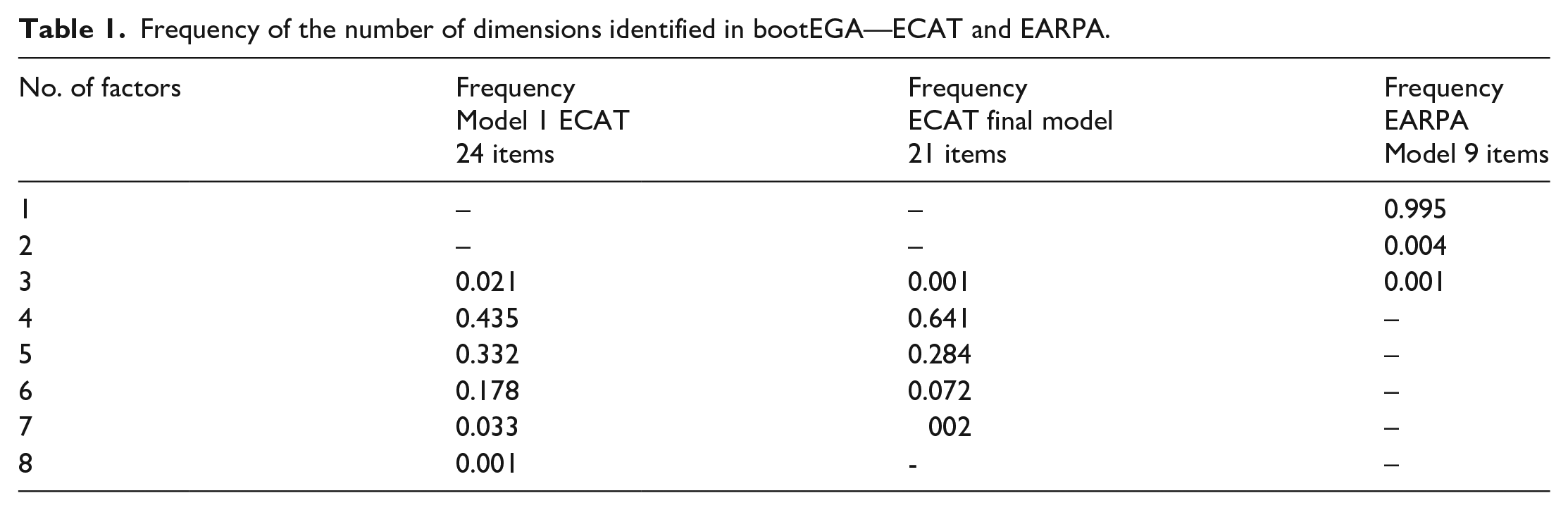
Frequency of the number of dimensions identified in bootEGA—ECAT and EARPA.
Analytic plan
This study applied EGA, a recently developed method to estimate the number of dimensions in multivariate data using undirected network models (Golino & Epskamp, 2017; Golino, Shi et al., 2020). EGA first applies a network estimation method followed by a community detection algorithm for weighted networks (Fortunato, 2010). The graphical least absolute shrinkage and selection operator (GLASSO; Friedman et al., 2008) and the Walktrap algorithm (Pons & Latapy, 2006) were applied. For more details on the network estimation method and community detection algorithm, and BootEGA, please check Supplementary Material. EGA was applied using the EGAnet (version 0.9.9; Golino et al., 2020), GGally (version 2.1.2; Schloerke et al., 2021), and ggplot2 (version 3.3.5; Wickham et al., 2021) packages in R (version 4.1.0; R Core Team, 2021) (see Supplementary Material for more details on the EGA).
Results
Figure 3 (Supplementary Material) shows the dimensionality of the initial ECAT model. Four clusters were estimated: (1) intervention, diagnosis, and etiology; (2) ASD in adulthood; (3) repetitive behaviors and restricted interests; and (4) socio-communicative development. When performing BootEGA with 1000 interactions, the median structure of the network presented the same factors estimated via EGA (see Figure 1). A five-cluster solution represented most of the dimensional structures found in the bootstrap analysis (48%). However, the six-cluster structure also had high frequency (35.2%) (Table 1).
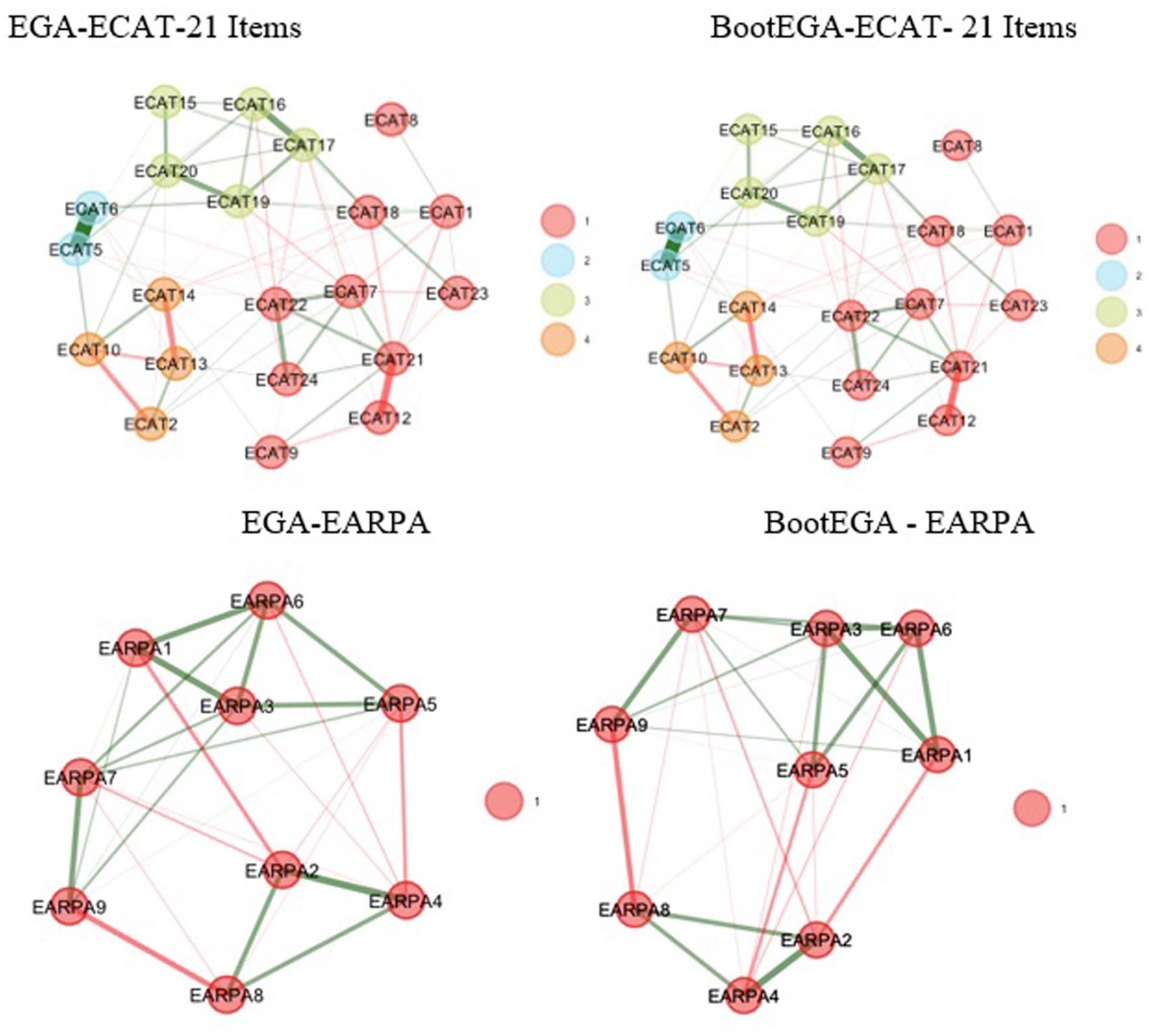
Dimensionality structure of ECAT-21 items using EGA (left) and bootEGA (right). Dimensionality structure of EARPA items using EGA (left) and bootEGA (right).
The relatively high frequency of two-dimensional structures in bootEGA (Factors 5 and 6) indicates that some nodes may not show good replicability. Figure 2 shows the replicability of the nodes, where nodes with replicability lower than 0.65 are unstable, indicating the need for a further EGA. Items ECAT25, ECAT11, ECAT4, ECAT23, and ECAT18 (Figure 6; Supplementary Material) had replication values lower than 0.65, so they are considered unstable items. Items 18 and 23 were maintained for theoretical reasons and the final model included 21 items.
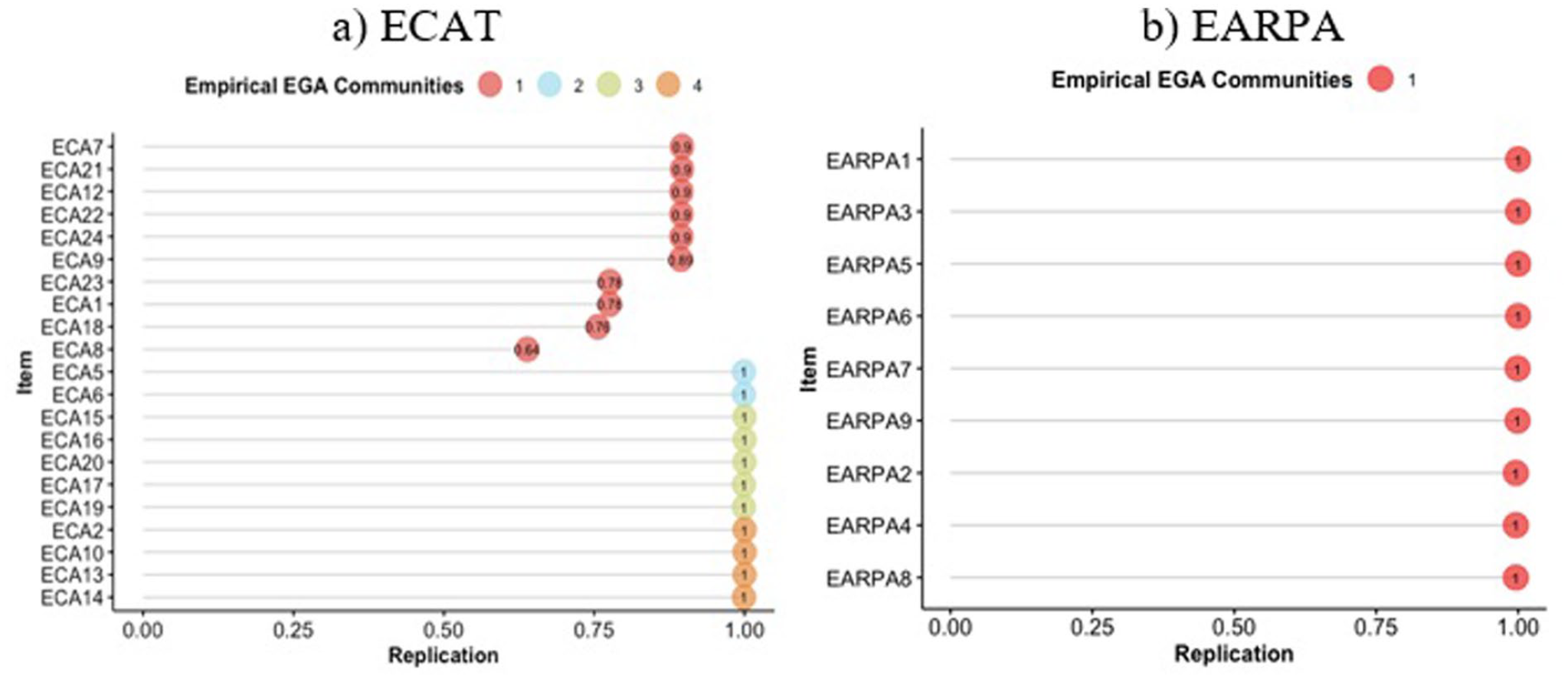
Replication of ECAT 21 items and EARPA 9 items in the original dimensions of the EGA:(a) ECAT and (b) EARPA.
Discussion
In this study, we investigated the psychometric properties of EARPA and ECAT through EGA, which allowed us to estimate the instruments’ dimensions in multivariate data using undirected network models. Simulation studies indicate better accuracy from EGA when compared to classic models (Golino & Epskamp, 2017). The ECAT’s final model indicated the presence of four clusters: (1) etiology, diagnosis, and intervention; (2) ASD in adulthood; (3) repetitive behaviors and restricted interests; and (4) socio-communicative development. Dimension 1 of the scale encompasses recent and scientifically grounded knowledge about the etiology, diagnosis, and interventions for autistic people, which in Brazil has been a priority in research about ASD, especially in health and political contexts (Brasil, 2013a, 2013b; Steyer et al., 2018). Dimension 2, however, is particularly relevant since it reflects knowledge about autistic characteristics in adulthood, a field that has been neglected in research and in instruments designed to investigate autism knowledge cross-culturally (e.g. Autism Stigma Knowledge—Questionnaire, Harrison et al., 2019). Dimensions 3 and 4 comprise knowledge about repetitive behaviors, restricted interests, and socio-communicative development, and core characteristics of ASD (American Psychiatric Association, 2013).
All the ECAT items showed good replicability, with the exception of Items 4, 11, 18, 23, and 25. Although they were considered unstable items, Items 18 and 23 were maintained in the final version of the scale since both capture constructs that reflect important knowledge about autism diagnoses (Item 18 about the prevalence and Item 23 about the diagnostic evaluation), which have been the focus of research and Brazilian political advocacy (Possamai, 2021; Steyer et al., 2018). The final EARPA model suggested a unidimensional model, with all the items demonstrating good replicability.
Although research about attitudes toward autistic people has increased dramatically in recent years, such research remains unrepresentative of most of the world’s cultural contexts, largely due to a lack of culturally adapted and psychometrically evaluated autism knowledge and stigma measures (Harrison et al., 2019) coupled with issues with the social validity of existing measures due to limited autistic input in measure development, which has led autistic adults and neurodiversity-aligned perspectives to be unrepresented in most existing measures. In Study 1, we began to address these issues by conducting a psychometric evaluation of measures of autism knowledge and stigma that were initially designed in collaboration with autistic people and were subsequently culturally adapted for a Brazilian cultural context. Prior to this study, there were no psychometric studies focused on either the original English versions of the ECAT and EARPA or their Brazilian adaptations. This study is a pioneer in carrying out an investigation into the psychometric properties of these two scales, in addition to presenting a new psychometric and theoretical perspective on attitudes about autistic people based on network science. By framing attitudes toward autistic people as dynamic interrelated concepts, the approach developed in Study 1 is novel in the broader literature and uniquely well-suited for examining how concepts may shift with training. In Study 2, we used a network analysis approach to evaluate potential changes in autism knowledge and stigma following a brief autism training.
Study 2
Method
Measures
Measures included a Sociodemographic Questionnaire (developed by the research team for sample characterization); The EARPA and ECAT were used to assess knowledge and attitudes about autism at pre- and post-test.
Participant characteristics
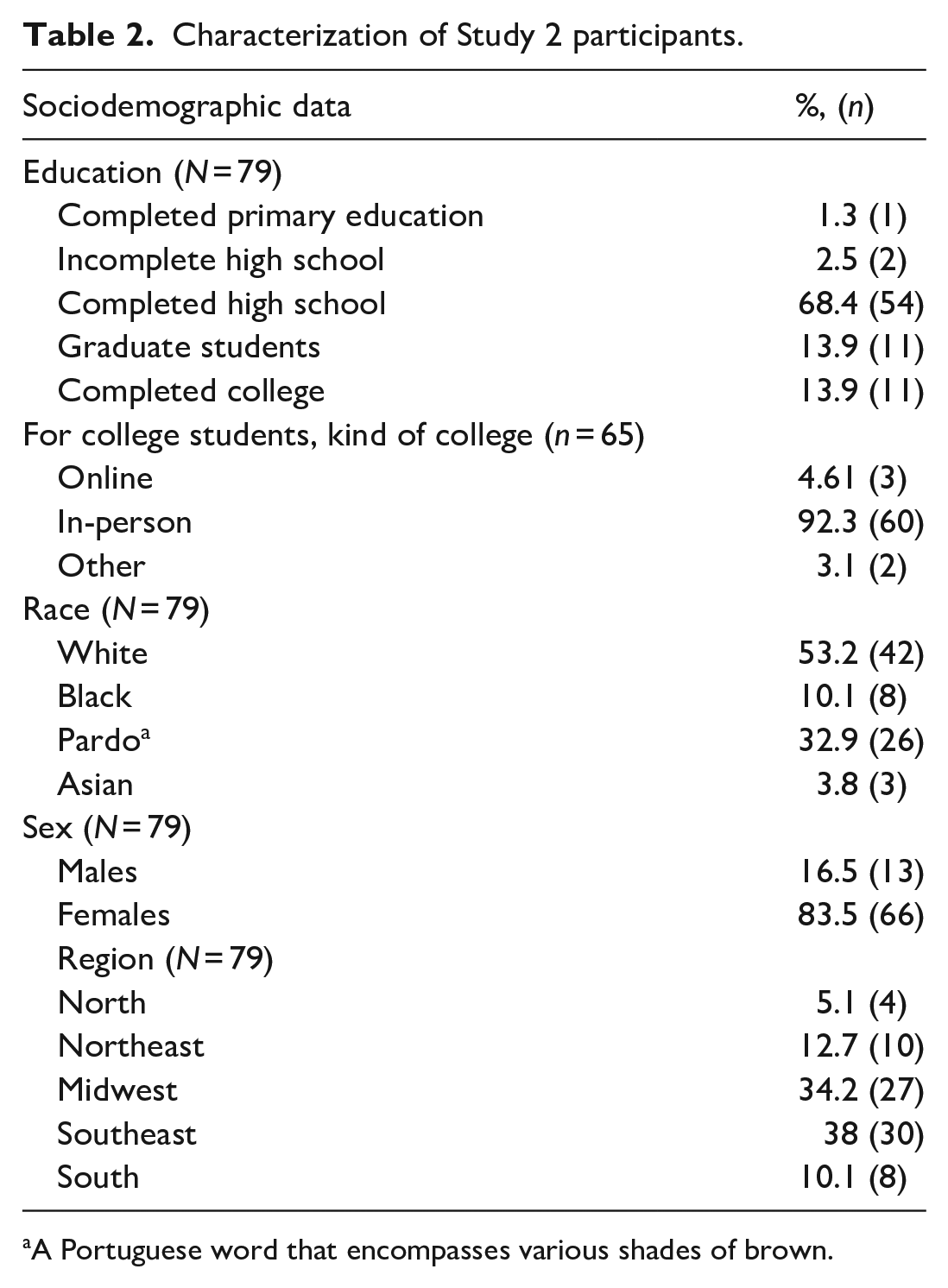
Study 2 is characterized as quasi-experimental with pre- and post-test without control group (Dancey & Reidy, 2018; Shaughnessy et al., 2012). For the intervention study, 136 Brazilians participated in a training evaluation, answering the scales twice, once before and once after the intervention. However, after a first investigation of the data, the authors found that many participants had completed the pre-test, training, and post-test in an amount of time insufficient to complete the training; 57 participants did not stay on the platform Qualtrics.com for at least 40 min (the amount of time deemed necessary for the questionnaires and the training to be done, even at increased speed), so they were excluded from the sample. Thus, the final sample included 79 people, most were college students (82.3%, n = 65), females (83.5%, n = 66), and white (53.2%, n = 42). Participant information is given in Table 2.
Characterization of Study 2 participants.
A Portuguese word that encompasses various shades of brown.
Online autism training
In total, the adapted version of the training had 89 slides, including texts, images, videos, and animations, and interactive questions about training content. Considering the cultural characteristics of the target public and thinking about accessibility and attractiveness, we chose to include an audio narration. When narrated, the intervention was a 1 h and 40 min long video. The video was hosted on a YouTube platform and a restricted access link was included on Qualtrics.com for a pilot study.
For the pilot study, five undergraduate students from different courses were recruited, without discretion of gender, age, or semester. For convenience, all of them were from the state of Minas Gerais, Brazil. Piloting in a single region of a vast and culturally diverse country like Brazil clearly limits the generalizability of our cultural adaptation process. However, Brazilian members of the research team are natives from different regions of the country (Midwest, Northeast, Southeast, and South), so an understanding of the different regions guided the adaptation process.
The main criticisms raised from the pilot participants were that the training was too long and that more “severe levels of autism” had not been properly represented. In response to these criticisms, the aforementioned video from a mother of an autistic teenager was added. The training duration was not modified since the authors believed reducing the time could compromise intervention quality.
Analytic plan
Descriptive analyses were performed to describe participant characteristics. To understand changes in the relationship patterns on items from the instruments ECAT and EARPA between pre and post-test, we examined both mean differences (see Supplementary Material) and network analyses (Hevey, 2018). In our study, we aimed to use network analyses to address issues that classical psychometric models have difficulty in achieving, such as time and process articulation (Schmittmann et al., 2013).
We ran a network for the study by phase and variable, that is, a network including the pre-test from the EARPA scale and another for the post-test, the same occurring for the ECAT. To interpret results, the following centrality measures were used: (a) strength—which indicates which variables show stronger connections inside the current pattern of the network; and (b) expected influence—which identifies which variables have more power to affect the system when undergoing modification (Robinaugh et al., 2016). See Supplementary Material for more details on the network estimation method.
Results
Autism knowledge scale (ECAT)
Table 3 (Supplementary Material) presents the means comparison between pre- and post-test from the ECAT. It reveals significant differences for most of the variables (using an alpha of 0.05 and non-parametric tests), except for Items 5, 7, 9, 23, and 24. Effect sizes are in Table 3 (Supplementary Material).
Items 4, 6, 8, 10, 11, 16, 17, 19, 20, 22, and 27 changed significantly with training. The effect size of differences between pre- and post-test means was small. Figure 3 and Table 4 (Supplementary Material) show the ECAT’s variables at two moments, pre- and post-test. During pre-test, the network had a sparseness of 0.72 and a total of 89 connections of the 312 possible inside the system. Following the intervention, sparseness was reduced to 0.65 and connections increased to 112.
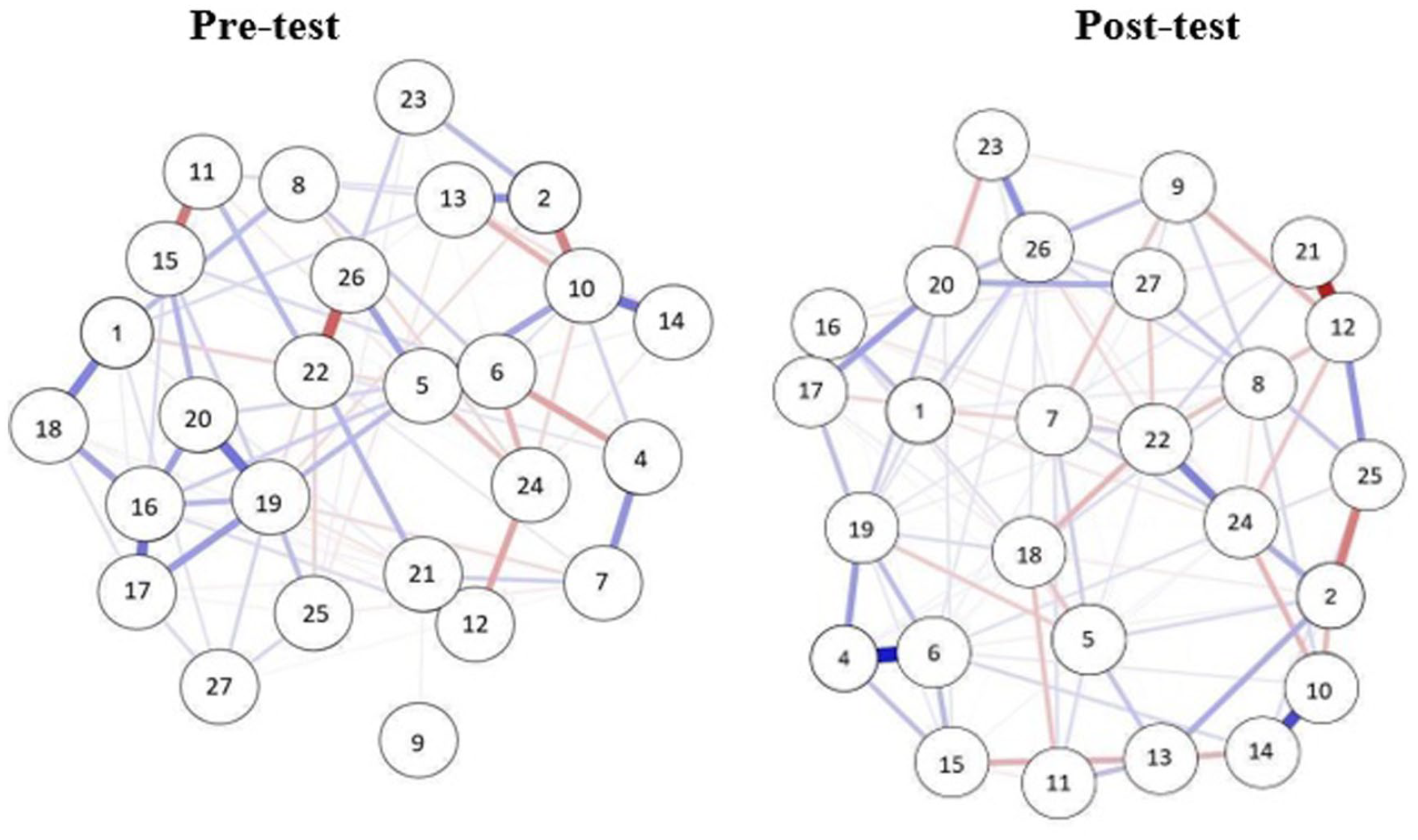
Pre-test and post-test from ECAT scale; n = 79.
The strength of the nodules also changed: at pre-test, the nodules that presented greater strength within the network were 5 (1.92), 6 (1.22), 10 (0.96), 16 (1.17), 19 (2.00), 21 (0.70), and 22 (1.12). Except for Items 5 (0.34), 10 (0.06), and 21 (−0.65), the Items 6 (1.52), 17 (1.03), 19 (1.26), and 22 (1.66) continued to exert strength on the system after the intervention, with some increases/decreases. In addition, Items 2 (0.39), 17 (0.03), and 24 (−0.09), which were not strong before, started to exert strength in the post-test (0.74, 1.03, and 0.99).
Another important aspect to highlight is the change found in the expected influence items in the pre- and post-test. In the pre-test, the items that were expected to change most after an intervention were 1 (0.72), 5 (1.49), 16 (1.94), 17 (1.09), 18 (0.71), 19 (1.46), and 20 (1.25). In the post-test, Items 1 (−0.05) and 18 (−0.86) lost influence, and Items 6 (2.06) and 26 (0.75) began to influence the system, in addition to Items 5 (1.49), 16 (0.88), 17 (1.48), and 20 (0.81).
Scale of attitudes toward people with autism (EARPA)
Table 5 (Supplementary Material) shows the comparison between pre and post-test of the EARPA variables/items. There was a significant difference in Items 1, 3, 5, 7, and 9. In items 2, 4, and 8, considered negative/inverse items, no significant changes were observed in the means before and after training.
Figure 4 and Table 6 (Supplementary Material) show the EARPA variables at two moments, pre and post-test. It is possible to observe change in the topography of the network after the training (Figure 4), corroborating the results found in the change of items with greater strength, which in the pre-test were 1 and 2 (with ratios of 0.91 and 1.75, respectively) changing, in the post-test, to Items 5, 6, and 8, which exert greater strength within the network with ratios of 1.22, 0.87, and 1.39, respectively (Table 6). In the pre-test, two variables had a greater number of connections (i.e. 1 and 2), in the post-test, it was observed that three different variables had a greater number of connections (i.e. 5, 6, and 8). This change helps to illuminate the decrease in the sparsity of the network, which was 0.36 in the pre-test, and in the post-test went to 0.33.
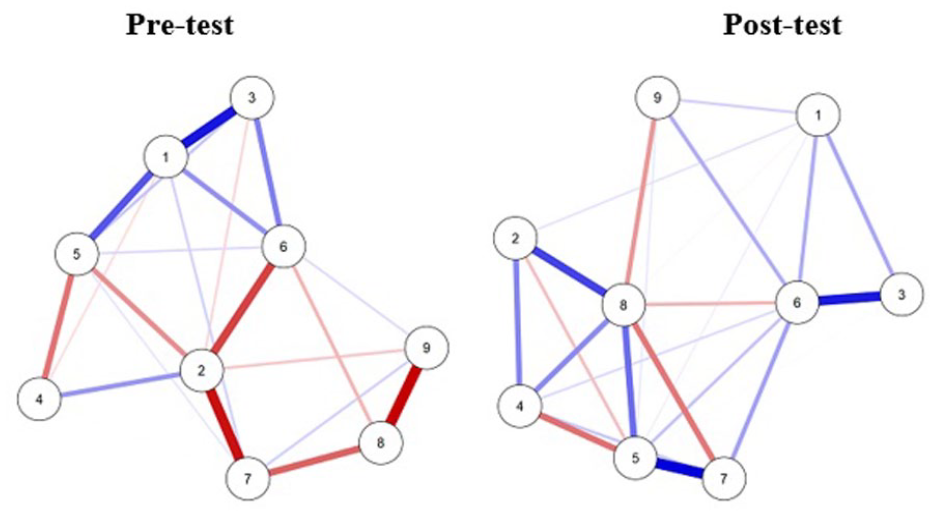
Pre-test and post-test networks for the EARPA scale; (n = 79).
The variable that presented the highest value of betweenness in the pre-test was Item 2, with a value of 1.85. In the post-test, Item 2 failed to yield a satisfactory measurement value for the connection between the nodes, assuming a value of −0.77. Although variable 6 already had a satisfactory value of 0.82 for betweenness at pre-test, in the post-test, its value increased to 1.71. The two other variables that changed their betweenness were 7 and 8, which in the pre-test had values of 0.57 and 0.57, respectively, and in the post-test obtained values of 0.72 and 1.21.
The expected influence for the EARPA network also changed. At pre-test, the influence was found in Items 1 and 3 (with 1.71 and 1.20 loads, respectively), changing in the post-test to Item 6, with a load of 1.96, showing positive effects of training in the network system.
Discussion
This study investigated if a short online training could modify stigma and knowledge about autism in a Brazilian sample. Generally, the results revealed significant changes in the means of most items of the EARPA and ECAT between pre and post-test, as well as important changes in all centrality indicators evaluated from the network analyses, in both scales.
The ECAT structure changed between pre- and post-test, increasing the number of connections and decreasing the network sparsity after the intervention. One of the most important changes was the higher connection of Item 9 in the post-test network. This is relevant because Item 9 assesses the inaccurate viewpoint that one can outgrow an autism diagnosis through interventions; findings show that, through training, other kinds of knowledge started to relate with the misconception that autism is curable. For example, items that indicate knowledge about autism diagnosis and prognosis (e.g. Items 8, 12, 23, and 26) started to influence wrong conceptions about whether autism can be outgrown, following training.
The items that showed the highest strength inside the network before the training were 5, 6, 10, 16, 19, 21, and 22. Except for Items 5, 10, and 21, these items continued to exert strength on the network after the intervention. Furthermore, Items 2, 17, and 24 started to exert strength at post-test. The ECAT strength index at pre- and post-test was related mostly to variables about the development of autistic people (Items 5 and 6) and knowledge about their characteristics/behaviors (Items 10, 16, 19, 2, and 17), all important information for the inclusion of autistic individuals, influencing attitudes by non-autistics toward autistic people (Turnock et al., 2022). Thus, it is promising that these items showed strength in the Brazilian sample, both pre- and post-test.
At pre-test, the items that were most expected to change (expected influence), after intervention were 1, 5, 16, 17, 18, 19, and 20. At post-test, Items 1 and 18 (about the diagnosis) lost influence, while Items 6 and 16 (about autism in adulthood and diagnosis of women) started to exert influence in the system. This change is important since in the Brazilian version of the training, two autistic men and an autistic woman spoke in videos about autism in adulthood and in women. Knowledge about these topics has rarely been disseminated in the Brazilian context, with the exception of recent research initiatives (Olivati & Leite, 2019; Rosa et al., 2019). For example, Olivati and Leite (2019) interviewed six autistic students (one female and five male) from a public university in the state of São Paulo, to investigate accessibility, relationships, and suggestions for improvements in the university context. The study contributed to the expansion of knowledge about autism in Brazilian adults, showing, for example, that all participants described information barriers as the main aspect limiting accessibility in their respective university units. The participants highlighted a need for more training to help educators better support different types of students, even though more than 20 years have passed since the implementation of inclusive education in the Brazilian context (Olivati and Leite, 2019).
In the EARPA at pre-test, the items with the greatest strength and the highest number of connections were 1 and 2, while in the post-test this changed to Items 5, 6, and 8. The variables that presented the most robust connections in the network pattern at pre-test signaled the individual’s openness to relationships with autistic people marked by a low level of intimacy and interaction (having lunch with an autistic person and accepting an autistic colleague), while in the post-test network, variables that indicate relationships with greater levels of intimacy and cooperation became more influential (building collaborative projects, friendships, and accepting intimate romantic relationships with a family member). These results corroborate the literature by showing that autism knowledge influences stigma (e.g. Gillespie-Lynch et al., 2015; Kim, 2020). Thus, findings suggest that participating in an online training may have improved participants’ negative views of autism, reducing stigma and increasing participants’ openness to building intimate and lasting relationships with autistic people.
The expected influence of the EARPA network also changed, moving from Items 1 and 3 (about having lunch and socializing with someone with ASD) to Item 6 (about friendships), which started to have greater power to affect the system after undergoing training. These findings reveal an improvement in the quality of intentions about interpersonal relationships. This change to Item 6 may indicate that future interventions could/should prioritize long-lasting relationships with a high level of intimacy (inclusion), and not just contact between non-autistic people with autistic people (integration). Future research and interventions should focus on preparing/adapting contexts to better include autistic people in different spaces, according to what is recommended in Brazilian inclusion laws (e.g. Law No 13,146/2015).
When considered together, the results indicate that, in this Brazilian sample, items that indicate an improvement in the understanding of the affective and emotional development of autistic people (ECAT) and an increase in availability to build affective bonds with autistic people (EARPA) showed changes in network centrality indicators. Although, quasi-experimental findings suggest that participation in an online training developed in collaboration with autistic people transformed non-autistic participants’ understandings and attitudes toward autistic people. Findings extend on the results of research developed by researchers in other countries using an adaptation of the same training (Gillespie-Lynch et al., 2021).
General discussion
The present research advanced the field by performing network analysis on measures of autism knowledge and stigma, thereby establishing knowledge and attitudes as complex systems, enabling the identification of changes in the interactive dynamics of the systems. Echoing prior work in other cultural contexts (e.g. Gillespie-Lynch et al., 2015, 2021; Obeid et al., 2015; Someki et al., 2018), the autism training evaluated in the present research appeared to improve autism knowledge and stigma among Brazilian participants. The current research also provided the first evidence that autism trainings may alter dynamic interrelationships between concepts about and attitudes toward autistic people.
Future research comparing data from Brazil with data from other countries is needed to identify specific cultural factors that may shape attitudes toward autistic people in Brazil in particular, and potential cultural particularities about the psychometric properties of the scales and training effects. By expanding the sample, the regional particularities of different parts of Brazil could also be investigated to guide regionally specific training adaptations. Comparisons could be performed using classical statistics, as has been done in previous studies (Obeid et al., 2015; Someki et al., 2018), and the network paradigm, which has shown to be satisfactory and promising for understanding interactive dynamics of the variables investigated.
Given that stigma often varies based on diagnostic categories (Gillespie-Lynch et al., 2019; Mothersill et al., 2021) but diagnostic categories often co-occur and lack clear boundaries from one another (e.g. Fletcher-Watson, 2022), a network approach could be useful for understanding interrelationships between attitudes toward autism and other conditions, for example, intellectual, or physical disabilities, to guide the development of interventions that target stigma toward neurodivergent people more broadly.
Interventions, such as the one presented in this study, which are brief and free of charge, can be particularly useful. However, it should be noted the fact that the study carried out exclusively in online format is an important limitation, as many Brazilians were prevented from participating because they did not have access to the Internet, which can be better explored in future research, with face-to-face data collection. It is also worth noting that the dropout rate from the training was very high. One potential reason for such a loss is the historical moment experienced during this research (the COVID-19 pandemic). During this period, practically all teaching activities were relocated to the remote format, generating fatigue for students and teachers, which may have negatively impacted adherence in a non-mandatory activity.
Another limitation of the study is that we did not assess whether the training video was watched all at once or whether participants watched it in pieces. How people engage with training materials should be better investigated in future studies. Future research should aim to improve the attractiveness and accessibility of the training and evaluate the impact of adaptations on participant outcomes. In the pilot study, the possibility of reducing the training duration was raised, and the authors considered it a challenge to do this without compromising the quality of the training. Some alternatives, however, could be adopted to improve training attractiveness and reduce participant fatigue, such as dividing it into modules, introducing gamification, and/or presenting it with more animation. Future research with larger and more diverse samples should examine if benefits of training only last in the immediate aftermath of a training or maintain over time. Promisingly, initial evidence of maintenance of training benefits a month after training was recently demonstrated following a participatory autism training for university educators (Waisman et al., 2022). Future work should examine if benefits of training also maintain for students and if they lead to measurable changes in observed behaviors toward autistic people rather than just self-reported attitudes.
Conclusion
When taken together, the results of the two studies presented here innovate and contribute by (a) providing psychometric evidence of two scales for use in Brazil and (b) presenting the Brazilian version of a brief online training, which was associated with transformations in stigma and knowledge about autism, as well as transformations in the dynamics of relationships in complex conceptual networks. This study corroborates international studies and advances the field by introducing an analysis not yet used in prior research examining attitudes toward autistic people. Findings suggest that the Brazilian version of the training and associated analytic approach has the potential to be applied and better studied in other Brazilian and non-Brazilian contexts.
Supplemental Material
sj-docx-1-aut-10.1177_13623613231168917 – Supplemental material for Stigma and knowledge about autism in Brazil: A psychometric and intervention study
Supplemental material, sj-docx-1-aut-10.1177_13623613231168917 for Stigma and knowledge about autism in Brazil: A psychometric and intervention study by Ana Gabriela Rocha Araujo, Mônia Aparecida da Silva, Paulo Felipe Ribeiro Bandeira, Kristen Gillespie-Lynch and Regina Basso Zanon in Autism
Footnotes
Declaration of conflicting interests
The author(s) declared no potential conflicts of interest with respect to the research, authorship, and/or publication of this article.
Funding
The author(s) disclosed receipt of the following financial support for the research, authorship, and/or publication of this article: A.G.R.A. received funding from Fundação de Apoio ao Desenvolvimento do Ensino, Ciência e Tecnologia do Estado de Mato Grosso do Sul, and Paulo Felipe Ribeiro Bandeira: BPI-FUNCAP Research Productivity Grant 04-2022.
ORCID iDs

Supplemental material
Supplemental material for this article is available online.
References
Supplementary Material
Please find the following supplemental material available below.
For Open Access articles published under a Creative Commons License, all supplemental material carries the same license as the article it is associated with.
For non-Open Access articles published, all supplemental material carries a non-exclusive license, and permission requests for re-use of supplemental material or any part of supplemental material shall be sent directly to the copyright owner as specified in the copyright notice associated with the article.
