




Abstract
Mind wandering constitutes a major part of everyday experience and is inherently related to how we feel and identify ourselves. Thus, probing the character and content of thoughts and feelings experienced during mind-wandering episodes could lead to a better understanding of the human mind in health and disease. How mind wandering and spontaneous thought processes are affected in disorders such as autism is poorly understood. Here, we used the eyes-closed rest condition to stimulate mind wandering and quantified the subjective experiences using the Amsterdam Resting-State Questionnaire—which quantifies subjective psychological states of resting-state cognition across 10 domains—in 88 adults with autism spectrum disorder and 90 controls. We observed an atypical pattern of both thoughts and feelings in the autism spectrum disorder cohort, specifically in the domains of Theory of Mind, Comfort, and Discontinuity of Mind. We propose that the use of the Amsterdam Resting-State Questionnaire as a standardized cognitive instrument could advance our understanding of thoughts and feelings in autism spectrum disorder as well as in a wide variety of other brain disorders and how these may change due to therapeutic interventions.
Lay abstract
Everyone knows the feeling of letting one’s mind wander freely in a quiet moment. The thoughts and feelings experienced in those moments have been shown to influence our well-being—and vice versa. In this study, we looked at which thoughts and feelings are being experienced by adults with autism spectrum disorder and compared them to adults without autism spectrum disorder. In total, 88 adults with autism spectrum disorder and 90 adults without autism spectrum disorder were asked to rest for 5 min with their eyes closed and let their mind wander. Directly after, they filled in the Amsterdam Resting-State Questionnaire, which probes what participants were feeling and thinking during the period of rest. We found that adults with autism spectrum disorder tend to think less about others, felt less comfortable, and had more disrupted thoughts during the rest compared to adults without autism spectrum disorder. Interestingly, autism spectrum disorder participants reporting lower levels of comfort during the rest also reported more autism spectrum disorder symptoms, specifically in social behaviors and skills, attention switching, and imagination. We propose to use the eyes-closed rest condition in combination with the Amsterdam Resting-State Questionnaire more widely to shed light on aberrant thoughts and feelings in brain disorders and to study the effect of therapeutic interventions.
Introduction
Mind wandering—the spontaneous distractions from the task at hand—is a useful property of the mind, for example, when reflecting on the past or planning the future (Buckner & Carroll, 2007); however, more frequent mind wandering can impact well-being in a negative way (Killingsworth & Gilbert, 2010). Future planning (Smallwood et al., 2011), personal goal resolution (Baird et al., 2011), inspiration, and creative problem solving (Baird et al., 2012) are among the adaptive functions served by mind wandering. On the flip side, mind wandering has also been associated with maladaptive consequences for health (Mooneyham & Schooler, 2013). It can be detrimental to mood and contribute to rumination, leading to or worsening the symptoms in disorders such as depression (Hamilton et al., 2011, 2015), insomnia (Harvey, 2002), and anxiety or attention deficit hyperactivity disorder (ADHD) (Christoff et al., 2016). This demonstrates the importance of investigating mind wandering and its role in health and disease.
Given the unconstrained nature of thoughts occurring during rest, the wakeful rest condition shares many similarities with the state of mind wandering—where attention drifts away from the task at hand. Thus, “the resting state” has emerged as a model system to study stimulus-independent thoughts and feelings and can be considered a proxy of the mind-wandering state (Stoffers et al., 2015). The content and character of thoughts and feelings during rest can be effectively measured using the Amsterdam Resting-State Questionnaire (ARSQ) (Diaz et al., 2013, 2014). It quantifies subjective psychological states of resting-state cognition across 10 domains named Discontinuity of Mind, Theory of Mind, Self, Planning, Sleepiness, Comfort, Somatic Awareness, Health Concern, Visual Thought, and Verbal Thought (Figure 1). In a large non-clinical population, we previously found that especially the lack of “Comfort” or experiencing “Discontinuity of Mind” during rest are associated with critically high scores on symptoms of depression, insomnia, and anxiety, suggesting that multiple brain disorders could impact cognition during rest (Diaz et al., 2013, 2014). Indeed, subsequent investigations reported distinct ARSQ profiles in clinically diagnosed insomniacs compared to healthy controls (Palagini et al., 2016). In people without insomnia, not only elevated scores on Sleepiness but also reduced scores on Planning and Theory of Mind have been shown to predict sleep-onset latency, further supporting the applicability of the ARSQ to capture functionally relevant cognitive states (Diaz et al., 2016). The questionnaire has been validated with data gathered from studies measuring resting-state fMRI (Marchetti et al., 2015; Stoffers et al., 2015) and EEG (Diaz et al., 2013, 2016), showing that individual variation in multiple dimensions of the ARSQ are related to individual variation in brain activity during rest.
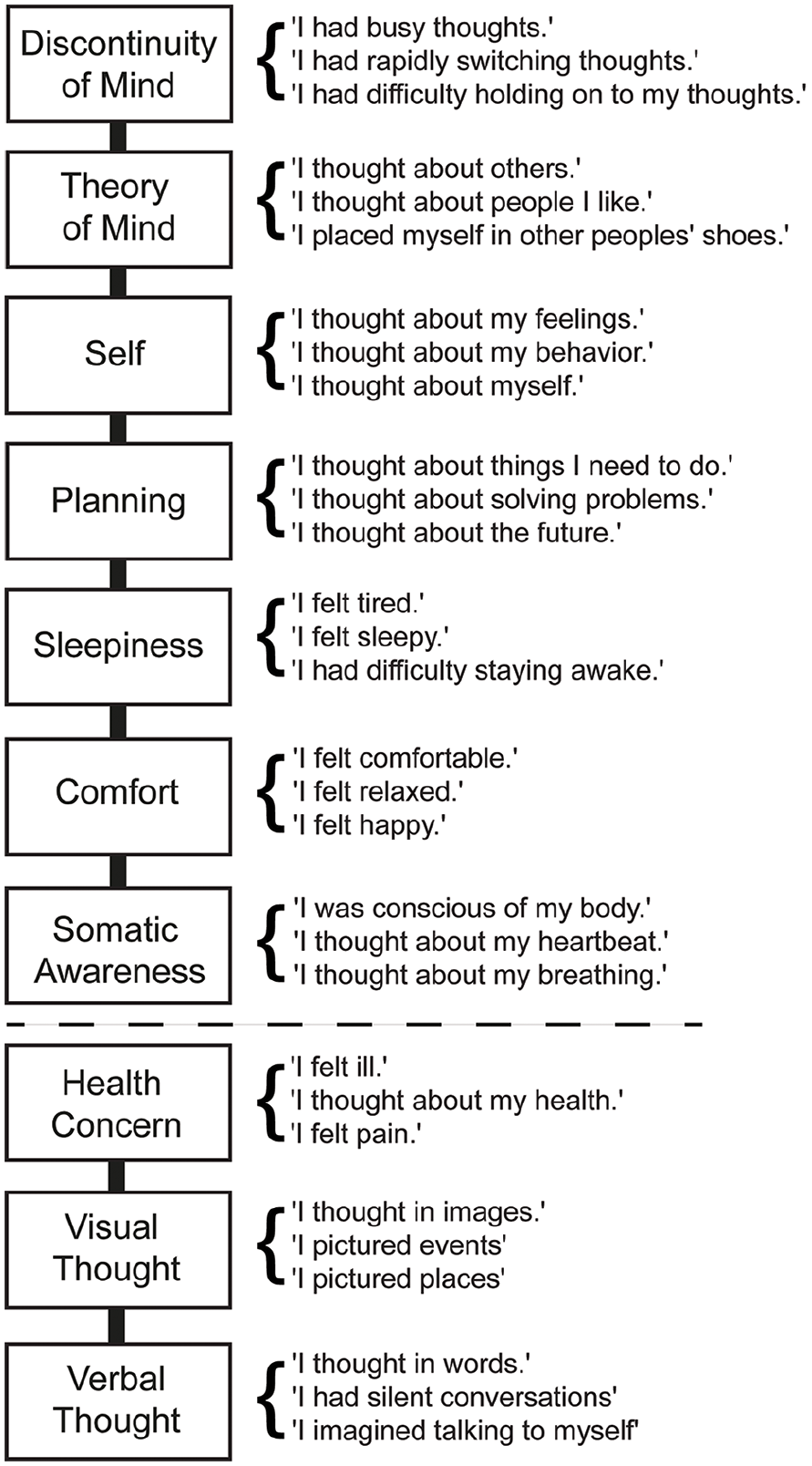
The ten-factor model of mind wandering derived from the Amsterdam Resting-State Questionnaire (Diaz et al., 2014).
Autism spectrum disorder (ASD) is a neurodevelopmental disorder characterized by impairments in social abilities, restricted interests, and repetitive behaviors (Diagnostic and Statistical Manual of Mental Disorders (5th ed.; DSM-5) Task Force; American Psychiatric Association, 2013). Given the difference in resting-state neural activity and the lack of deactivation of default mode network activity during cognitive tasks in individuals with ASD compared to neurotypical individuals (Kennedy et al., 2006), it is plausible that these cohorts would also have different resting-state cognitions; however, this remains unknown. Most research has focused on non-spontaneous cognition such as the ability of individuals with ASD to reflect on or imagine certain situations when explicitly cued (Cygan et al., 2019; Robinson et al., 2017; Varga, 2011). One study showed that dysfunctional automatic thoughts in youth with ASD and co-occurring anxiety play a strong role in anxiety (Keefer et al., 2018); however, the role of spontaneous cognitive processes in ASD remains poorly understood. In this study, we characterized the subjective, internally oriented experience during eyes-closed rest by administering the ARSQ to adults with and without ASD. Given that the literature on the association between ASD and mind wandering is limited, our study was explorative rather than testing specific hypotheses. We did expect, however, that especially self-referential thoughts and thoughts about others would be altered in ASD, since this is a specific feature that has been observed in autistic individuals. Furthermore, we were interested in the relationship between resting-state cognition and autistic traits in the ASD group.
Materials and methods
Participants: the ASD cohort
The present data were collected as part of a larger project investigating adults both with and without ASD. The ASD cohort was recruited through the Netherlands Autism Register, a longitudinal register with approximately 2500 members with a clinical ASD diagnosis (www.nederlandsautismeregister.nl/english). All participants signed an informed consent form and were financially reimbursed for their participation. Inclusion criteria were a clinical diagnosis of ASD (according to DSM-5), Asperger’s syndrome, pervasive developmental disorder–not otherwise specified (PDD-NOS), or autism (according to Diagnostic and Statistical Manual of Mental Disorders (4th ed.; DSM-IV)), aged between 18 and 55 years, and have no intellectual disorder. The final sample consisted of 91 adults (50 females), aged between 20 and 56 years (mean: 43.8, standard deviation (SD): 9 years). Sample demographics are reported in Supplemental Table S1.
Participants: the control cohort
The control cohort comprised of two samples: first, university students (n = 43) who took part in eyes-closed rest experiments as part of their courses. Second, control participants from the project described in the section above (n = 47). Full informed consent was obtained from all participants. In total, the control sample consisted of 90 participants (65 females), aged between 19 and 55 years (mean: 31.1, SD: 11.8 years). A brief self-report questionnaire was provided to all potential participants, which assessed whether potential participants were suited for inclusion in this study. Exclusion criteria included any history of mental, neuropsychological or neuropathological disorders, as well as the use of recreational drugs in the past 3 months. Demographics of the participants are presented in Supplemental Table S1.
Amsterdam resting-state questionnaire
The ARSQ (Diaz et al., 2013, 2014) consists of 50 items related to thoughts and feelings that may be experienced during a state of rest and five validation items (e.g. “I was able to rate the statements”). All items are scored on a scale from “Completely Disagree” to “Completely Agree” on a five-point scale. The ARSQ allows the derivation of the following cognitive dimensions by averaging the scores (1–5) over the three items representing the following dimensions: Discontinuity of Mind, Theory of Mind, Self, Planning, Sleepiness, Comfort, Somatic Awareness, Health Concern, Verbal Thought, and Visual Thought. The complete list of items comprising these 10 dimensions is listed in Figure 1. We note that the construct of Theory of Mind from developmental and social psychology pertains to the ability to reason about other’s mental states and correctly infer predictions about their behavior (Baron-Cohen et al., 1985). In contrast, the ARSQ factor Theory of Mind measures more the inclination to reflect on other people’s minds (mentalizing). As such, the ARSQ measures a proclivity, while the classic concept of Theory of Mind generally refers to a capacity. The remaining ARSQ items, which do not belong to one of the dimensions, are listed in (Diaz et al., 2013). The overall internal consistency of the ARSQ, estimated by Cronbach’s α, was 0.76.
AQ-short questionnaire
The AQ-short (hereafter AQ) is an abridged version of the autism quotient, a self-report questionnaire on autistic symptoms (Hoekstra et al., 2008, 2011). The AQ consists of 28 statements that are rated on a four-point scale (1–4) from “Definitely Disagree” to “Definitely Agree.” The scoring is reversed for the 13 items where a “disagree” response is characteristic for autism. The statements are clustered into two main factors “Numbers/Patterns” and “Social Behavior,” consisting of 5 and 23 items, respectively. The latter factor can be further split up into the factors “Social Skills,” “Routine,” “Attention Switching,” and “Imagination,” consisting of 7, 4, 4, and 8 items, respectively. To obtain factor scores as well as the total AQ, scores from respective items are summed. The higher the score, the higher the indication of autistic traits. The mean total score of the ASD sample was 87.3 (SD = 8.8, range from 70 to 102), with 65 being the recommended cut-off (Hoekstra et al., 2011). The AQ questionnaire showed a Cronbach’s α of 0.82.
The experimental condition
Participants took part in a 5-min eyes-closed rest condition during which subjects received the instruction “Please keep your eyes closed, relax and try not to fall asleep.” Immediately, when the 5 min had passed, resting-state cognition was assessed using the ARSQ version 2.0 (Diaz et al., 2014).
Statistical analysis
ARSQ items are ordinal variables; therefore, we tested for differences between the ASD and control cohort using the Wilcoxon rank-sum test. False discovery rate (FDR) was used to correct for multiple comparisons (q = 0.05). Correlation analysis between AQ scores and ARSQ factors was performed with Spearman’s ρ coefficient and FDR correction (q = 0.05).
Results
Adults with ASD have atypical thoughts and feelings during rest
To investigate the content and character of thoughts and feelings experienced by adults with ASD during mind wandering, we asked a cohort of adults with ASD (n = 91) and a control cohort (n = 90) to rest with their eyes closed for 5 min immediately followed by rating the full list of 55 items in the ARSQ on a five-point Likert-type scale from completely disagree to completely agree (Diaz et al., 2013, 2014). From the ASD cohort, three subjects were excluded on the basis of their answers to ARSQ validation questions (e.g. reporting a score 1 on “I had my eyes closed”). Therefore, data from 90 control participants and 88 adults with ASD were available for subsequent analysis. Individuals with ASD presented pronounced differences in thoughts and feelings during the resting-state session as reflected in the ARSQ factor scores. In particular, ASD participants scored lower than controls on Theory of Mind, Comfort, Visual Thought, Somatic Awareness, and Planning, whereas Discontinuity of Mind showed higher scores (Figure 2, Table 1). To investigate whether these findings could be explained by differences in age (with the control group being younger than the ASD group), we performed analysis of covariance (ANCOVA) on ARSQ factors. Covariate analysis did not change the outcomes, as the ARSQ factors were not found to be significantly influenced by age (Supplemental Table S2).
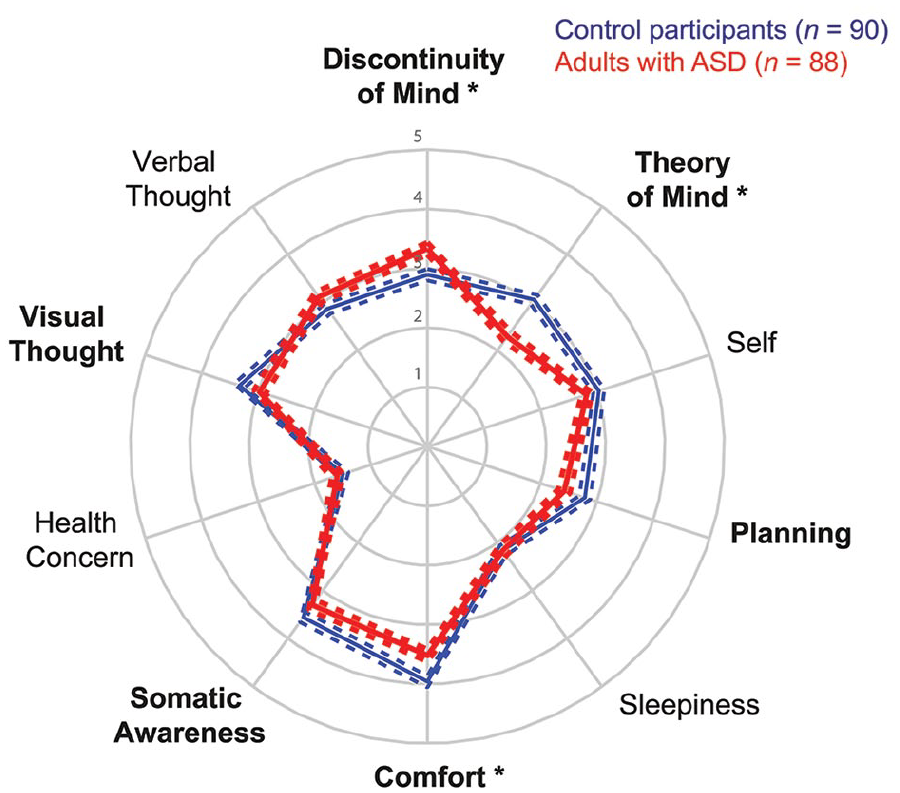
The pattern of thoughts and feelings during rest is atypical in ASD.
Several ARSQ factors differ between the ASD cohort and controls.
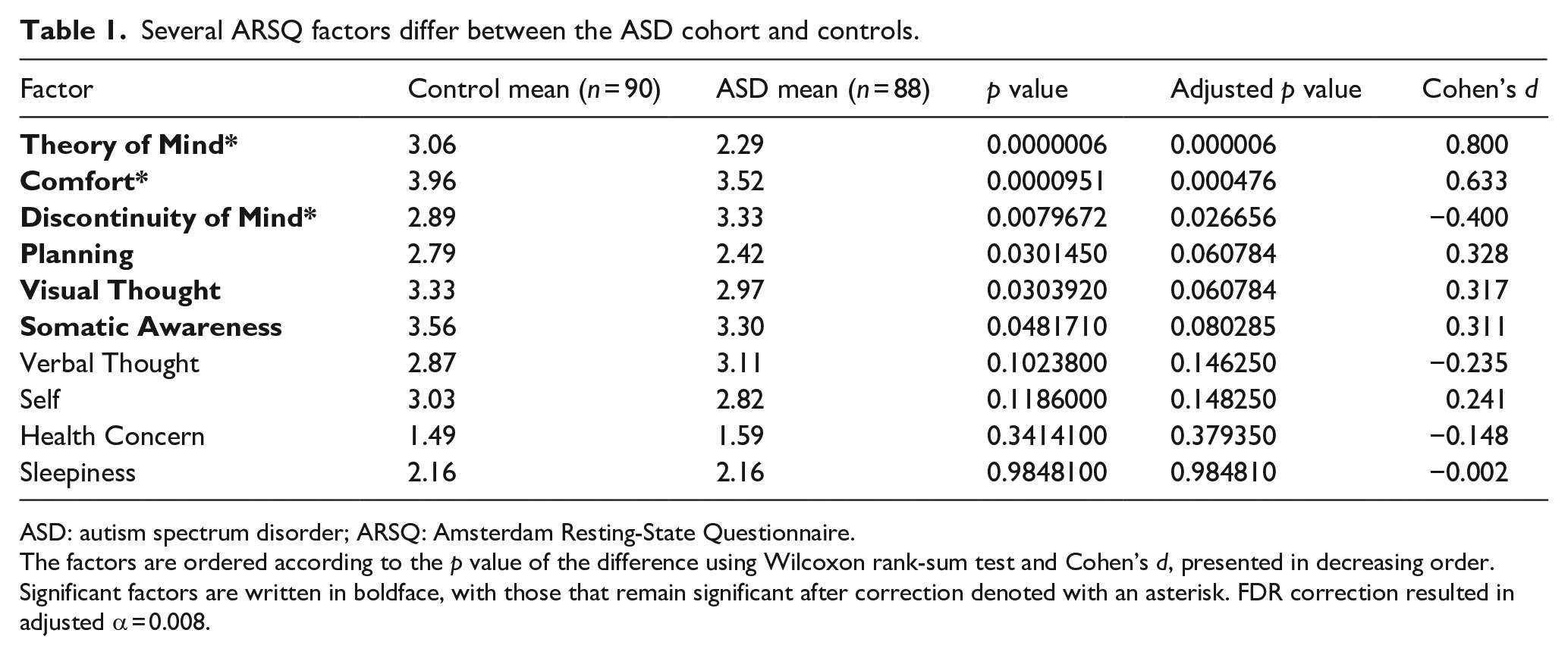
ASD: autism spectrum disorder; ARSQ: Amsterdam Resting-State Questionnaire.
The factors are ordered according to the p value of the difference using Wilcoxon rank-sum test and Cohen’s d, presented in decreasing order. Significant factors are written in boldface, with those that remain significant after correction denoted with an asterisk. FDR correction resulted in adjusted α = 0.008.
Several ARSQ items that were scored by the participants are not part of the 10-domain factor solution; however, they may still convey important information about the cognitive state. Therefore, we also analyzed the ARSQ for effects at the item level and found significant differences in 14 ARSQ items (Table 2). Differences between the ASD and the control cohorts were largely related to switching their thoughts, thinking about other people, internal monologues, mood, comfort, or somatosensory awareness. Individuals with ASD thought less about others, experienced less control over their thoughts, had more prominent internal monologues, felt less relaxed, and had greater awareness of sensory surroundings than the controls (Figure 3). Interestingly, five items that do not belong to any of the 10 factors of the ARSQ 2.0 also showed significant differences. In particular, we note that the ASD cohort felt more restless and thought more about the sounds and odors around them (Table 2).
ARSQ questionnaire items reveal differences in thoughts and feelings during rest between the ASD and the control cohorts.
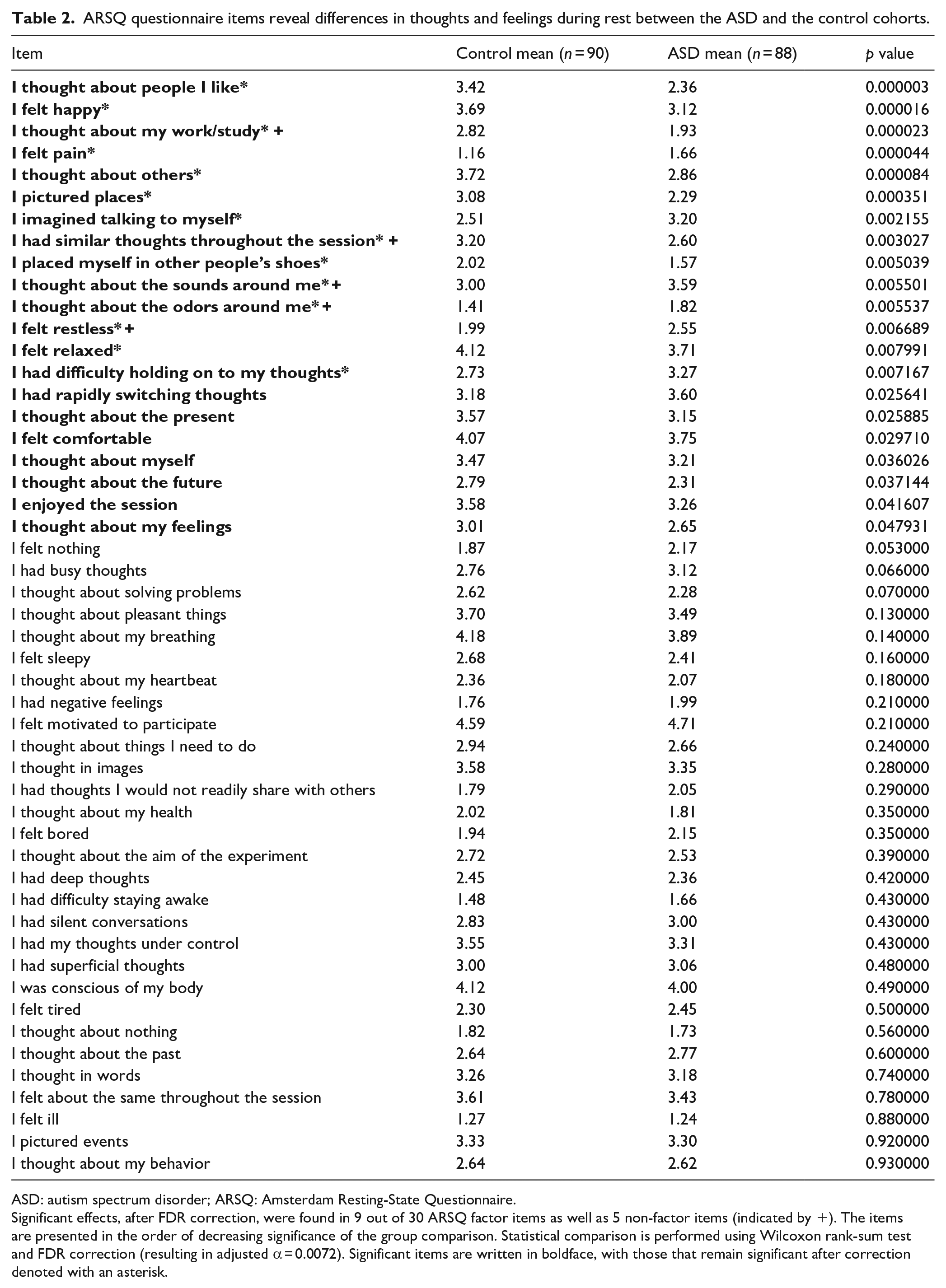
ASD: autism spectrum disorder; ARSQ: Amsterdam Resting-State Questionnaire.
Significant effects, after FDR correction, were found in 9 out of 30 ARSQ factor items as well as 5 non-factor items (indicated by +). The items are presented in the order of decreasing significance of the group comparison. Statistical comparison is performed using Wilcoxon rank-sum test and FDR correction (resulting in adjusted α = 0.0072). Significant items are written in boldface, with those that remain significant after correction denoted with an asterisk.
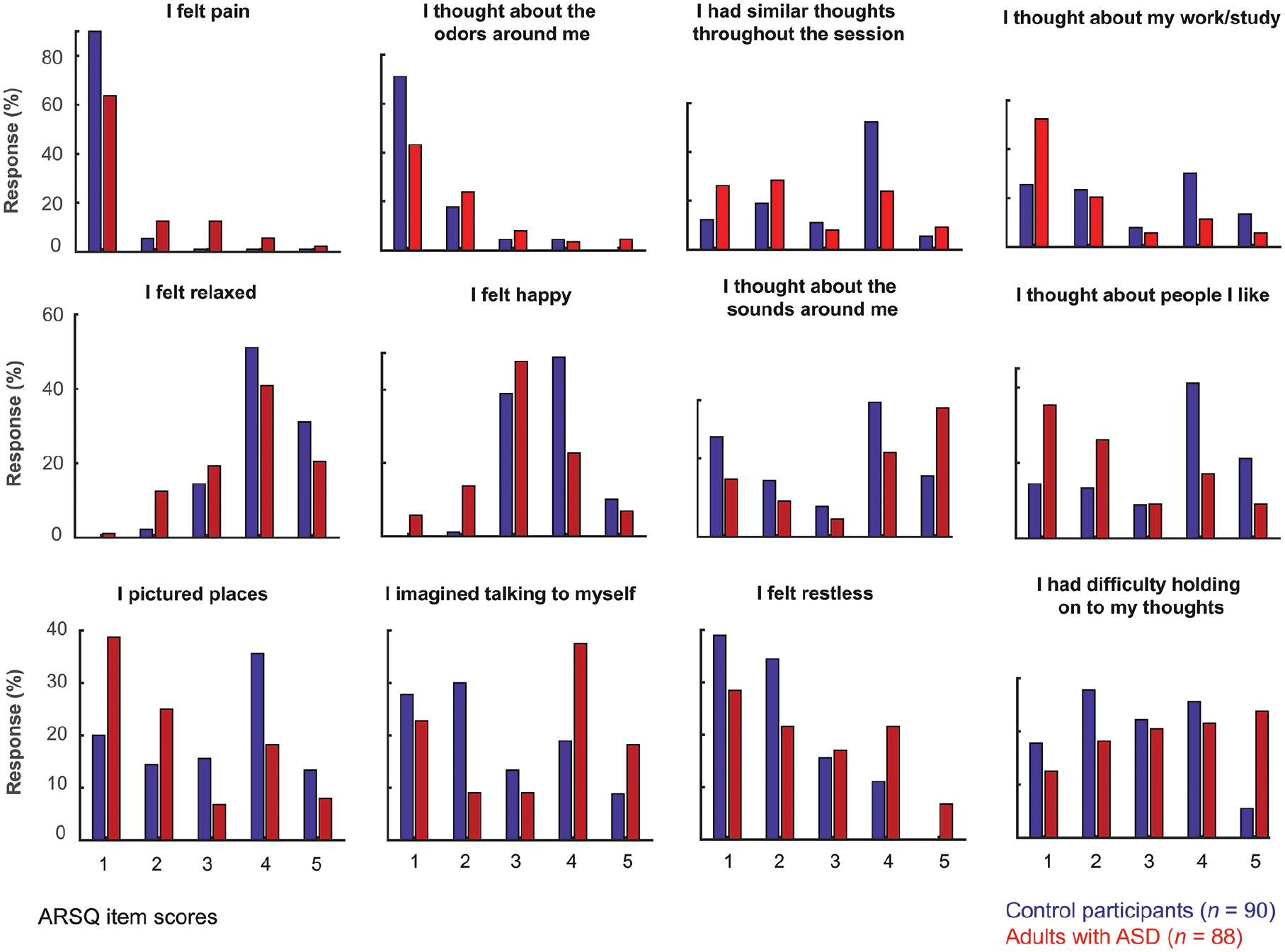
Aspects of resting-state cognition are altered in ASD, compared to control participants.
Interestingly, no significant differences were found on self-directed thoughts such as thoughts about oneself, behavior, and feelings (items “I thought about my feelings,” “I thought about my behavior,” and “I thought about myself”). They were also similarly likely to experience negative feelings as well as pleasant thoughts (“I had negative feelings” and “I thought about pleasant things”). In addition, individuals with ASD had no more health concerns than the control subjects (“I felt ill” and “I thought about my health”).
The fact that half of the control sample was composed by university students might have an impact on some of the results, considering the differences in students’ age, culture, and lifestyle. Therefore, we investigated whether there is a difference in resting-state cognition profiles between the two control cohorts. Using Wilcoxon rank-sum test, we found no significant difference among the 10 ARSQ factors.
ASD symptoms correlate with resting-state phenotypes
To probe the relationship between thought patterns during rest and ASD severity, we performed a correlation analysis on ARSQ factors and the AQ in the ASD sample. We found several associations between the ARSQ factors and AQ factors; however, due to a high number of correlation combinations and a comparatively small sample size, only the strongest correlation remained significant after FDR correction (Figure 4, Supplemental Table S3). The most prominent one was between the ARSQ factor Comfort and the higher order AQ factor Social Behavior, which were negatively correlated. The higher order factor Social Behavior comprises sub-factors Social Skills, Routine, Attention Switching, and Imagination, with a higher score indicating a higher severity of autistic traits relating to these four domains. Therefore, the higher the severity of autistic traits related to social behavior, the less relaxed and comfortable the individual was during the resting state. In contrast, there was a positive correlation between the ARSQ factor Planning and the AQ factor Numbers and patterns. That is, the more fascinated the adults with ASD were by numbers, dates, and patterns, the more likely they were to plan ahead and have thoughts related to problem solving during the resting session. The AQ factor Switching, with a higher score indicating a lower ability to switch between tasks or do several things at once, was negatively correlated with feeling comfortable. High scores on the AQ factor Imagination indicate a lower ability of creating mental images, inventing stories, or social imagination, and this was associated with less imagery of events and places during the rest session (ARSQ factor Visual Thought). The total AQ score was negatively correlated with Comfort, that is, a higher autism severity was associated with feeling less comfortable. Taken together, our results indicate that certain elements of thoughts and feelings during rest could be related to specific dimensions of autism symptomatology.
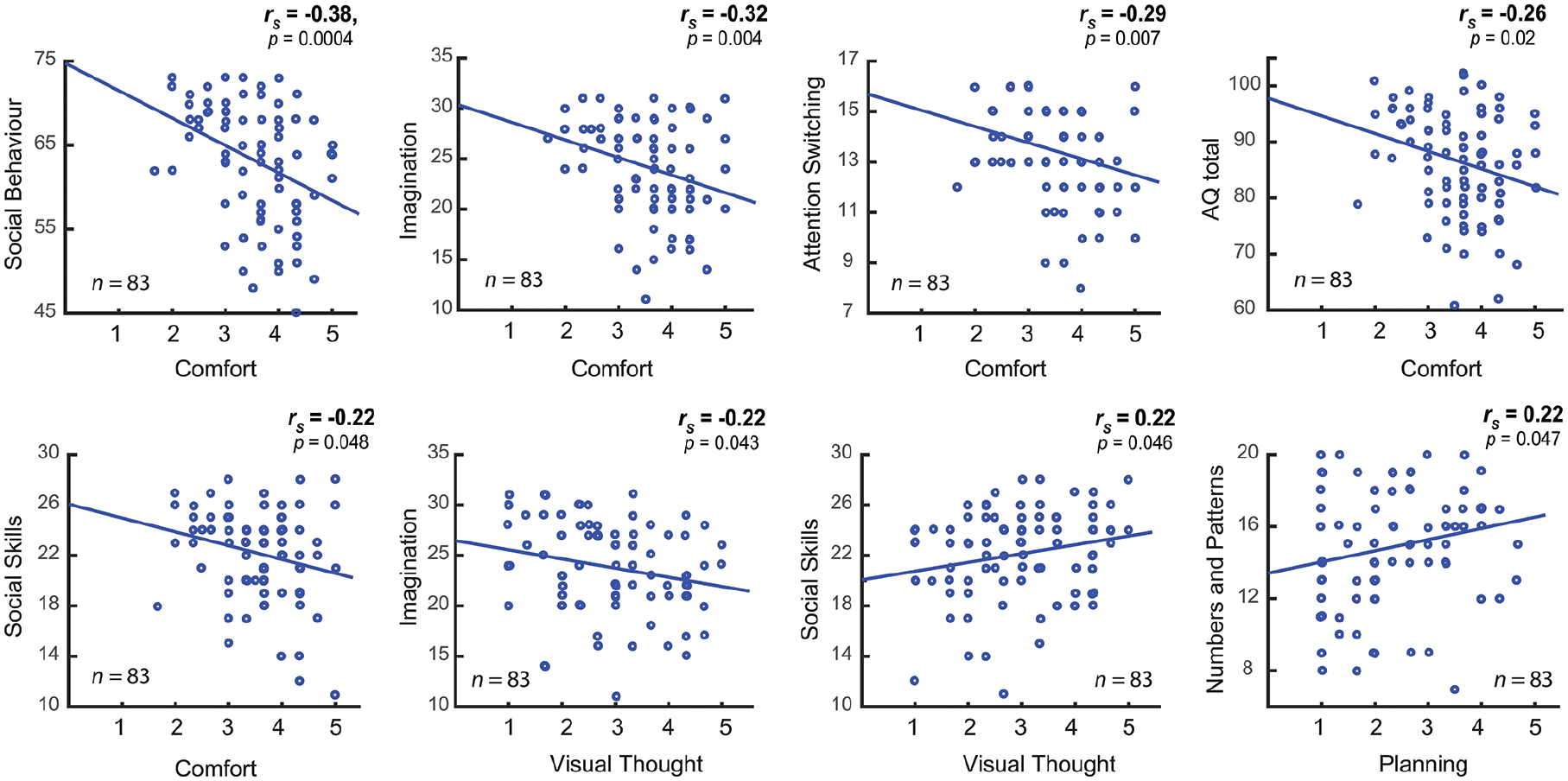
Autism severity shows trends toward associations with thought patterns during rest.
Discussion
In this study, we investigated resting-state thoughts and feelings in adults with ASD and investigated their possible associations with autism symptomatology. Resting-state cognition in adults with and without ASD was assessed using ARSQ after a 5-min eyes-closed resting session. Our results show that feelings as well as the content and character of thoughts—such as the stability of thoughts—were atypical in adults with ASD. In addition, we found some of these resting-state experiences to be associated with autism symptoms.
Several aspects of resting-state cognition were found to be altered in ASD individuals compared to control participants. The ASD cohort experienced robustly less control over their thoughts (Discontinuity of Mind), less thoughts about others (Theory of Mind), and less Comfort (Figure 2, Table 1). They also had more internal monologues (“I imagined talking to myself”) and greater awareness of their surroundings (Figure 3, Table 2). Albeit only a trend after FDR correction, the data also pointed toward less visual imagery (Visual Thought), less Planning, and a lower awareness of bodily sensations (Somatic Awareness). The most prominent characteristic of individuals with ASD was lower scores on the Theory of Mind dimension. This finding seems to match with the ASD diagnostic criteria of impairments in social abilities. However, we note that there are some differences between the ARSQ factor Theory of Mind and the concept of Theory of Mind (hereafter ToM to avoid confusion) from social psychology. ToM is classically defined as reasoning about other’s mental states and inferring predictions about their behavior (Baron-Cohen et al., 1985), whereas the ARSQ factor ToM measures more generally the extent to which individuals think about others or place themselves in other people’s shoes. Impairments in ToM are an established finding in ASD (Leppanen et al., 2018). ToM has even been shown to be predictive of ASD severity (Hoogenhout & Malcolm-Smith, 2017). However, some studies have shown intact ToM in normal to high intelligent children with ASD (Scheeren et al., 2013), suggesting that high-functioning ASD can compensate their social impairments. Our study suggests that, although ToM capacities can be expected to be rather intact, individuals with ASD think less about other people when not cued to do so. This would be in line with the social motivation hypothesis, posing that individuals with ASD are less motivated to partake in social interaction and cognition and that social impairments are a result thereof (Chevallier et al., 2012). Interestingly, ToM has been associated with mind wandering, which we are using resting-state cognition as a proxy of (Buckner & Carroll, 2007).
Adults with ASD also had higher Discontinuity of Mind, a factor which has previously been identified as indicative of mental health problems in neurotypical population samples (Diaz et al., 2014, 2016), as well as in insomnia (Palagini et al., 2016). ASD is known for having increased levels of comorbid mental health issues and insomnia (Mannion & Leader, 2014; Miot et al., 2019). Adults with ASD were also feeling less comfortable than the control participants. This could be related to sensory sensitivity—a common feature of ASD (Baranek et al., 2006; Ben-Sasson et al., 2009; Tavassoli et al., 2014)—due to the experimental environment, which might be less pleasant for sensitive people. A further indication for this atypical sensitivity toward sensory stimuli and the surroundings could be the observation that individuals with ASD thought more about the sounds and odors around them (Table 2) than the control participants.
There were also multiple aspects where the ASD and control individuals did not differ in their experiences during rest (Table 2). These were, for instance, related to self-directed thoughts such as thoughts about themselves, their behavior, and feelings. Individuals with ASD are often prone to monitor their own behavior in social settings where they often feel the need for social camouflaging (Hull et al., 2017) and seem to be more relaxed in a resting setting like the one in this study. Also, according to the ARSQ, adults with ASD did not have more health concerns than the control subjects. Although individuals with ASD in general experience increased psychiatric and medical comorbidities (Croen et al., 2015), alongside the ASD diagnosis, our finding suggests that this is not reflected in their thoughts. This corroborates initiatives of using the term autism spectrum conditions instead of ASD (Hull et al., 2017).
Here, we have explored differences in the content of mind wandering, but another important aspect to investigate is the frequency of mind wandering in ASD participants and how that compares to the neurotypical population. For example, both the presence and severity of ADHD—often comorbid with ASD—are related to excessive mind wandering (Alali-Morlevy & Goldfarb, 2020; Bozhilova et al., 2018; Seli et al., 2015). We suggest the frequency of mind wandering as an interesting subject for future studies in ASD research.
To investigate possible associations between thoughts and feelings at rest and ASD severity, we correlated the ARSQ with the AQ and found content of resting-state cognition to be associated to ASD symptoms in several aspects (Figure 4). Due to a large number of correlations on a comparatively small sample size, together with FDR correction, only the strongest correlation remained significant post-correction. However, there were several strong and meaningful trends; therefore, we find it worth noting and discussing, albeit as exploratory at this stage.
All the associations illustrate that thoughts and feelings during a short resting-state session possibly reflect general autistic traits and are related to autism severity. Fascination with numbers and patterns was associated with more problem solving and planning ahead during the resting session. This is in line with theories proposing higher systemizing cognition in individuals with ASD (Baron-Cohen, 2009): to individuals with ASD, structure might not only be a fascination but also a need; therefore, they might plan ahead more. Further, more autistic traits related to social behavior was related to the participants feeling less relaxed and comfortable during the resting state. Comfort was also associated with the ability to switch between tasks or do several things at once, suggesting that feeling less comfortable can make multi-tasking more challenging. Difficulty with creating mental images, inventing stories, or social imagination was associated with less imagery of places or events during the rest session. Studies investigating the ability to imagine in ASD show it to be decreased (Craig & Baron-Cohen, 1999), to our knowledge, this is the first study to show that this decreased ability is related to decreased usage when unprompted. The total AQ score, indicating autism severity, was associated with feeling less comfortable during the resting session. Albeit most of these associations did not reach significance after correction of the many tests, the face validity of the trends is good and they do suggest that a short resting session captures thought patterns characteristic for ASD and show that the ARSQ is sensitive to those patterns. Future studies may explore associations between ARSQ and AQ in control participants, to investigate whether these relationships are observed also in adults without an autism diagnosis but with high levels of autistic traits.
A limitation of this study is the control sample, half of which was from a student population and might be less representative of the population in general. We suspected that this could have an effect on some of the findings, such as the ARSQ factor Planning, which might be slightly higher for the student population in particular. However, additional analyses showed that there were no significant differences in ARSQ factors between the two control cohorts. Nonetheless, the student part of the sample is not age-matched to the adults with ASD, unlike the remaining part of the control sample. Therefore, we encourage future studies to replicate the current results with an age-matched control sample.
Because of the control group being younger than the ASD group, we performed covariate analysis on ARSQ factors to control for age. ANCOVA did not reveal a significant influence of age on the ARSQ factor effects (Supplemental Table S2). We were not able to perform analysis with IQ as a covariate because we did not have a direct measure of IQ of our participants. We did, however, have indicators of intelligence (based on self-reports of previous IQ tests or high school grades), and these were similar between our control and ASD sample. Since both samples were skewed toward higher (average to above average) intelligence, we consider it unlikely that IQ would be a confounding factor. Nonetheless, it is an interesting idea to study the influence of IQ on the content of mind wandering.
Of note, the ARSQ has not been validated in ASD cohorts. For example, differences in the interpretation of some ARSQ items might be possible. However, given that the current sample consists of ASD participants with relatively high IQ, we expect no large effects for this potential confounder.
Together, our findings suggest that mind wandering in adults with ASD as measured with a resting-state questionnaire is characterized by less thoughts about others, feeling less comfortable and switching thoughts. Moreover, these experiences are related to ASD severity. Therefore, a brief resting-session seems to be sufficient to detect marked differences in the thought patterns of adults with ASD with the ARSQ, despite being a non-clinical tool. This suggests that investigating resting-state mind-wandering activity could add another dimension to current research tools, and—together with neuroimaging and clinical questionnaires—could lead to a better understanding of the condition. Combining these complementary techniques, clinical and non-clinical, with machine learning could lead to more accurate characterization and prediction in the future.
Supplemental Material
sj-pdf-1-aut-10.1177_1362361321990928 – Supplemental material for Adults with autism spectrum disorder show atypical patterns of thoughts and feelings during rest
Supplemental material, sj-pdf-1-aut-10.1177_1362361321990928 for Adults with autism spectrum disorder show atypical patterns of thoughts and feelings during rest by Sonja Simpraga, Ricarda F Weiland, Huibert D Mansvelder, Tinca JC Polderman, Sander Begeer, Dirk JA Smit and Klaus Linkenkaer-Hansen in Autism
Footnotes
Acknowledgements
The authors thank Arthur-Ervin Avramiea for contributing code and advice on the OpenSesame application used to obtain the ARSQ data in the autism cohort. They also thank Simon-Shlomo Poil and Mia Thomaidou for organizing the ARSQ data in the student cohort.
Funding
The author(s) disclosed receipt of the following financial support for the research, authorship, and/or publication of this article: This work was supported by EU MSCA-ITN CognitionNet (No. FP7-PEOPLE-2013-ITN 607508) and NWO ZonMW Top grant (No. 2017/02015/ZONMW).

Supplemental material
Supplemental material for this article is available online.
References
Supplementary Material
Please find the following supplemental material available below.
For Open Access articles published under a Creative Commons License, all supplemental material carries the same license as the article it is associated with.
For non-Open Access articles published, all supplemental material carries a non-exclusive license, and permission requests for re-use of supplemental material or any part of supplemental material shall be sent directly to the copyright owner as specified in the copyright notice associated with the article.
