




Abstract
Social interaction is inherently bidirectional, but research on autistic peer interactions often frames communication as unidirectional and in isolation from the peer context. This study investigated natural peer interactions among six autistic and six non-autistic adolescents in an inclusive school club over 5 months (14 45-min sessions in total) to examine the students’ peer preferences in real-world social interactions and how the preferences changed over time. We further examined whether social behavior characteristics differ between student and peer neurotype combinations. Findings showed that autistic students were more likely to interact with autistic peers then non-autistic peers. In both autistic and non-autistic students, the likelihood of interacting with a same-neurotype peer increased over time. Autistic and non-autistic students’ within-neurotype social interactions were more likely to reflect relational than functional purposes, be characterized as sharing thoughts and experiences rather than requesting help or objects, and be highly reciprocal, as compared with cross-neurotype interactions. These peer preferences and patterns of social interactions were not found among student-peer dyads with the same genders. These findings suggest that peer interaction is determined by more than just a student’s autism diagnosis, but by a combination of student and peer neurotypes.
Lay abstract
Autistic students often experience challenges in peer interactions, especially for young adolescents who are navigating the increased social expectations in secondary education. Previous research on the peer interactions of autistic adolescents mainly compared the social behaviors of autistic and non-autistic students and overlooked the peers in the social context. However, recent research has shown that the social challenges faced by autistic may not be solely contributed by their social differences, but a mismatch in the social communication styles between autistic and non-autistic people. As such, this study aimed to investigate the student-and-peer match in real-world peer interactions between six autistic and six non-autistic adolescents in an inclusive school club. We examined the odds of autistic and non-autistic students interacting with either an autistic peer, a non-autistic peer, or multiple peers, and the results showed that autistic students were more likely to interact with autistic peers then non-autistic peers. This preference for same-group peer interactions strengthened over the 5-month school club in both autistic and non-autistic students. We further found that same-group peer interactions, in both autistic and non-autistic students, were more likely to convey a social interest rather than a functional purpose or need, be sharing thoughts, experiences, or items rather than requesting help or objects, and be highly reciprocal than cross-group social behaviors. Collectively, our findings support that peer interaction outcomes may be determined by the match between the group memberships of the student and their peers, either autistic or non-autistic, rather than the student’s autism diagnosis.
Keywords
Introduction
Peer engagement is an integral component of school experience, yet autistic students 1 in inclusive education commonly struggle with peer interaction and experience peer rejection and isolation (Cresswell et al., 2019; Humphrey & Symes, 2011; Locke et al., 2016; Rotheram-Fuller et al., 2010). Autistic adolescents experience increased difficulties in peer engagement in secondary education when social expectations rapidly change and their differences associated with autism become salient (O’Hagan & Hebron, 2016; Rotheram-Fuller et al., 2010; Tierney et al., 2016). Lacking peer connections, autistic adolescents experience more loneliness (Lasgaard et al., 2010) and are at greater risk of school victimization than their non-autistic peers (Maiano et al., 2016).
Peer engagement is a bidirectional interaction between autistic students and their peers, either autistic or non-autistic. However, studies of peer interaction primarily focused on the comparison between autistic and non-autistic social behaviors, not considering the peer context (i.e. with whom the students socially interact, e.g. Humphrey & Symes, 2011; Locke et al., 2016). In these comparisons, autistic students’ social differences from non-autistic students were often interpreted as deficits and the main cause of their social challenges. This focus on autistic social impairments is also reflected in current social interventions to support peer engagement, which mainly seek to build normative social behaviors in autistic students, rather than addressing the bidirectional peer interaction context.
Recent research, however, has proposed a shift of focus from individual social traits toward the dynamic interaction between autistic individuals and their social partner(s), as social interaction difficulties cannot be holistically understood outside of the interactional context (Bolis et al., 2017; De Jaegher, 2013; Milton, 2012). Because social interactions are interrelationships between two or more people, autistic individuals are not the only responsible party for the creation of barriers to social interaction. The potential failure of mutual understanding and social connection between both parties are also contributing factors. These frameworks suggest that the social difficulties associated with autism may result from an interpersonal mismatch between autistic and non-autistic people, rather than deficits of autistic people. The social difficulties, therefore, are a “double-empathy problem” experienced by both autistic and non-autistic people, as each group lacks the insight to socially understand and connect with the other (Milton, 2012). While abundant studies have documented autistic people’s difficulties in understanding non-autistic people’s mental states, more recent findings have revealed that such difficulty in perspective-taking is two-sided, as non-autistic people also experience difficulties in interpreting autistic perspectives and expressions (Alkhaldi et al., 2019; Edey et al., 2016; Heasman & Gillespie, 2018; Sheppard et al., 2016). In addition, non-autistic people’s perceptions and interpretation of autistic people may perpetuate barriers of mutual understanding between autistic and non-autistic people, as research has shown that non-autistic people develop negative perceptions and lower social intention toward autistic people based on thin-slice judgment (Sasson et al., 2017) and that non-autistic people’s difficulties in interpreting autistic social expression are associated with their unfavorable perceptions of autistic people (Alkhaldi et al., 2019). Non-autistic adults were found to implicitly associate autism with unpleasant personal attributes even after receiving an autism acceptance training program that increased their autism knowledge and familiarity among non-autistic people (Jones et al., 2021).
Supporting the double empathy theory, research on autistic social experience has revealed that autistic adults feel more comfortable, understood, and accepted when interacting with their autistic than non-autistic friends and families, while they associate their social experience with non-autistic people with pressure to conform to normative communication styles (Crompton, Hallett, et al., 2020). Consistently, studies have found better relational outcomes within than cross-autistic and non-autistic neurotypes, including higher accuracy of information transfer (Crompton, Ropar, et al., 2020), higher self-rated and externally observed interpersonal rapport in dyadic interactions (Crompton, Sharp, et al., 2020), and stronger intention for future interactions (Morrison et al., 2020). Studies with the non-autistic population have further shown that similarity in broad autism phenotype and autistic traits were associated with better friendship quality and relationship satisfaction, regardless of the length of the relationship, participants’ level of aloofness, and the average level of autistic traits between in the pair (Bolis et al., 2020; Faso et al., 2016). Collectively, these studies showed that social challenges experienced by autistic people seem to be contributed by a match between people rather than individual characteristics, and thus, it may be useful to investigate autistic peer interaction through the lens of student-peer match. However, no research has examined the double empathy problem in peer interaction of autistic adolescents, especially in the context of inclusive education.
This study aimed to investigate peer interactions in inclusive secondary education through the lens of the double empathy theory, by examining both student and peer effects on interactions. Specifically, we examined students’ peer preferences presented in natural peer interactions in an inclusive school club with equal numbers of autistic and non-autistic students, and how the peer preferences change over the 5-month school club. We further investigated whether social behavior characteristics differed by each combination of student and peer group memberships in the autistic or non-autistic group.
The study addressed two research questions. (1) Do students’ peer preferences, as indicated by the relative likelihood of social initiations and responses being made toward an autistic peer, a non-autistic peer, or with multiple peers, differ between autistic and non-autistic students and change over time? (2) Do characteristics of peer interaction behaviors, including social initiation purpose and type as well as social response type and reciprocity, differ depending on the combinations of student and peer neurotypes? Based on the double empathy theory, we hypothesized that students would demonstrate stronger preferences toward same-neurotype than cross-neurotype peers. We further hypothesized that the peer preference would strengthen over time, as students may develop closer relationships with their same-neurotype peers over time and increase interactions with those peers, which then contribute to increased same-neurotype peer interaction. We hypothesized that for both autistic and non-autistic students, same-group social initiations would more likely present relational rather than functional purposes (i.e. conveying social interests than addressing functional goals or needs), compared with cross-neurotype social initiations, as students may experience stronger mutual understanding and social interests with their same-neurotype peers. Similarly, we anticipated that students’ same-neurotype social initiations would more likely characterize as self-disclosure (i.e. sharing their thoughts, experiences, or goals) or showing interests in peers (i.e. attending to peer’s behaviors or projects) than seeking assistance or objects, compared with cross-group social initiations. For social responses, we expected that same-neurotype social responses would more likely be topic-extending or topic-relevant rather than tangent to the topic of the preceding social behavior, as well as have higher reciprocity, as compared with cross-neurotype responses.
Methods
Research design
This longitudinal study conducted social behavior observations in an interest-driven school club at an autism inclusion public middle school in a large urban area over 5 months. The school club was a design and making extracurricular program (the Maker Club) that incorporated the students’ interests in science, technology, engineering, and mathematics (STEM) learning (Martin et al., 2019; Martin et al., 2020). Ethical approval for data collection was obtained from the institutional review boards of the school district and the research institutes. Written consent was obtained from all participants as well as their parents.
Participants
Participants included all 12 students who were enrolled in the school club over the 2018–2019 school year. Table 1 shows participant demographics. To be enrolled in this autism inclusion middle school program, all autistic students exhibited the following: (1) a diagnosis of autism spectrum disorder confirmed by the Autism Diagnostic Observation Schedule conducted by trained psychologists in the department of education; (2) verbal language on or close to the age level; (3) average to above-average intellectual functioning; and (3) academic skills on or above the grade level.
Participant demographics.
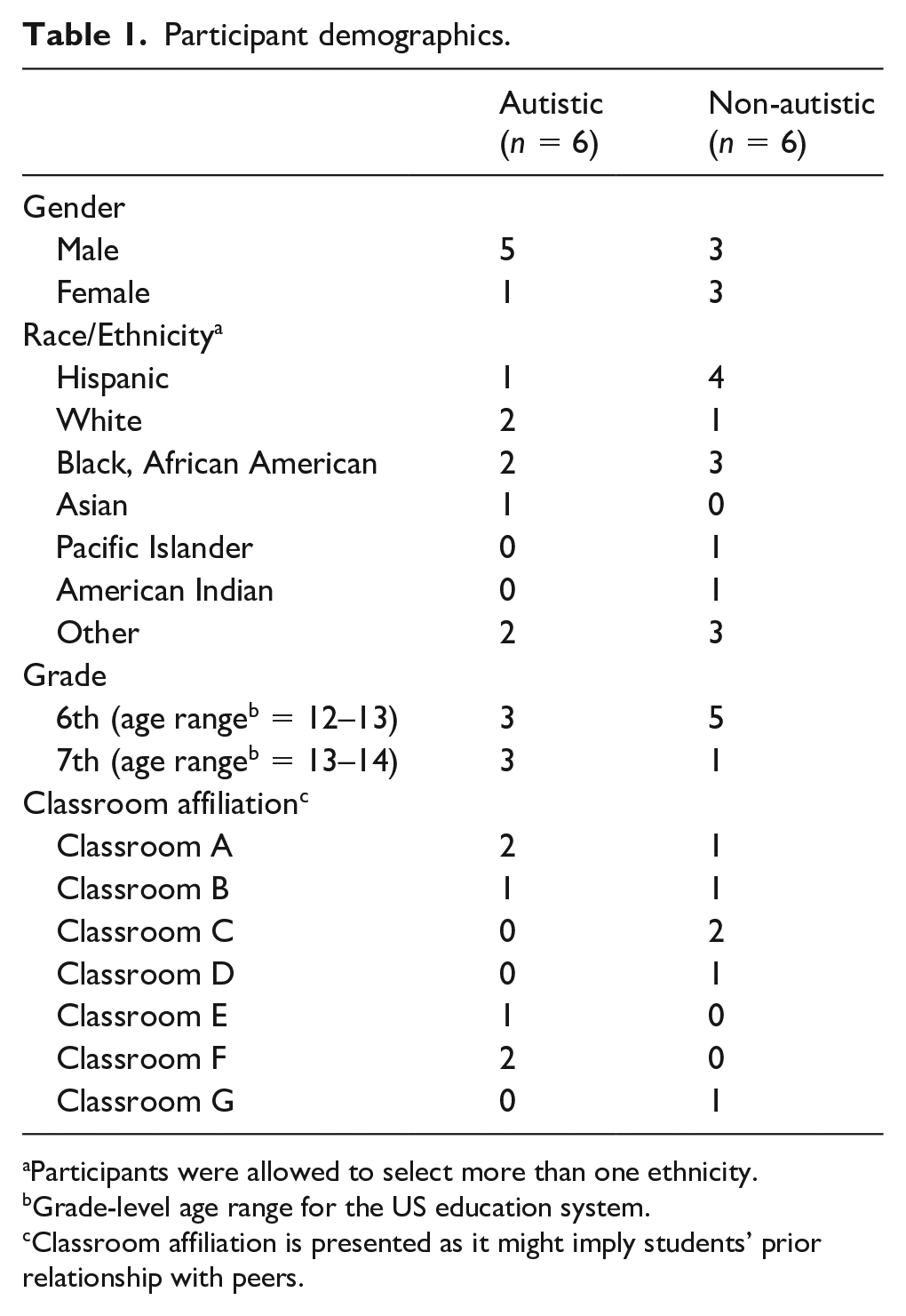
Participants were allowed to select more than one ethnicity.
Grade-level age range for the US education system.
Classroom affiliation is presented as it might imply students’ prior relationship with peers.
Community involvement
We consulted with an autistic researcher (recognized in the “Acknowledgements” section) on the methodology and the interpretation and reporting of the findings. The school club intervention where data were collected was designed in consultation with an autistic panelist who chaired the advisory board.
Procedure
Video recording
We video-recorded the school club, which met twice a week in a 45-min homeroom period from October 2018 to February 2019 excluding days with school activities or holidays. Fourteen club sessions over 5 months were videotaped and used in social behavior observations. To optimize recording quality, three camcorders and three professional stereo microphones were used at each session, with each pair of the equipment capturing a group of students (two to five depending on seat arrangement) at a table. Students’ faces were blurred for deidentification.
We included observation periods where each focal student had an opportunity to interact with a peer, which was when at least one peer was around the student, and the teachers were not instructing the whole class or working directly with the student. The reason for this data sampling was to ensure that the comparison of social behavior frequencies between students was based on similar conditions. After removing teacher instruction sections and recordings with insufficient quality, we included a total of 1129 min of observation (642 min for autistic students and 487 min for non-autistic students). The mean observation length for all students was 86.85 min (range = 31–148 min), and the mean observation lengths for autistic and non-autistic students were 107 and 81.17 min, respectively. Lengths of observation time did not differ significantly between autistic and non-autistic students (Wilcoxon rank-sum exact test p = 0.31).
School Club Observation of Peer Interaction
To capture the peer preferences and characteristics of social interaction behaviors, we developed the School Club Observation of Peer Interaction (SCOPI) based on a review of existing coding systems of peer interactions (Bauminger et al., 2003; Usher et al., 2015), the research questions, and our earlier qualitative observations in the school club over a school year. The SCOPI captures each instance of social initiations and response and further classifies each social behavior based on its intended social partner (an autistic peer/a non-autistic peer/multiple autistic peers/multiple non-autistic peers/mixed peers/ non-specific peers, i.e. social behaviors not made toward a specific peer, such as talking to the room); initiation purpose (functional/relational, only initiations addressing explicit functional goals or needs were coded as functional, and the rest were coded as relational); initiation type (seeking/sharing/attending/offering/joking); response type (topic-extending/topic-relevance/tangent); and level of reciprocity (low/average/high) in social responses (see Appendix 1 for full definitions). Specifically, the reciprocity of a social response was indicated by its order in the entire interaction sequence following a social initiation. Levels of reciprocity in the lowest 25% of the observations were defined as low reciprocity, levels in the highest 25% were defined as high reciprocity, and the rest was defined as average reciprocity. Recognizing that neurodivergent social behaviors can be unconventional (Jaswal & Akhtar, 2019), we neither included typical social cues (e.g. eye contact and facial expressions) in our target behaviors nor regarded them as criteria to identify student social behaviors (i.e. a student’s social attempt is recognized even without presenting typical social cues).
To measure both frequencies and characteristics of peer interaction, we selected a cross-classifying event coding method, where an observer records each instance of a target social behavior and classifies the behavior on multiple dimensions (Bakeman & Gottman, 1997). Given the complex nature of peer interaction in adolescents, we chose a video-based observation, which allows an observer to observe multiple behavior characteristics for each social behavior through reviewing videos. After developing an initial coding scheme, the first author collaborated with a group of six graduate students to test the utility of behavior definitions and refine the delimitation and description of the behavior categories. Two graduate students then coded all data of the study. The two coders and the measurement developer (the first author) achieved high inter-coder reliability using 27% of all video data, with an average 94% agreement (range: 88%–97%) across items. Cohen’s Kappa ranged from 0.73 to 0.95, with a mean of 0.85. The sample and results of the reliability test were sufficient for behavioral observation research (Heyman et al., 2014). Efforts have been made to mask diagnosis information to the coders by blurring students’ faces in the videos, although the two coders may have ascertained the information by listening to the audio.
Data analysis
The unit of analysis was each observed social behavior. We began with a descriptive analysis of the proportions of social behaviors toward each peer category in each student group, followed by Fisher’s exact tests to examine the independence between student groups and peer categories.
We then investigated whether the relative likelihoods of a social behavior made toward each peer category were predicted by student group and time using mixed-effects logistic regression (multinomial logistic regression when more than two categories were present). Mixed-effects modeling was necessary to control for the dependence between the repeated measures in each participant. With peer categories being the dependent variable, the predictors included a dummy variable of student group (autistic relative to non-autistic), a mean-centered time variable, an interaction term between student group and time (group × time, which models differentiated time trends between groups), and a random intercept for each participant. The interaction term between student group and time was added to investigate the differentiated time effects between groups. We separately modeled social behaviors toward a single peer and multiple peers as the prior had much higher incidences. Single-peer models had only two peer categories (autistic vs non-autistic peer), while multiple-peer models had three or four categories (autistic peers, non-autistic peers, mixed peers, non-specific peers). Non-specific peer was coded for social behaviors sending toward no specific peers (e.g. student shouting to the room) and was only present in social initiations, as social responses were directed toward the peer(s) of preceding social behavior(s). Students’ social behaviors toward multiple peers were found to be made toward at most three peers.
For social behaviors toward a single peer, we investigated whether the interaction term between student and peer groups predicted characteristics of social behaviors, including initiation purpose, initiation type, response type, and reciprocity using mixed-effects logistic regression. Multinomial logistic regression was performed for multinomial variables including initiation type, response type, and response reciprocity. Independent variables included dummy variables of student group (autistic relative to non-autistic), peer category, and a random intercept for each participant. Behaviors toward multiple peers had too few incidences for this analysis.
Finally, to examine whether students’ same-group peer preferences overlapped with preferences of same-gender peers, we conducted the same set of analyses on the combinations of student and peer genders. This was a supplementary analysis to explore whether students showed similar patterns of same-neurotype and same-group preferences, as the latter might confound the former.
To address the potential bias in the estimates of mixed-effects modeling with a small number of clusters (i.e. students), we used Bayesian Markov chain Monte Carlo (MCMC) estimation, which does not require large-sample approximation and has been reported to achieve unbiased estimates with low numbers of clusters, even fewer than 10 (McNeish & Stapleton, 2014). As there was no existing knowledge about the model parameters, we used weakly informative priors in Bayesian analysis recommended for logistic regression in the literature, including a Student t distribution with 7 degrees of freedom for regression coefficients and intercepts, as well as a half-Cauchy prior with 4 degrees of freedom for the variance components (Gelman, 2006; Ghosh et al., 2018; McNeish & Stapleton, 2016). Bayesian mixed-effects modeling was performed in R using the “brms” package (Bürkner, 2018; R Core Team, 2019). The Gelman–Rubin convergence statistics were used to determine the convergence for each model parameter across three MCMC chains. Each model was considered converged if the Gelman–Rubin Rc for all parameters was less than 1.1.
Missing data management
Among the total 168 observations of the 12 participants over 14 sessions, 39% were not obtained due to reasons including student absence, students positioned outside of camera frames (e.g. at a glue gun station where videotaping was not feasible), or poor recording quality. Students’ absences were usually due to other school activities and persisted in less than three sessions. Given the complex data structure, we used listwise deletion for the missing observations, which is a robust strategy for logistic regression (Allison, 2001).
Results
Descriptive analysis
Autistic and non-autistic participants did not significantly differ by gender and grade compositions (Fisher’s exact test ps = 0.55). The students affiliated in seven classes with at most two students coming from each class. Fisher’s exact test found no significant difference between autistic and non-autistic students’ class affiliation (p = 0.52), which precluded a part of the potential bias due to differences in students’ relationships before and outside of the club.
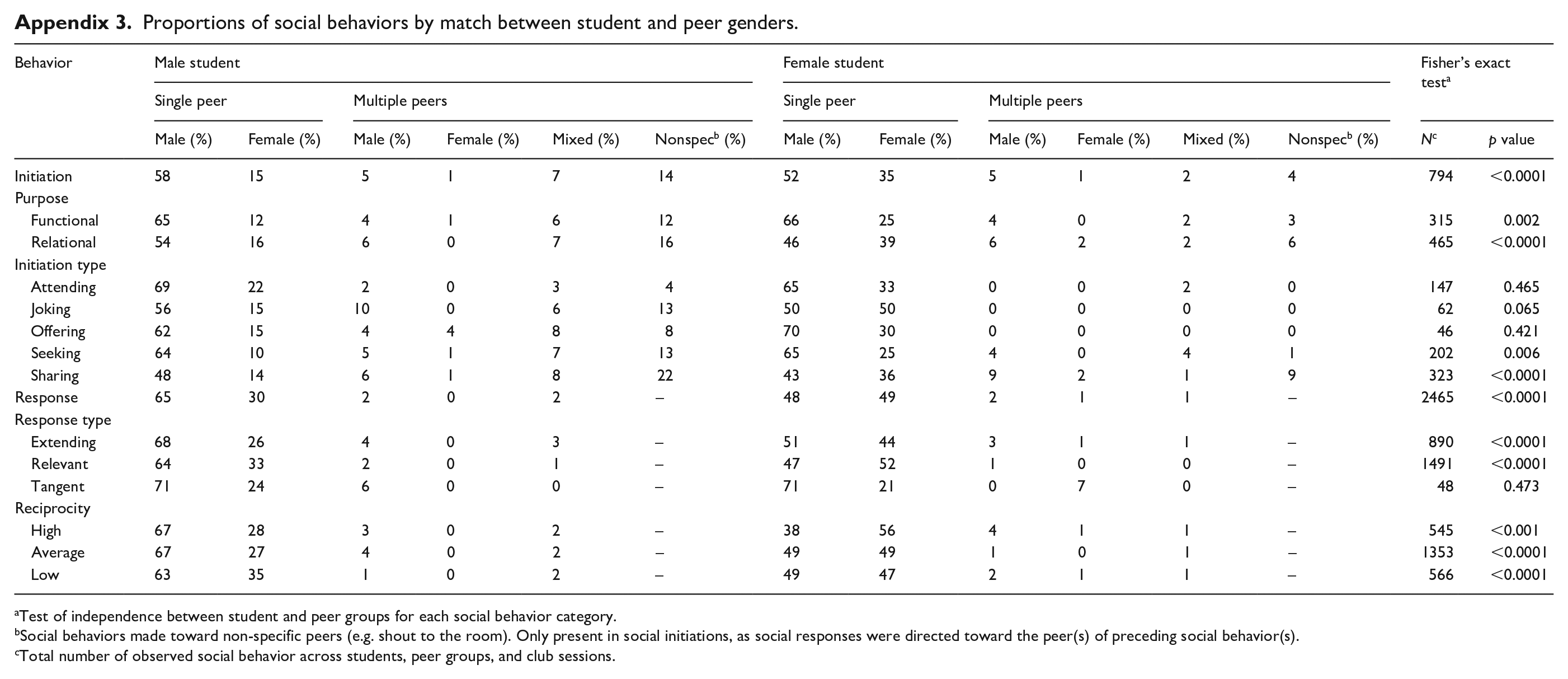
Figure 1 presents the proportions of social behaviors toward each peer category by student groups, based on students’ neurotype and gender (Appendices 2 and 3 list the percentages of behaviors by peer categories and Fisher’s exact test statistics). For peer preference by neurotype, Fisher’s exact tests found significant relationships between student and peer groups in all behavior categories, suggesting a systematic difference between the peer choices of autistic and non-autistic adolescents. Same-neurotype social behaviors accounted for the main part of students’ peer interactions in both autistic and non-autistic students. Students also interacted more with their same-gender peers yet to a lesser extent, and Fisher exact tests found significant relationships between student and peer groups in all behaviors except for attending, joking, offering, and tangent responses.
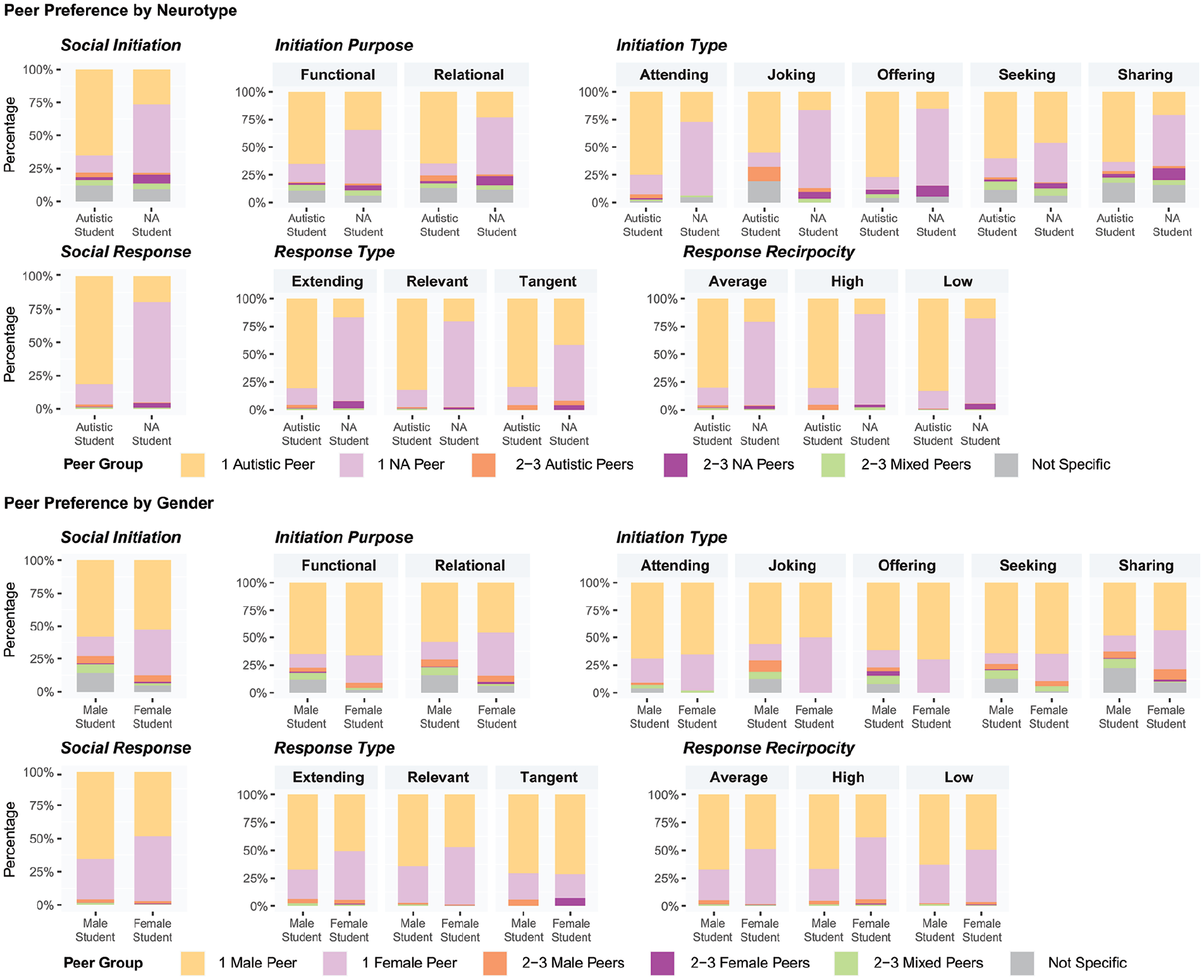
Proportions of social behaviors to peer categories by student groups.
Peer preferences: group differences and time effects
Table 2 presents the results of logistic regression, including parameter estimates and their 95% credible intervals, which are the Bayesian analog of confidence intervals that indicates the range values on the posterior probability distribution that includes 95% of the probability. The credible intervals can be interpreted as, given the data and the prior assumptions, the estimate has a 95% probability of falling within the range.
Parameter estimates for peer preference by neurotype and gender match.
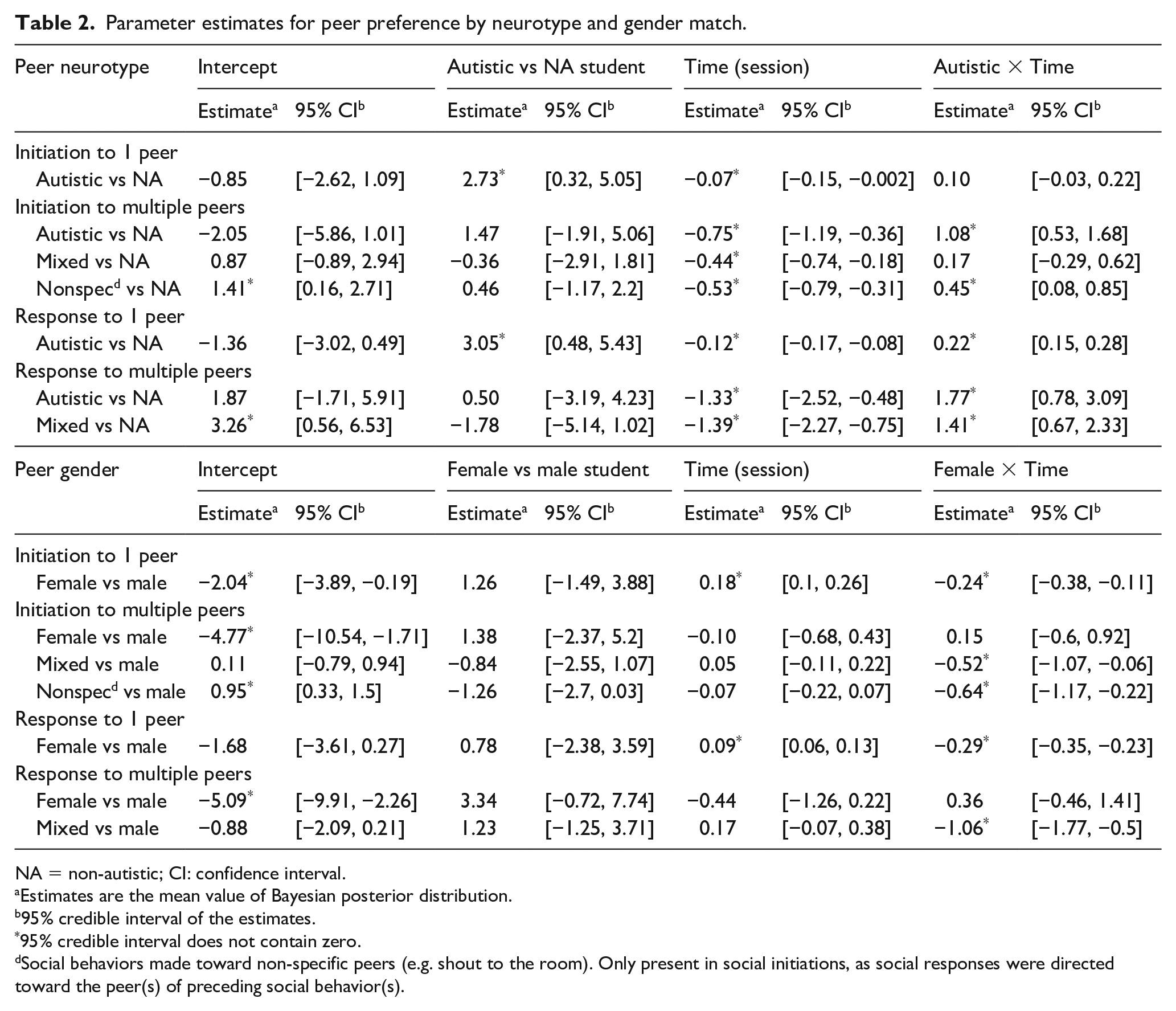
NA = non-autistic; CI: confidence interval.
Estimates are the mean value of Bayesian posterior distribution.
95% credible interval of the estimates.
95% credible interval does not contain zero.
Social behaviors made toward non-specific peers (e.g. shout to the room). Only present in social initiations, as social responses were directed toward the peer(s) of preceding social behavior(s).
Findings for social initiations toward a single peer found that autistic students showed a significantly higher likelihood to initiate interactions with an autistic peer than a non-autistic peer, while non-autistic students showed lower but not significant likelihoods to initiate with an autistic peer than a non-autistic peer. Over time, non-autistic students were significantly less likely to initiate interactions with autistic peers than non-autistic peers, while autistic students showed a non-significant increase in likelihood to initiate interactions with an autistic peer than a non-autistic peer. Initiations toward multiple peers showed non-significant same-group preferences in both autistic and non-autistic students, which significantly increased over time.
Models for social responses showed significantly higher likelihoods for autistic students to initiate with a same-group peer than a non-autistic peer, while non-autistic students showed a non-significant same-group preference. Both autistic and non-autistic students significantly increased responses with a same-group peer. Responses to multiple peers showed time effects in both groups, where students significantly increased responses to their same-group than cross-group peers.
Models based on students’ genders showed that male students significantly initiated more with and responded more to either single or multiple male peers, while females showed non-significant preferences to same-gender peers. Different from neurotype models, both male and female students significantly increased cross-gender initiation and responses over time with a single peer. Such time effects were not found for multiple peers. Figure 2 illustrates the predicted probability for social behaviors with each peer group across time.
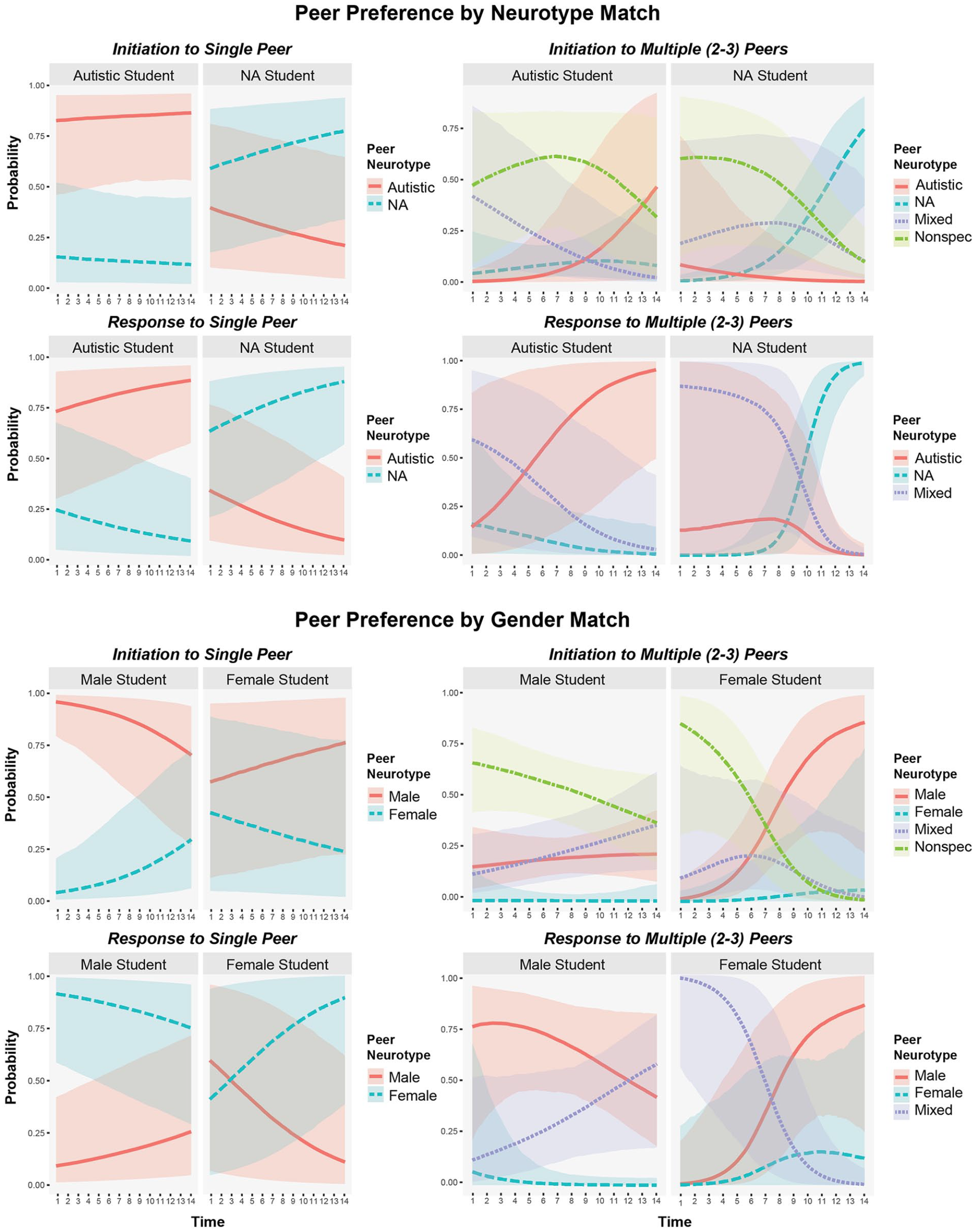
Predicted probability of peer interaction by peer groups.
Social behavior characteristics
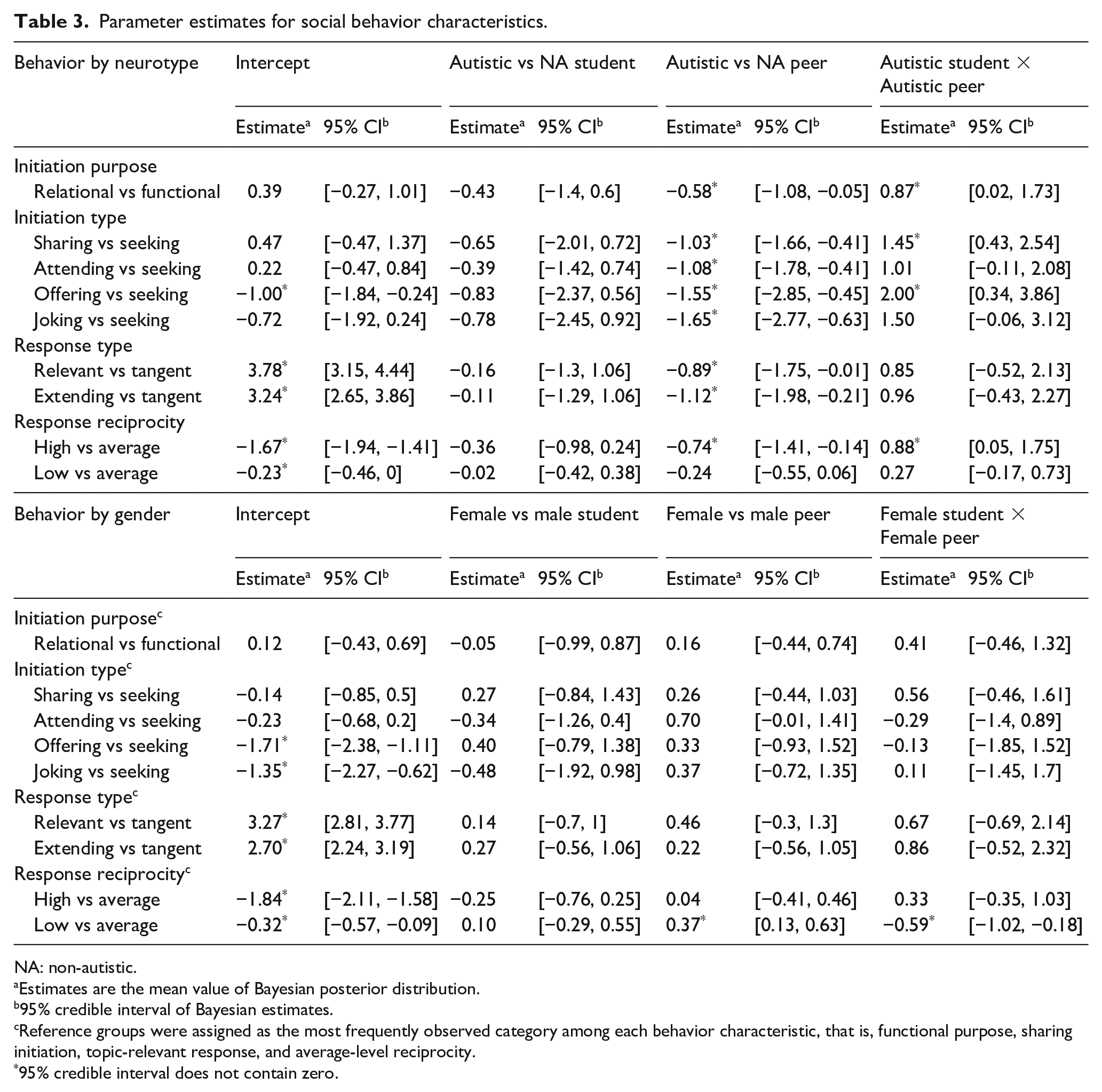
Table 3 lists the findings of logistic regression for social behavior characteristics by combinations of student and peer groups. Figure 3 shows the predicted probabilities of social behavior characteristics by combinations of student and peer groups.
Parameter estimates for social behavior characteristics.
NA: non-autistic.
Estimates are the mean value of Bayesian posterior distribution.
95% credible interval of Bayesian estimates.
Reference groups were assigned as the most frequently observed category among each behavior characteristic, that is, functional purpose, sharing initiation, topic-relevant response, and average-level reciprocity.
95% credible interval does not contain zero.
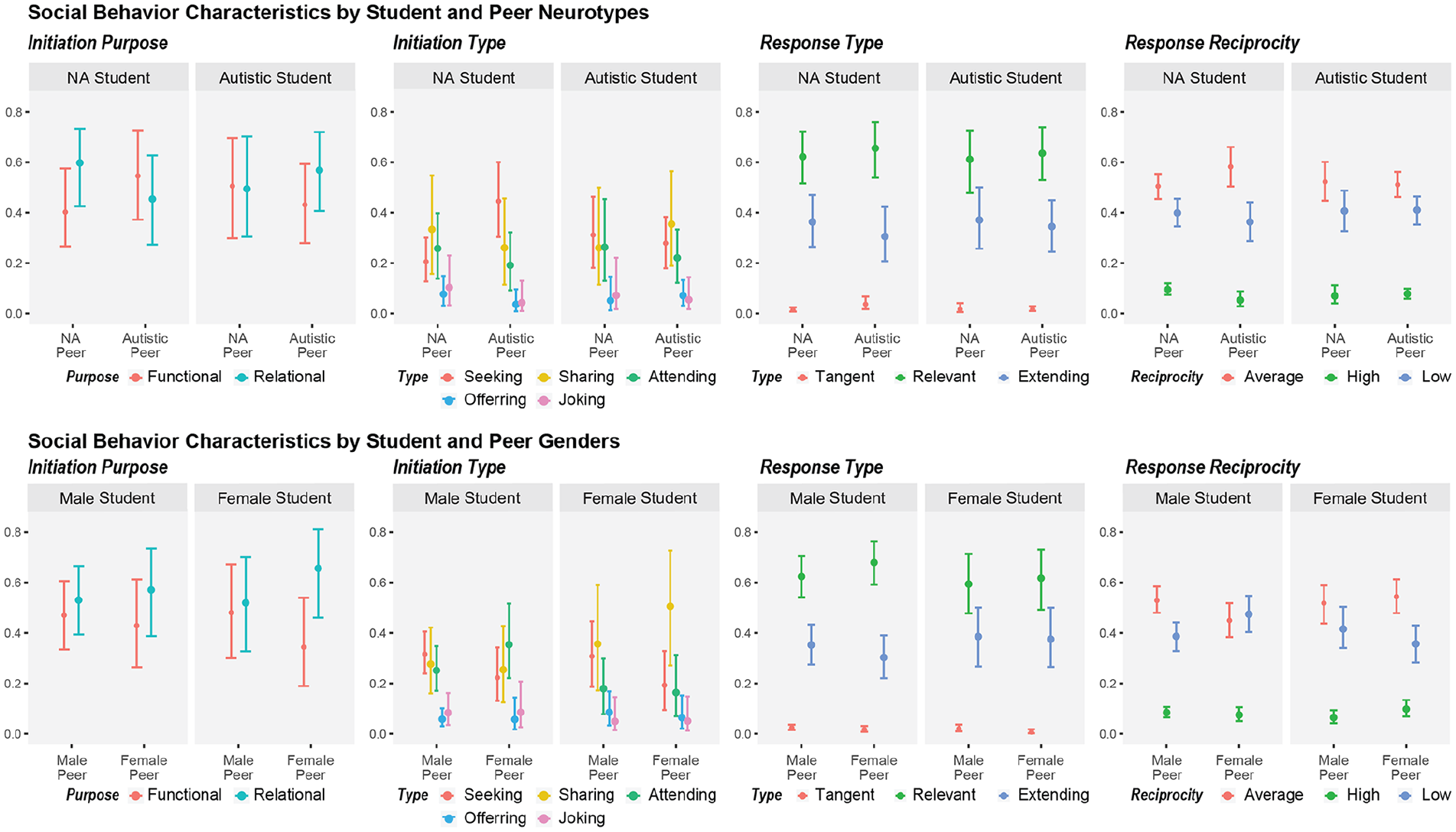
Predicted probabilities for social behavior characteristics.
Initiation purpose
The model showed a non-significant trend for autistic students’ initiations to be less likely relational than functional, compared with non-autistic students. Initiations toward autistic students were significantly less likely to be relational than functional, compared with initiations toward non-autistic students. However, autistic to autistic initiations were significantly more likely to be relational than functional.
Initiation type
Initiations toward autistic students were significantly less likely to be characterized as sharing, attending, offering, and joking than seeking, compared with initiations toward non-autistic students. However, autistic to autistic initiations were significantly more likely to be characterized as sharing and offering than seeking.
Response type
Social responses received by autistic students, compared with non-autistic students, were significantly less likely to be topic-extending or relevant than tangent responses. However, autistic to autistic social responses showed non-significantly higher likelihoods of topic-extending and relevant than tangent responses.
Response reciprocity
Social responses received by autistic students, compared with non-autistic students, were significantly less likely to have high than average reciprocity. Autistic to autistic social responses, however, were significantly more likely to have high than average reciprocity.
Social behavior characteristics by gender
Student and peer genders showed few significant effects. Female students, compared with male students, received non-significantly more relational than functional initiation; more sharing, offering, and joking than seeking behaviors; more extending and relevant responses; and more high and low reciprocity responses and average reciprocity. Female-to-female responses were significantly less likely to show low reciprocity than average reciprocity.
Discussion
This study examined peer preference and social behavior characteristics in bidirectional peer interactions among autistic and non-autistic adolescents in an inclusive school club. The longitudinal observations of peer interactions over 5 months of the school club showed that while both autistic and non-autistic students were more likely to initiate with and respond to a same-neurotype peer, only autistic students reached significant peer preference. Both autistic and non-autistic students showed significantly strengthened preferences of their same-neurotype peers over time, either in dyadic or small group interactions with a couple of peers. Although students’ same-neurotype preferences might be confounded by peer preferences based on gender, students’ peer preferences were only significant in male students’ social initiations (toward single to multiple peers) and responses to multiple peers, and they showed significantly increased cross-gender peer preferences over time.
We further examined whether student and peer groups collectively predicted students’ social behavior characteristics, and the results showed similar patterns of same-neurotype and cross-neurotype social characteristics in both autistic and non-autistic students. Non-autistic to autistic social behaviors, compared with non-autistic to non-autistic initiations, were less likely to be based on relational than functional initiation purposes; less likely to be characterized as sharing, attending, offering, or joking behaviors rather than seeking; less likely to be topic-extending or relevant than tangent; and less likely to show above-average reciprocity. On contrary, autistic to autistic initiations were more likely to reflect relational than functional purposes, more likely to be characterized as sharing and offering behaviors rather than seeking, and more likely to show above-average reciprocity. These patterns were not found in same-gender and cross-gender peer interactions.
Collectively, the findings showed that peer interaction is not solely determined by a student’s group membership, but the match between the student and their peers. The study extends previous research on peer interactions of autistic students in inclusive education by considering the role of peers and interpersonal match. Supporting the double empathy theory, the students showed a trend of same-neurotype peer preferences that significantly strengthened over time, and autistic and non-autistic students shared similar patterns of social interaction when interacting with same-group peers. Compared with cross-neurotype interactions, both autistic and non-autistic within-neurotype interactions were less likely to be based on functional purposes such as in need of assistance or materials and more likely to be characterized as sharing thoughts and experiences, showing interests in and attending to peers, offering suggestions or objects, and highly reciprocal. These findings emphasized the value of considering the peer factor in social interactions, which provides a more comprehensive understanding of peer interaction among autistic and non-autistic adolescents.
These findings, together with our recent study of the same data set that found no significant differences between social initiation and response rates in the autistic and non-autistic students in the school club (Chen et al., 2021), challenge the social-deficit framing of autism. This earlier study showed that autistic adolescents were capable of similar levels of peer interactions as non-autistic adolescents in the supportive context of an interest-based school club. This result suggested that the social challenges experienced by autistic adolescents in inclusive education may not have been solely the result of their social impairments, but also determined in part by the peer context of peer interaction. This study further indicated that student and peer group memberships jointly predicted peer interactions, highlighting the importance to consider the bidirectionality of social interactions. The findings are consistent with recent studies suggesting better social communication outcomes between autistic people and other autistic people than between autistic and non-autistic people (Crompton, Hallett, et al., 2020; Crompton, Ropar, et al., 2020; Morrison et al., 2020). Collectively, our studies and recent research support the interpersonal mismatch hypothesis that conceptualizes autism as a bidirectional barrier between autistic and non-autistic people, rather than individual social deficits (Bolis et al., 2017; De Jaegher, 2013; Milton, 2012).
The study showed that both autistic and non-autistic students’ preferences for cross-neurotype peers decreased over time, which seemed to contradict previous findings suggesting that increased contact and positive contact experience were associated with higher autism acceptance in non-autistic people (Gardiner & Iarocci, 2014). The strengthened peer preference might be due to students’ developed relationships with their same-group peers, which increased the likelihood for same-group peer interactions. This might also suggest that although non-autistic students may develop higher peer acceptance of autistic students over time, they may still prefer within-neurotype peer interactions where they experience fewer double empathy problems.
This study has implications for future research and interventions. First, the findings emphasized the bidirectionality of social interactions, which requires a shift of research and practice focus beyond individual social challenges to the interactional barriers between students and their peers. This study presented a preliminary examination of bidirectional peer interactions in inclusive secondary education, and future research with more in-depth analysis is needed to further explore the social communication strengths and barriers in the same-group and cross-group social interactions among autistic and non-autistic students. Second, the findings showed the autistic adolescents’ social strengths in match-group peer interactions, which have yet been supported in inclusive school practices. Stemmed from the social impairment framing of autism, school-based social interventions primarily focus on building normative social skills in autistic students. Our findings highlight the interpersonal congruency between the students and their peers, which suggests that providing opportunities for autistic within-neurotype interaction may support autistic peer connection in inclusive education. The peers’ understanding and acceptance of autistic students may also contribute to the social barriers between autistic and non-autistic students, which are critical topics to be addressed by future research and interventions.
The study has limitations that could be addressed in future research. The study was conducted with a small group of participants, which may reduce statistical power. However, the longitudinal observations created a substantial amount of social behavior data, and the Bayesian estimation methods adjusted for the potential bias caused by the small cluster number in mixed-effects models (McNeish & Stapleton, 2014). As a preliminary investigation, the study took place in only one site with a small group of autistic adolescents who were speaking and with average to above-average cognitive ability, which limited the generalizability of the findings to the diverse population. There was only one autistic female in the study, and thus, we were not able to examine gender differences in autistic peer interactions. Future research should include a more heterogeneous population across multiple sites and specifically investigate how peer contexts affect non-verbal peer interaction. In addition, we did not have information about students’ prior relationships and contact outside the club, as well as their awareness of autism diagnosis of themselves and peers, which can have great influences on the peer they interact with and their perceptions about peers. Research has shown that diagnosis disclosure can affect non-autistic peers’ first impressions of autistic people (Sasson & Morrison, 2017), and thus, future research may investigate its effects on peer interaction in inclusive education. Finally, although we consulted an autistic researcher about research methods and findings, the social behavior observation was developed and coded by non-autistic researchers, which might not reflect meaningful characteristics of autistic social interactions. While we have attempted to reduce the influences of coders’ non-autistic interpretation to autistic social behaviors by deploying a relatively objective coding scheme, the non-autistic coders might still have interpreted autistic behaviors differently from what an autistic coder would do. While we have attempted to mask information about students’ diagnosis to the coders, they might have acquired the information over the project, which might influence their interpretation of student behaviors.
Footnotes
Appendix
Proportions of social behaviors by match between student and peer genders.
| Behavior | Male student | Female student | Fisher’s exact test a | |||||||||||
|---|---|---|---|---|---|---|---|---|---|---|---|---|---|---|
| Single peer | Multiple peers | Single peer | Multiple peers | |||||||||||
| Male (%) | Female (%) | Male (%) | Female (%) | Mixed (%) | Nonspec b (%) | Male (%) | Female (%) | Male (%) | Female (%) | Mixed (%) | Nonspec b (%) | N c | p value | |
| Initiation | 58 | 15 | 5 | 1 | 7 | 14 | 52 | 35 | 5 | 1 | 2 | 4 | 794 | <0.0001 |
| Purpose | ||||||||||||||
| Functional | 65 | 12 | 4 | 1 | 6 | 12 | 66 | 25 | 4 | 0 | 2 | 3 | 315 | 0.002 |
| Relational | 54 | 16 | 6 | 0 | 7 | 16 | 46 | 39 | 6 | 2 | 2 | 6 | 465 | <0.0001 |
| Initiation type | ||||||||||||||
| Attending | 69 | 22 | 2 | 0 | 3 | 4 | 65 | 33 | 0 | 0 | 2 | 0 | 147 | 0.465 |
| Joking | 56 | 15 | 10 | 0 | 6 | 13 | 50 | 50 | 0 | 0 | 0 | 0 | 62 | 0.065 |
| Offering | 62 | 15 | 4 | 4 | 8 | 8 | 70 | 30 | 0 | 0 | 0 | 0 | 46 | 0.421 |
| Seeking | 64 | 10 | 5 | 1 | 7 | 13 | 65 | 25 | 4 | 0 | 4 | 1 | 202 | 0.006 |
| Sharing | 48 | 14 | 6 | 1 | 8 | 22 | 43 | 36 | 9 | 2 | 1 | 9 | 323 | <0.0001 |
| Response | 65 | 30 | 2 | 0 | 2 | – | 48 | 49 | 2 | 1 | 1 | – | 2465 | <0.0001 |
| Response type | ||||||||||||||
| Extending | 68 | 26 | 4 | 0 | 3 | – | 51 | 44 | 3 | 1 | 1 | – | 890 | <0.0001 |
| Relevant | 64 | 33 | 2 | 0 | 1 | – | 47 | 52 | 1 | 0 | 0 | – | 1491 | <0.0001 |
| Tangent | 71 | 24 | 6 | 0 | 0 | – | 71 | 21 | 0 | 7 | 0 | – | 48 | 0.473 |
| Reciprocity | ||||||||||||||
| High | 67 | 28 | 3 | 0 | 2 | – | 38 | 56 | 4 | 1 | 1 | – | 545 | <0.001 |
| Average | 67 | 27 | 4 | 0 | 2 | – | 49 | 49 | 1 | 0 | 1 | – | 1353 | <0.0001 |
| Low | 63 | 35 | 1 | 0 | 2 | – | 49 | 47 | 2 | 1 | 1 | – | 566 | <0.0001 |
Test of independence between student and peer groups for each social behavior category.
Social behaviors made toward non-specific peers (e.g. shout to the room). Only present in social initiations, as social responses were directed toward the peer(s) of preceding social behavior(s).
Total number of observed social behavior across students, peer groups, and club sessions.
Acknowledgements
We thank Sana Ahmed, Tara Brennan, Denise Manago, and Amanda Rodriguez for their insightful contribution to the social behavioral observations. In addition, we thank Maxwell Schneider for providing meaningful insights and discussions to the research with their autistic perspectives and experiences.
Declaration of conflicting interests
The author(s) declared no potential conflicts of interest with respect to the research, authorship, and/or publication of this article.
Funding
The author(s) disclosed receipt of the following financial support for the research, authorship, and/or publication of this article: This study was supported by a grant from the National Science Foundation (grant number: 1614436).
