




Abstract
While there is emerging evidence on the prevalence of physical and mental health conditions among autistic adults, less is known about this population’s needs during older adulthood (aged 65+). We conducted a cross-sectional retrospective cohort study of 2016–2017 Medicare data to compare the prevalence of physical and mental health conditions in a national sample of autistic older adults (N = 4685) to a matched population comparison (N = 46,850) cohort. Autistic older adults had significantly greater odds of nearly all physical health conditions including epilepsy (odds ratio = 18.9; 95% confidence interval = 17.2–20.7), Parkinson’s disease (odds ratio = 6.1; 95% confidence interval = 5.3–7.0), and gastrointestinal conditions (odds ratio = 5.2; 95% confidence interval = 4.9–5.5). Most mental health conditions were more common among autistic older adults, including schizophrenia and psychotic disorders (odds ratio = 25.3; 95% confidence interval = 22.4–28.7), attention deficit disorders (odds ratio = 24.4; 95% confidence interval = 16.2–31.0), personality disorders (odds ratio = 24.1; 95% confidence interval = 17.8–32.5), and suicidality or self-inflicted injury (odds ratio = 11.1; 95% confidence interval = 8.9–13.8). Health conditions commonly associated with advanced age in the general population (e.g. osteoporosis, cognitive disorders, heart disease, cancer, cerebrovascular disease, osteoarthritis) were also significantly more common among autistic older adults. By highlighting the significant physical and mental health needs for which autistic older adults require care, our findings can inform healthcare systems, healthcare providers, and public health initiatives seeking to promote well-being in this growing population.
Nearly 50,000 autistic individuals 1 turn 18 years old each year in the United States (Interagency Autism Coordinating Committee (IACC), 2017). As such, the population of autistic adults is growing at a rapid pace, necessitating improved healthcare service delivery models to promote wellness across the lifespan for this unique population. There is an emerging body of research on the prevalence of co-occurring conditions and healthcare needs among autistic adults (e.g. Buck et al., 2014; Croen et al., 2015; Maddox et al., 2018; Nicolaidis et al., 2013; Turcotte et al., 2016; Zerbo et al., 2018), yet relatively little is known about the health needs of autistic individuals who have aged into older adulthood (i.e. age: 65+ years). This gap in knowledge induces a great deal of uncertainty around what older age looks like for autistic individuals, and the extent to which health services for older adults (e.g. home and residential care, hospitals, social services) and the healthcare workforce are adequately poised to meet this population’s needs (Michael, 2016).
In the context of the general population, it is well-known that older adults have distinct healthcare needs from younger adults (Adams et al., 2002; Barnett et al., 2012; Speer & Schneider, 2003) and that the prevalence of many health conditions differs by sex. For example, older adults are significantly more likely to have cognitive decline (Centers for Disease Control and Prevention (CDC), 2018) and physical health conditions such as heart disease, cancer, cerebrovascular disease, osteoarthritis, and chronic back pain than younger adults (CDC, 2013; Fuchs et al., 2012). In addition, female older adults are more likely to have arthritis, dementia, and depression, while male older adults are more likely to have cerebrovascular diseases, diabetes, Parkinson’s disease, and renal failure (Moore et al., 2012). By understanding the health conditions for which older adult populations require care, healthcare systems and public health initiatives have been able to implement effective solutions to promote and maintain well-being in this population (e.g. Busby-Whitehead et al., 2016; Jeste et al., 2016; Kuo & Barragan, 2017; Lee et al., 2017).
However, there is emerging research to suggest that the health needs of autistic older adults require singular attention, distinct from both the younger autistic adult population and older non-autistic adults. Compared with younger autistic adults who may have been diagnosed using different criteria, older autistic adults may be more likely to have gastrointestinal conditions (Wise et al., 2017) but less likely to have co-occurring psychiatric conditions (Lever & Geurts, 2016b), aggressive behaviors (Wise et al., 2017), rhinitis, and diabetes mellitus. In relation to non-autistic older adults, autistic older adults have higher prevalence of physical and mental health conditions (Bishop-Fitzpatrick & Rubenstein, 2019) and equally as prevalent or less prevalent age-related cognitive changes (Lever & Geurts, 2016a).
However, much of what is known about the older autistic adult population is based on (1) self-report studies, which exclude those without the ability to participate through survey methods (e.g. Lever & Geurts, 2016b; Wise et al., 2017) or (2) studies with limited generalizability due to fairly small sample sizes of older autistic adults (e.g. Wise et al., 2017) or restriction to a single geographic region (e.g. Bishop-Fitzpatrick & Rubenstein, 2019; Croen et al., 2015). Moreover, some analyses have grouped older autistic adults together with younger age groups (i.e. studies analyzing adults of all ages together, or middle-aged and older-adults together), making it challenging to draw conclusions about the unique needs of older adults (e.g. Bishop-Fitzpatrick & Rubenstein, 2019; Cervantes & Matson, 2015; Croen et al., 2015; Shields et al., 2019). To our knowledge, no studies to-date have used United States data at the national level to characterize the prevalence of health conditions in older autistic adults (age: 65+). This study, therefore, aimed to address this gap by comparing the prevalence of physical and mental health conditions in a national sample of Medicare-enrolled 2 autistic older adults to an older adult population comparison (PC) group.
Methods
Data source
Data used for this study were derived from Medicare Standard Analytic Files (SAF) for the years 2016 and 2017, which included Limited Data Set information on 100% of Medicare beneficiaries for these years. De-identified beneficiary-level healthcare claims data for inpatient and outpatient records were used in this analysis. The outpatient records used in this study contained medical billing claims from institutional outpatient providers such as hospital outpatient departments, rural health clinics, renal dialysis facilities, outpatient rehabilitation facilities, Federally Qualified Health Centers, and community mental health centers. These outpatient records do not include professional service claims from non-institutional professional providers such as physicians, physician assistants, clinical social workers, or nurse practitioners.
Study population
Autistic adults were included in this study if they (1) were aged 65 years or older, (2) were enrolled in Medicare Fee for Service for at least 6 months in 2016 or 2017, and (3) had at least one inpatient or outpatient encounter with an autism spectrum diagnosis at any time during 1 January 2016–31 December 2017. Autism spectrum diagnoses were identified using International Classification of Diseases, 10th edition (ICD-10) codes F84.0, F84.1, F84.5, or F84.9. Consistent with practices in existing literature (e.g. Demiralp et al., 2019; Lankiewicz et al., 2018; Mahr et al., 2018), we excluded beneficiaries enrolled in Medicare Advantage Plans due to concerns regarding the availability of accurate, complete data in these managed care programs. A PC group of beneficiaries without autism diagnoses was selected at a 10:1 ratio to autistic beneficiaries using group frequency matching for 5-year age category and sex. The PC group met all the same inclusion criteria, except without a medical encounter containing a diagnosis of autism at any time during the study period.
Measures
We identified mental and physical health conditions from inpatient and outpatient medical claims using the Healthcare Cost and Utilization Project (HCUP; 2016) Beta Multilevel Clinical Classification Software (CCS) for ICD-10, which identifies conditions based on the diagnosis codes included in the medical billing record and groups them into a smaller number of clinically relevant categories. Supplemental Table 1 provides a list of all physical and mental health conditions examined and how these were defined in the present study.
Statistical analysis
Demographic characteristics were summarized descriptively. To maintain beneficiary confidentiality, only conditions where frequency counts were >10 for all groups are shown in the tables. Separate logistic regression models were performed to compare autistic and PC older adults on the odds of each condition while controlling for sex, race/ethnicity, age, rural residence, and estimated household income. Rural residence was defined by living in a non-metropolitan statistical area. Household incomes were estimated for each beneficiary using the median per capita household income during 2017, among individuals over 65 years of age, for the beneficiary’s county of residence. We also performed logistic regression analyses stratified by sex to compare the odds of having a medical encounter for each condition among males and females separately while controlling for race/ethnicity, age, rural residence, and estimated household income. Odds ratios were interpreted according to Agresti (2013). We used SAS statistical software, version 9.4 for all analyses.
Ethical approval
The Institutional Review Board (IRB) of The Ohio State University reviewed this study and determined it to be IRB-exempt due to the use of limited datasets.
Results
A total of 4685 autistic older adults met the inclusion criteria for this analysis. A random sample of 46,850 PC beneficiaries was selected using group frequency matching (10:1) for 5-year age group and sex. Demographic information for included beneficiaries is provided in Table 1. Most beneficiaries were male, aged 65–69 years old, and white. Over 43% of the autistic beneficiaries had an intellectual disability, compared with only 0.2% of the PC group. Approximately, 20% of the autistic beneficiaries and 23% of the PC group resided in rural areas. The South was the most common region of residence for both autistic (32.7%) and PC (36.5%) beneficiaries.
Demographic characteristics of Medicare beneficiaries with and without autism.
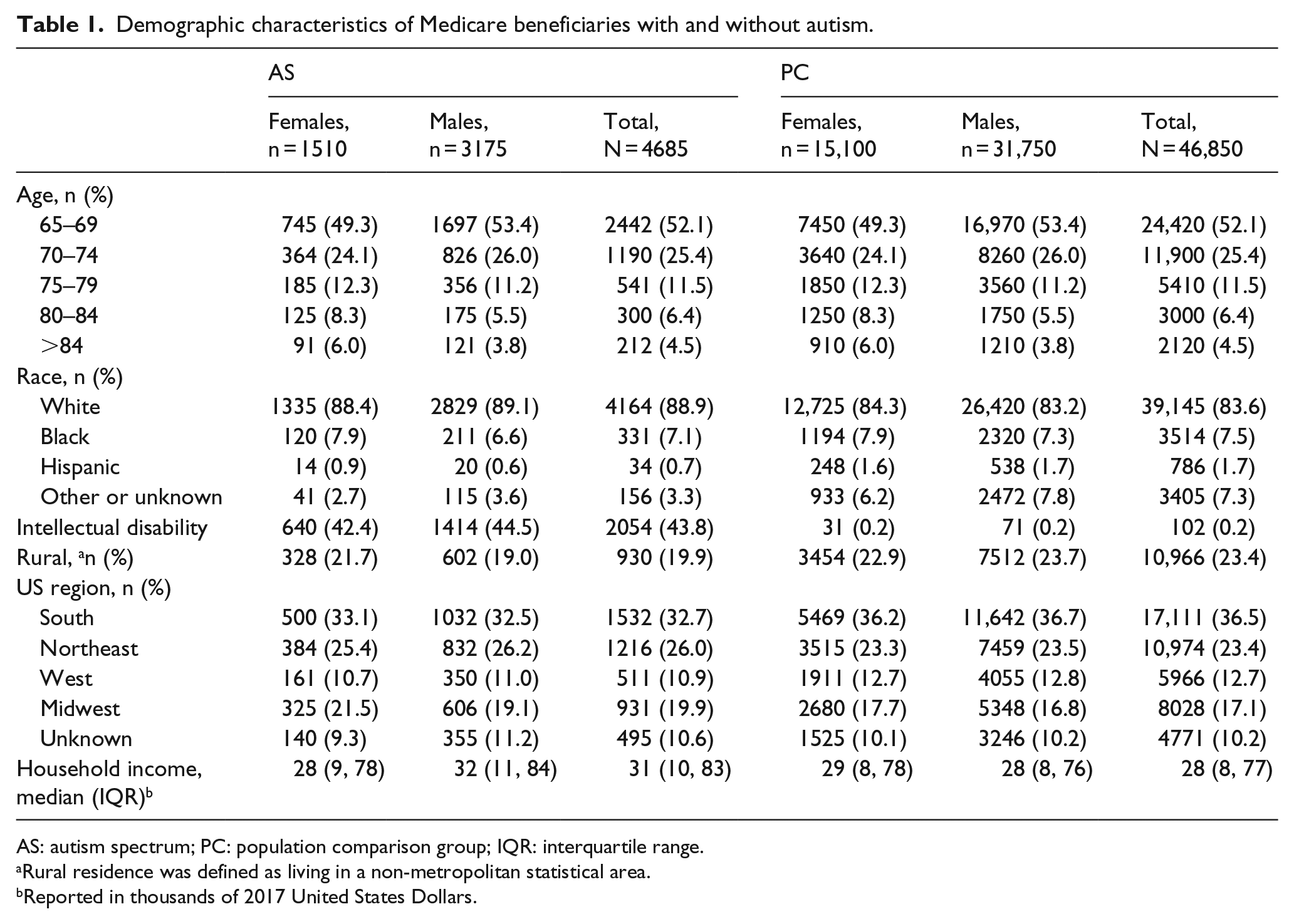
AS: autism spectrum; PC: population comparison group; IQR: interquartile range.
Rural residence was defined as living in a non-metropolitan statistical area.
Reported in thousands of 2017 United States Dollars.
Table 2 provides information on the prevalence of physical and mental health conditions in autistic and PC older adults. After adjusting for sex, age, race/ethnicity, rural residence, and estimated household income, autistic adults had significantly greater odds of all health conditions except for menopausal disorders, multiple sclerosis, back conditions, and substance use disorders. The largest between-group differences in physical health conditions were noted for epilepsy (odds ratio (OR) = 18.9; 95% confidence interval (CI) = 17.2–20.7), Parkinson’s disease (OR = 6.1; 95% CI = 5.3–7.0), and “other” gastrointestinal conditions such as gastroenteritis and constipation (OR = 5.2; 95% CI = 4.9–5.5). With regard to mental health conditions, the largest between-group differences were for schizophrenia and psychotic disorders (OR = 25.3; 95% CI = 22.4–28.7), attention deficit disorders (OR = 22.4; 95% CI = 16.2–31.0), and personality disorders (OR = 24.1; 95% CI = 17.8–32.5). Notably, autistic older adults were also 11 times more likely to have a medical encounter for suicidality or intentional self-injury (OR = 11.1; 95% CI = 8.9–13.8).
Prevalence of physical and mental health conditions in autistic and non-autistic older adults.
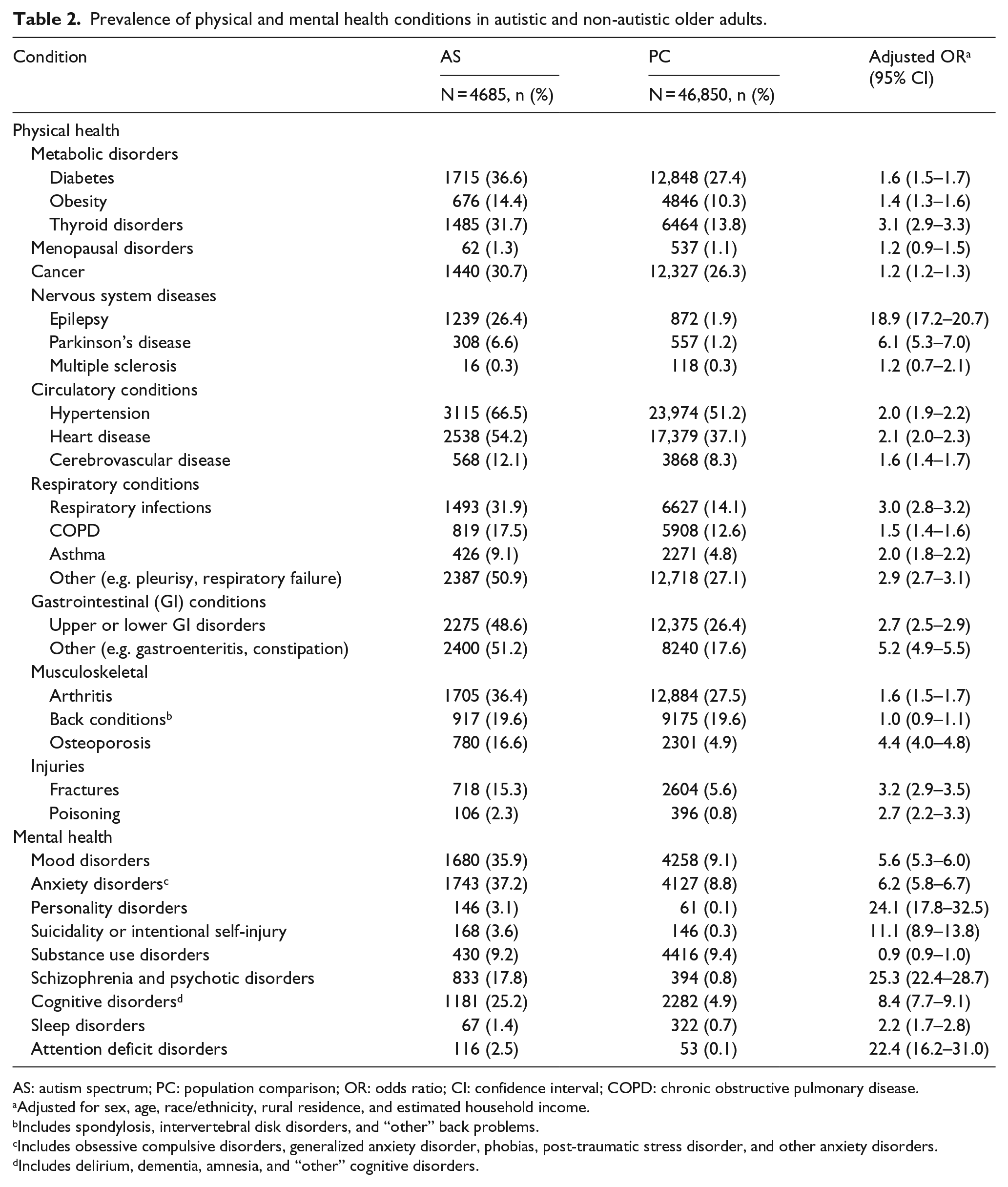
AS: autism spectrum; PC: population comparison; OR: odds ratio; CI: confidence interval; COPD: chronic obstructive pulmonary disease.
Adjusted for sex, age, race/ethnicity, rural residence, and estimated household income.
Includes spondylosis, intervertebral disk disorders, and “other” back problems.
Includes obsessive compulsive disorders, generalized anxiety disorder, phobias, post-traumatic stress disorder, and other anxiety disorders.
Includes delirium, dementia, amnesia, and “other” cognitive disorders.
Table 3 provides information about the variation in physical and mental health conditions when the study population is stratified by sex. Overall, the results of the analyses stratified by sex were consistent with that of the non-stratified analyses. The three physical health conditions with the largest between-group differences in odds among females were epilepsy (OR = 20.8; 95% CI = 17.7–24.4), Parkinson’s disease (OR = 8.2; 95% CI = 6.2–10.7), and “other” gastrointestinal conditions (OR = 4.6; 95% CI = 4.1–5.1). Among males, the largest between-group differences in the odds of physical health conditions were found for epilepsy (OR = 18.0; 95% CI = 16.1–20.2), osteoporosis (OR = 7.8; 95% CI = 6.7–8.9), and “other” gastrointestinal conditions (OR = 5.5; 95% CI = 5.1–6.0). The three mental health conditions for which autistic females and autistic males had the greatest increase in odds were consistent with that of the un-stratified analysis.
Variation in prevalence of physical and mental health conditions among autistic and non-autistic older adults by sex.
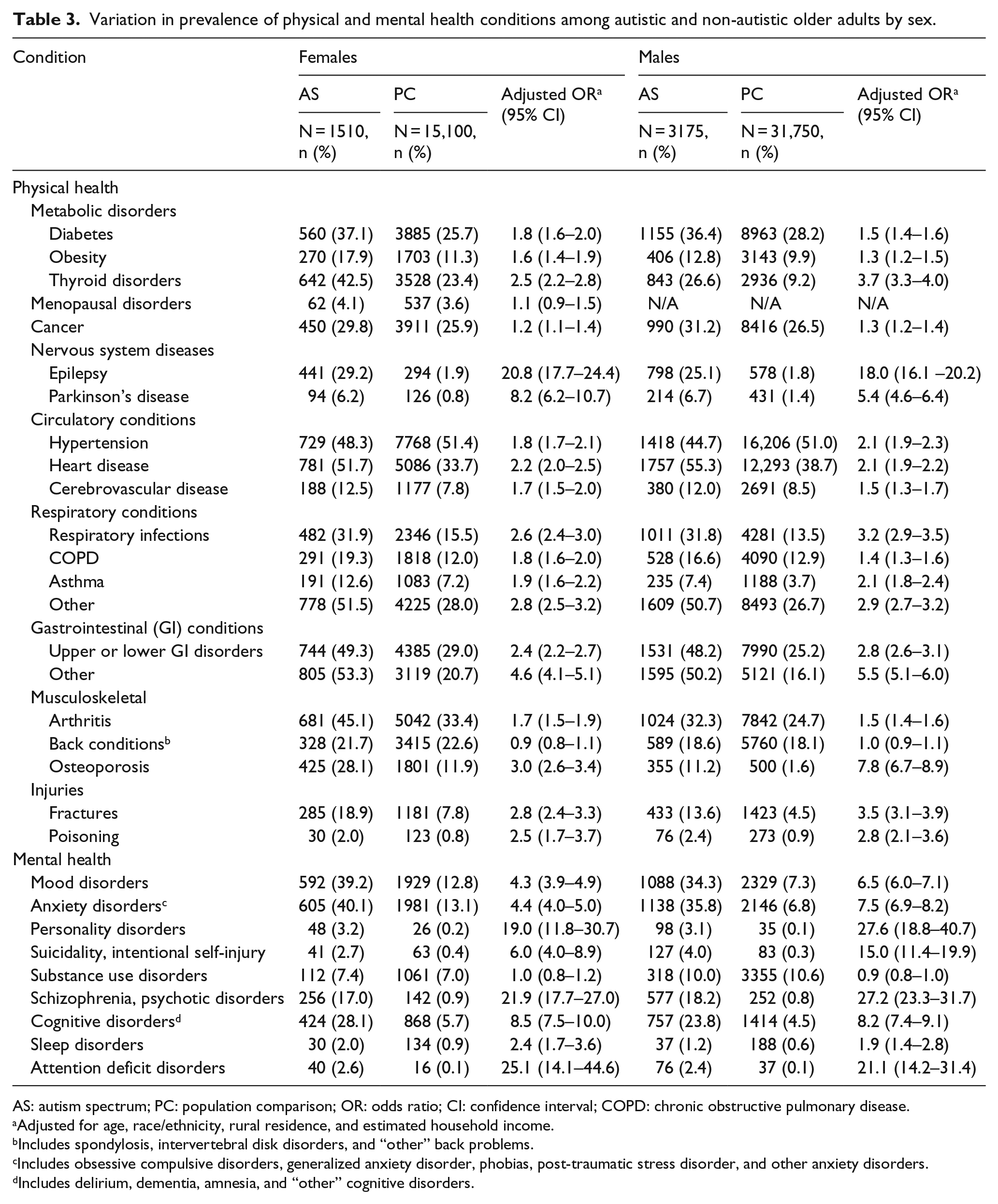
AS: autism spectrum; PC: population comparison; OR: odds ratio; CI: confidence interval; COPD: chronic obstructive pulmonary disease.
Adjusted for age, race/ethnicity, rural residence, and estimated household income.
Includes spondylosis, intervertebral disk disorders, and “other” back problems.
Includes obsessive compulsive disorders, generalized anxiety disorder, phobias, post-traumatic stress disorder, and other anxiety disorders.
Includes delirium, dementia, amnesia, and “other” cognitive disorders.
Discussion
Results of this study indicate that autistic older adults are more likely to be diagnosed with almost all physical and mental health conditions examined than the general older adult population. As the number of older autistic adults continues to rise, it is critical to characterize the autism phenotype in older adulthood and the prevalence of health conditions in order to develop informed systems of care to meet this population’s needs. The present study begins to address a critical gap in the literature by characterizing co-occurring conditions in autistic older adults, which can provide key knowledge to healthcare providers, policymakers, and other stakeholders.
It is important to recognize the unique characteristics of this sample, all of whom were born before 1950. Many of these beneficiaries were born before the concept of autism was introduced by Dr. Leo Kanner in 1943. All beneficiaries in this study were born before autism was an official diagnosis (1980) in the Diagnostic and Statistical Manual of Mental Disorders III (DSM-III), revisions were made to the diagnostic criteria for autism in the DSM-IV (1994) and DSM-5 (2013), the concept of Asperger syndrome became known to the English-speaking world (Wing & Gould, 1979), and behavioral therapies were available for autistic individuals (Lovaas, 1987). It is likely that many beneficiaries included in this analysis were identified with autism in adulthood, and may not have received empirically supported therapies and supports for the condition. These beneficiaries were also raised in a time before the Americans with Disabilities Act (1990) and the Education for All Handicapped Children Act (1975), which later became known as the Individuals with Disabilities Education Act; such laws afford important rights to individuals with disabilities that may have shaped their developmental course. Thus, this may be a sample of autistic individuals with different health-related needs as compared to current pediatric or younger adult samples. As such, results of this study may not be predictive of outcomes for children currently diagnosed, who may have a milder symptom presentation and may benefit from evidence-based therapies and services during childhood and adulthood.
Implications for healthcare delivery
Nonetheless, this study offers a valuable contribution to the literature and is applicable to the medical care of autistic adults over the age of 65 today. Many of our findings are consistent with what is known about the increased risk of physical health conditions (e.g. heart disease, epilepsy, and gastrointestinal conditions) and mental health conditions (e.g. schizophrenia, psychotic disorders, personality disorders, and attention-deficit disorders) in younger autistic individuals (Croen et al., 2006, 2015). By emphasizing that these conditions continue to be highly prevalent in older populations, our results may inform specialized approaches to screening and management of co-occurring conditions for older autistic adults. For example, autistic adults in our sample had significantly greater odds of metabolic disorders. Evidence from younger autistic populations suggests that multiple factors increase risk for metabolic disorders including prescription psychotropic drugs (Shedlock et al., 2016), sensory motor challenges that can reduce physical activity (Lawson & Foster, 2016), sensory preferences that can limit food choices (Polfuss et al., 2016), and sleep disturbances (Zuckerman et al., 2014). However, healthcare providers who treat older autistic adults may not be aware of the various factors contributing to obesity in this population, which likely necessitate a specialized approach to weight management.
This study also offers insights into the autism-specific prevalence of conditions that tend to be more common in the general older adult population such as osteoporosis, cognitive decline, heart disease, cancer, cerebrovascular disease, and osteoarthritis. Autistic older adults were significantly more likely to have each of these diagnoses. By alerting clinicians to conditions for which autistic older adults are at greater risk, our results may ultimately improve the medical management of these conditions, improve health related quality of life for autistic older adults, and provide opportunities to reduce the likelihood of premature death due to unaddressed, or under-addressed, health conditions.
While our results revealed that older autistic adults may be over eight times more likely to experience cognitive conditions such as delirium, dementia, and amnesia, other studies have found that older autistic adults are equally as likely or less likely to experience age-related cognitive changes (Lever & Geurts, 2016a). However, there are a number of methodologic differences between this study and that of Lever and Guerts, which may account for this discrepancy. For example, Lever and Guerts had a younger population of autistic older adults, which included those aged 55+ years. Thus, it is possible that the older age range used in this study (65+ years) may, in part, explain the increased prevalence of cognitive conditions. In addition, Lever and Guerts used self-report measures to identify cognitive conditions, while we used medical billing records. As such, our study included those individuals who may not have been able to participate in survey methods and detected physician-diagnosed conditions, as opposed to self-perceived/self-reported conditions.
It is also important to note the increased likelihood of suicide and intentional self-inflicted injury we observed among autistic older adults. Our results add to a growing body of literature that indicates suicidality (Cassidy et al., 2014; Hirvikoski et al., 2016; Kato et al., 2013; Kirby et al., 2019; Zahid & Upthegrove, 2017) and intentional self-inflicted injury (Maddox et al., 2018; Moseley et al., 2019) are significantly more common in autistic adults of all ages. Distinguishing between suicidal and non-suicidal self-inflicted injury was beyond the scope of the present study, but this may be considered in future work. These results, as well as findings of increased odds of other mental health conditions, highlight the need for proactive screening to identify older autistic adults with unmet mental healthcare needs.
Implications for policy
With regard to policy implications, increased awareness of physical and mental health condition prevalence among older autistic adults may inform policies on eligibility for health care and community-based services, as well as policies for redesigning health benefits tailored to the needs of this patient population. In addition, our findings address a priority area identified by the IACC, which advises the Secretary of Health and Human Services on Federal activities related to autism. One of the objectives identified in the IACC’s (2017) 2016–2017 strategic plan was to support research to better understand and meet the needs of autistic individuals as they age, including research to “reduce disabling co-occurring physical and mental health conditions in adults with [autism], with the goal of improving safety, reducing premature mortality, and enhancing quality of life.” By characterizing the prevalence of these conditions in a large, national sample of older autistic adults, our results can inform future funding priorities to develop innovative solutions to better manage these conditions.
Methodologic considerations and future directions
We acknowledge several limitations to this work. There were a number of variables for which we could not control that may be strongly associated with condition prevalence (e.g. socioeconomic factors, perceived met/unmet healthcare needs, social support). This study relied solely on diagnostic codes found in medical claims data, the selection of which may have been influenced by clinician bias and/or challenges with obtaining an accurate diagnosis due to communication difficulties (Nicolaidis et al., 2015). Examining longitudinal change in the occurrence of physical and mental health conditions was beyond the scope of the present study, but will be important to address in future work. Also beyond the scope of the present study, but an important consideration for future studies, was obtaining a finer degree of resolution for certain types of physical and mental health conditions experienced by autistic older adults (e.g. prevalence of specific types of anxiety disorders). Of note, this study focused exclusively on condition prevalence, which is one indicator of health outcomes. Future studies examining other health outcomes, such as met and unmet healthcare needs, satisfaction with care, healthcare access, service utilization, and cost, are warranted to provide a more holistic picture of the health status and healthcare needs of this population.
It is also important to acknowledge that this study identified autistic adults based on the medical billing records of institutional providers, which include hospitals, hospital outpatient departments, rural health clinics, renal dialysis facilities, and outpatient rehabilitation facilities that provide service to Medicare beneficiaries. Professional service claims from non-institutional 3 professional providers including physicians, physician assistants, clinical social workers, nurse practitioners were not included in this study. Therefore, it is possible that some autistic older adults who saw non-institutional providers or who were undiagnosed may have been missed. Similarly, physical and mental health conditions for which beneficiaries saw non-institutional providers or did not seek treatment would not have been captured. However, as this limitation applies to both autistic and PC adults in this study, comparisons of relative prevalence are valid and offer a valuable contribution to the literature.
Conclusion
This study provides a comprehensive comparison of the prevalence of physical and mental health conditions in a national sample of Medicare-enrolled autistic older adults and a PC group. This study constitutes the first, to our knowledge, to examine these conditions in an autistic older adult population on a national scale. Most health conditions, including those associated with older adulthood in the general population, were significantly more common among autistic older adults. Our findings suggest a need for innovative and comprehensive person-centered healthcare approaches to evaluate and address the specific mental and physical healthcare needs of older autistic adults.
Supplemental Material
AUT890793_Supplemental_material – Supplemental material for Prevalence of physical and mental health conditions in Medicare-enrolled, autistic older adults
Supplemental material, AUT890793_Supplemental_material for Prevalence of physical and mental health conditions in Medicare-enrolled, autistic older adults by Brittany N Hand, Amber M Angell, Lauren Harris and Laura Arnstein Carpenter in Autism
Footnotes

References
Supplementary Material
Please find the following supplemental material available below.
For Open Access articles published under a Creative Commons License, all supplemental material carries the same license as the article it is associated with.
For non-Open Access articles published, all supplemental material carries a non-exclusive license, and permission requests for re-use of supplemental material or any part of supplemental material shall be sent directly to the copyright owner as specified in the copyright notice associated with the article.
