



Abstract
The article attempts to present the recognized ways in which parents support their children in learning English as a foreign language (EFL) in the home environment. The research was of a qualitative nature, as described by Denzin and Lincoln. The research methodology consisted of in-depth semi-structured qualitative research interviews based on a prepared interview guide. The research group was 12 parents (3 men and 9 women) of children aged 7 to 9 years attending grades 1–3 of early school education in one public school in Wroclaw, Poland. The analysis was formal and qualitative. The following main categories emerged, showing parents’ in-depth and complex experiences: the importance given by parents to learning English; their motivation, various strategies and ways of supporting children in learning English at home; the nature of parents’ knowledge (and its sources) regarding the ways of supporting children; parents’ difficulties, concerns, expectations in this regard, underlying the need for cooperation with the school environment.
Keywords
I Introduction
The use of English, recognized as an international means of communication, appears to be invaluable in today’s globalized world (Crystal, 2003). One of the numerous advantages associated with acquiring proficiency in English is the opportunity to interact with individuals from diverse cultures and nations, engage in international projects, gain easier access to knowledge and educational resources, enhance cognitive development, and enhance one’s career prospects. In this context, an important motivation for learning a foreign language is the opening of borders and the free movement of people, and thus, wider prospects and opportunities for work abroad (Łockiewicz & Pietras, 2018). The benefits of proficient foreign language use are widely recognized in social, academic, political, and school discourse, including in Polish society; no attempt is made to negate the ‘necessity’ of learning foreign languages. Furthermore, the report entitled ‘Key Data on Teaching Languages at School in Europe’ (European Commission/EACEA/Eurydice, 2023) emphasized that early foreign language learning has a positive impact on students, including in relation to building self-confidence and forming an open attitude towards other languages and cultures. It was noted that early language teaching fosters positive attitudes towards multiculturalism and multilingualism, thereby becoming an essential component of intercultural education (Chanifa et al., 2020). In this light, the results of Polish surveys, showing the positive attitudes of parents towards their children’s learning of English, are not surprising. Polish parents have high educational aspirations for their children, regardless of socioeconomic status, and share the belief that language learning is of paramount importance. They argue that the market requires effective communication, or that there are wider opportunities to acquire knowledge (Krzysiak, 2019). In this context, it is worth noting that proficient English usage in Polish society is highly valued, it confers significant social prestige and a belief in being globally minded. This is directly related to the geopolitical changes in Poland and Europe. Generations of Polish parents and grandparents between the ages of 50 and 60 years, as well as older people, generally do not know English at all, as their school education included compulsory Russian language instruction. Only after the fall of communism in Poland in 1989, did Russian cease to be a compulsory subject taught in schools. Not surprisingly, so-called ‘teaching English to young learners’ (EYL) 1 is a growing trend, generally uncritically taken up by parents. However, the situation is not as clear as it may appear. There is a misconception in public discourse about the effectiveness of EYL. It is widely believed, including Poland, that children learn foreign languages faster than adults, so learning should be started as early as possible. However, it has come to light that initiating language learning early does not guarantee educational success, as it is a complex process that is influenced by numerous other factors (Copland et al., 2014; Johnstone, 2009; Nikolov & Mihaljević Djigunović, 2011). The target language can be influenced by: sociocultural context, multilingual environment, pedagogical challenges, school and family background, gender, age, motivation and cognitive complexity, as well as other individual characteristics. Hence, the nature of teaching and learning itself is complex and multi-faceted. Multiple theoretical frameworks have been developed to explain the mechanisms underlying language acquisition, learning, and instruction. As already mentioned, the organization of the language education process is influenced by various factors; therefore, language teaching and learning models are diverse as well. Among them, the following may be distinguished: psycholinguistic models, which emphasize the importance of cognitive factors in language learning and acquisition (Chomsky, 2000; Field, 2004); socio-cultural models, which highlight students’ sociocultural identity and their expectations regarding various aspects of the learning process (Claros, 2008; Lantolf, 2000, 2006); and the communicative approach, which underscores the importance of communicative competence – understood as learners’ dynamic capacity to engage in language-related activities for the purposes of commerce, study, or travel. Language teaching involves both: individual and contextual elements that interact dynamically in a changing environment (Brumfit & Johnson, 1979; Richards, 2006).
Contemporary alternatives in language education include ecological theories, which highlight the interdependence of the components of the learning process: the importance of classroom environment organization, teacher-student interaction, and the locality of their mutual interactions (van Lier, 2004). The ecosystem is co-created by the linguistic context at the social, physical and symbolic levels, along with the agency of the language user (Tudor, 2003; van Lier, 2010). The students’ agency and autonomy are the primary factors that determine the quality of their interactions and the outcome of their learning. This highlights the complexity of all the processes that contribute to educational situations. The ecological approach is incorporated into complexity theory (Larsen-Freeman, 1997; Nelson, 2011). The concept of complexity refers to a system that is so intricate that its functioning cannot be understood and the effects of its operations cannot be predicted. The reason for this lies in the complex nature of the independent actions and interactions between the elements that contribute to its creation. Thus, it is recognized that separate studies of cognitive processes, activities or behavioral factors are not sufficient to understand the complexity of language learning processes, which are immersed in a socio-cultural, economic, historical and local context. Complexity theory emphasizes the need to study language teaching from the perspective of categories such as: emergence from unique interactions, distribution across social networks, and embodiment in individuals (Nelson, 2011).
One of the key determinants of the contemporary approach to foreign language teaching is the development of technology, i.e. multimedia, computer and AI-assisted learning. Technology represents an opportunity; however, it does not guarantee a particular outcome, especially in a complex human endeavor like teaching. The actual effectiveness of educational technology is contingent upon its appropriate application. This requires the consideration of a variety of ‘soft’ data, including the attitudes and perceptions of the users and the environment in which it will be utilized (Daud et al., 2025; Tudor, 2003).
In discussing the complexity of foreign language learning, it is also important to consider the context of neoliberal theories, according to which, the individuals are responsible for their own choices and must constantly adapt to evolving market conditions. Individuals are therefore expected to take responsibility for their own language education. However, the principle of neoliberal economics emphasizes measurable success, often in the form of test results as manifestations of standardization and accountability. This approach exposes the apparent autonomy, freedom and independence of individuals’ learning. Freedom of choice is therefore limited by market conditions, consumerism and the commercialization of language education (Lankiewicz, 2018). The processes of teaching, learning, and language acquisition are highly complex. Although successive theories are subject to critique and new ones continue to emerge and evolve, theoretical reflection in language teaching remains essential. It facilitates the development of relevant educational activities and instructional programs, which are preceded by the construction of language teaching and learning models, also in regards to younger school age.
In this context, it is noteworthy that Poland, along with numerous other nations in Europe and worldwide, has implemented significant modifications in its English education policy for preschool and primary schools in response to the increasing demand for English communication, with regard to global realities and global markets. Throughout the European Union, students in schools are taught two modern languages in addition to their mother tongue. In Poland, compulsory language education starting from the first grade of elementary school was introduced in 2009, covering children from the age of 7 years. In 2017, the age for starting foreign language learning was lowered to the pre-school stage (children aged 3–6 years).
With reference to the above considerations, the defined research problem within the framework of this article directly relates to the development of the language competence of students in grades 1–3 of elementary school (children aged 7–9 years), in particular, in terms of the ability of their parents to facilitate this process at home. The period of grades 1–3, otherwise known as early childhood education or early years of primary education, is considered to be particularly significant and important in the lifelong development. It marks the beginning of schooling. Upon completion of the preschool stage and beginning school, the child assumes a new role as a student. Moreover, its cognitive abilities increase, which is closely related to the potential of learning a foreign language (Enever, 2011).
There is increasing interest in the topic of parental involvement in the process of learning English as a foreign language (EFL) to pre-school and early school students, but there are still few international literature studies that reveal parents’ experiences and involvement in this area. International empirical studies have examined parental attitudes and motivations regarding young children’s English language learning (del Pilar García Mayo, 2022), as well as their attitudes toward early foreign language teaching policies (Chang, 2008; Fojkar & Pižorn, 2015). The studies also indicate the effectiveness of the support provided by parents to their children at home and undertake analyses of the difficulties experienced. They discuss the implications regarding practice and research. Research has been conducted by scholars from various countries around the world, including Taiwan (in the context of literacy; Lee, 2008), Indonesia (Wati, 2015; Wahyuni & Bee Tin, 2024), Hong Kong (Forey et al., 2015), Israel (Carmel, 2022), United Arab Emirates (Al Murshidi et al., 2023) and Turkey (Kalaycı & Öz, 2018). The studies reveal the importance of parents in children learning ELF and their efforts to support learning.
The number of European studies in this field is less extensive. The reason for this may be due to the fact that some European countries have recently introduced a policy of compulsory teaching of a modern foreign language to young learners (Hélot & Bonacina-Pugh, 2023). Some trends in this regard have been outlined by Komorowska and Krajka (2024), also Lindgren and Muñoz (2013). It is also important to mention studies conducted in Greece (Pender et al., 2017), Slovenia (Fojkar & Pižorn, 2015), Spain (Estrada-Chichón, 2022) and England (in relation to non-English speaking children, Hewitt, 2009). Both European and global studies show very positive attitudes of parents towards English language teaching to young learners. Parents generally enthusiastically support their children at home by spending time together, helping memorize the vocabulary, and providing learning materials, books or online games. However, it turns out that there are some cultural differences in this process. According to Forey et al. (2015), it has been demonstrated that parents generally do not embrace well-recognized Western practices, such as reading aloud to teach literacy competencies.
With regard to Poland, discussed research is scarce. Only one study has been found that shows parents’ attitudes and involvement in children’s English learning at home. Students in the final grade of elementary school (8th) and grades 1–3 of secondary schools were the focus of this investigation. The study examined the relationship between family environmental factors and school achievement in first and second foreign languages (Krzysiak, 2019). As the author noted, ‘Parents – regardless of their education, social position and material status – recognize that children’s language learning is important. So they can be a support for their children, but also for their teachers’ (p. 293). The parents surveyed were also convinced that the support in the family environment, especially in the case of the first language, could help improve school grades. The role of the parents in language teaching at the preschool level was discussed by Kowalczyk-Jaworska (2017), in a survey conducted among 24 parents. The research demonstrated that certain parents are unaware of the outcomes their child should achieve after completing language education at the preschool level. Parents also lack adequate knowledge of how to support language learning at home. Currently, there have been no studies conducted in Poland regarding younger students in 1st–3rd grades of primary school.
In light of the paucity of related research, the objective of this article was to demonstrate the experiences of parents of children enrolled in early years of primary education classes in assisting their children in learning EFL (in the home environment within the public education system in Poland). The research was carried out in a Polish elementary school located in one of the vast housing estates in the big city of Wroclaw. As it has been shown, language education plays a significant role in a child’s success in many fields. The development of a positive attitude toward learning English in the younger years, as well as the acquisition of basic communicative competence, is crucial to a child’s future linguistic success. It has already been demonstrated that parents play a significant role in children’s learning of a foreign language (among others, Desforges & Abouchaar, 2003; Hewitt, 2009; Lindgren & Muñoz, 2013). They have been acknowledged as language learning facilitators and as collaborators of language teachers. Furthermore, considering the fact that parents can provide their children with extended contact with the language – beyond the two mandatory lessons (each 45 minutes long) in case of Polish schools – it is worth asking whether parents are involved in supporting their children in learning languages at home. What are their willingness and abilities in this regard? These questions were the inspiration for the research and the results are discussed in this article. The primary research inquiry was as follows: What were parents’ experiences in providing support to their children, who were learning EFL in a home setting? Therefore, it is worth taking a closer look at the specifics of this process, including the opportunities provided by parents, who play a key role in the development of the child. The research emphasized both: the significance of individualized experiences and the varied methods of creating situations to introduce language in everyday contexts as effective strategies for assisting children in the discussed process. The study exposed the intricate socio-cultural realities that underlie discussed processes.
II Specifics of and difficulties in teaching English to younger children and the role, and importance of parents
The process of teaching English to younger children is characterized by certain peculiarities. The developmental processes characteristic of the younger school age determine the differences in the ways in which children and adolescents, as well as adults, learn a foreign language. While adolescents and adults mostly learn languages directly through deliberate reading of texts, vocabulary or grammar, children also learn them indirectly, through games, songs, rhymes, movement, action songs or online games (Harmer, 2007). Furthermore, the literature review reveals a distinction between the process of second language acquisition and foreign language learning (Clark, 2002; Zhao, 2025). The Critical Period Hypothesis (CPH) posits that children are predisposed to acquire a language naturally within a specific developmental window, provided that certain environmental and social conditions are met. This process is based on the child’s natural readiness for language acquisition and ‘affective filter’, that support the development of speaking competence, and the capacity for near-errorless imitation of the foreign language (Abrahamsson, 2013; Dey et al., 2024). However, certain conditions must be met to facilitate effective language learning in young students. These include: positive learner attitudes toward the target language; the use of appropriate methodology; sufficient frequency of instruction; and the presence of proficient teachers who can successfully implement age-appropriate pedagogical approaches. At the initial stages, children’s cognitive development supports the use of strategies that do not require reading or writing skills. Language input is primarily oral, with an emphasis on listening and speaking in meaningful contexts. Learners tend to rely more on memory and procedural knowledge rather than on explicit rules, declarative knowledge, or inductive and deductive reasoning. As children grow and their cognitive abilities mature, teaching methods should evolve accordingly, incorporating more structured elements that align with their developing literacy and reasoning skills. The development of cognitive functions increasingly supports and reinforces the benefits of early language learning experiences. On the other hand, learning a second language in childhood positively influences children’s cognitive development (Cameron, 2011; Nikolov, 2006; Pinter, 2006). However, it is worth noting that, in light of recent studies, it is no longer possible to maintain the view that the CPH applies exclusively to younger children. Research has shown that a number of adults who began learning the target language after puberty, also have achieved native-like proficiency. This level of attainment required significant motivation and conscious, active effort to improve their language skills – particularly through communication with native speakers of English, as well as extensive reading and listening. In some cases, these adults were married to native speakers or used the target language professionally (Nikolov, 2006).
In the context of Polish schools, typically teachers focuses on language learning and teaching processes, rather than language acquisition. Nevertheless, in the early years of primary education, teachers make deliberate efforts to introduce acquisition-like environments within the classroom. These efforts include: immersive exposure to the target language, frequent repetition of language structures, presentation of numerous examples, ample time for internalization, and immersion in cultural content. Additionally, instructional practices often emphasize communication over accuracy, thereby reducing performance anxiety and fostering a positive affective climate (Lipińska, 2003; Nikolov, 2006). Moreover, educators are increasingly turning to active learning strategies, as children’s language learning is characterized by the need to experience: looking, touching, interacting with a song, game or puppet. This is due to the multisensory nature of the world and children’s enthusiasm for the very process of discovery and experience (Izquierdo Casadiego, 2020). These features indicate that an effective solution for learning a foreign language will be to use a multisensory approach, activating children’s different senses and enabling them to learn through a variety of activities (Copland et al., 2024; Morgan, 2019). Moreover, children have a psychological need to be accepted and noticed by the teacher and significant adults in their lives. It is important to mention that teachers, as well as parents, play a key role in motivating and encouraging learning. However, as mentioned above, it should be remembered that starting early to learn a foreign language does not guarantee success in this regard, and that such an approach is increasingly becoming a subject of controversy (Copland et al., 2014; Johnstone, 2009; Nikolov & Mihaljević Djigunović, 2011; Tuyet, 2020).
In the context of the issues discussed in this article, it is crucial to outline the educational policy and the reality of foreign language teaching – English in the majority of cases – in Poland. In the Polish educational system, kindergartens serving children aged 3 to 6 years offer two language classes per week, each lasting 30 minutes. On the other hand, in elementary school (as part of an 8-grade school) at the early years of primary education stage (grades 1–3 discussed), foreign language is taught twice a week in 45-minute lessons. It is worth mentioning that in the so-called upper grades (grades 4 through 8), children have three 45-minute first foreign language lessons each week, and beginning in grade 7, they also attend two lessons of a second foreign language. The approach of foreign language teaching in early years of primary school is introductory and developmental, focusing on creating a positive attitude toward language learning and building basic communicative competence. According to the Common European According to the Common European Framework of Reference for Languages: Learning, Teaching, Assessment (CEFR), students should reach level A1 by the end of third grade. By the end of eighth grade, they are expected to attain A2+ or B1 in comprehension and A2 in speaking and writing. Therefore, early language education in grades 1–3 of primary school should provide students with very simple but real and authentic communication skills, as well as a foundation for future language education, taking into account the their developmental pace and individual abilities. A more comprehensive explanation of the language skills that students are expected to can be found in the core curriculum for general education (Regulation of the Minister of Education, 2017). This document is a legal requirement for teachers in Polish schools under the supervision of the Ministry of National Education. The core curriculum contains detailed requirements for each of the so-called ‘educations’ in early school education (and for subjects in upper grades), including modern foreign languages. It indicates the teaching content described as specific requirements that pupils should achieve after completing the first stage, year 3. This content includes the following language skills (Regulation of the Minister of Education, 2017):
listening and comprehending very basic spoken statements that are presented slowly and clearly, such as obeying instructions, interpreting statements to find information, and comprehending the meaning of stories that are accompanied by sounds, pictures, or props,
speaking: from repetition to the development of brief statements that adhere to a common pattern; reciting rhymes, acting out dialogues, using phrases while playing, and expressing one’s preferences,
reading well-known words, expressions, and brief, straightforward written statements, such as picture stories with text, comprehending their general meaning and searching for specific information,
writing familiar words, sentences, and very simple, short written statements based on a model.
Additionally, components of multicultural competency are introduced in the core curriculum. It emphasizes the importance of fostering intercultural awareness and learning foreign languages. It also underscores the necessity of enhancing students’ understanding of the basic geography and culture of the country from which they are learning the language. Moreover, classes should promote curiosity, respect, and openness toward other cultures – not only those of the target language. This includes reflection on cultural differences and references to students’ own cultural backgrounds, traditions, and histories. In the context of general educational competencies, it is important to underline the importance of self-assessment and independent learning through the use of information and communication technologies (ICT), including interactive whiteboards and mobile devices, online resources, as well as picture dictionaries, or board games. Peer collaboration seems to be essential as well. Schools are encouraged to organize events like: language exhibitions, foreign language days, theater activities, and participation in international programs like ‘eTwinning’.
The core curriculum also outlines recommended conditions for implementing language education in the early years of primary school. Consequently, teachers are obligated to adhere to these guidelines to the fullest extent possible. These include: the integration of the curriculum and the implementation of language in accordance with other areas of early education (e.g. Polish language, math, social studies, arts, music, technology); the reinforcement of core concepts and skills such as counting and writing through cross-disciplinary learning; the use of teaching methods and techniques that align with the developmental needs of children, particularly multisensory methods that involve movement, sound, and visuals, to foster creativity and a positive attitude toward language learning; the support of children’s interests and passions; the emphasis on language as a medium of communication between teacher and student as well as student to student; the use of authentic materials and technology, including real-world photos, videos, audio recordings, and storybooks; the ongoing informal assessment of students’ progress and the provision of clear, accessible feedback to both students and their parents (Regulation of the Minister of Education, 2017).
Another important aspect worth discussing is the qualifications of English teachers. Regulation of the Minister of Education and Science (2023) is a government document that indicates the qualifications of teachers who are responsible for instructing English in the early years of primary education. Typically, a teacher must possess the following qualifications:
the qualifications required for a position as an early childhood education teacher, including a completed higher education degree (Bachelor’s or Master’s degree) with pedagogical training; 2
specialized methodological and pedagogical training for the teaching of English in grades 1–3 (either as part of a degree program, a qualifying course, or a postgraduate program);
proficiency in the English language at a minimum level of B2 (as evidenced by a certificate specified in the Regulation).
In terms of foreign language proficiency, this means that a teacher is not required to hold a degree in English Philology but may instead demonstrate appropriate certification. Another crucial document is the standard for teacher education that specifies the content and learning outcomes of higher education programs in the context of foreign language instruction in preschool and the early years of primary education for pre-service teachers (Regulation of the Minister of Science and Higher Education, 2019). Students are required to complete two courses: the first one, Psychological and Pedagogical Foundations of Teaching Children a Foreign Language, and the second one, Methodology of Teaching a Foreign Language – both 60 hours in duration. Within the first course, students acquire knowledge in the following areas: developmental predispositions to learning a foreign language in early childhood; children’s learning patterns based on selected psychological concepts; children’s linguistic competences; social and cultural aspects of foreign language teaching; as well as the role of the teacher. Students acquire knowledge regarding instruction in a foreign language, motivational strategies for children, and the cultivation of appropriate attitudes toward other cultures. Students should also direct their own growth by engaging in self-reflection regarding their pedagogical and linguistic abilities. In conjunction with the second course, students acquire the following skills: foreign language teaching methods; the core curriculum; lesson design; the selection and the development of teaching resources; strategies for organizing the learning environment, taking into account the individual predispositions of children; the significance of active teaching resources (storytelling, song, play, theater, drama, and movement); multimedia techniques; and assessment principles. In addition, students must finish a 120-hour foreign language course at the B2+ level with specific requirements in the field of pedagogical sciences.
In summary, core curriculum for grades 1–3 in Poland is a well-considered document, which aims to gradually immerse children in a foreign language environment, focusing on comprehension skills and oral communication, positive motivation, and early exposure, rather than formal linguistic instruction. It is also worth noting that the academic approach to preparing pre-service teachers is consistent with both the content of the core curriculum and the methodology of teaching English to younger learners. Nonetheless, there is often a noticeable gap between theoretical frameworks and the practical realities of classroom teaching.
Researchers have identified different issues concerning the implementation of the English education policy in Polish elementary schools, including in early childhood education and early years of primary education, such as: the shortage of trained teachers teaching English, the selection of textbooks, and the difficulty of teaching a class of heterogeneous learners (Kos, 2021; Zein, 2017). In the process of language teaching, the most significant challenges appear to be: the selection of appropriate methods, the creation of opportunities for children to become familiar with a foreign language, and the limited number of instructional hours. (Komorowska & Krajka, 2024). Other challenges faced by English teachers working in the early years of primary education were emphasized by Róg (2020). The results of his research indicate that many teachers struggle to select appropriate teaching methods – a challenge they attribute to inadequate preparation during their studies. Róg also noted a lack of skills and knowledge in the psychological and pedagogical domain among teachers who completed degrees in English Philology and underwent pedagogical training, rather than obtaining a degree in early school education. As Iluk (2002) pointed out, early school education teachers (those holding a degree in this field) have a more in-depth understanding of children’s developmental predispositions and are better equipped to adapt the teaching process to their needs. Their professional preparation is more aligned with the psychomotor abilities of young learners and with recommended educational methods than that of teachers who initially completed philological studies preparing them to teach English at all educational stages. However, linguistic knowledge and language proficiency of early school education teachers may be more limited compared to that of teachers holding a degree in English Philology. Among other challenges faced by early school English teachers are: behavioral issues and a lack of student motivation, student’s insufficient training in Polish language education, and a lack of teaching materials and resources available in schools (Róg, 2020). Moreover, studies indicate that the effects of teaching English after the first educational stage (grades 1–3) are far from satisfactory and not consistent with the theoretical postulates that have been described above. Children learning English have the greatest difficulties with grammar, followed by reading and writing. It is therefore worth questioning the effectiveness of foreign language teaching at a younger school age in Polish schools.
The report entitled ‘Język angielski w szkole podstawowej: Proces i efekty nauczania’ [‘English language in elementary school: Teaching process and effects’] by Muszyński et al. (2015) presents the outcomes of a longitudinal study examining the efficacy of English language teaching in Polish schools between 2011 and 2014. The study, conducted on a group of more than 5,000 students, 250 teachers and 171 school principals, shows that students after the first educational stage (grades 1–3) have significant problems repeating even short and simple phrases in English. Some of the causes of this phenomenon can be attributed to the limited exposure of students to English during classes, limited opportunities to engage in more extensive communication, and inadequate use of rhymes, songs, poems, and children’s literature. The study also noted that there was ‘insufficient exposure to continuous speech beyond the range of single words and, consequently, a lack of familiarization/insufficient familiarization with the prosody of English’ (p. 80). Thus, communicative competences, understood as the ability to both: express meaning in a specific social context and use language effectively and adapted to the situation, are poorly formed in children (Gomzyakova, 2020). In practice, this means difficulties in the child’s ability to efficiently communicate basic needs and, consequently, function in the immediate environment.
The situation of English language teaching in the early grades appears even more complex with regard to foreign students, particularly Ukrainian children (including those with Ukrainian and Russian linguistic backgrounds), whose numbers have significantly increased following the Russian aggression against Ukraine in 2022. It is important to mention the specific challenges that refugee and foreign children encounter when enrolling in Polish schools (Błeszyńska, 2010). In addition to legal, economic, and cultural challenges, the significance of language-related issues should be emphasized. The majority of foreign children is either illiterate in Polish or does not speak it well enough to participate in educational activities and meet the system’s requirements. The school performance of foreign students is lower than that of their Polish peers. This also applies to learning English, which, in their case, functions as a third language. Furthermore, these students face obstacles resulting from the overlap of cultural differences, the structure of educational institutions, and challenging migration or refugee experiences.
There may be numerous reasons for the poor achievement of English language learning among young learners in Polish schools. In relation to the issues raised in the article, contact with a foreign language, as well as the form, length and frequency of this contact, are of particular importance. One of the fundamental assumptions of effective language training is regularity in contact with the target language input or listening opportunities. This means that the effectiveness of foreign language teaching is directly affected by the time invested and the way how it is distributed. Researchers indicate that teaching is effective when contact with the language is regular – better results in learning a foreign language are shown by those students who learned it more intensively over a shorter period of time than those who had longer contact with it, but less regularly (Bak et al., 2016). It is worth relating these assumptions to educational policy and the reality of foreign language teaching in Poland. In this context, it is possible that the low language competence of students in grades 1–3, especially in terms of communication, is directly related to the language policy and the expected only two lessons of English classes per week. Furthermore, considering possible absences from school due to illness or long breaks, such as summer and winter vacations, it should be concluded that two language lessons per week are not sufficient to build basic language competence. Therefore, it is necessary to establish more frequent and regular contact with the language. However, how can that be provided, particularly in light of the numerous other challenges confronting the Polish educational system, such as: the standard of methodological preparation of teachers, vacancies, low salaries, excessive group sizes and their heterogeneity, growing number of Ukrainian and Russian-speaking students, and children’s learning difficulties, among others?
One approach to address these numerous challenges may be to identify opportunities for parents to provide support to their children at home. As mentioned above, parents of students in grades 1–3 are important subjects for educational and nurturing interactions. Parents of this age group are often very involved in their children’s school life. In addition to fulfilling their basic duties, such as picking up and dropping off the child at school, contacting the teacher, attending meetings, reading the school bulletins, or making payments, these parents are heavily involved in the day-to-day responsibilities of students, such as packing the child’s belongings and books for school or supervising the completion of homework. The survey indicates that Polish parents of younger children are eager to be involved, not only in the various forms of school life, but also in the form of carrying out teaching tasks (50%), i.e. longer activities that require more effort and involvement. This approach enables parents to fulfil their role as valuable helpers to educators. Another Polish research shows that more than 60% of parents of younger children allocate their time daily to help with homework (Kurzyca, 2017). Australian research has also shown that children who work with their parents at home and do homework have higher academic performance than those who do not (Emerson et al., 2012; van Poortvliet et al., 2018). It is therefore important to emphasize that parents are a mainstay of the school, with a shared responsibility for its smooth functioning (Vaughan, 2019).
Moreover, it is noteworthy to mention the low level of independence demonstrated by students at an earlier age, which includes the learning of foreign languages. Polish first graders are not yet capable of reading and writing in their native language, let alone in a foreign language. They lack the capacity to independently learn the language; they are incapable of mastering a vocabulary list or handling mail or an electronic journal account; and they are unable to comprehend the teacher’s written instructions and directions. They are just starting to learn independence in the area of learning, where they are still largely dependent on adult support. Thus, in the context of foreign language learning, parental support in the home environment appears to be crucial. Even simple activities performed regularly at home, such as turning on songs learned at school, allowing children to play online games or repeating vocabulary words and sentences, can be very effective. Those activities may simply increase contact with the language and make a real difference in the degree of mastery. Therefore, an important question posed by our own research is, what are parents’ abilities and experiences in providing support to such children. To what extent are parents aware of ways in which they can support their children in learning, and what limitations and difficulties do they perceive when providing foreign language support to their children at home? This research reveals the diversity and complexity of parents’ experiences in this regard, and highlights their willingness to help, even though they have little knowledge in this area – as the study showed.
III The methodological foundation of the research
The research was diagnostic in nature: it sought to identify and reveal the feelings of parents, the ways parents support their children in learning a foreign language, their opportunities and needs, and the difficulties experienced in this process. One significant objective of the research was to critically examine parents’ experiences within the context of selected aspects of the multidimensional, socio-cultural reality that influences their daily actions. From this perspective, the practical purpose of the research was to gather knowledge on how parents can be effectively supported in facilitating their children’s foreign language learning at home: by developing practical suggestions and initiating the development of strategies or programs.
The main research question was as follows:
How do parents support their children in learning EFL in the home environment?
In relation to the main research problem, the following specific problems were identified:
Which activities, forms and aids do parents use?
What content knowledge and skills do they have?
What language competencies do they possess?
What is the relationship between their competencies, knowledge and practical application?
What is their motivation?
What kinds of obstacles and barriers do they perceive?
What are their desires or requirements in this regard?
In regard to the research questions, the research methodology employed interpretative theory, as stated by Denzin and Lincoln (2018). In order to deepen the research findings and reveal experiences, the research took a qualitative approach (Silverman, 2024). Thus, the collected data of a qualitative nature created an extensive research material. Semi-structured qualitative research interviews were conducted based on a prepared interview guide indicating directions for exploration (Brinkmann & Kvale, 2015). The study included twelve parents (three men and nine women) of children aged 7 to 9 years, attending grades 1–3 at an elementary school level in a public school in Wroclaw, Poland. The city of Wroclaw is the third-largest in the country. The educational institution under study was situated in a substantial urban residential area. A total of more than 750 students were enrolled in the school. More than 20% (150) of the students received opinions from the Psychological and Pedagogical Clinic with specific recommendations in relation to learning difficulties of a psychological and pedagogical nature. More than 20% of the students attending the school were foreign students, usually Ukrainians or Belarusians (which is reflected in the selection of parents for the study). Parents whose children attend the school have higher or secondary education and have jobs according to their qualifications; they work in the service sector or in corporations. They may mostly be described as middle class, with an average income that allows them to make a decent living.
The selection of participants for the study was purposeful. It met the criteria of having a child in early years of primary education classes and expressing interest in opportunities to support children in learning English at home. The second criterion was important for the study, as it allowed to identify the widest possible range of parents’ experiences and the ways they support their children. On this basis, four parents were selected from each level of early years of primary education: grades 1, 2 and 3. Before the study began, parents were informed about its purpose, emphasized that the level of linguistic preparation was not a barrier to participation, and marked its practical nature. Parents interviewed were between the ages of 35 and 45 years; five of them had a high school education, and the rest held a university degree. An assessment of the level of English language use by the parents examined, along with basic biographical data, is provided in Table 1. The participation in the research was based on the principle of voluntary participation with respect to confidentiality.
Basic sociographic data on the interviewed parents.
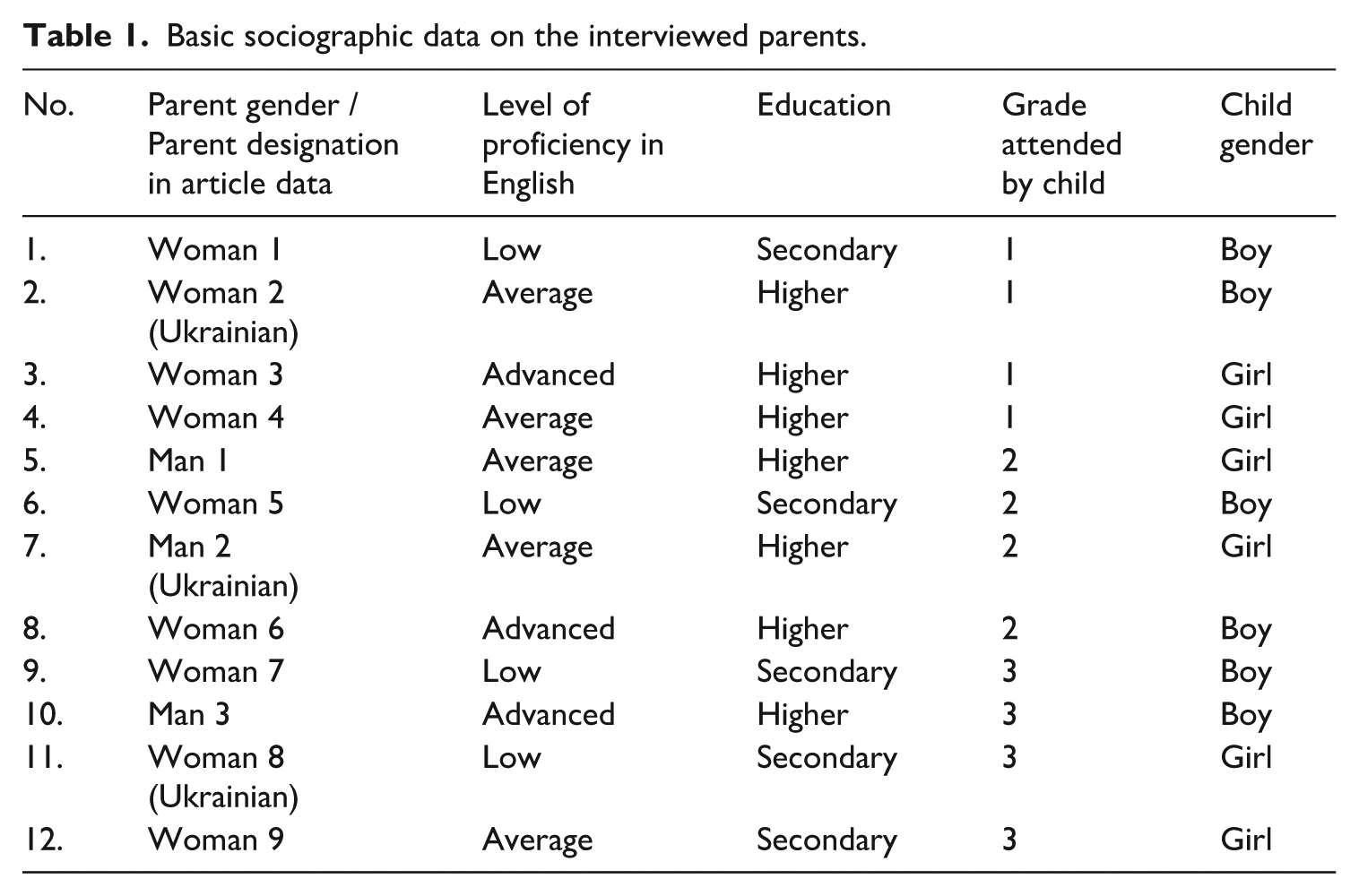
As can be seen from the data, four parents with secondary education reported their level of English proficiency as low and one as average. Those with a higher education considered their level of English proficiency to be medium (4 people) or high (3 people). As demonstrated in the study, the gender of the child and the class they attended had no significant impact on the manner in which they were supported.
The interviews were recorded using a voice recorder with the consent of the participants, followed by transcription and analysis (Gibbs, 2018; Silverman, 2024). Each interview lasted for approximately 25–40 minutes and was conducted in Polish. During the interview, additional questions were asked to allow parents to describe their experience and knowledge of the ways to support their children, such as: How do you feel about it? What is the purpose? What is your perspective on this matter? The analysis was formal and qualitative. The first stage, namely formal analysis, consisted of extracting passages from the transcribed interviews that were relevant to the main research question and the sub-research questions. The subsequent stage entailed the process of coding and furnishing the codes with their initial descriptions. Furthermore, the data was further processed. The sections described were collated and compared, differences and similarities were sought, generalizations were made, and broader categories were created. This approach identified the main categories that could be used to describe Polish parents’ experiences. The research was conducted in accordance with the Declaration of Helsinki and good pedagogical research practices.
It is evident that the research had some limitations. It could be undertaken with a larger number and wider range of people, with more diverse experiences and attitudes towards the issues discussed, and also in a purposely selected group of parents who do not show attempts to support their children in learning, both from urban and rural environments. It is also worth considering a large-scale quantitative study, as the issues addressed in the research have not been addressed by such studies in the Polish environment. The research could reveal general trends and needs of parents when it comes to supporting their children in learning English at the early education stage.
IV Study results
1 Polish parents’ experiences in supporting their children in learning EFL in the home environment
The results of our study indicated the diversity of the experiences of 12 parents of children in grades 1–3 in supporting them in learning EFL at home, using the environment of a large school located in a major Polish city, Wroclaw, as an example. Based on the analysis of the data, the following main categories emerged, showing the parents’ experiences: attitudes and motivation in supporting their children in learning the language in the home environment; parents’ motivation and the importance given to their children’s learning of English; the various strategies, opportunities and ways of supporting their children in learning the language at home; the nature of parents’ knowledge of how to support their children, and the sources of this knowledge; parents’ difficulties and concerns about the support provided and their expectations and needs in this regard. These categories are discussed further in this section. The study showed no significant differences between men and women.
2 Parents’ motivation and the importance given to children’s English learning
Regarding the first category highlighted, namely parental motivation, it should be noted that all the study participants shared a belief in the importance of providing support for children’s learning. It turned out that parents, regardless of their level of English proficiency and their education, demonstrated strong motivation in providing a variety of support for their children. The study results indicate that parents with low language competence showed strong motivation, which was directly linked to their own experiences and challenges in using a foreign language in everyday situations. The following sample statements illustrate this: I want my son to be able to communicate in English in the future, and I know that just learning at school is not enough [. . .] well I know from myself, you have to repeat, learn at home. (Woman 1) [. . .] as I said before, I can’t speak English myself, and I don’t want my child to get embarrassed, as I have many times in my life. A person didn’t go abroad when he was young, there was no money and no opportunity, and now he can’t learn the language anymore, it’s too late. (Woman 5) I don’t want my daughter to be ashamed to speak. In a foreign country, if you can’t get along, you feel bad that you don’t even know basic vocabulary. (Woman 8)
The parents interviewed, drawing on their own challenging experiences, expressed a desire to create the most favorable conditions for their children to realize their full language learning potential. Interviewees 1 and 3, having experienced unpleasant – and, in their view, embarrassing – situations in everyday contexts, especially during foreign travel, often felt powerlessness caused by their lack of ability to communicate in a basic foreign language. These women emphasized a strong determination to provide their children with better learning conditions. Furthermore, the analysis of the interviews showed that parents were concerned about their children’s prosperity and securing a good future. Parents were well aware of the contemporary requirements and realities of the labor market and the competitiveness of the professional field. According to interviewees Man 1 and Woman 5, success in finding a good job was directly linked to knowledge of a foreign language, perceived as a basic requirement. This is indicated by the following statements: [. . .] a better future for the child, of course, now speaking English is the basis [. . .]. Creating such opportunities so that you can apply for a job wherever you want, then you already need to know the language to even have a good job here at all. (Man 1) I’m all for my son being able to work wherever he wants, and I know how this language makes me feel. I promised myself that I would do everything possible to make him not feel the way I do. That’s what I set for myself as a point of honor a long time ago. (Woman 5)
In light of the motivation described, it is important to emphasize the value parents place on foreign language learning itself, as well as the specific aspects they regard as most valuable and beneficial in supporting their children’s educational development. According to the study, these include, first and foremost, the practical use of the language, which allows them to communicate freely abroad. Parents emphasized the practical value of language use, irrespective of their own level of English proficiency or educational background: I would like my daughter to be able to communicate when dealing with English-speaking people. (Woman 3) [. . .] that she could talk from anywhere in the world. (Woman 8) Communication is important to me. He can make mistakes, as long as he talks, as long as he talks. (Woman 1) Talking is about communicating well, so that he can speak. He will get along everywhere, he will feel comfortable, and he won’t be embarrassed. (Woman 5)
For the parents interviewed, it was also important to create opportunities for their children to explore the world and achieve personal happiness, including, as previously mentioned, securing meaningful employment in the future: I think that such free communication in English will also open perspectives for children, it can show them that they can do whatever they want and, above all, to be happy. Well, after all, work is work, study is study, but with such opportunities that children now have, it’s a shame not to take advantage of them. (Woman 3) Traveling, or exploring new places, so that the child is happy in life, just like that [. . .] It makes it so much easier. Also finding a new job, such a broadening of horizons. (Man 1)
The statements cited revealed, on the one hand, parents’ strong motivation and high aspirations for their children’s success in language education, and on the other hand, their conceptualization of what such success entails. It was found that parents primarily associated success with the ability to communicate effectively and use a foreign language proficiently across a range of real-life contexts. Language was supposed to serve practical purposes and be conducive to building happiness and being happy. When understood this way, the goals of language education are very different from those typically emphasized in formal school settings. For the parents interviewed, what was important was not so much the mastery of language skills, as confirmed by tests and good grades, but rather the acquisition of practical communicative skills that directly translated into coping with real-life situations. In this way, the research revealed a kind of gap and dichotomy between school-based achievement and the practical application of foreign language learning. This may be due to the personal experiences of parents who have completed formal schooling and have not necessarily acquired practical language skills.
Moreover, parents’ expectations regarding early foreign language instruction often reflect a desire for measurable progress, such us coping with real-life situations. However, it is important to recognize that young learners are exposed to the English language in ways that support natural language acquisition. Young children learn a target language more slowly and therefore require a longer period to reach levels that adolescents and adults can achieve more quickly (contrary to the popular belief) (Nikolov, 2006). In this context, it is important to emphasize the role of teachers in making parents aware of the fundamental processes and developmental principles that govern how children learn a foreign language in a school setting. It also worth underlying the positive impact of second language acquisition on child’s cognitive development (Sun, 2022). Parents should be made aware that language development at an early age is a gradual, long-term process, influenced by developmental factors, exposure time, and instructional methods, rather than immediate results. According to established teaching methodologies for young learners, the initial focus is not on grammatical accuracy or literacy skills, but rather on fostering a positive attitude toward the language, developing listening skills, and enabling very simple, context-based communication (Regulation of the Minister of Education, 2017).
3 Parental strategies in supporting children’s language learning at home
Other important categories that emerged from the analyses were the ways and opportunities for children to learn English provided by their parents in the home environment. The results of the study revealed that parents, despite differences in English proficiency, attempted to create valuable learning space for their children to the extent of their own abilities, being aware of the benefits of speaking a foreign language. The parents interviewed pointed to diverse ways of supporting children in the process of teaching-learning the language at home (see Figure 1).
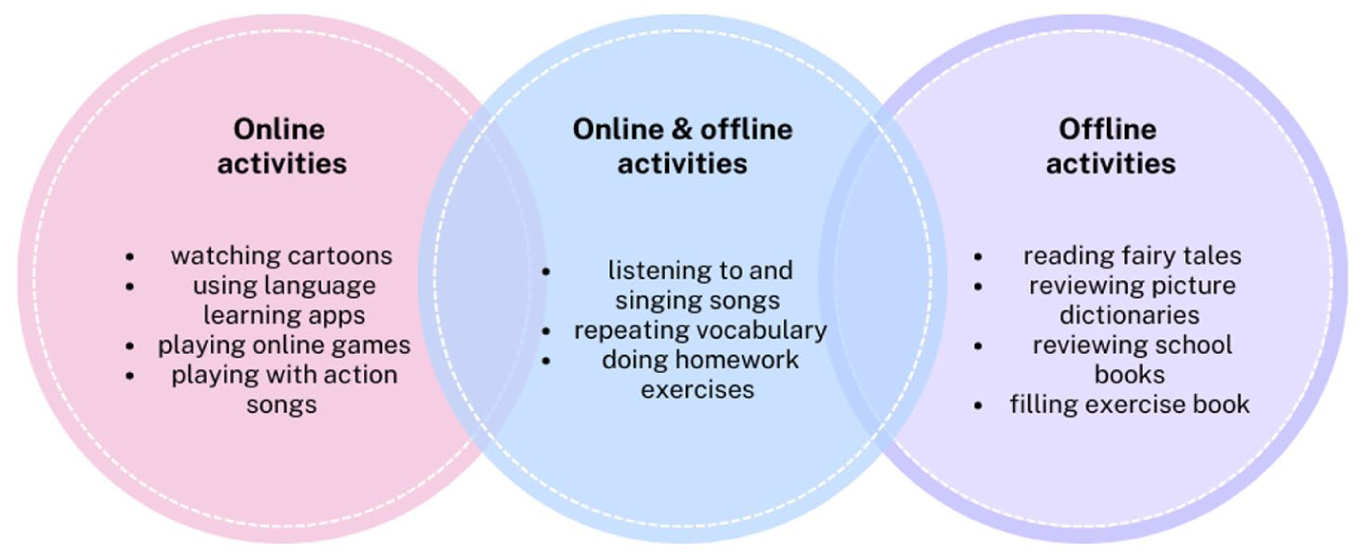
Activities taken by parents to support children in learning English at home.
Among mentioned activities, one common form of assistance for children was asking questions about the content they had covered and repeating vocabulary words before a test at school. Another one was performing tasks indicated by the teacher as homework, such as completing exercises, turning on recommended online games, or listening to songs. Parents paid special attention to vocabulary repetition, which took various forms: I write down vocabulary words with my son on a large piece of paper and we attach them in a prominent place in the house. (Woman 1) We repeat the vocabulary, first I check what was there in the book myself, and I ask, and my child answers. (Man 1). I write out the vocabulary in the notebook or sign in to the child’s exercise, and then we practice together. (Woman 6) Luckily, the teacher often sends us what was going on and I can check these vocabulary words for myself to grasp it all (. . .) And we check each other, I show my daughter the picture and she answers. (Woman 4)
The forms of parental assistance cited for children in learning a foreign language at home confirm their declared commitment and willingness to collaborate with children. As it turned out, some parents, despite their stated use of a variety of ways to support children in learning and sharing the belief that this type of assistance is important, do not have real opportunities on a daily basis to devote their time to activities of this type. This is demonstrated by the following statements: We don’t sit down to study as often as I would like. (Woman 1) When there is external motivation and when the test comes, I sometimes do it. (Woman 9) Sometimes before a test. It’s hard for me to find more time. (Woman 2) In general, I am lax with my daughter, but I would like to change this. (Man 2) I spend rather little time unfortunately. However, I turn on some songs if I remember. (Woman 7)
In this light, it is important to highlight the different experiences of the two women interviewed, Woman 3 and Woman 6. The mothers interviewed expressed satisfaction with the time they devoted to their children, and considered their own involvement and the frequency of their support to be sufficient. This is highlighted by the following excerpts from their statements: I often help my child. I support her development this way. It’s 30–60 minutes nearly every day, plus the lessons of 45 minutes each at the language school. These are big opportunities, and this is enough. There is a lot of time spent on English. (Woman 3) I spend a large amount of time with my son. Two or three times a week for an hour each, for sure. Plus sometimes before a test. (Woman 6)
It is worth mentioning that both women described their language competence as high.
With regard to the time-related difficulties described above, it is worth mentioning private lessons with a tutor as a solution used by some parents when time was limited. Some parents enrolled their children in additional group or individual activities. They recognized the significance of such activities as a means of supporting their children with schoolwork at home: Unfortunately, I don’t have the time to do English with my son at home and teach him, but I do care about my son knowing the language well, and that’s why I made an effort to find a good tutor. (Man 3) I outsource it to private classes, two children, so many things going on, so we have this support from another side, and I care a lot. (Woman 9)
The interviews with parents revealed that, while they undoubtedly care about supporting their children in language education and are familiar with ways to work with their children, the difficulty in accomplishing these tasks is carving out an amount of time that would be satisfying and sufficient.
4 The nature of parents’ knowledge and the sources of this knowledge in regards to supporting children’s language learning at home
The next category which emerged from the analyses concerned parents’ knowledge of how to support their children and the sources of this knowledge. According to the results of the study, many parents were unaware of ways to support their children. Despite the various ways and forms of helping children, parents generally did not feel themselves to be experts in this area, and their factual knowledge of, for example, the specifics of child development, the goals and the specifics of the language-learning process at school, as well as teaching methods, content or principles, was negligible. Rather, their knowledge was of a practical nature, which was demonstrated by the actions taken by parents, shown in the previous paragraph, such as including songs and reviewing vocabulary. In other words, parents imparted knowledge with a practical nature and associated it with the capacity to undertake appropriate actions that facilitate, for instance, the repetition and consolidation of material. In reality, this type of knowledge can be characterized as ‘knowing something’. In regard to the sources of knowledge identified by the study participants, it is worth considering the criteria for acquiring it in the context of the parent’s activity:
the parent’s own activity (the parent takes the initiative and actively seeks knowledge);
collection of transmitted information from other people (the parent does not take the initiative, but accepts and collects information).
With regard to the first criterion, parents’ knowledge came from either non-personal or personal sources. For example, the former included using media and acquiring information while browsing the internet or YouTube. Other non-personal sources included reviewing textbooks and exercises in search of tips for working with children. Parents also relied on personal knowledge and their own intuition, formed from previously acquired experiences (personal sources). Concerning the second criterion, namely gathering transmitted information from other people, an important source of knowledge was the information provided by people perceived by parents as professionals: teachers at school, tutors during private lessons, or teachers in extra classes at language schools (perceived as personal sources). Parents relied on tips provided by experts and materials verified by them.
Four strategies of parental action can be distinguished, based on the analysis of the interviews in the context of the parents’ knowledge on how to provide support to their children (see Figure 2).
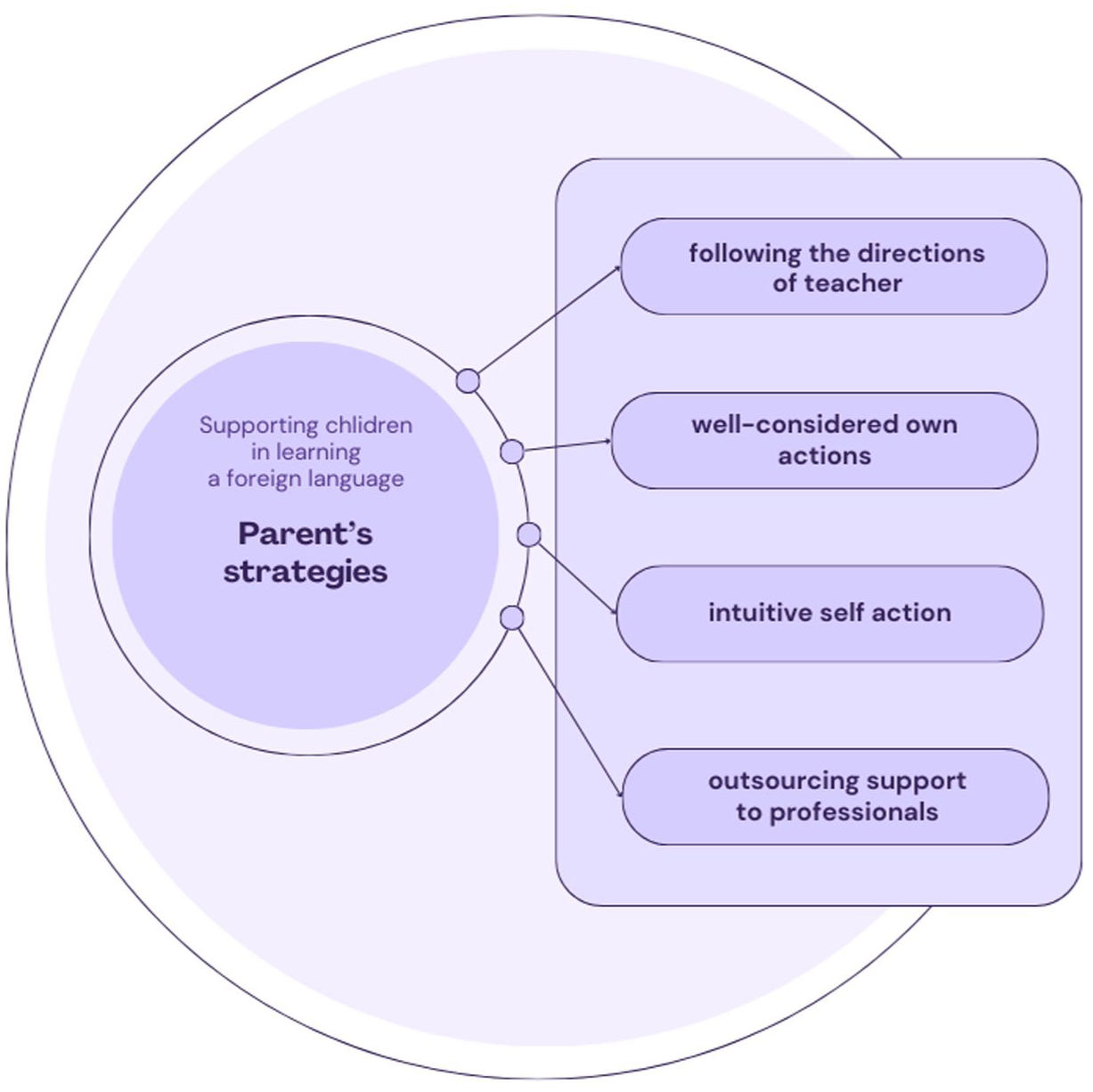
Parents’ strategies on how to provide English language support to their children at home.
It is worth highlighting the specifics of each strategy. The first one – following the lead and directions of the teacher – involved the following activities directed at the children: encouraging parents and children to use the indicated pages of the textbook and CD recordings; doing the exercises indicated by the teacher; repeating vocabulary discussed in school classes; turning on songs or using online games sent by the teacher. The second strategy, based on the parent’s intentional and systematic actions alone, involved support provided using information from the internet, the teacher’s guidance, general knowledge, personal resourcefulness, and the parent’s own language competence. These activities included watching videos and cartoons on YouTube, playing games like memory, board games, quizzes, and computer games, using books to learn, listening to music and translating it, and using picture-language dictionaries. Another strategy – seizing the moment and the educational opportunities that arise, without a thoughtful, long-term, and systematic approach – entailed the utilization of intuitive, straightforward solutions. Among these there might be distinguished: explaining to the child the meaning of things and characters such as inscriptions on clothes, words found on food products or toys; translating the names and meanings of characters in fairy tales watched; translating the meaning of songs while listening to them; translating everyday activities, such as the names of fruits while shopping; and using these situations to stimulate interest in English. In contrast, the last of the indicated strategies – as its name indicates – was based on contracting the help of professionals and enrolling the child in additional classes or tutoring.
The relationships between the different strategies are illustrated in Figure 3 (see Figure 3), constructed with two intersecting scales, forming a continuum. On opposite ends of the continua were placed opposite categories. The first determined the level of parental involvement in the support provided to children, and the second the level of parental ingenuity. In this light, the strategy of thoughtful self-initiative was distinguished by parents’ high level of involvement in providing support to their children, based on their own initiative and invention. The strategy of following the teacher’s lead was also characterized by high involvement in the actions taken, but was distinguished by lower levels of parents’ own inventiveness. A significant level of one’s own invention, on the other hand, was characteristic of intuitive actions, parents which were distinguished by a lower level of involvement in the assistance provided. The lack of significant active support – in terms of parents taking their own initiatives – was characteristic of the strategy of outsourcing help to professionals and enrolling the child in additional classes.
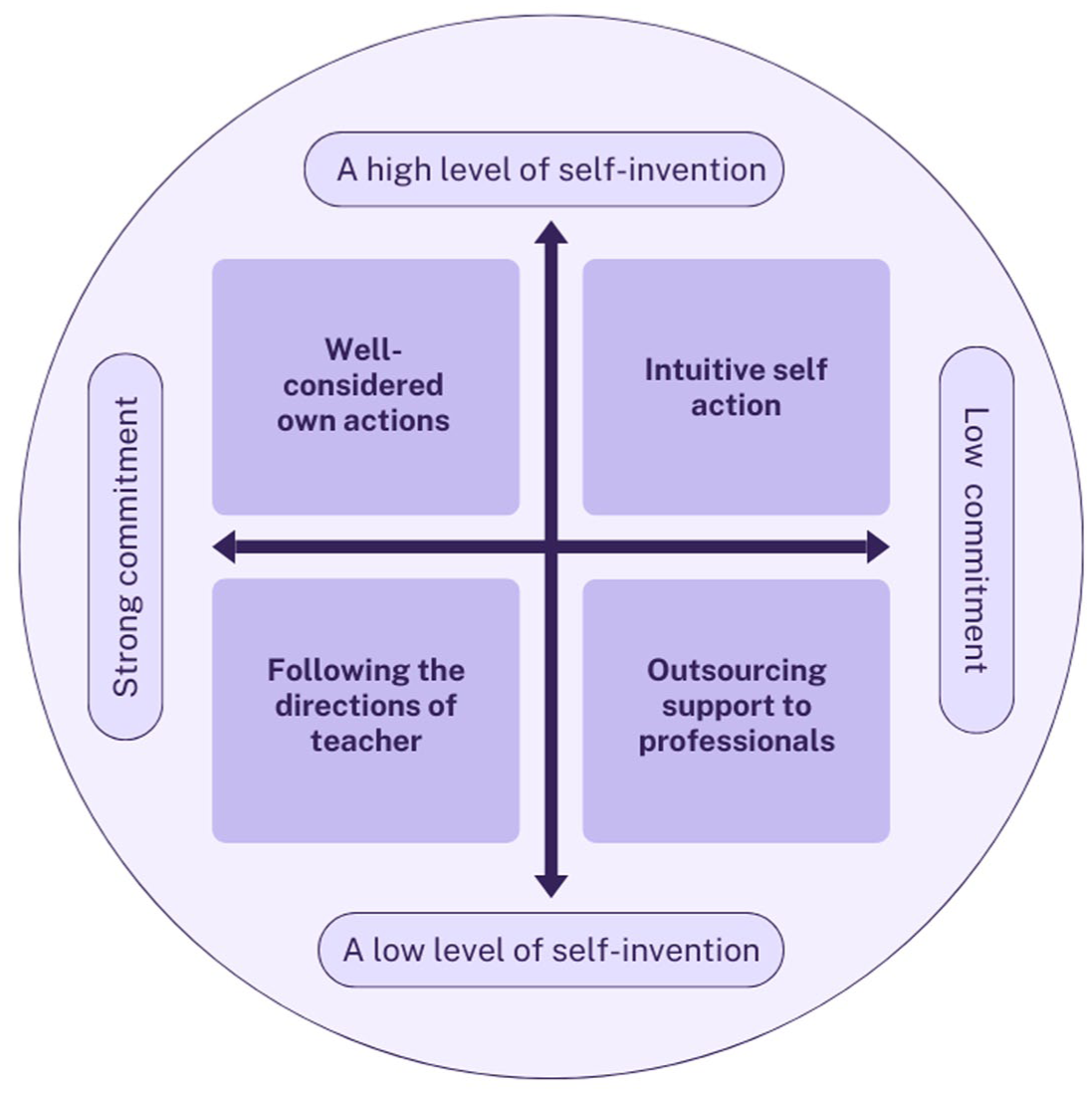
The relationship between parental strategies regarding the provision of English language assistance to their children at home.
It is worth noting that in the parents’ statements, the strategies distinguished overlapped and intersected in places. The strategies shared some of the parents’ actions, such as encouraging learning and keeping an eye on homework. It should also be noted that each strategy enabled parents to actively support their children, even when they had limited or no language competence. Even simple activities carried out regularly at home, such as turning on songs or online games, or repeating vocabulary words, could be effective activities, increasing the child’s contact with the language and the degree of mastery. Furthermore, it is worth taking a closer look at one of the strategies highlighted above, namely the intuitive actions of parents in supporting their children in learning a foreign language. Based on the theory of de Certeau (2011), the creative efforts of ordinary people caught up in the oppressive structures of social life take on special significance. As Andrew Blauvelt noted, de Certeau’s research ‘into the realm of routine practices, or the <<arts of doing>> such as walking, talking, reading, dwelling, and cooking, were guided by his belief that despite repressive aspects of modern society, there exists an element of creative resistance to these structures enacted by ordinary people’ (Blauvelt, 2003, p. 18). In this light, supporting children and motivating them to learn English at home can be read as a creative activity, taking advantage of the opportunity that comes, in the midst of many repressive and limiting factors for this support, such as an excess of daily chores, the need to take care of the house, the need to prepare meals and do shopping, a general lack of time, a sense of parental fatigue, but also insufficient language and content competence. In this context, activities such as translating words found on clothes or the names of products, or building simple sentences according to domestic situations, showed the use of opportunities that came without special preparation, having teaching aids or a well-thought-out strategy for dealing with them. Therefore, it is important to emphasize the uniqueness of these situations in home life and the reality of their teaching context (Herrington & Oliver, 2000).
Described strategies of home-based language support illustrates the proactive role that parents can play in fostering an English-rich environment. It also underscores the importance of recognizing and building upon informal learning contexts in discussions about language education policy and practice.
5 Parents’ difficulties and concerns and expectations
Other important issues, directly related to parents’ experiences and opportunities in supporting their children in learning English in the home environment, are the difficulties and concerns they manifest. In this context, it is important to point out an important factor limiting their opportunities, namely their low level of English proficiency and the associated feeling of lack of linguistic competence. Such a belief was rooted in parents’ fears about passing on incorrect pronunciation to their children and the general low quality of the assistance provided. This is illustrated by the following statements: My level of knowledge is basic, and I am unable to recall everything. I don’t use English on a daily basis, so speaking and recall, I’m a bit afraid of it and don’t have time to work on it. (Woman 1) I don’t know if I am saying everything correctly and unknowingly misleading the child. I prefer not to take the risk and teach the child the wrong pronunciation, it’s already better to play something and ask about it. (Woman 5) I’m afraid that I’m speaking wrongly and will pass on the wrong pronunciation, for example, that will later be repeated or sound wrong. (Woman 7)
Parents also expressed concern about the limited opportunities to teach children real communication. Two persons interviewed, Woman 2 and Man 2, pointed out important methodological and content issues. They stressed that simply learning and repeating vocabulary words is not sufficient to practice effective communication. The results of the study cited at the beginning of the article indicated that the difficulty highlighted is a concern in school teaching as well. In Polish schools, children graduating from early years of primary education generally lack the ability to formulate simple sentences in English. The parents examined highlighted this in the following statements: I don’t have much time and it’s still just repeating vocabulary, not real communication, so that the child can communicate. (Woman 2) But it’s important to speak whole sentences instead of just words, so it takes more time and effort. (Man 2)
Regarding the identified difficulties, concerns, and limitations of parents in supporting their children in learning EFL at home, it is worth addressing the assistance they expect from the school and teachers. In other words, it is necessary to answer the question of what needs and expectations parents have of the institutions and entities responsible for the learning process. In light of our own research, parents pointed out a number of activities of teachers that they consider to be important to effective cooperation, specifically related to the teaching of English. They emphasized the need for teachers to take the following practical actions:
development of a brief summary of what went on in class; listing the topics covered and the material to be practiced at home (both electronically and through a notebook entry),
preparing ready-made materials for work in a variety of forms: printable worksheets, but also multimedia exercises, online games and quizzes, links to cartoons and songs,
collection of additional materials to develop particular skills, primarily speaking, such as a vocabulary base and simple language structures conducive to conversation; − creation of supplementary instructional materials for eager students, such as a sample booklet, a set of worksheets, or a workbook to complete,
as well as the sharing of expert knowledge by teachers on how to support children, where to get inspiration and materials for learning, what methods are effective, and which sites to use, including recommending apps to practice pronunciation.
Parents indicated a variety of needs and expectations in relation to supporting their children. These expectations were directed at school English teachers, who were professionals involved in their children’s education. On the one hand, the needs identified stemmed from their own developed ways of helping their children and their own needs in this regard, such as applying quick and easy materials, including links to songs and games. On the other hand, parents’ expectations were aligned with their children’s needs and observed effective ways for them to learn the language at home. The parents indicated what interests the children and attracted their attention, such as the use of online games, memory games, and apps. It is also worth noting that, when defining their expectations, parents did not refer to the need to deepen their substantive and methodological knowledge of, for example, the objectives of language teaching, the principles of planning work with the child, or the specifics of the child’s development. Parents’ statements indicated that, when defining their needs, they remained at the level of information they already had and only expanded it, e.g. with more links with songs, websites, and ready-made materials. In this context, it is particularly important to support parents and raise their awareness of how to assist in the process of learning foreign language at home by children, while also informing them of the potential mistakes and risks associated with such involvement. This is an important conclusion of the study.
The findings of own research were reflected in the study, highlighting the significance of parental involvement in the educational process of children at an earlier age. The period of early childhood education and early years of primary education is defined as the time of greatest parental interest in children’s schooling throughout its course. At the time when a child starts compulsory schooling, parents show particularly intense concern for his or her proper development (Chojnacka-Synaszko, 2013; Kim & Trostle Brand, 2023), which is confirmed by the strong motivations and aspirations shown within the framework of the research to help children learn/acquire the language, expressed, among other ways, in the variety of approaches and strategies of supporting their children. It is important to reinforce this and make teachers aware of it when planning cooperation with the school. However, home-school partnership is more complex.
In the context of parental strategies for supporting children’s language learning at home – as well as the nature of their knowledge – it is important to consider the extent to which parents are expected to engage in formal language education. This can vary significantly depending on educational context, institutional expectations, and individual family dynamics. As pointed out before, research underscores more active role for parents in the early stages of education. Neither the Polish national core curriculum nor school policy regulations assign explicit responsibilities to parents in the area of language education. This has both advantages and disadvantages. On the one hand, voluntary parental involvement and their willingness to support their children represent significant potential for enhancing language competence, particularly by increasing both the quantity of language input and the time spent engaging with the language outside of school. On the other hand, parents are not required to have even minimal language experience or knowledge in both linguistic and methodological preparation, which may hinder their ability to, for instance, model correct pronunciation. These are the gaps that parents naturally face, given that they are not trained educators. One potential negative consequence of this gap is the risk of children acquiring incorrect language habits – such as mispronunciation – which could be difficult to correct later (Tanir, 2023). Therefore, additional attention should be given to preventing the transmission of incorrect language input from parents to children, particularly in cases where parents lack the linguistic competence. Although the results of the research presented in this article indicate that many parents are aware of these risks, it should be emphasized that the study included only those parents who had previously declared their willingness to assist their children with language learning at home. Moreover, parents who are naturally unfamiliar with the specific characteristics of child development may struggle to select appropriate strategies for supporting foreign language learning at home. They may feel compelled to ‘take over’ the role of the teacher and, instead of providing support, attempt to instruct the child with an expectation of quick results. This approach can lead to parental frustration and, ultimately, to the child’s discouragement and loss of motivation. Therefore, it appears to be essential to recognize that parents are not professional educators, lack formal pedagogical and linguistic training, and should not engage in systematic instruction at home without prior adequate preparation. As mentioned such practices may result in adverse outcomes, including the transmission of incorrect pronunciation models or the discouragement of learners due to an excessive cognitive and workload burden. Nevertheless, the teacher – who play a key role in fostering parental awareness and engagement – may introduce ways of supporting children at homes for those parents who are willing to do so, and encourage the others, and thus increase their motivation and effectiveness in this process. This support can involve incorporating language exposure and practice into routine family activities in a manner that is developmentally appropriate, sustainable, and aligned with the learner’s needs.
In summary, it is noteworthy that schools and teachers play a critical role in shaping parental engagement. This approach should involve raising awareness of the processes underlying language learning, as well as clearly communicating the goals, methodologies, and anticipated outcomes of early language instruction, as previously discussed in this article. Teachers and schools may support parents by offering practical strategies that parents can use. This may include engaging in simple language activities at home, reinforcing vocabulary and phrases introduced in class, or even learning alongside the child through songs, games, or storytelling. Parents might watch a cartoon with their child and check the meaning of unfamiliar words together; this strategy may work even if parents do not speak the target language themselves. Such involvement not only enhances language input but also strengthens the child’s motivation and confidence.
V Summary and conclusions
A key challenge in the learning of EFL by EYL students in the context of Polish schools remains the development of their communicative competence. One possible and effective way to support this process would be to increase parental involvement in language learning in the home environment. However, the situation is not so obvious. The research presented within this article highlighted the importance of parents’ support in the language education of their children. Within the framework of the article, an attempt was made to analyse the comprehensive experiences of parents of early childhood education students in facilitating the process of learning a foreign language in the home environment. It appeared that parents, while supporting their children in language learning, also function within the complex context of their own experiences, constraints, and expectations.
Analysis of the empirical data gathered during the study revealed that parents are highly motivated to help their children learn English, especially in developing practical communication skills. They are primarily concerned with ensuring that children use the language in a functional way, such as constructing sentences and holding conversations, rather than limiting themselves to learning single words. Thus, the results of the study confirmed the poor state of Polish education in this area and the need for change. Based on the studied group it can be concluded that parents are familiar with various ways and forms of providing support to their children, but they also struggle with various difficulties in their efforts. Among the key barriers are: concerns based on their own educational experiences, lack of professional knowledge, low language competence and lack of access to appropriate teaching materials. Additionally, constraints in time and organizational difficulties in implementing educational activities at home further complicate the process of assisting children.
Teachers have a crucial role in the process of supporting parents in their children’s language development activities. The results of the study indicated that the simple and specific methodological guidance provided by teachers, as well as diverse educational materials, both in traditional and multimedia form, could significantly ease the challenges faced by parents. Furthermore, enhancing parents’ knowledge of the basics of childhood developmental specifics in the context of learning a foreign language, formulating language goals or developmental landmarks are solutions that promote the building of parents’ competence in providing effective support. This is especially important at the early stages of education, when children are less independent and require intensive help from adults. Effective cooperation between the school and parents can enhance the learning process. Joint activities can be particularly beneficial for economically disadvantaged families, for whom it is sometimes difficult to enroll children in additional extracurricular activities. It is worth considering the appropriate form of cooperation to ensure its efficacy. The desired direction of solutions could be personalized school communication, which permits both receiving and providing meaningful communication between the school and parents. The efficacy of messages and letters is enhanced when they are individualized and linked to learning. Therefore, they encourage positive interaction and recognition of progress (van Poortvliet et al., 2018; Vaughan, 2019).
In conclusion, the research indicated the significance of parents’ engagement in the process of children’s language education and highlighted the importance of systematic support from teachers. Regular interaction with English in the domestic setting, even in the form of uncomplicated activities, has the potential to significantly aid in the enhancement of children’s language proficiency. On the other hand, it is important to acknowledge the challenges and gaps in this process. It is essential to bear in mind that parents are not intended to serve as educators to their children in the home. They are untrained educators, which means that they lack both linguistic and methodological preparation. They may, if they wish, support their children in the learning process and in such cases, it should be ensured that the entire process is beneficial and does not discourage children, for example, by imposing an excessive amount of assignments or homework. Adopting a conscious and reflective approach to these issues by all the sides, may contribute meaningfully to enhancing the effectiveness of foreign language instruction. This can also help to dispel the idea that children learn languages faster than adults.
The themes raised in the article lead to further questions and point to further research areas worth exploring. These include the analysis of the support provided to parents by teachers, the identification of expectations, needs and principles of cooperation in relation to the language education of younger children between parents and teachers and, as a result, the identification of effective models of cooperation between school and home in this regard. The identification of the difficulties faced by teachers in communicating with parents also remains an important issue.
Footnotes
Acknowledgements
Publication financed by the ‘Initiative of Excellence - Research University’ programme in Poland.
Data availability statement
The data will be shared upon reasonable request.
Funding
The author received no financial support for the research, authorship, and/or publication of this article.
Ethical approval and informed consent statements
The research was conducted in accordance with the Declaration of Helsinki and good pedagogical research practices.
The interviews were recorded using a voice recorder with the consent of the participants.
