



Abstract
This article reports on a study that explored Japanese university students’ evolving motivational regulation by mapping its changes over one year of their studies in a collaborative project-based learning environment. An autonomy-supportive collaborative intervention was delivered to the 19 participants with varying or no experience of communicative language teaching and study abroad. Our cluster-based analysis of multiple questionnaire responses revealed increased motivation among the participants. Three learners were selected to represent each clustering group based on the unique characteristics of their motivational trajectories over the year, which reflect the mediating impacts of their previous language learning experiences and their learning experience during the pedagogical intervention. The findings indicate that language teachers can enhance learners’ ‘motivational regulation’ by creating a supportive learning environment in the classroom.
Keywords
I Introduction
Strictly speaking, there is no such thing as ‘motivation’ . . . ‘motivation’ is an abstract, hypothetical concept that we use to explain why people think and behave as they do. (Dörnyei, 2001, p. 1)
The question of how students can be motivated in their language learning is a significant professional concern for many language teachers. Previous research (e.g. Stipek, 2023; Volet & Järvelä, 2001) has found that learners’ motivation to learn and use the target language is context dependent, depending in large part upon the classroom environment and the climate that a teacher creates with students. It should be noted that in many contexts, language learners mainly learn English to pass a university entrance exam and therefore have little experience with using the language for communication. Given this environment, they are often reluctant or anxious to use the language in the classroom.
Motivation has been conceptualized in multiple ways. Among the variety of theorizations, the self-determination theory (SDT) conceptualizes human motivation in terms of three fundamental constructs: (1) autonomy (i.e. people’s ability to choose their own actions and goals); (2) competence (i.e. people’s confidence that they can do something); and (3) relatedness (i.e. people’s desire to relate to others and experience a sense of belonging in their societies) (R.M. Ryan & Deci, 2000). These three elements help to satisfy basic human psychological needs in their working relationships with others in the learning community, leading to the development of an autonomy-supportive learning environment (R.M. Ryan & Deci, 2000; see also La Guardia et al., 2000). Likewise, Brophy (2008) identifies three key elements underpinning learning motivation that are specific to the classroom context: (1) the social aspect, which depends upon the social milieu of the classroom and whether it is supportive or threatening; (2) the expectancy aspect, which refers to whether or not students believe they can succeed, the level of fear of failure they experience, and what they attribute their success or failure to; and (3) the value aspect, defined by students’ views of the worth of the challenge. The common thread connecting these theories about learning motivation involves supporting student learning by creating an autonomy-supportive environment in the classroom.
Creating a positive foreign language classroom climate is crucial for supporting the development of students’ motivation (Robinson, 2023; Wang et al., 2020), and requires both academic and emotional support from teachers (Hye-Kyounge et al., 2017; Patrick et al., 2011; for cognitive (or knowledge building) and motivational scaffolding, see also Brophy, 2008). Not only early-stage language learners but also advanced ones benefit from emotional support from teachers, which contributes to their affective development and desire to engage in learning and better communication with people of different language proficiency. Academic support is equally important, as it promotes students’ cognitive development and increases their motivation by building their confidence and skills for success in learning. Variations in emotional and academic support from teachers can influence how learners become regulated in learning (Pintrich, 2000). More precisely, Ilishkina et al. (2022) argue that ‘successful learners regulate their motivation to learn’ (p. 1), suggesting the crucial role of motivational regulation in the learner’s developmental process.
The social aspect of motivation, or the impact of classroom environment on motivation (Centre for Education Statistics and Evaluation, NSW Department of Education, 2020; A.M. Ryan & Patrick, 2001), is also crucial in encouraging learners’ use of a target language, and is influenced by teacher support of the development of a positive classroom ecology (Kramsch, 2008; Thomas, 2014). In order to motivate learners, it is necessary for teachers to support the development of strong bonds between the members of the classroom community (i.e. amongst learners and between teachers and learners), based on which learners feel secure in their interactions with each other in the classroom. This process is likely to help language learners develop confidence and willingness to make efforts in learning, which leads to increases in motivated behaviour, such as target language use (for empirical evidence, see Li et al., 2022).
This article investigates how language learners become motivated in language learning and develop their capacity for motivational regulation in a Japanese university. We focus on Japanese university students’ motivational regulation (as part of self-regulated learning) in an autonomy-supportive learning environment, which entails ‘their efforts to influence [and] control [their] motivation or motivational processing’ (Walters, 2011, p. 265; see also Ilishkina, 2022; Schwinger & Steinsmeier-Pelster, 2012).
II The interaction of self-regulation and social regulation
Successful language learning depends not only on language learners’ learning efforts, but also on their effective self-regulation of motivation, affect/emotion, cognition, and behaviour (Bronson, 2000; for cognitive (or knowledge building) and motivational scaffolding, see also Ning & Downing, 2010; Walters, 2011). According to Zimmerman (2000), self-regulation refers to ‘self-generated thoughts, feelings, and actions that are planned and cyclically adapted to the attainment of personal goals’ (p. 14). In other words, self-regulated learning (SRL) is a ‘cyclical complex meta-cognitive and social process that involves adapting cognition and metacognition, motivation, emotion, and behaviour’ (Järvelä & Bannert, 2021).
SRL occurs through the interaction between the individual self, environment, and behaviour (Zimmerman, 1989). While self-regulation or metacognitive monitoring entails an ‘individual and internal mental process’, each individual learner’s regulation occurs as part of a shared process involving other learners or individual ‘self-regulating agents’ in the classroom context (Malmberg et al., 2017, p. 160). This means SRL inevitably involves ‘personal perceptions and efficacy, as well as environmental conditions such as support from teachers and feedback on previous problems’ (Hadwin & Oshige, 2011, p. 242; for the interaction between self-regulation and social regulation, see Boekaerts, 2011; Hadwin & Järvelä, 2011; for socio-cognitive model of self-regulation, see also Zimmerman’s 1989).
In other words, the steps to be taken toward enhancing learner motivation are largely congruent with those for developing self-regulation. The motivational poster titled ‘Which steps have you reached today?’ (Etsy, n.d.) outlines the process of how learners become motivated, describing a continuum shifting from the lower stages of ‘I won’t do it,’ ‘I can’t do it,’ ‘I want to do it,’ ‘How do I do it,’ ‘I’ll try to do it’ to the higher stages of ‘I can do it,’ ‘I will do it,’ and ‘Yes, I did it.’ These steps encapsulate the elements of self-regulation that include affect, cognition, and behaviour (Järvelä & Bannert, 2021; Zimmerman, 2000).
The classroom climate is therefore critical to promoting students’ motivation and SRL in an environment where English language skills cannot be developed without language use. Promoting students’ target language use requires providing ample learning opportunities for interactive, collaborative, and communicative activities in the classroom. It is our understanding that ‘collaborative’ learning in the language classroom (Oxford, 2011) does not simply refer to the formal use of pair or group activities, but also to the essence of how students, most ideally as significant classroom members or as parts of a classroom unit, learn from one another (for empirical evidence, see Järvelä et al., 2019; Panadero et al., 2015; Volet et al., 2009). In an ideal classroom environment, learners ‘feel secure, develop their self-efficacy, become more willing to take risks mainly in speaking, critically reflect on their ways of learning, evaluate their strengths and weaknesses appropriately, learn and teach with each other, and regulate their learning for the better’ (Nakata et al., forthcoming). This involves the development of motivation and SRL, which includes emotional, cognitive, and behavioural development. Therefore, students in this kind of learning environment are more likely to regulate their own motivation to learn and use the target language.
Hadwin et al. (2011) propose two modes of collaborative learning: the CoRL (co-regulated learning) mode, in which learners learn and teach one another, and the SSRL (socially shared regulation of learning) mode, in which multiple individuals, as a classroom unit, co-construct knowledge, monitor and evaluate one another, and learn from one another toward a shared goal. SSRL represents the ideal classroom mode, with the qualities outlined in the previous paragraph. Indeed, there is growing empirical evidence for the benefits of both the CoRE mode (see Schoor et al., 2015; Volet et al., 2009) and the SSRL mode (see Isohätälä et al., 2017; Järvelä et al., 2013). Nakata et al. (2022) investigated how students’ motivation interacts with patterns of language classroom mode emergence, in which the same teacher uses the same methods and delivers the same content under the same curriculum. They found three broad mode tendencies unique to each classroom: (1) SoRL (solo-regulated learning) mode, in which learners learn individually; (2) CoRL mode, in which some learners learn from each other through pair work, but others do not necessarily do so (i.e. structural holes in collaborative learning in the classroom); and (3) SSRL mode, in which learners learn as a collective classroom unit (Nakata et al., 2022; for the figures of these classroom modes, see also Nakata, 2022). The SSRL classroom mode often mirrors the ideal classroom described above, either in language or other subjects’ classrooms. There is thus room for further investigation into how the SSRL classroom mode influences students’ motivational regulation in foreign language learning and teaching.
Building on Bronfenbrenner’s (1994) ecological theory, several researchers (Baggis & Pati, 2023; Hadwin & Oshige, 2011; Kramsch, 2008; Luo & Ka Yuk Chan, 2022; Yowell & Smylie, 1999) postulate that the development of self-regulation in the classroom requires the construction of an ecology of multiple layered systems: (1) the micro-system (e.g. individuals’ interactions with a teacher and classmates); (2) the meso-system (e.g. students’ interactions with classmates in and out of the classroom); and (3) the exo-system (e.g. trusting relationships between a teacher and classmates, and amongst students). In the language classroom, the micro-system refers to the co-regulation which occurs within pairs or groups, and between a teacher and a limited number of students. The next layer of the meso-system involves classmates’ comfort talking to each other both inside and outside the classroom (e.g. greetings, positive interactions outside the classroom, and feelings of a relaxed, collaborative learning environment). For learners in a supportive meso-system, the classroom is their home, and their classmates are like family members. The exo-system, or the outer circle of multi-layered ecology in the school classroom context, is often cultivated over time. Above all, as is illustrated in Figure 1, the classroom in which these three layers influence each other is considered being in the SSRL mode.
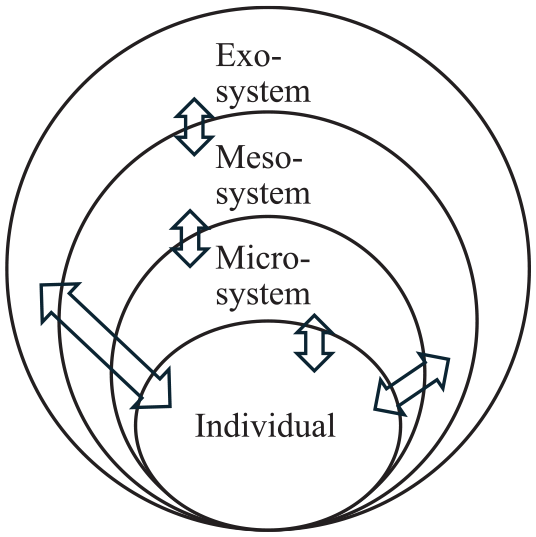
The ecology of the classroom: Three layers of micro-, meso- and exo-system.
To some extent, the three layers of this ecological model mirror Robinson’s (2023) motivational climate theory, which establishes the three broad categories of (1) motivational supports, or ‘speech, actions, and structures controllable by the people in the setting that shape individual motivational beliefs’; (2) motivational climate, or ‘students’ shared perceptions of contextual qualities of their classroom’; and (3) motivational microclimate, or ‘individual or subgroup perceptions about contextual features that shape their motivational beliefs’ (p. 93). Robinson (2023) argued that a motivational classroom climate can be created through interaction between several motivational microclimates, teacher and student beliefs and characteristics, motivational supports including teacher and student behaviours, and educational systems (for more details of this model, see Robinson, 2023, p. 94).
However, the classroom environment’s effects on language learners’ motivational regulation in the language classroom remains underexplored. This article assumes that the shift from SoRL to CoRL and SSRL classroom modes, and motivational regulation as part of SRL, are interrelated, as shown in Figure 2.
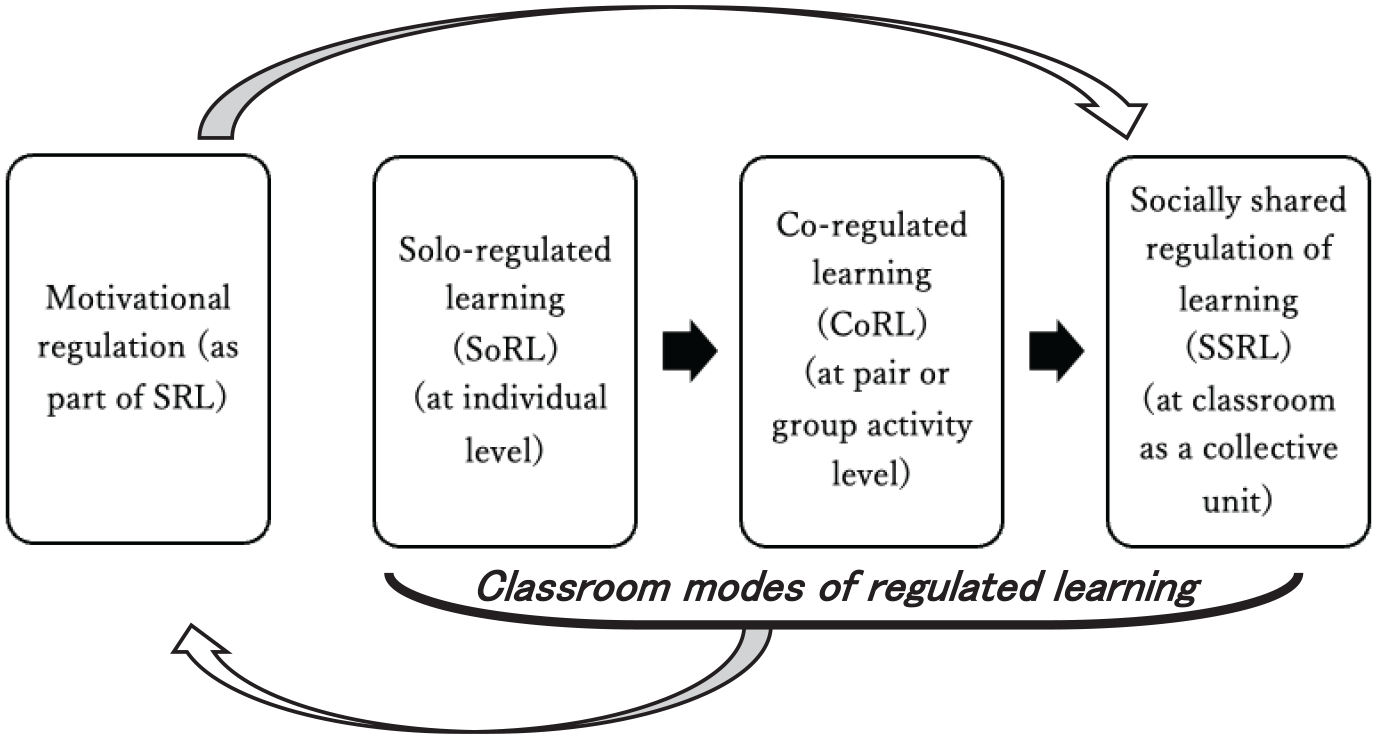
The interaction between classroom mode and motivational regulation, as part of self-regulated learning (SRL).
The current study investigates the dynamic transformation of the classroom mode and its impact on language learners’ development of motivational regulation in a Japanese university. More precisely, this study aims to map how Japanese university students’ motivational regulation ability and classroom mode changed over the course of a year in a collaborative, peer-feedback, project-based, and autonomy-supportive learning environment. The three specific research questions are as follows:
• Research question 1: How did Japanese university students’ levels of motivational regulation change over a year?
• Research question 2: How did the changes in levels of motivational regulation among Japanese university students vary between different groups and individuals?
• Research question 3: How did individual foreign language learners enhance their motivational regulation to learn a language and use the target language in the classroom?
III The study
Given the complex and contextual nature of a classroom climate (Robinson, 2023), this study aimed to explore the development of Japanese university students’ motivational regulation when they engage in activities that lead to an autonomy-supportive environment. Therefore, we adopted the convergent parallel mixed methods with multiple phases of data collection (Creswell & Plano Clark, 2010) to enable the instructor to understand better students’ motivation and the classroom climate. Equally importantly, this study involved some aspects of teacher’s classroom research (Cochran-Smith & Lytle, 2009) or classroom assessment research on motivational regulation (Brookhart, 2012), as it adopts a cyclical process of understanding students’ motivational changes, monitoring students and listening to their views to improve pedagogical interventions.
1 Research context and participants
The university is one of Japan’s competitive private universities in Japan. English is the most essential subject in the entrance exam, accounting for 200 of the 500 points in the three subjects. The exam consists mainly of long reading comprehension and grammar questions, with some filling-in-type conversation questions. Unlike many large private universities, which only ask multiple-choice questions, this university also asks some writing questions.
The participants were 19 first-year university students in an Intensive Advanced English course. Seven were science and technology majors, while the other 12 were psychology majors. It is a proficiency-dependent class, with students’ CASEC (an online test to evaluate ability to communicate English) score ranging from 680 to 708, equivalent to TOEIC scores of 690 to 740. Despite this overall high level of English ability, the students’ previous language experiences vary from those with ample communicative language (ACL) experience, including those with experience in English as a medium of instruction (EMI) learning environments, to those with a lack of communicative language (LCL) learning experience, who have mainly experienced entrance-exam-oriented language teaching with a focus on vocabulary, reading and listening.
This study took place in the university’s second year of an English language curriculum reform process. In the first year of this curriculum reform, in some of the classes at this level, some LCL learners who performed well on the tests for the proficiency-dependent class could not keep up with EMI lessons. In contrast, ACL learners found it difficult to communicate with LCL learners. These EMI classrooms thus needed to provide a learning environment where both types of learners felt secure in using a target language or were willing to learn FL and teach each other. In response to these observations, the university conducted a questionnaire at the beginning of the course to gather information on the nature of the students’ high school English learning (i.e. whether it had included EMI, communicative language teaching, or listening activities). Thus, in this class, the instructor repeatedly stressed that the primary learning goal was to develop intelligible language proficiency to communicate well not only with native speakers of English but also with a wide variety of non-native English-speaking people (including classmates with different language learning backgrounds). All learners, regardless of their language learning backgrounds, were encouraged to learn collaboratively and teach each other in the classroom.
The first author, the instructor of this intervention, was the project leader for the curriculum reform. He approached this intervention as practitioner research or practitioner’s research engagement (Borg, 2010), including its implementation and the data collection and analysis, focusing on the problems that arose in the first year of the reformed curriculum. He is an expert in motivation research and a language teacher educator. The second author, an expert in teacher research and teacher agency, guided this research project.
2 Pedagogical intervention
This class was aimed at achieving language proficiency, targeting level B2 of the CEFR, and consisted of 60 lessons of 90 minutes apiece, held twice a week throughout the academic year. One lesson in each week was a communication-focused EMI lesson on a topic promoting discussion amongst students, using Pearson’s textbook ‘Impact Issues 3’. The other involved a collaborative project in which students chose a TED talk and film of interest to them, researched it, and took on the role of a teacher who offers a shadowing practice (a text reading activity involving listening and pronunciation practice) and conducts a discussion on the given topic in communication with an audience. The keywords characterizing this course are autonomy-supportive, peer feedback, project-based, performance-based, and collaborative.
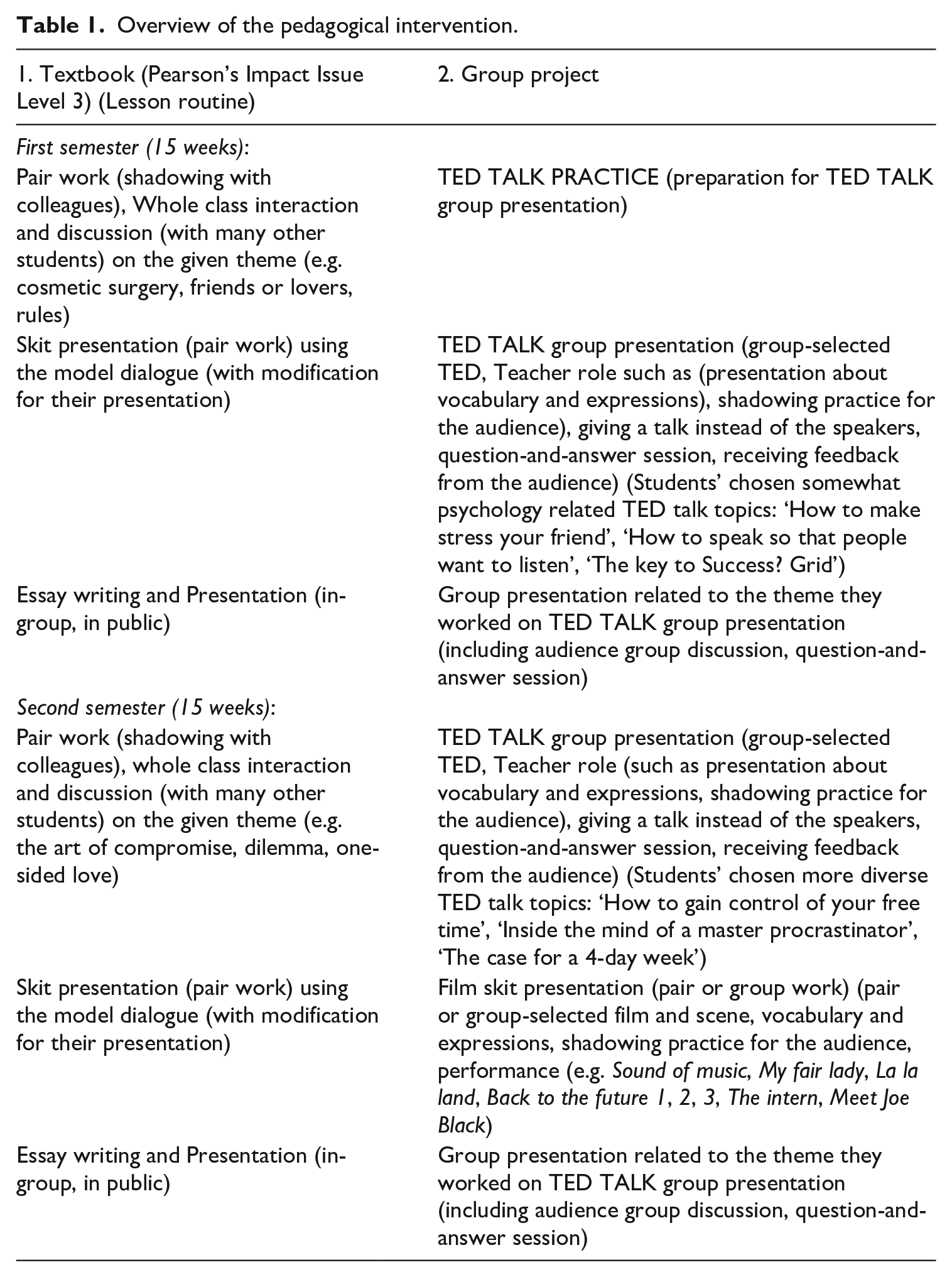
The group work for the first semester was set up with mixed groups of students with and without CA and EMI experience based on their university’s institutional questionnaire responses. Specifically, two or three students did the text and film skit presentations, and three or four did the TED Talk group project presentations. The details of the TED project, including the shadowing practice in which presenting students act as teachers, are as follows: (1) introduce the background of the TED Talk; (2) listen with both subtitles and English on; (3) have the audience shadow him or her, paying attention to tone, pause, focus, gestures and facial expressions; (4) have the students shadow the TED Talk audio, using subtitles only if necessary; (5) give a group presentation (each presenter discusses the topic from a different angle) and have the audience (a group of three students) discuss the topic. This is followed by a question-and-answer session, online peer evaluation feedback (on the group, strengths and suggestions for improvement, and individual presenters) and their response to this feedback at the beginning of the next lesson. Throughout these projects, the teacher first demonstrated and then supported the students’ role-playing as a teacher as needed, gradually reducing the support by monitoring their progress. The summary of the pedagogical intervention is outlined in Table 1.
Overview of the pedagogical intervention.
Given the multifaceted and dynamic nature of English language proficiency and the aim of this intervention, a comprehensive assessment approach was adopted: (1) Attendance and participation: 10%, (2) Essay writing (each week for individual essay on the textbook topic, collaborative essay for group project): 35%, (3) Individual presentation (always in small group and occasionally in public) and group presentation: 35%, and (4) Vocabulary assignment (lists of vocabulary, derivative words and sample sentences that individuals deemed necessary for their learning of the textbook and group project): 20%.
This intervention essentially aligns with Robinson’s (2023) guidelines for enhancing the motivational climate of a classroom, as it is based on ‘longitudinal design-based research, research-practice partnerships, and improvement science approaches’ and has the potential to enhance (participant) ‘student motivational opportunities’ and advance ‘a theoretical understanding of how motivational supports and climate function’ (p. 104).
3 Data collection
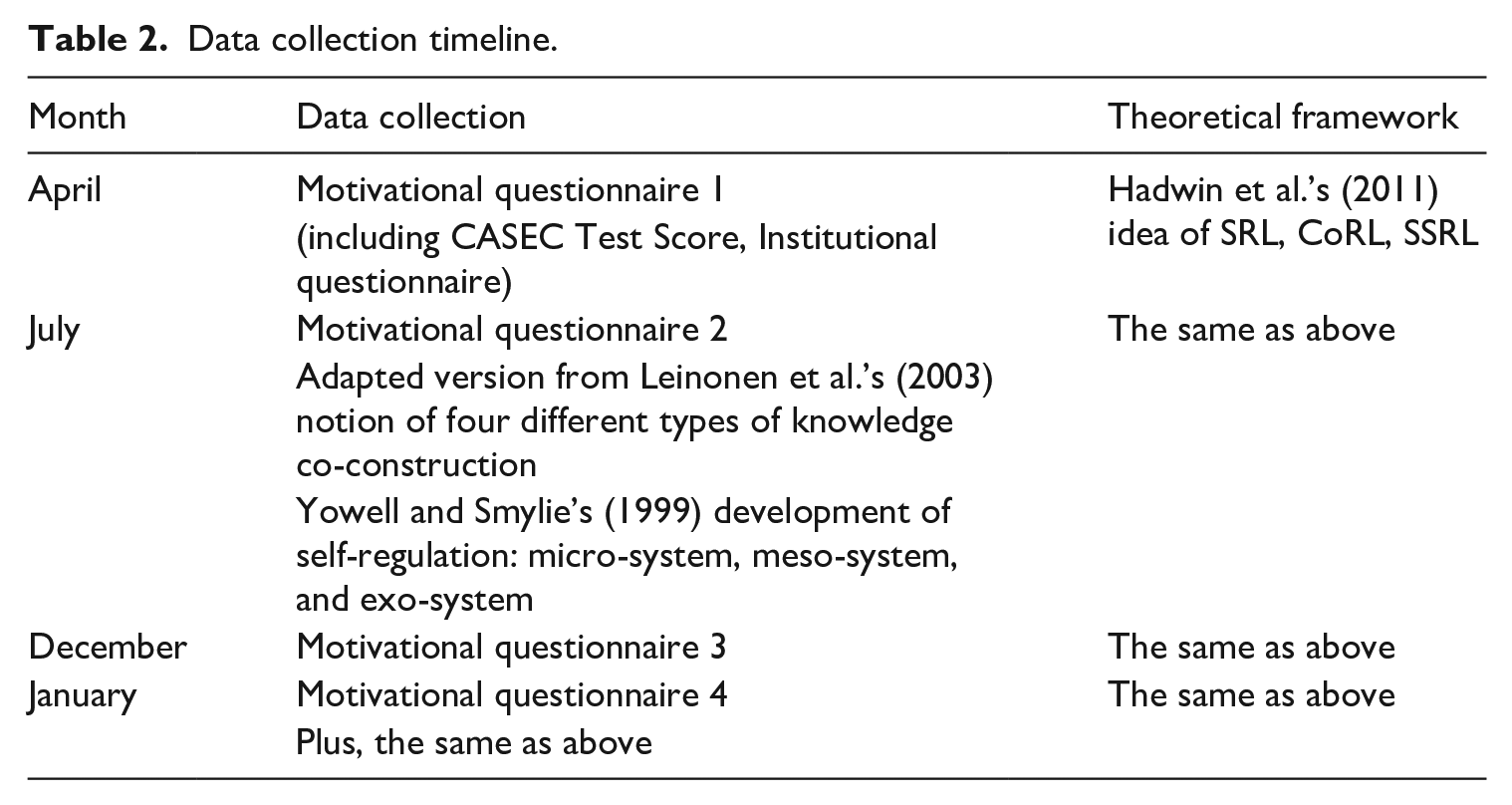
We collected various data to investigate how the quality of students’ motivational regulation and the classroom mode changed over the course of a year. In addition to the CASEC scores provided in advance by the university, an institutional questionnaire asking about students’ previous learning experiences (e.g. lesson types and activities) and their study abroad or experiences of foreign travel was collected across the university in early April 2023; this data is relevant to questions 2 and 3: motivational trajectories at group and individual levels. In this study, we administered a motivation questionnaire adapted from the ‘Basic need satisfaction in relationships’ questionnaire (La Guardia et al., 2000), using a five-point Likert scale ranging from one (‘Not at all’) to five (‘Very true’), with all items starting with the phrase ‘Where I am with classmates in the English language classroom.’ The questionnaire was administered four times throughout the year in order to capture data relevant to research question 1: motivational trajectories at the classroom and group levels. Along with the Likert scale items, an open-ended section asked students about their previous experiences of English language learning from elementary school to the present, their language learning strategies in high school (first time), the length and frequency of study, the location of study, purpose of study, current language learning strategies, faced difficulties, ways of improvement, sense of achievement (first, second, fourth times), willingness to continue learning English, future study plan, and future self-image of language use (first and fourth times); and the pedagogical interventions such as pair and group presentations they had experience with (second, third, fourth times). These questions provided data relevant to research questions 2 and 3: motivational trajectories at the group and individual levels. See Table 2.
Data collection timeline.
Before the questionnaire was administered, we explained to the students the purpose of this study (i.e. to improve English language teaching and classroom activities) and its background as described above. All participants signed the ethics protocol sheet, which outlined the use of such data as the institutional questionnaire, the four subsequent questionnaires, CASEC scores, and other classroom activities for this study. Under the university’s research ethics regulations, this study was not subject to review by the ethics committee because its primary goal was to improve teaching practice.
4 Data analysis
To answer research question 1 (relating to changes in language learners’ motivational regulation in an autonomy-supportive learning environment), descriptive statistics were calculated using data from the questionnaires described above (for details, see Figure 5). In addition, a modified version of Leinonen et al.’s (2003) framework of the individual’s contribution to knowledge co-construction was created to analyse the collected closed and open-ended data as ‘supporting data’. The analysis process was as follows: (1) reading the entire data, highlighting the parts relevant to knowledge construction in light of the research question; (2) re-reading from the perspective of individual observations as a teacher-researcher who witnessed their learning process and performance in the classroom (60 lessons in total, twice a week for a year); (3) comparing (1) and (2) in light of the overall research objectives, re-reading several times; and (4) finally, labelling types of individual’s knowledge construction at four different points. This included some aspects of relatively naturalistic than structural observation (Cherry, 2023) as well as holistic observation (McKechnie, 2012; Webster, 2023) focusing on all aspects (cognitive, social, emotional and physical) of the student’s development.
Then, to answer research question 2 (relating to learner groups’ shifting regulation and motivation), a cluster analysis was performed to analyse the commonalities among the groups. Using SPSS 28 (2021), we employed hierarchical clustering, which is Ward’s clustering method with squared Euclidean distance. Hierarchical cluster analysis, exploratory in nature, is considered appropriate for broadly sorting small datasets into groups of similar characteristics; possible clustering solutions range from ‘1 (all cases in one cluster) to n (each case is an individual cluster) (ScienceDirect, n.d.; Statistics Solutions, n.d.). Further, the open-ended data (main reasons for their rating on Item 10 ‘a sense of participation’ and Item 11 ‘a sense of belonging’) collected at multiple points were analysed for the frequency of relevant content for the clustering groups based on the framework of the classroom ecology (Figure 1).
Finally, the most representative learner within each clustering group was selected for analysis in relation to research question 3 (regarding individual language learners becoming more self-regulated in FL learning). The selection criteria and process are as follows: (1) learners who represent the characteristics of each cluster; (2) learners who represent each cluster in terms of their contribution to the classroom environment and motivational regulation; and (3) learners whose motivational trajectories standing out in light of the instructor’s observation and the research objectives. In analysing the students’ narratives collected at multiple points, narrative inquiry (Clandinin & Caine, 2012) was employed to understand better the individual’s perceived experiences of their previous language learning and the pedagogical intervention. Before the pedagogical intervention, the instructor engaged in a reflective inquiry process (as part of narrative inquiry; Clandinin & Caine, 2012) and shared the pedagogical goals with the participants, including the phenomena that had occurred in some of the classes in the previous year and the participant’s responses to the institutional questionnaire. Through a repeated reading process of all the collected data and the instructor’s observation, their characteristics were described as language learning trajectories in light of Hadwin et al.’s (2011) idea of SSRL, the definition of the SSRL mode (Nakata et al., forthcoming), and the interaction between classroom mode and motivational regulation (as part of SRL) (Figure 2) accordingly.
IV Results
To gain a deeper understanding of the relationship between classroom mode and motivational regulation development as part of SRL, we aimed to capture the perspectives of both learners and teachers. Analysing the learners’ self-report data and the instructor’s ratings of learners’ knowledge construction, the instructor’s observation data across multiple data collection points throughout the year paints a clearer overall picture of the interaction between classroom mode change and motivational regulation development. Together, these data points provide us with a holistic view that enables us to compare the learners’ data, the teacher’s analysis of students’ data, and his classroom observation of students’ motivational development over time.
Research question 1: Language learners’ shifting motivational regulation in an autonomy-supportive learning environment
As seen in Figure 3, the descriptive statistics at the whole class level indicate a general rising trend in motivational regulation, while the students’ perceptions of the classroom mode improved between the first and second questionnaire rounds and remained stable after the second round. The greatest increases can be seen in such items as ‘feel participation’, ‘feel belongingness’, and ‘feel free’. Significant increases were also seen in ‘have a say’, ‘feel closeness’, and ‘feel loved and cared about’. These results are in line with the trend of significant reductions in scores on reverse-coded items such as ‘feel inadequate’, ‘feel distant’, and ‘feel controlled’. Further, such items as ‘feel competent’ and ‘feel capable’ exhibit a relatively consistent increase over time.
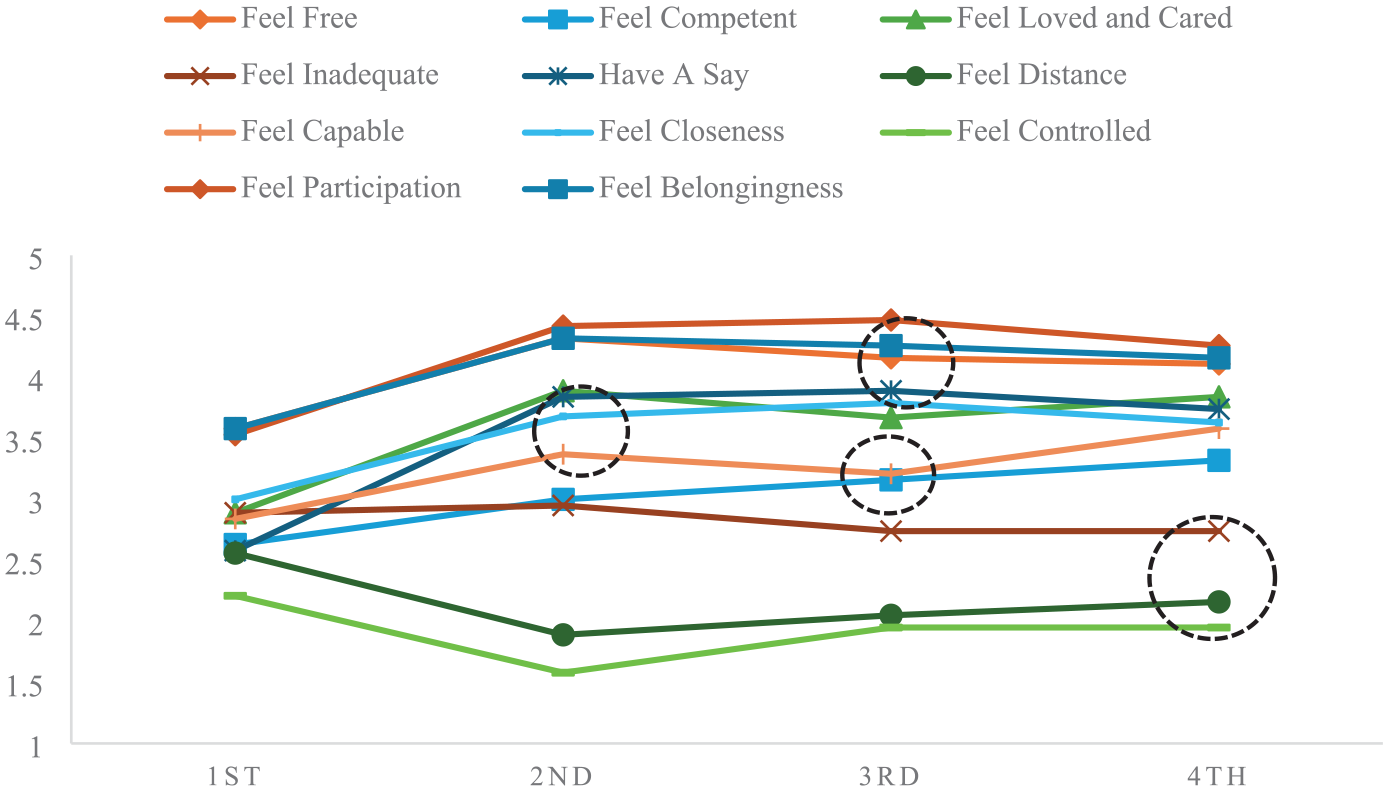
Motivational trajectories: Classroom level.
Further, using the modified version of Leinonen et al.’s (2003) knowledge construction types, the four types of classroom engagement are thus classified as follows: (1) Most active (i.e. most participative and active in contributing to the co-construction of knowledge in class and pair/group work); (2) Somewhat active (i.e. participative and active in class and pair/group work, but less so than those classified as ‘most active’); (3) Receiving (i.e. passive in class and pair/group work, but able to learn independently); and (4) Isolated (i.e. no input or interaction with others in class or during pair/group work).
Based on these archetypes, we observed the following trends (at the whole classroom level) in the learners’ questionnaire data over time (see Figure 4): (1) Receiving learners, who initially accounted for a large proportion of the class, had almost disappeared by the end of the study; (2) The somewhat active and most active groups significantly increased from the second data collection point onward; (3) The most active group accounted for the majority by the end of the year; and (4) Almost no isolated learners were observed throughout the course of data collection.
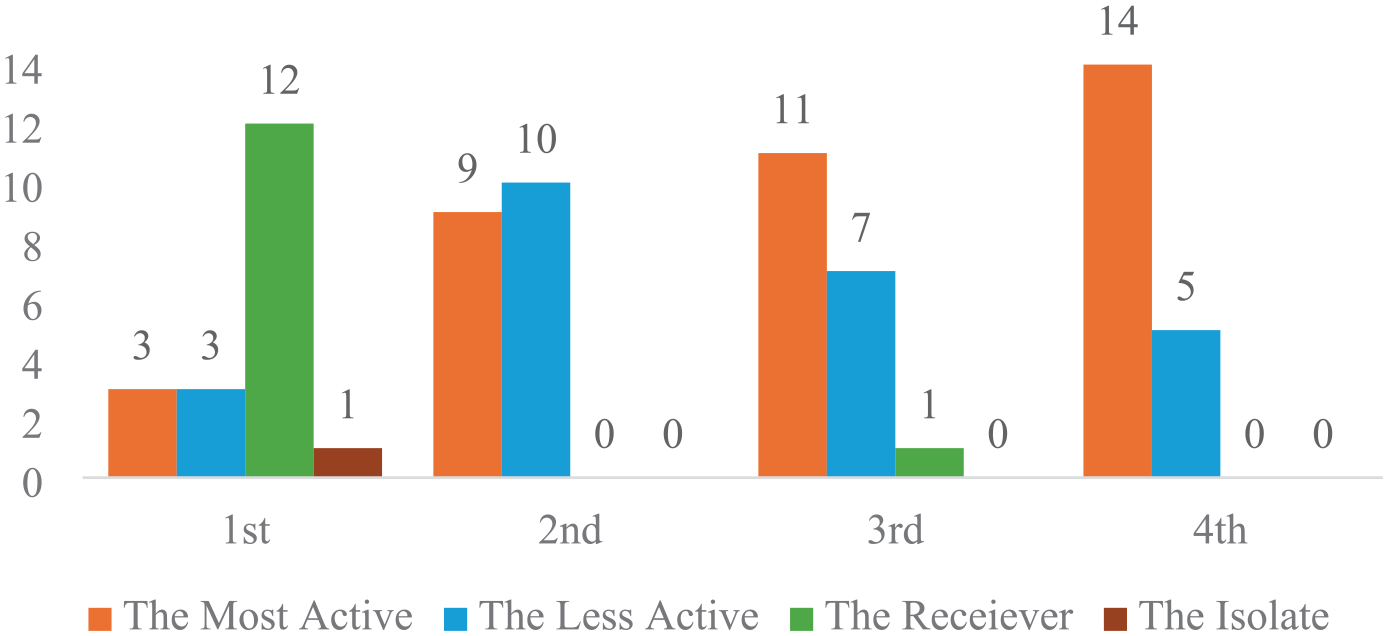
Individual contributions to knowledge co-construction in the classroom.
The findings here help us glimpse some degree of creation of this classroom ecology (i.e. SSRL), which consists of multiple levels of individual, group, and interactive contribution.
Research question 2: Learner groups’ shifting motivational regulation
Three clustering groups emerged from the data, and are illustrated in Figure 5. Clustering Group C displays high scores on all positively-coded items and the lowest values on the reverse-coded items. On the other hand, clustering Group A shows the lowest scores on many items and higher scores on reverse-coded items. Clustering Group B indicates a mixed picture of high scores on the items of feeling free, closeness, participation, and belongingness, and low values for the items of feeling competence and capability. These data indicate that the members of this group can learn meaningfully thanks to the class atmosphere, but are still uncertain about their competence.
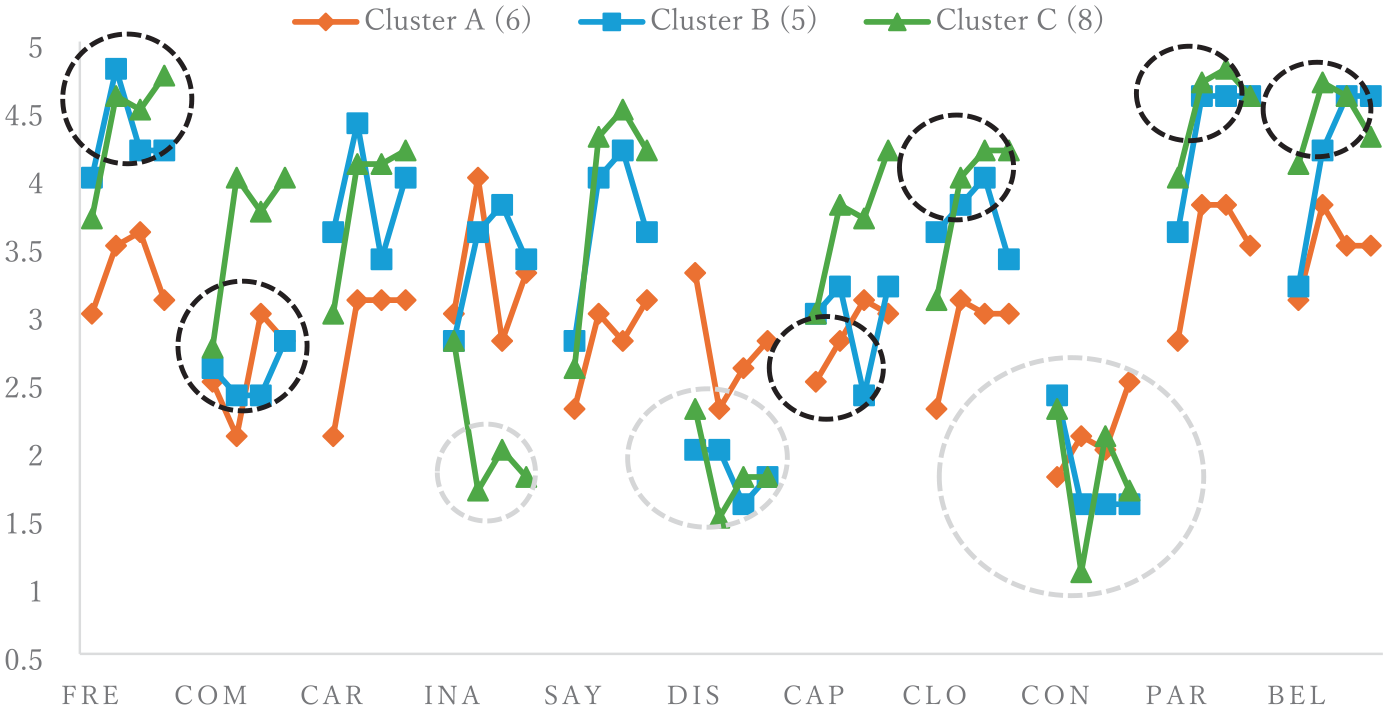
Motivational trajectories: Group level.
The trends in these clustering groups’ previous language learning experiences were cross-checked with the institutional questionnaire data, as the participants were asked how much of their previous language learning experience had taken the form of EMI, communicative activities (CA), or listening activities (LA) on a five-point scale: about 100%; about 80%; about 50%; about 30%; and less than 30%. The responses suggest that clustering Group C’s high Likert scores in response to most questions are partly due to their previous language learning experiences (group averages for EMI: 3.5, CA: 2.8, LA: 3). This group’s language proficiency was also high: Vocabulary (V): 172; Conversation Expression (CE): 164; Listening (L): 187; Dictation (D):163; 687 in total. It is also worth noting that although Clustering Groups A and B show very different trends in Figure 5, they were very similar to one another in their previous language learning backgrounds (Group A, EMI: 1.3, CA: 1.8, LA: 2; Group B, EMI: 1.2, CA: 1.6, LA: 1.8) and language proficiency (Group A, V: 192; CE: 172; L: 174; D:159; 697 in total; Group B, V: 191; CE: 166; L: 173; D:166; 696 in total). The differences between these groups thus cannot be attributed to past experience of language learning approaches or to language proficiency, and merits further investigation.
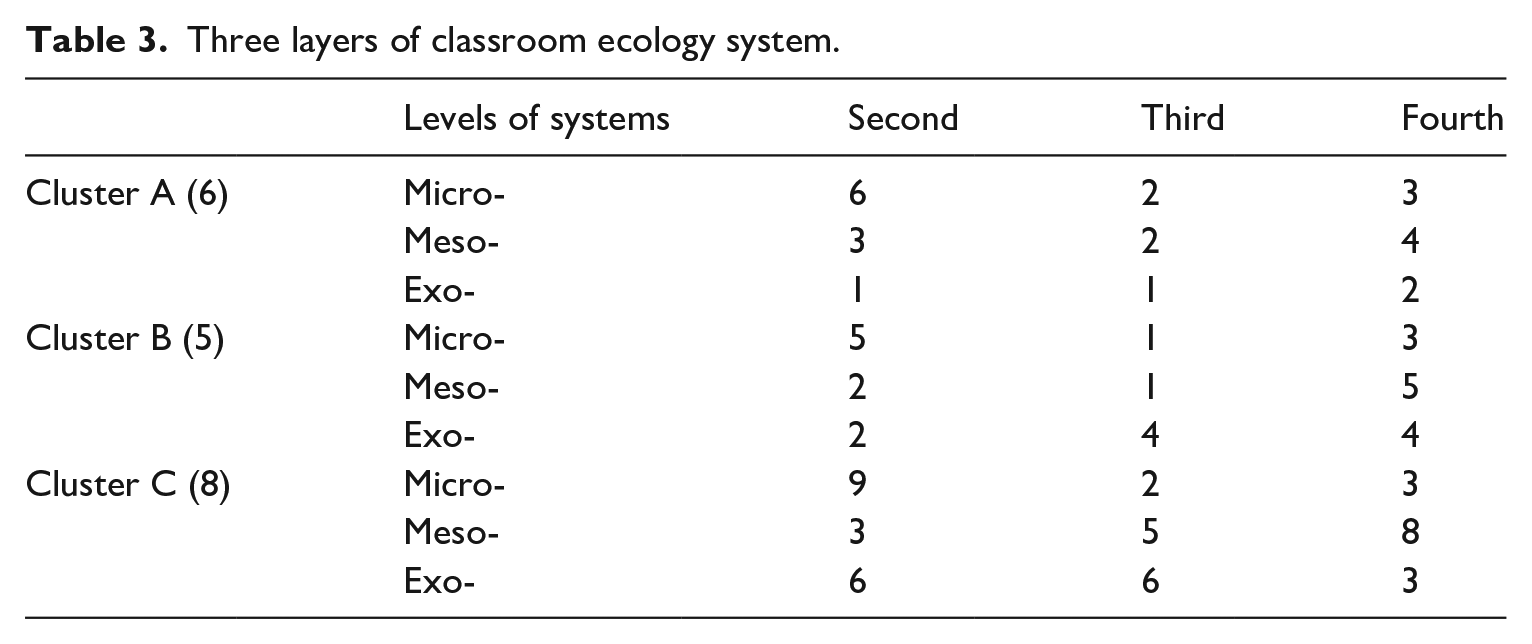
Further, the open-ended data (reasons for their rating on Items ‘a sense of participation’, ‘a sense of belonging’) collected at the second, third, and final phases were analysed for the frequency of relevant content for the clustering groups based on Figure 1. The three system levels have functioned most in Group C through the pedagogical intervention experience since the second data collection. Group B shifts from micro- to meso- and exo-systems, and Group A also shows a small shift at the meso-system level. The results (Table 3) below underpin the findings in Figure 5.
Three layers of classroom ecology system.
Based on the findings above, the characteristics of the three groups can be summarized as follows.
• Group A: The members of this group had the least previous experience of EMI, communicative activities, and listening activities. In high school, they had studied English for university entrance exams and thus had high vocabulary skills but poor listening (dictation) skills. Compared to the other two groups, they did not feel free or cared for by others in the classroom and did not express their own opinions in the classroom. Their feeling of connection with others, participation in group activities, and sense of belonging were also lower than those of the other groups. Still, despite their initial difficulties, this group exhibited striking resilience. Their average score on the questionnaires steadily rose from the second data collection. Their contributions to classroom climate construction within the class are rather persistent throughout the year. Taken as a whole, we see some degree of motivational regulation development within this group.
• Group B: Like those in Group A, the members of Group B were not fortunate enough to experience significant amounts of EMI, communicative activities, and listening activities in their previous language learning experiences. In high school, they too had learned English for university entrance exams and thus had a high vocabulary but poor conversation and listening (dictation) skills. However, Group B’s responses present a more nuanced picture. While they may have lacked confidence, they also enjoyed the freedom to speak, high levels of connection, active participation in activities, and a strong sense of belonging in the classroom. Their contribution to classroom ecology construction, particularly at meso- and exo-system levels, increased dramatically through the course of the year. Considering these factors, we can see a greater degree of motivational regulation development than that exhibited by Group A, indicating the potential to overcome their lack of past communicative teaching experience as part of SRL in the not-too-distant future.
• Group C: This group was the most successful across almost every measure in this study, and showed stable growth in their motivation, including their negative responses to the reverse-coded items. In high school, the members of Group C had learned English through EMI and communication-focused instruction and thus had the lowest vocabulary but the highest listening skills. This group experienced substantial contributions to classroom ecology construction from all three system levels: micro, meso, and exo. This group of learners may represent an ideal background and skill base not only for the development of their motivational regulation, but also for SRL as a whole.
This finding provides additional evidence of classroom ecology, which involves multiple levels of systems: micro-, meso-, and exo-systems. It highlights the existence of different groups of contributions to creating classroom ecology.
Research question 3: Development of motivational regulation in individual language learners
a Diligent but highly anxious Rie (Clustering Group A)
Rie’s previous experience with EMI, communicative activities, and listening activities was limited, accounting for less than 30% of her past language learning experience. Furthermore, she had neither SA nor foreign travel experience and no formal English qualifications. Her CASEC score was 697 (V: 194; CE: 164; L: 184; D: 155). Though she was a hard worker and had overcome her disadvantages to succeed in exams, she experienced high anxiety when participating in English conversations.
In the classroom, Rie struggled to speak English, as she explained: ‘When I spoke in pairs, I tried my best to speak, but sometimes I found myself unable to speak when working with a peer who could speak English so fluently.’
However, her classmates were willing to listen to what a speaker was trying to convey regardless of their English ability. This autonomy-supportive environment helped to develop Rie’s tolerance for uncertainty in speaking and overcome her worries about making mistakes: ‘I wasn’t confident speaking English, but I could feel everyone was trying to understand me, even if my grammar was a mess. Initially, I couldn’t talk to everyone much, but now I’m not nervous about speaking that much.’ Her questionnaire responses reflect her low self-efficacy in English conversation. Still, Rie took a reflective approach to learning and tried to be adaptive rather than defensive in speaking English: ‘I had difficulties communicating what I wanted to say in English in class. Even in those situations, I tried speaking without worrying about vocabulary or grammar.’
In the group presentations at the semester’s end, Rie received many questions, struggled to answer them, and cried for a while as a result. Like other members of Group A, she had low confidence in speaking English. This can be understood as the result of the gap between reality and her ideal or ought-to-be self (Dörnyei, 2009). However, despite her initial struggles, Rie demonstrated a remarkable shift in her learning approach. She started using English actively outside class and at her part-time job. This behavioural change indicates that Rie’s learning approach evolved from a performance goal orientation (i.e. studying for exams) to a mastery goal orientation (i.e. learning the language for its own sake) (Ames, 1992).
Learners like Rie, who lack self-confidence in conversational English, can benefit from collaborative learning opportunities at the micro level, such as the zone of proximal development for capable peers and less capable peers, teachers, and students (Vygotsky, 1978). Rie has benefited from opportunities for collaborative learning at a micro level, or a microsystem of classroom regulation, and is ready to move on to the next phase of learning with increased motivational regulation as part of SRL, not only in terms of emotion but also cognition and behaviour. This phase reflects her next cycle of SRL (for the three phases of self-regulation – forethought/planning, performance/self-control, self-reflection – see Zimmerman, 2000, p. 178). Here, we can see the interaction between motivational regulation and social regulation.
However, students like Rie were motivated not only because they were doing so collaboratively but also because they could choose to study content that they found interesting and enjoyable. We can glimpse this in several of Rie’s reflective statements: We were actively involved in developing the theme and content of our presentations on our chosen TED talks. We had a good division of roles within the group, and if we had to do something, we had an atmosphere of saying, ‘Well, I’ll do it [one’s willingness to volunteer this among this group members]’, so it [group project] was effortless. I needed to study more autonomously, as I tend to focus on classroom assignments alone. The group activities incorporating the TED Talk made me aware that I should study what interests me in learning English.
Here, we see Rie’s autonomy in action as she develops her role in the group. Further, her successful experience using English outside of the classroom helped her to develop her confidence and willingness to use a foreign language, as is vividly illustrated in her account: ‘If I spoke confidently, I could convey what I wanted to say in English to foreigners. I was happy they understood my English on occasions such as a part-time job or when asked about trains at the station.’
With these three basic psychological needs of autonomy, competence and relatedness fulfilled (R.M. Ryan & Deci, 2000), Rie expressed an interest in communicating more in real-life English situations: ‘My short-term goal is to have more opportunities to communicate in English with people from other countries,’ she noted, adding: ‘I want to be able to deal with more foreign customers at my part-time job in English,’ and referring multiple times to a desire to travel internationally. These statements reflect strong self-determination to use English in real-life situations and to have fun while improving their English language skills. In short, she has made significant strides in the motivational regulation steps from ‘I can’t do it’ to ‘I will do it.’
b People-smart but unconfident Ami (Clustering Group B)
Ami’s experience with EMI, communicative activities, and listening activities was also limited, accounting for less than 30% of her overall English learning experience. Compared with other students in this class, she had low TOEFL (407), TOEIC (505), and Eiken (Test in Practical English Proficiency in Japan) Level 3 scores. Her CASEC score was 695 (V: 176; CE: 179; L: 156; D: 185). Ami had a strong interest in communicative English due to her childhood experience of English conversation, but she needed more confidence in exams. In addition, she was often observed to lose concentration in a lecture-style lesson.
However, Ami enjoys learning with others in a positive atmosphere most, which confirms that the classroom mode has an exo-system (with relatedness and belongingness), as is vividly illustrated by her comment: ‘I feel the class is like a warm home because it’s a small group system, and we talk to different people through textbook discussions, so there is no one who can’t speak to each other’ (emphasis added). Ami’s positive experience in the classroom is evident from her feedback: We often say ‘Good morning’ to each other when we enter the classroom and ‘Good luck’ before our presentations. I thought it was a good class because the people listened to the presentations seriously and smiled at me even when I made mistakes [naturally, without malice].
Like other learners in Group B, Ami had limited communicative English experience and needed to develop her confidence in her English skills. However, the autonomy-supportive atmosphere in this classroom was suitable for her intelligence type (i.e. interpersonal intelligence or people-smart in Howard Gardner’s theory of multiple intelligences; see Marenus, 2024).
Her motivational regulation as part of SRL has increased, as can be seen in some of her remarks: ‘I have been able to shorten the time I spend on [assignments],’ and ‘now I have a little more confidence because I haven’t had many opportunities to stand up in front of people and present in English before.’ Nevertheless, a degree of interaction between the classroom climate and the individual agent can be seen here, and the influence of social regulation on the development of motivational regulation can also be observed. Thus, Ami can be said to have reached the motivational regulation stage of ‘I’ll try to do it.’
c Competent and autonomous Mio (Clustering Group C)
In her high school days, Mio attended English classes which used EMI and/or CA approaches at least 80% of the time. She had SA experience of less than two weeks, and had not had any particular difficulty in learning English in the past, nor had she found it unenjoyable. Her CASEC score was 686 (V: 189; CE: 164; L: 176; D: 157). Even when facing problems or challenges, she enjoyed finding ways to improve. She was confident in her ability to solve problems herself and was thus highly self-regulated, constantly moving to the next level in the SRL cycle (Zimmerman, 2000). She possessed the characteristics of a skilful self-regulator as described in Zimmerman’s (1998) conceptualization of SRL learners, including ‘learning goal orientation, high self-efficacy, self-monitoring, positive reactions and adaptive for future learning’.
Thanks to these learning experiences and her characteristics as a learner, Mio benefitted significantly from this classroom’s autonomy-supportive environment (including the traits of the exo-system). Her learning experiences significantly contributed to her self-awareness as a language learner and subsequently helped her accelerate into the next stage of the self-regulated learning cycle. This can be seen in several of her comments: The audience nodded and smiled at me [where they felt amused or engaged] during my presentation. That gave me confidence. I realized that the content of the presentation and the reaction of the people around me are essential. By studying in the same classroom for a year, we became closer, and it became easier for me to present my opinions.
Mio’s appreciation of warm audience responses during her presentations made this a positive learning experience for her. The audience’s nods and laughter boosted her confidence and made her aware of the importance of her communication (i.e. their senses of relatedness and belongingness, their trusting relationship).
Mio’s language learning experiences in this classroom environment helped her to shift her perception of English from a school subject to a communication tool: ‘Though I used to see English as a subject for examinations, I now see it as a new communication tool since entering the university. Thus, I am now able to study more actively.’ Moreover, she also developed a strong will to continue learning, as she dreams of living abroad: ‘I can now converse with foreign customers at my part-time job without being timid. I now understand the importance of speaking intelligible English to others rather than grammatically correct English.’
In Mio’s case, the psychological needs of autonomy, competence, relatedness identified by Leinonen et al. (2003) were, to some extent, already in place before the class began, due to her past learning experiences. Still, after the learning experience in the pedagogical intervention, Mio was able to move to the next stage of the self-regulation cycle. Although she was in the ‘I’ll try to do it’ motivational regulation stage from the beginning, Mio may have reached the higher stage of ‘Yes, I did it’ in many areas.
This finding offers further evidence of the developmental process of classroom ecology, which involves the complex and unique motivational trajectories of individual learners and their varied past and present language learning experiences.
Judging the findings as a whole (rather than separately), we can say that a motivating classroom climate was created through the interaction of different levels of classroom ecology, an autonomy-supportive environment, individual learning experiences (past and present), and perceptual changes in language learning, to some extent echoing Robinson’s (2023) argument.
V Discussion
This study aimed to explore language learners’ motivational trajectories and changes in their levels of motivational regulation at the classroom, group, and individual levels in an autonomy-supportive, collaborative language learning environment over a year. This pedagogical intervention encouraged learners (with different previous learning experiences) to use the target language collaboratively as a means of communication through pair and group work (e.g. TED Talk project, shadowing role play where they act as teachers, film project, skit presentation, peer evaluation) and thereby to create a classroom ecology (i.e. SSRL) consisting of individual-, group- and interactive levels of contribution (see Figure 1).
At the classroom level, the findings indicate that with basic relationship satisfaction needs (La Guardia et al., 2000) fulfilled, many learners moved from a passive or reactive role to proactive one, contributing to the enhancement of multi-layered micro-, meso- and exo-systems and, by extension, to the construction of a positive ecology within the classroom (Bronfenbrenner, 1994). The data shows that this shift had already begun by the time of the second round of data collection, and continued through the end of the study, suggesting the creation of classroom ecology (i.e. SSRL), which consists of multiple levels of individual, group, and interactive contribution (see Figure 4). This partially explains the change of classroom mode from SoRL to CoRL and then SSRL, which may have accelerated learners’ development of SRL. In other words, the changes in the classroom environment over time can be interpreted as the emergence of a more desirable classroom ecology for learners’ target language use. This is in line with the argument asserting ‘the influence of classroom ecology on learner development or SRL’ put forward by several educational psychologists and applied linguists (Baggis & Pati, 2023; Hadwin & Oshige, 2011; Luo & Ka Yuk Chan, 2022; Thomas, 2014). In other words, learning in an autonomy-supportive learning environment enables language learners to develop their motivational regulation. This underscores the interdependent relationship between the development of the classroom mode and that of individual learners’ motivational regulation, as illustrated in Figure 2 and in the reflections of the three learners quoted above on their learning experiences throughout the pedagogical intervention.
Regarding changes over time at the group level, the cluster analysis identified three unique clustering groups, each influenced by their previous language learning experiences. However, these findings also indicate that engagement in autonomy-supportive collaborative language learning, in addition to prior language learning experiences, each contributed in their own way to classroom ecology construction and enabled each group of students to develop their SRL at their own pace. It is clear from the evidence that the marked difference in the motivational trajectories of clustering Groups A and C is due to the influence of their previous language learning experience. In contrast, clustering Group B, whose a prior language learning experiences were similar to those of Group A, shows a motivational trajectory identical to that of Group C (except in relation to their confidence in their English proficiency). Even for those with negative previous experiences with language learning, experiencing a autonomy-supportive learning environment promoted the development of motivational regulation. It is important to note, however, that the rate at which they gained confidence in using the target language varied between individuals. Particularly for those with favourable previous language learning experiences, this learning environment enabled them to reach the next stage of the self-regulation cycle (Zimmerman, 2000). In other words, a teacher’s efforts to build a positive classroom ecology by implementing an autonomy-supportive collaborative language learning approach encourages learners to enrich the classroom ecology, which in turn leads to the development of their motivational regulation.
A qualitative analysis of individual learners’ development trajectories shows that the development of motivational regulation, influenced by prior learning experiences and by English language ability, is idiosyncratic and distinctive, and the interaction between the environment and each individual is unique. However, the three learners whose experiences were explored in detail above, who each represent one of the three clustering groups, benefitted from the SSRL classroom learning mode in this autonomy-supportive learning environment. Some patterns can be seen in the specific benefits they experienced, including the consistently positive impact of the autonomy-supporting climate on the development of motivational regulation. A detailed analysis of these three learners’ motivational trajectories reveals how they developed their motivational regulation and contributed to the construction of the classroom ecology, suggesting a reciprocal relationship between classroom mode development and the development of student motivational regulation.
In sum, the enrichment of the three layers of micro-, meso-, and exo-systems (see Figure 1) due to learners’ learning experiences of autonomy-supportive collaborative learning have, to varying degrees, contributed to the knowledge construction of classroom ecology that was effective for the development of SRL in learners and the acceleration of classroom mode development from SoRL to CoRL and SSRL. In other words, the study, which consists of the combined subjective and objective data analysis (Järvelä et al., 2021), partially explains the relationship between classroom modes and motivational regulation development discussed above and illustrated in Figure 2 (Ilishkina et al., 2022; Isohätälä et al., 2017; Järvelä et al., 2013; Nakata et al., 2022).
VI Conclusions
The main goal of this study was to explore how learners become motivated in language learning and develop their capacity for motivational regulation in an autonomy-supportive, collaborative learning environment. Key findings include: (1) the autonomy-supportive, collaborative learning environment contributes to the construction of a socially-shared regulation classroom mode; (2) learners’ previous learning experiences influence the rate at which they develop their motivational regulation and their confidence in target language use; (3) learners in an autonomy-supportive, collaborative learning environment contribute to the construction of socially-shared regulation from their individual perspectives, and develop their motivational regulation at individual rates; and (4) individual learners’ trajectories in this process are idiosyncratic and unique.
The pedagogical implications of these findings relate to the importance of understanding each individual learner’s background and the contribution they can make to a positive classroom ecology at the micro-, meso- and exo-system levels. This can encourage learners to enjoy learning English, both at their own pace as well as collaboratively. Expanding the social aspect of self-regulation in the classroom leads to the enhancement of individual motivational regulation. Here, we see the interaction between the SSRL classroom mode and motivational regulation as part of SRL development. In an ideal SSRL classroom, each learner actively learns from others and takes equal responsibility as a member of the class, regardless of their educational background or language proficiency. In other words, the SSRL classroom mode is ‘a learning community where students come primarily to learn and succeed in doing so through collaboration with you [a teacher] and their classmates’ (Brophy, 2008, p. 27). To create such a language classroom ecology, as Brophy (1999, p. 78) explains, teachers need to create a classroom environment that is supportive of autonomy, and meaningful not only in the cognitive sense of supporting students to experience target language use, but also in the motivational sense of helping them to use it outside the classroom, resulting in their successful experience of target language use in real-life situations (for the discussion about educational system, teachers’ roles and students’ roles, see also Robinson, 2023, pp 99–100; for the relationship between classroom environment and willingness to communicate in English, see Li et al., 2022).
Finally, we suggest possible avenues for future research, highlighting the limitations of this study. Motivational regulation and classroom ecology are complex and contextual, requiring a multifaceted approach. Using a convergent parallel design (Creswell & Plano Clark, 2010), this study sought to examine the multidimensional changes in classroom ecology that occurred in a single classroom over multiple periods. Due to this topic’s complex and contextual nature (Robinson, 2023), this single classroom study shed critical light on classroom climate research. The increase in context-specific case studies should shed more light on this issue. For another, given the purpose and nature of this research, observation as supporting data seemed appropriate in describing each participant’s development. Still, such an observation whose practice focuses on students’ learning and growth is also subject to the observer’s biases. Furthermore, to gain generalizable results, research into foreign language classroom climate for a more significant number of participants may require the development of a scale that ‘captures the student and group aspects separately’ (A. Martin, personal communication, 17 April 2024; see also Robinson, 2023). Classroom climate is a research topic that would benefit from being further clarified and explored by multiple researchers using different research tools and methods.
Footnotes
Funding
The author(s) received no financial support for the research, authorship, and/or publication of this article.
Ethics Statement
All participants signed the ethics protocol sheet. Under the university’s research ethics regulations (the institution where the research was carried out), this study was not subject to review by the ethics committee because its primary goal was to improve teaching practice (the university’s exemption clause).

Data Availability Statement
Research data are not shared.