



Abstract
The study examines the effects of repetition on vocabulary learning within the context of three types of explicit aural vocabulary instruction – second language (L2) vs. codeswitching (CS) vs. contrastive focus-on-form (CFoF) – among 98 Chinese secondary school learners of English as a foreign language. It also explores how the effects of repetition on vocabulary learning were moderated by learners’ listening proficiency and preexisting levels of vocabulary knowledge. Within a 12-week pre–post test quasi-experimental design, learners listened to explicit vocabulary instruction for 20 target words, five of which were repeated four times, five repeated five times, five repeated seven times, and the remaining five repeated nine times. Findings suggested that regardless of the type of explicit instruction, vocabulary learning gains were positively correlated with repetitions but that at least seven repetitions were needed for significant gains to take place. In addition, the effects of repetition were moderated only by learners’ listening proficiency but not by their preexisting levels of vocabulary knowledge. Less proficient listeners benefited significantly more than more proficient listeners with every unit increase of the number of repetitions. The study illuminates important relationships between repetition and listening proficiency, factors useful to consider when designing pedagogical activities to enhance vocabulary learning through listening to explicit instruction.
I Introduction
Vocabulary learning, a core component within the second language (L2) classroom, is an accumulative process. During this process, repetition plays an essential role in assisting L2 learners to gain in-depth understanding of both receptive and productive knowledge aspects – namely form, meaning, and usage – of the target vocabulary (Nation, 2013) and to further consolidate the strength of the acquired knowledge (Nagy & Townsend, 2012). This is potentially because, through multiple encounters with the target vocabulary items, learners are more likely to ‘notice’ (Schmidt, 1990) them, and stronger links between the items and learners’ existing knowledge can be created to facilitate knowledge accumulation (Ellis, 2003). Positive effects of repetition have been confirmed empirically by studies investigating incidental vocabulary learning (Brown, Waring & Donkaewbua, 2008; Chen & Truscott, 2010; Horst, Cobb & Meara, 1998; Peters & Webb, 2018; Webb, 2007), whereby learners unconsciously ‘pick up’ unknown vocabulary from the meaning-focused input (e.g. reading or listening to authentic texts) they engage with (Hulstijn, 2001). Very little research, however, has explored the effects of repetition within explicit vocabulary instruction, a type of intentional vocabulary learning (Peters, 2014; Teng & Xu, 2022; Webb, Yanagisawa & Uchihara, 2020), whereby learners take part in pedagogical activities (e.g. vocabulary learning tasks; vocabulary explanations by the teacher) with the intention of acquiring new vocabulary.
Learners’ general language proficiency (e.g. preexisting vocabulary knowledge) may affect how much they benefit from repetition. Research on incidental vocabulary learning (Zahar, Cobb & Spada, 2001) suggests that learners with smaller vocabulary sizes benefited more from increasing the number of repetitions compared to their counterparts with larger vocabulary sizes. No research so far, however, has been conducted to explore how the effects of repetition in intentional vocabulary learning is moderated by learners’ general language proficiency. The present study, hence, aims to investigate first the effects of repetition on vocabulary learning through listening to three types of teacher’s explicit vocabulary instruction – second language (L2) vs. codeswitching (CS) vs. contrastive focus-on-form (CFoF) – and, second, how learners’ general language proficiency (i.e. preexisting vocabulary knowledge; listening proficiency) moderates the effects of repetition on vocabulary learning.
II The effects of repetition on L2 vocabulary learning
1 Repetition and incidental vocabulary learning
A large amount of L2 research (e.g. Pellicer-Sánchez & Schmitt, 2010; Pigada & Schmitt, 2006; Waring & Takaki, 2003; Webb, 2007) has explored the role of repetition in incidental vocabulary learning through reading. In the context of learning L2 English words, Horst et al. (1998) is one of the pioneer studies investigating the relationship between the frequency of occurrence and incidental word learning through extensive reading. A quasi-experimental pre–post test design was adopted and relative gains for the 45 target words were calculated based on a meaning recognition test and a word association test. Their findings suggest that although a medium relationship was found between the number of repetitions and the gains for the target words (r = .49), in order to demonstrate a consistent and ‘satisfactory’ level of vocabulary gains, learners needed to encounter the target words at least eight times.
Follow-up studies showed a rather complex picture, with great variations observed in the number of repetitions required for incidental learning to take place. On the one hand, Rott (1999), working with university L2 German learners, found that both receptive and productive knowledge of the meaning of the target words could be significantly improved immediately after reading even if these words only appeared twice in the reading texts. In addition, significantly larger gains in vocabulary knowledge could be further reached if the number of encounters increased to six. A later study by Elgort and Warren (2014) found that adult L2 learners of English who had understood the main idea of the given reading texts needed to encounter the target words at least 12 times to be able to recall the meaning of these words. By contrast, however, as many as 20 repetitions are needed in order to reach the maximum effect of incidental vocabulary learning, evidenced in a recent meta-analysis which found an overall medium effect (r = .34) of repetition for incidental vocabulary learning (Uchihara, Webb & Yanagisawa, 2019). According to the meta-analysis, this relatively wide range regarding the maximal number of repetitions (i.e. from two to 20) may be due to two important factors.
First, the proficiency level of the participants varied across studies in the meta-analysis. Fewer repetitions of the target word may be needed to acquire a new word incidentally for learners with larger vocabulary sizes than for their counterparts with smaller vocabulary sizes (Zahar et al., 2001). A larger vocabulary size may have enabled learners to use strategies such as inferencing to acquire vocabulary from the context and therefore make their learning less sensitive to the increased number of repetitions. For those with smaller vocabulary sizes, their limited existing vocabulary knowledge restricts them from learning from the context; more repetitions mean more opportunities to pick up vocabulary incidentally. This was further confirmed in Uchihara et al. (2019) who found that basic vocabulary knowledge (i.e. the most frequent 2,000 words) negatively moderated the effects of repetition.
Second, different methodological approaches were employed by the studies reviewed by Uchihara et al. (2019). For example, vocabulary gains measured through a less demanding task (e.g. meaning/form recognition assessing learning of receptive vocabulary knowledge) may associate less strongly with the effects of repetition compared to a more demanding task (e.g. meaning/form recall measuring learners’ productive vocabulary knowledge) (Peters & Webb, 2018). In addition, whether there was any form of additional support given to the learners was found to significantly moderate the effects of repetition, across all levels of proficiency (Uchihara et al., 2019). Additional support might take the form of additional visual input, either verbal (e.g. captions for television viewing) or nonverbal (e.g. images). The effect sizes for the studies providing visual support are significantly smaller than those for studies without visual support (e.g. just listening), suggesting that learners with visual support may rely less on encountering the target words frequently to remember them.
The fact that fewer repetitions are needed for learning with visual support than for learning without visual support is especially interesting, as it raises the question of whether the effects of repetition are lower for learning through explicit vocabulary instruction compared to what happens in incidental vocabulary learning. Just as visual support (in verbal or nonverbal form) may have made the target words more salient and thus relatively easier for learners to learn, explicit vocabulary instruction may allow teachers to raise learners’ level of noticing (Schmidt, 1990) of the target words, so that fewer repetitions are needed for successful learning to happen.
2 Repetition and explicit vocabulary instruction
While the role of repetition in incidental vocabulary learning has been investigated in a considerable amount of research, much less has focused on its impact within explicit vocabulary instruction (Peters, 2014; Teng & Xu, 2022). For incidental vocabulary learning, increasing the number of repetitions can only be achieved by extensive exposure to the meaning-focused input which is time-consuming. In the classroom context where time is also limited however, explicit vocabulary instruction has unique pedagogical value (Laufer, 2006). This drives a need for more research to explore the effects of repetition within explicit vocabulary instruction.
Peters (2014) is one of the few studies specifically examining this issue. Participants were 35 university learners of English as a foreign language (EFL) who attended a session to learn 24 target vocabulary items (12 single words and 12 collocations) and had their vocabulary knowledge measured before and after. They also took a delayed posttest two weeks after the session. In that session, learners were first provided with all target lexical items and their equivalent definitions in the L2. They were then asked to use these target items to complete eight explicit vocabulary learning tasks. The frequency of occurrences of the target items in the learning tasks was manipulated, whereby four single words and four collocations occurred once only, another four words and four collocations appeared three times, and the remainder repeated five times.
Results suggested that regardless of the frequency of occurrence of the target items, the overall vocabulary gains through explicit instruction were larger than those found in studies investigating the effects of repetition on incidental vocabulary learning through reading (e.g. Waring & Takaki, 2003). Additionally, findings indicated that compared to incidental learning, fewer repetitions are needed for learners to make significant vocabulary gains within the context of explicit vocabulary instruction. There was a durable advantage of learning items repeated five time compared to those that only occurred once. Moreover, single words encountered five times were retained significantly better than those repeated three times two weeks after the learning session.
Similar findings were confirmed in a more recent study by Teng and Xu (2022). The authors explored the effects of task type and repetition on form recall of English words among 146 Chinese university learners from four intact classes. Each class was given an explicit vocabulary learning task to practise the target 18 words, among which six were practised twice, another six four times, and the remaining six were practised six times. Results showed that regardless of task type, the recall accuracy of the words repeated four times was significantly better than for those repeated twice. However, no significant differences were found between recalling words repeated four times and those repeated six times.
It is worth noting that in both Peters (2014) and Teng and Xu (2022), only Focus-on-Forms vocabulary learning tasks, whereby learners view the vocabulary items as objects to study in a decontextualized context (Ellis, 2001), were used for explicit vocabulary instruction. Such tasks tend to be less communicative (Laufer, 2005). In communicative language teaching classrooms, which centre in developing learner’ communicative skills however, Focus-on-Form (Laufer, 2006) vocabulary learning tasks, which draw learners’ attention to specific linguistic features (i.e. target vocabulary items) during communicative activities (e.g. reading/listening comprehension), are more common.
A study by Laufer and Rozovski-Roitblat (2011) compared the effects of repetition on vocabulary learning between using a Focus-on-Form task and a Focus-on-Forms task with 20 university EFL learners. The Focus-on-Form condition involved learners reading 17 modified texts, completing comprehension questions, and consulting dictionaries or teachers for the meaning of 30 target words appearing in the reading texts over a 13-week course. Under the Focus-on-Forms condition, however, learners also read and completed the comprehension questions, but they then practised another 30 target words through additional word learning exercises. The 30 target words under each condition were carefully manipulated, with 10 appearing 2–3 times, 10 occurring 4–5 times, and the remaining 10 words repeated 6–7 times. Knowledge of the target words was measured through a meaning recognition and a meaning recall test before and after the course. Findings showed the advantages of the Focus-on-Forms condition over the Focus-on-Form condition, as the overall vocabulary gains (both recall and recognition) for the words appearing a similar number of times were larger for the Focus-on-Forms condition than for the Focus-on-Form condition. In addition, the effects of repetition on vocabulary learning were only significant under the Focus-on-Forms condition, meaning that increasing the number of repetitions of the target words did not guarantee larger gains through Focus-on-Form tasks.
The lack of effects of repetition under the Focus-on-Form condition in Laufer and Rozovski-Roitblat (2011) is not surprising, as encountering the unknown words in the given reading texts two to seven times over a 13-week period may not be sufficient to draw learners’ attention to these unknown words. Although learners were encouraged to look them up in the dictionary, this was done outside the classroom and was not controlled by the researchers. The level of ‘need’ to look up these words in the dictionary, as per the Involvement Load Hypothesis (Laufer & Hulstijn, 2001), therefore might have been relatively low. Lack of ‘need’ may then not be able to induce any further ‘search’ (search for the meaning of the words) or ‘evaluation’ (compare and contrast the meaning of the words with other words in the context) of the words, making the vocabulary gains less sensitive to the increased number of repetitions.
In sum, all the above three studies (Laufer & Rozovski-Roitblat, 2011; Peters, 2014; Teng & Xu, 2022) have shown positive effects of repetition on explicit vocabulary instruction. Compared to incidental vocabulary learning, the required number of repetitions to significantly improve learning seems to be much lower. The evidence was, however, mainly drawn from decontextualized Focus-on-Forms vocabulary learning tasks. Although no effect of repetition on vocabulary learning through more communicative Focus-on-Form instruction was observed in Laufer and Rozovski-Roitblat (2011), considering the limited amount of involvement load induced by the Focus-on-Form task adopted in that study, it remains to be seen whether the effects of repetition exist when other types of Focus-on-Form instruction which trigger higher involvement load are employed. In addition, all three studies were based on reading. No study to date has investigated the effects of repetition on vocabulary learning when explicit Focus-on-Form vocabulary instruction is given in the context of listening. Finally, learners’ existing language proficiency may be an important moderator for the effects of repetition within explicit vocabulary instruction, given what was found for incidental vocabulary learning (Uchihara et al., 2019). These gaps and questions are further explored in the current study.
3 The present study
The present study is an extension of a larger intervention study (Zhang & Graham, 2020a, 2020b) exploring the learning of L2 vocabulary through listening for Chinese senior-high school EFL learners. In that study (n = 137), incidental vocabulary learning through listening (No Explanation group) was compared with learning through listening to different types of explicit Focus-on-Form vocabulary instruction delivered to three treatment groups: post-listening vocabulary explanations in the L2; codeswitched explanations; and explanations providing additional cross-linguistic information (contrastive focus-on-form, CFoF), drawing on the approach adopted by Laufer and Girsai (2008). For short- and long-term vocabulary learning, the three treatment groups significantly outperformed the No Explanation group. Gains for the CFoF group were significantly greater than for the L2 and codeswitching groups. However, no significant differences were found between the L2 and codeswitching groups for short-term and long-term improvement (Zhang & Graham, 2020a). In addition, exploring the moderating effect of learners’ preexisting vocabulary knowledge and listening proficiency on vocabulary learning, findings indicated that regardless of the type of the explicit vocabulary instruction, learners’ listening proficiency played a more important role than preexisting vocabulary knowledge levels did, with the largest short-term and long-term vocabulary gains made by learners with the lowest level of preexisting vocabulary knowledge but with the highest listening proficiency level. Learners with highest level of preexisting vocabulary knowledge yet lowest listening proficiency, however, made the least vocabulary gains (Zhang & Graham, 2020b).
The current article adopts a different perspective on the learning differences between the codeswitching, L2, and CFoF groups, investigating whether the impact of each type of vocabulary instruction varied for learning words repeated different times. It also explores whether the effects of repetition on vocabulary learning differ according to learners’ preexisting vocabulary knowledge and listening proficiency. Two questions are therefore proposed:
Research question 1: To what extent do the effects of repetition on vocabulary learning differ in three types of explicit Focus-on-Form vocabulary instruction through listening (codeswitching vs. L2 vs. CFoF)?
Research question 2: To what extent are the effects of repetition on vocabulary learning through explicit Focus-on-Form instruction moderated by learners’ preexisting vocabulary knowledge and listening proficiency?
For research question 1, it was hypothesized that the effects of repetition would be larger for the L2 and codeswitching approaches than for the CFoF approach. This hypothesis was proposed based on the findings of Zhang and Graham (2020a) whereby a consistent advantage of the CFoF approach over the L2 and codeswitching approaches was found for both short-term and long-term vocabulary learning (for a discussion of how this finding relates to vocabulary learning theory, see Zhang & Graham, 2020a). It is likely therefore that for the CFoF group, the gains would be similar across words repeated a different number of times. For the L2 and codeswitching groups, however, the gains would be significantly greater with the increasing number of repetitions. Regarding research question 2, we first hypothesize that learners with lower levels of preexisting vocabulary knowledge would benefit more from the increasing number of repetitions than their counterparts with higher levels of preexisting vocabulary knowledge, drawn on the evidence from Zahar et al. (2001) and Uchihara et al. (2019). Second, considering that the overall effects of the explicit Focus-on-Form instruction were more beneficial for learners with higher listening proficiency than for lower proficiency listeners (Zhang & Graham, 2020b), it was hypothesized that the effects of repetition would be negatively moderated by learners’ listening proficiency. That is, with an increase in repetitions, lower proficiency listeners would benefit more than higher proficiency listeners.
III Method
1 Participants and data collection procedures
A quasi-experimental design was employed involving 104 EFL students (all from the original sample of Zhang & Graham, 2020a, 2020b) from three intact classes in a senior-high school in China. Informed consent was obtained from all relevant parties before data collection. Data from six students were then discarded as they did not participate in the post-intervention vocabulary test, leaving 98 participants in total. These students were in their first year of senior-high school study, aged 15–16 years, and were preparing for the Gaokao (China’s National university entrance examinations). Their level of English proficiency, measured by Chinese High-school Entrance Examinations, ranged from CSE (China’s Standards of English Language Ability) Level 3–4, equivalent to A2–B1 (Common European Framework of Reference). They had all taken English as a compulsory school subject for at least seven years by the time of the study. Apart from L1 (Chinese) and L2 (English), they did not speak any other languages. The three classes were randomly assigned to three treatment groups: L2 group (n = 30), codeswitching group (n = 36), and CFoF group (n = 32).
The data collection procedure began with a general vocabulary knowledge test and a listening comprehension test (see Section III.2) (week 1). An eight-week intervention took place between weeks 4 to 11, one intervention session per week per group, all delivered by the researcher. All target words were taught in the first three intervention sessions through different types of explicit Focus-on-Form instruction depending on the group. The remaining intervention sessions involved the researcher teaching other non-target vocabulary and/or reviewing the target vocabulary to meet the required number of repetitions, either four, five, seven, or nine (see Section III.2.d). Detailed lesson plans were made before the intervention and were strictly followed by the researcher to control the timings for all aspects of individual lessons and to ensure that the procedures taken were identical across the intervention groups. Finally, a vocabulary posttest (see Section III.2) was administered at week 12.
2 Instruments
a General English vocabulary knowledge test and listening proficiency test
Learners’ preexisting knowledge of general English vocabulary and their pre-knowledge of the target words was assessed through the general vocabulary knowledge test. The general English vocabulary knowledge test (GEVT), taking an aural form, measured meaning recognition through multiple choice questions. A test item (an English word) and a neutral example for this item were first read out twice by the teacher. Learners were then required to select the correct Chinese meaning matching the word they heard from four given options (one correct answer and three distractors) (for a sample test item, see Figure 1). The general vocabulary knowledge test included 100 items measuring knowledge of 1,000, 2,000, 3,000, and academic English words, drawn from McLean, Kramer & Beglar’s (2015) aural vocabulary levels test, as well as 20 items assessing recognition knowledge of the target words used in the intervention. Cronbach’s alpha for the test was .76. Learners’ existing listening proficiency was assessed through the first two sections of an IELTS listening test. These two sections included dialogues and monologues focusing on daily life matters and were considered to be at an appropriate difficultly level for the participants, whose proficiency level was around IELTS 4.0. Although the reliability of this listening test (.62, Cronbach’s alpha) is relatively low, it is similar to what has been found for these two IELTS listening sections in other studies (e.g. Breeze & Miller, 2012).
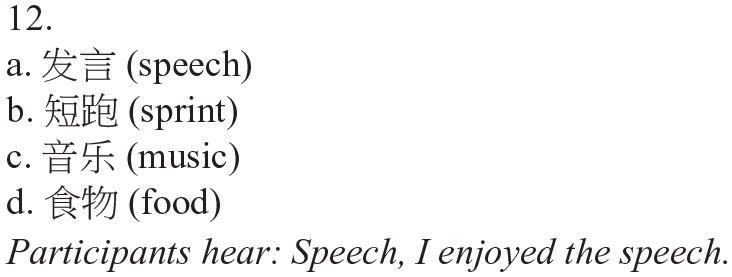
Example test item for the general vocabulary knowledge test.
b Listening comprehension tasks and target words
All target words were first introduced through three listening comprehension tasks (see supplemental material 1), one for each of the first three intervention sessions. The listening passages for these tasks were selected from a senior-high school EFL textbook used by schools in China, named New senior English for China (Liu et al., 2007) to maximize their ecological validity. Learners of the current study were highly unlikely to have access to this textbook outside the intervention sessions as it was not used in the province where their school was based. All listening passages were on topics of relevance to the learners and were each reduced to approximately 250 words. They were then recorded by L1 English speakers and the speech rate was controlled at around 150–190 words per minute (i.e. the lower end of average speech rates for radio monologues and conversations in British English; Tauroza & Allison, 1990). For each listening comprehension task, three comprehension questions were designed: one focusing on the main idea and two assessing listening for details.
Target words were chosen from the ones that were highlighted by the textbook authors. These words were believed to be unknown to the learners, based on an examination of the senior-high school English curriculum (Ministry of Education, 2003) but were appropriate for the study participants to learn, given their proficiency level. The length of the words ranged from three to 13 letters. No listening passage had more than 5% of the words highlighted and therefore unknown to learners, meaning that they met the minimum required threshold of lexical coverage for L2 listening comprehension (van Zeeland & Schmitt, 2013). Altogether 20 target items were selected (seven in passage 1, eight in passage 2, and five in passage 3) including 8 nouns, 6 verbs, and 6 adjectives. In order to further ensure that the selected words were not beyond the level of learners’ proficiency (senior high-school learners are expected to acquire 3,300 of the most frequent English words by the end of their schooling), two online vocabulary profilers (VP–Classic and VP–Compleat, Cobb, 2022) were used to analyse these words. Results indicated that they were from 1,000–3,000 frequency bands and from the academic word list (Coxhead, 2000).
c Procedures for explicit Focus-on-Form vocabulary instruction
The explicit Focus-on-Form vocabulary instruction started with the participants undertaking a listening comprehension task. Before listening, a task sheet presenting three comprehension questions was first handed out to the participants. They were then asked to prepare for listening by reading these questions carefully. A prerecorded listening passage was then played once only, and the participants were given three minutes to answer the comprehension questions, after which the task sheets were collected immediately. Next, the teacher replayed the passage sentence by sentence, giving an explanation for each target word when it came up. The form of the explanations differed according to the treatment conditions.
The predesigned lesson plan took precautions to ensure that each intervention group was provided with vocabulary explanations that were as comparable as possible. Learners from the codeswitching group were given the meaning of the target word in learners’ L1 (Chinese) and an exemplifying sentence to provide additional input for how the word is used in context. Learners were then asked to translate the exemplifying sentence into Chinese. Similarly, the L2 group learners also received an explanation of the meaning of the target word and the example sentence. The meaning explanation, however, took the form of a short phrase in the L2 (English). Learners were then required to paraphrase the example sentence using the L2 meaning. Learners from the CFoF group were first provided with an L1 translation of the target word. They then received additional cross-linguistic information, comparing and contrasting the L2 word and its L1 translation, focusing on the mismatch between the two if any. Learners in all groups saw the written forms of the target words through PowerPoint presentations but were not allowed to write them down. All groups then heard the listening passage one final time, paused whenever a target word was encountered. Vocabulary explanations for the target words were provided once more at those pauses. Learners heard the listening passage three times and the vocabulary explanations twice in total.
d Procedures for the review activities
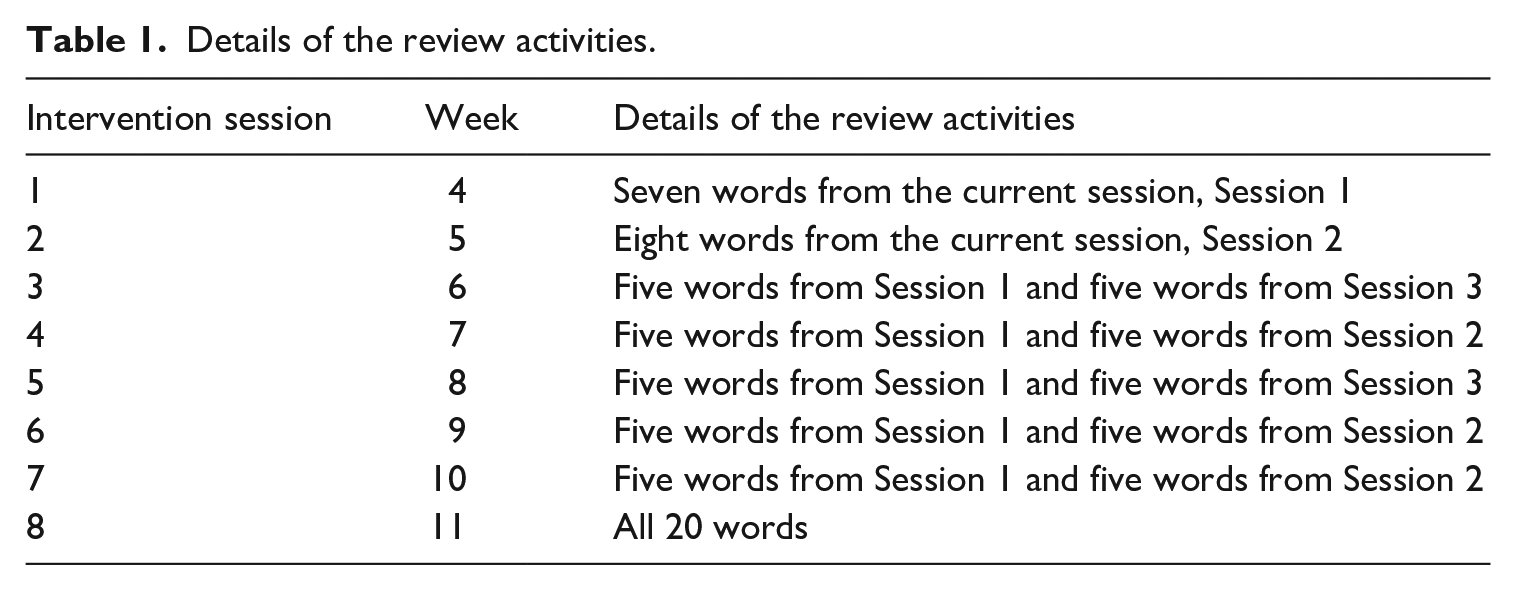
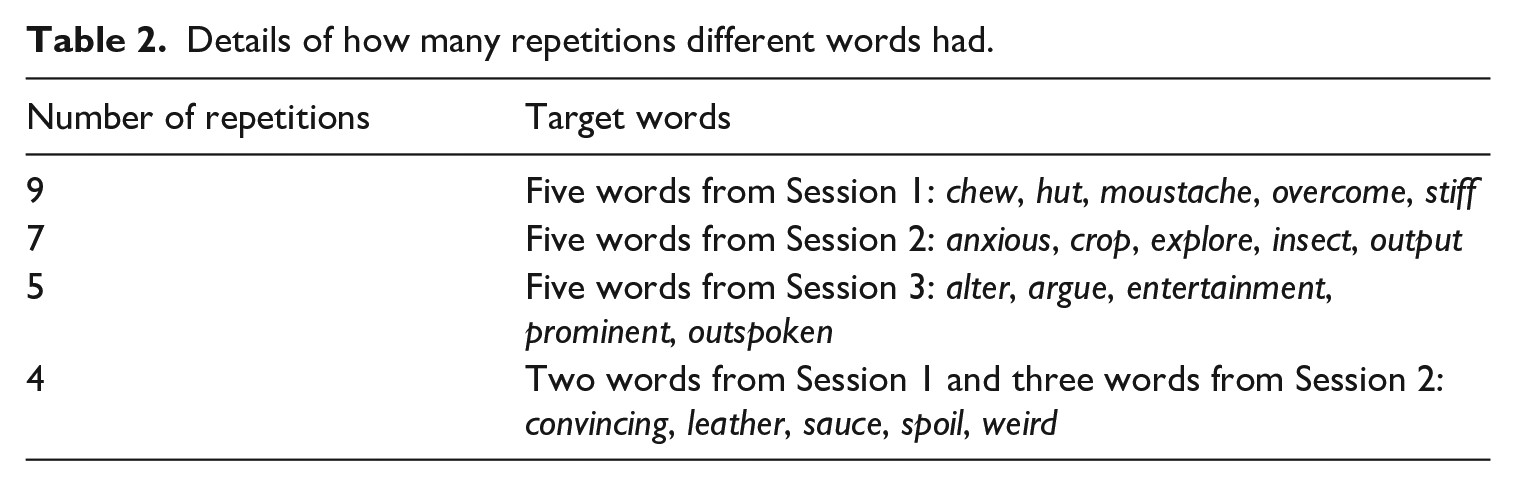
There was a review activity within each intervention session which enabled the teacher to revisit some of the target words taught in the current or previous sessions to further explore the effects of repetition on vocabulary learning. During the review activity, a target word was first read out twice by the teacher. Thereafter, learners were encouraged to actively recall and say aloud the meaning of the word either in their L1 or in the target language. The teacher then confirmed the meaning by repeating either the codeswitching, L2, or CFoF vocabulary explanation provided for the word. Details of the review activity schedule are given in Table 1. In total, learners heard the vocabulary explanations of the five words taught in session 1 nine times. This included twice when the words were taught initially in the intervention session and seven times in the review activities. In addition, five words from session 2 and five words from session 3 were repeated seven and five times respectively. Finally, learners encountered the remaining words taught in session 1 and 2 four times only, twice in the intervention sessions and twice in the review activities. For details, see Table 2.
Details of the review activities.
Details of how many repetitions different words had.
e Vocabulary posttest
The effects of repetition on vocabulary learning through explicit Focus-on-Form instruction was assessed through a meaning recall vocabulary posttest. The test was based on the test used by Tian (2011) but modified so that it took an aural form. The teacher first read out one target word and then an exemplifying sentence including the word. Learners were then given 10 seconds to respond. They were asked to circle 0 on the answer sheet if they did not know the meaning of the word. If they knew the meaning of the word, however, they were required to write it down either in L1 (Chinese) or in L2 (English) and to circle a number from 1 to 5 indicating the degree to which they felt confident about the meaning they provided. An example test item is given in Figure 2.

Example item for the vocabulary posttest.
3 Data analysis
The pretest was marked strictly following the answer schedule. The posttest was first marked by the researcher and then double marked by another researcher, giving interrater reliability at 97%. Disagreements between the two researchers on about 59 (out of 1,960) items were mainly regarding the instances where the L1 meanings given by the participants were not identical to those provided in the intervention sessions but were synonyms. A decision was made through further discussion to tolerate those L1 meanings as long as they were from the same part of speech as the meanings provided in the intervention. Items in both tests were marked dichotomously, either correct (1) or wrong (0). Reliability (Cronbach’s alpha) was .71 (95% CI [.64, .79]) for the pretest and .80 (95% CI [.75, .86]) for the posttest.
The data were then analysed both by item (20 words, coded 1 if correct and 0 if wrong) and by participant (98 participants) using generalized linear mixed effects models in R (version 3.5.0; R Development Core Team, 2018). Models were run with the lmerTest package (Kuznetsova, Brockhoff & Christensen, 2017), and effect plots for interactions were generated using the sjPlot package (Lüdecke, 2021). The emmeans package (Lenth, 2019) was then adopted to calculate follow-up multiple pairwise comparisons for the interactions.
IV Results
Descriptive statistics for all measurements, including two baseline tests (GEVT, listening comprehension test), a vocabulary pretest, and a vocabulary posttest, are given in Table 3. A first model (Model 1) was built including five fixed factors: GEVT (general vocabulary knowledge test); Listening (listening comprehension test); Time (1. Vocabulary pretest vs. 2. Vocabulary posttest); Group (CS vs. CFoF vs. L2); Repetitions (4 vs. 5 vs. 7 vs. 9). Time 1 (Pretest) was set as the baseline level of Time, CFoF was the baseline level of Group, and 4 (four repetitions) as the baseline level of Repetition. To address research question 1, three-way Time × Group × Repetitions interactions were added to the fixed effects structure. Additional three-way Time × Repetitions × GEVT and Time × Repetitions × Listening interactions were also added to answer research question 2. Therefore, the fixed effects structure was primarily theory driven (Plonsky & Ghanbar, 2018). As the two baseline tests were measured on a different scale, they were standardized by calculating z-scores. The random effects were fit using a maximal random effects structure (Barr et al., 2013). The model with the maximal random effects structure, however, did not converge. The interaction between random slopes was therefore removed first and random factors which contributed the least variance were removed gradually until the model converged. The final converged model included random intercepts for participants and items and by-item random slopes for Time.
Descriptive statistics (%) for all measurements by group.
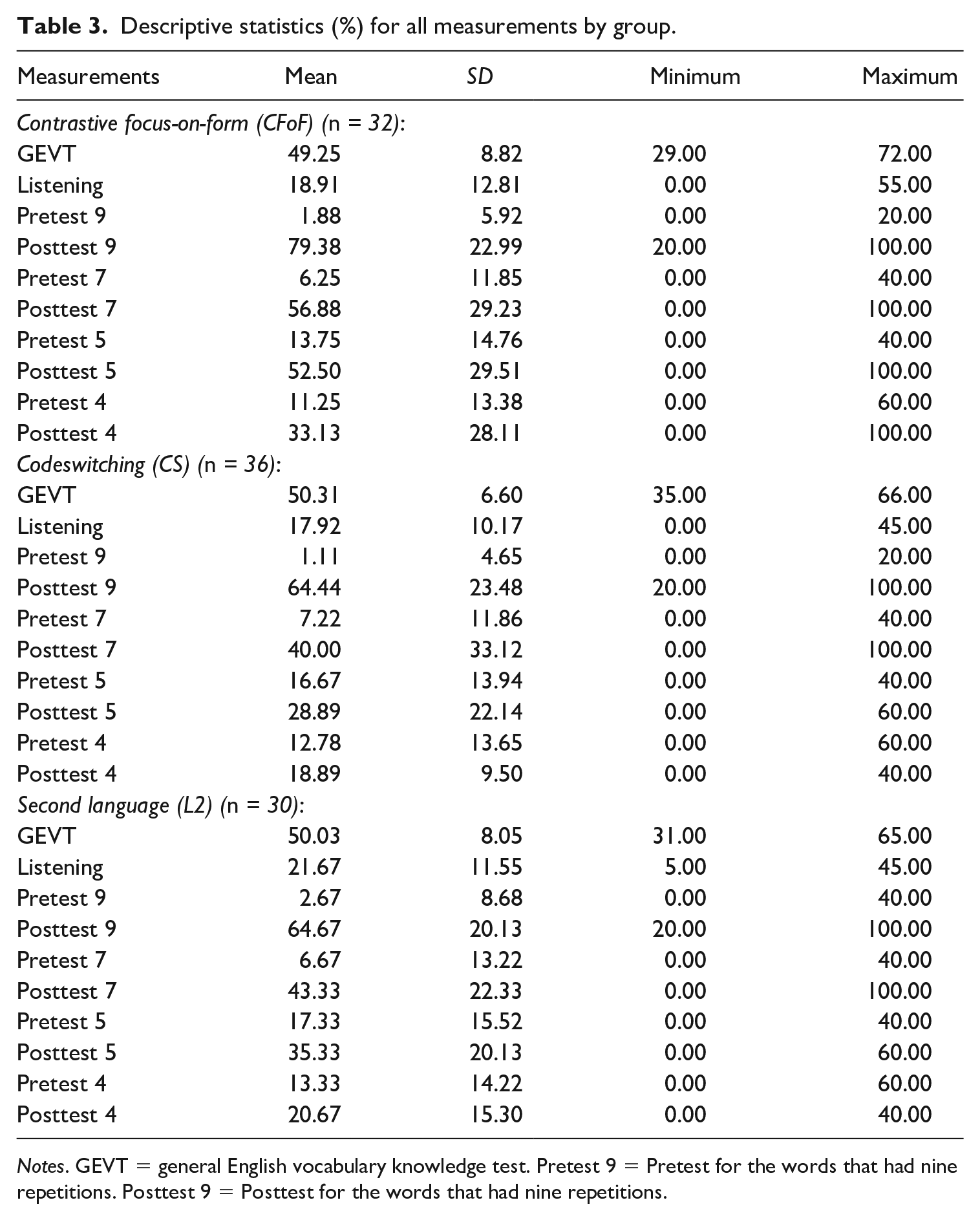
Notes. GEVT = general English vocabulary knowledge test. Pretest 9 = Pretest for the words that had nine repetitions. Posttest 9 = Posttest for the words that had nine repetitions.
Marginal R2 and conditional R2 were calculated to examine the model fit using the ‘tab_model’ function within the sjPlot package (Lüdecke, 2021) in R. Results suggested that the model represented a good fit to the data; 47% of the variance was explained by the fixed effects (marginal R2) whereas 81% of the variance was explained by both the fixed effects and the random effects (conditional R2). Overdispersion was assessed through the ‘check_overdispersion’ function within the performance package (Lüdecke et al., 2021). Dispersion ratio = 0.53 (i.e. below 1) indicated that there was no overdispersion in the model (Gelman & Hill, 2007). There was also no significant collinearity as all GVIF^(1/(2*df)) (Generalized Collinearity Diagnostics, Fox & Monette, 1992), calculated using the vif function within the car package, were below 3.5. The results for Model 1 are given in supplemental material 2.
As the current study only had 3,920 observations, Model 1 seemed to be underpowered (Brysbaert & Stevens, 2018; Kumle, Võ & Draschkow, 2021) judging from the model results. Indeed, further analysing Model 1 results using the ANOVA function indicated that, among the three theoretically driven three-way interactions, only the Time × Repetitions × Listening interactions were statistically significant (χ2(3) = 16.27, p < .001). No significant three-way Time × Repetitions × GEVT (χ2(3) = 1.32, p = .72) or Time × Group × Repetitions (χ2(6) = 2.45, p = .87) interactions were confirmed. It was therefore decided to further simplify Model 1 through ‘backward’ model selection, following Matuschek et al.’s (2017) counter argument to Barr et al.’s (2013) ‘keep it maximal’ view, that maximal models tend to lead to a significant loss of power.
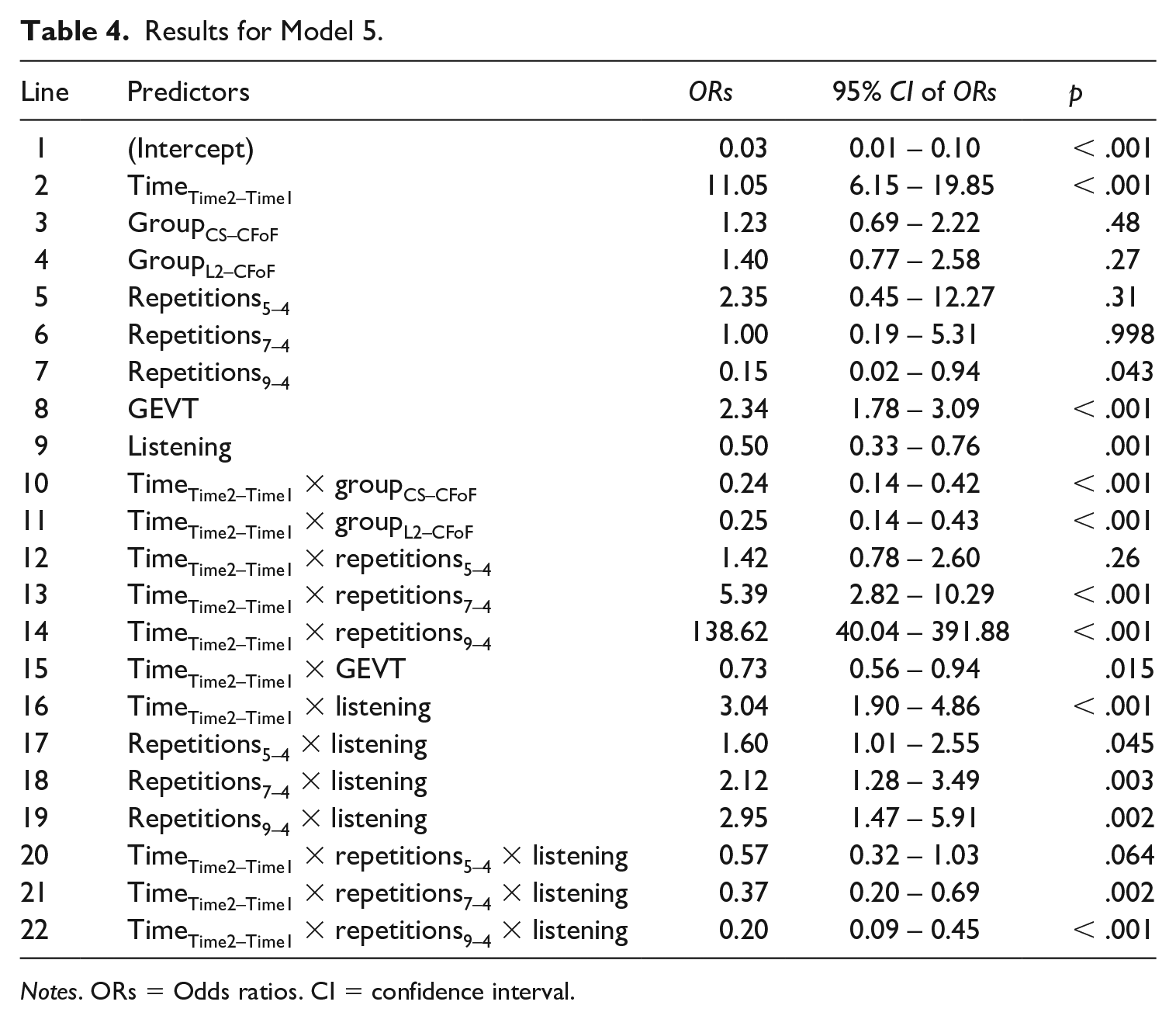
The by-item random slope for Time was first taken out of the random effects structure. The fixed effects structure was then further simplified by gradually removing the higher level interactions which were not statistically significant, i.e. Time × Group × Repetitions, Time × Repetitions × GEVT, Group × Repetitions, and Repetitions × GEVT, leading to a final Model 5. Results of model comparisons showed that Model 5 did not significantly differ from the original Model 1 (χ2(18) = 9.13, p = .96). Model 5 represented a good-fit to the data (marginal R2 = .45, conditional R2 = .67), including all five fixed factors which were originally included in Model 1. There was no overdispersion (dispersion ratio = 0.87) or collinearity. Analysing the model results using ANOVA suggested that there were significant three-way Time × Repetitions × Listening interactions (χ2(3) = 18.58, p < .001), as well as significant two-way Time × Group (χ2(2) = 32.08, p < .001), Time × Repetitions (χ2(3) = 96.56, p < .001), Time × Listening (χ2(1) = 13.25, p < .001), and Time × GEVT (χ2(1) = 5.88, p = .015) interactions. The random effects structure includes only random intercepts for ‘Item’ and for ‘Participants’. Results for Model 5 are given in Table 4.
Results for Model 5.
Notes. ORs = Odds ratios. CI = confidence interval.
It should be noted that interpreting these main effects and interactions from the model results (i.e. Table 4) directly did not provide a very clear picture and could be misleading, as all the contrasts made were against the baseline level of the fixed factors. For example, the odds ratio for the TimeTime2–Time1 contrast made in Line 2, Table 4, indicates that learners at Time 2 (posttest) were 11.05 times more likely to successfully recall the meaning of the target words than they were at Time 1 (pretest). This was true, however, only when learners were from the CFoF group (the baseline level of Group), the words were repeated four times (the baseline level of Repetitions), and their vocabulary and listening scores were 0 (centred at the mean). Therefore, to gain a clear picture of the model results, multiple comparisons were made for the interactions, alongside examining the corresponding effect plots.
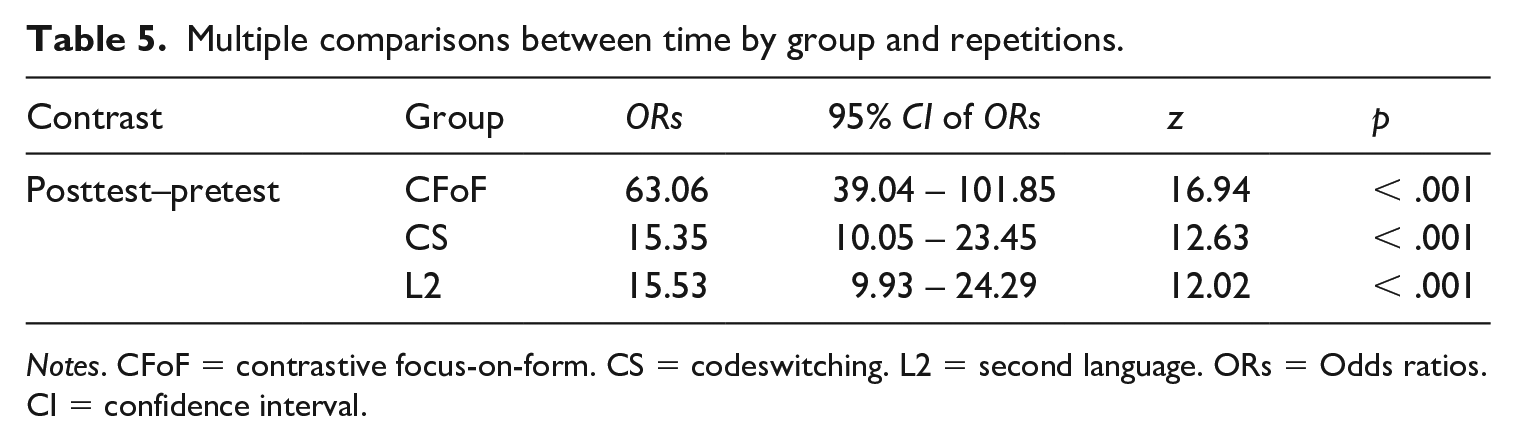
To address research question 1, three-way Time × Group × Repetitions interactions were included in Model 1. The fact that these interactions were not statistically significant and were further dropped in the process of model selection indicated that the effects of repetition on vocabulary learning were independent from the fixed factor of Group, i.e. across the three groups repetitions showed a similar effect. There were, however, significant Time × Group interactions. Results for the multiple comparisons for this interaction are given in Table 5, and the relevant effect plot is presented in Figure 3.
Multiple comparisons between time by group and repetitions.
Notes. CFoF = contrastive focus-on-form. CS = codeswitching. L2 = second language. ORs = Odds ratios. CI = confidence interval.
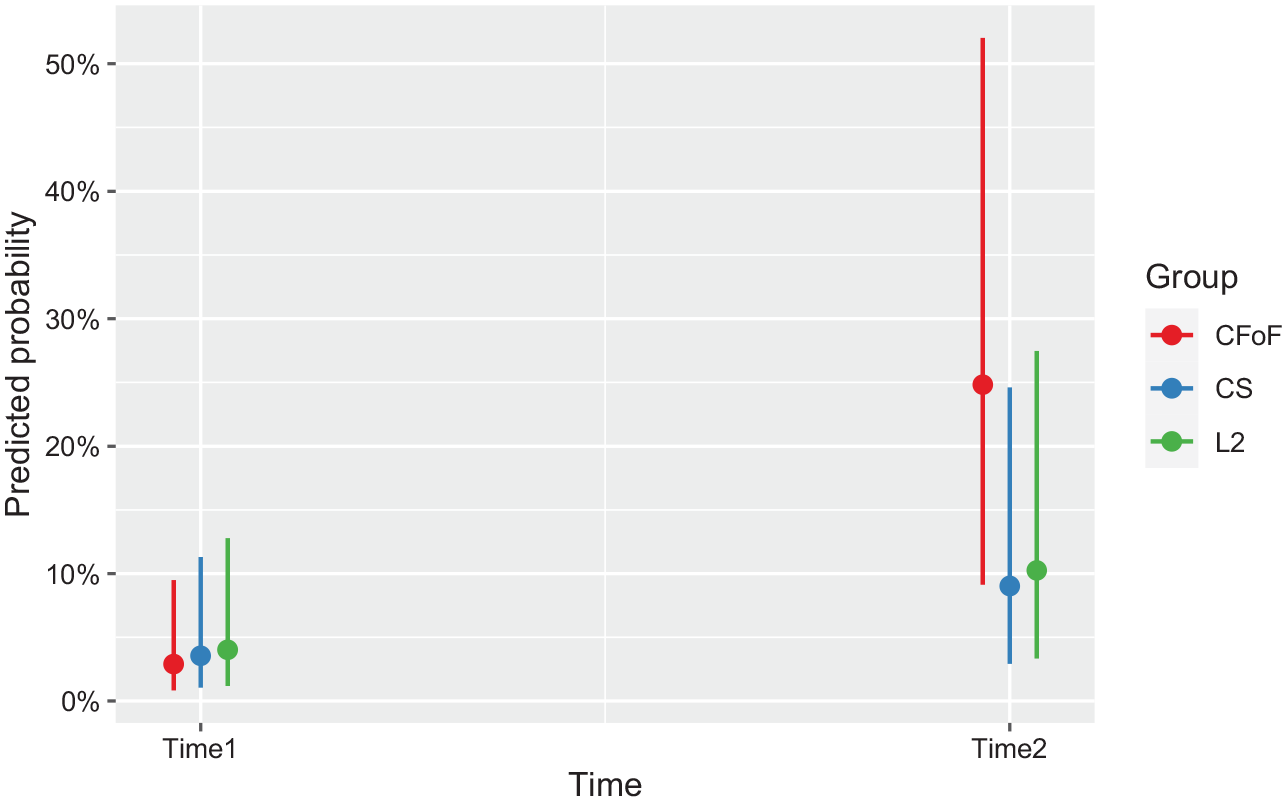
Effect plot for the time × group interactions.
Results from Table 5 show that regardless of the number of repetitions, all groups made significant vocabulary gains from the pretest to the posttest. Gains were the largest for the CFoF group. Learners in that group were 63 times more likely to recall the meaning of the target words at the posttest compared to at the pretest. L2 and CS groups showed the smallest but similar gains, whereby both groups were 15 times more likely to recall the meaning after the intervention than before it.
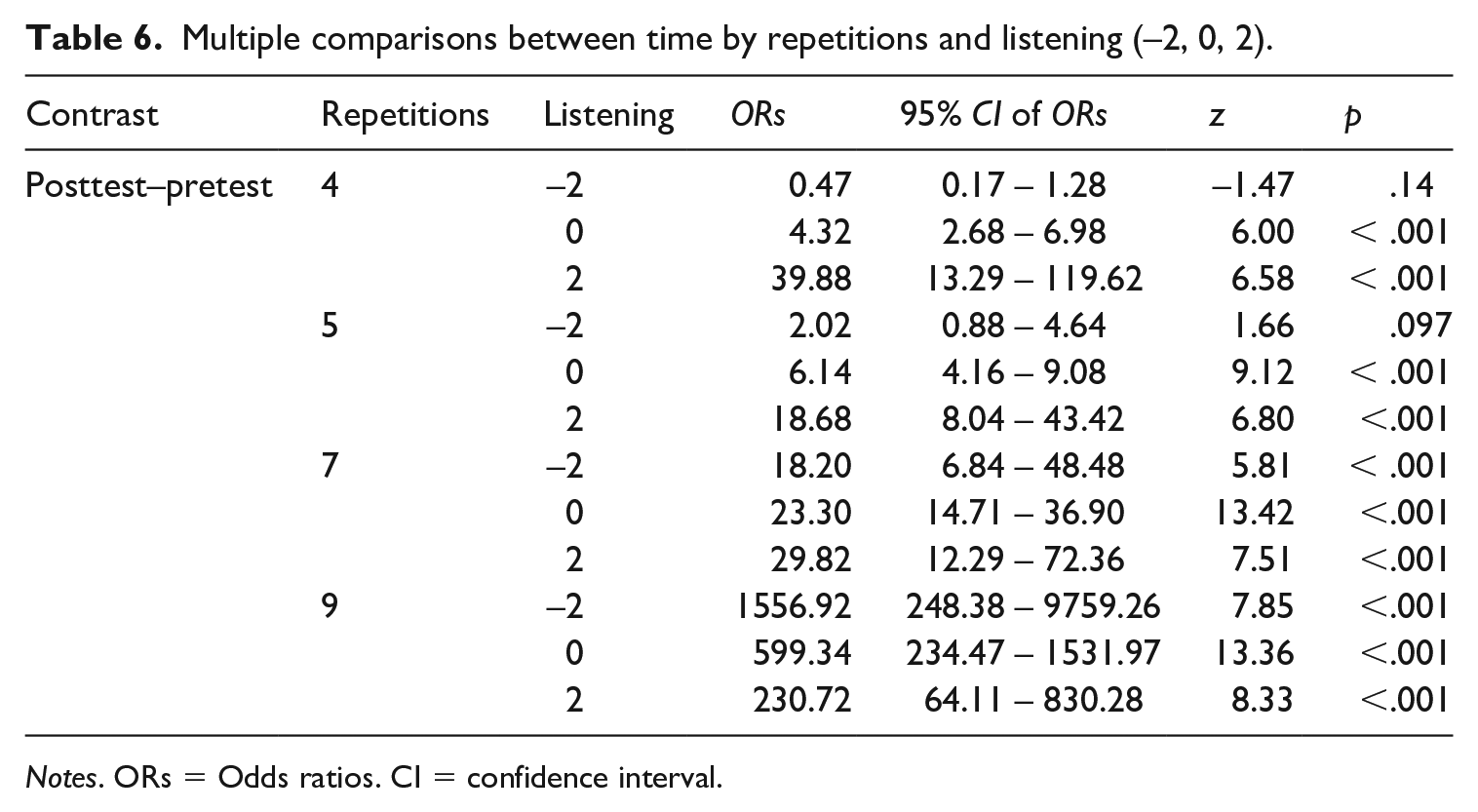
Turning to research question 2, we first explored how learners’ listening proficiency moderated the effect of repetitions on vocabulary learning. Results of multiple comparisons for the Time × Repetitions × Listening interactions (for an effect plot, see Figure 4) are first presented in Table 6. Listening was set at –2 (lower-level of listening proficiency), 0 (average-level of listening proficiency), and 2 (higher-level of listening proficiency) to give a clear picture for learners of different levels of listening proficiency.
Multiple comparisons between time by repetitions and listening (–2, 0, 2).
Notes. ORs = Odds ratios. CI = confidence interval.
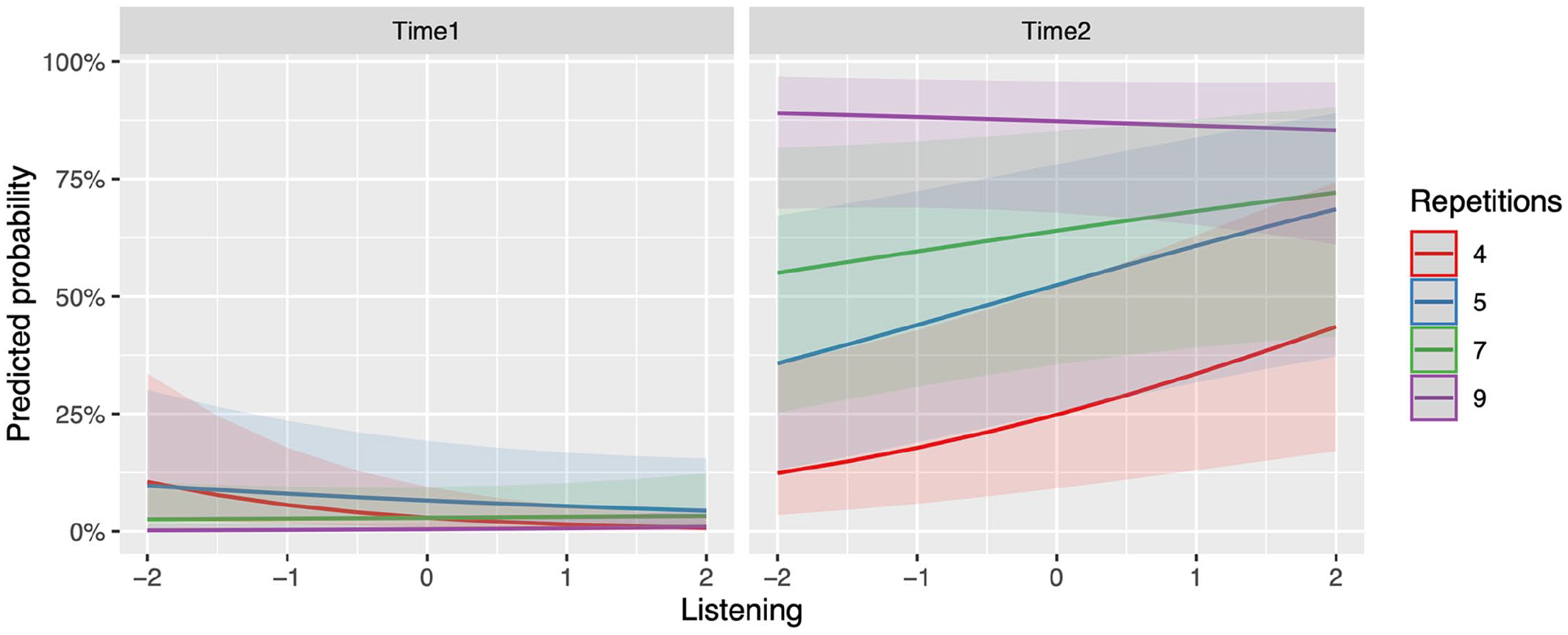
Effect plot for the time × repetitions × listening interactions.
Results from Table 6 confirm that there were significant Time × Repetitions × Listening interactions, meaning that learners’ listening proficiency significantly moderated the effect of repetition on vocabulary learning. For learning words repeated four, five, and seven times, gains became larger with the increase of learners’ listening proficiency. This advantage towards higher listening proficiency learners, however, became less prominent with the increase of the number of repetitions. When the number of repetitions reached nine, learners with lower-level listening proficiency outperformed their higher listening proficiency counterparts. In addition, regardless of learners’ listening proficiency, there were significant effects of repetition. Gains were the largest for words repeated nine times, whereas those repeated four times had the smallest gains. In fact, learners with a lower level of listening proficiency did not make significant improvement when learning words repeated four and five times. When the number of repetitions increased to seven times, all learners made significant gains. Furthermore, there was a very large increase in learning gains for learners at all listening proficiency levels, judging by the odds ratios, when the number of repetitions increased from seven times to nine times.
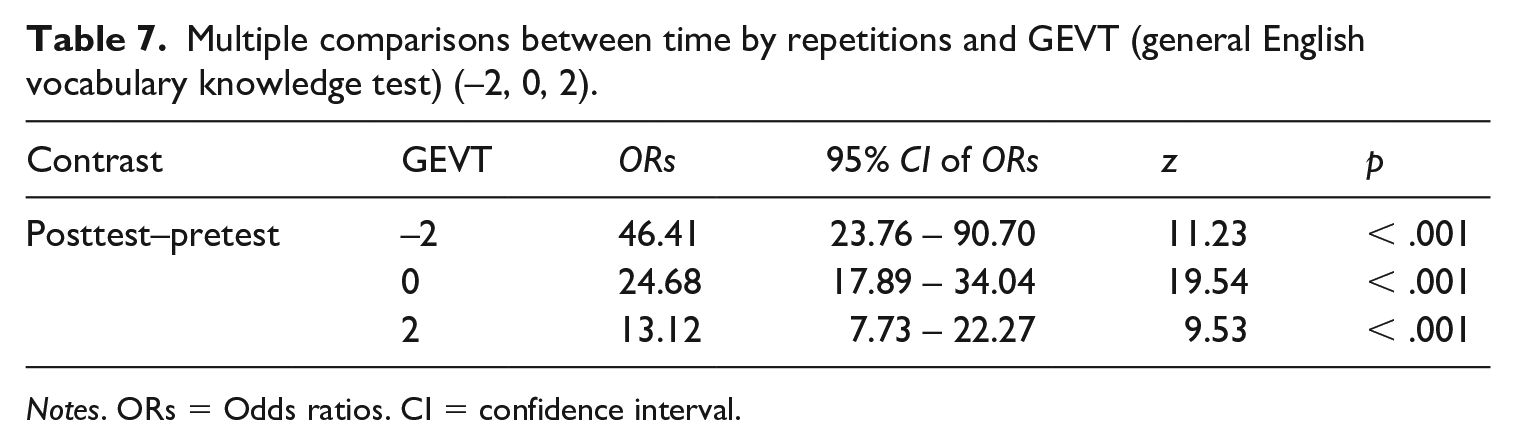
To further explore how the effects of repetition on vocabulary learning were moderated by learners’ preexisting vocabulary knowledge, Time × Repetitions × GEVT interactions were initially added to Model 1. Similar to what happened to the Time × Group × Repetitions interactions, these interactions were not significant and were further removed in the process of model selection, suggesting that the effects of repetition on vocabulary learning were independent of the fixed factor of GEVT. The patterns of vocabulary gains for learners with different levels of preexisting vocabulary knowledge were similar regardless of the number of repetitions. There were, however, significant two-way Time × GEVT interactions. The effect plot for these interactions is given in Figure 5 and results for the multiple comparisons made are presented in Table 7. Similar to Listening, GEVT was set at –2 (lower-level of preexisting vocabulary knowledge), 0 (average-level of preexisting vocabulary knowledge), and 2 (higher-level of preexisting vocabulary knowledge) to provide a clearer picture for learners with different levels of preexisting vocabulary knowledge.
Multiple comparisons between time by repetitions and GEVT (general English vocabulary knowledge test) (–2, 0, 2).
Notes. ORs = Odds ratios. CI = confidence interval.
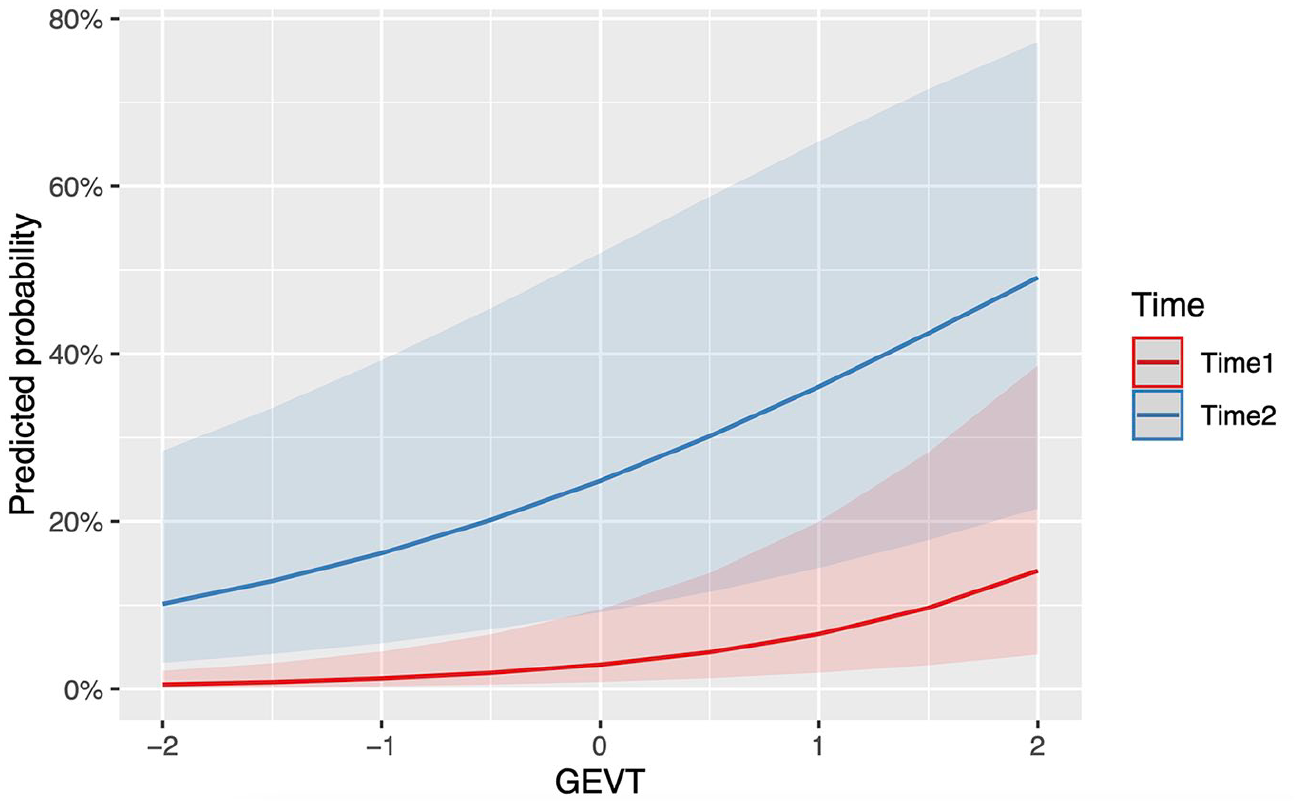
Effect plot for the time × GEVT (general English vocabulary knowledge test) interactions.
Results from Table 7 indicated that learners at all three levels of preexisting vocabulary knowledge made significant vocabulary gains. The largest gains were made by learners with a lower level of preexisting vocabulary knowledge, who were 46 times more likely to recall the meaning of the target words at the posttest than at the pretest. Learners with a higher level of preexisting vocabulary knowledge, however, made the smallest vocabulary gains; their ability to successfully recall the meaning of the target words was only 13 times higher at the posttest than at the pretest.
V Discussion
This study explored, first, whether the effects of repetition differ across different types of vocabulary instruction through a listening task (second language vs. codeswitching vs. contrastive focus-on-form), a question that is of both pedagogical and theoretical interest. Findings suggested that the fixed factor of Group (i.e. the three types of instruction) was independent from the fixed factor of Repetitions. Regardless of the number of repetitions, vocabulary gains were consistently the largest for the CFoF group and were the smallest but similar for the L2 and codeswitching groups. This finding – although it rejects the initial hypothesis that the effects of repetition would be larger for the L2 and codeswitching approaches than for the CFoF approach – is in line with the finding of Zhang and Graham (2020a). They explained that finding by arguing that the CFoF made the target words more salient and more likely to be retained, an effect which seems from the present analysis to override any possible effect from repetition. Increasing the number of repetitions for the three types of explicit Focus-on-Form instruction does not seem to have altered positively or negatively the effects of any type of instruction on vocabulary learning. In other words, the type of instruction learners received was of more importance than the number of repetitions.
The current study went one step further than previous studies by exploring how two learner variables, i.e. listening proficiency and preexisting vocabulary knowledge, moderated the effects of repetition on vocabulary learning through listening to explicit instruction. Results suggested that learners’ listening proficiency seemed to negatively moderate the effects of repetition. That is, learners with lower listening proficiency benefited more from the increase of the number of repetitions compared to those with higher listening proficiency. This appears to confirm the initial hypothesis made for research question 2 and echoes the findings of Zhang and Graham (2020b) exploring the moderating effect of preexisting vocabulary knowledge and listening proficiency on overall vocabulary learning through listening to explicit instruction. In that study, regardless of the type of instruction, learners with higher listening proficiency outperformed those with the lower listening proficiency in vocabulary learning and retention, which indicates that the nature of the explicit instruction may have advantaged those more skilled listeners. Increasing the number of repetitions, that is, providing more opportunities to listen to the instruction, therefore increased the likelihood of learners with weaker listening skills acquiring the target vocabulary.
Findings from the present study also indicated that regardless of the level of listening proficiency, vocabulary learning gains were positively correlated with repetitions, i.e. the gains were largest for words repeated nine times and were smallest for those repeated four times. In fact, among learners at all listening proficiency levels, only those who had average and high levels of listening proficiency made significant gains in learning words repeated four and five times, whereas when repetitions increased to seven times, all learners made significant progress. Additionally, observing the effect sizes (odds ratios), there was a very large improvement in learning when repetitions increased from seven times to nine times. These findings suggest that at least seven repetitions are needed to significantly improve vocabulary learning through explicit Focus-on-Form instruction. Although this number is much lower than the 20 repetitions suggested by Uchihara et al. (2019) for incidental vocabulary learning, it is slightly higher than what has been found in previous studies exploring the effects of repetition through Focus-on-Forms vocabulary learning tasks, namely two to three repetitions in Laufer and Rozovski-Roitblat (2011), four repetitions in Teng and Xu (2022), and five repetitions in Peters (2014). Different from Focus-on-Forms tasks where learners have a clear intention to learn vocabulary, activities in the present study asked learners to attend primarily to the comprehension of the listening passages. ‘Noticing’ (Schmidt, 1990) of the target words was only prompted by the teacher’s Focus-on-Form instruction which also aimed to facilitate meaning comprehension. Therefore, a higher number of repetitions is needed to make significant vocabulary gains in such circumstances.
The above findings, however, contradict Laufer and Rozovski-Roitblat (2011), in whose study no effects of repetition were confirmed for their Focus-on-Form vocabulary tasks. This is not surprising as the level of ‘need’ (Laufer & Hulstijn, 2001) to learn the target words through Focus-on-Form instruction differs significantly between that study and the current study. In Laufer and Rozovski-Roitblat (2011) the learning process did not involve explicitly drawing learners’ attention to the target words and therefore triggered a lower level of ‘need’ to ‘search’ and ‘evaluate’ (Laufer & Hulstijn, 2001) the meaning of the word. This may have made the overall vocabulary gains from the Focus-on-Form tasks very small, hence less sensitive to the increasing of the number of repetitions. Learners in the current study, however, were guided by the teachers to ‘notice’ (Schmidt, 1990) the target words and were provided with explanations for those words in context, thus triggering ‘need’ and ‘evaluate’ and prompting overall large vocabulary gains. Such large learning gains make it possible to further observe the effects of repetition on learning through explicit Focus-on-Form instruction.
Regarding how the effects of repetition were moderated by learners’ preexisting vocabulary knowledge, the findings showed that, regardless of the number of repetitions, there was a consistent learning advantage for participants with lower preexisting vocabulary knowledge levels who overtook their counterparts with higher levels of preexisting vocabulary knowledge. This finding differs from the original hypothesis made for research question 2 and from Zahar et al. (2001) and Uchihara et al. (2019) who found that learners’ vocabulary size negatively moderated the effects of repetition in incidental vocabulary learning. In incidental learning, vocabulary gains mainly occur through, for example, inferring meaning from the context. Compared to learners with lower levels of preexisting vocabulary knowledge, learners with higher preexisting vocabulary knowledge levels are more likely to successfully infer meaning from the context and therefore need to encounter the target words fewer times. Learners in the current study, however, were provided with the meaning of the target words through explicit Focus-on-Form instruction to facilitate listening comprehension. Any advantage to be gained from the ability to infer from context for learners with higher preexisting vocabulary knowledge levels therefore is very likely to have disappeared.
VI Conclusions
The findings of the study overall add important empirical evidence to our understanding of the role of repetition in explicit vocabulary instruction. A lower number of repetitions (as low as seven repetitions) were needed for learners to make significant vocabulary gains through explicit vocabulary instruction compared to through incidental vocabulary learning (up to 20 repetitions). In addition, the study has also highlighted the fact that there might not be a ‘ceiling’ effect of repetition within explicit vocabulary instruction, as although vocabulary gains were not significantly different when repetitions increased from five times to seven times, when they increased further to nine times, learners once again made significant larger vocabulary gains. Further studies may want to explore how repetitions above nine times impact on vocabulary learning through such a type of instruction. Moreover, findings suggested that learners’ listening proficiency played a more significant role than their level of preexisting vocabulary knowledge in moderating the effects of repetition on learning. Less proficient listeners benefited significantly more than more proficient listeners with every unit increase of the number of repetitions.
At a pedagogical level, these findings suggest that teachers should consider incorporating opportunities for repetitions when implementing Focus-on-Form vocabulary instruction. For each target word, repeating it for at least seven times using the same type of Focus-on-Form instruction consistently over a period of time could potentially help in promoting maximal learning effects. In addition, learners’ existing listening proficiency needs to be taken into account when teaching new vocabulary and designing learning tasks, in particular for tasks that require learners to learn from listening. Increasing the number of repetitions of the target vocabulary in an aural form may to some extent compensate for some learners’ poor listening skills in helping them to learn more vocabulary.
The study had a few limitations. First, the utilization of a single-site sample (that is, participants were from one senior-high school in China) has been argued to be problematic in L2 research (Moranski & Zeigler, 2021) and in particular in L2 instructed vocabulary research that adopts experimental methods (Vitta, Nicklin & McLean, 2021) as doing so potentially reduces the external validity of the study. The findings of the current study are, therefore, exploratory in nature. Although they may have relevance for other similar contexts within China and for comparable learning contexts elsewhere, further studies are need, adopting more robust multisite sampling, to explore whether the findings can be extended more broadly. Second, the number of target words within each repetition band is limited (namely, five). This may have caused potential ‘bias’ in learning as learners may have happened to know some words in a certain repetition band before the intervention and thus learning may have been prohibited to some extent for that repetition band. Although the utilization of generalized linear mixed effects models, whereby we controlled by-item random effects, did address this limitation, future studies may go further by increasing the number of target words at each repetition band to minimize the possibility of results being skewed by certain words. Third, the final review session which reviewed all target words was only one week before the vocabulary posttest. Although all target words were reviewed in the last session to ensure that the length between when they were last heard and when they were tested was equal, there is a risk that learners’ performance at the posttest was mainly influenced by how well they learnt in the final review session. Further studies are therefore needed which adopt a longer delayed posttest to observe the effects of repetition more fully.
Supplemental Material
sj-docx-1-ltr-10.1177_13621688221140521 – Supplemental material for How does repetition affect vocabulary learning through listening to the teacher’s explicit instruction? The moderating role of listening proficiency and preexisting vocabulary knowledge
Supplemental material, sj-docx-1-ltr-10.1177_13621688221140521 for How does repetition affect vocabulary learning through listening to the teacher’s explicit instruction? The moderating role of listening proficiency and preexisting vocabulary knowledge by Pengchong Zhang in Language Teaching Research
Footnotes

References
Supplementary Material
Please find the following supplemental material available below.
For Open Access articles published under a Creative Commons License, all supplemental material carries the same license as the article it is associated with.
For non-Open Access articles published, all supplemental material carries a non-exclusive license, and permission requests for re-use of supplemental material or any part of supplemental material shall be sent directly to the copyright owner as specified in the copyright notice associated with the article.
