



Abstract
Learner autonomy is a vibrant and diverse field. In its approximately 40-year history, it has drawn liberally on theoretical constructs and research methodologies from other disciplines. In turn, it has contributed to the field of applied linguistics by drawing attention to the fundamental importance of understanding the language learner as an active agent in the learning process. To understand the role of autonomy in, and its connections with other areas of study, it is important to ask how it has been conceptualized and operationalized. In addition, given its elusive and amorphous nature, it is timely to ask if and how (the development of) learner autonomy has been evaluated. In this article we conducted a scoping review, or a systematic and comprehensive literature review, of 61 empirical studies in this field. The results show a rich array of conceptualizations and numerous operationalizations, in addition to a somewhat limited use of evaluations. We draw from this a number of implications for research. In particular, we encourage learner autonomy researchers to make explicit their theoretical frameworks, extend their investigation to the role of language learning beyond the classroom in promoting learner autonomy, and diversify their use of research methods.
I Introduction
The field of learner autonomy is reaching a stage of maturity. Since its emergence in the early 1980s it has spawned a greater interest in the roles that learners play in their own learning and greater recognition of the myriad ways in which learning, both in and outside of the classroom, takes place. In addition, it is intimately connected with the recent explorations of the psychology of the language learner and the ways in which learners’ internal experiences significantly shape the learning process and its outcomes. Given its historical and continued influence, a scoping review is warranted of its theoretical underpinnings and the ways these are translated into context-specific operationalizations. Furthermore, how the concept is understood in different cultures, with learners of different ages, and across school types, to name only some variables, is unclear and has not been systematically investigated.
A feature of the scholarly canon in the field of learner autonomy is that much of the extensive literature comprises theoretical explorations or descriptions of good practice, rather than empirical studies. Moreover, although there are a number of frequently-cited definitions of learner autonomy that conceptualize learner autonomy as learners’ ability and capacity (e.g. by Benson, 2001; Holec, 1981; Little, 1991; Littlejohn, 1985; Nunan, 1996), distinctions between learner autonomy and related constructs such as self-regulated learning, motivation, self-efficacy, and metacognition remain blurred and conceptualizations are often not clearly founded or described. Similarly, operationalizations of autonomy are mostly unsystematic and frequently not described in detail. This is a significant lacuna, as it prevents a comprehensive comparison of the relative effects of different pedagogical practices. Of particular interest in the field is whether, and if so, how autonomy can be evaluated. Little (2007, 2017) strongly argues that the development of language proficiency and learner autonomy should not be separated as they are ‘mutually supporting and fully integrated with each other’ (Little, 2007, p. 14) so attempting to evaluate learner autonomy is not necessary – or recommended – as the results will speak for themselves in terms of the development of language proficiency. This convincing stance goes some way to explain why there are few empirical studies isolating learner autonomy. In addition, Benson (2011) notes that observations and intuitions made by teachers with regards to ascertaining the extent to which learners are taking charge of their learning may be sufficient and further evaluation–often through lengthy systematic research–is not always necessary. However, other researchers have suggested that it might be useful to evaluate some aspects of learner autonomy in order to show whether teaching practices and learning opportunities are effective. It could be argued that although the capacity for learner autonomy itself cannot be evaluated, observable behaviors can be researched and this could be an indication of the degree of autonomy that a learner possesses. Examples of observable behaviours are, for example, demonstrating greater awareness and control over one’s self-directed learning (see Curry et al., 2017), identifying evidence of metacognitive development using a rubric or trajectory (Kato & Mynard, 2016; Sinclair, 1999), or showing the degree of ownership over learning task selection and design (Nunan, 1997). It remains unclear whether there is a consensus either way. It is important to gain a more detailed understanding of the current state of the field and for this reason this article reports on a scoping review of the literature. This scoping review focuses on a number of contestable issues in the field, which pertain to the conceptualization (what conceptual and/or theoretical frameworks are used to understand learner autonomy?), operationalizations (what are some in-class and/or out-of-class activities designed by English teachers to develop learners’ autonomy?), and evaluation of learner autonomy (what research instruments or methods are used to investigate learner autonomy?). The scope of this present review is on English language learners (ELL) rather than learners of other languages because the majority of the scholarly publications on language learner autonomy focus on ELL (see a comprehensive bibliography on learner autonomy compiled by Hayo Reinders 1 ). While there are a handful of publications on learners of other languages, we decided to confine our synthesis to ELL to maintain ecological validity of our review, which refers to the ‘relation between real-world phenomena and the investigation of these phenomena in experimental contexts’ (Schmuckler, 2001, p. 420). A study is considered ecologically valid when its findings are likely to be used by stakeholders in similar contexts (Ledford et al., 2016). In other words, by focusing on a particular group of learners (i.e. ELL), we intend to make our synthesized results more useful and relevant to English teachers and learners. Another reason for setting a confine to our remit concerns the practicality of conducting a scoping review, which involves some labour-intensive and time-consuming works because of its inclusive nature (Pham et al., 2014). This warrants synthesists to explicate a boundary regarding the scope of the review in the form of inclusion and/or exclusion criteria (Chong & Reinders, 2021) (see Section II.4).
II Methodology
This study is a scoping review, which refers to a type of systematic literature review which summarizes substantive and methodological features of primary studies on a particular topic (Chong & Plonsky, 2021a; Visonà & Plonsky, 2019). A scoping review distinguishes itself from other types of research synthesis (e.g. narrative review) in terms of its more inclusive and systematic approach to study selection. Because of its more comprehensive coverage, a scoping review is often used to survey a research landscape of emerging or vibrant areas of research where published work ‘has not yet been extensively reviewed or is of a complex or heterogeneous nature’ (Tricco et al., 2016, p. 2). Scoping review can synthesize qualitative and/or quantitative data, which makes it resemble other types of systematic literature reviews namely qualitative research synthesis (which focuses on synthesis of qualitative data) and meta-analysis (which focuses on synthesis of quantitative data). For the present study, which adopts a thematic and qualitative approach to data synthesis, we draw on a recently developed methodological framework for conducting qualitative research synthesis in TESOL and Applied Linguistics (Chong & Plonsky, 2021b) (Figure 1). The rationale for adopting this framework is twofold: First, to the best knowledge of the authors, it is the only framework on synthesizing research findings in a qualitative, thematic manner in TESOL. Second, this framework is rather generic and resembles other types of systematic literature reviews (see Table 1 in Chong & Plonsky, 2021a).
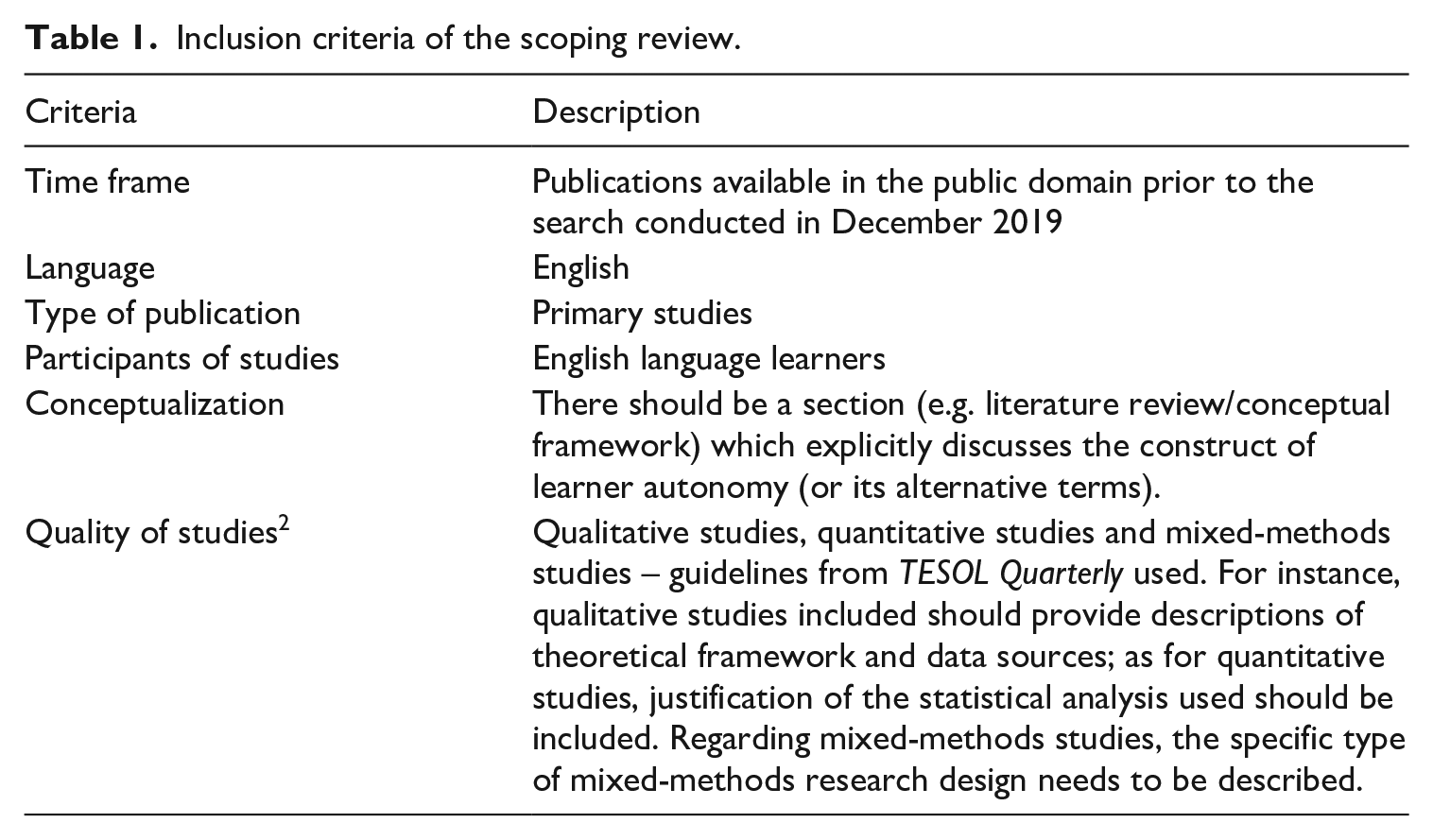
Inclusion criteria of the scoping review.
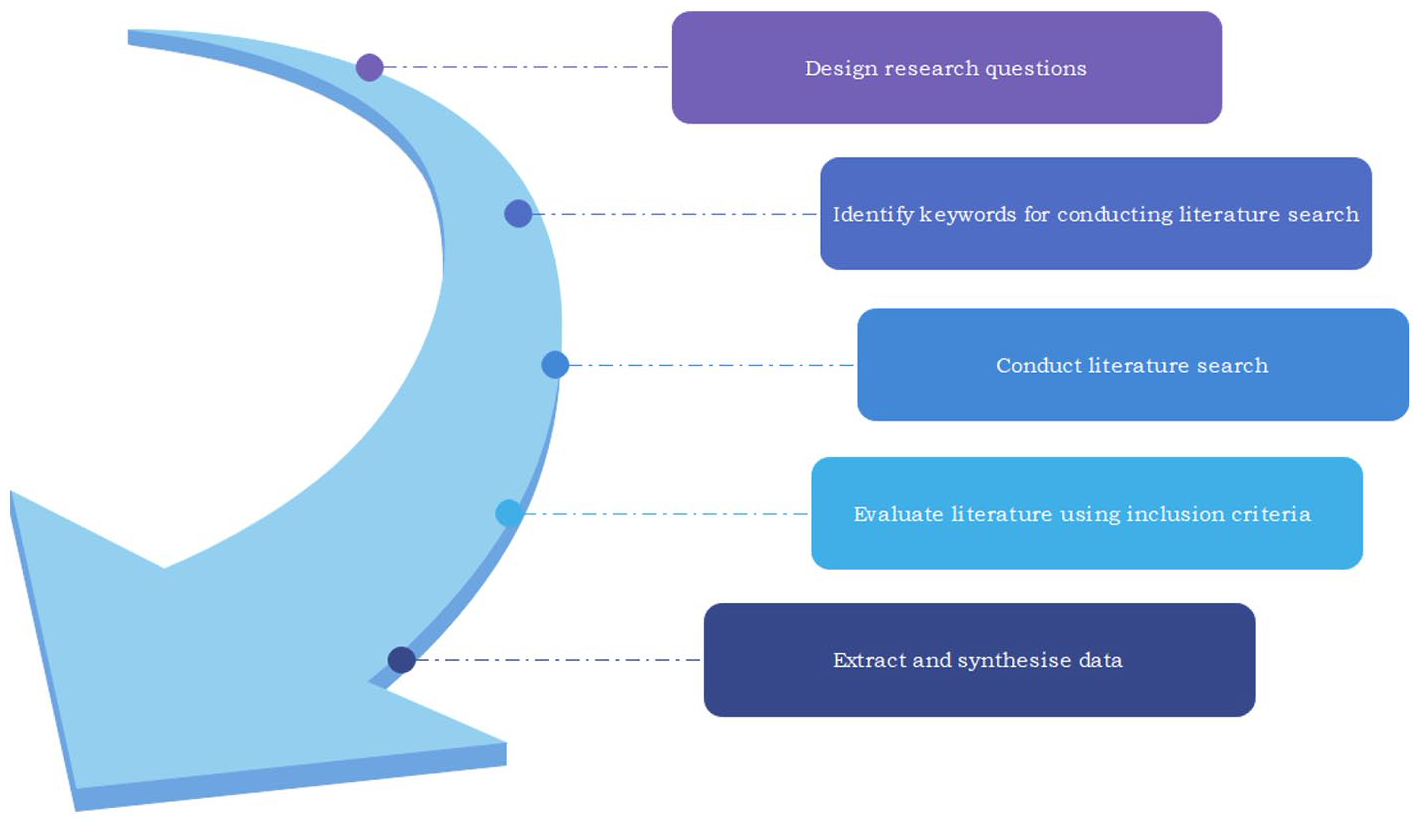
A methodological framework.
1 Design research questions
This scoping review on autonomy of ELL includes a dual focus on research and practice, which is reflected in its three research questions:
How is ELL autonomy conceptualized?
How is ELL autonomy operationalized?
How is ELL autonomy evaluated?
2 Keywords identified for conducting the literature search
The research team agreed on a search string of 20 terms. When finalizing this, we considered the inclusive nature of a scoping review and the volatility of the notion of learner autonomy (Dam, 2009). In consultation with two leading scholars in the field of language learner autonomy, the following search terms were developed, taking into consideration that studies on learner autonomy do not always use the term ‘learner autonomy’ (see examples from the online bibliography in Footnote 1). We were fully aware that the use of other associated terms in our search might result in publications which do not virtually discuss the key construct of this study. However, adhering to the exploratory and comprehensive nature of scoping review (Pham et al., 2014), we decided to conduct a more holistic search, refining the results using a stringent set of inclusion criteria which ensure the included studies focus explicitly on ELL’s autonomy (see Table 1, especially the ‘conceptualization’ criterion). The use of a rather exhaustive list of search terms indicates our position regarding a more inclusive definition of ‘learner autonomy’, considering also its related concepts. For example, while ‘self-directed (language) learning’ and ‘learner autonomy’ studies draw on slightly different strands of research and terminologies, they are related to learners taking ownership of their own learning. Therefore, in this review, these studies were included. For this review, the following search string was used: ‘adult learning’ OR ‘autonomous learning’ OR ‘extramural learning’ OR ‘good language learner’ OR ‘independent learning’ OR ‘informal learning’ OR ‘language advising’ OR ‘language counselling’ OR ‘learner autonomy’ OR ‘learning beyond the classroom’ OR ‘learning how to learn’ OR ‘learning in the wild’ OR ‘learning to learn’ OR ‘nonformal language learning’ OR ‘out-of-class learning’ OR ‘self-access learning’ OR ‘self-directed (language) learning’ OR ‘self-motivation’ OR ‘self-regulated learning’ OR ‘strategy instruction’
3 Literature search conducted
Literature was searched in two ways: exploratory and focused. An exploratory search was performed on electronic research databases. For each keyword, a search was performed on the following databases in December 2019: ERIC (EBSCO), Education Database (ProQuest), Education Research Complete (EBSCO), Linguistics and Language Behaviour Abstracts, Open Access Summaries in Language Studies (OASIS), IRIS (digital repository of instruments and materials for research into second languages). A focused literature search was performed on two refereed journals, Relay Journal and Studies in Self-Access Learning, and nine edited volumes on language learner autonomy. Articles were searched and first-screened by a research assistant who has experience in conducting systematic literature reviews following the steps outlined in Figure 2.
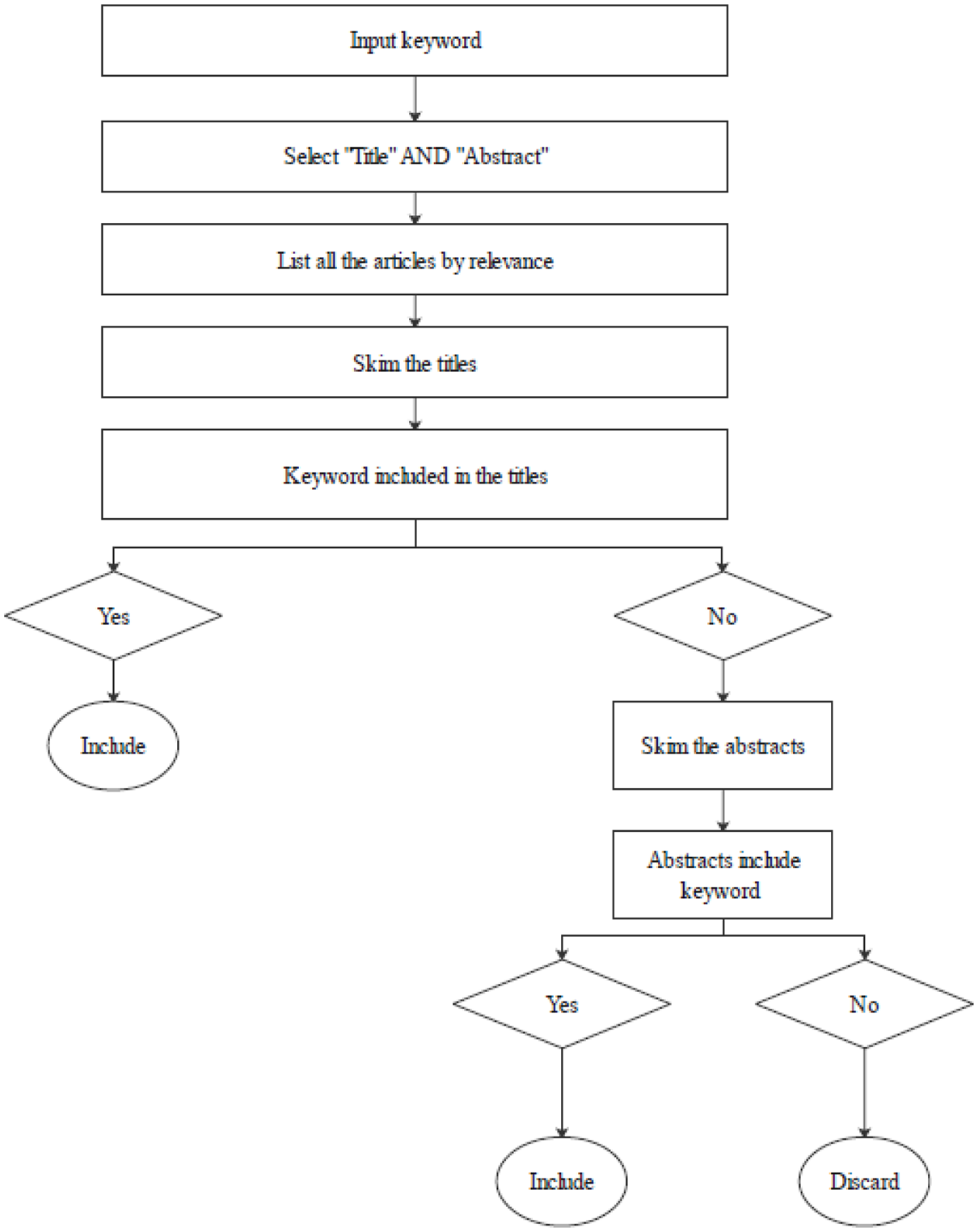
Searching and first-screening articles.
4 Evaluate literature using inclusion criteria
To conduct a second screening on the included studies, the following inclusion criteria were developed by the research team (Table 1). In particular, we decided to only focus on primary studies and exclude theoretical explorations in our corpus because we were not only interested in the conceptualization of the construct of ELL autonomy but also how the construct is implemented and evaluated. A second screening was conducted by a research assistant and was cross-checked by the first author, who is a methodologist of research synthesis. The two reviewers communicated through emails and on an instant messaging mobile application, WhatsApp, to discuss and resolve cases of discrepancy. Ultimately, following Figure 3, 61 studies on ELL autonomy were included in this scoping review.
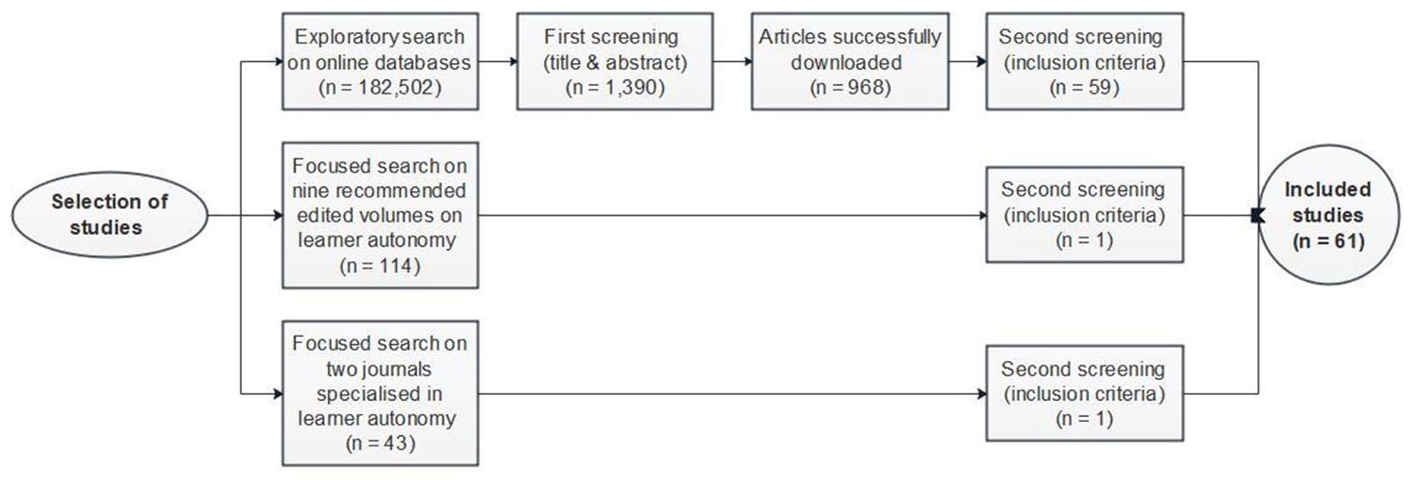
Flow chart of study selection.
5 Extracting and synthesizing data
A data extraction form (Appendix 1 in supplemental material) was created by the research team which includes items related to the three research questions. Data extraction was performed by the first author. To ensure the accuracy of the extracted data, the first author first completed data extraction on five studies; the extracted data were reviewed and approved by the second author. The first author then finished data extraction on the remaining studies. Issues and queries raised during the process were relayed to the rest of the team for comments. The completed 61 data extraction forms (Appendix 2 in supplemental material 3 ) were uploaded to a secure Google Drive folder, and were independently reviewed and commented on by the second author.
The finalized data extraction forms were imported into NVivo Pro 12 and inductive coding was performed to develop new themes. Following latest practices in qualitative research synthesis in TESOL (e.g. Chong & Reinders, 2020), open coding was performed iteratively through initial, focused, and axial coding to enable constant comparison between data and consolidation of thematic structures (i.e. the development of themes and sub-themes). This approach to open coding is informed by seminal work by grounded theorist, Kathy Charmaz (e.g. Charmaz, 2006). Similar to the data extraction stage, the synthesized data were shared with the co-author; queries and comments were exchanged via email. Appendix 3 (in supplemental material) includes a detailed coding scheme of the three research questions, consisting of three analytical categories, 12 descriptive categories, and 49 sub-categories.
It was our deliberate decision to reach consensus through written correspondence and discussions although we are aware that other statistical means are available (e.g. Cohen’s kappa). We believe that a more reflective and discursive approach to reaching agreement is more suitable for the present study which focuses on such a complex learner construct as learner autonomy.
6 An overview of the included studies
The included studies represent an international student population, learning English mostly as a foreign or second language. Iran, China, and Turkey are the top three locations ELL autonomy studies were conducted, followed by Taiwan, Japan, Saudi Arabia, Hong Kong, United States, Colombia, Egypt, Malaysia, France, Greece, Korea, Poland, Portugal, and Sweden; four studies do not specify their locations 4 (Figure 4). It is noted that the autonomy research seems to be popular in Asian countries. This is partly the result of the pivotal role played by universities in Hong Kong where an early interest in self-access learning and autonomy resulted in a great deal of activity. In addition, a number of professional organizations (e.g. HASALD in Hong Kong and the JALT Learner Development SIG in Japan) generated a great deal of interest and collaboration. Finally, a number of highly influential researchers have worked in the region, which has led to a great deal of research and postgraduate study in this area. The majority of the studies were conducted in higher education institutions (40), followed by language schools (7), primary schools (7), secondary schools (5), and vocational schools (3) 5 (Figure 5). This may be due to the fact that autonomous learning behaviours are usually associated with maturity of learners.
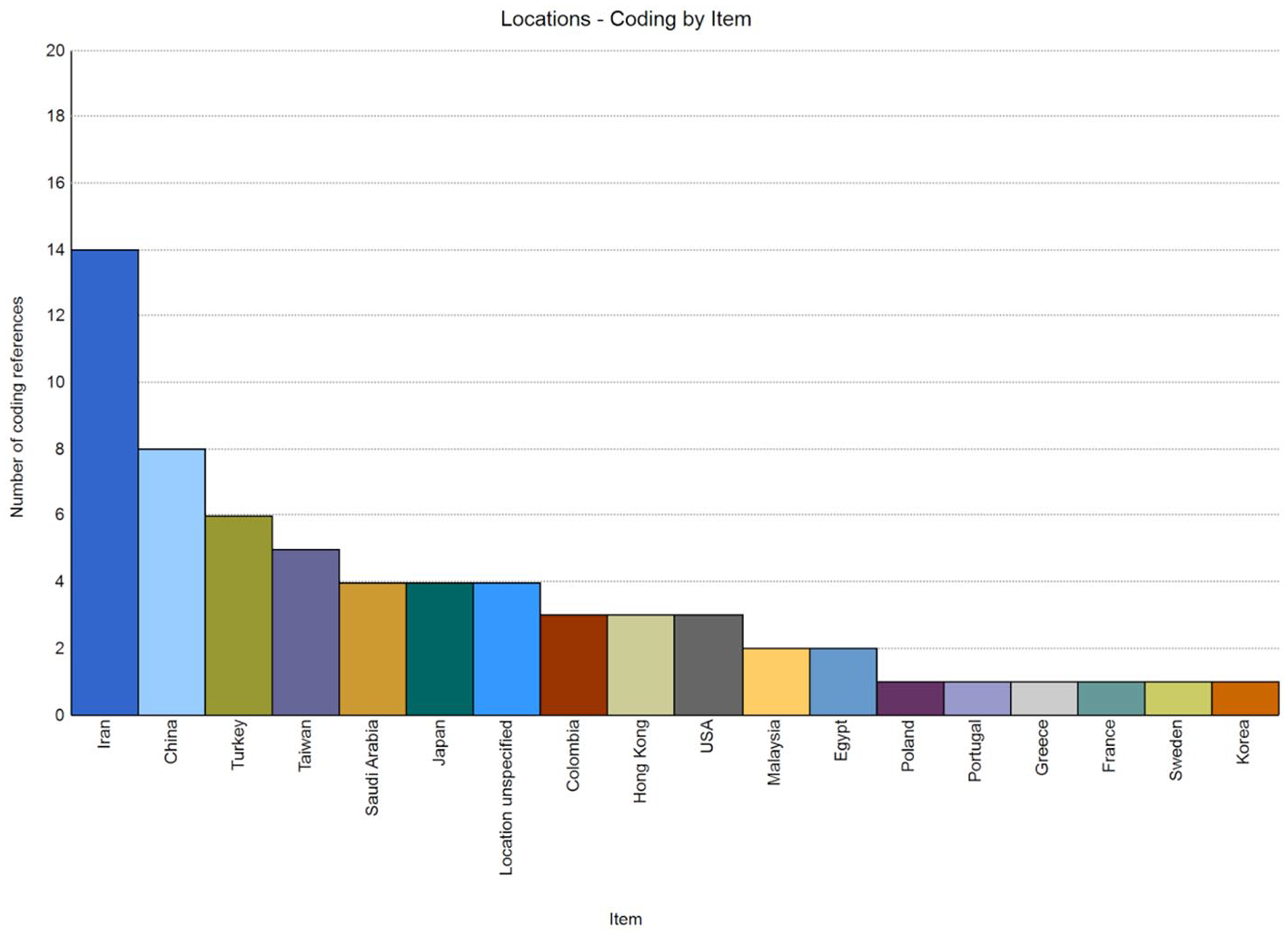
Locations of the included studies.
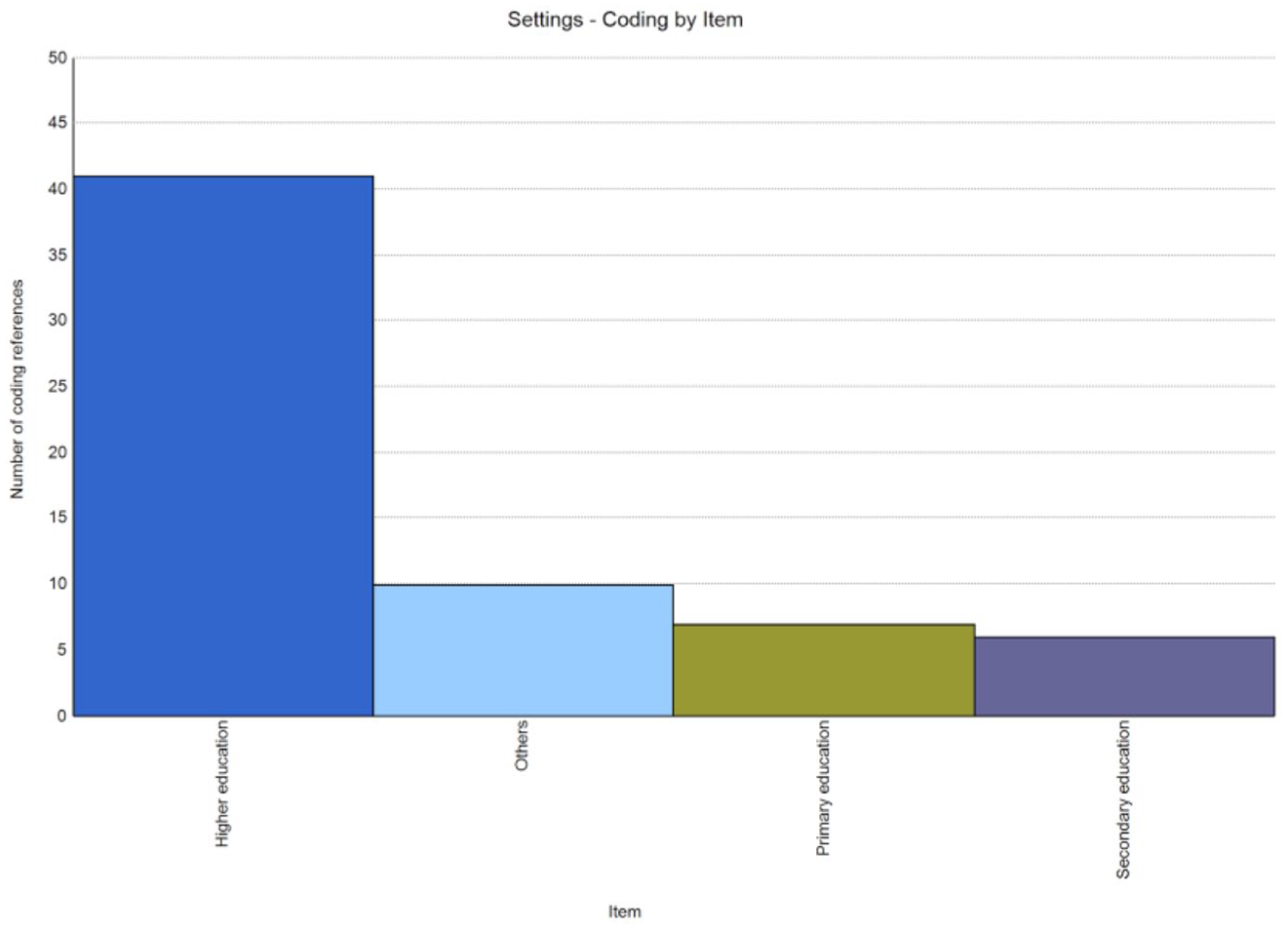
Settings of the included studies.
Four types of questions were answered by these studies: Perception and/or experience, effect of intervention on learner autonomy/related construct or relationship between two psychological constructs (e.g. Ghahari & Basanjideh, 2017, investigated the relationship between EFL learners’ awareness of reading strategies and their autonomy), relationship between learner autonomy and language proficiency/other constructs, and instrument development and/or validation 6 (Figure 6). As far as research designs are concerned, over half of the included studies employed a (quantitative) survey design, while the remainder of the selected studies are mixed-methods and (quasi-)experimental studies respectively. Only four of the studies utilized qualitative research methods (Figure 7).
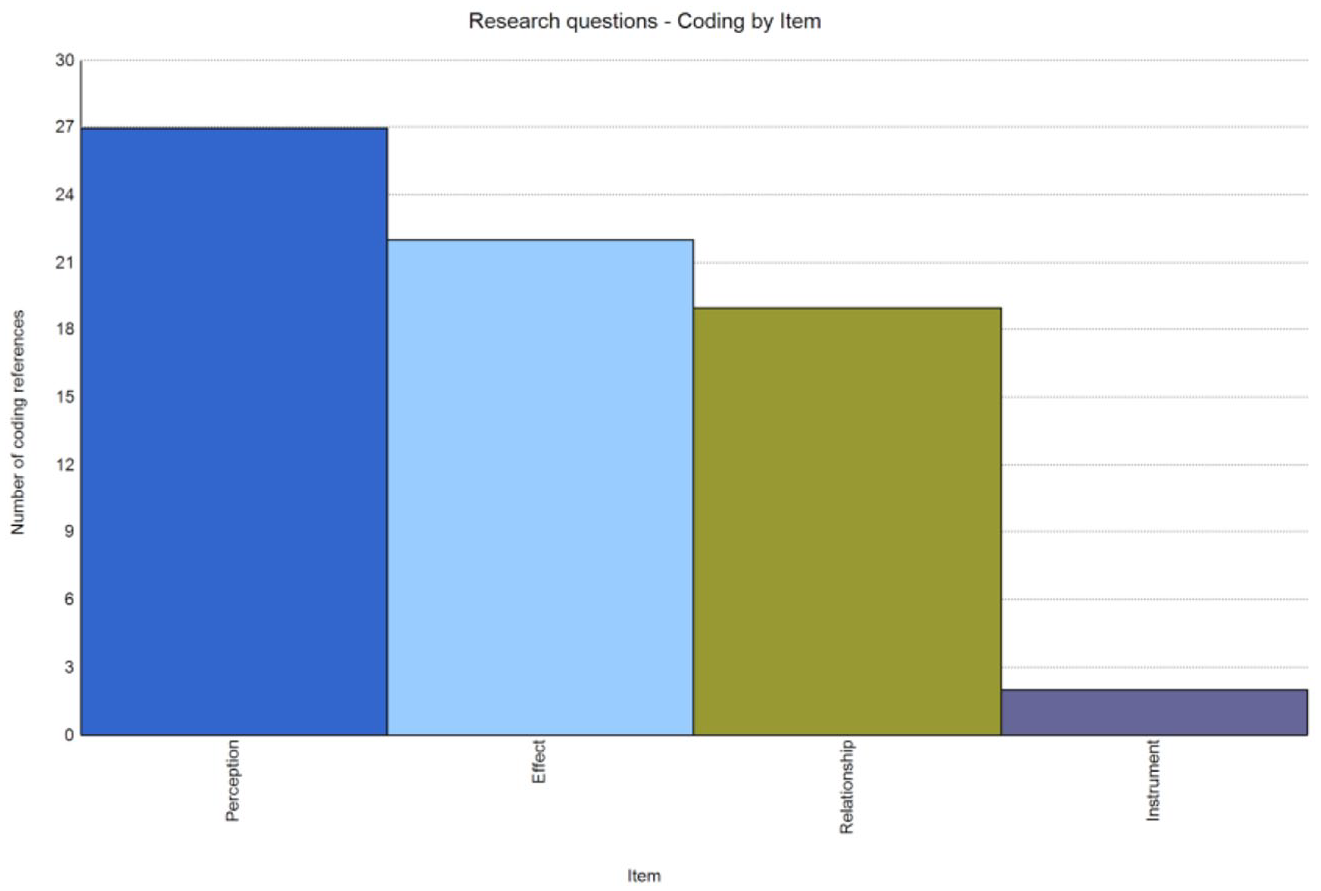
Research questions of the included studies.
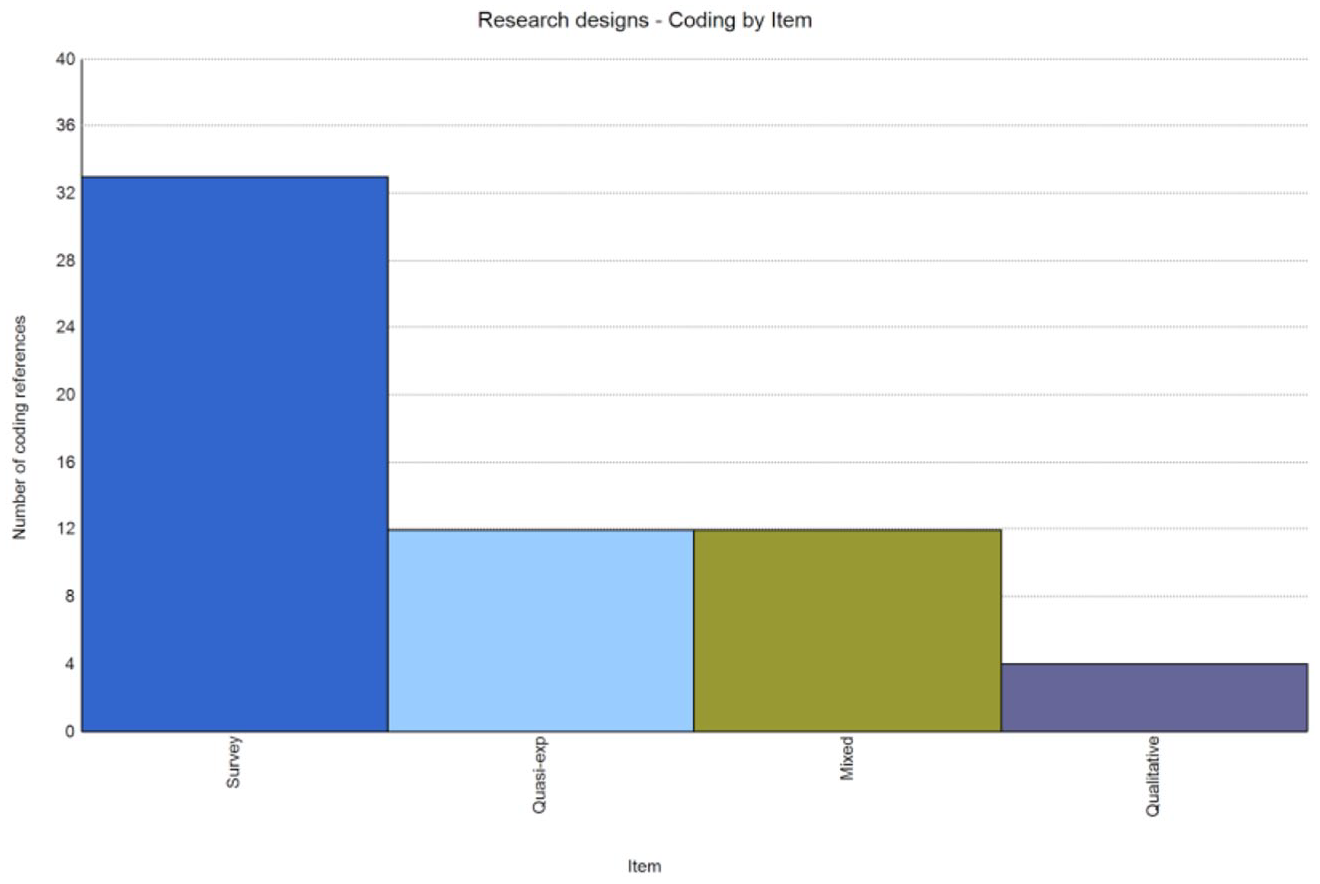
Research designs of included studies.
III Findings
1 How is ELL autonomy conceptualized?
The included studies employed various conceptual and/or theoretical frameworks to inform their research. Conceptual frameworks adopted in these studies include self-regulation (28 studies), learner autonomy (27 studies), other concepts related to learner psychology (19 studies), autonomy-promoting language teaching and learning practices (nine studies), and language learning strategies (six studies). 7 A few of the studies were underpinned by socio-cultural or social constructivist theories (six studies) and second language acquisition hypotheses (one study).
‘Self-regulation’ is the conceptual framework most commonly drawn on (28 studies). In some studies, self-regulation is also referred to as ‘self-regulated learning’ (e.g. Fukuda, 2018), ‘self-regulated learning strategies’ (e.g. Martirossian & Hartoonian, 2015), ‘self-directed learning’ (e.g. Giveh, 2018), ‘independent learning’ (e.g. Cakici, 2017), or ‘out-of-class learning’ (e.g. Wu, 2012). Although the majority of these studies perceive self-regulation as an overarching construct, a few studies discuss the notion more specifically. For instance, self-regulated learning for specific language skills, including speaking (El-Sakka, 2016), writing (Abadikhah et al., 2018; Bai & Guo, 2018), and reading (Kavani & Amjadiparvar, 2018); self-regulated learning development (Barkel, 2018), self-regulated learning readiness (Xuan, Razali & Samad, 2018). Works frequently cited in these studies include those by Barry Zimmerman (27 studies) (e.g. Zimmerman, 1998), Paul Pintrich (21 studies) (e.g. Pintrich & Schunk, 1996), and Dale Schunk (18 studies) (e.g. Schunk, 1996), Philip Candy (8 studies) (e.g. Candy, 1991), D. Randy Garrison (5 studies) (e.g. Garrison, 1997). Specific frameworks referred to include classic models such as self-regulated learning strategies framework by Garcia and Pintrich (1994) (cognitive, metacognitive, and resource management strategies), the social-cognitive model of self-regulation (Zimmerman, 1989), the four-dimensional self-regulated learning model by Candy (1991), the three self-regulated learning phases by Zimmerman (1998) (forethought, performance control, self-reflection), affective-cognitive model of self-regulated learning (Pintrich, 2000), as well as more recent self-regulated learning models such as the ones by Song (2005) and Thornton (2010).
Not surprisingly, adopted by 27 studies, ‘learner autonomy’ is another prominent conceptual framework in this pool of studies. Prominent works which inform the conceptualizations of learner autonomy in these studies include those by Phil Benson (26 studies) (e.g. Benson, 2001), Henri Holec (24 studies) (Holec, 1981), David Little (14 studies) (e.g. Little, 1991), Leslie Dickinson (13 studies) (e.g. Dickinson, 1987), William Littlewood (10 studies) (e.g. Littlewood, 1999), David Nunan (14 studies) (e.g. Nunan, 1996), Leni Dam (8 studies) (e.g. Dam, 2009), and Andrew Littlejohn (2 studies) (e.g. Littlejohn, 1985). Conceptualizations of learner autonomy have undergone considerable transformation. Early works conceptualized autonomy as an ability or capacity. A representative example is Holec’s (1981) definition of learner autonomy as ‘the ability to take charge of one’s own learning’ (p. 3). Later works suggest that such ability or capacity can be translated into demonstrable learning behaviours inside and outside the classroom. For example, Little (1991) incorporates other learning facets as part of learner autonomy including ‘detachment, critical reflection, decision making and an independent action’ (p. 4). Similarly, Nunan’s (1997) learner autonomy model focuses on learners’ actions, including ‘awareness’, ‘involvement’, ‘ intervention’, ‘creation’, and ‘transcendence’ (p. 195). The models by Littlewood (1997) and Benson (2001) further expand and compartmentalize behaviours exhibited by autonomous language learners to include not only the language learning dimension but also second language acquisition and learning strategies.
Additionally, some of these learner autonomy studies are framed based on other psychological constructs, namely motivation (eight studies), self-efficacy (four studies), metacognition (three studies), learner beliefs (two studies), anxiety (one study), and awareness (one study). Conceptual frameworks vis-à-vis ‘motivation’ employed include Dörnyei’s (2005) L2 motivational and self system (e.g. Lu & Berg, 2019), Schunk and Zimmerman’s (2008) motivational regulation strategies (e.g. Teng & Zhang, 2018), Dörnyei and Ryan’s (2015) dynamic motivation (e.g. Bahari, 2018). ‘Self-efficacy’, which is generally defined as one’s belief about one’s own ability in completing an action and achieving a goal (Bandura, 1995), is referred to in four studies, namely Bai and Guo (2018), Mizumoto (2013), Tabrizi and Saeidi (2015), and Wang et al. (2012). Their conceptual frameworks of self-efficacy are underpinned by works by Bandura (1995), Graham (2004), Zimmerman (2000), Schunk and Zimmerman (2007), and Pintrich and Schunk (1996). ‘Metacognition’, or simply put, ‘thinking about thinking’, informs the conceptualization of three studies (Eissa, 2015; Fukuda, 2018; Huei-Ju, 2018). Despite the multiple facets of the notion (e.g. metacognitive knowledge, metacognitive experience, metacognitive strategies), these three studies focus on the dimension of metacognitive strategies, including goal setting (Huei-Ju, 2018), metacognitive reading strategies (Eissa, 2015), and general metacognitive strategies (Fukuda, 2018). ‘Learner beliefs’ is used as a conceptual framework in two studies (Benson & Lor, 1998; Wu, 2012). Benson and Lor (1998), for example, considered learners’ conceptions of language, language learning, learning context, and self while Wu (2012) focused mainly on learners’ beliefs of language learning. ‘Anxiety’ and ‘awareness’ are used in one study each. Martirossian and Hartoonian (2015) discussed language anxiety and more specifically strategies to overcome language anxiety when conceptualizing their study. Xuan et al. (2018) underscored the importance of learners’ awareness of their own language learning process in developing self-regulated learning habits, referring to such works as Sinclair’s (1999).
In addition to the aforementioned constructs related to learner psychology, a number of studies made reference to language education literature, considering autonomy-promoting language teaching and learning practices (nine studies) and language learning strategies (six studies) as conceptual frameworks. Autonomy-promoting language teaching and learning practices introduced as conceptual frameworks in the 10 studies include use of technology (technology-mediated autonomous learning in Liu, Huang and Lu, 2018; mobile language learning in Shadiev, Hwang and Liu, 2018; digital games in Sylvén and Sundqvist, 2012), assessment practices (alternative assessment in Hashemian and Fadaei, 2013; portfolio assessment in Everhard, 2019), community of practice (Yamaguchi, 2011), cooperative learning and learner-centered teaching (Ahmed & Dakhiel, 2019), reflective teaching (Fallah & Abdolrezapour, 2015), and scenario-based learning (Seker, 2016). Six of the included studies are informed by language learning strategies research, focusing on reading skills (Karimi & Dastgoshadeh, 2018; Kavani & Amjadiparvar, 2018), writing skills (Na & Yoon, 2016), vocabulary learning strategies (Mizumoto, 2013), and general learning strategies (Huang, 2010; Xuan et al., 2018).
Only a handful of the included studies are explicitly informed by theories or theoretical frameworks. Among the seven which do, six are informed by constructivist theories, including connectivism (Bedoya, 2014), socio-constructivism (Ahmed & Dakhiel, 2019; Ciekanski, 2007; Wach, 2012; Yamaguchi, 2011), and sociocultural theory (Sylvén & Sundqvist, 2012). One study is informed by second language acquisition hypotheses namely Krashen’s (1982) Input Hypothesis and Long’s (1981) Interaction Hypothesis (Sylvén & Sundqvist, 2012).
2 How is ELL autonomy operationalized?
Operationalization of ELL autonomy refers to the in-class and/or out-of-class activities designed by English teachers to cultivate autonomous learning habits of their students. Interestingly, but perhaps not surprisingly given the controversies related to researching the concept of learner autonomy mentioned previously in this article, the analysis revealed that 61% of the included studies (37 studies) did not report or evaluate any autonomy-promoting interventions while 39% (24 studies) did. In other words, the goal of the majority of the studies was to gauge ELLs’ perceived autonomy through questionnaires and interviews rather than adopting methods such as recording and evaluating evidence-based practices i.e. methods associated with other branches of applied linguistics research. (For more details, see Section III.3.) This section presents a synthesis of autonomy-fostering interventions reported in the 24 studies (Table 2).
A summary of autonomy-promoting interventions for English language learners (ELLs).
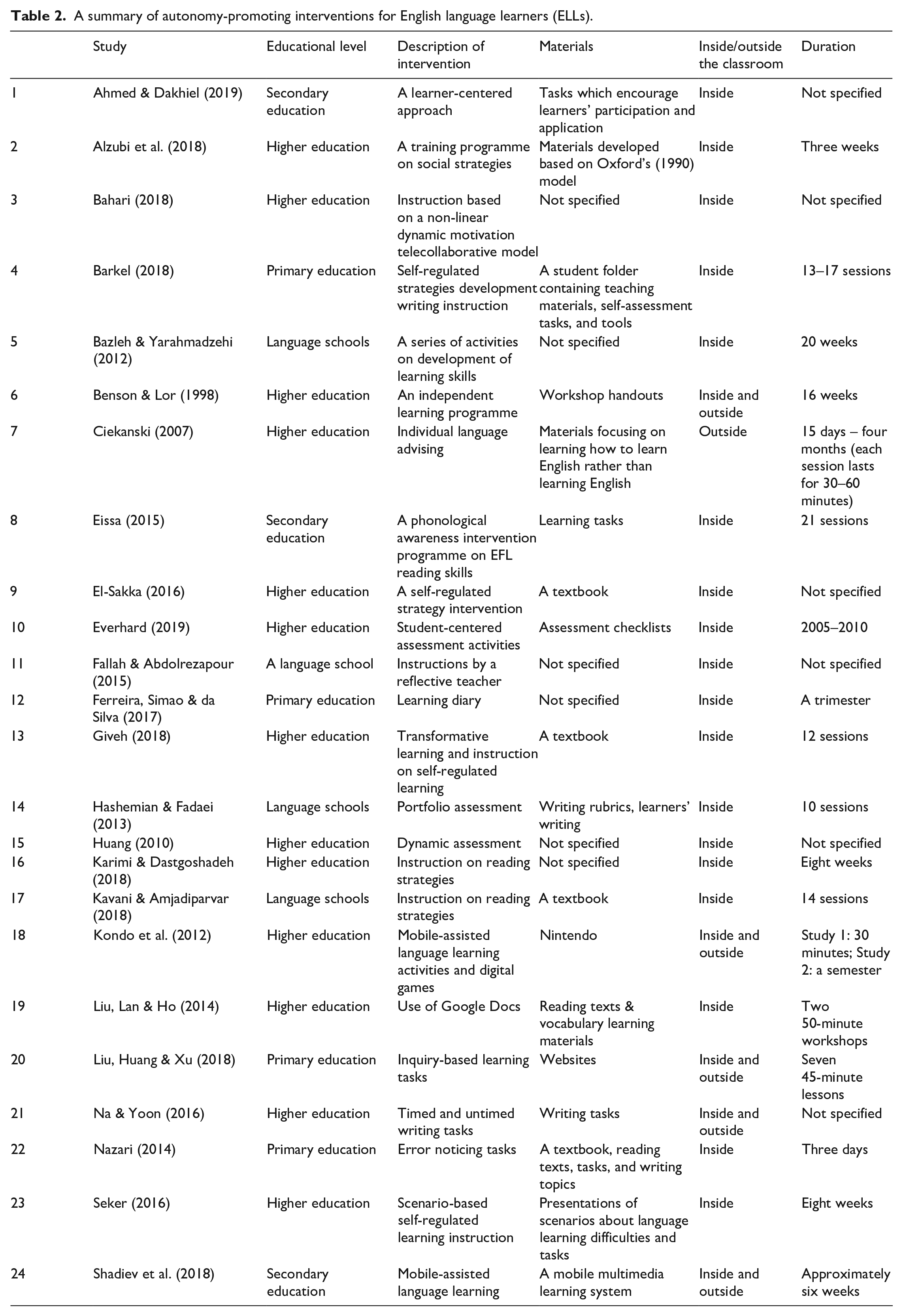
13 interventions took place in universities, four in primary schools, four in language schools, and three in secondary schools. The duration of these interventions ranged widely, from 30 minutes (Kondo et al., 2012) to five years (Everhard, 2019). The interventions included both didactic and experiential approaches, took place in the classroom or outside the classroom; were conducted face-to-face or using technology. Interventions which took place in the classroom were usually more didactic, namely instruction on reading strategies (e.g. Karimi & Dastgoshadeh, 2018), instruction on self-regulated learning (e.g. Giveh, 2018), workshops on independent learning (Benson & Lor, 1998), some of which were based on a set text (e.g. textbooks). Few of these interventions happened outside the classroom; these include language advising (Ciekanski, 2007), self-study using Nintendo (Kondo et al., 2012) and a mobile learning system (Shadiev et al., 2018). It is worth noting that not only teaching and learning activities were featured in these studies but also learner-centered assessment activities, including peer assessment, self-assessment (Barkel, 2018), dynamic assessment (Huang, 2010), and portfolio assessment (Hashemian & Fadaei, 2013). This shows that formative assessment may have the potential to develop autonomy of ELL. Technology-mediated interventions usually involved more active learner participation and/or collaboration using, for instance, digital games (Kondo et al., 2012), cloud-based learning tools (Liu, Lan & Ho, 2014), websites (Liu et al., 2018), or mobile learning systems (Shadiev et al., 2018).
3 How is ELL autonomy evaluated?
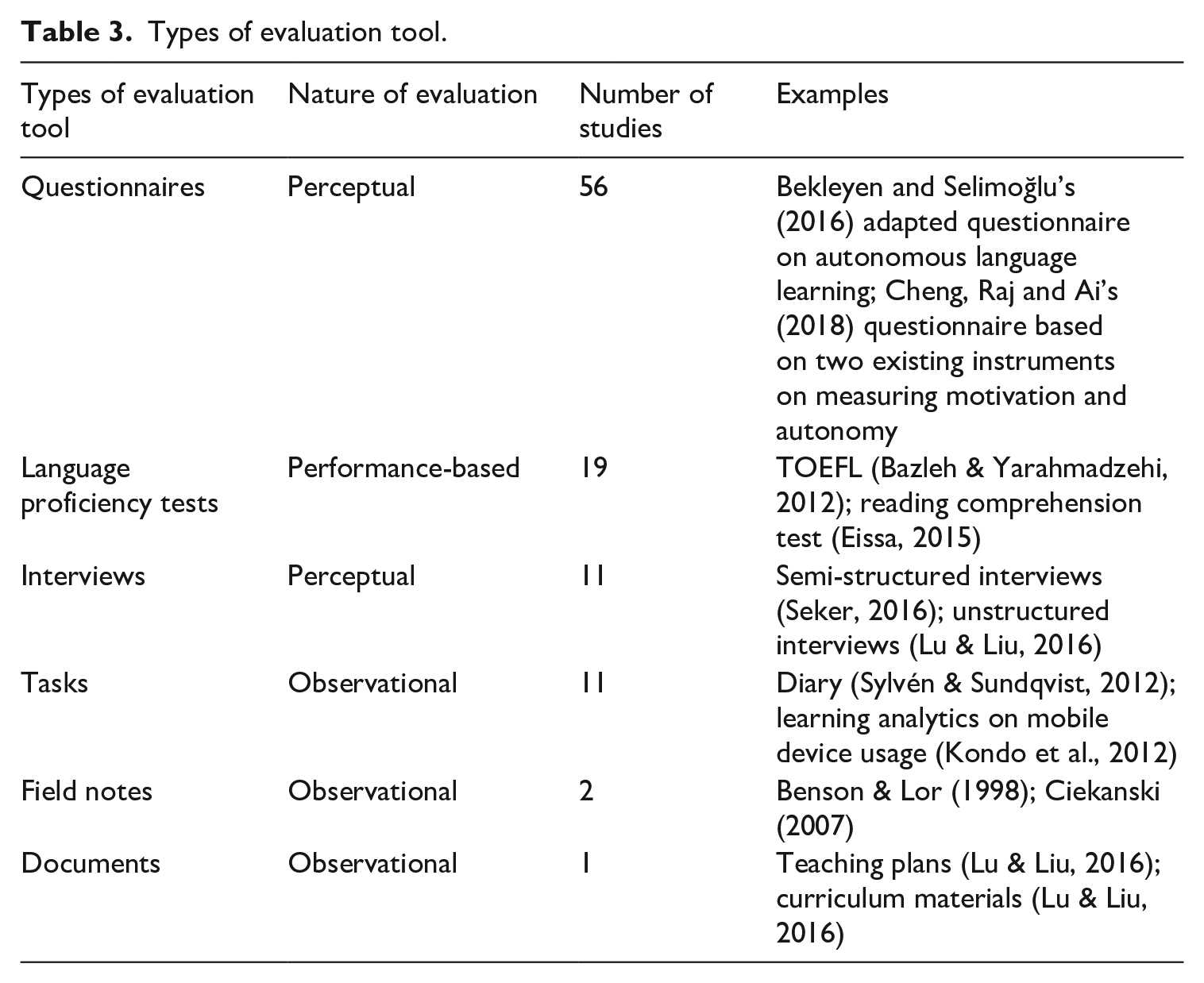
The number of research tools used in each of the 61 studies to evaluate ELL autonomy ranged from one to six, with the majority of the included studies using only one to two (Figure 4). Almost all included studies investigated ELLs’ perceived autonomy using such tools as questionnaires, scales, interviews, and a modest number of the studies examined learners’ language performance, usually in the form of tests conducted before and after an autonomy-enhancing intervention. Evaluation tools which aimed to yield observational data (e.g. field notes) were rarely featured (Figure 5) 8 ; some examples of these tools include transcripts of discussions, learning analytics, curriculum materials, and field notes. Table 3 lists the evaluation tools used in the 61 studies. Figure 8 gives the number of evaluation tools used and Figure 9 indicates the nature of evaluation of ELL autonomy.
Types of evaluation tool.
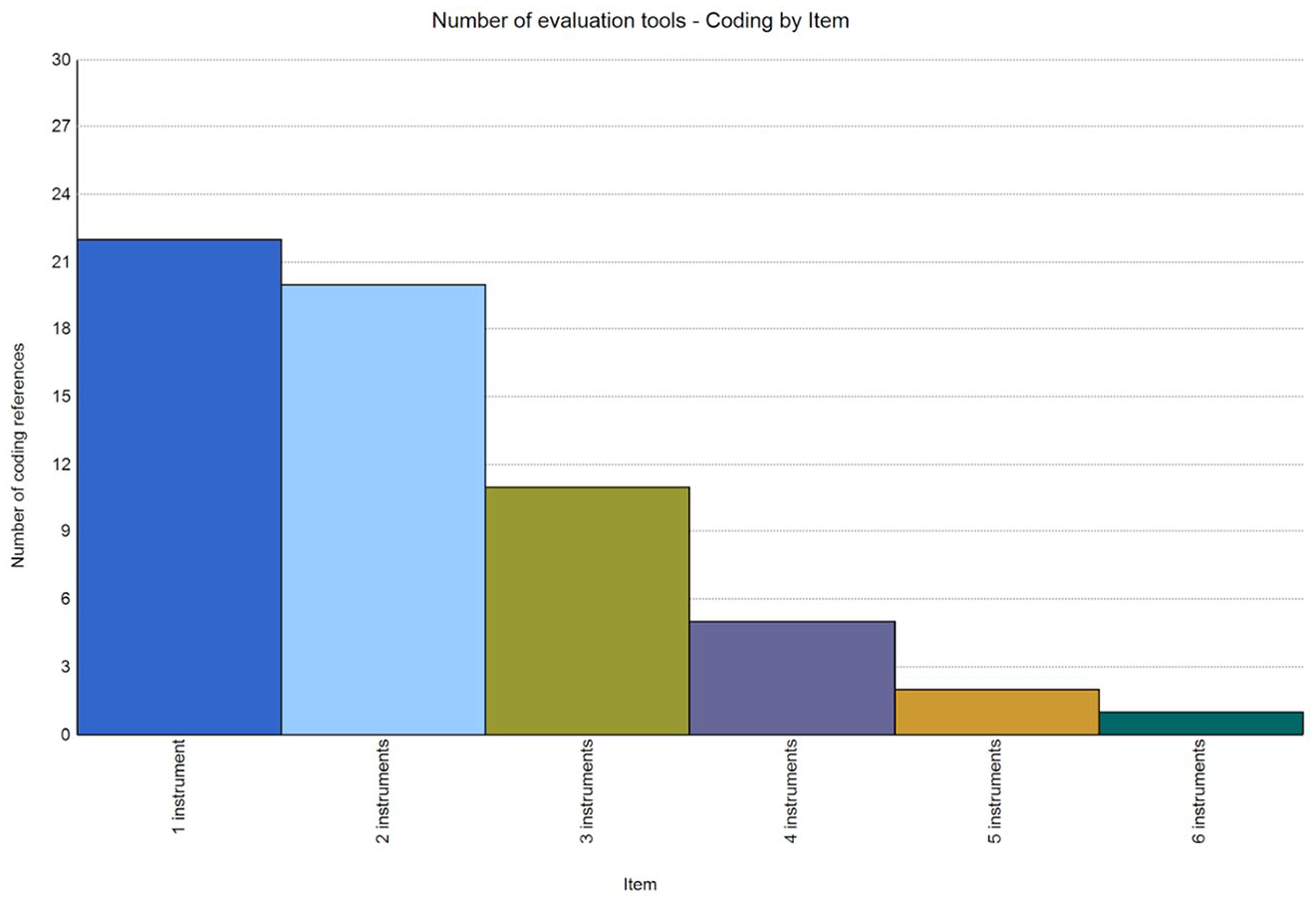
Number of evaluation tools used.
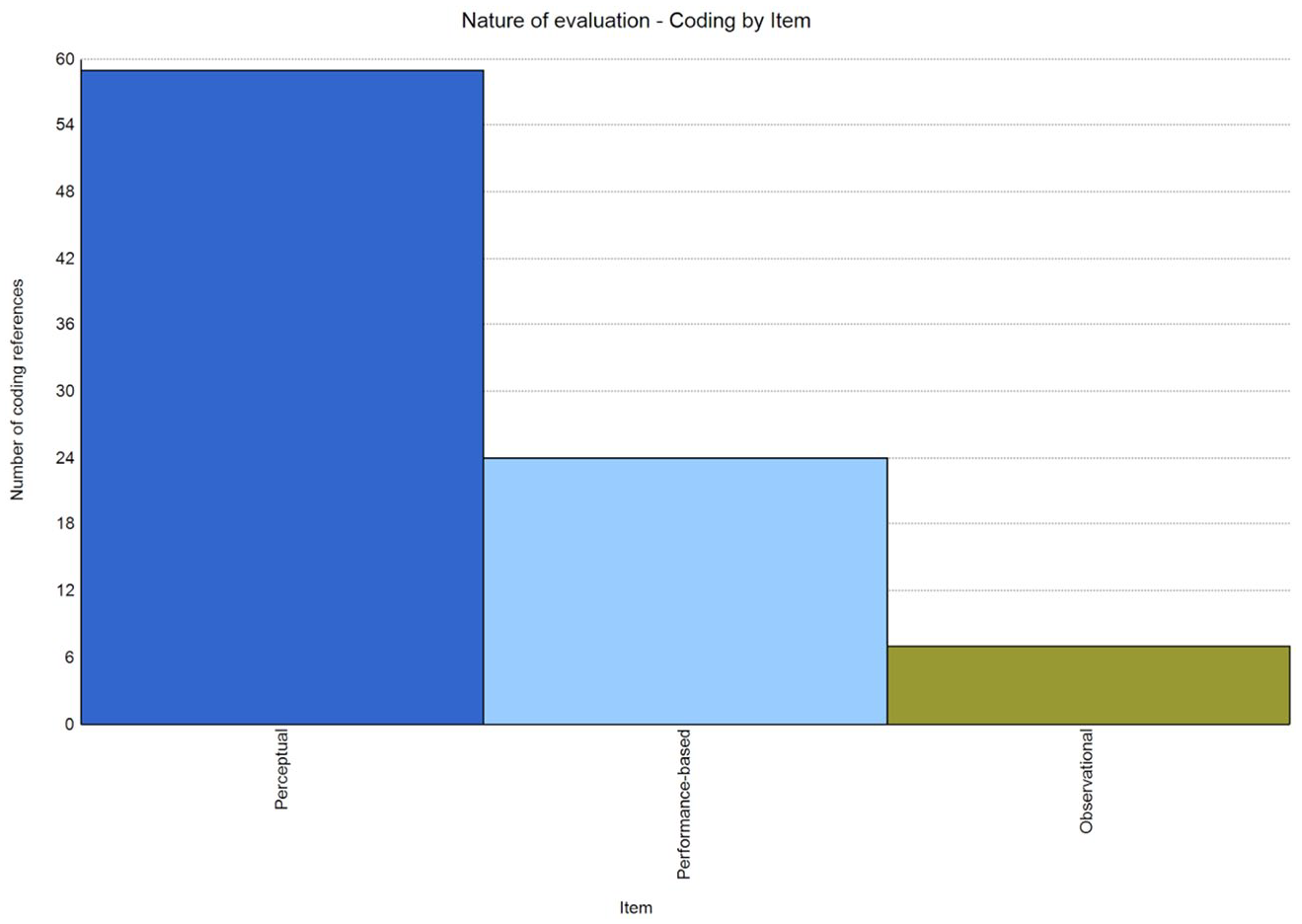
Nature of evaluation of English language learners (ELL) autonomy.
Among the 59 studies which examined ELLs’ perception of their autonomy, only three studies did not employ a questionnaire (Benson & Lor, 1998; Ciekanski, 2007; Yamaguchi, 2011). Three types of questionnaires were used in these studies: existing, adapted, and original.
Existing questionnaires refer to the use of previously developed questionnaires or scales by other researchers without any modification, e.g. Hashemian & Fadaei’s (2013) adoption of Kashefian’s (2002) Learner Autonomy Questionnaire;
Adapted questionnaires are instruments which are developed based on existing ones, e.g. El-Sakka’s (2016) speaking anxiety scale;
Original questionnaires are those specifically developed by the researchers for their study, e.g. Teng & Zhang’s (2016) Writing Strategies for Self-Regulated Learning Questionnaire.
Only 11 of these 59 studies used interviews as a research method to evaluate ELLs’ perceived autonomy (e.g. Arias, 2015; Seker, 2016). Interviews conducted for the studies included (individual) semi-structured interviews (e.g. Seker, 2016) and unstructured interviews (Lu & Liu, 2016). Eight perception-focused studies included both questionnaires and interviews as their research methods to garner both qualitative and quantitative insights (e.g. Lu & Liu, 2016; Na & Yoon, 2016).
For the 25 studies which aimed to evaluate ELLs’ autonomy from the angle of performance, 19 employed at least one language test (e.g. the IELTS speaking test used in El-Sakka, 2016), usually as a pre-test and post-test to determine the effectiveness of an autonomy-enabling intervention, while the remainder used a range of language tasks (e.g. online speaking and vocabulary tasks in Ferreira et al., 2017). These studies worked on the assumption that a higher degree of autonomy will lead to improved language proficiency. Unlike questionnaires, interviews, and tests, tasks appeared to be a versatile autonomy evaluation tool. As shown in the above, language tasks could be used to measure ELLs’ language proficiency before and after an intervention; tasks were also used to provide observational data to shed light on what happened during the autonomy-enhancing intervention (e.g. project reports written by learners at the end of an independent learning programme in Benson and Lor,1998). Alternatively, a task such as completing a self-report could be used to tap into learners’ perceptions regarding autonomous language learning (e.g. Bahari, 2018).
IV Discussion
Below we review the key findings and offer a number of tentative conclusions and implications. Regarding conceptualization of learner autonomy, there seems to be a lack of agreement about what learner autonomy is (as exemplified by the body of frequently cited works) and the large number of conceptual frameworks used in learner autonomy studies. This is likely due to its multifaceted nature with seminal publications (Little, 1995) recognizing a psychological, a political and a social component, and its intricate relationship with other key constructs in language learning, such as motivation (Spratt, Humphreys & Chan, 2002). However, beyond broad and brief reference, many studies are not explicit about their theoretical underpinnings.
Another observation is the continuing emphasis on classroom-based studies which are exemplified by the number of included studies reporting interventions implemented in the classroom. In Table 2, among the 24 publications which describe pedagogical interventions, 18 report autonomy-promoting activities which took place inside the classroom; five reported activities which take place both inside and outside the classroom; only one reported an intervention which requires learners to complete outside the classroom (one-on-one language advising, Ciekanski, 2007). Clearly a key driver in autonomy research is to investigate how teachers and/or the educational context can help learners to develop autonomy. With the increased interest in the field of ‘learning beyond the classroom’ (Reinders, Lai & Sundqvist, 2022) this is somewhat surprising. The vast majority of the studies reported here used teacher-fronted instructional approaches without exploring how learners craft and experience their own journeys. Related to this issue is the limited duration of most studies. The development of autonomy involves deep, even fundamental, changes in learners’ beliefs, identity, and affective realities in learning. These do not happen overnight and they do not manifest themselves only in a limited range of contexts, such as the classroom.
Concerning the issues around evaluating autonomy, the range of methods employed is limited to a single questionnaire or language tests being the most common and the use of a single or two instruments only. Given the wide adoption of mixed-methods research (Riazi & Candlin, 2014) and the prominence of qualitative research methods in closely-related fields (such as learners’ beliefs), this is surprising - as is the virtual absence of observations. Combined with self-reports, either using questionnaires or journals, these could yield rich data on changes in learners’ attitudes and behaviours. Additionally, less than half of the included studies included an intervention, demonstrating there is a lopsided focus in the literature to focus on measuring perceived autonomy rather than developing evidence-based interventions to promote learner autonomy.
V Conclusions and implications
The above discussion leads to a number of conclusions and recommendations. The first is that despite researchers’ willingness to adopt a plethora of conceptual frameworks, there appears to be a hesitation to make explicit the theoretical framework of their studies. This is regrettable. Unless there is both conceptual clarity and an attempt to build on, improve on and develop new theories, it is difficult for the field to move forward and to subsequently make connections to other disciplines.
Another challenge to existing research is its continued focus on the classroom. Although the classroom, obviously, has an important role to play in fostering learner autonomy, we hope future studies will more extensively investigate learners’ experiences beyond the classroom so as to better capture both the lifelong and lifewide nature of autonomous learning.
There are a number of limitations in this research synthesis to acknowledge. The first of these is the possibility that we may have missed papers because of our scope limited by our research questions and inclusion criteria. For instance, we focus on primary studies on learner autonomy which were conducted according to methodological guidelines of TESOL Quarterly to ensure the methodological rigour of the included studies. The second is that we limited ourselves to studies on English language learning. The rationale for this was pragmatic; the vast majority of papers in learner autonomy are on English learning and of those that are not, a number are published in other languages, which would have complicated the analysis. Lastly, data in this scoping review were synthesized using an inductive coding method. Like all qualitative research, coding of qualitative data involves a certain degree of interpretation which reflects researchers’ experiences, viewpoints, and sometimes bias. We acknowledge that it is unrealistic to attempt to remove subjectiveness in qualitative data analysis; however, we endeavoured to minimize bias, for example, by involving multiple researchers in the analysis process. Subjectivity in qualitative data analysis may be especially evident in topics on which there is a less consensual view, namely learner autonomy. For example, in this review, we adopted a more inclusive definition of ‘language learner autonomy’ to include associated constructs such as self-regulated learning, motivation, which may not be shared by all autonomy researchers. Nonetheless, we hope that our synthesis will prove a useful starting point, giving a clearer picture of where the field of learner autonomy has come, and where it might head to next. Future synthetic attempts can summarize not only primary studies but also more broadly conceptual and theoretical pieces on autonomy of learners of different foreign languages. Since learner autonomy is a vibrant field of research, an updated review based on our attempt is also useful, for instance, by using the open data we share in Appendices 2 and 3 in supplemental material.
Supplemental Material
sj-docx-1-ltr-10.1177_13621688221075812 – Supplemental material for Autonomy of English language learners: A scoping review of research and practice
Supplemental material, sj-docx-1-ltr-10.1177_13621688221075812 for Autonomy of English language learners: A scoping review of research and practice by Sin Wang Chong and Hayo Reinders in Language Teaching Research
Supplemental Material
sj-docx-2-ltr-10.1177_13621688221075812 – Supplemental material for Autonomy of English language learners: A scoping review of research and practice
Supplemental material, sj-docx-2-ltr-10.1177_13621688221075812 for Autonomy of English language learners: A scoping review of research and practice by Sin Wang Chong and Hayo Reinders in Language Teaching Research
Supplemental Material
sj-docx-3-ltr-10.1177_13621688221075812 – Supplemental material for Autonomy of English language learners: A scoping review of research and practice
Supplemental material, sj-docx-3-ltr-10.1177_13621688221075812 for Autonomy of English language learners: A scoping review of research and practice by Sin Wang Chong and Hayo Reinders in Language Teaching Research
Footnotes
Acknowledgements
We would like to thank Prof. Jo Mynard, Kanda University of International Studies, Japan, for her valuable comments on earlier versions of this review. We would like to thank the editor and the peer reviewers for devoting their valuable time to give feedback on earlier versions of this manuscript.
Funding
The author(s) received no financial support for the research, authorship, and/or publication of this article.

Supplemental material
Supplemental material for this article is available online.
Notes
References
Supplementary Material
Please find the following supplemental material available below.
For Open Access articles published under a Creative Commons License, all supplemental material carries the same license as the article it is associated with.
For non-Open Access articles published, all supplemental material carries a non-exclusive license, and permission requests for re-use of supplemental material or any part of supplemental material shall be sent directly to the copyright owner as specified in the copyright notice associated with the article.
