




Abstract
Groupwork has become ubiquitous in language education, with the clear benefits of interaction and output on language acquisition. A body of research has investigated this interaction in pairs and small groups, and there is an increased understanding that individual group context is a key factor in determining the behavior of students. This article reports on a study that first investigated emergent leadership within groups, and the influence of the group on leader stability. The study then examined how leadership is represented in student task engagement. Students were placed into fixed small groups for the first semester, and then allowed to self-select into groups for the second semester. Perceptions of leadership were measured three times in each semester, and leaders were identified in each group. Results showed that changing group membership had a considerable impact on leadership stability, and student interaction was then analysed to determine how leadership influenced engagement with tasks. Students with high leadership displayed high engagement with tasks, and took a central role in driving the conversation. When a student chose to reject the role of leader there was a dramatic impact on their engagement in conversation. The stability of leadership and its impact on performance has practical implications both for researchers and teachers.
Keywords
I Introduction
Teachers use small groupwork regularly in the language classroom, but most teachers are aware that not all groups work in the same way. One group may be cooperative with all members equally engaged in the task, while another group may have a single member who takes charge while others take a more passive role. Small groups provide students with opportunities to interact and use the target language, and many increasingly popular approaches to teaching such as Task Based Language Teaching (TBLT) (Willis & Willis, 2007) and cooperative learning (McCafferty, Jacobs & DaSilva Iddings, 2006) emphasize the key role of groups in the classroom. Project based learning is also a common approach that has students working in small groups for sustained periods of time (Mills, 2009). Teachers often deliberately construct groups to achieve a balance of personalities and proficiency levels, but does a change of group membership alter the roles that students adopt? How does this impact student engagement with tasks? Texts used to train new teachers recommend the use of groupwork and the deliberate construction of groups based on personality or other individual difference (ID) variables (Brown & Lee, 2015), but the issue of students as leaders within groups is not discussed. Although research has investigated students’ preferences regarding group formation and longevity (Leeming, 2014), and emergent leadership in small groups (Leeming, 2019), this article is the first in the field of second language acquisition (SLA) to consider the stability of emergent leadership. Does a single student emerge as unofficial (emergent) leader and remain as leader for the duration of the group, or do emergent leaders change depending on the task or group members? This article aims to provide answers to the questions above, and offer support for language teachers struggling with practical decisions regarding group assignment and formation.
1 Groupwork, interaction and language learning
Groupwork is increasingly popular in general education, offering students opportunities for collaboration and the chance to learn from more capable peers. In the language classroom, groupwork has even greater importance as it provides opportunities for interaction and output, two essential elements for successful language learning (Long, 1996; Swain, 2005). Groupwork is also important from a sociocultural perspective, where learning originates in interaction and from peer assistance in the zone of proximal development (Lantolf, 2006; Toth & Davin, 2016). There is now a large body of empirical evidence that supports the claim that interaction is necessary for successful language acquisition (Ellis & Shintani, 2014), supporting the use of groups in the language classroom.
Research within the interaction paradigm has considered how IDs can influence interaction in pairs and small groups (Philp, Adams, & Iwashita, 2013). Watanabe and Swain (2007) found that more proficient student tend to dominate task interactions. Sato and Viveros (2016) examined collaborative interactions within small groups, and also showed that proficiency was an important ID, but that social factors determined the way in which students approached the task. Choi and Iwashita (2016) considered two low proficiency learners interacting with three different groups: a high-proficiency dominant, a low-proficiency dominant, and a low-proficiency group. Results again suggested that proficiency was important, although interviews with students highlighted the role of group atmosphere, which students claimed influenced their contribution to discussions. Cao and Philp (2005) also showed that group members influenced individual students’ Willingness to Communicate (WTC) in groups. Extraversion is an ID that would logically seem to predict levels of interaction, but it is a construct that has been generally neglected within SLA (Dewaele & Furnham, 1999), and particularly within interaction studies. Although research is limited, Dewaele and Furnham (2000) found that extraverted students generally were more fluent, allowing them to potentially dominate interactions.
Alongside ID variables, the importance of the relationships between students has also been considered. Storch (Storch, 2002; Storch & Aldosari, 2013) studied how the proficiency of students interacted with a dominant/passive approach to interaction. Storch and Aldosari (2013) concluded that teachers should pair student based not only on the nature of the task, but also on the relationship that they would be likely to form, as this would influence the interaction. Dörnyei and Kormos (2000) investigated task-based interaction and considered the cohesiveness of the group and the relationship between group members. They found that the social status of the interlocutor influenced use of second language (L2), and concluded that the other members of a group may have a direct influence on individual performance.
Sato and Ballinger (2016) presented a collection of empirical studies investigating interaction in their book, Peer interaction and second language learning, and many of these studies highlighted the importance of group members (Choi & Iwashita, 2016; Sato & Viveros, 2016). In a prologue to Sato and Ballinger’s book, Philp (2016) stressed the need for more research considering the social aspects of interaction, and for researchers to adopt concepts from other fields and apply them to understanding second language acquisition. Philp, Adams, and Iwashita (2013) admitted that our understanding of the social element of interaction was limited, with very little research considering group dynamics and its influence on interaction (Philp et al., 2013, p. 100). A greater understanding of interaction in groups can help to inform language teachers using tasks in the classroom.
2 Emergent leadership in groups
In the field of group dynamics, leadership has been a central theme for over 100 years (Forsyth, 2000). Emergent leadership is when, although a group has no official or assigned leader, a single member becomes the leader, controlling norms for the group (Forsyth, 2010). Emergent leaders are not sanctioned to administer rewards or punishment, but nevertheless take control, and heavily influence the behavior of members (Forsyth, 2010). Research in general psychology has shown the importance of leaders in the outcomes for the group (Bass, 1997; Chemers, 2001; Hogan & Kaiser, 2005). Leaders facilitate the development of intra-group relationships, and also dictate group norms, thus influencing individual behavior (Forsyth, 2010). Tagger, Hackew, and Saha (1999) found that groups with high levels of emergent leadership performed better on problem solving tasks. Hogan and Kaiser (2005) conducted a review of available research on leadership and claimed that it was of importance to group performance, influencing the group dynamic. Research has also shown that leaders tend to be highly engaged in group discussion, and their greater rates of participation lead to greater influence over the group (Jones & Kelly, 2007).
Most teachers are aware of emergent leadership in classrooms, where students are randomly assigned to groups, and yet a single member takes the role of leader. Although Dörnyei has emphasized the importance of emergent leaders within groups (Dörnyei & Murphey, 2003; Ehrman & Dörnyei, 1998), very little is known as to how leadership behavior manifests itself in the language classroom, and how students modify their behavior depending on their role within a specific group. Ehrman and Dörnyei (1998) were the first to explicitly discuss emergent leaders in language learning. Citing interviews with students, they claimed that emergent leadership was as important as officially assigned leadership in determining the success of groups. Dörnyei and Murphey (2003, p. 113) stated that students emerge as leaders in most groups, and that they are central to the optimal functioning of a group, playing a key role in the success of groups.
With the exception of Leeming (2019), who showed that levels of emergent leadership predicted engagement with tasks, no studies in SLA have set out to focus on emergent leadership, although it has proven to be a factor in understanding interaction in several studies. Yashima, Ikeda, and Nakahira (2016) investigated silence in group discussions, and found that student leaders played a large role in determining the success of the interaction. Focusing on whole class discussion with 21 students forming a single group, their study showed that a single member emerged as leader. In the discussions, Masa, who was identified as the emergent leader, typically gave his opinions on the topic, and then encouraged participation from other members, and when he failed to take an active role, there were long and awkward silences and a lack of conversation by the group. Interestingly, Masa was absent from one of the discussion tasks, and in his absence, Taki took on a leadership role, and other students talked more to compensate, leading to the highest percentage of student talk time for any of the sessions. The researchers highlighted the importance of emergent leadership in the successful interactions of the group. It was also noted that some students showed very limited participation, and this can be described as social loafing, where a member takes a passive role and relies on others in the group to perform the task (Forsyth, 2010).
Tuan and Storch (2007) investigated pre-task planning in groups and its impact on subsequent performance, and again leadership emerged as a factor in the success of the interaction within groups. Students planned together for 20 minutes, and in four of the five groups a leader emerged. Tuan and Storch (2007) claimed that by asking questions and encouraging other members to contribute to the discussion, these leaders were instrumental in moving the task along, and the single group that did not have an emergent leader did not perform well. While seeming to be a factor, English proficiency alone did not determine who adopted the leadership role. The study was cross-sectional, and although the leaders seemed to maintain their role for the duration of the planning time, it is not known whether they assumed leadership roles in subsequent interactions. All of these studies suggest that emergent leaders are important, and yet there is a lack of empirical research investigating emergent leadership in the language classroom.
3 Stability of leadership
While the above studies highlight the role that emergent leaders play in the success of a group, if teachers are to make informed decisions about group construction while considering the influence of emergent leaders within individual groups, then it becomes important to determine the stability of leadership. If leadership is momentary and task dependent, then differences in individual leaders or even the momentary absence of a leader will have a limited impact on learning, but if leadership is stable and remains for the duration of an entire project, then differences in leaders behavior and style could have a significant influence on the group. Researchers and teacher trainers can only give advice if the stability of leadership in groups is understood. Ehrman and Dörnyei (1998, p.177) claim that ‘assumption of leadership by an emergent leader can be as fleeting as initiation of a topic for discussion or as extended as regular assumption of the role of social leader in a classroom.’ However, they do not give any empirical evidence to substantiate this claim. Other prominent researchers within SLA research also suggest that emergent leaders can be controlled by giving them minor roles within the group, such as the designated time keeper (McCafferty, Jacobs, & DaSilva Iddings, 2006; Willis & Willis, 2007). The rationale is that assigning leaders minor roles will help to reduce their dominance in the group.
In general psychology the majority of studies investigating emergent leadership are cross-sectional. Students are generally placed into small groups for a limited time to complete a task, and then asked to rate other group members’ behavior for leadership. One exception is a study by Pescosolido (2001) who used a longitudinal research design to investigate a group of 120 MBA students from an American university working together in groups of five on a semester-long project. No formal roles were assigned to group members. The participants were observed twice over the course of the semester, and following observation, the students completed a questionnaire where they selected a member of the group as the leader. Pescosolido (2001) found that the emergent leader remained the same for the entire study. Zaccaro et al. (1991) conducted a study to determine the stability of leadership when group context was changed. Students (n=108) completed four different tasks, each time with completely new group members, and perceptions of leadership were measured. They found a significant relationship for emergent leadership between different tasks and claimed that there was stable variance in leadership emergence, giving a leader stability coefficient of .59 across different contexts. It is unknown if this result applies to groups in the language classroom, and also the way in which emergent leadership may influence engagement in language learning tasks.
4 Group membership and engagement
Engagement is increasingly acknowledged as one of the most important factors when students are completing tasks in the language classroom (Dörnyei, 2019; Ellis, 2018; Sang & Hiver, 2020). Without engagement in language learning and language use activities, students are unlikely to be successful in acquiring another language (Sang & Hiver, 2020). Philp and Duchesne (2016) describe four different dimensions of engagement as cognitive engagement, behavioral engagement, social engagement, and emotional engagement. Cognitive engagement, which they describe as mental effort, can be measured through students asking questions during interaction, as this demonstrates cognitive engagement with peers responses. Behavioral engagement can be considered as time on task and measured through simple word counts or the number of turns taken during interaction. Social engagement is the degree to which students are willing to participate in the conversation, and is shown through mutuality, and backchannelling during conversation. Emotional engagement describes the subjective impressions that students experience during tasks, and is generally measured through post-task questionnaires or stimulated recall (Lambert, Philp, & Nakamura, 2017).
Dörnyei and Kormos (2000) measured behavioral engagement by counting the number of words student used during interaction. Lambert et al. (2017) used a battery of measures to capture student engagement during tasks, including time on task to measure behavioral engagement, number of elaborative clauses to measure cognitive engagement, and backchannels to measure social engagement. They found that student generated content increased engagement in tasks in comparison with tasks where the content was decided by the teacher. Aubrey, King and Almkiled (in press) used post-task questionnaires and self-reports to measure the emotional engagement of students during tasks. They found that group dynamics influenced students emotional engagement with tasks.
Researchers have discussed and agreed on the importance of emergent leaders in groups (Dörnyei & Murphey, 2003; Ehrman & Dörnyei, 1998), and a limited body of empirical research has shown the impact that these leaders can have on the performance of the group (Leeming, 2019; Yashima et al., 2016; Tuan & Storch, 2007). However, the extent to which leadership influences task engagement is not understood, despite being of primary concern for language teachers. There is also limited understanding of how emergent leadership works in practice. The stability of emergent leadership within a fixed groups is unknown, and also how change in group context may affect leadership. These are important considerations for teachers wishing to employ groupwork in the classroom.
II The current study
The current article attempted to answer the following research questions:
How stable is emergent leadership within the same group?
How stable is emergent leadership when group membership changes?
How do changes in group membership influence the behavioral, cognitive, and social engagement of individual students in leadership roles?
III Method
1 Participants
The current study was conducted over one academic year during a compulsory oral English course in the science department of a private university in western Japan (n = 81, 58 male, 23 female). The data comes from three separate classes grouped by major within the department, rather than English proficiency. English is compulsory in junior and senior high school in Japan, and therefore all students had a minimum of six years of formal study, and although there was a range of proficiencies within each class (TOEIC mean = 390, Standard deviation = 119), most students were CEFR A2 to B1. All the students were native-speakers of Japanese, and there were fourteen 90-minute classes in both semesters. In the first week of Semester 1, students were randomly assigned to groups of three or four people (20 groups in total), and these groups were fixed for the semester. In the first week of the second semester, the students were allowed to self-select into groups (20 groups in total), and again these groups were fixed for the semester. An open-ended questionnaire was administered to students asking reasons for group selection in the second semester, and the overwhelming response was that they had selected friends.
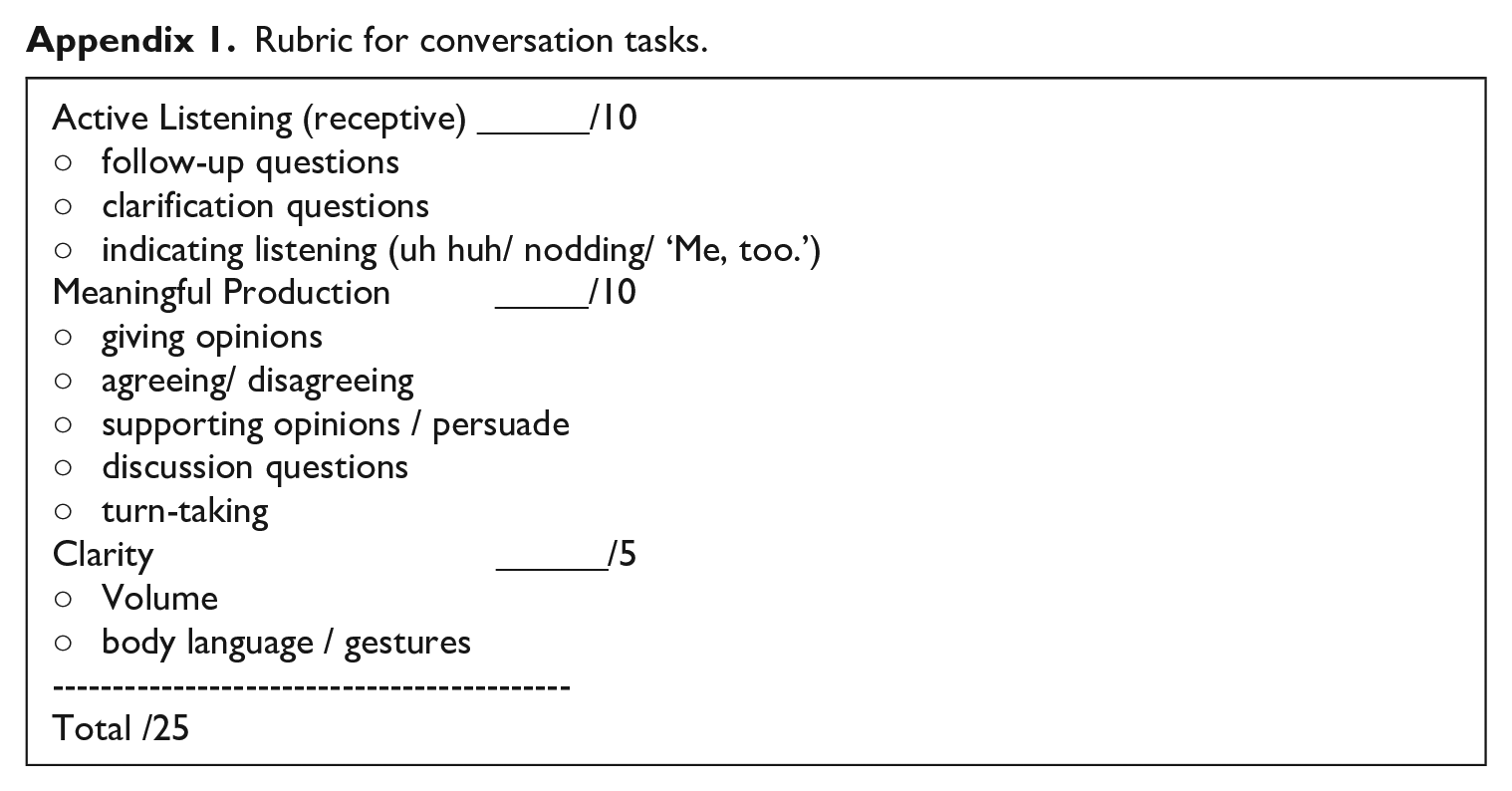
Japanese formal education often provides little opportunity for productive use of language, with a focus on preparation for university entrance exams, and therefore a task-based language teaching approach was adopted for classes (Willis & Willis, 2007), with a strong emphasis on providing students with interaction, discussing simple topics and their own experiences. Students were assessed based on weekly in-class performance, and also on two group discussion tasks at the middle and end of semester. These discussion tasks were 10 minutes in duration, and accounted for 40% of the final grade for the course. The rubric for the conversation tasks (see Appendix 1) was explained to students. The grade depended more on active participation in the conversation, than on English speaking proficiency, with points awarded for asking questions and active engagement in the conversation, which was practiced during regular classes. The topics for the four discussion tasks can be seen in Appendix 2.
2 Instruments and materials
The first research question will be answered by monitoring changes in perceptions of leadership for students in randomly assigned fixed groups over the first semester of an academic year. The second research question will be answered by comparing this to perceptions of leadership in the second semester where fixed groups are formed through self-selection. Individual groups will also be examined for a more detailed picture of factors that may influence emergent leadership. Following this, a detailed analysis will be conducted of three individual students, representing change from leader to follower, follower to leader, and a student who remained leader throughout the academic year. The third research question will be answered by examining the engagement in discussion tasks for the first and second semesters focusing on these specific students.
The data for this study were collected as part of a larger study investigating emergent leadership in the language classroom. It was felt that the observation and interview data would allow for triangulation of the quantitative data. Proficiency and extraversion data are included to help in understanding the characteristics of the groups, as these are both variables that could be hypothesized to influence the emergence of leaders within groups (Forsyth, 2010), and also the interaction.
a General Leadership Impression (GLI)
In order to answer Research Questions 1 and 2, it was necessary to measure perceived leadership in groups, and therefore the sociometric questionnaire, the General Leadership Impression (GLI) was used. Originally developed by Cronshaw and Lord (1987), it has been used widely in research into emergent leadership in general psychology. The measure was adapted for the current study and translated into Japanese. The questionnaire was administered three times during each semester (for administration schedule, see Table 1; for the English version of the questionnaire, see Appendix 3).
Timetable for Semester 1.
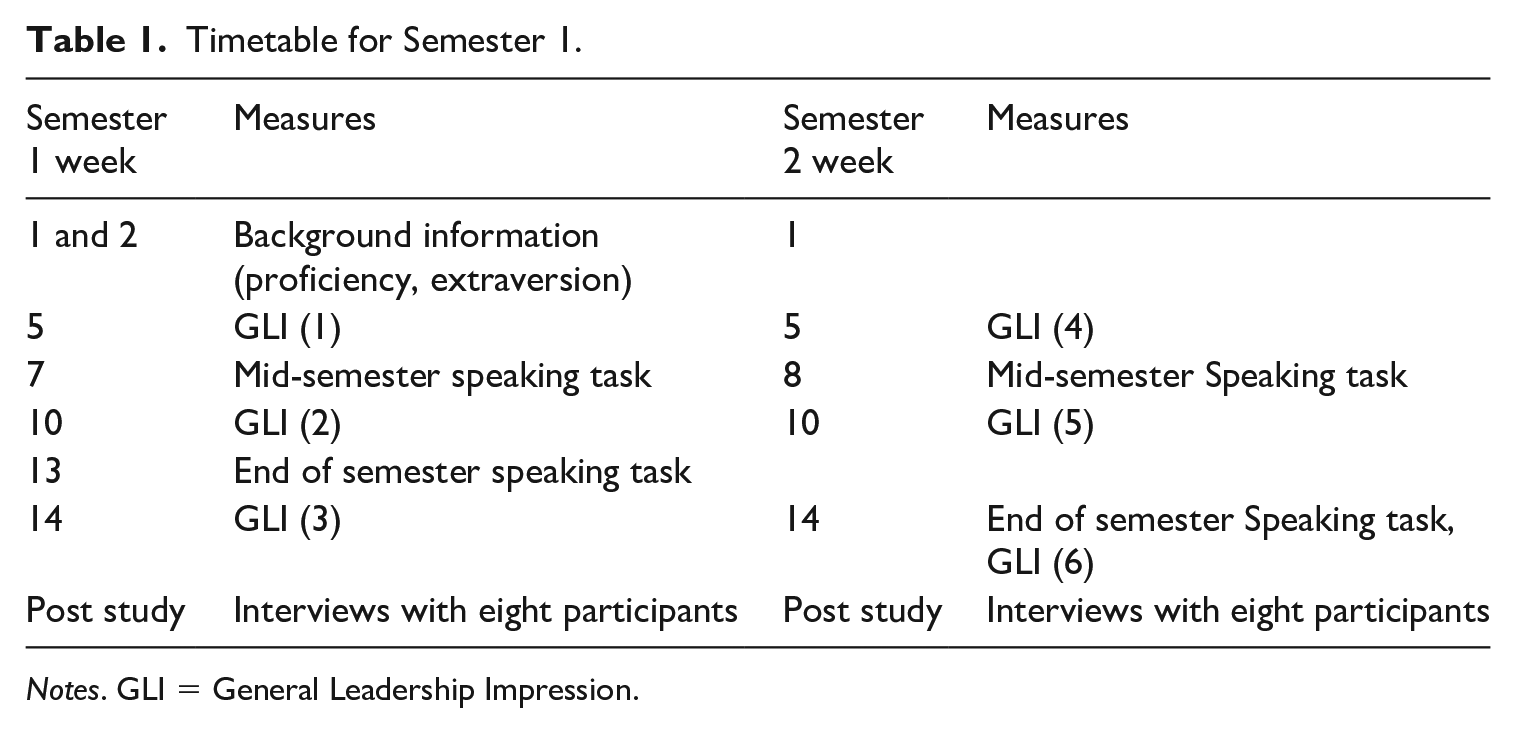
Notes. GLI = General Leadership Impression.
As there was intra- and not inter-group rating of leadership, usual methods to allow comparison of GLI scores, such as the round-robin design (Kenny et al., 2002), could not be used. To overcome this, three teachers were trained and then video recorded engaging in a ten-minute conversation, with one adopting the role of strong leader, one moderate, and one displaying no leadership. All students rated the three teachers using the GLI scale, providing an overlap in ratings, and FACETS analysis (Linacre, 2011) was used to provide comparable scores for ratings of leadership between groups. FACETS analysis, based on the Rasch Model (Bond & Fox, 2007), provides a means of accounting for differences in rater-severity, as long as raters are internally consistent, and also converts ratings to a logit scale ranging from negative to positive [see Linacre (2011) for a comprehensive description of FACETS analysis]. Logit scores from the FACETS analysis are used in this study. Item reliability for the 6 administrations of the GLI was strong, with values ranging from .97 to .99.
b Proficiency
Proficiency was considered to be a potential factor influencing emergent leadership and leadership stability considered in Research Questions 1 and 2. It has also been shown to influence engagement with tasks (Lambert et al., 2017) as considered in Research Question 3. Therefore, proficiency data was collected for all students. An in-house dictation test was used as a measure of language proficiency. Research has shown that dictation test scores correlate highly with established measures of proficiency (Cai, 2012; Oller & Streiff, 1975), and a dictation test was constructed following established guidelines (Leeming & Wong, 2016), and at an appropriate level for the students in the current study. Rasch analysis was used to check the validity of the measure, and data are presented in logit scores. [Due to space limitations, a full description of the Rasch model is not presented, but interested readers are directed to Bond and Fox (2007).] The Rasch item reliability (analogous to Cronbach’s Alpha) for the dictation test was .88.
c Extraversion
Extraversion was also reasoned to aid in understanding leadership emergence and stability, as it can be a potential factor influencing emergent leadership and also engagement with tasks (Dewaele & Furnham, 2000). Extraversion was measured using the extraversion dimension of the IPIP questionnaire (Gow, Whiteman, Pattie, & Deary, 2005). The questionnaire was available in Japanese and was given to all students. Rasch analysis was used to check the validity of the measure, and data are presented in logit scores. The Rasch item reliability (analogous to Cronbach’s Alpha) for the extraversion measure was .85.
d Observation
In order to determine engagement with tasks, discussion tasks at Weeks 7 and 13 in each semester (Week 14 in the second semester) were video recorded. Three students were selected for consideration of behavioral, cognitive, and social engagement in tasks based on changes in leadership behavior. Their discussion tasks (120 minutes of interaction) were transcribed and coded. The number of turns as a percentage of the total number of turns were counted, and taken to represent behavioral participation in the conversation. Speaking time for each individual student was also recorded and taken as a further measure of behavioral engagement. The number of questions asked was counted for each conversation to represent cognitive engagement with the speaking task. Questions are used as a means of gauging cognitive engagement with tasks, because in order to ask questions, students must be focused on what the speaker is saying in order to drive the conversation forward through topic development (Galaczi, 2014). Following Lambert et al. (2017), social engagement was measured by counting the number of backchannels used by participants.
Participant observation was also used (Spradley, 1980), as the researcher was also the teacher for the classes. After each class, notes were made, particularly regarding any critical incidents that occurred, or behavior that was pertinent to leadership. This allowed for detailed description of student behavior during class, and triangulation of the GLI results.
e Interview
Interviews were conducted with a total of 16 students during the course of the study. Groups were selected for interview based on availability and willingness to cooperate. Individual interviews were conducted in Japanese. Two of the groups of students who feature in the detailed analysis were interviewed: Shuya’s group was interviewed at the end of the first semester, and Kazu’s group at the end of the second semester. Interviews were recorded and transcribed, and data studied using interpretive analysis (Hatch, 2002).
3 Data collection and analysis
Data for the current study was collected following the timetable outlined in Table 1. Questionnaire data was all collected online. Speaking tasks and interviews were video recorded.
As explained above, FACETS and WINSTEPS computer programs, both of which are based on the Rasch model for measurement (Bond & Fox, 2007), were used to analyse the reliability of the questionnaire and proficiency data. They also produced scaled logit scores for use in subsequent analyses using SPSS. In order to answer research questions 1 and 2, correlation analyses were conducted to determine the relationship between perceptions of leadership over the course of a single semester, and the entire academic year. Individual scores on the GLI were examined to determine different patterns of behavior, and to identify three students for more detailed analysis. Both qualitative and quantitative data were then used to give a richer description of these individuals’ groups in the first and second semesters. Research Question 3 was answered by analysis of the recorded discussion tasks. These four tasks were analysed for behavioral, cognitive, and social engagement, as described above.
IV Results
Students remained in the same group for Semester 1, and then chose their own group for Semester 2, resulting in a change in group membership for all students. There was some overlap, with some groups having two members from the same group in Semester 1, although generally groups were comprised of entirely new members. This study adopted Plonsky and Oswald’s (2014) recommendations for interpretation of correlation coefficients as .25 (small), .4 (medium), and .6 (large).
1 Stability of leadership within and across groups
The GLI was administered three times in each semester (for full results for all 20 groups for the six administrations, see Appendix 4). Table 2 shows the descriptive statistics for the six administrations. There was a normal distribution for each administration (Field, 2009). The means for the GLI were consistent across the course of the academic year, showing that there no increase in perceived leadership behavior over time. Standard deviations also remained reasonably constant.
Descriptive statistics for Group Leadership Index (GLI).
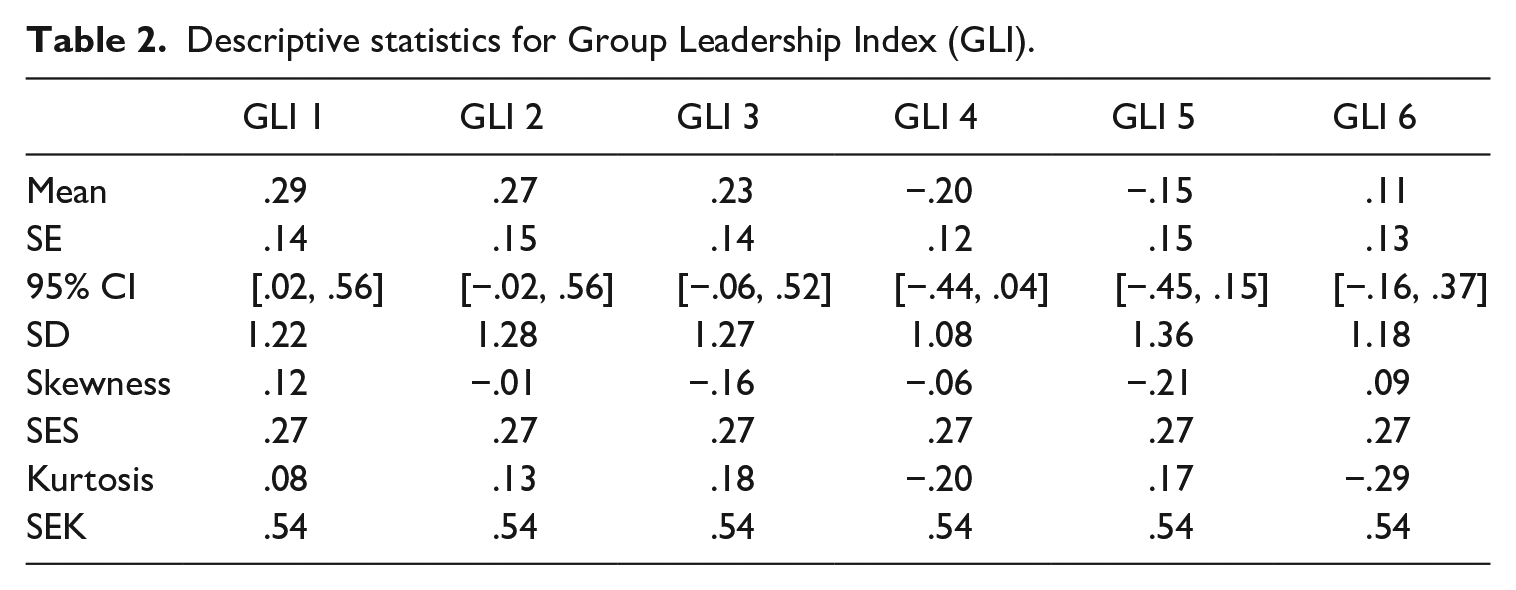
In order to be considered the leader of the group, it was decided that a student had to achieve the highest score on the GLI for their group on two of the three administrations in a given semester. This means that for the majority of the semester this student was considered the leader by their group. Research Question 1 was interested in stability within groups. In all 20 groups in both semesters, a single student emerged with the highest rating in two out of three administrations of the GLI, indicating that within a fixed group a single student emerged as leader and this role was relatively stable. This is supported by the correlations on the GLI shown in Table 3. The correlations within a semester are significant and strong with a range of .74 to .84. Observation data also suggested that there was generally a single student identified by the teacher as the leader.
Correlations for the six administrations of the General Leadership Impression.
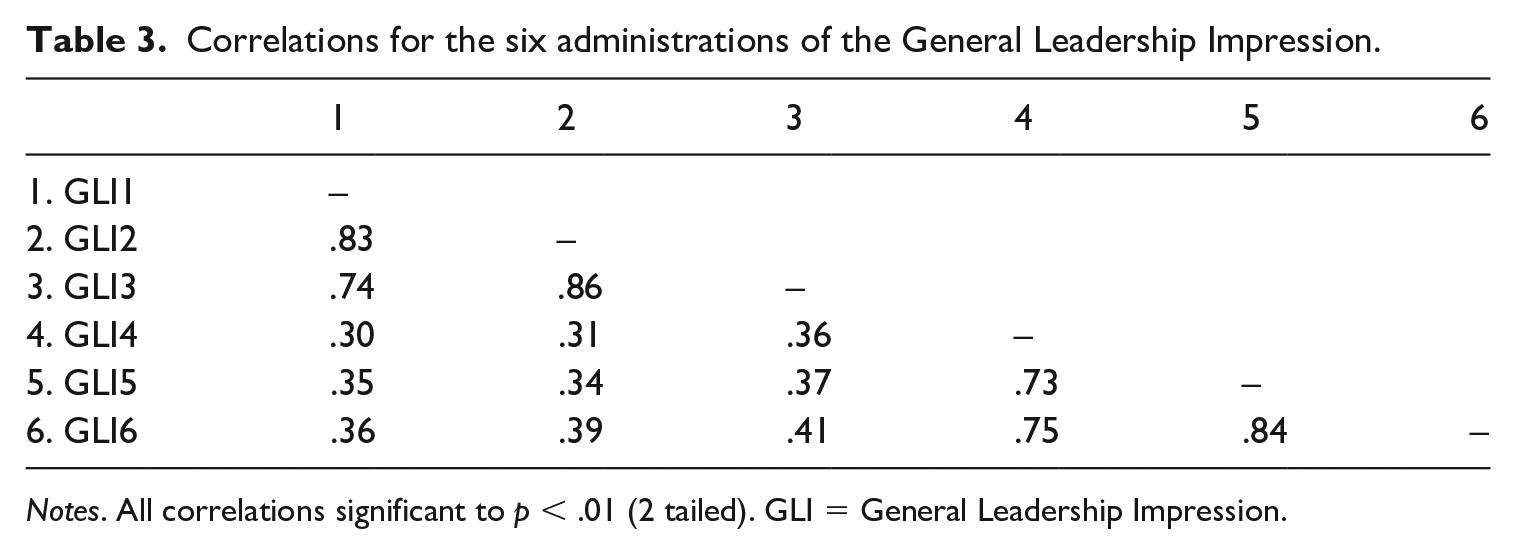
Notes. All correlations significant to p < .01 (2 tailed). GLI = General Leadership Impression.
In the second semester students self-selected into groups. In order to answer Research Question 2, the data was examined to identify leaders in both semesters, based on the criteria explained above. Ten of the students from a total of twenty groups were classified as leaders for both semesters, meaning that there was a 50% consistency in leadership when group membership changed. The correlation between GLI scores for the first and second semester showed only weak to moderate values of between .30 to .40, in contrast to the strong correlations found when the group context remained unchanged. The results reflect previous research by Zaccaro et al. (1991), who found a leader stability coefficient of .59 across different groups.
2 Individual changes in leadership
Although the results to Research Questions 1 and 2 suggest that there is some stability to leadership, three students were selected for more detailed analyses of changes in leadership and also engagement with tasks. Table 4 shows the GLI results for the three students. Shuya (all names are pseudonyms) was selected to represent strong, consistent leadership. He was the leader throughout the year, and observation notes supported the fact that he was the strongest leader in the study. Kazu was selected to represent a change from strong leadership in Semester 1, to a complete lack of leadership in the second semester. Hana was selected to represent the reverse pattern of Kazu, as she displayed weak leadership in the first semester, and then became a strong leader in the second. Each student is considered, highlighting patterns of leadership, based on both their GLI scores, and observation and interview data, before presenting the analysis of their discussion tasks. GLI scores, proficiency, and extraversion are presented for the three individuals to provide information regarding the makeup of each group.
Individual General Leadership Impression results over the academic year.
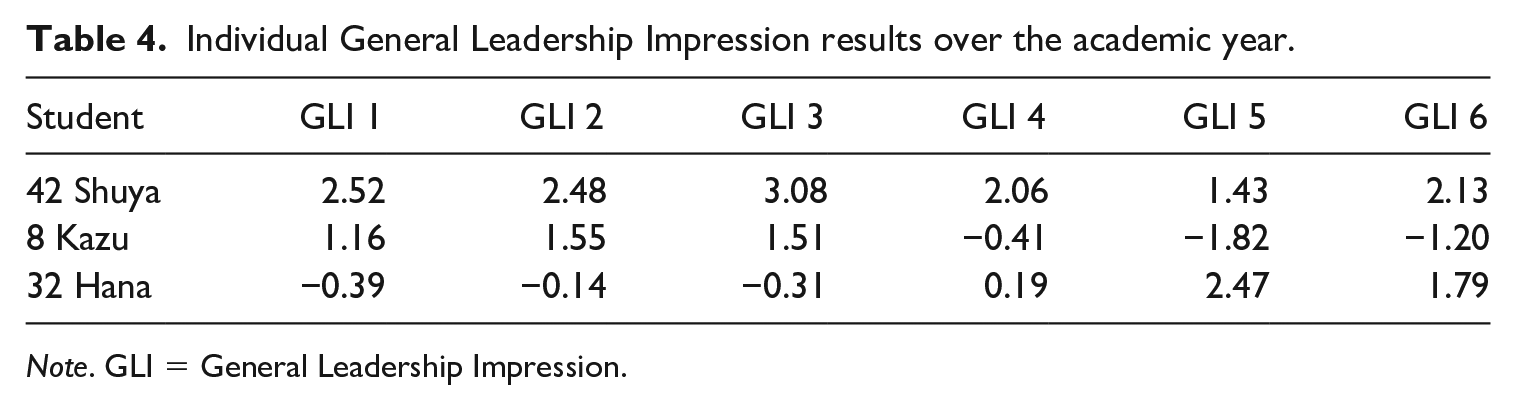
Note. GLI = General Leadership Impression.
a 42 Shuya (leader-leader)
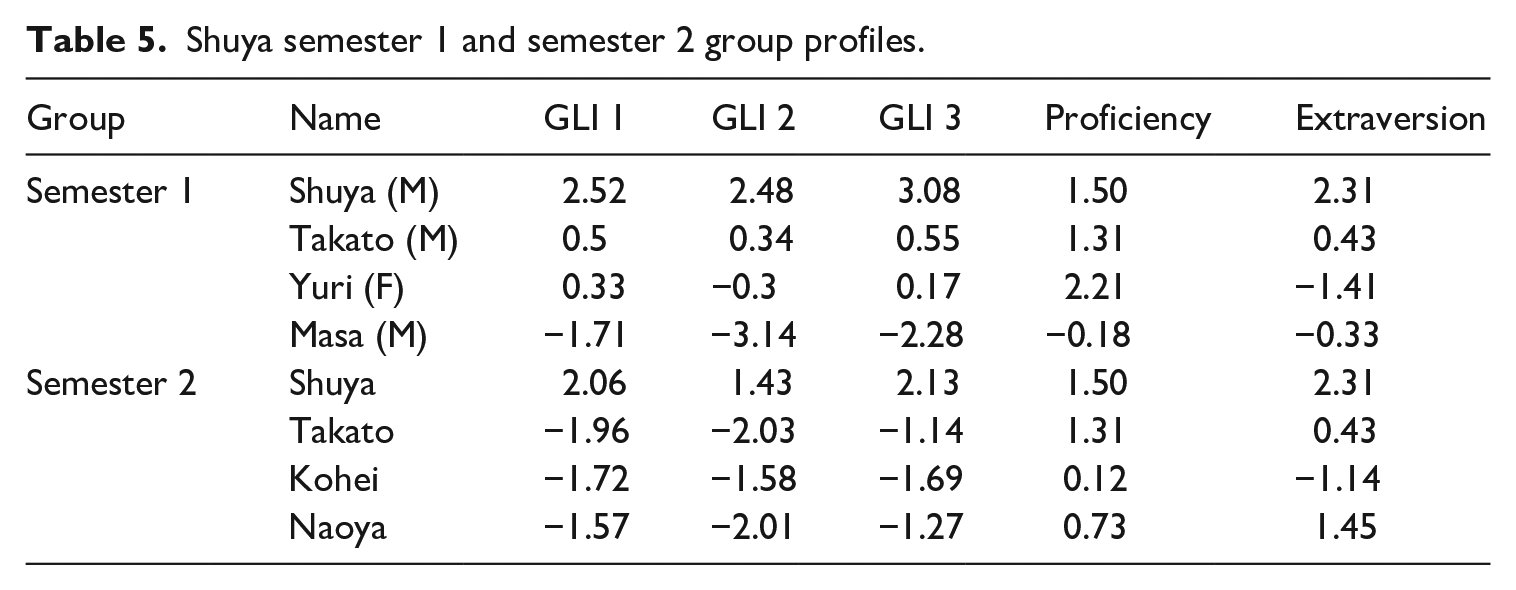
Shuya was a member of Group 9 in the first semester and Group 12 in the second semester. He was outgoing and confident, with consistently high scores on the GLI for both semesters. As early as Week 5 of the first semester he was identified as being the leader of his group, with notes stating that he was ‘very, very outgoing and also quite capable’ (Semester 1, Class 2, Week 5, observation notes). Interviews with his group at the end of the first semester confirmed that all the members had considered Shuya to be the clear leader. Indeed, in response to the interview question ‘describe a leader who stands out in your own personal experience’, Yuri selected Shuya, claiming that he was the clearest example of a leader that she had experienced, and that he had strongly influenced the group. At the start of Semester 2, Shuya formed a new all-male group, which included one member of his previous group. GLI scores, and classroom observation notes support the conclusion that Shuya was the leader from the outset, and continued to dominate for the duration of the second semester.
Table 5 shows some of the characteristics of the two groups that Shuya was part of. Although his proficiency was not notably different from other group members, his extraversion was high relative to other group members. This data suggests that emergent leadership may be a complex process involving proficiency and extraversion, but also the specific dynamics of the group.
Shuya semester 1 and semester 2 group profiles.
b 8 Kazu (leader-follower)
Kazu was in Group 1 for the first semester, and Group 6 for the second semester. In the first semester he was in a group of quiet students, and was the leader for the entire semester, with comparatively high scores on the GLI. Observation notes show that as early as Week 5 I had identified him as leader, and this was further supported by observation notes in Week 11 stating that ‘Kazu was completely the leader here – he directed the conversation fully and was in control’ (Semester 1, Class 1, Week 11, observation notes). Both qualitative and quantitative data suggest that Kazu was the leader for the first semester.
In the second semester Kazu formed a new group with his friends, and his role changed dramatically. The GLI scores for the second semester show that his perceived leadership score initially fell by 2 logits, and continued to fall before making a slight recovery in the final administration. During interviews with members of Group 6 following Semester 2, he was not named as leader. Observation notes named other members of Group 6 as having leadership roles, and stated that Kazu was happy to sit back and take a passive role. His role changed with the change in group membership, and his behavior in his new group was far closer to social loafing (Forsyth, 2010), leaving other group members to do the work.
The data in Table 6 shows that in the first semester Kazu was more proficient and extraverted in a very introverted group, and his role as leader could be expected. In the second semester Kazu and Koichiro were the most proficient members, but Koichiro had a higher rating for extraversion, and became the leader. During interview at the end of the year, Kazu was quick to state that he tried hard in both semesters, although he confirmed that he behaved differently in Semester 2. He claimed that in Semester 1 he realized that he needed to guide and lead the group to avoid a negative outcome. However, in Semester 2, when group members were different, there were others who were willing to take on leadership roles, and therefore he was content to take a back seat. In the interview he said yappari, naka ii doushi de jibun de kimechau to amaichau tokoro mo aru no kana (‘when everyone in the group are your friends there is an element of taking advantage of them maybe’). This illustrates how leadership can be dependent on group makeup, and also the potential for social loafing when students work with close friends (Leeming, 2014).
Kazu semester 1 and semester 2 group profiles.
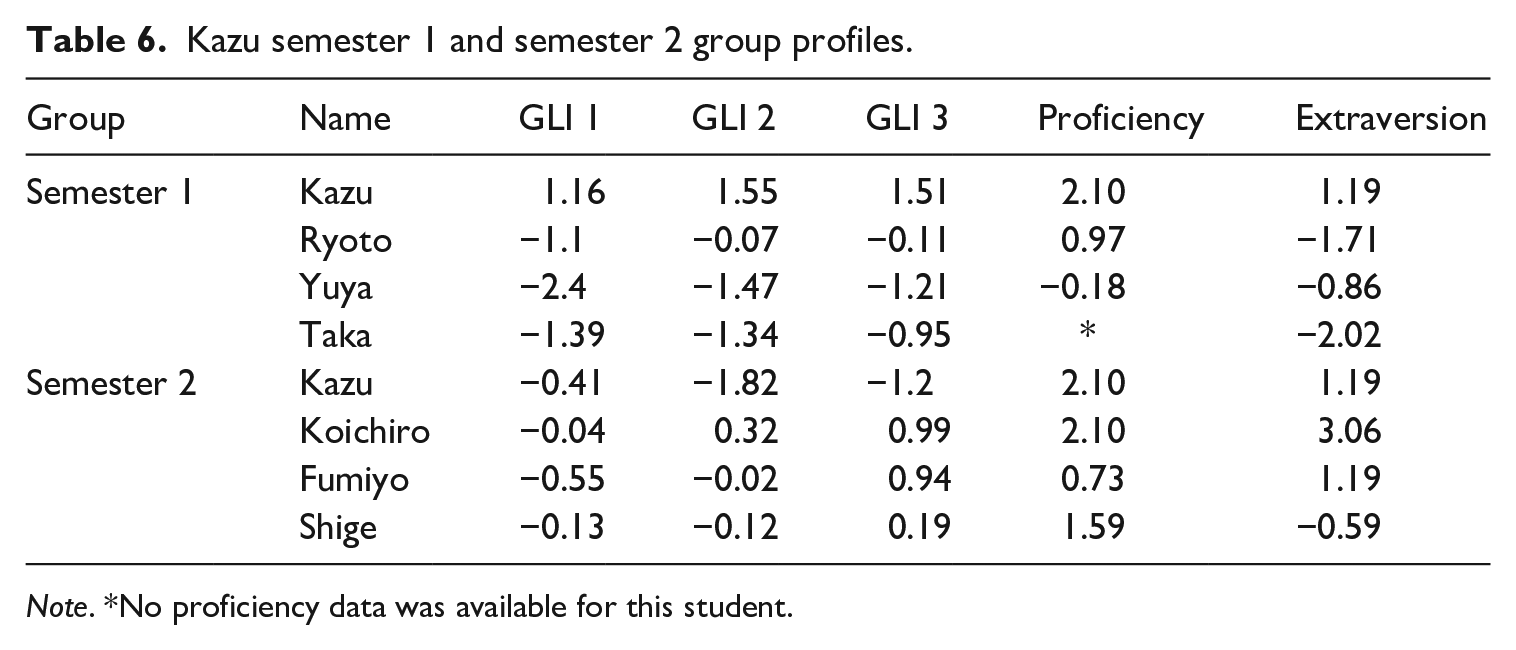
Note. *No proficiency data was available for this student.
c 32 Hana (follower-leader)
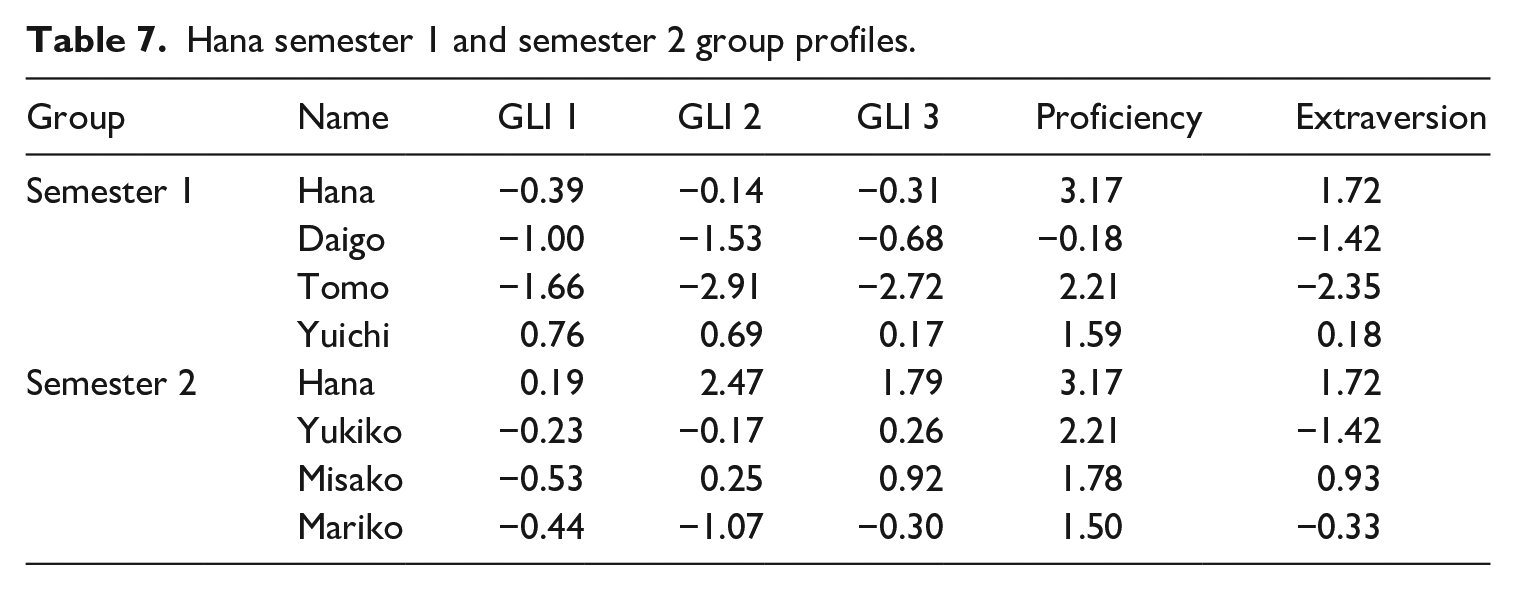
Hana was in Group 12 for the first semester and Group 13 for the second semester, with completely new group members. She displayed an opposite behavioral change to Kazu, with GLI scores consistently low in the first semester, and then increasing slightly for GLI4 before making a large increase of more than 2 logits for GLI5. Observation notes show that Group 12 in the first semester had a clear leader, Yuichi (Student 26), and Hana was described as passive, willing to sit back and displaying little leadership. Yuichi was accepted as leader by the group with consistently higher scores on the GLI.
In the second semester Hana joined an all-female group, and by Week 6 it was clear from classroom observation that Hana has emerged as a strong leader: ‘Hana the very clear and dominant leader in this group. Directs, controls, talks all the time, and is always center of any discussion’ (Semester 2, Class 2, Week 6, observation notes). Informal interviews with the members of Group 13 after the second semester revealed that Hana was perceived as leader by all members, and she acknowledged her role as leader.
Table 7 shows that Hana had a high rating for English proficiency and was the most proficient member of her group in both semesters. She was also very extraverted, but did not become the leader in the first semester. In the second semester she was again the most extraverted and proficient. It is possible that gender played a part in the role adopted, with Hana being the only female member in the group in the first semester, but joining an all-female group in the second semester. Due to the lack of gender balance in the study it was not possible to isolate gender as a variable (Class 1 had 23 males and a single female student).
Hana semester 1 and semester 2 group profiles.
3 Engagement with tasks
Results from the GLI and observation data show that leadership can be influenced by group context, but how did group context influence task engagement for the students selected? Mid-term and final discussion tasks for the three selected participants were transcribed (a total of 120 minutes of interaction), and analysed for number of turns (behavioral engagement), talk time (behavioral engagement), number of questions asked (cognitive engagement), and number of backchannels (social engagement). Turns, talk time, and questions are presented as percentages to show the contribution relative to other group members.
Tables 8 and 9 clearly show that there is a large degree of variance in engagement depending on the role adopted in the group. Kazu was very dominant in the first semester, showing strong behavioral and cognitive engagement with more than half of the total turns, and almost half of the questions asked. This changed dramatically in the second semester, where he took less than 20% of turns in the final conversation, and also used only 14% of the available speaking time. Cognitive engagement also changed dramatically, with only 22% of all questions asked by Kazu at the end of the second semester. Hana showed the reverse pattern, with low behavioral and cognitive engagement in the first semester, and consistently strong engagement in these two areas in the second. Shuya was remarkably consistent with behavioral engagement, and also showed particularly strong cognitive engagement with the tasks, asking approximately half of the questions in each discussion task.
Semester 1 individual performance in discussion tasks.
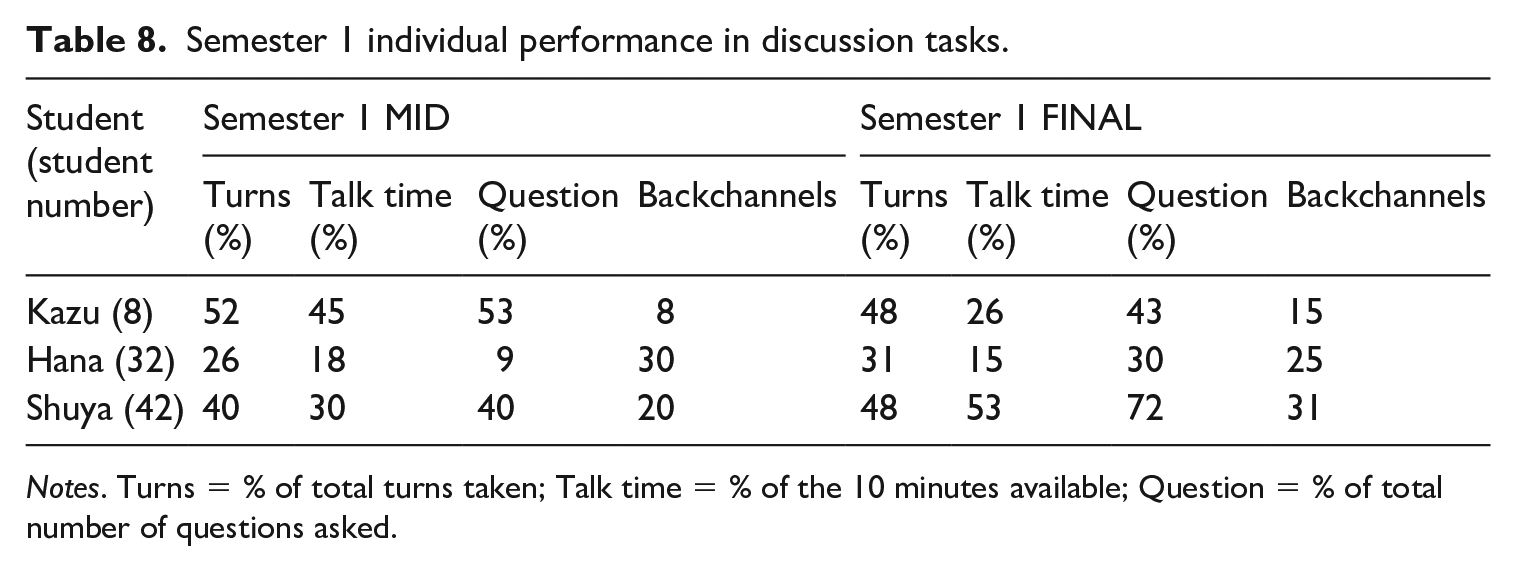
Notes. Turns = % of total turns taken; Talk time = % of the 10 minutes available; Question = % of total number of questions asked.
Semester 2 individual performance in discussion tasks.
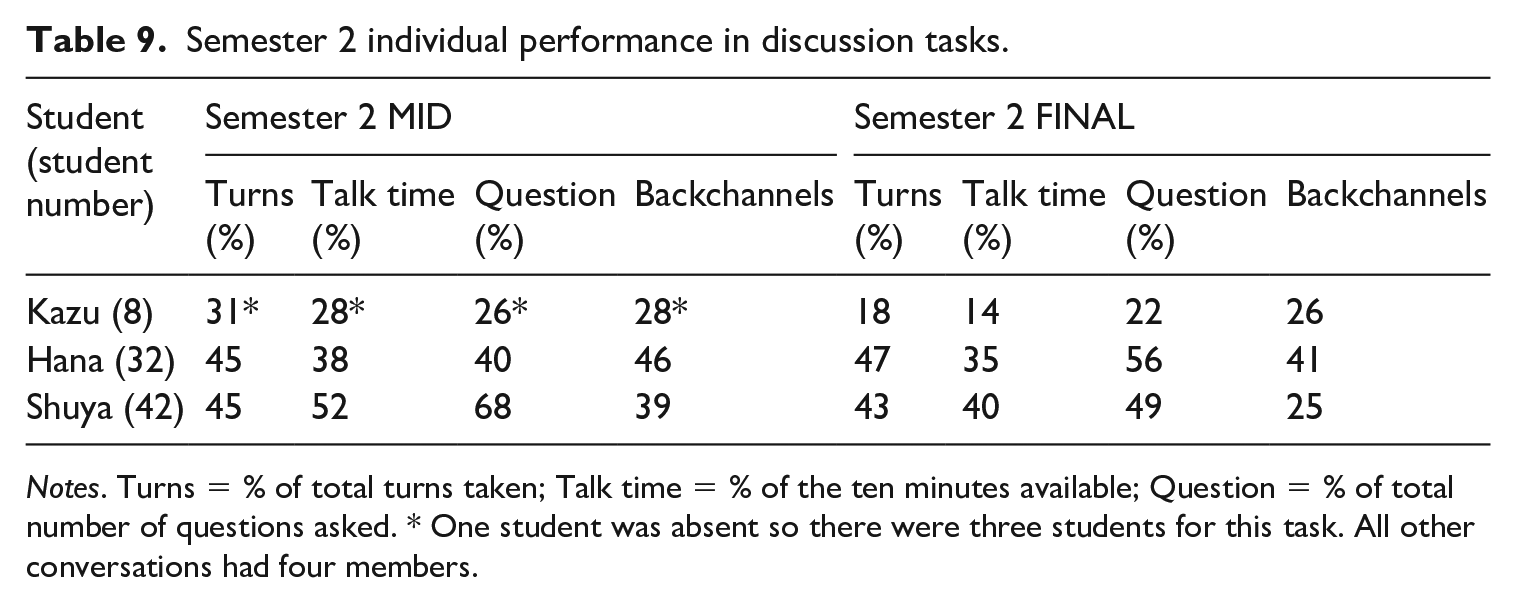
Notes. Turns = % of total turns taken; Talk time = % of the ten minutes available; Question = % of total number of questions asked. * One student was absent so there were three students for this task. All other conversations had four members.
Interpretation of social engagement is somewhat more complex. Although Shuya was reasonably consistent throughout, both Kazu and Kana showed an increase in social engagement in the second semester. This may be due to the way in which the groups were constructed. In the first semester groups were random, and students were not with friends, but in the second semester the majority of students chose to form groups with friends. This may explain the increase in social engagement in the second semester, with students feeling pressure to engage with friends. Of particular interest is the fact that Kazu was more socially engaged with the tasks in the second semester, even though his behavioral and cognitive engagement decreased markedly. It is also possible that back channeling was not a reliable measure of engagement in this context. The implications of the data concerning engagement will be discussed in the next section.
V Discussion
Prior to this study, there was no empirical evidence regarding the stability of emergent leadership both within the same group over time, and when group membership is changed. Results showed that there were strong and significant correlations when group membership remained stable, indicating that leadership was stable in the same group. This supports the findings of Pescosolido (2001), and also Yashima et al. (2016), where the leader of the group was the same for an entire semester. When individuals joined other groups correlations were weak, suggesting that many leaders change roles when in a new group. In this study half of the leaders changed role when put in a different group, consistent with the findings of Zaccaro et al. (1991), who found a leadership stability coefficient of .59. This runs counter to the claims of Ehrman and Dörnyei (1998), who argued that leadership is fleeting and task dependent. Although the nature of the different tasks in the current study was generally similar, there was a range of topics and activities in the class, and yet within the same group the leader remained largely constant. However, it seems that once the members of the group change, only half of leaders maintain this role in their new group.
A focus on individual groups showed that emergent leadership seemed to be complex, and a facet of the specific make-up of a group. Proficiency in English and extraversion were factors in leadership, but did not explain the variance in leadership. Gender balance was also another possible variable, although imbalance of gender within the study made this hard to investigate. Shuya was consistent in his role of leader and maintained this role throughout the year. Kazu admitted in interview that he had taken a backseat in the second semester, where he had felt that he was no longer needed as a leader in the group. Hana, who was passive in the first semester, seemed to grow into her role as the leader in the second semester, with an increase in GLI scores as time progressed. She was the only female in her group in Semester 1, and in Semester 2 joined an all-female group, which may have influenced her behavior.
Tables 8 and 9 show the central role the emergent leader has in controlling the interaction, with leaders taking almost half of the turns in conversation and showing strong behavioral and cognitive engagement in tasks. Although Shuya was consistent across all discussion tasks, of interest is the change in both Kazu and Hana depending on group context. Kazu’s behavioral and cognitive engagement almost halved from the first to second semester. Hana’s patterns of engagement were the opposite of Kazu’s, with behavioral and cognitive engagement doubling in the second semester. Students at this level found it quite challenging to make conversation for 10 minutes, resulting in awkward silence, but the leader supported the group by asking questions. Leeming (2019) has shown that the quality of mutuality in a conversation may be heavily dependent on the leader in the group. Although research has shown that taking a passive role in conversation can lead to language learning (Mackay, 1999), many researchers argue that engagement in L2 use is essential if students are really going to engage in noticing, and learn from tasks (Ellis, 2018; Philp & Duchesne, 2016; Sang & Hiver, 2020). Most teachers want a balance of participation within a group, with all students engaged with tasks, and emergent leadership complicates this. If a group is weak and members are struggling, then a strong emergent leader can provide a model for students (during interview Yuri, from Shuya’s group in the first semester, claimed he provided the perfect model for group members), helping them to feel more comfortable and encouraging them to take part in conversation by asking questions (Yashima et al., 2016). When students are already reluctant to talk, it may be that a strong emergent leader dominates the conversation and prevents the other members from taking part. An important role of the teacher is to monitor groups and decide when strong emergent leadership is benefiting or hindering the group. The findings for social engagement suggest that students feel more pressure to remain socially engaged when working with students that they consider as friends, which may be beneficial for interaction.
From the current study, it seems that when students take on a leadership role, they drive the conversation for the group and have a beneficial impact on other members. One potential way of maintaining this positive influence while increasing engagement for other group members is simply to decrease the size of the group. One student was absent in Kazu’s second semester mid-term discussion task, resulting in a group of three, and compared to the final discussion task, Kazu’s engagement seemed to be positively influenced by this. Research in general psychology has shown that as the number of members in a group increase, so does the chance of social loafing (Forsyth, 2010), and therefore a practical solution for teachers is to limit groups to three members whenever possible. Previous research suggests that giving students choice on discussion tasks (Lambert et al., 2017; Nakamura, Phung, & Reinders, 2020), or even providing the necessary language prior to the task may also increase members engagement with tasks (Aubrey et al., in press).
VI Implications
The findings regarding the stability of leadership and the influence of leadership on engagement have strong implications for teachers. The relative stability of leadership within a fixed group contradicts the claims of Ehrman and Dörnyei (1998), who argued that leadership can be momentary, and is task dependent. The relative stability of emergent leaders means that if you place students in a fixed group, you may be effectively assigning roles to students, and these roles remain largely stable over the lifetime of that group. With more teachers employing project-based learning where students are required to work in groups for a number of weeks or even an entire semester (for an example, see Mills, 2009), this means that group assignment becomes a very important process, as learning outcomes and performance may vary depending on group. Although the leaders focused on in this study generally seemed to help the group by facilitating and driving conversation, it is possible that leaders may dominate and have a negative impact on group performance (Forsyth, 2010). The findings suggest that for project-based learning, the teacher needs to monitor the group to ensure that emergent leader behavior is beneficial. Should the emergent leader become overly dominant, assigning and training students in specific roles may somewhat negate the impact of emergent leadership (McCafferty et al., 2006), and also keeping group sizes small will reduce the chance of over dominance and social loafing.
While there does seem to be reasonable stability within groups, the low to moderate correlation between GLI values when group membership changes, means that changes to group membership often result in changes in the leadership behavior of individuals. For many students, by changing groups, teachers are giving students a chance to take on a different role. For teachers, this suggests that regular changes in group membership are beneficial, and may help to prevent negative elements of group work such as social loafing (Forsyth, 2010). It should be noted that ten students assumed leadership roles for the entire year, so changing group membership does not guarantee a change in leadership, but findings indicate that teachers should assign students to work with different students in different tasks.
When considering individual groups and specific students, it becomes clear that it is very hard for teachers to accurately predict leaders within groups based on ID variables such as English proficiency or extraversion. Although these variables seemed to influence leadership, it was the complex interaction of a multitude of factors that determined who was the leader for a group. Leaders can and do change based on the group context. Many teachers assume that students who are proficient in the language and extraverted will assume the role of leader, but this is not supported by the small data sample here. The implication for teachers is that while very strong leaders may be consistent across groups, it is unwise to assign a student to a given group assuming that they will take on the role of leader based on prior performance.
Results of the third research question showed that both cognitive and behavioral engagement with tasks vary strongly based on the members of a given group. Social engagement was generally more stable, but did seem to increase when students were in groups with friends. Although groups are becoming increasingly popular as a way of assessing speaking proficiency as they incorporate interactive competence (Nitta & Nakatsuhara, 2014), the results here suggest some caution when grading students based on performance in group discussion tasks. Higher task engagement is likely to result in higher test scores. For example, Kazu performed at a lower level in the second semester, but this may have been more about the make-up of his group than about either his individual motivation of English-speaking proficiency. This would suggest that a mix of both group and individual measures may reflect actual ability and performance more closely, and that teachers should not rely solely on group conversations to assess students. Even letting students select their own group may not enhance behavioral and cognitive engagement in group conversations tasks, although working with friends seems to enhance social engagement.
VII Conclusions and limitations
With the extensive use of small-group work in language learning, the practical issue of group construction is very important for teachers, and is discussed in texts often used to train teachers in SLA (Brown & Lee, 2015). Most practicing teachers are aware of emergent leadership (Dörnyei & Murphey, 2003), but are not sure how to deal with it in terms of group construction. The results of this study showed that even though emergent leadership is relatively stable in the same group, it may change when group membership is changed. The current study also showed how leadership corresponded to engagement in tasks. An examination of individual students showed that for some, it was possible for large changes in engagement in conversation, and both behavioral and cognitive engagement seemed to depend heavily on the group context. If group context changes engagement in conversations, then restructuring groups is a possible way for teachers to try to increase engagement for individual students, or to improve the balance in a class.
The research described is not without limitations. First, the researcher was also the teacher of the classes, and although this adds to the ecological validity (Sato & Loewen, 2019), it may have influenced student responses to questionnaires, interviews, and in-class performance. Also, the data for engagement was coded by a single researcher, and the affective dimension of engagement was not included in the study, even though it could be important for future task engagement. A further limitation is the statistical method employed. Much of the data is presented as correlation, and therefore causation cannot be determined. Related to this, although emergent leadership was considered the variable influencing students’ task engagement, it is possible that there were other variables involved, and changes are therefore hard to interpret. Finally, the mixed proficiency of classes is not typical in university contexts in Japan, where students are usually streamed upon entrance to university, and the fact that the students were science majors must also be considered when interpreting results.
This study provides important practical help for both researchers and classroom teachers. Although researchers are aware the importance of the members of a given group, there are still only a limited number of studies showing how membership influences interaction. Results help teachers make more informed decisions regarding group formation and longevity.
Footnotes
Appendix 2. Discussion tasks topics
Appendix 3. General Leadership Impression (GLI) questionnaire
Consider each member of your group. To what extent do you agree with the statements? 1 – strongly disagree. 4 – strongly agree.
Appendix 4. General Leadership Impression results
Note. Student number is the same over the whole year.
Appendix 1.
Rubric for conversation tasks.
| Active Listening (receptive) ______/10 ○ follow-up questions ○ clarification questions ○ indicating listening (uh huh/ nodding/ ‘Me, too.’) Meaningful Production _____/10 ○ giving opinions ○ agreeing/ disagreeing ○ supporting opinions / persuade ○ discussion questions ○ turn-taking Clarity ______/5 ○ Volume ○ body language / gestures ------------------------------------------- Total /25 |
Funding
The author(s) received no financial support for the research, authorship, and/or publication of this article.
