



Abstract
The study reported in this article was aimed at investigating whether making the findings of second language fluency research accessible to language teachers has an impact on their self-reported understanding of the concept of oral fluency, confidence in promoting it, and classroom practice in short and medium term. The data come from 106 initial and 32 delayed questionnaires, eliciting both qualitative and quantitative data, from second language teachers in England after attending a one-day research-informed and practice-oriented training workshop. The results indicate a positive impact of the intervention on teachers’ understanding of fluency, confidence in helping their learners, and self-reported practice in short term, with the impact being reported 10–12 weeks after the intervention. The findings imply that adopting a narrow perspective to defining and conceptualizing fluency is linked with a more in-depth understanding of fluency and enhanced confidence and ability for using fluency-focused classroom activities.
Keywords
I Introduction
The importance of oral fluency is nothing new to the field of second language (L2) teaching, learning and assessment as being fluent is commonly considered a key characteristic of a proficient L2 speaker and one of the main constructs in the assessment of L2 proficiency. The dominance of a communicative approach to language use, and the salience of communicating one’s intended meaning clearly and coherently in real time for professional and educational purposes has made fluency an increasingly important objective for L2 learners, and a key criterion against which successful language communication is evaluated. Against the backdrop of this significance, the interest in researching L2 fluency has considerably grown over the past decades with various studies examining its different aspects including the complex and multifaceted nature of fluency (Kormos, 2006; Segalowitz, 2010), its relationship with learner individual differences (Ahmadian, 2012; Saito, 2019), its association with listeners’ perceptions (Préfontaine & Kormos, 2016), and its development over time and practice (Tavakoli, 2018; Tavakoli, Campbell, & McCormack, 2016). This body of research has successfully helped the field of L2 teaching and learning to develop a better understanding of fluency, a more analytic approach to analysing and measuring it, and a set of important implications for classroom practice.
Despite all the notable developments in this area of research, there is some emerging evidence (e.g. Derwing et al., 2009; Dore, 2016; Morrison, 2018) to suggest that such research and its practical implications are not effectively used in L2 pedagogy, e.g. L2 textbooks, syllabi, and teaching. For example, although fluency is now formally introduced to the modern foreign languages curricula in some countries, e.g. the UK General Certificate in Secondary Education syllabus for Modern Foreign languages (Department for Education, 2014), there has been little research examining whether teachers are well-equipped to help promote fluency in L2 classrooms, or whether teacher training programmes are designed to help prepare teachers for this objective. Of the few studies investigating fluency from an L2 teaching perspective, the findings of a recent study (Tavakoli & Hunter, 2018) showed that most L2 teachers understand and define fluency in a broad sense of the term, i.e. general proficiency, and many teachers are ‘using fluency and speaking ability interchangeably’ (p. 330). The results also underlined a mismatch between teachers’ self-reported practice and what fluency research recommends. The mismatch between fluency research and practice highlights the recurrently reported gap between research and practice in the field (Ellis, 2009; Erlam, 2008; Tavakoli & Howard, 2012), and implies that teachers may not have benefitted from the findings of L2 fluency research for their professional practice. The study reported here is, therefore, aimed at investigating two aspects of this problem. First, it seeks to examine whether designing and delivering a research-informed and practice-oriented training intervention can help make fluency research findings relevant and accessible to L2 teachers. Second it aims to understand whether the intervention can have an impact on teachers’ understanding of fluency and their self-reported practice in short and medium terms.
II Theoretical background
1 Fluency research
The term ‘fluency’ in English, and perhaps some other languages, refers to at least two different but interrelated concepts commonly known as broad versus narrow fluency (Lennon, 1990). In its broad sense, fluency refers to the overall proficiency of an L2 speaker, whereas, in its narrow sense, fluency is understood as the ability to talk smoothly and effortlessly without undue hesitation and interruption. Drawing on data collected from L2 teachers, Tavakoli & Hunter (2018) expanded Lennon’s (1990) dichotomy to a four-level model, arguing that teachers understand and define fluency at very broad, broad, narrow and very narrow senses of the term. In its very broad sense, they argued, fluency is usually considered as the overall language proficiency, whereas in a broad sense it represents speaking ability. In a narrow sense of the term, fluency is used to reflect the general ease, flow and continuity of speech often contrasted with accuracy and complexity, and in its very narrow sense, fluency is highlighted by specific temporal, and acoustic features and dysfluency markers such as speed, breakdown and repair measures. The results of the data analysis in Tavakoli & Hunter (2018) suggested that the concept of fluency varied quite widely among teachers, and their reported practices were most often aimed at developing aspects of proficiency rather than fluency.
With regard to an in-depth understanding of fluency, Segalowitz’s (2010, p. 165) triadic model has been functional in illuminating the complex and multifaceted construct of fluency. Segalowitz’s model conceptualizes fluency in terms of its cognitive, utterance and perceived aspects. He argues that cognitive fluency, i.e. ‘the efficiency of operation of the underlying processes responsible for the production of utterances’ should be distinguished from utterance fluency, i.e. ‘the features of utterances that reflect the speakers’ cognitive fluency’, and perceived fluency which refers to ‘the inferences listeners make about speakers’ cognitive fluency based on their perceptions’ (Segalowitz, 2010, p. 165). A more enriched understanding of fluency has also emerged from research investigating fluency in different tasks, modes and contexts, indicating that oral fluency is affected by a range of factors including task design (Foster & Tavakoli, 2009; Vasylets, Gilabert & Manchon, 2017), task modality (Azkarai & Garcia Mayo, 2015; Gilabert, Manchon & Vasylets, 2016; Michel, 2011), and cross-linguistic differences (de Jong, 2016).
A distinctive characteristic of fluency research is that many of its findings have direct and practical implications for L2 pedagogy. For example, research in this area has shown that fluency is a reliable predictor of proficiency (Révész, Ekiert & Torgersen, 2016); fluency develops quickly during Study Abroad experience (Huensch & Tracy-Ventura, 2017); L2 fluency is at least to some extent a function of L1 fluency behaviour (de Jong et al., 2013; Duran-Karaoz & Tavakoli, 2020; Peltonen, 2018); and carefully designed classroom activities and interventions help enhance learner fluency even after a short period of time (Gatbonton & Segalowitz, 1988; Hunter, 2017; Seifoori & Vahidi, 2012; Tavakoli et al., 2016). Fluency research has further recommended several activities that successfully promote fluency in the L2 classroom. For example, activities involving planning time, rehearsal and repetition in which learners are asked to perform or repeat the same task, commonly known as task repetition (de Jong & Perfetti, 2011), and/or to recycle the same language to different interlocutor, commonly known as poster carousel or speed-dating activities (Hunter, 2017) are shown to promote fluency. Performing tasks under time pressure, also known as 4/3/2 activities (Thai & Boers, 2016), involving learners in poster carousel activities (Hunter, 2017), and using awareness raising and strategy training activities (Tavakoli et al., 2016) are other examples of activities recommended by fluency research (for a discussion of such activities, see Tavakoli & Hunter, 2018). Despite the strong research evidence on the usefulness of such activities, it has become evident that the findings of fluency research are not effectively used in L2 pedagogy. The next section highlights the evidence supporting this claim.
2 L2 pedagogy and fluency research
The relationship between fluency research and L2 pedagogy can be evaluated in several areas of pedagogy including L2 textbooks and materials, teacher understanding and practice, and teacher training programmes. A summary of research in the first two of these areas will be presented below. Given that no research has examined representations of oral fluency in teacher training programmes, this topic is not reviewed here. However, it is hoped that the findings of the current study will highlight the important role of teacher training programmes in promoting teachers’ understanding of fluency and their practice in this regard.
a Textbooks, materials and oral fluency
Rossiter et al. (2010) examined English language teaching materials to determine the extent to which fluency-focused activities were provided in the textbooks. The results suggested that the textbooks heavily relied on ‘free production activities’ neglecting fluency in its narrow sense of the term. Surveying 48 textbooks used to teach new immigrants in Canada, Diepenbroek and Derwing (2014) also concluded that the books did not provide fluency-focused activities; nor did they prepare learners to develop their oral fluency. Replicating Rossiter et al.’s (2010) study, Morrison (2018) reported that less than 5% of the activities provided in Chilean high school textbooks were devoted to promoting fluency specifically, despite the fact that ‘becoming a fluent L2 speaker’ was a key objective of the curriculum.
b Teacher understanding of oral fluency
In terms of teacher understanding of fluency and their corresponding practice, three studies are relevant to this article. Dore (2016), collecting data from 48 university English teachers in the UK and Italy, examined teachers’ perceptions of oral fluency and the characteristics they identified as the key features of fluency. The results suggested that unlike the findings of research in terms of which features are central to understanding utterance and perceived fluency, the teachers attributed substantial importance to ‘coherence’, ‘chunking’, ‘rhythm’ and ‘intonation’ of speech. Comparing the two groups of teachers, Dore (2016) reported that the UK-based teachers’ awareness was more in line with official speaking test descriptors, e.g. the CEFR’s, while the Italy-based participants had a broader understanding of fluency.
Investigating Chilean teachers’ perception of L2 oral fluency, Morrison (2018) collected quantitative and qualitative questionnaire data from 60 high school teachers of English as a foreign language (EFL). The results suggested that the teachers participating in the study focused more on promoting speaking in their classroom when they intended to promote oral fluency. While the data provided evidence for teachers’ lack of familiarity with oral fluency or how it can be promoted in class, the teachers reported high levels of confidence in their knowledge and the skills needed to help learners enhance their fluency. Morrison (2018) interpreted these results in the light of the exiting misconceptions about the term fluency.
The final study investigating teacher’s understanding of fluency, reported here, is Tavakoli and Hunter (2018). The authors reported that most of the teachers in their study understood fluency in a much broader sense than that which is used for research or assessment purposes. They also found that teachers were providing students with general ‘free production’ activities and generic speaking practice when they intended to help promote fluency. Based on the studies reported above, one conclusion to arrive at is that fluency research has not found its way into classroom practice, and fluency might well be neglected not only in L2 classroom teaching but in materials and textbooks. What causes the limited engagement with fluency research in L2 pedagogy, however, is a complex phenomenon that needs unpacking. In the current article, the findings of Tavakoli & Hunter (2018) are taken as a point of departure to investigate whether a research-informed training workshop can help make fluency research findings accessible to L2 teachers. We intend to compare the data collected before and after a training workshop to examine whether making L2 fluency research accessible to teachers can have an impact on their understanding and practice.
3 Teacher cognition, research engagement and professional development
Understanding teacher cognition, i.e. ‘what teachers know, think, and believe and how these relate to what teachers do’ (Borg & Burns, 2008, p. 457) is a growing area of interest in researching L2 pedagogy. Investigating what teachers know and do in their practice is not only an effective way of understanding the complex and challenging task of L2 teaching, it also enables researchers to identify how their research can help facilitate the dynamic process of L2 teaching and learning. Despite the tensions reported between teachers’ beliefs and practice, many researchers, for example, Phipps and Borg (2009) and Borg and Burns (2008) argue that teachers’ core beliefs are most influential in shaping teachers’ instructional decisions and practice. While it is known that core beliefs may not change overnight, research has shown that they are permeable thorough training and reflective professional practice (Borg, 2009; Erlam, 2008; Ur, 2019).
Over the past two decades, examining teacher cognition in general and teacher research engagement in particular has enabled researchers to develop a more analytic understanding of the frequently reported divide between L2 pedagogy and research (e.g. Borg, 2013; Ellis, 2009; Erlam, 2008; Nassaji, 2012; Ur, 2019). 1 Such studies have provided evidence that the existing divide can be interpreted in the light of a range of factors such as incommensurability of discourses (Pennycook, 1994), teachers’ limited resources and research skills (Borg, 2009), or simply lack of time (Nassaji, 2012). Central to the argument in this article is ‘relevance’, one of the key factors reported as a barrier to teacher engagement with research (Block, 2000; Ellis, 2001; Nassaji, 2012). Similar studies have further reported that ‘much of the research is no longer directly concerned with pedagogic issues’ (Ellis, 2001, p. 45), or is not ‘applicable to the day-to-day language teaching and learning which goes in the classroom’ (Block, 2000, p. 130). Another key barrier in teacher engagement with research is the issue of accessibility (or comprehensibility), i.e. research outcomes are often presented in an inconclusive manner (Borg, 1998), expressed in a highly technical language (Tavakoli & Howard, 2012) often with complex research designs that make it difficult for many teachers to understand and engage with (Ellis, 2009; Tavakoli, 2015). Making L2 research accessible to professionals and practitioners, i.e. making it not only physically available but offering it in ways that make research comprehensible, engaging, and relevant to their practice is an important need recognized in the field of L2 pedagogy (Han, 2007; Lyster, 2018). Making L2 pedagogic research relevant and accessible to teachers is a significant commitment the L2 teaching research community needs to attend to. This commitment, i.e. ensuring research findings have ‘an effect on, change or benefit to the economy, society, culture, public policy or services, health, the environment or quality of life, beyond academia’ (Research Excellence Framework, 2018, p. 83) is recognized by many research communities including the Research Council of the UK Research Excellence Framework (Research Excellence Framework, 2018).
Professional development (PD) activities are commonly known as one way of engaging teachers with research and providing them with an opportunity to learn new ideas, knowledge and skills (for a full discussion, see Johnson, 2016 and Ur, 2019). Most often, the anticipated outcome of PD is ‘teacher learning’ reflected in the form of a change in teacher understanding, knowledge and/or beliefs; this learning is in turn expected to lead to a change in their teaching practice (Desimone, 2009; Sokel, 2019). Although PD activities are potentially perceived as beneficial to teachers, some researchers (e.g. Borg, 2013; Johnson, 2016) argue that PD is often limited in promoting sustainable change, warning that the training may not be easily translated into observable changes in teachers’ teaching (Borg, 2013). Other researchers (e.g. Çimer, Çakır, & Çimer, 2010; Lyster, 2018; Paran, 2017; Ur, 2019), however, argue that providing PD even in the form of a short-term training potentially has direct implications for teacher cognition and practice. Despite all the for and against arguments on the benefits of PD, most researchers from both camps agree that the best way to enable teachers to accommodate learning and development in their practice is to educate them throughout their careers by providing them with rich opportunities for PD.
III Research aims and questions
The current study’s prime aim was to provide a rich opportunity for teachers to engage with oral fluency research and its classroom implications in the form of a continuing professional development (CPD) workshop. The study also aimed at investigating the impact of the training on teacher understanding of fluency and their self-reported practice immediately after the workshop, and in the medium term: that was two to six months later. Questionnaire, online survey and interview data were collected to answer the following research questions:
Research question 1: To what extent does the intervention, i.e. a one-day research-informed and practice-driven training workshop help teachers enhance their understanding of fluency, confidence in promoting it, and familiarity with fluency research?
Research question 2: To what extent does the intervention help enhance teachers’ self-reported plans for classroom practice in the short term?
Research question 3: To what extent is the impact of the intervention on self-reported understanding and practice retained in medium term?
IV Methodology
1 Intervention: One-day training workshop
One-day training workshops were delivered to six groups of teachers between 2015 and 2017 in England in locations of convenience to the participants. The content and delivery of the workshops were identical, although they were delivered in different locations and to different groups of teachers. Each workshop recruited 15–20 teachers and lasted between five to seven hours depending on teachers’ availability and work schedule. The workshops were free and voluntary to attend, and a certificate of completion was awarded to the participants at the end. Prior to data collection, all the participants were provided with a description of the project and a consent form that ensured their anonymity, privacy, confidentiality, and right to withdraw from the project at any time. Only one participant did not agree for her data to be included in the study.
While in the past PD was often perceived as an activity ‘pursued largely in isolation from one’s colleagues’ (Johnson, 2009, p. 241), currently the collaborative and cooperative dimensions of PD are emphasized in L2 teacher education. Some researchers (Burns & Richards, 2009; Çimer et al., 2010; Desimone, 2009; Sokel, 2019) argue that teachers’ active participation and collaborative work during PD is central to the effectiveness of PD as they help maximize teacher learning. Drawing on this evidence, the intervention was carefully designed in the form of a one-day research-informed and practice-driven interactive workshop. It was research-informed as it summarized the findings of recent fluency research with significant implications for classroom L2 teaching. 2 The practice-driven dimension of the workshop included teachers working collaboratively to construct knowledge about fluency, developing a lesson plan and designing some fluency focused activities. Each workshop included five interactive sessions, each between 45 and 55 minutes. A brief overview of the structure and content of the one-day workshops is as follows:
Session 1: Introducing and defining fluency from a research perspective (e.g. a broad versus narrow perspective);
Session 2: Highlighting key findings of fluency research relevant to L2 teaching and learning;
Session 3: Showcasing classroom implications, providing example activities and practical tips on how to help learners develop fluency;
Session 4: Working collaboratively to develop a 30–minute lesson plan aimed at promoting fluency in class, and designing at least one activity for this purpose;
Session 5: Presenting lesson plans and activities developed in the previous session to the whole group; evaluating each other activities and providing feedback.
All these sessions had at least one interactive task integrated in their structure to ensure the participants were engaged in the sessions, collaborated with each other to complete the task, and had an opportunity to exchange views and practices with both their peers and the research team. In Session 1, for example, the participants started with a task that asked them to discuss two questions: ‘What is fluency’ and ‘Why is fluency important for L2 learners.’ They had 10 minutes to discuss the questions in small groups before reporting it back to the whole group. The research team then made a list of the key points from the group discussions on the board and shared with all. The participants were then introduced to the concept of Broad and Narrow fluency, and were asked to identify items from the list on the board to be linked to Broad and Narrow concepts of fluency. The team offering the CPD workshops included the researcher and two experienced L2 teacher trainers who contributed to all sessions and their corresponding activities.
2 Participants
Participants in this study were 106 teachers teaching English and/or Modern foreign languages in England at the time of data collection. The information about the workshops were sent out to schools, colleges and universities in England, mainly in the Southeast, which were consequently distributed to their teachers. Teachers were encouraged by the relevant institutions to attend the workshops, but attendance was not compulsory. Interested teachers then emailed the research team to express interest and book a place in one of the workshops. A larger pool of interested teachers approached the team, but only 116 managed to attend the workshops. For practical reasons, primarily due to the incomplete responses to the questionnaires, 10 participants’ data had to be removed. The remaining data from 106 participants are analysed and discussed in this article. Each participant sat in on only one workshop.
The participants came from a range of L1 backgrounds who taught at least one L2, with some having taught two or three languages in their teaching career. The four main languages taught were English, French, German and Spanish, but a small minority of teachers taught other languages, e.g. Chinese, Japanese and Arabic. The participants all had a first degree in a relevant subject and a teaching qualification; many (37.7%) had more than one teaching qualification and/or higher academic degrees. While they varied in terms of length and range of experiences, about 10 percent of the teachers had teacher training experience as well. About 15% of the participants were known to one or more members of the team mainly through our community of practice connections. Given the non-compulsory nature of the workshop and since participation (or lack of it) was not assessed during or after the workshop, it is believed that the participants’ responses were not influenced by the team leading the workshops. Table 1 below provides descriptive statistics about the participants’ demographic information.
Teachers’ demographic characteristics (n = 106; percentages in parentheses).
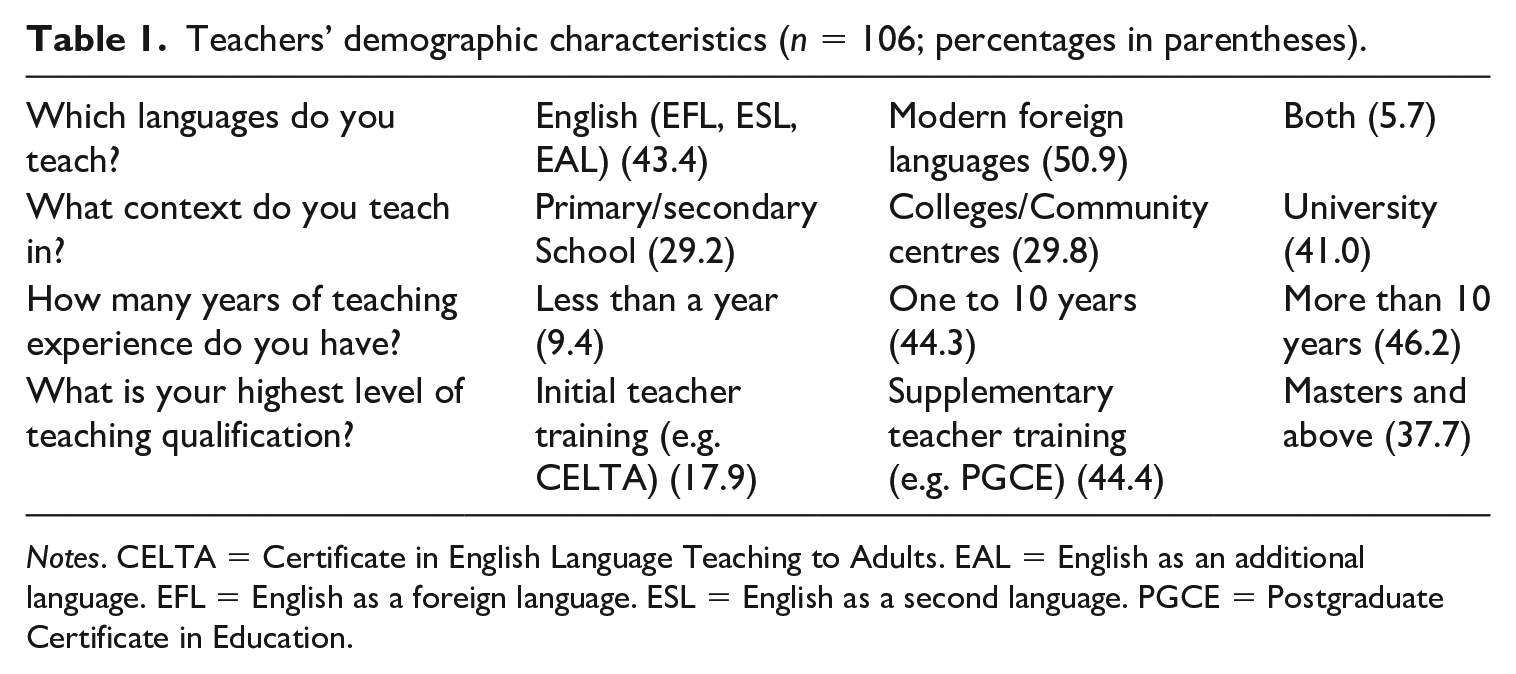
Notes. CELTA = Certificate in English Language Teaching to Adults. EAL = English as an additional language. EFL = English as a foreign language. ESL = English as a second language. PGCE = Postgraduate Certificate in Education.
3 Research instruments and data
This study, part of a larger research project, drew on data collected by use of an initial questionnaire (n = 106), a follow-up online anonymous questionnaire (n = 32), and a follow-up face-to-face interview (n = 9). As discussed earlier Tavakoli and Hunter (2018) used a questionnaire, half an hour before the workshop started, to investigate teachers’ understanding of fluency and their self-reported practice before receiving the one-day training workshop. In this article, comparisons will be made between the data collected in Tavakoli and Hunter (2018) and those collected after the workshops (current study). The pre-workshop point of data collection will be called Time 1, while the post workshop data will be labelled Time 2.
a Questionnaire
The questionnaire used in this study is the same as the one employed in Tavakoli and Hunter (2018), except for minor differences between the questions asked in the corresponding demographic information sections in the two questionnaires. 3 As discussed earlier, given the dearth of research investigating teacher understanding of oral fluency, Dore (2016) was the only relevant study using a questionnaire to elicit data from teachers on their perceptions of fluency. Tavakoli and Hunter (2018) used Dore’s questionnaire as a starting point and developed it further to examine teacher understanding of fluency and their self-reported classroom practices. 4
The questionnaire included five sections eliciting quantitative and qualitative data. Section 1 of the questionnaire invited the participants to provide the main characteristics of fluent L2 speech; Section 2 asked the participants to complete the statement ‘A fluent L2 speaker is someone who . . .’; Section 3 elicited quantitative data in Likert-scale format investigating their understanding of fluency, confidence in promoting it in their class, and familiarity with research in this area; Section 4 elicited examples of activities and/or tasks the participants would use in classroom to help promote fluency; and Section 5 asked them for their views on the importance of promoting fluency. The questionnaire was completed by the participants at the end of the workshops (Time 2 of the study). Some participants completed the questionnaires immediately after the workshop, whereas others took it away and completed it later in the next few days. Five working days after each workshop, the researcher sent an email reminder to all the participants asking for the remaining questionnaires to be returned (by post or as an email attachment).
b Online survey questionnaire
The online survey used in this study had three sections. Section 1 elicited information about the teachers’ teaching context and the type of students they taught; Section 2, using Likert-scale questions, aimed at investigating teacher understanding of fluency and their self-reported practice; and Section 3 invited the teachers to provide an example of an activity they had recently used in their class to promote fluency. The link to the anonymous survey, launched on Bristol Online Survey Tool, was emailed to all the participants 10 weeks after each workshop, inviting them to complete it in two weeks. Only 32 participants, i.e. 30% 5 of the total number, took part in the survey. Given the anonymous nature of the online survey, specific information about the teachers, their teaching contexts or experience is not available.
c Semi-structured interview
The interview’s main aim was to elicit in-depth qualitative data about what the participants learnt from the workshops and whether the training had an impact on their teaching practice. The four key questions of the interview were (1) what they remembered from the workshop; (2) whether they used any of the training in their teaching since attending the workshop; (3) to what extent they believed their students benefited from the training; and (4) what challenges they experienced when using the training in class. The interviews, lasting between 25 to 40 minutes, were recorded on a digital voice recorder before they were transcribed, coded and analysed.
The demographic section of Time 2 questionnaire had asked each participant to identify whether they would be interested in taking part in a follow-up interview. Invitation emails were sent to the 16 participants who had volunteered, but only nine were available for a face-to-face interview during the data collection period. Of the nine participants taking part in the interview, four were teacher trainers with some extensive experience of teaching, training and mentoring other teachers; the other five interviewees were teachers with more than two years of experience. Seven of the interviewees were teaching English, one Italian and one German. Four were teaching at university language centres, three at further education colleges, and two at language schools. The interviews were held three to six months after each workshop in a place of convenience to the participants.
V Analysis and results
The questionnaire data from Time 2 (i.e. post-workshop questionnaires) were analysed and compared to the data collected at Time 1 of the study to answer research question 1 and research question 2. The online survey questionnaire and the interview data were analysed separately before the findings were brought together to answer research question 3. The details of the analysis processes for each instrument are discussed below.
Research question 1
To answer research question 1, i.e. to what extent the intervention influenced teachers’ understanding, confidence and familiarity with fluency research, both quantitative and qualitative analyses were used. First, a number of t-tests 6 were run with the Likert-style questions to compare teachers’ understanding of fluency, their confidence in using their knowledge to help learners, and their familiarity with research in this area at Time 1 and Time 2 of the study. Descriptive statistics and the results of the t-tests, and effect sizes are presented in Table 2.
T-tests on teachers’ understanding of fluency at Time 1 and Time 2 (n = 106).
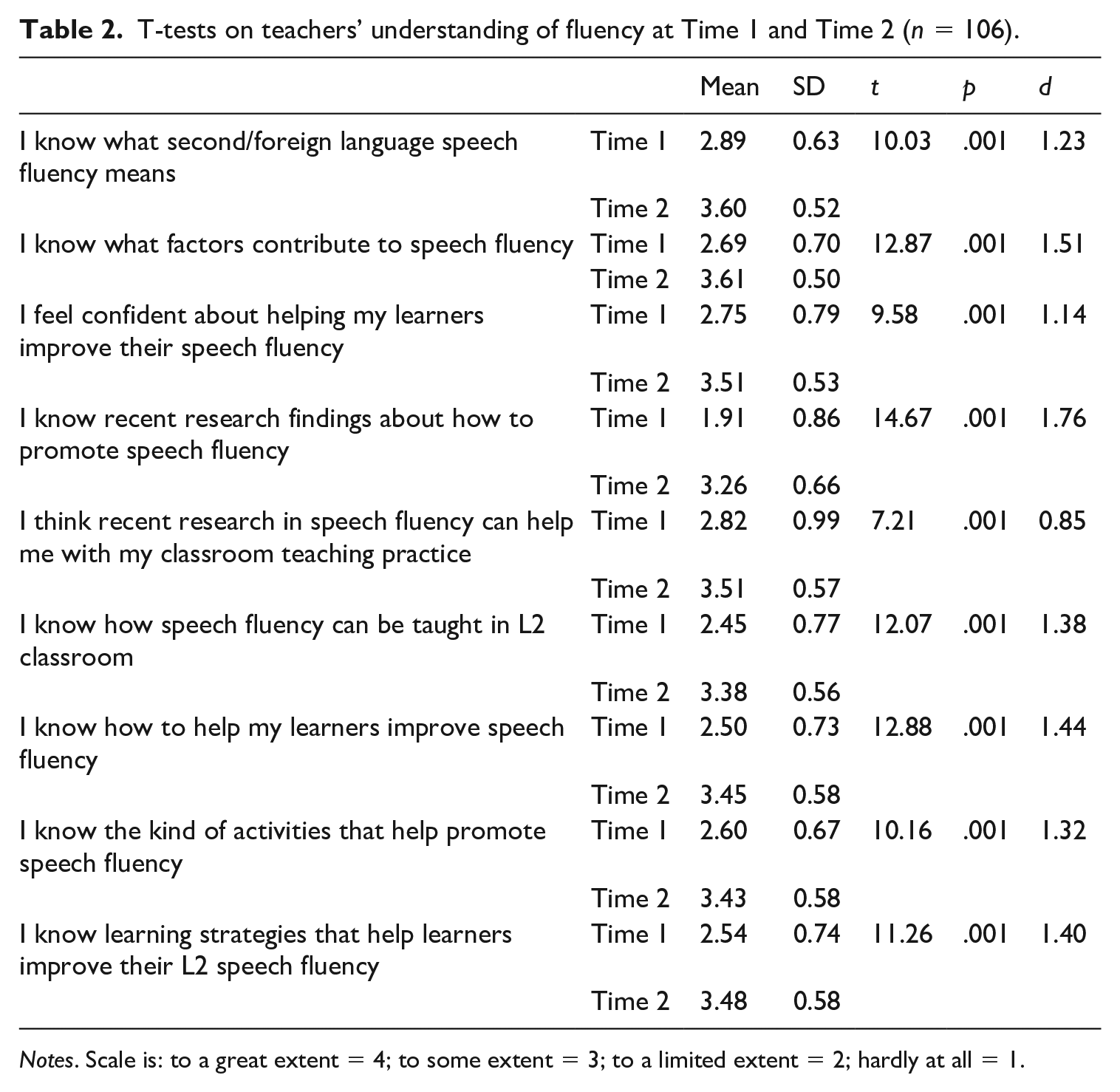
Notes. Scale is: to a great extent = 4; to some extent = 3; to a limited extent = 2; hardly at all = 1.
As shown on Table 2, teachers’ self-reported understanding of fluency improved after the workshop, and the differences between their views before and after the workshop reached a statistically significant level of p < .001 for all questions. The participants reported a statistically higher level of fluency knowledge (t = 10.03, p < .001), higher level of familiarity with factors that contribute to fluency (t = 12.87, p < .001), a higher level of confidence in helping learners promote fluency (t = 9.58, p < .001), and more familiarity with research in this area (t = 14.67, p < .001). After the workshops, they also showed more confidence in fluency research in terms of their classroom practice (t = 7.21, p < .001). The results of the t-tests showed improvement in teachers’ beliefs about their own ability to promote fluency in class. The participants reported a higher level of ability in teaching fluency (t = 12.07, p < .001), more confidence in helping learners develop fluency (t = 12.88, p < .001), more familiarity with both activities that enhance learner fluency (t = 10.16, p < .001) and strategies that help learners improve fluency (t = 11.26, p < .001). The effect sizes for these comparisons ranged from .85 to 1.76, which are considered large according to Plonsky and Oswald’s (2014) interpretation of effect sizes (.4 as small, .7 as medium and 1.0 as large effect sizes). As effect size is an important measure of the strength of the findings, these large effect sizes suggest that the magnitude of the differences between the means at Time 1 and Time 2 is large.
From a qualitative perspective, the change in teachers’ understanding of fluency was examined in definitions provided to complete the statement ‘A fluent L2 speaker is someone who . . .’, and in response to the question of ‘What are the main characteristics of fluent L2 speech?’ The data from these questions at Time 2 of the study provided a corpus of about 10,000 words which was subjected to a careful qualitative analysis. Similar to Tavakoli and Hunter (2018), this analysis involved transcribing the data and running a frequency analysis (using the search function of Microsoft Word, 2010) to identify recurring words and lexical chunks that defined fluency and/or a fluent speaker. Content analysis was then used to code the identified units. The emerging codes were reviewed and the list of codes was narrowed down by merging similar codes. The identified units were finally classified into four categories of fluency from a narrow perspective, fluency from a broad perspective (L2 proficiency), fluency used interchangeably as speaking ability, and fluency defined in vague or uninformative terms (for a full discussion, see Tavakoli & Hunter, 2018). Ten percent of the data was coded by a second researcher with extensive experience of working on fluency research, and an agreement of 94% was reached between the two researchers. In the case of disagreements, the raters discussed the unit until an agreement was reached about the classification of the unit.
Given the focus of the study in terms of observing change in teachers’ understanding, the analysis aimed at comparing the teachers’ views at Time 1 and Time 2 of the study, i.e. before and after the workshop. A qualitative comparison of each teacher’s response to the same question before and after the workshop allowed the researcher to identify different degrees of change in the way different teachers defined and understood fluency. This comparison also demonstrated variability among the participants in the extent to which they drew on the new concepts and definitions introduced to them during the workshop.
The qualitative analysis determining the extent of change in teachers’ understanding included two stages. First, each teacher’s responses were reviewed separately to determine whether their views had changed after the workshop. A small number of the participants, i.e. seven (6.6%) seemed to have persisted with their understanding and beliefs about fluency before and after the workshop. Participants in this group often repeated the same statements as their definitions of fluency and/or for a fluent speaker at Time 1 and Time 2 of the study. Second, the data from the group demonstrating an extent of change was subjected to a further analysis to determine whether they all showed similar degrees of change. This analysis showed two major patterns: those demonstrating considerable change and those showing moderate change. Three patterns observed in the data were consequently called considerable, moderate and minimal change, indicating the extent of change in teachers’ understanding of fluency from Time 1 to Time 2. To ensure objectivity of the classification, 10% of the data was second coded by an expert researcher, and an inter-rater agreement of 89% was achieved as a result. The three patterns are explained in further details below:
a Considerable change
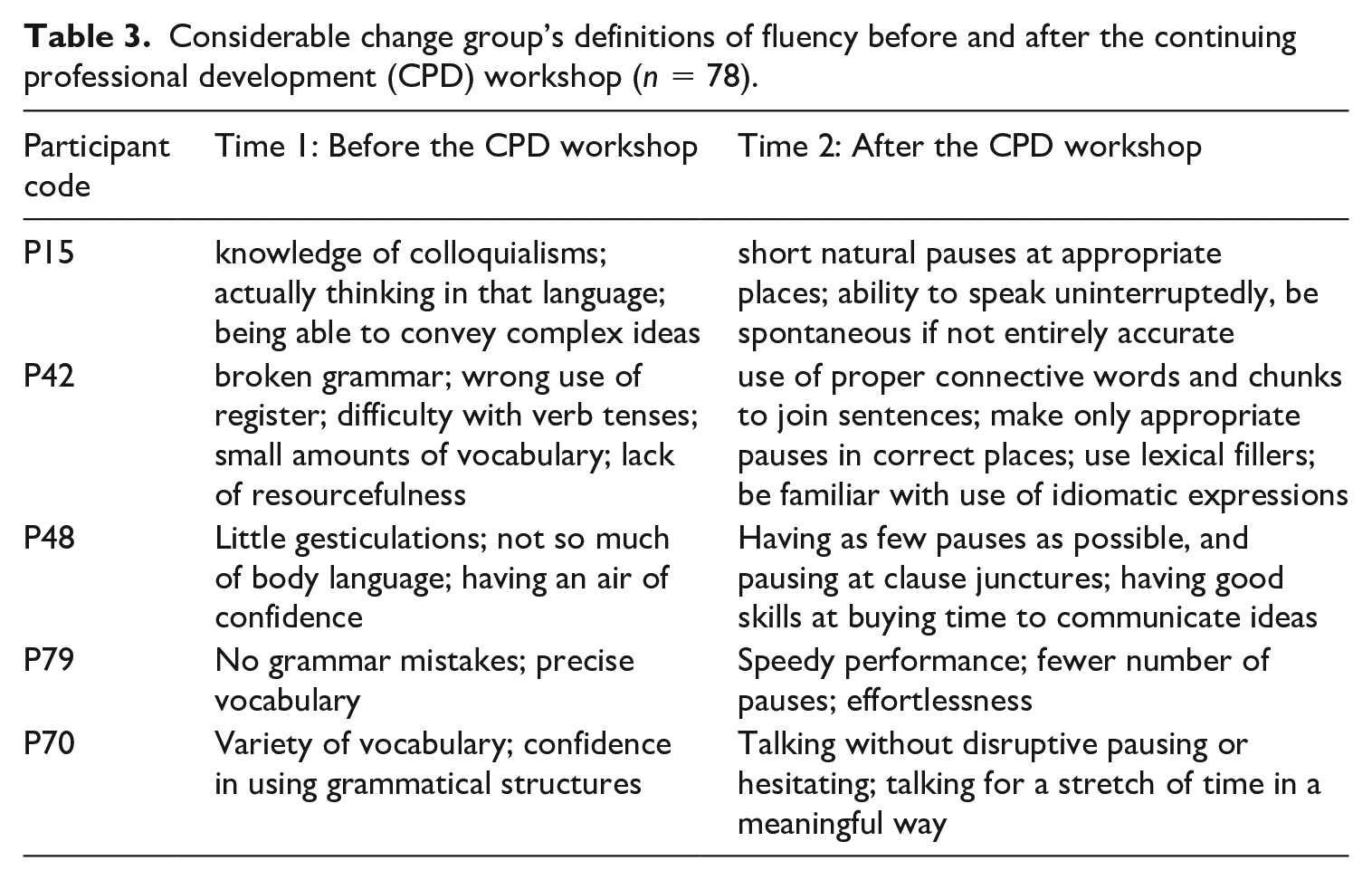
The first group, constituting 73.33% of the participants, demonstrated a considerable degree of change in their responses to questions about fluency after participating in the workshop. The analysis suggested that participants in this group developed a more in-depth understanding of fluency, adopted a narrower perspective to defining it, and provided clearer definitions and statements at Time 2 of the study, as compared with Time 1. While many of the teachers in this group started the workshops with a broad perspective to defining fluency, they demonstrated a more focused perspective to understanding and defining fluency afterwards. The comparison of the two sets of definitions showed that some of the ambiguity in the definitions and statements provided at Time 1 were replaced by clearer and more research-informed definitions of fluency. Table 3 provides examples of the data from this group at Time 1 and Time 2.
Considerable change group’s definitions of fluency before and after the continuing professional development (CPD) workshop (n = 78).
b Moderate change
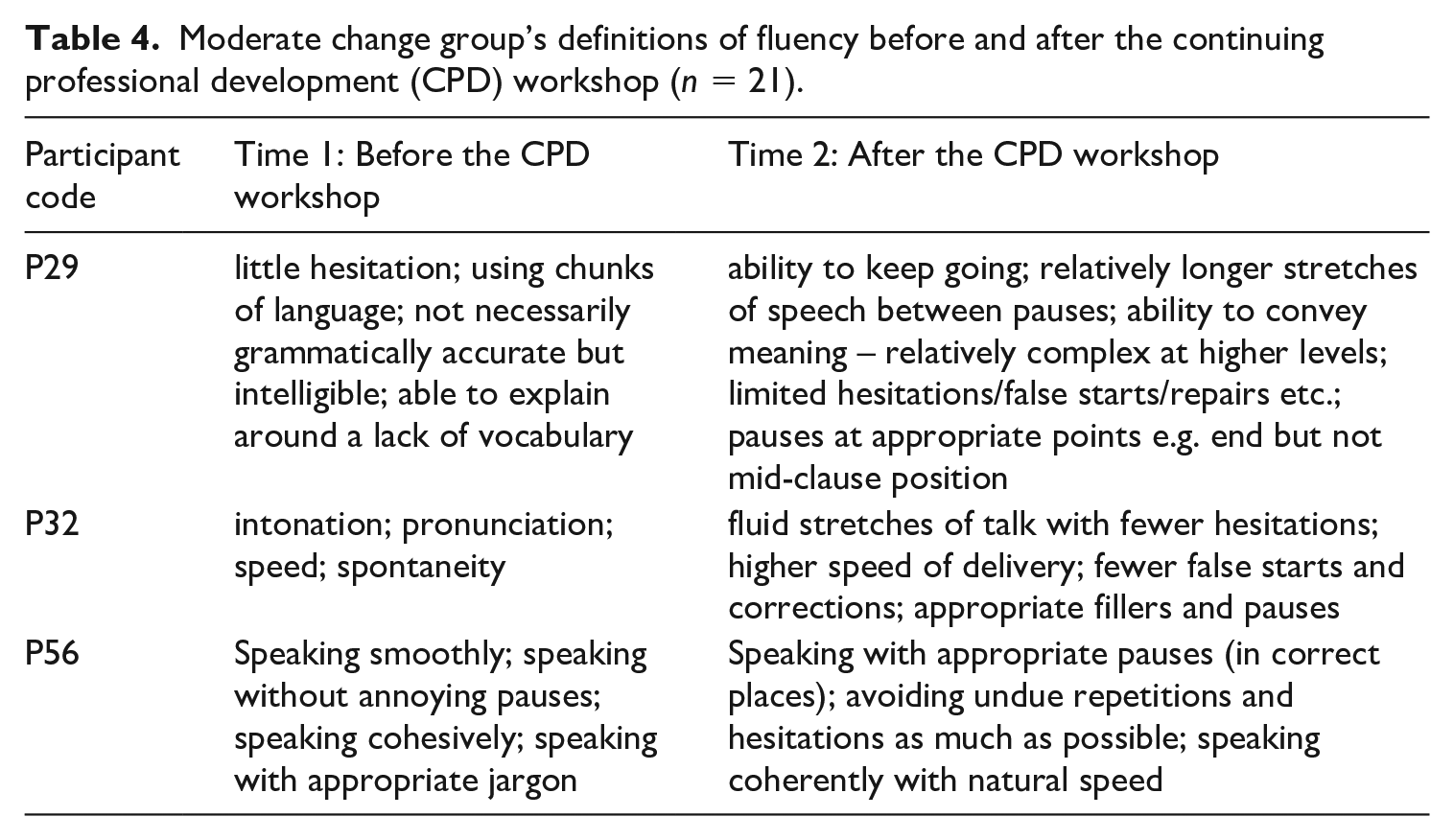
The second group, constituting 20% of the participants, demonstrated moderate and positive change in their understanding of fluency. It is important to note that the extent of change in this group is regarded as moderate because it appears that they started the workshop with a relatively reliable understanding of fluency in this area, and were already drawing on a narrow and focused perspective to fluency before attending the workshops. While this group may seem to have benefitted less from the training, their development is still noticeable as they often produced more detailed and nuanced definitions of fluency at Time 2. The post-workshop definitions provided by this group were more realistic (e.g. limited pauses rather than no pauses), more research-informed (e.g. the impact of mid-clause pausing on fluency), and more clearly justified (e.g. speaking with natural speed). Examples are provided on Table 4.
Moderate change group’s definitions of fluency before and after the continuing professional development (CPD) workshop (n = 21).
c Minimal change
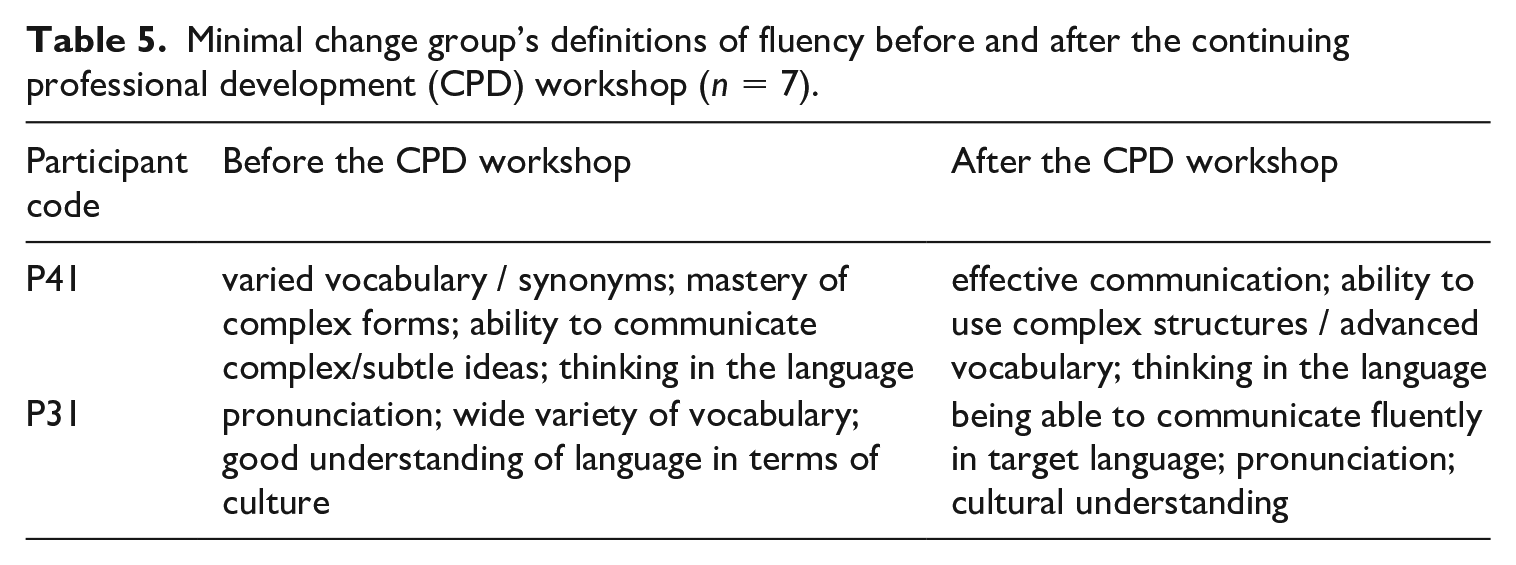
The last group, forming only 6.66% of the participants, seem to have benefitted the least from the workshops in terms of developing an in-depth understanding of fluency or providing more focused definitions for it. This group demonstrated a broad perspective to fluency at Time 1 and persisted with it at Time 2. Some of the participants’ ambiguous definitions did not change after the training. Table 5 provides examples from this group’s data.
Minimal change group’s definitions of fluency before and after the continuing professional development (CPD) workshop (n = 7).
Research question 2
To answer research question 2, i.e. to what extent the training helped promote teachers’ self-reported plans for practice, both qualitative and quantitative analyses were used. The data for this question comes from Section 4 of the questionnaire in which the participants were invited to provide three examples of activities they would use to help promote learner fluency in class. Following Rossiter et al. (2010) and Tavakoli and Hunter (2018), teachers’ self-reported activities were coded into six categories of (1) consciousness-raising activities; (2) planning, rehearsal and repetition; (3) use of formulaic sequences, discourse markers and lexical fillers; (4) fluency strategy training; (5) communicative free production tasks; and (6) general L2 proficiency. As each participant was asked to provide three examples, the total number of activities was expected to be 318. However, not everyone provided three examples. The non-reported activities were coded as ‘none’ and represented by zero in the calculation. A total of 20 participants’ responses (i.e. 21% of the data) were randomly selected and coded by a second researcher, and a 91% agreement between the two sets of coding was achieved. The disagreed cases were discussed until a final decision was made. After coding the activities against the six categories, the frequency of each category was calculated. Table 6 provides the following information: Categories of activities, some corresponding examples from Time 2, frequency of each category at Time 1 (before the workshop; Tavakoli & Hunter, 2018), and frequency of each category at Time 2, i.e. immediately after the workshop.
Teachers’ self-reported activities used in class to help promote fluency.
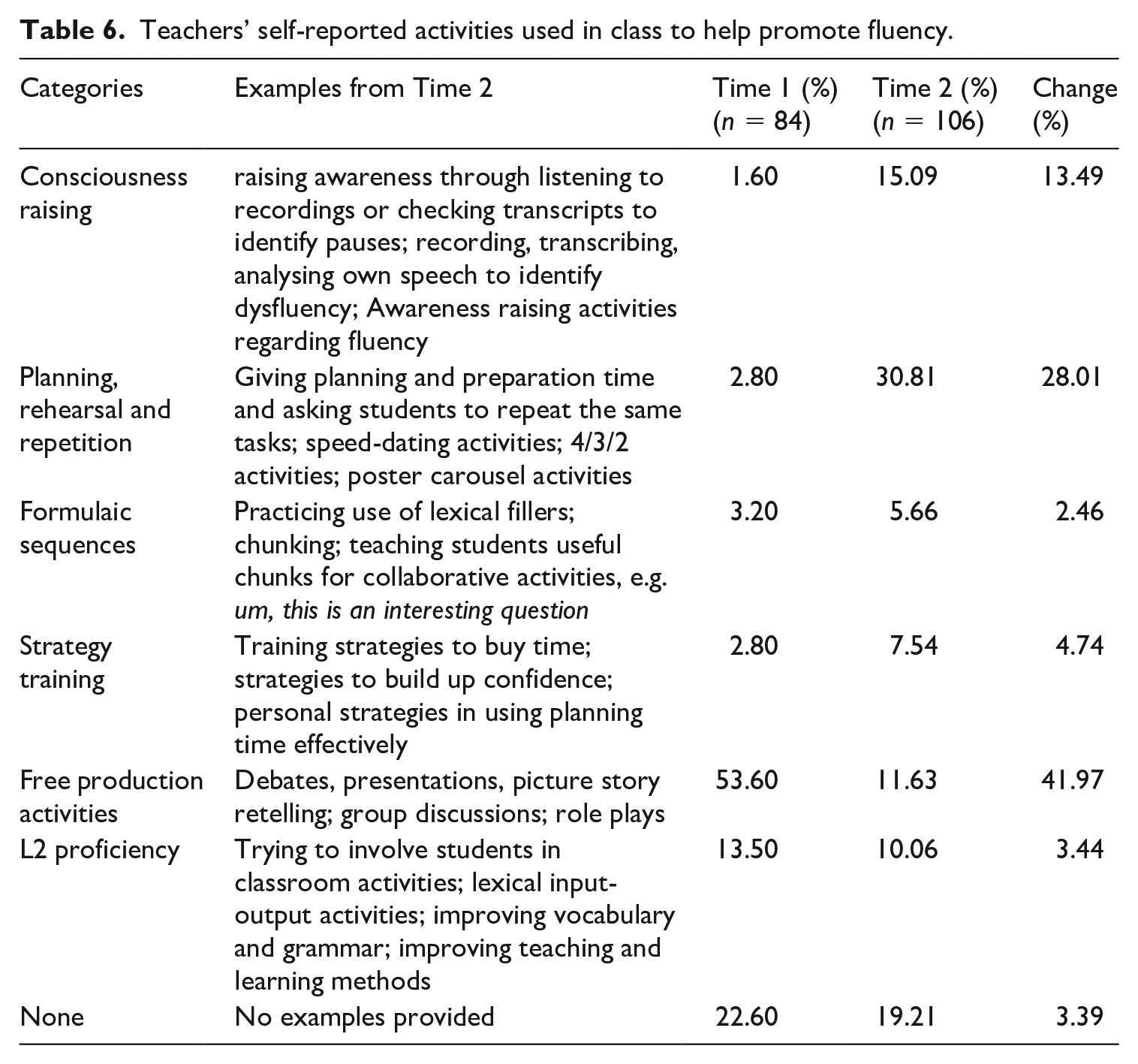
As can be seen on Table 6, improvements were observed in teachers’ self-reported activities in all different categories. The data analysis showed a 13.49% increase (T1 = 1.6%; T2 = 15.09%) in the consciousness raising activities teachers provided. A larger increase of 28.01% was observed (T1 = 2.80%; T2 = 30.81%) in activities involving planning, rehearsal and repetition. Activities such as 4/3/2, speed-dating and poster carousels type of activities were frequently reported by the teachers at Time 2. The increase in activities involving formulaic sequences was only 2.46% (T1 = 3.20%; T2 = 5.66%), which is lower than any other category. The analysis also showed that there was an increase of 4.74% (T1 = 2.80%; T2 = 7.54%) in the number of strategy-training activities suggested, e.g. time-buying strategies, effective use of non-lexical filled pauses, and reducing unnecessary hesitations and repetitions. The largest extent of change, i.e. 41.97%, however, was seen in the form of a decrease in mentioning ‘free production’ activities that are in fact generically used to help develop speaking ability rather than fluency (T1 = 53.60%; T2 = 11.63%). Whether this change in teachers’ self-reported practice helps promote their confidence or whether it can negatively affect their confidence needs further investigation. There was also a decrease of 3.44% (T1 = 13.50%; T2 = 10.06%) in the number of activities focusing on general L2 proficiency, e.g. focusing on lexis or motivating students, rather than fluency. Finally, there was a decrease of 3.39% in the ‘none’ category, i.e. there were fewer blank spaces in the data where no activities were mentioned.
Research question 3
The data to answer research question 3, i.e. whether the impact of the intervention was retained in medium term (between 2 and 6 months), came from the online survey questionnaire (n = 32) and interviews (n = 9). Given the anonymous nature of the survey, it was not possible to compare the survey responses with the data collected before and after the workshops. However, the anonymity of the survey questionnaires is expected to have helped enhance the objectivity of the data and the validity of the responses the teachers provided. Table 7 provides descriptive statistics for the participants’ responses to the survey questions. Analysis of the interview data will follow.
Descriptive statistics of the responses to the medium-term survey (n = 32).
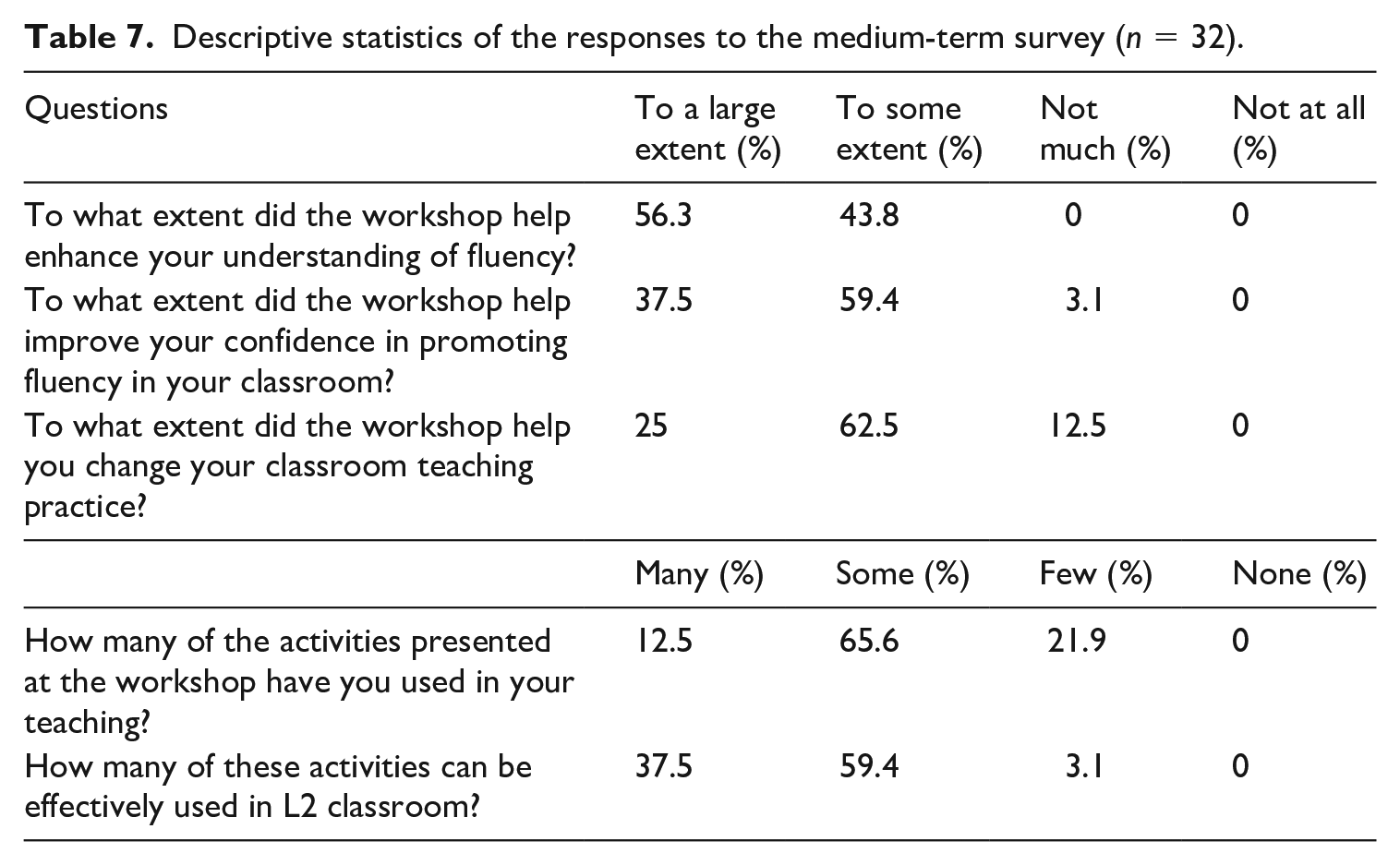
The results presented on Table 7 suggest that all the teachers found the workshop helpful in enhancing their understanding of fluency. While 56.3% of the participants agreed that the workshops helped them to a large extent, 43.5% suggested it was helpful to some extent. As regards their confidence in helping promote learner fluency in class, 37.5% suggested the workshops helped them to a great extent, and a majority of the teachers (59.4%) found it helpful to some extent. A small minority of 3.1% suggested the workshop did not help them much in this regard. When asked to what extent the workshops helped change their practice, a large majority of 87.5% suggested it helped them either to a great extent (25%) or to some extent (62.5%). A large majority of the teachers, i.e. 78.1%, also reported using many or some of the activities introduced at the workshops. Only 21.9% said they used few of the fluency-focused activities in their class. There was a very large consensus (96.9%) among the teachers that the activities introduced in the workshops can be effectively used in language classrooms (with 37.5% suggesting many, and 59.4% suggesting some). Only 3.1% of the teachers thought few of these activities can be used.
The survey questionnaire also asked the teachers to mention one fluency-focused activity that they had used in their class since the workshops. Of the 32 activities reported, eight belonged to awareness-raising, three to strategy training, three to free production activities, and 18 of them to planning, rehearsal and repetition categories. A closer look in the data showed that 4/3/2 activities, poster carousels, and speed-dating type of activities were most frequently reported to have been used in medium-term. Overall, these results suggest that the impact of the training on teachers’ self-reported practice was retained in 10–12 weeks after the intervention. It should be noted, however, that the survey questionnaire did not allow for an in-depth insight into how teachers benefited from the training and what challenges they faced when trying to implement it in their class.
In order to analyse the interview data, a qualitative content analysis approach recommended by Ellis and Barkhuizen (2005) and Creswell (2007) was adopted. To analyse the interview data, the transcripts were first screened to identify any comments in relation to the workshop training in terms of teacher cognition, confidence and practice. Then an inductive approach was taken to identify a list of emerging themes from the data. The list of initial themes was then refined by grouping similar or interrelated themes into categories corresponding to the four questions. This seemed inevitable as an answer to one question sometimes included a reference or an answer to another question. In order to ensure the data were not forced into pre-determined categories, the transcripts were analysed, independent of the first round, for a second time by the researcher two weeks later. The following section provides an overview of the general themes representing the participants’ responses to each question. Excerpts from the data are provided to elucidate teachers’ views. P1 to P9 is used to refer to the codes referring to teachers taking part in the interviews.
Interview question 1
When asked what they remembered from the workshop, the participants referred to several aspects of the workshop to showcase their recollection of the training and its content. All the nine participants made references to specific activities presented at the workshop, for example, use of fillers, 4/3/2, and providing planning time. Seven of the interviewees also referred to specific research-oriented content presented in Sections 1 and 2 of the workshop (see the section on intervention above). They referred to examples of how fluency is defined and understood (e.g. the differences between fluency in narrow and broad senses), how fluency is perceived and assessed (e.g. the importance of pause location on listeners’ perceptions), and specific research findings from fluency research (e.g. native speakers pause regularly at end-clause positions, while L2 speakers pause frequently in mid-clause positions). In addition, there were several references to the impact the workshop content had on encouraging the teachers to reflect on their own practice and observe what worked for them in their classroom context. P8 suggested:
The specific way of referring to ‘oral fluency’ (introduced in the workshop) rather than the general concept of oral skills (which I knew) made me think about what I was doing in my class.
Interview question 2
When asked if they used any of the workshop ideas and/or activities in their teaching, eight of the nine interviewees reported using at least one activity. Activities that encourage awareness raising, use of fillers, task repetition, providing more planning time, and asking students to record their performance to listen and work on it were frequently mentioned. Excerpts below are reported from P2’s and P4’s interviews.
‘I have now created a unit for teaching fillers which wasn’t part of the programme before.’ ‘The workshop made me think more about planning, rehearsal and repeating activities, and I have been doing this more. I think this is particularly useful for students who perceive themselves to have plateaued and can’t see any developments in speaking.’
Interview question 3
All the participants believed their students had potentially and indirectly benefited from the workshop. However, they argued that the benefits varied from course to course, and student to student. Many suggested a more realistic expectation of the benefits for students should be considered. The following excerpt from P6 is a good representative of many of the teachers’ views on this.
‘Yes, I can see the ways my students are benefiting from these activities, but they have to buy into it and this is harder – harder to motivate them to speak beyond the minimum.’
Some teachers adopted a more analytic approach to analysing the extent to which students may benefit from the training. Their analysis often focused on the importance of perceived fluency and utterance fluency, arguing that having an impact on the former is easier than influencing the latter. They also analysed the benefits in terms of the greater scheme of things, for example, whether the activities they were now using would increase students’ confidence which would in turn lead to fluency. P7 argued:
‘Of course, it (the new activity) has helped to give them confidence to hold a conversation. However, it depends on personalities, age and educational maturity of the students.’
Interview question 4
This question asked about the challenges they encountered when using the training in class. Among several limitations and challenges reported were time constrain, mixed ability groups, and learners with low self-confidence and motivation. Another limiting factor discussed by two of the teachers was the lack of access to an L2 community or to fluent L2 speakers outside classroom with whom their students could interact. In the following Excerpts, P1 and P2 highlighted some of these challenges.
I recognize time constraints and that you have to teach other things as well. In some courses, you just can’t focus on fluency. There is no time for it. Some students are scared of making mistakes; being able to talk without worrying is sometimes a main barrier.
VI Discussion
Before discussing the findings of the study, it is necessary to note that the data presented here are self-reported accounts of the participants’ understanding and practice, rather than the researcher’s observation of their day-to-day practice. Previous research (e.g. Borg, 2009, 2013; Graham et al., 2014) has underlined the complexity of the relationship between teachers’ understanding and stated practice, and argued that without observational and ethnographic data, it may be difficult to ensure self-reported data reflect the details of the teaching and learning processes. It is also known that the relationship between teacher knowledge and practice depends on several factors including individual and contextual variables. However, following the existing research evidence (e.g. Borg, 2003, 2013; Borg & Burns, 2009; Tsui, 2003) this study assumes that teacher cognition and beliefs are central to shaping teachers’ instructional decisions and practice. More importantly, the literature on teacher research engagement has shown that the engagement has the potential to play a ‘powerful transformative’ (Borg, 2013, p. 6) role in the development of language teachers, and therefore research should be built into PD courses. The current study is also informed by strong research evidence suggesting teacher engagement with research is expected to have ‘at least a moderate influence on their teaching’ (Borg, 2013, p. 126).
Returning to the first research question, the results indicated that the intervention had a positive short-term effect on the participants’ reported understanding of fluency, familiarity with research in this area and confidence in helping students promote their fluency. The results, from analysing all the three sources of data, suggested that the intervention helped teachers adopt a narrower and more research-informed perspective to defining fluency. Previous research (Lennon, 1990, 2000; Tavakoli & Hunter, 2018) has suggested that a narrow perspective to defining and analysing fluency is used in language benchmarks and assessment, e.g. the Common European Framework of Reference for Languages (Council of Europe, 2011; IELTS, 2015). Adopting a narrow perspective to fluency appears to be useful for professionals working with fluency, e.g. language teachers and language test raters, as it allows them to analyse the complex and multifaceted construct of fluency, examine its constituent components and understand the relationship between these components. Borg (2009) argues that developing a reliable understanding of the key concepts of teaching and learning is an important first step to help teachers make a deeper sense of their work.
The results also suggest that a large number of the teachers (about 94%) benefitted from the training in that they were able to provide clearer, more relevant and more focused fluency definitions after the intervention. While the change in their definitions was divided to Considerable, Moderate and Minimal Change groups, a majority of 77.7% showed a great degree of change (Considerable) in their understanding of fluency after the training. The analysis of the data, however, indicated that this group had started the workshops with a generic and non-focused understanding of fluency. The lack of familiarity with fluency as a teaching concept among a relatively large proportion of the sample is alarming. Nonetheless, the results indicated that providing opportunities for PD is an effective strategy for helping teachers extend their knowledge.
Before discussing the results of research question 2, i.e. the effects of the intervention on teacher practice, there are two assumptions that the article would avoid. First, it is inappropriate to assume that providing examples of activities is identical to using those activities in real classrooms. Self-reported data, although very informative especially when collecting data from a large sample, is limited in the evidence it provides about the actual classroom practices or the teaching and learning processes. This is a limitation that the current study acknowledges, and one that future research should address by collecting more classroom-based data such as observations and field notes. Second, it would be misleading to assume that the knowledge learnt in one context, e.g. a PD workshop, can easily be applied to other contexts, e.g. own classroom (Johnson, 1996). Teacher learning and its impact on their practice is an ongoing and dynamic process during which the new learning is subject to various factors including teacher experience, reflection and characteristics of the context (Borg, 2009, 2013; Tsui, 2003).
The questionnaire data were analysed to answer research question 2. The analysis of the questionnaires suggested that the training workshops had a positive immediate impact on the participants’ self-reported plans for practice. The number of fluency-focused activities teachers provided after the workshop increased in all categories with the degree of change ranging from 2.46% to 41.97%. The largest percentage of change was observed in the form of a decrease in the number of ‘free production’ activities the participants provided, which were replaced with fluency focused activities after the intervention. This is considered a positive change suggesting the workshop had an impact on the participants’ awareness of and familiarity with fluency-focused activities. However, from a teacher self-confidence perspective, the shift from using commonly-used activities to relatively newly learnt ways of doing things may throw a challenge to some teachers.
The second largest change (28.01%) was seen in the number of planning, rehearsal and repetition activities proposed by the participants. The participants’ responses suggest that activities in which learners are required to repeat and recycle the same content to different interlocutors (e.g. poster carousel) or under different conditions and time pressure (e.g. 4/3/2) were popular. On the other hand, activities involving use of formulaic sequences did not appear to have attracted teachers’ attention (only 2.4% increase from Time 1 to Time 2).
The survey and interview data helped examine the impact of the intervention in medium term. The analysis of the survey questionnaire suggested that the impact of the intervention was retained, both on teacher understanding and their self-reported confidence and practice for at least 10–12 weeks after the training. The analysis of the interviews provided a more in-depth insight into teacher cognition and self-reported practice in medium term. The analysis confirmed that the positive change in teacher understanding of fluency was retained after a few months. This was evidenced in their understanding fluency from a narrow perspective, providing research-oriented definitions, and referring to and analysing fluency-focused activities provided at the workshops. There was ample evidence that the workshop also offered an opportunity for reflection and evaluation on one’s own practice. In terms of self-reported practice, a large majority of the teachers participating in the survey and interview reported using awareness-raising, fillers and 4/3/2 activities in their practice since the training. Given the popularity of these activities in the different data sources, future research will need to examine why such activities attracted teachers’ attention, or what elements of the activities make them interesting to and popular among teachers.
The interview data suggested that the participating teachers analysed the suitability of the training for their context before employing it in different courses and with different individuals. In line with previous research findings (Borg, 2013; Tavakoli, 2015; Tavakoli & Howard, 2012), the analysis also highlighted a number of challenges the teachers faced, e.g. time and mixed-ability classes. Taken together, the results suggest that the PD training was successful, at least to a great extent, in having a positive impact on teacher understanding of fluency, their familiarity with research, confidence in helping students, and self-reported practice. The positive impact of the PD experimented in this study can be interpreted in the light of the interactive and collaborative nature of the training, in relation to the relevant and practice-oriented content of it, or a combination of both. Clearly, more research of an observatory or ethnographic nature into both teachers’ classroom practice and PD training materials will help learn more about the depth of teacher research engagement and its impact on cognition and practice.
Previous research (e.g. Graham et al., 2014; Phipps & Borg, 2009) indicated a mismatch between teachers’ reported beliefs about teaching and their self-reported practice. Unlike this evidence, the findings of the current study showed a large agreement between teachers’ stated understanding and their self-reported practice after the intervention both in short and medium terms.
Similar to the findings of previous research (e.g. King, 2016; Lyster, 2018), this study offers evidence of successful introduction, implementation and retention of new practices after PD was provided to enhance professional learning. Although recent research evidence suggests that the effects of PD goes beyond a teacher-level and includes student learning (Kennedy, 2014; King, 2016), an important finding of the study is that the teachers consider a distinction between teacher learning and student development, where the latter is subject to important individual learner variables (e.g. motivation and confidence) and contextual factors (e.g. course objectives).
Last but not the least, these results have significant implications for L2 pedagogy. Combined with those of previous research (e.g. Dore, 2016; Morrison, 2018; Rossiter et al., 2010; Tavakoli & Hunter, 2018), these findings underline fluency as a neglected aspect of L2 teaching. The lack of attention to promoting fluency in L2 teaching has significant implications for a range of sub-disciplines of L2 pedagogy from materials development to language testing and teacher training. Lack of confidence in defining fluency accurately and promoting it effectively, and the confusion associated with understanding it imply that teacher training programmes need to pay more attention to including fluency research in their programmes and to preparing teachers for teaching and promoting it in class. The evidence provided by the current study implies that introducing fluency in its narrow sense and providing a framework for analysing fluency as part of teacher training programmes will help teachers develop a reliable understanding of the complex nature of fluency and prepare them for designing activities to promote fluency.
VII Conclusions
The overarching aim of this project was to examine whether, and to what extent, it was possible to make second language fluency research accessible to teachers with an aim of improving their understanding of oral fluency, and their confidence and practice in promoting it. It also aimed at providing the participants with a narrow perspective to fluency, and to enable them to plan and design fluency-focused activities that are reported to be effective in classroom teaching (Hunter, 2017; Tavakoli & Hunter, 2018).
The results of the study provided evidence that the fluency PD training had a positive impact on their understanding of fluency and on the corresponding self-reported classroom practice. The analysis of the data provided ample evidence that after the training, compared to the data collected before it, the participants adopted a narrower perspective to fluency and provided a more focused understanding of the concept of oral fluency (in the sense of Lennon’s, 1990, dichotomy). This understanding combined with the training they had received appeared to have influenced their cognition and self-reported practice in medium term. Two to six months after the workshops, many of the teachers were able to provide a reliable understanding of fluency, felt more confident about teaching it, and developed and used fluency-focused activities in their class. In sum, the results confirm that making research relevant and accessible to teachers is effective in promoting both teacher research engagement and their self-reported understanding and practice. Despite this strong evidence, I concur with Borg (2013) arguing that even when teachers are engaged with research, it is ‘simplistic and exaggerated’ (Borg, 2013, p. 126) to claim there will be an immediate and direct research impact on their teaching practice. For a long-lasting research impact on teaching, more needs to be done.
Supplemental Material
Response_to_LTR_Reviewer_3 – Supplemental material for Making fluency research accessible to second language teachers: The impact of a training intervention
Supplemental material, Response_to_LTR_Reviewer_3 for Making fluency research accessible to second language teachers: The impact of a training intervention by Parvaneh Tavakoli in Language Teaching Research
Footnotes

References
Supplementary Material
Please find the following supplemental material available below.
For Open Access articles published under a Creative Commons License, all supplemental material carries the same license as the article it is associated with.
For non-Open Access articles published, all supplemental material carries a non-exclusive license, and permission requests for re-use of supplemental material or any part of supplemental material shall be sent directly to the copyright owner as specified in the copyright notice associated with the article.
