




Abstract
North American attitudes are liberalizing toward sexual minorities. This is even found within traditionally conservative, masculine institutions, like fraternities, religion, and the military. However, evidence for Liberalization Theory is mostly derived from attitudinal change of sexual and gender majorities alongside policy changes, with less evidence from sexual and gender minority experiences. Thus, there remain questions as to whether, or to what degree, improved majority attitudes promote sexual minority experiences. To investigate the impact of liberalization of the masculine organizational culture of team sports, we used survey results from 793 openly lesbian, gay, bisexual, and transgender (LGBT) high school and collegiate athletes, representing 981 coming out experiences. We find that 92.5% of high school and 97.1% of college athletes’ coming out-of-the-closet to teammates experiences were deemed to be from neutral to perfect. We also found no significant differences in overall experience in being out to teammates in highly masculinized teams sports compared to other sports at either the high school or collegiate level. These results suggest that liberalizing North American sexual majority attitudes do translate into improved LGBT experiences within the socially conservative institution of educationally based team sports.
The relationship between sexual majority attitudes and minority experience
Over the past three decades, there has been a rapid increase in liberal attitudes toward sexual minorities among sexual majorities in North America (Loftus, 2001; Pew Research Center, 2020; Twenge et al., 2016). This is a shift that has been affected by both cohort replacement and attitudinal change within cohorts (Keleher and Smith, 2012), and this trend continues into the current epoch (Kranjac and Wagmiller, 2022). The causality of these shifting attitudes is multifactorial, and evidence also suggests that the shift is progressive, but not uniform across the demographics of gender, class, age, race, and educational obtainment (Adriaenssens et al., 2021; Loftus, 2001; Southall et al., 2011).
Yet, there are gaps and questions concerning the literature on the liberalization of global North American sexual majority attitudes toward sexual minorities. The first concerns the fact that the majority of large-scale studies examine attitudinal change of the dominant population (Gallup, 2022, 2024; Pew Research Center, 2020), but not the experiences of lesbian, gay, bisexual, and transgender (LGBT) people.
Changing majority attitudes is not, in-and-of-itself, evidence that the lives of LGBT people have improved. For example, using data from the 2013–2018 National Health and Interview Surveys (Liu and Reczek, 2021: 1) found that despite ‘. . . remarkable social and legal changes regarding LGB status in recent decades’, there is no reported reduction in mental health disparities by sexual orientation across three cohorts: Baby Boomers and Pre-Boomers, Generation Xers, and Millennials.
This idea of increased liberalization reflecting attitudinal disposition alone – and having little impact on behavioral change concerning majorities in relation to minorities – is theorized through a collective of similar heuristic concepts, including a modern prejudice framework, which argues that individuals are less willing to overtly display prejudices; instead they are manifest in subtle expressions and structural oppression (Massey, 2009; Massey et al., 2013). Here, scholars argue that once institutional and legal forms of policy discrimination are addressed, the operation of inequalities becomes more informal: that this helps maintain durable forms of social inequality. The maintenance of inequality becomes germane to social interactions, the way Bonilla-Silva (2003) shows exists with race, whereby agents agree with policies of equality, but do not enact it themselves.
Several scholars take this perspective on sexual minorities. Diefendorf and Bridges (2020) write that ‘. . . while surveys of opinions suggest North Americans are more supportive of gender and sexual minorities, representative surveys of the actual lived experiences of gender and sexual minorities in the U.S. are inconsistent with this shift’ (p. 1271). Storr et al. (2022) conclude from their research into attitudes held by sexual majorities that ‘The reported supportive attitudes may not convert into actual changes in behaviors, for the inclusion of LGBT+ people’ (p. 14). They argue this through Ahmed’s (2013) concept of speech acts, whereby institutional gestures of inclusion are not met by behavioral outcomes, so that rhetoric masquerades as inclusion without the transformative work actually taking place (see also Magrath, 2023).
Important to this analysis, another gap in the liberalizing research concerns the lack of large-scale studies of LGBT people in conservative institutions. Here, Belkin (2001) hypothesizes a dampening variable via categorical membership in a conservative, masculine institution, like the military, a fraternity, many organized religions, and sport. This gap, combined with the modern prejudice framework, would suggest it is less likely to find promoted attitudes of the majority toward sexual minorities in conservative, masculine institutions and that any attitudinal progress might be even less likely to translate into improved lived experiences for LGBT people within those institutions (Evans et al., 2019; Rankin et al., 2013). What would address these gaps, and what is missing from this body of research, is a large-scale survey of LGBT experiences in a conservative, masculine institution.
As a result, this work addresses two concerns. First, in reviewing previous literature sets on masculine institutions, it examines whether a cohort shift is in occurrence concerning decreasing antipathy toward sexual minorities. Next, it examines whether or not dispositions of support among heterosexuals translates into improved experiences of sexual minorities, a particularly salient line of questioning given that Van Hooff (2015) argues that the liberalization of attitudes toward sexualities have had limited impact on the sexual practices and accepted norms of heterosexuals. To accomplish these two aims, this research first reviews literature related to the liberalization of several conservative spaces, before turning attention to the conservative institution that has the most membership among North American children and adolescents, that of sport (Anderson, 2005).
In highlighting previous research showing an ongoing liberalization of attitudes toward sexual minorities in socially conservative, masculine institutions historically recognized for homophily, gender segregation, and homophobia, we sought to know how the institution of sport is impacted by broader social changes concerning social antipathy toward sexual minorities. To accomplish these aims, we conducted the largest scholarly study (n = 793) of the experiences of LGBT team sport athletes who have played openly (out of the closet) for their North American or Canadian high school or collegiate teams. We did this to examine whether or not the well-established literature on improved social attitudes of sexual majorities positively impacted upon the experience that these athletes had on their respected teams. We used quantitative measures related to overall experience, accounting for potential variance between masculinized team sports, like football, and lesser masculinized sports, like swimming to better examine the impact of masculinity on lived experience.
Liberalization of conservative institutions
Scholars have documented four main conservative, masculine, social institutions in North America. They are characterized by having a masculine ethos, frequent gender segregation, and social homophily within their structure and culture (Evans et al., 2019; Rankin et al., 2013). These institutions have also been particularly hostile to LGBT people. They are (1) organized religion; (2) fraternities; (3) the armed services; and (4) sport.
The 20th century has, however, seen a great liberalization of attitudes toward those with same-sex attractions across the general North American population (Gallup, 2022). This liberalization has led to policy changes and iconic cultural moments for increased citizenship status for sexual minorities (Ofosu et al., 2019).
Taken in order, large-scale quantitative data from the last decade shows decreasing religious intolerance against homosexuality, alongside the increasing inclusion of sexual minorities into religious practices, such as marriage. Gallup (2022) shows that 71% of Americans now support same-sex marriage. This trend coexists with declining rates of religious affiliation. Gallup (2021) showed that, for the first time in North American history, less than half (47%) of adult North Americans were affiliated with a church, synagogue, or mosque, and that 55% of Republican voters supported gay marriage, up from 16% in 1997.
Concerning fraternities, a cohort analysis among self-identified gay and bisexual fraternity members – those who joined the fraternity since the year 2000 – Rankin et al. (2013) show that they have a more positive experience overall as fraternity members than did the participants who joined at any time prior (Rankin et al., 2013). The data also show that each new cohort showed movement toward a more accepting environment for gay and bisexual individuals within fraternities.
We cannot locate quantitative measures of attitudinal disposition toward LGBT people in the US armed forces directly. The lack of research on the majority attitudes toward sexual minorities may perhaps reflect institutional gatekeeper policies. In the absence of these studies, we are limited to research about the experience of LGBT people within the US Armed Services. To this effect, we examine research using a cohort analysis concerning the willingness of LGBT service people to come out within the military setting. Here, Evans et al. (2019) show that there is a shift. More recent cohorts are out at 95% (to some or all), following the 2011 repeal of the Don’t Ask, Don’t Tell statute which permitted service members to serve, but not to come out. There have also been a number of policy adoptions that may reflect improved attitudinal dispositions of the sexual majority population in the armed services, since the lifting of Don’t Ask, Don’t Tell (McNamara et al., 2021). Thus, while we cannot definitively say that the lived experience of LGBT service members is better, we can suggest that a trend of increasingly out personnel suggests that soldiers themselves perceive that the culture is increasingly inclusive, so that they are coming out in higher rates.
Finally, the institution of sport has been described as a place in which young men build a socially dominant form of masculinity (Murray et al., 2016). Given sport’s near ubiquity in youth, Anderson (2005) has described sport as conceptualizing the center of masculine production in the lives of young males. Accordingly, turn of the 20th-century survey research on attitudes of sexual majorities within sport toward the hypothetical of having a gay teammate found sport to be highly homophobic institution (Wolf-Wendel et al., 2001). More recent decades have seen a diminution to the once monolithic experience of overt intolerance and masculinized thinking in sport, however. The relevant research comes from two locus of examination. First, research examining the attitudes of heterosexual athletes toward having an LGBT teammate; and second, research on the experiences of LGBT athletes within sport.
Concerning the former, Bush et al. (2012) used longitudinal data to show low rates of homophobia upon entering university and none upon exiting. This study was replicated several years later at a different university (Magrath et al., 2022), showing that expressed antipathy toward gay males and lesbians in sport was rare. Similarly, Cunningham and Pickett (2018) used identical investigations of attitudinal prejudice toward LGBT athletes in 2007 and 2014, finding improved attitudes toward lesbian, gay, and bisexual athletes between these two periods.
Complementing this survey research, Anderson (2002, 2011) used identical twin qualitative studies (n = 26 each) to show improved lived experience of gay male high school and collegiate athletes between the intervening years. There has also been survey data showing differences between sports. Southall et al. (2011) sampled Division I and III male university athletes from the American South (n = 397), asking athletes how they would (or do) treat a teammate they think or know is gay or bisexual. Here, approximately 66% (n = 254) of male athletes who answered the question reported they would or do accept a gay or bisexual teammate, while 28% (n = 110) reported they would/do ‘reject’ a gay/bisexual teammate, and another 6% (n = 24) said that they do or would ‘harass’ a gay or bisexual teammate. The sample was near evenly split between team and individual sport athletes, yet of the 110 rejecting male athletes, 68 were American football players; thus, these findings located higher rates of homophobia among teamsport athletes from sports like American football, illustrating the dampening variable Belkin (2001) theorizes.
A similar study found less homophobia among 391 North American undergraduate athletes in the Midwest, whereby 19% of participants expressed homophobic sentiment toward sexual minorities (Anderson and Mowatt, 2013). In a more recent study, Pariera et al. (2021) reported that 20% of their 77 participants had been treated unfairly based on their sexual orientation, while 30% had been harassed through homophobic discourse: the dominant form of this discrimination concerned feeling that they could not talk openly about their sexuality.
The most recent qualitative examination comes from an analysis of gay male athletes written narratives (White et al., 2021). Here, results show that, prior to coming out, 40 of the 60 athletes felt the need to adopt an identity predicated on masculine stereotypes, thus distancing themselves from homosexuality. Upon coming out to teammates, however, all but one of these athletes experienced immediate acceptance and inclusivity. Of interest, when homophobia was discussed, it came from outside the sporting domain.
Analysis of these studies highlights that the type of discrimination seems to have temporally progressed from overt hostility alongside exclusionary social practices, to verbal hostility among teamsport athletes, but not individual sport athletes (Southall et al., 2011); to a lack of overt physical or verbal harassment, but with a minority of athletes feeling less comfortable in speaking about their identities (Pariera et al., 2021). The collective of these studies shows that sporting homophobia is no longer monolithic, the way it was described in the 20th century. Instead, qualitative studies normatively find LGBT athletes mostly thriving. However, there remains an absence of large-scale studies concerning the experiences of openly LGBT athletes and whether a shift in sexual majority attitudes leads to improved sexual minority experiences.
Method
The aims of this research are multiple. First, we desired to locate a substantial number of North American high school and collegiate athletes who had publicly disclosed a sexual minority status while actively playing in competitive, organized sport to provide a robust measure of their experiences. Second, we sought to assess how the liberalization of majority attitudes impacted LGBT athletes’ experiences with teammates and being out to them. We also desired to measure for potential variance between the five most popular American team sports (American football, basketball, baseball, ice hockey, and soccer) and other sports, as the former are considered to be more masculine. Finally, we desired to examine for cohort differences between high school and collegiate settings.
Survey design
The web-based survey was designed to target people who identified as a sexual minority, transgender, or gender queer, lived in the United States or Canada, and were at least 14 years old at the time of coming out to their high school or collegiate team(s). It was constructed by the authors following a critical review of other surveys on the topic of LGBT athletes. However, in line with the work of Wignall (2017) and Browne (2008), who both found existing categorization of sexualities to be inadequate, the survey was not prescriptive in its categorization, and we thus offered a range of sexualities (including Lesbian, Gay, Bisexual, Trans, Pansexual, Queer, Asexual) to select from while also allowing participants to identify their own identities (which resulted in additions such as Demigirl and ‘I really don’t know’). Importantly, recognizing the fluidity of sexualities, we allowed participants to identify more than one identity.
The survey was designed to capture coming out experiences of both high school and university athletes for several reasons. First, sport is built upon a drastically decreasing opportunity structure. Hence, it is far more numerically difficult to locate professional athletes than it is high school. We thus included high school sports to derive larger participation numbers. However, we also know that coming out is both a process of self-realization and then public identity confirmation. This increases with age; hence, it was more likely that we would find out athletes among university sports. These two institutional settings also provide a comparative analysis for youth in these two age cohorts, perhaps permitting some analysis of the impact of social maturity on adolescent cultures.
The structure of the high school and college surveys were identical. There were 20 questions in 2 sections, with each taking approximately 3–5 minutes to complete. There were also some free-text (open) questions for more in-depth responses from participants, although those responses are not analyzed in this data. The main question examined in this study was: how would you describe your overall experience with your teammates and being out to them?
The survey design operations phase began on 11 December 2020, with dozens of iterations after input from six scholars concerned with the study of these separate populations. The final operational draft was launched to 20 preliminary athletes, strategically chosen for diversity of gender, sexuality, and sport variation as a pilot. This occurred on 9 February 2021. There were no reported problems or user concerns that required amending; thus, the survey was officially launched on 12 February 2021.
Several jokesters’ controls were built into the survey: these included two questions asking about year and age of coming out, whereby variance indicated potential fabrication. Also, several questions included an option for ‘other’ with open-ended response abilities. This gave respondents the opportunity to fabricate data, for identification and removal, like one who identified his sport as competitive shoelace tying.
Participants were required to answer all questions before continuing to the next page; this helped to ensure that there was no incomplete data. If respondents did not want to complete a question, they reserved the right to withdraw from the study.
In consideration of the psychological concept that humans are more forcefully impacted by negative than positive experiences (the positive-negative asymmetry bias), we advertised and worded the survey with language designed to decrease self-selection bias for people who have had more homo/trans-negative experiences than others. The survey was promoted and written in a neutral way, avoiding expressions like ‘discrimination’, ‘harassment’, ‘positive experiences’, ‘acceptance’ or ‘inclusion’.
Participant recruitment
The absence of large-scale quantitative studies on the topic of sexual minorities in sport is made difficult for three reasons. First, LGBT people represent a small fraction of the total population (Laumann et al., 1994). Second, they must also choose to play sport over other cultural activities. Third, they must first come out in sport in order to be studied. Thus, as with studying any cultural subgroup, locating LGBT athletes who have played openly for a high school or collegiate sport team is methodologically difficult: these athletes cannot viably be captured in meaningful numbers using population-based surveying methods or general school population studies. Instead, they must be located by alternative recruitment means (Anderson et al., 2016).
To tackle the challenges related to sampling hard-to-reach populations, recruitment efforts were made using a combination of sampling strategies. To do this, we relied upon the volunteer labor of 14 stakeholders in LGBT and/or sport networks. Together, they helped us find participants via the following purposeful sampling techniques: (1) an advertisement for distribution was sent out to listservs related to college sports; (2) an advertisement was placed on OutSports.com; (3) 100 college Athletic Directors (chosen equally from the North, South, East, and West regions of the United States) were emailed from NCAA Division One Colleges, asking them to distribute to their coaches; (4) 42 high school and collegiate coaches that were associates of members of the research team were emailed, individually; (5) 50 Athletic Directors from Canadian Universities were emailed; (6) Stakeholder websites related to several sports, like Swimswam.com and LetsRun.com, were solicited for advertisement of our survey; and (7) GoSpace, a Facebook organization related to LGBT athletes, contacted its membership base.
In total, we received >1000 responses to the survey: the largest known study of LGBT athlete experiences to date. Submissions were monitored as they came in by timestamp for duplicate submissions. This left us with a sample of 793 LGBT athletes in North American and Canadian high school and collegiate sports, representing a total of 981 coming out experiences, as some athletes were out in both high school and college and wished to detail both experiences.
Participants
Participants were eligible for the survey if they had played as an openly LGBT athlete on one or more high school or college teams. Being out was defined as being out to at least one teammate. Athletes who were out in sports apart from high school or collegiate athletics, or who resided outside the United States or Canada, were ineligible for this survey.
Because the survey was identical for high school and college athletes, some participants accounted their experiences at both levels. There were a total of 188 participants who took both the high school and college version of the survey and so our data include a greater number of coming out responses than participants. This resulted in a total of 981 responses being analyzed in this study. These responses came from across the United States and Canada. We did not capture the following demographic information (race, religion, geography, ability status, or other variables outside the parameters of what we discuss in this article).
Because high school athletes were a focus of this research, some were under 18 years of age. Asking for parental permission from those under 18 years of age is, however, potentially problematic as it might cause more harm for this group if they have not come out to their parents but are out within an educational environment. Potential participants asking for parental permission would possibly force them to out themselves when they would not have otherwise. Therefore, as Goredema-Braid (2010) acknowledge, we are working with what is known as Gillick competency, which is acceptable when using a situation-based approach to ethics.
Statistical methods
Kolmogrov–Smirnov and Shapiro–Wilks tests indicated that data did not follow a normal distribution, with p < 0.05 for all variables. As such, non-parametric tests for difference were undertaken, as appropriate. Specifically, Mann–Whitney U tests were undertaken to examine for significant differences in overall experience in being out to teammates in the masculinized sports of football, basketball, baseball, hockey, and soccer, compared to other sports, at both the high school and college levels. Descriptive statistics are also presented. All analyses were completed using SPSS v.26.
Ethics
Institutional Review Board approval was achieved for this project through two universities. The survey was anonymous, unless participants chose to leave an email address if they desired to take part in a follow-up interview. Participant consent was achieved through agreeing to the participant information page on the survey. Consent was required to progress with the survey. Confidentiality and anonymity are structured into the survey, rendering data storage less restrictive. Right to withdrawal was advertised, and all other ethical standards of the American Sociological Association were adhered to.
Composition of participants
It should be noted that we received 359 responses from participants at the high school level, and 612 responses from participants at the college level (Table 1). 17.8% of our high school participants played one of the Big 5 sports (n = 14 American football, n = 20 basketball, n = 3 baseball, n = 8 ice hockey, n = 19 soccer), while 82.2% of participants played other sports. Here, the most popular sports included swimming (n = 84), lacrosse (n = 36), track and field (n = 27), water polo (n = 26), and cross-country (n = 22).
Sexual identities of participants at the high school and college level.
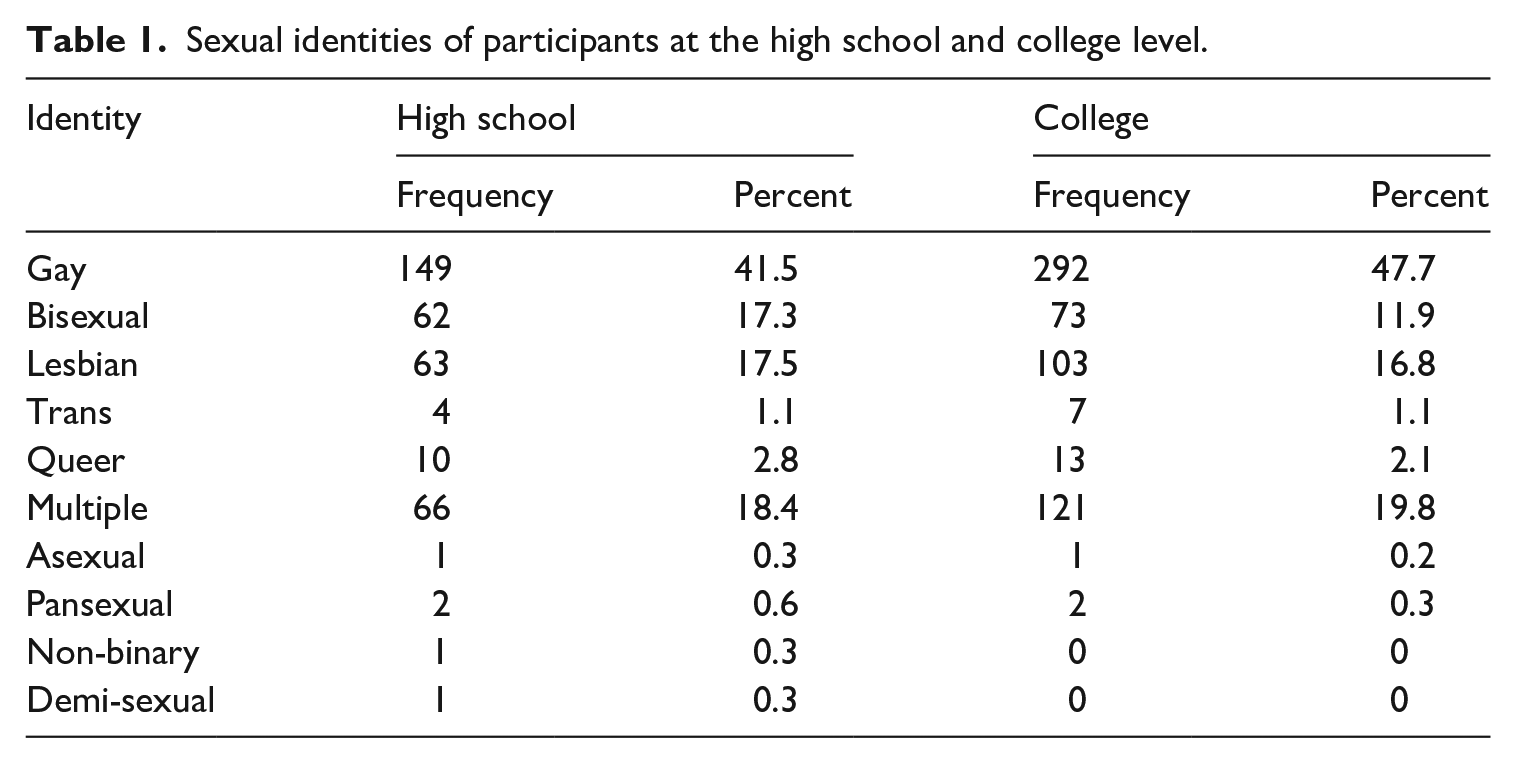
Similarly, 17.0% of participants played one of the Big 5 sports (n = 21 American football, n = 27 basketball, n = 8 baseball, n = 18 ice hockey, n = 30 soccer) at college level, with the remaining 83% of participants playing other sports. The most populace sports at college included swimming (n = 100), track and field (n = 61), lacrosse (n = 45), volleyball (n = 41), and cross-country (n = 38).
Experiencing a masculine institution as a sexual minority
The main question examined in this study was: how would you describe your overall experience with your teammates and being out to them (Table 2)? Participants responded to this question based on their experiences at high school and/or at college. Possible responses were perfect/near perfect (7), very good (6), good (5), neutral (4), bad (3), very bad (2), and worst possible scenario (1).
Overall experience of LGBT athletes in being out to teammates at both the high school and college level.
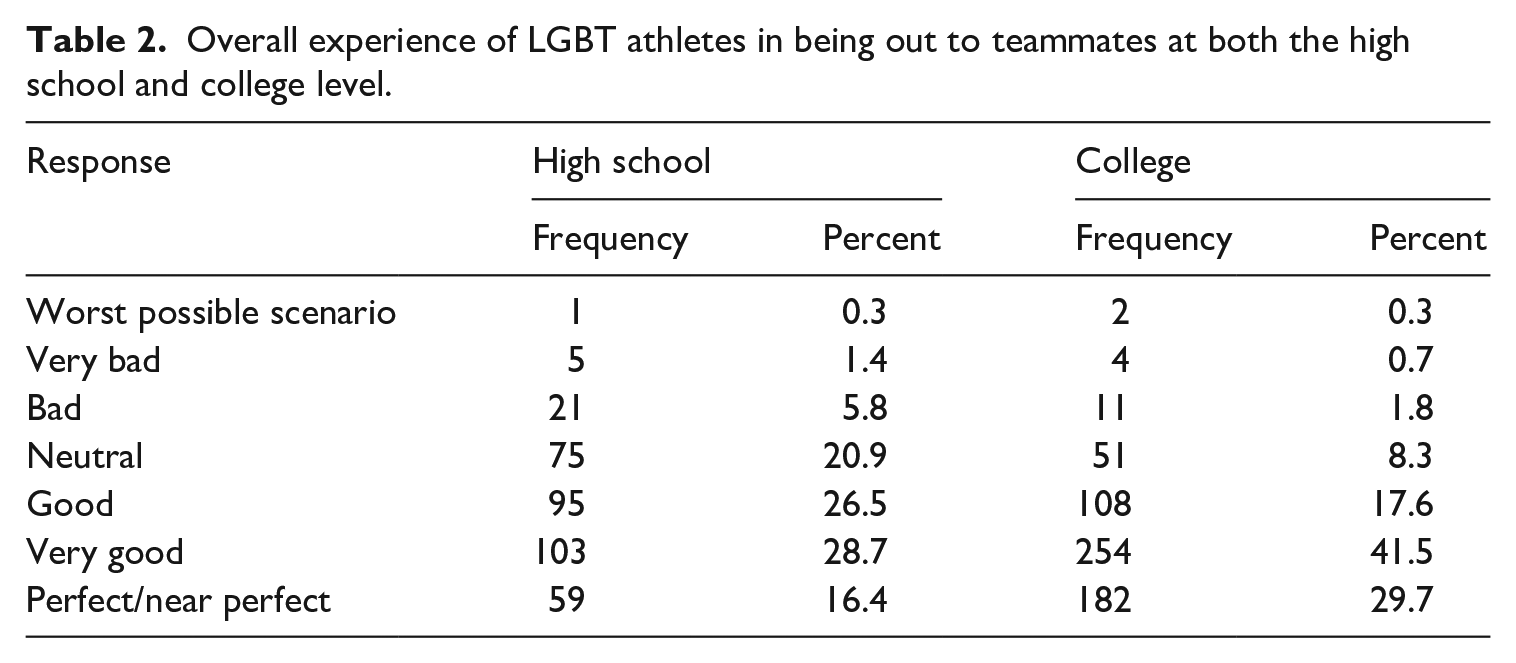
These rank-order responses were designed to reflect the even possibility of three ‘positive’ or ‘negative’ categories of experience and one neutral. The inclusion of the neutral question about overall experience is unique to studies on the experiences of LGBT people. It was added with the intent of capturing experiences that ‘just are’ – those that are neither good nor bad.
Results indicate that, at both the high school and college levels, ‘coming out’ experiences were overwhelmingly positive. Specifically, 71.6% of high school athletes reported a good, very good, or perfect/near perfect experience; 20.9% a neutral experience; and only 7.5% a bad or very bad experience, or the worst possible scenario.
‘Coming out’ experiences were even more positive at college. Here, 88.8% of athletes reported a good, very good, or perfect/near perfect experience, 8.3% a neutral experience, and only 2.8% a bad or very bad experience, or the worst possible scenario.
Irrelevance of the masculinity hierarchy
We received 64 responses from participants in Big 5 sports at the high school level, and 295 responses from participants in other sports at this level. At the college level, we received 104 responses from participants in Big 5 sports and 508 responses from participants in other sports.
At the high school level, a Mann–Whitney U test revealed no significant difference (z = −0.429, p = 0.668, p > 0.05) in overall experience in being out to teammates in Big 5 sports compared to other sports (Figure 1).
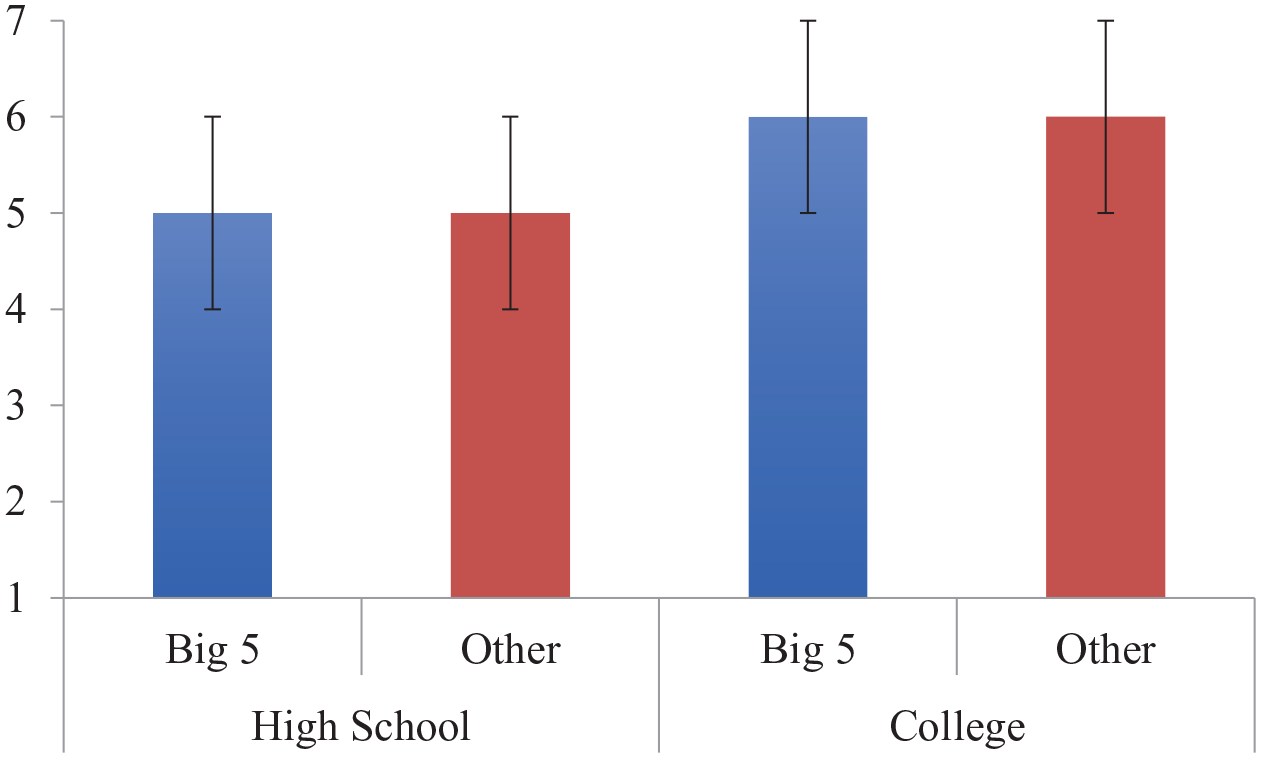
Median (interquartile range) overall experience in being out to teammates in Big 5 sports compared to other sports at both the high school and college level.
Similarly, at college, a Mann–Whitney U test revealed there to be no significant difference (z = −0.305, p = 0.761, p > 0.05) in overall experience in being out to teammates in Big 5 sports compared to other sports.
Discussion
There has been a rapid increase in liberal attitudes toward sexual minorities among the general North American population (Gallup, 2022, 2024; Pew Research Center, 2020; Twenge et al., 2016) in recent decades. This shift has operated at two levels of analysis, cohort replacement and cohort transformation (Kranjac and Wagmiller, 2022). The liberalization is not in-and-of-itself direct evidence of decreased antipathy toward sexual minorities in conservative, masculine institutions; nor is it evidence of promoted experiences for LGBT individuals in these institutions. This research addresses the situation.
It began with the premise that limited evidence suggests that conservative institutions are not insusceptible from broader societal changes over the past three decades. While there exists no known comparative literature of soldiers to civilians, fraternity members to non-members, or athletes to non-athletes, there is limited evidence of improved cohort experiences of heterosexual attitudes toward and LGBT experiences in multiple, conservative, masculine institutions. This includes survey data concerning the military (Evans et al., 2019), fraternities (Rankin et al., 2013), and concerning heterosexual attitudes toward LGBT athletes in sport (Cunningham and Pickett, 2018).
What has been missing from this body of research is a large-scale survey of LGBT athlete experiences in North American sport to examine for improved LGBT experiences in response to improved social attitudes expressed toward them by the heterosexual majority.
To examine for this, we conducted the largest known study of the experiences of LGBT athletes who have played openly for their high school and/or collegiate teams (n = 793 participants but because some took the survey for both high school and college number of surveys is 981). We used quantitative measures related to overall experience, comparing masculinized team sports, like football, and lesser masculinized sports, like swimming, as well as examining their perceived social acceptance among teammates.
Findings suggest that, along with fraternities, the military, and religion, the liberalizing attitudes of North American institutes of sporting education have deeply and positively impacted the experiences of LGBT youth who play on their high school or college teams. They report widespread and deep inclusion. We show two main results that speak to the depth and impact of this liberalizing process.
First, we found that the experience of LGBT athletes was largely positive when coming out to teammates, with those reporting a bad experience to be a small minority. This finding is consistent with other qualitative research on those who are out of the closet as a gay male in sport (White et al., 2021). The next most frequent response was neutral.
The inclusion of a neutral question was considered important because liberalizing theory would suggest that, as antipathy decreases, LGBT people should be viewed increasingly as ‘normal’ and thus illicit a less positively or negatively charged emotional response from the majority population. Thus, neutrality is akin to equality, suggesting progress.
Finding that 20.9% of high school athletes reported their experience as neutral, decreasing to 8.3%, as athletes experienced collegiate sports, might represent a reflection of improved attitudes between these two institutional settings that other survey data has shown exists more broadly. It might also be a reflection of the fact that previous research into gay male athletes at these two levels has found structural reasons for variance in overt gestures of support. For example, Adams and Anderson (2012) found cases where, after a teammate came out to their college program, the teammates took him to a gay bar to celebrate. Conversely, high school students could not make this type of public support.
The overall shift toward the positive side of responses in college might also be a reflection of increased athletic capital, given the de-selection processes that occur between these two levels of sport. Still, it might be an artifact of increased social freedoms to discuss sexual orientation and sexual lives with teammates, compared to the more controlled environment of high school sport. It might also be a product of a more sophisticated understanding of the operation of inclusion and exclusion within social networks.
It is also possible that some responses to the neutral category were derived from participants weighing up their overall positive and negative experiences concerning the relationship between athleticism and sexual or gender minority status, determining the net to be equal, and thus neutral. We proffer that this is less probable than their sexuality being mundane; however, because the psychological concept of positive-negative asymmetry suggests that people tend to remember bad experiences better than positive ones, this would likely influence these participants to indicate a bad or very bad experience if they indeed had them. Whatever the reasons, we will attempt to answer this question more definitively after analyzing the interview data from participants.
The second major finding of this research is that the liberalizing of North American educationally based sport team cultures appears to be equal in both the highly masculinized sports of American football, basketball, soccer, baseball, and ice hockey, as well as sports that are traditionally viewed as less masculine, like swimming or cross-country running. This finding is also noteworthy because it suggests that, while North American Big-5 sport athletes were at least once shown to exhibit more masculinity and violence than lesser masculinized athletes (Kreager, 2007); and while they may still be imbued with more cultural suspicion of homophobia, when a player comes out, their response is equally as inclusive of athletes on lesser masculinized teams.
These results thus contest the notion that sport (overall) and American football and other team sports (specifically) exhibit a higher degree of homophobia than other social institutions. For example, Storr et al. (2022) recently wrote, ‘Yet inclusion [in sport] is perhaps just an illusion . . . the sport sector is still failing inclusion’ (p. 16) and ‘claims about the advanced progress in inclusion for LGBT+ people [in sport] are problematic’ (p. 1). Results of this research instead show the opposite.
It seems possible that the cultural assumption of hyper-homophobia among the most masculinized team sports may be attributable to the near-absence of professional gay athletes, but equally there are numerous other hypotheses as to why gay men may not be represented equally here; including that they are overly represented in other sports and, relatedly, that they are less interested in these types of sports to begin with (Anderson et al., 2016). However, there is, to our knowledge, no research directly surveying these two populations to definitively make the type of claim such as that of that Storr et al. (2022). More so, our data do not support such conclusions.
Whatever the causation of this significant finding, it seems evident that in the absence of exhaustive, comparative research examining both the attitudes toward, and the treatment of sexual and gender minorities by both athletes and non-athletes, proclamations that sport – and therefore athletes – are more hostile in their attitudes or treatment of sexual and gender minorities is to judge and socially demote heterosexual athletes as a class without systematic evidence. As tempting as it may be to assume that the storied history of sport and homophobia carries into present day, the data presented herein questions such contentions.
There is scope for further investigation with this data and this is but the first of a series of articles to emerge from the data. Other articles will examine for male, female variance as well as focusing on transgender athletes across this gendered division – a particularly important area for future study as there remain gaps in our understanding of trans people’s subjectivities and positionalities more broadly (Rogers and Ahmed, 2017). We are also mindful that many participants identified a range of sexualities and gender identities that contradict earlier binary notions of sexuality and gender. While we have not been able to explore this area in greater depth in this article, this observation itself adds weight to earlier calls for a (re)creation or re-organizing of our understanding and categorization of sexualities, as identified in this journal by Roseneil (2000), Browne (2008), and Heaphy (2008), and for differences in the coming out experiences on the basis of these identities. Finally, given the polarization of attitudes in North America, there is also the opportunity for future research to examine for differences across the various states and regions of North America.
For now, the results of this article suggest that the liberalization of North American attitudes toward sexual minorities manifests into positive experiences for LGBT people within an institution long-conceived as being at the center of cultural masculine production (Anderson, 2005). It suggests that decreasing cultural homophobia found within North American culture more broadly (Pew Research Center, 2020) does equate to an improved experience for LGBT athletes, across all commonly played high school and university sports. Thus, there is no methodological paradox between qualitative and quantitative findings on LGBT inclusion in American sports and no modern prejudice framework at play in this research.
Footnotes
Funding
The author(s) received no financial support for the research, authorship, and/or publication of this article.
