




Abstract
This article explores how gendered divisions of labour manifest across species lines. It applies a feminist, more-than-human intersectional approach, building on previous work on animal labour. The vital labour donkeys do with and for humans and their contributions to multispecies societies have been under-recognised and under-theorised. Drawing on empirical research conducted in central Ethiopia on the human-donkey relationship, findings reveal the multiple ways human gender and class coalesce to shape the kinds of labour performed and social relations among women, men, and donkeys across urban and rural environments. At the nexus of these intersecting forces, equivalence is drawn, by research participants themselves, between women and donkeys. Women and donkeys are aligned and othered, differentiated from men, a dynamic that results in the feminisation of donkeys and mutual marginalisation of women and donkeys and exposes male violence perpetrated on both groups. The article contributes empirical insights into human-donkey relations and interspecies labour and offers theoretical considerations of more-than-human intersectionality.
Introduction
This article contributes to our understanding of gender relations of work by considering human-equine labour relationships. Donkeys, in particular, have worked alongside humans and have been active agents and essential co-workers in building and sustaining societies for millennia (Bough, 2012). In the global south, donkeys are predominately employed in manual labour, carrying materials on their backs, or drawing carts, working with and for humans to sustain livelihoods in some of the poorest communities. Donkeys and humans work together in a variety of ways, including productive work, for example, at brick kilns in India, and reproductive and subsistence work, such as transporting firewood and water for household use, as is the case in many African regions (Geiger et al., 2023; Maggs et al., 2021; Watson et al., 2020). These forms of work are embedded in human-animal social relations. Donkeys contribute to capitalist economies through their work with people living in poorer socioeconomic conditions, for example, in productive labour, often with men, and reproductive labour with women. It is clear from limited research conducted on donkeys and their labour in the global south that class and gender are instrumental in shaping donkey lives and the human-donkey relationship. My research in the East African nation of Ethiopia reveals how intersections of class and gender and sociocultural constructions of donkeys shape the labour they perform with humans. The discursive constructions of donkeys as ‘labourers’, ‘family members’, ‘tools’, or ‘women’s’ animals’ also shape the material realities of donkey lives, influence the ways in which people value them, and both reflect and reproduce the social status of and relations between men and women (Geiger et al., 2023).
Animals have always been a part of, rather than separate from, society (Carter and Charles, 2018). Some scholars are recognising the importance of animals’ work in sustaining human societies through the different types of labour animals undertake individually, collectively, and with and for humans; they argue that human-animal co-labouring shapes worlds (e.g. Blattner et al., 2019; Charles and Wolkowitz, 2023; Coulter, 2017; Tallberg and Hamilton, 2022). Thus, work has never been an exclusively human affair (Porcher and Schmitt, 2012). Feminist scholars have been instrumental in advancing the study of animal labour (e.g. Charles et al., 2022; Coulter, 2017; Cudworth, 2022), exposing links between sexism and the feminisation of animal labour within specific contexts such as the animal agricultural and dairy production sectors in the global north; for example, the bodily labour of female cows is exploited by forced reproduction, milking, and continuous separation from their young (Adams, 1990; Cudworth, 2011; Gillespie, 2014). Others have explored the feminised emotional care work performed by dogs within multispecies homes (Cudworth, 2022). Some feminist scholars have looked at organisational contexts in which animals work alongside humans; some organisations, like the police force, are gendered masculine; others, such as the charitable sector, are gendered feminine; this organisational gendering shapes the intertwined human-animal relations (Charles et al., 2022). Focusing specifically on equines, which includes horses, donkeys, and mules, feminist scholars have investigated labour performed by horses with humans and the intersections of class and gender relations that shape human-horse relationships (e.g. Butler and Charles, 2012; Coulter, 2014). However, few scholars have looked at the gendering of animal labour and gendered divisions of labour within the human-equine relationship, especially in the global south, thus leaving an incomplete understanding of the labour equines do with humans and leaving incomplete our understanding of human-equine relationships and the sociocultural importance of these relations. To address these gaps, my article explores how gendered divisions of labour affect interspecies work and asks how human-donkey relationships and the work they perform together are shaped by intersections of gender and class. To begin exploring these questions, this article presents a study of interspecies labour performed by women, men, and donkeys in central Ethiopia, focusing on the gendering of labour within these relationships. The study uses a comparative approach examining differences and similarities between rural and urban interspecies labour.
This article draws on my empirical research on human-donkey work relations and donkeys’ sociocultural importance to people, especially women, in rural and urban areas in central Ethiopia. First, the article outlines the theoretical framework, drawing on the feminist theory, method, and praxis of intersectionality and applying it to interspecies labour relationships. Second, it presents the methodology from my empirical investigation, which involved 30 interviews and 15 participatory workshops that explored work relationships among men, women, and donkeys. Third, the article discusses the context in which gendered human-donkey relations are formed, comparing work women and men do with donkeys in rural and urban areas. Finally, I discuss how the gendering of labour affects animals and human-animal relations, arguing that animal labourers should be included in feminist thinking of labour, oppression, and gendering and why an intersectional approach is beneficial to these discussions.
An intersectional approach to multispecies labour
To study the work donkeys and humans, particularly women, perform together, I employ a feminist intersectional approach. As Coulter (2016: 22) argues, feminist theory offers important insights into multispecies labour relations because feminist theories pay attention to the social processes and intricacies of different kinds of work and examine experiences of different kinds of workers, giving greater attention to often-overlooked workers and unpaid work. Intersectionality enables researchers to bring experiences of those often at the margins to the centre of their empirical and theoretical analysis (hooks, 1984). Kimberlé Crenshaw, a critical race theorist, legal scholar, and black feminist, coined the term intersectionality in her work in the late 80s/early 90s (Crenshaw, 1989, 1991) to expose how oppression is not a singular, one-dimensional system but rather constituted by complex overlapping systems of multiple social categories such as gender, race, class, orientation, ability, age, and other inequities. Feminist intersectional approaches reject essentialist and singular categories and examine how multiple identifiers intersect and are ‘permeated by other categories, fluid and changing’, created by dynamics of power (Cho et al., 2013: 795). Intersectionality as a theory and approach offers an analytical framework for examining the relationship between ‘multiple dimensions and modalities of social relations and subject formations’ (McCall, 2005: 1772). McCall (2005) defines an ‘inter-categorical’ approach within an intersectional analysis as seeking dimensions of variation in the intersections across categories; it is relational in that it highlights material and cultural relations of power within the structure of societies. Choo and Ferree (2010: 134) argue intersectional analysis is strengthened by comparative analysis that includes interactions across contexts and focusses on material and cultural relations of power within a given context. They also contend intersectionality can be sensitive to issues of identity and social locations as being ‘constructed or co-constructed with categories of oppression’; these identities can be contested, rather than static (Choo and Ferree, 2010: 134). Intersectionality can be applied across an array of disciplines to examine connections and differences and their relation to power, thus enabling analytical inclusivity beyond the human realm (Cho et al., 2013; Hovorka, 2015; Petitt, 2022). Both humans and animals have social locations in societies, and these positionalities can be constructed and co-constructed within relations of power (Geiger and Hovorka, 2015; Hovorka, 2015). Thus, I apply an intersectional analysis to interspecies work relationships to analyse the oppression of labouring women and donkeys through intersections of gender (masculine/feminine) and class (low/high income) and donkey sex (male/female), using a comparative analysis of rural and urban environments in Ethiopia.
Some feminist animal scholars (e.g. Birke and Holmberg, 2018; Cudworth, 2011; Deckha, 2012; Hovorka, 2015; Petitt, 2022) have argued intersectionality has long excluded animals; they call for more expansive theoretical and methodological engagements to contemplate how systems of oppression co-constitute animal lives. Birke and Holmberg (2018: 119) posit that human-animal relationships ‘are intersectional rather than analogical’; all lives are intertwined as different axes of power intersect to transform practices and discourses across the species divide. Non-human species are a source of social construction, identity formation, and difference within cultural contexts structured by global capitalism and class relations (Deckha, 2008, 2012). The inclusion of animal categories of difference such as breed, sex, age, and so on within an intersectional analysis offers more specificity to show how power relations manifest within and across certain groups of animal species (Hovorka, 2015; Petitt, 2022). Human identities, social relations, and lived bodily experiences are all created and recreated with other species, and both human and animal lives are shaped by multiple axes of power within specific contexts. Thus, intersectionality has much to contribute to the study of human-animal relations. In this article, I seek to contribute to efforts in more-than-human feminist intersectionality by providing an empirical study of how gender and gendered divisions of labour manifest between humans and donkeys; exposing the gendering of interspecies labour and its complexities across the rural-urban divide; and exploring intersecting oppressions and subjugation of women and donkeys.
Methodology
This article draws upon qualitative, narrative empirical data from 30 in-depth, semi-structured interviews and 12 participatory workshops in rural and urban areas in central Ethiopia (Figure 1) conducted between 2014 and 2015 with donkey co-workers and key stakeholders. Research was funded by charity The Donkey Sanctuary UK. Interviews were conducted with 10 women and 10 men who worked with or owned donkeys in rural areas in Haritu and Suluta and urban areas in Addis Ababa and Bulbulla (Figure 2) and 10 of the key stakeholders who consisted of mostly male veterinarians, business owners, police officers, and village chiefs.
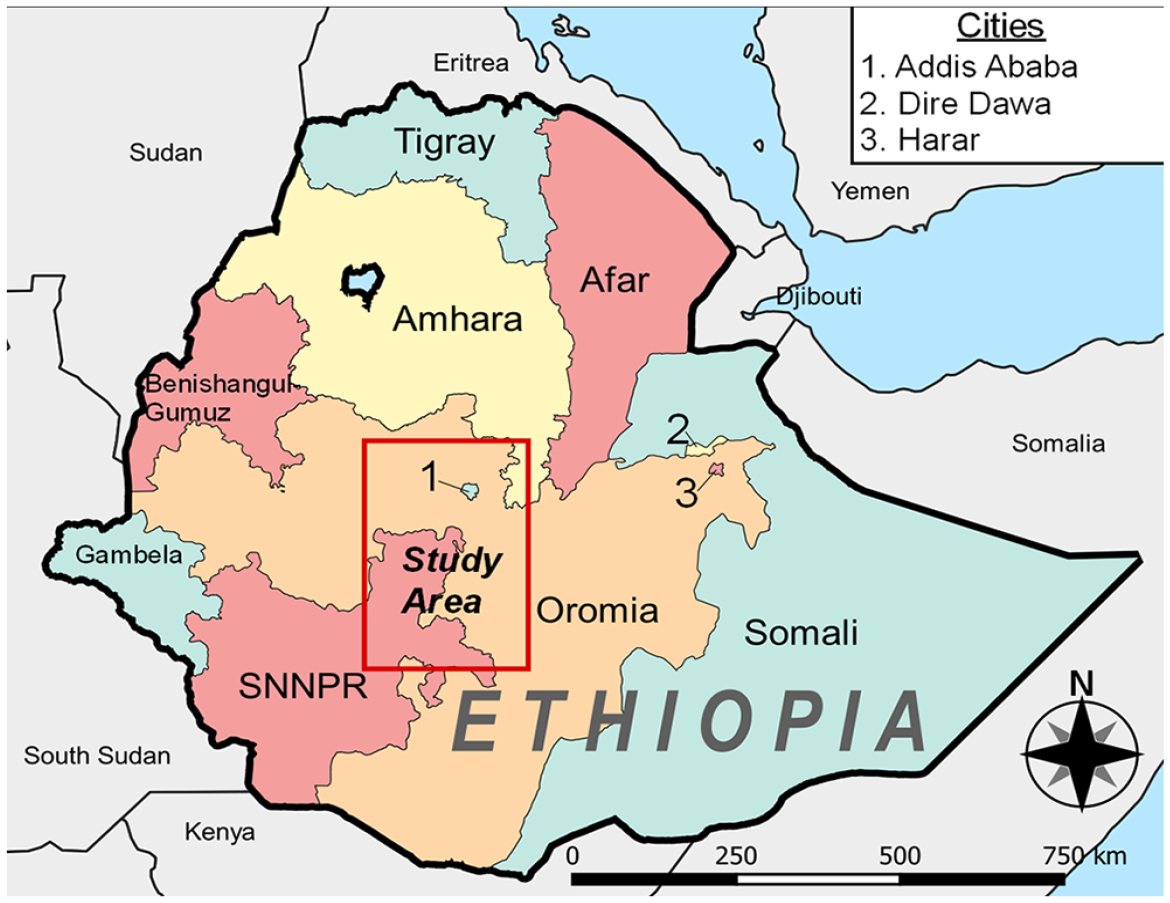
Map of Ethiopia.
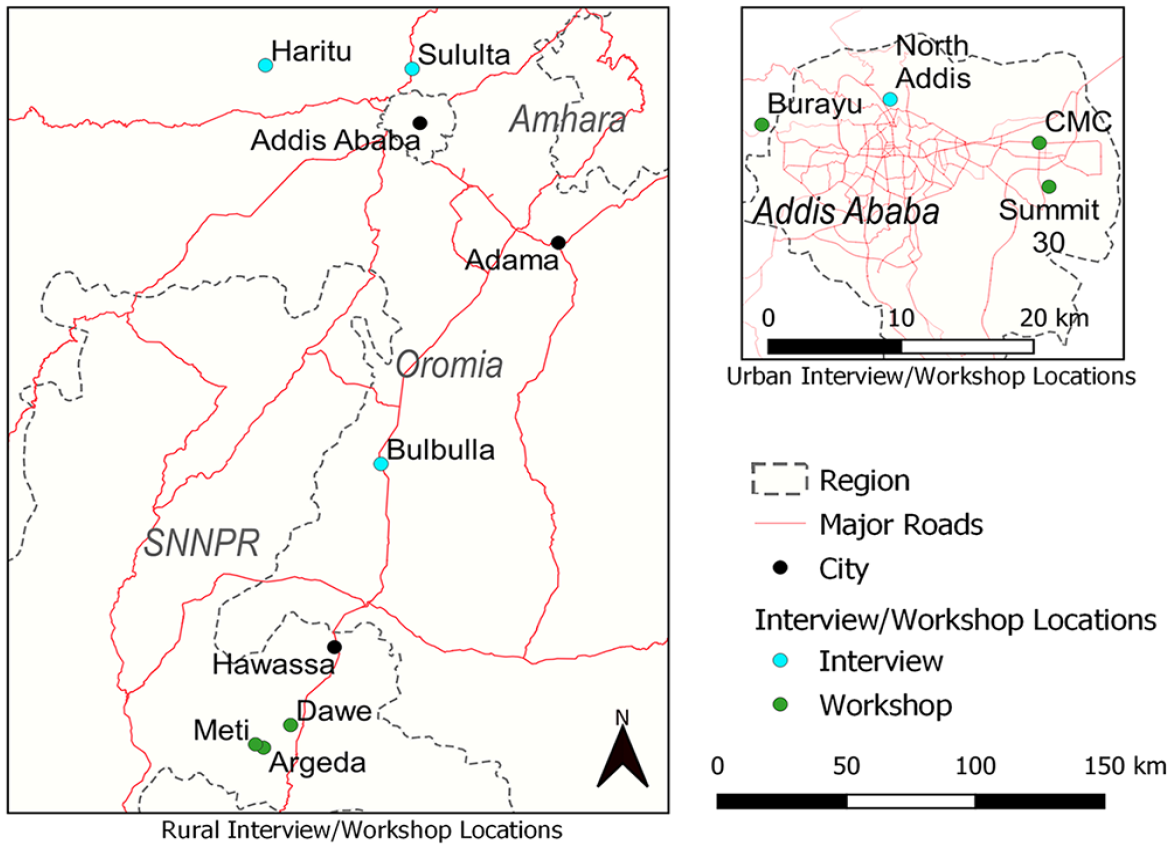
Semi-structured interview and workshop locations in central Ethiopia.
It proved difficult to access women working with donkeys in urban areas, so only four were interviewed. Six from two rural villages were interviewed because it was easier to encounter women working with donkeys in rural environments. Seven of the key stakeholders were men, and three were women; it was difficult to find women holding professional positions in the communities selected for research. Participants’ ages ranged from 22 to 65 years, with an average age of 45 years. In rural areas, rural development agents helped recruit interviewees who worked with and/or owned donkeys. Without development agents in urban areas, the research assistant and I walked about, directly recruiting people we saw working with donkeys. Interviews lasted from one to two hours and were held in either the participant’s home or a quiet area at or near the participant’s place of work. Interviews aimed to gather data on the importance of donkeys to human co-workers and helped develop the discussion guide for the subsequent participatory workshops. Interview questions were related to frequency and types of work performed with donkeys, care regimens, socioeconomic benefits of working with donkeys, what happens to donkeys when they can no longer work, and feelings towards donkeys and their perceived value. Letters of consent were translated, and interviews were conducted in participants’ first language, Amharic or Afaan Oromo. During the interviews, a local research assistant and translator posed the questions from the interview guide and translated answers to me throughout the discussion and helped me seek clarification on relevant points. After the interviews, the assistant replayed the audio-recorded interview and translated the discussion while I transcribed the translation in English to create full transcripts.
Analysis of the semi-structured interview results informed the design of the two-day participatory workshops which explored recurring themes from the interviews, for example, provision of care to donkeys; economic impact of donkeys; women’s and men’s relationships in terms of donkey use and care; donkeys’ position within society; and the social position of the donkey owner/co-worker. Twelve two-day participatory workshops were conducted in six field sites in central Ethiopia within rural and urban areas (Figure 2). Participants who worked with donkeys were recruited through a participatory mapping exercise in each location: three urban sites in and around Addis Ababa (Summit 30, CMC North, and Burayu) and three rural villages in the Rift Valley (Meti, Argeda, and Dawe). Five to 15 participants attended each workshop. A total of 137 donkey-owning or donkey co-working participants took part in the 12 two- to three-hour, two-day workshops, a total of 65 women and 72 men participated. Because women working with donkeys in urban areas proved difficult to encounter, only a men’s workshop was conducted in Burayu. For gender sensitivity reasons, two separate workshops were conducted at each site. These discussions with human co-workers placed donkeys at the centre of the discussions and invited a re-imagination of donkeys as central actors whose labour supports communities. Each workshop was audio-recorded and transcribed with a male or female local translator, depending on the gender of the group, who also acted as a facilitator during the workshop discussions.
A content analysis was conducted on the data from the 30 interviews and 12 workshops, for re-familiarisation and to comprehend essential features of the content, and the data were organised into categories: the labour performed by donkeys; their social and economic contributions; beliefs and assumptions about donkeys; the challenges of working with donkeys; and the relations between men and women. Using descriptive and thematic coding, I built a coding framework that divided the data into major themes and sub-themes with passages from participant interview transcripts organised into their respective categories, then summarised key themes and concepts. A subsequent thematic analysis of my observational notes and audio recordings of the discussions led to structured analysis of transcript contents. 1
During the fieldwork, I documented my observations in a field notebook to capture the donkeys’ positionality within the broader societal context. I also recorded what I witnessed in the embodied encounters between donkeys and humans, donkeys and their conspecifics, other species, and their surrounding environment. Participant observation gleaned information that could not be captured through speech alone. Knowledge and learning happen through our bodies and are a basis for communication and bodily engagements with animals to learn about their lives in the absence of human speech (Brandt, 2016). Embodied participant observation also served as recognition of donkeys’ presence in and contribution to the research. To thank participants for their time and participation, I offered them each a bag of coffee, a culturally appropriate gesture of giving thanks.
Donkeys in the gendered division of labour
This section brings together evidence from my study in central Ethiopia to illustrate the intersections of gender and class within human-donkey work relationships across urban and rural settings.
Gender, class, and divisions of interspecies labour in rural Ethiopia
Approximately 80% of Ethiopia’s human population lives in rural areas; the economy predominantly consists of self-employment and subsistence work, with agriculture being the main source of employment (United Nations Development Programme (UNDP), 2018). Despite the progress Ethiopia has made over the past 20 years, the country continues to rank among the top five countries in the world with the highest proportion of people living in extreme poverty (living on less than $1.90 USD per day), with women and girls being disproportionately affected by poverty (UNDP, 2018). According to the UNDP (2018), women in Ethiopia are nearly three times more likely to be unemployed than men because of gender norms and policies that discriminate against them. Women often have very few options in the labour market, especially those from poorer backgrounds, and are subjected to precarious forms of employment without the protection of basic labour rights (UNDP, 2018). Women in rural areas are predominately responsible for reproductive labour like fetching water and firewood for cooking in their under-resourced homes and caring for children and elderly relatives (Lavers, 2017; UNDP, 2018). Donkeys are vital co-workers as they transport firewood, water, and crops on their backs or in carts, lessening women’s physical burdens and providing time for other tasks such as taking children to school (Figure 3). Despite the care women provide to donkeys and other animals, women have less ownership than men over the family’s larger animals and often have little say in purchasing and selling most of the animals, including donkeys, with whom they spend the most time (Mulema and Nigussie, 2019). The only exception is in female-headed households (Maggs et al., 2021).
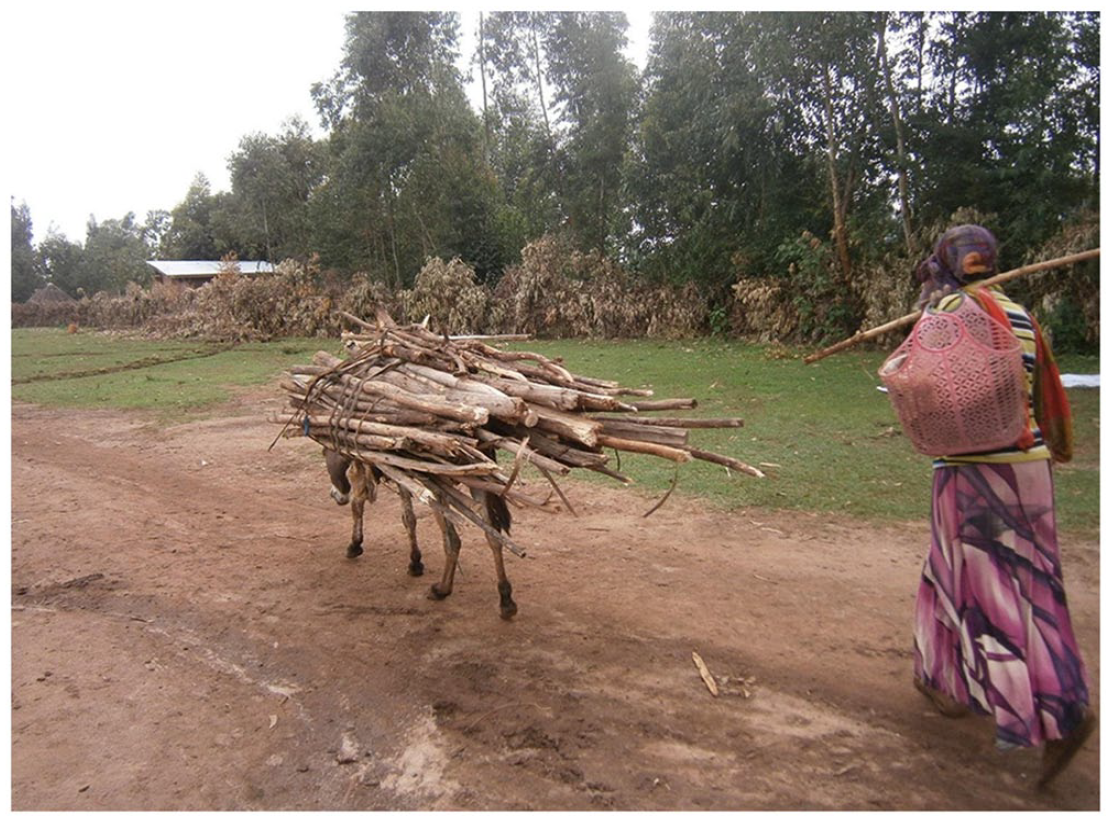
A woman and donkey transporting firewood in rural Suluta.
Men predominate in the agricultural workforce, where ploughing fields with oxen is considered a male activity (Lavers, 2017). Traditional sociocultural beliefs hold that ‘woman cannot farm’ and ‘cannot plough’ or handle oxen (Lavers, 2017); these norms exclude women from economic activities in this more profitable sector, legitimise men’s exclusive access to land, and give men control over agricultural outputs (Lavers, 2017). Not only is there a gendered division of reproductive and productive labour in rural areas, but there is also a species division of labour; oxen plough and harvest with men during ploughing and harvesting season, and cattle are cared for by men (Geiger et al., 2023; Lavers, 2017). These tasks are considered a substantial contribution to rural life, garnering high social status (UNDP, 2018). In comparison, women’s household work with donkeys and caring for smaller animals, such as chickens and goats, is often overlooked despite being vital to their families’ survival. Donkeys are predominantly valued for the labour they provide but do not hold any symbolic, cultural value, and ownership of them will not increase a person’s social standing in the ways owning cattle and oxen can.
Women’s labour and their othering manifest through their social positioning as the caretakers of the home and family, conceptually and materially relegated to undervalued reproductive and subsistence work with limited opportunity to participate in productive labour and materially dependent on their relationships with their husbands. Donkeys’ labour and othering manifest through the daily domestic work they perform with women, mostly in rural areas collecting firewood, water, and crops from the fields. Together, they transport agricultural products to sell at markets to generate a modest income to spend on the family’s needs, which women are responsible for. In contrast, men hold the position of head of household, the decision-makers who participate in production of crops, purchase and sell animals at market, control assets such as land, and hold local political positions. These privileges are masculinised (Lavers, 2017).
Gendering of interspecies labour is constituted through social constructions of gender depending on the closeness of the relationship and the perceived abilities of both humans and animals. This division of labour creates two different human-animal labour relationships, constituted through gendered divisions of work, which shape relations between women and donkeys and men and oxen. Men often referred to women and donkeys’ relationships as ‘intimate’; a male veterinarian explains why: Donkeys are very important to the community. When donkeys get sick, women feel as if one of their children gets sick because they are helped more by donkeys. Women cry when donkeys die; they are special animals for women to make businesses and for transportation. Most animals in the family are more friendly with women because they feed, care, water, and use them. Donkeys are not friendly with men. They are not intimate with men. Women are friendly with donkeys because they spend most of their time with them, they worm them, touch them, spend time loading and unloading them. That’s why their relationship is intimate (Pharmacy owner & veterinarian, Key Informant, 19 June 2014).
Intimacy has long been a feminist concern as scholars study the everyday, the familiar, the interconnectedness of social relations, and social reproduction within everyday life (Mountz and Hyndman, 2006). The everyday and the intimate are often feminised and, in the context of Ethiopia, are a site where power relations between men and women and other species within families manifest. An affective relationship between women and donkeys was brought out strongly throughout our discussions; women often shared their sadness and grief when losing a donkey when they run away, are badly hurt, stolen, or die. Others identified with their donkey co-workers and developed affinities with them through shared experiences of subjugation and suffering. For example, one woman donkey co-worker expressed sadness when losing her donkey and described what she did to provide care: My donkey was seriously ill and by the end of the day when I got back the donkey died inside the compound. I felt so sad that time, I cried . . . I was crying for a week . . . I used to fetch water by using my own back [over] long distances. When I started using my donkeys for the first time I felt so happy and glad and since then I have felt so happy and glad to own donkeys (Rural woman and donkey co-worker, Interview #15 June 19, 2014).
The importance and value of donkeys to women cannot be overstated. In everyday life, donkeys work with women to care for children and families; participants emphasised how donkeys support their families’ survival, going to great lengths to care for their donkeys by spending the little money they had to provide care for them. If women lost a donkey, they would ask their husbands to sell other animals such as goats or cows to purchase another, emphasising the important role donkeys play in supporting women’s labour. Despite the intimate relationships donkeys and women reportedly have, they are situated within gendered relations of power: Men make decisions about which donkeys women work with and for how long before deciding when to sell the donkeys.
Gender, class, and divisions of labour in urban Ethiopia
Rural to urban migration is a common phenomenon for both men and women seeking livelihood opportunities in central Ethiopia. However, this migration is also multispecies; donkeys migrate to work alongside their human counterparts. Interestingly, this migration from rural to urban areas changes the types of work humans and donkeys do, where they work, and who they work with. Men who have migrated from rural to urban areas in search of work are the ones who predominantly work with donkeys to generate an income. Many find work in the construction industry, transporting bricks and bags of cement on donkeys’ backs (Figure 4), often working in areas where vehicle access is difficult because of the challenging terrain. Men have found an untapped opportunity working with donkeys in this sector in the urban context, drawing on knowledge gleaned from living and working in rural areas. On the other hand, women who have migrated to cities from rural villages have difficulty accessing donkeys to work with, as many are labouring on construction sites with men, where women are barred because of their perceived lack of strength. Similarly, female donkeys face exclusion in urban areas because men perceive them to lack sufficient strength and because they would be an unwanted sexual distraction to working male donkeys. During the data collection, I encountered only male donkeys in the urban areas. Despite these male donkeys working mostly with men in ‘male sectors’, they were feminised and referred to as ‘she’. By excluding women and female donkeys from work in profitable sectors in urban areas, and working only with other men and male donkeys, men reinforce gendered work, to women’s disadvantage.
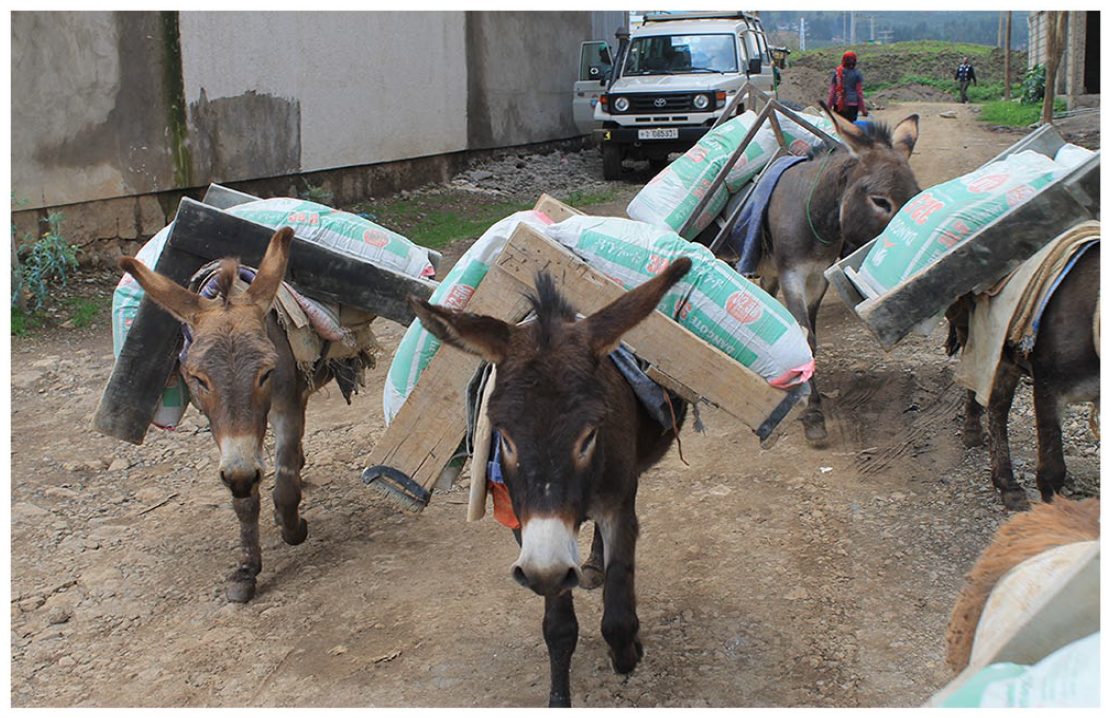
Donkeys transporting cement in Addis Ababa.
The positioning of donkeys as female and valuing them only in terms of the labour they can provide to men to earn an income, along with the exclusion of women from certain sectors, results in the marginalisation of both poorer, migrant women and donkeys. Despite this co-marginalisation, after migrating from rural areas, some women realised the value of skills developed in their villages, the skills of interspecies communication and labour with donkeys. These women were able to transpose these skills to paid work with donkeys that challenges male power in the household. Some joined associations that collectively purchase male donkeys and carts to collect rubbish from households in wealthy areas, which further exposes wealth and class disparities. In the central Ethiopian context, class is predominantly income-based, and those who earned very little were marginalised from the class system based on income inequalities. Poorer women who migrated to cities reportedly lack options for secure, safe, regular, and adequately paid work (United Nations Women, 2013). Rubbish collection is dangerous, precarious work; a lack of adequate protective materials for handling and disposing of household waste makes women vulnerable to illness and injury. They are paid per rubbish dumpster filled, a variable amount; this meagre income is less reliable than what men earn with construction work.
Not only is the work dangerous and precarious, but in breaking social norms, these women working in rubbish collection find their work contested; several women reported facing discrimination and alienation from their families and communities. One women’s workshop participant who collected household rubbish in wealthy neighbourhoods of Addis Ababa with her donkey and cart said, I divorced my husband because of this work because he didn’t want me to do it, but I refused and kept working. So, we got divorced. Our families working in the rural areas curse me and I haven’t spoken to them for four years (Urban women’s workshop, donkey co-worker, 19 July 2015).
While she was able to gain financial independence and freedom from her husband’s control, it was not without social repercussions. Other women in the same workshop reported they were stigmatised by fellow community members for working in socially unacceptable ‘dirty jobs’. They felt disrespected; some lost their children who were taken by disapproving extended family members. Several women said collectively, Many people do not have a good perception of us. For instance, some people say ‘why are you working such a job, what’s wrong with you?’ They even advise us to protect our children from certain health problems because we are handling rubbish. Some parents got their children taken away from them because they are collecting rubbish. We have said we don’t care what others say to us because we are working and raising our children (Urban women’s workshop, donkey co-worker, 19 July 2015).
Despite stigmatisation, these women persisted with the work because it earned them the necessary income they needed to provide for their families. Another woman and donkey co-worker in the town of Bulbulla refused to be constrained by gender norms, discrimination, and social constraints. She sells river water transported by her donkey to male-dominated construction sites refusing to let gender norms and cultural traditions prevent her from working: When I started this business, people were discouraging me, and people were saying how could you do this job? It is a job for men, not women. Now people see me doing it and tell me to keep working and I will be successful in life later on. People say I am strong and clever. I feel happy (Urban woman, donkey co-worker, Interview #18, 19 June 2014).
As this quotation exemplifies, some rural women who have migrated into urban areas are successfully blurring the boundaries around who can do what work, with whom, and where, challenging sociocultural norms and gendered work. Women and donkeys who are breaking these boundaries are working in less feminised spaces. However, these women said they desired further advances in their work life; some wanted to start urban gardens or be able to buy and sell livestock as men do to increase their earning capacities. This is poignant as women are continuing to push for greater independence, inclusion in more economic sectors, and satisfying work. To be a poorer woman who has migrated from a village to work in a city means facing divisions of labour that often exclude them from more profitable income-earning sectors, which perpetuates the intersectional marginalisation they faced in rural areas. Women working with donkeys in paid labour were the minority in cities, in contrast to the rural areas where they worked with donkeys daily to perform reproductive work.
Female donkeys reportedly stay at homesteads in rural areas working with women and children, an example of the way work and spaces have been feminised. Meanwhile, men maintain their masculinities by employing only male donkeys in ‘male work’, thus perpetuating gendered discourses. While donkeys’ labour is less feminised, human valuing of them does not increase. Being a male donkey in cities means performing difficult physical work in busy, noisy environments and experiencing deprivation: Little grazing is available, and because female donkeys are barred from cities, the male donkeys have no opportunities to socialise with them as they are outside these physical, gendered boundaries. The urban environment and the gendered divisions of donkey labour thus limit their sociality and agency.
To explain this shift between working in feminised rural spaces to working in urban masculinised spaces and to highlight the gendered boundaries placed upon poor women and donkeys, a male security guard, working on a construction site in Addis Ababa, said, In rural areas women usually use donkeys for transporting grains, fetching water, and selling cow dung. But in this area, men use donkeys more because women in urban areas can’t load cement and blocks on donkeys. It is very hard to carry cement; however, women are strong, but it is very hard work and very hard to do this business. It is hardship. So, men are usually the daily labourers and use donkeys to help them transport the loads (Key Informant, #4 Interview, 12 June 2014).
There is a contradiction in this participant’s acknowledgement of women’s strength while seeing it as nevertheless unequal to men’s; he reinforces notions that women cannot perform certain labour such as farm or construction work. A male construction worker/donkey co-worker explains why they employ only male donkeys, People don’t prefer female donkeys for their business because they couldn’t carry these loads; it’s better for female donkeys to stay in rural areas for breeding and to send the foal to us to use. We need the female donkeys’ foals to work. What would happen if they work with female donkeys? That’s not good because all of these male donkeys will run after her during breeding season and will get her down so bringing a female donkey here is no good (Urban male construction worker and donkey co-worker, Interview #6, 11 June 2014).
Male donkeys are perceived as stronger and tougher workers than female donkeys, just as men are seen as able to perform certain roles better than women. However, donkeys of both sexes are seen as a commodity for men to control, just as men try to control women’s labour and places of work. Not only are female donkeys excluded from certain urban sites because their gender is seen as a distraction to male donkeys, they are also expected to remain in the rural areas to reproduce and provide foals for co-working or to sell. Gender, then, whether assigned to humans or animals, is bound up in relations of power and inequality, and notions of inferiority/superiority, to the detriment of both women and donkeys.
Women who have crossed into male urban work domains are not the only ones to contest power and enact their agency. Donkeys, when able, when they choose, and when not constrained by hobbling,
2
will resist work by running away or refusing to work. They are embodied, agentic beings who learn to be in close relation with humans through processes of interacting and handling and who depend on humans for their sustenance and care. Because donkeys and humans are in embodied interspecies relationships of work, care, and dependence, power dynamics come into play: Members of one species are enlisted to labour on behalf of another. As thinking and feeling individuals, donkeys accept and tolerate human presence and demands, but through bodily communications, they also evade, resist, and negotiate human requests of them. A participant and donkey co-worker explained how his donkey, a male (but referred to as female), evades work and exercises his agency: She is aggressive. When there is no work on Sundays the donkey goes off somewhere. She does not easily obey people. She knows me but she runs away when she sees me and she is young and not trained well (Men’s urban workshop, donkey co-worker, 19 July 2015).
Human co-workers often placed great emphasis on control and lack of control of the donkeys’ physical movements and on the challenges of donkeys running off, possibly in search of mates, grazing, or eschewing work. Often human co-workers respond to these expressions of agency by hobbling the donkeys’ front legs with rope to restrict their movement. Those who resist work demands and human control were said to be ‘bad donkeys’ or ‘aggressive donkeys’, difficult to work with and disruptive to the expected normative interspecies relationships of control. While the work donkeys do may be dictated by humans, donkeys shape the co-working experience through their agency and decide whether to engage in the work or not. However, coercion in some relationships may prevent donkeys from opportunities to enact their agency or have their preferences acknowledged.
Violence towards women and donkeys
The discursive sociocultural equivalence drawn between women and donkeys is perpetuated by common proverbs that were repeated by women and men in rural and urban locations such as ‘women and donkeys are the same, they like to be beaten’ and shows an interconnection of oppression and subjugation between women living in poverty, who depend on donkeys for their livelihood, and the donkeys themselves. These proverbs point to the gender-based violence experienced by both women and donkeys.
The equivalence between women and donkeys remained unchanged across spatial boundaries. In rural areas, donkeys working with women are discursively positioned as ‘women’s animals’, assigned lower status and feminised. In urban areas, despite working with men in masculinised urban spaces where their work is not feminised, they are still referred to by male owners as ‘she’ regardless of sex; the animals’ low social value as a species persists because of their discursive and material sociocultural associations with women and women’s work. As male workshop participants explain: In Ethiopia, people call donkeys ‘she’ even if the donkey is male they will call it she (Men’s urban workshop, donkey co-workers, Addis Ababa, 9 July, 2015).
Women and donkeys are understood to be feminised beings that can be controlled by men; the gendered discourse from participants represents what Cudworth (2016: 82) calls ‘embodied property’. A men’s donkey-owning workshop group explained: Women and donkeys are doing as they have been told by men (Men’s urban workshop, Addis Ababa, 10 July, 2015).
Strong animalisation associations were made about certain groups of women living in poorer socioeconomic conditions, particularly by male participants in a similarly lower socioeconomic class. These women were described as having closer relations with and similar lives to donkeys, so therefore deserving of subordination, oppression, and violence. Women participants did not feminise donkeys in the way men did. Women referred to their donkeys by their sex, either ‘he’ or ‘she’, whereas men called all donkeys ‘she’. Men, as well as women, discussed how women and donkeys were connected, making close corporeal associations between women’s and donkeys’ bodies, made to serve the family, tolerate poor treatment, and accept exclusion from paid work. An urban woman donkey co-worker addresses the parallels and connections between women’s and donkey lives by sharing a common proverb: ‘some husbands do not let their wives get out of the home because they are considered a donkey’ (Women’s urban workshop, 18 July 2015). The home is constructed as the place and space where women’s and donkeys’ bodies ‘ought’ to be. An urban women’s group collecting household rubbish in wealthy Addis Ababa neighbourhoods explained the social positioning of poorer women and donkeys and how power and gendered labour divisions manifest, The role of women and donkeys in this society is: Women are commonly beaten by their husbands, but they are staying with their husbands to raise their children. And donkeys are often beaten by their owners, but they will not run away from their owners; this shows how donkeys and women are similar. The roles of women and donkeys are the same; they are working day and night for the survival of the family (Women Urban Workshop, donkey co-workers, 18 July, 2015).
This quote exemplifies the importance of donkeys to women’s lives, the challenges experienced while doing reproductive work, and the violence that can ensue. Similarly, a rural woman participant recounted a story about losing her donkeys in an urban Addis Ababa market; she feared her husband’s reaction: When I lost my donkeys at the market I felt sorrow but what can I do? I was alone when I lost my donkeys and that’s why they ran away in the Addis market. After I lost the donkeys and had searched for them and couldn’t find them I was worried my husband would beat me, but when I came home he didn’t beat me. I was carrying everything on my back until I was able to buy another donkey (Rural woman and donkey co-worker, Interview #20, June 2014).
This quote shows that donkeys relieve women of some of the burdens of reproductive labour they shoulder and how, in the absence of donkeys, their work becomes even more physically demanding but also how some women expect physical punishment from their husbands and how this abuse is extended to donkeys. Findings reveal both groups are subjected to violence through their diminution and marginalisation by the workings of structural intersectional inequalities associated with poverty and normative expectations. Other studies have found social norms and inequities to strongly influence the perpetuation of domestic violence towards women in Ethiopian communities (Deyessa et al., 2010; Mishra and Aman, 2022). Domestic violence towards women appears to be extended to and inflicted on donkeys as well. The violence towards donkeys was evident in the discussions with donkey co-workers in both rural and urban areas and in interactions observed between donkeys and their human counterparts. One rural male donkey owner explains that hitting donkeys is a routine way of asking them to perform the work of carrying agricultural products on their backs, ‘I will load them [donkeys] and then I will beat them [with a stick] to make them go’ (Participant #2, 9 June 2014). Male violence reported towards women and donkeys points to the need for further exploration into how gendered violence can materialise within interspecies working relationships and how intersecting oppressions can lead to such violence being mutually experienced by women and animals.
Conclusion
This article presents a comparative study of urban and rural interspecies work relationships among women, men, and donkeys in central Ethiopia. It demonstrates that expanding our focus to include and centre the labour of animals and their interspecies work relationships with humans improves our understandings of the composition of a multispecies society and how animal labour contributes to, shapes, and is shaped by economies, social relations, and individual lives. Applying a more-than-human feminist intersectional analysis reveals that women and donkey identities are co-constructed through the intersection of human gender and class and donkey sex, resulting in the oppression of both groups. An intersectional approach allows for the inclusion of multiple species and social categories in a simultaneous analysis revealing how social relations can evolve across rural and urban spaces. An intersectional approach illuminates how intertwined donkey and human lives are in Ethiopia and how material circumstances and discursive norms reinforce each other: Both women and donkeys experience sexism, subjugation, and violence perpetrated by men; their lower economic and societal positioning devalues both groups, leading to sustained normalisation within communities that this treatment is acceptable or tolerable. As Plumwood (2004) notes, very often, the forms of oppression experienced by animals are interlinked with the oppressions humans experience, especially women, unde-rlining the importance and strength of an intersectional analysis to the study of human-donkey relationships and multispecies labour.
This comparative perspective illuminates the distinct differences between the types of labour donkeys perform in urban and rural spaces and reveals how the feminisation of donkeys and the devaluing of women operate across both environments. The concept of feminisation when applied to interspecies labour exposes how gendering shapes the work of humans and animals collectively and who is included or excluded from different kinds of work and workspaces. In rural areas, women and male and female donkeys perform reproductive labour together in a reportedly close relationship. While male donkeys work with men in productive urban masculine sectors, they retain their low status, and their cultural association as a rural woman’s animal is maintained discursively and materially. Men differentiate themselves from donkeys and women by feminising donkeys, barring female donkeys from the cities, excluding women from work in more profitable sectors, and aligning donkeys and women as ‘the same’. The equivalation of women and donkeys is an exercise of men’s power over both groups and maintains the differentiation of men’s and women’s social positions. The gendering of labour is also structurally embedded within familial relations. When women decide to challenge gendered divisions of labour and perform paid work in urban areas with male donkeys, they face consequences such as alienation from their families and stigmatisation from their wider community. Furthermore, participant comments demonstrate that normalised domestic violence in both rural and urban areas is meted out to both women and donkeys.
Some participant discussions reveal that, despite these consequences, women working in productive labour with donkeys are gaining acceptance from wider communities, pointing to possible changes to gender norms and socioeconomic inclusivity. However, the article shows how little women and donkeys are valued in the Ethiopian study areas. In sum, the contribution of this research is to reveal how donkeys in central Ethiopia are critical co-workers, especially for women, and are active labourers and contributors to human society, but also exposes how both are entangled in interspecies gendered divisions of labour, sociocultural norms, and poverty, all of which undermine their well-being and cause their contributions to be overlooked and undervalued. By including interspecies labour in discussions about work, we can forge new pathways for considering better working conditions and practices that attend to human and animal workers equitably.
Footnotes
Acknowledgements
I am grateful to Nickie Charles and Carol Wolkowitz for their helpful comments on early drafts of this article. My thanks to The Donkey Sanctuary UK for funding this research. My special thanks go to the donkeys and people who welcomed me into their multispecies communities and generously gave their time to participate in this study.
Funding
The author(s) disclosed receipt of the following financial support for the research, authorship, and/or publication of this article: The study was funded by The Donkey Sanctuary UK.