




Abstract
This article discusses the development and use of the solicited unstructured diary-interview method to explore the everyday tacit and mundane nutrition information activities (NIA) of people who have type 2 diabetes. Diary completion was followed by individual qualitative interviews with individuals (n = 18) and one couple. Diary entry styles ranged from succinct daily logs of their NIA to extensive prose reflecting on the nutrition information they used and associated practices. Development of the method incorporated piloting and advice from lay groups who checked acceptability and understanding of the research tools, and highlighted the need for regular contact between the researcher and participants throughout the diary completion phase. Participants engaged positively with the diary approach. The findings highlight the extent to which the everyday NIA is mundane and thus unavailable for academic exploration. The diary-interview method exposed these practices to both the researcher and participant, and supported them to reflect on the practices they engage in every day in order to self-manage their type 2 diabetes. Although this article draws on an example from health, the article demonstrates how the diary-interview method has utility for researchers exploring other everyday tacit and mundane experiences.
Keywords
Introduction
This article illustrates the value of the diary-interview method to explore everyday mundane activities by drawing on a qualitative study that explores the nutrition information experiences of people with type 2 diabetes mellitus (T2DM). The article details the practical aspects of developing a diary-interview method where the focus is on accessing aspects of embodied, tacit, and mundane everyday activities, before exploring the value of this methodology for other studies. The article discusses the important role played by public engagement in the process and piloting of the data collection tools to ensure their acceptability to the population of interest. Diaries offer utility in research through enabling ‘first hand recording’ (Plummer, 2003: 1) close to the time the experience occurred. Used alongside interviews, diaries help to explain how people ‘make sense of their lives’ (Plummer, 2003: 3). Previous use of the diary-interview approach has included exploring food use (Dickinson, 2003) and health information behaviour (Hurst, 2016). There is limited research exploring the use of a qualitative diary specifically to allow exposure of tacit and hidden nutrition information activity (NIA) despite their use in quantifying nutritional intake and recording food-related behaviours (Deakin, 2016: 131).
Information is data that is meaningful to the person that is using it (Case and Given, 2016: 1) and is a basic need that enables humans to live their lives (Ford, 2015: 1; Spink, 2010: xii). Information activities involve accessing and making use of information in order to impact on someone’s mind-set (Case and Given, 2016: 6). They are everyday tacit and taken for granted ‘instinctive’ activities (Case and Given, 2016; Cox, 2012; Lloyd, 2010; Merleau-Ponty, 1962: 25; Savolainen, 2008; Spink, 2010: xii). Similarly, food-related activities are ordinary, everyday, tacit processes that are mundane and which people may not be aware that they are undertaking (Fischler, 1988; Wills, 2012).
Type 2 Diabetes Mellitus (T2DM) is a chronic progressive disease (NICE, 2015) reliant upon self-management which we define as taking responsibility for one’s own health in order to achieve an individual level of managing T2DM. Self-management is a core component of diabetes care as people with T2DM make daily decisions that impact on their diabetes control (Bodenheimer et al., 2002). A key element of successful self-management in T2DM is access to nutrition information about healthy food (Diabetes UK Nutrition Working Group, 2018; Longo et al., 2010; Meyfroidt et al., 2013; NICE, 2015; Patient Information Forum, 2013). However, people with T2DM may have difficulty understanding nutrition information, and we know a little of how people translate this information into their daily lives and their food-related activities (Graffigna et al., 2014; Kaziunas et al., 2013). Understanding this is fundamental to supporting people with T2DM (Charmaz, 1993; Kneck et al., 2012: 134–166). Taking care of what is eaten is a self-management activity requiring multiple complex and interlinked decisions throughout the day which due to their ordinary, tacit, and mundane nature may not be easy to articulate or recall (Johnson and Bytheway, 2001). Therefore, utilising research methods that are reliant upon participant memory has major limitations.
The solicited diary is used as a research tool where memory and recall may be incomplete (Hyers, 2018: 63; Johnson and Bytheway, 2001; Plummer, 2001: 51). A diary can reveal more than an individual’s actual behaviour, providing ‘essays about peoples’ lives’ (Meth, 2003: 199) and when unstructured can elicit data centred on the participant’s day-to-day experience and provide context to the issue being researched (Bartlett and Milligan, 2015: 8, 15, 21).
Diaries are often used as a ‘precursor or adjunct’ to other methods (Bartlett and Milligan, 2015: 25). In the seminal study by Zimmerman and Wieder (1977), diaries were used where direct observation would affect the everyday behaviour that was the subject of study and were followed up with in-depth interviews to confirm diary entries. Diaries may also act as a sensitiser to an interview (van Smoorenburg et al., 2019) enabling a deeper understanding of food behaviour (Bava et al., 2008; MacDonald et al., 2018), information behaviour (McKenzie, 2003), and T2DM self-management (Graffigna et al., 2014).
Relying on interviews alone may not reveal these experiences since participants might deem them unworthy of inclusion, may not recall them, or are unaware because the behaviours are tacit. Using a follow-up interview to a diary is commonly referred to as the ‘diary-interview’ method (Milligan et al., 2005). The method is considered to enhance both the diary data and the interview data (Brownlie, 2018; Hurst, 2016; Spowart and Nairn, 2014) as the combined approach has a synergistic effect (Williamson et al., 2012).
The diary-interview method appears to be worthy of exploration to determine whether it can assist in uncovering the hidden interlinked behaviours relating to food, information, and T2DM self-management. Although there is some research suggesting that people with T2DM access information about food from a wide range of sources (Meyfroidt et al., 2013), there is limited research focusing on how, and indeed whether these sources are used. While this article presents the development of the diary-interview process for participants with a long-term condition, the method may be equally applied to other settings not related to health where exploration of the tacit and mundane in relation to daily life is of interest.
Developing a diary
A range of techniques have been used in diary research (Bernays et al., 2014; Brownlie, 2018; Hislop et al., 2005; Hyers, 2018: 87; MacDonald et al., 2018; O’Connell, 2013; Power, 2003), although when given a choice, a handwritten format is preferred (Brownlie, 2018). A structured format may ensure that data collected meets the study research questions (Johnson and Bytheway, 2001; Zimmerman and Wieder, 1977); however, an unstructured format can facilitate diarists to make entries and capture feelings and experiences without influence from the researcher (Bartlett and Milligan, 2015: 15; Hinsliff-Smith and Spencer, 2016; Zimmerman and Wieder, 1977). While shorter diary periods may result in the capture of more events than would be normal practice (Corti, 1993), diary entries have been found to reduce over time (Johnson and Bytheway, 2001; Sillence et al., 2007), with the most effective diary period being 4 weeks (Keleher and Verrinder, 2003). Building good relationships between the researcher and diarist is important for both extended and shorter diary periods (Bartlett and Milligan, 2015; Keleher and Verrinder, 2003; McKenzie, 2003; Milligan et al., 2005: 39). Although twice weekly contact with diarists promoted diary completion (Keleher and Verrinder, 2003; McKenzie, 2003), regular reminders may not be sufficient for longer diary studies (Sillence et al., 2007).
The interview as part of a diary-interview study
The research paradigm will influence the way that the interview is used within the diary-interview methodology (Brinkmann and Kvale, 2015: 51). The diary-interview method has been used in ethnographic studies (Zimmerman and Wieder, 1977) where the interview was used to confirm diary accuracy; phenomenological approaches (MacDonald et al., 2018) where the interview enabled participants to expand further on their diary entries and post-structuralist work (Spowart and Nairn, 2014) where diaries were starting points for the participant-led interviews.
For this study, a 4-week diary period was selected, incorporating an unstructured diary followed by an in-depth interview. The study adopted a broadly social constructionist approach (Barbour, 2014: 43), intending the interviews to be used flexibly to explore the experiences recorded in the diaries and to extend the understanding of NIA within the context of people’s lives.
Refinement of the method
During the method development process (Braun and Clarke, 2013: 85), discussions were held with lay members of the Department’s public involvement in research group who either had or cared for someone with T2DM, and with a local UK diabetes charity support group. The diary-interview process was piloted with people with T2DM and partners of people with T2DM. Following feedback from these consultations, the diary pack was adapted, containing a participant information leaflet, consent form, an A5 notebook with lined pages, pencils, coloured pens, a disposable camera and glue stick (see Figure 1). The feedback emphasised the importance of regular email reminders to support diary completion which were standardised into eight email templates to be sent twice weekly on convenient days identified by participants.
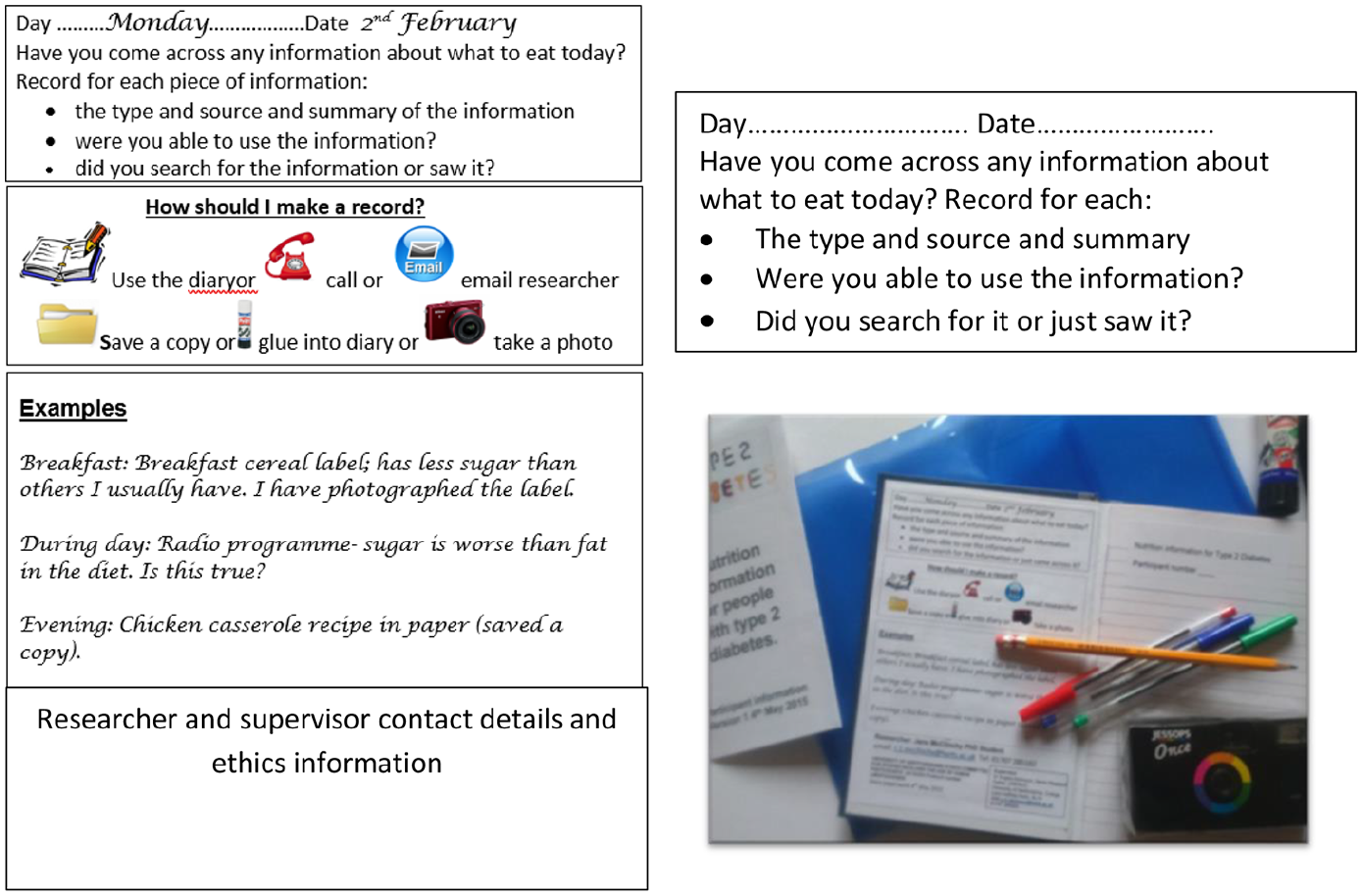
Clockwise-diary instructions, narrative prompt.
Interviews and topic guide
Interviews were conducted with the aid of a topic guide consisting of broad questions with follow-up probing questions (Brinkmann and Kvale, 2015) and were individualised following preliminary analysis of diary entries. It included the following four main areas: questions exploring diary entries (i.e. regular sources of information, unusual sources, potential sources as identified from the research literature (Meyfroidt et al., 2013) that had not been recorded in the diary and anything that was not clear); experiences of the diary process; views and experiences of nutrition information in general and suggestions for improvement in how nutrition information is made available to people with T2DM. Demographic variables known to have an impact on information behaviour (Johnson and Case, 2012: 5) were also collected (see Table 1). To enable preliminary diary analysis, interviews were scheduled approximately 2 weeks after diary collection. Participants were given a choice of interview location and interviews were digitally audio recorded.
Sampling and recruitment
Inclusion criteria for the study were that participants should either have a diagnosis of T2DM or be involved in the household provision of food for someone with T2DM. A lower age limit of 18 was set as children are less likely to have T2DM, and the criteria excluded vulnerable adults who lacked capacity to undertake their own care.
In total, 75% of participants were recruited following nutrition talks to diabetes support groups in the East of England, given by the first author who is a dietitian. Four participants were recruited as a result of an advertisement in a diabetes support group newsletter and one participant was recruited through word of mouth.
Data analysis
The data were prepared to enable the use of a qualitative data analysis computer software package (NVIVO 11, QSR International). As well as being transcribed, the diaries were scanned into PDF format in order to maintain the participants’ ‘own highlighting, emphasis and punctuation’ (Spowart and Nairn, 2014). In order to protect anonymity, personal information was redacted and pseudonyms allocated. Interviews were transcribed verbatim and anonymised (Plummer 2001: 150). NVIVO facilitated the process of data management, coding, and memo writing.
Consistent with the social constructionist approach to the study an iterative inductive approach, incorporating thematic analysis was used to analyse the diaries and interviews (Braun and Clarke, 2006). This consisted of the following stages: review, familiarisation with the data, overview, coding, developing categories, and writing explanations (memos) to develop themes. Comparative analysis was conducted across both sets of data (Bernays et al., 2014) with data from diary entries and interviews given equal weighting in the analysis. A line-by-line approach to reviewing the data was used to create codes. A process of memoing enabled conceptualisation of data. Further analysis and review of memos enabled overlapping codes to be identified and merged and the identification of disconfirming instances (Silverman, 2006: 297). Codes were then grouped together into categories and from this, themes were developed.
The themes were constantly compared with original data sources and with other themes (Barbour, 2014: 272) and were critically discussed and agreed with co-authors. The broad findings were presented to the UK diabetes charity local support group and sent to participants to explore if the experiences were similar to theirs and if they could recognise their experiences, respectively. They gave additional context to the findings in their feedback and were in agreement that the findings matched their experiences.
Ethical issues
Ethics approval was obtained from the University of Hertfordshire Health and Human Sciences Ethics Committee, protocol number aLMS/PG/UH/00099(1). Written informed consent was obtained from potential participants after having explained the study and was confirmed verbally once the diary had been collected, at the start of the interview.
Potential ethical issues identified during the study period are worthy of further discussion for future potential studies using a similar research design. Although participants gave consent to the use of diary and interview information, a number of participants were known to each other either as partners or as members of the same support group as would be expected when using the snowball process for recruitment. This may mean that redacted diary extracts in the published format may be attributable to individuals (such as where participants worked, their role in a support group, or in the case of partners revealing information about each other without their partner’s consent). Care was taken not to include this type of information when presenting data. Although no-one requested that their diary entries remained out with the public domain, provision was made for this.
The use of diary facsimiles to present the data may through the recognition of handwriting lead to the inadvertent identification of the diary authors. However, after having sought guidance from the Ethics Committee, it was advised that sufficient steps had been taken through the redaction of potential identifiable information to allow the use of facsimiles in the publication of the findings from the study.
Often reasons relating to taking part in health research studies are based on the access to treatment and information that were ‘unavailable or difficult to obtain’ (Lawton et al., 2003; Sheridan et al., 2020; Townsend and Cox, 2013). In this study, several participants commented (in diaries and interviews) on the lack of access to nutritional advice. One participant explained during the interview that they had decided to complete the study in order to find out more about nutrition. While this suggests that research participants are taking an active process in their self-management, this identifies concerns about the availability of nutritional information to people with T2DM and informed consent in that participants did not receive the advice that they were expecting from taking part in the study. Provision of nutritional advice was not part of the study. Participants were directed to their GP for advice regarding their diet.
Undertaking research projects that have the approval of ethics committees does not absolve the researcher of the need to protect participant confidentiality, to be mindful of participant burden and to ensure informed consent.
Findings
In this section, details of the participants are followed by findings illustrating the utility of the diary-interview method and its contribution to the methods portfolio.
Participants
Twenty participants were recruited in 2015 and 2016. The group included two couples. All participants had T2DM apart from one partner. A table summarising demographic information for the participants is shown in Table 1.
Participant overview.
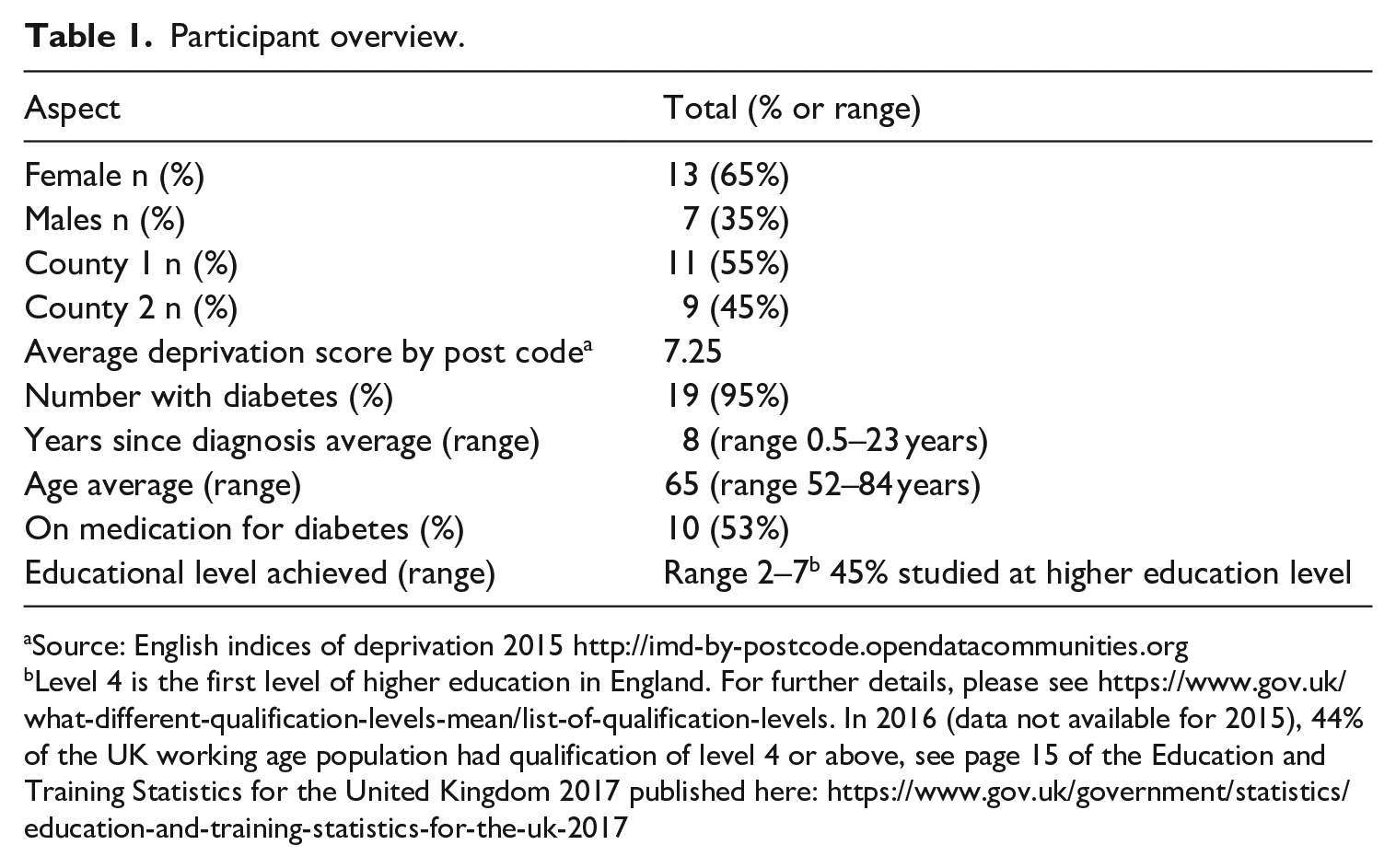
Source: English indices of deprivation 2015 http://imd-by-postcode.opendatacommunities.org
Level 4 is the first level of higher education in England. For further details, please see https://www.gov.uk/what-different-qualification-levels-mean/list-of-qualification-levels. In 2016 (data not available for 2015), 44% of the UK working age population had qualification of level 4 or above, see page 15 of the Education and Training Statistics for the United Kingdom 2017 published here: https://www.gov.uk/government/statistics/education-and-training-statistics-for-the-uk-2017
Diary and interview process
All participants completed their own diary and were interviewed by the first author individually apart from one couple (both with T2DM) who completed a joint diary and chose to be interviewed together (Matthew and Naomi, see below in Table 2). After 4 weeks, participants were informed by email that the diary period had come to an end. Some responded in surprise that the diary period was over so quickly, one participant although acknowledging the end point continued to record diary entries until the diary was collected and one participant said that they would like to continue the process on an ongoing basis as it helped them to identify nutrition information and to self-manage. Diaries were collected in person from all participants (apart from one which was returned by post). At this point, arrangements were made for the interview as participants preferred to wait until the end of the diary period to set the interview date.
Study participants: pseudonyms and individual demographic information.
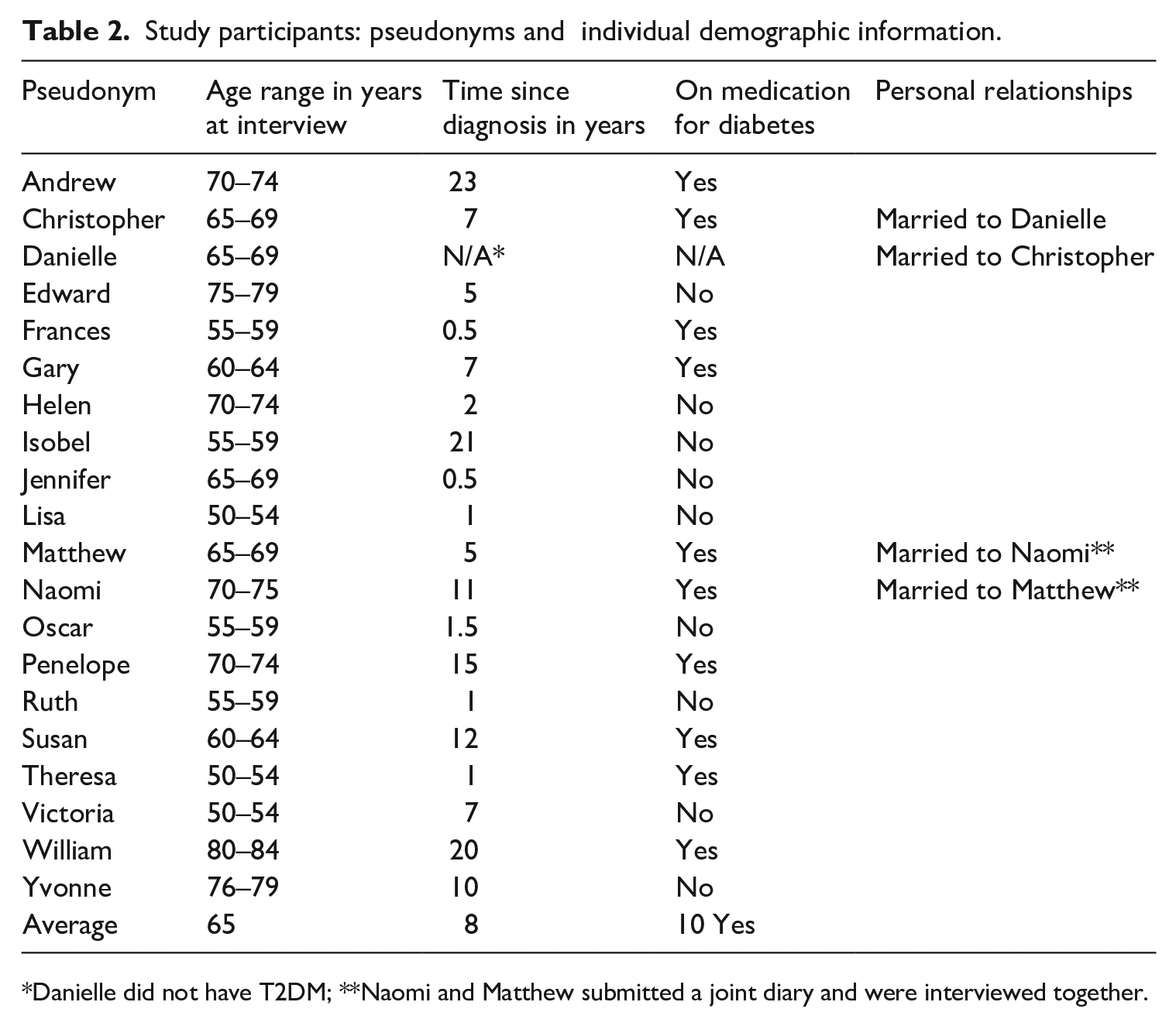
Danielle did not have T2DM; **Naomi and Matthew submitted a joint diary and were interviewed together.
The interview venue for just under half of interviews were participants’ own homes in a room of their choice, one interview was conducted in the participant’s workplace. Remaining interviews were conducted in cafes in towns that were convenient for participants. Interviews were held between 1 and 21 weeks after diary return.
The contribution of the diary method
This section discusses the findings relating to the contribution of the diary method, the type and format of diary entries, the participant burden of the diary, and the impact of the study on the nutrition information behaviour of the participants.
Diary format
Nineteen diaries were collected. All diaries included handwritten entries. Most diarists had included samples of sources of information (such as food labels from food packets, newspaper and magazine articles, or patient information leaflets) pasted into their diaries or handed to the researcher. Three participants used the disposable camera provided, however, when processed only one set of photos were sufficiently clear to be able to identify their subject. One participant included photographs from her own camera phone. Only three participants made use of the option to email the researcher and no-one called the researcher. The number of days with diary entries ranged from 5 to 85 days (median 14) presented in Table 2. Participants had different diary completion styles ranging from a reflective and detailed daily record of nutrition information experiences (n = 13), an analytical account of nutritional information found on food labels (n = 3), and a daily log (n=3) (see Figure 2 for examples of these).
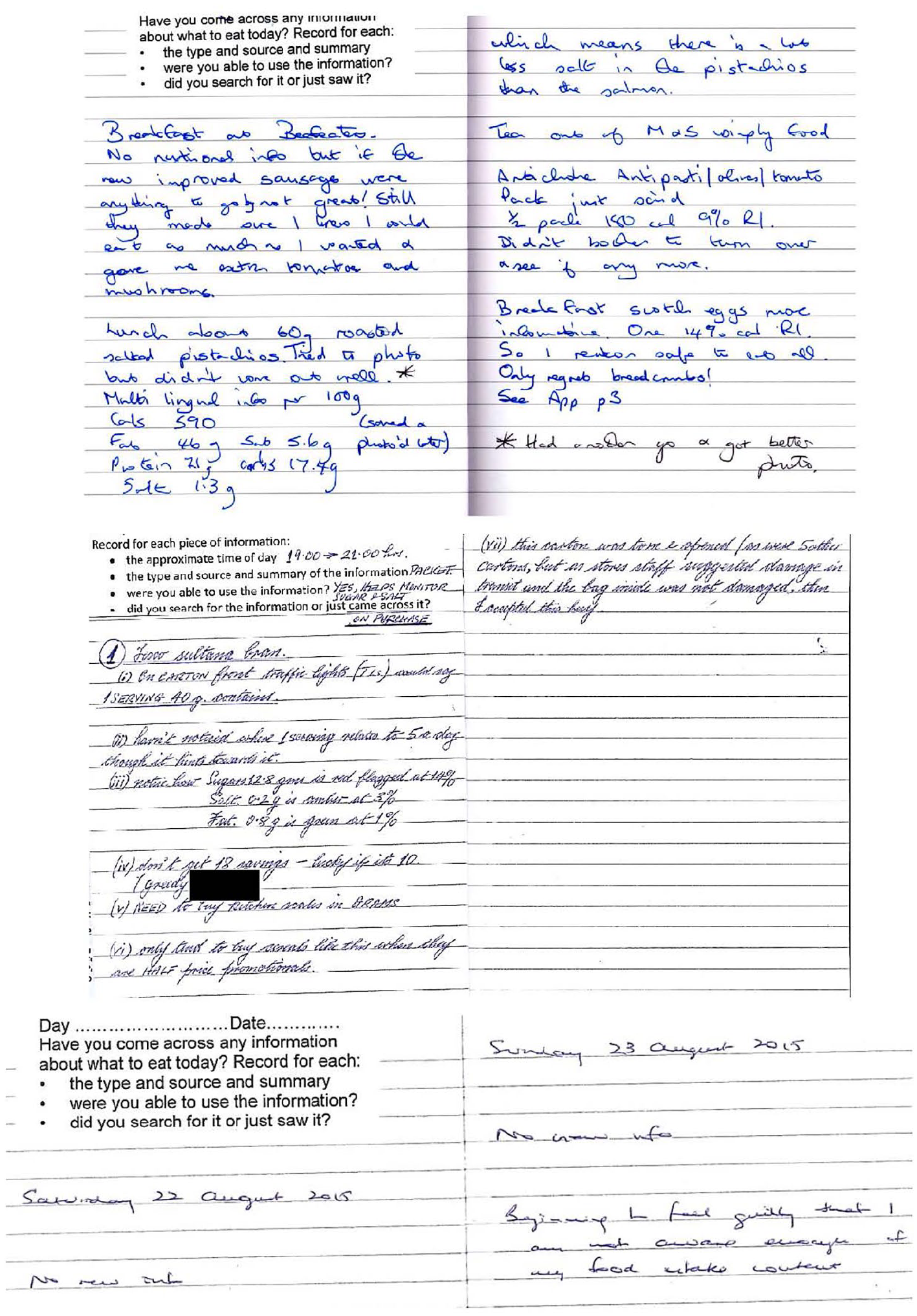
Examples of the main types of diary entries, detailed reflection (Isobel), analytical approach (Andrew), daily log (Christopher).
Diary entries
Participants made different types of diary entries: some included in-depth analysis of the food labels from the food they had consumed, while others focused on nutrition information they had read in books, the nutritional value of the food they had consumed; and what they ate each day. Those who were recently diagnosed with T2DM wrote about their thoughts and feelings about this. Frances described her diary as a record of her experiences of being newly diagnosed, making decisions about what to eat and the effect choices had on her blood sugars. She said, ‘. . . it was just a thought process of what am I eating, what is the impact it’s having, am I doing right, is it wrong, is it good’.
Some participants included samples of food labels while others included an explanation of their view about the layout and clarity of the food label itself, why they had chosen to eat the food, or an opinion as to the nutritional value of the product. For example, Susan being concerned about the amount of sugar in the food she ate included in her diary labels from the food packaging she had looked at and analysed giving her opinion regarding their sugar content (see Figure 3).
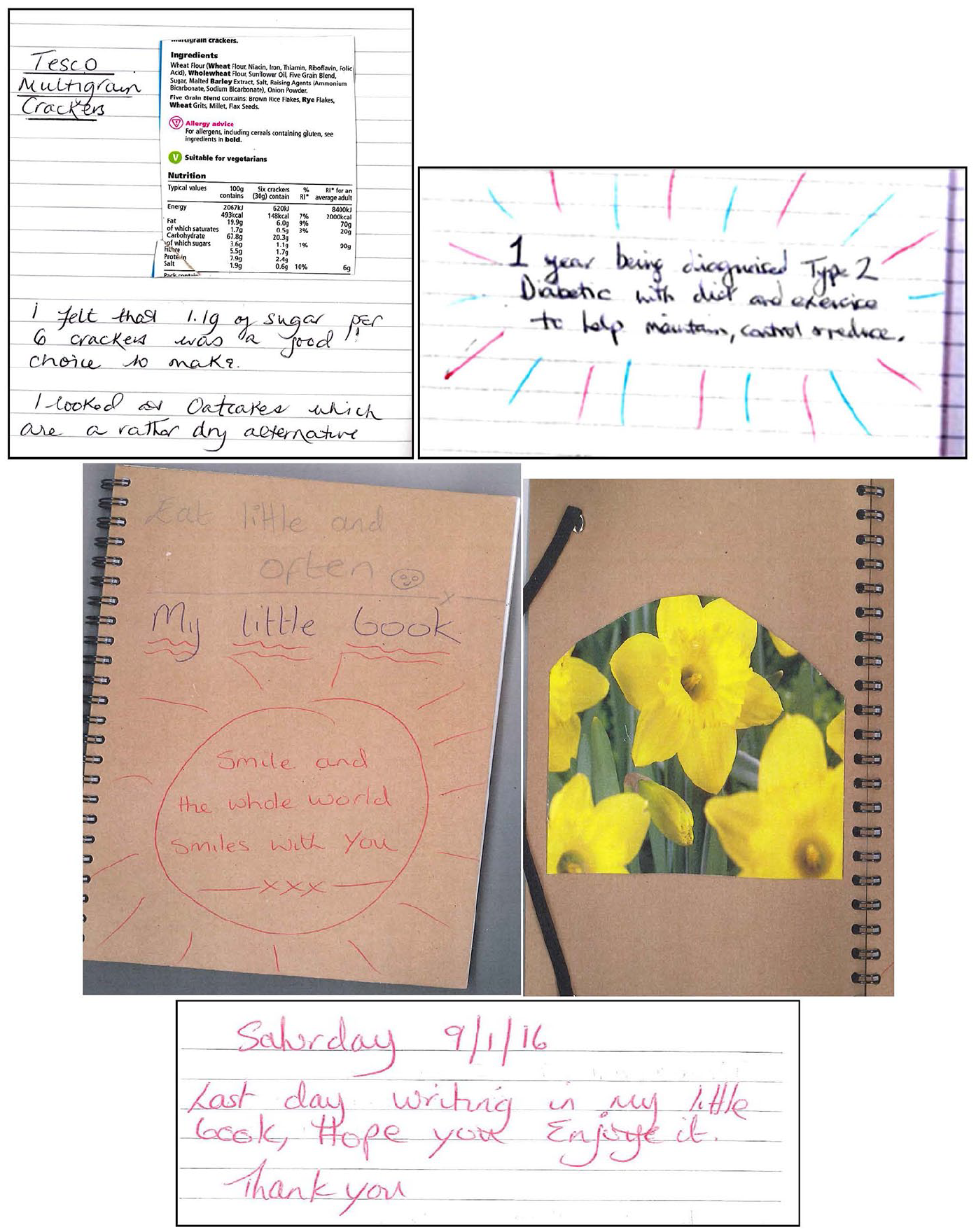
Diary excerpts left to right starting at the top, food label decision making (Susan), diary embellishments (Ruth), diary ownership, and messages to researcher (Theresa).
Several participants embellished their entries with drawings in order to explain what they had discovered. For example, in the diary section in Figure 3, Ruth has embellished her comment with pride about having had diabetes for 1 year along with all the changes she has made (see Figure 3).
Participant burden
Participants commented that as they did not come across nutrition information on a daily basis, using researcher email reminders as prompts and selecting days when they were likely to come across information such as shopping days or days when they would have more time to make diary entries. For example, Danielle was concerned that she did not have ‘enough to put in because I don’t think about it every day . . . [as] we are in . . . such a routine’ that ‘the [email reminders] made me think about [the diary]’. She noted in her diary on her shopping day, ‘Starting to think about my shopping list for the week. Went onto [UK Diabetes charitable organisation website] again today for inspiration’. While NIA does not appear to be daily, there were times when the activity was undertaken more frequently such as during food provisioning.
Participants explained that they kept diaries somewhere prominent such as by the television, on a table, or in a pocket to be readily available to complete. Sometimes, they used scraps of paper to record information, which was later transferred into the diary, with one participant saying, ‘I’d then get the scraps and bits of paper, put them together, and then write them up properly’ (Ruth).
Some participants were keeping a daily food diary concurrently (Deakin, 2016: 131), however, as the nutrition information diary did not need to be completed every day this made it less burdensome and ‘took a lot of pressure off’ (Victoria).
Participants indicated in their diaries their engagement in the diary process and wrote messages to the researcher. For example, Theresa wrote on the front of her diary, ‘My little book, eat little and often, smile and the whole world loves you’. On the back, she pasted a picture of some daffodils and left a message that she hoped the researcher would enjoy the diary (Figure 3). Participants appeared to have incorporated the exercise into their daily lives by using it as part of their daily food-provisioning process, taking ownership of the diary and making it an everyday activity. However, the diary embellishments and messages to the researcher indicate that consideration was given to the form in which the diary was returned to the researcher. This could imply a desire to please, a potential uncertainty about whether the diarists had recorded what the researcher needed and an influence of the research process on the participants.
Capturing the tacit and mundane
A minority of participants reported that they viewed the study as work that they undertook on behalf of the researcher, as opposed to a record of their everyday lives. For Andrew, the diary gave him the chance to investigate what he was eating on behalf of the researcher, while Isobel saw the study as an opportunity to identify information on food labels for the researcher. Andrew explained to the researcher ‘I mean you'll get three of those folders [of analysed food labels from me]’; Isobel said, I had to change my habits a bit because otherwise all you’d have gotten . . . a lot of the time, would have been like ‘home-cooked meal’, so in order to talk about food I had to go out there and buy some stuff in packaging which again isn’t what I would normally be doing so much.
For these two participants keeping the diary made them change their normal practices-rather than capturing these.
However, most participants reported that keeping a diary had brought their normally tacit information activities to their conscious and helped them in understanding how they self-managed their T2DM. The diary revealed to participants how little they thought about these practices during their daily lives. Keeping a diary encouraged them to explicitly think about what they ate and made them more aware of the information around them, and how NIAs influenced their self-management.
Susan explained, ‘but then I began to think, on a daily basis, I don’t think I think about it, but what I need to do is find out a lot more information to make healthier choices’; Edward said that he ‘found the whole process useful anyway, because it started to make [him] think’ about what he ate; Christopher explained that when he came to write his diary, he would think ‘have I thought anything about nutrition’ and he wrote in his diary ‘beginning to feel guilty that I am not aware enough of my food intake [nutritional] content’ (see Figure 2). However, for some, the diagnosis of T2DM had already made them more aware of food practices, for example, Victoria said, ‘I normally tend to look at food labels now [that I have T2DM] anyway’.
The diary process exposed nutrition information to participants that was previously hidden and taken for granted and elevated it to information of value. For example, Naomi said, ‘once [the diary] was underway, I started to think oh well yes that would go in the diary’; Ruth described how she came across nutrition information in a newspaper on the forecourt of a petrol station when filling her car up with petrol ‘literally by chance’, an activity she would not have been aware of before; and Helen said, ‘sometimes if I’m looking through a magazine I don’t always stop and read it, but if something sort of jumped out at me I could stop and read it’ and this information was then added to her diary (Figure 4).
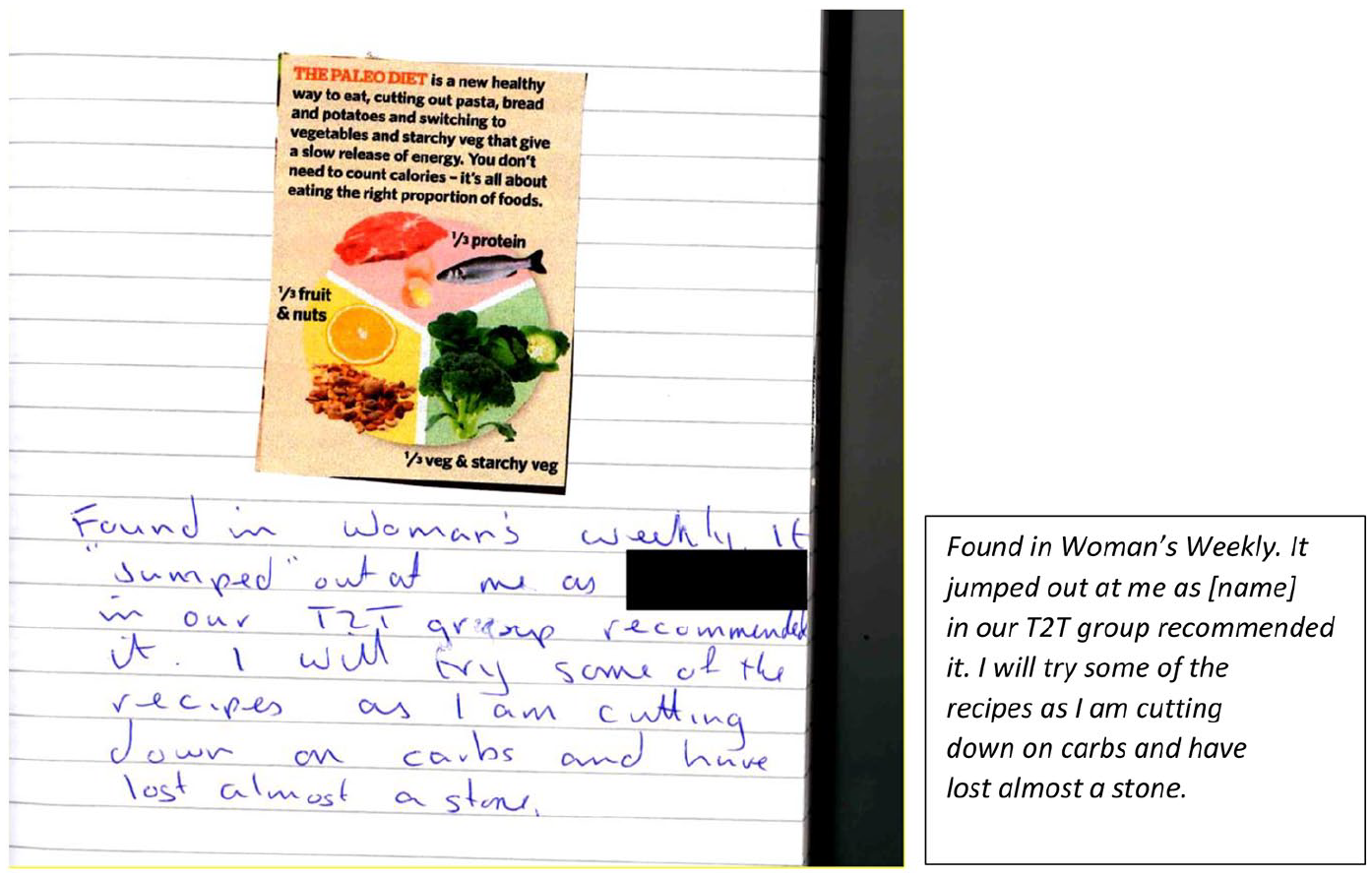
Helen diary, LHS diary facsimile, RHS transcription.
Gary summarised the impact of the diary in highlighting the importance of self-management and the role that nutrition information played in this to him (Figure 5).

Gary diary explaining the value of the diary in his self-management. LHS facsimile, RHS transcription.
He reflected further during the interview explaining that the process ‘made you think a little bit about what I had been eating, and what I was planning to eat. And then checking out the sources of information to help make those decisions’. He had not done this previously.
The diary process uncovered the hidden tacit nature of nutrition information and highlighted the value of nutrition information activities not just to the researcher but also to participants and this appeared to be helpful in managing their T2DM at least in the short-term.
Discussion
This study demonstrated the utility of the diary-interview method for researchers in helping explore activities which are normally so everyday and mundane that they remain tacit even to the participant. Diaries promote participant engagement in the research process and may lead to potential participant benefits as they revealed to participants practices essential in effective disease self-management. Working with lay groups ensured the diaries were tailored to the target group and regular contact and support offered by the researcher to participants encouraged and empowered them to complete the diary.
Participant engagement was demonstrated through the messages left for the researcher throughout the diaries, and for some, continued recording beyond the diary period, collection and analysis of food packaging and modification of food practices to ensure that food packaging was collected. Engagement in the project led to deep, rich, quality data that included samples of information accessed and other diary embellishments. The authors are aware of others who have used a diary pack with data collection tools (O’Connell, 2013; Wills et al., 2013) and those who have incorporated facsimiles of diary entries in their research articles (Spowart and Nairn, 2014; van Smoorenburg et al., 2019), however, this practice is not common. Although diaries were transcribed as is normal practice in diary studies (Hyers, 2018: 87–88) using original facsimiles in this study retaining illustrations and embellishments, helped to retain more completely the intended meaning of the participant.
Previous researchers have promoted the use of diaries to capture information temporally close to the actual event, to improve accuracy of recall, however, this study reveals how the diary is not a passive or inert instrument. In engaging with the diary, the diary process reveals these tacit practices to participants themselves and indeed changes these practices.
We are not aware of other studies exploring the use of NIA that have used the diary-interview method. However, other studies have identified a range of types of diary entry when an unstructured solicited diary is used (Kenten, 2010). The unstructured diary format resulted in a wide range of entries with the majority recording extensive prose including reflections, thoughts and feelings. The format uncovered a greater understanding of the participant’s day-to-day lives (Bartlett and Milligan, 2015; Meth, 2003: 15,21).
Participants were engaged with a wide variety of information sources and activities consistent with research (Longo et al., 2010). However, unlike previous studies, the diary entries suggested that the nutrition information accessed assisted with their subsequent self-management. The diaries demonstrate how information is used or not and reveal how nutrition information and related activities are tacit to participants which an interview alone would not have been able to.
The intention of the diary-interview approach was to capture and to explore participants’ usual NIA. While participants agreed that the NIA they recorded in their diaries and expanded on in their interviews constituted their normal and or current NIA, some participants noted a change in their use of NIA and highlighted the everyday nutrition information available to people with T2DM. Some used the study as an impetus to find out what foods would be healthy for them to eat, but also to access and analyse nutrition information in order to highlight to the first author potential issues with nutrition information for people with T2DM. These behaviours are in accordance with research exploring why patients take part in research such as wishing to access care, to help others with similar conditions, and to help the researcher (Sheridan et al., 2020). While there may be concerns about participant burden in diary research that influences the continued engagement in a study (Braun and Clarke, 2013: 149), in this current study, the reasons for taking part appeared to have overcome these barriers.
While the study was not an intervention study in the provision of NIA, participants highlighted how completing the diaries had revealed to them their normally tacit information activities. The diaries had also assisted them to identify and access nutrition information relevant to them and consider how it could impact on their self-management practices. Although diary studies have been used to actively help in the identification of self-management behaviours (Cradock et al., 2021), this current study did not set out to identify aspects that would assist with self-management, rather this was an additional outcome of the study. Further research is needed to explore whether these insights impact on actual dietary intake, or are sustained beyond the diary period, but could be a useful intervention for health practitioners working with people with T2DM.
The interview following the diary enabled exploration and clarification of topics that had been less frequently referred in the diaries. The immediacy of diary entries captured tacit and mundane nutrition information experiences so these were not lost from memory (Bernays et al., 2014; Wills et al., 2016). Diary completion enabled participants to control the disclosure of data and gave them time to reflect on nutrition information sources during the diary period and between the end of the diary period and the interview (Milligan et al., 2005). Where participants included samples of information, the researcher was able to explore further their accessibility, usefulness and relevance to the participant and whether the information had resulted in changes to their diets. Limiting the diary recording to 4 weeks meant it was possible to capture detailed data without overwhelming participants (Alaszewski, 2006: 78) or causing respondent fatigue (Johnson and Bytheway, 2001; Keleher and Verrinder, 2003).
Some aspects from our experience would be worthy of consideration by future researchers. The data collection was undertaken during 2015 and 2016, since then it is widely accepted that the use of technology and social media has increased. At that time, although Smartphones were commonplace, almost all participants were wary of using them to take photographs of nutrition information and to use the email option for diary entries. Only three people used the disposable camera and one participant used their own mobile phone and printed out the photos. Only three responded to the regular emails from the researcher and only two used this method to share nutrition information. Smartphones have the additional attribute of enabling an audio diary which Wills (2012) suggests would have the added advantage of portability and convenience enabling recordings in real time. Although Hyers (2018: 87) suggests that handwritten diaries enable ‘intimate’ self-expression and Brownlie (2018) that written diary entries were more reflective, equally Bernays et al. (2014) found that audio-recordings enabled ‘free thinking’. This suggests that Smartphone audio-recordings could elicit rich data. The use of Smartphone technology can enable the easy sharing of information with the researcher (Mupambireyi and Bernays, 2019) and may enable sharing of not just audio recordings and photos (Feng, 2019), but also information sources, handwritten recordings and illustrations and photos (Feng, 2019). Although technology may assist in the sharing of diary entries including photos in diary studies, there may still be a reluctance to take and provide photos that might expose participant consumption of unhealthy foods and participants to the moral discourse this exposure attracts along with concerns with the protection of anonymity (Wills et al., 2016). In future studies, engagement with lay advisors and piloting of methods with the target participants will be important to ensure that research tools are usable by the target populations and are easily incorporated into daily lives.
The diary (as part of the diary-interview method) was selected for this study as utilised by Zimmerman and Wieder (1977) in order to not influence the activities of the participants. However, it could be suggested that the burden of data collection has moved from the researcher to the participant. The ethics of this requires review against the aims of the study. While practicalities and the participant acceptability of being observed for 4 weeks may lead to discounting observation as a method, observational elements including, for example, joint shopping trips or making shopping lists and staging interviews in kitchens to enhance discussions around nutrition information used in food provisioning could have been included. These methods may, however, only highlight certain aspects of NIA that is directly related to food provisioning when this study, similar to other research suggests that people with T2DM obtain NIA from a wide range of sources (Meyfroidt et al., 2013).
The use of thematic analysis enabled both an individual analysis of participant diaries and interviews as well as an overall analysis and theme development. Alternative and or additional analytical methods could have been used. For example, phenomenology as utilised by Savolainen (2008) was considered, however, the analytical method focuses on the individual. In this current study, the flexible approach of thematic analysis enabled the development of themes across the data. Other analytical methods could also have been used that explored the visual aspects of the diaries (the use of colour, emphasis on particular words, inclusion of diagrams; Wills et al., 2016); and the use of discourse analysis specifically on the newspaper cuttings included in the diaries to explore how food and diet was portrayed to people with T2DM and the subsequent impact on participants (see, for example, Chisnell et al., 2017) and may be appropriate for future studies using this method.
The recruitment methods and the use of diary facsimiles to illustrate the findings had the potential unintended consequence of putting the protection of participants’ anonymity at risk. Although the impact was considered to be low-risk and the data collected in this study is not likely to have sensitive connotations, this does highlight ethical considerations that researchers using diaries need to consider. While the professional affiliation of the first author may have assisted in recruitment, it may also have impacted on participants willingness to expose their practices, and to them making socially acceptable diary entries, unintentionally imposing an imperative on diary completion, leaving a feeling of worry that they must complete the diary and concerns that their diary entries may be wasting the researcher’s time (Hinsliff-Smith and Spencer, 2016; Holloway and Fulbrook, 2001; Johnson and Bytheway, 2001). However, these concerns have not only been found in healthcare research. For example, Brownlie (2018) when researching acts of kindness found that participants felt that the researcher would not be interested in their ‘mundane’ experiences. Indeed, this also underlines that the method presented in this study may be equally applied to studies outside health research where the hidden, tacit, and mundane activities of everyday life are of interest. While participants highlighted their concerns about whether their entries would be of value to the researcher, there was limited data relating to socially acceptable diary entries and an imperative of diary completion one way or another. Power dynamics have also been referred to as impacting on participant experiences and data collection when using interviews in healthcare research (Hewitt, 2007). While participants may not feel able to expose their experiences especially if these are critical, the healthcare professional may equally not probe sufficiently when responses and diary entries seemed ambiguous (Draper and Swift, 2011). Throughout the process, all authors regularly critically reflected together on how our own positions as social science researchers and the influence that a health professional background held by two of the authors can have on data interpretation and analysis. Critical discussion of the data among the team ensured that alternative interpretations were considered throughout the study.
Conclusion
This article has discussed the development of a diary-interview study and has illustrated the data provided by facsimiles of diaries neither of which are commonly reported or included in diary research studies. Piloting and involvement of lay groups in the study design ensured acceptability of the research tools which was a strength of the study. The study had unintended consequences for some who said they had changed their normal food practices. However, for the majority, completing the diary highlighted to them, as well as the researchers, the wide range of normally hidden and tacit nutrition information they are exposed to everyday and which they identified as being useful in managing their T2DM. There is potential for this method to be used in other studies researching the tacit and mundane that are not health related, however, the unintended consequences resulting in changes in behaviour and the shift of burden from the researcher to the participant highlighted in this current study are worthy of consideration in future studies of this type.
Footnotes
Funding
The author(s) disclosed receipt of the following financial support for the research, authorship, and/or publication of this article: Wendy Wills is part funded by the National Institute for Health Research (NIHR) Applied Research Collaboration East of England. The views expressed are those of the author(s) and not necessarily those of the NIHR or the Department of Health and Social Care.
