




Abstract
This article explores the nexus of stigmatisation and environmental activism in the Campaign to Protect Pont Valley against open-cast mining in the northeast of England. Drawing on Imogen Tyler’s work, our analysis examines stigma power as embedded in wider efforts to police and repress environmental dissent and defend core neoliberal values. Examination of qualitative interviews with campaigners, drive-past insults shouted at activists, online police statements and public responses, and online trolling of activists by mining employees and the wider public reveals stigmatisation to be a process of power, informed by neoliberal ideologies (of the threat and danger of worklessness), and reproduced through neoliberal power structures (the state, corporate power, and popular culture), shaped by the insecurities that are specific to social and political contexts. We show how the state mobilises stigma through ideologies associated with austerity and the hostile environment to delegitimate activism through association with worklessness/idleness and the inaccurate representation of activists as part of broader processes of criminalisation, policing, and management of protest. In an area renowned for its work ethic and high levels of unemployment, the work of environmental activists is dismissed as illegitimate, drawing on tropes associated with the disciplining of the so-called deviant working classes. The historical importance of coal and activism in the defence of the ‘mining way of life’ feeds into dominant narratives associated with work and individualism. Pride associated with coal mining is reconfigured and forms the basis of insults against those (working class and otherwise) who are recast as ‘outsiders’, ‘wasting time and money’ in resisting environmental destruction. Finally, we examine how activists were able to largely deflect stigmatisation through collective engagement, solidarity, and political analysis of the process they were subject to.
Introduction
In the face of overwhelming scientific evidence of the catastrophic ecological impacts of fossil fuels, the UK government pledged to end coal power by 2024 (Department for Business, Energy and Industrial Strategy, 2020). Despite this, coal continues to be mined in the UK. 1 Banks Group Limited (hereafter ‘Banks’) started working on its Bradley opencast site in the Pont Valley area, between Dipton and Leadgate, in County Durham, in May 2018 (Banks Group, 2018; Engelbrecht, 2018). Applications for an opencast mine on the site had been rejected three times by the local council and was finally granted by the national-level planning inspectorate after two appeals and over 30 years of local resistance. 2 In 2007, local campaigners set up the Pont Valley Network to protect the valley and oppose mining and other destructive developments. A decade later, with activists from across the country, residents and campaigners established the Campaign to Protect Pont Valley (CPPV) to oppose the mine (Protect Pont Valley, 2018). In 2018, an 86,806-signature petition was submitted to the then Home Secretary, Sajid Javid, demanding the revocation of the licence (Coal Action Network, 2018a). The licence was not revoked. Following the failure of petitions and other methods, campaigners established a protest camp on the site of the proposed mine in March 2018. This camp lasted 50 days, through a brutal winter storm (dubbed ‘the Beast from the East’). Activists were eventually forcibly evicted, allowing extractive work to start (Coal Action Network, 2018b). Activists recognise the historical significance of coal in the region but are united in the belief that opencast sites have detrimental impacts on the lives of local communities and local and global ecosystems; a core slogan of the campaign has been ‘coal is our heritage, not our future’ (Hope, 2018).
In this article, we explore the nexus of stigmatisation and environmental protest in the CPPV. Drawing on the conceptualisation of stigma as proposed by Imogen Tyler (2013, 2015, 2020), we argue that while stigma is experienced at a personal level, stigmatisation is a process of power and the culture of stigma is embedded in, and reproduced through, neoliberal power structures. We analyse how Banks colluded with police in attempts to stigmatise activists - despite much local support and gratitude. The mobilisation of stigma power is evident in verbal attacks on activists from members of the public, which the activists documented, and in the discourses within social media statements, press releases, and other discursive tools. We contend that the character and nature of the stigmatisation is shaped by specific social and political contexts and power structures. Consequently, we begin by examining the impact of neoliberal economic and social policy on the historical, political, and social context of Pont Valley. We detail the conceptualisation of stigma and power, which provides a basis for our understanding of how it was mobilised against activists. Having outlined our methodology, we discuss our data through our framework of stigma and power. Finally, we explore how activists responded and resisted the internalisation of stigma and how their approach may usefully inform others’ reactions to neoliberal power structures.
Pont Valley in historical, political, and social context
As an ‘anti-coal’ protest in the heart of a region synonymous with, and fiercely proud of, its coal mining heritage, the CPPV represents a particularly important case study. Historically, the Durham coalfield, which Pont Valley is part of, was politically significant. The tight knit mining communities of this area of North West Durham were characterised by high levels of discipline and class solidarity, which led to the establishment of a powerful trade union – the Durham Miners Association (DMA), part of the National Union of Mineworkers (NUM). The mining union – locally and nationally – forced concessions from employers and created a welfare strategy, which became a blueprint for the British welfare state (Austrin and Beynon, 1994). In the late 20th century, mines were closed due to the exhaustion of coal; the Eden Colliery, situated only 200 m from the Pont Valley site, closed in 1980. Following this, many miners in these areas travelled east to work in remaining coalmines on the Northeast coast (Stephenson and Wray, 2005). However, when the Thatcher Government announced the closure of 30 pits and the loss of a further 30,000 jobs nationally in 1984, this was widely viewed as a political action against organised labour. The NUM called a national strike in defence of jobs. Many miners from Leadgate and surrounding areas joined the year-long dispute, motivated by a desire to defend the industry and the mining way of life (Spence and Stephenson, 2007, 2009). During that year-long bitter dispute, mining communities were framed by the government as a threat to national security and ‘the enemy within’ and faced the full force of the state (Beynon, 1985; Milne, 2014). The strike ended in defeat for the union and heralded the end of deep coal mining in the UK.
The loss of mines, combined with the closure of the Consett Steel works in 1980, with the loss of 4000 jobs and a further estimated 3000 related jobs, was a further blow both to the economic welfare of working-class people and to the pride and identity associated with industrial work (Stephenson and Wray, 2005). Hudson (2014, p. 378) argues that under Thatcherism, the post-war consensus surrounding government responsibility for full employment was rejected in favour of market-led Conservatism within which social inequality was considered part of the natural order of ‘healthy capitalism’. Working-class communities of the north, traditionally engaged in mining, heavy industry, and manufacturing – no longer competitive under globalisation – bore the brunt of that new order. Major industrial closures and job losses in the shipyards and steel industry created ‘industrial wastelands’ and led to widespread deprivation (Moss, 2013).
The closure of mines was widely viewed as a political manoeuvre to deepen neoliberal restructuring (Beynon, 1985; Milne, 2014). This was accompanied by a political discourse that cast heavy industry as outdated and the people of those communities as culturally complicit in their own economic misfortune. The people of the northeast were characterised as ‘culturally inflexible’, evident in their commitment to collectivist attitudes. According to neoliberal ideology, ‘success’ involved self-reliance, individualism, and flexibility to adapt to more fluid/flexible (precarious) employment (Garrahan and Stewart, 1992).
The 1980s was a watershed period for working-class people in regions which had depended heavily on manufacturing and nationalised industries. The new employment which entered the northeast ‘paled into insignificance’ next to job losses associated with the loss of nationalised industries. The Coalfields Regeneration Trust claimed in 2020 that up to 5.7 million people across the UK with ties to the mining industry continue to be disproportionately affected by coalfield closures and the legacy of the 1984–1985 miners’ strike.
In the years that followed, opencast mining continued in the UK but provided little in terms of secure well-paid employment. The opencast process inflicted significant levels of environmental damage: John Atkinson, who held Ministry for Agriculture, Fisheries, and Food responsibility for opencast restoration, described the landscape following the process as ‘at best salvaged’ (Atkinson, 1986 in the study by Beynon et al., 1990: 108). Beynon et al. (1990) predicted the potential for an alliance between anti-opencast activists and former coal communities when it became clear that the impact on the human environment was too great to justify limited employment opportunities. 3 Two sites were active in County Durham during 2018: in July 2018, at their height, they employed only 61 people; by September 2020, when Banks Group was selling and not extracting coal that fell to 16 (The Coal Authority, 2018–2020).
Despite this, the heritage associated with coal, community, and unionism continues to be a source of pride in the region. While it was predicted that the Durham Miners’ Gala – a celebration of mining industry and way of life – would die with the industry, in recent years it has seen significant regeneration with an estimated 200,000 people attending in 2019 and new banners being commissioned to commemorate long dead collieries (BBC, 2019; Mellor and Stephenson, 2005; Stephenson and Wray, 2005). In 2018, the DMA publicly expressed their support for CPPV, and campaign activists marched alongside trade unionists and colliery bands at the 2018 Miner’s Gala.
In 2008, George Osborne, the UK’s Chancellor, set out an austerity programme drawing on the Conservative Party’s long-established underclass ideology and claiming that overspending on welfare had created a dependency culture. Disadvantaged communities were described as ‘indebted, stagnant, inflexible, vulnerable and exposed’ and as a consequence ‘millions of people were languishing on out of work benefits because of a shameful culture of dependency’ (Osborne, 2008, in Tyler, 2020: 3–4). This characterisation of poorer communities was a legitimation for cuts in public spending.
Theorising stigma, power, and environmental conflict
Stigma plays a central role in shaping social relations (Tyler, 2015; Tyler and Slater, 2018). Imogen Tyler’s (2013, 2020) radical reconceptualisation of stigma challenges the liberal notion that stigma can be ameliorated via education and/or supporting those who face stigma to better manage their situation. This ignores the way in which stigma is purposefully crafted as a strategy of control, in ways that deliberately seek to foment, accentuate, and legitimate inequalities, injustices, and power relations: ‘Stigma . . . is always enmeshed with wider capitalist structures of expropriation, domination, discipline and social control’ (Tyler, 2020: 17).
The power to stigmatise confers the absence of legitimacy as a human being on the part of the subject (Tyler, 2020). That process is most active during periods of social, political, and economic crisis when certain social groups are scapegoated through stigmatisation and abjection. She points to the stigmatisation of those who do not fit the norms of hegemonic ideology and political economy: working-class women dependent on benefits, feminists, activists, migrants, travellers, and asylum seekers (Tyler, 2020). The degradation of groups that are ‘othered’ is functional as a form of ‘inclusive excluding’; the majority are united in their opposition to the scapegoat. Thus, scapegoating those who reject the core values of the powerful has become a key pillar of neoliberalism, to uphold the mythology that ‘there is no alternative’ and to undermine attempts to imagine and live alternative futures. Those who choose/have alternative lifestyles or values, which challenge or eschew existing norms of neoliberal life (e.g. individualism and materialism), are likely to face hostility.
This conceptualisation of stigma as strategy of control thus requires an analysis of power; in other words, an examination of state and corporate actions to manage ‘unruly’ or ‘undesired’ subjects. Stigmatising narratives are embedded in these actions – in legislation and policy, including in Osborne’s justification for austerity and in the Hostile Environment Strategy, a set of administrative and legislative measures targeting black citizens and consequently presenting them as inherently problematic, illegitimate, and dangerous to the national well-being. Social policy, including criminal justice policy, reflects the neoliberal norms of the state, and its role in protecting and upholding private property and profit (Anderson, 2013), protecting the ideologies of growthism (Hickel, 2020) and extractivism (Brock, 2020). Thus, work in human/political geography, political ecology, and green criminology (among others) has explored the increasingly harsh criminalisation of (extractive) protests in the UK (Brock, 2020; Gilmore et al., 2017; Jackson et al., 2018; Stephens Griffin et al., 2021) 4 often with the activists being subjected to stigmatisation and ‘othering’ as they oppose the neoliberal project. Indeed, often, these protests go beyond opposition to the environmental harm caused by the project and oppose the erosion of local democracy, lack of decision-making power regarding natural resource extraction (Brock, 2020), and imposition of projects by those in power.
Power, here, is relational and coercive – ‘the capacity of a social class to realise its specific objective interests’ (Poulantzas, 1975: 104) – grounded in asymmetries in power relations and structures and mechanisms of regulation and control (Ibáñez, 1983, in Corrêa, 2019). Stigmatisation is thus linked to the power to define what is acceptable and unacceptable, legitimate and illegitimate, and which stigmatised behaviours become criminalised. Pearce (1976) proposes that it is those in power who define – socially and particularly legally – what crime is. As Comack (2018) summarises: ‘“crime” has to do with power . . . the power to determine what and who counts as “criminal” and, just as significant, what and who does not count as “criminal”’ (pp. 459–460). The stigmatisation as ‘radicals’ translates into being seen as ‘outside society, people whose aims and structural positions are not located within the normal stream of everyday life’ (Pearce, 1976: 31). In the UK, the police play a central role in defining and delegitimising campaigners as criminals and ‘domestic extremists’ (Schlembach, 2018). Police themselves have sought to (re)define what is, and is not, legitimate political protest, as analyses of anti-fracking policing show (Brock, 2020; Gilmore et al., 2017). Similar practices were also evident at CPPV as we discuss in our research on the way in which the camp and its eviction were policed (Stephens Griffin et al., 2021). The ideal of law enforcement as ‘impartial’, Bell (2015) has argued, is mythical: ‘the base of any state’s police power is discretion’ (p. 21).
These disruptive actions are part of wider political efforts to stigmatise and criminalise undesired subjects. A range of new police powers and criminal laws helped redefine lawful and unlawful dissent, criminalising some forms of collective action while promoting forms of collective action that do not threaten industrial activity (Anderson, 2013; Brock, 2020). By permitting and even facilitating some protests, it becomes easier to criminalise more ‘threatening’ forms of protest. This, in turn, allows the state to ‘continuously (re)draw . . . the lines between legitimate and illegitimate, legal and illegal, good and bad protest(ers). Anti-[mining] dissent is co-opted and oppressed through this separation into “legal” and “illegal,” or “legitimate” and “violent”’ (Brock, 2020: 11). Indeed, it is through the facilitation of the former – on designated protest zones, stewarded by police liaison officers, and for limited amounts of time – that state forces can criminalise and ‘delegitimise’, in the eyes of many, those protesters who pose a more fundamental threat to mining operations and the state as a whole (Brock, 2020). This very distinction is reproduced by, and feeds into stigmatisation of those who protest. They are deemed illegitimate or illegal, framed as outsiders, outcast, undeserving, and a ‘cost’ on British society, policing budgets, and the welfare state, and deserving of repression.
The defeat of mining communities in the 1984–1985 miners’ strike has been widely understood as an attempt to reduce the power and influence of collectivist class identities and replace that with individualism and entrepreneurialism (Jones, 2012). For Lawler (2005), that goal was further pursued through the cultural and political assault on what was perceived to be deviant elements of the working class, the so-called ‘Chav’ who was crudely characterised as work-shy, criminal, and deviant. Despite significant evidence to the contrary (Macdonald et al., 2014) this work-shy underclass is conceptualised as a cancer, dependent on the endeavours of respectable workers (Murray, 1984; Murray and Field, 1990). Lawler (2005) argues that this assault, when aligned with the neoliberal ideology of meritocracy, effectively erases class as a structurally related phenomenon: those who are workless deviants are either inadequate or unwilling to contribute.
The narratives surrounding the ‘disreputable’ draw heavily on stigmatising discourses of disgust, disease, and the triggering of primaeval fears of invasion (Tyler, 2008). While stigmatising processes emanate ‘from above’ Tyler recognises that they are reproduced within social discourses by those who are subject to them. In line with Lawler (2005), she argues that those seeking to distinguish themselves from ‘disreputable others’ engage with the reproduction of stigma discourses to distinguish themselves from ‘the problem’. Consequently, stigma affects both those who are subject to it and those who engage with its circulation; it corrodes compassion and solidarity as people actively seek to distinguish themselves from those who are stigmatised (Tyler, 2020). These are generative processes; once expressed they are repeated and exaggerated by others (Lawler, 2005; Tyler, 2013).
The process of consensus has historically taken place on the streets and in pubs through rumour, gossip, and speculation. The ‘streets’ now also encompasses the range of digital social media, blogs, wall posts, text messages, and tweets (Tyler, 2013). These media, too, are integral to the stigmatisation process. In this article, we explore the mobilisation of stigma power against anti-coal activists ‘from above’ (Geenen and Verweijen, 2017: 758). This contributes to wider social science efforts to understand the diversity of approaches of governance to suppress resistance against large extractive projects: Looking up allows us to ascertain how stigma is designed, crafted and activated to govern populations on multiple scales, as state-led stigma campaigns and cultural stigma production cascade to our everyday interactions with each other. (Tyler, 2020: 20)
Tyler’s conceptualisation of stigma power enables an appreciation of how this is utilised by state agencies to divide-and-conquer populations and to ensure hegemonic structures and narratives are upheld. Intersecting with gender/race/disability-based system of domination, stigma goes hand in hand with the framing of protesters as ‘workless and parasitic’, ‘a-social’, ‘violent’, ‘eco-terrorists’, and ‘domestic extremists’. The latter can facilitate the classification as ‘potential extremists’ under the government’s PREVENT strategy and inclusion in domestic extremism databases, in turn legitimising surveillance and monitoring, including undercover policing. These narratives are reproduced in popular culture and wider conceptualisations to identify social groups as ‘problematic’, which are then reproduced by social actors. Activists challenging fossil fuel use, and particularly the power relations and inequalities underlying the continuation of fossil capitalism, are viewed as a problematic group.
Methods
A mixed-methods approach was used to understand responses to environmental activism at Pont Valley, primarily involving interviews with activists and content analysis of social media posts. We conducted interviews with 14 Pont Valley activists. In addition, we attended informal meetings with campaigners and visited the site of the camp and newly established mine. One author spent several weeks living on the camp in 2018. Interviews were conducted between December 2018 and November 2020, some face-to-face and some over the phone due to restrictions imposed during the Covid-19 pandemic. The research used purposive snowball sampling to enlist participants, with campaigners acting as gatekeepers to the project. The sample of participants included County Durham residents and those from outside northeast England. While we did not formally collect any demographic data from participants, the sample of participants was relatively diverse in terms of age, class background, and gender identity. Notably, three activists discussed having relatives who had worked as coal miners, alongside their community connections to coal. Interviewees gave informed consent to participate and have been assigned pseudonyms. Interviews lasted approximately 1 hour, generating in-depth accounts of participants’ perspectives and experiences in relation to CPPV. Interviews were transcribed and analysed to identify key themes across the interviews. 5
It became clear that issues around the stigmatisation of activists was a recurrent theme of interviews, and this provided a compelling starting point for the analysis of this stigmatisation in practice. We conducted a thematic analysis of a purposive sample of public social media posts, initially gathered independently by members of CPPV and given to us. These had originally been collected by activists as a way of recording and documenting the online abuse the campaign had experienced. Content analysed includes Facebook posts by the local police as well as comments on those posts from members of the public. The initial posts were dated between May and June 2018, coinciding with the eviction of the camp and subsequent direct actions. Names and other identifying details have been changed to ensure anonymity. In addition, we analyse an ‘Insult Board’ shared with us by CPPV activists who made a note of the verbal insults shouted at them from passing vehicles during their time at the camp.
The mixed-methods approach had numerous benefits. First, it allowed us to witness first-hand the online abuse experienced by activists through analysis of these posts, most of which were still accessible on the Internet. Second, given that opponents of the camp had not been interviewed, these posts provided us with data reflecting the strength of feeling to which some people had responded to the camp and those involved. Third, analysing interview transcripts alongside the online posts, and the living document of the ‘insult board’, we were able to achieve a more ‘panoramic’ view of the case, as a campaign that was conducted in diverse spaces, both online and offline, as well as getting a better understanding of the multiple battlefronts that the campaign fought (Shorten and Smith, 2017). The project received ethical approval before data collection commenced.
While this article primarily explores stigmatising responses to the campaign, a separate article explores the way in which the campaign was policed (Stephens Griffin et al., 2021). We found that activists’ rights and safety were not respected by police and private security at the site, and that police appeared to prioritise the interests of Banks over activists; for example, the police did not take action to prevent a wildlife crime perpetrated by the company (Stephens Griffin et al., 2021), while violently evicting and handling activists taking direct action against the mine.
Stigma power, hostility, and conflict
The resistance against the mine polarised local communities, leading to debate, support, and hostility online and offline. Whether most residents supported or opposed the mine is difficult to answer, and the aim of this article is not to measure or quantify local support and opposition. Instead, it qualitatively explores the stigmatisation of mining opponents, its mobilisation by state and corporate actors, and its local effects and impact on protesters.
Many local campaigners who lived nearby visited the camp and/or offered support to those living there, such as warm food and drinks, clothing, building materials, and lifts. Others voiced their support by honking and waving as they drove past the camp, and many provided off-site support, letting activists use their spaces (the local Working Men’s Club) or their homes for showers and warmth. However, not everyone was supportive of the cause and the presence of activists. Hostility came not only from police and security, but also from people driving past in cars. Some shouted insults (driving past repeatedly to do so), some gave the middle finger as they passed. Insults ranged from degrading comments to threatening violence. Activists kept track of the insults on an ‘insult board’ in the camp’s kitchen (see Figure 1).
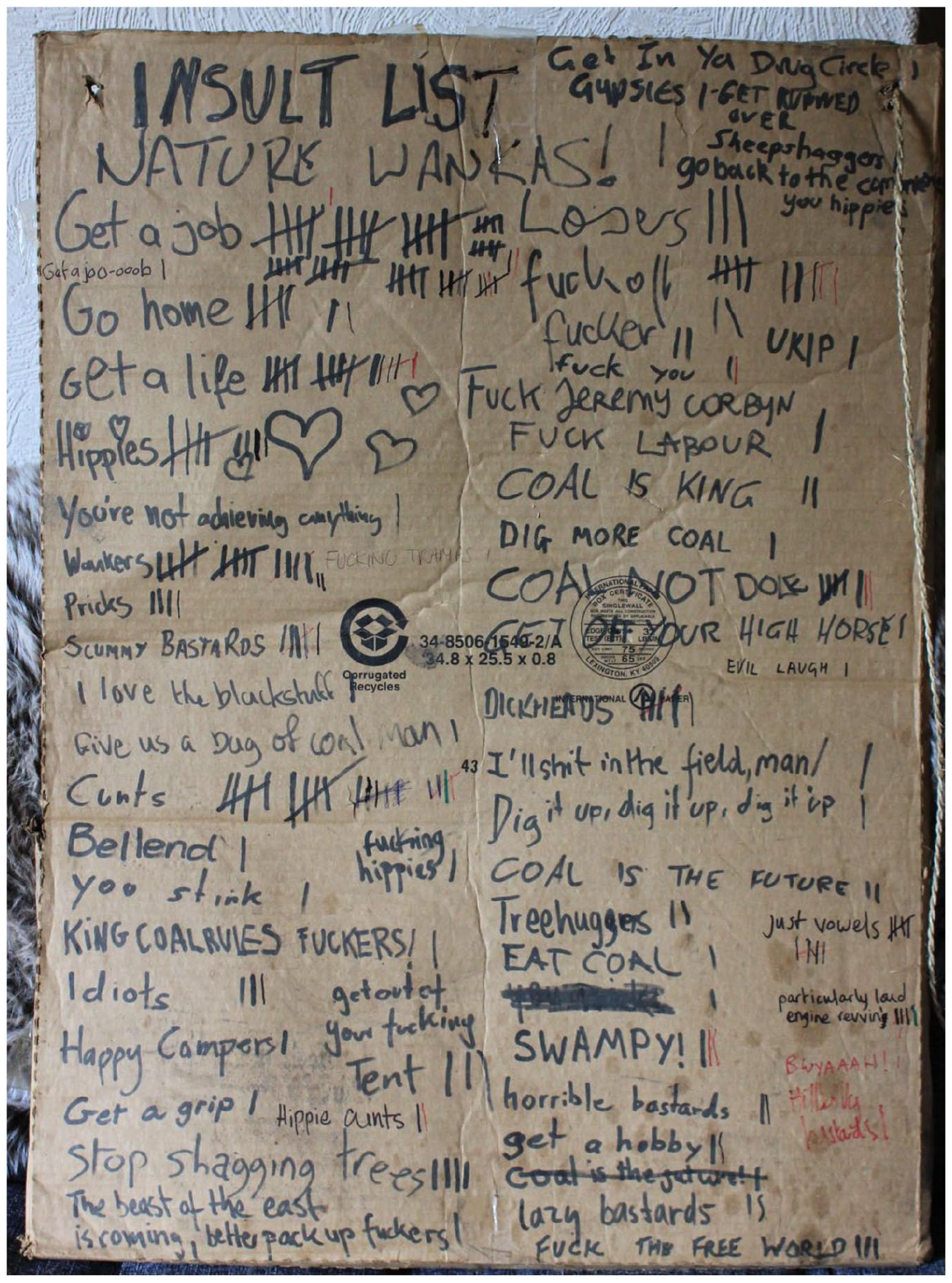
The insult board.
Analysis of the insult board (Figure 1) reveals three inter-related themes. First, there is clear reference to neoliberal tropes associated with underclass ideology: ‘get a job’, ‘lazy bastards’, ‘get a life’. It is important to stress that this is not a new phenomenon. The very emergence of capitalism and industrialisation depended on the stigmatisation of ‘idleness’ that went hand in hand with dispossession and evictions of peasants from their land. ‘In 1531, England’s King Henry VIII passed the first Vagabonds Act, describing “idleness” as “the mother and root of all vices” and ordering that vagabonds should be bound, whipped and forced to “put themselves to labour”’ (Hickel, 2020: 72). The abolition of idleness to increase productivity was necessary for elite accumulation, industrialisation, and social control. Stigmatisation has thus always been part and parcel of state violence against ‘undesired subjects’ – from travellers, dispossessed, migrants, to political dissidents. Associated with that is a second theme that draws on dehumanising stereotypes – often gendered and sexualised – positioning activists as hippies, tree huggers, and eco-extremists. For Tyler (2013), narratives of abjection frequently trigger deep-rooted primaeval fears of danger, corruption, and invasion. Notions of laziness, dirt, sexual deviance, political extremism, and ‘invasion’ are apparent here: ‘Dirty Bastards’, ‘Go Home!’, ‘scummy bastards’. The third theme refers to a commitment to coal: ‘Dig it up’, ‘Coal is the Future!’ ‘Coal is King!’. There is defence of coal as both product and concept. Here, coal is defined symbolically as ‘us’. Ironically, the slogan ‘Coal Not Dole’ (used by activists during the Miners’ Strike of 1984–1985 to defend coal communities against assault by the state) is reused here as an insult against activists. These stigmatising insults demonstrate the construction of a false binary between locals and ‘outsiders’. This is explored below in relation to how that was mobilised by both state and business actors.
The political mobilisation of stigma power
The police and mining company seized on this division in various ways. Banks’ narratives (reinforced by police and media) aimed to pit locals against activists, delegitimate the protest by framing it as led by outsiders, ‘travelling, paid’ activists, and people who did not ‘care’ about the local community. Many activists were local, and the campaign responded by highlighting both local involvement and the global nature of these struggles. Yet, ‘local’ was always a political construct – whether someone was considered local in the eyes of the police or Banks seemed to depend on the nature of their involvement in the campaign. Someone from Newcastle (10 miles away) was not considered local when participating in direct action, but local when involved in a ‘peaceful’ demonstration.
This police press release (Figure 2) deliberately emphasises details relating to the residence of activists (‘none of those arrested have been permanent residents of County Durham’) contributing to an insider–outsider narrative, grounded in legal–illegal/good–bad/peaceful–criminal dichotomies. The deliberate use of the term ‘travelling activists’, coupled with Chief Inspector Allen’s stated concern that the campaign is having a ‘financial impact on Durham Constabulary . . . stretching our ability to deal with day-to-day policing of our communities’ also reinforces aforementioned tropes around activists as lazy, unemployed, and a ‘drain’ on ‘our’ community, while playing into racism against travelling communities. Reading the press release, one would not assume that the two protesters arrested for obstruction of the highway were working full-time, and environmental campaigning in their spare time, rather than being ‘travelling activists’.
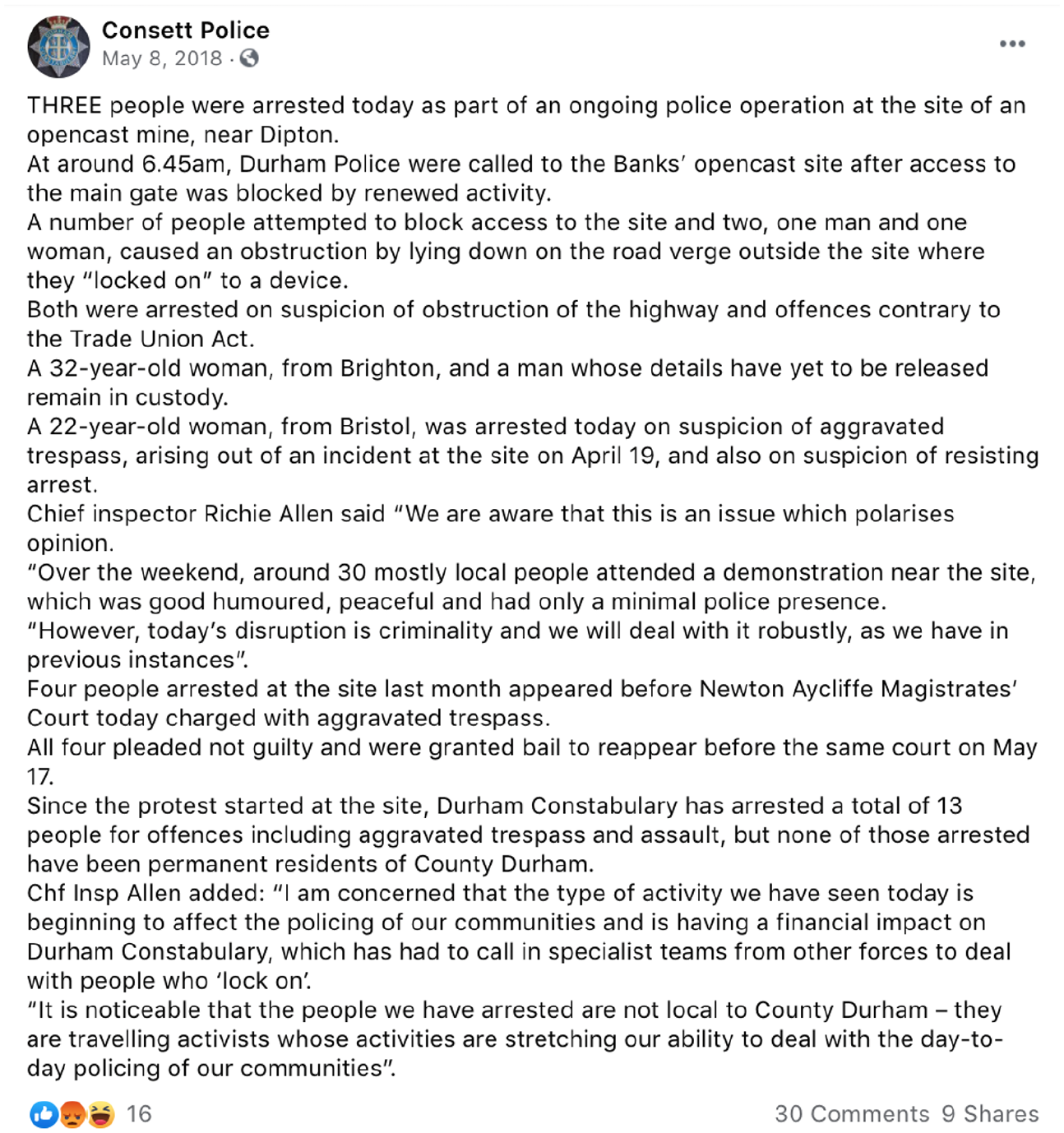
Consett police Facebook post.
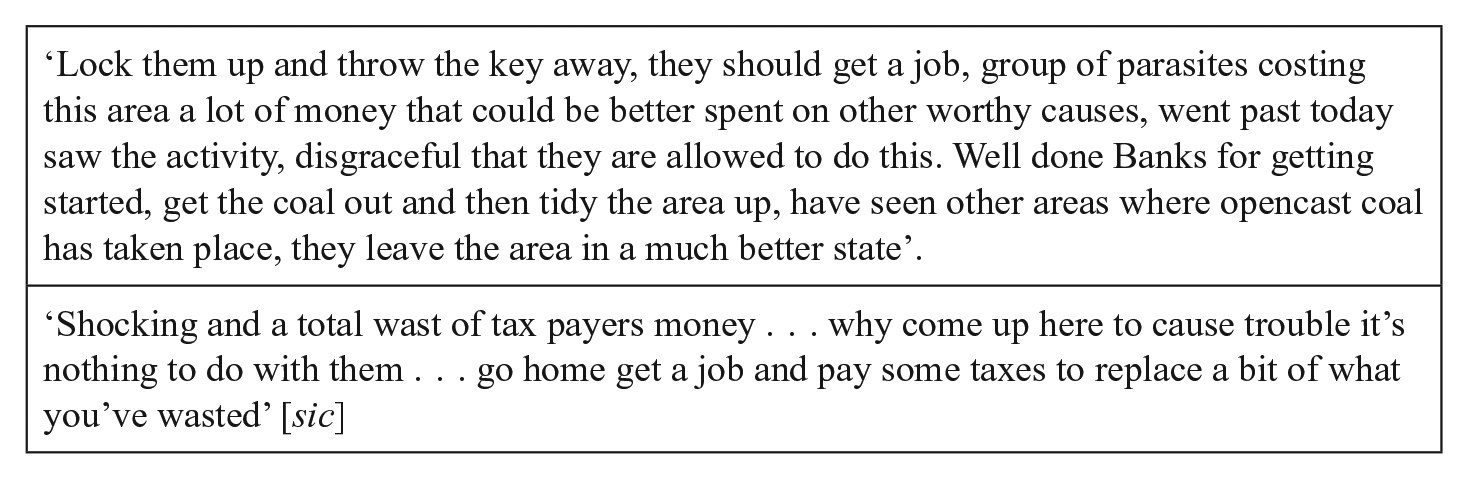
These dichotomies were actively reinforced by police through press releases and Facebook posts, which in turn facilitated their reproduction as they provided a platform for those who felt hostility towards protesters where they could share their feelings, post threats of violence against protesters. Common among these posts were claims that protesters were ‘dirty’, ‘outsiders’, and ‘parasites’; that they should ‘get a job’ and be ‘locked up’; that they were ‘benefit scroungers’, ‘paid protesters’, and that the camp represented ‘a waste of taxpayers’ money’. ‘Migrants’ and ‘Brexit’ were also invoked, connecting several ‘undesired subjects’ – migrants, activists, non-locals. 6 The following selection of Facebook comments – posted in response to local police posts, but not removed or moderated by local police – offer illustrative evidence of the above.
Comments on Consett police Facebook post 8 May 2018
Comments on Stanley police post 20 April 2018
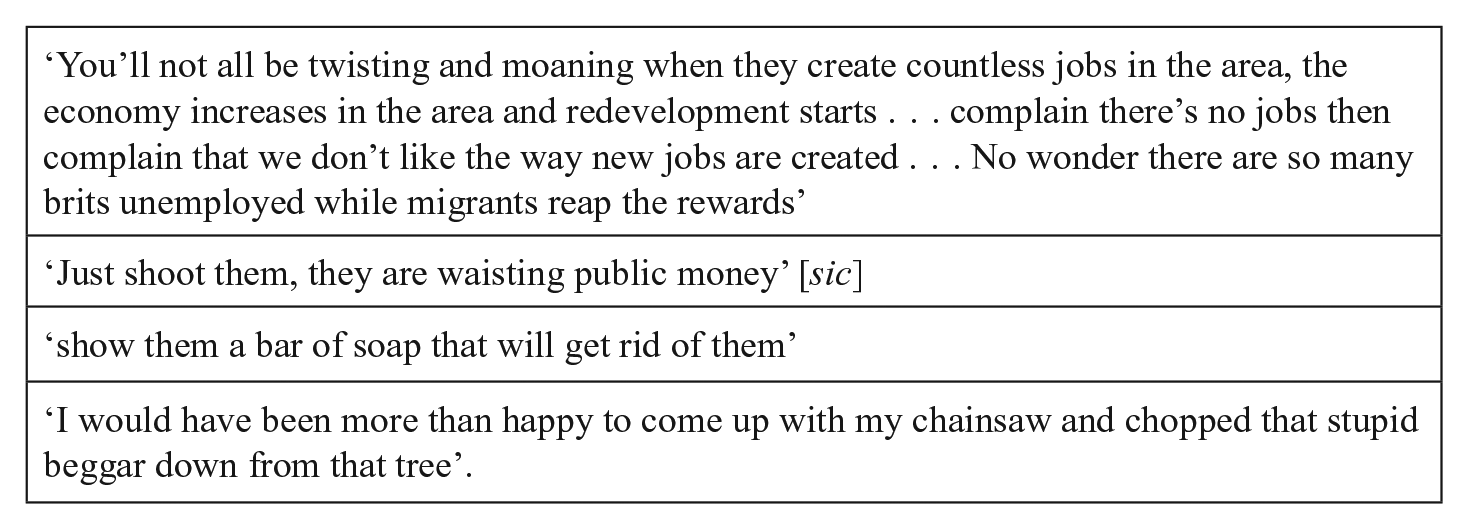
Comments on Facebook post from Durham Constabulary 5 June 2018
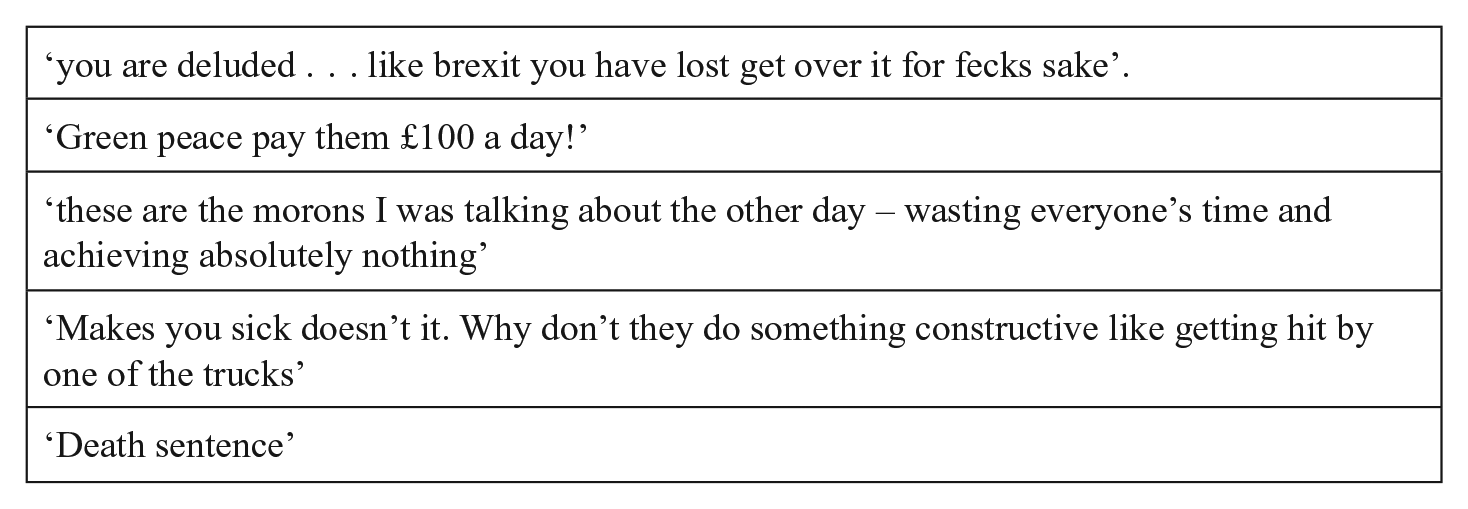
Three interrelated stigmatising narratives emerge in analysis of this data, which are parallel to those on the insult board. As before, activists are dehumanised through repeated description as ‘dirty parasites’, and again, as Tyler (2013) suggests, primaeval triggers of danger are apparent. Second, the narrative of dehumanisation plays on the neoliberal ideological assault on the so-called unworthy poor. In tandem with the police official narrative of a ‘local-versus-outside’ false binary, the stigmatisation of ‘outsiders’ is prevalent. However, there were two trends that, while not being entirely new, were more prevalent and exaggerated in the online comments as opposed to the driver insults. First, there is a repeated call for violence against activists (e.g. ‘bring back hanging’). Second, there was the emergence of narratives, which reflect the justification for austerity. The narrative here is both reflective of the impact of austerity and at the same time supportive of the logic of austerity’s necessity. The environment is deemed expendable, its defence an indulgence that removes limited resources from worthy causes. Participants highlighted that some calls for and glorification of violence came from security workers, employed by Banks (see the subsequent screenshots). Pont Valley activist Bonnie recognised that those generating online trolling (Figure 3) were connected to one another and to Banks: We now have incontrovertible evidence that one of them works for them – for Banks. Other anecdotal evidence by looking at their Facebook statuses and profiles that they all know each other and that Banks, . . . the company, is a linking factor. [T]he police left up abusive statements. When asked to take them down, didn’t take them down . . . The fact that we were surveilled in the street by the police and by Steadfast Security.
Further attempts were made to construct a divide between ‘locals’ and ‘outsiders’ and a second false binary between those who paid their taxes and those who did not and who, by implication, ‘fed off them’.
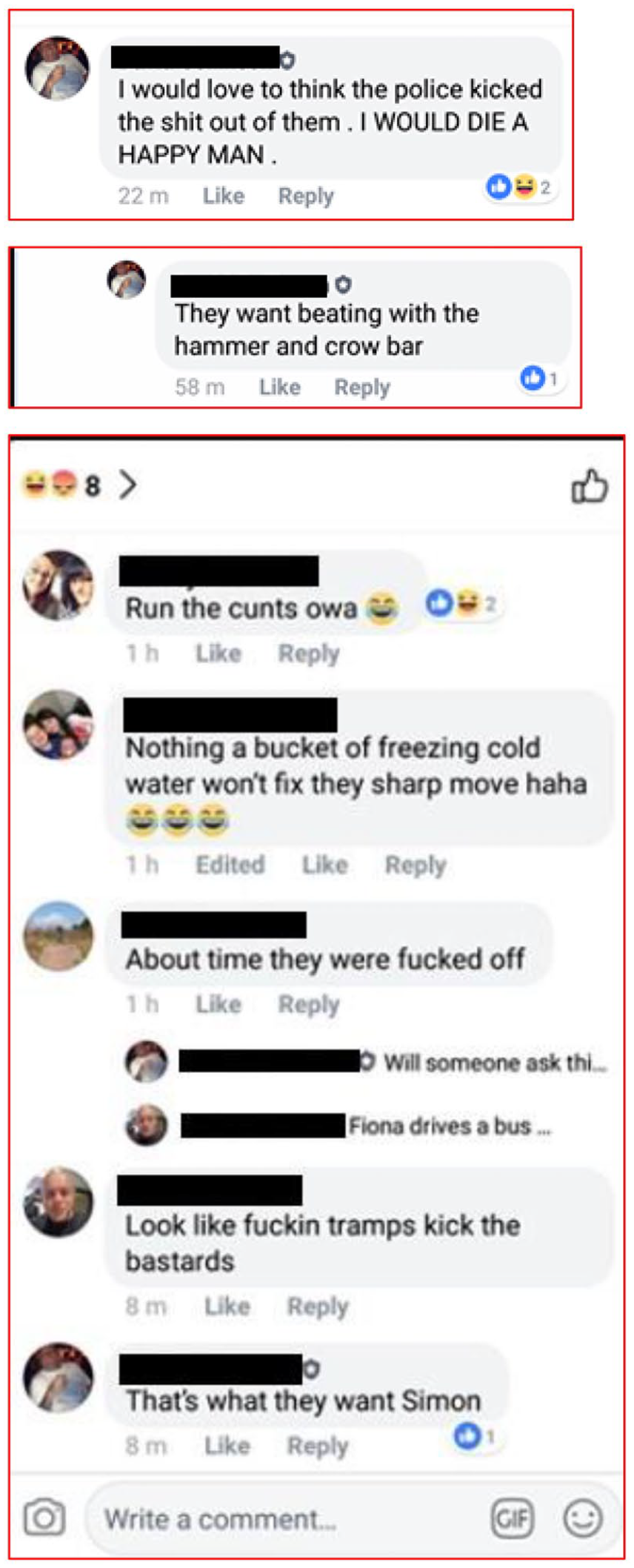
Facebook comments.
Managing and challenging stigma power within a protest context
While the origins of stigma power can be found in analyses of the structures of power in wider society, Tyler (2020: 7) argues that stigma impacts on wider social culture, ‘corroding compassion, crushing hope, and weakening solidarity’. 7 It might further, we suggest, feed into what Mark Fisher (2009) analyses as ‘capitalist realism’ or, following Benson and Kirsch (2010), the ‘politics of resignation’ that are the products of resentment and disillusion following austerity, social erosion, and internalisation that ‘There Is No Alternative’ (Fisher, 2009).
This mantra has been internalised in many working-class contexts. The CPPV politicised, empowered, and brought together many in the working-class community in the area, but the sense of defeat and despair was evident in narratives.
I’ve been involved in it [CPPV] for a long time and even early 2018 when we knew that Banks were going to try and mine the site, I, and one other person, called a meeting in Dipton and tried to get people together, and people were so downtrodden. So, like, ‘Well, we’ve had two appeals about this, and it has happened for years and nobody listens to us and we’re a poor, working-class community and what can we do?’ (Kim)
Several interviewees reported becoming ‘radicalised’ and changed their attitudes towards police: it’s been really interesting to see the people who live in that area how their attitude to the police has . . . I don’t want to say tamed, I mean solidified that they’re working-class people . . . most of them are from Durham, so they’re like . . . you know, they don’t like the police to start with. But they’d gone from feeling like you couldn’t walk away from a cop or be sarcastic to a cop, because you couldn’t be rude . . . Whereas, I was just like, ‘No, walk away, or tell them something completely stupid’. (Dana)
Those who were new to activism (and the hostility that it attracted) noticed that seasoned activists seemed untroubled by the antagonism of some members of the public: they had heard it before. The insult board was a way of collecting insults to deflect their emotional impact. As Hamish explained: To stop it from getting to us, we turned it into a bit of a joke, a bit of a game. It was funny . . . when someone said get a job . . . eyyy another one! And, some of the insults were just really funny. Like Swampy . . . we got a lot of toots (support) from people driving past too. (Hamish)
Equally important was the activists’ ability to balance the insults alongside knowledge of the support they had been given by people living nearby. The misrepresentation that ‘real locals didn’t care’ – in the face of the long history of the campaign – led to anger among the activists. They recognised that this had come ‘from above’, as police and Banks employees had sought to create false divisions between ‘locals and outsiders’, and these were widely repeated in insults and threats. So-called ‘outsider activists’ were stigmatised as criminally minded troublemakers who were dishonest in their concern for the area, and who personally benefitted from their actions as ‘professional activists’ (linking to anti-Semitic alt-right conspiracy theories about George Soros as identified by the Anti-Defamation League (2020)): It’s said on mainstream news now that the activists were only here because they were paid five hundred quid a week by George Soros, which has now become a trope. Just everyone says it. Well, of course we’d never heard this stuff. (Bonnie)
Complex (and contradictory) class dimensions are at play here – on one hand, activists were characterised as lazy, undeserving, and unemployed – but on the other hand their ‘environmentalist identity’ meant that they were portrayed as middle-class; privileged city people positioned in opposition to local working-class people and to the previous generation of miner activists fighting against Thatcher’s mine closures. At times, these false dichotomies were explicitly linked to a wider ‘culture-war’ conflict around the UK’s relationship with the European Union, in which Brexit has been constructed as a project contingent on working-class support, set against a middle-class metropolitan elite who oppose it (Curran et al., 2018). Irrespective of the camp having nothing to do with Brexit, and no position on it, the readily available ‘them and us’ framing was evidently transferable and effective.
Activists had a good understanding of the manipulation of reality, the construction of a ‘them and us’ division and how the spending pressures arising from austerity were being played on by protagonists, most notably the police.
[They were] really trying to turn people away from us. To try and make it look like we were absolutely the bad guy and we were the reason that little old aunty Ann had had her house burgled and there was no policeman to go and check in on her, like they absolutely were fuelling that fire. (Emma)
How to respond to these falsehoods, and indeed if a response was required, became a source of debate within the camp. Some activists responded by emphasising that they were ‘locals’ in public-facing messaging to cast off the negative impact of stigmatisation and the associated ‘toxicity’: ‘It actually became a rallying cry for us . . . I think that “I am local,” “#Iamlocal,” really brought us together’ (Bonnie). They organised lock-ons and other direct actions under the ‘I am local’ banner and spread photos and messages around them. Others were keen to deconstruct the notion of ‘local’, and challenge what was meant by ‘local’ and why such an identity offered the grounds for legitimate protest and the nonsensically narrow definition of what was legitimately ‘local’: Then it was like . . . Who’s local, then? How close? Do you live in Consett? If you live in Consett are you local? If you live in Dipton, are you local? If you live 300 metres from the site . . . ? Well, fuck you, I live 300 meters from it . . . I could not be any more local, because I’ve been watching out of my living room window. (Kim)
They emphasised the global politics inherent in environmentalism, drawing connections between struggles and pointing to the need for (international) solidarity. The process of managing stigmatising insults deepened reciprocity and solidarity between locally based activists and those that had travelled to the site – but also environmental defenders and social justice activists across the world. Those new to activism learned from more seasoned how to ‘brush off’ stigmatising insults. Those new to activism of this type were interested to learn new ideas (respecting pronouns, vegan food, etc.) and drew inspiration from their companions’ sacrifices. Many shared experiences of environmental defending elsewhere and raised awareness of connected struggles as far away as in the feminist-ecological revolution Rojava or autonomous organising in Mexico and Colombia. When people learnt of the deaths of two environmental activists who were known within the camp and died resisting environmental and social injustice elsewhere, it deeply affected all. One of them had been living at the camp for a long time, and was much-loved among activists including the local community. Another activist had died during similar anti-coal protests at the Hambacher Forest in Germany. Even though he had never visited Pont Valley, he was well known by some people and his death impacted those who had never met him due to the connections between the campaigns, as Kim recounts: I mean, it is awful that anybody loses their life, but there was a thought in our minds that it was somebody that we really cared a lot about . . . And that hit us like it was somebody that we knew. (Kim)
In the context of the increasingly harsh criminalisation of solidarity (Fekete, 2018) – a powerful weapon against stigmatisation and scapegoating – these new connections and social relations were deeply meaningful.
Conclusion
The hope of Beynon et al. (1990) for an alliance between environmentalists resisting opencast mining and residents of the former coal fields seeking to protect their landscape was partially realised in Pont Valley. Grounded in an awareness of the impact of deindustrialisation on the material conditions and morale of those living in post deep-mining coal communities, activists successfully built important alliances with other locally based people and bodies, which represent mining communities past and present, such as the DMA.
However, while public responses locally and within the DMA were frequently positive, activists were subject to persistent negative stereotypes and threats of violence, which were used to delegitimise and belittle their campaign and intimidate them. We explored the role of the state, Banks employees, passers-by, and online networks in generating these stereotypes and mobilising stigma to delegitimise activists. Police used the notion of the camp being inhabited by an invading and militant force to drive a wedge between activists and the community. The failure of the police to remove violent threats on their own website from members of the public gave credence to the mythologies, insults, and threats made.
Our analysis ‘looked up’ to situate the origins of stigmatising narratives within the power structures of neoliberal policy, politics, and state agencies, and to examine how these manifest themselves in popular understandings, within a community that experienced economic, social, and cultural vulnerability. This is the first study to directly focus on environmental activism in relation to Imogen Tyler’s theory of stigma power. Our case study of ecological struggle in post-industrial County Durham provides a rich basis to explore issues around work, unemployment, and coal-mining heritage, and represents an important contribution to developing this work. Three interrelated issues emerge from this study, which deserve attention in this conclusion: the role of the state at both national and local level (in the shape of the police) in the process and utilisation of stigma power; the nature and content of the stigmatising rhetoric itself; and the ways stigmatising processes are dealt with by activists.
Stigma power is effective when it isolates, shames, and silences target groups. Reference to ‘local’ identity versus outsiders was a central feature of the assault on protestors. Charges that the camp was comprised of invading, professionalised troublemakers prompted a change in strategy when locally based activists became more visible and fore-fronted in action, but this was contested by others who wished to focus on a global environmental message. Local people identified as both locals and environmental activists. The fact of intimate appreciation of the Pont Valley (as Kim put it: ‘I could not be any more local, because I’ve been watching out of my living room window’) gave impetus and urgency to engagement. While they recognised the global importance of the site, they did not want to see the reality of their commitment to place and their identities denied. Attempts to define activists as ‘not local’ had piqued the ire of those who were motivated by a particular relationship with the materiality of their immediate environment.
In the case of the CPPV, the utilisation of stigma power from above can be seen through the lens of the regional context in relation to the impact of economic degradation and stigmatisation of past industrial culture and the questioning of work ethic. Rural County Durham, like other predominantly working-class communities, has been subject to stigmatising rhetoric associated with underclass and austerity ideologies, used by the state to maintain control and legitimise the condition of disadvantaged communities (Tyler, 2020). While we did not focus on class explicitly in our research, given that this activism is set in a post-industrial community it is fair to assume that those that are aware of and may have been subject to stigmatising tropes associated with worklessness. Awareness of those tropes and the dangers associated with being labelled ‘illegitimate’ are evidenced in the nature of the insults and threats made against activists. The activists we interviewed came from within and beyond the region, and from a range of class backgrounds, with three discussing direct family ties to coal mining in the form of relatives who had worked in local pits. Activists’ sensitivity to and negotiation of false and divisive stigmatising tropes, which sought to tear them from their own heritage, was significant in terms of challenging stigma-power as a process.
Alongside generalised neoliberal tropes associated with underclass ideology and the logic of austerity (pay your taxes!) were specific references to an allegiance to coal and a rejection of the perceived judgement of ‘outsiders’. Slogans such as ‘Coal is king’, ‘Long live coal’ are refutations of the diminution of industrial heritage. These were used in the 1984–1985 miners’ strike but reconfigured as insults against those facing assaults by the state in the CPPV. The use of slogans of the miners’ strike against CPPV reveals a pride in heritage but a perversion of their original intent, to protect people and communities. After all, striking miners were
Activists collectively deflected attempts at stigmatisation by managing it as a social experience. They experienced the assault collectively through a shared, and politically informed lens – the insult board was a part of that strategy. The board made it possible to collectively visualise the insults, discuss, and at times laugh at them. Attempts ‘from above’ to manufacture or reproduce a ‘them vs us’ dichotomy sought to reinforce the view that the environment was the legitimate concern only of ‘local people’, and, importantly, ‘nonviolent’ protestors. These narratives serve to undercut collective solidarity in resistance to environmental damage. Among CPPV activists – locally based and those that travelled to the site – there was shared acceptance that the global politics of environmentalism over-rode such false dichotomies. Consequently, while such rhetoric gave ammunition to opponents of the campaign, attempts to create divisions within the CPPV failed. In the process of managing stigma, a wider theme about the importance of solidarity emerged, one that is locally framed but fundamentally global in scope.
Footnotes
Acknowledgements
We would like to thank all interviewees and particularly Anne Harris from Coal Action Network and June Davison for their collaboration, and two anonymous reviewers for their very useful feedback.
Funding
The author(s) received no financial support for the research, authorship, and/or publication of this article.