




Abstract
The methodological possibilities of scrapbooking have hitherto been largely neglected in social science research. This article provides much needed theoretical and empirical insights into its potential, positing it as a practical and conceptual process of saving, sharing, and making sense(s) of the everyday and ephemeral. Scrapbooking highlights both the contingency and partiality of the scraps themselves and its own performance of giving them form. Research into how women experience and interpret ‘men’s intrusions’ over the course of 1 week put these ideas into practice. The study used both physical and digital scrapbooks, for which the social media platform Tumblr was employed. An evaluation of scrapbooking’s methodological potential produced three characteristic ‘tensions’: between freedom and constraint, between the raw and the processed, and between the therapeutic and the intrusive. These three tensions necessitate further exploration.
Introduction
Are scrapbooks tools to preserve the past or to daydream about the future (Phillips et al., 2014)? Can they articulate order and coherence or rather honour ‘intentional chaos’ (Christensen, 2017)? Do they provide a window on culture itself or rather on culture-makers with their ‘guard down’ (Ott et al., 2006)? While polemical questions do not necessarily make for good answers, scrapbooking clearly involves more than just ‘blank book[s] in which pictures, newspaper cuttings, and the like are pasted for preservation’ (Oxford English Dictionary, 2018). In fact, it seems that defining the practice and its purpose could get researchers into quite a scrap.
Methodological literature offers little illumination here. The terms ‘scrapbooking’ and ‘scrapbook’ crop up occasionally but ambiguously, often as if either self-explanatory or else synonymous with diaries, notebooks, or memory books (see, for example, Thomson and Holland, 2003). To assume synonymy between certain terms and tools in qualitative research misses much opportunity for more focussed analysis and differentiation. There is certainly a clear reluctance to recognise scrapbooking as unique, even where close sociological attention is being paid to the medium: ‘scrapbookers are storytellers. These stories could just as easily be passed down orally or recorded on blogs’ (Medley-Rath, 2010: 3).
I want to propose here not only that scrapbooking is a unique activity, but also that it can be utilised as a specific theoretically informed methodology. This ideal type scrapbooking is presented here in response to the voice of self, experience, and truth which is frequently elicited and constructed in qualitative research (Mazzei and Jackson, 2009).
Scrapbooking comprises more than scrapbooks as a tool or method of data collection: it is a process of saving, sharing, and making sense(s) of the everyday and ephemeral. Scrapbooking thereby highlights the contingency and partiality of the scraps themselves and of its own activity in giving them form. This performance is both practical and conceptual: it is offered here as an approach to knowing.
To demonstrate these points, I draw on research into how eight women in the North of England experience and interpret men’s intrusions in their life. ‘Men’s intrusions’ are advanced here as a conceptual apparatus for exploring a range of men’s abusive practices. The eight participants used the scrapbooking process to identify, connect, and contextualise a variety of practices across a range of spaces. Their physical and digital scrapbooks comprised diverse materials: photographs, YouTube videos, screenshots of text messages, emoticons, paintings, travel tickets, textiles, cartoons, magazine extracts, and text, among others. These were either created directly onto the pages, left loose, or stuck in, uploaded or linked to in their scrapbooks.
To make sense of this process and its relationship to my broader argument, this article adopts the following structure: existing scrapbooking literature will first be outlined, followed by an overview of intrusions research. With this empirical orientation point for thinking methodologically, a parody of the voice paradigm and a movement towards ideal type scrapbooking will then be provided. Shifting from the abstract to the more specific, design details of the week-long research project will be presented. Brief details of participants’ experiences and interpretations of men’s intrusions are then provided. The main body of the article thereafter approaches scrapbooking in terms of three characteristic ‘tensions’.
The scraps so far: existing scrapbooking research
While defining scrapbooking might pose a problem, classifying related research is a little easier. Distinct cross-disciplinary groupings can be identified, such as research focussing on the experiences and motivations of found scrapbookers and scrapbooking groups (McCollough, 2017; Phillips, 2016; Tamas, 2014), on the genre and content of found scrapbooks (Goodsell and Seiter, 2011; Katriel and Farrell, 1991), or on distinctions between possible scrapbook types (Christensen, 2017). Differences between digital and physical scrapbooks (West et al., 2007) and the potential for social media platforms to be conceived as digital scrapbooks are also considered at length (Good, 2013; Phillips et al., 2014).
However, I am primarily interested both in research which evaluates scrapbooking in practice settings and in research where scrapbooking is used as a method for data elicitation or the stimulation of a positive participatory research experience. Almost invariably in fact, these three designs overlap; this is a reminder of the obvious but easily overlooked question: what is social science research actually for? Indeed, what little scrapbooking literature exists appears to embody transformative – primarily therapeutic, inclusive, or pedagogic – goals.
For example, autoethnographic scrapbooking documents experiences of queer motherhood (Faulkner, 2017) and unwarranted gynaecological and obstetrical procedures (Morawski and Irwin, 2011). Elsewhere, scrapbooking is used with traumatised children (Lowenstein, 1995) and bereavement groups (Kohut, 2011), as a memory stimulant with older people (West et al., 2007) and, in education, as an inclusive assessment technique for science classes (Burnley, 2004). In one of the most detailed and insightful examples, Bragg and Buckingham (2008) employ scrapbooks to explore how young people use media content to understand sex and relationships. Their claim to both an ‘inside’ view of participants’ lives and a development of ‘social self-understanding’ for participants themselves (Bragg and Buckingham, 2008: 116) exemplifies a broader rationale in the scrapbooking literature.
Nevertheless, this claim is of course not unique to research using scrapbooks. In fact, existing scrapbooking research largely epitomises the justification often applied to visual participatory methods more generally:
[that they] can facilitate access to spaces and routines that may not be uncovered during a conventional interview encounter; those . . . considered to be ‘back stage’ . . . private, or indeed considered too ‘everyday’ or even mundane to discuss. (Pilcher et al., 2016: 682)
Additional research access is sometimes implied by a scrapbook’s connotations of comprising diverse expressive modes and ephemera. 1 These connotations are rooted in Global North representations of scrapbooking as an act of assembling varied media onto collaged pages of an empty book. However, all too often the logic of scrapbooking’s research appropriateness extends no further and a natural and autobiographical coherence is assumed to link and shape these fragments or ‘scraps’ together into a comprehensible voice. My argument in favour of scrapbooking differs here and draws on studies of scrapbooking as a genre and as a leisure activity or performance.
Indeed, it is precisely scrapbooking’s potential to query form and voice that is promising. Tamas’ (2014) particular conceptualisation of the medium makes its possible methodological opportunities clear:
the episodic, collage format of a scrapbook undermines narrative continuity and integrity and positions representation as a constructed, contingent work-in-progress. (p. 88)
Scrapbooking problematises the easy reading we demand of people and experiences, offering scraps salvaged from everyday life as orientation points in multifaceted sense-making processes. In order then to establish the necessity for developing this methodological potential, I will briefly outline the area of men’s intrusions. Indeed, concerns about how to research everyday abuses initially inspired my interest in scrapbooking. Men’s intrusions thus offer a vital empirical orientation point for understanding scrapbooking in theory, practice, and evaluation.
Men’s intrusions: a vital conceptual apparatus
Ongoing activism like Everyday Sexism Project (n.d.) or Me Too (n.d.) exposes an extensive range of men’s abusive practices towards women. Some of these are covered by criminalised categories like ‘rape’, but others appear too mundane and ‘everyday’ to be addressed by existing legislation (Davis, 1994). Nonetheless, staring, seemingly harmless calls to ‘cheer up’ 2 and sexual assault are all linked on what Kelly (2012) calls a ‘continuum’ of men’s violence against women, where a ‘common character’ underlies and connects different events which cannot always be easily differentiated (p. xviii).
A conceptual apparatus is needed to explore this continuum in everyday life, one inclusive of incidents which might be experienced and interpreted in myriad ways: from welcome in certain contexts, to horrifying or homophobic, and racist in others. A conceptual and intersectional tool, which opens research up to such situational sense-making processes, is therefore critical.
UK-based academic Vera-Gray (2016b) proposes the concept of ‘intrusions’ to ‘refer to the deliberate act of putting oneself into a place or situation where one is uninvited, with disruptive effect’ (p. 15). She focusses on the uninvited – rather than unwanted – nature of intrusions to address a wider range of men’s actions, rather than ignoring those where no malevolent intent is proved or harm felt. Being intruded upon might therefore be understood as a ‘common character’ of the continuum, a critical point of departure to explore what form the intrusion took and how it was experienced and defined (Walling-Wefelmeyer, 2019).
I wanted to build on Vera-Gray’s (2016a and 2016b) work, which uses notebooks and conversation, to phenomenologically explore women’s experiences of unknown men in public spaces. It will be increasingly vital to address intrusive encounters facilitated or complicated by digital and online technologies (Vera-Gray, 2017) and to develop suitable research methodologies for doing so. I therefore decided to research how participants interpret the concept of men’s intrusions and apply it to people and spaces more generally, collapsing divisions between online, digital, and offline, known and unknown men, and the so-called public and private spaces.
Evidently then, a mobile methodology is needed for exploring intrusive experiences, responses, and sense-making processes in and across these different relationships, spaces, and situations. Moreover, there is real value here in a participatory methodology which posits social science research as a means to empower participants to identify and address intrusive practice for themselves: ‘creating space for dialogue, better understanding and social change’ (O’Neill, 2011: 20). Such a methodology should ideally centre women’s experiences and understandings of intrusions without losing their ambivalence, nuance, and disjuncture in pursuit of ‘the unified subject of feminism, woman with a capital W’ (Dahl, 2010: 160). After all, the coherent voice we demand of participants is characteristically gendered.
The problem of ‘voice’: a parody
What then is voice? And how does it concern men’s intrusions and scrapbooking? Here, I employ ‘parody’ to assemble a ‘temporary rehearsal’ of an intellectual position (Butler, 1998). In other words, I will parody voice to more explicitly identify and critique it.
Of course, a voice paradigm has been identified elsewhere and its privileged position in qualitative research in the Global North has been subject to considerable scrutiny (see, for example, Mazzei and Jackson, 2009). As with these writers, the aim here is not to simplify and obscure complexity to posit a new theoretical and methodological ‘successor’, in this case, scrapbooking. Rather, my use of parody draws attention to the performance of my own argument, highlighting positions of proximity, negotiation, and ambivalence in relation to the subject considered.
While voice encompasses more than just speech-centric methods, as a metaphor it usefully highlights certain normative and exclusionary notions about data. In effect then, this voice is mostly sought by researchers through speech and is treated as a transparent, coherent, and narrative-driven reflection of the self, experience, and truth of the matter in question. I will now address this claim, by both introducing and increasingly destabilising voice:
It is assumed that voice can speak the truth of consciousness and experience . . . seen almost as a mirror of the soul, the essence of the self. Qualitative researchers have been trained to privilege this voice, to ‘free’ the authentic self from whatever restrains it from coming into being, from relating the truth about the self. (Mazzei and Jackson, 2009: 1)
Sometimes this voice is simply and miraculously there: directly available through language or the tell-tale signs of a body either at ease or in discomfort. This voice responds to the imperative to not only ‘know thyself’, but also ‘share thyself’. And though it may long for the confessional space, it sometimes needs assistance: perhaps an unstructured interview, detailed questionnaire, self-elicited photographs, or Facebook forum. Where traumas and violences have obscured the voice with sedimentation, research must be stripped back to two people – the dyadic therapeutic (monogamous) ideal. ‘Talking helps’ and a logic of self-actualisation frees the voice into coherence. Sometimes too perhaps ‘painting helps’, but it remains indecipherable without talk to transform it into text.
As if by magic, voice has already arrived at its own raced, gendered and sexual unity (Ahmed, 2006) and the habitual path remains straight and invisible. Lives lived with misogyny, ableism, and heteronormativity, among others, involve continual confusion and negotiation, but this posited voice is always logical and consistent in its resistance to or acceptance of the status quo.
Either/or coherence is sought through events-based recollection: what happened? What did you think? The more ambiguous and mundane intrusive encounters thus become ‘perfectly innocent’ behaviour (Stanko, 1985: 2) or ‘something natural’ (Welsh et al., 2006: 101) because they did not escalate – or, rather, did not escalate within a normative understanding of time, agency, and causality. Voice always knows the edges of an event: it knows what to accept and what to resist.
Voice swears to tell the truth of the event, the whole truth, the exact same truth every single time. But should it not? The strategic voice has its political and practical purpose after all, but risks reifying the value ascribed to certain forms of knowing (Smith, 2012), and, indeed, certain women’s strategies (hooks, 2000).
Getting the voice ready for its debut in court – to testify to mistreatment – thus requires an introduction to Western narrativity, notions of chronology, arc, and plot. Specific one-off incidents and events are preferred to the insidious, cumulative, and ongoing. Who wants to read a story where coercive control is patterned and environmental, masked as being in a person’s best interests? Drama and direction are preferred over detail.
Multiple standpoints might just be tolerated, as long as narrators appropriate complexity and adversity into neoliberal tales of personal transformation. The biography interrupted, disrupted – but never corrupted – is still the biography. Fragmentation is inconceivable unless Othered into ‘schizophrenia’. After all, academia assumes not only that life is lived and recounted as a story, but also, for it to be a good and moral life, that it should be lived and recounted as such (Strawson, 2004). Even then, storytelling takes place within cultural climates that often treat accounts of abuse as untrue: not, in other words, with some notion that sense-making can be an ongoing, situated, and non-linear process.
Tell us about your everyday experiences of intrusion, but tell us in this way. Use the masters’ tools (Lorde, 2018); the end justifies the voice.
Ideal type scrapbooking
This parody of voice serves to identify its assumptions – particularly where abuse and men’s intrusions are concerned – and respond to its insufficiencies. Scrapbooking can then be seen as one of many responses, and a provincial one at that (Curato, 2013).
Scrapbooking offers space for women to engage in making senses of their experiences without the expectation of a final or fixed voice. Making senses means making with the senses, a situated engagement with the world around. Such an engagement has obvious benefits for the abusive or traumatic – ‘what happened to me or why can be hard to trace, so, in trauma scrapping, we begin with where or with what objects’ 3 (Tamas, 2014: 93). Materials salvaged from everyday life act as anchors for changing feelings and meanings. Attention to this materiality thus necessitates a methodological flexibility in relation to diverse objects and expressive modes.
However, the logic of scrapbooking does not demand participants use more, more, more materials and modes, but rather it aims to create access: an essential responsibility for social science research. As a mobile space, scrapbooking begins with where the participant is and what means the participant has available. 4 This starting point seems fitting for researching intrusions which involve participants across different spaces and communicative forms specific to those spaces (e.g. emoticons or memes).
Scrapbooking thus finds form without necessarily finding narrative. Scraps might be poems rather than parts of a story. Movement through the book might be lateral rather than linear:
Although there is an overall movement of chronological progression along the scrapbook pages, the dominant logic is a logic of subjectivity, which underlies the assembly and random pasting of life-fragments on each collaged page. The narrative presumptions of the continuity and directedness of life events thus become attenuated, and, as their fragmentary nature comes into view, both the claim to life’s integrity (i.e. the way it ‘fits together’) and also the constructedness of one’s life story are highlighted. (Katriel and Farrell, 1991: 14)
People might aim at biographic cohesion – a comprehensible voice – connecting life fragments to create a sense of progression and self. If so, the purpose of scrapbooking is to denaturalise and study this process at work rather than just facilitate it (Walling-Wefelmeyer, 2019). Scrapbooking thus explores how subjects and subjectivities continue to arrive at themselves with directions, rather than by magic (Ahmed, 2006). It is a methodology for asking how different materials and modes lend themselves to different directions and what happens when you mix them up. Scrapbooking implicates the everyday and the situated in our orientation of, in, and through the world.
It also implicates itself: scrapbooking offers ‘the fragment as perceived in relation to its context of origin, on the one hand, and as incorporated into a new whole on the other’ (Katriel and Farrell, 1991: 10–11). It salvages and reimagines the scrap into a safer space. What then is a fragment or a scrap? It is a way of thinking about partiality, about how the edges of an event or experience are ‘cut out’ of the whole – or their intra-action (Barad, 2007) – for the purposes of intelligibility and research. It is both practical – the Facebook post that a participant includes as a relevant scrap – and also conceptual. Thus, the overall task of the research is perhaps much like that of Benjamin’s (1999) translator (p. 79): to lovingly piece these fragments together into some form of understanding and to glue this into our knowledge of a subject.
Collage and bricolage imply a process of physically juxtaposing disparate materials (Lindquist, 2000), while montage and assemblage suggest the construction of something fixed and singular (such as an art installation or film) as a result of this process. 5 Scrapbooking, on the other hand, locates these processes in a specific and ongoing space, where life fragments, general or specific to particular events or themes, might be conveniently stored or intentionally arranged. Scraps are always partial, constantly shifting with each addition to and inspection of the book. The original context of scraps is never quite given up to its new location which in turn never quite offers an obvious or easy voice.
Containing fragments in a scrapbooking totality is an onto-epistemology in itself, showing ‘a critical totality of fragments . . . the world as a network of uneven, conflicting, unassimilable but relating elements’ (Highmore, 2002: 95 in Tamas, 2014). However, it also perhaps represents a possibility for pluralism. If scrapbooking begins with fragments, then how those fragments ‘relate’ and what they mean or do for both participants and the researchers might be explicitly addressed. 6
However, while methodological scrapbooking might aim for inclusivity and pluralism, it is also tied to existing (and in particular North American and UK) associations, uses, and histories of the scrapbook medium. For better and for worse. While Goodsell and Seitell (2011) suggest that scrapbooking’s meaning and use shift with its context, it is also important to note its historic popularity with the bourgeoisie and middle-classes in the Global North (Ott et al., 2006) and, as with mediums that allowed for documentation, archiving, and typology, its implication in racist colonial classifications in the not so distant past. Meanwhile, today a whole industry has sprung up to encourage women’s consumption of scrapbooking commodities, peddling the rhetoric that a life scrapbooked is a life truly lived.
Nevertheless, as a process for containing anything and everything, scrapbooking problematises taste distinctions: the so-called trivia or trash ‘come into [their] own . . . by putting [them] to use’ (Benjamin, 1989: 47). This both reifies and undermines an arts/crafts hierarchy: scrapbookers find the practice accessible rather than intimidating and they begin to question the rigid arts/crafts distinction and value their own creations.
This ideal type of scrapbooking emerging in response to the problem of voice and the specificity of men’s intrusions offers us a starting point, for critique, consolidation, and negotiation. It needs to be tested. To begin this dialogue then, between idea, application, and evaluation, I started with where I am and what research resources I have.
Researching men’s intrusions: putting scrapbooking to test
I recruited participants through pragmatic strategies, involving university student emailing registers and asking colleagues to share the information with their networks. Such strategies typically access a specific population and do not, of course, explicitly address the exclusion of certain (particularly ethnically and age diverse) demographics from research.
Eight regionally available women responded. All eight were cisgender and White, of whom one was Bulgarian and seven British. One participant identified as gay, two as queer, and five as heterosexual. Four identified as working-class and the other half as middle-class. Ages ranged from 22 to 41 and three related having dyspraxia, dyslexia, and mental health conditions.
With ethical approval granted by my host university, I aimed to facilitate informed consent, confidentiality, and positive research experiences. Participants could alter and remove their contributions before I began data analysis and were all provided with information on support services and, ultimately, the project’s findings.
The eight participants were asked to contribute their experiences of and thoughts on men’s intrusions in a scrapbook over a week. In both the information sheets and our first meeting, participants were encouraged to interpret ‘men’s intrusions’ freely and to present anything relevant however they chose. A brief definition of the term was nonetheless provided, namely men’s uninvited presence in or interruption of their everyday lives (with examples of staring and verbal comments).
The term ‘scrapbooking’ was also open to participants’ interpretations and they were asked to share these in our first meeting. Both digital and hard-copy scrapbooks were used to capture a range of site-specific intrusions, with four participants allocated to each. 7 In view of a distinction in scrapbooking practice and literature between physical and digital books (noted earlier), I wanted to draw comparisons between the uses of the two types.
Katriel and Farrell (1991), experts in found scrapbooks, cite sharing phases – in which scrapbookers act as bridges between their creations and audiences – as crucial to the scrapbooking process. I met participants at the beginning and end of the week to explore this claim and its (one)directionality, thereby offering the sharing space as a bridge between participants and their own creations and process. I contacted participants mid-week to organise this meeting and used contact here to remind and motivate them.
Brown, square, and spiral-bound scrapbooks were obtained, each 8 × 8 inch and tied together with ribbon. I also appropriated the social media platform Tumblr to act as a private password-protected digital scrapbook which only I and each participant could access. Tumblr was chosen for several reasons: sites designed for scrapbooking are often costly to join and have insubstantial privacy policies or prescriptive formats (catering mostly for personal images and text). Social media platforms are typically free to use and are suited to varied media. Tumblr provides considerably more possibilities for employing different media (see Figure 1) than most platforms and can also archive individual posts horizontally (see Figure 2). This enables a lateral overview of the Tumblr webpage; ‘the episodic, collage . . . work-in-progress’ scrapbooking ideal outlined earlier. Nevertheless, Tumblr is not marketed as a scrapbook and its design and associations might influence its use and interpretation. In particular, Tumblr aims to introduce its users to new content.

Tumblr toolbar showing controls for various text formats, photos, hyperlinks, audio, and video.
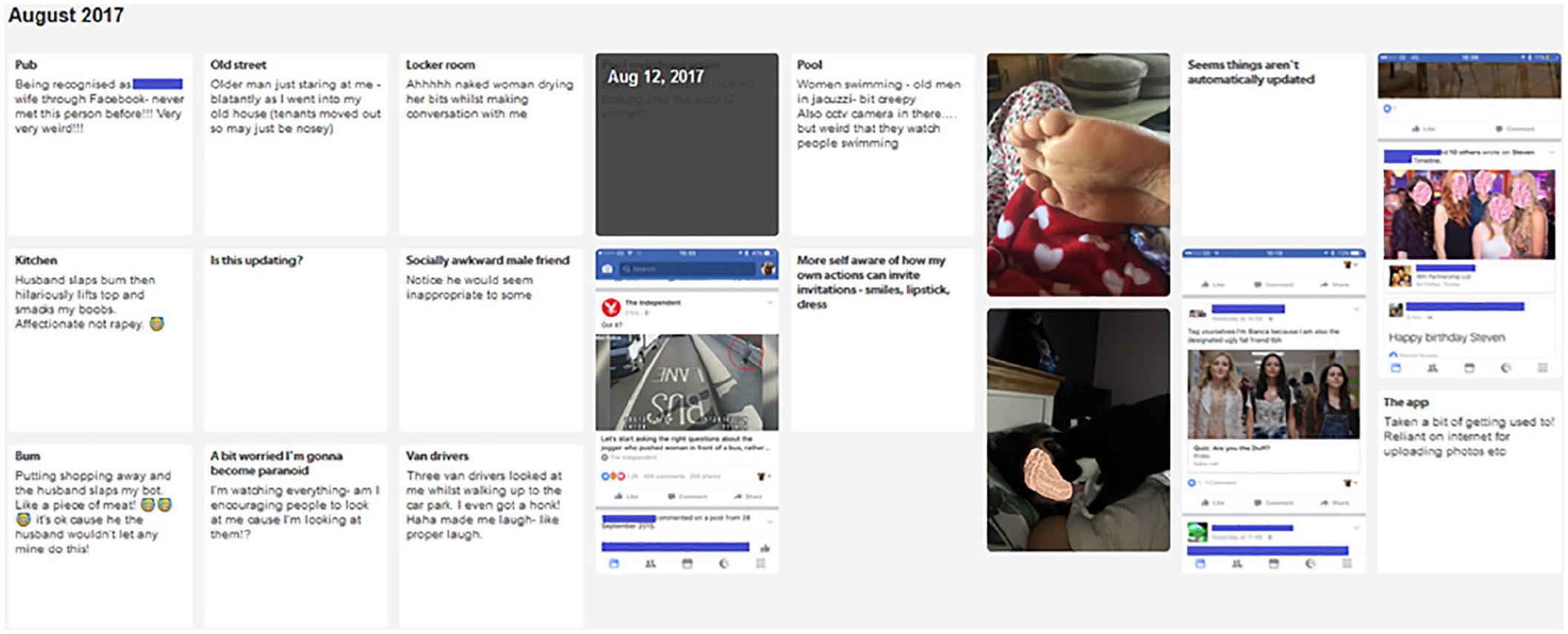
Archive (and entire) view of an anonymised scrapbook. See Supplemental material for further description.
Determining analysis methods for scrapbooking research is inevitably difficult. Existing methodological applications rarely provide clear insights into the actual methods used. Data analysis in this case was an iterative and inductive process of thematic analysis, in line with previous feminist analysis of men’s intrusions (Vera-Gray, 2016a). This method was applied to individual scraps and pages, to scrapbooks as a whole, to our initial meetings, and to sharing phases. In addition, I ‘plugged in’ contextual and theoretical factors throughout to complicate the concept of participants ‘speaking for themselves’ (see Mazzei and Jackson, 2012). Participants’ individual scraps were also coordinated into one scrapbook to enable a focus on the specificities and commonalities of men’s intrusions rather than on individual women. Thus, data analysis attempted to explore experiences and interpretations of men’s intrusions without tying these to a singular communicating subject.
Scrapbooking in practice: experiences and interpretations of men’s intrusions
Scrapbooking uncovered much complexity through its particular methodological design. The overview of experiences and interpretations of men’s intrusion presented here (see also Walling-Wefelmeyer, 2019) aids in contextualising the following section on methodological ‘tensions’.
The mobility of the process enabled an extensive range of direct and indirect intrusions to be scrapbooked, both seemingly site-specific (e.g. non-consensual sexual contact in night clubs) and also trans-locational, following and reaching participants behind literal locked doors (typically via technology). Most participants reported intrusions involving unknown ‘men’, 8 while struggling to address those potentially involving known and valued men. All alluded to a general sense of some threatening ‘male presence’ beyond specific situations, and some treated ‘men’s intrusions’ as a proxy for structural and social inequalities.
Indeed, some intrusions seemed to occur without an immediately identifiable and responsible agent, when, for example, sexist images or anecdotes of men’s violence appeared suddenly in newsfeeds or conversations. Other experiences blurred distinctions between people and spaces: for example, a stranger’s unsolicited online defence of Johnny Depp’s alleged abuses prompted memories of known men’s violence offline.
In making senses of experiences, participants engaged with ongoing and overlapping explanations, conceptualised here as ‘frames’. One frame was constituted by explanations with ambiguous or ambivalent allocations of responsibility, another located the aetiology of intrusions in individual but atypical men. Scrapbooking also aided participants in making links between intrusive incidents and broader inequalities by providing space to co-present site-specific incidents. However, with such varied forms of creative expression and interpretation, defining these ‘frames’ was a challenge. Moreover, explanations in participants’ scrapbooks were often transformed, complicated, or developed with the interpersonal and performative nature of the sharing phase.
Scrapbooking in practice: three tensions
Scrapbooking evaluation is approached here in terms of three characteristic ‘tensions’, in recognition both of its specificity in research on men’s intrusions and also of its potential applicability to other research contexts. These tensions cover a range of issues and considerations, from everyday practicalities to pedagogic possibilities. Comparisons between digital and physical scrapbooks will also emerge, with Table 1 (see Supplementary Material) drawing them out more explicitly.
Tension between freedom and constraint: the freedoms offered by scrapbooks are their own constraint
Participants praised the convenience of the method which can be used ‘wherever you go’. 9 Their phones or laptops were usually close at hand, while physical scrapbooks were seen as suitably sized for bags. However, praise for convenience and mobility must be reconciled with Tumblr’s dependence on device battery and Wi-Fi availability and also participants’ difficulties in downloading the app and uploading material.
Likewise, physical scrapbooks necessitated access to other creative tools – pens, printers, and glue, for example – which one participant suggested should be provided and another claimed would create pressure. Practical issues of access and availability should not be underestimated. Indeed, in one scrapbook, the same red pen was used to indicate ‘warmth’ and elsewhere simply because it was ‘near at hand’ – making interpretation a challenge and at risk of dichotomising pragmatism and symbolism and assuming participants engage in ‘rational’ scrapbooking. Evidently, the tools and technologies already available mediate scrapbook use. Scrapbooks thus usefully indicate the resources ‘entering into the very constitution of things’ (Hall, 1997: 5).
All participants were excited by the creative opportunities available and the process was also one of ‘exploring’ and ‘playing’ with expressive modes. It is precisely this playing which highlights the importance of providing materials. Researchers might therefore need to reconcile attempts to access situated sense-making space with the necessity for actually creating spaces for making different senses with different possible means.
Then again, participants struggled with ‘perfectionism’ and felt a pressure to be ‘imaginative’ or ‘visual’ and to communicate non-verbally. Offering participants an open interpretation of scrapbooking might easily lead to an easy or habituated response on their part. Indeed, scrapbooks were largely text-based and text was often used to contextualise or explain other content, both facilitating and limiting its interpretation and the extent to which materials ‘work together’ 10 (Dahl, 2010: 159). Without the accompanying sharing phases, this reliance on, specifically, text for the purposes of intelligibility might be even more evident.
Participants’ perceived desire for intelligibility is also evident where one reports a tension between ‘producing something that looks nice visually and which tells a story about men’s intrusions’. Although she avoided, for example, colour on one page ‘because it does not add anything to what I’m trying to say’, she notes elsewhere that ‘I deal with things by making them aesthetically pleasing’. The process of creating something pleasing evidently offers her both control and enjoyment and also provides insights into how participants try to contain and manage intrusions.
Participant control was further facilitated by options for deleting or editing digital scrapbooks and removing physical pages; this has particular ethical importance in research on intrusions. Nonetheless, one participant covering a ‘mistake’ in her scrapbook with a yellow-orange cut-out flower (as in Figure 3) exemplifies a dilemma: access to the so-called ‘mistakes’ or ‘drafts’ is vital for an understanding of the ongoing, pluralistic, and processual, without the researcher anticipating some final and fixed voice on the subject.
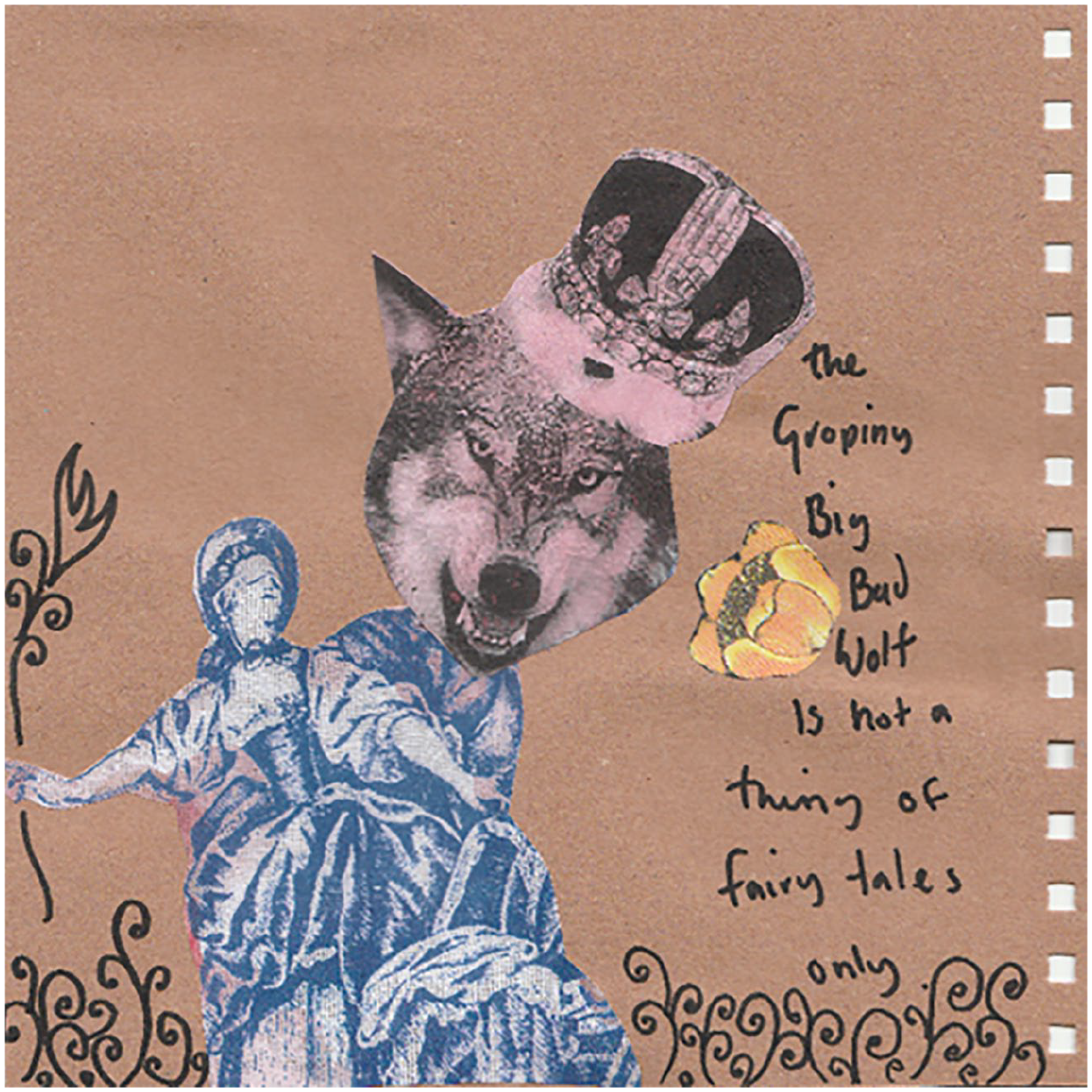
Physical scrapbook page featuring collage, text, and line detail. See Supplemental material for further description.
This flower also raises the same issues of interpretation as the red pen noted earlier: meanings and intentions vary throughout the scrapbooking process and ‘each material has its own language’. These different languages can generate interesting results when you ‘mix them all up’. Analysing this mixture necessitates methods suited to multiple materials (such as thematic, critical discourse, or semiotic analyses), their combination, or scrapbooking-specific developments. Researchers could, for example, actively transform participants’ content as part of a more participatory and dialogic analysis process. They might create visual responses to textual and spoken content, analysing these also as visual data or perhaps transforming tactile and interactive content into text itself and analysing these alongside participants’ text.
Tension between the raw and the processed: ‘for recording or a reflection on past events or a combination . . . or does it even matter?’
Participants were encouraged to interpret the process freely. Most initially intended their scrapbooks to capture incidents ‘raw’ and ‘in the moment’ and the method’s convenience and mobility were felt to permit ‘real-time’ recording (especially for digital scrapbooks). The collection of short posts in Figure 4 illustrates this point and was used by the participant to make meaningful comparisons between different days of the week.
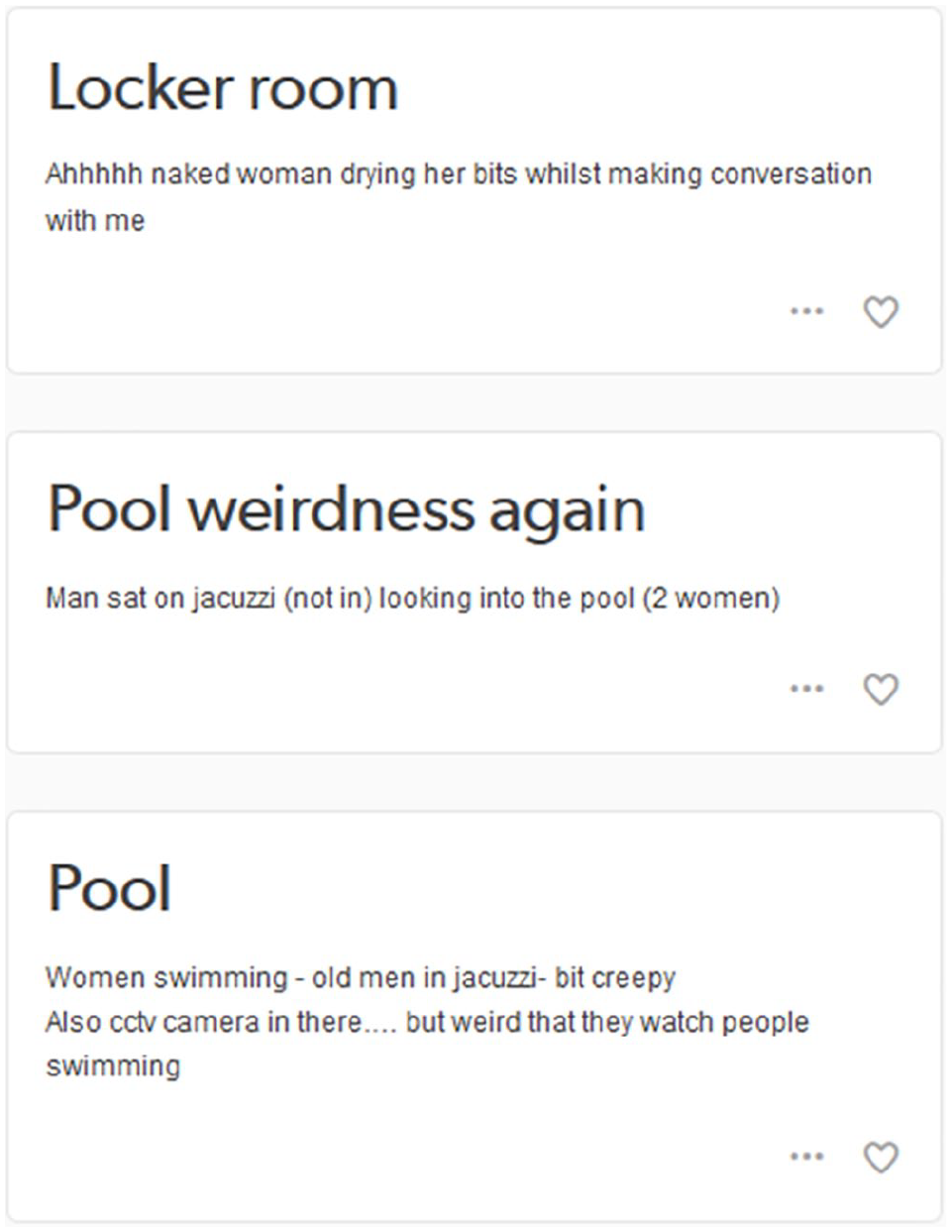
Digital scraps in reverse order and featuring both text and interactive controls. See Supplemental material for further description.
However, most scrapbooks were not completed chronologically or in real-time, partly for practical reasons, but mostly out of choice. One participant ‘devoted three days’ to putting in ideas and another waited till the last evening so she could ‘treat the week as a whole’.
Interestingly, some participants made notes in other mediums like scrap paper and phones of ‘things to scrapbook later’. This practice suggests a perceived hierarchy between types of ephemera – where some are taboo even to scrapbooking’s celebration of the trivial, trash, and transitory – and between recording and then representing. While scrapbooking does have associations with archiving materials and adding personalised commentaries (Good, 2013), certain associations of scrapbooks as a space to reflect or create might possibly work against them as a space to archive or record. These associations also reflect distinctions between digital and physical scrapbooking, with the latter including notably more reflective self-created scraps (such as sketches) than the former. Participants struggled to view the digital technology of Tumblr as a creative technology (see Figure 9), which had implications for how they used the scrapbook and what they included (see Supplementary Table 1).
An implicit privileging of ‘objectivity’ and real-time is also evident where one participant suggests it would be ‘more authentic to just record a linear period of time’ and another argues that physical scrapbooks ‘can’t get the full experience [without] some recording device’. A ‘material turn’ might be crucial for anchoring and managing abusive experiences (Tamas, 2014), and it is also primarily in the material that experiences of violence are held to account. Encouraging women to play detective to their own experiences – privileging the found (‘objective’) scrap over the created (‘subjective’) one – is at risk of reifying the particular hierarchies of evidence apparent in public discourses and criminal justice systems. Social science research can play a key role here in challenging (rather than entrenching) problematic power dynamics in its pursuit of critical outcomes.
Moreover, scrapbooking can provide useful insights into the non-literal and non-linear factors shaping intrusions. One participant outlined speech bubbles of intrusive tweets, with concepts reflecting who or what things of interest and importance make up her personal Twittersphere and therefore influence the potentially intrusive content and adverts she encounters (e.g. #LGBT and #Arsenal). An immediate screenshot of her Twitter newsfeed might show the temporal context of an intrusion but not perhaps its more general conditions of emergence (see Figure 5).
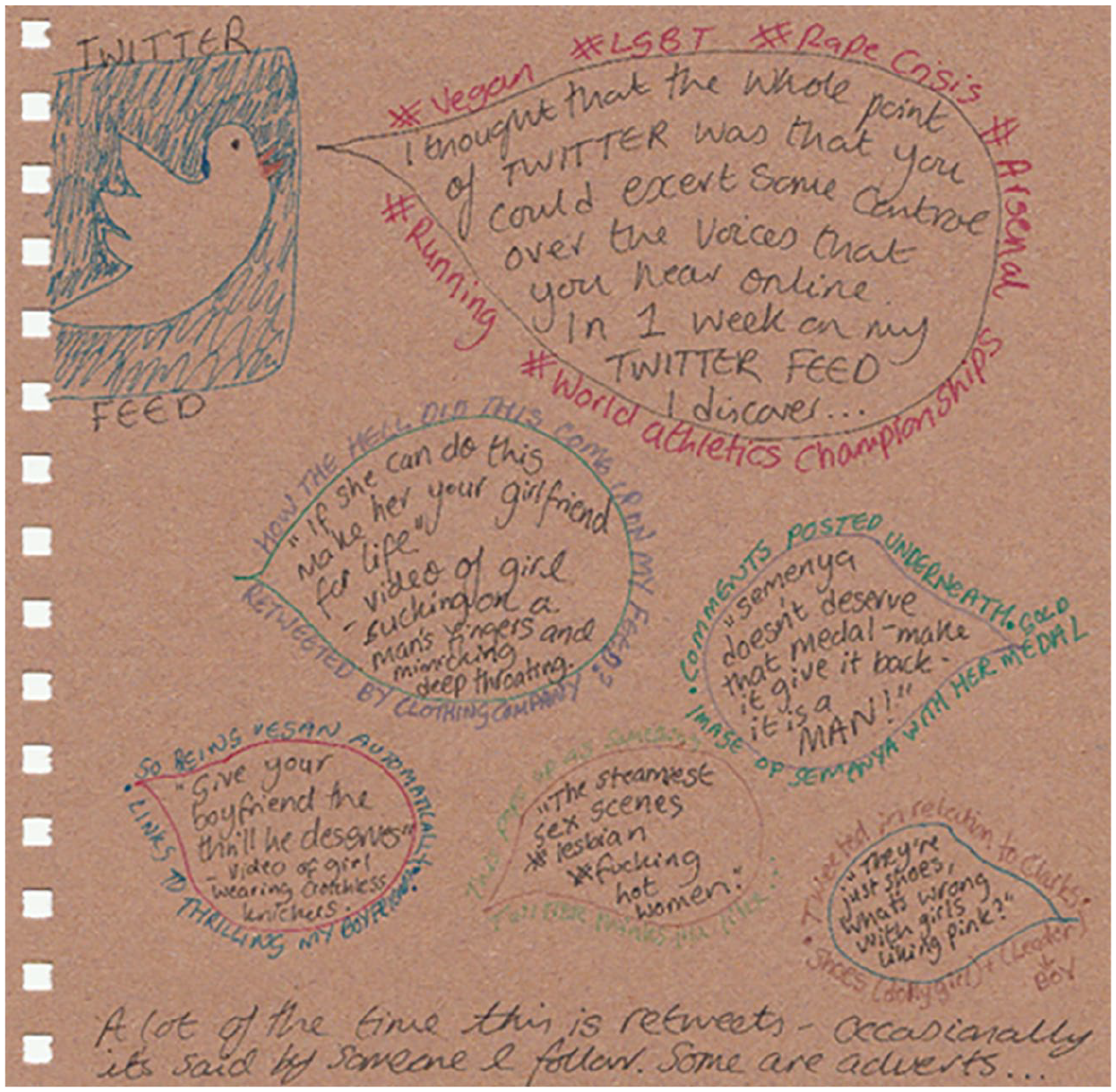
Participant’s physical scrapbook page featuring a Twitter symbol and speech bubbles containing retweets and direct tweets from people she follows and also advertisements. See Supplemental material for further description.
In fact, a complex relationship between ‘raw’ and ‘processed’ responses was integral to all participants’ scrapbooking processes. One scrapbook (completed in a single evening) begins by summing up spaces accessed earlier in the week and the participant’s emotional responses at the time (e.g. with a smiling face). However, the ‘black mess’ of paint on her last page (Figure 6) is an emotional response to a recent incident with her partner which she needed to ‘do something about’.
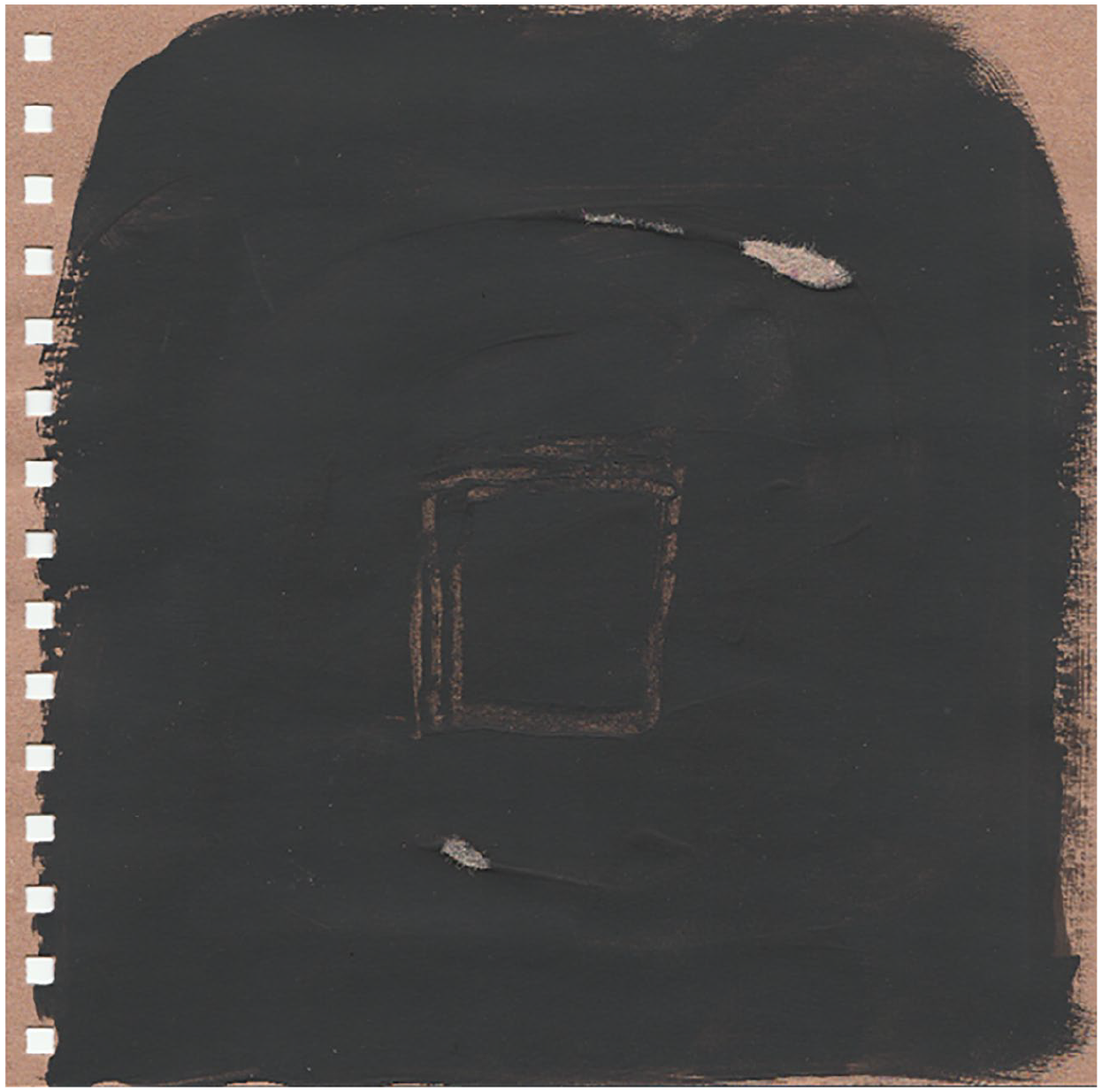
Physical page covered largely in black paint except for a central square outline and two contact marks where the page was stuck to another.
Certainly, scrapbooks can engage with relationships and environments relevant to sense-making processes, with one participant giving her niece the opportunity to fill out a physical page. However, the input of non-participant others poses a particular dilemma for scrapbook researchers. As an example, one participant with dyslexia enlisted her partner to check – and possibly, in a normative sense, correct – her writing. Another participant included a YouTube video of another woman’s account of abuse (providing a good illustration of how useful digital scrapbooks are for showcasing intrusive content directly rather than metonymically). To avoid an easy reading of this inclusion as solely positive or compassionate, I needed to ‘plug in’ the scrap’s context of emergence: how the video was produced and circulated, by whom and why. Critical attention could thereby be paid to its sudden uninvited appearance in this participant’s Facebook newsfeed and thus her initial antipathy towards the video and woman featured. It is precisely because of such ambiguity in the context and use of scraps that the accompanying sharing phases represented a vital part of the process. They prompted those present into exploring the conditions for their contributions and interpretations.
As a ‘portable secular ritual’, hobbyist and professional scrapbooks are indeed created with phases of contemplating and sharing content (Katriel and Farrell, 1991: 14). Methodologically, we can draw on this feature and ensure such phases are incorporated into the design. But how often and with whom? Moreover, the danger here is in privileging these performances as the ‘main event’, with scrapbooks acting merely as verbal aids or prompts to elicit voice. Certainly, the phases are highly performative and highlight the complex process of producing content initially partially for oneself but also for more public viewing. Different interactions might be prompted by different formats, with, for example, researchers themselves writing and drawing in participants’ scrapbooks or producing images in response.
Tension between the therapeutic and intrusive: ‘it’s like the whole matrix thing . . . do you want to fully know everything?’
Most participants were hopeful that the research would make them more aware of men’s intrusions in their lives. Scrapbook ‘workspace’ and the designed sharing phase certainly enabled participants to ‘lay it out and see it all’, and thus make links. The sequence in Figure 7 (and described in the Supplementary Appendix) shows how the opportunity for the participant to co-present digital and non-digital intrusions facilitated a broader realisation about the problematic discourse of women’s fitness – the feminist ‘snapping’ (Ahmed, 2017) associated with consciousness-raising.
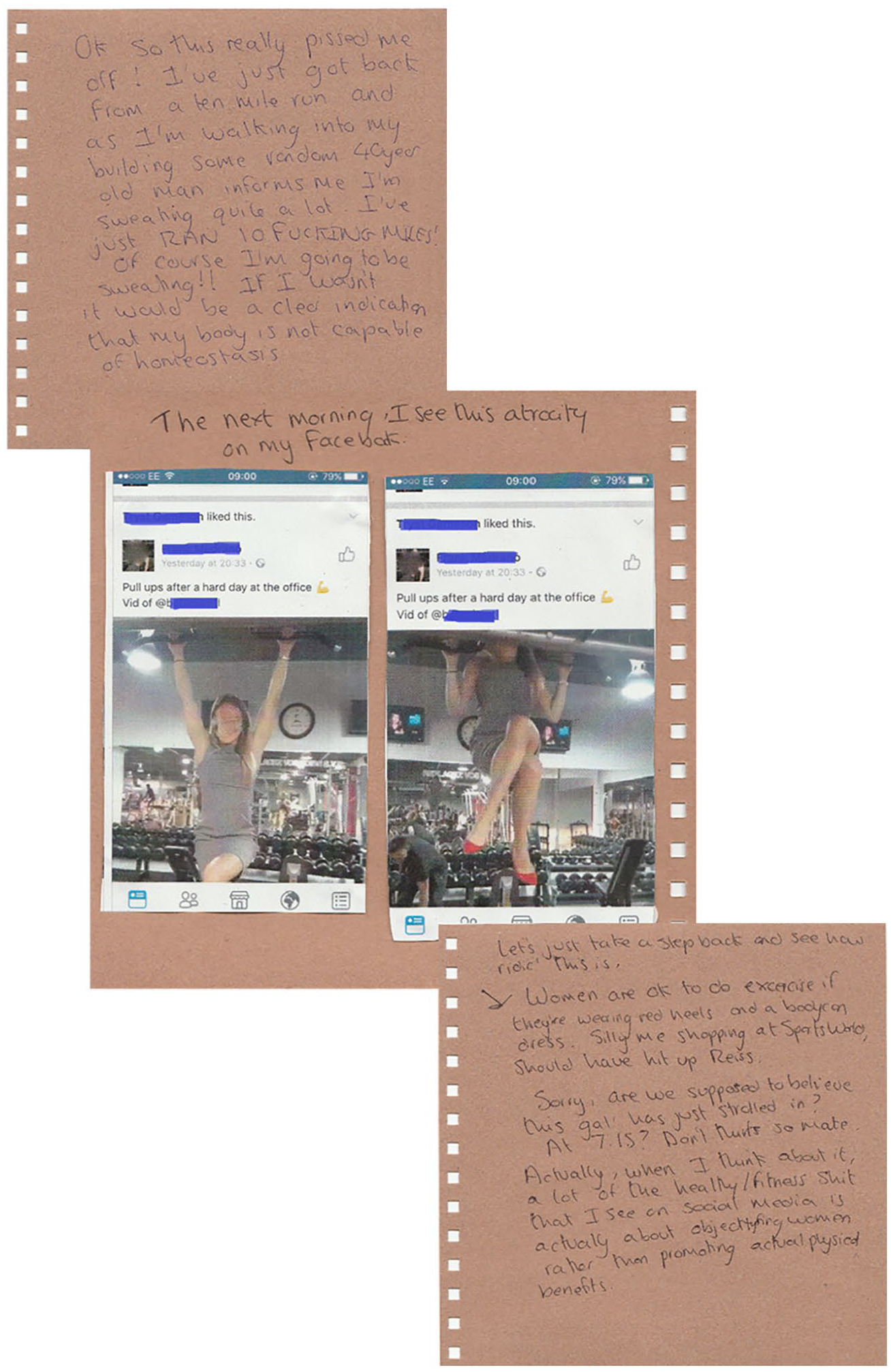
Anonymised three-page spread from a physical scrapbook featuring text and two printed screenshots of a Facebook post. Supplemental material for further description.
Nonetheless, my research findings do not necessarily simply substantiate the notion that knowledge is power: ‘once you start seeing these things you can’t unsee them’. Indeed, ‘forgetting [is] a form of self-defence’ (Vera-Gray, 2016a: 143) as the extent to which women are intruded upon makes it ‘so exhausting to get out of bed every morning [and] to keep your shit together’. For one participant, ‘seeing’ involves questioning her husband’s behaviour. She reflects that in their relationship bum-slapping is ‘not a negative thing . . . it bonds us’ but wonders if ‘by questioning it are you turning it into something sour . . . I feel bad questioning things in the relationship’.
While researchers can warn in advance of the potential for emotional work, the intensity and duration of the scrapbooking process might well threaten participants’ means of keeping ‘shit together’. Perhaps then appropriating experiences into a coherent and narrative voice is a useful form of defence, one which the sharing phases can help to explore.
Scrapbooking can certainly seem a little unrelenting. With its capacity to contain materials and modes suited to one’s being in the world – a rhetoric of ‘no trivia or trash is left unscrapped’ – it leaves little excuse not to scrapbook. Excuses may, however, sometimes be necessary.
Nonetheless, scrapbooking had mostly positive effects for and beyond the individual participants involved. Families and friends were invited into the process: validating what participants had created, sharing their own experiences and discussing issues of entitlement and inequality. Men’s intrusions isolate individuals from each other and from understanding; scrapbooking creates the necessary ‘communal matrix within which comprehension or integration can begin to emerge’ (Tamas, 2014: 92). As one participant succinctly put it, ‘you shouldn’t underestimate how valuable it is to have someone just witness what you are experiencing’. This overt use may of course be dangerous in abusive relationships and environments. It also, however, points to the merit of group scrapbooking for connecting and integrating both experiences and possible forms of resistance.
Almost all participants described scrapbooking using a semantic field of catharsis. They shared their desired responses to particular intrusions (‘I wish I had shouted at him to get lost’), both releasing energy and strategising for experiences yet to come. Their scrapbooks also revealed the means they had actually taken to manage and minimise intrusions, such as calling on a partner or wearing headphones in public (see Figure 8). I deliberately addressed claims that they ‘hadn’t really done anything’ by utilising their scrapbooks to show them precisely what they had done. With the contents laid out between us and with a detailed exploration of the context of each intrusion, participants’ limited ‘space for action’ could be better acknowledged (Kelly, 2012). Given its use to identify specific measures – both tried and hypothetical – for navigating intrusions, scrapbooking proves a vital tool for consciousness-raising and thus is full of significance for a critical social science more generally. The political, pedagogic, and therapeutic possibilities of this tool evidently warrant further exploration.
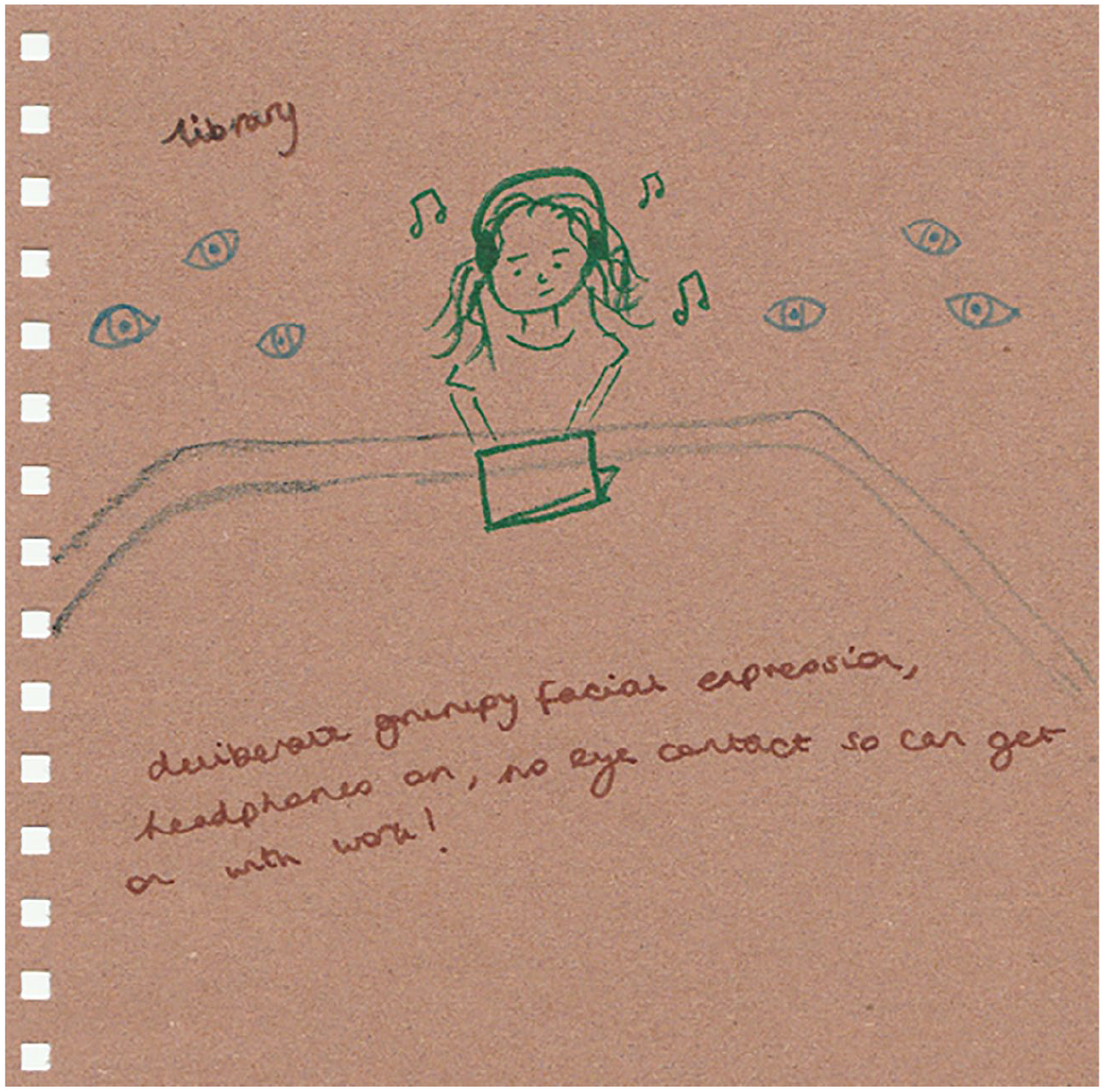
Physical scrapbook page with drawings and writing by different coloured pens. See Supplemental material for further description.
Of course, responsibilising women and channelling their energy into self-surveillance and reflexivity is also problematic. Indeed, Bragg and Buckingham (2008) reflect that
inviting our participants to produce a scrapbook might be read as disciplining them into current requirements for contemporary citizenship, regulating their interiority . . . rather than enabling critique of such practices. (p. 128)
Elsewhere, Katriel and Farrell (1991) suggest that found scrapbooks present ‘the life perfected’, and are always on hand to prove how much fun life has been (p. 5). What these concerns mean for challenging expectations of voice and for scrapbooking methodologically will of course partly depend on the phenomena researched. It will also depend on whether research posits scrapbooking as a process of critical engagement with everyday life or as a means of commodifying experience into a final product, the book.
Certainly, participants had their own critiques of the scrapbooking practice, identifying it as ‘an intrusion itself’, both a consequence and a reminder of men’s intrusions. More specifically, one experienced Tumblr as distracting and intrusive (see Figure 9). Her concerns draw attention to the problems inherent in employing a platform – with its own policies and conditions – over which the researcher has limited control. Scrapbook researchers have a responsibility to encourage participants to question how their data are used more generally by Tumblr and other third-party organisations.
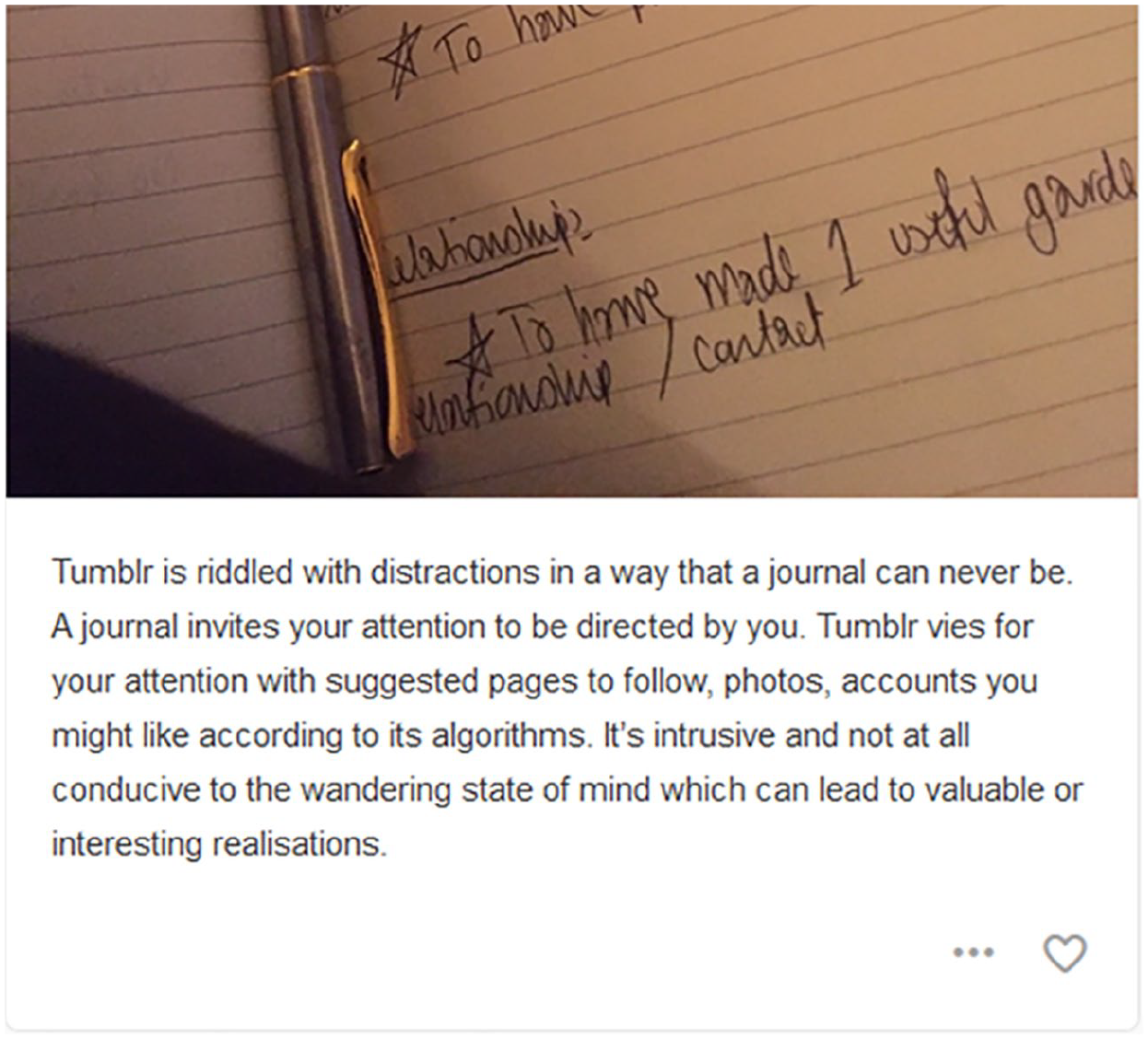
Digital scrap featuring text, interactive controls, and an image of a journal and pen. See Supplemental material for further description.
Conclusion
This article provides much needed theoretical and empirical insights into the methodological and transformative potential of scrapbooking for the social sciences. Scrapbooking is found to offer a unique form of consciousness-raising and catharsis, aiding participants in identifying, connecting, and contextualising both experiences of men’s intrusions and their own situated or desired responses. The design of scrapbooking – used here to collate diverse materials with built-in phases of interpersonal sharing – can provide a supported complement, or perhaps alternative, to other methods of understanding and addressing intrusive and oppressive practices.
An evaluation of scrapbooking in practice produced three characteristic ‘tensions’: between freedom and constraint, the raw and the processed, and the therapeutic and the intrusive. Further attention to these is necessary for challenging the voice paradigm and for developing the methodological and also political, pedagogic, and therapeutic potential of scrapbooking. Future studies would benefit from greater participants numbers and longer periods of scrapbooking 11 as this study was inevitably constrained in both regards.
Particular attention is also needed to employing scrapbooking with different onto-epistemologies, to methods of data analysis and to designs for participant use: for example, what precise guidelines participants should receive for interpreting the scrapbooking process. Likewise, attention to methods and tools comprising the scrapbooking kit is crucial: whether, for example, some participants would benefit from printers and what bridges between scrapbooks contents and their creators researchers should facilitate.
Finally, more attention to situation and embodiment itself is required. Diverse ways of being (and being read) in and across spaces are needed to fulfil scrapbooking’s potential to be an inclusive situated methodology, responding to the requirements of what, and who it claims to research. This, after all, is what social science research is for.
Supplemental Material
Appendix – Supplemental material for The Methodological Potential of Scrapbooking: Theory, Application, and Evaluation
Supplemental material, Appendix for The Methodological Potential of Scrapbooking: Theory, Application, and Evaluation by Ros Walling-Wefelmeyer in Sociological Research Online
Footnotes
Acknowledgements
The author would like to thank all the participants and also Jane Walling, Nicole Westmarland, and Hannah King for their feedback on an earlier draft. The author would also like to thank the two reviewers.
Declaration of conflicting interests
The author(s) declared no potential conflicts of interest with respect to the research, authorship, and/or publication of this article.
Funding
The author(s) disclosed receipt of the following financial support for the research, authorship, and/or publication of this article. This work was supported by the Economic and Social Research Council (ES/J500082/1).
Supplemental material
Supplemental material for this article is available online.
Notes
Author biography
References
Supplementary Material
Please find the following supplemental material available below.
For Open Access articles published under a Creative Commons License, all supplemental material carries the same license as the article it is associated with.
For non-Open Access articles published, all supplemental material carries a non-exclusive license, and permission requests for re-use of supplemental material or any part of supplemental material shall be sent directly to the copyright owner as specified in the copyright notice associated with the article.
