



Abstract
Mumia is a bituminous material with legendary curative properties, whose meaning is dependent on its geographical and temporal contexts. To the Persians, mumia bore complex symbolic meanings associations with royal power and dynastic legitimacy, meanings it served to convey when employed as a diplomatic gift. Through the eighteenth and nineteenth centuries, mumia was included in ensembles to European princes by Shahs of the Safavid, Zand, and Qajar dynasties. By giving appropriate weight to the evidence of the exchanged gift itself and the context in its presentation, it is possible to better understand the underlying motivations of the giver in the three diplomatic encounters. This results in a shift away from a diplomatic history based on written documentation, towards a clearer, more accurate understanding of cross-cultural diplomatic exchanges grounded in the object.
Article
Mumia is a black, tarry substance similar to bitumen that was collected from deep within caverns in remote mountain locales on the Iranian Plateau. While it was harvested from several mountains in Persia, there appears to be one location in particular that was regarded as being the ‘one true source’ of mumia. The Shah who was in possession of these caves was able to assert their legitimacy over potential rivals and solidify their status as the ‘true’ ruler of Persia. Reserved exclusively for royalty, mumia was a natural treasure that could not be bought and was viewed as a miraculous substance that could cure all ills.
There is a significant body of literature surrounding the historical use of mumia, with general histories in both English and French dating from the early nineteenth century (de Roquefort, 1824; Pettigrew, 1834; Reutter de Rosemont, 1931). Focussing on the medicinal applications and mineralogical histories, there is a persistent conflation between two distinct types of mumia—one sourced from the ground, the other from embalmed human bodies. There are few articles which discuss mumia in any detail, including a comprehensive overview of the history, perception, and use of mumia up until the sixteenth century by Karl Dannenfeldt (1985). Recently, Ralph Bauer considered the medicinal history of mumia as a form of medical vampirism (Bauer, 2019: 26). Discussing the therapeutic tradition of consumption of human bodies, Bauer argued that the use of humans was a ‘stand-in’ for the mineralogical mumia. This article goes further, taking a more object-based approach to explore the symbolic significance of mumia to Persians, and considering its role in a diplomatic exchange and as an item with evolving meanings.
Things and objects offer a unique opportunity to recontextualise and critique established narratives, or even suggest new possibilities (Riello, 2022: 207). The intersection of the object with both art history and diplomatic history is one that has been growing in prominence in the literature (Arcak Casale, 2015; Biedermann and Riello, 2017; Bischoff, 2009; Carley, 2016; Casale, 2018; Cassidy-Geiger, 2007; Cutler, 2008; Komaroff, 2011; Watkins, 2008). Of particular interest to this study is the slippery nature of material evidence and its relationship with historical narratives. Interpreting objects—whether they are manufactured goods or raw materials and resources—inevitably requires a particular literacy that is reliant on cultural practices and identities (Dyer, 2021: 253; Miller, 2010: 53). In art history, the material thing is increasingly being used in tandem with written and visual sources to reinterpret cross-cultural encounters (Clunas, 1991; Findlen, 2021; Gerritsen and Riello, 2016). It can offer new perspectives and is particularly valuable when the extant sources originate from one participating party. Recognising that these objects have a structural coherency and an ability to bear their own meanings can result in new interpretations of events.
This methodological approach is complicated further when we turn towards mumia and its use as an expression of Persian monarchical legitimacy in cross-cultural diplomatic encounters. Thus far, there are no cases in which gifted mumia has survived intact in collections. This is not surprising, as diplomatic gifts are commonly decontextualised or lost to time. The issue is compounded as there are few indications that the importance of mumia was understood by the recipients. The materiality of the object and its perceived value often impacts its survival; mumia is a black, slightly sticky, amorphous substance, and therefore offers little in the way of striking visual effect. Perhaps the containers in which the mumia was encased were retained, however, they have undoubtedly been divorced from their original context. Most extant samples of mumia reside in medical history museums (Figure 1), shaping their identity as they are interpreted through these collecting practices and their current location.
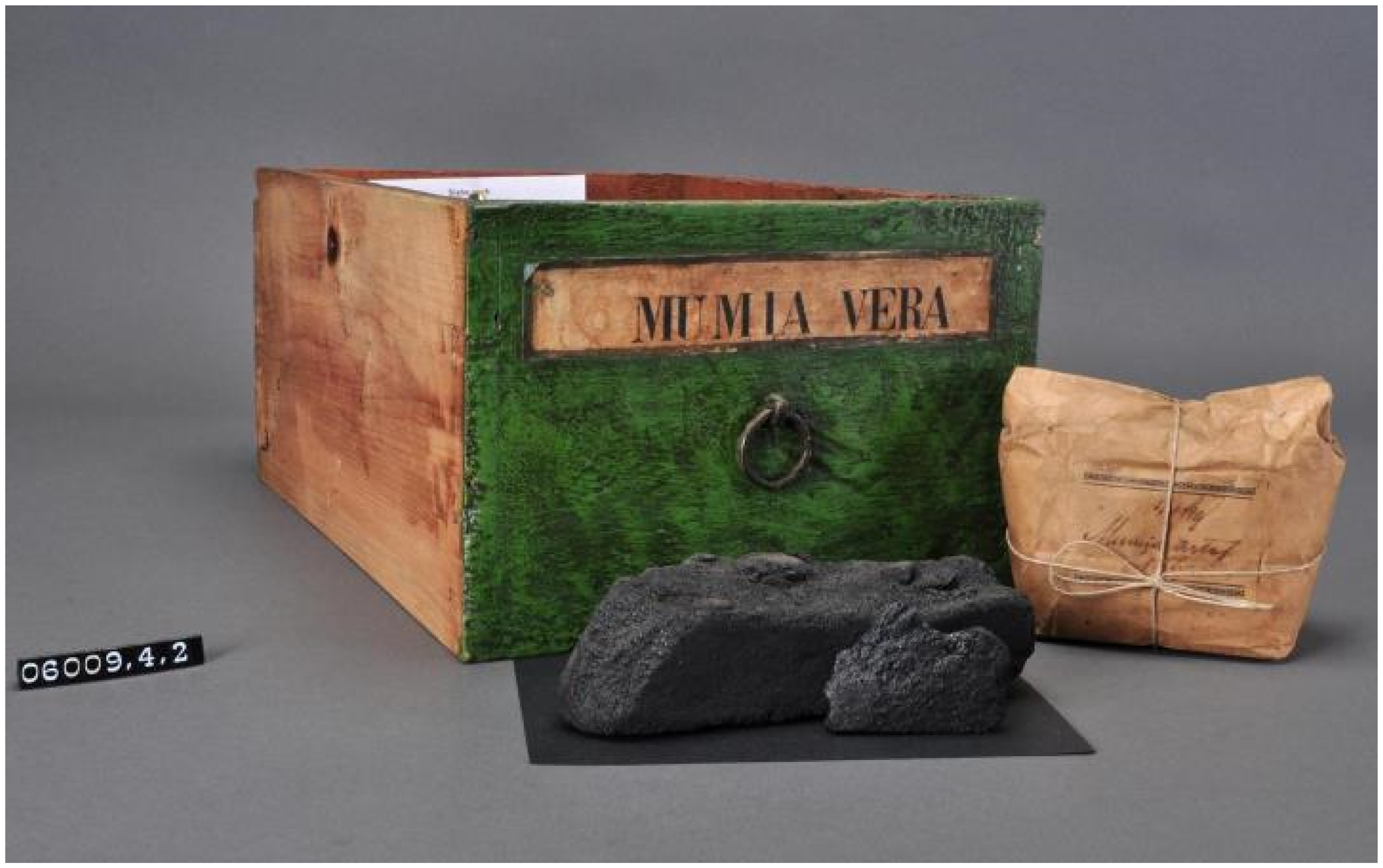
Specimen of Mumia Vera, nineteenth century, approximately 240g, 06009/IV.2, Museo della farmacia civica di Bressanone, Brixen (© 2023 Provincia Autonoma di Balzano).
The way forward, then, is through analysing written descriptions in which mumia is mentioned. These are primarily sourced from European memoirs, which can be problematic, as these travel accounts are geared towards furthering the author's own agenda, including demonstrating their knowledge and presenting the non-European as an exotic Other (Hachicho, 1964; Jowitt, 2016; Rubiés, 2012). This study thus follows guidance suggested by Um and Clark in their Introduction to volume 20 of the Journal of Early Modern History, in which they embraced an interdisciplinary approach and suggested that gifted items should be read beyond their simple monetary value (Um and Clark, 2016: 4). They should be contextualised through their materiality and textual accounts, balancing these to account for cross-cultural mistranslations – both accidental and deliberate. The value of the item was subjective and could also be dependent on the performance of the ambassador and the complicated web of political moods that was expressed by both sides. To better understand these cross-cultural encounters, we should not eschew the written evidence entirely in favour of the gifted item, nor dismiss the gift or the bearer of the object to foreground the political powers that are engaged in this negotiation. Both should be integrated, understanding potential biases, motivations, and evolving meanings as the object passes between geographical and cultural spheres.
After outlining the physical characteristics of the substance and disentangling the complicated associations and definitions of mumia, this article will describe the methods of collection in the Safavid Persian context to demonstrate its symbolic significance and royal exclusivity. I will then outline three distinct occasions where mumia was included in a diplomatic gift, analysing their contexts and circumstances to suggest the existence of a tradition surrounding its presentation. Two boxes of mumia were presented to Louis XIV in 1715 by Persian ambassador Mohammed Reza Beg on behalf of Safavid Shah Sultan Husayn. A small gold box was also given to Empress Catherine of Russia in 1784 by Ali Morad Khan of the Zand dynasty, and then to King George III and Queen Charlotte by Mirza Abul Hasan on behalf of the Qajar Shah, Fath’ Ali in 1810. These occasions of gifting mumia through three successive dynasties suggests that there was a larger gifting tradition than has been previously explored. This article argues that the inclusion of mumia as part of a diplomatic gift was a gesture of recognition and monarchical respect, playing an integral role in diplomatic negotiations. For the Persians, to possess mumia was to demonstrate mutual royal legitimacy: only the Shah was entitled to ownership of the material, and only the Shah could gift it. The presentation of mumia by the Shah was not used as a tool to draw attention to a power imbalance, or to establish superiority over the recipient.
Mumia and mummy
Mumia is a black, sticky, bituminous material (see Figure 1). However, it is difficult to provide a definitive attribution to this substance. Its name has been variously derived from the Arabic noun (موم(múm meaning wax, or from the Farsi (مومیا(múmiya meaning bitumen (Pettigrew, 1834: 1). Mumia has been described as a pissasphalt and black-rock asphalt (Dannenfeldt, 1985: 163; Elliott, 2017: 27; Griffin, 2022: 108; Pettigrew, 1834: 1–12), terms that refer to a semi-liquid substance. Pliny the Elder writes that the substance is a bitumen (bituminis), and states that the Greeks referred to it as pissasphalt (pissasphalton), and it could be identified through its black appearance and its strong smell (The Natural History, 35.180–182). Pissasphalt is a marginally more viscous form of bitumen, which is a petroleum-based product, and in modern scientific use it refers to a substance containing native hydrocarbons and is an overarching term that encompasses naphtha, petroleum, and asphalt (Oxford English Dictionary, 2024). However, mumia has also described as being bitumen Iudaicum – Dead Sea bitumen – and there is little agreement as to whether this is a petroleum-based product or derived from organic secretions from surrounding rocks (Elliott, 2017: 26; Fulcher et al., 2020: 5; Nissenbaum et al., 1980: 161). It is most likely that pissasphalt – and thus mumia – has been referred to as being seepage of subterranean crude oil deposits (Read and Whiteoak, 2003: 2), and the processes by which it reaches the surface can modify its properties, perhaps accounting for the slight variety of the definitions.
In the Persian plateau, mumia was excreted from mountains that lie along fault lines at the edges of the Persian plateau during the hot summers, mumia was hailed as a miraculous cure-all, although it was said to be particularly efficacious for broken bones or as an antidote to poisons. It could be ingested directly or melted in butter and oil to be applied to wounds (Buffon, 1884: 60). Said to be scentless when cold, a pleasant smell would emanate from the material when it was rubbed. Mineral histories and general histories of mumia centre around its use as a medicinal drug over millennia (Griffin, 2022; Pettigrew, 1834: 7–12). Small samples of mumia surreptitiously purchased from merchants or obtained from illegal sources were collected through the eighteenth and nineteenth centuries. It is often included in contemporary European mineralogical and medicinal collections as a type of curiosity.
It became known to Europe through the writings of Pliny, who extolled the virtues of the substance for treatment of cataracts, gout, leprosy, coughs, and open wounds (Pliny, Nat., 35.181). Writings by early Arabic physicians like Al-Kindi Rhazes (d.923), and Ibn Sina (d.1037) – also known as Avicenna – in fifteenth-century editions translated into Latin, proclaim its use as a treatment for all manner of ailments and its superiority in treating contusions and fractures (Avicenna, 1479: 478; Rāzī, 1497; Rhazes, 1966: 76, 121). At this time, the source was not specified, although context suggest it was linked with mineralogical origins. From the eleventh and twelfth centuries, however, a conflation developed between the naturally occurring mumia and mummified bodies from Egypt. The dark appearance of the embalmed bodies was thought to be caused by the application of bituminous mumia. From this misunderstanding, a faulty definition of mumia emerged which then remained in circulation for centuries, with both Arabic and Western medicinal literature treating the mineral and the preserved human body as interchangeable. This conflation led to both mumia and mummy being purported to hold the same miraculous healing properties. Subsequent definitions were promulgated through travel memoirs, medical books, and writings by apothecarists, with occasional differences identified between the two materials, although until the late seventeenth century, this was superficial and there was no real distinction between the substances in terms of purported medicinal properties (Blankaart, 1754: 581; Blount, 1661: 416; di Varthema, 1863: 33). There was, however, a trend in moving towards a more complex categorisation of the material, along with highlighting various subtypes, and a third definition of mumia briefly arose in the literature where it was proclaimed as being associated with the Dead Sea and known as bitumen Iudaaicum, and never really took hold in either the Christian or Islamic spheres. It does, however, represent attempts by writers to find a definition of mumia that was independent of the human ‘mummy’ (Dannenfeldt, 1985: 165).
Each of these definitions of mumia are similar to and yet different from the Persian traditions concerning the material. Mumia harvested from the caverns in mountains on the Iranian plateau was rare and exclusively reserved for the Shah, so more accessible and cheaper alternatives inevitably surfaced. These could be organic or artificial and were linked with the mineral mumia through their brown, pitch-like appearance (Bauer, 2019: 272–273). These inexpensive options slowly conflated with the rarer bituminous mumia. The notion that the mumia derived from the bodies of kings reflects the tradition of mumia being an exclusive prerogative of the legitimate Persian Shah. This characteristic of the authentic mumia has been combined with the corpse mumia tradition to arrive at this new origin story.
As briefly mentioned earlier in this article, the primary source for the descriptions of the mumia in Persia is travel memoirs. These etic sources were written in order to demonstrate the author's erudition and knowledge of foreign cultures, as conceptualised by early modern European travellers. While travelogues often sought to present a holistic survey of Persia as understood by the author, they tended to centre upon observations interspersed with some general history and were subjective experiences that were not always accurate (Adams, 1985: 146–147; Montalbetti, 1997). These anachronistic writings are often overlaid with mercantilist and utilitarian considerations, and they adopted a more detached tone while also mentioning every detail that caught the author's eye (Hachicho, 1964: 199). Many of these early modern authors – including the ones referenced in this article – also strongly depended on classical authors, quoting passages without any contextualisation or critical analysis (Brakensiek, 2002: 234; Hachicho, 1964: 199). Despite these drawbacks, when critically considered as a group, these memoirs represent an important resource in understanding what was deemed to be general knowledge during the various time periods. While Persian travel memoirs exist (see, e.g. Table 1 in Kiyanrad, 2020: 278–279), the emphasis and motives were different, as the authors were not seeking to describe a different country and all of its geographical and historical differences to their readers.
Accompanying English traveller and adventurer Robert Shirley on his journey to Persia in 1627, traveller and chronicler Thomas Herbert (1606–1682) describes the redolent gum as originating in the ‘Mountains of Jarri’ (probably Darabjerd) in the south of Iran – approximately 150 km south east of Shiraz (Herbert, 2012: 288) (see Figure 2 for a map showing the various locations of mumia). These mountains were the primary source for mumia, an idea echoed by Arabic scholars and writers, as well as William Ouseley (1767–1842) almost two centuries later in his travel memoirs based on his travels in 1810–1812 (Ouseley, 1819: 117–119). Ouseley sketched the mountain range and suggested that there was a visible difference between the mountains that produced mumia and those which did not (Figure 3). In this section, Ouseley provides an overview of his understanding of the mumia, obtained through Persian writers. Referring to a work called ‘Súr al beldán’ that was purported to be written in the tenth century, Ouseley describes the etymology of mumia, stating that it was derived from a conflation of the Farsi word for ‘wax’ and a small village near the mountains ‘Ayín’ (Ouseley, 1819: 119). He also quotes from another source – this time, tenth century geographer and travel writer, Abu Ishak al-Farisi al-Istakhri – who stated that: pure mummy is brought from this country to Shiráz; and that which is common in the hands of people must be a counterfeited mixture, as the genuine mummy is found only in the Royal Treasury of that place. (in Ouseley, 1819a: 119)
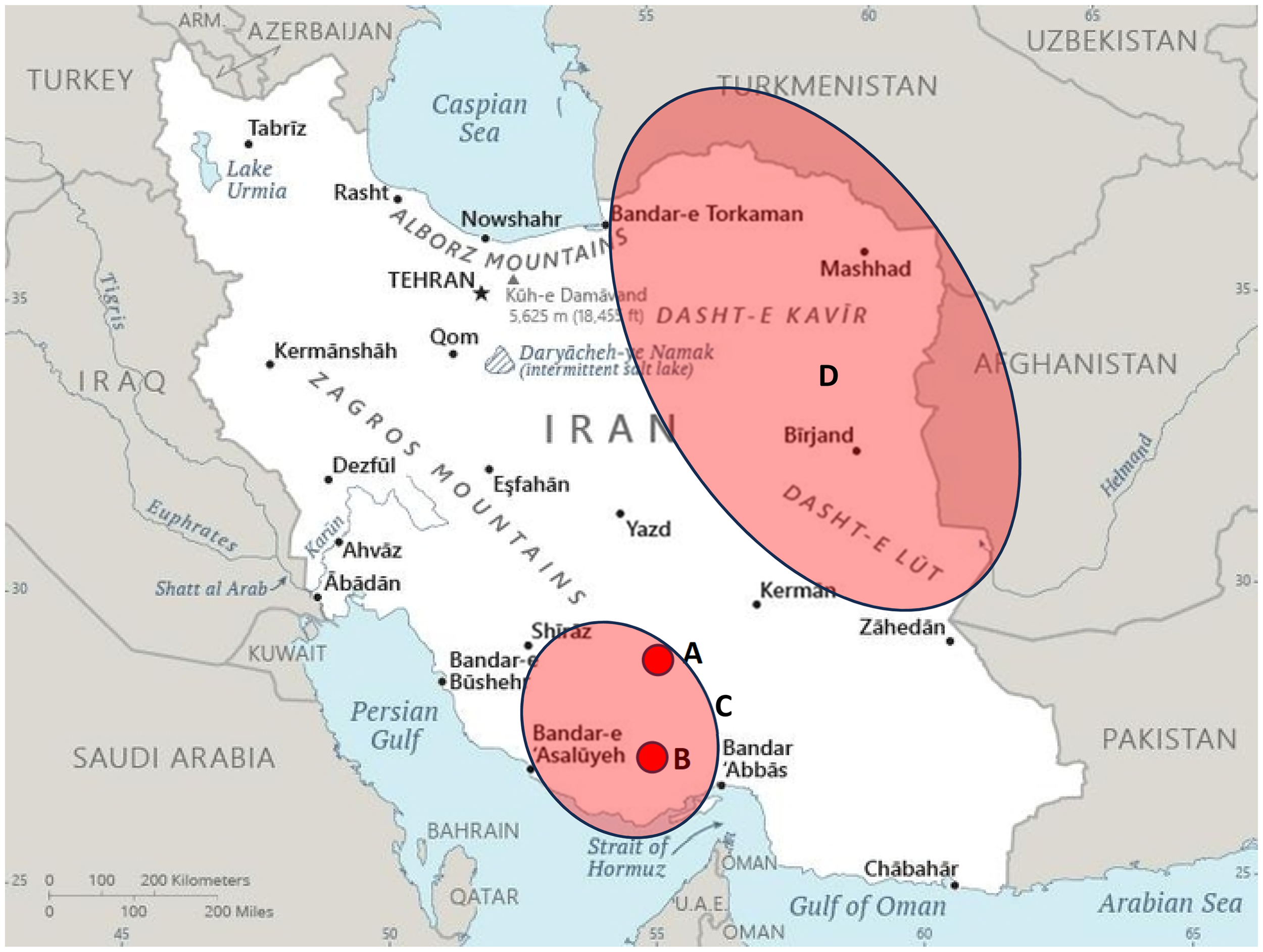
Map of Iran marked with the approximate reported locations of mumia. (a) Town of Darabjerd. Location as specified by Ouseley and Kaempfer. (b) Town of Laar. Location as specified by de Ferrères-Saveboeuf. (c) Mountains near both Darabjerd and Laar. Location as specified by Herbert. (d) Provinces of Khorasan (including North Khorasan, Razavi Khorasan, and South Khorasan) and the eastern portion of Kerman province. Location as specified by Chardin. Map source: The World Factbook 2021. Washington, DC: Central Intelligence Agency, 2021. Annotations by author.
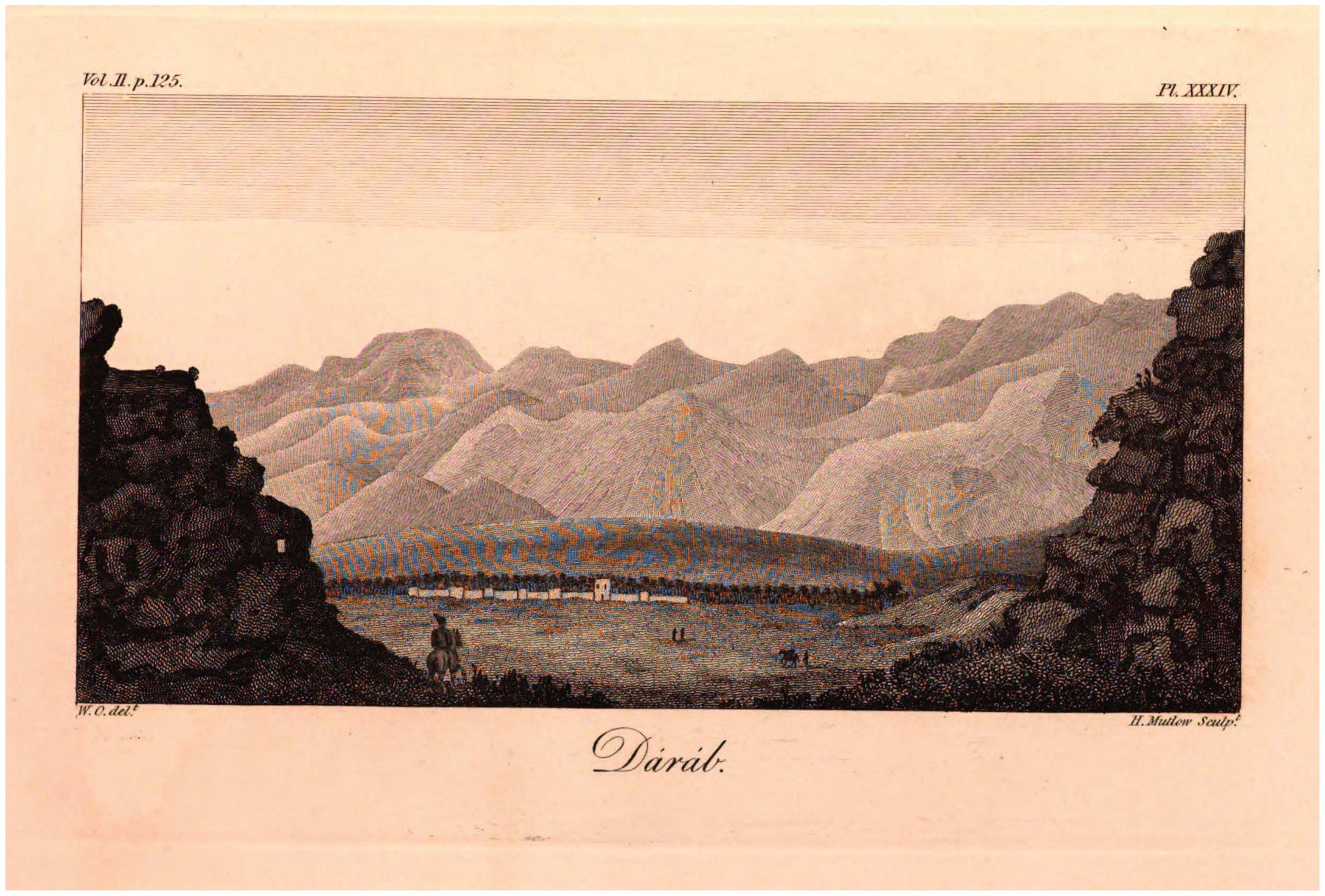
Plate XXXIII from Ouseley, Travels in Various Countries of the East, showing the mountain which produces mumia near Darabjerd. Ouseley writes that the mountain is darker than its surrounds but does not specify if the mountain is the smaller hill in the middle ground.
While Ouseley does not quote the source of this information, al-Istakhri's only surviving work is a geographic survey of Iran entitled Ketāb al-masālek wa’l-mamālek (Book of the Routes of the Realms). The location of the mumia near Shiraz is corroborated – Ouseley writes – by Ebn Haukal, Hamdallah Cazvi’ni, and Ha’fiz A’bru (Ouseley, 1819: 120). Ouseley's careful discussion of sources and persistent assertions concerning the one ‘true’ source of mumia has been built around picking sources that were eight centuries old to demonstrate his knowledge. This was a persistent theme in early modern travel memoirs, as the developing genre formed around an authoritative display of knowledge combined with the author's experience. This referencing and quoting of sources that supported his own argument showcased his erudition (Hachicho, 1964: 196, 199). Both the knowledge and learnedness were necessary – Ouseley was an Orientalist who wrote these memoirs while travelling with his younger brother and British Ambassador to Persia, Gore Ouseley. William acted as secretary, and these references contained in his travel memoirs were to demonstrate his own knowledge and distinguish himself from his brother.
German naturalist, physician, and explorer Engelbert Kaempfter (1651–1716) also stated in Amoenitates exoticae (‘Foreign Pleasures’) that mumia is found near the Darabjerd mountains in the southeast of the Iranian plateau (Kaempfer, 1712: 516). Louis-Francois de Ferrères-Saveboeuf (1762–1814) wrote in his Mémoires that the only location for the harvesting of mumia is the Laar mountains near Shiraz (Ferrières-Sauveboeuf, 1790: 236). Laar is a small city in Persia that was a common stop on journeys from the port city of Bandar Abbas to the capital, Isfahan (Figure 2). It was well-known and may have been mentioned by Ferrières-Sauveboeuf to provide an orientation to readers who would not necessarily be familiar with the more out-of-the-way town of Darabjerd. Thomas Herbert offers a similar location, writing that mumia is exuded from mountains in both Darabjerd and Laar (Figure 2; Herbert, 2012: 288). A differing opinion on the location of the mumia was offered by French jeweller and traveller Jean Chardin (1643–1713), who wrote in the late seventeenth century that the rocks that exude mumia can be found in the lands of Khorasan and the eastern section of Kerman province (Figure 2; Chardin, 1711: 14).
Early modern European travel memoirs record conflicting information about the source of the ‘true’ bitumen, identifying locations in different mountain ranges, with each author maintaining this was the only true source. Despite these constant assurances about the uniqueness of the mumia, there were in fact multiple locations where the bituminous asphalt seeped from the ground. This was a geological phenomenon found throughout the Caucasus and Persian plateau, with bitumen and asphalt breaking through to the surface in Azerbaijan and Turkmenistan. However, for the purposes of understanding the symbolic significance of mumia in the Persian context, whether there existed one ‘true’ physical source of the material is immaterial. Its actual origins were not important. What was important was the myth that there was a unique source of mumia, and that this was controlled by the Persian monarch. Mumia was a substance that could not be found in the possession of common people – it was a unique prerogative of the Shah, to be gifted to those he favoured. The legend of a single true source of mumia allowed the Persian Shah to claim possession of a unique substance which was far superior to any other alternative.
Persian significance of mumia
For the Persian Shahs, mumia was more than the lightly scented bitumen with healing properties. Through a careful cultivation of its mythos as an object exclusively reserved for the Shah – the most powerful person in the Persian Empire – the gifting of the mumia to royalty was clearly a tradition embedded in the cultural vocabulary. It was a gesture that recognised a fellow monarch as an equal, while asserting the legitimacy and status of the giver. The process of collecting the mumia from the mountains in Persia was tightly regulated by the crown, increasing the perceived value of the substance. The gathering of mumia was restricted to the month of June, as the heat and sun made the mumia seep through the veins in the rock to caverns where it could be gathered. Chardin writes that for most of the year, the caves were inaccessible. Closed by five seals – one for each of the principal officers in the provinces – they were only opened once a year (Chardin, 1711: 15). Heavily supervised, the harvest would take place in the presence of these officials, who were required to guarantee that none of the mumia was stolen. The entire annual output was then placed in a container and sent directly to the Shah's treasury (Chardin, 1711: 15).
Kaempfer describes the process of collection he witnessed in Amoenitates (Kaempfer, 1712: 516–524). Similar to Chardin's description, the entrance to the cave was closed by large stone seals. Opened by two officials – each to act as a safeguard against the potential dishonesty and treachery of the other – they then escorted a man who held the responsibility of collecting the mineral. To ensure none of the mumia was stolen by the man, he was stripped naked and required to enter the tunnel with a mouthful of water. The yearly yield of mumia was barely 150g – a figure upon which all authors agreed, regardless of the supposed location of the collection. Upon entering the Shah's treasury, the mumia was stored and reserved for his use alone. Herbert mentions a small amount of mumia could be ‘purchased’ from the Shah by Princes from neighbouring countries who gift him with ‘gold, pearl, or other costly presents’ (Herbert, 2012: 288). At first glance, this seems to indicate that the mumia was for sale. However, this was not the case. The transaction suggested here is more like a mutual gifting, where items of commensurable value were exchanged. The blurring of the line between commodity and gift as well as the specification of the status of those receiving the mumia suggests that there was still an exclusivity to the material. It could only be obtained by personages of royal status, and it was necessary to give a tribute to the Shah to receive a token amount. Mumia could not be purchased directly; it was only given as a gift.
This distinction in definition between ‘gift’ and ‘commodity’ is one that economic anthropologist Christopher Gregory theorised was enforced by money (Gregory, 1982). Stating that there was little overlap between the two, Gregory considers the concept of gifting as being separate to motivations and theorised that money was the signifier of a market-based exchange. This exchange of ‘presents’ – the mumia from the Persian Shah and the gold and pearls from ‘neighbouring countries’ – bears greater similarities with Pierre Bourdieu's theories of the establishment of a social contract in which equivalence is maintained (Bourdieu, 1977). In this passage, Thomas Herbert demonstrated the mumia was still royal, exclusive, and used only as a gift.
Shah ‘Abbas said as much in 1613, after Mughal Emperor Jahangir dispatched merchant Muhammad-Husayn Khan Chelebi to Persia and Constantinople to source precious items and objects. 2 Writing in his Memoirs, Jahangir recounts how he wished for the Chelebi to purchase a number of unspecified items. Travelling to Mashhad in north-eastern Iran, the merchant showed Shah ‘Abbas the list, which was said to include ‘good turquoise and bitumen [mumia] from the mines’ (Thackson, 1999: 143). The Shah reportedly said ‘These two things can't be bought, but I will send them to him’ before giving the Chelebi thirty seers (approximately 27kg) of turquoise in 6 bags, and 40 tolas (400g) of mumia (Thackson, 1999: 143). Unfortunately, Jahangir was unimpressed by the mumia, as – when tested – it did not miraculously heal the broken bone of a chicken. He supposed that its ‘efficacy was diminished because it was old’ (Thackson, 1999: 144). The use of the measurement unit ‘tola’ is significant in this case, as it betrays the value of the mumia. Tola was used for the weighing of gold, and was a standard developed in the sixteenth century. The specification of mumia as a weight in tola is an unequivocal statement of its value – it is equivalent to gold (Prinsep, 1840: 66).
This exchange demonstrates that in the early seventeenth century, mumia was not for sale. From the list of curiosities that Jahangir desired the Chelebi purchase, only the turquoise and mumia were not available. The presentation of the mumia to Jahangir's merchant was free of money, ensuring it was given as a gift. Presented to a monarch of similar status, with whom ‘Abbas had a relationship, this was a mutual exchange of valuable goods. The relationship between the Mughal and Safavid Emperors was founded on territorial skirmishes and rivalry, however, the question of the royalty and legitimacy of Jahangir was never disputed by ‘Abbas.
Mumia as a diplomatic gift
The persistence of the giving of mumia may indicate a longer tradition, predating the emergence of the Safavid Empire. There are three occasions where mumia was given by the Shah of Persia. The first was two gold boxes filled with mumia offered to Louis XIV by Mohammad Reza Beg on behalf of Shah Husayn in 1715. Another gold box containing mumia was given to Russian Empress Catherine the Great in 1784 by Zand dynasty Shah, Ali Morad Khan (Ferrières-Sauveboeuf, 1790: 236). A third was given to Queen Charlotte of Great Britain in 1810 by Qajar emissary, Mirza Abul Hassan (Ouseley, 1819: 121). In these cases, mumia was presented at a time when it was necessary for these dynasties to assert their own legitimate royal status, and there was no better way than by giving an exclusive substance which was the sole prerogative of the ruler. The presentation of mumia occurred under three successive Persian dynasties – Safavid, Zand, and Qajar – and they share striking similarities, with the desire on the part of the Shah to establish a relationship of mutual respect with the relevant European power, rather than one of rivalry.
Formal diplomatic relations between France and Persia developed through the seventeenth century in the wake of Jean-Baptiste Colbert's foreign policy efforts (this is the focus of Langer, 2013; Lockhart, 1986; Matthee, 1998). The first official and dedicated contact between the two powerful countries was not established until 1706–1708, when Jean-Baptiste Fabre and then Pierre Victor Michel travelled to the Safavid court in Persia with the purpose of cementing a treaty for commercial and military support (Takeda, 2020: 114–115). A reciprocal visit took place in 1715 when Persian ambassador Mohammad Reza Beg travelled to Versailles in the last year of Louis XIV's reign, and the reception of this embassy marked the Sun King's final public appearance.
At the initial reception held in February 1715, mumia was presented to Louis XIV in 1715 as part of an ensemble of gifts that included turquoise and pearls.
3
This was recorded in memoirs written by the Introducteur des Ambassadeurs the Baron de Breteuil, and included in those by the Marquis de Dangeau and the Duc de Saint-Simon (Breteuil, 1858: 617; Dangeau, 1856: 366; Saint-Simon, 1914: 134). The gifts were also included in prints published by Langlois and Chiquet in the wake of the embassy (Chez Chiquet rue, Chez Langlois). Saint-Simon was extremely disparaging in his description of the reception ceremony, and of the Beg himself, but took a noticeably more interested tone when mentioning the mumia, writing …two gold boxes filled with the balm of mumia, which is rare, and exudes from a rock enclosed in a cave and congeals a little over time; it is said to be wonderful for wounds. (Saint-Simon, 1914: 134)
The treaty was unfortunately short-lived due to the death of Louis XIV 2 weeks after the Beg's departure in August 1715. This was further complicated by the destruction of the Safavid Empire 7 years later. However, these events were not known when the gifts were selected. The intention and circumstances around their use indicate that it was an extraordinary item that recognised the right-to-rule that Louis XIV had while also asserting the monarchical legitimacy of Shah Sultan Husayn.
After the fiery fall of the Safavid Empire in 1722 marked by the looting and burning of Isfahan by incursive Afghan tribes, the territories of the Persian Empire plunged into nearly a century of upheaval and turbulence which saw a rapid succession of rulers vying for supremacy. The Zand dynasty (1751–1794) was short-lived but stretched through southern and central Persia until Lotf Ali Khan's defeat at the hands of Qajar chief, Agha Mohammad Khan. During this period of warring powers, Ali Morad Khan Zand – the Shah of Iran – sought an alliance with Russia against the Qajars, where both Russia and the Zands would expand their territories and consequently reduce that of the Qajars (Atkin, 1980a: 37). Commercial and diplomatic contact between Persia and Russia had existed for centuries and was generally dependent on their respective desire to limit Ottoman power. On this occasion, however, the common adversary was another Persian power that maintained it was the legitimate force on the plateau – the emerging Qajar tribe who occupied much of the northern and western portion of the Iranian plateau.
A gift of mumia in a gold box was presented to the Russian Empress, Catherine the Great, during the initial stages of negotiations between Russia and the Zand dynasty in 1784 (Ferrières-Sauveboeuf, 1790: 236). Symbolically, this present goes further than the gifting of an exclusive item with ostensibly miraculous curative properties to another royal power. It functions as a demonstration of legitimacy on the part of the Zand dynasty: they are in possession of the mountains surrounding Darabjerd, thought to be the unique mountain source that produces the ‘true’ mumia.
The gifting of a quantity of mumia was an expensive gift that proclaimed the Zands were in possession of the legitimate source of this miracle mineral. It served to promote the image – however correctly or incorrectly – that the Qajars were the incursive threats to the legitimate Persian Empire. It assured the Russians that the proposed alliance would not be with rebel forces, but with the true heirs of Persia. It also recognised Catherine the Great – and by extension – the Russian empire as a royal power of equal rank to the Persian and worthy of respect. There was a historically tumultuous and fractious relationship between various Persian dynasties and the Russian Empire, where diplomatic negotiations and commercial relationships were interspersed with border skirmishes and military incursions (Matthee and Andreeva, 2018). This dimension to their historical relationship may have influenced the Shah's decision to present mumia – to reinforce a sense of equal gifting and respect. While Ali-Morad Zand Khan was to die less than a year after this exchange in February 1785, and the alliance would never eventuate, the presentation of the mumia is diplomatically significant.
After the deposition of the last Shah of the Zand Dynasty, Lotf’ Ali Khan, in 1794, and the obliteration of the nascent Afsharid dynasty which had formed in the northeast of Persia, Agha Mohammad Shah ushered in the beginning of the Qajar Dynasty. This dynasty was to rule Iran until 1925, and oversaw a dramatic expansion of commercial, military, diplomatic, and cultural connections between Persia and the rest of the world. In 1809, Persian diplomat Mirza Abul Hasan Khan travelled to England to secure a ratification of an Anglo-Persian treaty that was provisionally created between Sir Hartford Jones and the Qajar Shah, Fath’ Ali in March 1809. Pending formal approval from the King and British parliament, this alliance was of enormous importance to the Persians, as it would provide military support and reinforcements against Russia, as well as significant commercial benefits, with a subsidy of approximately 20,000 pounds from the British government to the Shah's treasury. At this time, the Qajar Empire was engaged in a drawn-out war with Russia over disputed territories in the north-west which had depleted the royal treasury and the military (Atkin, 1980b: 91–92). The Russo-Persian wars continued in bursts from at least the sixteenth century and were interspersed by tense periods of peace. The fourth Russo-Persian war took place from 1804 to 1813, and this deal that was struck with the British Empire was made at arguably the most desperate point in the battle.
Mirza Abul Hasan arrived in London – accompanied and escorted by British diplomat Gore Ouseley – at the start of December 1809. His formal presentation to King George III was delayed due to the monarch's poor health. After threatening to leave and return to Persia, a private audience was hastily arranged. The Duke of Wellington, Arthur Wellesley, wrote that although the King had agreed to a public meeting to welcome the Persian ambassador, due to the King's unpredictable behaviour and poor health, it was ‘impracticable’, and had been set aside in favour of a private entrance (Hassan Khan, 1988: 60). Writing in his memoirs, Abul states that he used this meeting to present the formal letter from the Shah to the King and make some small comments (Hassan Khan, 1988: 60).
Gifts were presented to Queen Charlotte to Buckingham Palace nearly a month later. At this occasion, Abul wrote he was informed that the Queen had travelled to London specifically to receive the Persian ambassador, and as such he should attend her audience. The presents were conveyed to the Palace before Abul and were opened and placed on the table to be viewed by the time the ambassador arrived (Hassan Khan, 1988: 103). King George III was not present at this meeting – he may have been otherwise occupied, as the Times reports he met with several military officers earlier in the day (The Times, 1810: 3). This reception with the Queen and her court took place on the 17 January 1810, and The Times reported that Mirza Abu’l Hasan presented Queen Charlotte with a small number of gifts including shawls, a carpet, and three boxes of jewels (The Times, 1810: 3). There is no mention of mumia in the newspaper or within any published records. William Ouseley writes within his travel memoirs that ‘some [mumia] was brought by Mirza Abu’l Hassan, in 1809, from the King of Persia to the Queen of England’ (Ouseley, 1819: 121). Although written some years after this encounter, Ouseley was in a unique position to know the contents of the gifts brought to Queen Charlotte. William Ouseley was the older brother of Gore – the minder and escort of Mirza Abu’l Hasan, who also hosted the Persian ambassador at his house for six months. The two were acquainted, and William Ouseley was undoubtedly aware of the contents of the gifts.
There is no indication that the ambassador was at all surprised at any perceived disrespect by being received by the wife of a King. The primary source for this diplomatic event is his own memoir. This was a written record designed to be read by future ambassadors to Western countries – and particularly the United Kingdom – and is filled with explanations of foreign customs, technologies, and culture. This context indicates there is little reason to believe Abul was disconcerted by the change in plans. In fact, Ouseley's confident and authoritative assertion that the mumia was intended for the Queen suggests she was the intended recipient. Intriguingly, the gift ensemble may not have originated from the Shah of Persia, but from an anonymous ‘Queen of Persia.’
A book of copied letters and correspondence between Queen Charlotte and monarchs throughout Europe and Asia contains a copy of a translation of a letter from a Queen of Persia. Translated by Gore Ouseley and received in 1810, this missive is overtly friendly and welcoming. She writes of her interest in establishing contact and a friendship based on the alliance between their respective Kings, and that …my letter should not reach your Majesty without being accompanied by some small mark of Friendship – a few articles according to the enclosed list are sent by the above dignified Mirza. (Queen of Persia to Queen Charlotte, [undated], Copybook of Queen Charlotte, GEO/ADD/41/470–556, letter 496, Royal Archives, Windsor)
Unfortunately, there is no record of this list within the copybook, and the Queen is not named. This title – ascribed by Ouseley and not included within the letter itself – may refer to a wife of Fath ‘Ali Shah or to his mother. A return letter from Queen Charlotte is included within this copybook, in which she thanks the Persian Queen for the presents and writes of some small tokens given to Gore Ouseley to transport back to her (GEO/ADD/41/470–556, letter 497). The gift of the shawls, carpets, jewels, and mumia may be the ensemble of presents from the Qajar Queen to her fellow British Queen. Auction records from the dispersal of Queen Charlotte's include a Persian carpet that may fit the description, suggesting that the gifts presented in 1810 were intended for her (Anon, 1819: 11).
Regardless of the recipients, the inclusion of mumia in this exchange is significant and still seen as a recognition of mutual respect. It is also important as it marked the first time that any Persian Empire negotiated directly with the United Kingdom. Previous diplomatic overtures were made with the British East India Company acting as mediators and were notably more commercial and mercantile in nature. At the time, the United Kingdom was one of the most formidable powers in the world with a significant military despite the current deployment of troops to the Napoleonic Wars. Most importantly, the United Kingdom represented the potential for a new alliance with a power that was too far away to be a significant threat. This meant it was desirable for the nascent Qajar Empire to establish themselves on the same level and assert their own royal legitimacy. As with earlier Safavid and Zand Empires, this meant through gifting mumia.
The afterlife of the mumia for either of the two nineteenth-century gift exchanges is not known. There is a notable lack of Western sources outside of eighteenth-century France mentioning the reception of the mumia and describing the opinion of the recipient. The mumia given to Louis XIV was kept and eventually placed on display in the Cabinet d’Histoire Naturelle where it was available for public viewing until at least 1791 (Buffon, 1884: 60; Valmont de Bomare, 1791: 542). The perception of mumia was fluid and evolving in Europe, and its value fluctuated with time. While European alchemists were dubious of the medicinal application of mumia, its reputation as a mineral which could cure all ills, fix all fractures, and act as a poison antidote, combined with its exclusive nature to prompt comparisons with quintessence. Many seem to have concluded that mumia and quintessence, perhaps even the philosopher's stone, were one and the same thing (Croll, 1670: 155–156). Quintessence was a substance that was theorised to be the essence of a thing in its purest form and thought to permeate through all nature. Consumption of quintessence would rid one of any impurities of illnesses and grew to become synonymous with miracle treatments, and this is where mumia stepped in. It is important to state explicitly that the eighteenth century was a transitional period, and alchemy and chemistry were deeply entwined, as the Aristotelian understanding of the world still prevailed (for more on alchemy see Hendry, 2021; Newman, 2011; Principe, 2013; Runstedler, 2023). Thus, mumia existed comfortably in an environment where there was a gap for the unknown, in a system that allowed for a miraculous quality and the hand of God. This transitional period of classification of the mumia may have affected perceptions and understandings of mumia in these diplomatic gifts. Depending on the recipient's knowledge of alchemical principles mumia may have been valued, or it may have been seen as a valueless rock. The latter explains both the lack of information and surviving specimens of the mumia after it reached its diplomatic destination in the long nineteenth century.
Conclusion
For the Persian Shahs, mumia was more than the lightly scented bitumen with healing properties. Through a careful cultivation of its mythos as an object exclusively reserved for the Shah – the most powerful person in the Persian Empire – the gifting of the mumia to royalty was clearly a tradition embedded within the cultural vocabulary. It was a gesture that recognised a fellow monarch as an equal, while asserting the legitimacy of the giver. Mumia was collected from mountain ranges on the Iranian plateau, with early modern European travellers recording conflicting information, and each maintaining this was the only ‘true’ source. A legend was meticulously created through ensuring the exclusivity of the mumia. The ‘true’ mumia with miraculous healing properties could not be found in the possession of common people and could only be given to those he favoured.
Through a series of case studies, it has been possible to establish the outlines of a royal gifting tradition of mumia, where the substance was included within a broader ensemble of diplomatic gifts. Each was presented at a time when it was necessary to proclaim the royal status of the gifter, and there was no better way than giving an exclusive substance which was not obtainable by the common man. For the Persians, then, the inclusion of mumia was a culturally significant gift, whose meaning was clear and inescapable. It was a royal gift intended to denote a coming together of equals, rather than attempting to symbolically assert dominance, as was often the intended function of royal Persian gifts. Centuries of carefully cultivated tradition had seen mumia imbued with important royal symbolism in Persia, the possession of the ‘one true mumia’ being a marker of dynastic legitimacy.
These gift presentations appear to have taken place on occasions when it was necessary for the Persian king to establish their status as legitimate rulers of the empire in the eyes of a foreign European power. The exchange of diplomatic gifts between two royal powers represents the potential for creating a deeper understanding of the shifting relationships. Original intentions behind the gifting party can be revealed through privileging the present over written communication or accounts. The potential for misunderstandings and subsequent misrepresentations are multiplied in the cases of trans-cultural exchanges. There is no shared symbolic vocabulary, as each culture draws from their own local traditions. Presented under three successive Persian dynasties – Safavid, Zand, and Qajar – these encounters share striking similarities, with the desire on the part of the Shah to establish a relationship of mutual respect with the relevant European power, rather than one of rivalry. The persistence of the giving of mumia may indicate a longer tradition, predating the emergence of the Safavid Empire. This article untangles the complex web of diplomatic gift giving through an object-based lens and begins to recontextualise the symbolic value and diplomatic potential of mumia. Through exploring the evolving significance of mumia through both time and space, it has been possible to reveal valuable insights into the changing perspectives on objects as a result of broader societal factors. This method of centring the object offers the potential in decoding cross-cultural encounters and understanding the original intentions, especially when there is a dearth of written sources. It allows us to continue questioning the dominant narrative, which often privileges on participating party over another and may be based on which culture has the most surviving – and readily accessible – written records.
Footnotes
Declaration of conflicting interests
The author declared no potential conflicts of interest with respect to the research, authorship, and/or publication of this article.
Funding
The author received no financial support for the research, authorship, and/or publication of this article.
