



Abstract
This article draws on comparative ethnography undertaken in a Malian train station where trains no longer circulate, and a market in Burkina Faso where the flow of customers has ebbed away. In doing so, we explore how workers deal with protracted economic and security crises that have eroded their working lives and thrown the meaning of their labour into question. In both sites, the primarily male workers perpetuated their routines, not only to sustain their workplaces but also to maintain both a sense of a meaningful working life and their masculine identity as breadwinners. They thereby aim to preserve the hope that trains and customers might one day return, restoring their work lives to their previous productive states. We focus on how workers engage in various rhythms of care to ‘stay put’ amidst an uncertain present, and an even more precarious future. Through acts of mutual support – assisting fellow workers, giving intergenerational advice, offering emotional support through religious care and food-sharing, and tending to the material conditions of their workplaces – they create a network of care grounded in both social and physical infrastructure. By analysing the ways in which workers care for each other and their space of work, this article sheds light on the ways masculine affective caring underpins their struggle to ‘stay put’ and continue deriving value from labour, even when this may appear difficult or impossible from the outside. In doing so, this dual case study illuminates ambiguous relationships between work and meaning, crisis and normalcy, and masculinity and care.
Introduction
Homing in on railway stations in Mali and a market in Burkina Faso, this article explores the caring practices of workers as they maintain their routines in workplaces where work activities have almost ceased and expectations of productivity cannot be met. As prolonged security, political and economic crises refracted into their livelihoods and lives, railway workers and traders, mostly men, remade these spaces, both resisting and internalising the new parameters of their realities. Through everyday practices of care, they maintained not only the physical space they inhabited together, but also the sociality of these spaces and their own self-representations as workers and citizens. In both places, workers lamented the lack of the circulations that once animated and gave meaning to their daily routines: in Mali, the circulation of trains and the stable salaries, and in Burkina, the circulation of customers and the money. Staying put within these spaces became the workers’ fight, and we trace what this fight produced, the webs of care that animated and sustained their struggles, and the work that underpinned these everyday care practices.
Through accounts of these two different workplaces and professional identities as former public railway workers who became employees of a privatised company (Mali) and entrepreneurs (Burkina Faso), we grapple with the care practices that enable continuity and adaption through protracted crises for workers. This analysis seeks to illuminate how people (re)produce, adapt, and orient themselves across different temporal scales through their routines and residues of work. By examining the men's emotional and material caring practices amid growing structural disadvantages, we contribute to the literature on waiting as part of maintenance (Gupta, 2023) and as gendered masculine care work within post-colonial contexts and environments (Elliott, 2016; Prattes, 2022; Ratele, 2021). While waiting for the station and the market, and their countries, to return to their rhythms, what everyday practices sustained railway workers and market vendors? What animated and shaped these men's daily routines and what they produced? How did they invest in the future, and in the meantime, while ‘stuck’ in the shells of their former work lives?
The workers in each space had different professional lives with different rhythms and masculine labour identities: train workers, as former salaried state employees, had enjoyed the prestige and stability that had come with their working day rhythmed according to schedules and timetables based on the movements of trains. Yet, by 2020, it had been almost two years since the Dakar-Bamako railway workers had seen the last train passing. While Senegalese railway workers still received their salary, despite occasional delays, Malian workers had gone unpaid for months. In 2003, the Dakar-Bamako line had been privatised as part of the structural adjustment programmes (SAPs). 1 The privatisation had however been declared a failure by both states, and in 2015, it was replaced by a binational Senegalese-Malian structure called Dakar-Bamako Ferroviaire (DBF). Passenger services were abandoned, and the freight operations dwindled. By December 2019, the binational entity was suspended, leaving the workers in limbo – they were neither unemployed nor did they receive their salary regularly. While feelings of absurdity and speculations that arose from this situation are discussed elsewhere (Kopf, forthcoming), this article focuses here on the workers’ care for their colleagues and for the material infrastructure, that unfolded in these places at this particular juncture. The withdrawal of state and private investment in railway maintenance was experienced by the workers as disorientation and uncertainty, to quote Mbembe and Roitman (1995), ‘both in the material sense of waste and dilapidation as well as in the sense of existential deprivation and disorientation’ (p. 339). As state employees, workers had benefitted from written contracts, regular salaries and pensions that stood in stark contrast with some of the hardships of informal labour in West Africa. In turn, the decrease in salary and irregularity of disbursements that came with the downsizing and restructuring of the privatised railway line had introduced ruptures and discontinuities in their lives, making the railway workers navigate forms of uncertainties unknown to them before. And yet, despite the hardships and the suspended service, the railway men kept coming to their workplaces and tended to their routines, from doing small reparations to sharing their lunches with their colleagues (Figure 1).
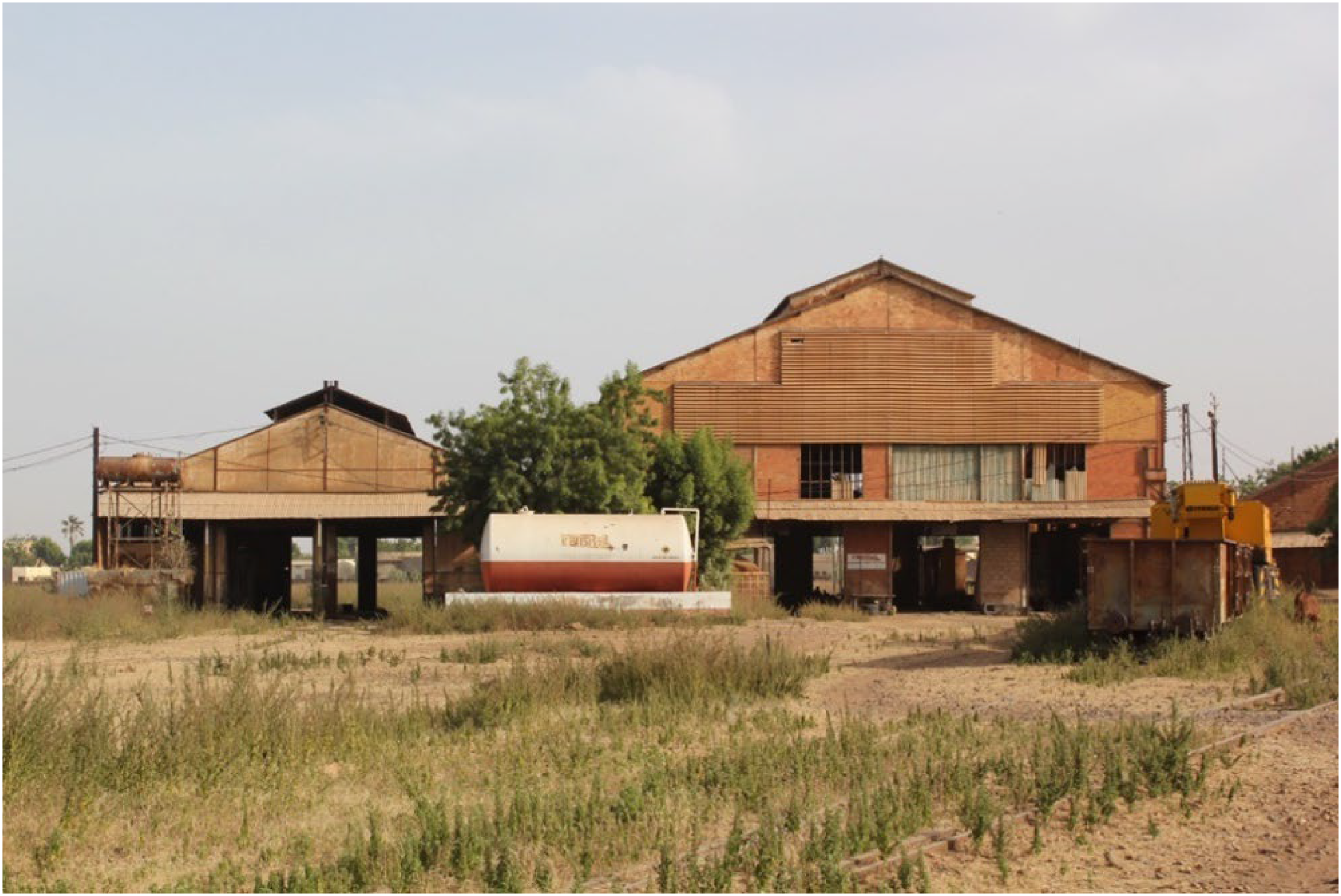
The railway depot in Kayes, Mali, where work carries on despite suspended train services. Photograph taken by Kopf, February 2020.
Meanwhile, at Marché Collé in Ouagadougou, vendors’ entrepreneurial work was structured around waiting for and attending to customers on their schedule. Their livelihood relied heavily on the broader economy, particularly on the public sector, given Burkina Faso's relatively under-resourced private sector. Although the vendors at Marché Collé had never been paid by the state, they still understood that the (perceived) capacity of the state to get the country's security and economic situation under control drove customers to or away from the market. Since the insurrection of 2014 that ousted Blaise Compaoré after nearly three decades in power, the new government had struggled to meet public expectations and particularly to prevent a degradation in the security situation as the threat of jihadi violence spread from the country's edges to encompass swathes of the state. Eroding confidence intensified rumours that state salaries would soon not be paid through the year of 2017, and even without the threat coming to fruition, it lingered in the shadows, and had material consequences for public confidence and vendors’ livelihoods. However, despite depressed expectations and a dearth of sales, many vendors continued to come to the market each day and to maintain as much of the rhythms of their day as they could, with the increasingly common exception of Sunday, when many Christian traders stayed home and the remaining traders began to follow suit due to eroding patterns of demand. As Traoré, a fabric-seller attested when arriving at the market one quiet morning: ‘It's better to come and try to earn [enough] to eat than to stay at home and eat the money from yesterday’ (Figure 2).
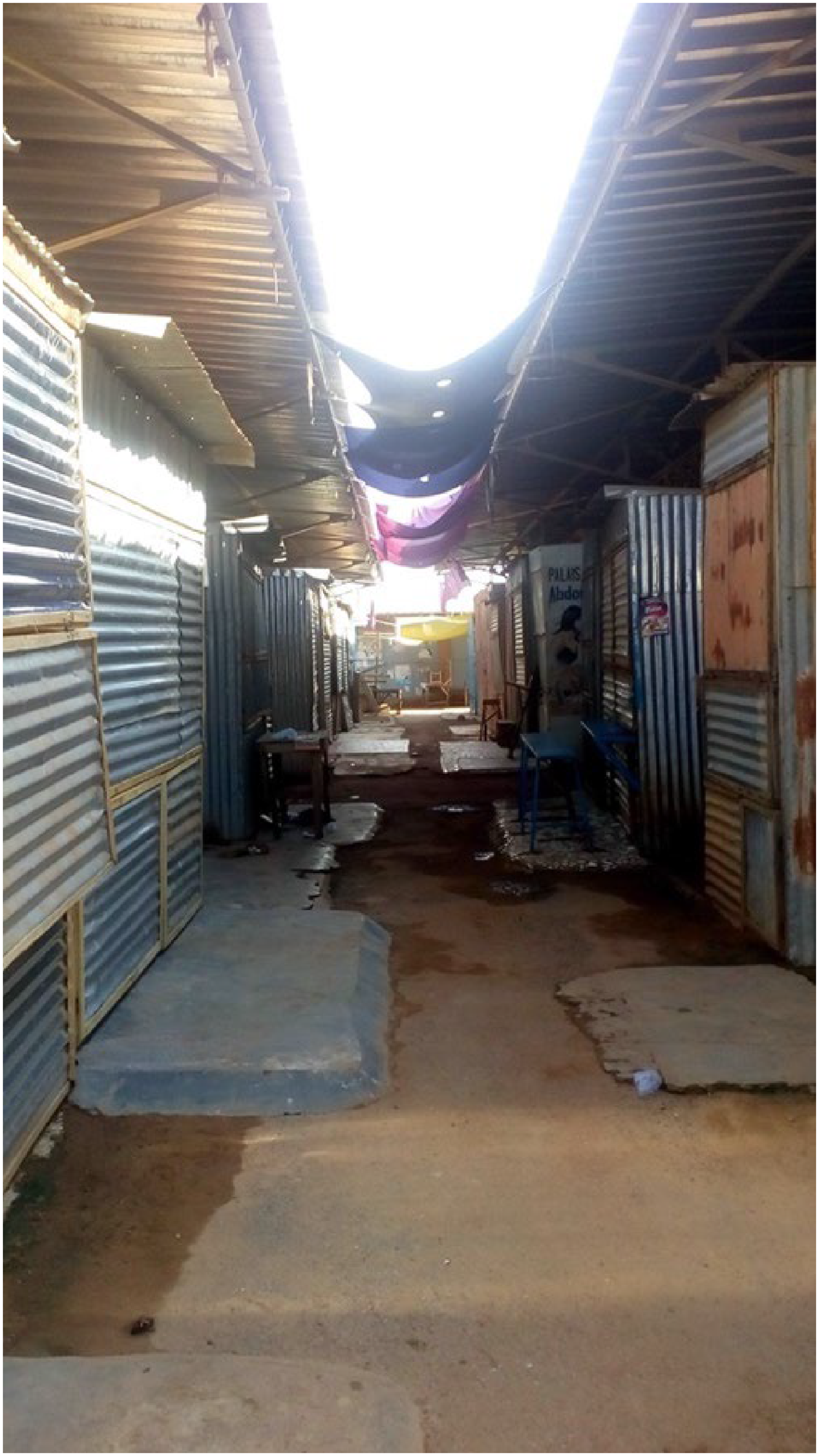
Burkinabé market interior taken on a quiet Sunday afternoon, taken by Phelan, January 2018.
Vendors at the market often spoke of being stuck there (On est collé) which is the reason for the pseudonym Marché Collé. This name reflects not only how they had invested in stock, a space and a customer base that no longer yielded a sustainable livelihood, but also the ‘stickiness’ of affect that tethered people to their livelihoods and lives there (Ahmed, 2014: 92). However, while vendors increasingly complained that people and money were no longer circulating at the market, many traders still came to spend their days at the market each day. Their movements and flows – to and from the tea kiosks and the other food stalls that lined the edge of the market, and to visit friends around the market site – punctuated the day, representing the skeletal rhythms of reproduction that maintained the micro-entrepreneurs and this (work)place.
Both of our periods of fieldwork took place between 2017 and 2020. S-JP's fieldwork in Ouagadougou, Burkina Faso took place from March 2017 to March 2018, with follow-up research in November 2018, a time when a widespread security crisis took hold in Burkina Faso, compounded by and compounding an economic crisis based on hesitant international investment and consumer confidence. CK's fieldwork in Malian and Senegalese railway stations took place slightly later, from January 2019 to March 2020. In this article, we mainly focus on the Malian side, namely Kayes. The end of the fieldwork in Mali coincided with the onset of COVID-19-related restrictions and curfews and demonstrations over a disputed parliamentary election, and was followed, later on, by two military coups in August 2020 and May 2021.
In both the Burkinabé and Malian cases, at these particular moments, workers faced different, yet persisting and evolving crises which their everyday rhythms of care sought to counter. In both cases, our interlocutors referred to crisis occurring at a national scale – in Burkina a security crisis; in Mali a brewing political crisis - along with a shared experience of growing inequalities across the region. They also described the ‘everyday disasters’ through which these crises percolated into their everyday life disrupting the norms of their working lives and frustrating their capacity to provide for themselves and their families outside their workplaces (Ibañez-Tirado, 2015: 549). Here we follow Narotzky and Besnier who define crisis as ‘structural processes generally understood to be beyond the control of people but simultaneously expressing people's breach of confidence in the elements that provided relative systemic stability and reasonable expectations for the future’ (Narotzky and Besnier, 2014; cf. Bonnecase and Brachet, 2013; Vigh, 2008). While across these two places, workers waited and worked through these crises, the crisis and the workers’ improvisations had also almost become ‘banal or that which no longer evokes surprise’ (Mbembe and Roitman, 1995: 325).
Despite this normalisation of crisis, a normative ideal of the state and its role in facilitating good lives still clashed with the reality that achieving such ideals would mostly depend on the workers themselves (Hibou, 2011; Siméant, 2014). In the absence of services and care from their respective states, the forces that undermined the renewal of the workers’ livelihoods were also threatening in much more nebulous and overarching ways: the intensifying crisis extended beyond the walls of these (work)places and into their families, their communities, their countries. In their workplaces, these different forms of crises were strongly felt in the material physicality of the spaces, echoing with Mbembe and Roitman's (1995) understanding of crisis as ‘inscribed in the everyday urban landscape, in its material structures such as roads, residences, and office buildings’ (p. 327). Reimagining the future of their physical workplaces and their roles therein required continual attunement and response to the ‘everyday disasters’ through which crisis and structural violence permeated their lives, managed within the scope and shape of their available agency (Vigh, 2008; Ibañez-Tirado, 2015: 549).
Considering the similarities and patterns we observed across our different research sites and the situations that the workers faced there allows us to think together about how individual and collective value – both material and moral – were being (re)produced. This occurred despite the opportunities to create these different forms of value not meeting the normative ideals of livelihood and work, such as earning their expected wages and fulfilling their identities as working men. The workers in each of our ethnographies actively maintained and recreated meaning through their rhythms and the maintenance of their workplaces. This care and maintenance here take the form of ‘intimacy’ as the workers cohabit spaces, which in turn involves ‘sharing and physical closeness’ (Drazin, 2011: 511). We show how the care for colleagues, friends and families is inextricably entangled with the care of the material spaces the workers inhabit – the train station and market – both of which require constant maintaining. While these acts of material care can be traced in our interlocutors’ attentive, mindful and physically involved practices towards their tools and materials (Denis and Pontille, 2015; Stiefel, 2018), they often also have a relational function. As Barnes demonstrates, Egyptian farmers in the Nile Valley maintain the irrigation system not only to keep the infrastructure operational and the water flowing, but also to sustain ‘communal ties with other farmers’ (Barnes, 2017).
Importantly, our two cases, although sharing some key overlaps, were also different, both in the everyday experience of the ‘stuckedness’ (Hage, 2009) that their difficult situations engendered, and the ‘normal’ that our interlocutors longed to return to. It is thus not our intention to conflate these two very different contexts, or to contribute to hegemonic views of masculinity/ies, and particularly masculinity/ies in ‘sub-Saharan Africa’ as we discuss in the next section. Rather, we are tracing potential openings offered by both cases to explore forms of care being undertaken by men maintaining and enriching the economic-social and material spaces in which they weathered structural crises, and to trouble understandings of care, work, masculinity and being stuck.
Our positionality as white European female researchers also shaped our fieldwork, in male-centred spaces like railway stations, and space-times within markets arranged around male webs of care in ways that evolved over time. When Charline started her work in Senegal, the labour union's Secretary General took her under his wing, calling her his ‘union intern’ to avoid any misplaced comments. Similarly,on one of Sarah-Jane's first interlocutors at the market, Ousmane, facilitated connections and relationships across his broad network, particularly based on his role in anchoring of a group of men who assembled to pray and chat on his benches before and after prayers. Openly raising colonial histories and legacies (including those that allowed us to arrive in these sites) in conversation seemed to temper an initial avoidance to discuss whiteness generally and as embodied by us specifically as a topic. These conversations opened the door to more critical dialogue of FranceAfrique, criticising the corrupt actions of neocolonial Franco-African political, economic, and military networks and the continued slow violence (Nixon, 2011) associated with Burkina's and Mali's relations with richer countries. For both of us, our access to the webs of care we witnessed further opened up through our continued presence, and our repeated return after time away, although the ease with which we could travel to and spend time in these (work-)places represented stark inequalities in mobilities. While many interlocutors and local friends told us that as international researchers, they hoped that our research would document their struggles to raise global awareness and prompt political action, the limits on our possibilities for immediate, tangible reciprocity were salient and made us consider the limitations of academic research. In both of our cases, the practice of waiting with workers was integral to our methods for studying the infrastructural and material spaces of the railway spaces and market they dwelled in, as well as the maintenance practices they engaged in to sustain these environments (Gupta, 2023: 2077). While, as Gupta notes, waiting can foster a place-based ‘ethics of care’ and aligns with the feminist praxis of ‘slow scholarship’ (Mountz et al., 2015), we were also aware that by documenting the work and struggles we witnessed as part of our doctorates, our waiting was economically generative in ways that represented and reinforced existing inequalities (Gupta, 2023: 2077).
Webs of care in suspended workplaces
At both the national and workplace levels, the workers in our ethnographies grappled with the residue of expectations of what their lives could be, and the systemic stability such expectations once promised. They spent their days within the environments and embodied rhythms that reminded them of what they might have lost and what they hoped could return, or as fabric-seller Traoré at Marché Collé said, ‘to come and try to earn [enough] to eat’. While remaining in these spaces made their situation of suspension obviously and immediately manifest, they also worked to push against this situation, or at least its persistence and intensification to the extent of their agency. In that sense, our entangled ethnographies join an emergent seam of anthropological literature that specifically grapples with the complexity of working and waiting in spaces that have been designed for a form of productivity which has been indefinitely suspended (e.g. Finkelstein, 2019; Jovanović, 2018; Rajković, 2018), or where waiting is part of working (Gupta, 2023). Waiting, in that sense, is everything but passive or unproductive (Masquelier, 2020; Stasik et al., 2020). Gupta for instance illustrates the multivalences of waiting amongst cleaners in the railway facilities of Hyderabad, India, where waiting is an integral yet often overlooked aspect of maintenance work. By emphasising that waiting is ‘spatial, gendered and hidden’, she sheds light on the embodied dynamics of this activity as well as the temporal, material and affective affordances of the spaces these workers dwell in (Gupta, 2023: 2068). While her analysis reveals the unequal conditions of waiting within these spaces and the power relations shaped by the different forms of employment, she also shows how the spaces ‘enabled workers to forge social networks as they negotiated uncertainties at work’ (Gupta, 2023: 2078).
More broadly, this strand of research builds on a burgeoning literature on waiting, or waithood, which has illuminated how people create and stabilise value across temporal scales when normal expectations of productivity and social reproduction are deferred. It generally focuses on men for whom graduating into adulthood and steady employment has been structurally precluded (e.g. Gaibazzi, 2015; Hoffman, 2011; Masquelier, 2020), the spouses and families of migrants waiting for their return (Kwon, 2015), or refugees (Brun, 2015; Debele, 2020). In both our cases, workers had faced dramatic changes in the conditions that shaped their livelihood, and found their incomes, self-representations and perspectives of the future undermined in ways that they found ‘demoralising’ (Rajković, 2018) – both in their eroding confidence about the usefulness of the work they did to preserve their rhythms and spaces, and their desired ways of being in the world becoming structurally unaffordable. The noted absence of the imperatives for these workers’ ‘work’ in the present – whether the lack of trains or customers – sheds light on the rich social, affective and practical, attachments that tether workers to workplaces and their rhythms (Weeks, 2007), and to the people they spend their days with or ‘care with’, to borrow from Tronto (1998).
The Malian railway workers were mostly male, while the social structure of the market in Burkina Faso was in many ways divided across gender lines. This was particularly evident among those who sat and spent time more deliberately and frequently together, speaking about the more intimate details of their lives. The group of traders foregrounded in this piece are a group of men of different ages who prayed together but also would often describe one another as the people they would ‘causer’ [chat] with, using the term to demarcate more intentional chatting and hanging out fromthe incidental sociality of their wider market networks. As such, we are exploring masculine networks of care, engaging with an emerging field in feminist research on masculine identities that ‘embrace the affective, relational, emotional and interdependent qualities of care’ (Beglaubter, 2021; Elliott, 2016: 252; cf. Hanlon, 2012; Joshi, 2021; Scholz and Heilmann, 2019).
Much of the research on caring masculinities has been taken up with a Western-centric focus, exploring men's engagement with domestic labour and childcare, with relatively little interaction with genealogies of literature on decolonial masculinities (Mfecane, 2018; Mutua, 2006; Nayak, 2023; Ouzgane and Morrell, 2005; Uchendu, 2008). Distributions of care work are heavily racialised as well as gendered, and the lack of visibility and value bestowed upon both paid and unpaid care labour is deeply entangled with broader patterns of dehumanisation present in racialised capitalism (Nayak, 2023). However, important and recent exceptions, such as Pergetti's (2024) work, respond to Nayak's (2023) call to empirically investigate these intersections. Pergetti (2024) examines how young men in India's Sundarbans engage in electrical maintenance and repair that produces a particular mode of care. She highlights that ‘subaltern masculinities… are emergent in and through practice: between structures of social life and individual performances, practice becomes a laboratory, a space for men to renegotiate self-worth and ward off ruination – yet importantly never once and for all, but always only for the time being’ (Pergetti, 2024: 18). By attending to care practices performed by men in Malian and Burkinabe workplaces, we seek to contribute to this strand of work and expand the gendered perspective on care and highlight often under-explored masculine care practices that unfold outside of the experiences of men who undertake significant domestic labour roles in the Global North, and whose labour may be more immediately legible as care (Naguib, 2015; Prattes, 2022).
In these eroding workplaces, we highlight the relational and intimate care that they cultivate among each other, as interwoven with the gestures and practices that go into maintaining the material sustainability of their workplace. We use the term webs of care to denote the sprawling masculine care practices that we witnessed in these sites. These webs are similar to the ‘carescapes’ that have been used to understand the spatio-temporal practices of care that men embody; here, webs of care encompasses but transcends the care work that railway workers and market traders did to maintain the material infrastructure of their sites as they waited, their religious rhythms and their individual social relationships, drawing our focus to the interdependent ways that men cared about and with one another in and through their everyday rhythms and practices at these work- and life-places (Bowlby et al. 1997; Nayak, 2023; Tarrant, 2012).
Simultaneously, we show how the men's care practices amongst each other are at times entangled with and consolidate existing gender practices and care practices at home. The care work we trace here maintained and rebuilt the continuity of their workplaces but these investments were also enabled by the work performed by the women in their lives. It is often the wives’ or relatives’ work that makes the men's wait or stuckedness possible by providing them with food and by caring for their children and homes. While not wanting to uphold a Western ideal of fatherhood as the epitome of unpaid care work (Nayak, 2023; Morrel and Jewkes, 2011), the emotional support and mutual care workers provided for one another takes up space and time that might otherwise be invested in other domestic and caring practices that the worker's partners and female relatives were often performing. As Nayak (2023) reminds us, men occupy ‘multiple subject positions’ also meaning that hegemonic masculinity and caring practices can go hand in hand, or that caring practices actually reify hegemonic masculinities (p. 175).
The ethnographies that follow thus prompt us to consider how more nuanced understandings of caring masculinities could help us see and understand the workers’ and their families’ labour – of dealing with stuckedness – especially in moments where intensifying constraint radically changes the logics of production and reproduction within which this work is contextualised. This also prompts further questions, namely on the gendered, material and temporal durability of these webs of care. How are they sustained and what work goes into this sustenance? How long can these webs of care last for and how do they adapt over time?
“Staying put is our fight”: Worker's routines and webs of support at a Malian railway station (Kopf)
In the train station in Kayes, in Western Mali, the railway workers Wade and Mohammed were waiting for the train to resume its circulation. I was having lunch with them and their colleagues at the train station in front their office, which had been furnished with benches and chairs that they had made themselves. ‘They cut off the electricity a few weeks ago’, Wade complained, updating me about the recent developments at the station. Despite this interruption, here they were, chatting in front of Mohammed's office of Rolling Stock. 3 Keita, one of their colleagues, was one of the workers who had been laid-off after the line's privatisation in 2003. Despite being retired, him and his co-workers regularly came to the railway station and shared their lunch with their younger colleagues whose salaries were delayed, or would perhaps even never come. Their wives took turns in preparing the meals, and there were always enough portions for the group of men that gathered in front of Mohammed's office. ‘Even when Keita is not in town, he sends food’, Mohammed explained. Until a few weeks ago, when the electricity was still working, the more senior workers had taken on younger apprentices and volunteering interns in order to teach them how to weld, build tools but also furniture and passed on their skills in electrical engineering. Although the train was not passing, the workers continued to perform infrastructural labour that provided care for the railway equipment, regularly using the materials, cleaning the common spaces and repainting the remaining wagons, all in an effort to sustain their routines. Through this maintenance work that gathered younger and older workers, generational connections among the men were also upheld (Figure 3).
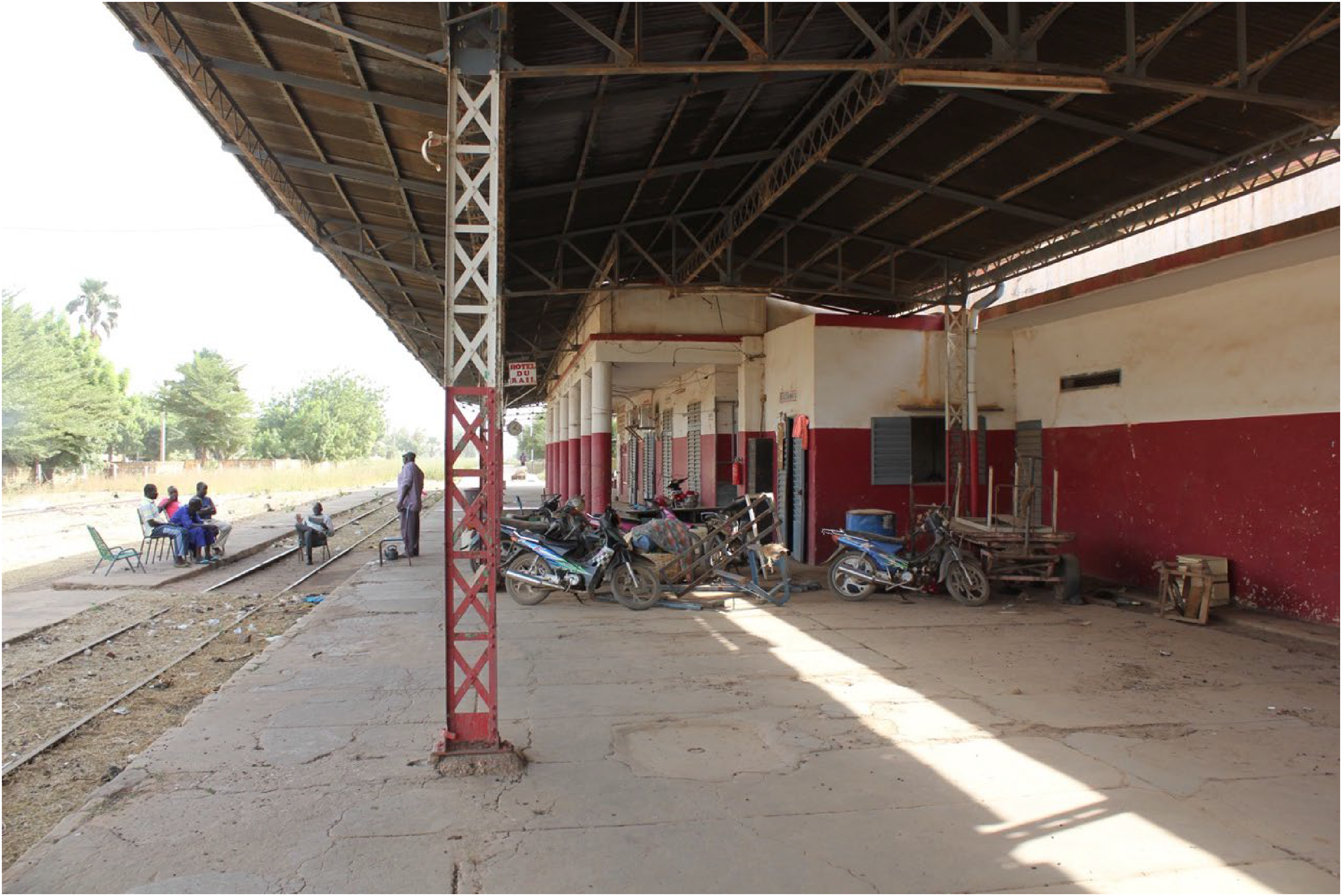
Workers gathering on the station platform in Kayes, Mali. Photograph taken by Kopf, February 2020.
This material care that extended to people was also present at the railway dispensary next-door. Despite the current lack of electricity and salary, the doctor, also part of the railway service and considered a railway worker, kept treating patients with his sparse material. The shelves that he remembered once filled with medicines were now empty. For medical examinations, he was left with a stethoscope and only prescription slips that he dutifully filled out not only for the railway workers but also other inhabitants of Kayes (around 150 consultations a month). We were in December 2019, and he had received his last recent salary in May the same year. The constantly eroding materiality of his workplace, evident in the peeling paint of his office and the missing or damaged tools he struggled to maintain, mirrored his preoccupied mood, which he expressed as he shared his concerns with his peers.
Similar to the other places where the workers’ gathered, such as in front of Mohammed's office, the association of retired railway workers provided them with a place of support and conversations. They often highlighted the spirit of community and care that these different groups lent to their lives. ‘We come here, to the retirees’ home to discuss our family problems and to expose our dilemmas. It's good for the mind, because all that inactivity and waiting weighs on the morale as well’, explained Keita's brother who held the keys to the house of the association. ‘At least here we can discuss our family problems amongst friends. Here we expose our intimacies. We can't give up like that. We have to come every day’, Mohammed explained. ‘What else would we do if we didn’t come to work? What will our women say? We can't stay at home and not do anything. We would go mad’. His colleague agreed: It's the social aspect and activities that makes us live here and that also makes us come to the rail stations. Today it's Keita's wife who cooked for us, so even if we don't work anymore, we can still eat with them. Otherwise, it's often Imam Diarra who brings us food, even when he's not here and he goes on a trip, he asks somebody to bring us food. He has a good pension. We always work, we come here and we talk, we talk about our private lives and our problems.
The railway workers, such as Keita, were worried about their future: ‘What will happen next? There is nothing… everyone is left to their own devices…’ Similar questions also tormented his colleague Diallo: ‘What is our place in this new society… What's in store for us? Neither the state nor the company have taken care of us. But we are here. This is our struggle’. Juxtaposing the careless state and company with the careful workers, Diallo's statement proclaiming ‘we are here’ points to how endurance and persistence instead of movement and action can signify a mode of resistance, or struggle as he says. In staying put, they attempted to resist the devaluation of their work and thus also of themselves (or their lives) as surplus labour that had become redundant (see also Li, 2010). In these moments of endurance, they tried to uphold the existing materiality of the place but also created new meanings in terms of solidarity, reciprocity and generosity – attending to each other's anxieties and worries – but also through exchanging cooked food and leveraging economic support from other family members. Over the years, they had thus created a web of care that, even if fragile, managed to sustain the lives of those who were not paid on time or received only a mediocre income. While their reciprocal care and support did of course not replace a regular salary, these practices alleviated some hardships, whether regarding the food or their moral.
Another important communal area across the railway sites that enabled them to structure their days was the little makeshift mosque. How exactly these religious routines rhythmed workers’ daily lives will be further explored in the next section, set amongst the market vendors in Ouagadougou. In Kayes, the railway workers had dubbed the improvised, sheltered space the ‘mosque of the Rolling Stock’, and Diarra, the eldest of the retired railway workers was known as the ‘imam of the workers’, providing religious care and comfort for his colleagues. They enlarged the mosque in 2004 because an increasing number of employees attended his prayers lending the days a religious temporality in which they found comfort and a sense of respite in these uncertain times.
The sharing of food, of encouragement, of presence amongst the retired and still active workers hence pushes back against the infrastructural wear, and their individual experiences of being stuck. Through practices of care, they ‘confirm[ed] or creat[ed] the presence’ of a material place and set of relations that held meaning for them, and that facilitated ways of seeing themselves (Louw, 2022: 72). These masculine webs of care ensured continuity in daily life despite the disruptions they faced, and also helped to build a future that was increasingly under threat. The workers lingered in their workplaces and reinvested in them through increasing constraint, and their waiting together reproduced not only the ‘infrastructural durability’ of these workplaces, but also the durability of their sociality, as well as their working lives and selves (Ibrahim and Bize, 2018: 74). Their commitment to their routines and persistent presence at the railway station become then ‘rhythms of endurance’, to borrow Abdou Maliq Simone's (2018) words, that highlight the sheer density of material and affective resources, and the agility of rhythms that was needed to be responsive to crises. The physical spaces people spend their working lives in are invested in through dynamic processes of remaking that shape social connections and self-understandings (Debele, 2020). The workers’ workplace is also their ‘life place’ (Bolt, 2015: 5), especially now that the work has ebbed away. Here, they support each other but also collectively safeguard potential futures in a situation where they are treated as disposable, thus engaging in a form of intimate and intergenerational but also material care work.
As we will also see in the next section, spaces enable certain lives to be lived, but are also recreated by the workers who format and inhabit their spaces so as to enable the lives they deem worth-while (Lefebvre, 1991). While the absence of work was posing a threat to the men's social position and their sense of dignity, ‘manliness’ and their role as breadwinners, we are not positing that our interlocutors were getting more involved in domestic care work, nor that gender norms were changing. For example, it was still the wives who did the cooking for the railway workers. In not staying home, the railway workers and traders, as we will see below, also avoided getting involved in domestic responsibilities such as parenting and household duties. It was precisely the women's care work – the cooking, cleaning and raising children – that allowed the men to mourn and protest the slow erosion of a masculine ideal and while clinging onto the vanishing privileges of once being breadwinners. On the one hand, these webs of care towards people and their material surroundings allowed the men to share their vulnerabilities with one another and to reproduce forms of masculinity that pushed against the consistent devaluation of their labour and associated masculine identities through structural violence. On the other, these male care practices went also hand in hand with or even consolidated a form of ‘hegemonic masculinity’ that – while never fixed nor stable (Connell 1995: 76) – was deeply intertwined with the domestic care practices performed by their wives. Caring and hegemonic masculinities, as Elliot and Nayak suggest, are thus not oppositional (Elliott, 2016: 254); instead caring practices can be woven into and reinforce patriarchal frameworks (Nayak, 2023: 181).
“We’re only waiting”: Sticky rhythms and religious webs of care at a Burkina Faso market (Phelan)
‘It's the suffering,’ Amadou said from his seat on a wooden bench in the shaded forecourt of an empty stall beside the cluster of haberdashery stalls he managed. He moved his arm in a slow arc out in front of him towards the orange road that encircled the market, directing my attention to the visible evidence of what he envisioned as suffering all around – the lack of customers passing, the dust gathering on vendors’ wares, the businesses closing and the deferred repairs to stalls. As if he conjured them up, three boys, still dressed in matching outfits from celebrating the holiday of Eid-al-Adha 5 a few days ago, appeared and ran past, laughing loudly along the road. One of them cast their eyes towards and past us, seemingly not seeing us, given he was in the full sun of the thoroughfare and we sat in one of less visible pockets of shadow, but we had seen them. Amadou began to smile slowly with his arm still outstretched, still pointing out the suffering while the children laughed, and then we were both laughing at the contrast. The entangled issues he had been talking about – the recent terrorist attack in the city centre, the lack of a market before the festival and nearly due school fees – did not go away in that moment, and neither did the underlying reasons for them, but the salient joy of others destabilised the suffering he spoke of for a moment. Then the other men began arriving. This was the spot where they gathered to wash before praying. Issa, a young man who manned the overlocker (sewing machine used to neaten and secure seams) in the forecourt in front of one of Amadou's stalls was pouring water from a large yellow plastic container into swirled multi-coloured plastic kettles to wash the morning away as everyone asked about each other's days, families, activities.
A congregation at Ousmane's stall would be doing the same right now 20 metres down the road, and then they would bring out the prayer mats from Ousmane's back room before Amadou and his entourage of colleagues and friends would walk down together so they could all pray together. Ousmane, a trader who sold pineapples and plastic bags, anchored a large group of men who would congregate to pray across the road from his stall. Although pineapple sales were down, the ubiquitous black plastic bags were still needed by nearly everyone at the market who still had any sales and so Ousmane's decline in sales was slower than many others (Figure 4).
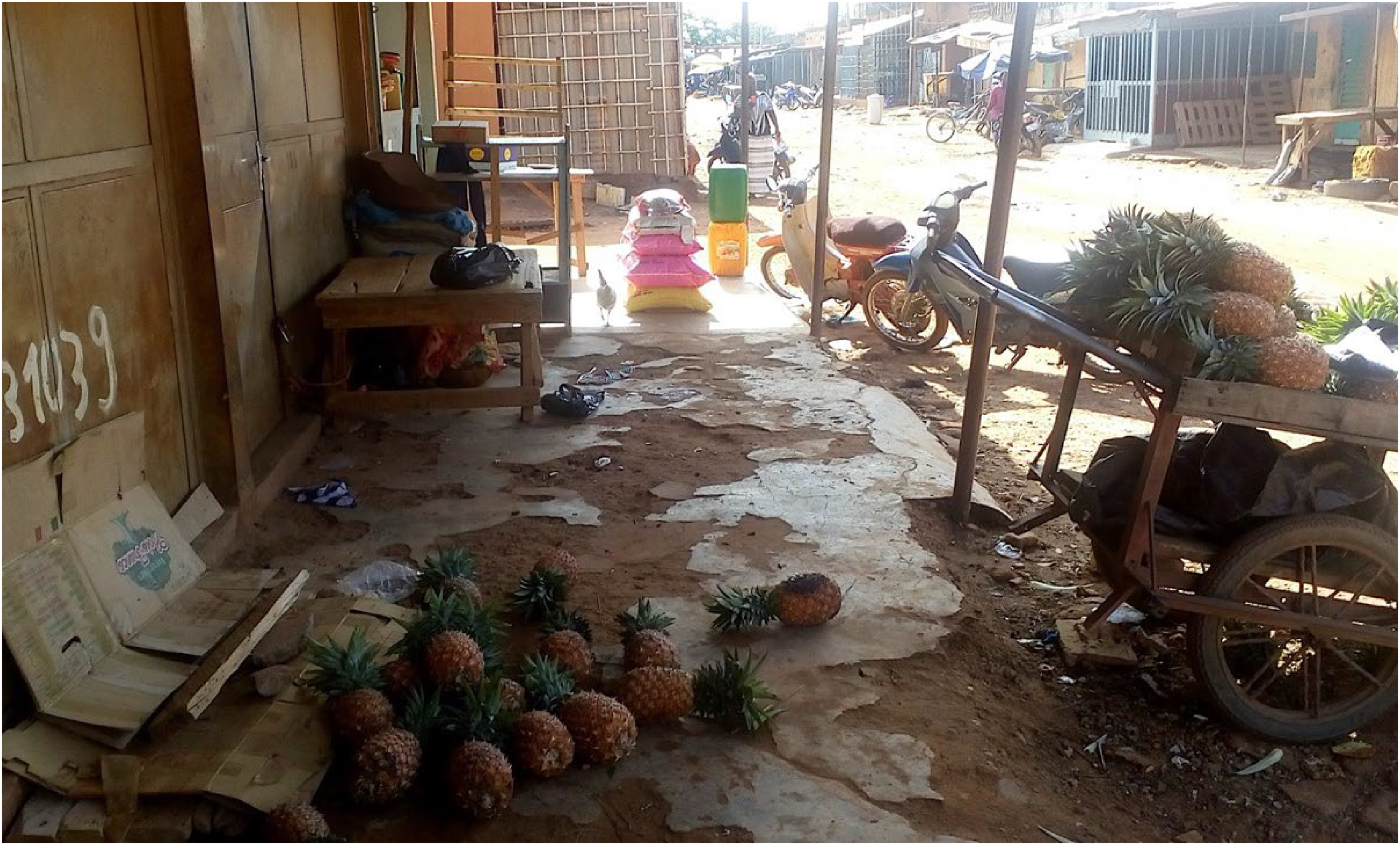
Pineapples, motos and water canisters around Ousmane's stall, taken by Phelan, January 2018.
Ousmane was so integral to the material and social support of his network at the market that to miss even a day would have been keenly felt around him. As well as keeping prayer mats in his back room for the men who prayed with him throughout the day, and filling tall yellow plastic water canisters for them to wash with beforehand at the edge of his concrete forecourt, he also hosted an important social space for these men, particularly while their entrepreneurial activities stagnated. As the market became quieter, these men increasingly lingered longer before and particularly after their prayers on and around the two benches on his forecourt, chatting and joking. Entangled religious and social care brought them to one another from across the market, and this part of their lives expanded to take up the space of what was eroding away. Ousmane's micro-practices of care in supporting his friends and colleagues to pray with him reflected how the relations between people and the places and objects are entangled with are ‘impermanent, always in jeopardy of breakdown or wastage and thus in need of recurring maintenance and attention for their continued functioning’ (Corwin and Gidwani, 2021: 14).
While facing a distinct form of crisis that eroded a different baseline of working life than the railway workers in Mali, vendors at Marché Collé in Ouagadougou also maintained the tenability of their livelihoods through complex webs of care despite the dramatic reduction in the circulation of money and customers that used to animate and shape their working days. Marché Collé's material infrastructure is larger, but also more robust physically compared to other ‘yaar’, or the more materially improvised markets nearby – there were solid brick walls that enclosed a rectangular interior courtyard, which included small open spaces for fruit and vegetable sellers, a section of tall counters for butchers, and a linear grid of forecourts with lock-up spaces for vendors who predominantly sell fabric, clothes and home goods. The perimeter of the market is lined with larger forecourts and lock-up rooms, occupied by businesses such as bike and scooter repair shops, hardware shops, tailors, salons, tea kiosks, cobblers, haberdasheries, and vendors selling supplies for other traders such as plastic bags and salon consumables.
Most of the vendors at the market lived outside the local area, and had built up their businesses and friendships there over the preceding years to have a social life that was quite separate from the rest of their lives. Many stayed at the market for lunch, as was the norm for many workers around the city, due to the sprawling nature of Ouagadougou and the relative expense of petrol compared to other living costs. This meant staying at the market from 8:30am until around 6pm each day from Monday to Saturday, while a significant if decreasing number of traders also came on Sunday mornings. Through these six or seven days, breakfast, lunch and mid-day sleeps or rests (a necessity in the heat) took place at the market for the most part and were shared with market neighbours, rather than with families at home. Undertaking their daily rhythms in the physical market space while they lamented the intensifying erosion of the market in term of the flow of money and customers, vendors inhabited the ‘remainders and reminders’ of what this workplace had been, and what they hoped could return if they could sustain themselves in the meantime (Finkelstein, 2019: 15; citing Boym, 2008).
Religious care and the routines that constituted it were central to vendors’ daily rhythms, shaped around certain spaces and vendors whose stalls offered bases for prayer and the sociality around it like Ousmane's. Madi was one of the men who congregated at Ousmane's stall. His shoe stall had been hit hard, with new shoes being a luxury far outside the calculative frame for most, and hence effectively illiquid. He wandered around the market for conversations with his friends and fellow traders to pass the time away. Young and always moving, he seemed to find the waiting he saw as his only option viscerally uncomfortable. One evening in early 2018, Madi was lingering after prayer-time holding the hand of Ismael, the young butcher still wearing his Maggi apron covered with the day's residue, swinging their clasped hands rhythmically as he spoke. As the dusk got darker, Madi said he had to go home but was not in a rush because his family didn’t understand that he could not make money at the market. He was frustrated at the tension this introduced into his relationships with his parents and the rest of his family, and their perceptions of him, as well as his own relationship to his frustrated aspirations: ‘You are at the market all day and you haven’t earned [anything]. How do you explain that? They don’t believe that you haven’t been to the maquis [bar]. But I’m a good Muslim, I don’t want to drink, I want to be engaged [to be married]’.
‘There is not [enough money/market] to eat’ was a common response to greetings at this time. As Madi lingered after saying he had to leave, he twitched the fingers of the hand that wasn’t holding Ismael's hand, saying there was not even enough to smoke: ‘When I smoke, I can think. I don’t have the means to buy cigarettes, to think’. Over the previous months, he had been trying to decide whether to marry a villageoise girl (coming from a rural village), or to wait and see if his business picked up, something that was inextricably linked with expectations of the state's capacity to manage the current crisis: Ouaga girls like money too much. Right now, it's not easy, there is no money/means. Maybe I will end up marrying a villageoise. It was not expected, but we’re only waiting, and the market, it's slowed. We don’t know how they’re going to manage the country. Everyone is holding their money because they don’t know if the government will have problems with finances, and won’t be able to pay the state employees. One year after the first attack, money was coming back a bit but right now, there are weeks when I only have one or two clients, there are mornings when no one arrives [at my stall]. At the moment, it's not easy, I’m only waiting.
A few days later, Madi visited Daouda, an older tailor who also prayed at Ousmane's stall, as he did the rounds of the market, spending time with friends as his stall was quiet. ‘There isn’t [enough money] to eat’, he replied in response to Daouda's greeting, as he often did. ‘God will provide, we must wait’, Daouda responded to him but Madi challenged the divine timeframe ‘We will die before that happens. What should we eat while we wait?’ Daouda as an established vendor and ‘Papa’ seemed to take the load of practicing hope and courage in supporting Madi in the face of discouragement in this and other moments: ‘God is good. He will provide’. Such seemingly small and mundane interactions did not stem the loss of customers and sales that Madi and many others lamented and the loss of meaningful work that the market had been built for. Yet these moments of everyday checking in on one another, of having circuits to make and people to care with seemed to allow for this market and the webs of care within it to reproduce a (work)place that held the potential for reanimation, as long as hope could be partially borrowed and patched. Self-understandings can be renegotiated through caring relationships with other men who uniquely understand the texture of current challenges, particularly when the expectations of family members for one's role or contribution are structurally precluded (Mortensen, 2021).
As Aalyia Sadruddin (2020: 87) writes of the small, everyday ‘micro-practices’ of care that recreate and patch dignity and hope in everyday life, ‘small is neither unnoticed nor trivial; it is modest and remains charged with the potentiality to reinfuse meaning into the everyday’. Such modest, or mundane forms of care are central to the importance of cosmological and intergenerational community support structures in collective masculinities, as woven into mundane everyday routines and attachments (Mfecane, 2018). Through caring about and with one another, and the tangible practices of care connected to these affinities, this group of men ‘create[d] dense webs of connection, interdependence, accountability, and intimacy’ (Burton, 2021: 629). While these webs could not counter the systemic conditions that eroded the meaning and structure of their businesses, their everyday practices maintained and (re)created webs of care and intimacy that pushed back, in partial but meaningful ways, against intensifying forms of slow violence (Nixon, 2011) that eroded their everyday work lives and associated personhood.
Like Madi, Ousmane also struggled to convey the reality of the market at home, joking that his wife would be able to understand him working for long periods of time abroad more easily than she could understand how he consistently spent his time and attention at the market without earning a real profit. Unlike Madi, he was already married with four children but the current constraint of the economy calcifying, shifting from being understood as acute to chronic, was also reshaping his decisions on the organisation of his household. Ousmane had been discussing marrying a second wife and his wife Tenin had warmed to the idea recently, especially around the end of her pregnancy with their fourth child. He said she was now becoming impatient for another adult to spend her days with at home, to share her work and her life with while he was at the market. However, the time horizon for this had now been pushed into the frame of years rather than months as Ousmane's expectation of being able to support a larger family frayed: ‘No, not at this moment. At this moment, it's not possible to have a big family in the city. You have to pay for water, for school, for the roads, even to piss’, he finished with a joke.
Ousmane's coming to-and-fro without producing enough for the family to maintain their expectations required both spouses to negotiate the implications of intensified financial strain at the market and within the household, but also navigate an additional layer of collaborative renegotiations of time, energy, attention and intention towards the collective overlap of household-market projects in the everyday and the projected future. Moreover, like Madi and his family, the dissonance between Ousmane's wife's perception of the market based on what he returned with, and his own experience of its everyday rhythms also intensified the importance of his social world at the market. Sharing that contrast with others facing similar experiences held space for this dissonance to be joked and vented about with those who viscerally understood the limits of the market and witnessed one another's work there every day. While the fact that vendors could not bring home the money they needed to maintain and build the lives they had expected with their families could introduce new social tensions, social relationships at the market were often deepened through these solidarities.
The sociality of this (work-)place allowed vendors to grieve loss and deferral while investing in the continuity of the market as both a social space and a hope for future recapture of their livelihoods. While partial and iterative, these countermoves seemed to push against overwhelming forms of loss and confusion, safeguarding and affirming the means of (re)production within these spaces through continued and adapted presences, to the extent they could. Aligning with Maria Louw's (2022) definition of care (p. 72), the workers appeared to be ‘confirming or creating the presence of something or someone’ – namely the workplace, and the workers themselves. In this way, traders’ efforts in upholding and reconfiguring their rhythms and attunements to one another constituted a form of care work that became more visible, and at times more important and complex, as the more tangible work of the market diminished and the workplace represented a more ambiguous role in their lives. In various ways, these shifts galvanised the investment vendors had in the market socially and affectively, despite its waning capacity to support them financially, with new and adapted forms of care required to mitigate the effects of structural disadvantage (Hobart and Kneese, 2020). Through care we ‘reassemble ourselves through the ordinary everyday and often painstaking work of looking after ourselves; looking after each other’ (Ahmed and Fitzgerald, 2017).
Just as the railway workers in Mali worried about having to explain their work and waiting to their families, and worked through these worries with their colleagues at the station, here the vendors affirmed one another's stuckedness and the work they had to do to hold themselves and their workplace together, socially, emotionally and materially. These reconfigurations reflect how ‘disaster so folds its way through the ordinary that it is impossible to distinguish the reproduction of life from the ways it wears out people and worlds’ (Berlant, 2012: 85). The moments where expectations fall away can also be moments where footholds (or even toeholds) are remade or reinforced, such as here, between vendors who leaned into the liveable community they had created for themselves at the market. While there was not much apparent choice in Madi, Ousmane, Moussa and many of their neighbours' sense of stuckedness at this moment of loss and uncertainty, there was still choice in how to be - with one another - in that space. The intimacy of sharing loss and recreating modest and iterative hopes and humour together enabled vendors to wait for the customers and aspirations to return, and to invest in the meantime. In this way, ‘affect also allows us to expand our sense of agency – where change can include feeling something (different)’ and such feelings can in turn have material and social ramifications (Meer, 2019: 202). In both spaces, maintaining the rhythms that enabled the future tenability of their workplaces required workers to identify and enact margins of bounded agency in everyday life while waiting for and maintaining a dynamic preparedness for agency – as Catherine Brun calls it ‘agency-in-waiting’ – at a more meaningful scale (2015). The web of care through which both sets of workers cared for themselves and the sociality they shared at their work-places through loss entails a form of work that ‘inhabits the spaces of both choice and necessity in ways that the so-called productive forms of labour never could’ (Hogg, 2019: para. 3).
Concluding thoughts
Both accounts of the railway station and the market highlight how care for the future, for the world one hopes to ‘presenc[e] forth’, emerges from and conversely shapes everyday action in spaces of suspended economic activity (Louw, 2022: 72). As such, our coupled ethnographies show how waiting and perpetuating everyday routines together regenerated social bonds and evolving everyday rhythms that maintained the material and affective spaces workers share, constituting a labour of maintaining hope. This work, then, reproduces these material and social (work-)places, along with the relationships and self-understandings that are grounded in them, while also distributing hope and other resources shared through non-financial investments in one another. This work spans productive, reproductive and distributive work (Ferguson and Li, 2018; Medappa, 2023). In both places – at the market and the railway station – perpetuating routines while waiting became an active form of care work. Similar to Ibrahim and Bize's (2018) work on boda boda drivers in Kenya, the ‘persistent presence establishes infrastructural reality and…this interstitial time is crucial for cultivating the social bonds’ (p. 82). Here, the workers’ forms of togetherness produced value, in terms of enduring social and spatial formations bound by solidarity, generosity and obligation as well as contributing to the material durability of the places. Their rhythms and routines kept the commercial potential of the spaces alive and enabled ‘economies of exchange and generosity’ between themselves (Ibrahim and Bize, 2018: 82). These economies constituted methods of holding things together, including support systems where the railway and market workers helped manage each other's anxieties and worries, but were also constituted by circulations of food, of goodwill, of people, of the stories brought into and around the workplaces.
Such practices and related attachments had already existed in both of these spaces, but the work they had to do in holding together these (work)spaces materially changed as the so-called productive labour that made the spaces meaningful eroded. The less visible web of effort required to recreate solidarities and meaning seemed to become even more important and complex as the workers not only neared the edges of economic tenability of their everyday lives, but also loste the value and meaning of work. On the one hand, the care work that went into maintaining the railway and market helped these workers to mitigate, to some extent, the sense of loss that results from their inability to work and provide for the families. On the other hand, their liminal tethers to their workplaces were also perceived as frustrating as they are neither able to meaningfully fulfil nor to renounce to their work routines, while waiting (Rajković, 2018).
We argue that such efforts, analysed through their everyday rhythms of care, are central to the labour of ‘making oneself living’ in a context of crisis, and that these paired cases can offer new insights into ongoing debates on labour, crisis and uncertainty (Cole, 2010: 96; Ferguson and Li, 2018; Meagher et al., 2016). Looking at how different forms of value are safeguarded and remade while people wait and weather the erosion of their livelihoods and workplaces illuminates what work means to people, and what it does. The infrastructural realites of both market and railway station and the webs of care woven around these spaces, point to the endurance of workers and of workplaces, especially in their deterioriating and stagnant forms. Whereas one often tends to conceptualise 'doing', action and moving as the fight, sometimes the struggle is the opposite, namely staying put where you are and to persist, as the railway worker Diallo declared. By tracing the workers’ care work in remaining steadfast, especially within increasingly constrained frames of agency, an attentiveness to care deepens our understanding of what is considered as labour and where this labour happens.
As such, our ethnographies shed light on the interactions between care and masculinity in these material spaces shaped by economic expectation, offering new insights on Caring Masculinities in a post-colonial context (Elliott, 2016; Prattes, 2022; Ratele, 2021). Exploring the caring practices of traders and railway workers amidst intensifying structural disadvantage and material decline allows, or requires us, to recentre the resistance to domination that Karla Elliott places as central to the concept, a resistance that has been underexplored in empirical cases despite the recognition that caring masculinities ‘cannot be decoupled from struggles against forms of subjugation other than gender oppression’ (Prattes, 2022; 2). Thinking through webs of care or everyday ‘carescapes’ illuminates the expansive ways that care is needed to hold worlds together, generating practices of caring masculinities that challenge whiteness as the dominant frame for fatherhood and care (Nayak, 2023: 181). Across our accounts, male vendors and railway workers continually reinvested in the social, moral, religious and material fabric of the market and station , in ways that were continually reshaped by the undervaluation of their labour within global configurations of capital and power that eroded and suspended their agency. At the same time, as Nayak (2023) as well as Morrell and Jewkes (2011) remind us, caring masculinities can also carry their own forms of oppression and reinforce patriarchal norms. Here the men's emotional support for each other and their infrastructural care directed towards their material surroundings were enabled by the gendered labour of wives, sisters and other, predominantly female family members. The men and their own care work were thus entangled in and animated by different webs of care – material care, care for one another, women's care, and religious care – through which they reproduced these (work)places, reinforced their identities as workers, and maintained the skeletal rhythms that kept them tethered there, holding onto the past and potential future of their livelihoods in these places.
Footnotes
Acknowledgements
We would like to thank our interlocutors and the editors for comments on earlier drafts.
Declaration of conflicting interests
The author(s) declared no potential conflicts of interest with respect to the research, authorship, and/or publication of this article.
Funding
The author(s) disclosed receipt of the following financial support for the research, authorship, and/or publication of this article: CK's research was funded by the European Union's Horizon 2020 research and innovation programme under the Marie Skłodowska-Curie grant agreement no. 764546 (Anthusia). S-J P's research was funded by the UK's Economic and Social Research Council through a PhD 1+3 Studentship (ES/J500173/1). As this piece is based on ethnographic research which has been produced in a public environment with interlocutors over 12 months, there is not a complete data set to be accessed but contextualised data excerpts can be obtained on request from the author.

Notes
Author biographies
Charline Kopf is a Postdoctoral Fellow in social anthropology at the University of Oslo, where she is leading the project “Atmospheres of Dust: Particles, Pollution, and Protests in Senegal.” Her research explores themes of history, memory, and postcolonial legacies, with a focus on toxicity, infrastructures and mobility in West Africa. She is currently writing a book on the afterlives of the Dakar-Bamako railway, forthcoming in the University of California Press series “Atelier: Ethnographic Inquiry in the Twenty-First Century”.
Sarah-Jane Phelan is a Postdoctoral Researcher at the University of Cambridge. Her research focuses on the less visible forms of emotional and cognitive work required to manage resources, and particularly how such work is intensified by institutional deficits and structural inequalities.