



Abstract
This paper explores the agentic capacities of inanimate objects and their role in shaping the affective atmospheres of women's markets in a post-conflict setting. To analyse this material affectivity, I draw on women's markets of Swat in Pakistan and the role of four selected objects including posters/notices, bras, mannequins and curtains in the generation, transmission and manipulation of affect. I ask, how objects matter in shaping the affectivity of women's markets during and after Swat's conflict? To answer this question, I draw on 36 semi-structured interviews with men traders (N = 18) and women customers (N = 18) along with my field notes. I found that centring our analyses upon gendered materiality of mundane objects allow us to capture nuances of unruly capacities and gendered affectivities of objects in the context of war and post-conflict environments. Moreover, my findings suggest that focussing on agentic capacities of objects enhance our understanding of the affective materiality of women's markets in the post-conflict setting.
Introduction
How materiality of war is gendered, affectivity of objects within it shapes or is shaped by gendered politics of the war, and how atmospherics of space with its materiality and affectivity operate temporally in embodied and embedded ways of living within post-conflict environment? A cursory glance over the materiality of war and affect scholarship calls for an in-depth engagement with these questions. Navaro-Yashin (2009, 2012) does not deal with gendered affectivity of objects at all. Rubaii (2018) demonstrates counter-terrorism works to transform homes and cultures in order to render every space a battlefield. Whereas Reeves (2020) demonstrates how purposing and repurposing of monumental war objects to generate affects have implications for feminist debates around gendered relations. Contributing to this multidisciplinary scholarship on the materiality of war, I demonstrate how gender shapes the affective reach of objects by highlighting paradoxes of meanings associated with objects latent within everyday interactional dynamics of the marketplace.
Materiality of objects does not alone shape the everyday markets. The power of objects to affect and be affected is an important component of the affective atmosphere of markets (Khan, 2023). Affect is what sticks, and what sustains and preserve the connection between ideas, values and objects (Ahmed, 2010a: 29). The social and institutional embeddedness of marketplaces are pregnant with multiple emotions including care, discomfort, anger, love, pity, envy, fear, excitement and frustration, to name but a few (Monteith, 2018). Affect within this context is the characteristic state of multiple feelings, generated by an encounter between entities, and how entities are affected by these encounters (Khan and De Nardi, 2022). Rather than defined by their substance, size of species, Deleuze (1988: 124) suggests that human and non-human entities can be defined and compared through their affects. This paper through the agentic capacity of objects within the assemblage of women's markets explores evolving everyday interactions in women's markets within the post-conflict Swat valley of Pakistan.
My turn to objects is not a ‘turn away from humans’, nor it is underpinned by the proposition that it is easier to talk about objects than directly broaching humans or politics (Fowles, 2016: 20). Instead, objects have a central role in shaping, understanding and explaining the assemblage of humans and things in a given space and it's embeddedness within the socio-cultural milieu. Human actors encode things with significance, and from methodological point of view, it is the things in motion that illuminate their human and social context (Appadurai, 1986: 5). This is my point of departure from non-representational theories of affect, for which bodies, whether of things or humans, are unmarked and hence affect is not gendered (Wetherell, 2013a).
Unlike consumer markets literature which explores the materiality and affective dimensions of markets by employing the term marketplace in its abstract economic sense (Hutton, 2019), marketplace is defined here as ‘spatially bounded spaces for the production and exchange of goods and services, surrounded by a series of social relationships embedded within their respective institutional environment’ (Khan, 2019: 2). Women's markets in this paper refers to historically developing designated shopping spaces for women, by clustering together material objects in a physical space that is frequented by women customers. The Pashto term, ‘da khazu market’ transliterated as women's markets translates the association of these spaces with women's body, while in actuality, these markets are frequented by both men and women as customers. Not only that but traders in these markets are also only men (Khan, 2020).
Objects have various roles to perform within these markets, ranging from commodities for sale (Khan, 2020), display only objects for marketing (Law et al., 2012), for regulating markets (rule books, CCTVs, barricades, etc), for communicating messages (letters, brochures, mobile phones, banners, etc), or for navigating from, to or within market (Khan, 2023). Besides consumer marketing and visual merchandising literatures, literature on marketplaces does not engage with the affectivity of objects particularly in the conflict and post-conflict settings. Human actors use some of these objects to generate affect (Thrift, 2004), but these objects are also capable of generating accidental affects (Ash, 2013; Bennett, 2010). I deal with both types of affectivities of the material objects, which include but goes beyond intentionally generated, and politically manipulated affects via these objects.
In exploring gendered materiality and spatiality of women's markets in Swat, I focus specifically on the affective atmosphere of women's markets with men sellers and women customers, and the embeddedness of these markets in the structure of feelings of the Swati Society (Khan and De Nardi, 2022). It should be noted that Swat also occupies a central place in the gender and body politics for which public spaces were a major front. Taliban's terror was inflicted through the control of public spaces, and the activities permitted to be carried out within those spaces. The destruction and transformation of these spaces were neither irrational nor random, instead, it was a deliberate strategy to spread terror through place destruction and gender-based violence (Mustafa and Brown, 2010: 497–498). The questions that animate my analysis are how objects facilitated control of these spaces as transmitters of affect? And how inanimate objects, through their vitality, incessantly shape and re-shape the space through their affective capacities that outstrip human intentionality?
I do not focus specifically on war objects as in scholarship on counterinsurgency (Rubaii, 2018) and counter-terrorism studies (Partis-Jennings, 2021), nor am I only interested in post-war objects as is the case in scholarship on post-war materiality in anthropology (Navaro-Yashin, 2009) and critical military studies (Reeves, 2020). In drawing my inspiration from these studies, I contribute to this interdisciplinary literature on the affective materialities of post-conflict developments by adding gendered potentialities of everyday objects in shaping the affective atmosphere of women's markets in the post-conflict Swat. I demonstrate, in the context of Swat, some objects accumulated affects due to their subjectification by Taliban to manipulate affects, while others due to their association with women's body and privacy are helpful in explaining the cultural shift in the post-conflict Swat. Together these objects shape the affective geography of women's markets where memories of conflict surface within the everyday, along with a post-conflict evolution of women's markets in the region. However, the affective atmosphere of women's markets is shaped by not only the presence of certain objects (Navaro-Yashin, 2012; Rubaii, 2018) but absence of objects is also critical to interrogate how objects matter in the affective materiality of women's markets.
In the following, ‘Agentic objects, affectivity and gendered atmospheric practices’ section outlines theoretical framework by engaging with the relevant literature on new materialism, affect and affective atmospheres. ‘Empirical context: Aur Swat Jalta Raha (And Swat kept burning)’ section outlines empirical context followed by an outline of methods of data generation and analyses in ‘Methodology’ section. ‘Gendered materiality and affectivity of objects in conflict and post-conflict’ section empirically demonstrates gendered materiality and affectivity of objects in conflict and post-conflict setting of Swat. It is further divided into four subsections, each devoted to one selected object and its affectivity during and after the conflict in Swat. ‘Conclusion’ section concludes.
Agentic objects, affectivity and gendered atmospheric practices
Human's affective responses to objects vary widely due to the strong or weak valences of the objects (Lebrecht et al., 2012). Materiality is itself ‘heterogeneous, itself a differential of intensities, itself a life’ (Bennett, 2010: 56). Worth noting is that affective capacity of an object increases or decreases due to its accumulated history, the spatial and gendered configuration within which the object is present and circulates, and the bodies surrounding it. A thing is neither subject nor object as Bennett argues, but ‘intervener’, akin to Deluzean quasi-causal operators. ‘An operator is that which, by virtue of its particular location in an assemblage and the fortuity of being in the right place at the right time, makes the difference, makes things happen, becomes the decisive force catalysing an event’. (Bennett, 2010: 9). I argue following Gloria Anzaldúa, objects also possess capacities of refusal to be determined by their human-dictated positions (cited in Ishii, 2021).
Things that surround us embody gender codes, however, gendering objects is a complex phenomenon. Gender-scripting approach is concerned with how objects are assigned gender attributes by their designers. In contrast, gender-domestication approaches demonstrate that users do not necessarily follow the scripts, they may modify the scripts, drastically transform them, or they may reject the scripts all together by refusing to choose the objects (Oudshoorn et al., 2002). Both of these approaches are limited in that designers cannot script every object, for instance, scripting bra as masculine. Moreover, the functional utility of bra deprives men of agency as users to modify, drastically transform, or refuse its gender-scripting. Therefore, situating objects within their material culture brings a range of discussions ranging from functionality (of an object), accumulated history and memories (emotional and social values attached to them) and heritage (different values assigned to an object over time) (Cook and Walklate, 2022). In human-things relations I argue, and especially in relation to agentic capacities and affective potentialities of objects, affect makes things matter in a situation, that is, a complex chain of relations that is instantly felt and made tangible (Frykman and Frykman, 2016: 16).
Thus, fitting objects into neat gendered categories are not straightforward. Some objects such as mannequins can be both male and female, whereas some objects are gender-neutral such as cooked food, and others such as bras cannot signify a male body due to the gender-scripting of bras and their symbolic value. Determination of an object's gender is possible through understanding the gender-scripting in its design and the use of that object. Use implies, who in the gendered sense, the object is made for, and how it is used – including whether the object is implicated in gendered rituals, transactions or gestures, and whether different genders are perceived differently when using it (Daybell et al., 2020). Relations of objects and humans do not occur in a linguistically or symbolically neutral arena. Objects are, rather, qualified through language. They could be neither pre- nor post-linguistic. Nor could they be non-symbolic (Navro-Yashin, 2009: 8). Contra actor-network theory, I agree with Navro-Yashin (2009: 9) that objects are discursively qualified. However, instead of taking sides in this subject-centred or object-oriented approaches to materiality and its affectivity, I follow Navro-Yashin (2009: 14–15) who argues that objects and people both produce and transmit affect relationally.
Non-representational theory in geography (NRT) views affect as pre-personal, pre-cognitive and focus specifically on the role of bodies to generate and transmit affect. This is useful in conceptualising agentic capacities of inanimate objects within affective spaces. Nevertheless, two of the criticisms by feminist geographers against NRT are significant for my purposes. First, Wetherell (2013a: 233) argues that NRT accounts present affects as emerging between a set of undifferentiated bodies. NRT risks ‘unintentionally reinstating the unmarked, disembodied, but implicitly masculine, subject’ (p. 275) and thus do not account for gendered dynamics in the unfolding of affects (Rai, 2015). Second, unlike the Thrift/Masumi analyses of affect as pure intensity (that shapes most of the NRT thinking), the material and the discursive can usefully be combined to make sense of the affective dimensions of markets, as we cannot ignore the meaning-making context and histories that so decisively shape encounters between bodies and events (Wetherell, 2013b: 354).
At this point, I heed Richa Nagar's observation that ‘affect connotes the visceral sense of social structures, ideologies, histories, policies and bodies that constructs their ongoing vitality, intensity and resonance in social life’ (Nagar, 2014: 13). I argue, context-specific shopping experiences, and institutionally embedded social interaction help define the function or distinctiveness of women's marketplaces, but the real power of these places is arguably derived from the affective atmospheres generated and supported by these places. ‘Such atmospheres are a complicated assemblage of social, material, and affective components, linked together in the sinews of practice, in the materiality of place and finally in the emergent ‘co-presensing of bodies, place, and self’’ (Duff, 2010: 892).
Understanding affect in the context of co-presensing of material objects and human bodies requires a focus on atmospheric aspects of human practices in a phenomenological sense (Ahmed, 2010b). As spatially embedded and felt phenomena. Meanings and significance are created in practice. As Bille and Simonsen (2021) point out, ‘practically oriented body continuously weaves meaning throughout its life course, and its own capacities materialise through its interactions with others and with its environment’. This understanding of the body underlines its relational character; ‘it is radically intercorporeal and concerned with coexistence – the integration of the body into the order of things and the unfolding of collective life’. (p. 301). In this sense, I agree with Anderson that affects are impersonal ‘in that they are belonging to collective situations, and yet can be felt as intensely personal’. (Anderson, 2009: 80).
Ash (2013) offers a useful understanding of how inter-object relations shape affective atmospheres as equally important as those shaped through relationships between subjects and objects. However, within the speculative realist register, Ashe's approach locates objects at the forefront in the generation of atmospheres that have effects on humans within these atmospheres outside particular emotional and affective registers through the way they actively generate space and time (Ash, 2013). This approach, however, is not useful for analysing non-technical objects because, I am not interested in what objects and interrelation of their components do, but how objects through practice are tangled up in material, affective and social registers (Khan and De Nardi, 2022). Therefore, my focus is more on the affective interactions of objects and people to shape atmospheres (Bille and Simonsen, 2021: 304).
Empirical context: Aur Swat Jalta Raha (and Swat kept burning)
From 2007, The Swat valley in the KP province of Pakistan was under Taliban's control until Pakistani army drove them out of the region through a military operation in 2009. More than 2 million people were displaced and thousands died. Much ink has been spilt on multiple dimensions of this conflict including militancy and internal displacement (ICG, 2013), political contestations (Geiser, 2012), history, governance and gender (Marsden and Hopkins, 2013 and the contributions there in), markets, livelihoods and post-conflict rehabilitation (Suleri et al., 2016) among others. The lively role of objects in explaining the affective dimensions of Taliban's violence and post-Taliban Swat remains unexplored for more than a decade after this conflict. Although disparate streams of literatures allude to the presence of a wide range of objects such as arms-carrying vehicles, weapons (guns, bombs and knives), posters and pamphlets, threatening letters, audio and video cassettes, FM radios, corpses, mountains, rivers, veils, books, newspapers and magazines in the apparatus of fear developed by both the sides to this conflict. Some of the objects such as satellite dishes, CD players, musical instruments, billboards projecting images of women, certain types of women's clothes were not only the victims of Taliban's violence but also enablers for Taliban to manipulate affect (Khan, 2023). Checkpoints and barricades on various key roads in Swat, barbed wires surrounding buildings of schools and universities, inscriptions on official buildings are employed for projecting return to peace, but they also generate distrust in government, frustration of locals over their lost past, grief and anger over lost innocent lives and so on (Caron and Khan, 2022).
Women's markets, along with Girls Schools, non-governmental organisations and spaces of artistic production have been a subject of considerable debate in the war on terror unfolding along with Pakistan–Afghanistan's border (Caron and Khan, 2022; Khan, 2022). However, material affectivity of the gendered politics of the war on terror and its affective dimensions are often overlooked within this literature. The role of objects as enablers for Taliban to develop apparatus of fear through violence against women in Pakistan is evident before the formal takeover of Afghanistan in 1996. For instance, note the edict issued by Taliban operating out of Afghan camps in Pakistan, ‘We ask all leaders to forbid Muslim women, according to Sharia text, no perfume, no beautiful eye-catching attire, no soft, clinging or tight clothes, no men like attire, no infidel style clothing, no anklets should jingle, no provocative walking, no going out without permission of her man, no laughing, no looking at strangers with passion, and no association with men’. (Brohi, 2008: 136). Makeup products, perfume, clothing and anklets were just a part of this list. Taliban blackened women's faces on hoardings, imposed of certain type of veil (Burqa) and used FM radio to regulate the role and use of these things. The Taliban also sent letters to girls’ schools and markets to prohibit women's visibility and mobility in the public spaces supplementing list of vital objects shaping the place-specific affective atmosphere of the war on terror.
In this context, I am attending to how war changes the circulation and meaning of objects (Caron and Khan, 2022), and therefore, the way space is reconfigured. Within this context, it is important to note that many of my interviewees reported being lost and perplexed during the conflict, indicating that violence and its material manifestations rendered normative gender relations unintelligible. This disorientation during the Taliban's conflict and re-orientation in post-conflict Swat indicates embeddedness of everyday felt affective atmosphere of women's markets within a web of ontological, discursive, material and emotional connections (Khan and De nardi, 2022). Amidst liberationist tropes of neoliberal feminism (critiqued by Berry, 2003), and right-wing praxis of controlling women's bodies, women's markets despite their economic and social significance were locally viewed as notorious places frequented by loose or corrupt women (Haroon, 2013: 198). Yet they were an ever-expanding presence as an everyday reality in the region carefully navigated by men, women and material objects (Khan, 2023). It is within this empirical context that I explore the role of inanimate objects to explain affective materiality of women's markets during and after the Swat Conflict.
Methodology
Instead of auto-ethnographic approaches to affects in NRT tradition (CF Bissel, 2010), and the ability of objects to affect humans (Bennett, 2010), I explored affective materiality of women's markets through embodied experiences of my interviewees because ‘orientations matter’ (Ahmed, 2010b). Orientations matter as Brennon asks, ‘Is there anyone who has not, at least once, walked into a room and “felt the atmosphere”?’ (Brennan, 2004: 1). Ahmed (2010c: 37) reminds us that feeling the affective atmosphere depends on the angle from which one arrives at that configuration. This orientation also applies to things such as Ahmed (2010b) exemplifies with ‘table’. If new materialists such as Bennett could feel the force of things and their affective and agentic capacities, her orientation is underpinned by the need to ‘develop a cultivated, patient, sensory attentiveness to non-human forces operating outside and inside the human body’. (Bennett, 2010: xiv). Methodologically, I would argue, Indigenous ways of living and interacting shape this sensory attentiveness to non-human objects which is experientially developed within the everyday of markets (in my case).
I selected three women's markets: the Mina bazaar in Barikot, Cheena Market in Mingora (both lower Swat) and Hayat market in Matta bazaar (upper Swat); 36 semi-structured interviews with male traders (n = 18 and women customers (n = 18) were conducted between November 2020 and April 2022. Out of 18 interviews conducted with women, I conducted 11 online and the rest were conducted in-person by a female research assistant. All the interviews with men were conducted in their shops within the women's markets, whereas interviews with women were conducted either in their homes or workplaces. To anonymise these interviews, I have used codes (MW for woman interviewee and MM for a male interviewee) followed by numerals. The interview guide was pre-tested and reformulated in a focus group discussion conducted in November 2020 with women university students of the University of Malakand. The interview data was supplemented by my ethnographic field notes, and reflexive notes of the research assistants involved in interviewing. All the interviews were translated from Pashto and transcribed in English.
Agentic capacities and affective power of objects were not incorporated in our interview guide at an early stage (Fox and Alldred, 2021). My turn to objects and the affects they generate in shaping the affective atmosphere of women's markets in Swat was thematically developed from the accounts of my interviewees. Initially, I was interested in the affective dimensions of Taliban's violence and women's markets as everyday cultural spaces of economic exchange and sociality (Khan, 2023). Nevertheless, the powerful presence of objects in the accounts of my interviewees and my ethnographic field notes forced me to explore the vital materiality of the affective encounters in women's markets during and after Swat's conflict. In the northwest of Pakistan, the gendered spatiality of markets as men's and women's spaces is evident in their material configuration. For instance, women as customers are entirely excluded from the wholesale grocery and electronic shops, bakeries, barbershops, car showrooms, automobile repair shops of all sorts and sanitary fitting shops (Khan, 2019: chapter 4). Typically, a women's market includes goods such as women's clothes, jewellery of all sorts, cosmetics and perfumes, women's undergarments, toys and clothes for children, housewares and services for women such as cloth stitching, embroidery, dyeing and beauty parlours.
Within the latter configuration, my interviewees categorise objects into ‘sensitive’ and ‘non-sensitive’ objects due to affordances they allow while on the display, hidden, when they are exchanged, carried home from the market, touched, seen or talked about. How these objects are encoded with meanings by humans through time and space depends on the encounter of these things with human and non-human bodies in physical, social and discursive spaces. I selected four objects, namely notices, bras, mannequins for display and curtains to delve into the affective atmosphere of women's market during and after Swat's conflict. These objects were selected due to their role in gendered praxis of the conflict, their visibility or absence during and after the conflict, and the associated human memory of conflict with these objects.
Gendered materiality and affectivity of objects in conflict and post-conflict setting of Swat
The gendering of objects is more complex than it is usually assumed to be. Either the creator performs gender-scripting by assigning gender to objectsor the social context determines masculinity or femininity of objects. Moreover, some objects are employed as war objects while others get destroyed, displaced or disappeared as a consequence of war. Such a holistic understanding of the material landscape of Swat valley through the case example of women's markets explains how memories of war are tangled up within the visceral, emotional, and the discursive realms surrounding everyday encounters. Emergence, disappearance, placial dislocation (within space), disfiguration, presence and absence of objects characterised materiality of women's markets during and after Swat's conflict. Tapping into this materiality allows exploring relationally the gendered cultural dynamics of the region and how they affect and were affected by the war. ‘fear’, ‘anger’, ‘frustration’, ‘stress’, ‘suffocation’, ‘embarrassment’, ‘meaninglessness’, ‘being lost’, ‘powerlessness’, ‘helplessness’, ‘comfort’, ‘discomfort’, ‘distrust’ and the sense of ‘loss’ were some of the many feelings that emerged in the accounts of my interviewees while talking about the materiality of war in Swat.
Notices and letters: Generating affects beyond intentionality
Notices and letters of warning prohibiting women from visiting markets were invariably deployed by Taliban to generate fear through regulating women's mobility and veiling practices. For intensifying terror, Taliban employed banners at the entrances of some markets, stuck notices/posters at various junctions within the narrow alleyways of markets and sent letters of warning to market presidents for ensuring implementation of their orders. The fear of being questioned, mistreated or punished by Taliban prevented most of my women interviewees from visiting women's markets. The Taliban edicts were further re-enforced through announcements on the Taliban run FM radio channel. In some instances, banners were installed by the presidents of women's markets after receiving threatening letters (see Figure 1) or physical torture as endured by MM 14 (MM14, 6 September 2021). These notices were not only generating fear of Taliban's violence but anger and frustration against the incapacity of military and government to prevent Taliban from blatantly spreading terror. Shortly after the war was over and military drove Taliban out of the region, a high-ranking official of The National Counter Terrorism Authority in a sarcastic tone asked MM14 if he was involved in installing those notices? MM14 reported replying: ‘They [Taliban] were saying that they [Taliban] will blast this market. And again, when they were sticking these posters and installing the banners, where was the army, where were the intelligence agencies, where was the police, they should have come and stopped those people from doing that’. (MM14, 6 September 2021)
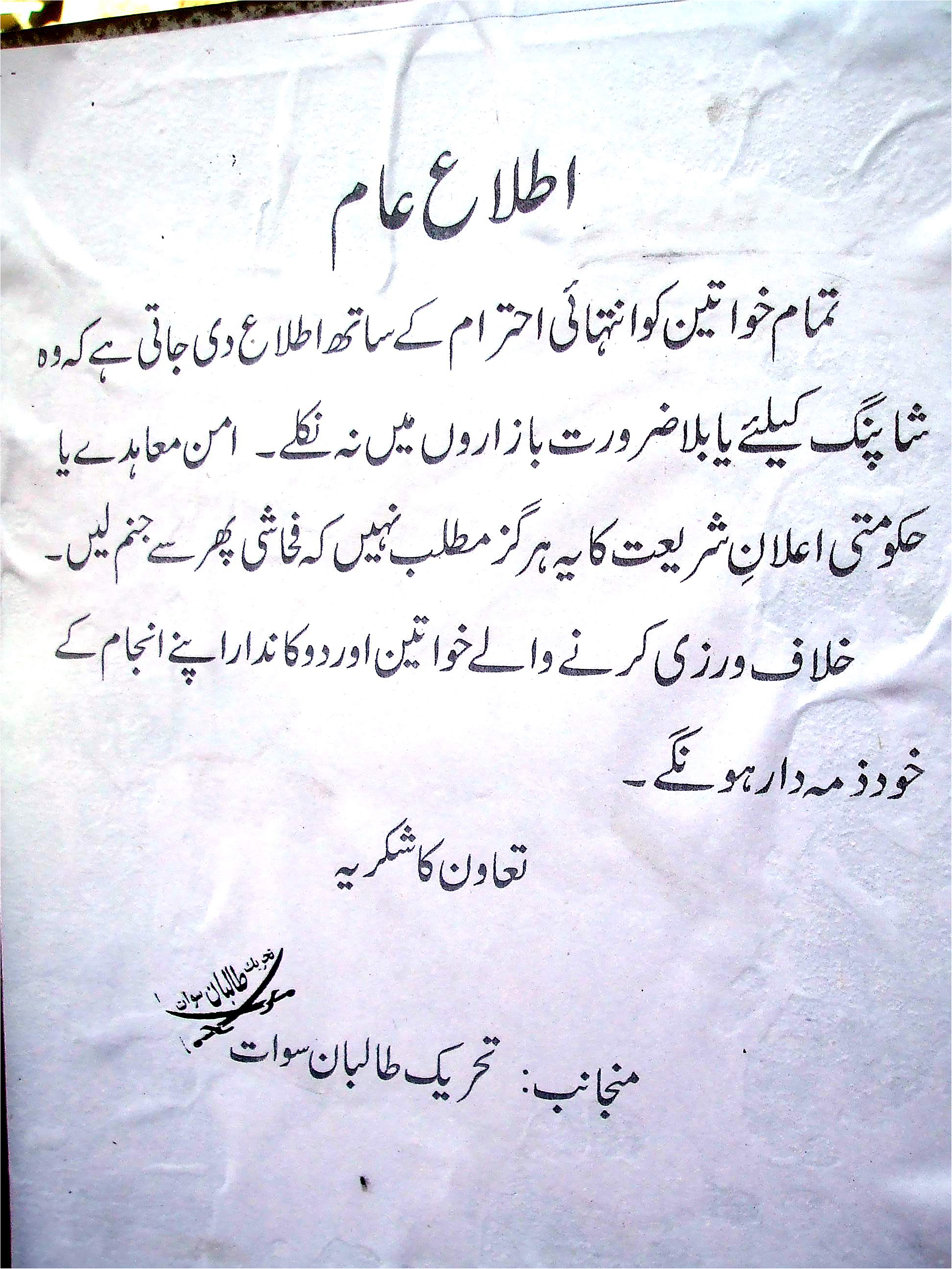
Taliban's warning letter.
‘I also felt very angry at that thinking that now people will stop you in the middle of the street and tell you what you should be waring and what you should not be doing’. (MW13, 8 April 2022)
In the context where men would feel insulted and furious if women of their family are discussed in the public, Taliban would announce (over FM radio) the names of women and warn them to replace their traditional chadars with Taliban-prescribed veil (MW16, 18 April 2022).
Posters in the women's markets animated the affective atmosphere of loss, weakness, and humiliation. Both men and women interviewees reported being lost due to displacement of familiar gender norms of interacting in public spaces such as marketplaces. In addition to this sense of loss, every individual encounter with these posters during the conflict entailed multiple affective reactions. A trader in the women's market of Matta summed it up: While looking at that [posters], I could feel nothing but fear, because Taliban would do whatever they would say. When I would look at it, I would also feel very angry, I wanted to rip that [poster] off, and step over the pieces of it with my feet. I was frustrated at the site of it, thinking that what is happening to us in our own markets. I also came thrice during the night to remove those notices, but as I was about to do it, I would get scared of the consequences. (MM7, 16 August 2021)
Military officers in-charge of regional operations were frustrated at the site of these posters, whereas president of some women's markets viewed them as guarantee to save their fellow traders and their markets from potential destruction. An account narrated by the president of one of the markets is quite telling in this regard. The president of a women's market reported receiving nine threatening letters from Taliban. Those letters stated (according to the interviewee) that market traders should not sell traditional style veils and should not provide services to women customers who are not wearing Taliban-prescribed veil and who are not accompanied by their male family members. He installed banners at all the entrances of the markets stating:
‘Allah-o-Akbar [god is great], all women are requested not to come to the market without Burqa and without their mahrams [male family members]’. A military colonel, in-charge of the region asked him with frustration, ‘are you [interviewee] their [women's] father, husband or what that you are preventing them from coming to the market?’. The interviewee reported that he had placed all the letters of Taliban at the colonel's desk and responded, I said, Read them! I have installed these banners to save my life and the life of my fellow traders, you were nowhere when they [Taliban] were issuing those letters, but you only see the banners. (Interview with president of women's market, May 4, 2016)
Disappeared and disfigured: The mannequin affect
Mannequins have been historically displayed in consumer markets to define the meaning of fashion as an everyday cultural practice, to present latest fashion and to sell clothes (Ganeva, 1918: 154–155). Mannequins with or without human-like face are an important element of visual merchandising, especially by clothing retailers that use them to display clothes and other accessories (Lindstrom et al., 2016). In consumers affective response to visual merchandising, Law et al. (2012) found that headless mannequins allow consumers to imagine themselves in display and garments. Lindstrom et al. (2016) find that in stores, purchase intentions are higher for merchandise displayed on mannequins with heads versus headless mannequins. Beyond the question of intention, material things make war visible, and make it move, further than often imagined or defined. In the women's markets of Swat, mannequins with or without head were not only the question of the ability of mannequins to affect consumer behaviours. The role of mannequins extends to the affectual ecology of vandalism (Khan and De Nardi, 2022) and gendered politics of the war on terror (Khan, 2023).
Taliban in Swat had forbidden the display of mannequins with faces, therefore, during Swat's conflict, mannequins with faces completely disappeared from some women's markets. Presidents of two women's markets reported receiving orders from Taliban to instruct traders within their respective markets to remove mannequins with facial features (MM7, 16 August 2021; MM14, 6 September 2021). A full-faced mannequin represents an image of an idol which is un-Islamic, in the Taliban imaginary. Following the recent takeover of Afghanistan by Taliban in 2021, videos of Taliban beheading mannequins with heads began to surface on social media (see Figure 2). The stage of Taliban breaking, beheading or destroying mannequins did not arrive during Swat's conflict as the traders were prompt to protect mannequins from Taliban's violence. As MM7 explained, Every shopkeeper removed them [mannequins] after their [Taliban's] warning. We would do whatever they asked us to do because we wanted to avoid their brutality against us as individual [infiradi] and against the market. Then again, we did not want them [Taliban] to break those mannequins because we had paid for those. However, removal of those [mannequins] from the market inhibited our ability to display the clothes in a way that we wanted to (MM7, 16 August 2021)
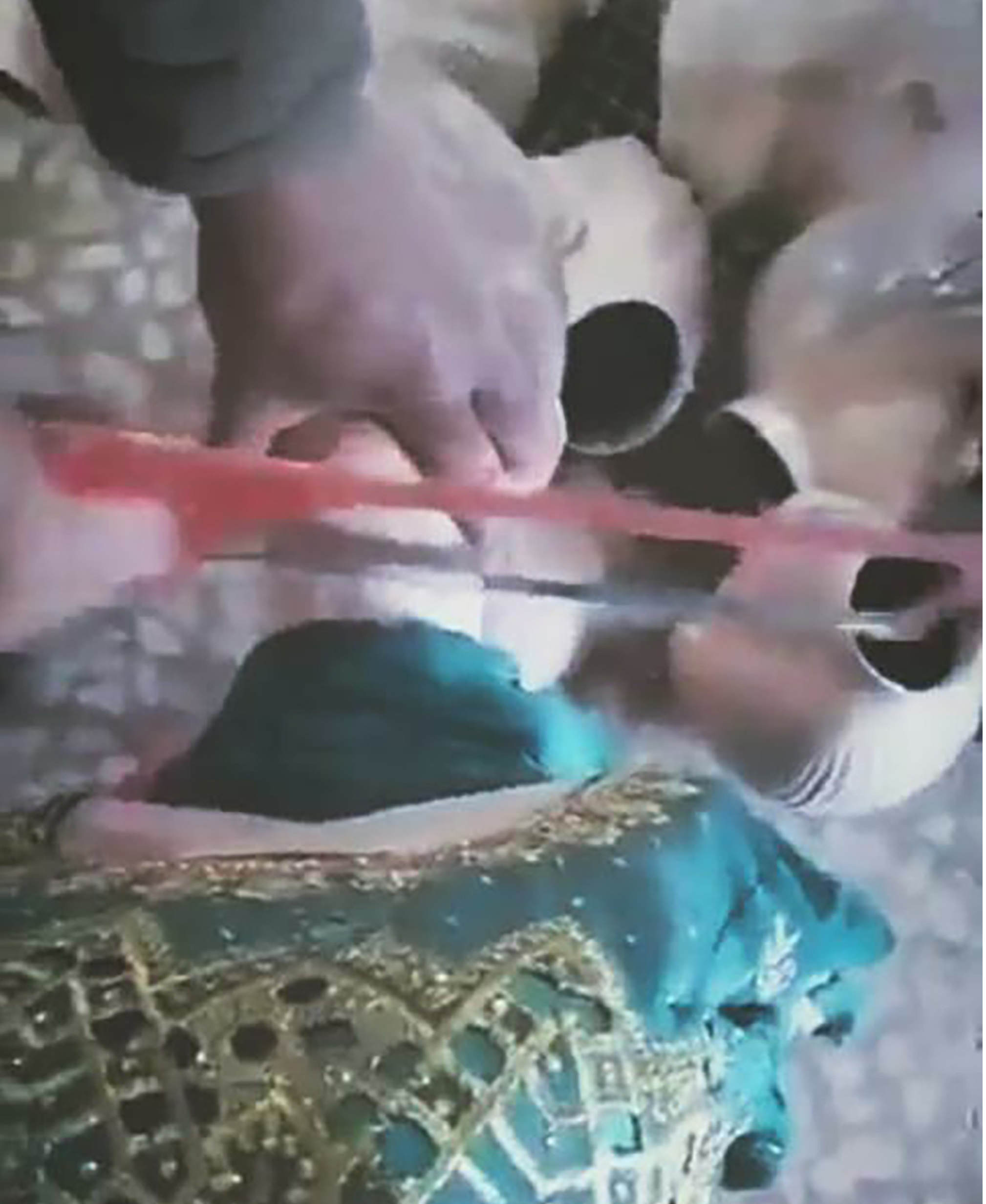
Taliban beheading mannequins.
They [mannequins] have everything except faces. It will be good if they have faces. I don’t know why they [designers] blur their faces. (MW17, 19 April 2022)
Women were not bothered about the face of a mannequin unless dress on display had headwear. When MW12 was asked why in Swat's markets mannequins do not have faces, or the face is covered? she replied
Faces covered? I do not remember seeing that, or I might not have paid attention to that. I have not observed the face because the garment for display is below the neck, therefore my focus is always there [on the body below the neck]. (MW15, 15 August 2021)
Conversely for old men, female mannequins represent shamelessness, and the increasing display causes anger and frustration. For street harassers, Mannequins in the women's markets serve as an enabler to indirectly comment upon a women's body, whereas some men are excited to touch body parts of mannequins. To some, these mannequins are not merely a marketing tool to attract consumer or influence their purchasing behaviours, they are a significant element of the affective atmosphere, waiting for affect and to be affected, a potentiality to be realised in encounters with human bodies.
During Swat's conflict, these mannequins were speaking to Taliban in two ways. First, they posed an ideological threat to their project of vandalism against statues that symbolise Buddhist and Hindu traditions (Khan and De Nardi, 2022). Second, a mannequin with proper facial features and uncovered head, standing in women's market, was openly defying Taliban's designs to restrict women's presence in the public space. These provocations were sufficient for Taliban to target these mannequins. Taliban did not order traders to totally remove mannequins from the markets, because if mannequins could defy Taliban, they could equally serve their purpose to spread terror in immediate term and reflect imagery of violence, suffering and pain in the long run. Headless mannequins and those with an egg-shape above their neck without any facial features are ubiquitous in Swati women's markets (see Figure 3). Although the return of mannequins with face in the women's markets is underway in the post-conflict Swat, many traders still do not use them because Those [mannequins] that have face with mouth, eyes, and other designs are considered sinful, as it is considered to be an idol. And those [traders] who hide its [dummmy's] face, they do so because there is a dupatta with the dress which is used to hide it's [dummi's] face. (MM11, 2 August 2021)
This orientation of traders towards mannequins is shaped by the memory of conflict in Swat, because traders were using both headless and full-faced mannequins prior to the conflict (MW14, 6 September 2021). In the pre-conflict Swat, availability of space in the business premises was the major consideration underlying trader's decision to use headless or full-face mannequin.
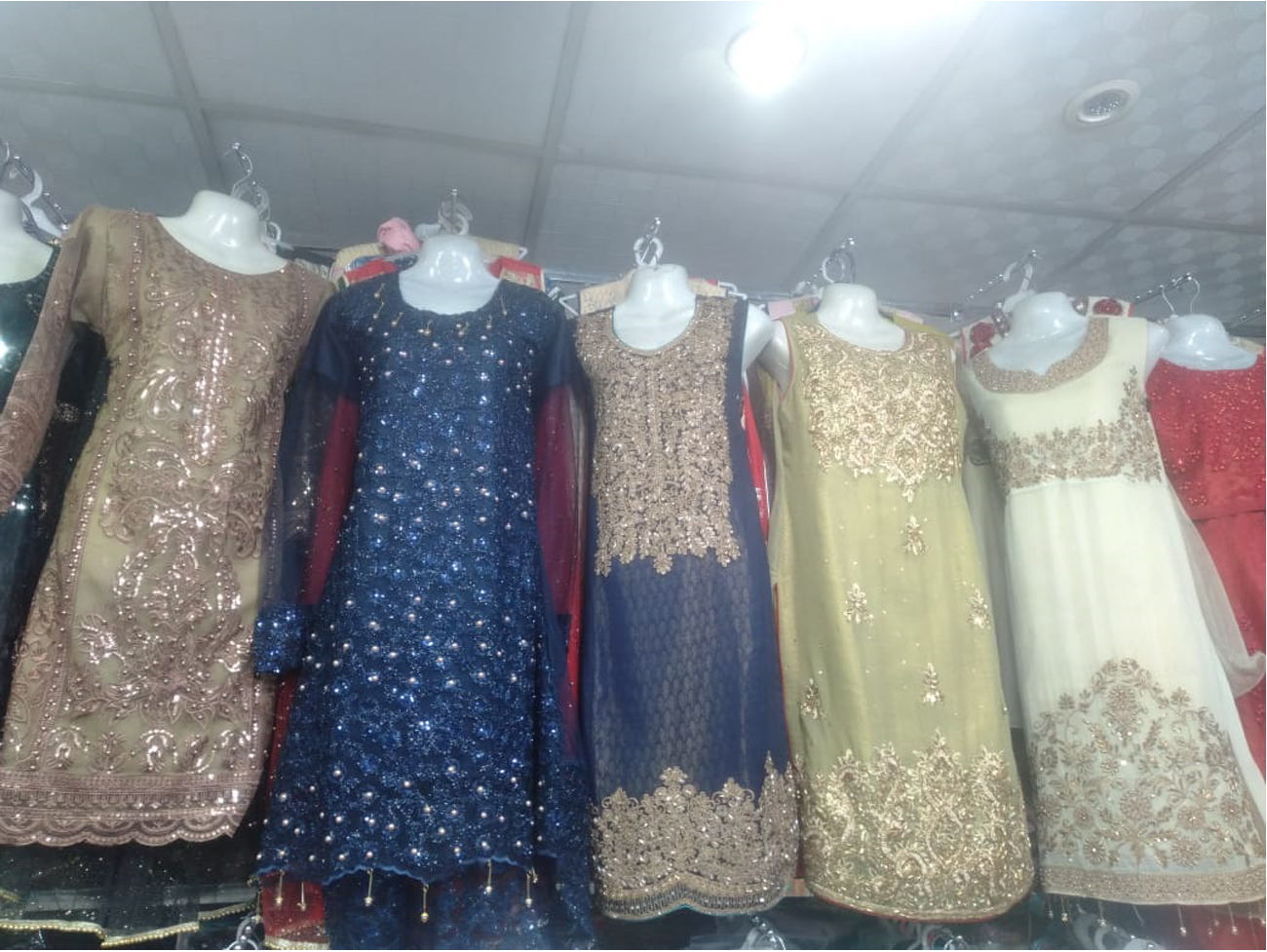
Headless mannequins in Swat’s markets.
Bras: From absence to presence
Unlike posters which disappeared once the conflict was over, and mannequins whose faceless presence trigger memories of conflict, some objects re-appeared with ever greater presence to symbolise resistance to gender repression by the Taliban. These ‘sensitive objects’ (as labelled by my women interviewees) are intimately tied to women's body. These include undergarments such as bras and underwear, sanitary pads, hair removal and breast-development creams. All these objects are increasingly on display in the Swati markets generating affects, and mediating transmission of affects. In this section, I will zero in on what I call the silent disappearance and defiant reappearance of bras from the public space to demonstrate the role of objects in the affective atmospheres of the post-conflict women's markets in Swat. Increasing display of bras in the post-conflict women's markets in Swat causes discomfort, embarrassment, shame and stress for women; therefore, most of my women interviewees disliked open display of these objects in the women's markets where men were also present as traders and customers. Embarrassment, stress, suffocation, helplessness, discomfort, uncertainty, annoyance and care are the dominant affective encounters reported by my men and women interviewees in the everyday events of purchasing (in case of women) and selling (in case of men) bras. Women always carry bras in an opaque bag from the market, hide them from men and children within the private sphere of home to the extent that when a woman washes her bra for reuse, she hides it under other clothes for drying it up.
If bra is so sensitive and a gendered thing across the public and private spaces, what happened to it during Swat's conflict and why is it so openly displayed in women's markets of the post-conflict Swat? One may be tempted to speculate, following Kopytoff (1986), that the biography of object matters in that when its possession changes hands from trader (as a commodity) to a customer (as a personally owned thing for private use), the sensitivity attached to it increases. I do not reject this trajectory; however, it is not enough of an explanation, because if it was so, I would not have found cases of men throwing bras behind the counter at the arrival of women into the shop. The affective assemblage of Swati women's market ‘is always developed in unpredictable ways around actions and events’ (Bennett, 2004: 445), ‘in a kind of a chaotic network of habitual and non-habitual connections, always in flux, always reassembling in different ways’ (Fox and Alldred, 2021: 4). Let us contextualise bras within the affective atmosphere of women's markets and the cultural gendered dynamics before looking at their silent disappearance during conflict and powerful re-appearance in the post-conflict public space of women's markets in Swat.
Traditionally, local markets in Swat had inadequate variety of bras and mobility of women to the market was limited. Therefore, either husbands would purchase bras for their wives or women would mostly purchase those in women-owned, home-based businesses, from non-local markets, or only from one trusted shopkeeper in the local women's market. In the women's markets, bras (and other sensitive objects) were not on display, they were only available on demand. Like women, men would also purchase these things from a single and trusted shopkeeper. Both men and women whether young or old reported feeling ‘shy’ and ‘uncomfortable’ to ask even the most trusted shopkeepers. At times, customers wanting to purchase these things had to wait until the shopkeeper remained the only human presence in the store. In some instances, a woman would specifically visit a store to purchase bra, but she would wait for another woman to initiate her purchase so that the former could also get a chance. Most of those who would not find someone to initiate this conversation would return home, disappointed and stressed, without making the purchase. The practice of displaying bras in the women's markets began in the pre-conflict Swat. Due to the intense and stressful encounters around bras, and inability of most of the customers to ask for them despite need, traders decided to display them to facilitate customers.
None of the 18 traders interviewed reported receiving a written or verbal order, warning or threat from Taliban regarding the display of bras, nor any of those heard any such thing. Ten of the traders currently displayed bras in their shops and the remainder were not related to this product line. Women also did not report hearing anything on Taliban's stance on the display of bra, not even a rumour. Traders removed sensitive objects including bras from the display proactively. However, all of my interviewees (both men and women) agree that the practice of placing bras on the display has increased exponentially in the post-conflict women's market of Swat. Ubiquitous presence of bras on the shop displays does not reflect change in traditional patterns, such as purchasing from trusted shopkeepers only, feeling uncomfortable in the presence of male customers (in the case of women) and female customers (in the case of men). Women still feel more comfortable while purchasing bras from non-local markets (if one can afford to go). Some women still rely on others to purchase, or at least initiate the purchase and so forth. Men purchasing bras for their wives do not purchase in the presence of other men, go to one trusted shopkeeper for this purpose and often make such transactions discreetly.
Encounters between men and women around purchasing bras not only highlight post-conflict diversification of Swati women's markets but it also demonstrate that change in the capacity of objects to cause certain affects depends on the affective assemblage surrounding the object. Affective assemblage in the case of women's markets entail both inter-object (Ash, 2013) and human-object connections (Bennett, 2010) in a relational frame (Fox and Alldred, 2021).
Post-Taliban Swat has witnessed exponential material development. One aspect of this development is the establishment of modern, branded retail shops. A conglomerate of these shops in a single locality is locally called city-centre. These city-centres have a relaxed atmosphere for shopping, explicit price tags and detailed features inscribed on most of the products. These price tags and detailed features save women from the stress of sharing their bra size with a male shopkeeper and haggling over the price which might turn into uncomfortable and embarrassing moments, some of the usual affective encounters that were reported in the traditional women's markets. For instance: Once when I was a teenage, I went with my grandmom to the undergarments shop. She was bargaining with shopkeeper on the price and I was feeling so shy and embarrassed. I wanted to just finish this business [purchasing bra] and go home. (MW16, 18 April 2022) There [in the city centre] is a shop where they have employed a female sales girl, so we have purchased from there for the first time. Unlike cheena market where you have to ask a male shopkeeper to give you a bra, we felt very comfortable talking to that salesgirl about it [bra]. (MW13, 8 April 2022)
The powerful re-appearance of bras in the women's markets of Post-Taliban Swat demonstrate their generativity of affect. Their presence and open display enables young street-harassers to comment upon women, enable old men to call shopkeepers shameless (MM7, 27 August 2021), force shopkeepers to make the customers experience more comfortable (MM8, 29 August 2021), allow women to decide what kind, from where and when to purchase bras etc (MW13, 8 April 2022; MW11, 2 August 2021). More importantly, this thing-power of bras to challenge the normative gender restrictions offers an example of dynamism within Swati Society. It also serves as a critique of post-conflict neoliberalist interventions designed within essentialist frames. For instance, women's economic empowerment was a major post-conflict rehabilitation and development agenda of the international donors. Various donor-funded projects contributed to increased domestic trading activities. Worth noting here is ‘respecting the veil’, a USAID-funded project for economic empowerment of home-bound women. Resulting in the further entrenchment of informal sector under the banner of religious and cultural sensitivity, the project's design further re-enforced patriarchal division between the domestic space and the marketplace (Khan, 2018). Marketplaces, in general, and women's markets in particular, were overlooked in these project designs. On the one hand, such project designs reflected policies ignorant of real entrepreneurial problems and existing potential linkages between the domestic and the public spheres (Khan, 2020). On the other hand, the projects also powerfully demonstrate that neither government nor development and right-based organisations were able to address problems in everyday life of Swati women in the public spaces.
Curtains: From presence to absence
In this section, I demonstrate that absence of objects also generate affects that are not necessarily unpleasant. To this end, I explore how curtains as social agents contributed to the affective atmosphere of women's markets in Swat. Historically, Swati women do not want to be spotted in the market by their male family members, or any man known to their family members, mainly due to the restrictions upon women's mobility in the public spaces. The fear of being seen by men would often result in an uncomfortable shopping experience. To prevent women customers from such experiences, traders installed curtains at the entrances of their shops. Three-four decades ago, these curtains did improve women's shopping experiences (Khan, 2023). Nevertheless, these curtains allowed the development of intimate relations between some traders and their customers. The stories of such relations contributed to the image of women's markets as notorious places and helped the narrative that markets are visited by corrupt and loose women. Within this context, curtains began to generate negative affects. They became the cause of discomfort for most women, confusion for a trader whether the customer does or does not want curtains to be drawn at her arrival to prevent outsiders from looking into the shop at women, and inquisitiveness for the outsiders whether the women wants to be hidden or the trader has blocked the view with curtains for doing something else. Curtains are largely but not entirely absent in the present-day Swati women's markets.
During Swat's conflict, Taliban announced that traders will not deal with women customers behind the curtains and curtains should be removed from all the shops in the women's markets (MM1, 1 December 2020; MM14, 6 September 2021). This was at least reported by interviewees in Cheena (Mingora) and Hayat (Matta) markets. In these markets, men and women feel the absence of curtains differently. For women, the absence of curtains is ‘liberating’ (MW13, 8 April 2022) and ‘feels good’ (MW17, 19 April 2022) and makes the shopping experience more ‘comfortable’ (MW13, 8 April 2022). Explaining how the absence of curtains in present-day women's markets of Swat feels, a woman interviewee from Mingora stated: I feel like a free soul and not bound in some societal obligations. I mean market is a public place. So dealing with shopkeepers should be open and not behind the curtains. (MW16, 18 April 2022). For MW17, It [absence of curtains] feels good. While in the market it is good that people passing by can see us. I like to do shopping openly. (MW17, 19 April 2022) If you want to uproot sexual indecency, you need to remove those curtains. When we remove those curtains from the market, we had cut the roots of that sexual indecency. (MM14, 6 September 2021)
Capacities of objects to affect and be affected are not inherent, ‘but emerge relationally when one body or thing assembles with other bodies or things or abstractions – which Deleuze calls relations’ (Deleuze, 1988: 126, cited in Fox and Alldred, 2021). Women desire the curtains in the markets when they are purchasing ‘sensitive objects’, but also if the sales person is a woman. As MW17 elucidates, ‘I wish if there was a shop with curtains and female shopkeepers for those private objects for women’ (MW17, 19 April 2022). Similarly, unlike the past, traders are hesitant to close the shop's entrance with curtains if serving women only. This attitudinal shift of traders away from curtains is attributed to the fear of earning bad reputation by MM7. As he stated: Previously, when a customer [woman] would arrive, we [traders] would draw the curtain from one end of the entrance [of shop] to the other, even if she [woman customer] was purchasing a single shampoo, we would close the curtains. But now, the situation is such that we are [traders] also hesitant to close the curtains because then people gossip about us. (MW7, 27 August 2021)
In this context, absence has materiality and – has effects on – the spaces people inhabit and their daily practices and experiences. Like present things, absences also have their distinctive affordances and material consequences (Meyer, 2012).
Conclusion
Viewing women's markets as an assemblage of bodies, things and spaces during and after Swat's conflict highlights the agentic capacities of inanimate objects in the transmission of affects. Affect as an ‘ill-defined indefinite something’ is related to people, places, objects and events (Frykman and Frykman, 2016: 10). Within this assemblage, thing-power (or the power of inanimate objects) ‘is immanent in collectives that include humans, the beings best able to recount the experience of the force of things’ (Bennett, 2004: 365). This vibrant materiality running alongside and inside humans allows us to see ‘how analyses of political events might change if we gave the force of things more due’ (Bennett, 2010: viii). Undoubtedly, objects are or can be actively and physically manipulated to generate affect (Piredda, 2020: 553), just as Taliban did by imposing veil, installing posters, defacing mannequins and ordering removal of curtains from shops. However, objects have the generative capacity to cause affect even without being actively acted upon by a human (Frykman and Frykman, 2016: 11) as traders proactively removed ‘sensitive’ objects from display due to their capacity of catching Taliban's attention.
Tracing the agentic capacities of objects within the affective atmosphere of women's markets during and after Swat's conflict has demonstrated the vitality of things in the politics of conflict and post-conflict development. To replace the powerful affective presence of posters and banners in the women's markets, Government (military) painted Pakistani flags on the outer side of the doors of shops (see Figure 4). This manipulated symbolism on women's markets in Swat indicates that things allow humans to politically modify affects and affective atmospheres. However, implementing post-war material changes through institutionalised measures demands understanding both immediate- and long-term emotions that objects can generate. Things have the capacity to generate unintended emotions which may run counter to human designs. This capacity of objects is one starting point to explore the limits of human agency in controlling objects. Nevertheless, as evident in our findings, objects are neither passive or stable entities nor are they intentional subjects (Bennett, 2010: 20). Their agency is congregational and distributed, each object is latent with potentialities that emerge relationally in encounters with things and bodies in space and time. For instance, Taliban and government inscriptions on doors and walls of women's markets and in Swat more generally generated feelings of ‘being controlled’, invaded and being deprived of local heritage, and hence distrust in the intensions of government and military. This is why, in human encounters with objects, orientations matter.
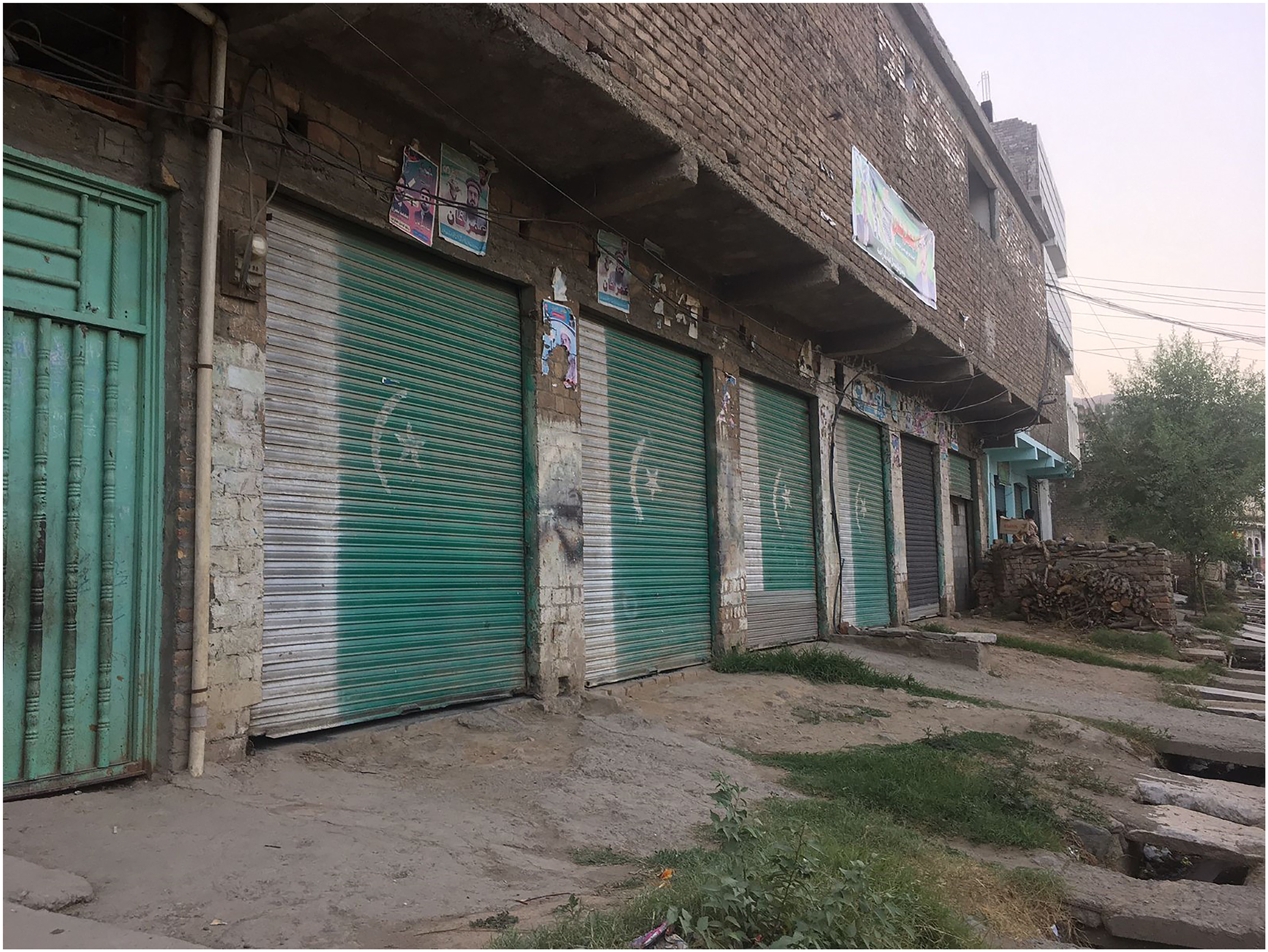
A series of shop shutters painted in the flag in Swat.
The absence (curtains) and presence (bras) of objects, their disappearance and re-appearance from the public space indicates that material world around us, affect the kind of thoughts we can and cannot think. Meaningful attention to materiality requires grasping how the presence and absence of things afford affect, alternative referential systems and backgrounds of shared meanings. Where the presence of certain kinds of materiality occasions certain outcomes, the absence of distinct kinds of materiality stifles certain possibilities. Post-conflict interventions aimed at material transformation of spaces and places are often counterproductive due to inadequate regard for entanglement of the material in the visceral, emotional, social and ideological visions and divisions. Materiality of affective economy of the war on terror requires a deeper engagement to enhance our understanding of the psychological (trauma and healing), social, political and economic consequences of war both in the immediate and long run.
Footnotes
Acknowledgements
The author thanks Professor Daanish Mustafa and members of the contested development research group at the Department of Geography, King's College London for commenting on the earlier version of this draft. The author also thank Jonathan Harris for proof-reading an earlier version of this draft, and two anonymous reviewers of the journal of material culture, especially reviewer one, whose extensive comments were very helpful. All errors remain mine.
Declaration of conflicting interests
The author declared no potential conflicts of interest with respect to the research, authorship, and/or publication of this article.
Funding
The author disclosed receipt of the following financial support for the research, authorship, and/or publication of this article: This work was supported by the British Academy, (grant number HDV190288).

Author biography
Muhammad Salman Khan is a lecturer in human geography at the Department of Geography in the School of Social Science and Public policy at King's College London. Salman is interested in local political economy with special interest in informal economy, marketplaces, entrepreneurship, institutional analysis, local governance and trust, borderland markets and cultural production (with a special interest in affect theory). Salman is currently working on the affectual geography of women's markets in the northwest of Pakistan along with a collaborative learning project aimed at highlighting the significance of local voices in Swat to inform academics and international donors on understanding heritage preservation and the causes of heritage destruction.