



Abstract
In the 1960s, tourism in the Soviet Union underwent radical changes. While previously the focus had been on showcasing the rapid modernization of the empire, this new type of tourism focused on introducing foreigners to the regional vernacular culture in the Soviet Union. As the number of tourists increased, the need for wider mass production of souvenirs emerged. This research focuses on the identity of souvenirs produced in Baltic states as a case study for identifying the existence and nature of regionalism within the Soviet system. This study found that within Baltic souvenir production, two separate types of identities manifested. Firstly, the use of national or vernacular symbols was allowed and even promoted throughout the Soviet Union. A famous slogan of the era was ‘Socialist in content, national in form’, which suggested that national form was suitable for conveying socialist ideals. These products were usually made of local materials and employed traditional national ornament. However, this research identified a secondary identity within the souvenirs manufactured in the Baltic countries, which was based on a shared ‘European past’. The symbol often chosen to convey it was the pre-Soviet Old Town, which was in all three states based on Western and Central European architectural traditions. This research suggests that this European identity validated through the use of Old Town as a recurring motif on souvenirs, distinguished Baltic states from the other regions of the Soviet Union. While most souvenirs manufactured in the Soviet Union emphasized the image of locals as the exotic ‘Other’, Baltic souvenirs inspired by Old Town conveyed the idea of familiarity to European tourists.
“Мой адрес -не дом и не улица, мой адрес - Советский Союз” [My address is not a house or a street, my address is the Soviet Union]
In reality, the identities manifested in the diverse regions within the vast empire known as the Soviet Union were not as simplified as sung by the Russian band Samotsvety [Самоцветы] since 1973. The structure of this vast Communist bloc was significantly more complex, involving several local and regional identities that local and central government agencies recognized or suppressed to various degrees – and tried to design and manipulate within the wider framework of Cold War politics. This research focuses on the production and manipulation of these identities through the mass production of souvenirs, choosing Baltic states as a region culturally and historically situated between the East and the West. The study argues that the souvenirs produced in the Baltic states during the Soviet occupation manifested a specific type of identity, encouraged both by local and Soviet powers and actors. It consisted of two sides: one focusing on ethnography as the perceived local identity independent of previous ‘colonialisms’ and the other related to the perceived ‘European’ identity of the region.
Methodology
Although this article studies souvenirs and identity in a historical context, the effects of the processes researched in this project are lasting, influencing contemporary politics, memory, and identities (Kattago, 2010; Lehmann, 2015). This research provides an alternative view to the complex issues of national identity in Soviet Western borderlands, using the production of souvenirs as a case study of the relationship between local and central powers and identities. The structures in which souvenir design and production operated were controlled by the central Soviet power; however, most designers who shaped the physical appearance of souvenirs were local. While in a capitalist country the production of souvenirs would be shaped by both production and consumption, the latter had little influence in a totalitarian planned economy. Thus, this essay only considers the production of souvenirs.
All three Baltic states are here considered as a common bloc, in which there were political and cultural variations (Dreifelds, 1996: 47–48), but which had significant cultural and historical similarities. Most importantly, Pribaltika, as Estonia, Latvia, and Lithuania were often commonly referred to in Soviet media, had close historical and cultural links to Northern and Central Europe and had in the pre-Soviet era experienced a brief period of statehood, unlike the rest of the Soviet Union. Each country had its own local language that was distinctly different from Russian, the official working language of the all-union institutions, and archival materials demonstrate that the majority of debates on a local level would have taken place in the local language. However, there were similarities between the types of souvenirs produced in Baltic states, thus supporting the idea of a shared, regionally developed, identity. Regardless of a conscious decision to focus on all three states equally, there may be variations in which the types of sources were identified in every state. As a native Estonian, who was working in Lithuania during this study and conducted short research trips to Latvia, my archival research concentrated on Estonia and Lithuania, whereas object and media analysis covered the region equally.
The word for ‘souvenir’ in all three languages, as well as in Russian, is similar to the international word: сувенир in Russian, suveniir in Estonian, suvenyras in Lithuanian, and suvenīrs in Latvian. However, the concept of souvenir in the Soviet Union differed significantly from its counterpart in a capitalist context. This research has chosen to rely on the local terminology and to focus on objects which would have been identified as souvenirs at the time of production. David Hume suggests that ‘It is only when the artefact is consumed by the tourist that it functions as a souvenir’ (2013: 6). A number of objects manufactured in Baltic states might have functioned as souvenirs, but also held a practical function and thus were bought not only by tourists, but also by local inhabitants. This fact was even recognized by the authorities in charge of souvenirs: Soviet Lithuanian Art Fund decided on September 2, 1960, that certain objects may at times act as souvenirs and elsewhere as simple household products (Lithuanian Archives of Literature and Art 350.1.61, 1960). In Hume's research, souvenirs are divided into three categories: Sampled or personal and unmediated, Crafted or authored, and Representative or mass-produced (2013: 123). This research has chosen to focus on the two latter categories, Crafted and Representative, as the types over which designers and state institutions had control.
For analyzing the structures of power in the Soviet system, this research has adopted Carole L. Crumley's definition of heterarchy, whereby ‘sources of power are counterpoised and linked to values, which are fluid and respond to changing situations’ (2012: 43). ‘Soviet power’ should not be mistakenly considered as a homogeneous omnipotent force nor should it be given any binary evaluations on a ‘good or bad’ scale. According to Alexei Yurchak (2003: 485): ‘To avoid positing binary divisions we may instead question how Soviet people interpreted the lived ideology and reality of socialism.’ Among the majority of people, this interpretation did not necessarily entail either complete adherence to Communist ideals or a fighting dissidence, but rather survival in this existing regime. This understanding is applied to all actors in the system: not only were designers, factory workers, and consumers in constant flux between different and often seemingly contradictory paradigms, but local politicians and party members were not simply representatives of the Soviet power, but humans with different understandings and motives. The same intermediate nature is inherent to Soviet, in particular to ‘peripheral’ identities and design: objects may simultaneously be adherent to Communist ideology, dissident and apolitical, depending on their interpretation, and thus there exists ‘a multitude of truths’ in the analysis of Soviet and post-Soviet societies (Kattago, 2010: 390). Souvenirs as objects that convey a certain national identity could – relying on Antonsich's theories of nationalism – be ‘consumed, articulated, and mobilized differently by the different subjects involved’ (Antonsich, 2015).
This research combines research methods from archaeology, ethnology, history, and design history. According to Cynthia Robin: ‘The material remains of daily life identifiable in the archaeological record provide a means to both complement and challenge the macro-narratives of powerful people that tend to consume documentary sources’ (Robin, 2013: 46). This research was faced with a methodological issue: how to ensure that the collected data would best reflect the reality of Baltic souvenir production in the Soviet period? Although several Baltic museums have significant collections of both mass-produced and crafted souvenirs, any collection is still shaped by curatorial bias and cannot show the entirety of material culture. Product and exhibition catalogues, magazines, newspapers, and other media sources were valuable sources for accessing and analyzing a wider range of objects. An element of this study was the empirical observation, conducted in different ‘flea markets’ and other establishments specialized in selling preowned goods. While a potential method for analyzing the data collected during this stage of research might have been a quantitative analysis of preserved objects, this method would have been too easily flawed, as an objective analysis would have required cross-referencing objects against their numbers of production. Thus, this project opted for a ‘selective rather than encyclopedic’ data set (Robb, 2007: 23). This research has deliberately avoided the use of oral history or interviewing. Because of the number of political and social changes that have occurred in the Baltic region since the period of study, as well as the evolution of the general attitudes towards national, regional, and local identity as a concept, interviews would have informed us rather of present attitudes, not the past ones(Thomson, 1998: 585).
Emergence of souvenir production in the Soviet Union
This article focuses on the late socialist period in the Soviet Union. While there were already certain objects that were manufactured to serve as souvenirs during Stalinism and Thaw, the wider production of souvenirs began only in the mid-1960s. As this essay focuses on mass-produced objects, it is necessary to note that Soviet industrial design was at that stage just emerging. Most Soviet factories had started employing industrial designers only starting from the late 1950s and 1960s (Karpova, 2013), whereas earlier, the majority of souvenirs in the Baltic states had been produced by artists or artisans in cooperatives managed by Artists’ Unions: in Estonia, the relevant organization was called Ars, in Lithuania Dailė, and in Latvia Maksla. These organizations will be discussed in the next subchapter.
Anne E. Gorsuch (2003: 761) traces the beginning of Soviet mass tourism to the 1960s. As travelling became increasingly common, there emerged a demand for mass-produced and available souvenirs. Diane P. Koenker (2013) has found that between 1970 and 1975, Soviet Union quadrupled its funding to leisure travel facilities. According to Koenker (2013: 2): ‘The term “bourgeoisie” retained its stigma of class-war opprobrium, but the late Soviet vacationers and tourists were bourgeois in the descriptive sense of the term, distinguished by an urban culture of prosperity without excess, modestly consumerist, cultured and knowledge-seeking, and expecting comfort, service, and small pleasures as entitlements.’ Souvenir production became one possibility expected by these modestly consumerist Soviet citizens, now able to travel.
As a Western region with well-preserved historical city centres, the Baltic states were desired destinations for both Soviet and foreign tourists. As found by Koenker (2013), just one month after the annexation of the Baltic republics in August 1940, Soviet print media referred to the new possibilities for tourism in Latvia. The region was also slowly opening to some Western visitors, a process that culminated in the 1960s. In 1965, the seaway between Helsinki and Tallinn reopened. According to Toivo U. Raun (2002: 189), the number of tourists from outside the Socialist Bloc in Estonia increased tenfold in the following decade: in 1965, there were 9400, but in 1977, already 94,100 tourists were there in a year. At the same time, as described by Ieva Zake (2018) in her research on tourism in Latvia, the experience offered to foreign tourists changed. While in the 1950s tourists could mainly visit symbols of socialist modernity such as collective farms, selected factories, and meet ‘politically prepared individuals’, from mid-1960s came a shift towards ‘ethnic tourism’, which focused on presenting Latvian local culture and ‘authentic’ experiences to visitors. Similar tendencies could be identified in Estonia and Lithuania.
Here, it is important to emphasise that tourism was used for ideological purposes around the world, not only in the Soviet Union. Researchers like Marguerite Shaffer (2001) and Christopher Endy (2004) have stressed that tourism had an important role in the nation-building of capitalist countries as well, both before and during Cold War. The success of tourism as an ideological strategy has been questioned in contemporary research. Rosenbaum (2015: 170) has noted that Soviet tourism as a phenomenon failed in levelling class differences, the raison d’être of a socialist state, and it was ‘more successful in constructing new identities that minimised regional differences within the communist state.’ Here, this research agrees with Rosenbaum and emphasises the role of souvenirs as material representations of these new identities.
With the arrival of Western tourists emerged a need to offer them familiar experiences. Shawn Salmon (2006) has studied the trade of Soviet Russian souvenirs in connection to the Soviet hotel management organization Inturist, stressing that souvenirs and material goods were recognized by the authorities of Soviet Russia as an integral element of tourism for Western visitors. Instructions given by the Ministry of Trade stated that the selection of souvenirs available should include both popular inexpensive mass-produced items and luxury objects (Salmon, 2006: 193). The effect of modernization on tourism was not unique to the Soviet Union. As observed by Dori Griffin (2018: 354), the tourism agencies of Japan had already in the interwar era invented a visual language that stressed the cultural differences, but at the same time through the adoption of European Modernism aided the Western audiences to ‘feel that they could have comfortable, familiar experiences in Japan, not only exotic ones.’ As visible from Salmon's findings, the souvenir trade can be seen as resulting from the influence of Western modernism.
Soviet attitudes towards Western souvenirs were diverse. Articles praising travel as an activity, albeit with a clear propagandistic aim to emphasize the modernization of daily life, sometimes included foreign souvenirs as a point of interest. An article written by Kazimiera Alexandravičienė, Head of Foreign Tourism Department of Lithuania, published in Lithuanian magazine Švyturis in 1970, began: ‘How do you like these souvenirs? Beautiful, right? They come to the Foreign Trade Section of the Republican Trade Union Council from many parts of the world - India, France, Poland, Egypt.’ The illustration shows a variety of different souvenirs, ranging from small Eiffel towers to dolls in Bulgarian costumes (Figure 1).
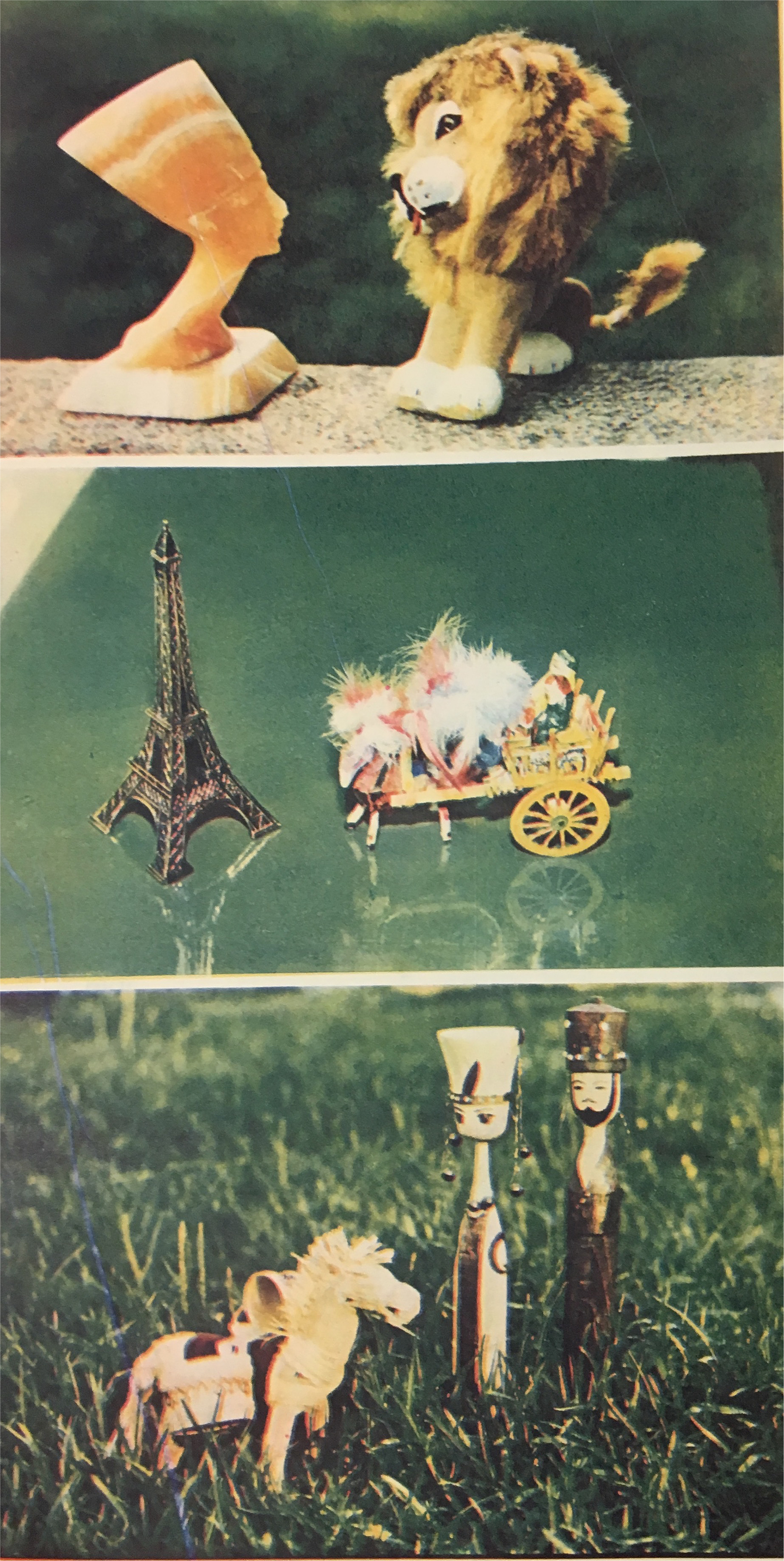
Souvenirs held in the collections of the Foreign Tourism Department of Lithuania. Souvenirs from United Kingdom, France, Bulgaria, and other countries. Švyturis 1970.
Elsewhere, ‘souvenirisation’ is criticized as a byproduct of capitalism. In an article published in Dekorativnoe Iskusstvo the same year, in 1970, art critic Vladimir Aronov focuses on the Eiffel tower, claiming that the ‘symbol of new industrial form’ was later transformed to a phenomenon of mass culture that existed for tourists (Dekorativnoe Iskusstvo, 1970(10)). Although originally published in a Russian journal, the article was also referred to by Baltic art critics, for example by art historian Leo Gens, in a Soviet Estonian newspaper Sirp ja Vasar [Hammer and Sickle] on February 7, 1975. Interestingly, Gens even criticises certain local souvenirs, suggesting among other ideas that souvenirs based on folk art ‘lack the unique charm of authentic national handicraft.’ Nevertheless, in spite of these criticisms, souvenir production in Baltic states, including designs based on folk art, only increased over the course of the late socialist era.
Production of Baltic souvenirs
Most Baltic souvenirs were produced either in Art Products Factories or in ‘cooperatives of craftspeople’ with numerous branch offices. While the objects were often hand-made, mimicking traditional production techniques, their designs were drawn by professionals for mass production. The organisation of design in these cooperatives shows the variations between similar institutions of different states. For example, Estonian Uku hired their own designers, whereas according to an article in Latvian newspaper Stars in 1966, Daiļradē in Latvia received its designs from the Special Constructor Office of Light Ministry in Riga. Lithuanian cooperative Dailė was also tasked with providing designs for souvenirs to factories that did not employ designers (Lithuanian Archives of Literature and Art 350.1.61, 1960). Each state had several cooperatives, which employed a large number of people. For example, according to a promotional pamphlet printed in 1975, Estonian Kodu [Home] employed over 500 people that year. The cooperative, which manufactured not only souvenirs, but also ‘contemporary metal objects, jewellery for women, knitted and leather objects, wooden objects and artificial flowers’, was intended to reduce unemployment, as it ‘mainly employed pensioners, invalids, and housewives.’
These ‘cooperatives’ were not unique to the Soviet Union, as there were already similar institutions in Central European socialist countries. Evidence suggests that the Baltic organisations were influenced by the Central European model, as there are articles from the early period of ‘cooperatives’ that praise the latter as positive examples of modernizing ethnographic traditions in the interest of producing souvenirs. An article in the Estonian journal Kohalik Tööstus: infoseeria [Local Industry: Informational series] (Uuemõis, 1966: 24) mentioned Zepelia, a network of Polish cooperatives for producing ethnography-inspired craft objects, as well as noting that Czechoslovakia, Hungary, and Romania also ‘propagate and develop folk art.’ However, objects classified as ‘souvenirs’ were produced in numerous factories: as souvenir production became a vital issue of local light industries, the range of manufacturers increased and often involved manufacturers whose usual field of activity was very different. For example, in 1969, Latvian newspaper Padomju Druva wrote how kolkhoz Adaži was producing ornate candlesticks, decorative plates, miniature beer kegs, and traditional boxes as souvenirs.
One of the reasons for this diversity was the competitions organised in individual states. Certain competitions were intended simply to increase the diversity of souvenirs available (Lithuanian Archives of Literature and Art 146.1.418, 1960) and others commemorated specific events or occasions, for example, the Moscow Olympic Games in 1980 (Estonian National Archives ERA.R-1906.1.746, 1975, 8). Interestingly, one rarely encounters the typical Soviet symbols, sickle, hammer, and star; even the souvenirs manufactured for socialist holidays often incorporate clever tricks for avoiding them. A good example is Figure 2, which depicts Estonian souvenirs manufactured for Lenin's hundredth anniversary in 1970. The dolls were dressed as pioneers, holding signs with Lenin's famous quote ‘Learn, learn, learn’. On other images, metalwork cleverly utilizes ‘100’ and Lenin's birth date along with the year, 1970. On a vase, Lenin's name has been stylized into an almost abstractionist pattern. Thus, in visual aspects of regional identity, Soviet symbols did not hold a particularly important position and were mainly limited to objects designed for special occasions. Instead, this research suggests that the two most important visual aspects of Baltic identity, as manifested in souvenirs, are vernacular traditions and the perceived ‘European’ history through images of buildings following European architectural traditions (Figure 3).
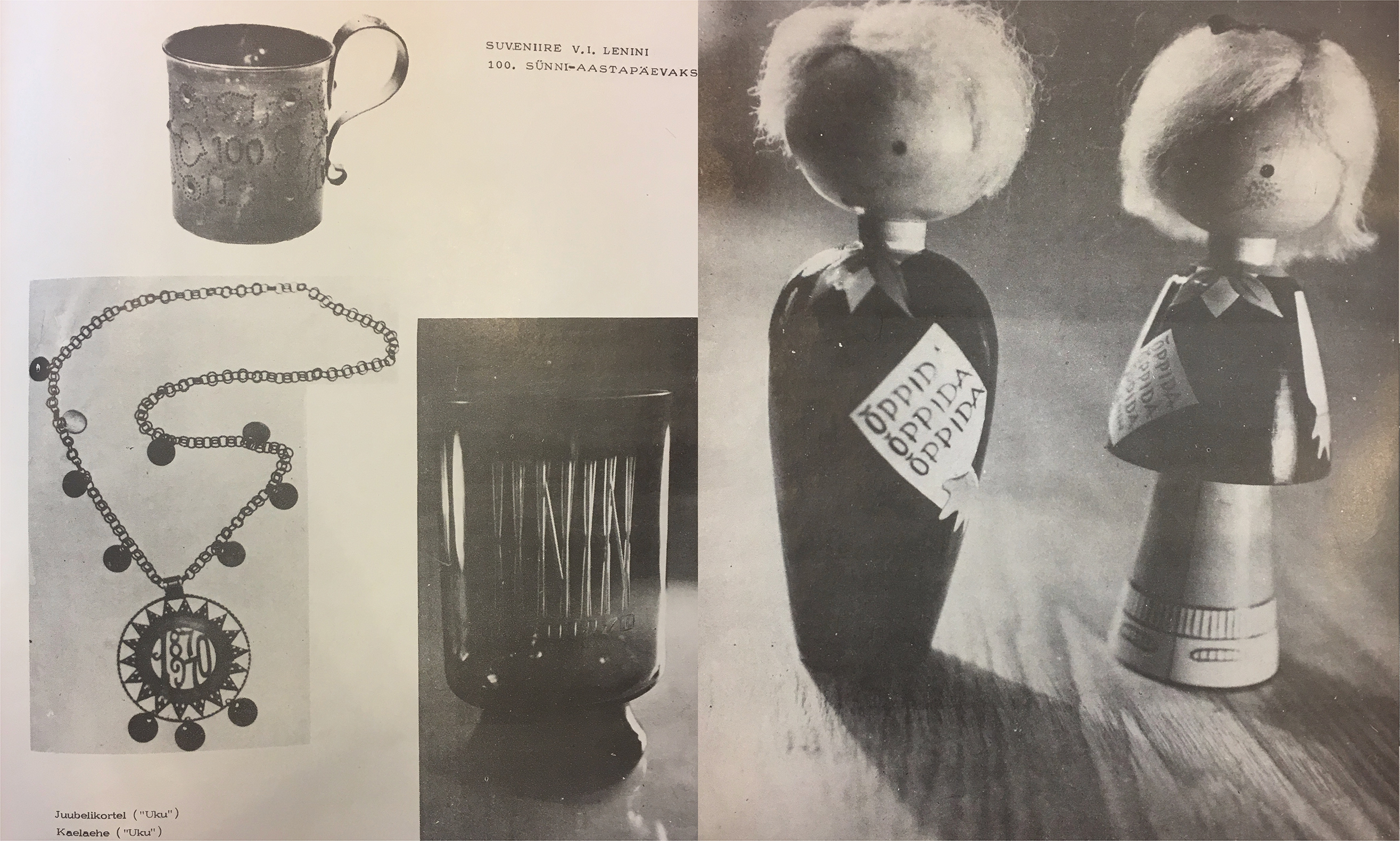
Estonian souvenirs manufactured for Lenin's hundredth anniversary in 1970. Kohalik tööstus 5(1) in 1970.
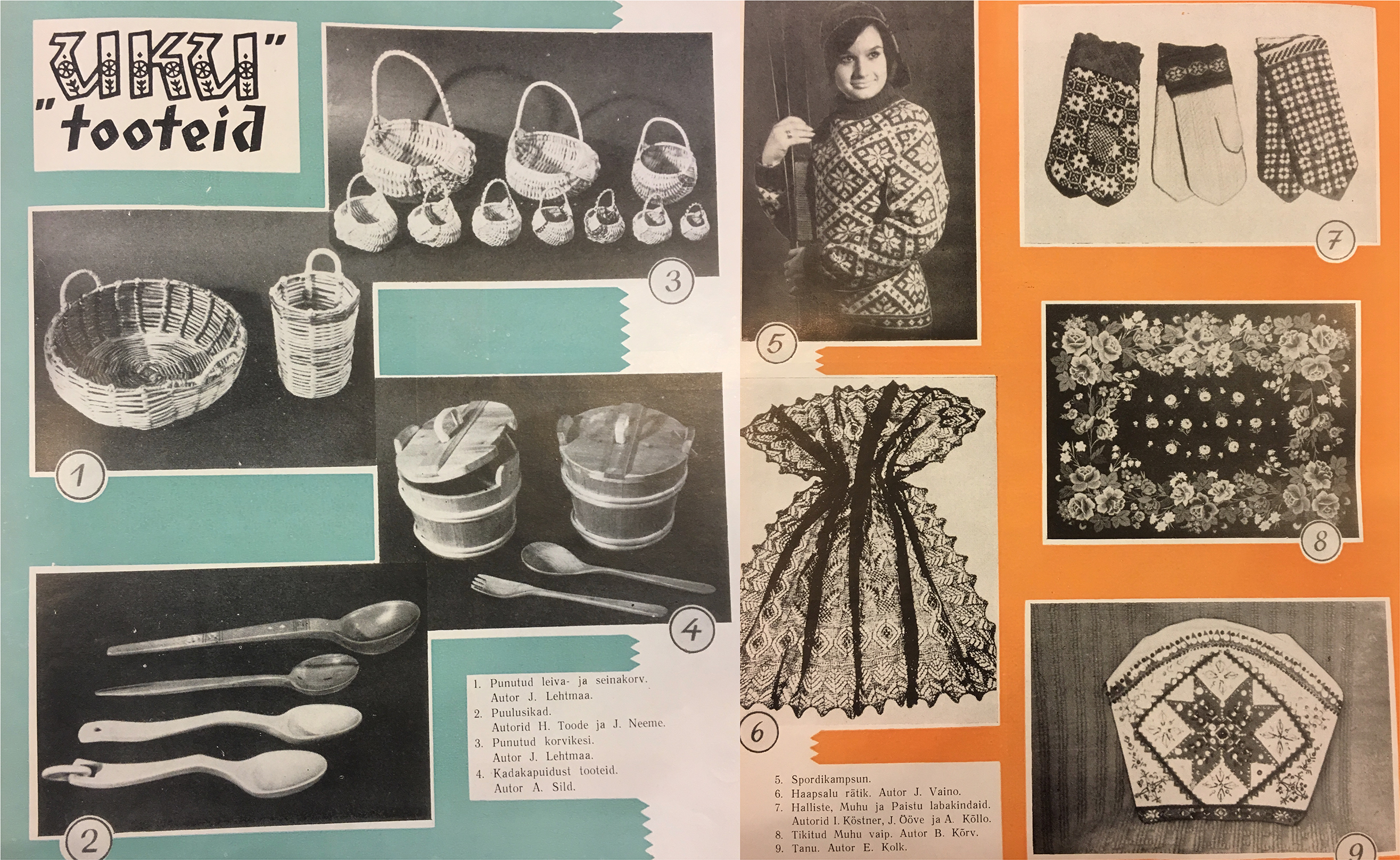
Souvenirs manufactured in Estonian factory Uku. Kohalik tööstus 2(2) in 1967.
Within the Soviet system, each design, including souvenirs, had to be evaluated and approved by a peculiar Soviet establishment: an Art Council. A typical Art Council was comprised of specialists, artists, and the representatives of commercial organisations, and met at regular intervals to discuss whether a design was suitable for production or not (Gronow and Zhuravlev, 2015). Nevertheless, these were not entirely centralised institutions, but rather tools used for assessing and shaping Soviet design: there were separate Art Councils working within the factories and cooperatives, as well centralised All-Union Art Councils that compared the production of different states. As suggested by interviews with Latvian designer Dace Bluma and Estonian Maie-Ann Raun, Art Councils mainly evaluated the artistic quality of objects, while serving as an important tool for controlling the standards of objects within every field, including souvenir production. However, while the interviewees mainly saw Art Councils as a positive control mechanism, they were also occasionally restrictive in the style they promoted. Other researchers agree: for example, as stated by Lijana Šatavičiūtė-Natalevičienė in her research on Lithuanian design: ‘Due to the strict regulation of art, only one modernist stylistic approach was tolerated here, along with harmonious forms and complimentary unity in meaning’ (Lietuvos taikomoji dailė ir dizainas, 2018: 46). Hence, even if the control over souvenirs was mainly intended to maintain aesthetic standards, it also reinforced a certain identity characterised by modern appearance.
Souvenirs based on folk art
Late socialism ‘rediscovered’ the local culture. Violeta Davoliūtė (2013: 125) has identified a ‘rustic turn’ in Lithuanian literature as a ‘broad cultural reaction to the failure of Soviet modernity, which gathered speed through the 1970s and was expressed as a return to the rural, pre-modern roots of identity. It began as a vague sense of nostalgia for the lost way of life and grew into a politically explosive discourse of collective trauma.’ Thus, an interest in pre-modern roots was expressed in different fields of regional culture. As stated in the previous section, this era also brought a shift towards ‘ethnic tourism’, as identified by Ieva Zake (2018), and an increase in souvenir production.
National ornaments were popular on local souvenirs and certain elements emerged in the craft traditions of all three countries. For example, round brooches appear as souvenir objects around the Baltic region; Anna Bitner-Wroblevska has tracked their emergence in the regional culture to as early as the 13th century and their diffusion among local peasants to the 17th century (Spelskienė and Valiuvienė, 2009: 53). In all three countries, textiles, wood, leather, and ceramics are commonly used as materials for souvenirs based on folk art. Similarly, one is able to find similarities in belts and embroidered details used on female costumes, as well as other objects that refer to the national dress. A particularly popular type of souvenir was a doll in a traditional costume, manufactured in all three countries in various levels of detail. Certain dolls were small wooden figurines with painted decorations, while others were plastic and reminded toys rather than souvenirs. Manufacturing dolls in traditional costumes was not a novel concept. Different types have been researched by various scholars, from Sámi dolls in the 17th- and 18th-century Nordic kingdoms (Nordin and Ojala, 2018: 71) to Yugoslavian pavilion in EXPO’58 (Kulić, 2012). Thus their popularity should be interpreted as a continuity of global phenomena in a local context.
The importance of ‘authenticity’ in form and ornament was emphasised. Estonian National Archives hold a transcript of a lecture on souvenirs, held by the chairwoman of the Estonian Committee of Industrial Art, Ingi Vaher, to the committee in 1974. She stressed that the use of folk art as an influence for souvenirs demands a correspondence to traditions and ‘ethnographic authenticity’. As a separate category, she identified ‘souvenirs based on folklore or ethnography’, ‘designed according to the principles or elements of vernacular heritage.’ Vaher still highlighted that ‘the design of these souvenirs required a thorough knowledge of ethnography’ while remarking bitterly: ‘Sadly, there are too many eclectic products among souvenirs based on ethnographic elements, as their design is taken too lightly.’ According to her, 40–50% of souvenirs approved for production in Soviet Estonia between 1971 and 1973 were influenced by folk art (Estonian National |Archives ERA.R-1906.1.626a, 1973–1974).
Vaher's presentation also proves that the local philosophies behind souvenir production in Baltic states were connected: namely, these categories correspond to the ones identified by Arunas Gedžius, a representative of the Lithuanian Experimental Package Design Bureau, in an article, Mokslas ir Technika [Science and Technology], published in 1966. Both specialists also highlight the value of using folklore and local legends on souvenirs, which suggests that Vaher's presentation and Gedžius's earlier article were both influenced by All-Union ideas or guidelines. Unfortunately, this research failed to identify the source of these categories and whether it might have been a direct order for organizing local souvenir production or an influential article distributed in different states.
As a specific subset of ethnographic souvenirs, the usage of materials recognized as ‘local’ should be considered. One of the most important materials for expressing the ‘Baltic’ identity in souvenir production was amber. Although the material quickly became associated with an idea of local craft history, this connection was –to an extent – fabricated in the post-Stalinist period. For example, Lithuania had gained the Klaipėda (Memel) region only in 1923, and earlier had no access to the coastal area of the Baltic Sea where amber could be found. The Museum of Amber in Lithuania had only opened in 1957; Eglė Rindzevičiūtė (2010) links it to the new economic policy of decentralization which allowed more autonomy to individual states in managing local resources. Especially after Lithuanian SSR took charge of the world's largest amber producer, the Kaliningrad Yantarny Amber Mines, the Museum of Amber, as phrased by Rindzevičiūtė (2010: 678), ‘combined its goals as a natural scientific laboratory and a disseminator of ethnic nationalist values.’
Amber acquired an important role even in representing other regions than where the material could normally be found. According to Zarina and Krumberga (2018: 102): ‘Amber's territoriality in Latvia is exclusively coastal, and yet as a sign, it expressed national identity for the whole Latvian territory by constructing the mental map of a Latvian Amber Land.’ Thus amber acquired a role in representing all three Baltic states, even though the material could not be found in Estonian territory. Quoting Zarina and Krumberga (2018: 114): ‘As far as the USSR was concerned, all three Baltic Republics were one region with common politics towards a territorial identity that were expressed in numerous representational practices.’ However, as this research suggests, the relationship between Estonia and amber was mainly created and reinforced by the Soviet central power; for example, in the case of a children's book ‘Tales of the Amber Sea: Fairy Tales of the Peoples of Estonia, Latvia and Lithuania’, edited by Irina Zheleznova in 1987. Especially in material culture, this research did not identify any examples of Estonian artists or factories using amber in souvenirs. Thus, it presents an example of a different regional identity reinforced by local and central powers.
The majority of souvenirs introduced as ‘folk art’ were based on vernacular designs. However, often the production methods had been drastically altered, as the authenticity of production technologies appears to have been neglected in the early days of souvenir production. An Estonian souvenir production specialist (Kivirähk, 1967: 13), who visited Ukrainian enterprises, recommended in 1967 that Estonians should learn from Ukrainian experiences and mechanize ethnographic souvenir production to a greater degree. Therefore, a key element in consolidating ethnic identity with modernization was the reduction of vernacular elements to a visual identity by changing the processes of production.
Old town and souvenirs
A common focus of folk traditions was to highlight an imagined national freedom of Soviet people and a historical continuity of vernacular crafts. However, this article suggests that through souvenir production, another side of Baltic identity was used to convey this multicultural façade, that of Baltic countries as belonging to the ‘Europe’. For this aim, the old historical city centers of the Baltic capitals and other larger cities were adopted as visual symbols. The unique position of Baltic states in the application of a ‘European’ identity is expected, as the three countries formed the only region in the Soviet Union that was both geographically located in Europe, and where the majority of the population did not adhere to Russian Orthodox religion.
The cultural turn in the early 1960s was not limited to vernacular heritage but entailed a greater emphasis on architectural preservation. Here, several different reasons can be seen behind the popularity of Old Town in souvenirs. Local designers appear to have used Old Town often on souvenirs and these motifs emerge on numerous products, without being evoked by competitions. However, Baltic Old Towns were demonstrably used deliberately to lure Western tourists. Arunas Gedžius, a representative of the Lithuanian Experimental Package Design Bureau, suggested in an article Mokslas ir Technika [Science and Technology] published in 1966 that ‘the experiences of other socialist countries’ suggest that local castles and churches might be popular designs for souvenirs. Thus, this identity was also recognized as profitable. The same idea was also present in Vaher's presentation, as she suggested that souvenirs based on images of Old Town should be a priority to appeal to tourists (Estonian National Archives ERA.R-1906.1.626a, 1973–1974).
As the object analysis conducted for this research demonstrated, the souvenirs that emphasized the Baltic European past were often modern in their appearance. For example, on a glass set manufactured in the Estonian factory Tarbeklaas, medieval architecture has been simplified in a manner that retains its recognizability, yet appears contemporary. A similar trend can also be observed on various other souvenirs; for example, the leather-bound Lithuanian photo album dating from the 1970s or 1980s. It is an interesting fact that while Lutheran churches in Estonia, Latvia, and Catholic churches in Lithuania are frequent motifs, this research did not locate any examples featuring Orthodox churches. As a comparison, Orthodox churches dominated on Russian souvenirs where historical architecture can also occasionally be found as a motif. This study suggests that this telling absence could be interpreted as a sign of local freedom in choosing imagery and expressing local identity through these decisions.
Several types of objects were stylistically similar to souvenirs produced in Western Europe, for example, ceramic plates decorated with the views of the Old Town. Already in 1974, earthenware souvenir plates were produced by Estonian manufacturer Kodu [Home] (Figures 4–6). Ten years later, a catalogue of famous Riga Porcelain and Faience Factory featured a painted plate with a golden rim (Figure 7). Curiously, the cityscape was not limited to historical buildings and at a second glance, one can see rectangular and unornamented modern buildings behind the Old Town, as well as the Latvian Academy of Sciences; a Neohistoricist skyscraper built in the 1950s, in a similar style as Stalin's ambitious project in Moscow, often called ‘Seven Sisters’. This amalgam could, depending on the viewer, be interpreted as an ode to bright Socialist reality combining past and present, or a bitter commentary to the destructions within central Riga.
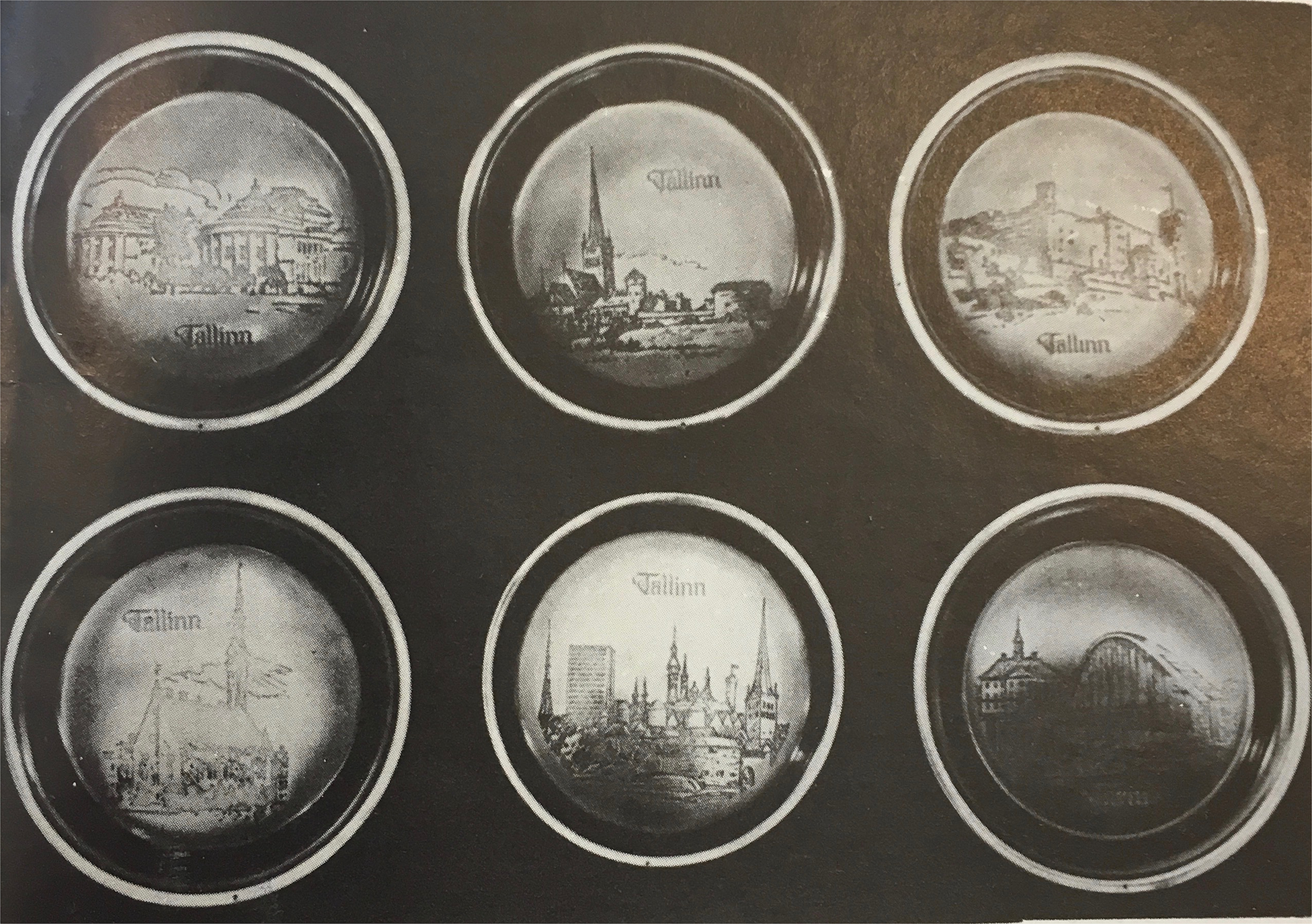
Souvenir plates manufactured in Estonian cooperative kodu. Kohalik tööstus 9(8) in 1974.
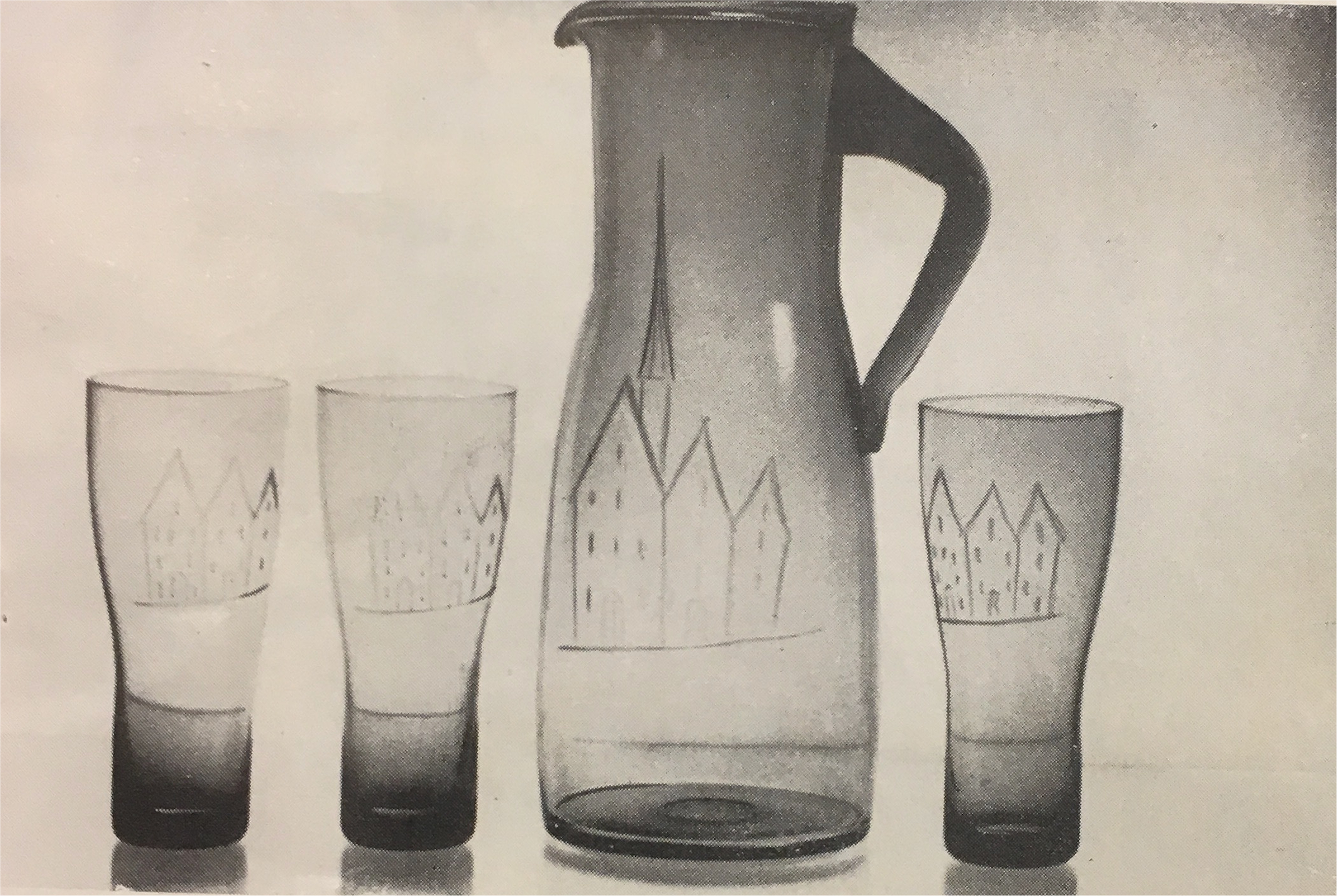
Glass set produced in glass factory ‘tarbeklaas’, Estonia. Designer: Pilvi Ojamaa. Kohalik tööstus 3(1) in 1968.
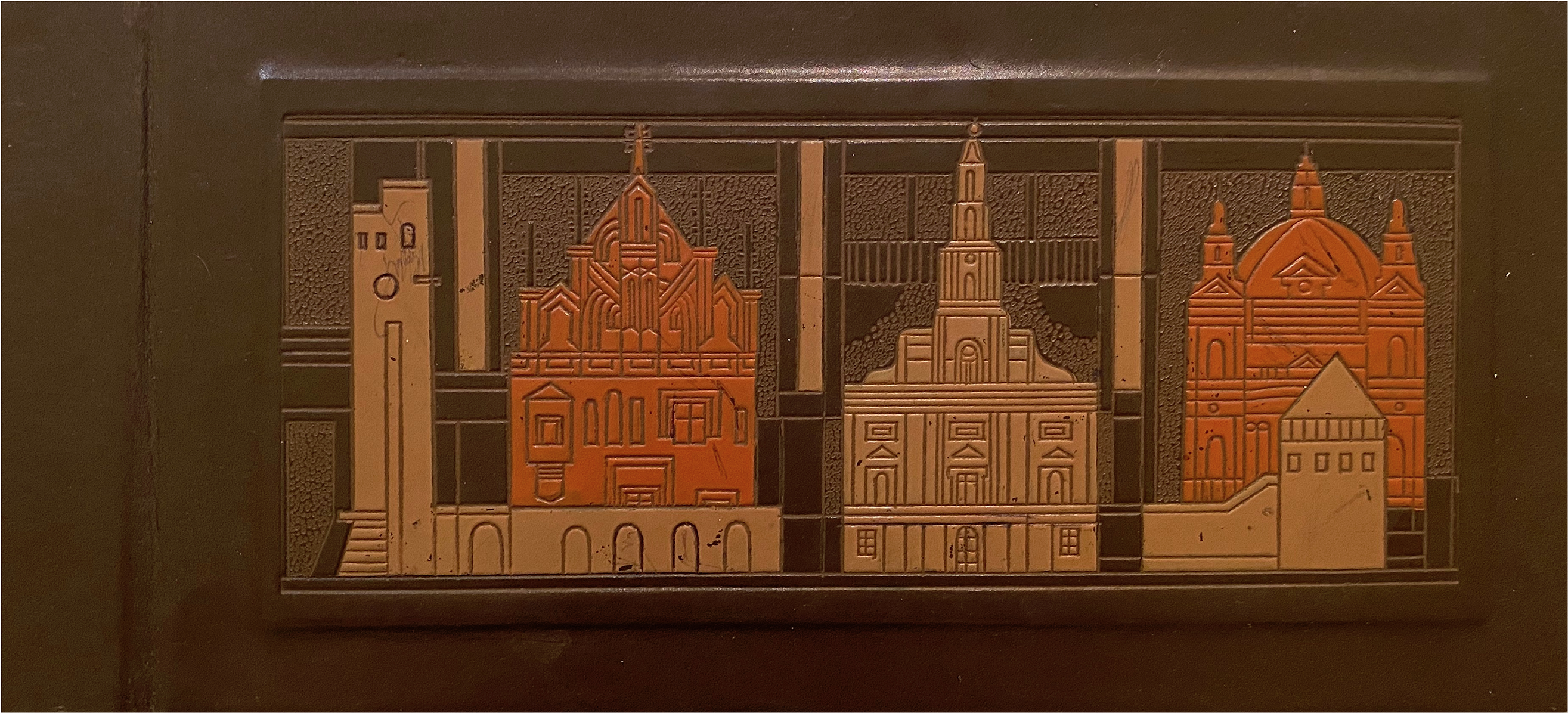
Photo album from the 1970s or 1980s, Lithuania. Author's photo.
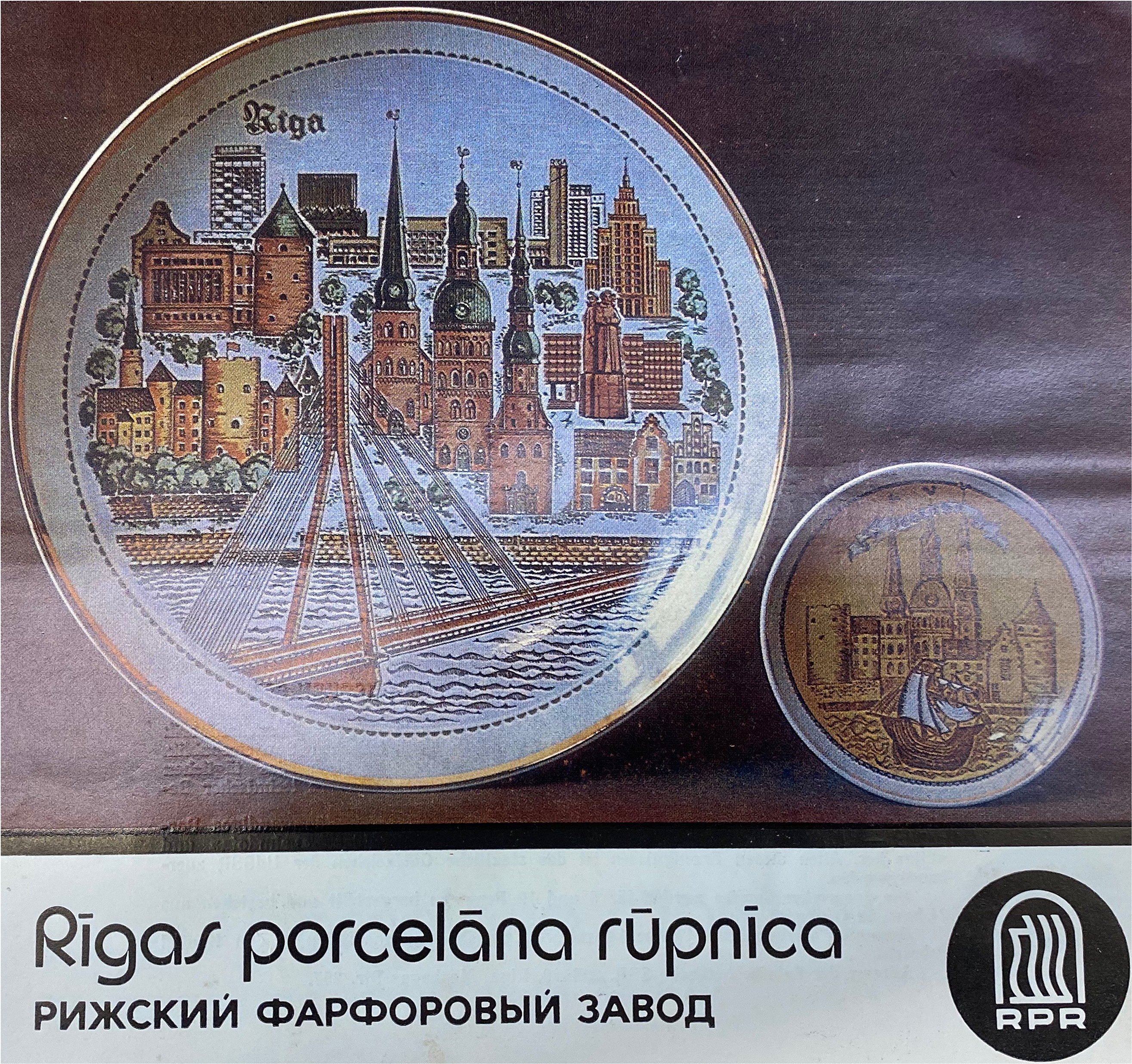
Souvenir plate manufactured at Riga porcelain factory. Illustration in a promotional material published in 1984. Collections of Latvian National Library.
This article suggests that while the architectural images on souvenirs produced elsewhere in the Soviet Union were based on a wish to highlight the local inhabitant as the exotic other, the Old Town as a symbol in Baltic souvenir production was chosen to reclaim an imagined European past. Dace Dzenovska raised a question of the nature of Latvian identity in relation to European colonialism, claiming that Latvians ‘identify with the glories of Europe's colonial history while distancing themselves from its injuries’ (Dzenovska, 2013: 402). Thus, the popularity of Old Town as a symbol and the aspiration towards Western Europe also entailed a darker side: that of admiration towards the colonial past of Europe.
Materiality and identity
There are no sources today that would allow us to fully analyze the function and materiality of Soviet Baltic souvenirs abroad. However, this research argues that these souvenirs held an equally important position locally. As evidence indicates, the function and position of objects referred to as souvenirs in late socialist Baltic states differed from their counterparts on the other side of the ‘Iron Curtain’. This essay suggests that the two major reasons for this difference were the reality of Soviet production and the significance of souvenirs within local identity. Here, this research suggests that in terms of function, the difference between factory-produced souvenirs and those produced by craft cooperatives was marginal. Importantly, Soviet factory production of commodities was still heavily dependent on manual labor. For example, as late as 1980, only 56.3% of factory workers in Soviet Estonia were involved in mechanized work (Männik, 1980: 2). Therefore, the categorization between mass production and craft was unclear and did not always correspond to the same criteria as Western souvenirs of the same period.
Importantly, in the Soviet Union, there was a constant shortage of consumer objects, which created a need for utilitarian objects. For example, in 1975, only 2.4 plates were produced per one inhabitant of the Soviet Union, and less than one cup and saucer per person. One teapot was produced for every 14 people, one tea or coffee service for 52, and one dinner set for 390 people (Birman, 1989: 87). In 1989, the total volume of consumption of durables in the USSR was only about 1/8 of that in America (Birman, 1989: 85). This information, published in the United States in 1989, disregards the fundamental differences between the production systems in capitalism and socialism, the amount of plates or cups considered necessary for a family, or the intended lifetime of an object. However, it does indicate an endemic lack of consumer items in the Soviet Union, which led to a more utilitarian approach to objects. Additionally, the average Soviet citizen had limited space for living: by mid-70 s, the average for the entire Soviet Union was 8 square meters per capita (Morton, 1980). Baltic states were privileged, compared to the majority: the average city resident in Baltic states had, at the time, approximately 50 percent more space per capita than the people living in Central Asia (Fuchs and Demko, 1979). Therefore, both the number of objects and the space for living were limited, compared to the mid-century consumer societies in the West, and called for a more utilitarian approach. For that reason, the souvenirs that were suitable for a practical function were employed for it – for example, the baskets and mittens in Figure 3. As visible from the already introduced decision of the Soviet Lithuanian Art Fund that certain objects might have at times acted as souvenirs and elsewhere as simple household products (Lithuanian Archives of Literature and Art 350.1.61, 1960), this utilitarian function was not an accidental byproduct of the Soviet production system, but rather a prescribed quality of local souvenirs.
Soviet Baltic souvenirs did not only function as utilitarian products, but also as markers of identity. From the perspective of identity, the materialization of late socialist souvenirs can be tied to theories of refugees and emigrants. In both cases, ethnographical souvenirs symbolized a longing. Refugees and emigrants are displaced in space, whereas the inhabitants of occupied Soviet areas were displaced in time; in both cases, souvenirs embody the notion of a lost home. Alison J. Clarke (2001: 25) has suggested that home decoration is ‘related to the construction of ideal and actual contemporary social worlds,’ adding: ‘In a strictly delineated, state-designed environment, where the interior and exterior world of the households is standardized and regulated by an external entity (the council/state) the ethnography goes on to reveal the ways in which the occupants appropriate, interpret, and generate agency through their standardized spaces’ (Clarke, 2001: 29). Therefore, in the local context, the use of souvenirs in local interiors could be seen as a form of rebellion against the
In his study of Caribbean migration, Daniel Miller (2008: 405–406) has noted: ‘There is not a single object in the house in Stuart Street that I can recognise as having come directly from Jamaica. Mrs Stone explains that it would be pointless having souvenirs, given how often she is there.’ As a contrasting case study, Miller (2008: 407) referred to Marcia, whose home was filled with souvenirs which indicated her loneliness and refusal to transform herself ‘in relation to the customs of the English any more than was absolutely required’. Hence, souvenirs can also be seen as a longing or even a refusal to integrate more than necessary. From the Baltic perspective, I argue that the use of souvenirs that manifested a regional identity is tied to a wish to establish a local identity in lieu of the lost local history. For that purpose, both references to vernacular culture and the previous colonizers through the images of Old Town were adopted.
Rinzeviciute (2010: 671) has in her study of Lithuanian museum history pointed out that the Soviet approach to ethnicity was ‘a cultural and strictly non-political phenomenon.’ Yet, in an analysis of regional identity, as manifested through souvenirs, it is important to acknowledge regional variations which are influenced by politics. According to Slezkine: ‘Other states may have other claims to legitimacy; the USSR had nothing but progress and modernity’ (2000: 228). Similarly, to many other empires, Soviet Union considered ‘fight against backwardness’ as one of its key tasks. The key element of ‘Sovietization’ was modernization; as explained by Hirsch (2000), modernization as a process took priority over questions of identity. This research suggests that the local or national identities were also shaped in a way compatible with modernization. Here, Baltic states as a region with a historical claim to ‘Westernness’ were in an advantaged position within the Soviet Union. This could also be seen as the reason for the multifaceted approach to identity manifested in local souvenirs, which acquired different materialities and functions to the Soviet power structures and the local inhabitants.
The complex identities and ruptures within the former socialist world have been studied by numerous researchers in various fields, for example, Dzenovska (2013), Seliverstova (2017), and Pfoser (2018). This research has pointed out that two separate identities can be recognized in the production of Baltic souvenirs, one constructed on references to pre-Soviet folk art and another, based on a ‘European’ past. Nevertheless, mass-produced souvenirs reveal the limitations to these identities. This research found little diversity in the promoted ‘national’ identities through references to regions of a specific state; this homogeneity of souvenirs reveals repression of ethnic minorities since the Stalinist era (Beznosova, 2017; Kotljarchuk and Sundström, 2017), who were notably absent from this framework. Examples of invisible identities included, for example, ‘Old Believers’, the Russian minority that has inhabited Eastern Estonia since the 17th century, and the Jewish communities in Latvia and Lithuania (Sawyer, 2019). As suggested by Kattago: ‘A closed society such as the Soviet Union only allowed one official truth, with private memories forced underground’ (2010: 388).
Oleksandra Seliverstova has suggested that in the former socialist countries, the symbolic importance of objects ‘is crucial to prompt a shift in the concept of the nation, from ideological to material’ (Seliverstova, 2017: 72). Baltic souvenirs were not only products of different processes that took place within the society, but also active in the creation of identities. The one-dimensional Soviet view of ethnicity, reinforced through dolls in ‘national’ costumes and plates with Lutheran churches, continues to shape the difficult ethnic relations in contemporary Baltic countries.
Conclusions
In the 1960s, tourism in the Soviet Union underwent radical changes. While previously the focus had been on showcasing the rapid modernization of the empire, this new type of tourism focused on introducing foreigners to the regional vernacular culture in the Soviet Union. As the number of tourists increased, the need for wider mass production of souvenirs emerged. This research focused on the souvenirs produced in Baltic states as a case study for identifying the existence and nature of regional peripheral identities within the Soviet system. In spite of the centralization that characterized the Soviet Union, this study emphasized the importance of local power in shaping the design of the souvenirs, which allowed manifestations of regional identity within the mass production of souvenirs.
This study found that within Baltic souvenir production, two separate types of identities manifested. Firstly, the use of national or vernacular symbols was allowed and even promoted throughout the Soviet Union. A famous slogan of the era was ‘Socialist in content, national in form’, which suggested that national form was suitable for conveying socialist ideals. These products were usually made of local materials and employed traditional national ornament. However, this research identified a secondary identity within the souvenirs manufactured in the Baltic countries, which was based on a shared ‘European past’. The symbol often chosen to convey it was the pre-Soviet Old Town, which was in all three states based on Western and Central European architectural traditions. This research suggests that this European identity validated through the use of Old Town as a recurring motif on souvenirs, distinguished Baltic states from the other regions of the Soviet Union. While most souvenirs manufactured in the Soviet Union emphasized the image of locals as the exotic ‘Other’, Baltic souvenirs inspired by Old Town conveyed the idea of familiarity to European tourists. Due to a lack of consumer products, souvenirs were also actively used by locals, as practical objects or in home decoration. This article argues that the use of souvenirs that manifested either of the two regional identities was an attempt to establish a local identity in lieu of the repressed local history. Both of these identities developed homogeneously, leaving little room for alternative identities or different points of view: a fact that continues to shape the current politics of Baltic countries.
Footnotes
Declaration of Conflicting Interests
The author(s) declared no potential conflicts of interest with respect to the research, authorship, and/or publication of this article.
Funding
The author(s) disclosed receipt of the following financial support for the research, authorship, and/or publication of this article: This project has received funding from European Social Fund (project No 09.3.3-LMT-K-712-08-0001) under grantagreement with the Research Council of Lithuania (LMTLT).
