



Abstract
Menopause can affect women’s psychological well-being and cognitive function. We adopted phenomenology to explore women’s experiences of menopause symptoms. Four women self-identifying as peri-menopausal, menopausal or post-menopausal completed an autophotography task and semi-structured online interviews. Interpretative Phenomenological Analysis generated four themes: Adrift on a sea of confusion summarized women’s worries and uncertainty about change; Planning for uncharted waters recounted unfamiliar symptoms and “relief” of “diagnosis”; Going with the flow describes acceptance of change; and Toward calmer currents revealed an emerging coherent identity. Women’s menopause experiences were both positive and challenging. Epistemic injustice, experienced through poor services and healthcare professional knowledge, delayed help-seeking. Phenomenological theory explained coexisting incommensurate feelings of psychological distress and growing resilience. Reconstructing menopause as opportunity for growth in older womanhood would benefit women’s quality of life. To facilitate earlier help-seeking and access to treatment, societal and professional education needs strengthening to include the breadth of menopause symptoms.
Keywords
Introduction
Menopause is typically experienced by women aged 45–55 years, characterized by declining hormones, menstruation and natural reproduction cessation (Delamater and Santoro, 2018). Perimenopause defines when menopausal symptoms start until 1 year after menstruation ends (Verdonk et al., 2022). Symptoms identified include vasomotor symptoms (e.g. hot flushes, night sweats), genitourinary symptoms (e.g. vaginal dryness), effects on mood (e.g. depressive symptoms), musculoskeletal symptoms (e.g. joint and muscle pain), and sexual difficulties (e.g. low sexual drive; National Institute of Health and Care Excellence (NICE), 2024). Treatment options include hormone replacement therapy (HRT) and, for women experiencing distress, psychological support (e.g. cognitive behavioral therapy; NICE, 2024).
The World Health Organization (WHO, 2024) highlights public health concerns associated with the disruption of women’s personal and professional lives due to menopause, such as increased risk of cardiovascular disease, pelvic organ prolapse, osteoporosis, and sexually transmitted infections. Menopause-related services vary greatly; many governments do not have policies or funding for menopause services (WHO, 2024). Many women are unaware that symptoms indicate menopause, and training to recognize (peri)menopausal symptoms is not mandated for healthcare professionals meaning advice or services to improve women’s quality of life are not offered (Hoga et al., 2015; WHO, 2024). Further compounding this challenge, menopause symptoms can be difficult to distinguish from existing conditions experienced by women, such as chronic pain or fatigue, and other better-known conditions, like anxiety and depression, leading to menopause being overlooked or unnecessary prescription of antidepressants (Verdonk et al., 2022). Statistics indicate that by 2030, there will be approximately 1.2 billion post-menopausal women world-wide making the menopause a major global health concern (Jones et al., 2020; WHO, 2024).
Menopause has been described as a transitional period that naturally projects women into the aging process (Araya et al., 2017; Hoga et al., 2015; Shamsalizadeh et al., 2023). However, gendered conceptualizations of aging construct older women as increasingly invisible, losing their power and social capital, stigmatized and devalued; a positioning that is reminiscent of epistemic injustice (Carel and Kidd, 2014; Verdonk et al., 2022), a concept defining the devaluation of a marginalized group by the medical profession. This means women’s menopause experiences can be dominated by fear and shame, as they lose esthetic and reproductive value (Araya et al., 2017; Bahri and Latifnejad Roudsari, 2020; Delanoë et al., 2012; Hvas and Gannik, 2008; Rubinstein and Foster, 2013).
The negative experiences of menopause can manifest as lost confidence about bodily changes, frustration at weight gain, distress, and loss of identity (de Salis et al., 2018; Nosek et al., 2012a, 2012b; Sergeant and Rizq, 2017; Utz, 2011). Some women experience feelings of sadness and mental exhaustion (Ishak et al., 2021; Mankar et al., 2024; Tasnim et al., 2017). Together, this leaves women feeling vulnerable and unsupported (Li et al., 2023; O’Reilly et al., 2024; Özcan et al., 2023; Uzun et al., 2023).
Nevertheless, research has shown that some women experience menopause positively, attributing it to increased emotional stability, growth in confidence and creativity (Hvas and Gannik, 2008; Jack et al., 2019; Lindh-Astrand et al., 2007; Rubinstein and Foster, 2013). Menopause has also been described as liberating (de Salis et al., 2018), enabling women to focus on preferred activities and careers (Hvas, 2006; Lindh-Astrand et al., 2007; Özcan et al., 2023; Utz, 2011).
While awareness of qualitative evidence is growing (Anto et al., 2025), there remains a paucity of in-depth, phenomenologically oriented research exploring women’s subjective lived experiences of menopause. The objective of this study was to provide an analysis of women’s experiences of their menopause symptoms and how they make sense of them as an active agent in the world.
Method
Research design
A qualitative design was used incorporating autophotography, semi-structured interviews and interpretative phenomenological analysis (IPA). These two methods were combined because images can help participants find forms of expression that might otherwise remain out of reach. An idiographic approach was taken to prioritize an in-depth, case study style analysis of subjective experiences. Although less common, small samples work well in IPA studies with high levels of “information power” (Malterud et al., 2016), that is, which produce rich experiential accounts that draw upon theory to make sense of their findings.
Ethics
Ethical approval was granted by Aston University Psychology Research Ethics Committee on 11/4/23 (ref: LP197430085).
Participants
The inclusion criterion was women who had experienced natural menopause within the last 5 years. With facilitator permission, an advertisement was posted on a members only, closed support group Facebook page, “Making Friends with the Menopause,” which hosed over 5000 members. Eight women expressed interest and were screened for eligibility via email and sent a Participant Information Sheet. Six responded and four women self-selected by signing the consent form and arranging an interview.
Four white women, aged 47–60 years, educated to degree level, took part. Two women were peri-menopausal, two post-menopausal, three had children (see Table 1 for full details).
Participant demographics.

Materials
Volunteers were sent a Participant Information Sheet and consent form. Once they had agreed to take part, they were sent photoethnography guidance.
Data collection
Women were invited to engage in autophotography (Byrne et al., 2016): they were asked to find and/or generate five photographs of objects, events and/or situations representing “living with menopause,” including “the good, the bad, the ugly” (Guillemin and Drew, 2010). Following receipt of photographs with a summary of how each made them feel, the researcher reviewed these and noted initial thoughts about the content. The women participated in semi-structured online interviews through Teams or Zoom, beginning with discussions of their photographs and the meanings about menopause they conveyed. Participants initially chose to speak about the photograph they felt mostly strongly represented menopause for them and after that, to ensure participant driven representations, women discussed photographs in their preferred order (Byrne et al., 2016). They were then encouraged to freely recall their experiences of menopause using a semi-structured schedule to gather detailed descriptions of symptoms, changes they had experienced, and the impact of menopause on different aspects of their lives (Howitt, 2019). With women’s informed consent, interviews were audio-video recorded and transcribed. Participants were given pseudonyms, and any identifying information was removed during transcription.
Data analysis
Interpretative phenomenological analysis (IPA; Smith et al., 2022) was used to examine individuals’ experiences in-depth following an idiographic and iterative approach. By asking women to produce photographic expressions of menopause, we invited them to engage in the hermeneutic cycle, a process extended during analysis – making sense of women’s sense-making (Larkin and Thompson, 2011).
Each participant’s account was analyzed in-depth, with several readings and note-taking. First, personal experiential statements were generated to summarize the qualities and meanings of experiences women reported (PETs; Smith et al., 2022). Photographs were treated as experiential statements that also contributed to the analysis, both in what was said about them and their depictions (Boden and Eatough, 2014). This step was repeated for each participant. Then, patterns across the full sample were systematically examined through a cross-case analysis identifying convergences and divergences, whilst retaining individual nuance. PETs were clustered together to produce a group experiential themes (GETs; Smith et al., 2022) which described shared and unshared facets of women’s lived experiences of menopause.
Results
During analysis, four GETs were generated, describing ways of experiencing menopause and how our participants made sense of it: Adrift on a sea of confusion, Planning for unchartered waters, Going with the flow, Toward calmer currents. Each is presented in turn with verbatim participant extracts and their photographs. Women described sharing their photographs as valuable in documenting their inner processes, enabling them to identify feelings and experience insights about their changing bodies previously unformed and unarticulated. This was described as liberating, helping them understand their menopause more clearly.
Adrift on a sea of confusion: “I’m falling apart, and I don’t know why”
This theme was filled with confusion and uncertainty. Women did not understand what they experienced in their bodies and minds. Things felt “out of control,” “not normal,” causing anxiety and distress. What they retrospectively identified as menopausal symptoms felt “weird,” “difficult” and “unpredictable”; feelings which were magnified because at the time, they had not attributed them to menopause.
I was getting lots of little symptoms I suppose of being peri-menopausal, but there was a lot of uncertainty, and your body does funny things. . . I was overheating in the night. I wasn’t very comfortable. My joints have really been hurting. I’ve had lots of things that I hadn’t kind of attributed to the point I was at with menopause. I just didn’t understand what was going on really. . . I don’t like not knowing what’s happening with my body at all. It really unnerves me. I don’t like the unpredictability of it. (Mary)
Mary minimizes her multiple “little symptoms” but was clearly concerned by them and the “uncertainty,” a word she used repeatedly, that accompanied them. Pippa also described symptoms which were “unexpected” and “unusual” which she was not aware were associated with menopause.
. . .the soles of my feet when I got out of bed in the morning, it’s like my feet are curled up, so straightening your feet out onto the floor, my God, that hurts! I don’t know if everybody else gets that, but I got that! And I kind of read stuff, and other people got that. So, I say, itchy eyes, unbelievably itchy eyes, and it’s not at hay fever time, and not when the dogs were moulting. . . just eyes itching forever, and then I look online, and it said dry eyes. Yeah, that’s a symptom as well. I didn’t know! So, if you have anything that’s not the normal thing like you forget everything, you’re quite angry, you’re hot and bothered, or you don’t sleep, suddenly, there’s everything else nobody mentions, and I seem to have got everything else that nobody ever mentioned! (Pippa)
Pippa’s discovery of the “lesser known” symptoms of menopause highlights the uniqueness of women’s experiences. All participants were aware that women’s symptoms may differ but were unaware of the full range of symptoms, leaving them struggling to work out for themselves what was happening to their changing bodies. This led to delayed diagnosis, misdiagnosis, and distress.
Katie experienced a significant struggle over 4 years of help-seeking from doctors and specialists in attempt to gain a diagnosis and treatment. At 40 years, she was perceived as too young to be peri-menopausal. Instead, she thought her gynecological symptoms -vaginal dryness, soreness, pain during sex, incessant itchiness- which she found “embarrassing in public” were because she had a sexually transmitted infection. However, she was repeatedly told “there’s nothing wrong,” which “messed with [her] head” leading to low mood and suicidal thoughts.
I’m going through this, and I don’t understand what’s happening to me. Why can’t anyone help me? Why can’t I help myself?. . . Nobody at any point said it could be menopause. . . You could be going through it early. Try this or try changing your diet, or something like that. Nothing. I mean, even when I mentioned the menopause, I was looked at and they’d go, no, no, you’re far too young, and it’s like, I’m clearly having lots of symptoms, and this is one of my main ones. Why wasn’t that recognised as a possibility? I feel like the GPs just haven’t been given enough information, and they are going at it from hot flushes and night sweats, and if you don’t have them, then you’re not going through it. And yet there’s 200 symptoms and they’re focused on two, and you have to be in those categories, or you’re just dismissed. And it was awful! It really affected my self-esteem. It affected everything . . . I just was so unhappy. (Katie)
Katie’s frustration and despair leaps off the page. She chose a pea flower to represent her experience of menopause because it looks “a bit like a vulva” (see Figure 1). Repeated refusals by doctors to attribute Katie’s symptoms to menopause caused her acute psychological distress. It also highlighted lacking knowledge about the multiplicity of symptoms among medical professionals Katie consulted, together with an unreadiness to accept variation in age of onset.
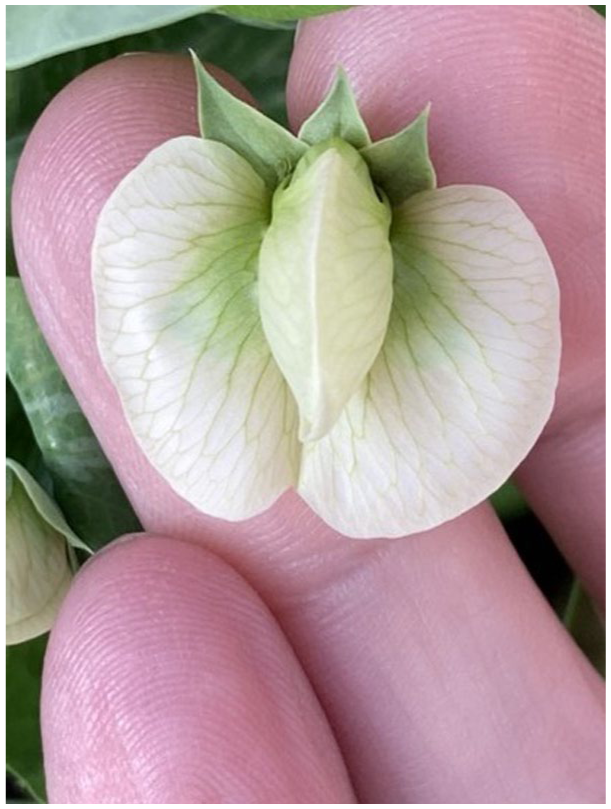
Katie’s pea flower.
Similar levels of frustration were experienced by Annie, aged 60, and thought she had “already done menopause” and “it was a breeze.” She began to experience several symptoms and felt as if she could feel “the decline of progesterone and oestrogen.” However, it became impossible for her to disentangle which symptoms were due to menopause and which maybe something else related to her aging body “just beginning to fall apart.”
I think I’ve been really angry about it for the last year. Really frustrated about it. I think, maybe understanding what it’s about. . . where I was just trying to work out there must be something wrong with me. You know it’s like, I’ve been tested for diabetes, I’m overweight. . . is my heart okay? You know, so how’s my lung function doing? I have, like, you know, sort of some gyny challenges that were resolved over the last year. . . problems with my eyes. . .. and I just felt this, this whole catalogue of your body just beginning to fall apart and that’s all taken care of and it’s just like, okay, some of the stuff is just menopausal. . . (Annie)
The level of uncertainty experienced by Annie resonates with Katie’s; together they represent the significant psychological impact of not knowing how to make sense of bodily changes. Pippa also described multiple co-existing symptoms, such as weight gain, pins and needles, loss of libido, and poor sleep, which developed during COVID-19. Pippa finally received a diagnosis of pre-diabetes and menopause, but at the time, she struggled to determine the cause of her symptoms, which were compounded by the experience of lockdown. Her diagnoses enabled her to complete the picture, putting together the “individual bits of the jigsaw that you end up fitting together.”
Menopausal symptoms in women do not occur in isolation. Women negotiate multiple duty-bound roles, including work, caring for children, aging parents, and maintaining sexual relationships with their partners, while experiencing challenging symptoms that seem to threaten their identity. Mary described feeling “overwhelmed” and as if she was “failing in lots of ways” as a wife, mother, daughter. The threat to Mary’s sense of self is encapsulated in her photograph of Pen-y-Ghent (see Figure 2). Mary is a keen hiker, having climbed the Yorkshire Three Peaks 10 times in the last 12 years. Mary’s body had begun to feel “stiff, tight and inflexible” and she worried that her joint pain would prevent her from engaging in her much-loved leisure pursuits.
I like that picture because that was in the morning, just when I was starting out really, going up Pen-y-Ghent, the first [peak of three], and I could see it in front of me, and I can remember thinking, you know. . . am I gonna manage it? Am I gonna manage to do all three? . . .it’s this pain in my joints, really and my joints not being. . .. I really don’t feel as flexible as I used to be, so usually my body can do things, but my worry is afterwards, if I’ve caused some real damage, you know. If my joints are. . .if it is that I’m lacking in oestrogen or whatever, and it’s physically my body is not coping very well because of it, could I be damaging myself? I think that’s my worry really, could I be doing damage that I can’t undo? Which is going to make it even harder for me to walk into older age. . . which will be awful! (Mary)
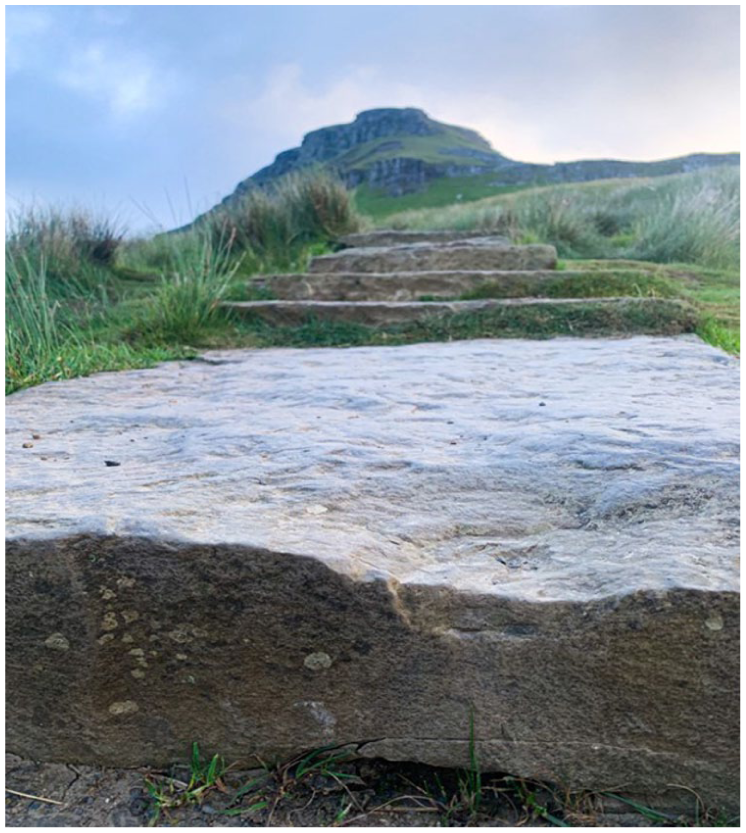
Mary’s Pen-y-Ghent hike.
Mary’s worry about losing this sense of her identity could have been prevented had she been informed that treatment such as HRT and management methods like engaging in weight-bearing exercise could be protective against conditions like osteoporosis.
Annie’s photograph “overlooking the mist of Loch Lomond” conveys a similar sense of fear at losing a fundamental part of herself due to “brain fog” that was experienced as “fierce at times” and that she felt “trapped” by feeling “foggy all the time” (see Figure 3).

Annie’s brain fog over Loch Lomond.
This loss of “mental acuity” was psychologically damaging for Annie who sees herself as an “acute thinker.” Annie thought she was experiencing early onset dementia and would no longer be able to perform in her demanding job. With these symptoms, Annie felt diminished and lost self-confidence. These feelings persuaded her to attempt HRT.
This theme has illustrated the significant impact of not knowing the range of menopause symptoms, both among participants and healthcare professionals from whom they sought help. Uncertainty about one’s health can be distressing, especially when symptoms might be more widely known as indicators of serious illnesses or perceived as irreversible. Some simple information would have prevented a lot of this worry had women felt able to express their symptoms and them be recognized as “just menopausal” and that management methods were available. The next theme picks up this story from the perspective of the relief that comes with recognition and diagnosis.
Planning for unchartered waters: “To prepare yourself for that transition, women need to understand what’s ahead of them”
The women interviewed realized they would need to take responsibility for identifying the cause of their symptoms and finding appropriate management methods. As they pieced together the jigsaw of their symptoms and realized that they were experiencing menopause, relief came, which “validate[d] that you’re not going crackers” (Pippa). The photograph Mary chose to represent this realization was taken on holiday (see Figure 4). It symbolized the physical relief she felt when the sea cooled her aching joints and hot flushes, and the mental relief that came from understanding what was happening to her.

Mary’s sea-borne realization of menopause.
This was not an instantaneous realization for Mary, though; she had to work hard to gather information to bring the picture into focus.
. . . I listened to a lot of podcasts on menopause and things while I was away, and I think that picture is like the week I started having this realization. . . that making a connection, that actually all that was happening to me probably, was. . . I just actually felt quite relieved that it was. So once my doctor agreed with me, she was like, I think that it probably really is what it is and this is what it’s going to be like for you. I remember coming out of the surgery and feeling quite relieved, you know, not feeling like, oh, no, I’ve started menopause! I just felt really relieved that that’s what it was, and you know, just the next phase, isn’t it? (laughs). Next phase of being a woman! (Mary)
Being away from home and the everyday enabled Mary to “stop and analyze what was going on.” Katie became tearful in the interview, as she described the years she had spent struggling to find answers. When she eventually went to the doctors, armed with the knowledge that her symptoms were menopausal, she had “expected resistance.”
. . .the only time that I’ve actually said, ‘right I think I am going through the menopause is going to the doctor and going with a big bunch of paper that I’d read, and saying, ‘I’ve read all this, I think I need to start the HRT’ and they were like, ‘Yes’, and then I burst into tears, and that’s when it felt like someone’s actually heard me and acknowledged. . . And now I feel like that is something that I’m going through. . .it was just such a relief, so I’ve still not started the HRT yet. I’m still waiting for my patches, but I am already feeling better because I feel like I am getting support whereas I had nothing before. (Katie)
Each participant resolved to “take control” of their health, not just to manage their menopause symptoms, but also to protect themselves in older age. For Annie, this involved taking HRT, which she believed would safeguard her future self. Pippa was also aware of increasing risks of osteoporosis as women age and knew that weight-bearing exercise would help.
Taking HRT is really about offsetting any potential health factors that might become important in 10 years from now. Kind of taking care of things now for a future version of me, I think. (Annie) I really started taking seriously all the information about short exercise and resistance exercise and weights being important, and osteoporosis and all that kind of stuff. (Pippa)
These experiences demonstrate the need for “preparedness” through gaining knowledge about the “important transition” of menopause. Education for the next generation was described as essential.
. . .it’s funny we go through life, and I don’t think we really understand too much about our bodies, though if there’s an education piece in that, it would be really educating young people about it. You know and their bodies and all of the journeys that it goes through. (Annie) . . .I’d really like to tell my younger self about whole food and really kind of. . . basically, I’m going to try and teach my daughter. She is now my younger self, (laughs) and I want to try and teach her. (Katie)
Knowledge equipped these women for this life stage and empowered them to engage in self-care to take control of their health as they transition into older age. This theme has demonstrated the requirement for women to self-advocate, sometimes through years of multiple, inexplicable symptoms, while not being heard by the medical profession. Through their meaning-making processes, these women call us to action to do better for future generations.
Going with the flow: “I’m not at war with myself anymore”
Having worked through their symptoms (more or less) toward self-diagnosis of menopause, participants described finding some kind of peace enabling them to accept their new sense of self. This was different for each woman. For Mary, menopause meant the loss of menstruation. Mary’s erratic periods challenged her core self as a menstruating woman – her reality for decades. She felt “out of kilter” and as if “everything reset.” For Mary, it was “weird to suddenly just not be having periods when I’ve had them most of my life.”
I’d seen my doctor as well, and I said that I’d come on again after four months, and she said, right well, that is really normal, and that might be it now. . . you might keep having this happen. . . because I didn’t know about it if I’m honest, so I just assumed that your periods stopped really and in that process of them stopping you could have some really weird hot flushes and things like that. I didn’t know a lot about it, but I’ve realized now, and I’ve accepted that it could be up to ten years. It could be a long time that I’m like this, and it’s like a new phase. It feels like I’m going into a new phase of my life really. I mean, that sounds a bit dramatic, but the way it affects you, I think it is. I think you have to do a lot of accepting, it’s like that, you’re not quite the same. (Mary)
Here, we see Mary becoming accustomed to this new life phase. Pippa also went through a period of transition, leading to acceptance, but along the way, there were feelings of grief at the lost opportunity to have a child.
It should be the most enabling transition in the world that for me has hints of sadness, because the one thing I always wanted in life is kids and the menopause means that you can’t have kids. But then I didn’t get to have the kids, so I find it quite sad sometimes to talk about it because it’s. . . it’s all bound up with you know, the move, all the gender politics at the moment where it says, “women are the people with the wombs” and I always say, “yeah, but I am the person with the womb that never got to have the thing with the womb”. So, the menopause is a rite of passage that I’m very lucky to have. (Pippa)
By ascribing positive meaning to menopause as a rite of passage, Pippa came to accept it. This is a feeling shared by Katie, who says, “I feel like I’m in a universal experience with women right now.” These meanings of menopause conjure a shared sense of womanhood which brings the women peace.
This ability to accept the physical and mental changes brought about by menopause stretched to participants’ feelings about weight gain they experienced. They expressed frustration about weight gain in menopause because it was “harder to lose weight and it’s easier to put it on” (Mary). This brought with it lowered confidence and self-esteem, which impacted their social lives: “you find yourself hiding” (Pippa). Annie chose an image of the Venus Goddess, which she described as strongly representing her “expanding body” as “chubby,” “bloated,” and “gargantuan” (see Figure 5).

Annie’s venus goddess.
However, after being underweight and experiencing difficulties with weight in her youth, Annie came to accept her larger body and with it, her new identity.
Putting on lots of weight was something that I haven’t really. . . I’m not fighting against it because I had weight issues when I was young. I starved myself when I was young to be really tiny and then it was just, I don’t feel like I want to fight with my body anymore about the size that we were, so there was a part of just wanting to embrace the changing shape, and you know, even a kind of curiosity about the way that my body was changing. My partner, bless him, has never made me feel less desirable because of it. You know the way that I know friends of mine have experienced that. Kind of to lose that sexual desirability because they’re like incredibly overweight and I’m not that overweight, I’m size 16, but I’m not tall, so I don’t want to be at war with my body about it. (Annie)
Annie’s “battle” language illustrates the challenge she experienced, and mention of her partner demonstrates the significance of this embodied change on the potential for intimacy: “it’s easier to be at peace with your own body when a significant other is not repulsed by you.” Bound up within this phrase is vulnerability that indicates the intersubjectivity within Annie’s sense of acceptance; if her partner rejected her, perhaps like her friends, Annie’s lost intimacy would have a profound effect on her mental well-being.
This theme has revealed intense struggles for these women associated with their changing bodies. They have been able to make sense of these factors by constructing menopause as a life stage, a phase through which changes occur, and out of which comes a renewed identity. The final theme picks up this potential for hope as women experience transformation.
Toward calmer currents: “I feel I’m changing in many ways”
All participants described menopause as a time for reflection on their lives, relationships, activities, and their value in wider society. During this time, Katie made the “brave” life decision to leave her partner and move back to the city she used to love. Mary began to rekindle her “creative self” by taking up activities she had put “on hold” while raising her family. To represent this rediscovery of a lost identity, Mary offered a photograph of her art diary that illustrated her “drive” for creativity and how she had begun to feel “more like myself” (see Figure 6).

Mary’s art diary.
Pippa’s reflections during this time circled around her mother, who had recently died. Pippa chose a photograph of a box of her auburn hair that her mother secretly kept (see Figure 7). These strands of hair strongly represented menopause for Pippa “mentally and spiritually” because they revealed the powerful connection she’d had with her mother throughout her life. But they also represented a feeling that she was beginning to “lose a sense of my own self.”

Pippa’s previously auburn hair.
I was kind of greyer, but I was greyer and my hair was still blondish, and some of it was red, but it’s kind of a bit like it is now, and it looks great in the sunshine and then you come to October. . . and it made me feel as old as the hills. It made me feel invisible and it was really strange, and when I went and had my hair dyed again it’s like I got myself back. . . It’s like I stopped seeing myself and then the colour made me feel myself back. (Pippa)
The graying of Pippa’s hair, which happened during COVID-19, was made meaningful through the metaphor of changing seasons; not only was the weather turning gray and losing color, so was her life. This made Pippa feel “invisible,” which led her to reflect on the increasing invisibility of women as they age in Western cultures. This resonates with Annie.
. . .older women are no longer revered within our society. I think when you’re post-menopausal you’ve also lost your capacity to bear children, which is also then your usefulness and that’s kind of partly the grey, the invisibility, the facelessness is just like, what’s your worth now? (Annie)
Notwithstanding these cultural pressures, which present like ontological challenges of older womanhood, Pippa was to redeem a powerful sense of identity as she transformed into a more “intense flavouring” of herself.
I think you become more. It’s like a more intense flavouring of yourself. That’s how I feel about myself. I feel intensely more me now. Having once thought I might lose me, the other side is I get me back. (Pippa)
Just as Pippa was able to sit with contradictions she experienced in menopause, Annie drew attention to the dichotomies she experienced. Annie chose a photograph of twilight to convey these contradictions (see Figure 8).

Annie’s twilight.
Gosh, it was just by how I’m feeling it, that’s why I chose them, but you know, even in the twilight, there’s still beauty and light, so. . . I’m fat, I’m grumpy and foggy, haven’t got the energy that I used to have and actually, there’s a peace that comes with that as well yeah. So I’m at war with getting older and also peace with it, so we get to be wonderful contradictions. (Annie)
In this image, Annie brings to bear the beauty that persists in older age, even as light fades. This represents the way Annie’s “personality feels different” while she also feels “beautiful in her own way.” The possibility of coexisting vulnerability and power is brought to life in these women’s accounts and their autophotography. This analysis clearly demonstrated that menopause was not a linear process for these women, but an often lonely one, strewn with trials and tribulations experienced as ontological challenges simultaneously destructive and replenishing.
Discussion
Through close examination of four women’s accounts, this study adds informational power to existing evidence of the lived experience of menopause (Malterud et al., 2016). In brief, this work supports previous research that has described menopause as an integral, embodied life phase involving both positive and negative experiences for women, some of which are unique, while others are shared (Hoga et al., 2015; Jones et al., 2012).
As in our study, others have identified menopause as a struggle that can cause lost confidence and distress (El Khoudary et al., 2019; Nosek et al., 2012a; Shamsalizadeh et al., 2023). The lack of awareness of the wide-ranging menopause symptoms, both among our participants and healthcare professionals with whom they interacted, is supported worldwide (O’Reilly et al., 2022), with others around the globe experiencing stigma and poor support from healthcare services (Doubova et al., 2012; Duffy et al., 2011; Hoga et al., 2015; Mahadeen et al., 2008). This evidence corroborates the WHO’s (2024) message that menopause is a serious public health concern requiring action.
The women’s experiences of not being heard supports existing research where women described “talking to the wall” (Im et al., 2008: 546), vividly depicting the epistemic injustice (Fricker, 2007) experienced by women in menopause. Epistemic injustice encapsulates the historic positioning of ill people by the medical profession as vulnerable, cognitively unreliable and emotionally unstable (Carel and Kidd, 2014). This marginalization is likely borne out of the paternalistic legacy of healthcare, where the objective, medicalized world is prioritized and subjective lifeworlds undervalued or ignored (Walseth and Schei, 2011). This results in medical doctors acting as gatekeepers of knowledge and deciding what is medically important and worth their time. In terms of the literature reviewed and our findings, it is reasonable to conclude that women in menopause are epistemically marginalized because they are “dismissed as irrelevant, confused, too emotional, unhelpful, or time-consuming” (Carel and Kidd, 2014: 530).
This is not helped by the coexistence of realities that are perceived as incommensurate and therefore difficult to “fix”: women in menopause describe a disintegration of their identity, while simultaneously becoming a more coherent, “intensely flavoured” version of themselves (de Salis et al., 2018; Nosek et al., 2012a, 2012b). This mirrors theorizations in social gerontology of aging as encompassing both wellbeing and ill-health, capacity and incapacity, requiring that aging be conceived as embracing “potentials and limitations, the pleasures and sufferings, the continuing vitality, competence and vulnerability” (Baars and Phillipson, 2013: 26). Our findings chime with previous research (Araya et al., 2017; Hoga et al., 2015; Shamsalizadeh et al., 2023) in defining menopause as a transitional phase culminating in the emergence of “older womanhood.”
The phenomenological analysis offered here brings together the meanings attributed to menopause by women as they experience it day by day with existential-phenomenological theorizations of what it means to be a woman experiencing this life transition. Galvin and Todres’ (2013) phenomenological “lattice” (or “model,” although they resist that term) of well-being helps explain the coexistence of a sense of dwelling, epitomized by peace and at-homeness, with a sense of mobility, expressed through a forward-looking sense of possibilities. Their counter-explication of suffering presents dwelling as a feeling of being stuck, of unhomelikeness, and mobility as a kind of restless gloom without respite (Galvin and Todres, 2013).
This phenomenological theory offers a way of explaining women’s seemingly contradictory experiences as they navigate their struggles with menopause symptoms but then seem to emerge into older womanhood stronger and more resilient. During menopause, women have described feeling fragmented, having their identities challenged, with associated feelings of stigma and invisibility, as their embodied selves become overwhelmed by discomfort in painful and depleting ways (Castelo-Branco et al., 2005; Hvas and Gannik, 2008; Rubinstein and Foster, 2013). It seems that women were able to confront these feelings through their own agentic detective work and often through conversations with female friends (Nguyen et al., 2024). Engaging in this active reflection and meaning-making, women were able to rebuild, and experience kinship with other women in menopause, which facilitated a sense of ontological security, enabling them to move forward while also being at-one with themselves and the world around them (Ballard et al., 2005; Busch et al., 2003; Dashti et al., 2021).
Implications for practice
Changes in medical practice are required to provide timely, well-informed and appropriate support to women in menopause. The WHO (2024) recognizes that action is required to meet this need. The UK National Institute of Health and Care Excellence (NICE, 2024) provides guidance to healthcare professionals on how to recognize symptoms of menopause and makes evidence-based recommendations of how to treat these symptoms, focusing on different forms of HRT and Cognitive Behavioral Therapy for those experiencing psychological distress. However, the success of treatment requires that governments invest in it to make it available and that women can access it. The British Menopause Society (2024) found that 80% of their members reported that their patients got information about menopause from social media and 50% from influencers, possibly because 72% reported women did not have access to adequate menopause services. Moreover, 78% reported difficulties in managing expectations around HRT and 72% believed that newly qualified healthcare professionals were not given sufficient education about menopause.
Evidence has shown that a lack of preparedness for menopause and delayed symptom management can worsen women’s experiences, leading to poorer health outcomes and lowered quality of life (Aninye et al., 2021). Other research, as well as our own, highlights the need for further education of healthcare professionals, despite the claim made by the Royal College of General Practitioners (2022) that the provision of menopause training as a core component of the medical syllabus is sufficient to prepare doctors to provide women with the care they need. Findings demonstrate that women put themselves through a lot before seeking help. Raising awareness of the breadth of symptoms and their treatment among healthcare professionals, but also among wider society, will open the door to earlier help-seeking and, in turn, a better quality of life for women in menopause.
This work also calls for changes in the workplace, while in the UK, for example, the Equality Act (Gov UK, 2010) creates a legal obligation for employers to provide support for women in menopause, further development is required to offer appropriate supportive networks (Duffy et al., 2011). Indeed, the framing of menopause as a “debilitating” condition in the UK Government Policy Paper (Department for Work and Pensions, 2022) is problematic. Research has demonstrated that experiencing menopause as an opportunity for personal growth and being able to ascribe positive meanings to it can minimize the impact of symptoms (Busch et al., 2003; Dashti et al., 2021). Furthermore, studies in countries which are not Western, Educated, Industrialized, Rich, Democratic (WEIRD) have revealed that older women are afforded a higher status, more respect and freedom, competence, and greater involvement in society than their younger counterparts (Hvas, 2006; Jones et al., 2012; Jurgenson et al., 2014; Mahadeen et al., 2008), which offers another way of constructing what is, after all, an inevitable life phase for women.
Strengths and limitations
In terms of methods used, providing multiple modes of conveying their experiences of menopause enabled women to express the meanings they attributed to them more clearly. The autophotography added nuance and facilitated active reflection prior to taking part in the interview, meaning that women came to it having already done some work exploring what menopause was like for them.
Recruiting online enabled access to women in different geographical areas but was limited to those who actively joined the menopause group on Facebook. Future research could cast the net more widely to be more inclusive. The small sample enabled an idiographic, theoretically informed approach to the interpretative phenomenological analysis of women’s accounts strengthens the informational power of our findings (Malterud et al., 2016). Furthermore, engaging in this conceptual dialog in analysis (one of Malterud and colleagues’ key criteria for information power) between the data and phenomenological theories of aging, wellbeing and suffering, afforded us the ability to offer a more insightful and meaningful interpretation of the phenomenon of menopause, which potentially transcends the individual and goes some way to explaining women’s experiences more generally.
Idiographic research does not follow nomothetic principles of generalizability, which means conceptual (or vertical) generalizability is a more appropriate indicator of rigor (Yardley, 2000). This study met that criterion, but further in-depth phenomenological research is required to test the transferability of our findings. Moreover, mixed methods research that widens the demographics, captures more precisely the stage of menopause (perhaps with diagnostic measures), and which gathers insight into the tipping points for help-seeking would point more accurately toward intervention points and respond to recently identified research priorities (Nash et al., 2024). Such findings could be used in conjunction with existing work to develop symptom screening and patient reported outcome measures for menopause management (e.g. PROMMIS; Mukherjee et al., 2025; MenoPROMPT; McBride et al., 2025) that will inform evidence-based, empowering models of menopause management (Hickey et al., 2024).
The literature reviewed has demonstrated that research into experiences of menopause is happening across the globe, but perhaps what is needed most is to explore the experiences of minority and marginalized groups in WEIRD countries learning from our colleagues in non-WEIRD countries.
Conclusion
This research offers a phenomenological interpretation of women’s experiences of menopause symptoms. It has revealed significant psychological challenges experienced by women, largely due to a lack of knowledge of the range of menopause symptoms, which has led to epistemic marginalization by the medical profession. Women have been required to engage in self-advocacy to gather their own evidence to convince doctors that they are experiencing menopause symptoms and are entitled access to treatment. Our phenomenological theorization suggests that experiencing coexisting, seemingly incommensurate feelings (of powerlessness and resilience) is an integral feature of being human. It also provides the potential for future fulfilment in a new life phase of older womanhood that warrants respect and retains cultural status in a fast-moving and ever-changing world.
Footnotes

Ethical considerations
Aston University Psychology Research Ethics Committee provided approval for this study to take place (ref: LP197430085).
Consent to participate
All volunteers who participated in this study provided informed consent in advance of participation.
Consent for publication
Participants provided consent for their anonymized contributions to be published.
Author contribution
The study was conceived by the LBP (MSc student at Aston University) with supervisory guidance from RLS. All data were collected by LBP. Analysis was led by LBP with guided reflection from RLS. RLS was responsible for data governance. The manuscript was drafted by LBP with writing contributions made by RLS before submission.
Funding
The authors received no financial support for the research, authorship, and/or publication of this article.
Declaration of conflicting interests
The authors declared no potential conflicts of interest with respect to the research, authorship, and/or publication of this article.
Data availability statement
Data are not available for sharing because participants did not consent to that.