



Abstract
Rural green spaces (RGS) are associated with enhanced psychological wellbeing (PWB), yet South Asian Muslim women face disparities in access, engagement, and health outcomes. This study investigates the relationships between perceived access to RGS, rate of engagement, and PWB among 600 self-identified South Asian Muslim women in England. Using structural equation modelling, we examine the moderating roles of identity visibility and active engagement. Findings indicate that perceived access is positively associated with PWB and is especially important for individuals with higher identity visibility and lower levels of active engagement. While perceived access is significantly associated with engagement with RGS, rate of engagement does not statistically predict PWB. These results offer a nuanced perspective on the intersection of identity, environment, and mental health, and have important implications for inclusive policy and nature interventions. This research contributes to and extends existing frameworks on access and wellbeing by foregrounding the experiences of a marginalised population.
Introduction
Rural Green Spaces (RGS) 1 – outdoor, natural areas or land away from cities that is encompassed by grass, crops, trees, water, plants, wildlife, ecological systems, and nature, such as mountains, areas of natural beauty, countrysides, lakes and more – are disproportionately occupied by White middle-class men in England. RGS are imperative to human wellbeing as they provide opportunities for health activity, restoration, and attention recovery (Ajzen, 1991; Burrell et al., 2025; Hamza et al., 2024; Ulrich, 1984). Ethnic minorities, who experience compounding health issues, represent less than 1% of visitors to RGS (Natural England, 2019b). Amongst these groups, South Asians represent the largest ethnic minority group of the UK (9.3%; Office for National Statistics, 2023) but visit RGS the least. One study found that 25.7% South Asians visit RGS once a week, compared to 44.2% of White people (Natural England, 2019a). This is problematic given the mental and physical health challenges South Asians face. For example, one study found 30% of a South Asian female sample to exhibit hypertension and 21% high cholesterol. Another study found the demographic to present poor mental health indicators compared to any other group, linked to their poor access to natural environments (Roe et al., 2016).
South Asians in England experience challenges in accessing traditional health and leisure settings (such as gyms, mental health services, leisure centres), narrowing their pathways to achieve good health. Previous studies have revealed barriers in accessing health and leisure contexts related to proximity, cost, time, travel, particularly for women (Hayanga et al., 2023; Mahmood et al., 2022; Tannerah et al., 2024). Female Muslims face additional barriers due to lack of gender-segregated spaces and conflicting expectations around immodest attire (Gulamhussein and Eaton, 2015). South Asian Muslim women face compounding barriers to health and leisure. Family commitments, motherhood, cultural/gendered expectations of remaining indoors, and stereotypes that they are detached from health activity are some of the challenges they face in accessing leisure (Hamza et al., 2024, 2025). This particularly takes a toll on their mental health however, issues exist in accessing conventional health services with cultural and language barriers (Tannerah et al., 2024). RGS should thus be seen as a viable pathway to enhance their health and wellbeing (Hamza et al., 2025), as a way to mitigate widespread mental and physical health concerns.
Many people choose to visit RGS for leisure, which enhances psychological wellbeing (PWB) – an individual’s overall mental and emotional state (Seligman, 2011). RGS are often less populated, organically formed, and free of technology. Visiting these spaces helps people to interact with nature, escape the city, exercise, and undertake challenging activities (Coldwell and Evans, 2018). They also foster deeper connections with nature, enhance social interactions with family and friends, and support spiritual reflection (White et al., 2021). RGS facilitates users to engage in health-enhancing behaviours such as physical activity, associated with their open and natural characteristics (Thompson Coon et al., 2011). Overall, engagement with RGS has been shown to enhance all PWB domains of emotion, engagement, relationships, meaning, achievement, and health (i.e. PERMA; Gascon et al., 2015; Seligman, 2011).
Leading on from this, it is important to acknowledge that current frameworks on leisure, RGS and PWB are skewed by White male and middle class samples (Schulson, 2020), neglecting to account for marginalised groups. Framing health and leisure through the perspective of White, middle-class males reinforces narrow ideals of leisure and health, as well how RGS is to be used, further challenging minority groups’access. For instance, previous surveys and interventions only consider narrow ways of engaging with health and leisure (i.e. through formal contexts). This approach contributes to ideas that South Asian Muslim women, who are one marginalised group, are disinterested in health and leisure (Mahmood et al., 2022). The current research fills a gap by establishing the role of access to RGS to promoting health, and how South Asian Muslim women can benefit from health and leisure in RGS, as an alternative to urban leisure contexts (Hamza et al., 2024). The focal group was selected to explore more effective avenues for supporting their wellbeing, as South Asian Muslim women are a marginalised population who experience compounded challenges related to their intersecting identities.
Relationships between psychological wellbeing, rate of engagement, and perceived access to rural green spaces
Access to rural green spaces (RGS) is directly linked to enhanced PWB through various dimensions outlined by the PERMA framework-Emotions, Engagement, Relationships, Meaning, and Accomplishment (Butler and Kern, 2016; Gascon et al., 2015). The Environmental Stress and Recovery Theory (Ulrich et al., 1991) emphasises the positive effects of nature exposure, suggesting that access to RGS serves as a predictor of PWB. Ulrich’s Stress Recovery Theory (1991) posits that people experience an innate psychophysiological response when exposed to nature, thus reducing stress and promoting emotional wellbeing. According to this theory, being in nature initiates positive affective states (e.g. calm or interest) and replace negative emotions, lowering physiological arousal. This mechanism means that exposure to nature automatically fosters relaxation and leads to faster recovery from stress than in urban environments, relevant for users of RGS. This provides a framework for engagement with RGS to associate with PWB in the current study.
Current scholarship on ethnic minorities overlooks actual engagement with nature and focuses on the wellbeing benefits associated with residing near green spaces (Roe et al., 2016). This approach suggests a direct relationship between proximal access to nature and PWB (Dimitrova and Dzhambov, 2017). The assumptions underlying this work equates perceived access to nature with nature exposure, presuming they both predicts PWB through a shared factor of proximity. However, this idea overlooks various intersecting factors that influence access, exposure, and the subsequent benefits often associated with nature such as identity factors like age, gender, religion, and ethnicity (Pot et al., 2021). Supporting this idea, Jarvis et al. (2020) revealed a weak relationship between proximal access to green spaces and the rate of engagement, highlighting a gap in the literature that considers behavioural engagement. Accordingly, we do not assume proximal access to fully predict to exposure or access.
Human access, experience and behaviour is complex and multifaceted. Various dimensions – such as spatial accessibility, perceived safety, knowledge, and more – shape perceived access (Wang et al., 2015). Perceived access refers to an individual’s subjective assessment of how able they are to access RGS. While it may be informed by objective factors such as distance or transport availability, it ultimately reflects a personal interpretation of accessibility rather than physical proximity alone. In this regard, numerous studies assume a positive link between perceived access and PWB without accounting for the dynamic between perceived access, behavioural engagement, and PWB as distinct variables and altogether (Hamza et al., 2024). This obscures the relationship between perceived access and behavioural engagement, and their dynamic with PWB. To address this gap, we build on the work of Pot et al. (2021) and conceptualise perceived access and rate of engagement as distinct variables associated with PWB. We focus solely on a South Asian Muslim women sample to test the applicability of a nature-wellbeing framework on a demographic often associated with health vulnerabilities (Hayanga et al., 2023).
Against this backdrop, we hypothesise that perceived access to RGS leads to PWB through actual rate of engagement with those spaces. This aligns to Wang et al. (2015) who found access factors of perceived safety, perceived proximity, and knowledge as influencing engagement with broader green spaces. It also aligns to the Theory of Planned Behaviour (Ajzen, 1991), in that perceived behavioural control (aligning with one’s perceived access) predicts actual behaviour (rate of engagement), which is then assumed to impact PWB. Considering this, we hypothesise a mediation model where PWB is associated with perceived access to RGS, mediated through rate of engagement with RGS. We also recognise there are more factors influencing this relationship, relevant to the focussed demographic, discussed further below.
The role of identity visibility and active engagement on the relationship between rate of engagement and psychological wellbeing
Active engagement is physical activity that includes exercising, brisk walking, and climbing whilst in RGS. Active engagement is important to consider for South Asian Muslim women who face barriers in accessing more formal PA settings (Hayanga et al., 2023; Mahmood et al., 2022; Tannerah et al., 2024). Physical activity in natural settings increases positive emotions (Thompson Coon et al., 2011), better than when in urban environments (Marmara et al., 2025). Our placement of active engagement between rate of engagement and PWB aligns with ideas that exercise compounds the benefits experienced from visiting RGS (Hamza et al., 2024). We hypothesise that active engagement strengthens the positive relationship between rate of engagement and PWB.
Identity visibility is the degree to which participants’ ethnic, gendered, and religious identities are felt as visible and different to others (Tolaymat and Moradi, 2011) whilst engaging with RGS. South Asian Muslim women have been subjected to alienation previously because of the visibility of their skin colour, headscarves, and femininity (Hamza et al., 2025). Research suggests that those who feel perceived as different are more likely to experience negative treatment, leading to poorer PWB (Gulamhussein and Eaton, 2015). Although engaging with RGS provides various PWB benefits, those with visible identities may not benefit as much as those whose identities are less visible and conform to current RGS ideals (Warren et al., 2014). Our placement of identity visibility between rate of engagement and PWB aligns with ideas that visible identities lead South Asian Muslim women to experience poorer PWB as a result of their engagement with RGS (Hamza et al., 2024). We hypothesise that identity visibility weakens the relationship between rate of engagement and PWB.
The present study aims to examine the direct relationship between perceived access to RGS and PWB, with rate of engagement proposed as a mediating variable. In addition, the study investigates the moderating roles of identity visibility and active engagement in the relationship between rate of engagement and PWB. The overall hypothesised model is illustrated in Figure 1.
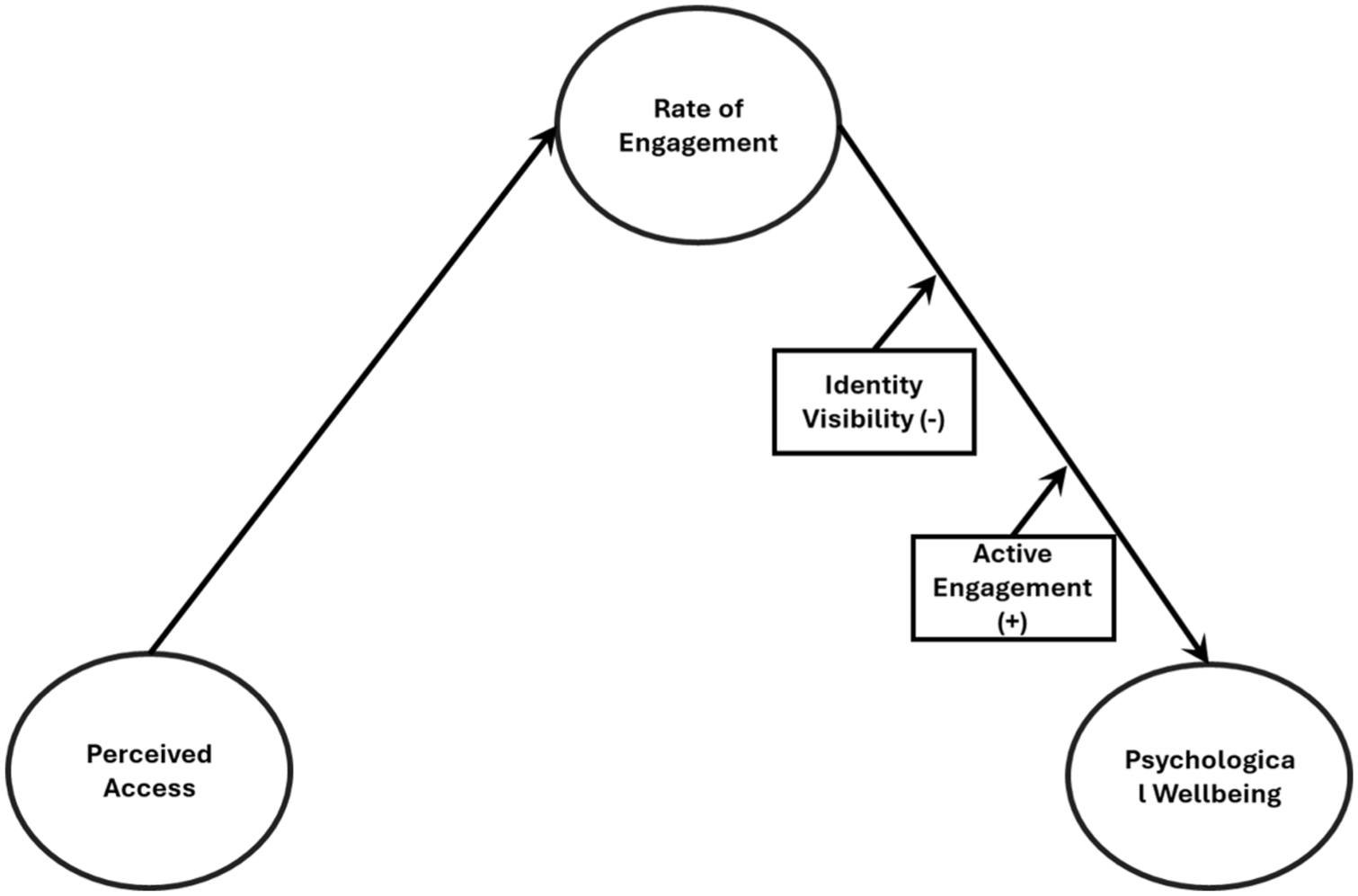
Path diagram of the hypothesised moderated mediation between perceived access and psychological wellbeing.
This paper addresses currently skewed nature and wellbeing frameworks that limit applicability among ethnically diverse groups. We aim to enhance theoretical generalisability by exploring how intersectional factors of race, religion, and gender shape access and PWB benefits associated with nature. A group of South Asian Muslim women who are underrepresented in environmental psychology research are focussed on in the context of RGS. Furthermore, we aim to address current frameworks that synonymise access to nature with proximity, by incorporating multiple factors of perceived access. This study thus provides a holistic view of perceived access with its multiple dimensions and distinguishes it from rate of engagement to examine their separate effects on wellbeing. Finally, as South Asian Muslim women often face barriers to participating in formal health-enhancing settings (like gyms and sports), this study explores the suitability of RGS as an alternative context for supporting their PWB.
Research question
Are perceived access and engagement with rural green spaces (RGS) associated with the psychological wellbeing (PWB) of South Asian Muslim women in England?
Methods
Participants
This study investigated the relationship between access to rural green spaces (RGS) and psychological wellbeing (PWB) among South Asian Muslim women in England. The study sample comprised 600 self-identified South Asian Muslim women residing in England (see Statistical Analyses for justification of this sample size). All participants were aged 18 and above and reflected diversity in area of residence, employment, religiosity, income, family circumstances and time residing in England. Demographic details can be viewed in Supplemental File 4. A map representing the residence location of each participant, determined by postcodes reported in the survey, is provided in Figure 2 below. We employed a combination of convenience and purposive sampling to recruit participants from various community groups, organisations, and social media platforms.
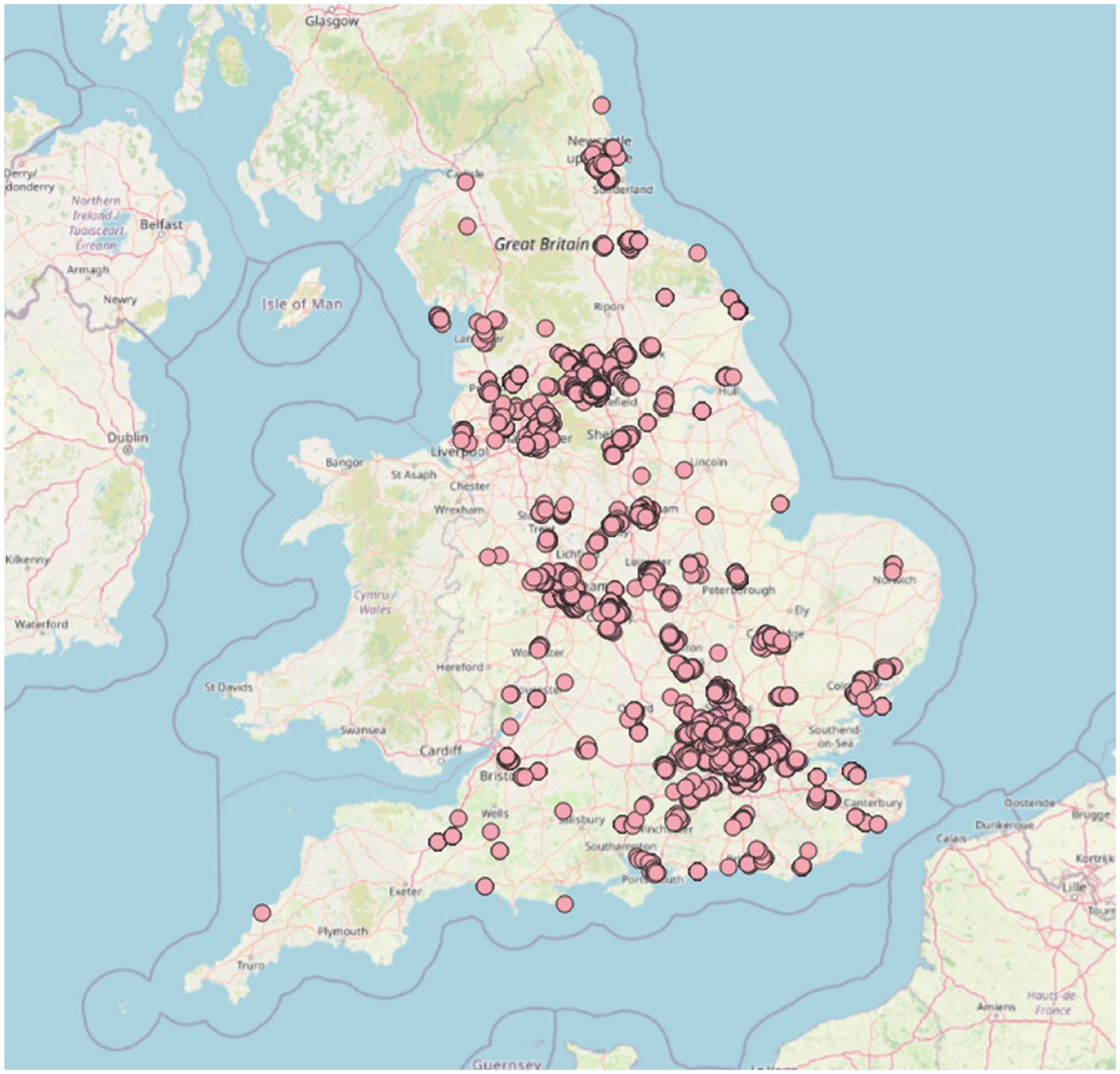
Map of participants’ residence data determined through Open-Source maps on QGIS software.
The inclusion criteria included participants who identified as South Asian, Muslim, female, and over the age of 18. Participants were offered the opportunity to enter a prize draw as a token of appreciation, with prizes including five £20 gift cards, two £50 gift cards, and one £100 gift card. All participants were provided with a debrief sheet with helplines and researcher contact information at the end of the survey.
Measures
The study aim was to understand how rate of engagement with RGS, identity visibility, and active engagement influences the relationship between perceived access to RGS and PWB for South Asian Muslim women in England. The questionnaire included the following key measures.
Perceived access to rural green spaces
To measure perceived access, Wang et al. (2015) scale (α = 0.85 in their study) was adapted to focus on South Asian Muslim women’s access to RGS. This scale captures the range of factors that influence individuals’ perceived ability to access RGS, incorporating both subjective perceptions and the way objective conditions are personally interpreted. The final scale consisted of 22 items reflecting four dimensions of access to RGS including proximity, safety, knowledge and general access factors. For instance, the dimension of perceived safety included items around perceptions of illegal activity, dangers and night and general perceptions about safety of RGS. Participants indicated their level of agreement from 1 to 5 for each item on the scale. The reliability and validity of this scale were tested through piloting.
Rate of engagement
To measure rate of engagement with RGS, a scale previously used in the context of urban green space engagement was adapted for RGS visits (Hong et al., 2019) and additional items regarding diverse types of RGS were added. The final scale included 13 questions to gauge the recency and frequency of visits to RGS where participants rated on a Likert scale 1–7. Questions revolved around time spent in, visits in the last month, and the different kinds of RGS visited. Participants were asked about their visits in the past month rather than the past week, to more accurately capture engagement patterns, as individuals may not have visited within a given week but might visit regularly across the month. The validity and reliability of this scale were tested through piloting.
Psychological wellbeing (PWB)
PWB was measured through items from the PERMA scale (positive negative emotions, engagement, relationships, meaning, and accomplishment; Butler and Kern, 2016; Seligman, 2011). This scale is considered a valid tool used to measure PWB in diverse contexts (Butler and Kern, 2016; Seligman, 2011) and consists of 22 items that exhibit good internal reliability (α = 0.94). It is particularly relevant to use in the current study as all PERMA aspects have been linked positively with engaging with nature (Hamza et al., 2024). Participants rated different aspects of their wellbeing from 1 to 11.
Identity visibility
To measure identity visibility, a validated scale (α = 0.78) measuring religious visibility was adapted and extended (Tolaymat and Moradi, 2011). The final scale comprised nine items focussed on type of attire, levels of modesty, hijab type, skin colour and feelings of difference. Participants rated the applicability of each item on a Likert scale from 1 to 7. The validity and reliability of the final scale was tested through piloting.
Active engagement
A six-item scale was developed to gauge how often participants engage with physical activity during their time in RGS. The scale consists of six items related to how often participants undertake physical activities-brisk walking, jogging, challenging tasks-when in RGS. The reliability and validity of this scale was tested through piloting.
Procedure
The study employed a cross-sectional correlational design to explore the relationship between perceived access to rural green spaces (RGS) and psychological wellbeing (PWB) among South Asian Muslim women in England. A quantitative approach facilitated the investigation of the mediating variable of rate of engagement between perceived access and PWB, and the moderating effects of nature connectedness, social relatedness, identity visibility, active engagement, and affective engagement on this relationship. While the cross-sectional nature of this study deters causal inference, the analyses provide insight as to how each variable statistically predicts other variables within the model. This reflects statistical prediction and not causal prediction. The findings thus highlight associations between perceived access, engagement, and PWB and provide insight into causal pathways that could exist, which can be confirmed through future longitudinal research. The researcher developed a 15–25-minute survey on the Jisc Online Survey v2 platform comprising of multiple sections, each utilising validated and reliable scales to assess the constructs. This was deemed a cost-effective and practical method for participants to complete at ease.
Ethical approval was granted by the Faculty of Social Sciences and Education at Leeds Trinity University and informed consent was gained from all participants. The study was advertised through social media platforms, community groups, mosques, women’s empowerment networks, and organisations that included South Asian Muslim women in England. The survey was accessible through the Jisc Online Surveys v2 platform, and participants could complete it at their convenience. Upon accessing the survey link, participants were presented with a participant information sheet and consent form. Only those who provided informed consent could proceed to the survey.
Figure 3 below reflects the flow of participants in the survey. Measurements were administered in the order of rate of engagement, active engagement, affective engagement, identity visibility, perceived access, nature connectedness, social relatedness, and PWB and were all in English.
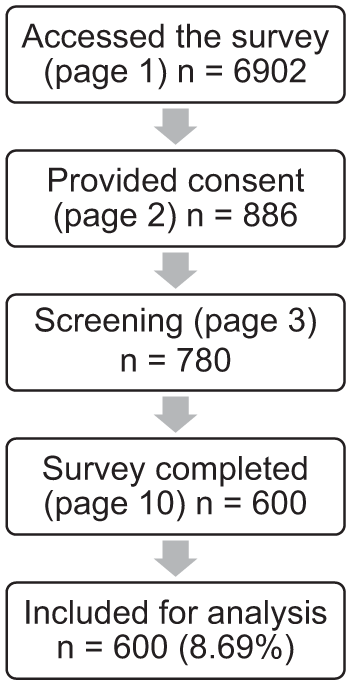
Flow of participants in the survey.
Piloting
Prior to data collection, a pilot study (n = 43) was conducted to assess the validity and reliability of the measures used in the study. The piloting sample size reflected the number of South Asian Muslim women who were available and willing to participate within the time constraints of the piloting phase. All scales demonstrated acceptable reliability (α > 0.7; see Table 1 for the reliability scores) and validity through respondent feedback, where individuals agreed that the measures accurately portrayed what was intending to be captured. However, this was not the case for identity visibility, which initially reflected poor internal consistency, indicating inconsistent item behaviour (α = −0.74). To address this, we consulted with survey participants and experts in the field to enhance the clarity and relevance of the identity visibility items. For example, we added items to increase the robustness of the scale. Through additional piloting (n = 50), we found the refined scale to exhibit acceptable internal consistency (see Table 1) and respondent feedback revealed that the items effectively represented the intended measure with appropriate phrasing. This iterative piloting process facilitated the overall robustness of each scale, ensuring that all measures were both valid and reliable for the main study.
Descriptive statistics and reliability for study variables.
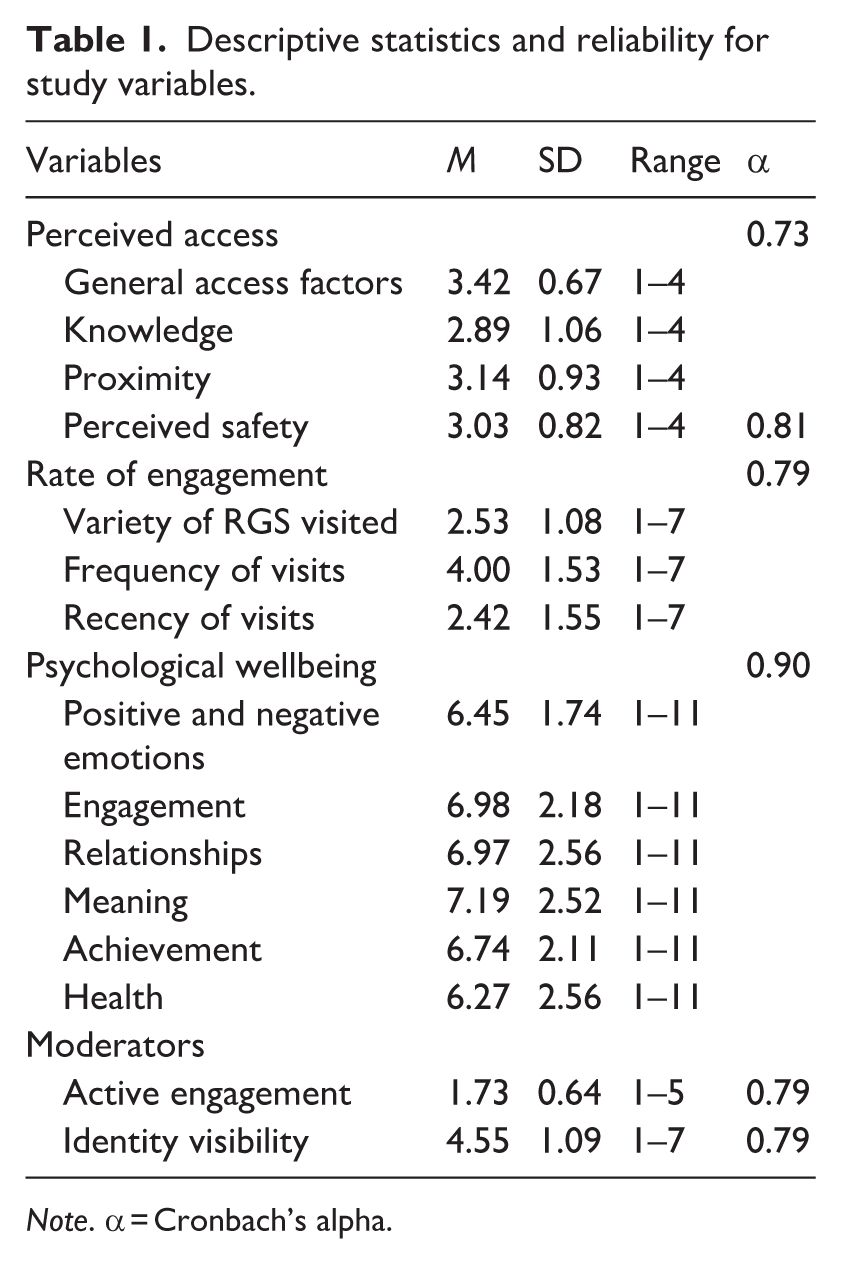
Note. α = Cronbach’s alpha.
Analyses
Structural Equation Modelling (SEM) was performed using the Maximum Likelihood Estimation (MLE) which initially involved a Confirmatory Factor Analysis (CFA) to determine the factor loading of each observed indicator onto its latent construct and then structural analysis was conducted to explore the relationships between variables. SEM also helped to conduct a mediation analysis with bootstrapping procedures of 5000 samples, 95% confidence intervals (CI). Moderation analysis was conducted iteratively by adding composite interaction terms to the existing model. We created interaction terms for each moderator variable and tested them individually by incorporating each term into a separate model within the latent construct framework. This approach is known as a mixed model method, which balances accuracy of results with the labour involved in the analysis by including the moderators as composite variables whilst maintaining the latency of other variables (Collier, 2020).
We adopted a pragmatic approach to determining sample size, considering both statistical and practical factors. South Asian women represent a minority population in England, which poses inherent challenges to recruiting a large number of these participants. We also conducted a Monte Carlo simulation of our SEM approach, which demonstrated that a sample of 600 participants provides sufficient power to test predictors (see Monte Carlo Simulation Output Online). This sample size balances the need for adequate power with the practical constraints of recruiting participants from a minority population.
Results
Descriptive statistics
The means, standard deviations, range, and internal consistency reliability were computed for all study variables (see Table 1). Measures of perceived access, perceived safety, 2 rate of engagement, psychological wellbeing, and the hypothesised moderators exhibited acceptable variability and internal consistency. Perceived access factors showed moderate variation, with general access factors demonstrating higher mean scores compared to knowledge and proximity. Perceived safety was reported at a moderate level and showed strong reliability. Rate of engagement indicators reflected a range of participation levels, with frequency of visits generally higher than variety and recency of visits. Psychological wellbeing variables exhibited relatively high mean scores across all subscales, with strong internal consistency. The hypothesised moderators, active engagement and identity visibility, also demonstrated acceptable reliability. Identity visibility had a relatively higher mean than active engagement, suggesting variability in participants’ perceived representation.
All psychological wellbeing indicators were strongly intra-correlated (see Supplemental File 5). Perceived safety was positively associated with wellbeing indicators but had weaker connections to engagement measures. Among perceived access factors, general access showed moderate correlations with psychological wellbeing, while knowledge and proximity had weaker associations. Active engagement was positively related to engagement variables, particularly variety of RGS visited and frequency of visits. In contrast, identity visibility demonstrated weaker and, in some cases, negative correlations with engagement and access variables. These findings provide preliminary evidence of associations between perceived access, safety, engagement, and psychological wellbeing, forming the basis for further inferential analyses.
Testing for multicollinearity, discriminant validity, and normality prior to formal analyses
No correlational value exceeded 0.85, indicating non-multicollinearity (see Supplemental File 4). Moreover, we found acceptable variance inflation factor VIF values (VIF < 10). All normality tests passed, and sensitivity analysis revealed bootstrapping (n = 5000, CI = 95%) techniques yielded the same results as MLE. Moreover, we tested for common method bias by regressing paths from all indicators to a common method variable in the model. Since the χ2 value was worse with the method factor, there was no substantial concern for common method bias in our research.
Our convergent validity tests among the indicators across variables found all Average Variance Extracted (AVE) values to be acceptable (AVE > 0.6). Our discriminant validity tests revealed all squared correlations for each pair of constructs as lower than AVE values, signalling no concern for discriminant validity. Our Heterotrait-Monotrait test revealed all values to be within the acceptable range (<0.85).
Factor validation
We specified a confirmatory factor analysis (CFA) model to assess the construct validity of each measure. For parsimony, survey items were combined into parcelled indicators.
The initial model fit was poor, χ2(62) = 308.76, PCMIN/DF = 4.98, GFI = 0.92, RMR = 0.06, TLI = 0.92, CFI = 0.94, RMSEA = 0.08, SRMR = 0.06. We examined the modification indices to identify ways to improve model fit and added covariances incrementally that were theoretically justified and improved the model fit. These iterations are documented in Supplemental File 1. Despite model fit improvements, poor model fit led us to further respecify the model. We identified perceived safety to load poorly onto perceived access (0.27) in the CFA output. As such, we added perceived safety as an independent construct and removed it from perceived access. Items related to perceived safety were loaded onto the construct as unparcelled indicators (see Figure 2). A re-evaluation of the model revealed poor fit statistics initially, but these improved after respecifying the model with an additional covariance (see Supplemental File 2). The chi-squared difference test between the third specification (initial model) and the fifth specification (final model) indicated that the final model fit the data significantly better than the initial model, χ2(50) = 106.34, p < 0.05, with a critical value of 67.5. The final measurement model fit the data well, presented in Figure 4 below. The final model reflected good model fit: χ2 = 316.28, DF = 109, PCMIN/DF = 2.90, GFI = 0.94, RMR = 0.05, TLI = 0.95, CFI = 0.96, RMSEA = 0.06, SRMR = 0.05.
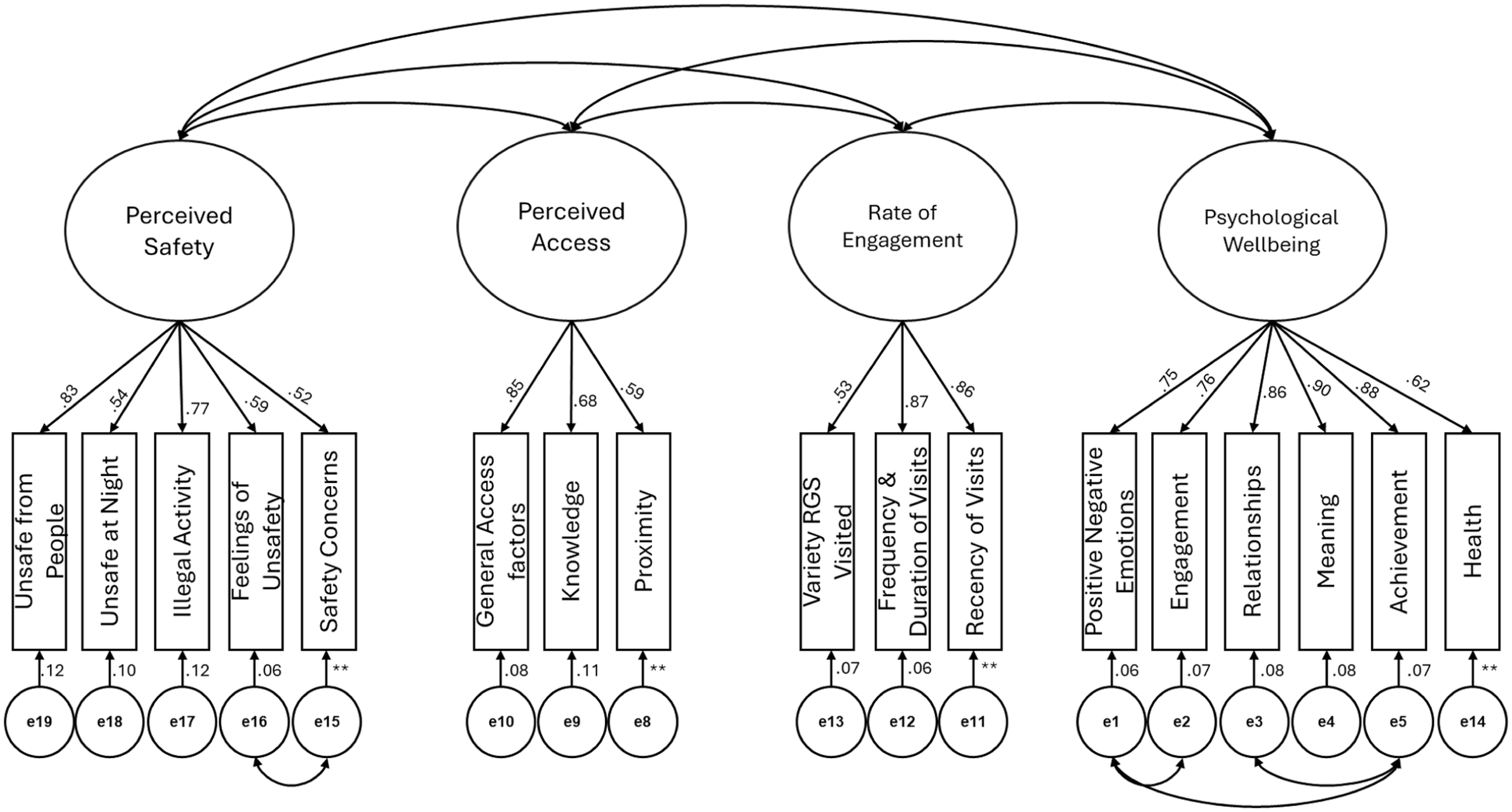
Measurement model of the latent variables perceived safety, perceived access, rate of engagement, and psychological wellbeing.
The relationship between perceived access, perceived safety, rate of engagement, and psychological wellbeing
Paths were specified from perceived access to rate of engagement, perceived access to PWB, and rate of engagement to PWB. Perceived safety was also regressed onto PWB, aligning to the original idea that perceived safety associates with PWB as a component of perceived access, but now separate from perceived access due to its poor factor loading. The results are presented below.
The fit for the structural model was good: χ2 = 316.58, DF = 110, PCMIN/DF = 2.90, GFI = 0.94, RMR = 0.05, TLI = 0.95, CFI = 0.96, RMSEA = 0.06, SRMR = 0.05. All hypothesised relationships were significant except for between rate of engagement and PWB. The R2 values for rate of engagement was 0.41 and for PWB 0.23. Perceived access exhibited a significant positive moderate relationship with PWB (β = 0.38, t(109) = 5.35, p < 0.01). Perceived access also had a significantly positive strong relationship with rate of engagement (β = 0.90, t(109) = 10.97, p < 0.01). Perceived safety reflected a significantly positive weak relationship with PWB (β = 0.20, t(109) = 4.15, p < 0.01). However, rate of engagement did not significantly predict PWB whilst accounting for perceived access and perceived safety in the model (β = 0.01, t(109) = 0.24, p = 0.81). Our investigation into potential issues that could have skewed the variable rate of engagement, such as measurement errors or external factors, revealed no concerns.
Rate of engagement as a mediator between perceived access and psychological wellbeing
To test whether rate of engagement mediates the relationship between perceived access and PWB, we assessed the direct and indirect effect of perceived access on PWB through rate of engagement. Perceived access had a significant direct effect on psychological wellbeing (PWB). However, the indirect effect was small (β = 0.01, unstandardised = 0.01), and the 95% confidence interval ranged from −0.10 to 0.01, p = 0.85, indicating a non-significant indirect effect. Thus, the mediation effect was not supported, suggesting that the relationship between perceived access and PWB was primarily driven by a strong direct effect (β = 1.11).
Identity visibility and active engagement as moderators of the link between perceived access and psychological wellbeing
While we initially hypothesised that identity visibility and active engagement would moderate the relationship between the rate of engagement and PWB, we adjusted our hypotheses to test these moderations on the direct relationship between perceived access and PWB due to the non-significant relationship observed between the rate of engagement and PWB.
When identity visibility was included in the model, the fit was acceptable: χ2(139) = 350.15, PCMIN/DF = 2.52, RMR = 0.05, GFI = 0.94, TLI = 0.95, CFI = 0.96, RMSEA = 0.05, SRMR = 0.05. The direct effect of identity visibility on psychological wellbeing (PWB) was significant, with an unstandardised estimate of 0.07 (β = 0.13), SE = 0.22, t(139) = 3.25, p < 0.01. The interaction between identity visibility and perceived access was significant and positive for PWB, with an unstandardised estimate of 0.06 (β = 0.09), SE = 0.03, t(139) = 2.40, p = 0.02. To further probe this interaction, we examined the model at different levels of identity visibility (see Figure 5). At high levels, identity visibility strengthened the relationship between perceived access and PWB, with an unstandardised estimate of 0.58 (β = 0.62), SE = 0.08, CR = 7.15, p < 0.01. Conversely, at lower levels, identity visibility weakened this relationship, with an unstandardised estimate of 0.40 (β = 0.42), SE = 0.08, CR = 5.33.
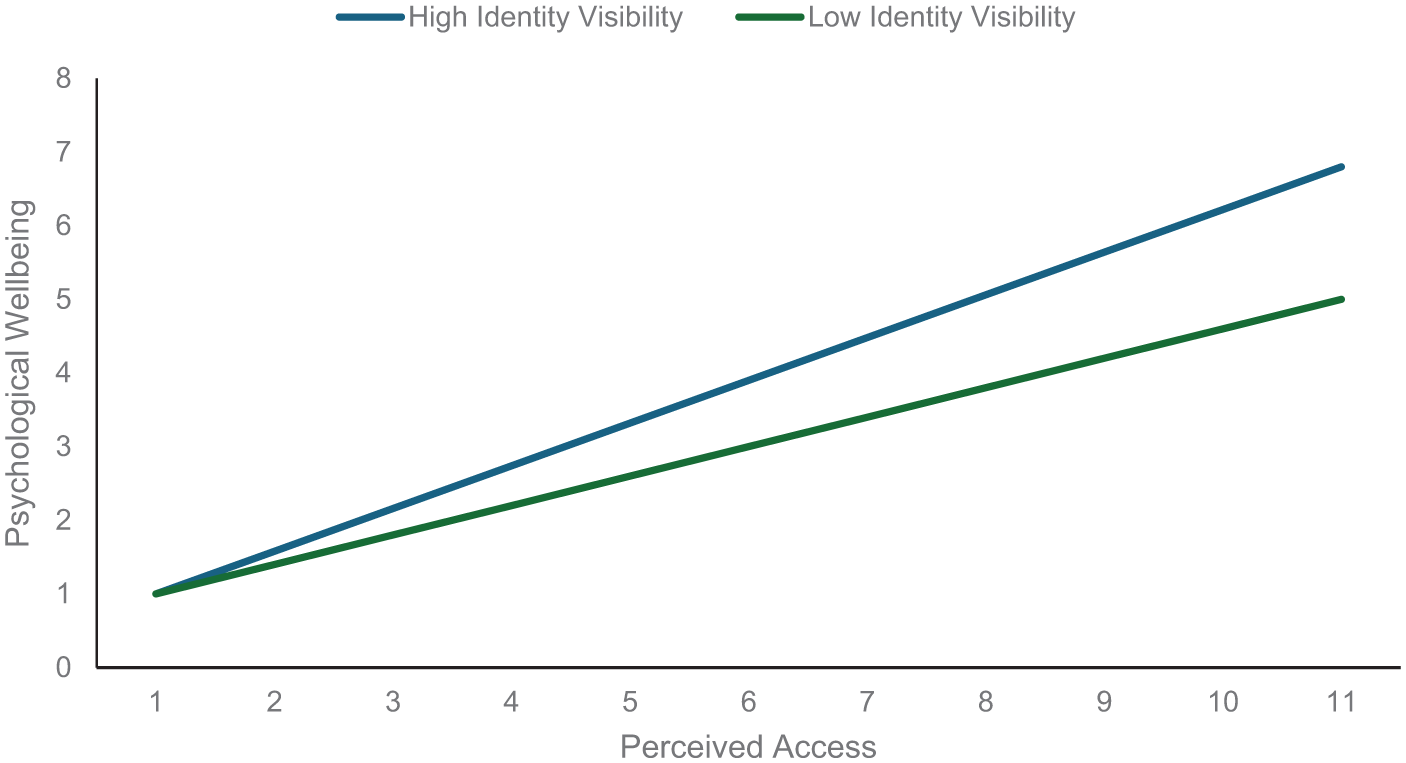
Identity visibility moderating the relationship between perceived access and psychological wellbeing.
When active engagement was included in the model, the fit was: χ2(139) = 539.28, PCMIN/DF = 3.88, RMR = 0.05, GFI = 0.92, TLI = 0.91, CFI = 0.92, RMSEA = 0.07, SRMR = 0.06. The direct relationship between active engagement and PWB was non-significant, with an unstandardised estimate of −0.02 (β = −0.02), SE = 0.04, t(139) = −0.50, p = 0.62. The interaction between active engagement and perceived access was significant and positive for PWB, with an unstandardised estimate of 0.09 (β = 0.08), SE = 0.05, t(139) = 2.04, p = 0.04. To further probe this interaction, we examined its effects at different levels of active engagement (see Figure 6). At low levels, active engagement strengthened the relationship between perceived access and PWB, with an unstandardised estimate of 0.39 (β = 0.49), SE = 0.08, t(139) = 4.85, p < 0.01. This relationship was weaker at high levels, with an unstandardised estimate of 0.31 (β = 0.65), SE = 0.10, t(139) = 6.12, p < 0.01.
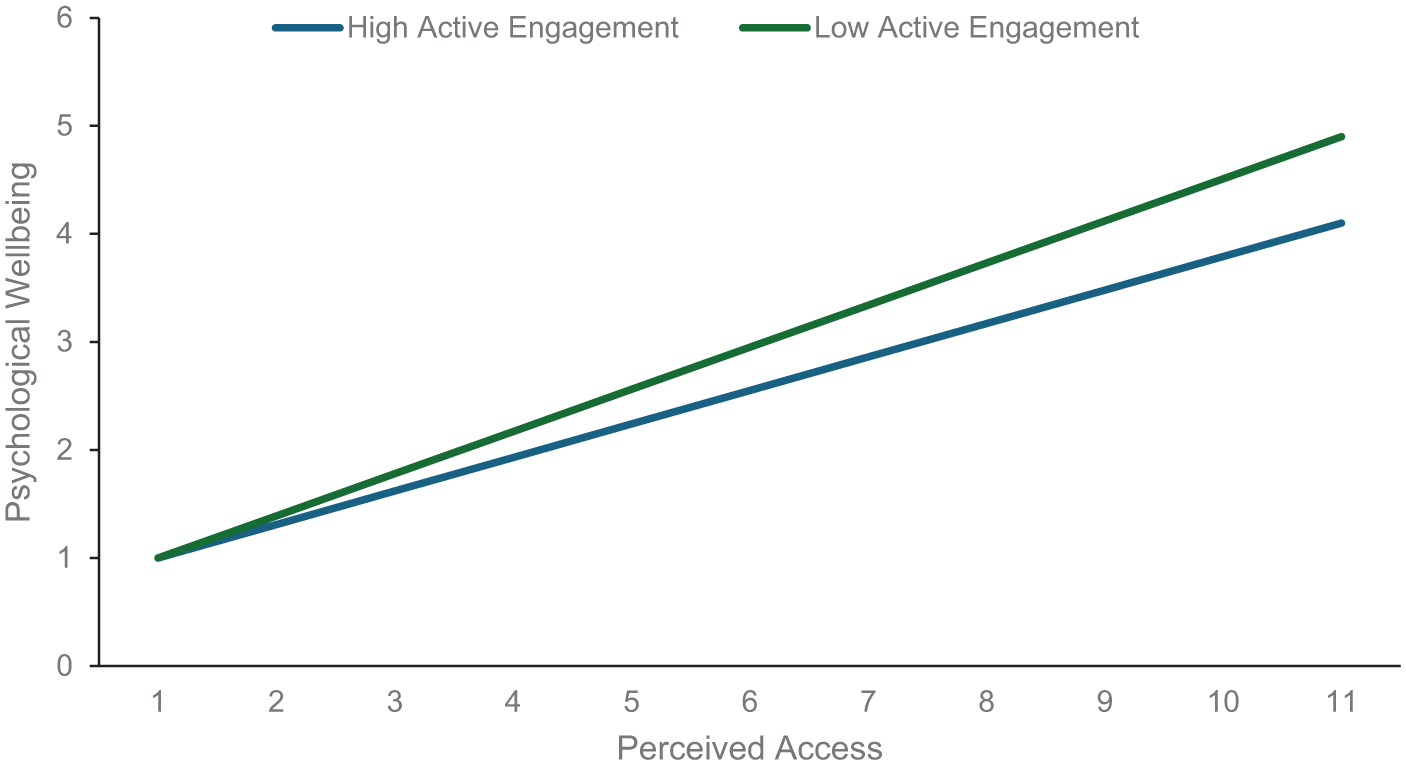
Active engagement moderating the relationship between perceived access and psychological wellbeing.
Overall, perceived access exhibited significant positive associations with both rate of engagement (β = 0.90) and PWB (β = 0.38). Perceived safety was also positively associated with PWB (β = 0.20) as separate from perceived access. However, rate of engagement did not significantly predict PWB when accounting for perceived access and safety. Mediation analysis suggested that rate of engagement does not mediate the relationship between perceived access and PWB. Identity visibility and active engagement both strengthen the positive relationship between perceived access and PWB. Overall, the model fit was good, supporting the findings.
Discussion
Our initial conceptualisation of perceived access, derived from Wang et al. (2015), incorporated perceived safety as a subdimension of various access factors to urban parks. Our findings suggest that perceived safety is a statistically distinct construct from perceived access in its’ association with PWB because it did not load strongly onto perceived access but still exhibited a significant and positive relationship. Supporting this, the two constructs revealed different patterns of relationships with other variables. Furthermore, this fits in with broader literature as Sarriera et al. (2021) found significant links between perceived safety and PWB across different samples. The current finding highlights the importance of contextual nuances in the applicability of theoretical concepts across different populations and settings. Perceived safety is indeed an important factor associated with PWB, particularly for a group who are often exposed to safety risks due to their gendered, religious, and ethnic identities (Hamza et al., 2024, 2025).
We found that rate of engagement was explained by perceived access in the model. PWB is explained by perceived safety, and perceived access in the model. As expected, perceived access was moderately associated with PWB and was strongly associated with rate of engagement. Perceived safety strongly was associated with PWB, while the relationship between rate of engagement and PWB was non-significant. Moreover, rate of engagement did not statistically mediate the effect of perceived access on PWB, which was contrary to our expectations. It is particularly interesting that rate of engagement does not statistically predict PWB because these findings are unsupportive of wider literature which suggests that exposure to the natural environment links to better PWB, when considering perceived access in the model.
Perceived access to rural green spaces associated with rate of engagement and psychological wellbeing
Our analysis revealed new insights into the relationships between perceived access to RGS, rate of engagement and PWB among South Asian Muslim women in a western country. As per our expectations, we found that perceived access to RGS could strongly predict the PWB of South Asian Muslim women, showing that feeling able to engage with RGS matters more than retrospective visits. This could be because South Asian Muslim women’s PWB benefits from RGS access are contingent on feelings of belonging and being able to access such spaces. This finding extends broader work on the associations between perceptions of access to natural environments more broadly and PWB (Burrell et al., 2025; Hamza et al., 2024). They also highlight the importance of considering perceptions when evaluating the wellbeing benefits that diverse communities obtain from RGS.
The positive relationship between perceived access and rate of engagement with RGS was also expected and could mean that those who experience better perceived access to RGS are more likely to visit. However, our findings extends the model of Wang et al. (2015), who illustrates access to urban parks as multidimensional, to bring applicability of the framework to the context of South Asian Muslim women’s experiences of RGS in England. Beyond perceived access, a substantial body of work emphasises the PWB benefits of being in natural environments (Martin et al., 2020; Ulrich et al., 1991). However, research rarely measures access, engagement and PWB in a single model. This was important to understand how engagement and access could enhance PWB for South Asian Muslim women. We measured engagement with RGS as distinct from perceived access (Pot et al., 2021) by measuring frequency of visits to RGS. Our approach provided a comprehensive and accurate means to understand the dynamics between access and actual engagement in influencing PWB.
Although we found that perceived access was significantly associated with both rate of engagement and PWB, rate of engagement did not significantly predict PWB in this model, contradictory to our expectations. This suggests that engagement frequency may not explain PWB differences among people. Questions emerge when observing the correlation matrix which shows a strong positive relationship between active engagement with PWB, about whether specific aspects of access or engagement contribute to PWB, or whether quality, type and nature of engagement contribute to PWB. In this regard, it is important to recognise that many studies may only report significant results, contributing to the existing issue of publication bias. While we previously discussed the neglect of rate of engagement in the literature, it is plausible that some studies, like ours, measured rate of engagement but chose not to report the results due to their non-significance. This lack of transparency perhaps resulted in an incomplete understanding of the dynamics between access, engagement, and PWB in the literature. Addressing this issue highlights the need for greater openness in reporting and warrants further exploration of the relationship between engagement with RGS and PWB.
Whilst nonsignificant findings are often associated with little contributions, our finding contributes to the idea that the feeling of being able to visit RGS (through perceived access) may be more conducive to PWB than actual engagement itself. The finding suggests that perceived access is a better associator of PWB than rate of engagement with RGS, which does not influence the effect of perceived access on PWB. It adds nuance to wider literature which suggests that exposure to the natural environment links to better PWB and instead suggests that feeling able to visit is more important for PWB than actual visits, when considering perceived access in the model. This finding also contradicts widespread assumptions that perceived access to natural environments enhances PWB based on ideas that people visit those spaces by capitalising on their access. Instead, we argue that perceived access to RGS contributes to PWB better than engagement. Reasons for this may include feeling able to access RGS may be linked to experiencing a psychological sense of security, which relates to PWB better than actual engagement levels. Secondly, individuals who perceive better access to RGS might also engage more with broader green spaces such as gardens, parks, and allotments. Engagement with those spaces more frequently might affect their PWB more significantly than their rate of engagement with RGS. This is plausible when considering wider statistics reflecting South Asian Muslim women as less frequent visitors to RGS (Natural England, 2019a). Moreover, those who perceive better access to RGS may also be more likely to be able to access mental health services and leisure facilities (Hayanga et al., 2023; Mahmood et al., 2022; Tannerah et al., 2024). For instance, experiencing better transport access might enhance one’s perceived access to RGS, but may also facilitate greater engagement with gyms and leisure facilities, thereby contributing to improved PWB. These findings assert the importance of enhancing perceived access to RGS.
Higher levels of identity visibility and lower levels of active engagement strengthen the relationship between perceived access for psychological wellbeing
Identity visibility was important to explore given the PWB and RGS access challenges faced by South Asian Muslim women, linked to their visible identities (Hamza et al., 2025; Slater, 2022). Understanding this relationship could reveal what inhibits visible minorities from experiencing the PWB benefits of RGS. We found that identity visibility strengthens the relationship between perceived access and PWB. The positive interaction of identity visibility on the relationship between perceived access to RGS and PWB suggests that the relationship between perceived access and PWB is stronger for those with high identity visibility. This could mean that South Asian Muslim women need to feel stronger perceived access to RGS for their PWB when experiencing racialisation. For instance, less visible individuals might already experience better sense of belonging and welcomeness to RGS, thus experiencing better PWB even at lower levels of perceived access. Conversely, those who are seen to be different require a higher level of perceived access to RGS for their PWB. It is also interesting to note the positive relationship between identity visibility and all PWB indicators, reflecting a complex dynamic. Regarding this, previous research suggests that Muslim women who maintain their visibility exhibit greater emotional resilience regardless of their access to RGS, linked to their persistence in wearing distinct clothing in mono-cultural settings, or feeling normalised to treatment due to their skin colour (Gulamhussein and Eaton, 2015).
The findings also suggest that the relationship between perceived access and PWB is stronger for those who are less actively engaged with RGS. This was important to understand for a group who face alarming rates of physical health challenges (Roe et al., 2016; Tandon et al., 2022; Tannerah et al., 2024). Our results show that those who engage in less and average levels of physical activity in RGS rely more on their perceived access to RGS as a link to their PWB. This accentuates the importance of perceived access for those who are less physically active. Since those who engage in high active engagement experience a weaker relationship between perceived access and PWB, their physical activity might provide sufficient PWB benefits, reducing the impact of perceived access on their PWB. This reflects a threshold effect and fits with broader work that highlights the compounding PWB benefits of physical activity in RGS (Marmara et al., 2025). Supporting this idea, active engagement exhibited positive relationships with all PWB and rate of engagement indicators, suggesting that users are more likely to engage with physical activity when visiting RGS, contributing to better PWB outcomes. These findings support previous calls to recognise RGS as a viable pathway to undertake physical activity for South Asian Muslim women who might not otherwise be inclined to physical activity, helping to combat their current physical health concerns (Hamza et al., 2024).
Implications
This study highlights the importance of increasing perceived access to RGS to challenge current health concerns for South Asian Muslim women. It offers unique contributions to both academia and practice by extending current nature and wellbeing frameworks through the inclusion of an underrepresented demographic—South Asian Muslim women. The study highlights how existing frameworks should be informed by identity, belonging, and perceptions in relation to their impact on RGS access and PWB outcomes. It also conceptualises perceived access as a multidimensional construct, demonstrating that access is more than physical proximity and includes social, cultural, and psychological factors.
This study highlights for policy makers that perceived access can be enhanced through addressing the cultural, social, environmental, and economic barriers this group faces, as was captured in a multi-dimensional scale. While perceived safety emerged as an independent dimension influencing PWB, Wang et al.’s (2015) framework for conceptualising access to green spaces helped provide an elaborate perspective for access. Future research should consider using similar frameworks to better understand access to natural environments for distinct groups. That said, the significance of perceived safety as a separate correlation with PWB emphasises the need for public health initiatives to address safety concerns of RGS, particularly for South Asian Muslim women.
Our approach to measure rate of engagement and perceived access as separate and distinct variables associating with PWB was valuable. We found that rate of engagement did not predict PWB in the model when accounting for perceived access in the model, which contradicts a large body of research highlighting the benefits of interacting with nature (Ulrich, 1984). We suggested this could be attributed to the broader range of spaces available for individuals to capitalise on their access resource, warranting further exploration of these intricate dynamics. Nonetheless, the implications of this study assert the importance of enhancing perceived access for South Asian Muslim women in England.
The findings suggest that encouraging physical activity (i.e. exercise) in RGS can enhance PWB, particularly for those who may not engage in these activities regularly. While active engagement positively influences PWB directly, those who are already highly active appear to benefit independently from their perceived access to RGS. This highlights the importance of developing RGS initiatives that support a range of engagement levels of physical activities. For individuals who are less inclined towards physical activities, increasing accessibility could involve encouraging initial participation. Meanwhile, for those who are already inclined in such activity, RGS initiatives should offer diverse and engaging options that encourage long term meaningful engagement. Using these findings, government and community interventions could address cultural and social factors, ensuring that engagement opportunities are tailored, inclusive, accessible, and meaningful. Similarly, whilst generalised support structures may suffice for those with lower visibility to feel welcomed in RGS, those with higher visibility might benefit from initiatives that enhance their sense of belonging and acceptance in these spaces.
Practitioners must work to enhance perceptions of knowledge, familiarity, and awareness of RGS among South Asian communities. This could include disseminating information about such spaces throughout local community centres and mosques. Furthermore, policy should improve information on planning, preparation, networks, transport and availability of different RGS that are in reach of these communities. Moreover, educational initiatives could be implemented in broader communities to raise awareness and prevent harassment against people whose identities are apparent through their skin colour, clothing, femininity, or a combination of these. Implementing these factors would lead to better inclusivity and accessibility to RGS for all individuals, regardless of their gender, race, or religion. Linked to the idea of PWB in RGS, policy and practice should formally recognise that RGS can effectively improve health outcomes, especially for ethnic minorities who face barriers in accessing more formal physical activity spaces. Initiatives could include culturally appropriate health programmes such as outdoor fitness classes, guided nature walks, or mindfulness sessions specifically designed for South Asian Muslim women, led by women, addressing both cultural and practical needs.
Current frameworks like Ulrich et al.’s (1991) Stress Recovery Theory (SRT) suggests that actual exposure to natural settings automatically triggers a stress-reducing response. In our study, rate of engagement (how often women visited RGS) was measured retrospectively and not predict wellbeing once perceived access was in the model. At first glance this seems to challenge SRT; however, this suggests that merely counting visits is not enough to capture the restorative contact SRT describes. Moreover, the strengthening moderation of active engagement between perceived access and PWB suggests that those who engage in PA may benefit more from their RGS engagement. Additionally, the moderation findings extend SRT by revealing important nuances associated with intersectionality. For instance, when identity visibility increased, the need for perceived access accentuated. This implies that feeling alienated or more visible in RGS introduce a counteracting stress that impedes recovery from nature engagement. These findings support SRT’s idea that nature enhances PWB through stress relief and suggest that restoration depends on the sense of security and inclusion felt when in RGS. For South Asian Muslim women, a welcoming atmosphere free of social tension was a critical factor for nature’s stress-recovery potential to fully develop.
Conclusion
This study provides valuable insights into the dynamics between perceived access to RGS, rate of engagement, and PWB among South Asian Muslim women. The study employed well-established scales like PERMA to measure PWB for a marginalised group and a comprehensive measure of perceived access to develop a complex model representing the RGS experiences of South Asian Muslim women. In doing so, we provide a comprehensive understanding of their access to, and engagement with, environments that often present significant barriers for visible minorities. Perceived access and perceived safety were presented as associated with frequency of engagement with RGS. However, rate of engagement was not found to influence PWB in this model. Although this relationship requires exploring further, we emphasise the need for interventions to focus on enhancing perceptions of access to RGS for this demographic. The results support Ulrich et al.’s (1991) Stress Recovery Theory but show that recalling past visits to RGS does not reliably predict psychological wellbeing (PWB). They expand the theory by demonstrating that engaging in physical activity within RGS amplifies PWB benefits and argue for the inclusion of sociocultural factors, such as intersecting identities, into its framework, as people with distinct intersecting identities experience nature differently.
Interventions should also introduce physical activities in RGS to South Asian Muslim women, to maximise the PWB benefits of their engagement. This would help to address the current mental and physical health challenges they face. These interventions must consider cultural, social, and environmental factors to improve access to RGS. This study contributes to the growing corpus of literature on health and wellbeing predictors, illustrating how cultural identity shapes the retrieval of health benefits from RGS. Future research should build on these findings to explore complex models of health and wellbeing within specific populations, in the context of rural green spaces, to form relevant and practical solutions to combat health and access inequity. Lastly, as this cross-sectional study was the first attempt to map this out, further work should look at this longitudinally. Such insights can be further developed through evaluating targeted programmes which can apply the principles of enhancing perceived access, addressing safety and cultural belonging, and promoting community engagement to assess their effectiveness in practical contexts. Focus group intervention workshops can include members of local communities to meet with organisation stakeholders and reveal how their RGS access and PWB outcomes can be enhanced.
Supplemental Material
sj-docx-1-hpq-10.1177_13591053261429220 – Supplemental material for Perceived access to rural green spaces and psychological wellbeing among South Asian Muslim women in England
Supplemental material, sj-docx-1-hpq-10.1177_13591053261429220 for Perceived access to rural green spaces and psychological wellbeing among South Asian Muslim women in England by Mohammed Hamza, Cameron Downing, Alison Torn and Laura De Pretto in Journal of Health Psychology
Footnotes

Ethical considerations
This study was approved by the Leeds Trinity University Research Ethics Committee (approval no.02692023). All procedures were conducted in accordance with the Declaration of Helsinki.
Consent to participate
All participants provided informed consent to participate in the study.
Consent for publication
Participants provided consent for the publication of anonymised findings in this study.
Author contributions
Mohammed Hamza: Conceptualisation; Methodology; Data curation; Formal analysis; Software; Investigation; Validation; Visualisation; Writing – original draft; Writing – review & editing; Project administration; Resources. Cameron Downing: Methodology; Validation; Writing – review & editing. Alison Torn: Conceptualisation; Methodology; Supervision; Validation; Writing – review & editing. Laura De Pretto: Conceptualisation; Methodology; Supervision; Validation; Visualisation; Writing – review & editing.
Funding
The authors received no financial support for the research, authorship, and/or publication of this article.
Declaration of conflicting interests
The authors declared no potential conflicts of interest with respect to the research, authorship, and/or publication of this article.
Data availability statement
Data is openly available online at Data Set Online.
Supplemental material
Supplemental material for this article is available online.