




Abstract
The postpartum period presents physical and psychological changes, often influenced by societal body image ideals. This study explores postpartum women’s experiences with body image and eating behaviours using a qualitative phenomenological approach. Four semi-structured focus groups were conducted with 15 Australian postpartum women. Reflexive thematic analysis identified three key themes: (i) Internal guilt and self-judgement: Mothers are never the priority, mothers deprioritising their needs, (ii) External pressure and support, societal and social influences on postpartum expectations and (iii) Healthy habits and self-compassion, balancing diet, exercise and self-acceptance. Many participants experienced body dissatisfaction driven by societal standards and a desire to reclaim pre-pregnancy bodies, sometimes leading to maladaptive eating behaviours. Social support was both helpful and a source of pressure. This study highlights the complex relationship between postpartum body image and eating attitudes, emphasising the need for holistic healthcare interventions to support maternal well-being, body positivity and healthy eating practices.
The postpartum period involves significant physical, psychological, and social changes (Lee et al., 2023). While medical definitions often confine postpartum to 12 weeks after birth, research suggests mental health effects can last up to 5 years (Walker and Murry, 2022). This study defines the postpartum period as 4 years post-childbirth, aligning with research indicating long-term maternal body perception and eating attitude adjustments (Lee et al., 2020, 2022, 2024). Acknowledging this extended timeframe is essential, as the adjustment period influences maternal well-being beyond the early months (Lee et al., 2020, 2022, 2024).
Statistics show that one in five (20%) Australian women experience postpartum depression within the first year following childbirth (Australian Institute for Health and Welfare, 2024). Body dissatisfaction is also common, with studies indicating that many new mothers’ experience distress related to body image, influenced by societal pressures to quickly return to pre-pregnancy body shapes (Lee et al., 2020). This dissatisfaction can contribute to negative eating attitudes and behaviours, including restrictive dieting and disordered eating, further impacting mental health (Lee et al., 2024; Mughal et al., 2024).
Postpartum depression symptoms include persistent sadness, anxiety, irritability and changes in sleep and appetite (Mughal et al., 2024). These effects extend beyond the mother, impacting infant attachment and cognitive development (Australian Institute for Health and Welfare, 2024; Hartley et al., 2018). Risk factors include, hormonal changes, societal pressures, a lack of social support and pre-existing mental health conditions (Hutchinson and Cassidy, 2022; Lee et al., 2023).
Postpartum body image concerns directly impact mental health and infant development, making this an important area of research (Newman et al., 2023). Studies highlight links between body dissatisfaction, stress, depression and disordered eating behaviours (Veillon, 2023). Maladaptive eating habits, such as restrictive dieting and binge eating, are often a response to societal pressures, promoting unrealistic postpartum body ideals (O’Loghlen and Galligan, 2022).
Existing research primarily quantifies postpartum depression, body image and eating attitudes but lacks insight into how and why mothers internalise these experiences. Most studies focus on prevalence patterns (Lee et al., 2022, 2024) rather than individual lives experiences. This study addresses this gap by exploring Australian mothers’ unique postpartum body image concerns and eating behaviours within their cultural and societal context, using a phenomenological approach.
Feminist theory provides a lens to critique societal body expectations (Rodgers et al., 2024). This study examines how media, cultural norms and social support systems shape women’s body image and eating behaviours postpartum (Fox and Neiterman, 2015). Feminist perspectives highlight objectification, unrealistic body ideals and the gendered pressures of motherhood. Phenomenology complements this by focusing on lived experiences, capturing how societal pressures are internalised (Wilson, 2015).
This study explores how Australian postpartum women perceive and navigate changes in their body image and eating attitudes within the first 4 years after childbirth. It examines the influence of societal ideals, personal expectations and social support networks on how women internalise and respond to postpartum body changes. Particular attention is paid to the impact of self-care practices and how women prioritise (or deprioritise) their well-being in the context of motherhood. By using a qualitative phenomenological approach, this study seeks to capture the unique and often complex ways in which postpartum women make sense of their bodily experiences, dietary behaviours and emotional health within a broader sociocultural framework.
Method
Research design
The Bond University Research Ethics Committee approved this research under reference number ML019999. Using the COREQ guidelines this study employed a qualitative phenomenological research design, using focus groups with a semi-structured interview guide, focusing on the individual experiences of Australian postpartum women (Tong et al., 2007). To reduce potential bias in interpreting participants’ experiences, a reflexive journal was maintained throughout the study. This journal allowed reflections on beliefs, predetermined ideas and attitudes, helping to reduce their influence on data collection, analysis, and interpretation (Braun and Clarke, 2019).
Methodology
The phenomenological approach seeks to understand the lived experiences of participants in their natural settings (Wilson, 2015). This design is particularly appropriate for exploring complex and deeply personal phenomena such as body image and eating attitudes during the postpartum period. The ontological stance of this study is constructivist, which suggests that reality is socially constructed and subjective. This perspective acknowledges that postpartum women’s experiences of body image and eating attitudes are shaped by their interactions with society, social support systems and personal beliefs.
Phenomenology, focusing on an individual’s lived experiences, is relevant for exploring the unique aspects of postpartum body perception. By considering this methodology, we aim to provide an in-depth understanding of how new mothers perceive and interpret their bodily changes and eating attitudes, providing rich, qualitative insights into their experiences (Kochan and Kabukcuoglu, 2022). This approach is particularly helpful in capturing the complexities and varied themes of postpartum body image, as it emphasises the importance of personal meaning and the context of personal experiences (Manen, 2016). By prioritising mothers’ voices and lived experiences, phenomenology contributes to a deeper appreciation of the diverse ways women navigate body image and their eating attitudes after childbirth (Finlay, 2011).
Participants
This study included 15 Australian postpartum women across four focus groups. Participants were selected using purposive sampling to ensure a diverse range of experiences and perspectives. This ensured there were women of varied ages, working/stay-at-home, multiple/single children, partnered/unpartnered and who had experienced natural/caesarean birth participating. To reduce intrusiveness, no demographic information was collected during their focus group discussions. Participants were recruited through word-of-mouth referrals and from in-person mother’s groups, with the following inclusion criteria: women aged 18 years and older who had given birth within the last 4 years and who were willing to discuss experiences related to body image and eating attitudes in a group setting. The exclusion criteria included currently pregnant women. All participants provided informed written consent. As sample size is not a primary concern in qualitative research, we recruited participants and conducted focus groups until we reached a point where no new information was identified (Braun and Clarke, 2019).
Procedure
Interested participants received an email that provided information about the study, including the purpose, procedures and criteria for participation. They also received a participant information statement and were requested to confirm their in-person availability, and dietary requirements. Potential participants were advised that they were welcome to bring their children and asked to complete and return the informed consent form. Upon confirmation of availability the participants were provided with a location for the focus group with directions and meeting time details.
On the day of the focus groups, participants met at the pre-arranged location with the facilitator. Participants were encouraged to settle in, with refreshments available and a designated area for the children to play, ensuring a relaxed and informal atmosphere. Focus groups were facilitated by female psychology honours students utilising a semi-structured interview guide to comprehensively explore participants’ experiences and perceptions of body image and eating attitudes. A set of open-ended questions guided the focus group discussions, ensuring comprehensive coverage of relevant themes. Example questions included, ‘Now that you are a Mum, is there anything you did or didn’t expect pre-pregnancy?’ and ‘Has having children changed your eating habits?’ See Supplemental Material for full interview guide. The focus group format was chosen to facilitate open discussion among participants, allowing for the exploration of personal experiences and perceptions in a supportive environment. This approach enabled participants to share their experiences and perspectives on body image and eating attitudes during the postpartum period. The sessions lasted 40–60 minutes.
Participants were debriefed on the purpose of the study and the next steps in the research process. They were reminded of the confidentiality of their responses and how their data would be used. Participants were thanked for their time and contributions and provided with contact information for any follow-up questions or concerns. They were also given information on support services available should they feel distressed after the session.
To ensure accurate data capture, all focus group sessions were audio-recorded with the participants’ consent on a password-protected iPhone and laptop. This allowed for the creation of verbatim transcripts by the lead researcher using Otter software (www.otter.ai).
Data analysis strategy
The data collected from the focus groups in this study were analysed using reflexive thematic analysis, a method suited for identifying, analysing and reporting themes within qualitative data (Braun and Clarke, 2019). This approach allowed for in-depth understanding of the experiences and perceptions of postpartum women regarding their body image and eating attitudes. All participants were deidentified at the first stage of analysis, with the mothers given a number and a letter depending on which focus group they participated in as their pseudonym (1C, 1N, 1K, 2M, 2I, 2C, 2L, 3J, 3G, 3A, 4A, 4B, 4C, 4D, 4E, 4F).
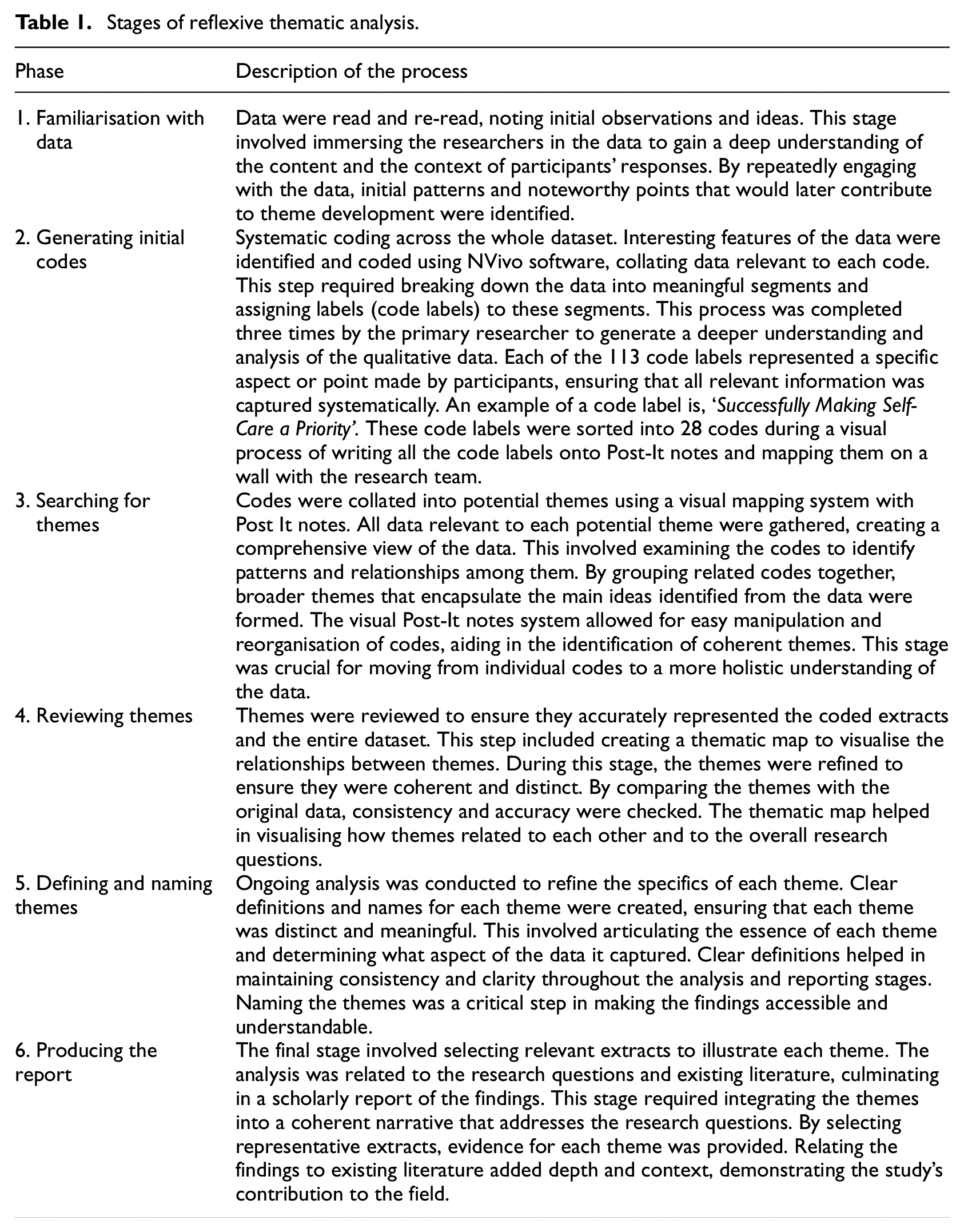
Reflexive thematic analysis involves a structured process that facilitates the identification and exploration of themes within qualitative data. This method is inductive, meaning themes are generated from the data itself rather than being imposed before. Table 1 outlines how the six stages of Braun and Clarke’s (2019) reflexive thematic analysis were specifically applied to this study.
Stages of reflexive thematic analysis.
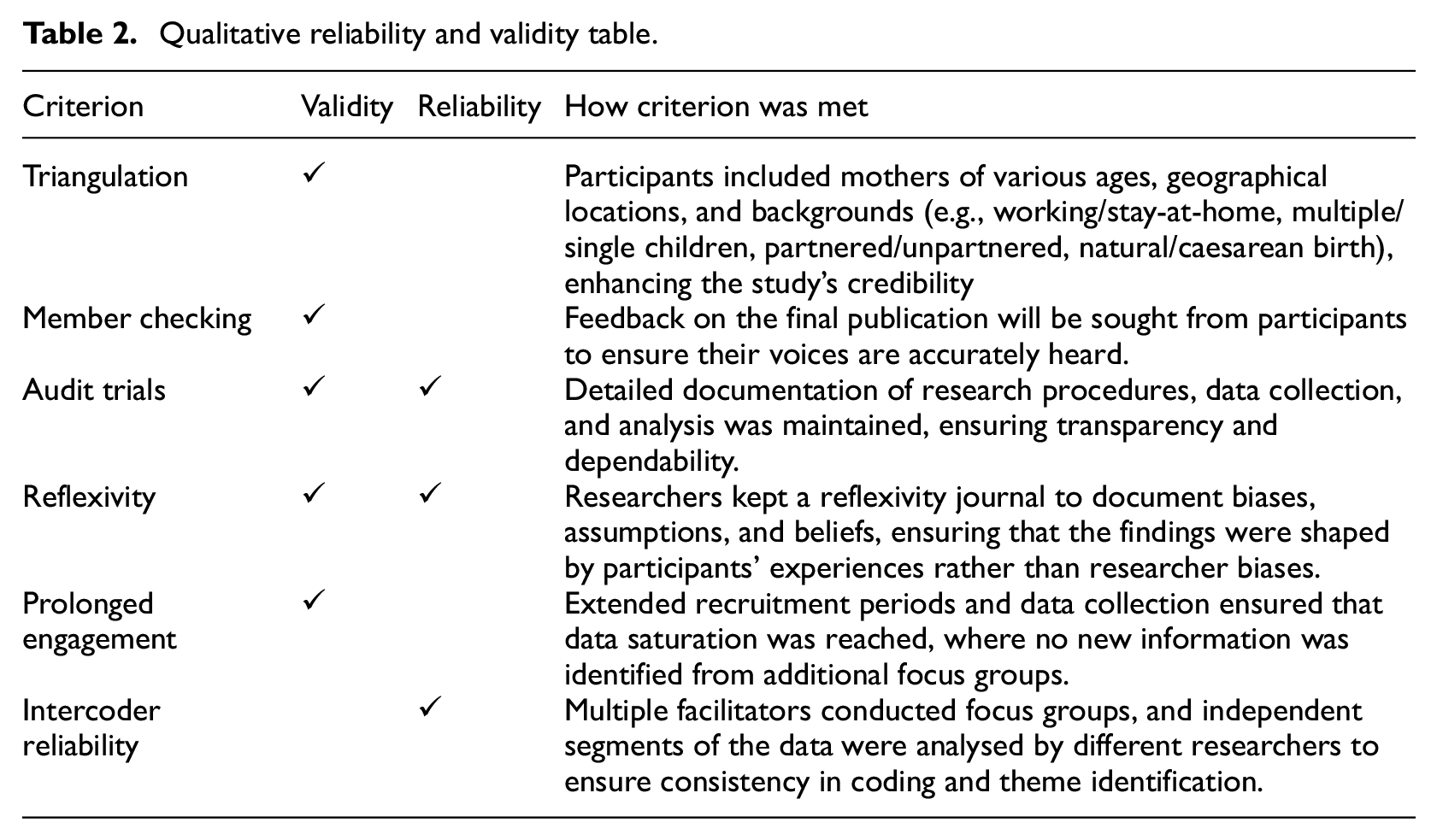
By utilising qualitative reliability and validity strategies (Table 2), the study ensured a robust and thorough analysis of the data, providing valuable insights into the postpartum body image and eating attitudes of the participants.
Qualitative reliability and validity table.
Results and discussion
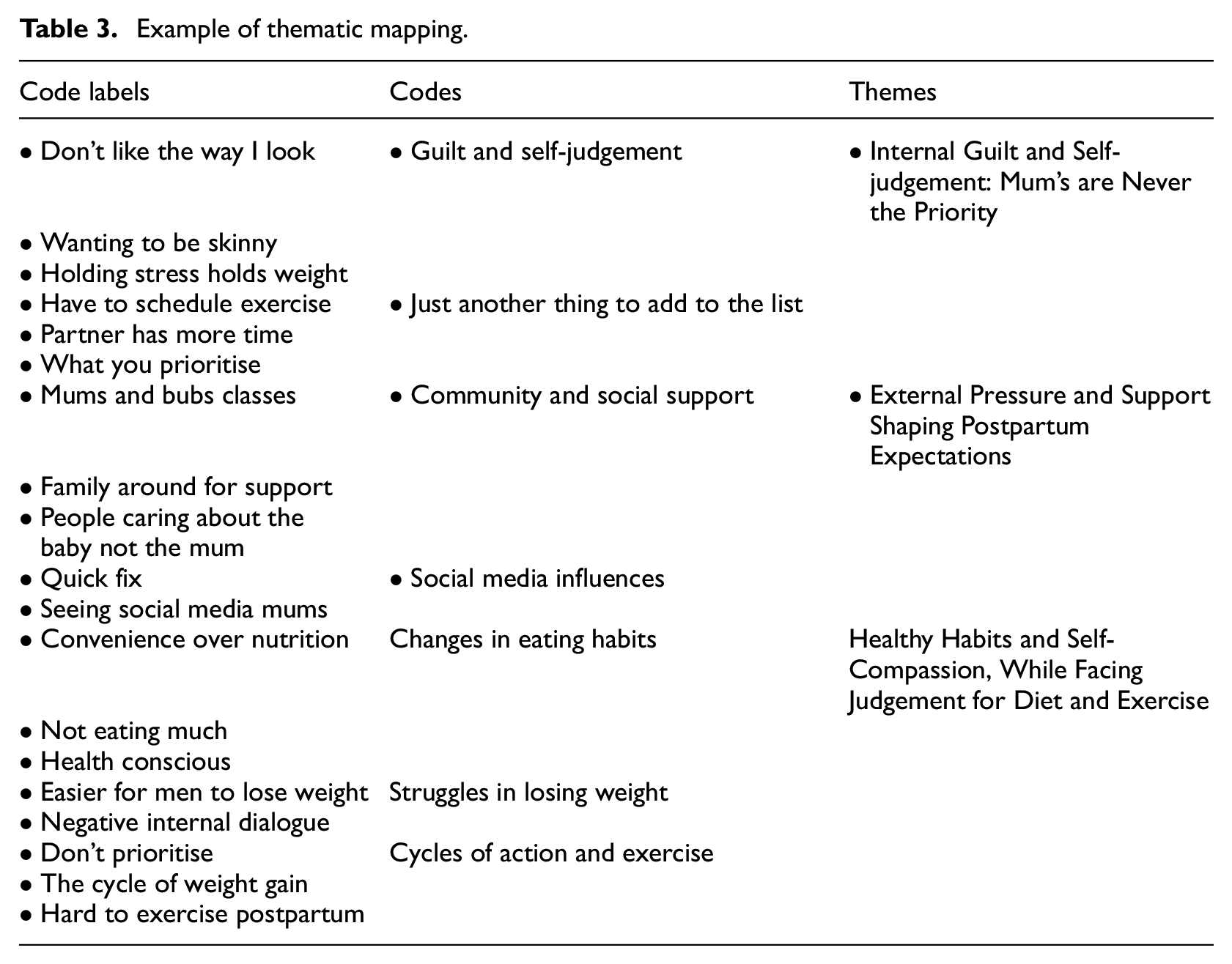
Three key themes were identified through reflexive thematic analysis: (i) Internal Guilt and Self-Judgement: Mothers are Never the Priority, (ii) External Pressure and Support Shaping Postpartum Expectations and (iii) Healthy Habits and Self-Compassion, Facing Judgement for Diet and Exercise. These themes reflect participants’ emotional and psychological experiences relating to body image during the postpartum period. An example of the thematic mapping is shown in Table 3.
Example of thematic mapping.
Theme 1: Internal guilt and self-judgement: Mothers are never the priority
This theme highlights the internalised guilt and self-judgement many of the postpartum mothers experienced. Participants frequently described feeling as though their well-being, whether related to body image, exercise or self-care, was never a priority compared to the needs of their family. The constant balancing of responsibilities left little room for self-care, leading to feelings of guilt when they could not prioritise their health. In Focus Group 1, Mum1N expressed this sentiment: I kind of feel like we probably do hold more stress, like the family, the mental load stress. I think that’s what makes it harder for us to lose weight too because if you’ve got high cortisol, you’re not going to shift the weight.
Mum1K agreed: ‘Yeah, the mental load carries the weight’. These quotes reflect the dual pressures of managing family responsibilities and the personal need to lose weight. This guilt is compounded by the notion that ‘Mums are never a priority, I feel like I struggle to make time to exercise. It’s not necessarily the children; life has just become fuller since becoming a Mum’ (Mum1C).
Many participants mentioned the internal pressure to get back to their pre-baby bodies while simultaneously acknowledging that immediate family needs trumped their personal goals, ‘Immediate tasks trumping everything’ (Mum1C), ‘Something else happens, and then that’s the priority rather than yourself’, (Mum1N).
The guilt expressed by the Mums seems to be tied to a sense of failure, as mothers compare their current bodies to societal expectations and their pre-pregnancy selves, resulting in a cycle of guilt for not being able to prioritise exercise or healthy habits as Mum3A says, ‘I gained a lot of weight. I feel like mentally, I am ok. Some days I am ok with it, some days I’m not. I’m like I’m a mum, I grew a human and he’s only eight months old, I’ve got time’, and Mum1C, ‘I used to be very health conscious before I had kids. It’s harder to shift the weight now, so I need to be more conscious’.
This struggle was common among participants, who shared similar frustration at their ability to ‘do it all’, ‘What is me time? Yeah, you are going to have to schedule that’. (Mum1K).
The theme of internal guilt and self-judgement in postpartum mothers resonates strongly with findings in previous literature critiquing the cultural pressures placed on mothers to prioritise family over self, often leading to guilt when they feel they are neglecting their own needs, particularly around body image and self-care (Ollivier et al., 2024; Rodgers et al., 2024). As Mum1N reflects: Something else happens and then that’s the priority rather than yourself. I think about the way I look? Like, no thanks. And that’s as far as I’ll go in terms of the body image side of things. But having that time to dedicate to myself is so limited, I think. And then weight goes on a little bit of a spiral and then you feel bad because you don’t have the time but then something happens, and the cycle happens.
This quote echoes the internal conflict described in the literature, where mothers are constantly torn between their own needs and the demands of motherhood, leading to feelings of guilt and frustration (Hodgkinson et al., 2014). The cyclical nature of this guilt, as mentioned by 1N, aligns with studies on postpartum body dissatisfaction, where women experience a continual struggle to find time for self-care among responsibilities (Lee et al., 2023). Similarly, Mum1C’s comment: I feel like I need to have more time and space to be able to implement it, whereas, like other things, for example, the immediate tasks trumping everything, so I don’t have the space to really think and plan.
This highlights how the immediate tasks of daily life overshadow the possibility of self-care. This sentiment is reflected in feminist theory and the literature on postpartum women’s time management challenges (Rodgers et al., 2024), suggesting that guilt is not just about appearance but also stems from the inability to allocate time for mental and physical well-being, further contributing to self-judgement. Mum2L states, ‘When you have a little one you don’t care for your body, it’s not a priority’.
The participant reflections are consistent with feminist perspectives that criticise the unrealistic societal expectations placed on postpartum women to regain their pre-pregnancy bodies while managing the overwhelming responsibilities of motherhood (Rodgers et al., 2024). This internal guilt and self-judgement centres on the notion that mothers feel trapped between prioritising their families and finding time for themselves. The recurring sentiment among participants was that their well-being was always put after the needs of their families, as stated by Mum4C, ‘You’re the last one who is important. Even your husband gets fed first, and then you’re like, oh, will I eat that, is there something else?’.
This constant battle between societal ideals and personal capabilities can result in heightened internal guilt as mothers struggle to prioritise themselves within a system that often overlooks their needs. The pressure to ‘do it all’ without adequate time or support could compound their self-criticism when they are unable to meet their own or society’s expectations around body image and self-care.
Theme 2: External pressure and support shaping postpartum expectations
This theme explores societal and external pressures as the women in the focus groups navigated body image and eating habits, as well as the importance of support systems in coping with these challenges. A quote that captures this theme comes from Mum1N, who shared: I was at a certain point in the postpartum period where I was concerned about weight loss and it was not coming off easily, so I decided to try and get some assistance medically. The pressure felt a little bit higher, and I couldn’t do it, I didn’t have the time. Medication to appetite supress worked for a certain period of time…it just makes you not hungry.
This quote reflects the pressure felt by the participant to lose weight and the choice to seek medical assistance due to time constraints and societal expectations. This quote also shows the frustration stemming from not being able to meet these standards through natural means, a sentiment echoed by several other participants who expressed the need for external help due to societal demands, ‘I’m always trying to do something, I’ve got fitness apps and things like that with programs’, (Mum1C) and also from Mum1C, ‘Like, eating plans. At the moment I’m looking at animal based, so basically a carnivore diet… I’m always looking for a quick fix’.
In contrast, other participants discussed the role of partner support in mitigating some of the stressors they felt. For instance, one participant said, ‘I know my husband, he sees me as a Mum now, in a good way, like you don’t need to look beautiful all the time, you’re the mother of my child…it can be a bit comforting’ (Mum1N). This comment demonstrates how partner validation can offer emotional relief, helping to counterbalance external societal pressure. This kind of support is not always present, as another participant expressed, ‘I felt the most beautiful I’ve ever felt but the most unappreciated by my partner’ (Mum3G), highlighting the disconnect and lack of appreciation some women experience from their partners during this vulnerable time.
These different experiences show the spectrum of support and pressure that postpartum women face, whether through external societal expectations or the varying degrees of support from partners and families. From a feminist theoretical perspective, societal expectations surrounding body image often stem from gendered pressures that demand women to conform to ideals of beauty and thinness, which are further amplified during the postpartum period (Rodgers et al., 2024). Feminist theory emphasises that these societal norms are not only externally imposed but internalised, potentially leading women to feel inadequate or pressured to meet these expectations in vulnerable phases of life such as postpartum (Hodgkinson et al., 2014).
The phenomenological approach adds depth to understanding these experiences by focusing on the subjective, lived realities of postpartum women. This perspective highlights how each women’s experience with support and societal pressure is shaped by her unique context and interpretation, allowing us to understand the profound impact of personal relationships and cultural messages on body image and self-worth (Manen, 2016). While some women feel comforted by their support networks, others interpret the same societal messages as judgemental, contributing to feelings of isolation and pressure to meet unrealistic postpartum body ideals (Rodgers et al., 2024).
The data from this theme highlights that while some women feel validated and supported through positive reinforcement from partners and families, often fostering resilience against societal pressures, others experience these relationships as sites of judgement and criticism (Hutchinson and Cassidy, 2022). This suggests that traditional support structures can maintain gendered body ideals, influencing women’s internalised expectations. One Mum made a comment about the lack of social support she encountered in the post-partum, ‘In pregnancy you’re seeing someone, quite a lot weekly towards the end of pregnancy. You get the baby and they’re like see ya’ (Mum2M).
Participants in this study frequently mentioned how media and external societal standards impacted their body perceptions, often creating pressure to ‘bounce back’ or regain their pre-pregnancy body quickly. This theme mirrors findings from previous literature, which emphasise how media representations and societal ideals contribute to body dissatisfaction and disordered eating in postpartum women (Hodgkinson et al., 2014; Lee et al., 2024). For example, Mum4B states:
I just found that I actually didn’t care that much about getting back to any particular weight or anything like that. But I was astounded at the amount, just because my social media obviously knew that I had just had a baby, the amount of things that came up about bouncing back and ads for exercising programmes and products and things like that, it just – I think that’s a problem because it wasn’t really on my mind. And I’m like, ‘Should I be caring about this a bit more?’.
The constant exposure to ‘bounce back’ messaging in advertisements and social media feeds highlights the indirect pressure placed on postpartum women to conform to an idealised body standard, even when it may not be an internal priority. Mum2I reinforces the idea of indirect societal pressure, ‘I don’t think there is any direct pressure, but more indirect pressure, social media and what you see on TV or whatever. So, you will be lying, I guess, to say there is no pressure’. This quote illuminates how media perpetuates unattainable beauty standards for women (Chiareli, 2020). The cumulative effect of social media and societal expectations places indirect pressure on women to prioritise weight loss and body image, even when other personal or family-related factors may be pressing, as demonstrated in this quote from Mum3M, ‘I think for me, I’ve got pressure on myself just like looking back at photos… I’m like, I wish I was that way now’.
The influence of social networks is also apparent in this theme. Mum3J reflects on how surrounding herself with people who have not experienced pregnancy affects her body perception, ‘When you’re just around other people all day that hadn’t had babies, listen to them talk about their fitness goals, you’re following them on Instagram and stuff like that, I used to be like that’. This quote is supported by the broader literature on the impact of comparison culture, where women often evaluate their bodies against peers who have not undergone the same physical changes, creating a sense of isolation and dissatisfaction (Mughal et al., 2024). Theoretical frameworks like phenomenology can provide insight into how these social comparisons impact personal experiences of postpartum body image, adding depth to our understanding of external pressure through the insight of these Mums lived experience.
On the positive side, Mum1C provides an example of external support helping to counterbalance these pressures: Right now there’s me and a few girlfriends who are in a group chat where we were trying to motivate each other so we take photos of everything we’re eating and sharing each week. But that has actually saved me from not eating shit at times, it’s been helpful. It’s been good.
These words illustrate the role of supportive social networks in navigating these pressures, where peer accountability becomes a source of motivation for healthier eating habits. External support systems, when positive, can alleviate some of the negative impacts of societal pressure, reinforcing the importance of community support in promoting body positivity and self-compassion in the postpartum. Some Mums shared their perspectives on positive external supports, ‘I’ve got a pretty good playgroup of Mums. And then I’ve got a lot of family around me as well, and friends with babies similar ages…we message each other a lot’, (Mum2M), and ‘We’re from Tassie, we don’t have any family here. We’re lucky we’ve got close friends, so they are our support system’ (Mum2C). Studies have shown the importance of social, and family supports as a preventative factor in postpartum depression (Hannon et al., 2022). These supportive networks can foster positive maternal experiences by validating and encouraging mothers in their roles, contributing to their overall well-being during the postpartum period (Hannon et al., 2022).
The literature and participant insights suggest that while societal and media pressures often contribute to body dissatisfaction and disordered eating, supportive networks can provide relief. This theme resonates strongly with feminist and phenomenological theories, emphasising the need to examine societal norms critically and focus on lived experiences to fully understand postpartum body image concerns.
Theme 3: Healthy habits and self-compassion while facing judgement for diet and exercise
This theme centres around the complex relationship between maintaining healthy habits and facing internal and external judgement in the postpartum period. Many mothers desired to engage in healthier behaviours like regular exercise and mindful eating but encountered obstacles such as societal pressures, self-doubt, guilt or judgement. The data indicate that mothers often face judgement from others, particularly when they attempt to prioritise fitness and nutrition within the demands of motherhood. One participant shared, This is gonna sound really stupid, I feel nothing against super skinny, fit healthy mums, but I feel like those Mums are judged. In my head and in my mum group circle, mum bods are normal. The way to go, the majority of the people have mum bods and don’t really care about what they look like (Mum3A).
This quote reflects the tension between body image ideals, where mothers actively working on their fitness may face judgement from their social circles. It also illustrates societal pressures for mothers to either conform to a more relaxed, Mum Bod aesthetic or to aspire to the thin ideal that saturates Western culture (Lee et al., 2022). Feminist theory analyses the unrealistic expectations placed upon women’s bodies, especially postpartum, as these ideals reinforce a narrow standard of beauty that often disregards individual well-being (Rodgers et al., 2024). This theory is reflected in this quote from Mum3J, ‘I didn’t realise how much your body changed, and I expected because I was thin beforehand, I’d snap back…all of sudden I was like, excuse me, I don’t look like Tammy Hembrow right now’. This highlights how mothers internalise these pressures, experiencing them as a lived reality that influences their self-perception and health choices (Rodgers et al., 2024). For many postpartum women, the thin ideal internalisation manifests through societal expectations and social media, where comparisons and judgements can exacerbate body dissatisfaction (Lee et al., 2023).
Women may experience pressures to conform to this thin ideal not only from society but also through personal and online networks. Nagl et al. (2021) discuss how social media usage among new mothers correlates with higher body dissatisfaction through mechanisms like appearance related social comparisons and thin ideal internalisation, leading to heightened body image concerns. These factors create a challenging environment for those trying to balance self-compassion with healthy habits, as the cultural emphasis on bouncing back often conflicts with the practical realities and limitations postpartum women face (Lee et al., 2024). Another participant, Mum4C, described her internal battle: I used to exercise a lot even while I was pregnant. And then I had an emergency c-section, I was like, no, I’m going to do it, if I don’t go now for a walk, I think mentally it makes me depressed. Because I’m like, look what you did, you didn’t go for your walk.
This quote reflects the psychological burden of maintaining healthy habits postpartum, where missing a routine led to feelings of guilt and depression. Similarly, Mum4E added: Yes, I want to eat healthy, but I’m not going to dread about it because I just don’t have the time or the energy. I always thought I’m going to go for so many walks. I was like, I’m going to be that fit mum. And, yes, we go for walks, but it’s because I’m stressed, because [baby] just won’t sleep. It’s not enjoyable.
This dialogue reveals how the stress of caring for a newborn can derail even the best intentions to maintain fitness, leading to frustration when expectations do not align with reality. The emotional toll of these pressures is evident as mothers try to navigate the demands of motherhood and personal health. These quotes support the theme by demonstrating how postpartum mothers encounter internal and external judgement while attempting to uphold healthy habits, such as exercise and diet. The data reflects a complex intersection of self-compassion, societal pressure and personal well-being, where the judgement, whether from themselves or others, complicates their efforts to maintain a balanced approach to health.
Research shows that women face societal expectations to achieve and maintain a slim physique often referred to as the ‘thin ideal’, which can place additional pressure on postpartum mothers who are adjusting to their new bodies (Liddelow et al., 2023). Feminist theory looks at these cultural expectations, highlighting how women’s bodies are subject to scrutiny and judged based on societal ideals that emphasise thinness and youthfulness (Nagl et al., 2021). Such pressures can lead to self-judgement as mothers attempt to conform to these standards, even while recognising their disconnect from personal health and well-being goals. Mum1N says, ‘It’s like a battle in my head. At least I should be back to where society says we should be, but then at the same time, it’s ok, it’s fine, because of XYZ’.
Boardman and Liddelow (2024) also explore how postpartum mothers who re-engage in sport face internal conflicts between pursuing personal health and responding to societal judgements. This study found that mothers experienced significant pressure to return to sport or fitness routines to reclaim their pre-pregnancy bodies, motivated by both societal standards and internalised expectations to be ‘fit’ and ‘healthy’ mothers. These expectations can also cause guilt and judgement, particularly if prioritising fitness is seen as conflicting with maternal responsibilities. This quote from Mum1C demonstrates this struggle, ‘I feel like I want to look strong, so then I look like someone that prioritises her well-being. I would feel proud that I’m devoting time to myself’.
In adopting a phenomenological approach, this study seeks to capture the subjective experiences of mothers navigating these pressures. The phenomenological perspective allows us to understand how these women interpret their experiences of judgement, both from society and themselves and the tension between societal ideals and self-acceptance in their postpartum journey (Manen, 2016). The integration of feminist and phenomenological theories provides a framework to interpret how postpartum mothers negotiate their identities and well-being within cultural expectations that often conflict with personal needs and realistic health goals (Finlay, 2011).
Many participants expressed a desire to engage in healthier eating and exercise routines, yet societal expectations and internal pressures often make these goals difficult to achieve. Elements of this theme include cycles of action and exercise, the challenges of restrictive dieting and the fluctuating emotional responses to postpartum body changes. A quote from Mum3G captures the mental and emotional difficulty of transitioning from a fitness-focused lifestyle to motherhood, I was very happy with my body, probably the happiest I have ever been. I was training a lot. But I was a party animal. It was probably the party peak of my life. I think that transition has really actually been the most mentally difficult for me.
This quote illustrates the balance between self-compassion and the judgement women may feel, both from society and internally. While Mum3G accepts that weight gain is a natural part of postpartum, her fluctuating emotions mirror the internalised pressures to conform to societal expectations while also practising self-kindness.
The data collected from the four focus groups highlight how participants struggle with societal judgements and internal pressures while attempting to prioritise health and well-being postpartum, arguing that the cultural demand for women to ‘bounce back’ after childbirth reinforces unattainable standards of body image (Chiareli, 2020). Phenomenological approaches accentuate women’s lived experiences and how they internalise these societal pressures, adding depth to our understanding of postpartum body image and the challenges of maintaining healthy habits.
In contrast to the judgement, some participants also mentioned how engaging in healthy habits like exercise brought mental relief, even when they struggled to maintain consistency. Mum4F reflected: I think, now I’m starting to go to the classes and I’m starting to think, I need to exercise for my body and my mental health well-being. But at the moment, whenever I go out, whether it is for a walk, whether it’s just to go to the beach or whatever, it’s more so I feel like I’ve accomplished something for that day for me. I’ve accomplished something.
This comment from Mum4F illustrates how exercise, when achieved, serves as a mental coping strategy, yet the failure to maintain it leads to self-judgement. Mum4A shares how getting out for a walk and listening to music can provide mental relief and a sense of accomplishment, adding positivity to the day. ‘The fact I can pump my bangers when I’m walking…getting some sun, fresh air and that I’m not wearing the same crappy clothes that’s always got vomit on it’.
This theme shows the tension between postpartum women’s efforts to maintain health and fitness and the societal and internal pressures they face. Mothers often navigate conflicting expectations, balancing the desire to reclaim fitness routines with the demands of motherhood and societal ideals.
Conclusions and implications
This study aimed to explore how Australian postpartum women perceive and experience body image and eating attitudes identifying three key themes, (i) Internal Guilt and Self-Judgement: Mothers are Never the Priority, (ii) External Pressure and Support Shaping Postpartum Expectations and (iii) Healthy Habits and Self-Compassion, Facing Judgement for Diet and Exercise. These themes reveal how social pressures and cultural ideals shape postpartum experiences, with feminist and phenomenological frameworks illuminating the impact of societal norms on women’s self-perceptions and behaviours.
Each research question aligns with these themes. The first research question, examining postpartum women’s body image perceptions, is reflected in themes of internal guilt and external pressures. Participants frequently reported guilt for not meeting societal ideals, compounded by an inability to prioritise self-care due to family responsibilities. External pressure and support further shaped their self-perceptions, with societal and familial expectations contributing to stress around achieving a postpartum body ideal.
The second research question, which explored eating attitudes, aligns with themes of external pressure and healthy habits. Many participants described adopting restrictive diets due to societal influences, particularly from social media and family. In contrast, some attempted more balanced, self-compassionate approaches, though these were often challenged by external judgement and self-doubt, creating ongoing tension between personal health goals and societal expectations.
The third research question, examining social support networks, is not most evident in the theme of external pressure and support. Participants reported that family, friends and partners played dual roles, either validating their postpartum experiences or reinforcing harmful body image and dietary expectations. This highlights the complex influence of support networks in shaping postpartum body image and eating attitudes.
The fourth research question, focusing on self-care, connects to the themes of internal guilt and healthy habits. Participants often deprioritised self-care due to competing responsibilities and societal expectations. While many recognised its importance, they struggled with guilt and external judgement related to their diet and exercise routines.
The findings illustrate how postpartum women navigate conflicting expectations from society, social networks and themselves. These pressures contribute to self-criticism and guilt, particularly when standards of the thin ideal and the fit and healthy mother clash with the realities of motherhood. Support networks play a pivotal role, both alleviating and amplifying these pressures. Intuitive eating may promote self-compassion and offer a healthier alternative to restrictive dieting but remains under-researched in Australian postpartum populations (Hutchinson and Cassidy, 2022).
Strengths and limitations
A key strength of this study lies in the use of focus groups, this provides a supportive environment for participants to share deeply personal experiences, encouraging rich and detailed data collection. The adoption of the phenomenological approach allowed for an in-depth exploration of the lived experiences of Australian postpartum women, offering unique insights into their perceptions of body image and eating attitudes. While this study provides valuable insights, it is essential to acknowledge the limitations of focus groups research, particularly regarding social selection bias. Focus groups, may encourage participants to conform to group norms, which can sometimes limit the expression of diverse perspectives (Sim and Waterfield, 2019). Mothers who are more educated, healthier, and of higher socioeconomic status are more likely to participate, potentially excluding voices from more vulnerable or marginalised groups. While this study provides valuable insights into the lived experiences of Australian postpartum women, the findings may not be fully generalisable to postpartum populations in other cultural or geographic contexts. Future research would benefit from comparative studies across diverse settings to explore how cultural differences shape postpartum body image and eating attitudes. These limitations call for future studies to adopt a more inclusive sampling strategy, allowing for a broader spectrum of experiences to be represented and better understanding of intuitive eating’s long-term impact on postpartum health.
Implications
Healthcare providers should extend postpartum care beyond infant health to include maternal well-being. Midwives, maternal child health nurses, general practitioners and psychologists are all in pivotal positions to engage in supportive conversations about body image, eating behaviours, and emotional health in the postpartum period. This could be incorporated into routine 6-week postpartum check-ins, postnatal mental health screening tools or during maternal group sessions. Training healthcare providers in compassionate communication around body image and dietary behaviours may help reduce stigma and promote more supportive clinical environments.
Interventions that promote body neutrality, self-compassion and intuitive eating and may empower postpartum women to reject unrealistic societal standards and develop healthier relationships with food and body. Brief, group-based self-compassion interventions or digital tools could be integrated into existing maternal health services. Studies have shown that such interventions can improve emotional regulation and reduce appearance-related distress (Lambermon et al., 2020).
This study highlights postpartum body image and eating attitudes as critical maternal health concerns. The key take-home message is the importance of compassionate, mother-centred care. Support systems and healthcare providers play an essential role in creating environments that prioritise maternal well-being, foster self-acceptance and promote a balanced, realistic approach to postpartum health.
Supplemental Material
sj-docx-1-hpq-10.1177_13591053251355862 – Supplemental material for ‘The mental load carries the weight’: Australian women’s perceptions of their postpartum body image and eating attitudes
Supplemental material, sj-docx-1-hpq-10.1177_13591053251355862 for ‘The mental load carries the weight’: Australian women’s perceptions of their postpartum body image and eating attitudes by Angela Gilmour, Natalie Ball, Katarina Skender, Caitlin Liddelow, Karena J Burke and Megan F Lee in Journal of Health Psychology
Supplemental Material
sj-docx-2-hpq-10.1177_13591053251355862 – Supplemental material for ‘The mental load carries the weight’: Australian women’s perceptions of their postpartum body image and eating attitudes
Supplemental material, sj-docx-2-hpq-10.1177_13591053251355862 for ‘The mental load carries the weight’: Australian women’s perceptions of their postpartum body image and eating attitudes by Angela Gilmour, Natalie Ball, Katarina Skender, Caitlin Liddelow, Karena J Burke and Megan F Lee in Journal of Health Psychology
Footnotes
Data sharing statement
The data generated during and/or analysed during the current study are not publicly available due to confidentiality protocols assigned by the Bond University Human Research Ethics Committee.
Declaration of conflicting interests
The authors declared no potential conflicts of interest with respect to the research, authorship, and/or publication of this article.
Funding
The authors received no financial support for the research, authorship, and/or publication of this article.
Ethics approval
The study’s ethics approval (Ethics #ML01999) was obtained from Bond University Human Research Ethics Committee.
Informed consent
Written informed consent was obtained from all focus group participants.
Consent for publication
Written informed consent was obtained from all focus group participants.

References
Supplementary Material
Please find the following supplemental material available below.
For Open Access articles published under a Creative Commons License, all supplemental material carries the same license as the article it is associated with.
For non-Open Access articles published, all supplemental material carries a non-exclusive license, and permission requests for re-use of supplemental material or any part of supplemental material shall be sent directly to the copyright owner as specified in the copyright notice associated with the article.
