



Abstract
This study explores the psychological impact of Metahuman Resurrection Technology (MRT) on bereaved individuals, focusing on how different attachment styles influence both the willingness to utilize MRT and the effectiveness of grief relief. A survey of 1114 bereaved individuals revealed that secure attachment styles experienced the highest levels of grief relief and willingness to use MRT, while dismissive styles showed the lowest. The study also highlights the mediating role of grief relief between attachment style and MRT usage, with significant effects observed in preoccupied and fearful individuals but not in dismissive ones. These findings underscore the potential of MRT as a digital tool for grief counseling, emphasizing the need for tailored interventions based on attachment styles to enhance mental health outcomes. Future research should consider longitudinal designs and biometric assessments to further explore the long-term impact of MRT on grief processing.
Keywords
Introduction
Bereavement and the subsequent grief that follows are universal experiences that can significantly impact an individual’s mental health and social functioning. According to recent mortality rate (MR) data from the World Health Organization (WHO), the global MR varies, with the United States at 10.1‰, France at 9.8‰, Russia at 16.8‰, and the United Kingdom at 10.2‰ (WHO, 2024). In 2023, China’s MR was 7.87‰, accounting for 11.1 million deaths (National Bureau of Statistics of China, 2023). The United Nations projected a global death count of 60.95 million by 2024. These statistics underscore the vast number of individuals who face the loss of reliable partners or family members, leading to prolonged emotional distress.
Bereavement can evolve into complicated grief disorder, characterized by prolonged sorrow and negative emotional responses, which can significantly impact social order and individual recovery (Høeg et al., 2017; Liu and Li, 2009; Lundorff et al., 2017). Without timely and appropriate intervention, symptoms of complicated grief disorders, including prolonged depression, anxiety disorders, sleep disturbances, immune dysfunction, and increased risk for chronic illnesses, are likely to persist, making it a pressing public health issue (Shear, 2015). Traditional grief relief methods, including the Empty Chair Technique, Role-Playing, and the Safe Box Technique, rely heavily on imagination rather than genuine interaction. Specifically, the Empty Chair Technique involves clients addressing an imagined deceased individual seated in an empty chair, enabling emotional expression and closure, Role-Playing allows individuals to act out scenarios related to their loss, facilitating emotional processing and perspective-taking, and the Safe Box Technique enables individuals to symbolically store emotionally charged memories, providing psychological relief through symbolic containment (Cohen and Wills, 1985; Thoits, 2011).However, the effectiveness of these methods can be limited by their lack of realistic interactive experiences, underscoring the need for innovative approaches.
Recent evidence underscores the importance of tailored psychosocial interventions in addressing varied psychological responses to bereavement (Feldstain, 2024). Emerging technologies, such as Metahuman Resurrection Technology (MRT), represent novel approaches designed specifically to provide targeted emotional support for grieving individuals (Sparrow, 2024). Metahuman technology, initially popularized in animation and virtual production, involves digitally creating lifelike virtual characters for entertainment or interactive purposes. Advances in artificial intelligence, speech synthesis, and deep learning facilitated the evolution of this technology into MRT, which specifically aims at therapeutic intervention in grief counseling contexts (Sparrow, 2024; Truby and Brown, 2021).
MRT enables bereaved individuals to experience empathetic interactions, emotional validation, and simulated emotional bonds with deceased loved ones, thus enhancing emotional comfort and facilitating grief relief (Sparrow, 2024; Zhang and Patrick Rau, 2023). Despite MRT’s potential benefits, there are also ethical and psychological concerns. Critics argue MRT might create emotional dependency, disrupt natural grieving processes, or provoke prolonged emotional distress due to the artificial nature of interactions. Privacy, data security, and informed consent also remain significant ethical considerations, highlighting the necessity for responsible implementation (Zhang and Patrick Rau, 2023).
In 2023, Wuliu WU, a user from www.bilibili.com in China, created a metahuman of his deceased grandmother. This “grandmother,” with her gray hair and speaking in the Hubei province dialect, chattered just like she did when she was alive. The “resurrection” of this “grandmother” sparked widespread discussion. Some believe this technology should be actively promoted as it can help alleviate suffering, while others feel it may deepen the grief of the bereaved (Zhang and Patrick Rau, 2023). Walter (1999) indicated that material mementos may either help individuals maintain memories and emotional connections or continually evoke the pain of loss. From an environmental psychology perspective, Bonanno and Kaltman (2001) noted that specific environmental stimuli, like objects the deceased once used, can strongly influence an individual’s emotional state, constantly activating sad memories and emotions.
As an innovative tool for individual psychological counseling, MRT holds significant social implications. This study aims to identify which individuals are most likely to benefit from this technology, their willingness to use it to cope with the loss of their loved ones, and how it can enhance grief counseling provided by mental health professionals. Additionally, the research seeks to promote public mental health and maintain social stability through the application of MRT. By examining the use of advanced technology in the processes of bereavement, this study offers new perspectives on innovative grief support methodologies, contributing to the broader understanding of human behavior in the digital age.
Theoretical framework and hypotheses
MRT and grief relief
Social support theory provides a valuable framework for understanding how MRT functions as a grief relief intervention. Social support refers to the aid individuals receive from others or groups, enhancing resilience, addressing personal problems, and improving mental and physical health outcomes (Cobb, 1976; Cohen and Wills, 1985). According to social support theory, it encompasses emotional support (empathy and understanding), informational support (guidance and advice), instrumental support (practical help and resources), and appraisal support (confidence-building and self-evaluation through social interactions; Cobb, 1976; Cohen and Wills, 1985; Feldstain, 2024; Weisz et al., 2016). In the context of MRT, the technology primarily provides emotional support by facilitating empathetic interactions, emotional validation, and simulated emotional bonds with deceased loved ones. Although MRT might also potentially offer informational, instrumental, and appraisal support through digital interactions, its current design predominantly emphasizes emotional support, specifically by recreating realistic emotional connections and meaningful communication. Thus, MRT serves as an innovative application of social support theory in digital grief interventions, highlighting its potential as an effective therapeutic approach.
Attachment styles and the willingness to use MRT
According to attachment theory, individuals develop emotional bonds known as attachment relationships, which significantly influence responses to separation and loss (Bowlby, 1951; Fan et al., 2024; Zeynep Selvili and Klass, 2025). These attachment relationships provide psychological security and emotional support, particularly under distressing circumstances such as bereavement (Bowlby, 1980). Adult attachment styles, classified along dimensions of anxiety and avoidance, include secure (low anxiety, low avoidance), preoccupied (high anxiety, low avoidance), dismissive (low anxiety, high avoidance), and fearful (high anxiety, high avoidance; Bartholomew and Horowitz, 1991; Brennan et al., 1998).
Individuals with a
Individuals with a
Conversely,
Finally, individuals with a
Based on this rationale, the following hypothesis is proposed:
H1: There are significant differences in the willingness to use MRT among different attachment styles. Specifically, the willingness to use, from highest to lowest, is ranked as follows: secure, preoccupied, fearful, dismissive.
Attachment styles and grief relief
Individuals with different attachment styles may experience varying levels of grief relief when using MRT, suggesting that the effectiveness of MRT might not be uniform across all individuals. According to attachment theory,
Lastly,
Based on the preceding, the hypothesis is proposed:
H2: There are significant differences in the level of grief relief provided by MRT among different attachment styles. Specifically, the highest to lowest grief relief level is as follows: secure, dismissive, preoccupied, and fearful.
The mediating role of grief relief
Attachment styles have a significant impact on how people deal with loss, navigate the grieving process, and seek and accept help from others (Bowlby, 1980). According to the Attachment System Dynamics Model, the attachment system functions are through three separate modules. Module I is triggered when an individual perceives danger, initiating the attachment system and motivating the individual to seek proximity to their attachment figure (Mikulincer and Shaver, 2016).
Module II explores the effects of metahumans replicating deceased individuals and how this can help reduce grief among those who have lost loved ones. The technology’s capacity to accurately replicate deceased individuals may cultivate a sense of emotional satisfaction similar to engaging with the real person, potentially alleviating feelings of grief. Conversely, if a digital replica of the deceased is not realistic enough, it could worsen the bereaved person’s grief.
Module III focuses on the evaluation of MRT by the bereaved as a means of alleviating grief. Positive results in alleviating grief may result in continued use and recommendations. On the other hand, negative consequences might lead to reduced usage or complete abandonment, affecting individuals’ thoughts and dependence on MRT. Therefore, individuals with different attachment patterns may perceive the availability of metahumans in Module II differently, leading to varying degrees of grief alleviation and displaying diverse tendencies toward using the technology in Module III.
Individuals with a secure attachment style can efficiently activate Module I of the attachment system when faced with the loss of a loved one. They tend to imagine how they might reconnect with their lost loved one, implying that they will actively seek closeness and emotional support from others they are attached to when they perceive a threat. When people lose their attachment figures due to death, they typically show a readiness to explore alternative options, such as MRT, to meet their emotional needs.
In Module II, individuals with a secure attachment tend to have a positive perspective on the accessibility and responsiveness of metahumans as prospective substitutes for primary attachment figures. This positive evaluation promotes the proactive examination and improvement of strategies within Module III, resulting in successful management of emotions and reduction of sadness. Consequently, secure individuals are more likely to experience significant grief relief from MRT. Based on this positive experience, secure individuals may enhance their trust and willingness to use the technology (Mikulincer and Shaver, 2016; Shaver and Mikulincer, 2002).
In contrast, preoccupied and fearful individuals face challenges in the functioning of their attachment systems, limiting their ability to effectively utilize metahuman technology for grief relief. Preoccupied individuals in Module II doubt the availability and reliability of attachment figures. This distrust and hypersensitivity decrease their likelihood of finding comfort and security from metahumans, impacting their evaluation of the technology’s effectiveness and their willingness to use it continually in Module III (Pietromonaco and Barrett, 2000). Fearful individuals tend to avoid potential threats related to attachment. This avoidance strategy manifests in Module III as a conflicted attitude toward the technology; they desire to try it yet are filled with doubts, which impedes their full utilization of the technology for grief relief.
Dismissive individuals tend to prioritize emotional independence and self-reliance. They employ suppressive techniques to express and fulfill their connection needs. Although metahuman technology may provide a means of alleviating grief, dismissive individuals, who feel disconnected from others and prefer to handle their grief independently in Module III, may not fully reap the emotional advantages of such technology, even if it could be helpful to them (Walker et al., 2022).
Based on the information provided above, the following hypotheses are put forward:
H3a: Compared to the secure attachment group, the grief relief level of preoccupied individuals fully mediates the relationship between attachment style and willingness to use MRT.
H3b: Compared to the secure attachment group, the grief relief level of fearful individuals partially mediates the relationship between attachment style and willingness to use MRT.
H3c: Compared to the secure attachment group, the grief relief level of dismissive individuals does not mediate the relationship between attachment style and willingness to use MRT.
Methods
Participants and design
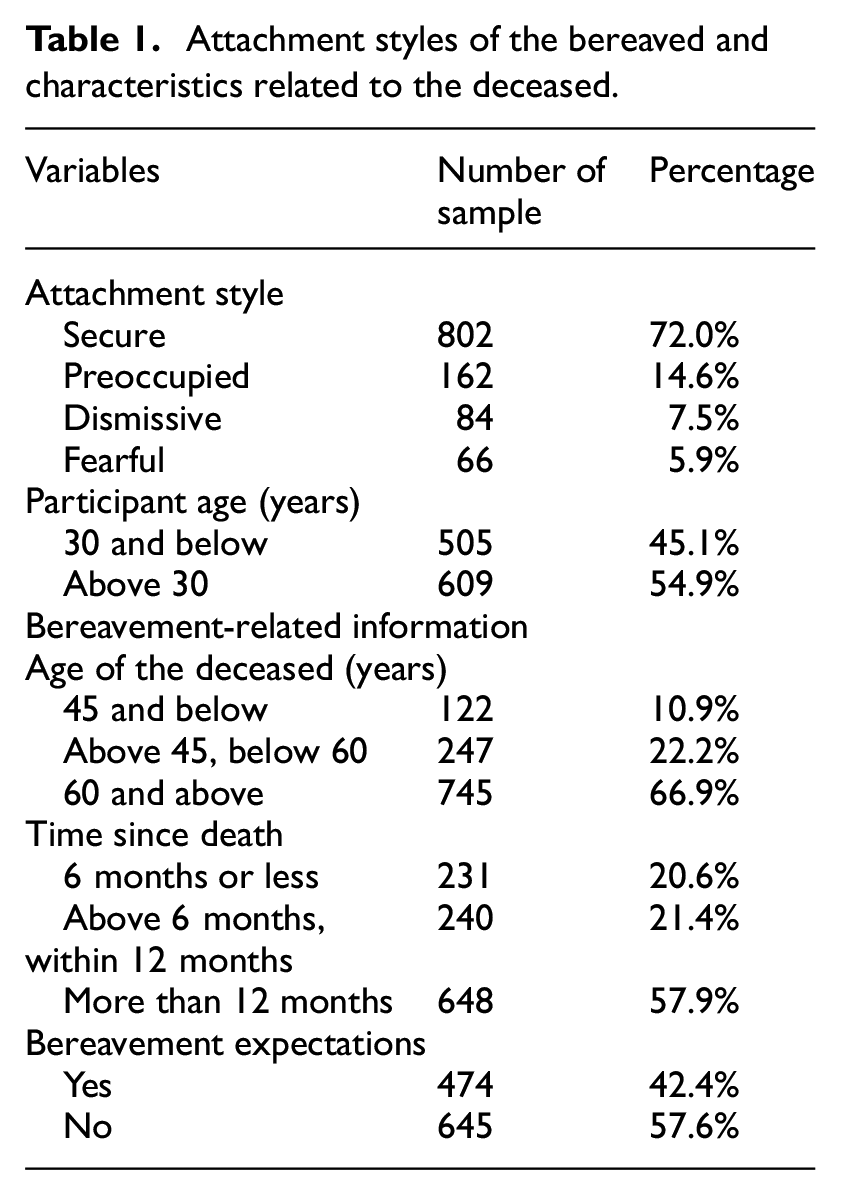
A total of 1713 questionnaires were distributed through the Credamo platform from April 17, 2024, to May 1, 2024. Of these, 1200 recipients responded, yielding 1114 valid questionnaires, with an effectiveness rate of 92.83% and a valid recovery rate of 65.03%. The inclusion criteria for participants were: (1) having a deceased relative, friend, or other individual they wished to resurrect, and (2) the primary purpose of the resurrection being for oneself. The questionnaire consisted of four sections: attachment style assessment, willingness to use measurement, grief relief measurement, and demographic information collection. Participants were required to respond to the sections on grief relief and willingness to use after watching a pre-recorded video showcasing a dialog between Wuliu Wu and a digital avatar resembling his late grandmother. Basic demographic information of the sample is presented in Table 1.
Attachment styles of the bereaved and characteristics related to the deceased.
This study was conducted in accordance with the ethical standards set forth in the Declaration of Helsinki. Ethical approval was obtained from the Academic Board of the School of Economics and Management, Shanghai Institute of Technology. All participants provided informed consent prior to their participation. They were informed about the purpose of the study, the voluntary nature of their involvement, and their right to withdraw at any time without penalty. Measures were taken to ensure participant anonymity and confidentiality throughout the study. No personally identifiable information was collected, and all data were anonymized during analysis.
Measurements
Attachment styles
The Experiences in Close Relationships-Relationship Structures (ECR-RS) questionnaire, adapted from Fraley et al. (2011), was used to measure attachment styles across different age groups and attachment relationships (Jin et al., 2022; Peng et al., 2020). The modified questionnaire includes 7 self-report items of two dimensions: attachment avoidance (items 1–4) and attachment anxiety (items 5–7). The questionnaire uses a 7-point Likert scale to range from 1 (strongly disagree) to 7 (strongly agree). Higher scores indicate higher levels of attachment anxiety and avoidance. The Cronbach’s α for the avoidance dimension is 0.72, and for the anxiety dimension is 0.91. Attachment styles were classified using Fisher’s linear discriminant functions, originally developed by Brennan et al. (1998) based on a large sample (N = 1082). Specifically, participants’ scores on attachment anxiety and avoidance dimensions were combined into four discriminant functions to determine their attachment styles: Secure attachment = (Avoidance Mean × 3.2893296) + (Anxiety Mean × 5.4725318) − 11.5307833; Fearful attachment = (Avoidance Mean × 7.2371075) + (Anxiety Mean × 8.1776448) − 32.3553266; Preoccupied attachment = (Avoidance Mean × 3.9246754) + (Anxiety Mean × 9.7102446) − 28.4573220; and Dismissive attachment = (Avoidance Mean × 7.3654621) + (Anxiety Mean × 4.9392039) − 22.2281088. Each participant’s attachment style was determined according to the highest discriminant score derived from these equations.
Grief relief
Grief is a collection of physiological, emotional, and cognitive behavioral responses that occur when one loses a loved person or object (He and Xu, 2007). Therefore, the measurement scale for grief relief is primarily based on the Prolonged Grief Disorder (PGD) questionnaire developed by Prigerson et al. (2009). This questionnaire covers measurements of separation distress, cognitive abilities, emotional experiences, and behavioral symptoms. Since the original questionnaire is typically used to measure the degree of grief, the following modifications were made: removing functional impairment and forming a new scale to measure the bereaved’s level of grief variation after using the MRT.
Participants were required to watch a video of conversation between Wuliu Wu and his metahuman grandmother. Following this, they were asked to indicate whether their feelings had increased or decreased for each item and rate the extent of this change using a 7-point Likert scale. Increases were scored negatively, while decreases were scored positively. Items 6, 9, and 10 were reverse scored. The average score of these 11 items was taken as the individual’s grief relief effect. The modified scale includes 11 assessment items, with 2 items measuring separation distress and 9 addressing cognitive, emotional, and behavioral symptoms. The Cronbach’s α for the scale is 0.81.
Willingness to use
The willingness to use scale is based on the scale developed by He and Li (2015). It consists of three items, each rated on a 7-point Likert scale, where 1 indicates very unwilling and 7 indicates very willing. The average score of these items is taken as the individual’s willingness to use. The Cronbach’s α for this scale is 0.85.
Demographic and bereavement-related information
Demographic information included gender, age, and relationship to the deceased. Bereavement-related information consisted of the deceased individual’s gender, age range, time since death, relationship to the participant, and participants’ bereavement expectations.
Participants were segmented into two age groups (≤30 and >30 years old). The rationale for choosing age 30 as the dividing point is supported by previous literature indicating significant cognitive and emotional maturity shifts around this age, as well as increased social and familial responsibilities that may influence attitudes toward grief management and technology adoption (McArdle and Hamagami, 2015; Southwick and Charney, 2012).
The time since death was categorized into three intervals (≤6, 6–12, and >12 months) based on previous research indicating distinct stages in the bereavement process. Specifically, individuals typically transition from acute grief to integrated grief within the first 6–12 months following a loss (Prigerson et al., 2009; Stroebe and Schut, 2010). Those who continue to experience intense emotional and cognitive disturbances beyond 12 months are more likely to be diagnosed with prolonged grief disorder (PGD), whereas individuals successfully navigating this period gradually experience reduced grief symptoms and return to their routine life.
Bereavement Expectations referred to whether the death of the loved one was anticipated (e.g. due to prolonged illness or advanced age) or unexpected (e.g. sudden death). This variable captures the degree of psychological preparedness and emotional readiness for the loss, which can significantly affect subsequent grief reactions and coping processes (Kristensen et al., 2012; Parkes, 1998).
Finally, the deceased individuals’ ages were categorized according to guidelines provided by the World Health Organization: youth (under 45 years), middle-aged (45–59 years), and elderly (60 years and above).
Data analysis methods
Descriptive statistics, correlation analysis, variance analysis, post hoc multiple comparisons, and linear regression analysis were conducted using SPSS 26.0. After performing virtual coding for attachment styles, linear regression was first utilized to test the existence of mediation effects. Subsequently, the SPSS macro program PROCESS 3.5, specifically Model 4, was used to perform differential correction. The non-parametric percentile Bootstrap method (with 5000 repeated sampling) was employed to test the significance of the mediation effects and calculate the confidence intervals of the mediation effects.
Results
Common method bias test
Harman’s single-factor test was used to examine whether the data had common method bias. The results showed that the first unrotated factor explained 20.47% of the total variance of all items, which is less than the critical value standard of 40%. Therefore, there is no significant common method bias.
Determining control variables
The age of the participants had a significant impact on grief relief (t(1112) = −3.08, p < 0.001, Cohen’s d = 0.37) and on willingness to use (t(1112) = −3.83, p = 0.002, Cohen’s d = 0.23). The age of the deceased, the expectation of death, and the time gone since death did not significantly affect the relief of grief or willingness to use. Therefore, the age of the participants was selected as a control variable to maintain focus on attachment styles in the study.
Specific differences in grief relief and willingness to use among attachment styles
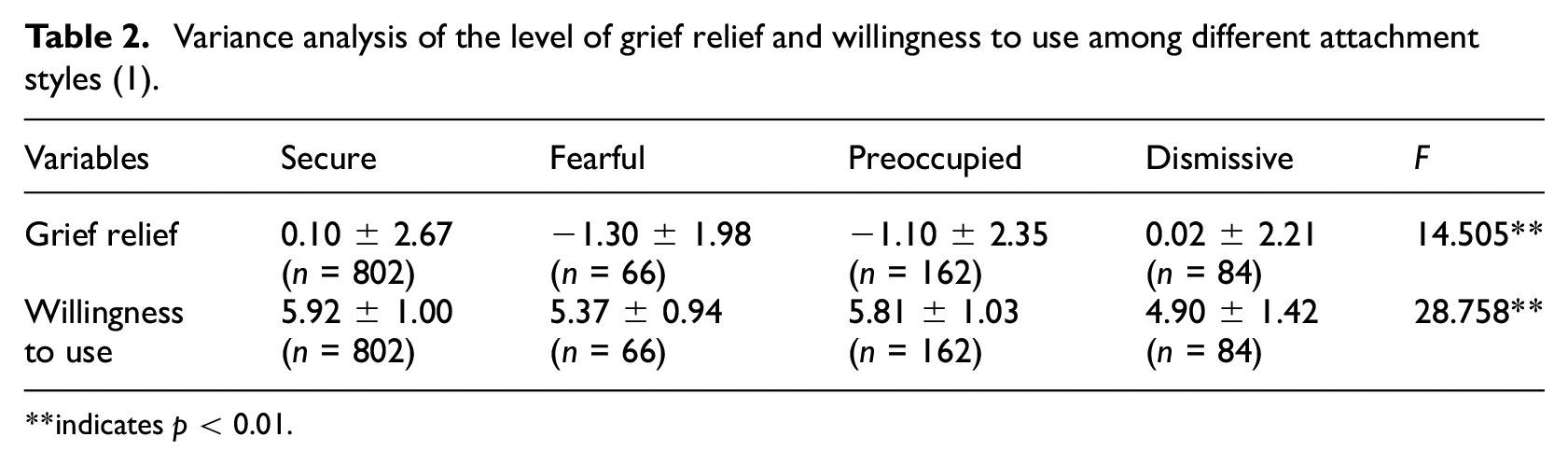
An analysis of variance (ANOVA) was performed to determine if there are significant variations in grief relief and willingness to use among different attachment styles, considering attachment style as the independent variable. The findings are shown in Figure 1 and Table 2.
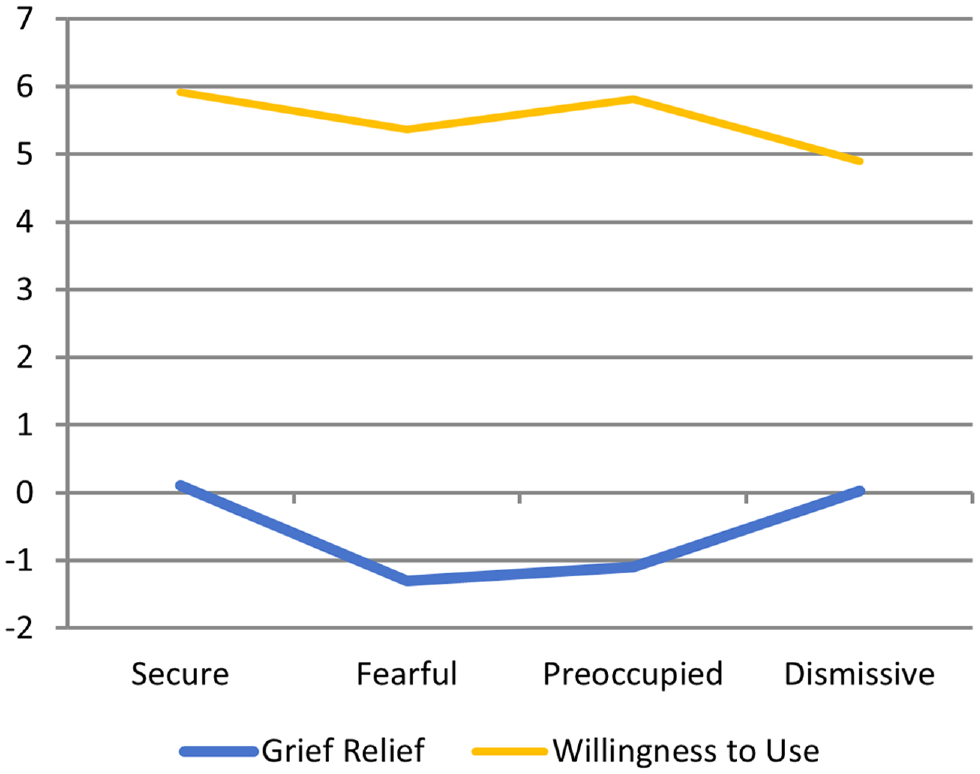
Grief relief level and willingness to use among different attachment styles.
Variance analysis of the level of grief relief and willingness to use among different attachment styles (1).
indicates p < 0.01.
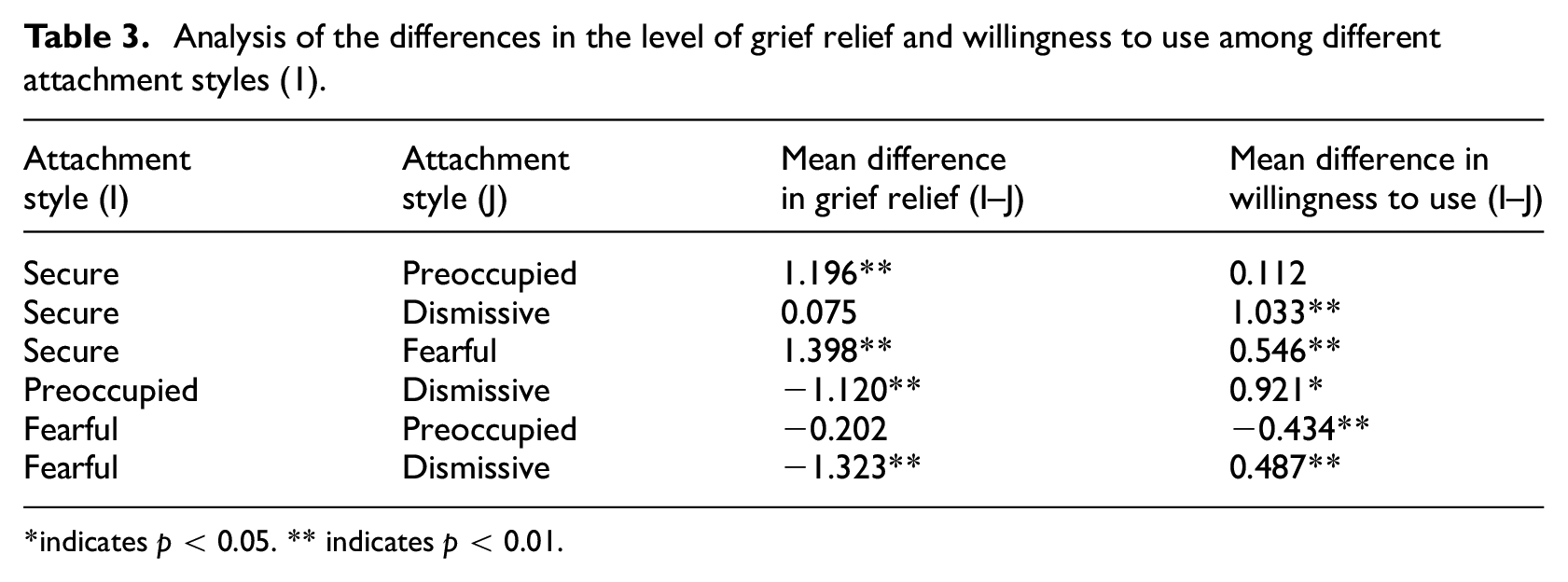
Table 2 shows significant differences in grief relief and willingness to use among different attachment styles. Post hoc multiple comparisons was conducted for further analysis to examine these specific differences (shown in Table 3).
Analysis of the differences in the level of grief relief and willingness to use among different attachment styles (1).
indicates p < 0.05. ** indicates p < 0.01.
Combining Table 2 and Table 3, it can be observed that both secure and dismissive attachment styles have significantly higher grief relief compared to preoccupied and fearful attachment styles. Although the grief relief of the secure attachment style is higher than that of the dismissive attachment style, the difference is insignificant. Similarly, the grief relief of the preoccupied attachment style is higher than that of the fearful attachment style, but the difference is not significant. The order of grief relief from highest to lowest is secure, dismissive, preoccupied, and fearful. Regarding willingness to use, both secure and preoccupied attachment styles have significantly higher willingness to use compared to dismissive and fearful attachment styles. Although the willingness to use of the secure attachment style is higher than that of the preoccupied attachment style, the difference is insignificant. The willingness to use the fearful attachment style is significantly higher than that of the alienated attachment style. The order of willingness to use from highest to lowest is secure, preoccupied, fearful, and dismissive.
Further, one-way ANOVA and post hoc multiple comparison analyses were conducted separately for grief relief and willingness to use as dependent variables across different age groups of participants. The results are shown in Figure 2, Table 4 and Table 5.
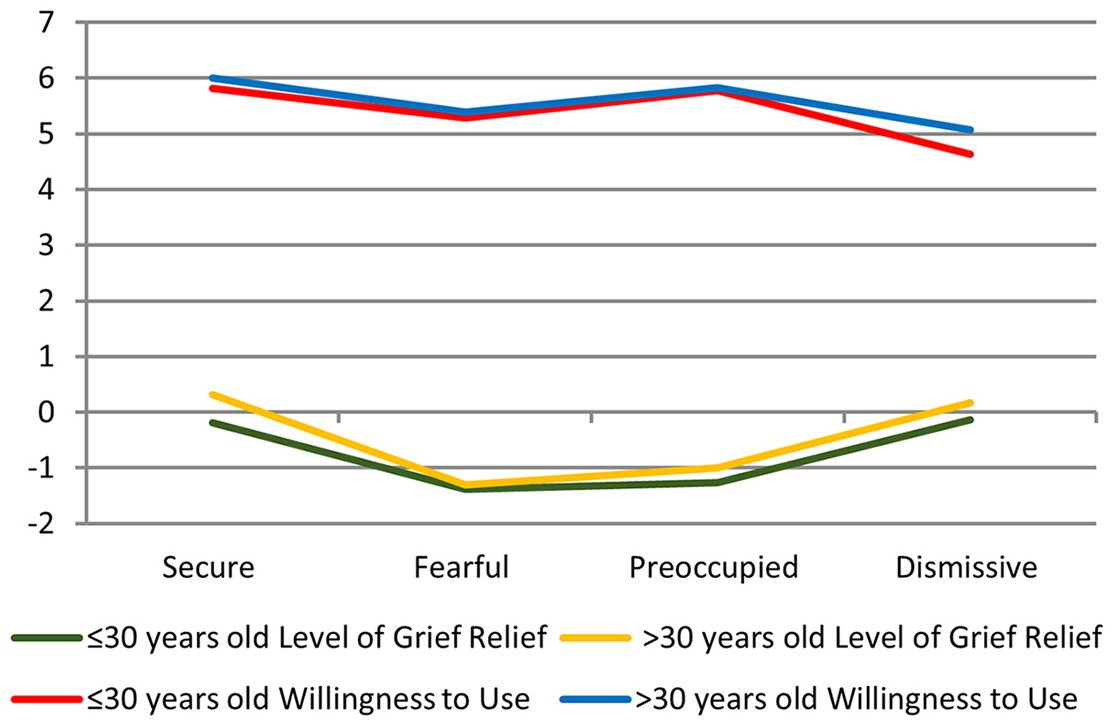
The level of grief relief and willingness to use among different attachment styles in different participants’ ages.
Variance analysis of the level of grief relief and willingness to use among different attachment styles in different participants’ ages (2).
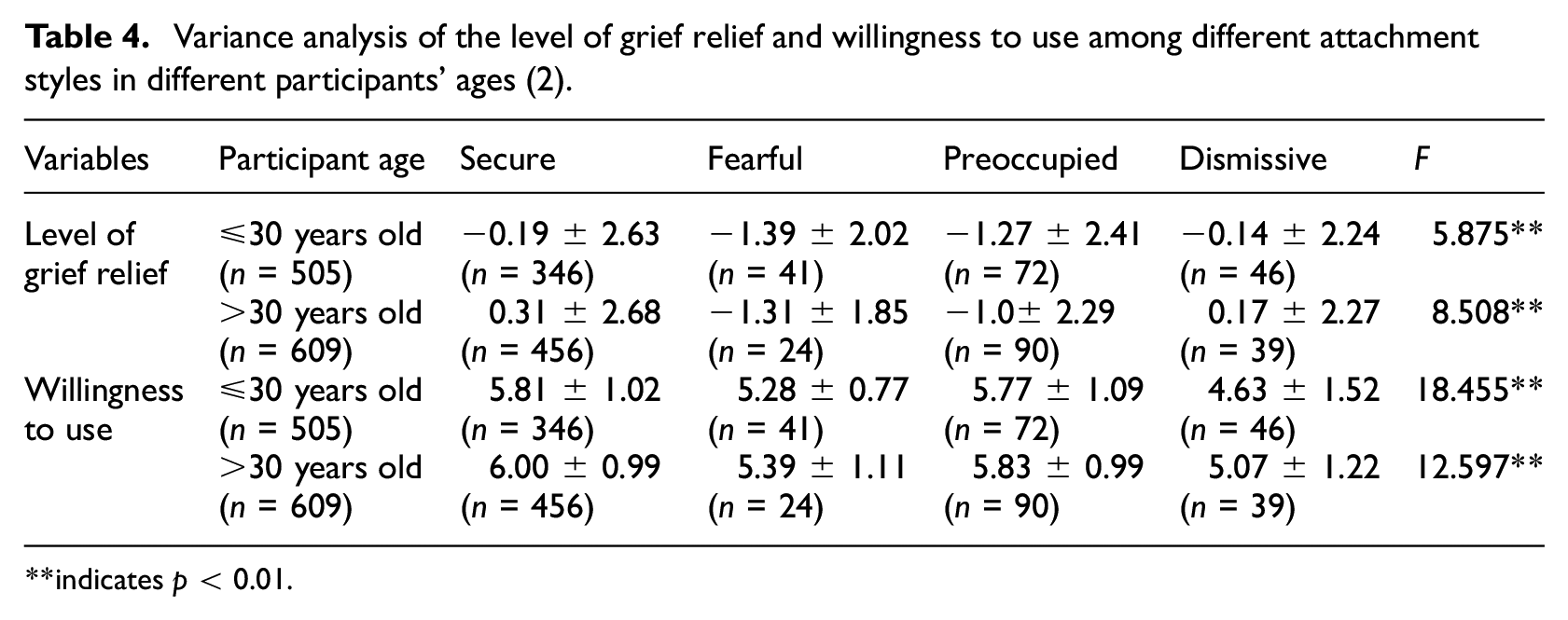
indicates p < 0.01.
Analysis of the differences in the level of grief relief and willingness to use among different attachment styles in different participants’ ages (2).
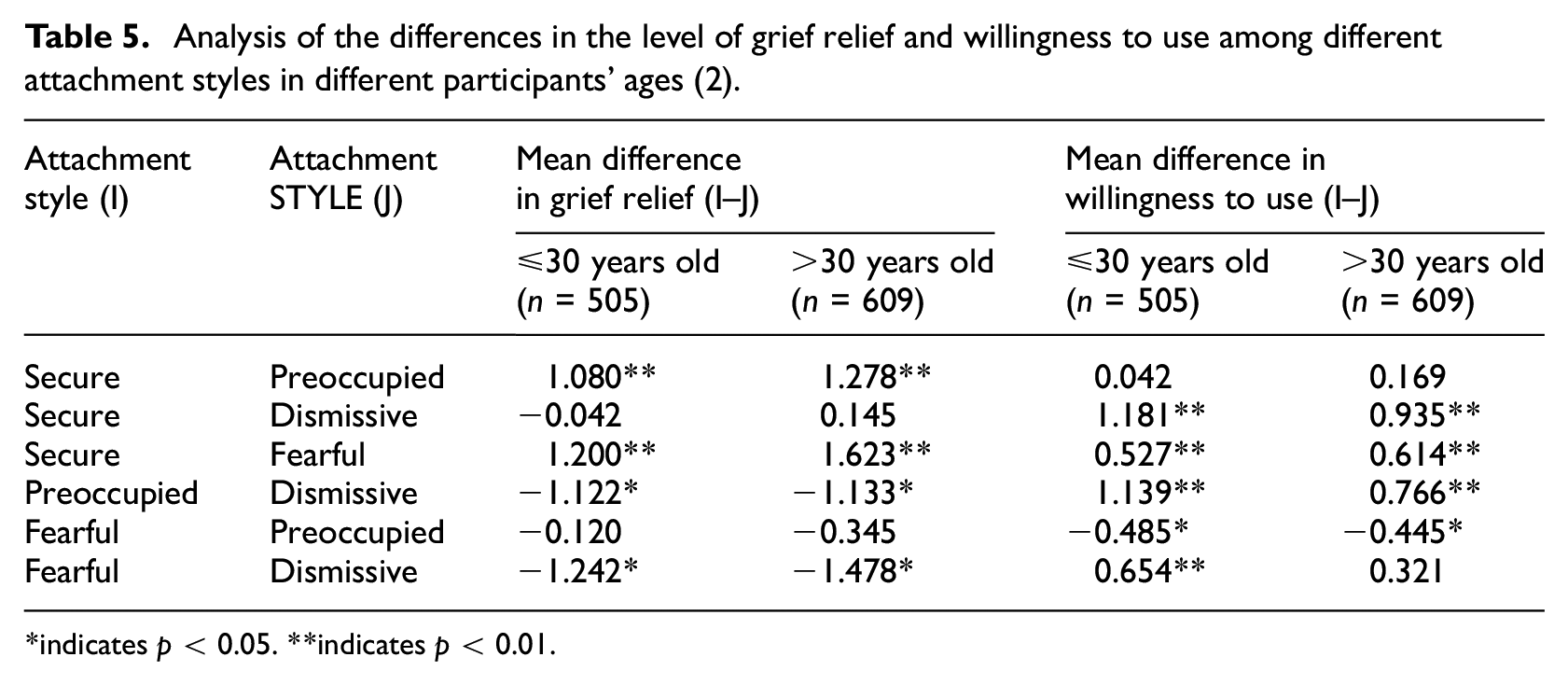
indicates p < 0.05. **indicates p < 0.01.
Combining the results from Table 4 and Table 5, in the older group, the order of grief relief levels from highest to lowest is secure, dismissive, preoccupied, and fearful, consistent with the total sample analysis results. Nevertheless, within the younger group, the ranking of grief relief from highest to lowest is dismissive, secure, preoccupied, and fearful, showing a slight difference from the total sample. The willingness to use, ranked from highest to lowest, is consistent with the total sample analysis results for both age groups. The ranking is as follows: secure, preoccupied, fearful, and dismissive.
Mediation Analysis of grief relief levels in the relationship between willingness to use and attachment styles
Since both avoidance and anxiety dimensions determine attachment styles, a partial correlation analysis was conducted between the two dimensions of attachment (avoidance and anxiety) and grief relief levels, as well as willingness to use, before the mediation analysis. The results are shown in Table 6.
Descriptive statistics and correlations between all variables.
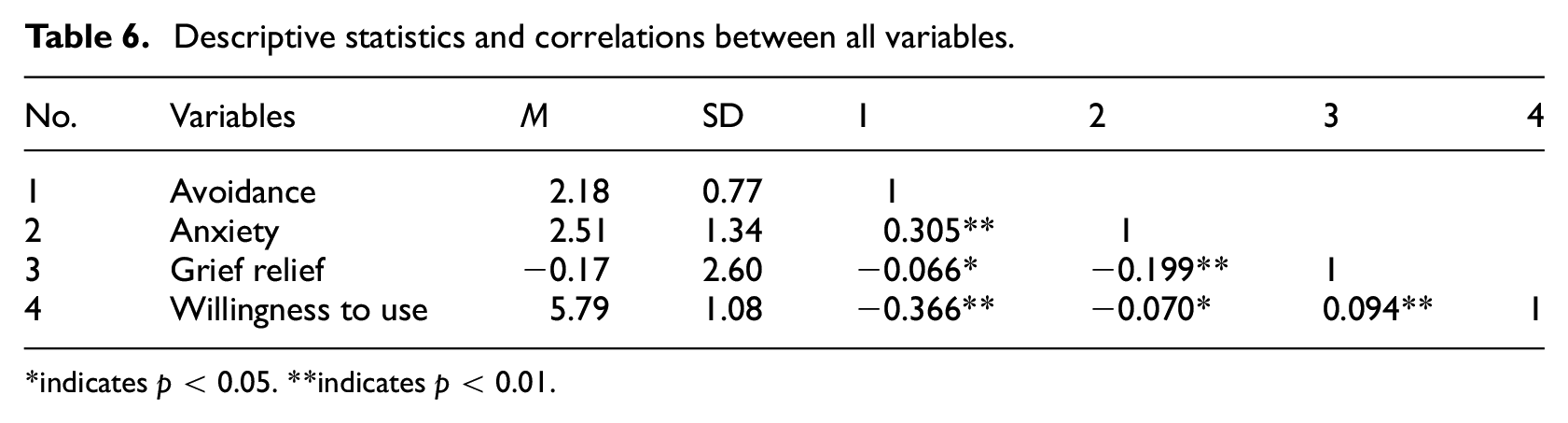
indicates p < 0.05. **indicates p < 0.01.
After controlling for the participants’ age, it was found that avoidance is negatively correlated with both grief relief and willingness to use; the higher the avoidance score, the lower the grief relief and willingness to use. Anxiety is also negatively correlated with both grief relief and willingness to use; the higher the anxiety score, the lower the grief relief and willingness to use. Grief relief is positively correlated with willingness to use; the higher the grief relief, the higher the willingness to use.
The secure group was chosen as the reference group for the mediation analysis due to two reasons: (1) individuals with a secure attachment make up a larger percentage of the population, ensuring that the reference group accurately represents the findings of the study, and (2) in attachment theory, secure attachment is considered a healthy and well-adjusted attachment pattern, facilitating the observation and interpretation of differences in the impact of grief relief on willingness to use across other attachment styles. For the mediation analysis, attachment styles were encoded as follows: secure (000), fearful (100), preoccupied (010), and dismissive (001). The results of the mediation analysis are shown in Tables 7 and 8.
Linear regression analysis of attachment style, grief relief, and willingness to use.
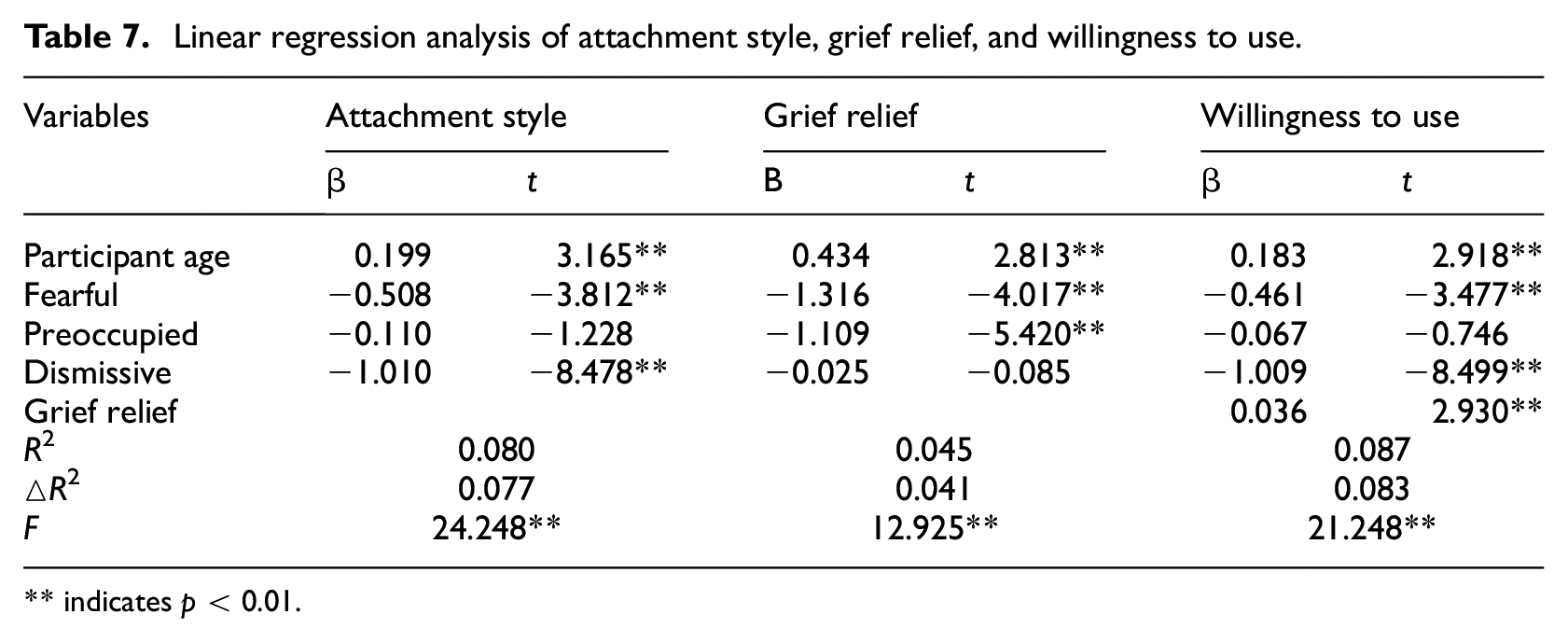
indicates p < 0.01.
Mediation effect analysis of grief relief on willingness to use among different attachment styles.
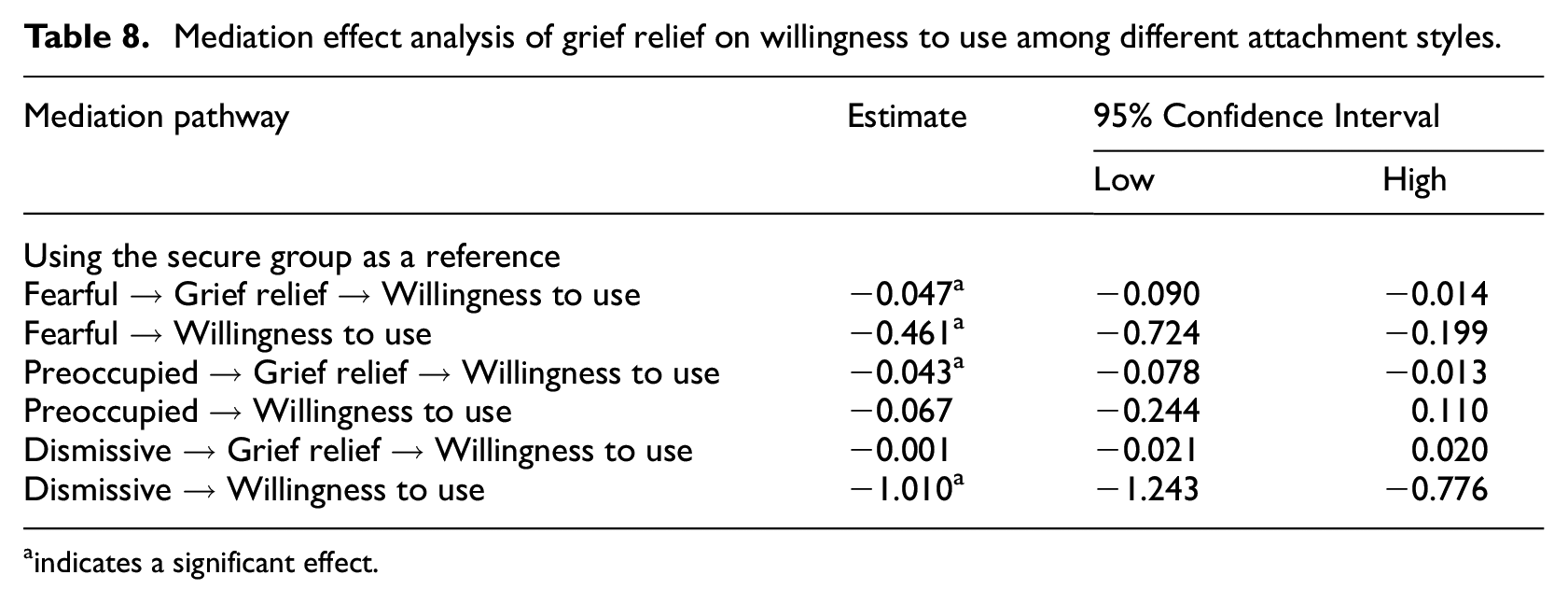
indicates a significant effect.
Combining the results from Tables 7 and 8, for individuals with a preoccupied attachment style, grief relief serves as a full mediator between preoccupied attachment and willingness to use. For individuals with a dismissive attachment style, grief relief does not exhibit a mediating effect. For individuals with a fearful attachment style, grief relief acts as a partial mediator between fearful attachment and willingness to use.
Discussion
The primary aim of this study was to investigate how different attachment styles influence the effectiveness of MRT in providing grief relief and to examine the willingness of bereaved individuals to adopt this digital intervention.
Grief relief level varied with attachment style
There were notable variations in the level of grief relief among individuals with different attachment styles, ranked from highest to lowest as secure, dismissive, preoccupied, and fearful, supporting H1. Specifically, individuals with secure attachment experienced the greatest grief relief overall, likely due to their effective emotional regulation and coherent internal representations of relationships, enabling them to better manage emotional distress and achieve emotional integration after engaging with MRT (Clear and Zimmer-Gembeck, 2017; Mikulincer et al., 2003).
In contrast, dismissive individuals, despite typically preferring emotional distance, demonstrated the second-highest level of grief relief. Their relatively subdued emotional responses and tendency to maintain psychological distance might initially serve as protective mechanisms, allowing them to experience moderate relief without deep emotional engagement. However, compared to secure individuals, dismissive individuals have lower confidence in emotional recognition and processing abilities, potentially limiting their full emotional integration and adaptive coping in the longer term (Mikulincer et al., 2003).
Notably, exploratory analyses revealed an unexpected pattern within younger participants, where dismissive individuals reported slightly greater grief relief than secure individuals. This anomaly may relate to age-related differences in psychological resilience, defined as the capacity to effectively adapt and recover from adversity, trauma, or significant stress (Southwick and Charney, 2012; Zhang et al., 2023). Younger secure individuals, due to relatively limited social experiences and not yet fully developed psychological resilience, may experience intensified grief when confronted by virtual resurrection experiences, temporarily limiting MRT’s grief relief benefits. Conversely, younger dismissive individuals, characterized by emotional detachment, may better maintain short-term emotional stability in response to MRT interactions.
Individuals with preoccupied and fearful attachment styles exhibited lower levels of grief relief. Both groups share high attachment anxiety, associated with challenges in emotional regulation and heightened sensitivity to relational threats (Mikulincer et al., 2003). When interacting with MRT, preoccupied individuals may experience persistent distress due to perceived disparities between virtual interactions and genuine relationships, hindering their emotional comfort and grief mitigation. Fearful individuals, characterized by both high anxiety and high avoidance, experienced the lowest grief relief, likely because their dual struggle with anxiety and avoidance severely constrained emotional engagement and prevented effective use of MRT as a coping resource. Thus, attachment anxiety negatively influenced grief relief to a greater extent than avoidance, explaining why preoccupied individuals achieved slightly better relief than fearful individuals.
Willingness to use varied with attachment style
Significant differences in willingness to use MRT were observed across attachment styles, ranked from highest to lowest as secure, preoccupied, fearful, and dismissive, supporting H2. Secure individuals demonstrated the highest willingness to use MRT due to their effective emotional regulation, stable relationship expectations, and lower perceived threats from virtual interactions (Shaver and Mikulincer, 2002). Preoccupied individuals showed slightly lower willingness than secure individuals. Despite their strong desire for emotional closeness, preoccupied individuals often exaggerate threats of relationship loss and may experience emotional discomfort from perceived disparities between virtual and genuine interactions, thus slightly reducing their willingness.
Fearful individuals exhibited lower willingness compared to preoccupied individuals, primarily due to their high avoidance levels. Avoidant individuals tend to rely less on external support, preferring emotional independence (Pascuzzo et al., 2013). Although fearful individuals also experience high anxiety, their elevated avoidance significantly reduces their willingness to engage in emotionally intensive MRT interactions. Finally, dismissive individuals, characterized by high avoidance and low anxiety, displayed the lowest willingness to use MRT. Their strong preference for emotional distance and self-reliance leads them to minimize interaction with emotionally focused technologies like MRT.
These findings highlight the importance of considering attachment styles when predicting individuals’ acceptance and utilization of digital grief support interventions.
The mediating role of grief relief between attachment styles and willingness to use
The findings revealed that grief relief fully mediated the relationship between attachment style and willingness to use MRT for preoccupied individuals, partially mediated this relationship among fearful individuals, but showed no mediating effect for dismissive individuals, thus confirming H3a, H3b, and H3c. Specifically, for preoccupied individuals, the level of grief relief entirely explained their willingness to adopt MRT, reflecting their dependence on perceived emotional accessibility provided by virtual interactions. Greater satisfaction with the MRT-created attachment figure corresponded to higher grief relief and increased willingness.
For fearful individuals, grief relief only partially mediated willingness because their high levels of anxiety and avoidance also directly influenced willingness. Fearful individuals’ internal conflicts regarding emotional closeness and independence caused continual re-evaluation of MRT interactions, thus moderating the extent of relief and, subsequently, their willingness to adopt MRT.
In contrast, no mediation effect was observed among dismissive individuals, whose willingness to use MRT appeared primarily influenced by their strong disposition toward emotional independence and self-reliance rather than by the extent of grief relief experienced.
Clinical implications
This study provides important clinical implications for grief counseling. Clinicians should assess clients’ attachment styles to determine who may most effectively benefit from MRT or other psychosocial interventions in bereavement contexts (Feldstain, 2024). Secure individuals are likely to benefit from MRT as a supplementary grief intervention. Conversely, preoccupied and fearful individuals might require additional emotional support to overcome potential challenges associated with virtual interactions, while dismissive individuals may derive limited benefits from MRT. Personalized grief interventions based on attachment style assessments are recommended to optimize MRT’s therapeutic effectiveness and manage potential ethical concerns or emotional risks.
Contributions and limitations
This study explores the potential of MRT as a novel digital tool for grief relief, particularly focusing on how attachment styles influence the effectiveness of MRT among bereaved individuals, with grief relief serving as a mediating mechanism. Grounded in social support theory and attachment theory, the research provides a comprehensive understanding of how MRT can either assist or hinder individuals in managing emotional distress caused by bereavement.
By examining the relationship between attachment styles and MRT effectiveness, this study highlights that secure individuals experience significant grief relief and show greater willingness to utilize MRT, suggesting MRT’s utility as a supplementary tool in traditional grief counseling. Conversely, preoccupied and fearful individuals might encounter emotional conflicts or doubts regarding MRT’s authenticity, limiting their potential relief from grief, whereas dismissive individuals, who prefer emotional independence, are likely to experience limited benefits due to minimal emotional engagement with MRT.
This study also contributes to understanding the integration of digital tools into mental health practices, highlighting new avenues for psychological applications of technology. By investigating the interplay between digital technologies and human behavior within bereavement contexts, this research underscores the potential for MRT to transform traditional grief-support strategies, thereby promoting improved mental health outcomes and contributing positively to social stability.
Despite its contributions, this study has several limitations. First, the cross-sectional design limits the ability to draw definitive conclusions about MRT’s long-term effects on grief relief. Future studies adopting longitudinal methods could examine prolonged exposure to MRT and its sustained psychological impact. Second, reliance on self-report measures might introduce biases such as social desirability and retrospective inaccuracies, suggesting the necessity of incorporating more objective assessments like physiological measurements or behavioral observations in future research. Third, this study did not account for participants’ familiarity with the dialect used in the MRT video stimulus, potentially affecting emotional responses and perceptions of MRT authenticity. Future studies should explicitly measure dialect familiarity to control this influence.
Additionally, the sample in this study consisted exclusively of Chinese participants, limiting the generalizability of findings to other cultural contexts. Given that Chinese culture traditionally emphasizes continued emotional bonds with deceased loved ones through rituals and ancestor veneration, our results may reflect culturally specific attitudes toward MRT. Future research should replicate these findings among more culturally diverse populations to explore whether attachment style effects on MRT effectiveness are consistent across cultures.
Finally, although MRT offers considerable potential for facilitating grief relief, it may also lead to unintended negative consequences. For instance, users could develop emotional dependency on MRT, potentially prolonging or intensifying grief if unable to differentiate between virtual interactions and real-life relationships. Ethical concerns, including issues related to privacy, data security, and informed consent when digitally recreating deceased individuals, also warrant careful consideration. Thus, further studies should systematically examine these potential risks and develop clear guidelines to ensure the responsible use of MRT.
Nevertheless, the present study provides important empirical insights into how digital tools can potentially reshape mental health practices, opening new directions for future research at the intersection of digital technology and health psychology.
Conclusion
This study demonstrated that attachment styles significantly influenced grief relief and willingness to adopt MRT. Secure attachment was associated with the highest levels of grief relief and willingness to use MRT, whereas preoccupied and fearful styles encountered emotional challenges limiting their benefits from the technology. Dismissive individuals experienced moderate benefits due to emotional detachment. These findings highlight the importance of personalized interventions in grief counseling and call for further research into tailored, culturally-sensitive applications of digital mental health technologies.
Footnotes
Appendix
Data sharing statement
The raw data supporting the conclusions of this article will be made available by the authors, without undue reservation.
Declaration of conflicting interests
The authors declared no potential conflicts of interest with respect to the research, authorship, and/or publication of this article.
Funding
The authors disclosed receipt of the following financial support for the research, authorship, and/or publication of this article: This research was supported by Humanities and Social Sciences Youth Foundation of Ministry of Education of China [Grant number: 22YJC630117], National Natural Science Foundation of China [Grant number: 72202142], and Shanghai Art Science Planning Project [Grant number: YB2024-H-024].
Ethics approval
The research was conducted following the ethical guidelines outlined by the Academic Board of the School of Economics and Management, Shanghai Institute of Technology. Participants’ rights, privacy, and confidentiality were strictly protected throughout the research process. All procedures adhered to applicable ethical standards and regulations.
Informed consent
Informed consent was obtained electronically from all participants prior to their participation in the study. Participants received comprehensive information regarding the study’s objectives, procedures, confidentiality assurances, potential risks, and benefits before providing their consent. Participants were informed of their right to withdraw from the study at any time without any consequence.
Consent for publication
All participants provided electronic informed consent explicitly agreeing to the publication of aggregated research findings in academic journals, ensuring that no individual identifiable data would be disclosed.
