



Abstract
Gender differences have been found in the way parents communicate online, however it is unclear whether these differences apply in the context of postnatal depression (PND). This research aimed to evaluate online discourses surrounding PND and explore gender differences in communication style associated with PND. X (formerly Twitter) data (15,850 posts) was identified and collected based on a key term search (e.g. ‘PND’) and analysed using corpus linguistic analysis. Results showed that female X users were more likely to discuss PND using words with a negative connotation or to use self-referent items, compared to male users who discussed PND more generally. X content related to PND was mostly created by female users and generally revolved around the experiences of mothers. The limited discussion regarding paternal PND suggests a lack of acknowledgement and insufficient online resources available for fathers.
Introduction
Language abilities play an essential role in help-seeking behaviours, as the capacity to openly express oneself could lead to receiving the appropriate support, or, on the contrary, missing out on the help needed due to lack of communication (Branney and White, 2008; Ridge et al., 2011). Social support has been described as an important protective factor during the postnatal period (Don and Mickelson, 2012), as well as a predictor of postnatal depressive (PND) symptoms (Leahy-Warren et al., 2012). PND is a mental health condition that affects around 10%–19% of mothers (Woody et al., 2017) and 5%–13% of fathers (Cameron et al., 2016) and it can occur in the first weeks after childbirth and last for up to a year (O’Hara and McCabe, 2013). The symptomology of PND includes prolonged sadness or low mood, fatigue, hopelessness, inconsistent eating or sleeping patterns (Robertson et al., 2004), feelings of shame or guilt, difficulty in bonding with the infant (Field, 2010) or thoughts of harming the self or the baby, in more severe cases (Jennings et al., 1999). Maternal and paternal PND manifest in similar ways, although fathers are more likely to experience depressive symptoms due to a self-perceived feeling of hopelessness in their desire to support their partner (Letourneau et al., 2011). Due to the links found between language style and access to social support (Ridge et al., 2011), it is essential to consider and evaluate the language used to express psychological distress in the postnatal period, especially as PND is seen as a stigmatised condition (Goodman, 2009), which may have an impact on disclosure.
Gender differences in language of depression
Gender differences in how men and women communicate may be related to the ideology that gender is a binary system consisting of two genders based on two sexes. Early research in the field of gender and language that has aimed to explore gender differences in communication proposed that men and women have distinct linguistic styles – belief rooted in stereotypical beliefs that portray women as more collaborative, attentive and community-focused, whereas men are seen as more competitive, independent and assertive (Coates, 2008; Tannen, 1990). As such, traditional perspectives to understanding gender differences in language propose that men should not disclose sadness or get tearful, and women should not use swear words or display their anger (Lakoff, 2003). An investigation into gender differences in communication style on Facebook by Park et al. (2016) found that self-identified female users were more likely to discuss topics related to relationships and use adverbs and words that describe emotions (e.g., ‘happy’), whilst self-identified male users were more inclined to discuss topics related to personal interests or politics. However, contrary to stereotypical expectations, the female users displayed slightly higher assertiveness, compared to the male users, distinction which, according to the authors, may be related to the impact of the online environment which could act as a ‘social equalizer’ (Park et al., 2016: 21).
Research focused on language related to illness confirms stereotypical gender distinctions in language. Charteris-Black and Seale (2013) used a corpus linguistic analysis to explore illness-related language used in interviews with men and women. They found that the experience of illness represented an identity challenge for men, as it encouraged them to express words which emphasised vulnerability and self-awareness. It was indicated that women were more direct in their verbalisation of illness by using strong adjectives such as ‘terrified’ or ‘awful’, whilst men were more likely to utilise swear words, make analogies or generalise. Simultaneously, other men within the same study were relating to their experience of illness in a less constricting way by discounting the social constructs of gender; this was done by either expressing frustration and anger in response to the pressure to comply with societal expectations of masculinity, or by openly communicating the inadequacy and insecurity related to the experience of illness (Charteris-Black and Seale, 2013). On the other hand, the study by Bathina et al. (2021) on online communication between depressed and non-depressed individuals found that gender did not play a significant role in linguistic choices; their demographics revealed that the data included twice as many female users compared to male users, with the justification being related to gender disparities in depression diagnostics.
A linguistic representation that has shown gender differences in studies of depression is the use of self-referent lexical items (e.g. first-person pronouns; e.g. De Choudhury et al., 2013a; Tølbøll, 2019). The study by De Choudhury et al. (2013a) employed a corpus analysis to assess language within X (formerly known as Twitter) content posted by women during the postnatal period, aiming to assess whether online language can predict likelihood of developing PND. Their findings showed that the linguistic style, online engagement rates and emotional connotation of the words were effective predictors of PND amongst new mothers. It was identified that women experiencing depression were using self-referent items more frequently than men with depression (Fast and Funder, 2010; Tackman et al., 2019). The frequent use of self-referent words in association with depression has been linked with heightened self-doubt and decreased levels of self-competence amongst women, and with narcissistic behaviours and low self-esteem amongst men (Fast and Funder, 2010). As some of the symptoms of depression include low confidence or reduced self-worth (American Psychiatric Association Division of Research (APA), 2013), these can present an obstacle in help-seeking behaviours and reduce the likelihood of speaking up about the illness or asking for help, due to feeling undeserving of support (Gask et al., 2003).
Parental use of digital platforms and online language
A way of discussing mental health issues or seeking support is via social media sites. Statistics show that the majority of individuals within the child-bearing age range use social media, with 75% of people between 18 and 29 years old and 66% of people between 30 and 39 years of age use social networking sites frequently (Sensis, 2016).
A large amount of written language exists on social media sites, with X users creating around 500 million messages daily (Twitter Inc., 2013, p. 1). X is a social media site where individuals reveal difficulties related to experiences of depression, mental health outcomes, whilst also providing or receiving advice and support regarding experiences of depression (Park et al., 2012). X posts created by individuals with depression often contain descriptions associated with feelings of low mood, irritation or guilt, which may indicate that the X users experience depression (Cavazos-Rehg et al., 2016); the same study indicates that female X users are more likely to post content surrounding symptoms of depression, compared to male X users. There is a gender-based difference in internet use, with mothers being more interested in using social media networks for parenting information and advice (Duggan et al., 2015), and women generally being more likely to seek health support online, compared to men (Bidmon and Terlutter, 2015). Simultaneously, it has been proposed that both mothers and fathers appreciate interacting with other parents online and sharing experiences and information (Niela-Vilén et al., 2014). Distinctions in how mothers and fathers engage and communicate online indicate that mothers seek more emotional support and feeling of belonging to a close-knit community, whilst fathers prefer to use humour in conversations and discuss similar experiences (Niela-Vilén et al., 2014).
Online discourses related to PND have been explored using corpus-linguistic analysis in a study by Kinloch and Jaworska (2021); the findings of this paper suggest that mothers engage with online forums as an opportunity to share about the realities of childbirth, motherhood and postnatal mental health challenges. Online parenting forums (Mumsnet) are also used by mothers to express regrets regarding becoming a parent, as discussed and evaluated by Matley (2020) using a qualitative analysis of digital text, with consideration of linguistic elements, such as pronouns. Fathers utilise online platforms in a similar way, with the study by Smith et al. (2022) suggesting that Reddit is a digital site where communities of fathers are formed and populated by discussions regarding the emotional experience of becoming a parent, including psychological distress or the father-baby bond; the Reddit content was analysed using topic modelling and thematic analysis, and revealed that fathers communicated through this site as a way to seek validation, provide support or reframe their experience of unexpected parenthood. These studies provide important knowledge regarding parenting discourse created online, however an interpretation of the linguistic elements of this online communication is lacking. Although it is clear that digital resources are often utilised by parents, there is a limited number of websites and online groups designed for the specific needs and experiences of fathers, as an overwhelming amount of parenting sites are targeted for mothers (Ammari and Schoenebeck, 2015). The scarcity in male-dominated platforms may inhibit fathers from opening up and seeking the necessary support.
Rationale, hypothesis and aims
Social media is a frequently used source of support for parents, however there is limited information regarding the way in which individuals who experience PND symptoms are utilising these resources, as well as the language associated with the experience of PND. Previous research has revealed various discrepancies in the language styles of men and women, especially in regard to illness or help-seeking behaviours, yet it is unclear whether these differences apply in the context of PND. Due to these factors, a corpus linguistic analysis was conducted to investigate a number of online posts created by female and male X users who have posted content that included specific search terms related to PND, such as ‘postpartum depression’.
The research questions that this study sought to investigate were (a) What are the most frequent keywords related to PND in posts by female and male users?, and (b) Are there any gender differences in frequency of keywords, the context of the words associated with PND or meaning (positive vs negative connotation) of words associated with PND. Based on previous research (e.g. Johnson et al., 2012; Tackman et al., 2019), it was hypothesised that there would be gender discrepancies within the linguistic features utilised by female and male users in their X posts when discussing thoughts, feelings and attitudes related to PND. This research aims to add to the growing literature regarding the online discourses surrounding PND, as well as explore any potential gender differences in communication style associated with PND.
Methodology
Overview of data and data collection strategy
Textual data, in the form of X posts, was collected between April 2020 and June 2020, with the use of TAGS (Version 6.1; Anthony, 2019b) and FireAnt (Version 1.1.4; Anthony and Hardaker, 2019). TAGS (also known as Twitter Archiving Google Sheet) and FireAnt (also known as Filter, Identify, Report and Export Analysis toolkit) are tools that allow the automated collection of result searches from X (in line with the API access at the time of collection), with the use of key terms. TAGS collects X data posted within the previous 7–9 days, whilst FireAnt collects X posts posted in real time, and the data collection timeline can be set up by the researcher. Both programmes were utilised for the collection of the data within this study to ensure the collection of previous posts related to PND, as well as present ones; this was done to cover a wider range of content related to PND.
This study aimed to investigate potential gender differences in X posts related to PND, thus it was decided that the data would be collected based on key terms that include the words ‘postnatal depression’ or other titles of the condition, such as ‘postpartum depression’, ‘PND’,‘PPD’ and ‘baby blues’. After an initial examination of the data, we noticed that the data collected based on the term ‘baby blues’ was largely unrelated to the concept of PND or the postnatal period, which resulted in this key term being removed from the analysis. A total amount of 15,850 posts (tweets), consisting of 431,683 words were collected, observed and analysed. This number of posts was considered appropriate for the analysis and it fit within the time constraints of the project.
Upon collecting the data using FireAnt and TAGS, the entire data set was introduced in an application created in Android Studio utilising Java that displayed each individual tweet, with its associated profile picture, username and bio description. The application was connected to a database, which allowed the researcher the visualise each tweet and manually deliver it to a different category. As the gender of the participants was an important factor of this analysis, the corpus was categorised based on posts made by ‘male users’ and ‘female users’, and later the category of ‘organisational users’ was added, as well as the ‘unknown’ category. The ‘organisational users’ group was formed as many of the posts related to PND were created by accounts ran by organisations or official figures. The ‘unknown’ group was formed of posts created by X accounts that could not be identified as either male, female or organisational users.
The type of X account or gender was decided based on the information provided by their X profile, in either their profile picture, bio description, username or tweet. For instance, if a user posted a tweet mentioning their personal experiences of being a mother who suffered from PND, then the tweet would be directed towards the female user corpus. A similar approach of categorising the data and identifying new mothers within a X data set was employed by De Choudhury et al. (2013a), where they assessed the predictability of digital language in postpartum changes. Similarly, in the study by Bathina et al. (2021), the authors inferred the demographic information of X users using a deep learner machine trained to classify the dataset based on the elements stated above. It is important to acknowledge the potential ethical concerns of inferring the gender of the user based on these elements, as this practice may lead to biases and assumptions based on traditional expectations of gender; these concerns were addressed by including a category for X posts that could not be categorised based on the information presented (‘unknown users’), as well as by considering all aspects of the X post (profile, bio, actual post, etc.) when categorising, rather than only one element. An alternative method of categorising data based on gender would be the use of a learning machine specifically trained to classify data based on demographic information, as detailed in the study by Bathina et al. (2021).
Following the separation of the data set into four different categories, the data was analysed using a programme named AntConc (Version 3.5.8; Anthony, 2019a). AntConc is a tool that can analyse corpora of text using features such as word frequencies, collocations, concordances or corpora comparisons (Anthony, 2004), elements which were utilised to examine the data collected from X using TAGS and FireAnt.
Data analysis
A corpus linguistic (CL) analysis was performed to examine the textual information included in X content collected based on a term search related to PND, as well as to explore any linguistic differences based on gender of the user (i.e. female, male) or type of account (i.e. organisational). CL is a methodological perspective that focuses on the study of language (Baker, 2014) and it was considered a suitable form of analysis for this study as it can manage large amounts of data, or ‘corpora’, and it generates statistically reliable results (Kennedy, 2014). The generation of statistically reliable findings is conducted by making comparisons between corpora (i.e. bodies or collections of related text) and the identification of key linguistic features and differences.
The corpus was examined using three main components of CL, namely wordlist frequency, collocations and keyness tests. The CL analysis was performed using AntConc (version 3.5.8; Anthony, 2019a). The frequency feature explored how often lexical items occurred within the data (McEnery and Hardie, 2011), more specifically, we looked at what words were most frequently used within the total corpus, as well as each individual group (female users, male users, organisational users).
Collocations allow the analysis of lexical items in context, providing essential details regarding the meaning behind the words (McEnery and Hardie, 2011). The analysis of words is more meaningful when they are being assessed in association with other items that are in close proximity, rather than on their own (Gómez, 2013). As the current study is exploring gender differences in X content related to PND and the way in which users may use X to seek or provide support, a collocation analysis was conducted for the items ‘depression’ and ‘help’. These two lexical items were considered essential in exploring the main topic under analysis and appropriately linked to the main research question and study aims. This analysis was performed using the collocation function available in AntConc (Anthony, 2019a) and it explored a range of five words that occur most frequently on each side (left and right) of the key term. The strength of collocations was calculated using Log-likelihood (p < 0.05) and MI as statistical measures; the most statistically significant collocates are discussed in more detail in the Results section. As collocations examine the way in which words are utilised in context, this feature allowed for the addition of a qualitative exploration of the data, as extracts of X posts were presented and interpreted.
A keyness test is another essential component of CL analysis and it represents the comparison between the frequency wordlists of two different corpora, displaying lexical items that occur statistically more often in one group than the other (known as reference corpus). These items can be either positive or negative, depending on whether they are the most or the least statistically frequent in a particular corpus compared to another (Baker, 2010). Keyness tests provide statistical information on the association between the lexical items of the two corpora, as it displays a significance value (p value), as well as a keyness score which reports the strength of the significance (Anthony, 2004). The strength of the keyness analysis was calculated using Log-likelihood (4-term) and the statistic threshold was p < 0.05 (with Bonferroni correction).
Three keyness calculations were conducted for the current study, and they were aimed at the female X user corpus, the male X user corpus and the organisational X user corpus. Using a keyness calculation, we analysed the lexical words that occur statistically more frequently in the female users corpus when compared to the male users corpus and vice versa, as well as the words that occur significantly more often in the organisational user corpus when compared to the female and male users corpora. Examples of textual content from the corpora were presented subsequent to the keyness test by using a concordance search. The concordance feature in AntConc reveals the context of a specific search term within a corpus. Due to this methodological exploration, the data was analysed using both quantitative and qualitative elements.
A combination of qualitative and quantitative approaches was previously employed in studies where they investigated large corpora of online text utilising a combination between corpus linguistic analysis for a quantitative perspective on word frequency, concordances and collocations and a qualitative perspective formed of critical discourse analysis (Ismail et al., 2020; Kinloch and Jaworska, 2021), or thematic analysis (Carter et al., 2021). We used CL as the main analysis in the current study, with a qualitative evaluation of the data using the collocation and concordances features.
Ethical considerations
The study was ethically approved by the Ethics Committee at the UK University where the study was conducted. The study followed the four principles of the BPS (British Psychological Society) ethics guidelines for internet-mediated research, which include respect of the autonomy, privacy and dignity of participants, integrity, responsibility and competence. As the data was collected from public profiles, the participants’ consent was not necessary, as they already offered their informed consent to their data being visualised and disseminated when they accepted the Terms and Conditions provided by X at the time of the data collection (Twitter, 2015). Therefore, whilst some of the information collected could be considered sensitive as some of the X posts referred to personal experiences of PND, the data was included in the research as it was voluntarily shared on a freely accessible platform. However, to maintain anonymity, no personal contact information was utilised in the write-up or publication of this study, including, usernames, profile names, or any other identifiable elements.
To protect the identity of the users, the presentation of some of the extracts was slightly altered or truncated (e.g. the word ‘postnatal’ changed to ‘postpartum’), however the original X posts were used in the analysis to maintain the integrity of the data. While some of the quotes were truncated or slightly modified, the meaning of the extract was maintained to ensure the authenticity of the data and the overall analysis. In the absence of this minor alteration in the presentation of the data, the original post could be easily accessed by copy-pasting the extract onto X, which would compromise the anonymity of the user. This protection of individuals is in line with recommendations from the BPS Ethics guidelines for internet-mediated research (British Psychological Society, 2021). The practice of paraphrasing quotes was previously discussed in the study conducted on the concept of online self-harm by Whitlock et al. (2006). Confidentiality was also maintained by storing the data in a secure and password-protected computer, that was only accessed by the researcher and supervisors.
Results
General descriptives
The current study investigated a lexical corpus formed of over 15,000 (15,850) posts posted on the social networking site named X (formerly known as Twitter). The majority of the data was sourced from female users, with 9863 posts, followed by organisations X accounts with 2746 posts, unknown users with 1984 posts and lastly, male users with 1257 posts.
The analysis of the data was performed using the three main components of CL, namely word frequency, collocates and keyness tests. Within the whole corpus, ‘depression’, ‘postpartum’, ‘postnatal’ and ‘ppd’ were the most frequently utilised words, which is to be expected, as they were part of the search terms for data collection. Other high frequency items within the whole corpus were first and third person pronouns (e.g. ‘I’, ‘me’, ‘she’, ‘he’, ‘us’), items referring to aspects of childbirth (e.g. ‘baby’, ‘birth’, ‘pregnancy’), or to parental roles or gender identities (e.g. ‘women’, ‘mom’, ‘mothers’, ‘men’), as well as words from the semantic field of support (e.g. ‘help’, ‘care’, ‘need’), words with a negative connotation (e.g. ‘hard’, ‘shit’, ‘suffering’, ‘bad’) or items that represent societal events/circumstances, such as ‘pandemic’ or ‘life’. It appears that the general discussions existent within the corpus revolve around experiences of parenthood, more specifically, feelings or challenges related to mental health obstacles within the perinatal period. Qualitative examples of these lexical terms are provided as part of the evaluation of collocates and keyness tests, as presented below.
Collocations
A collocation analysis was conducted for the items ‘depression’ and ‘help’; these lexical items were considered essential in exploring the research questions. This analysis was performed using the collocation function available in AntConc (Anthony, 2019a) and it explored a range of five words that occur most frequently on each side (left and right) of the key term. Table 1 presents some of the most frequently utilised words in proximity to ‘depression’ and ‘help’ for both the female and male users, as well as the statistical power for each of these collocates, which was calculated using Log-Likelihood (p < 0.05) and MI.
The 10 most frequent words utilised in proximity to the words ‘depression’ and ‘help’, in both the female and male user groups.
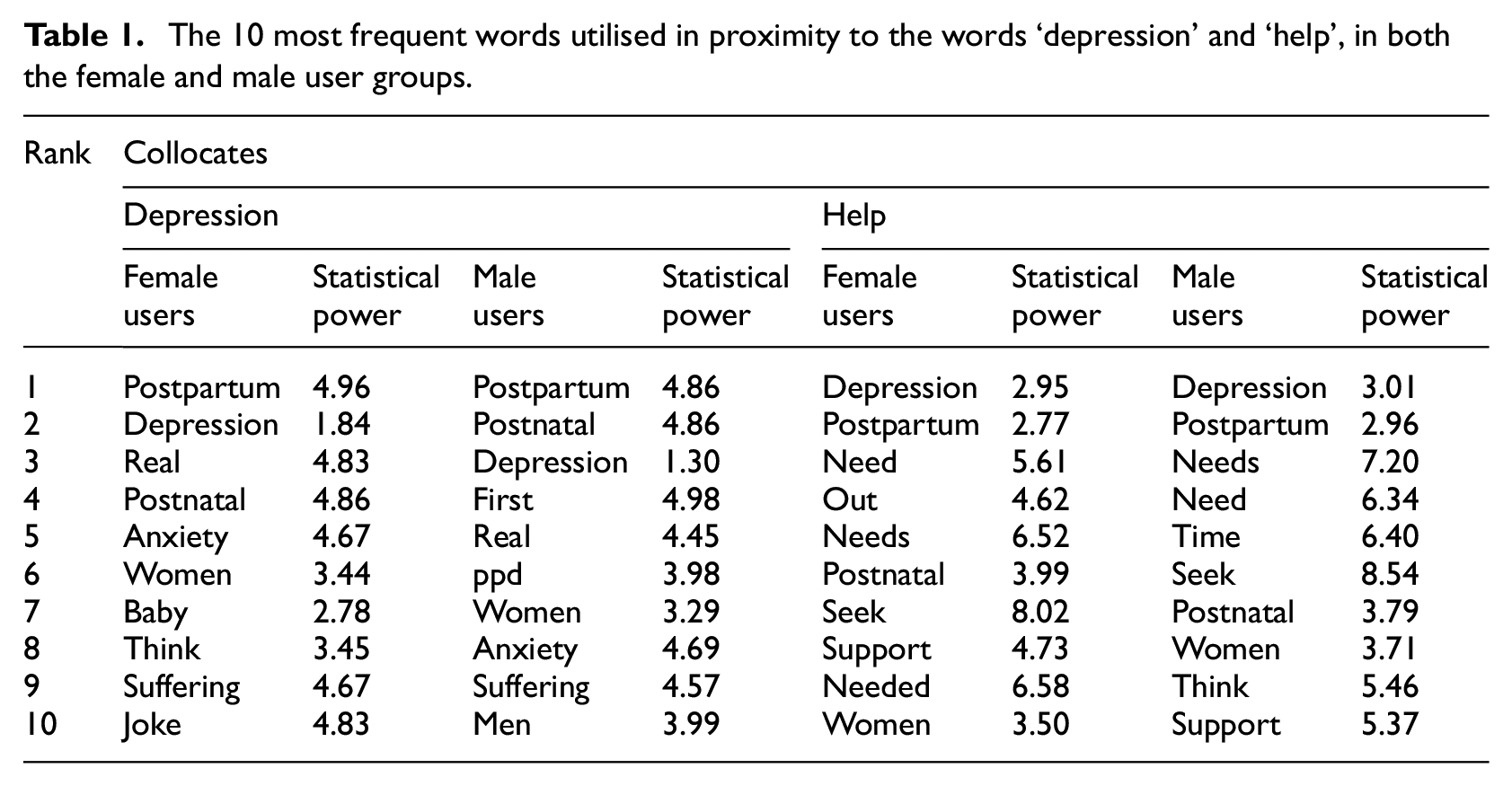
Table 1 indicates that the item ‘depression’ was often utilised in proximity to words such as ‘real’, ‘joke’, ‘anxiety’, ‘hard’ or ‘suffering’ and the statistical strength of these collocates in relation to the search term is high. These associations suggest that many users felt the need to reinforce the validity of PND, condition that appears to be questioned, overlooked or stigmatised, as well as reinforce the severity of this condition. Using the concordance tool, we could learn more about the context in which these collocates appeared alongside the search term ‘depression’, and some examples are provided below:
Postnatal depression really is no joke. (female user; F)
People need to know that postnatal depression exists and is real. (male user; M)
Both groups utilised the word ‘anxiety’ when discussing PND, often as a pair, suggesting the existence of comorbidity. Some of the female users who had personal experience of PND and anxiety expressed regret at the lack of prior knowledge, suggesting that being informed may benefit their experience of the illness. One of the male users discussed postpartum mental health in relation to the COVID-19 government restrictions, linking social isolation to heightened risk of depression and anxiety. These extracts add to the expectation that women are more personal in their communication of illness, whereas men are more general:
3. […] wish I learned more about postnatal depression & postnatal anxiety before I started experiencing it. (F)
4. Mental health: depression and anxiety exacerbated by postnatal and social isolation. (M)
Further, female users were more likely to refer to themselves or other women when talking about the experience of PND, while male users mainly focused on the experiences of other women or men, and not so much on their personal struggles. Therefore, the experiences of men in the context of PND-related language were mostly mentioned by other male users. As seen below, some of the female users were posting content related to personal PND experiences, in terms of therapy techniques for coping with PND, while male users were talking about PND on a general level, posting about other people requiring support with PND:
5. My therapist taught me this while I was dealing with postnatal depression […]. (F)
6. It’s definitely real bro men also suffer from postnatal depression […]. (M)
The search term ‘help’ was frequently mentioned in proximity to words such as ‘depression’, ‘postpartum’, ‘need’, ‘seek’, ‘women’ or ‘mothers’. These associations indicate that PND was perceived as a condition that requires support; from the male users’ perspective, they were placing themselves in a position of supporters, willing to learn about PND to provide help to those experiencing this condition. The context of these collocates can be observed below:
7. I knew it was more than postpartum depression & I needed help. (F)
8. I’m going to do some research on how I can help with postpartum depression […] (M)
9. Stay strong. Seek help. Find someone to talk to. (M)
Although the topic of seeking and needing ‘help’ was frequently discussed in association to ‘mothers’ or ‘women’, there was almost no data that paired this term with ‘fathers’ or ‘men’, and some examples are provided below. These differences demonstrate a marked gender difference within the context of help and support for postnatal depression, indicating perhaps a lack of awareness for the postnatal needs of fathers.
10. Happy to help out sharing information for moms with postnatal depression! (F)
11. Did you know that Black women receive less help for postnatal depression? (M)
Collocations revealed that the female and male users discussed PND in a way that emphasised the severity of the condition and highlighted the need for help and support in coping with PND. Both ‘depression’ and ‘help’ were more often utilised in relation to ‘women’ or ‘mom’, rather than ‘men’ or ‘dads’, which may be explained by the greater number of female X users within this data set. This discrepancy may also propose a general tendency of associating PND with mothers rather than fathers.
Keyness test
Finally, keyness calculations were conducted to explore potential gender differences among X content related to PND, as well as possible discrepancies between the language utilised by organisational accounts versus female and male X users, resulting in three keyness calculations performed using AntConc (version 3.5.8; Anthony, 2019a).
As part of the first keyness evaluation, we examined the frequency of words that were statistically more present in the female user group when compared to the male user group, focusing on pronouns, nouns, verbs and adjectives. Table 2 shows that first person pronouns appear to be utilised more frequently in posts created by female X users (e.g. my, me, myself), as well as items which express difficulties, such as ‘hard’, ‘anxiety’ or ‘alone’. The word ‘happy’ was also more frequently utilised within the female group, compared to the males group. It is important to note that the large discrepancy between the volume of posts created by female versus male users may have impacted the frequency of some of these lexical terms (e.g. first person pronouns).
Keyness analysis for the female user group, with the male user group as reference corpus.
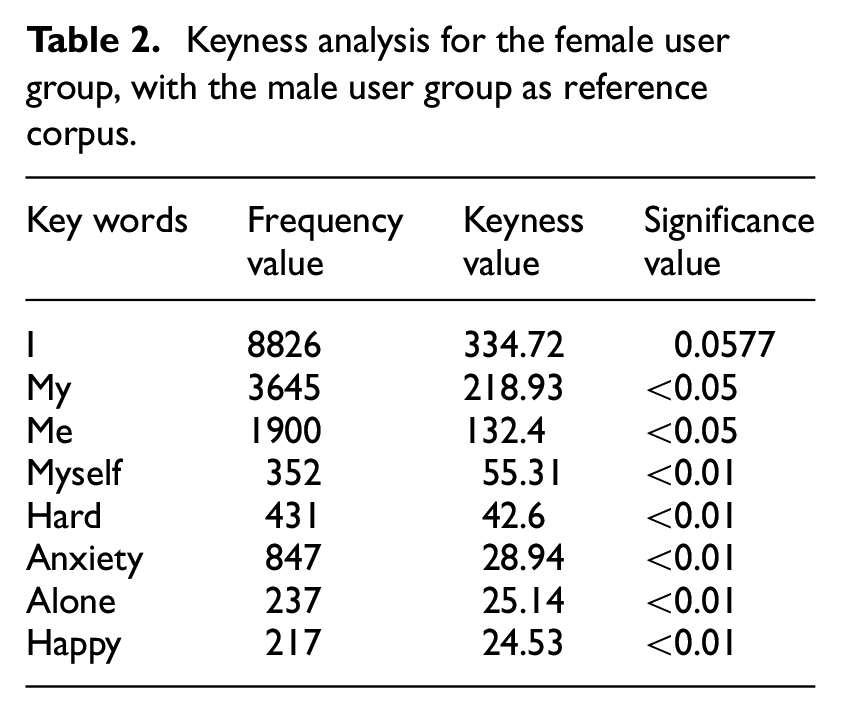
A concordance search was carried out to gain a better understanding of the role that the keywords played in context. The frequent inclusion of first-person pronouns suggests that female users were more likely to describe personal experiences related to motherhood or postnatal mental health. Some of the female X users described the ability to recover from PND as an accomplishment, suggesting that overcoming the challenge of PND symptoms requires self-determination and intentional effort, as observed in the following extract:
12. I will always be proud of myself for overcoming my postnatal depression.
The terms ‘hard’ and ‘alone’ were utilised to express the challenging nature of parenthood, whilst focusing on PND and the detrimental impact it can have on one’s wellbeing. As observed in the extracts below, some female users discussed PND from their own or a general perspective, while others referred to the experiences of other mothers. Most posts portrayed PND as a difficult illness, often suggesting that the experience of PND was associated with loneliness or lack of support. The word ‘alone’ was included in phrases that suggested feelings of sympathy for others, but also encouragement for seeking help, thus portraying a sense of community:
13. Postnatal depression is hitting hard and it sucks.
14. People need to know that they are not alone and can ask for help.
The word ‘happy’ displayed multiple meanings throughout the corpus, as it was utilised as a negative term, expressing the lack of happiness or a willingness to provide help or support, as well as a positive feeling of joy:
15. I’m relieved and very happy that my baby is here.
The second keyness calculation investigated the words that occurred more frequently within the Male group when compared to the Female group. Table 3 shows that male X users had a higher tendency to post content which included links to separate articles or websites, as the word ‘http’ had the greatest keyness value. Lexical items which represent third person pronouns (e.g. she, her) or nouns which refer to the gender of individuals or parental role (e.g. wife, men, fathers) were also more frequently utilised by male users.
Keyness analysis for the male user group, with the female user group as reference corpus.
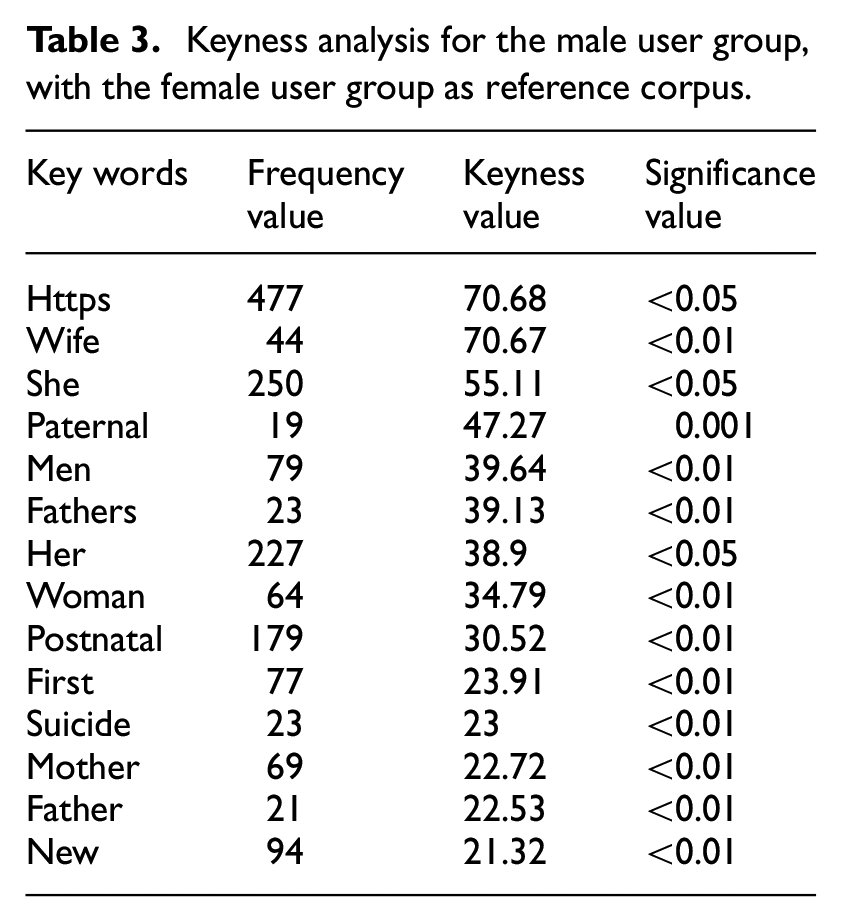
Male users were more likely to post content centred around women or their female partners, with ‘wife’ and ‘she’ as some of the other terms with high keyness values. Other terms that were more significantly present in this group were nouns referring to fatherhood or the male gender, such as ‘paternal’, ‘fathers’ or ‘men’. In context, these terms were often utilised to question the validity of paternal postnatal depression (PPND) or to increase awareness, as in the following:
16. As someone who had paternal postpartum depression and vented on Twitter a lot […].
17. My wife had postnatal depression.
The terms ‘first’ and ‘new’ were also more often utilised by male users in comparison to female users, and they were frequently related to the novelty of parenthood, often referring to new parents or first children, and sometimes to the difficulties related to the immediate period after childbirth, which was believed to improve over time:
18. […] it is hard at first but it becomes a little bit easier every day.
Male users were less likely to utilise descriptive terms, such as adjectives, as well as first-person pronouns, in their content posted on X, compared to female users who were more inclined to discuss experiences from a personal point of view. The male users were also less inclined to include information on the emotional impact that parenthood transition had on their wellbeing. Interestingly, the female users preferred to post content related to their own PND experiences or those of other women, while male users appeared more inclusive by posting about both men and women when discussing PND.
Using a third keyness calculation, we then looked at the top 20 lexical items that were statistically more present in the posts created by organisational X accounts, in comparison to the Female and Male groups. As seen in Table 4, the data suggests that the content created by the X accounts ran by organisations was more focused on mothers and experiences of motherhood, for example the items with higher keyness values include ‘maternal’, ‘moms’, ‘maternalmhmatters’, which were later followed by the word ‘dads’.
Keyness analysis for the organisational user group with the female and male users groups as reference corpus.
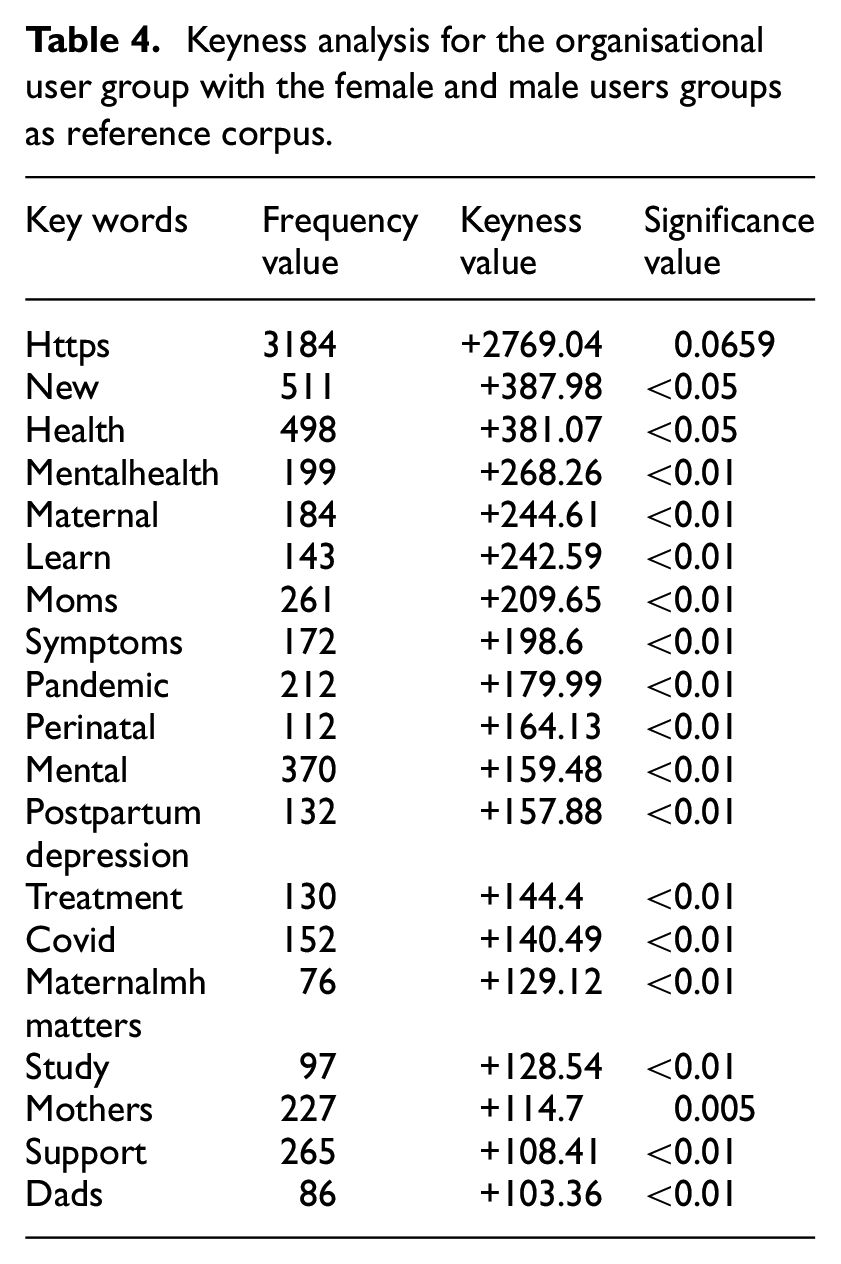
Table 4 also indicates that organisational accounts were significantly more inclined to post informational or educational content, which included words such as ‘learn’ or ‘study’, whilst referring to medical aspects of PND, such as ‘symptoms’ or ‘treatment’. Whilst some of these accounts were advertising and promoting external platforms, such as blogs, they were providing additional sources of support and information seen as valuable in dealing with PND, as observed below:
19. Head over to our blog to learn about postnatal #depression and the many options available to treat it.
20. If you have postnatal depression, prompt treatment can help you manage your symptoms.
The word ‘support’ was also significantly more present in the organisational group sub-corpus, in comparison to the female or male corpora. This lexical item was part of informing others about the support available for parents, as well as providing direct help resources. The quote below describes a different perspective that informs the audience about limitations and barriers in perinatal health.
21. Women say phone support is not enough to safeguard their physical and mental health.
The keywords analysis test suggests that organisational X accounts were more likely to provide educational or informational content related to PND, as opposed to lived experiences. This content would often include scientific facts, such as symptoms or treatment for PND, as well as links to external websites, blog posts or research papers, with the intention of educating their audience. The findings also suggest that the content created by the organisational X accounts was slightly more oriented towards women and motherhood, than men or fatherhood.
Overall, the findings of this study revealed that the majority of the X users who used the search terms related to PND (e.g. postpartum depression) in their posts were women and most of the lexical items connected to PND were related to motherhood or experiences of women (e.g. ‘mom’, ‘she’, ‘her’), with limited references to fatherhood or experiences of men (e.g. ‘men’, ‘he’). Similarly, the results suggest that the posts created by the organisational X accounts were more inclined to link PND to experiences of mothers (e.g. ‘maternal’, ‘maternalmhmatters’). To conclude, the findings indicate that the X discourse related to PND tends to be created by female users and concentrated on the challenges faced by mothers, with a reduced focus on PND experiences of fathers.
Discussion
The current study used a corpus linguistic approach to examine potential gender differences in social media language regarding PND. Based on previous research conducted on gender differences in language choices within an online and wellbeing context (e.g. Fast and Funder, 2010; Johnson et al., 2012; Tackman et al., 2019), we hypothesised that there would be discrepancies between the posts posted by female X users versus male X users when discussing PND online. According to the results and our interpretation of the findings, the hypothesis was supported by the current findings.
The results showed that female X users were significantly more likely to post content related to PND, compared to male X users. A likely cause of this finding could be the general emphasis on maternal mental health and women’s experiences of childbirth (e.g. Nelson, 2003; Rashley, 2005), aspect which could overshadow the experiences of fatherhood and paternal mental health. As a result of this, unsurprisingly, women posted more online content related to PND, as they may have been more exposed to information related to PND, both within their social circle and within a medical environment. The higher exposure to PND amongst women may be related to the increased contact with healthcare settings during the postnatal period, as many fathers report feeling overlooked by health professionals (Schobinger et al., 2022). Another explanation could be related to the societal expectation that mothers are the primary caregivers, therefore suggesting that they are more likely to be psychologically impacted due to the greater involvement with childrearing; as such, PND information would be directed at the parent who is presumably in higher need of support.
Another finding that suggests an imbalance between the online discussions and information related to maternal and paternal PND was indicated by how paternal PND was mostly discussed by male X users, whilst female users mostly focused on maternal PND. Perhaps conversations related to PPND were more present among the male X users as they were more familiar with this condition, either from personal experiences or experiences of others. Male users were generally found to be more inclusive in their posts, by posting about experiences of both mothers and fathers, whilst female users focused on experiences of mothers. A possible explanation for this could be that fathers are often put in the position of supporter for their partner (Salzmann-Erikson and Eriksson, 2013), thus they have a natural tendency to concentrate on the wellbeing of their female partners and place themselves as a secondary priority (Fenwick et al., 2012).
The potential disregard of paternal mental health was also found in the group of organisational users, as they were inclined to post content related to women’s mental health or motherhood more frequently than they posted about fathers or fatherhood. These results indicate a gap in the online information and support available for fathers with PND. This finding has important implications, as studies indicate that access to support may be related to parental self-efficacy (Leahy-Warren et al., 2012), and paternal self-efficacy is a predictor of paternal involvement in childrearing tasks (e.g. attentiveness, homework support; Trahan, 2018). Whilst the research investigating PPND support online is scarce, previous studies that explored online engagement amongst men with depression reported a dissatisfaction regarding the online advice and support available for men with mental health issues (Gough, 2016).
The frequent usage of first-person pronouns in the female users group suggests that they were talking about their own experiences of PND, thus indicating an association between the use of first-person pronouns and symptoms of depression. Another potential association between online language and depression is suggested by the high usage of adjectives and taboo language found in the female users group, compared to the male users group. These findings are supported by previous research which propose that online communication that includes self-attentional focus, reduced sociability or heightened use of terms suggesting negative feelings can predict likelihood of depression (De Choudhury et al., 2013b). Prior literature suggests that women with depression tend to show a higher usage of self-referent lexical items, in comparison to men with depression (Fast and Funder, 2010), and individuals with depression generally use more first-person pronouns (Tølbøll, 2019), which is in line with the current findings.
The limited usage of self-referencing items among the male users could be interpreted in multiple ways. On one hand, this type of communication in relation to PND could imply an avoidance or reluctance to discuss personal struggles. This aspect could be linked to traditional beliefs and stigma related to mental health issues amongst men (Cole and Davidson, 2019), which may then negatively impact on their help-seeking behaviours and access to support (Ridge et al., 2011). Alternatively, the lack of focus on personal experiences amongst the male X users suggests that most of the male users of this sample were not direct sufferers of PND. This suggestion is linked to prior research which found that men with general depression or PPND may be less likely to publicly look for information or advice, due to fear of being judged (Ammari and Schoenebeck, 2015) and having limited knowledge regarding methods of accessing support (Henderson et al., 2013). It is important to acknowledge that the differences in frequency of self-referent pronouns, adjectives or taboo language may be, at least in part, due to the discrepancy in sample size between the female and male user groups.
The current findings further suggest that terms related to help-seeking behaviours were often existent among the X content focused on PND, with the use of lexical items such as ‘help’, ‘need’ or ‘support’. These words were mainly used to ask for support or advice, offer encouragement or increase awareness of the support available for parents in need. The heightened focus on support and helping resources for PND is in line with previous literature, as social support has been described as a protective factor for parents during the postnatal period, due to increase in parental self-efficacy, emotional wellbeing and decreased risk of depression (Leahy-Warren et al., 2012). The posts mentioning support were often associated with women or motherhood and less with men or fatherhood, regardless of the gender of the users. This aspect could reinforce the scarcity of digital resources for fathers or the limited discussions surrounding paternal needs and mental health (Fletcher and St George, 2011).
Implications, strengths and limitations
The current research study has some clinical implications, as the findings could be utilised as part of training or workshops for healthcare professionals, in order to provide a greater understanding of the language used when talking about PND, especially in regard to the gender discrepancies that occur within a digital context. This information could improve perinatal assessments and encourage equal post-childbirth assistance to both mothers and fathers to prevent potential escalations. The findings within this study represent an important contribution to the literature on gendered understandings of PND in online discourse, especially as this design allowed for collection of naturalistic data, which maintained the authenticity of the online content; the authenticity of the data has been described as an useful consideration, especially when exploring discussions among men (Bennett and Gough, 2013).
A limitation of the present study would be the sole analysis of the posts that contained one or more of the search terms (e.g. ‘postnatal depression’), thus excluding additional posts that did not contain the search terms but may have also been related to PND. This was done due to time constraints related to the time allocated for this research project. Still, the decision to only focus on content that incorporated the search terms was beneficial in better understanding the linguistic information related to views, opinions and reactions that were directly and closely connected to PND.
A recommendation for future studies would be to explore the linguistic practices regarding experiences of PND posted on other social media platforms that enable more detailed discussions (e.g. Facebook, Reddit), and perhaps analyse a more balanced sample size when exploring gender differences. Additionally, future research may consider exploring language related to PND among other gender identities or sexualities (e.g. non-binary individuals; same-sex couples); this would be a fruitful line of enquiry as research indicates that specific factors may impact postnatal mental health for LGBTQ+ individuals, such as discrimination (Marsland et al., 2022) or focus on biological connectedness (Howat et al., 2023), which means that elements such as relationship preferences or sexuality may influence the discourse related to PND. Online (forum) discussions related to PND amongst lesbian mothers were explored in prior literature using content analysis (Alang and Fomotar, 2015), however a consideration of the linguistic aspects of this communication could provide a deeper insight into our understanding of PND
Conclusion
To conclude, the present study demonstrated that X content related to PND is mostly created by female users and the conversations surrounding this topic significantly revolve around the experiences and challenges of mothers. Consistent with previous research on gendered language (Charteris-Black and Seale, 2013), we found that female users tend to be more descriptive in their written opinions and attitudes, while the male users were more general and focused on external events or experiences of others. Findings also suggest that self-referent items were predictors of depressive symptoms (Fast and Funder, 2010; Tackman et al., 2019). The X posts related to paternal PND were significantly limited amongst both female and male users, finding which provided important insight into the existent digital information related to paternal mental health, as well as the interest on online engagement amongst fathers.
Footnotes
Acknowledgements
The study benefitted greatly from the continuous supervisory support and guidance, as well as the physical and digital resources provided by Birmingham City University.
Author contributions
Iris-Anda Ilies (corresponding author): conceptualisation, investigation, methodology, formal analysis, writing – original draft, writing – review and editing
Pelham Carter: supervision, writing – review and editing
Emily Coyne-Umfreville: conceptualisation, supervision, writing- review and editing
Helen Egan: supervision, writing- review and editing
Data sharing statement
The datasets generated during and/or analysed during the current study are available from the corresponding author on reasonable request.
Declaration of conflicting interests
The authors declared no potential conflicts of interest with respect to the research, authorship, and/or publication of this article.
Funding
The authors received no financial support for the research, authorship, and/or publication of this article.
Ethics approval
This study was approved by the Faculty Academic Ethics Committee, Business, Law & Social Sciences at Birmingham City University, Birmingham UK (approval no. 013.18) on March 26, 2018.
Informed consent
The study was conducted using data collected from public X (Twitter) accounts, therefore participant informed consent was not necessary, as they consented to their data being visualised and disseminated when they accepted the Terms and Conditions provided by X at the time of data collection (Twitter, 2015).
