



Abstract
The purpose of this study is to investigate the role of psychological flexibility in mediating the beneficial effects of resilience on distress and quality of life (QoL) in people with MS (PwMS). The psychological flexibility framework underpinning acceptance and commitment therapy (ACT) was used to conceptualise psychological flexibility. A total of 56 PwMS completed an online survey that assessed global psychological flexibility and each of its six core sub-processes, resilience, distress, mental and physical health QoL, socio-demographics, and illness variables. Mediation analyses showed that, as hypothesised, higher levels of global psychological flexibility and its sub-processes were associated with increases in the positive impacts of resilience on distress and mental and physical health QoL via a mediational mechanism. These findings suggest that psychological flexibility skills build resilience capacities in PwMS. The psychological flexibility framework offers an ACT-based intervention pathway to build resilience and enhance mental health and QoL in PwMS.
Keywords
Introduction
MS is one of the most common acquired neurological diseases in young adults. It is a complex degenerative illness that involves demyelination of the central nervous system nerve fibres (Compston and Coles, 2002). It presents significant adjustment challenges to people living with the disease. For example, the course of MS is unpredictable and clinical symptoms vary widely and affect sensory-tactile, motor, visual, bladder, and sexual and bowel functioning, often producing fluctuating and debilitating levels of disability (Zaffaroni and Ghezzi, 2000). The onset of MS is most often in young adulthood, a developmental phase where people are not prepared for intrusive disability and health problems. The aetiology of MS is unknown, and there is currently no cure, only symptomatic relief. MS produces profound psychosocial disruptions in most life domains, particularly employment, sexual functioning, family life and activities of daily living.
The chronic degenerative course of MS can lead to multiple losses, untimely confrontations with mortality and infirmity, thwarted life goals, and shattered concepts of self and the world, culminating in existential angst. These imposing MS related adversities are reflected in findings that show people with MS have lower QoL than community samples (McCabe and McKern, 2002), and a higher prevalence of emotional disorders relative to other patient groups with comparable degrees of physical disability (Rao et al., 1992) and people in the general population (Boeschoten et al., 2017). In particular, prevalence rates of depression (30.5%) and anxiety (22.1%) are high (Boeschoten et al., 2017). Importantly, psychological distress can exacerbate some MS symptoms (José Sá, 2008), thereby further compounding the adversities experienced by PwMS. Resilience in the face of such challenges is essential for optimising adjustment to the fluctuating demands of the illness over the long haul.
Contemporary formulations of resilience define it as a psychological protective factor that enables a person to bounce back and successfully adapt to stressful life events (Leppin et al., 2014). Resilience has been conceptualised as an innate trait, as an immediate outcome of trauma (i.e. the absence of symptoms and/or presence of adaptive functioning following trauma independent of intervention), and as a process (i.e. a dynamic quality that includes accessing and utilising skills and resources) (Happer et al., 2017). While there is empirical support for all three conceptualisations, the outcome and process models of resilience have received most support (Happer et al., 2017). In particular, the process view has informed the development and evaluation of resilience training interventions because it conceptualises resilience as an adaptive ability that can be developed (Lundman et al., 2010; Padesky and Mooney, 2012). In this regard, resilience involves negotiating, managing, and adapting to significant stressors or trauma by activating both internal (i.e. mindfulness, acceptance, cognitive flexibility, and active coping) and external (i.e. social support, financial capital and community services) resources (Windle et al., 2011).
In the context of MS, resilience has been shown to be important for healthy ageing, sustained QoL, and flexible adaptation to the fluctuating illness demands over the long haul (Silverman et al., 2017). Resilience is also associated with better psychosocial and mental health outcomes (Rainone et al., 2017; Silverman et al., 2015, 2017) and motor functioning (Klineova et al., 2020), and has been shown to ameliorate the adverse effects of fatigue and pain on QoL in PwMS (Terrill et al., 2016). However, despite evidence of the beneficial role of resilience in fostering adjustment to MS, PwMS report lower resilience than community samples and people with other chronic illnesses (Landi et al., 2022; Terrill et al., 2016). PwMS in the young adulthood and midlife developmental phases appear to be particularly vulnerable to lower levels of resilience (Terrill et al., 2016).
To address resilience deficits and the high rates of elevated distress and low QoL in PwMS, three published resilience training interventions have been developed. These interventions have been informed by positive psychology (Alschuler et al., 2018), a purpose-built resilience framework (Halstead et al., 2020), and acceptance and commitment therapy (ACT) (Pakenham et al., 2018). Preliminary evaluations of their efficacy suggest they are effective in cultivating resilience and or associated protective factors (e.g. social support). However, studies have not focused on how people with MS build and maintain resilience resources. Similarly, in the general literature the mechanisms through which resilience functions is not clearly understood. Preliminary data from evaluations of the ACT-based resilience training intervention for PwMS (READY for MS) suggest that one potential mechanism by which resilience is strengthened is via psychological flexibility (Pakenham et al., 2018). Hence, the purpose of this study is to further investigate the role of psychological flexibility in mediating the beneficial effects of resilience on mental health and QoL outcomes in PwMS.
Psychological flexibility is associated with resilience and is the cornerstone of mental health (Kashdan and Rottenberg, 2010). According to the psychological flexibility framework that underpins ACT, psychological flexibility involves behaving consistently with one’s chosen values even in the presence of unwanted intrusive internal experiences such as troubling bodily sensations, emotional discomfort or self-critical thinking (Hayes et al., 2012). In the context of MS, physical disability can sometimes thwart the pursuit of values and necessitate the modification of values-based goals, so they are more aligned with physical limitations (Pakenham, 2007). Consistent with this framework, resilience can be conceptualised as the ability to continuously engage in values-based activities that promote QoL and mental health, in the presence of adversity-related inner discomfort (Goubert and Trompetter, 2017). The ACT psychological flexibility framework postulates that six core processes enhance psychological flexibility: (1) acceptance – openness to inner experiencing, (2) cognitive defusion – observing thoughts rather than taking them literally, (3) present moment awareness (mindfulness) – open and responsive awareness of the present, (4) self-as-context – flexible self-awareness and perspective taking, (5) values – freely chosen personally meaningful life directions, (6) committed action – values-guided effective action. The inverse of these processes leads to psychological inflexibility. Consistent with the psychological flexibility framework, higher psychological flexibility is related to better mental health outcomes across a wide range of contexts and populations (Gloster et al., 2017; Hayes et al., 2006; Kashdan and Rottenberg, 2010; Marshall and Brockman, 2016; Stabbe et al., 2019). Reviews suggest that ACT interventions show promise in promoting mental health and QoL in people with chronic illnesses (Graham et al., 2016), people with neurological disorders (Han et al., 2023; Robinson et al., 2019) and specifically PwMS (Thompson et al., 2022; Zarotti et al., 2023). Moreover, evidence suggests that ACT produces therapeutic change through psychological flexibility, the mechanism of action proposed by the psychological flexibility framework (Stockton et al., 2019).
The skills inherent in the core psychological flexibility sub-processes are viewed as resilience building capacities (Kashdan and Rottenberg, 2010). There are numerous pathways by which the PF processes promote resilience (Hulbert-Williams et al., 2015). For example, in the context of MS, the psychological flexibility processes of mindfulness, self-as-context, acceptance and defusion may increase internal resources such as tolerance for MS-related distress, decentring from unhelpful illness cognitions, emotional processing of MS stressors through contact with the present moment, and flexibility in switching between different coping strategies in response to fluctuating MS symptoms. Greater flexibility in managing unwanted emotional and cognitive responses to illness, is likely to free up resources to enable effective action in pursuit of realistic values-based goals, thereby improving resilience to MS and maximising QoL and mental health outcomes.
In support of the proposal that psychological flexibility mediates the beneficial effects of resilience on mental health and QoL outcomes, evaluations of the ACT-based resilience training intervention (READY for MS) have demonstrated that psychological flexibility mediates improvements in resilience and QoL in PwMS (e.g. Pakenham et al., 2018; Giovannetti et al., 2022a). Similarly, evaluation of a programme that trained psychologists working in the MS field in the READY for MS intervention showed that psychological flexibility mediated increases in resilience in the psychologists (Giovannetti et al., 2022b). Qualitative data from these studies showed that participants viewed the psychological flexibility strategies as being responsible for their increased resilience (Giovannetti et al., 2020, 2022b). In addition, psychological flexibility has been shown to mediate the benefits of a resilient personality prototype on mental health outcomes in American war veterans (Elliott et al., 2019). Additionally, a resilient personality prototype among war veterans predicted adjustment over time through associations with psychological flexibility, and through an inverse relationship with avoidant coping (Elliott et al., 2015).
The purpose of the present study is to further investigate the role of psychological flexibility in mediating the beneficial effects of resilience on distress and QoL in PwMS. We predicted that psychological flexibility would emerge as a mediator in the link between resilience and physical and mental health QoL and distress in PwMS. Specifically, we hypothesised that higher levels of global psychological flexibility and each of its six sub-processes would be associated with increases in the positive impacts of resilience on distress and QoL via a mediational mechanism.
Methods
Participants and recruitment procedure
A total of 56 people with MS completed a baseline online survey as part of a broader randomised control trial (see, Pakenham and Landi, 2023). Participants were recruited from a pool of MS patients enrolled in a patient support programme administered by Partizan Worldwide Pty Ltd, an Australian company that provides health support to patients with chronic disease. The eligibility criteria for enrolling in the programme was taking an eligible medication for relapse-remitting MS. The study inclusion criteria were 18 years and older, and fluency in English. There were no exclusion criteria. No incentive was provided for participation in the study. Participation was voluntary and participants were free to withdraw at any time without prejudice or penalty. Recruitment occurred between mid-May and mid-September 2022. The study protocol received ethical clearance (21/3/2019 number: 2018001953). All participants gave informed consent.
Measures
Resilience
The 15-item Resilience Scale (RS-15) (Neill and Dias, 2001) was used to assess resilience. The RS-15 is a hybrid resilience measure which assesses outcome and process aspects of the construct. Each positively phrased item is scored on a 7-point Likert scale (1 = disagree to 7 = agree) and asks participants about their ability to manage stressors. Item scores are summed, with higher scores indicating higher resilience (range 15–105). The RS-15 is a short version of the original 25-item scale (Wagnild and Young, 1993) and is a widely used measure of resilience (Windle et al., 2011), and has demonstrated good psychometric properties (Neill and Dias, 2001). Observed McDonald’s omega was 0.95.
QoL
QoL was measured by the Multiple Sclerosis Quality of Life Instrument (MSQoL-54) (Vickrey et al., 1995). It consists of the generic QoL scale, the Short-Form (SF-36) (Ware and Sherbourne, 1992), and 18 MS-specific QoL items (Vickrey et al., 1995). It consists of 8 health QoL subscales (physical health, role limitations due to physical problems, pain, energy, health perceptions, social function, health distress, sexual function) and 4 mental health QoL subscales (emotional wellbeing, role limitations due to emotional problems, health distress, cognitive function). Responses to questions are recorded using either a Likert scale with three to six options or a dichotomous yes/no option. Scores for each subscale are created by transforming item scores linearly to 0–100 range of scores and then averaging the transformed items within scales, with higher scores indicating greater QoL. Based on the final subscale scores, the two composites of the MSQoL-54, physical health and mental health, are calculated as a weighted sum of corresponding subscales (range 0–100). Higher scores on both composite scores indicate greater QoL (Vickrey et al., 1995). The MSQoL-54 has good validity, internal consistency and test-retest reliability (Vickrey et al., 1995). Observed McDonald’s omega for physical health QoL was 0.95 and for mental health QoL 0.93.
Distress
The short 21-item version of the Depression, Anxiety, and Stress Scale (DASS-21) (Lovibond and Lovibond, 1995) was used to assess distress. The measure comprises three subscales: depression, anxiety, and stress. Items are scored on a 4-point scale (0 = not at all to 3 = most of the time). Items are summed for each subscale and then multiplied by two to provide scores comparable to the 42-item parent scale (range 0–42 for each subscale). According to the DASS manual (Lovibond and Lovibond, 1995), a total composite score of psychological distress was created by averaging the three subscale scores of depression, anxiety, and stress that were firstly converted into Z-scores. Higher scores indicate greater distress. The DASS-21 has good reliability and convergent validity in clinical and community samples (Brown et al., 1997; Lovibond and Lovibond, 1995). Observed McDonald’s omega for distress was 0.85.
Psychological flexibility
The 30-item psychological flexibility scale of the standardised widely used Multidimensional Psychological Flexibility Inventory (MPFI) was employed to assess psychological flexibility (Rolffs et al., 2018). This scale assesses the six core ACT sub-processes which are resilience protective factors (acceptance, present moment awareness, self-as-context, defusion, values, committed action). Participants rated the extent to which they agreed with each item on a 6-point scale (1 = never true to 6 = always true). Responses were averaged and higher values on the total and sub-process scores indicate greater psychological flexibility. The MPFI has good psychometric properties (Landi et al., 2021a; 2021b; Rolffs et al., 2018) . Observed McDonald’s omega was 0.98 for the total scale, while the observed range for the sub-processes was 0.87–0.98.
Illness duration and type of MS
Participants were asked to provide the number of months since diagnosis, and indicate whether they had relapse-remitting or chronic progressive MS.
Socio-demographics
Participants indicated their gender, age (via date of birth), education, employment, household composition, finances (i.e. ‘how do you manage on your income’), country of birth and language mostly spoken at home.
Data analysis approach
We inspected the power of this study by examining the required sample size to detect a simple mediation effect with bias-corrected bootstraps. According to Fritz and MacKinnon (Fritz and Mackinnon, 2007), the required sample size to detect a medium or large effect size is 71 and 34 participants, respectively. Therefore, with our sample of 56 participants, this study has the power to detect simple mediation with a medium-to-high effect size.
The overall percentage of missing data for the observed values of study variables was 0.23%. Mediations were conducted in Mplus 8.3 with the maximum likelihood estimation, while all other analyses were conducted in SPSS 24. Correlations were run between resilience, psychological flexibility and its six sub-processes, the distress and QoL outcomes, and potential confounding variables (i.e. socio-demographic and illness-related variables), which we later controlled for in mediation analyses. The magnitude of significant correlations was interpreted according to Cohen’s criteria: small (0.10), moderate (0.30) and large (0.50) (Ellis, 2010).
Descriptive data on distress relative to norms was also reported. To test the mediational role of psychological flexibility (M) in the link between resilience and distress and QoL outcomes, three simple mediational analyses were performed, one for each dependent variable (i.e. physical health QoL, mental health QoL, distress). Indirect effects were analysed by computing bias-corrected 95% confidence intervals (CIs) with 10,000 random bootstrap samples: statistical significance of the indirect effects was established when zero was not included in the lower and upper levels of the CIs (Hayes, 2017). Finally, models in which psychological flexibility emerged as a significant mediator were further examined by conducting simple mediational analyses using the six psychological flexibility sub-processes, instead of the psychological flexibility total score.
Results
Participant characteristics
Descriptive data on socio-demographics and MS illness characteristics are displayed in Table 1. A total of 85.71% of participants were female, with a mean age of 48.37 years (SD = 12.99). The majority of participants (82.14%) were living with a partner, half (50.00%) had children, and a small percentage were single (16.07%). Almost one-third (32.14%) reported as the highest education trade/apprentice, 14.29% high school, 28.57% bachelor’s degree, and 23.21% post-graduate degree. Regarding employment status, 42.86% were full-time, 28.57% part-time/casual, 16.07% retired, and 3.57% students. More than one-quarter of the participants (28.57%) managed ‘easily’ on their income, 44.64% managed ‘not too badly’ and 26.79% had ‘difficulties’ managing on their income (23.21% had difficulty some of the time, and 3.57% had difficulties all the time). Regarding country of birth, 75.00% reported Australia, 8.93% New Zealand, 3.58% United Kingdom, 7.16% ‘other’ (one each from Brazil, Germany, Greece and South Africa), while 5.33% did not disclose their country of birth. Almost all participants (96.43%) spoke English at home.
Descriptive data on socio-demographics and MS illness characteristics.
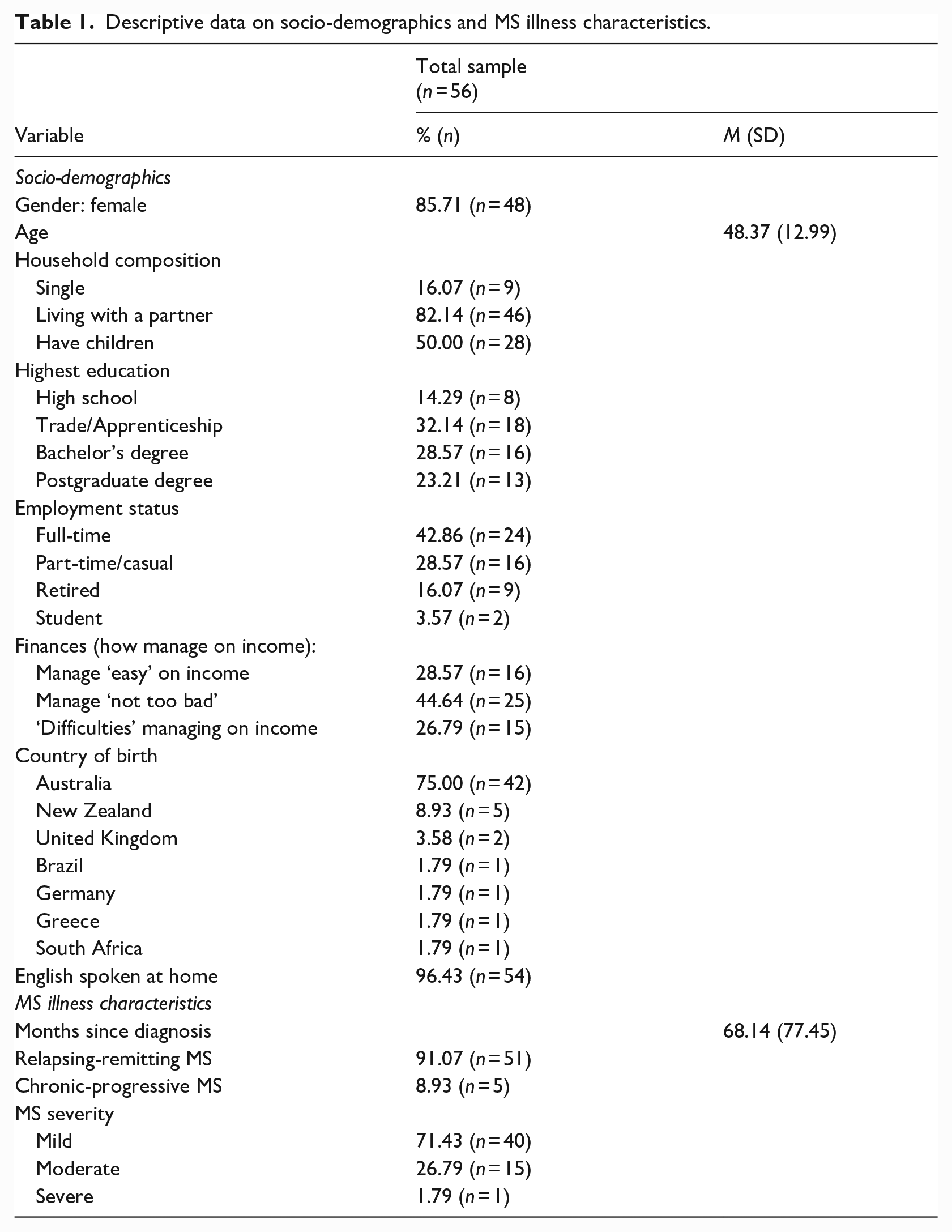
As for MS characteristics, the mean time since diagnosis was 68.14 months (SD = 77.45). Almost all participants (91.07%) reported relapsing-remitting MS, while 8.93% chronic-progressive MS. Regarding illness severity assessed by the Disease Steps Scale, 71.43% reported mild, 26.79% moderate, and 1.79% severe MS.
Regarding descriptive data on psychological distress, 28.57% (n = 16) of the sample reported mild symptomatology, 26.79% (n = 15) moderate symptomology, 8.93% (n = 5) severe symptomology, and 12.50% (n = 7) extremely severe symptomatology.
Correlations among resilience, psychological flexibility, distress and QoL, demographics and illness variables
Descriptive statistics and correlations between resilience, psychological flexibility and its sub-processes, and distress and QoL outcomes are displayed in Table 2. Resilience was significantly positively correlated with global psychological flexibility and all six of its sub-processes. Most of the coefficients for these correlations were of a large magnitude with the remainder being of a moderate size. Resilience was further significantly positively correlated with physical health and mental health QoL, and negatively associated with psychological distress. Higher levels of global psychological flexibility and all its sub-processes were significantly correlated with better mental health QoL and lower distress. However, only two psychological flexibility sub-processes (self-as-context and committed action) were significantly associated with physical health QoL. All six psychological flexibility sub-processes were positively correlated with global psychological flexibility. Physical and mental health QoL were positively correlated with each other. Distress was negatively correlated with physical and mental health QoL.
Descriptives and correlations among resilience, psychological flexibility and distress and QoL (N = 56).
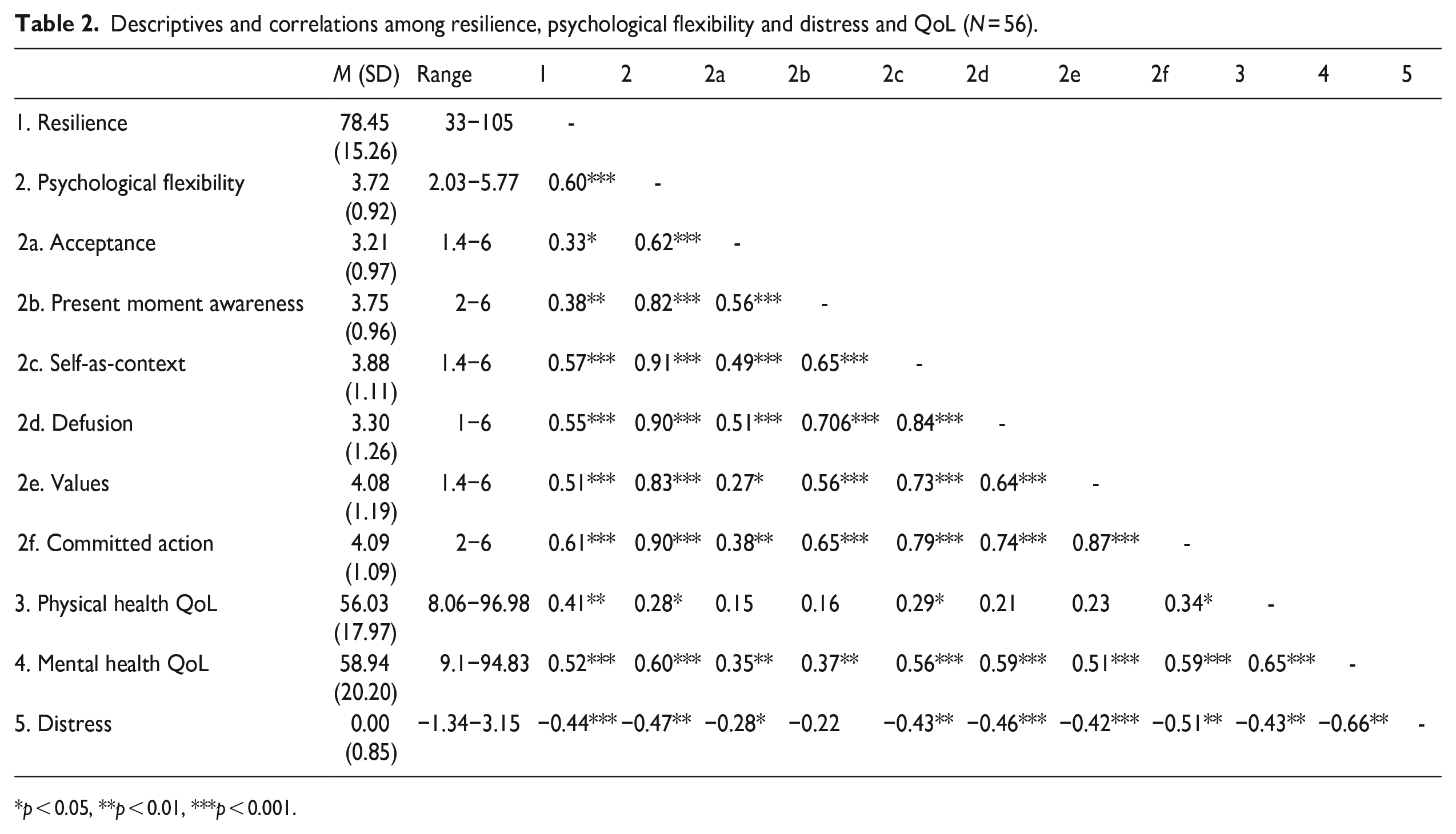
p < 0.05, **p < 0.01, ***p < 0.001.
The relationship between resilience, psychological flexibility, distress and QoL outcomes and socio-demographics, and illness-related variables was investigated. Pearson’s and Spearman’s correlations were used for continuous and categorical variables, respectively. Given the high number of correlations conducted, a more stringent significance level (p < 0.01) was employed for these analyses. The only significant correlations emerged between physical health QoL and being retired (r = −0.47, p < 0.01, with retired people displaying lower physical health QoL), and between physical health QoL and course of MS (r = −0.41, p < 0.01, with relapsing-remitting MS associated with better physical health QoL). Mental health QoL was significantly associated with course of MS (r = −0.37, p < 0.01, with relapsing-remitting MS associated with better mental health QoL), while no socio-demographics or illness variables correlated with distress. Finally, no socio-demographics or illness variables were significantly related to resilience and psychological flexibility. Therefore, mediational analyses were conducted controlling for being retired and course of MS.
Global psychological flexibility as mediator of the effects of resilience on distress and QoL
Standardised coefficients with 95% confidence intervals based on 10,000 bootstrap samples for each mediational model estimating mental health outcomes are reported in Table 3. Findings indicated that the direct effect of resilience was significant for only physical health QoL. The direct effect quantifies the effects of resilience on physical health QoL that operate through processes other than psychological flexibility. Therefore, based on the results, only some of the effects of resilience on physical health QoL (and not on mental health QoL or distress) operate through processes other than psychological flexibility. The indirect effects show that psychological flexibility significantly mediates the beneficial effects of resilience on all three outcomes: physical health QoL (standardised indirect effect = 0.11, SE = 0.07, 95% CI [0.010, 0.233]), mental health QoL (standardised indirect effect = 0.33, SE = 0.01, 95% CI [0.214, 0.481]), and distress (standardised indirect effect = −0.22, SE = 0.01, 95% CI [−0.422,−0.057]). Each model explained between 32.8% (distress) and 56.6% (mental health QoL) of the variance. These three simple mediational models are displayed in Figure 1. In each model higher psychological flexibility increased the beneficial effects of resilience on the outcomes.
Standardised coefficients with 95% confidence intervals of each mediational model estimating distress and QoL outcomes.
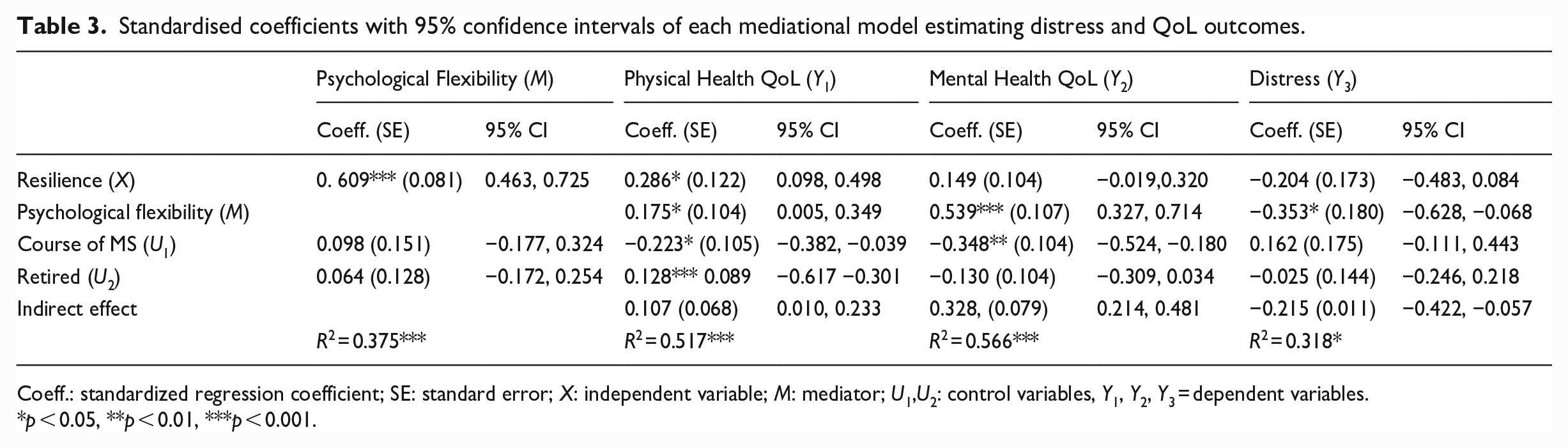
Coeff.: standardized regression coefficient; SE: standard error; X: independent variable; M: mediator; U1,U2: control variables, Y1, Y2, Y3 = dependent variables.
p < 0.05, **p < 0.01, ***p < 0.001.
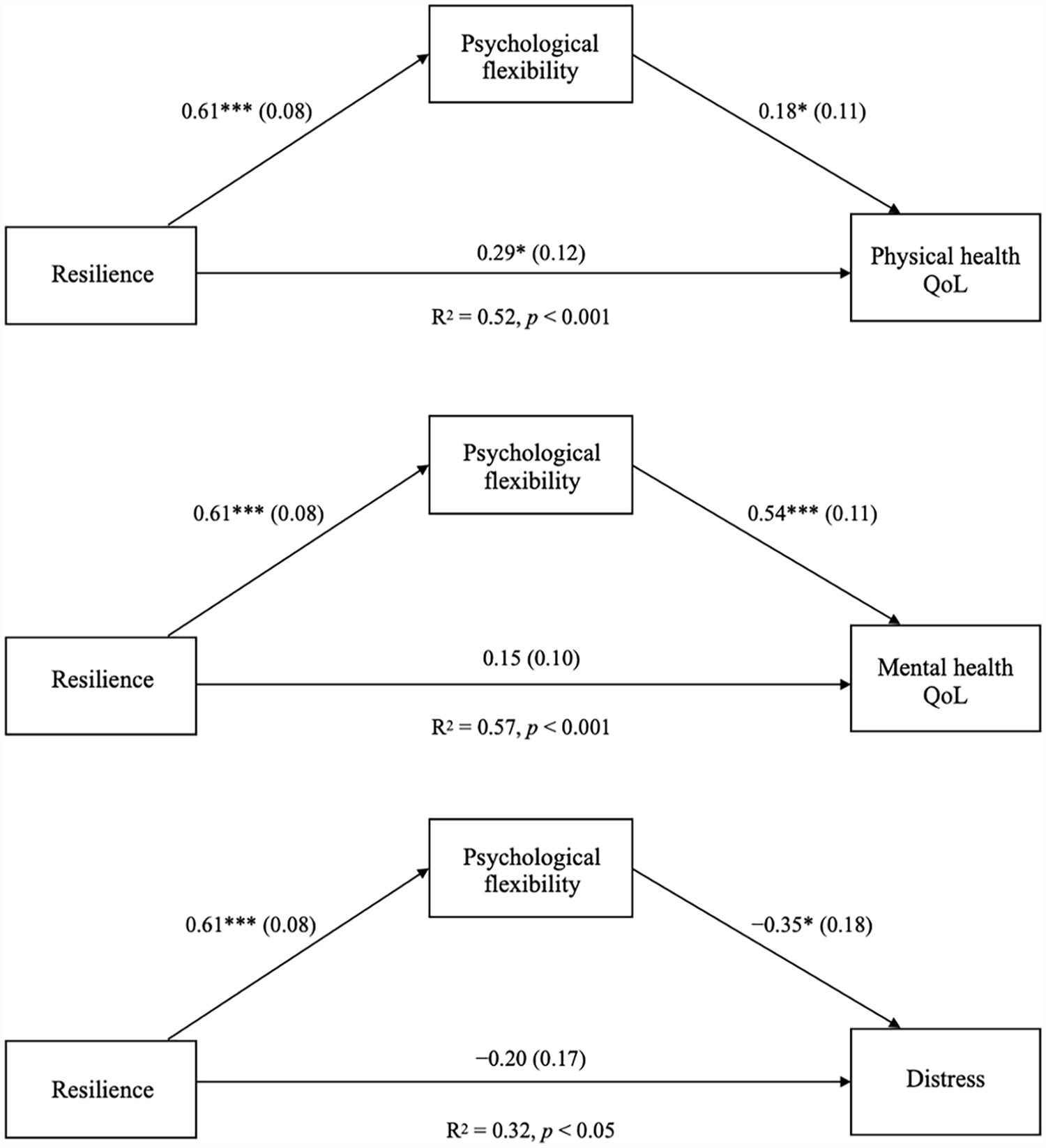
Standardised coefficients (and standard errors) displaying the link between resilience and distress and QoL outcomes as mediated through psychological flexibility. *p < 0.05. ***p < 0.001.
These mediation results indicate that higher resilience (i.e. 1 SD above the mean) in PwMS resulted in better adjustment as a result of the positive association between resilience and psychological flexibility with the strongest impact on mental health QoL (standardised coefficient = 0.54), followed by distress (standardised coefficient = −0.35) and finally, physical health QoL (standardised coefficient = 0.18).
Psychological flexibility sub-processes as mediators of the effects of resilience on distress and QoL
The indirect effects of psychological flexibility sub-processes in the link between resilience and distress and QoL outcomes are reported in Table 4. Results show that only committed action significantly mediated the relationship between resilience and all three outcomes. Specifically, committed action mediated the beneficial effects of resilience on physical and mental health QoL and distress. In addition, all six psychological flexibility sub-processes significantly mediated the relationship between resilience and mental health QoL. Finally, self-as-context, defusion and values additionally mediated the positive effects of resilience on distress.
Indirect effects of psychological flexibility sub-processes in the relationship between resilience and distress and QoL outcomes.
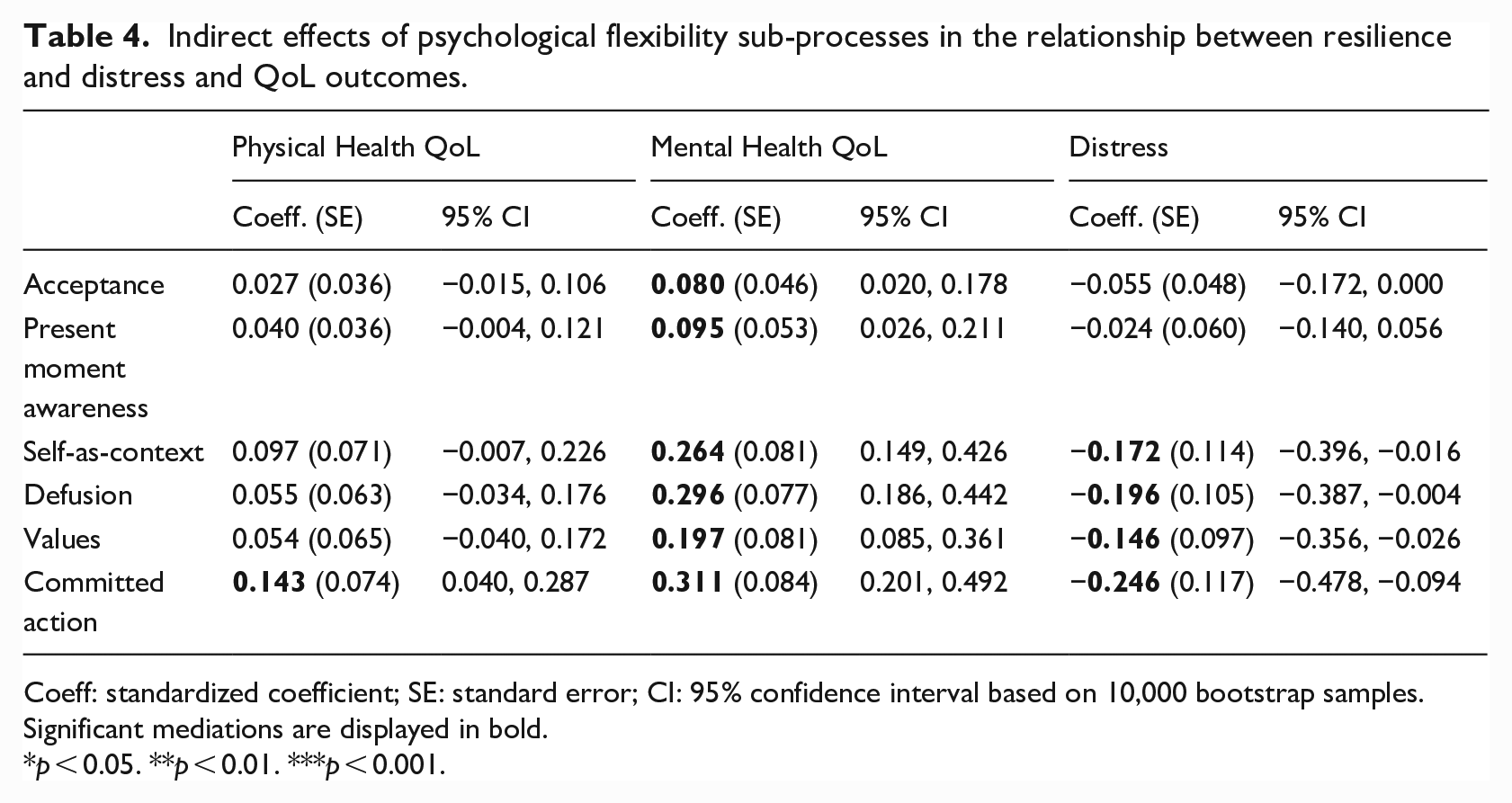
Coeff: standardized coefficient; SE: standard error; CI: 95% confidence interval based on 10,000 bootstrap samples. Significant mediations are displayed in bold.
p < 0.05. **p < 0.01. ***p < 0.001.
Discussion
The purpose of this study was to investigate the role of psychological flexibility in mediating the beneficial effects of resilience on distress and QoL in PwMS. As predicted, psychological flexibility emerged as a mediator in the link between resilience and both QoL and distress. Specifically, as hypothesised higher levels of global psychological flexibility and its sub-processes increased the positive impacts of resilience on distress and QoL via a mediational mechanism.
Mediation results from the present study are consistent with quantitative and qualitative findings from evaluations of the ACT-based resilience intervention for PwMS (READY for MS), which have demonstrated that psychological flexibility mediates improvements in resilience in PwMS (Giovannetti et al., 2020, 2022a; Pakenham et al., 2018) and in MS healthcare professionals who are trained in delivering the intervention (Giovannetti et al., 2022b). In addition, our mediation results are in accord with those from field studies that have shown psychological flexibility mediates the benefits of a resilient personality prototype on mental health outcomes in American war veterans (Elliott et al., 2015).
All six psychological flexibility sub-processes mediated the favourable effects of resilience on mental health QoL, although only self-as-context, defusion and values mediated the positive effects of resilience on distress. Only committed action mediated the beneficial effects of resilience on physical health QoL. These findings are noteworthy because most studies have not measured the psychological flexibility sub-processes and have instead examined global psychological flexibility or global psychological inflexibility as a proxy for flexibility (Doorley et al., 2020). As proposed in the introduction, the skills inherent in the psychological flexibility sub-processes serve as resilience building capacities (Kashdan and Rottenberg, 2010). Each sub-process represents a resilience building pathway (Hulbert-Williams et al., 2015). As such mindfulness, acceptance, defusion and self-as-context processes are likely to increase internal resources such as distress tolerance, decentring, emotional processing, and flexible coping. This increased flexibility in managing unwanted inner experiencing in response to MS stressors is likely to free up energy to pursue values-based goals via committed action which bolsters resilience and in turn enhances QoL and mental health. Most of the psychological flexibility sub-processes have emerged as mediators of improvements in resilience in mediational analyses across studies that have evaluated the ACT-based resilience intervention for PwMS (READY for MS) (Giovannetti et al., 2022a; Pakenham et al., 2018). These studies have also published qualitative data on participants’ views about the skills that have helped them become more resilient at post-intervention (Giovannetti et al., 2020, 2022a, 2022b; Pakenham et al., 2018). A consistent qualitative finding from these studies is that most intervention participants identify specific psychological flexibility strategies delivered during the intervention as resilience enhancing (e.g. defusion techniques and acceptance strategies).
Notably, 21.43% of participants in the present study reported clinically significant (severe to extremely severe) levels of distress. Given the multiple significant adversities associated with MS, the elevated distress, and the marked deficits in QoL and resilience in PwMS, identifying intervention pathways for enhancing resilience and improving adjustment to the illness is critical. Findings from this study converge with those from ACT intervention research showing that building psychological flexibility skills increases resilience, QoL and mental health in PwMS (Pakenham et al., 2018). Results of this study add to the evidence supporting the theoretical integrity of ACT-based interventions designed to bolster resilience in order to enhance QoL and mental health in people with chronic illnesses.
Interpretation of study results should be tempered by consideration of the methodological limitations as follows. First, the generalisability of findings is limited by the following factors: non-random sampling, recruitment from a group of PwMS who were enrolled in a patient support programme because they were taking medications for relapse-remitting MS, all participants had consented to participate in a pilot psychological intervention study, and the sample had an underrepresentation of people with severe MS. Second, the cross-sectional study design precludes conclusions about the causal direction of relations among resilience, psychological flexibility, and the distress and QoL outcomes.
MS is a common complex degenerative neurological disorder that causes significant disabilities which negatively impact all life domains. Resilience in the face of such illness-related adversities is essential for enabling successful adaptation over the long haul of this unpredictable illness. Findings from this study show that psychological flexibility mediates the beneficial effects of resilience on distress and QoL in PwMS. This suggests that psychological flexibility skills build resilience capacities in PwMS. The psychological flexibility framework offers an ACT-based intervention pathway to build resilience and enhance mental health and QoL in PwMS.
Research Data
sj-dat-3-hpq-10.1177_13591053231182364 – Supplemental material for The mediating role of psychological flexibility in the relationship between resilience and distress and quality of life in people with multiple sclerosis
Supplemental material, sj-dat-3-hpq-10.1177_13591053231182364 for The mediating role of psychological flexibility in the relationship between resilience and distress and quality of life in people with multiple sclerosis by Kenneth I Pakenham, Giulia Landi, Silvana Grandi and Eliana Tossani in Journal of Health Psychology
Research Data
sj-docx-1-hpq-10.1177_13591053231182364 – Supplemental material for The mediating role of psychological flexibility in the relationship between resilience and distress and quality of life in people with multiple sclerosis
Supplemental material, sj-docx-1-hpq-10.1177_13591053231182364 for The mediating role of psychological flexibility in the relationship between resilience and distress and quality of life in people with multiple sclerosis by Kenneth I Pakenham, Giulia Landi, Silvana Grandi and Eliana Tossani in Journal of Health Psychology
Research Data
sj-inp-10-hpq-10.1177_13591053231182364 – Supplemental material for The mediating role of psychological flexibility in the relationship between resilience and distress and quality of life in people with multiple sclerosis
Supplemental material, sj-inp-10-hpq-10.1177_13591053231182364 for The mediating role of psychological flexibility in the relationship between resilience and distress and quality of life in people with multiple sclerosis by Kenneth I Pakenham, Giulia Landi, Silvana Grandi and Eliana Tossani in Journal of Health Psychology
Research Data
sj-inp-12-hpq-10.1177_13591053231182364 – Supplemental material for The mediating role of psychological flexibility in the relationship between resilience and distress and quality of life in people with multiple sclerosis
Supplemental material, sj-inp-12-hpq-10.1177_13591053231182364 for The mediating role of psychological flexibility in the relationship between resilience and distress and quality of life in people with multiple sclerosis by Kenneth I Pakenham, Giulia Landi, Silvana Grandi and Eliana Tossani in Journal of Health Psychology
Research Data
sj-inp-14-hpq-10.1177_13591053231182364 – Supplemental material for The mediating role of psychological flexibility in the relationship between resilience and distress and quality of life in people with multiple sclerosis
Supplemental material, sj-inp-14-hpq-10.1177_13591053231182364 for The mediating role of psychological flexibility in the relationship between resilience and distress and quality of life in people with multiple sclerosis by Kenneth I Pakenham, Giulia Landi, Silvana Grandi and Eliana Tossani in Journal of Health Psychology
Research Data
sj-inp-16-hpq-10.1177_13591053231182364 – Supplemental material for The mediating role of psychological flexibility in the relationship between resilience and distress and quality of life in people with multiple sclerosis
Supplemental material, sj-inp-16-hpq-10.1177_13591053231182364 for The mediating role of psychological flexibility in the relationship between resilience and distress and quality of life in people with multiple sclerosis by Kenneth I Pakenham, Giulia Landi, Silvana Grandi and Eliana Tossani in Journal of Health Psychology
Research Data
sj-inp-18-hpq-18.1177_13591053231182364 – Supplemental material for The mediating role of psychological flexibility in the relationship between resilience and distress and quality of life in people with multiple sclerosis
Supplemental material, sj-inp-18-hpq-18.1177_13591053231182364 for The mediating role of psychological flexibility in the relationship between resilience and distress and quality of life in people with multiple sclerosis by Kenneth I Pakenham, Giulia Landi, Silvana Grandi and Eliana Tossani in Journal of Health Psychology
Research Data
sj-inp-20-hpq-10.1177_13591053231182364 – Supplemental material for The mediating role of psychological flexibility in the relationship between resilience and distress and quality of life in people with multiple sclerosis
Supplemental material, sj-inp-20-hpq-10.1177_13591053231182364 for The mediating role of psychological flexibility in the relationship between resilience and distress and quality of life in people with multiple sclerosis by Kenneth I Pakenham, Giulia Landi, Silvana Grandi and Eliana Tossani in Journal of Health Psychology
Research Data
sj-inp-22-hpq-10.1177_13591053231182364 – Supplemental material for The mediating role of psychological flexibility in the relationship between resilience and distress and quality of life in people with multiple sclerosis
Supplemental material, sj-inp-22-hpq-10.1177_13591053231182364 for The mediating role of psychological flexibility in the relationship between resilience and distress and quality of life in people with multiple sclerosis by Kenneth I Pakenham, Giulia Landi, Silvana Grandi and Eliana Tossani in Journal of Health Psychology
Research Data
sj-inp-24-hpq-10.1177_13591053231182364 – Supplemental material for The mediating role of psychological flexibility in the relationship between resilience and distress and quality of life in people with multiple sclerosis
Supplemental material, sj-inp-24-hpq-10.1177_13591053231182364 for The mediating role of psychological flexibility in the relationship between resilience and distress and quality of life in people with multiple sclerosis by Kenneth I Pakenham, Giulia Landi, Silvana Grandi and Eliana Tossani in Journal of Health Psychology
Research Data
sj-inp-26-hpq-10.1177_13591053231182364 – Supplemental material for The mediating role of psychological flexibility in the relationship between resilience and distress and quality of life in people with multiple sclerosis
Supplemental material, sj-inp-26-hpq-10.1177_13591053231182364 for The mediating role of psychological flexibility in the relationship between resilience and distress and quality of life in people with multiple sclerosis by Kenneth I Pakenham, Giulia Landi, Silvana Grandi and Eliana Tossani in Journal of Health Psychology
Research Data
sj-inp-28-hpq-10.1177_13591053231182364 – Supplemental material for The mediating role of psychological flexibility in the relationship between resilience and distress and quality of life in people with multiple sclerosis
Supplemental material, sj-inp-28-hpq-10.1177_13591053231182364 for The mediating role of psychological flexibility in the relationship between resilience and distress and quality of life in people with multiple sclerosis by Kenneth I Pakenham, Giulia Landi, Silvana Grandi and Eliana Tossani in Journal of Health Psychology
Research Data
sj-inp-30-hpq-10.1177_13591053231182364 – Supplemental material for The mediating role of psychological flexibility in the relationship between resilience and distress and quality of life in people with multiple sclerosis
Supplemental material, sj-inp-30-hpq-10.1177_13591053231182364 for The mediating role of psychological flexibility in the relationship between resilience and distress and quality of life in people with multiple sclerosis by Kenneth I Pakenham, Giulia Landi, Silvana Grandi and Eliana Tossani in Journal of Health Psychology
Research Data
sj-inp-32-hpq-10.1177_13591053231182364 – Supplemental material for The mediating role of psychological flexibility in the relationship between resilience and distress and quality of life in people with multiple sclerosis
Supplemental material, sj-inp-32-hpq-10.1177_13591053231182364 for The mediating role of psychological flexibility in the relationship between resilience and distress and quality of life in people with multiple sclerosis by Kenneth I Pakenham, Giulia Landi, Silvana Grandi and Eliana Tossani in Journal of Health Psychology
Research Data
sj-inp-34-hpq-10.1177_13591053231182364 – Supplemental material for The mediating role of psychological flexibility in the relationship between resilience and distress and quality of life in people with multiple sclerosis
Supplemental material, sj-inp-34-hpq-10.1177_13591053231182364 for The mediating role of psychological flexibility in the relationship between resilience and distress and quality of life in people with multiple sclerosis by Kenneth I Pakenham, Giulia Landi, Silvana Grandi and Eliana Tossani in Journal of Health Psychology
Research Data
sj-inp-36-hpq-10.1177_13591053231182364 – Supplemental material for The mediating role of psychological flexibility in the relationship between resilience and distress and quality of life in people with multiple sclerosis
Supplemental material, sj-inp-36-hpq-10.1177_13591053231182364 for The mediating role of psychological flexibility in the relationship between resilience and distress and quality of life in people with multiple sclerosis by Kenneth I Pakenham, Giulia Landi, Silvana Grandi and Eliana Tossani in Journal of Health Psychology
Research Data
sj-inp-38-hpq-10.1177_13591053231182364 – Supplemental material for The mediating role of psychological flexibility in the relationship between resilience and distress and quality of life in people with multiple sclerosis
Supplemental material, sj-inp-38-hpq-10.1177_13591053231182364 for The mediating role of psychological flexibility in the relationship between resilience and distress and quality of life in people with multiple sclerosis by Kenneth I Pakenham, Giulia Landi, Silvana Grandi and Eliana Tossani in Journal of Health Psychology
Research Data
sj-inp-4-hpq-10.1177_13591053231182364 – Supplemental material for The mediating role of psychological flexibility in the relationship between resilience and distress and quality of life in people with multiple sclerosis
Supplemental material, sj-inp-4-hpq-10.1177_13591053231182364 for The mediating role of psychological flexibility in the relationship between resilience and distress and quality of life in people with multiple sclerosis by Kenneth I Pakenham, Giulia Landi, Silvana Grandi and Eliana Tossani in Journal of Health Psychology
Research Data
sj-inp-40-hpq-10.1177_13591053231182364 – Supplemental material for The mediating role of psychological flexibility in the relationship between resilience and distress and quality of life in people with multiple sclerosis
Supplemental material, sj-inp-40-hpq-10.1177_13591053231182364 for The mediating role of psychological flexibility in the relationship between resilience and distress and quality of life in people with multiple sclerosis by Kenneth I Pakenham, Giulia Landi, Silvana Grandi and Eliana Tossani in Journal of Health Psychology
Research Data
sj-inp-42-hpq-10.1177_13591053231182364 – Supplemental material for The mediating role of psychological flexibility in the relationship between resilience and distress and quality of life in people with multiple sclerosis
Supplemental material, sj-inp-42-hpq-10.1177_13591053231182364 for The mediating role of psychological flexibility in the relationship between resilience and distress and quality of life in people with multiple sclerosis by Kenneth I Pakenham, Giulia Landi, Silvana Grandi and Eliana Tossani in Journal of Health Psychology
Research Data
sj-inp-44-hpq-10.1177_13591053231182364 – Supplemental material for The mediating role of psychological flexibility in the relationship between resilience and distress and quality of life in people with multiple sclerosis
Supplemental material, sj-inp-44-hpq-10.1177_13591053231182364 for The mediating role of psychological flexibility in the relationship between resilience and distress and quality of life in people with multiple sclerosis by Kenneth I Pakenham, Giulia Landi, Silvana Grandi and Eliana Tossani in Journal of Health Psychology
Research Data
sj-inp-6-hpq-10.1177_13591053231182364 – Supplemental material for The mediating role of psychological flexibility in the relationship between resilience and distress and quality of life in people with multiple sclerosis
Supplemental material, sj-inp-6-hpq-10.1177_13591053231182364 for The mediating role of psychological flexibility in the relationship between resilience and distress and quality of life in people with multiple sclerosis by Kenneth I Pakenham, Giulia Landi, Silvana Grandi and Eliana Tossani in Journal of Health Psychology
Research Data
sj-inp-8-hpq-10.1177_13591053231182364 – Supplemental material for The mediating role of psychological flexibility in the relationship between resilience and distress and quality of life in people with multiple sclerosis
Supplemental material, sj-inp-8-hpq-10.1177_13591053231182364 for The mediating role of psychological flexibility in the relationship between resilience and distress and quality of life in people with multiple sclerosis by Kenneth I Pakenham, Giulia Landi, Silvana Grandi and Eliana Tossani in Journal of Health Psychology
Research Data
sj-out-11-hpq-10.1177_13591053231182364 – Supplemental material for The mediating role of psychological flexibility in the relationship between resilience and distress and quality of life in people with multiple sclerosis
Supplemental material, sj-out-11-hpq-10.1177_13591053231182364 for The mediating role of psychological flexibility in the relationship between resilience and distress and quality of life in people with multiple sclerosis by Kenneth I Pakenham, Giulia Landi, Silvana Grandi and Eliana Tossani in Journal of Health Psychology
Research Data
sj-out-13-hpq-10.1177_13591053231182364 – Supplemental material for The mediating role of psychological flexibility in the relationship between resilience and distress and quality of life in people with multiple sclerosis
Supplemental material, sj-out-13-hpq-10.1177_13591053231182364 for The mediating role of psychological flexibility in the relationship between resilience and distress and quality of life in people with multiple sclerosis by Kenneth I Pakenham, Giulia Landi, Silvana Grandi and Eliana Tossani in Journal of Health Psychology
Research Data
sj-out-15-hpq-10.1177_13591053231182364 – Supplemental material for The mediating role of psychological flexibility in the relationship between resilience and distress and quality of life in people with multiple sclerosis
Supplemental material, sj-out-15-hpq-10.1177_13591053231182364 for The mediating role of psychological flexibility in the relationship between resilience and distress and quality of life in people with multiple sclerosis by Kenneth I Pakenham, Giulia Landi, Silvana Grandi and Eliana Tossani in Journal of Health Psychology
Research Data
sj-out-17-hpq-10.1177_13591053231182364 – Supplemental material for The mediating role of psychological flexibility in the relationship between resilience and distress and quality of life in people with multiple sclerosis
Supplemental material, sj-out-17-hpq-10.1177_13591053231182364 for The mediating role of psychological flexibility in the relationship between resilience and distress and quality of life in people with multiple sclerosis by Kenneth I Pakenham, Giulia Landi, Silvana Grandi and Eliana Tossani in Journal of Health Psychology
Research Data
sj-out-19-hpq-10.1177_13591053231182364 – Supplemental material for The mediating role of psychological flexibility in the relationship between resilience and distress and quality of life in people with multiple sclerosis
Supplemental material, sj-out-19-hpq-10.1177_13591053231182364 for The mediating role of psychological flexibility in the relationship between resilience and distress and quality of life in people with multiple sclerosis by Kenneth I Pakenham, Giulia Landi, Silvana Grandi and Eliana Tossani in Journal of Health Psychology
Research Data
sj-out-21-hpq-10.1177_13591053231182364 – Supplemental material for The mediating role of psychological flexibility in the relationship between resilience and distress and quality of life in people with multiple sclerosis
Supplemental material, sj-out-21-hpq-10.1177_13591053231182364 for The mediating role of psychological flexibility in the relationship between resilience and distress and quality of life in people with multiple sclerosis by Kenneth I Pakenham, Giulia Landi, Silvana Grandi and Eliana Tossani in Journal of Health Psychology
Research Data
sj-out-23-hpq-10.1177_13591053231182364 – Supplemental material for The mediating role of psychological flexibility in the relationship between resilience and distress and quality of life in people with multiple sclerosis
Supplemental material, sj-out-23-hpq-10.1177_13591053231182364 for The mediating role of psychological flexibility in the relationship between resilience and distress and quality of life in people with multiple sclerosis by Kenneth I Pakenham, Giulia Landi, Silvana Grandi and Eliana Tossani in Journal of Health Psychology
Research Data
sj-out-25-hpq-10.1177_13591053231182364 – Supplemental material for The mediating role of psychological flexibility in the relationship between resilience and distress and quality of life in people with multiple sclerosis
Supplemental material, sj-out-25-hpq-10.1177_13591053231182364 for The mediating role of psychological flexibility in the relationship between resilience and distress and quality of life in people with multiple sclerosis by Kenneth I Pakenham, Giulia Landi, Silvana Grandi and Eliana Tossani in Journal of Health Psychology
Research Data
sj-out-27-hpq-10.1177_13591053231182364 – Supplemental material for The mediating role of psychological flexibility in the relationship between resilience and distress and quality of life in people with multiple sclerosis
Supplemental material, sj-out-27-hpq-10.1177_13591053231182364 for The mediating role of psychological flexibility in the relationship between resilience and distress and quality of life in people with multiple sclerosis by Kenneth I Pakenham, Giulia Landi, Silvana Grandi and Eliana Tossani in Journal of Health Psychology
Research Data
sj-out-29-hpq-10.1177_13591053231182364 – Supplemental material for The mediating role of psychological flexibility in the relationship between resilience and distress and quality of life in people with multiple sclerosis
Supplemental material, sj-out-29-hpq-10.1177_13591053231182364 for The mediating role of psychological flexibility in the relationship between resilience and distress and quality of life in people with multiple sclerosis by Kenneth I Pakenham, Giulia Landi, Silvana Grandi and Eliana Tossani in Journal of Health Psychology
Research Data
sj-out-31-hpq-10.1177_13591053231182364 – Supplemental material for The mediating role of psychological flexibility in the relationship between resilience and distress and quality of life in people with multiple sclerosis
Supplemental material, sj-out-31-hpq-10.1177_13591053231182364 for The mediating role of psychological flexibility in the relationship between resilience and distress and quality of life in people with multiple sclerosis by Kenneth I Pakenham, Giulia Landi, Silvana Grandi and Eliana Tossani in Journal of Health Psychology
Research Data
sj-out-33-hpq-10.1177_13591053231182364 – Supplemental material for The mediating role of psychological flexibility in the relationship between resilience and distress and quality of life in people with multiple sclerosis
Supplemental material, sj-out-33-hpq-10.1177_13591053231182364 for The mediating role of psychological flexibility in the relationship between resilience and distress and quality of life in people with multiple sclerosis by Kenneth I Pakenham, Giulia Landi, Silvana Grandi and Eliana Tossani in Journal of Health Psychology
Research Data
sj-out-35-hpq-10.1177_13591053231182364 – Supplemental material for The mediating role of psychological flexibility in the relationship between resilience and distress and quality of life in people with multiple sclerosis
Supplemental material, sj-out-35-hpq-10.1177_13591053231182364 for The mediating role of psychological flexibility in the relationship between resilience and distress and quality of life in people with multiple sclerosis by Kenneth I Pakenham, Giulia Landi, Silvana Grandi and Eliana Tossani in Journal of Health Psychology
Research Data
sj-out-37-hpq-10.1177_13591053231182364 – Supplemental material for The mediating role of psychological flexibility in the relationship between resilience and distress and quality of life in people with multiple sclerosis
Supplemental material, sj-out-37-hpq-10.1177_13591053231182364 for The mediating role of psychological flexibility in the relationship between resilience and distress and quality of life in people with multiple sclerosis by Kenneth I Pakenham, Giulia Landi, Silvana Grandi and Eliana Tossani in Journal of Health Psychology
Research Data
sj-out-39-hpq-10.1177_13591053231182364 – Supplemental material for The mediating role of psychological flexibility in the relationship between resilience and distress and quality of life in people with multiple sclerosis
Supplemental material, sj-out-39-hpq-10.1177_13591053231182364 for The mediating role of psychological flexibility in the relationship between resilience and distress and quality of life in people with multiple sclerosis by Kenneth I Pakenham, Giulia Landi, Silvana Grandi and Eliana Tossani in Journal of Health Psychology
Research Data
sj-out-41-hpq-10.1177_13591053231182364 – Supplemental material for The mediating role of psychological flexibility in the relationship between resilience and distress and quality of life in people with multiple sclerosis
Supplemental material, sj-out-41-hpq-10.1177_13591053231182364 for The mediating role of psychological flexibility in the relationship between resilience and distress and quality of life in people with multiple sclerosis by Kenneth I Pakenham, Giulia Landi, Silvana Grandi and Eliana Tossani in Journal of Health Psychology
Research Data
sj-out-43-hpq-10.1177_13591053231182364 – Supplemental material for The mediating role of psychological flexibility in the relationship between resilience and distress and quality of life in people with multiple sclerosis
Supplemental material, sj-out-43-hpq-10.1177_13591053231182364 for The mediating role of psychological flexibility in the relationship between resilience and distress and quality of life in people with multiple sclerosis by Kenneth I Pakenham, Giulia Landi, Silvana Grandi and Eliana Tossani in Journal of Health Psychology
Research Data
sj-out-45-hpq-10.1177_13591053231182364 – Supplemental material for The mediating role of psychological flexibility in the relationship between resilience and distress and quality of life in people with multiple sclerosis
Supplemental material, sj-out-45-hpq-10.1177_13591053231182364 for The mediating role of psychological flexibility in the relationship between resilience and distress and quality of life in people with multiple sclerosis by Kenneth I Pakenham, Giulia Landi, Silvana Grandi and Eliana Tossani in Journal of Health Psychology
Research Data
sj-out-5-hpq-10.1177_13591053231182364 – Supplemental material for The mediating role of psychological flexibility in the relationship between resilience and distress and quality of life in people with multiple sclerosis
Supplemental material, sj-out-5-hpq-10.1177_13591053231182364 for The mediating role of psychological flexibility in the relationship between resilience and distress and quality of life in people with multiple sclerosis by Kenneth I Pakenham, Giulia Landi, Silvana Grandi and Eliana Tossani in Journal of Health Psychology
Research Data
sj-out-7-hpq-10.1177_13591053231182364 – Supplemental material for The mediating role of psychological flexibility in the relationship between resilience and distress and quality of life in people with multiple sclerosis
Supplemental material, sj-out-7-hpq-10.1177_13591053231182364 for The mediating role of psychological flexibility in the relationship between resilience and distress and quality of life in people with multiple sclerosis by Kenneth I Pakenham, Giulia Landi, Silvana Grandi and Eliana Tossani in Journal of Health Psychology
Research Data
sj-out-9-hpq-10.1177_13591053231182364 – Supplemental material for The mediating role of psychological flexibility in the relationship between resilience and distress and quality of life in people with multiple sclerosis
Supplemental material, sj-out-9-hpq-10.1177_13591053231182364 for The mediating role of psychological flexibility in the relationship between resilience and distress and quality of life in people with multiple sclerosis by Kenneth I Pakenham, Giulia Landi, Silvana Grandi and Eliana Tossani in Journal of Health Psychology
Research Data
sj-sav-2-hpq-10.1177_13591053231182364 – Supplemental material for The mediating role of psychological flexibility in the relationship between resilience and distress and quality of life in people with multiple sclerosis
Supplemental material, sj-sav-2-hpq-10.1177_13591053231182364 for The mediating role of psychological flexibility in the relationship between resilience and distress and quality of life in people with multiple sclerosis by Kenneth I Pakenham, Giulia Landi, Silvana Grandi and Eliana Tossani in Journal of Health Psychology
Footnotes
Acknowledgements
Thanks is extended to senior representatives of the three industry partners that enabled this research: Peta McCarthy (Biogen Australia Pty Ltd), Jess Woodfield (Partizan Worldwide Pty Ltd) Anne Bannister (UniQuest). Sincere thanks to all the Partizan staff who supported the study, in particular Priscilla Duffel, Ainsley Pearsons, Martin Hoegh-Guldberg and Caitlin Sundstrom.
Author contributions
Study design and coneptualisation, KIP; instrumentation, KIP; data analyses, GL; data curation, GL; data interpretation KIP and GL; original manuscript draft write-up, KIP and GL; review and editing of manuscript drafts, KIP, ET., SG and GL. All authors have read and agreed to the published version of the manuscript.
Data sharing statement
The current article is accompanied by the relevant raw data generated during and/or analysed during the study, including files detailing the analyses and either the complete database or other relevant raw data. These files are available in the Figshare repository and accessible as Supplemental Material via the Sage Journals platform. Ethics approval, participant permissions, and all other relevant approvals were granted for this data sharing.
Declaration of conflicting interests
The authors declared the following potential conflicts of interest with respect to the research, authorship, and/or publication of this article: KIP, ET., SG and GL declare no conflict of interest.
Funding
The authors disclosed receipt of the following financial support for the research, authorship, and/or publication of this article: This research received funding from Biogen Australia Pty Ltd: UQ Project 025646, UniQuest Project No: T02546-003 (AG-025321). The funding source had no role in study design, data collection, data analysis, data interpretation or report writing.
Ethics approval
The study was conducted in accordance with the Declaration of Helsinki and approved by the Institutional Review Board (or Ethics Committee) of The University of Queensland (21/3/2019 clearance number: 2018001953).
Informed consent statement
Informed consent was obtained from all participants.

References
Supplementary Material
Please find the following supplemental material available below.
For Open Access articles published under a Creative Commons License, all supplemental material carries the same license as the article it is associated with.
For non-Open Access articles published, all supplemental material carries a non-exclusive license, and permission requests for re-use of supplemental material or any part of supplemental material shall be sent directly to the copyright owner as specified in the copyright notice associated with the article.
