



Abstract
Literature highlights that youth in correctional centres face multiple risk factors which can be buffered by resilience. This study aimed to explore and describe the experiences of at-risk youth in a juvenile correctional centre in Eswatini regarding their resilience. The participants were purposively sampled and engaged in individual (n = 41) and group (n = 25) data collection. Following thematic analysis, the findings revealed four main themes: Understanding of resilience, protective factors to resilience, risk factors to resilience and youth’s recommendations for resilience. This study provides insight into resilience of youth from youth’s perspective that may be useful in rehabilitation or programme development.
Introduction and problem statement
This article results from a PhD degree study at the North-West University, South Africa. Generally, the ecology of youth is marked by several risk factors, increasing the likelihood of undesirable outcomes. These can include family conflicts (United Nations, 2005), poor self-concept, poverty (Ebersöhn, 2015) and the COVID-19 pandemic, and Eswatini is no exception. According to the World Health Organization (WHO, 2018), Eswatini has a population of over a million Swatis, of which more than half live in poverty. An estimated 76% of the population live in rural areas (Motsa and Morojele, 2018), with 88% being orphaned young people who often experience poverty (Braithwaite et al., 2013).
Other youth-related challenges in the country include a high prevalence of sexual offences, domestic violence, high illness prevalence and loss of parents (Maphalala and Davison, 2017; Peltzer, 2009; SWAGAA, 2020; UNAIDS, 2012). It is therefore apparent that the youth of Eswatini encounter multiple risk factors, increasing their vulnerability to undesirable outcomes, which may leave the country’s youth vulnerable to contact with the juvenile justice system and incarceration due to a lack of sentencing alternatives (Malindisa and Winterdyk, 2015).
In Eswatini, His Majesty’s Correctional Services (HMCS) is tasked with the caretaking of the country’s 12 correctional facilities, all of which are under the management of government. Of the 12, only one is for females – which is overcrowded – and three of these facilities house youth. His Majestys Correctional Services (HMCS, 2016) reported an increase in the incarceration rate at 209/100,000. Re-offending is high amongst youth (HMCS, 2016) and there is a severe lack of sentencing alternatives (Bruyns, 2007). This contributes to juvenile offenders being placed in adult centres for reasons such as proximity to the court while remanded or during trial (Malindisa and Winterdyk, 2015), which may promote criminal education and recruitment into gangs.
HMCS is faced with a severe overcrowding problem indicated to be at 15.8% in general, and at 31% in one juvenile centre (HMCS, 2016). Overcrowding has been attributed to factors such as high levels of re-offending, delays of court hearings and lack of sentencing alternatives (HMCS, 2016; Malindisa and Winterdyk, 2015). Challenges associated with overcrowding, such as the spread of diseases (Dlamini et al., 2009), overburdened resources, burnout of correctional officers (COs) and inefficient rehabilitation (Biswalo, 2011), highlight the need for resource prioritisation and the need for sentencing alternatives.
In Eswatini, between 600 and 1000 offenders could not afford the amount of the fine imposed as the sentence, and were incarcerated as a result (HMCS, 2019). Poor socioeconomics and the need to prioritise resources towards family survival (HMCS, 2016) contribute to poor family support, which is associated with negative health outcomes (Skovdal and Daniel, 2012). The COVID-19 pandemic has amplified this state. The correctional population in particular has been identified as at-risk in terms of the pandemic (WHO, 2020) due to reasons such as the near impossibility of maintaining social distancing, and inevitable contact with COs who have contact with the general population (Kinner et al., 2020).
The conditions of correctional centres have been associated with mental distress (Lambie and Randell, 2013) especially in poor and under-resourced countries (Bochenek, 2016) like Eswatini. According to Bruyns (2007), in Eswatini, members of the offender population (n = 540) were found to have depression, suicidal ideation and self-mutilation partly due to the lack of mental health workers. Malindisa and Winterdyk (2015) collected data from 304 juveniles at the Vulamasango School and found the majority needed assistance with mental health, drug misuse, alcohol misuse and sexual/physical abuse. These findings indicate the prevalence of some of the risk factors encountered by youth in HMCS and the pressing need for holistic rehabilitation efforts. HMCS has attempted to put rehabilitation efforts in place, such as compulsory school attendance for offenders of schooling age, psychological services and corrections-based sports programmes (HMCS, 2019). However, notwithstanding these efforts, the recidivism rate stands at 45% (HMCS, 2016).
The above discussion highlights the need for possible adjustments to or development of rehabilitation programmes with regard to the approach of juvenile justice systems and juvenile correctional centres. Resilience-focussed interventions have the potential to make a significant contribution within the juvenile correctional context.
The concept of resilience provides a framework within which to understand how some people continue to flourish in the face of distressing events and generally being exposed to factors considered to increase the risk of unfavourable outcomes (Gasa, 2013). Muntean and Cojocaru (2016) highlighted resilience as the ability to deal with unbearable stress and to continue healthy development. Similarly, Ebersöhn (2015) indicated that for individuals to be considered resilient, the adversity encountered should be significant and, following the significant adversity, exhibit adaptive health outcomes. Resilience therefore makes available a departure from a risk-informed approach to one of nurturing strengths and positive traits (Seligman and Csikszentmihalyi, 2000) in interaction with ecologies (Ungar et al., 2014).
In this study, the understanding of resilience is informed by the social ecological theory of resilience (Ungar et al., 2014). According to Ungar et al. (2014), resilience embraces the need for resource availability, accessibility and utilisation in the environments within which youth are developing, in order to encourage wellbeing in the presence of risk factors. Therefore, resilience is a process between the individual and their ecologies, such as families and correctional officers. The social ecological theory of resilience posits that the process of resilience does not occur in the absence of environments and resources – and these ecologies are marked by risk and protective factors to resilience.
The impact of risk factors is buffered by the presence and utilisation of protective factors (Cortina et al., 2016); and both risk and protective factors for resilience can be internal and external (Ebersöhn, 2015). The use of protective factors for resilience by at-risk populations, such as the populations in juvenile correctional centres, can act as a buffer against negative outcomes (Hills et al., 2016) with the potential of decreased re-offending and recidivism.
Protective factors for resilience have been explored in various settings. For example, family connectedness in Canada (Poon et al., 2011) and spirituality in South Africa (Greeff and Loubser, 2008) were found to be protective to resilience. Literature on protective factors for resilience of at-risk youth in juvenile correctional centres in Eswatini is seemingly unavailable. As risk and protective factors have significant consequences for intervention efforts and rehabilitation outcomes, the investigation of protective factors, specifically for the at-risk youth in correctional centres, is particularly significant because these factors are generally associated with decreased likelihood of offending behaviour (van der Put et al., 2014).
The above discussion alludes to the numerous challenges which compromise the rehabilitation outcomes of at-risk youth in juvenile correctional centres which can be inferred from the high recidivism rate. Literature suggests there is a significant positive contribution resilience can make within the correctional centre context and other ecologies associated with at-risk youth. Therefore, the importance of acquiring knowledge regarding the resilience of at-risk youth within juvenile correctional centres cannot be overstated.
Research question and aim
The research question was: How resilient are at-risk youth in a correctional centre in Eswatini? This study aimed to explore and describe the resilience of at-risk youth in a correctional centre in Eswatini.
Method
Research design
This study used a social constructivist paradigm which proposes that reality is context-informed (Bracken, 2010). A qualitative, explorative-descriptive research design to provide rich, thick and context-informed data was utilised (Creswell and Miller, 2000).
Sampling
Prior to recruitment, institutional ethical approval was obtained from the Health Research Ethics Committee of the (NWU-00519-19-A1). The population were youth aged between 15 and 25 years at End Gate (alias used for ethical purposes), a juvenile correctional centre. In Eswatini, juvenile corrections house individuals 12–18 years of age (Bruyns, 2007), but due to reasons such as overcrowding, youth aged up to 25 years old are also housed in these centres. At the time of data collection, End Gate had a population of 217 offenders. Purposeful sampling was used to select the participants (Etikan et al., 2016) and recruitment utilised advertisements placed at the centre.
Inclusion criteria were: voluntary participation; youth below the age of 18 required guardian consent and also had to provide assent to participate; they had to be between the ages of 15 and 25, inclusive; incarcerated at End Gate for a minimum period of at least 3 months (because these youth would have had time to navigate and negotiate the correctional environment); they had to be sentenced to incarceration for at least 6 months after consenting or assenting to participate in order to be able to complete their involvement in the research; they had to be sufficiently fluent in and able to read and write English or SiSwati; and they had to be willing to participate in group data collection. Youth that are especially vulnerable, such as those that have been diagnosed with mental health issues, or those that have been determined to be especially violent, were excluded to protect them from emotional harm. The Officer-In-Charge of End Gate was consulted in this regard.
Data saturation determined the sample size (n = 41) for narrative data collection. To determine data saturation, data collection and – analysis ran concurrently to determine when information started to become repetitive. For the World Café session, 25 participants were selected (also see data collection section for more detail). This size allowed for the group size to be five people per table and ideal for qualitative data collection (Morse, 2000). The sample sizes were deemed appropriate based on the scope and design of the study, plus the nature of the topic (Morse, 2000).
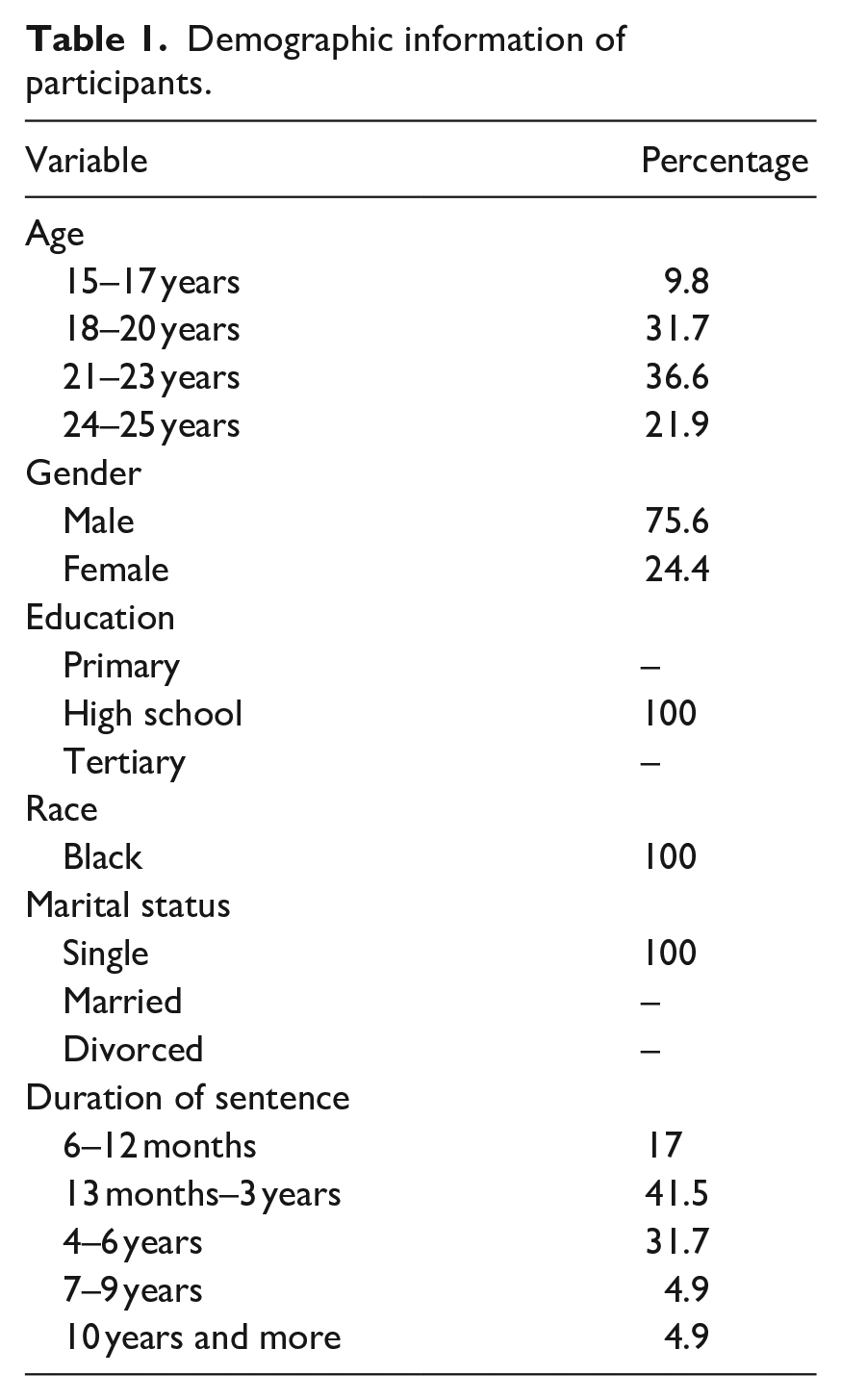
A demographic information form was utilised to compile the demographic profile (see Table 1). The sample consisted of 100% Blacks, 75.6% males, 24.4% females between the ages of 15 and 25 years who were all single and of which the majority (41.5%) were sentenced to between 13 months and 3 years.
Demographic information of participants.
Data collection
Data were collected through individual written narratives and the World Café.
Individual written narratives
Storytelling is a teller and listener relational engagement, whereby experiences are shared via words, images and sounds, providing rich data about the teller’s experience and their environment (Riessman, 2000). Youth were provided with materials needed for writing, namely paper and pens, as allowed by HMCS. They wrote their narratives over a period of a week in a comfortable space within End Gate during their free time. Narratives were carried out first to avoid influence of group data collection. The instruction for the narrative writing was as follows: Tell me a story from your life experience which can be described as a very difficult, threatening or challenging situation, and how you managed to cope with this situation. Describe what you did positively to solve or overcome the situation.
World Café
The World Café was used for group data collection. According to Brown and Isaacs (2001), this method creates new understanding and prospects, via the networking of ideas contributed through group conversations. The appropriateness of the method has been reported for various age groups, cultures and different communication contexts (Wheatley, 2005).
The World Café process follows seven principles (Koen et al., 2014), namely: Setting the context; creating a hospitable space; exploring questions that matter; encouraging everyone’s contribution; cross-pollinating and connecting diverse perspectives; listening together for patterns, insights and deeper questions to build on individual ideas; and sharing collective discoveries, which allowed the researcher to summarise what had been collectively shared regarding each question. This allowed the participants an opportunity to determine if what they had shared had been captured correctly and served as a type of member-checking, which contributes to the trustworthiness of data collection (Fouché and Light, 2011). These were employed in the current study and the following questions were posed during data collection: What is your understanding of resilience? What ways have you used to cope positively when you had to deal with difficult experiences? What do you think contributes to your resilience within the correctional centre? What do you think hinders or gets in the way of your resilience within the correctional centre? What do you think would allow you to be more resilient?
Field notes were taken during the World Café to capture some of the conversations around responses written on the outputs and were taken during collective discovery when the researcher needed clarification on some aspects regarding outputs. The notes were included as data. Researcher reflexivity, peer review and dense description were utilised to ensure trustworthiness.
Data analysis
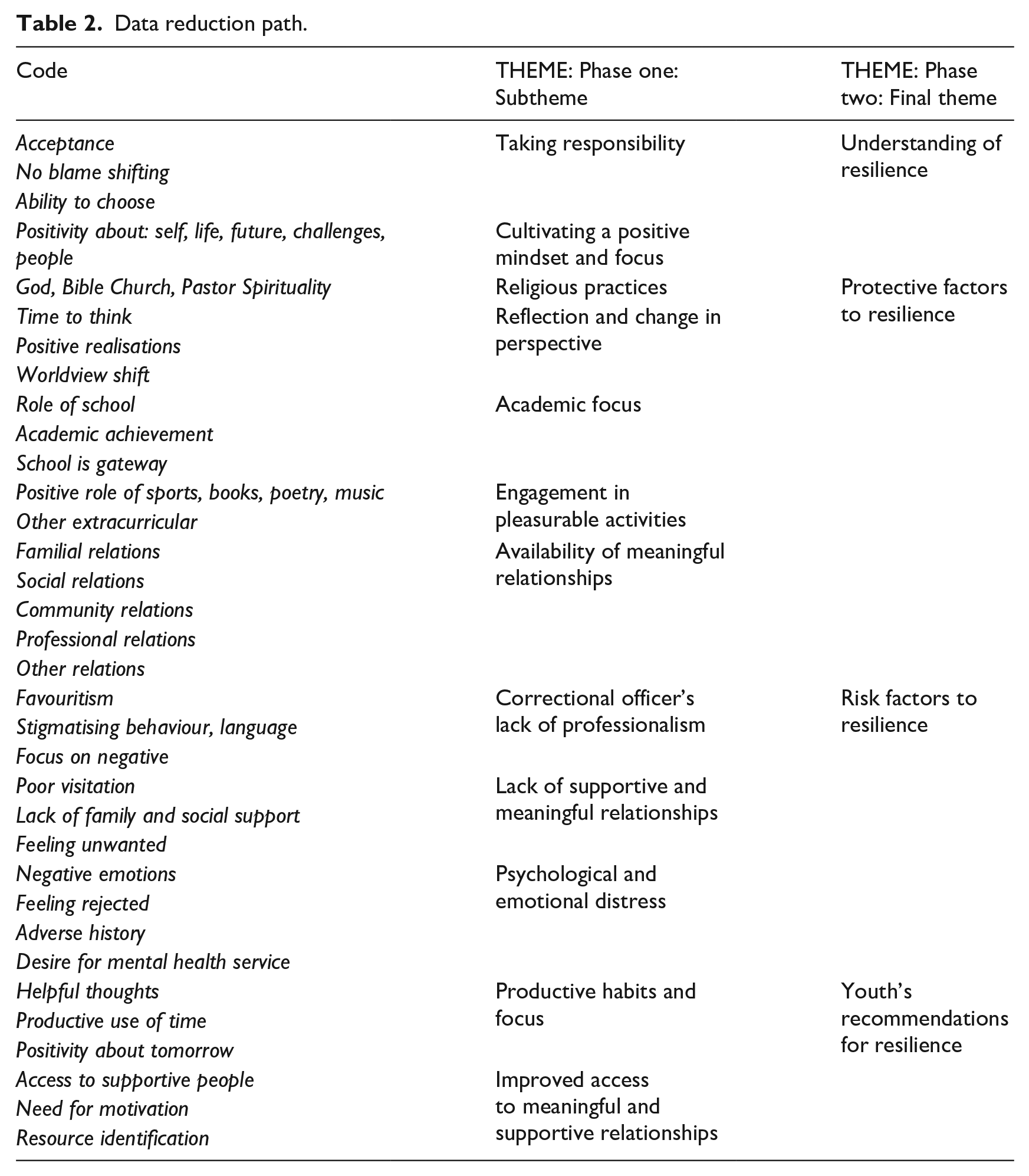
The six phases of thematic analysis, namely: familiarisation with data; generating initial codes; searching for themes; reviewing themes; organising themes; and producing a report; were employed in this study (Braun and Clarke, 2006). Narratives and World Café data were analysed separately in order to gain an understanding from both an individual and group perspective. The data analysis process was done independently by the researcher and an experienced co-coder. Upon completion of the data analysis, agreement on themes was established to ensure trustworthiness. Table 2 below shows the data reduction path.
Data reduction path.
Findings
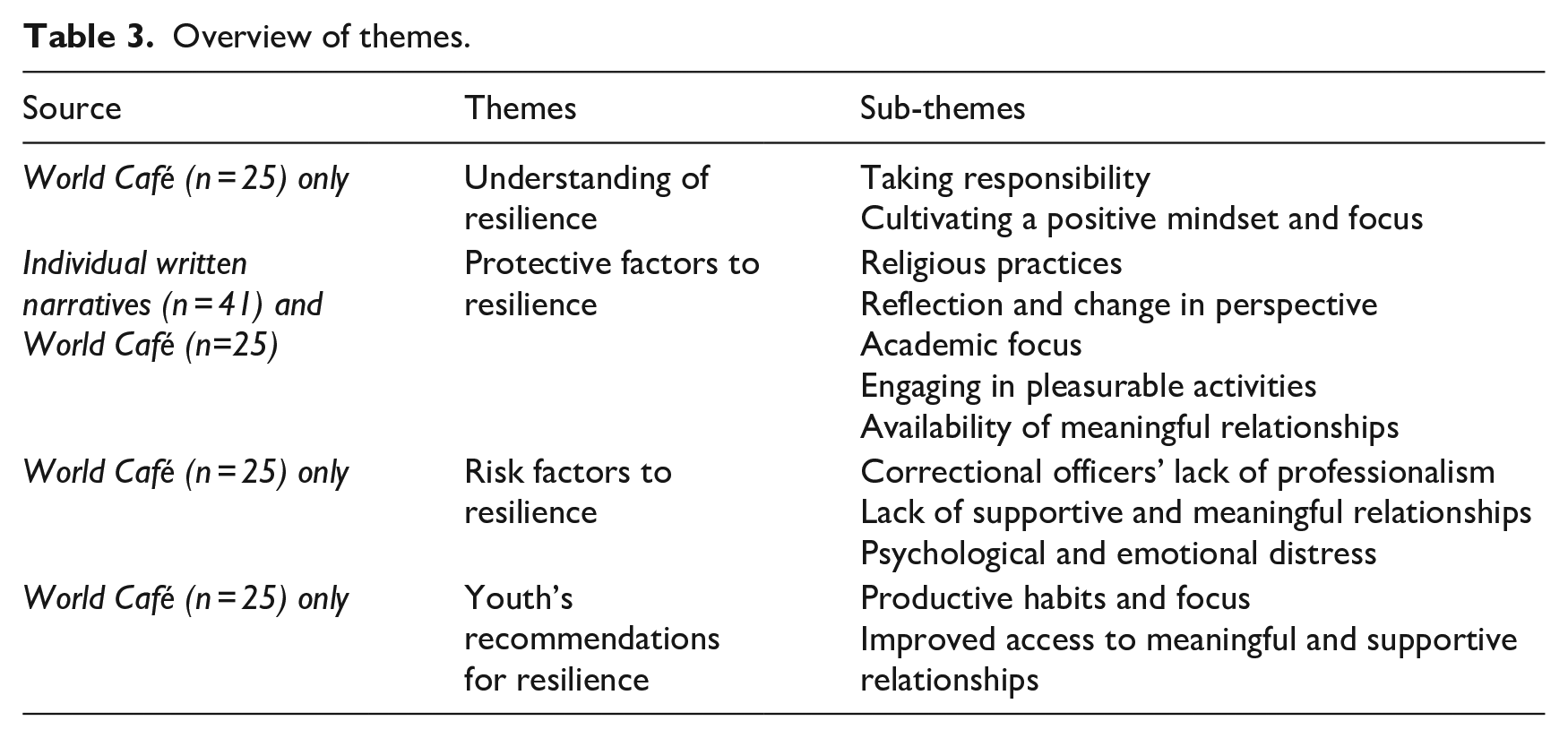
The findings are reported in the following manner: firstly, the youth’s understanding of the resilience concept is reported; following this, findings on protective factors to youth’s resilience, and risk factors to youth’s resilience are reported, respectively. Lastly, we report on the recommendations for resilience as proposed by youth. Though analysed separately, findings from the Narratives and World Café are reported together where themes are shared to avoid repetition. Where themes are not shared, findings are reported separately. Table 1 provides an overview of the themes identified from narratives and the World Café, which are discussed in detail in Table 3.
Overview of themes.
Themes from the World Café only
Theme 1: Understanding of resilience
This theme focussed on the youth’s understanding of resilience.
Sub-theme 1: Taking responsibility
Taking responsibility included holding oneself accountable for actions towards self and others:
Knowing that the things you do, even to others, is your choice.
Being able to control yourself so things are not worse.
Taking responsibility included general improving and admitting if one has erred instead of being defensive:
Not repeating the same mistakes.
When you are wrong, you are wrong, don’t keep explaining.
Additionally, taking responsibility included acceptance of situations and challenges:
If water spills, it spills, accept. . .
. . .admit you have a problem.
. . .work towards being a better person.
Sub-theme 2: Cultivating a positive mindset and focus
Resilience was understood to include cultivating a positive attitude about themselves as individuals, about events that occur in their lives and about their future. Youth reported that their understanding of resilience was also informed by thinking positively about oneself;
Believing in myself. . .
You must appreciate who you are, so you can be positive even in your attitude.
And thinking positively about events that occur in their lives:
Having a positive attitude towards situations.
There are many bad things, but it is important to remain positive.
a. . .positive attitude towards everything you do in life
Additionally, youth highlighted the importance of positive thinking about one’s future as an indicator of resilience:
Thinking positive, that will help in the future.
. . .to forget about the past, but focus on the future.
And working towards that imagined future:
. . .hard work and wanting to achieve goals.
It means also making good plans for your future.
. . .it is important to know what you want in life and working to be a better person.
. . .have a clear picture of your future, so you can focus.
Furthermore, resilience was understood to include adversity and the significance of people who have a positive influence:
Understanding that a negative situation happens to strengthen a person
Understanding of power over a problem.
. . .if you want to be positive, you must sit with positive people in life.
. . .associate yourself with people in your vision.
Themes from narratives and the World Café
Theme 2: Protective factors to resilience
This theme explores factors that were experienced by youth as contributing, buffering and/or protective to their resilience.
Sub-theme 1: Religious practices
This was a common sub-theme identified in the narratives and the World Café. Many of the youth used prayer as demonstrated in the following quotes:
I used to pray and also asked the pastor to pray for me.
Prayer helps when you believe you will overcome the challenge.
Prayer. . .helps in finding perspective.
You must just pray, He is always listening. . .
I went to the church pastor to ask for prayer.
Additionally, prayer generally helped in building a relationship with God:
. . .prayer. . .increased faith in God.
. . .prayer, it gives you hope.
Reading the Bible, its teachings, and fellowshipping (congregating with fellow believers) was also seen as protective to resilience:
I read bible story, I have people I like in there.
We relate to people in the bible like Daniel and Job.
The word of God makes me to change to be the best in life.
I started joining the family in going to church.
Pastors sometimes talk about something troubling you, then you learn how in the bible.
it was dealt with and get better.
God was considered to have a master plan which had to be trusted:
I trusted God, he has the master plan.
In all situations you face, ask God to help.
. . .if you choose God then you walk in the right way and you are protected.
Sub-theme 2: Reflection and change in perspective
To cope positively, youth engaged in reflective exercises:
Trying to find meaning and purpose behind a situation.
. . .isolate in order to think.
Furthermore, reflection was reported to help contribute positively in that youth were:
. . .able to think straight without the influence of the next person.
. . .meditate to make good decision.
Youth indicated that taking time to think influenced adherence to a code of conduct:
. . .following the rules and orders for peace sake.
. . .you think better and fight less.
Youth indicated that during reflection it was important to acknowledge stressors:
Start with being able to admit you have a problem.
. . .realising a mistake so you can start changing.
. . .limit the pride so you can admit a problem.
The need acknowledge stressors was deemed important, partly because:
. . .you can’t ask for the help, if you don’t admit a problem.
Furthermore, the changing of one’s perspective was also reported as an important contributor to youth resilience. Youth indicated that hearing the negative experiences of others made them realise that there are people with worse experiences:
Sometimes you tell friends what happened, then they also tell you their story and yours
is maybe better.
And that helped them view their adverse experiences differently which contributed to coping:
. . .maybe it’s not right, but sometimes the worse story makes you feel better.
An additional indication was the need to then think about advice received:
Asking for assistance and evaluating options.
While others stated the importance of a change in perspective and thought:
. . .critical thinking before taking a decision.
. . .to seek research about your problem.
. . .knowing hardships won’t last.
Sub-theme 3: Academic focus
The need to focus on school was often associated with the importance of focussing on goals in their lives and achieving academically was a gateway to those goals:
I focused at school, so I can reach my goals
Passing at school was my option to have a better life.
Further indicated was appreciation for the role school plays in creating a future:
You must remember school will help you tomorrow to be someone and have money.
. . .do well on your studies so you get money to manage your life.
The youth indicated that school contributes to coping positively:
In class you are focused, busy, no time to think all those other bad things.
The focus in school was also associated with positive evaluation outside of this context:
. . .if you are educated, then you are respected. Even teachers respect you if you pass.
Sub-theme 4: Engagement in pleasurable activities
Pleasurable activities included listening to and writing music, reading, keeping a diary, playing sport and writing poems. The use of pleasurable activities was another tool that helped in resilience:
Hobbies calm you down when you are angry.
. . .help release negative energy.
Playing sport was reported as helping in:
. . .minimizing time spent thinking about the challenge that occupies your mind.
. . .play sport or join music, it occupies your mind.
. . .sport brings courage.
Additionally, music helped youth with different difficulties:
. . .music heals the soul, especially lyrics relevant to a current situation.
. . .music keeps me focused and above my issues.
Reading was reported to: . . .destruct our thinking . . .
Books refresh the mind and keep us on track.
Sub-theme 5: Availability of meaningful relationships
Youth rely on interpersonal relationships in their environment, including relationships with, for example, counsellors, friends and trusted adults, to help them share and deal with challenges:
. . .being able to share your problems. . .
. . .friends help, they give me advice.
. . .advise us and they don’t judge us.
. . .talking to a friend or girlfriend about things, so you get help.
Professionals were also considered in difficult situations:
Talk to a psychologist or to social welfare for big problems, family is not for big problems
because you don’t want to stress your family and friends.
Going for counselling. . .
. . .using social worker/welfare.
Youth stated that having role models also functioned as a significant relationship which contributed to their resilience. Role models were also found in families:
My brother is my role model. . .
When I’m confused I also think what my role model would do, then I like remember their
song.
My role models make me to change to be a good person cause I see good things from
them.
Theme 3: Risk factors to resilience
This theme outlines what youth experience as getting in the way of their resilience.
Sub-theme 1: Correctional officers’ lack of professionalism
Youth felt that COs have favourites: . . .the treatment is not fair, some are loved, calling each other ‘mommies’ and ‘babies’,
they get lunch tins and phone calls on mam’s or sir’s phone.
Here you are liked or respected for what you have, who you are or where you come
from.
The socioeconomic standing of parents/caregivers seemingly influence favouritism:
Some of us will never be liked because our families don’t have money.
If your family does not care, you are rejected further here.
The ‘favourites’ are then often used as messengers for requests and/or complaints because COs are viewed as more receptive to them and rejecting of others:
. . .so we send the babies if we need to ask for things.
. . .sometimes you are told straight that they don’t care, then you must just see for
yourself.
COs also engaged in stigmatising behaviour as they would remind youth of the misconduct they engaged in prior to incarceration:
We are reminded who is who.
. . .there is a constant reminder of mistakes.
On visitation, relatives would also tell them how their actions strained relations within families:
. . .it’s like sometimes they pull us back and you wish they could stay away but you need
things in here.
Sometimes COs would bring up complaints that were raised by a relative during a supervised visit, even though youth were no longer engaged in that conduct:
They listen to a relative when visiting, then inside they bring up the past of bad things
even though you are not doing those things anymore.
Sub-theme 2: Lack of supportive and meaningful relationships
There was significant lack of social support and poor visitation from families/relatives:
It is like we are condemned by parents who never show, and it’s painful.
This made youth feel unwanted and aban-doned:
Our achievements are not recognised by any close relatives for motivation and
encouragement.
. . .like not knowing if your family wants you back, and you don’t have a chance to ask
because they don’t visit.
Discrimination contributed to lack of social support from friends and the general population for fear they may end up incarcerated:
Our friend’s parents won’t give them money to come visit us because they think their
children will end up here.
This further contributes to feelings of rejec-tion:
. . .then it’s like no one wants you.
Poverty also meant some youth’s families have no means of contact or communication and cannot afford to travel to visit:
I know my grandmother has no money or phone, so I must understand.
Sub-theme 3: Psychological and emotional distress
Psychological and emotionally distressing factors were experienced as a hindrance to resilience:
Sometimes you fail because there are a lot of things in your head. . .
. . .always having bad thoughts going on.
The distress also emanated from lack of resources, particularly at times when youth were willing to share the psychological and emotional struggles:
Sometimes you want to talk about what’s troubling you, but there is no one, so things
stay inside.
. . .there is nowhere we can talk about what’s troubling us.
. . .thinking too much and finding no solution of that particular problem.
. . .sometimes we voice out and no one takes responsibility for our rights.
Theme 4: Youth’s recommendations for resilience
This theme provides insight into what youth propose as a means to support them to be more resilient.
Sub-theme 1: Productive habits and focus
Youth highlighted the importance of engaging in productive, positive thinking and – behaviours, and generally focussing on positive things to improve resilience. This was evident in the following quotes:
Using every opportunity wisely. . .
Keep your mind busy. . .
. . .keeping myself busy to overcome bad things.
The productive focus was also with regards the future:
Focus on your dreams.
Focus on the future. . .
. . .teachers can help us about future jobs.
Positive habits included and personal journa-ling:
. . .writing music.
. . .practice talent such as singing.
. . .having a diary is a good thing because you write what comes to your mind. It’s like
having a friend.
Sub-theme 2: Improved access to meaningful and supportive relationships
Youth indicated that their resilience could be improved by access to supportive people, including parents of incarcerated friends:
. . .like if I could chat with uncle, he use to make me feel strong.
I don’t get visitors, so my friend’s mom sometimes gets me roll-on, then I’m confident
to be around people.
Youth further indicated the need to be motivated and highlighted the need for supportive rewards:
. . .be motivated by someone.
. . .the sirs must also say when we do well.
If, like, when I pass a test well, they should allow us a call home.
Meaningful relationships included spirituality;
Choose God and trust in his truth and believe that you will not fail.
Cultural entities such as ancestors, as well as love and trust in the relationship.
. . .my father passed away, and I talk to him to feel safe.
Talking to someone you trust.
Having someone you love.
. . .they (COs) must show they trust us.
Additionally, the need for COs as supportive resources was highlighted:
. . .they (COs) must care for all of us. . .
. . .some are liked by mam, and they have things but we also need it.
And youth felt it would be helpful for their resilience if they were informed about the state of their families by COs:
. . .they (COs) must call our families so that we know they are okay.
. . .grandma raised me, so she is alone, I wish they (COs) could help me know if she is
fine.
Youth highlighted the role they must play towards their own resilience:
Removing yourself from the person causing the problem.
. . .[having] self-control.
. . .change bad friends. . .
Being careful of what you do in life.
Discussion
The discussion includes a literature integration as part of ensuring trustworthiness. The understanding of resilience by participants constitutes taking responsibility, and cultivating a positive mindset and focus. This is consistent with previous findings such as taking personal responsibility (Duckworth et al., 2005) and focussing positively on one’s future (Mosavel et al., 2015). Additionally, this understanding of resilience has been reported to decrease the likelihood of offending behaviour (van der Put et al., 2014) and facilitates demonstrating desirable conduct within correctional centres which could promote supportive relations with COs (Greineder, 2013; Ungar, 2013), more so for this isolated population whose access to, and availability of, resources is determined by HMCS policies. Resilience was also understood as marked by significant adversity (Ebersöhn, 2015) in ecologies (Ungar et al., 2014) and the importance of nurturing strengths and positive traits to cope positively with difficult experiences (such as incarceration) (Seligman and Csikszentmihalyi, 2000). Therefore, the understanding of resilience by the participants is similar to that proposed by scholars in other populations.
Protective factors for resilience were found in both individual and group data, and they included religious practices, focussing on academics, engaging in pleasurable activities, availability of supportive and meaningful relationships, and youth engaging in reflection which influenced change in perspective. Youth reflecting on their history and adopting a different perspective enabled youth to be future-focussed on a life outside of HMCS, enabling youth to build hope, which has been established as the strength for thriving while incarcerated (Kruger et al., 2016).The use of religious practices aligns with the assertion made by Thwala (2013) and Gunnestad and Thwala (2011), that religious practices permeate the way of life of a majority of Swatis generally and in challenging times. Furthermore, religion is a known protective factor to resilience in correctional centres (Greeff and Loubser, 2008). This finding suggests the need for the provision of and access to religious spaces such as church services, chaplains and/or reading material to help promote or contribute to resilience.
Youth also found role models in biblical characters, which echoed the protective role of religion and tapped into the importance of supportive and meaningful relationships. The finding that role models contribute to youth’s resilience is supported by Laursen and Birmingham (2003), as role models are meaningful for youth. The significance of relational resources as protective factors to resilience has been well documented (Eisenberg and Resnick, 2006; Poon et al., 2011). Similar to other findings, Eswatini youth engaged trusted and supportive relationships such as teachers (Ebersöhn, 2015), family members (Laursen and Birmingham, 2003), pastors (Greeff and Loubser, 2008) and COs for support in dealing with significant adversity.
Academic focus is another tool youth engage to contribute to their resilience. Though pupils within schools in Eswatini face multiple challenges, and more so within the correctional system (Braithwaite et al., 2013; Maphalala and Davison, 2017), youth continue to view education as a protective factor and key to poverty alleviation in Eswatini (Maphalala and Davison, 2017).
Moreover, engagement in extracurricular activities has been identified as a protective factor for decreased likelihood of recidivism (Cuevas et al., 2019). The interest of youth, combined with the provision of the activities and equipment, as well as being allowed access to these activities is experienced as protective to resilience in HMCS. It could be that these activities provide youth with a sense of belonging and an identity outside of being viewed as offenders. Coordinating with communities, schools and other sectors for tournament opportunities, would potentially contribute to lowering stigmatisation (Root, 2010), increasing community engagement (Dang et al., 2014), and improving resilience.
Risk factors to resilience were informed by COs’ lack of professionalism, lack of access to supportive and meaningful relationships, and youth’s psychological and emotional distress. COs’ lack of professionalism manifested in favouritism, which was influenced by the youth’s family’s societal standing often linked to socioeconomics. The family’s socioeconomic status influences visitation/support (HMCS, 2019), and poor family support is known to result in negative health outcomes (Skovdal and Daniel, 2012); in addition it sees youth lacking supportive and meaningful relationships. The sub-population from poverty-stricken families appear to be at increased risk for poor health and rehabilitation outcomes as they experience poor family contact, no financial support, and vulnerability to exploitation. This partly encourages stigmatisation by COs, which poses a risk to resilience. Furthermore, stigmatisation can also be influenced by burnout of COs (Biswalo, 2011), whose profession is highly stressful (Tracy, 2004). Therefore, owing partly to stigmatisation, the youth could potentially experience disconnection from and being unwanted by their ecologies, which potentially hinders resilience.
The youth presented with psychological and emotional distress. This was attributed to favouritism, poor family and social support, and stigmatisation. Research has highlighted the presence of mental disorders specifically within the correctional population of Eswatini (Malindisa and Winterdyk, 2015). Psychological distress (Lyu et al., 2015), which is associated with increased likelihood of other mental disorders (Hayes and Reilly, 2013), has been observed in similar populations. Bruyns (2007) highlighted a significant lack of mental health workers within HMCS as a resource for the psychosocially and emotionally distressed youth, a state that is suggestive of a perpetual vulnerability to negative health outcomes.
The youth recommended improved access to meaningful and supportive relationships, and productive habits and focus on their part, as ways to help them be more resilient. Accessible and available relationships from resources such as teachers, correctional officers, religious, family and community contexts are protective to resilience (Theron et al., 2014; Ungar et al., 2014). This shows the importance of involving as many stakeholders as possible towards the nurturing of positive traits in youth as well as in helping them discover these strengths.
Conclusion and further research
The youth’s understanding of resilience, their experience of protective factors and risk factors to their resilience, and the recommendations they made on how their resilience can be supported, was in keeping with social ecology presentations of resilience (Ungar, 2013) and findings from resilience-related literature with similar age groups (Ebersöhn, 2015; Greeff and Loubser, 2008; Gunnestad and Thwala, 2011; Poon et al., 2011; Theron et al., 2014). Literature is supportive of the potential value regarding the role of resilience in rehabilitation and health outcomes. This study provides insight into resilience of youth from youth’s perspective that may be useful in rehabilitation or programme development, such as the need for change in training COs to accommodate the psychosocial and developmental needs of the age groups in their care, and policy amendments with regards to availability and, particularly, access to supportive resources such as family. The study also sheds light on how the resilience of incarcerated youth in Eswatini can be supported, and by extension, potentially contribute positively to their rehabilitation and future rehabilitation programmes.
Limitations include that males were overrepresented in the sample, most likely because there are a higher number of males within the population (HMCS, 2016). The sample was limited to one correctional centre and homogeneous in terms of race. The research was qualitative which makes the findings context specific, although transferable. Future studies could consider quota sampling to meet specific quotas regarding, for example, gender and age groups. An expanded age group for youth for inclusivity is recommended. This could include offenders younger than 15 years old and those older than 25 years within correctional centres in Eswatini. Employing other qualitative and quantitative data collection methods to obtain a broader understanding of the phenomenon is a further recommendation.
Footnotes
Data sharing statement
The current article is accompanied by the relevant raw data generated during and/or analysed during the study, including files detailing the analyses and either the complete database or other relevant raw data. These files are available in the Figshare repository and accessible as Supplemental Material via the SAGE Journals platform. Ethics approval, participant permissions, and all other relevant approvals were granted for this data sharing.
Declaration of conflicting interests
The authors declared no potential conflicts of interest with respect to the research, authorship, and/or publication of this article.
Funding
The authors received no financial support for the research, authorship, and/or publication of this article.
