



Abstract
The rapid rise in internet access and smartphone use has significantly changed how children and adolescents engage in screen-based activities. To date, no systematic review has examined long-term trends in screen time use among children and adolescents that cover periods before and after the onset of the COVID-19 pandemic. This systematic review examined repeated cross-sectional studies to determine whether screen time use among children and adolescents changed over time. This systematic review was registered with PROSPERO (ID: CRD42021243869). The Web of Science, PubMed, Embase, and PsycINFO databases were searched to identify peer-reviewed studies that had been published in English, included data from at least two time points, and focused on children and adolescents between 0 and 19 years of age. The search was conducted without any restrictions on publication year. This systematic review followed the Preferred Reporting Items for Systematic Reviews and Meta-Analyses guidelines. Study quality was assessed using the Quality Assessment Tool for Studies with Diverse Designs. A narrative synthesis was conducted following the Synthesis Without Meta-analysis guidelines. This review identified 60 studies covering the period 1991–2022. The findings indicate that traditional TV watching declined while the use of computers and video games grew. Screen time increased significantly over the years, especially after the COVID-19 pandemic started. The studies reviewed varied in how they defined and measured screen time. The review underscores the importance of continued research and evidence-based policies to guide responsible technology use in the lives of young people.
Plain Language Summary
The rapid spread of internet access and smartphones has changed how children and adolescents use digital technologies in their everyday lives. This systematic review looked at 60 studies from around the world to understand how screen time has changed over time from 1991 to 2022, including during the COVID-19 pandemic. Before the pandemic, screen use was increasing gradually, with traditional TV watching decreasing while computer use, video gaming, and mobile phone use grew. The COVID-19 pandemic caused a sharper rise in screen time as children and teenagers relied on screens for school, social interactions, and entertainment during lockdowns. Studies showed that both boys and girls spent more time on screens, though boys tended to spend more time gaming. Younger children generally spent less time on screens than older children, and children from higher-income families often spent slightly less time on screens, although the pandemic increased their screen use too. The review also highlighted that studies measure screen time in different ways, making it hard to compare results. Most studies focused on how long children spent on screens, but few looked at what they were actually doing online. While technology provides benefits like learning, social connection, and creativity, excessive screen time can be linked to problems such as poor sleep, lower physical activity, weight gain, mental health challenges, and exposure to harmful online content. The review concludes that screen time among children and teenagers has generally increased over the past decades, especially after the pandemic started. It recommends that parents, schools, and communities guide young people to use technology in a balanced and safe way, combining digital skills with physical activity, sleep, and offline experiences. Future research should explore not just how much time children spend on screens, but also the type and quality of screen activities.
Introduction
The rapid growth in internet access and smartphone ownership has transformed how children and adolescents engage with digital technologies. Screen time, defined as time spent using devices such as smartphones, tablets, computers, and televisions (Oswald et al., 2020), has become a central aspect of daily life for children and adolescents. The guidelines from the American Academy of Pediatrics (AAP) from 2016 recommend no screen time for children under 18–24 months (except video chatting) and advise limits of 1 hour daily for ages 2–5 and 1–1.5 hours for ages 6–10 years (Hill et al., 2016). For older children and adolescents, the guidelines do not provide exact screen time limit recommendations but emphasize the importance of setting consistent screen time limits as well as restrictions on types of media used (MEDIA, 2016). Despite these recommendations, children in developed societies spend substantial amounts of time online (Anderson et al., 2023), with 14.6% of children aged 6–9 years in 25 European countries reporting screen time exceeding 3 hours daily (Whiting et al., 2021).
The COVID-19 pandemic further amplified screen time usage, as lockdowns and school closures forced children to rely heavily on screens for both education and social interaction (Hedderson et al., 2023). An international study that compared the estimated and actual duration of school closures during the 2019–2020 academic year, using World Bank and the United Nations Educational, Scientific and Cultural Organization data, reported that 86.7% of the countries experienced longer school closures than estimated (Prihartono et al., 2024). A recent meta-analysis reported that the pre-pandemic screen time for children and adolescents aged 0–21 was 2.7 hours/day, but this average increased to 4.4 h/d during the COVID-19 pandemic (Choi et al., 2023).
The nature of screen time has evolved significantly, especially in how children and adolescents spend their time online. Initially, screen use among children was mainly limited to television and desktop computers. However, with the rise of mobile technology, screen time has become more integrated into everyday routines. Adolescents now spend more time on social media platforms, playing video games, and streaming services (Firth et al., 2024). Platforms such as TikTok, Instagram, and Snapchat are popular among children and adolescents, with TikTok being the most-used news source among 12–15-year-olds (Ofcom, 2024). Furthermore, online video platforms such as YouTube now rival traditional television in terms of viewing time.
Over the years, there has been a huge interest among researchers to compile evidence regarding the impact of screen time on children and adolescents. Recent reviews on screen time have predominantly focused on its association with mental and physical health outcomes, with little attention to how screen time has changed over time (Belton et al., 2021; Eirich et al., 2022; Oswald et al., 2020; Tang et al., 2021). Notably, one “review of systematic reviews” has explored the effects of screen time on children and adolescents’ well-being (Stiglic & Viner, 2019). While two systematic reviews have examined changes in screen time, they only include studies published between 2020 and 2022 and focus specifically on the COVID-19 pandemic, analyzing only short-term longitudinal changes (Choi et al., 2023; Madigan et al., 2022). Their findings are therefore restricted to a short period and cannot provide a broader perspective on long-term time trends.
We conducted a systematic review examining time trend studies on screen time among children and adolescents without restrictions on publication year, including pre-pandemic period, allowing for a more comprehensive understanding of changes over a longer period. This review aims to answer the following research questions: (1) How has screen time use among children and adolescents changed over the last three decades? (2) What impact has the COVID-19 pandemic had on screen time use among children and adolescents? and (3) How do these trends differ among various subgroups of children and adolescents, considering factors such as sex, age, and socioeconomic status?
Methods
Search Strategy and Selection Criteria
This systematic review was conducted in accordance with the Preferred Reporting Items of Systematic Reviews and Meta-analyses (PRISMA) (Page et al., 2021). The review protocol was prospectively registered with the International Prospective Register of Systematic Reviews (PROSPERO registration number CRD42021243869). Comprehensive searches of electronic databases were carried out, and these focused on potentially relevant studies published in English. The literature search was last updated on 19 February 2024. The databases searched were: PubMed, EMBASE, Web of Science, and PsycINFO, with no restrictions on publication year. All titles identified for screening were exported to the Mendeley reference manager program. The search and screening processes were conducted by three of the authors (SS, AY, and YM). They independently screened the papers based on the titles and abstracts after removing any duplicates. A shortlist of titles for the full-text screening was compiled by the three authors, and the authors independently conducted full-text assessments based on the predefined inclusion and exclusion criteria. Disagreements were discussed between the three authors to reach consensus. Any further disagreements were discussed with another researcher (AS). The full search terms are included in the online Supplemental Table S1.
Inclusion and Exclusion Criteria
We included population, community, and school-based studies on children and adolescents 0–19 years old (McDonagh et al., 2018; World Health Organization, 2003). Studies based only on sample of individual aged 20 or older were excluded. Studies covering a broader age range were included only if screen time data were reported separately for the target age group of 0–19 years. Repeated cross-sectional studies reporting screen time across at least two time-points were included. The measures of screen time at the different time-points within the studies needed to be assessed using the same measures. We excluded single cross-sectional studies, longitudinal studies that followed the same individuals over time, and studies that utilized substantially different screen time measures. This was done because our focus was on examining population-level trends in screen time among the same age groups (e.g., primary school children or adolescents) over time, rather than within-person changes. Screen time was defined as “time spent engaging with visual screen-based technologies such as televisions, computers/laptops, videogames, smart phones, tablets/iPads, and handheld electronic or gaming devices. Using the Internet, social media, or communicating via text message are all activities which are included in the definition of screen time.” “Solely auditory activities, such as talking on a phone and listening to music” were not included (Oswald et al., 2020). Only studies that were published in English were considered.
Quality Assessment
Quality ratings were conducted using the Quality Assessment Tool for Studies with Diverse Designs (QATSDD) (Sirriyeh et al., 2012) which was developed to evaluate the quality of evidence and any risk of bias in studies with diverse designs. The tool consists of 16 items, 14 of which were used in the present study, after removing those that only apply to qualitative studies. Each study was given a score for every item (0 = not at all; 1 = very slightly; 2 = moderately; and 3 = complete), resulting in total scores ranging from 0 to a maximum score of 42. The total score was subsequently converted into a percentage. The quality assessment was performed by three of the authors (SS, AY, &YM). The studies were divided among the three authors, and each article was independently assessed by two of the three authors. Disagreements in ratings were resolved through discussion between the three authors. Any further disagreements were discussed with another researcher (AS).
Data Extraction and Synthesis
The following data were extracted from the included studies: author, country, study years, number of samples, response rate, participants’ age range, source of data, informants, study outcome measures, and key findings. The included studies were categorized into those conducted before and during or after the COVID-19 pandemic period. The COVID-19 pandemic period, in terms of data collection, refers to the period starting in March 2020, while the post-pandemic period starting point varies depending on definitions provided by the authors of the included studies. Authors were contacted when relevant information was missing (Online Supplemental Table S2). Data were initially organized using Microsoft Excel 2010 for Windows (Microsoft Corp, Redmond, WA, USA). The update search was managed using Covidence review software (Veritas Health Innovation, 2024). Data extraction was undertaken by three authors (SS, AY, & YM). Disagreements in ratings were resolved through discussion between the three authors. Any further disagreements were discussed with another researcher (AS). The results were summarized using a narrative synthesis.
Patient and Public Involvement
This research was done without patient and public involvement.
Results
Study Selection and Retrieval
The electronic searches yielded 17,615 titles, and 7,873 duplicates were removed. The remaining 9,048 records were screened based on their titles and abstracts, with 8,642 records being excluded at this stage. A total of 376 full texts were retrieved and screened thoroughly. In the end, 60 studies were included in this systematic review. A summary of these processes is displayed in Figure 1. PRISMA flow diagram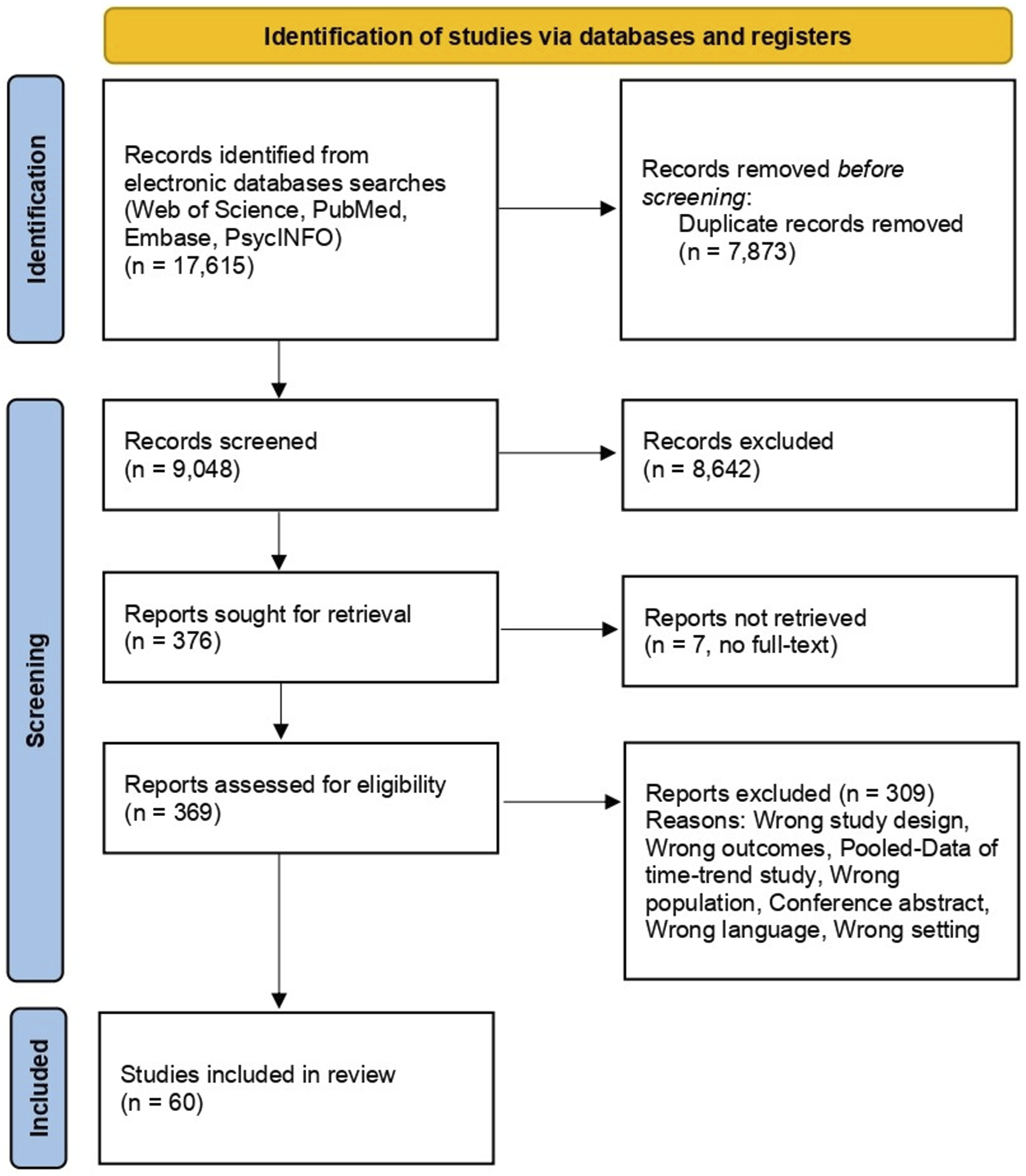
General Description of the Included Studies
Most of the time-trend studies on children’s and adolescents’ screen time have been conducted in high-income countries across Europe, North America, Asia, Oceania, and South America, with fewer from Middle Eastern and lower-middle-income countries. Seven studies focused exclusively on children, while thirty-three studies targeted adolescents. Additionally, twenty studies included both children and adolescents in their samples. Out of the 60 included studies, more studies were conducted in the USA (n = 11) followed by Australia (n = 4), with screen time in other countries represented in one to three studies. There were also 5 multinational studies that compiled data from 3 or more countries respectively. The time trend studies analyzed data within the time span of 31 years, with the earliest measurements in 1991 and the latest in 2022. 13 studies compared 2 time points, while there were studies that compared 10 (n = 1), 7 (n = 1), 5 (n = 4), 4 (n = 1), and 3 (n = 7) timepoints. Reinhardt et al. (2024) covered the longest overall period (1991–2013) with three widely spaced survey waves conducted roughly every ten years, capturing long-term shifts in adolescents’ media use in Austria whereas Gong et al. (2019) collected annual data from 1999 to 2009 with much larger samples of children in Hong Kong, allowing for detailed year-to-year trend analysis. Across studies, children’ and adolescents’ self-reports (n = 45) were the most common source of information, while parent reports only were often used for younger children (under 10–12 years) (n = 10). Only a small number of studies (n = 5) used combined informants (both self-reports and parent reports). There were 20 studies that included data collection during the COVID-19 pandemic (2020 and onwards), while 40 studies only included data collected before the pandemic. The summary of included studies is presented in the online Supplemental Table S3a and S3b.
Quality Assessment
Online Supplemental Table S4 summarizes the quality assessment of the included studies based on 14 of the 16 items of the quality assessment tool (QATSDD). Two items of the tool were specifically designed for qualitative studies and were therefore not used in this review. The total quality scores across studies ranged from 17 to 39. Most studies were of moderate to high methodological quality. The highest scores were observed for the item ‘fit between the stated research question and the method of data collection’ and the lowest scores for ‘evidence of user involvement in design’.
How screen time was assessed
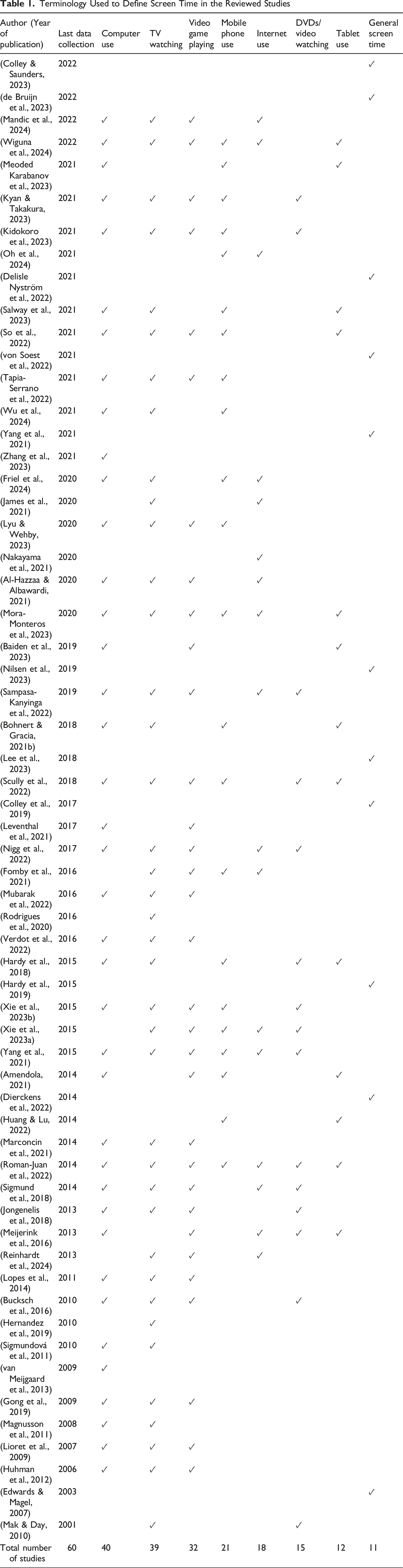
Terminology Used to Define Screen Time in the Reviewed Studies
Time Trend Changes
TV Watching
TV watching was assessed in 39 studies. Overall, TV watching declined overtime during the pre-COVID-19 pandemic (Bohnert & Gracia, 2021a; Fomby et al., 2021; Gong et al., 2019; Lopes et al., 2014; Magnusson et al., 2011; Reinhardt et al., 2024). Most studies reported decline in TV watching on both weekdays and weekends. In contrast, two studies reported stability (Lioret et al., 2009; Nigg et al., 2022). During or after the COVID-19 pandemic, TV watching decreased, despite increase in other forms of screen times (Wiguna et al., 2024).
Computer Use
Computer use was the most frequently assessed device for screen time, reported in 40 studies. During the pre-COVID 19, most studies showed an increasing trend in computer use, mainly used for web searching, gaming and online communication (Bucksch et al., 2016; Magnusson et al., 2011; Reinhardt et al., 2024; Sigmundová et al., 2011). Gaming on computers was a main driver for the rising trend in screen time on computers (Fomby et al., 2021; Gong et al., 2019; Lopes et al., 2014; Nigg et al., 2022; Reinhardt et al., 2024). During the COVID-19 pandemic, computer use continued to increase for both school and recreational/non-schoolwork purposes (Delisle Nyström et al., 2022; Kyan & Takakura, 2023; von Soest et al., 2022).
Video Game Playing
Video game playing was assessed in 32 studies, and showed a consistent increase both pre-COVID-19 and during or post the pandemic. The rise in video game playing peaked during post pandemic period compared to pre and during the pandemic peak (Wiguna et al., 2024).
Mobile Phone Use
Mobile phone use emerged as the primary device for screen activities during and post COVID-19 pandemic (Nilsen et al., 2023; Bohnert & Gracia, 2021b; Mora-Monteros et al., 2023). The increasing in trend was influenced by social media engagement, online communication and for recreational purposes. Mora-Monteros et al. (2023) reported screen-based activities shifted to small mobile screen between 2012 and 2020, with 71.7% adolescents reported mobile as primary screen compared to 23.2% in 2021. Wiguna et al. (2024) reported mobile phone use among Indonesian adolescents was higher in post pandemic compared to pre, peak period often exceeding 6 hours per day.
General Screen Time
Some studies reported screen time based on the screen recommendations per guideline while some studies combined time based on several devices. Overall screen times, before the COVID-19 pandemic reported mixed results across 40 studies. Eighteen studies showed an increase in ST, 15 reported mixed results, three revealed a decrease, and four found no change. The increase was primarily due to computer use, gaming and mobile/social media use (Fomby et al., 2021; Gong et al., 2019; Lopes et al., 2014; Magnusson et al., 2011; Nigg et al., 2022; Reinhardt et al., 2024; Sigmundová et al., 2011). During and post COVID-19, 15 of 20 studies reported increase in ST for both academic and non-academic purposes (Delisle Nyström et al., 2022; Friel et al., 2024; Kyan & Takakura, 2023; Oh et al., 2024; Petrelli et al., 2024; Salway et al., 2023; So et al., 2022; von Soest et al., 2022). Two studies reported increase in ST during the peak of the pandemic followed by decline in the post-peak periods (de Bruijn et al., 2023; Zhang et al., 2023).
Screen time usage varied across different subgroups, including sex, age, socioeconomic status, and ethnicity. Most research showed an overall increase in screen use among both boys and girls. For instance, studies from China (Mak & Day, 2010; Yang et al., 2021), Japan (Kidokoro et al., 2023), the Czech Republic (Sigmund et al., 2018), Brazil (Lopes et al., 2014), and several Western countries (Amendola, 2021; Colley & Saunders, 2023; Verdot et al., 2022) consistently reported that screen time increased over the past two decades in both boys and girls. Some studies on adolescents indicated a stronger increase among girls, while boys’ screen use remained stable. For example, Sigmundová et al. (2011) and Jongenelis et al. (2018) reported that girls’ screen time rose significantly, whereas boys’ levels stayed at the similar level. Findings from Norway also showed that girls’ screen use increased more than boys’ (von Soest et al., 2022). Several studies on children and adolescents reported that boys still spent more time on screens overall, particularly for gaming and computer use (de Bruijn et al., 2023; Delisle Nyström et al., 2022; Zhang et al., 2023) while one study from Norway found higher total screen time among girls compared to boys (von Soest et al., 2022).
Screen time trends varied across age groups before and during the COVID-19 pandemic. Before the pandemic, younger children had less screen time. A decline in screen time was observed among 10–14-year-olds from 2006 to 2014 (Marconcin et al., 2021) and those aged 3–6 years from 1998 to 2007 (Lioret et al., 2009) but it increased in all other age groups (Huhman et al., 2012; Verdot et al., 2022). Screen time decreased among 8–10-year-old girls but increased among 15–19-year-old girls from 2007 to 2017 (Colley et al., 2019). Additionally, TV watching declined among middle school students (12–14 years) but remained stable among high school students (14–18 years) (Edwards & Magel, 2007). During the COVID-19 pandemic, screen time trends were inconsistent—two studies reported a decrease among young children (de Bruijn et al., 2023; Delisle Nyström et al., 2022), while one study reported an increase in children aged 2–11 years (Mubarak et al., 2022).
In general, studies show that children and adolescents from higher socioeconomic status families spend less time on screen activities than those from lower socioeconomic status backgrounds (Delisle Nyström et al., 2022; Gong et al., 2019; Lee et al., 2023). However, when examining time trends, increases in screen time have often been more pronounced among higher socioeconomic status groups (Lyu & Wehby, 2023; von Soest et al., 2022), leading to a narrowing of socioeconomic differences over time (Dierckens et al., 2022). Two studies examined screen time across ethnic groups. Recreational computer use increased for self-identified Latino children in US aged 4–9 years but decreased for white children in the same age group. However, for children aged 10–11 years, recreational computer use increased in both groups (van Meijgaard et al., 2013). African American children were less than half as likely as white children to meet the screen time recommendations (Huhman et al., 2012). These findings highlight the complexity of screen time trends, which varied by age, sex, socio-economic status, and ethnicity (Figure 2). Summary of data timeframe and trend results. Each box represents one quarter of the year (Q1, Q2, Q3, Q4), and the different blue shades signify the different timepoints of the data collection period for each study (white boxes indicate no data collection). The yellow line indicates the start of the COVID-19 pandemic in March 2020 (Q1 of 2020)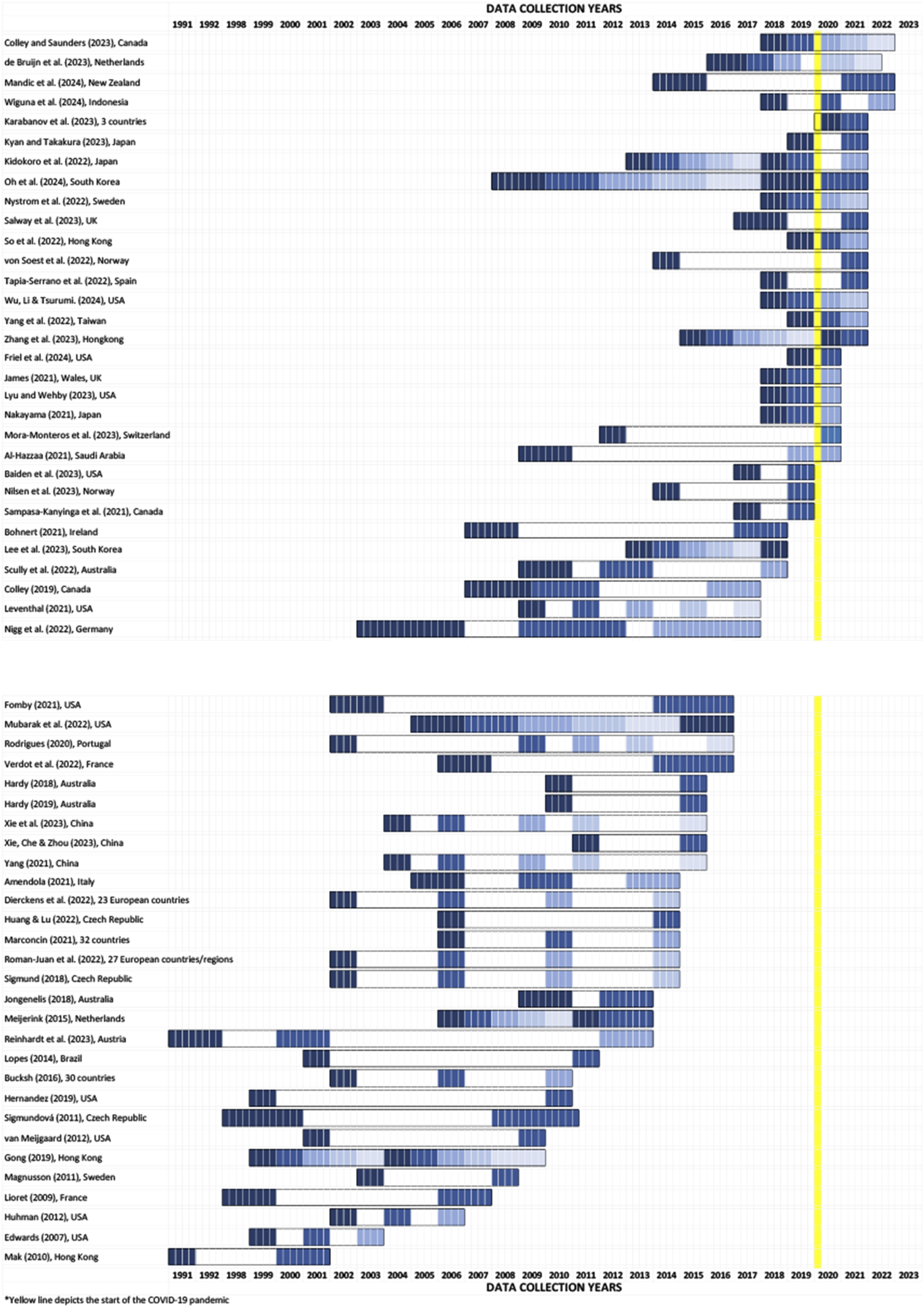
Discussion
This is the first systematic review to examine time trend changes in screen time in children and adolescents over the last three decades. This systematic review identified 60 studies covering the period 1991–2022. By including a wide range of screen time engagement, this review provides a holistic view of screen time revealing how the nature of screen time has evolved over the past decades. This review captures a broad spectrum of developmental stages by including studies among children and adolescents aged 0–19. There was significant variability in how different studies define and measure screen time. The review showed that there was a significant increase in screen time among children and adolescents over the years, especially during and after the COVID-19 pandemic. Generally, the use of computers, mobile phones or playing video games increased while TV watching decreased.
The results of this systematic review show that there was significant variability in how previous studies have defined and measured screen time, with assessments varying by device type, timeframes (e.g., weekdays vs. weekends), and the inclusion or exclusion of activities such as schoolwork. The reviewed studies primarily used brief tools measuring the number of hours spent per day on various screen-based devices, including television, video games, mobile phones, and computers. This approach aligns with traditional measures of sedentary behavior, focusing on the duration of exposure to screens (Tremblay et al., 2011). Additionally, several newer studies excluded screen time related to schoolwork, focusing solely on recreational use. This differentiation is particularly relevant in the context of increased digital learning environments, especially during the COVID-19 pandemic, where distinguishing between educational and recreational screen time became essential (Madigan et al., 2022). The measures of screen time have evolved over the years to reflect the contemporary digital landscape, measuring not only television but also a varied range of screen-based devices now available to children and adolescents. Previous research started to include newer screen-based devices such as mobile phones and tablets starting in the mid-2010s. This inclusion is important because there has been consistent growth in mobile phone ownership around the world; for example, 90% of children in the UK own a smartphone by the age of 11 (Ofcom, 2024).
Pre-Pandemic Trends
Before the COVID-19 pandemic, 18 studies showed that screen time among children and adolescents increased over time. This likely reflects the fact that screen-based activities have become a larger part of everyday life for children and adolescents, especially due to increased use of computers and mobile phones. However, a considerable number of studies reported mixed (n = 15), stable (n = 6), or decreasing (n = 3) trends, showing that changes in screen time were not the same across all populations or time periods. The decrease observed in some studies may be explained by reduced television viewing, as all studies reporting decreasing screen time included TV use in their measures. Overall, the findings suggest a shift away from traditional screen media, such as television, toward more interactive and personalized digital activities. Higher screen time among older children compared with younger children may also be linked to developmental factors, as adolescence is a period when they place more importance on friendships, online social connections, and the development of romantic relationships (Urberg et al., 1995).
Pandemic-Driven Changes
During the COVID-19 pandemic, younger children who may have previously had limited exposure to screens were required to engage in online learning and digital activities to compensate for the loss of in-person schooling and social interactions (Hedderson et al., 2023). This may have led to a greater increase in screen time for younger children compared to pre-pandemic trends. The onset of the COVID-19 pandemic marked a significant shift, leading to a substantial increase in screen time among children and adolescents. The majority of the reviewed studies conducted during and after the COVID-19 pandemic showed an overall increase in screen time among children and adolescents, both in their total and leisure screen time. On the other hand, TV watching continued to decrease even after the onset of the COVID-19 pandemic. Although there was increase in screen time among children and adolescents with lower parental socioeconomic status, a more pronounced increase was found among higher socioeconomic status children. This may reflect their greater access to technology during the COVID-19 pandemic, which expanded online learning and social interaction (Mollborn et al., 2022).
Health and Social Implications
The sustained increase in screen time, particularly during the COVID-19 pandemic, raises concerns about potential health implications for the well-being and development of children and adolescents. It has been reported that excessive screen time is associated with several negative outcomes, such as greater obesity/adiposity, higher depressive symptoms, higher intake of less healthy food, sleep problems, and poor quality of life (Stiglic & Viner, 2019). Further, a longitudinal study has reported that screen time at the age of 4 is related to later dysregulation symptoms and lower academic achievement both at 6 and 8 years of age (Cerniglia et al., 2021). Another longitudinal study showed that children with more than 2 hours/day screen time were six times more likely to experience clinically significant inattention problems (Tamana et al., 2019). A study involving pre-kindergarten children found that screen time amount exceeding the AAP recommendations was associated with a change in brain white matter supporting language, executive functions, and emergent literacy skills (Hutton et al., 2020). Additionally, online harms such as exposure to cyberbullying, hate speech, and inappropriate sexual content pose significant risks to young internet users (Quayyum et al., 2021; Staksrud et al., 2013). Young users are also exposed to content featuring unrealistic body shapes and diet plans, which can create immense pressure and potentially lead to eating problems and body image concerns (Vandenbosch et al., 2022). These findings highlight the importance of monitoring screen time and online activities, and guide children and adolescents to develop healthy digital habits by encouraging balanced screen use. At the same time, governments should implement regulations to limit children’s exposure to harmful content, enforce privacy and safety standards, and promote digital literacy programs in schools. Despite these concerns, the internet offers positive outcomes for children and adolescents. Internet use among children can increase learning opportunities and build digital skills and social relationships (UNICEF, 2019). Online games can enhance social connectedness, cognitive skills, and creativity and can also reduce stress (Reynaldo et al., 2021). However, gaming addiction remains a concern. Online platforms are thought to be reducing stigma around mental health, enhancing knowledge, and providing valuable support networks for some users (Anguyo et al., 2023).
Recommendations for Future Research and Implications
While previous research has predominantly measured the duration and types of devices used, the nature and quality of the activities were rarely examined. Future research is encouraged to take a nuanced approach to examine how children and adolescents spend their time online, not simply focusing on how much time they spend on screen-based activities. The use of technology among children and adolescents is inevitable in the current era. The integration of educational technology into classrooms is growing all over the world (Selwyn, 2021). Furthermore, the potential of technologies such as virtual reality and artificial intelligence to further transform how children and adolescents spend time using technology is emerging. This topic will need constant updating and refinement as technology and its uses evolve. To optimize the benefits of technology use among children and adolescents, it is important to educate them about responsible technology use, digital literacy, and the importance of balancing screen time with physical activity and sleep (American Psychological Association, 2023). Encouraging active participation from parents and communities in guiding and monitoring children’s technology use is also essential. AAP emphasizes the importance of structured media use and provides guidelines such as the Family Media Plan and the 5 Cs of Media Use as practical tools to help families and healthcare professionals create healthy media habits for children and adolescents (American Academy of Pediatrics, 2021, 2024). We advocate for future initiatives and guidelines to consider an evidence-driven and multidimensional approach towards the use of technology and a continuing rigorous evaluation, in order to promote healthy digital habits among children and adolescents.
Limitations of the Review
The results of this review should be considered within its limitations. First, we only included studies published in English, leading to the exclusion of publications in non-English language journals. Additionally, qualitative research and grey literature were not included in this review, and findings should be interpreted considering possible publication bias. Second, substantial methodological heterogeneity and inconsistencies in how screen time was defined and measured across studies made comparison and interpretation of trends difficult. This heterogeneity affected our ability to conduct meta-analyses. Thirdly, to ensure comparability of screen time assessments over time, we only included studies that used consistent measurement tools and comparable study samples across different time points. The rapid evolution of digital technologies led some studies to add new devices, such as tablets and mobile phones, in the questions at later time points. We excluded studies that used significantly different measures at different time-points, which may have introduced selection bias. While COVID-19 remains in circulation, the WHO ended its designation as a public health emergency on 5 May 2023. This review excludes studies conducted after that date and thus cannot provide insight into how screen time levels may have changed after the pandemic context calmed down. Future research should investigate post-pandemic trends in screen time to understand how screen use has changed in children and adolescents. Lastly, while the review captured changes in screen time over time, it did not address the evidence on the effects of screen time on child and adolescent development. Future research could aim to synthesize evidence on the health implications of screen time to inform guidelines and interventions.
Conclusions
This systematic review of 60 peer-reviewed papers reveals a significant increase in screen time among children and adolescents over the last three decades, and includes periods during and after the COVID-19 pandemic. The use of computers, mobile phones, and playing video games generally increased whereas TV watching decreased. Future studies are encouraged to go beyond measuring the time and device types to examine the quality and nature of their screen-based activities. Since technology is an inevitable part of modern life, especially in education, it is essential to guide young people in using technology safely and effectively. This includes teaching digital literacy, balancing screen time with physical activity and sleep, and involving parents and communities in monitoring and supporting healthy technology use. Additionally, it highlights the importance of continuous research and evidence-based policies to ensure that technology use benefits the well-being of children and adolescents.
Supplemental Material
Supplemental Material - Long-Term Trends in Screen Time Use Among Children and Adolescents: A Systematic Review Including Pre- and Post-COVID Periods
Supplemental Material for Long-Term Trends in Screen Time Use Among Children and Adolescents: A Systematic Review Including Pre- and Post-COVID Periods by Yuko Mori, Sanju Silwal, Wan Mohd Azam Wan Mohd Yunus, Andre Sourander in Clinical Child Psychology and Psychiatry.
Footnotes
Acknowledgements
The authors are extremely grateful for Lotta Lempinen, PhD (Department of Child Psychiatry, Research Centre for Child Psychiatry, University of Turku, Turku, Finland) for her initial input and guidance.

Ethical Considerations
Ethical approval was not required for this systematic review, since all data came from information freely available in the public domain (i.e., published articles or conference abstracts). This study did not involve human participants.
Author contributions
YM, AA, SS, and AS conceptualized the study and contributed to the design of review. YM, AA, and SS conducted the systematic literature search, categorization and data extraction, under supervision of AS. YM, AA, and SS synthesized findings and wrote the first draft. AS supervised all the writing and editing of the manuscript. All authors read, contributed by critically revising the paper, and approved the final version of the manuscript. Equal authorship applies to YM and SS.
Funding
The authors disclosed receipt of the following financial support for the research, authorship, and/or publication of this article: The study was supported by the INVEST Flagship program of the Research Council of Finland (decision number: 345546) and the European Research Council under the European Union’s Horizon 2020 research and innovation program (grant agreement No. 101020767).
Declaration of conflicting interests
The authors declared no potential conflicts of interest with respect to the research, authorship, and/or publication of this article.
Data Availability Statement
All relevant data are within the article and its supporting information files.
Supplemental Material
Supplemental material for this article is available online.