



Abstract
Behavior therapists play an important role in the life of children with an autism spectrum disorder (ASD). Literature reported that child’s improvement depends on the quality of therapy they receive. Therefore, the current study aims to explore the psychosocial experiences of behavior therapist working with children having ASD, and suggest the coping strategies which they use to deal with those stressors. The study utilizes a qualitative research design with a phenomenological research approach to explore the psychosocial experiences. For this purpose, the researchers conduct semi-structured interviews of 6 behavior therapists, ages ranging from 25 to 35 years. They note the verbatim of the therapists and convert into codes to create themes and categories. Furthermore, the study utilizes Interpretative Phenomenological Analysis for the interpretation of the results. The results of this phenomenological research indicate six superordinate themes emerged from the transcripts. The results demonstrate professional and psychological experiences of behavior therapists along with the social and the health issues faced by the children with ASD, and the coping strategies used by the therapists that is emotion focused coping, problem focused coping and maladaptive copings. Gaining insight into therapists’ psychosocial experiences can pave the way for developing approaches aimed at enhancing their overall welfare. These approaches may encompass initiatives to alleviate stress, mitigate burnout, and boost job satisfaction.
Keywords
Introduction
Autism spectrum disorder (ASD) is a neurodevelopmental disability typically present in early childhood, characterized by social and communication impairments along with restricted and stereotypical patterns of behavior (American Psychiatric Association, 2013). Zeidan et al., (2022) conduct a research review of the global prevalence of ASD which indicated that 1/100 child has ASD. Autism is often treated with a combination of educational and behavioral therapies, along with socially mediated reinforcement (Eikeseth et al., 2012). Applied behavior analysis (ABA), which is based on operant reinforcement theory, is one of the most widely utilized treatment programs for the management of ASD (Gresham et al., 1999). A practitioner with extensive formal training in behavior analysis oversees all appropriate ABA interventions. This individual holds a master’s degree and has supervised experience planning and delivering ABA programs for children with autism and similar conditions (Martin & Carr, 2020). ABA treatment plans might be as simple as an after-school tutoring program or as complex as a full-fledged program. A child in a full-time ABA program will usually have 2–3 therapy sessions each day, each lasting two to 3 hours. Children receive regularly scheduled pauses between sessions, during which they could nap, have a snack, or engage in other break-time activities. Sessions are normally held six days a week. Full-time ABA therapists often have long workdays due to the scheduling gaps between therapy sessions for children receiving ABA services, necessitated by the availability of numerous therapists and clients. The therapist profession is typically considered an on-call position, and therapists may need to change their schedules to accommodate for workers absences (Langeliers, 2013).
Elfert and Mirenda (2006) conduct a study on 65 behavior interventionists (BIs) who train children with autism spectrum disorder at home by one in one sessions. Role overload (the degree to which job obligations exceed personal or organizational resources) and role boundary were the two jobs that caused the most stress (the extent to which the individual experiences conflicting role demands at work). Significant correlations between coping and both stress-strain were discovered. However, it might be possible behavior therapists who are working with children having ASD also experience psychosocial problems which can damage their mental and physical health. So, there is an evident lack of studies that prompted the need to explore the psychosocial experiences of behavior therapists working with children who have autism spectrum disorder. The connections between the individual and the work environment, conditions for workers and structure, work demands, and the level of independence over activities all contribute to psychosocial variables at work, which can affect health, performance, and work satisfaction (Moreira & Lucca, 2020).
Although the efficacy of ABA has been empirically verified, it is a difficult demand and often stressful practice for the therapist. Continuous monitoring, reassessment of goals, and change of teaching approaches and methodologies are required throughout an individual’s therapeutic programs (Steege et al., 2007). Therapists might encounter challenges related to clients' cognitive limitations, challenging behaviors, and the transfer of learning. They also experience personal stress from providing intense one-on-one therapy for many hours each week (Hagopian & Jennett, 2008). As study has shown that psychotherapists facing stress, physical issues, emotional strain and other mental health issues who are frequently working with patients who have psychiatric problems (Schneiderman et al., 2005). However, it might be possible behavior therapists who are working with children having ASD also experience psychosocial problems which can damage their mental and physical health. So, there is evident lack of studies which prompted the need of this study. So, the present study aims to explore the psychosocial experiences of behavior therapists working with children with Autism Spectrum Disorder. Exploring the psychosocial experiences of behavior therapists is an important area of research and practice. These therapists are critical in assisting children with ASD to acquire necessary abilities and enhance their general quality of life. Understanding their experiences can help us better understand the difficulties they confront and the ways we can support them.
Research questions
• What are the psychological experiences of behavior therapists working with children having autism spectrum disorder? • What are the social experiences of behavior therapists working with children having autism spectrum disorder? • What are the strategies behavior therapists use to overcome psychosocial issues?
Material and methods
Research design
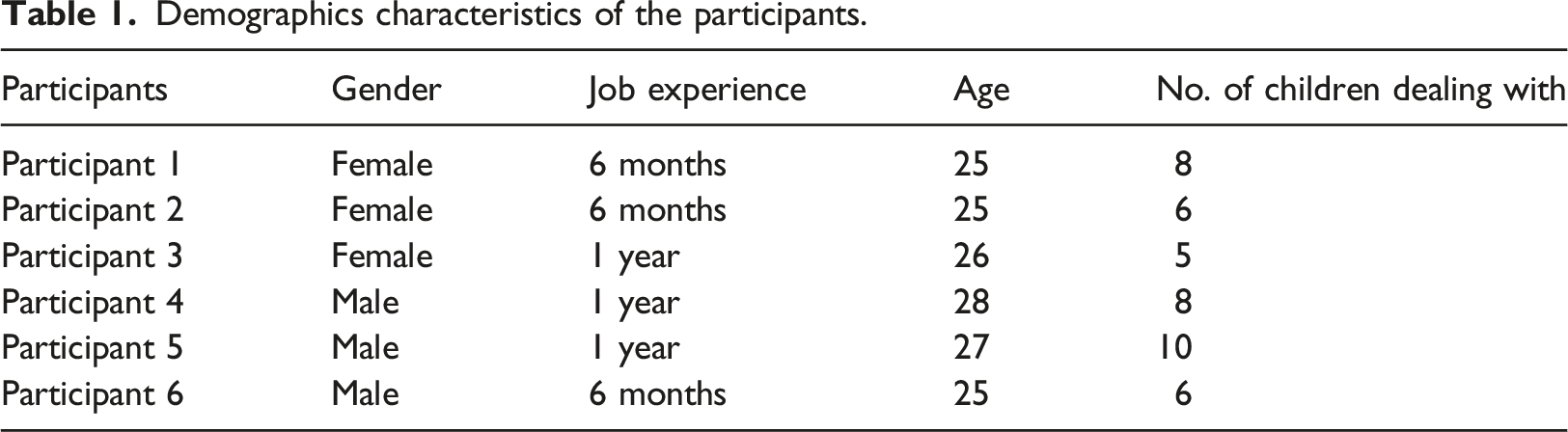
Demographics characteristics of the participants.
Settings and participants
They researchers interview the six behavior therapists currently working in autism centers in Lahore Punjab, Pakistan.
Sampling strategy
The current study uses purposive sampling to collect the data.
Inclusion and exclusion criteria
The study includes the participants who have a minimum of six months of experience and currently working in autism center.
Ethical considerations
The study strongly emphasizes ethical considerations in order to appropriately present all of the data and interpretations in this study. The first step in the data collection process was to obtain approval from the Departmental Review Committee. Following then, the study was continued. Initially, Participants were instructed on the study’s purpose, procedure, and material as part of the informed consent process. Participants were also told that they had the right to withdraw from the study at any moment. Their privacy and confidentiality were especially maintained. After assuring the secrecy, the interviews were recorded, and they were given the choice to withdraw at any time if they felt uncomfortable. No participant was forced to reveal anything with which he or she did not feel comfortable. Finally, participants were acknowledged and appreciated for their involvement, and counselor services were provided if desired.
The procedure
To explore psychosocial experiences of behavior therapists and the ways they use to cope with negative experiences, the study conducts semi-structured interviews from the 6 therapists who are working in autism centers. The semi-structured interview was consisted of 6 main questions followed by 20 additional questions. The interview questions were developed using a structured, multi-step approach. Initially, an extensive review of existing literature was done in order to identify key themes and research areas related to the study. Building upon insights gained from this literature review, an initial set of questions were formulated. These questions underwent further refinement and validation through consultations with subject matter experts in the field, ensuring their relevance and appropriateness for this research. In terms of question administration, the interviews were conducted face-to-face, enabling the researcher to capture more detailed and nuanced responses from the participants. Each interview was carried out by a proficient researcher who adhered to a standardized protocol, ensuring uniformity in the interview process across all participants. These interviews were conducted in private meeting rooms located within the institution where the participants were currently working. With regard to interview duration, each session typically spanned between 45 minutes to 1 hour on average. This duration was carefully chosen to strike a balance between obtaining comprehensive responses from participants and respecting their time constraints. The researcher writes exact verbatim of the participants after taking their permission and later transforms into statements. The interviews include open-ended questions so that the participants can comfortably and extensively share their experiences regarding working in autism centers.
Interpretative phenomenological approach (IPA) analysis
Interpretative Phenomenological Approach (IPA) is extensively used method in qualitative research which provides a thorough insight of people’s experiences and feelings. The study utilizes Smith et al. (2020)’s recommended steps as its methodology for the examination of IPA. IPA provides in-depth insight into participants’ subjective experiences. It also emphasized on understanding participant’s point of view. However IPA can be time consuming. The study carries out the analysis using Nvivo 12 software to produce codes, categories, and themes from the responses after interviewing the behavior therapists. The study uses the following procedures for conducting the analysis.
Reading and rereading
First, the researcher reads and rereads the interviews verbatim and then precisely transliterates and writes down. Secondly, the researcher translates the data into English and makes compatible with NVIVO software for data administration and analysis.
Initial coding of the data
Initial coding is a method that is frequently used for the examination of data in qualitative research. It is utilized to classify data into categories that is simple enough for computer software to comprehend. So, following the next phase of reading and rereading, the researcher creates initial codind interpreting their exact comments regarding their psychosocial experiences and coping strategies they employ to balance job, social and personal life.
Emergent themes
A theme is a component that condenses a collection of data into a few phrases or concepts that make it simple for the researcher to respond to any queries or issues that emerged throughout the course of the study. Following that, the study groups those coding into sub-themes based on how closely they were connected to one another. (Figure 1) Hierarchy of identified superordinate themes map of discourse analysis in NVivo 12 plus.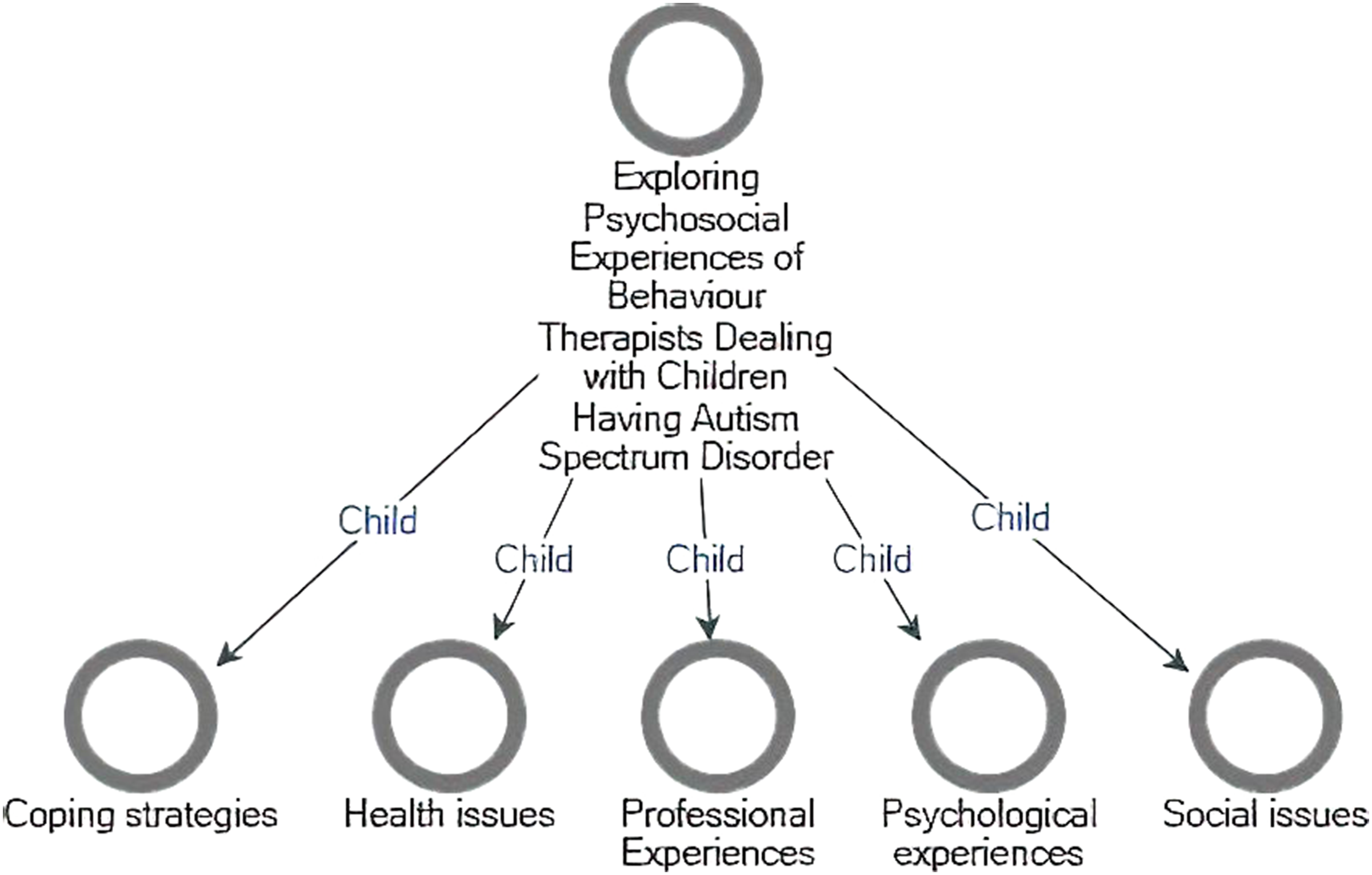
Abstraction technique
The study adopts abstraction technique to infer the superordinate themes from the emergent themes. The study virtualizes the similar themes with the other similar themes to build a relationship between them by using NVivo 12 plus software.
Results
Themes
The study develops the themes using the NVivo 12 plus software to categorize a collection of data, such as repeated words, attributes, and ideas, into the appropriate categories. Moreover, the study develops every theme by the evidence from their respective extracts. The participants reports the factors responsible for their psychological issues, social issues, health issues, and then their effect on their personal life and social life. Furthermore, they discuss the coping strategies they use to handle and fix the psychosocial issues. The following points details all these factors and consequences based on superordinate and subordinate themes.
Psychological experiences
Figure 2 shows a superordinate theme which is reported by six participants distinctively. All participants face negative emotions like stress, irritability, burnout, anger, feeling helpless, mood swings, overthinking, scared, being overwhelmed, and low self-esteem along with positive emotions which are being sympathetic, patient, emotionally strong, and behavioral issues like diet disturbance and hygiene issues but the context of their problem varies according to their situation. Hierarchy of identified theme of category of psychological experiences after discourse analysis in NVIVO 12 Plus.
Participant 2 reported negative emotions like burnout.
I get very mentally exhausted after a 2 hour long session, and I get mentally disturbed.
Participant 3 reported that:
A child with autism does not improve so quickly but the expectation of the parents is to bring their child into the mainstream early so there’s a lot of stress on that.
Social issues
Figure 3 shows a superordinate theme after analyzing all the factors responsible for the social issues of the behavior therapists. This superordinate theme emerges from the subordinate themes of Intrapersonal problems and Interpersonal problems. The study identifies the problems that cause social issues. These problems include several interpersonal problems that is, weak socialization, unable to spend time with friends, unable to meet family, clashes with friends and conflicts with family and the intrapersonal problems like unable to make new friends, unable to attend family functions, projection towards family. Hierarchy of identified theme of category of social issues after discourse analysis in NVIVO 12 Plus.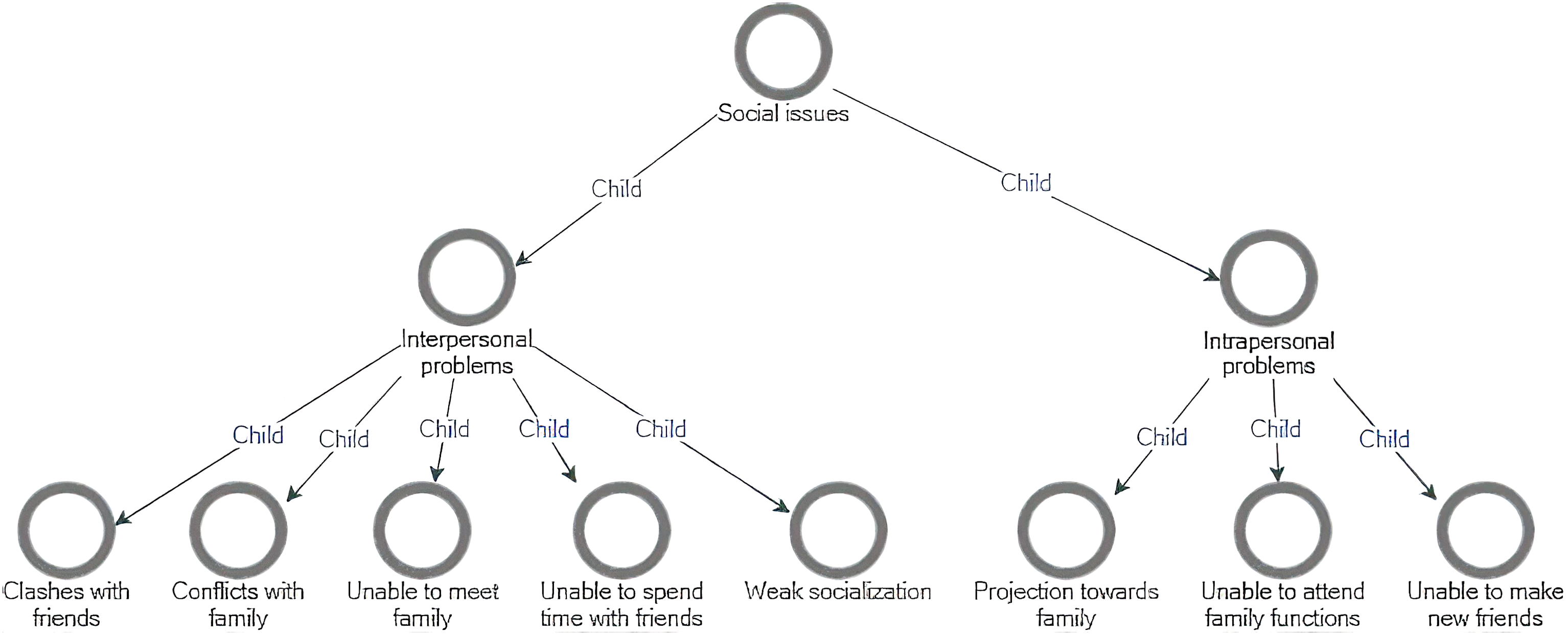
Second participants reported that:
I often get into fights with my family when I come home.
Participants 2 also reported:
Your social life is kind of cut off and also it's very difficult to go to family because I go after a month or two and even when there are functions I can’t skip the session or go to the function.
Fifth participant reported:
You can’t give time to friends and family sometimes family functions come up or friends party get missed”.
Health issues
Each participant reports the health issues but the factors vary from individual to individual. The two subordinate themes emerges from the superordinate theme of health issues which include stress response and somatic complaints by keeping in mind the original transcripts of the six participants. Figure 4 shows all details related to the health issues. Hierarchy of identified theme of category of health issues after discourse analysis in NVIVO 12 Plus.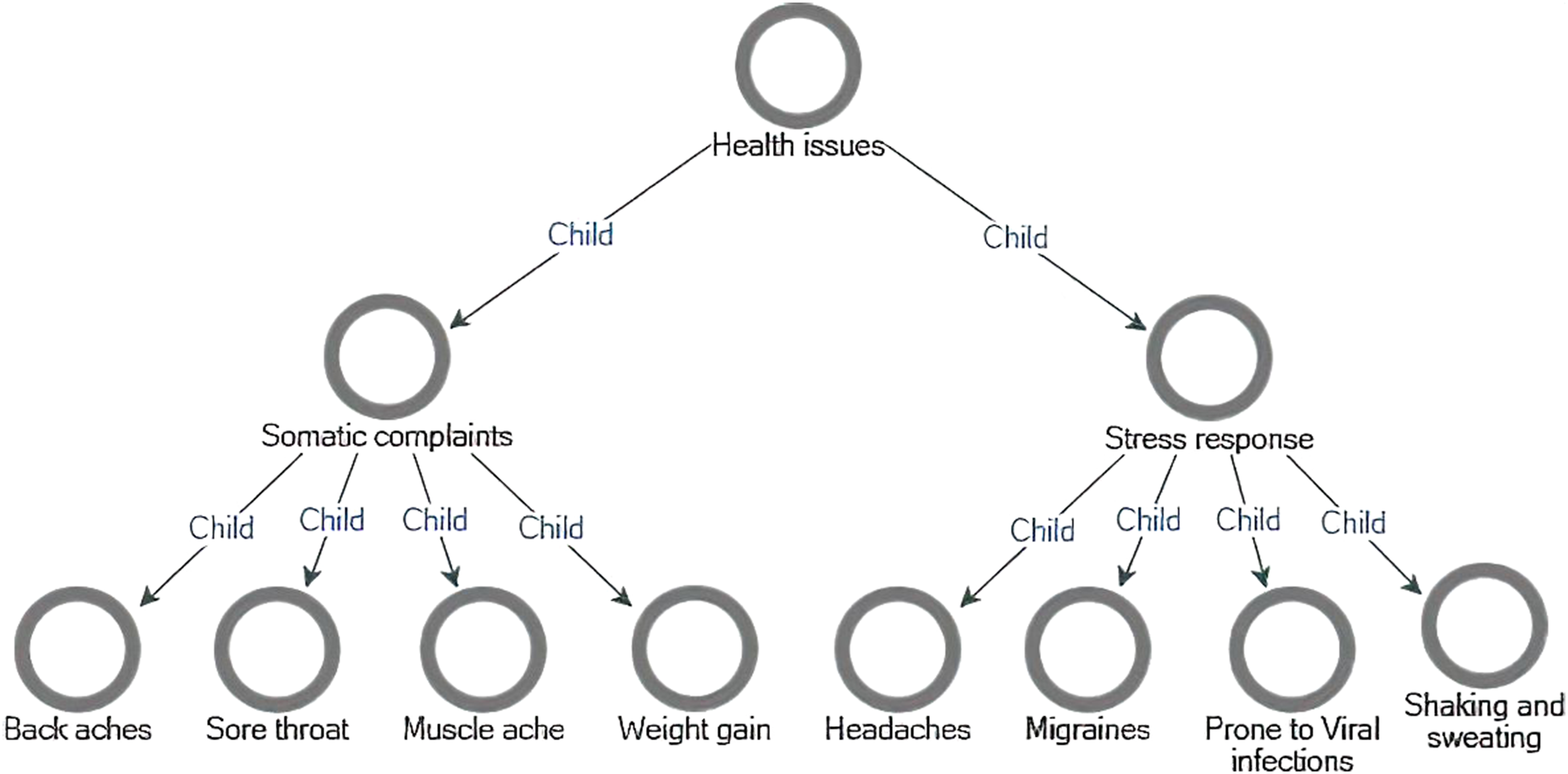
Second participant reported:
When I took the session, they noticed that I was shaking and was sweating while it was winter days.
Fourth participant also stated:
Due to work stress I get migraines and headaches.
According to sixth participant verbatim
Most children get colds and I often get colds when I catch viral things.
Professional experiences
Figure 5 shows professional experiences either positive or negative the behavior therapists have. These experiences vary from individual to individual. The interview generates the subordinate themes that are professionalism, teamwork, socioeconomic challenges, job, dissatisfaction, workplace conflicts, and job performance. The study provides a detailed explanation of the respective superordinate theme. Hierarchy of identified theme of category of professional experiences after discourse analysis in NVIVO 12 Plus.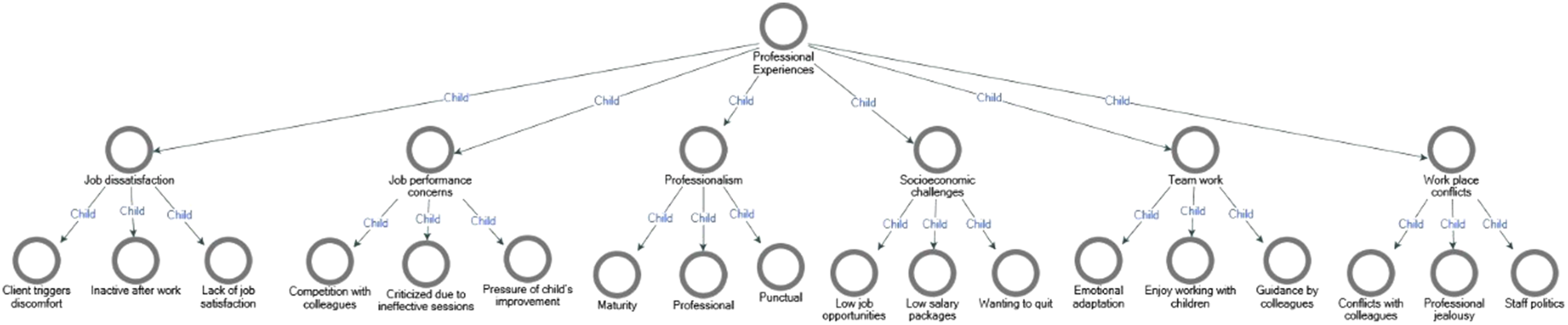
First participant stared:
The work is more and the pay is less.
Third participant also reported:
Job satisfaction is affected when your organization does not support you economically and legally.
Participant fifth reported:
Sometimes professional jealousy and competition comes within colleagues”.
Sixth participant reported
If the child is showing tantrums, your colleagues start saying that you have not taken care of the child’s behavior.
Coping Strategies
Figure 6 shows the superordinate theme explaining the four types of coping strategies, adopted by behavior therapists. The main subordinate themes emerges from this superordinate theme considering the verbatim of the participants. These themes include emotion focused coping, problem focused coping and maladaptive copings. Hierarchy of identified theme of category of coping strategies after discourse analysis in NVIVO 12 Plus.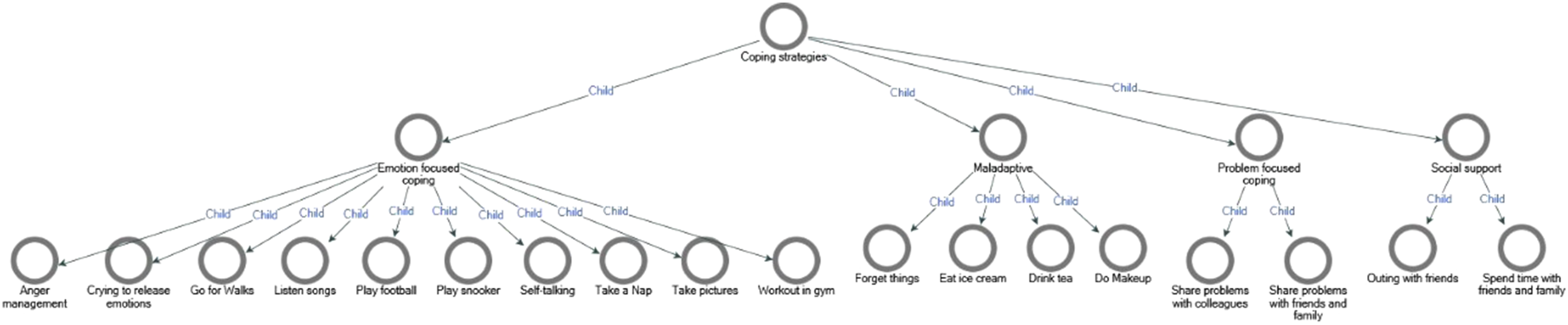
2nd participant reported:
I go to the ground or go to the gym. I do express these things in the game, while playing football, it calms me down.
Third participant also used emotion focused coping
I listen to songs to manage my emotions.
Fourth participant reported her social support as
I use to overcome my issues one is spending time with my friends”.
Discussion
The current study aims to explore the psychosocial experiences of behavior therapists dealing with children who have ASD. It also highlights the coping mechanisms they utilize to maintain their approach to life. This study explores some contributing factors that lead to negative psychosocial experiences. Additionally, the study highlights several coping mechanisms to deal with these problems which are currently aiding them in coping with the stressors and maintaining their work-life balance.
The study produces the results thorough the interpretation of all six participants’ transcriptions. The study identifies the first superordinate theme that is, the psychological experiences. After interviewing the participants, the study figured out the factors consisted of elements that is, negative emotions, positive emotions, and behavioral issues. Gibson (2009) also purposes the identical findings in his research on ABA therapists’ wellness at work, which provide ABA interventions to children with autism in school-based settings. The 45 ABA therapists from six UK schools answered the questions about general distress, perceived supervisor support, work-related stress (burnout), and coping.
Apart from the psychological experiences, the second superordinate theme the study identifies after thoroughly reviewing every participant’s transcript is social issues influencing their lives. Elfert (2006) also reported these parallel results about the experiences of behavior interventionists. Due to the factors like heavy workloads, time restraints, challenging clients, isolation or a sense of inadequacy, unclear responsibilities, lack of training, change or instability at work, conflict with coworkers, and difficulty maintaining professional boundaries with families, BIs frequently experience high levels of occupational stress.
Along with the second theme, the third major theme that emerges from the transcripts of all six participants is health issues. This theme consists of elements that are stress responses and somatic complaints. Lovell (2021), reported more physical health issues reported by caretakers of children with autism spectrum disorder than by controls.
Additionally more common among caregivers, and sleep disruptions are strongly correlated with physical health issues. Therefore, a child with autism may indirectly suffer from poorer sleep as a result of caring for them. However, caregivers slept for longer periods and spent more time in bed overall. Even though physical health issues were directly correlated with self-reported sleep disorders. Greater self-reports of sleep disturbance were a contributing factor in caregivers’ higher risk for physical health problems.
Apart from this, the fourth superordinate theme interpreted from the transcripts of the participants is professional experiences which include professionalism, teamwork, socioeconomic challenges, job dissatisfaction, workplace conflicts, and job performance concerns. Nelson’s (2001) research interviews the 13 doctoral and master’s trainees about a supervisory experience that negatively impacted their training as part of a qualitative study on negative supervision. He cites the numerous supervisors as lacking relational commitment and being hesitant to take responsibility for their part in disputes. The numerous trainees reported being overworked without adequate supervision, feeling pressured to assist their supervisors, and going through a great deal of stress and self-doubt.
The results of the current also indicate the fifth superordinate theme identified through the analysis of the interviews of behavior therapists. The theme is the coping strategies used by them to manage or deal with these stressors and their mental health effects. McAuliffe et al. (2019) also conducted a survey tha employ the similar framework to interrogate mothers about the stressors, levels of stress, and coping mechanisms they employ to manage the stress of raising a child with ASD. The results indicate finance, family, socioeconomic, and physical issues as the main sources of stress according to the majority of participants who also reported having moderate to high levels of stress. The results of the current study show (Figure 7) the psychosocial experiences of behavior therapists dealing with children having autism spectrum disorder. A percentage of the different codes emerged from the interviews on psychosocial experiences of behavior therapists.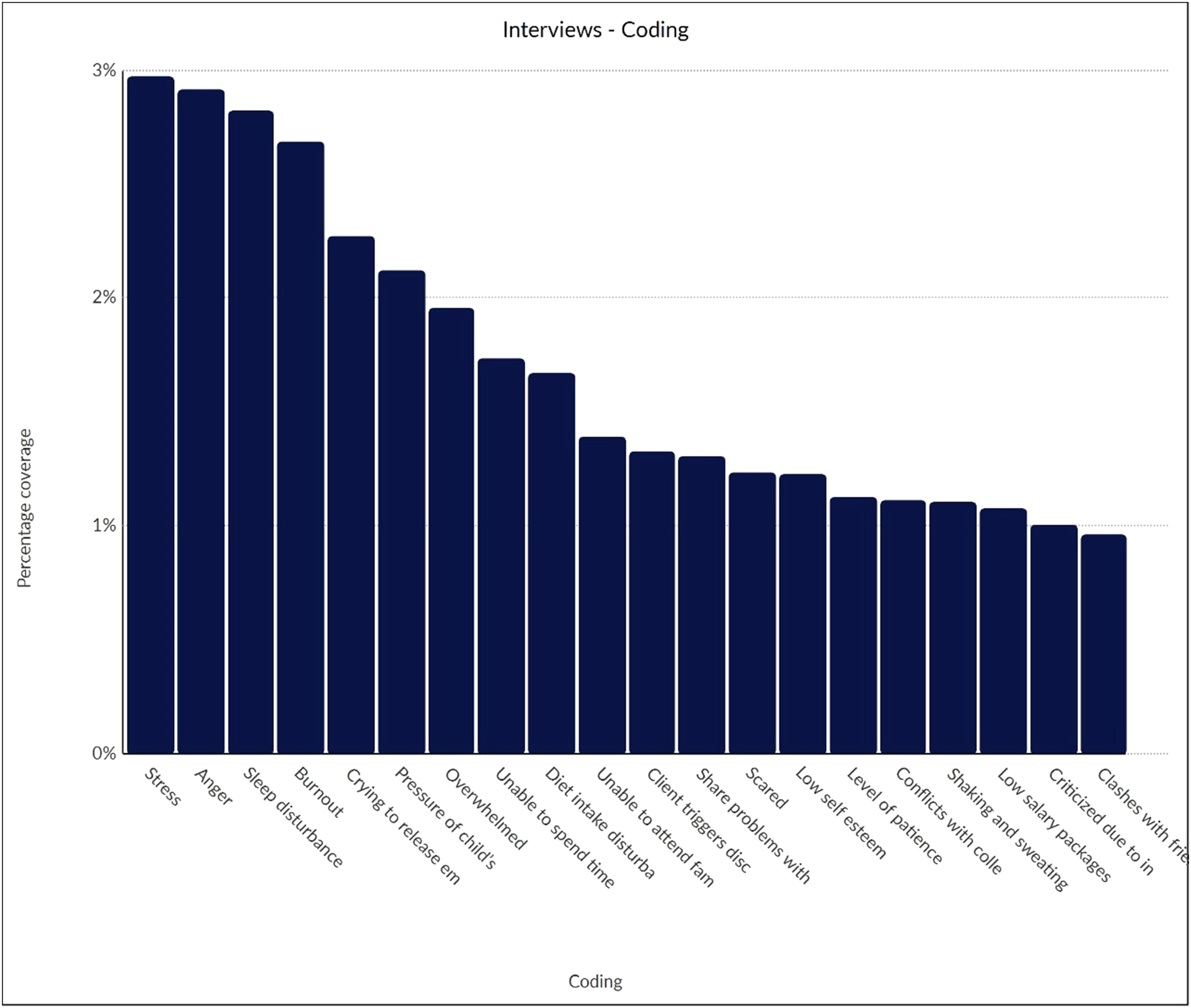
In Conclusion, each participant reported various factors responsible for their positive or negative psychological experiences during the job. All participants faced different kinds of social issues that affected their personal, professional, and social life. Most of the participants suffered from job politics that had affected their motivation and mental health greatly. It also affected the novelty of their performance level. The participants also talked about their health issues like muscle aches, headaches, etc. They have faced difficulty in maintaining a balance between personal, professional, and social life. Also, they suffered from socioeconomic challenges due to low salary packages. The participants shared the various coping strategies they use to deal with the stressors of this job and to mentally relax and live their life like by going out, socializing, emotion-focused coping, etc. This study has the potential to influence legislation, therapies, support systems, and training, leading to better outcomes for therapists and the kids they work with.
This study has limitations as well that is due to a small sample size, the study’s findings may lack statistical power, potentially failing to encompass the full range of experiences and viewpoints within this diverse professional group. The study likely relies on self-reported information from therapists, which could be influenced by recall bias or social desirability bias. Moreover the data was collect only from one city.
For future implications, this research can help in providing a detailed view of the psychosocial experiences of behavior therapists. Behavior therapists are very important in special needs discipline because they are the ones who are dealing with special children. They are going to discover and implement therapies, so if their well-being is at stake, the future of the special nation will suffer. This study can help find the different strategies to manage the psychosocial issues of the behavior therapists. This study will also be helpful for the institutes to make strategies which may decrease the issues faced by the therapists.
Footnotes
Declaration of conflicting interests
The author(s) declared no potential conflicts of interest with respect to the research, authorship, and/or publication of this article.
Funding
The author(s) received no financial support for the research, authorship, and/or publication of this article.

Author biographies
Ms. Samia Shahid is a promising young student and an emerging researcher in the field of psychology. Her academic journey began with a deep-seated fascination for the complexities of the human mind and behavior.
Ms. Fatima Javed, scholar of doctorate in psychology is renowned for her expertise as a clinical psychologist and her dedication to educating future generations as a lecturer in psychology. Her life and career are a testament to her commitment to improving the mental well-being of individuals and advancing the field of psychology.
Mr. Muhammad Nasar Iqbal, scholar of docotare in psychology is a distinguished counselling psychologist and dedicated lecturer in psychology. He excels in counseling individuals dealing with stress and anxiety, while also nurturing the next generation of psychologists through his teaching. His commitment to mental health awareness and education has had a lasting impact on his community and the field of psychology.
Dr. Muhammad Rafiq is a distinguished neuropsychologist and accomplished hypnotherapist, simultaneously serving as the Head of the Department at LSBS, University of Lahore. With a strong foundation in psychology and a specialization in neuropsychology, he has made significant contributions to understanding the complex relationship between brain function and behavior. His innovative use of hypnotherapy techniques further distinguishes him in the realm of mental health treatment and therapy.