




Abstract
Many children diagnosed with attention deficit/hyperactivity disorder (ADHD) do not receive appropriate services following diagnosis. Although information about ADHD is widely available and abundant, sometimes conflicting information may impede parent help-seeking. The present study examined parent knowledge of ADHD and attributions of child behavior as predictors of interest in formal and informal help seeking at the point of child evaluation for possible ADHD. Participants (89 caregivers of children ages 5–12) completed a measure of ADHD knowledge, rated attributions of child behavior in response to vignettes depicting ADHD symptoms, and indicated their interest in a range of formal and informal services that could be recommended following the child’s evaluation. Parents reported strongest interest in academic services followed by medication, child focused therapy, and informal services (e.g., seeking information about ADHD). Family income, ADHD knowledge and attributions that child behavior will persist over time were associated with all types of help-seeking interest except academic services. Perceptions of child control over behavior predicted greater interest in medication. Findings suggest that increasing parent knowledge of ADHD and exploring parent goals and preferences for treatment may increase service utilization for children following assessment/diagnosis of ADHD.
Introduction
There exists a gap between children who experience mental health difficulties and those who subsequently access services. Some estimates suggest that the US national prevalence of children with at least one mental health diagnosis is 16.5%, and that approximately 50% do not receive treatment for their difficulties (Whitney & Peterson, 2019). Among children with disruptive behavior disorders, fewer than half get mental health services (Johnston & Burke, 2019). One national survey found that of children diagnosed with attention deficit/hyperactivity disorder (ADHD), 62% had received medication treatment and 46.7% had received behavioral treatment. However, almost one fourth of those diagnosed (23.0%) received no treatment (Danielson et al., 2018). Similarly, DuPaul et al. (2019) found that 20% of students with ADHD do not receive any school services. This disparity between those receiving a diagnosis of ADHD and those receiving appropriate treatment has fueled interest in factors influencing parent help seeking.
Help seeking refers to behaviors aimed at seeking assistance or guidance for physical, emotional, and/or behavioral difficulties. Stages in the help seeking process include problem recognition, decision to seek help, and service selection and utilization (Eiraldi et al., 2006; Srebnik et al., 1996). Past research has found that child/family factors (e.g., child gender, family socioeconomic status), environmental variables (e.g., availability of services) as well as parent factors (e.g., parent stress, mental health knowledge, attributional beliefs) influence parent help seeking. Alonso and Little (2019) note that parent variables such as knowledge and beliefs are potentially more amenable to change than many child or environmental factors, making this an important focus for increasing services for children in need. The present study considers parent knowledge of ADHD and attributions of child behavior in predicting interest in different types of formal and informal help seeking at the point of evaluation for possible ADHD. At this stage, parents have already recognized a problem and made the decision to seek help (i.e., evaluation for possible ADHD) and are considering further service utilization pending results of the evaluation. Parents of children with ADHD may receive conflicting information regarding effective treatment of ADHD contributing to confusion in selecting appropriate services.
Factors influencing service selection and utilization
Given the range of professionals who provide services for youth (i.e., psychologists, counselors, psychiatrists), as well as different types of services (i.e., medication, child therapy, family therapy, academic assistance), parents must determine what treatment options best fit their child’s needs. Services can be categorized as formal (e.g., consulting with pediatrician, psychologist, teacher) or informal (consulting with family/friends, seeking information online). Many parents are also interested in obtaining academic support for children struggling with academic difficulties in addition to behavior problems. Socio-economic status (SES), severity of ADHD symptoms and availability of treatment have all been found to impact mental health help seeking and parent choice of specific interventions. Specifically, lower SES has been found to be a barrier to help seeking and greater severity of ADHD symptoms can promote seeking services (Bussing et al., 2003; Fiks et al., 2013). A recent survey of parents of children diagnosed with ADHD found that parents reported preference for more nontraditional and holistic approaches such as exercise and nutrition. They also expressed preference for outcomes that improved the child’s coping skills, study habits and emotional regulation (Vitulano et al., 2022). Given possible discrepancy between parent preferred interventions and interventions likely to be recommended (i.e., medication, parenting interventions), research is needed to further explore parent preferences for treatment and impact on treatment compliance.
Parent attributions and help seeking
Attribution theory is based on social cognitive models and centers on the idea that parents will make inferences regarding the cause of their child’s behavior on a variety of dimensions (Dix et al., 1986; Johnston & Ohan, 2005). These attributional dimensions include child controllability (i.e., extent to which the child is able to control their own behavior) and stability (i.e., extent to which the cause of the behavior is transient or is likely to happen again in the future; Johnston et al., 2005; Park et al., 2018). Previous research has suggested that parents tend to perceive problematic child behavior as internal, stable and within the child’s control (Johnston et al., 2005; Srebnik et al., 1996). These types of negative parent attributions have been found to predict worse child treatment outcomes (e.g., Hoza et al., 2000).
A handful of studies have examined the relationship between parent attributions and help-seeking. Boulter and Rickwood (2013) found child causal attributions to be associated with decreased help-seeking which they suggest may be due to parents viewing the behavior as intentional rather than the result of a mental health difficulty. Johnston et al. (2005) found that parents of children who had tried diet/vitamin treatments saw behaviors as more internal to the child and more stable as compared to parents who had not tried this type of intervention. Parents with more stable attributions of child behavior were also more likely to have tried child/family therapy. These findings suggest that the causal explanations or inferences parents make about their child’s behavior are likely to impact the types of treatment they are interested in for their child.
Parent ADHD knowledge
Parent knowledge and beliefs about ADHD broadly reflect their understanding of the disorder and may impact not only the decision to seek treatment for their child’s difficulties, but also views on type of treatment. Bussing et al. (2012) found that although parents perceived themselves as knowledgeable about ADHD, a high percentage held misconceptions about the cause of ADHD (e.g., sugar consumption) and its treatment (e.g., concerns about children being overmedicated). Sciutto (2015) found that less accurate knowledge of ADHD was associated with lower ratings of acceptability for medication and higher ratings of acceptability for dietary interventions. Yeh et al. (2014) found that parental beliefs related to the biological etiology of ADHD are associated with greater use of medication to treat ADHD whereas beliefs regarding sociological causes were negatively associated with medication use. Only one study (Johnston & Freeman, 2002) has considered the influence of both ADHD knowledge and parent attributions in help seeking. Results showed that greater false beliefs regarding ADHD were associated with parents viewing their children as more responsible for ADHD symptoms. Thus it appears that parents’ understanding of the causes of ADHD can impact attributions regarding child ADHD behaviors, and that both knowledge and attributions are likely to impact parent views on various types of ADHD treatment.
Current study
The present study considers parent interest in help seeking for children presenting for an ADHD evaluation and prior to receiving results and recommendations. Parents at this stage of help-seeking (service selection and utilization) have already managed potential environmental obstacles such as cost, transportation, and availability of services, thus consideration of parent factors such as knowledge of ADHD and attributions of child behavior may be particularly important in predicting continued service utilization and selection. Although previous research has explored parent retrospective report of compliance with evaluation recommendations (e.g., Mucka et al., 2017), there is no research examining parent help seeking interest at the stage of child assessment. We hypothesized that parent variables, including knowledge of ADHD and attributions of child behavior, would predict interest in formal and informal types of help seeking over and above what is predicted by family income and severity of child externalizing behavior. More specifically, we predicted that parent attributions of stability of child behavior would predict greater interest in both formal and informal types of services and that perceptions of greater child control would predict interest in formal help seeking, and particularly interest in medication.
Method
Participants
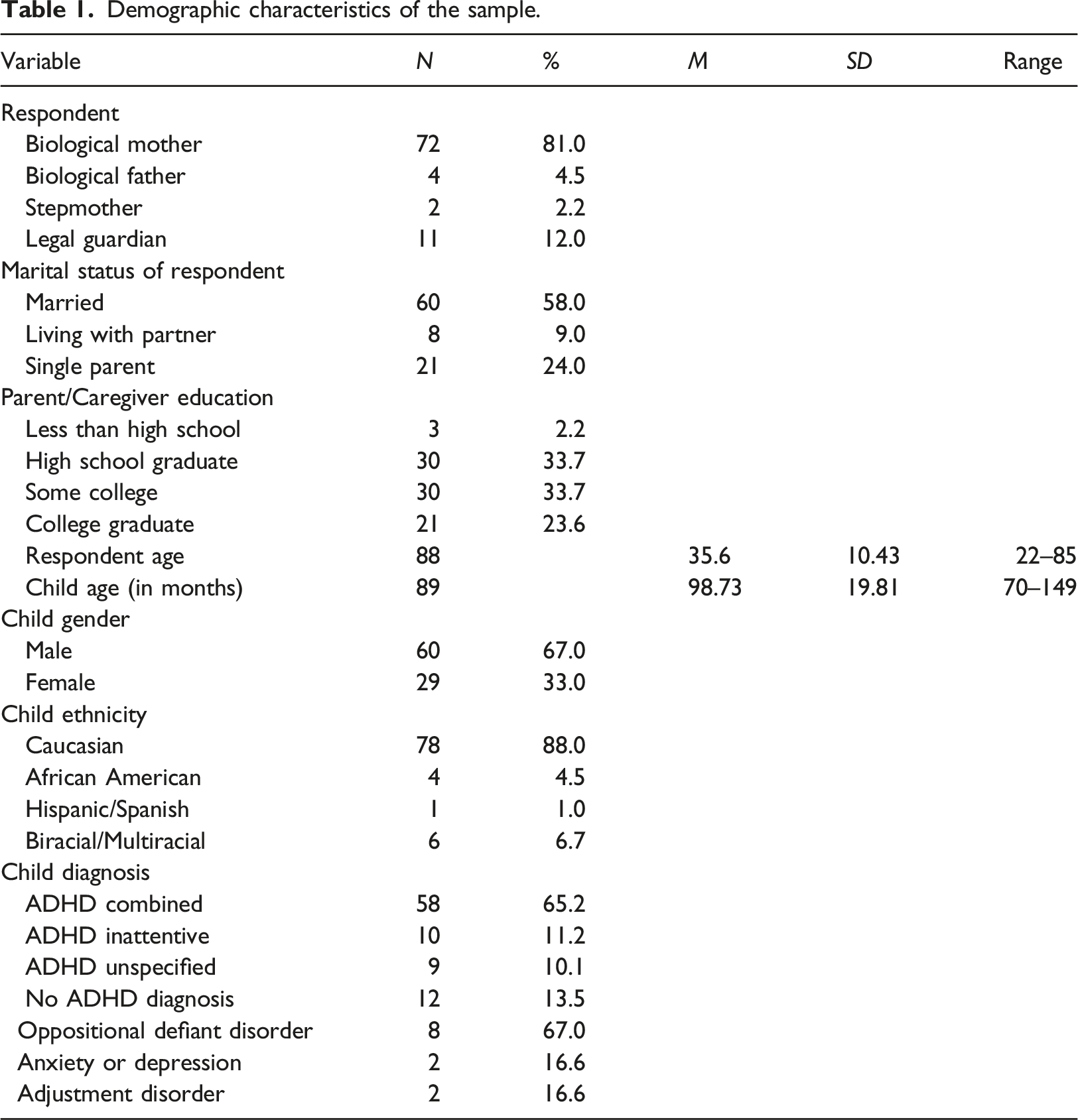
Demographic characteristics of the sample.
Measures
Parent attributions
Parents completed a measure of parent attributions, based on the Written Analogue Questionnaires (Johnston & Freeman, 1997), that included seven scenarios, two depicting inattentive behavior, three depicting hyperactive/impulsive behavior, and two describing oppositional behaviors. Scenarios describing oppositional behaviors were included in analyses due to the high comorbidity between ADHD and Oppositional Defiant Disorder. Parents/caregivers were asked to read each scenario and imagine themselves interacting with their child and to rate the reason for the child’s behavior on 10-point scales reflecting dimensions of locus of control, (1 = something about the child, 10 = something about other people/situation), child control (1 = completely within his or her control, 10 = not at all within his or her control), globality (1 = happens in many situations, 10 = specific to this situation), and stability (1 = a one-time thing, 10 = will happen again in the future). Scores were reversed for locus of control and child control such that higher scores indicate more negative attributional beliefs. Due to lower internal consistency for locus of control and globality (<.75), and moderate correlations between locus of control and child-control (r = .40) and between global and stable attributions (r = .62), only child control and stability attributions were considered in the present study. Internal consistency was high for both stability (omega = .81) and child control (omega = .85) attributions.
ADHD knowledge
A measure of ADHD knowledge was developed based on the ADHD Beliefs and Attitudes Scale (Johnston & Freeman, 2002). Ten items reflecting information about ADHD supported by research (e.g., clear and consistent rules and consequences are helpful in treating children with ADHD) were taken from the ADHD Beliefs and Attitudes Scale. Respondents rated agreement on a 7-point Likert-type scale, 1 (disagree) to 7 (agree). The ten items included content assessing beliefs in behavior management (i.e., behavior management is an effective treatment for ADHD), medication (i.e., medication is almost always an effective treatment for ADHD), and etiology of ADHD (i.e., ADHD is related to neurological functioning in the brain). The ten items were summed to develop the ADHD Knowledge scale. Higher scores reflect greater accurate knowledge of ADHD. The 10-item ADHD Knowledge scale showed good internal consistency with a McDonald’s omega of .87.
Parent help-seeking questionnaire
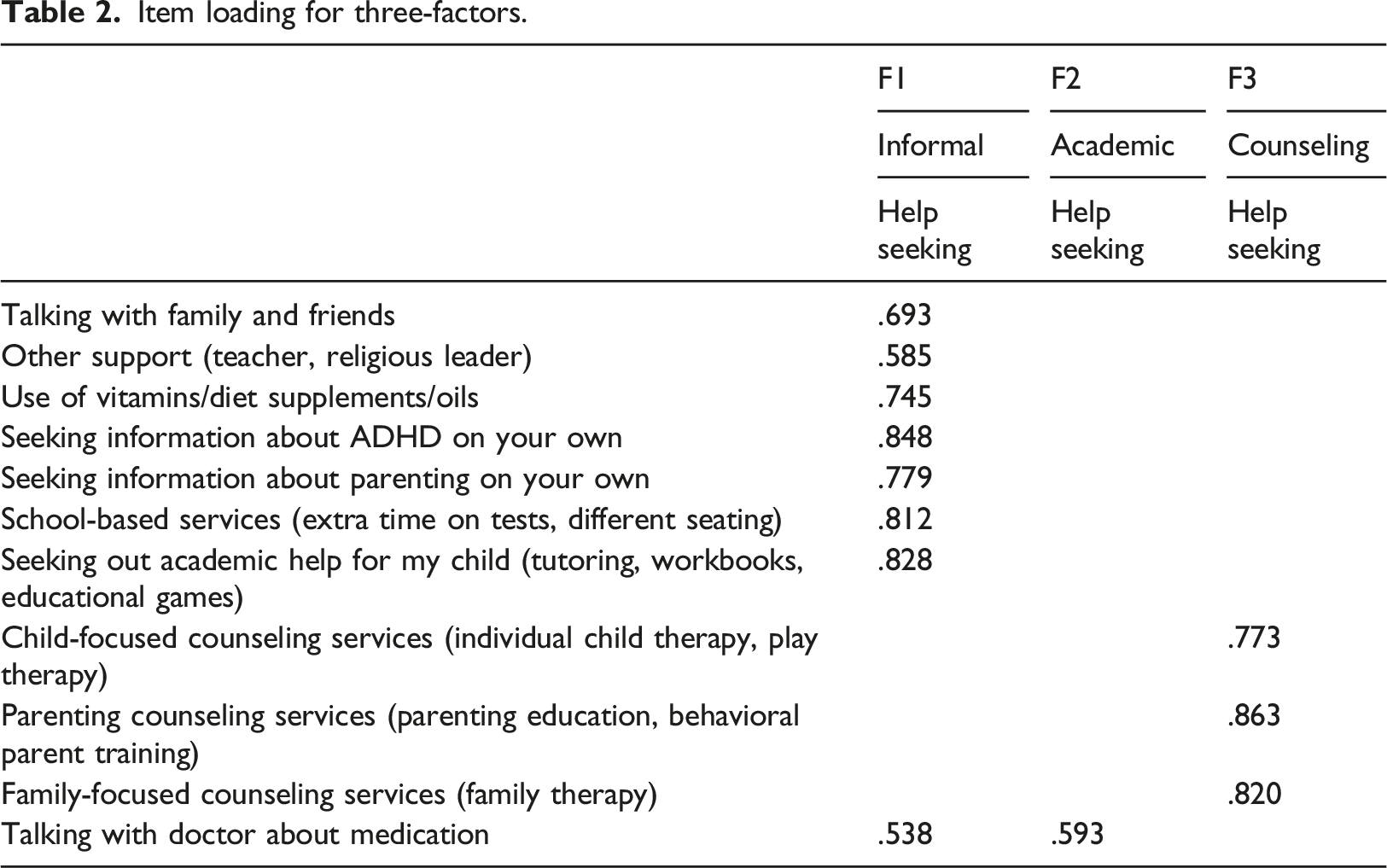
Item loading for three-factors.
Procedure
The study was approved by a university Institutional Review Board (IRB). Parents of children referred for an ADHD Evaluation were invited to participate in a survey on parent help-seeking. Caregivers were advised that participation is voluntary and that refusal to participate would have no impact on clinical services. Participants were given the option of completing a form with contact information to be entered into a drawing for one of four $50 gift cards. Approximately 67% of parents who were invited to participate in the study agreed to do so. Approximately 90% of participants completed the questionnaires on the day of their child’s evaluation. The other 10% took the questionnaires home and returned them when they came for the evaluation feedback appointment. All participants completed questionnaires prior to receiving feedback on their child’s ADHD evaluation. Data was collected over a period of three years (2019–2022). Three cases were excluded from this study due to leaving 20% or more items blank for study measures.
Results
Descriptive statistics
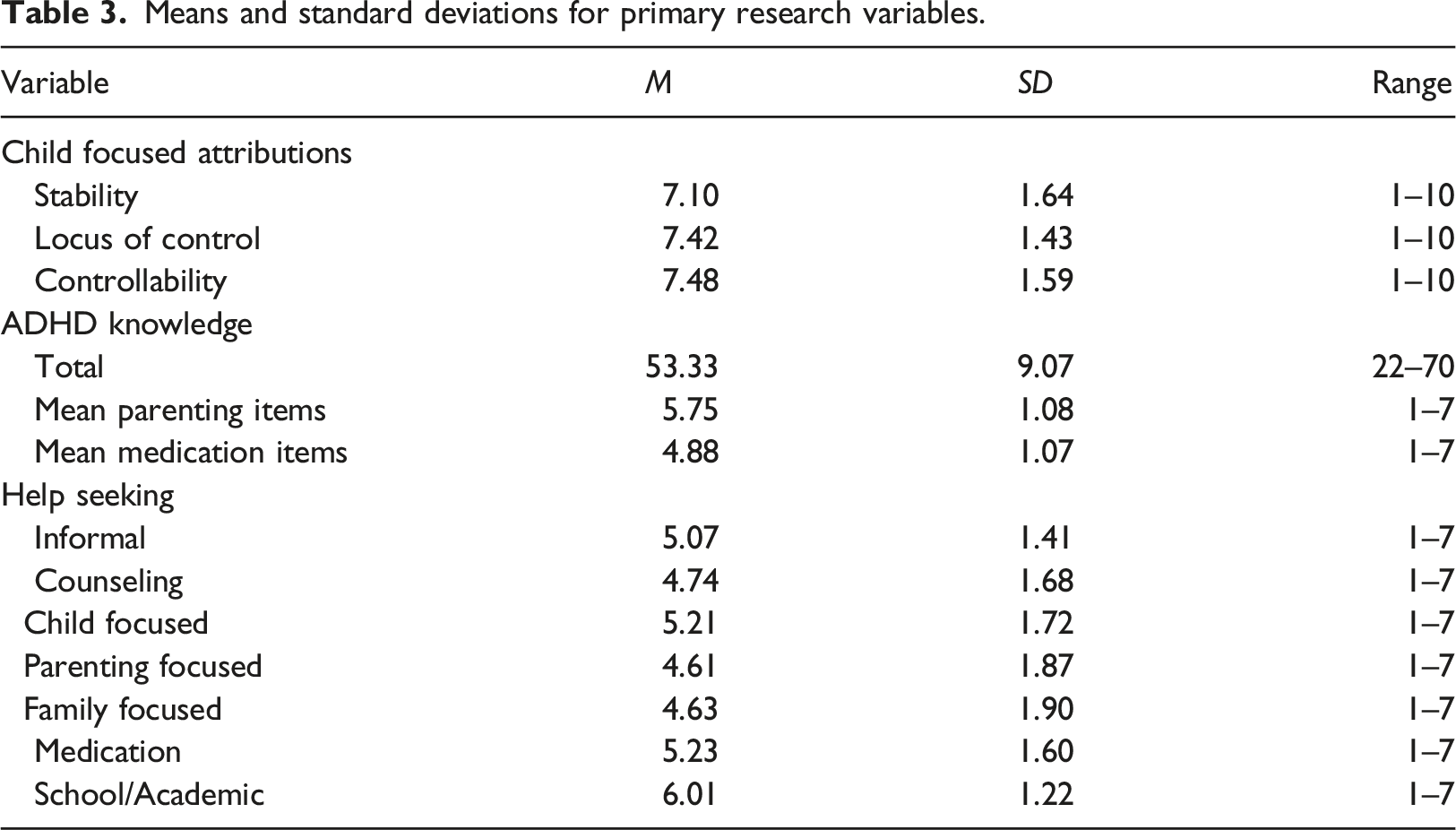
Means and standard deviations for primary research variables.
Correlations between primary research variables.
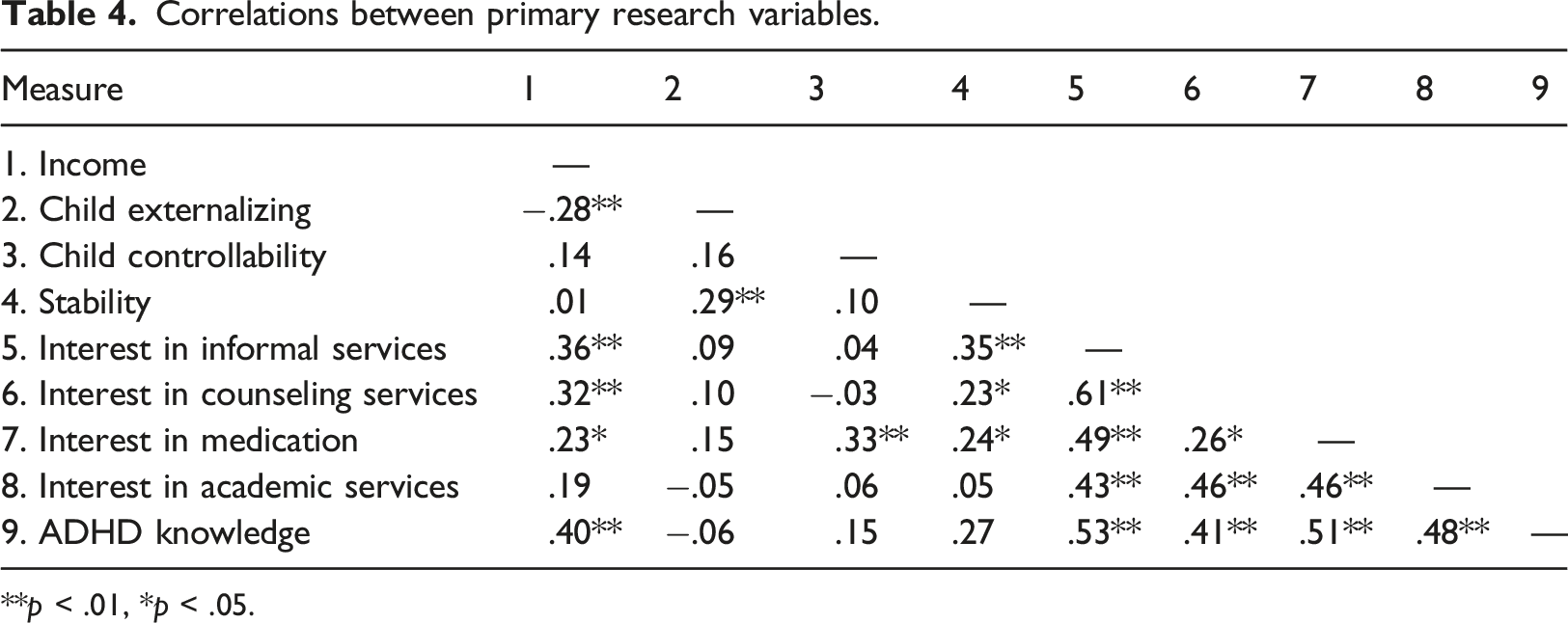
**p < .01, *p < .05.
Hierarchical linear regressions
Hierarchical linear regressions.
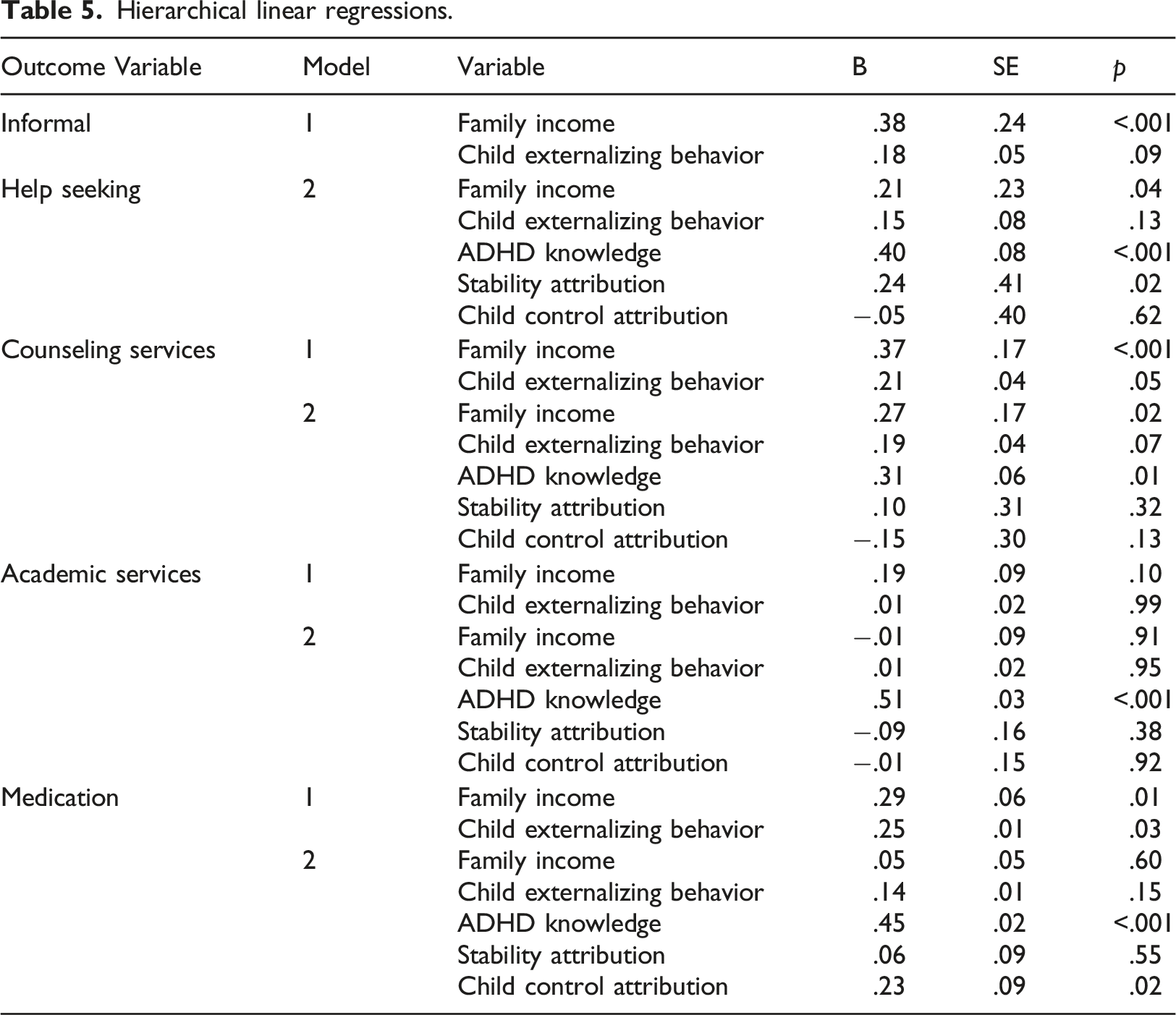
Results of the final model predicting interest in informal services were significant (F (5, 83) = 9.74, p < .001). With the addition of caregiver focused variables in the second step of the model, R 2 increased from .12 to .33. Family income (t = 2.06, p = .04), ADHD knowledge (t = 4.00, p < .001) and stability (t = 2.48, p = .02) were all significant individual predictors. Results of the final model predicting interest in counseling services were also significant (F (5, 38) = 5.76, p < .001; R 2 = .25). With the addition of caregiver focused variables in the second step of the model, R 2 increased from .14 to .26. Family income (t = 2.45, p = .02) and ADHD knowledge (t = 2.87, p = .01) were significant individual predictors. The model predicting interest in medication was also significant (F (5, 83) = 9.12, p < .001). The addition of parent variables in the second step of the model resulted in an increase in R 2 from .10 to .36. ADHD knowledge (t = 4.49, p < .001) and child control (t = 2.48, p = .02) were significant individual predictors. Lastly, the regression predicting interest in academic services was significant, F (5, 83) = 5.05, p < .001. ADHD knowledge was the only significant individual predictor (t = 4.61, p < .001). With the addition of parent focused variables in the second step of the model, R 2 increased from .01 to .20.
Discussion
The primary goal of the present study was to examine the impact of parent/caregiver variables, including ADHD knowledge and attributions of child behavior, on interest in help seeking at the stage of assessment for possible ADHD. Consistent with previous research, we found knowledge of ADHD to be a strong predictor of interest in help seeking, suggesting that accurate understanding of ADHD is a key factor in seeking services for a child who displays ADHD traits. Attributions were found to predict interest in specific types of help-seeking. Specifically, stability attributions were found to predict interest in informal services and attributions of higher child control predicted interest in medication. The addition of parent variables, after considering family income and child externalizing behavior, significantly contributed to explaining variance for all types of help seeking interests. This study is unique in providing information on help seeking midway through the help-seeking process, following problem identification and initial selection of services for evaluation of ADHD.
Interest in specific types of services
Parents were most strongly interested in securing academic assistance for their children, perhaps related to the negative impact of COVID-19 on education and learning. The majority of participants (75%) participated after the onset of the COVID-19 pandemic which resulted in significant disruptions in learning for most children. Interest in medication services was endorsed more strongly than interest in counseling. Fiks et al. (2013) found that parents with a goal of improving child academic performance were more likely to seek medication as compared to other interventions. In the present study, children were most commonly referred by physicians for the ADHD evaluation, likely contributing to stronger parent interest in medication. Previous research has also found that parents are more likely to follow through with recommendations to consult with a medical provider for medication than other types of recommendations, including school-based and psychological service recommendations (Dreyer et al., 2010; MacNaughton & Rodrigue, 2001).
When considering recommendations from a psychological evaluation, parents are engaged in the service-selection stage of help-seeking. In the present study, parents had not yet obtained a diagnosis or received recommendations on possible interventions. Labeling, or diagnosis of child behavior difficulties, has been found to be positively associated with help-seeking, however labeling alone does not explain help-seeking (Jackson et al., 2023). Given that ADHD is a chronic condition, service selection and utilization should also consider use of services and adherence over time (Eiraldi et al., 2006). In a study examining parent adherence to psychological evaluation recommendations, Dreyer et al. (2010) suggest that parents of children with ADHD may pick and choose interventions over time based on factors such as time demands, stigma, and access to services. Vitulano et al. (2022) surveyed parents of youth diagnosed with ADHD in regard to past treatment use as well as preference for types of treatment. Child-focused therapy followed by parent-focused therapy were the types of interventions most commonly reported, and medication was the seventh most frequently tried treatment. In contrast to evidence-based interventions for ADHD, parents reported preference for nontraditional approaches such as exercise and diet. It should be noted however that their sample was predominantly white/Caucasian and middle to upper income. Previous research has found that parents of higher SES were more likely to seek formal treatment for their children as compared to parents of lower SES (Thurston et al., 2018).
Parent attributions as a predictor of help seeking
Research focused on children already diagnosed with ADHD found that parent attributions are associated with parent interest in specific interventions for treating ADHD (Johnston et al., 2005). Consistent with our predictions, we found greater child control attributions to predict greater interest in medication services. Johnston et al. (2005) proposed that perceptions of less child control are indicative of a view of ADHD from a “disease” perspective, which they found to be associated with use of more evidence-based interventions. Parents in the present study tended to view child behavior as internal, under the child’s control, and stable. These types of “negative” attributions have been found to be associated with harsh discipline and less positive affect in caregiver-child interactions (Beckerman et al., 2017). It may be that parents who perceive their child as having control, may view themselves as having less control over their child’s behavior or their ability to change their child’s behavior through parenting, thus prompting greater interest in medication interventions.
Stability attributions were significantly correlated with interest in counseling, medication and informal help-seeking and found to be a significant individual predictor of interest in informal help seeking. Previous research suggests that greater parent perceived burden or caregiver strain is associated with increased help seeking (Bussing et al., 2003; Planey et al., 2019; Ryan et al., 2015). It is possible that parents who perceive their child’s behavior to be stable over time may be concerned about increased future burden and strain that results in greater interest in seeking help. Parents who anticipate that child behavior difficulties are likely to be long term, may be interested in less costly types of informal services such as seeking support from family and friends and seeking information on the internet.
ADHD knowledge as a predictor of help seeking
Consistent with previous research (Gerdes et al., 2014; Sciutto, 2015), ADHD knowledge was found to be associated with all types of help seeking. In addition, mean level of ADHD knowledge was fairly high (mean of 76%), especially in regard to beliefs about effectiveness of parenting interventions. Sciutto (2015) found greater ADHD knowledge to be associated with greater acceptability of medication, and less knowledge was associated with interest in less empirically based interventions. Previous research has found that mental health literacy or knowledge and beliefs about a disorder increases problem recognition but does not always lead to improved help-seeking behavior (Xu et al., 2018). Parents/caregivers in the present study were largely referred by a medical provider who may have confirmed that their child’s problematic behavior was likely associated with ADHD, prompting them to seek out information on ADHD prior to the evaluation. Thus parents/caregivers in the present study may be more knowledgeable regarding ADHD as compared to other parents who have not accessed services and may be at the problem recognition or service selection stage of help seeking.
Limitations and future directions
The present study made use of an attribution measure that required parents to imagine their child engaged in the behavior depicted in the vignettes. Six of the seven vignettes depicted more “externalizing” behavior which parents may have perceived as more frustrating or intentional (i.e., knocking board game pieces on the floor) rather than symptoms of behaviors secondary to possible ADHD. It may also have been difficult for some parents to imagine their own child in the vignette. Thus, it is possible that the vignettes chosen for the study may have contributed to more “negative” attributions.
Another limitation of the present study is the lack of racial and ethnic diversity in the present sample. Previous research has highlighted differences in obstacles to treatment and access to services for racial minority youth (e.g., Thurston et al., 2018). Given that the present sample was primarily White, results of the present study may not generalize to other populations given differences in cultural conceptualizations of ADHD and treatment preferences. Additionally, the present study is focused on a very specific stage in the help seeking process as parents had already recognized a problem and sought an evaluation for their child. Therefore, the results of this study may not generalize to other stages of the help seeking process (i.e., problem recognition, service utilization). Additionally, the present study does not address other factors that are known to impact help seeking such as sociodemographic factors (i.e., race and ethnicity, child gender, etc.) and barriers to treatment (Bussing et al., 2003).
Beyond service utilization, future research may consider how parent attributions and knowledge of ADHD impact adherence and attrition. Further, future research may wish to examine the relationship between help seeking behavior of caregivers with children with ADHD and greater family systemic and interpersonal factors. As demonstrated in recent literature examining the caregiver-child relationship in children with autism spectrum disorder, understanding the resources and difficulties of families is critical to understanding the strategies caregivers employ to manage their child’s behavior (Grey et al., 2021). Lastly, future research may also compare obstacles, attributions, and ADHD knowledge, and help seeking interest for parents at different stages in the help seeking process (i.e., prior to diagnosis, post diagnosis).
Clinical implications
Results of the present study highlight the importance of disseminating accurate knowledge regarding ADHD. Parents/caregivers may receive information regarding the causes and treatment of ADHD from a variety of sources that may be more or less reliable. Educating parents on the etiology and treatment of ADHD may increase the likelihood that they will pursue evidence-based interventions for their child. This could be accomplished by providing a brief overview of ADHD and evidence-based interventions, as well as information on reliable resources for ADHD information and its treatment during the feedback session following evaluation for ADHD. Although psychologists who provide ADHD evaluations often provide this type of information, ADHD is commonly diagnosed by physicians and other medical providers who may provide very limited information outside of medication as an intervention for ADHD. Results of this study suggest that disseminating evidence-based information regarding ADHD and its treatment at the time of diagnosis could facilitate ongoing intervention and treatment for the child. Information should include the range of evidence-based interventions for treating youth with ADHD including medication, behavioral parent training, and school-based interventions. Information on holistic interventions with some empirical support, such as physical activity (e.g., Pan et al., 2017) and omega-3 supplements (Chang et al., 2018), may also be helpful. Results of this study suggest that providing parents with accurate information about causes and treatment of ADHD, and other disruptive behavior disorders, at the time of assessment could positively impact parent attributions for child behavior and increase the likelihood of parents seeking appropriate services for their children post-evaluation. This is particularly important given that ADHD is a chronic lifelong disorder in which early, appropriate and longer-term intervention is related to improved outcomes.
Footnotes
Declaration of conflicting interests
The authors declared no potential conflicts of interest with respect to the research, authorship, and/or publication of this article.
Funding
The authors received no financial support for the research, authorship, and/or publication of this article.
