




Abstract
In play therapy with children, identifying play themes is key to understanding the meaning within sessions, and allows therapists to systematically track therapeutic change. This study investigated if play themes could be identified using a time limited, standardized assessment, for children aged 5–7 years. A descriptive, observational mixed methods, non-experimental study with 30 typically developing children was conducted, with participants assessed individually on one occasion using the Child-Initiated Pretend Play Assessment (ChIPPA). Play themes were able to be identified for 26 of the 30 participants. Of these 26 children, a range of primary and subthemes were observed. These findings indicate that a baseline measure of both play ability and play themes can be integrated to prescribe and align the model of play therapy with the needs of the child. Play themes were not identified for four participants which may be due to limited pretend play ability, indicating that deficits in play ability may need to be addressed in the first instance.
Background and rationale
Play therapy is the practice by which therapists use a theoretical model, wherein the therapeutic powers of play are used to help clients prevent or resolve psychosocial difficulties and achieve optimal growth and development (Blundon-Nash & Shaefer, 2011). There is a critical need for early intervention and empirically validated treatments tailored to children’s maturational needs, with play therapy being a developmentally sensitive and effective means of responding to the mental health needs of children (Bratton et al., 2005).
According to Ryan and Edge (2011) Themes are viewed as abstractions not only from behaviour, but more importantly, as representing significant, underlying, emotional issues that children then express spontaneously in their play therapy. . . Themes are defined as the inferences made about these important emotional issues by the children’s non-directive play therapists. . .These inferences are . . . based on children’s patterns of play with materials and/or their patterns of interaction with their therapists, including both verbal and non-verbal interactions. (p. 356)
The identification of play themes allows therapists to evaluate therapeutic outcomes, and ultimately understand the how and why of the effectiveness of play therapies (Ryan & Edge, 2011). Identifying play themes is key to understanding the meaning of the child’s play in each session and allows therapists to systematically track therapeutic change (Ryan & Edge, 2011).
While the identification of play themes is embedded into practice (Ryan & Edge, 2011), the development of processes to construct, understand, and use them has been very limited. This lack of development may be partially due to the subtle and sometimes unclear presentation of themes (Ryan & Edge, 2011). This process of identifying, and subsequently tracking play themes in play therapy, is generally documented over an extended period, and within the context of an established therapeutic relationship between child and therapist. In this research a time limited, norm referenced, standardized assessment tool, the Child Initiated Pretend Play Assessment (ChIPPA) (Stagnitti, 2007) will be used to measure play themes.
When a child chooses what and how to play, it is known as child directive play. This is also referred to as child initiated, child centered, non-directive, unstructured, free or self-directed play. It is undertaken for its own sake, not consciously pursued to achieve an end goal, is determined and controlled by the child, free from adult direction, the constraints of adult scaffolding, and is motivated by the child’s agenda (Department of Education and Early Childhood Development, 2009). As play reflects reality through metaphor, insight into a child’s inner world can be accessed (Bretherton, 2014).
Through child directive play children can express feelings, explore relationships, describe experiences, disclose wishes, and reach self-fulfillment through pretense in play (Bretherton, 2014; Landreth, 2012). Emotionally significant experiences can be expressed safely through play, where anxieties, fears, fantasies or guilt can be transferred onto objects. Play creates an opportunity for the child whereby they can distance themselves from otherwise potentially overwhelming emotions and actions, or express themselves non-verbally (Axline, 1947; Landreth, 2012). It is the affective, narrative, cognitive and developmental components (Chazan, 2002) of play that constitutes the material conceptualized as themes. In order to track changes in play themes, play themes firstly need to be defined and measured. There are differing frameworks for conceptualizing themes. This paper draws on the definition of play themes put forward by Ryan and Edge (2011).
Ryan and Edge (2011) established a classification system for conceptualizing play themes that is compatible with non-directive play therapy. Non-directive play therapy is a theoretical orientation and philosophical way of conducting play therapy, based upon Axline’s (1947, 1969) non-directive work, where therapists believe deeply in, and trust explicitly, the inner person of the child. In this type of play therapy, the child leads the direction and contents to be addressed within a session (Wilson & Ryan, 2005). The underlying premise is that an inherent tendency exists within children to move in subtle directness toward adjustment, mental health, developmental growth, independence and autonomy of personhood. This is done by the therapist using core conditions such as congruence, unconditional positive regard and empathy (Guerney, 2001; Jayne & Dee, 2015; Landreth, 2012; Robinson, 2011; VanFleet et al., 2011).
Scholars who consider play themes from a non-directive stance therefore derive them from the authentic, spontaneous, child-led expressions that occur within sessions. In previously documented themes set out by Wilson and Ryan (2005) play themes arise within children’s overall emotional development. Wilson and Ryan’s (2005) work is in turn based upon Erickson’s (1995) stages of psychosocial development. They chose Erickson’s model as it provides the best general overview of social and emotional development, assuming that each stage of social/emotional development has precursors to other stages of development, and that it is sufficiently complex and broad enough to encompass typical development yet allow for deviations and arrests.
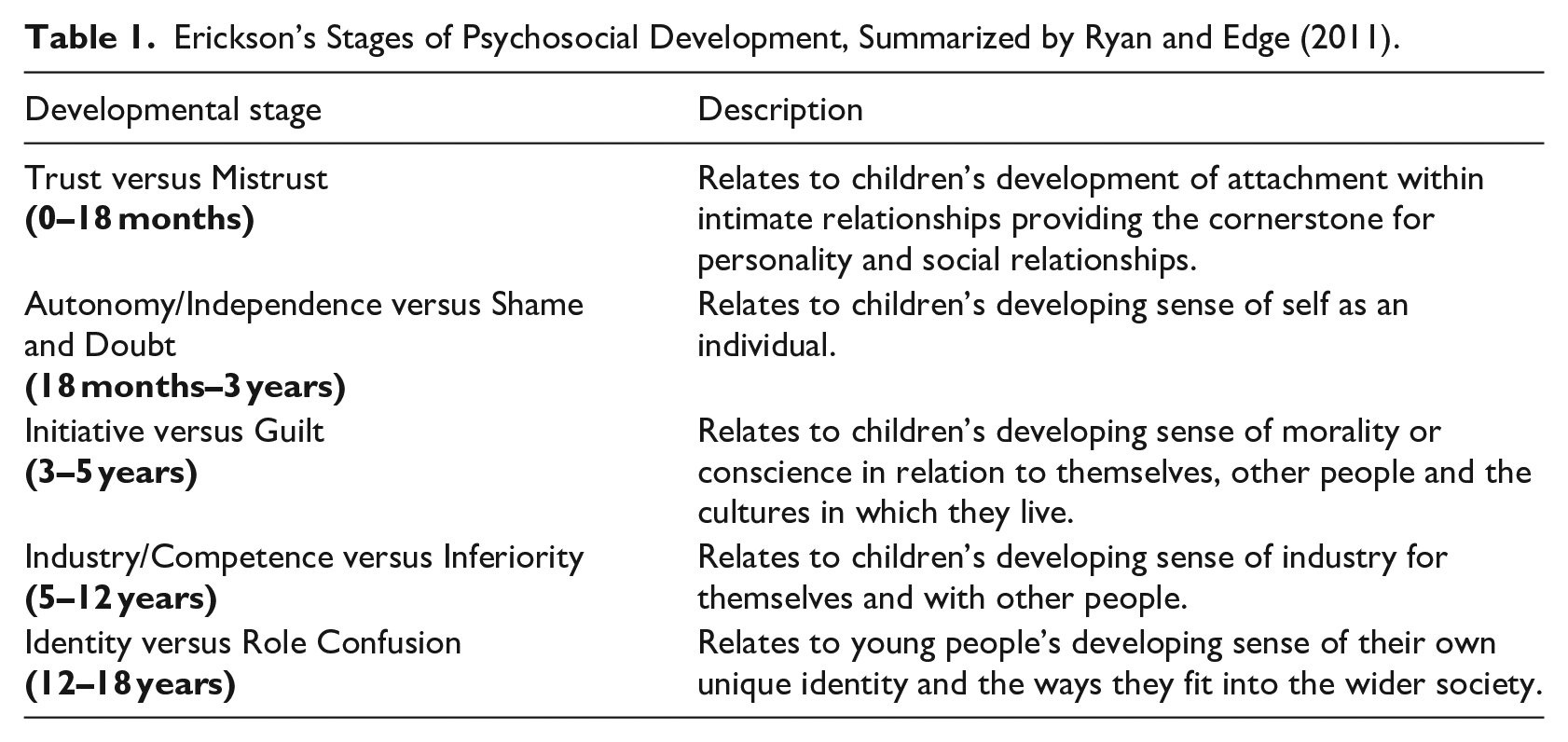
When children are less troubled, Ryan and Edge (2011) assume that children’s play themes generally relate to their current developmental level. Based on presenting themes, hypotheses can be made about what issues are of most importance to the child. In their classification, a play theme can then be identified for its age appropriateness. The five stages out of Erickson’s eight that Ryan and Edge (2011) use as the main themes in their framework are trust versus mistrust, autonomy versus shame and doubt, initiative versus guilt, industry versus inferiority, and identity versus role confusion. Each main theme includes both negative and positive poles of sub themes, as well as ways of presenting individually or relationally. A brief description of each theme is provided in Table 1.
Erickson’s Stages of Psychosocial Development, Summarized by Ryan and Edge (2011).
Aims of this research
The aim of this research was to investigate whether play theme measurement and conceptualization is possible, using a time limited, norm referenced, standardized assessment tool. While there are available methods for measuring play themes over several sessions, there are currently no standardized ways to measure play themes. If play themes could be identified, the second aim was to explore what those themes were, and thirdly, to explore if there is a relationship between pretend play ability and theme expression.
Method
This study used a descriptive, observational mixed methods, non-experimental group design to collect both quantitative and qualitative data.
Participants
There were 30 children who participated in the study. The mean age of the participants was 6.2 years with a standard deviation of 0.6 years. The sample was heterogeneous with 15 boys (50%) and 15 girls (50%). The participants resided in regional Victoria, Australia, and were representative of the cultural demographics of the two school communities were children were recruited from. Ninety percent of the children were Caucasian, and 10% were descendants of East Asian heritage. Participants were from a broad range of socioeconomic conditions. The inclusion criteria were children aged between 5 and 7 years and attending a mainstream school. Exclusion criteria were applied to children with a known disability, physical impairment, or living in out of home care. This was to reduce the presence of comorbidities that could bias the results or increase the child’s risk for adverse consequences.
Instrument
Prior to assessment, a basic demographic data form was used to record background information for each child. Children were each assessed once, individually, using the Child Initiated Pretend Play Assessment (ChIPPA). The ChIPPA (Stagnitti, 2007) is a standardized, norm referenced assessment, which measures the quality of the ability of children aged 3 to 7 years to initiate and engage in pretend play over a set time period. For this study children were aged 5 to 7 years and for this age group the ChIPPA assessment is 30 minutes. The play materials were assessed for gender neutrality and developmental appropriateness (Stagnitti et al., 1997) and comprise both a conventional-imaginative and unstructured play object sets. The ChIPPA has been researched for cross cultural adaptation to ascertain reliability for children in Brazil (Pfeifer et al., 2011) and has also been studied and translated for reliable use with Iranian children (Golchin et al., 2017) and Indigenous Australian children from the Pilbara region (Dender & Stagnitti, 2011).
The ChIPPA measures and scores three aspects of children’s pretend play, these are: the elaborateness of the play, use of symbols in play, and if the child can self-initiate play ideas. These three items are accordingly titled ‘Percentage of Elaborate Play Actions’ (PEPA), ‘Number of Object Substitutions’ (NOS) and ‘Number of Imitated Actions’ (NIA) (See Table 2). In addition, the ChIPPA includes a Clinical Observations form, which is used to record if specific play behaviors were demonstrated.
The ChIPPA Items (Abbreviation and Description).
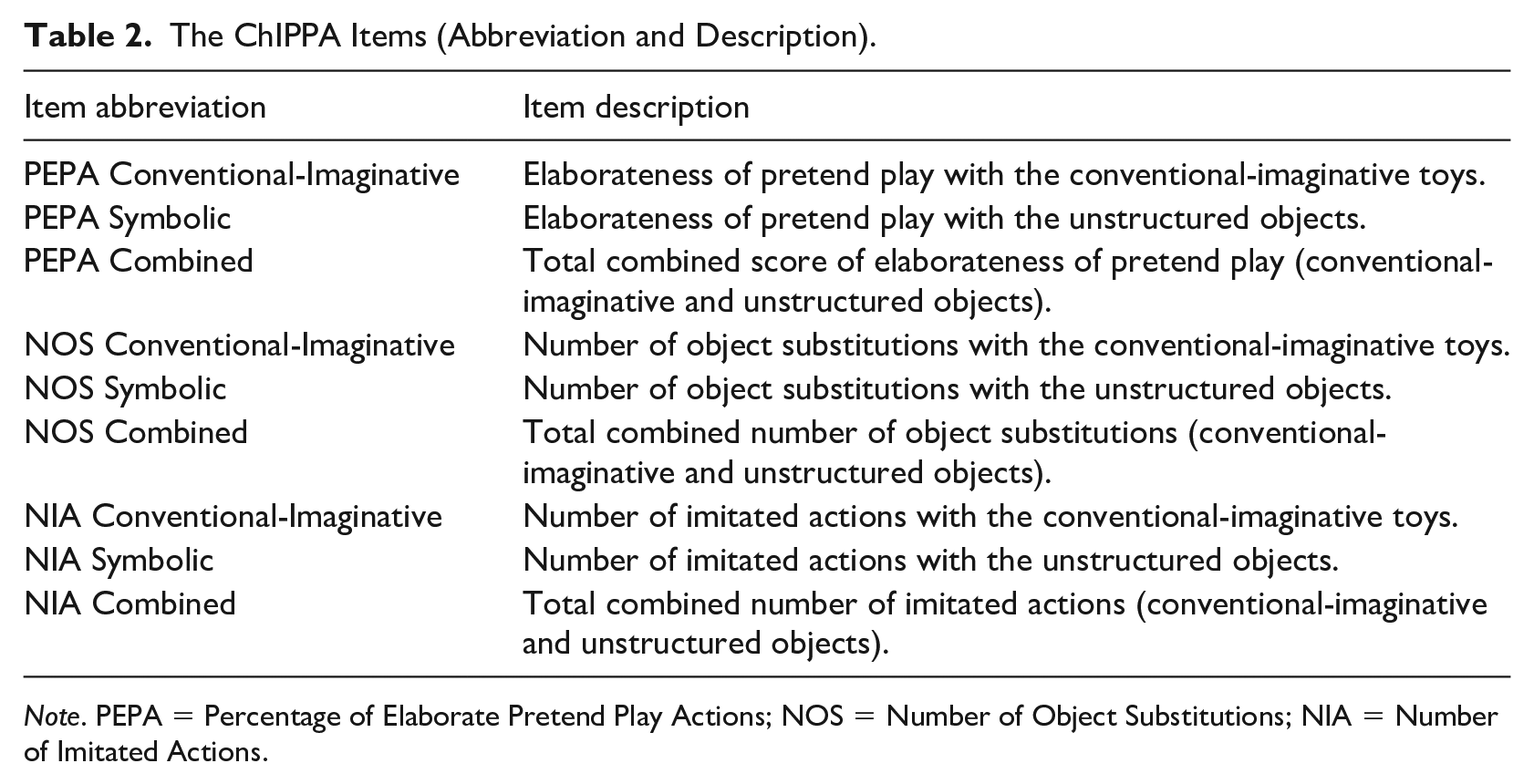
Note. PEPA = Percentage of Elaborate Pretend Play Actions; NOS = Number of Object Substitutions; NIA = Number of Imitated Actions.
The ChIPPA has been demonstrated to be a reliable and valid assessment tool. Inter-rater reliability has been shown to be κ = .7 or above across two studies and has been shown to discriminate between typically developing preschool children and preschool children with suspected pre-academic problems (Stagnitti et al., 2000; Swindells & Stagnitti, 2006). Research studies have demonstrated the validity of the ChIPPA scores and associations with social competence (McAloney & Stagnitti, 2009; Uren & Stagnitti, 2009).
Procedure
Participant recruitment
Two schools were invited to participate in the study via the school principal, who gave written organizational consent. Individual participant’s parents provided written informed consent for their child. Once consent forms were returned to the first author, the researcher liaised with classroom teachers to arrange suitable assessment times. The researcher invited each child to play with the ChIPPA toys by stating “would you like to come and play with these toys? I’m learning about how children play”. Assent was confirmed by the child’s verbal response or engagement in play.
Administration of the assessment
Each child was individually assessed, once, by the first author using the ChIPPA. All assessments were completed in a quiet room at the participant’s school and were video recorded. All assessment sessions were scheduled during school hours.
Data analysis
The children’s PEPA, NOS and NIA raw scores, Clinical Observations and play themes comprised the data for analysis. Quantitative data were transferred to the Statistical Package for Social Science for Windows (SPSS), software version 24. The PEPA, NOS and NIA raw scores and standard scores were analyzed using descriptive statistics. Using qualitative thematic analysis, transcribed written descriptions of each participant’s ChIPPA video were coded and categorized against Ryan and Edge (2011) framework. Peer checking was carried out with four videos for play theme analysis, to increase the confirmability of the data. A frequency count of themes was also calculated.
Results
Aims 1 and 2: play theme identification
A broad range of themes and subthemes, along Erickson’s continuum were identified and categorized for 26 of the 30 children. The themes most frequently expressed were: trust (19); mistrust (8); shame/doubt (11) and industry (11). This finding is expected based on the mean age of the participants and the timeline of stages in Erickson’s development continuum (Erickson’s, 1995). Table 3 presents a series of exemplars using Ryan and Edge’s (2011) framework. While the same play segment can simultaneously hold several thematic layers, exemplars are classified under the most pertinent subtheme. Pseudonyms are used to protect the identity of participants.
Play Themes Exemplars (n = 26).
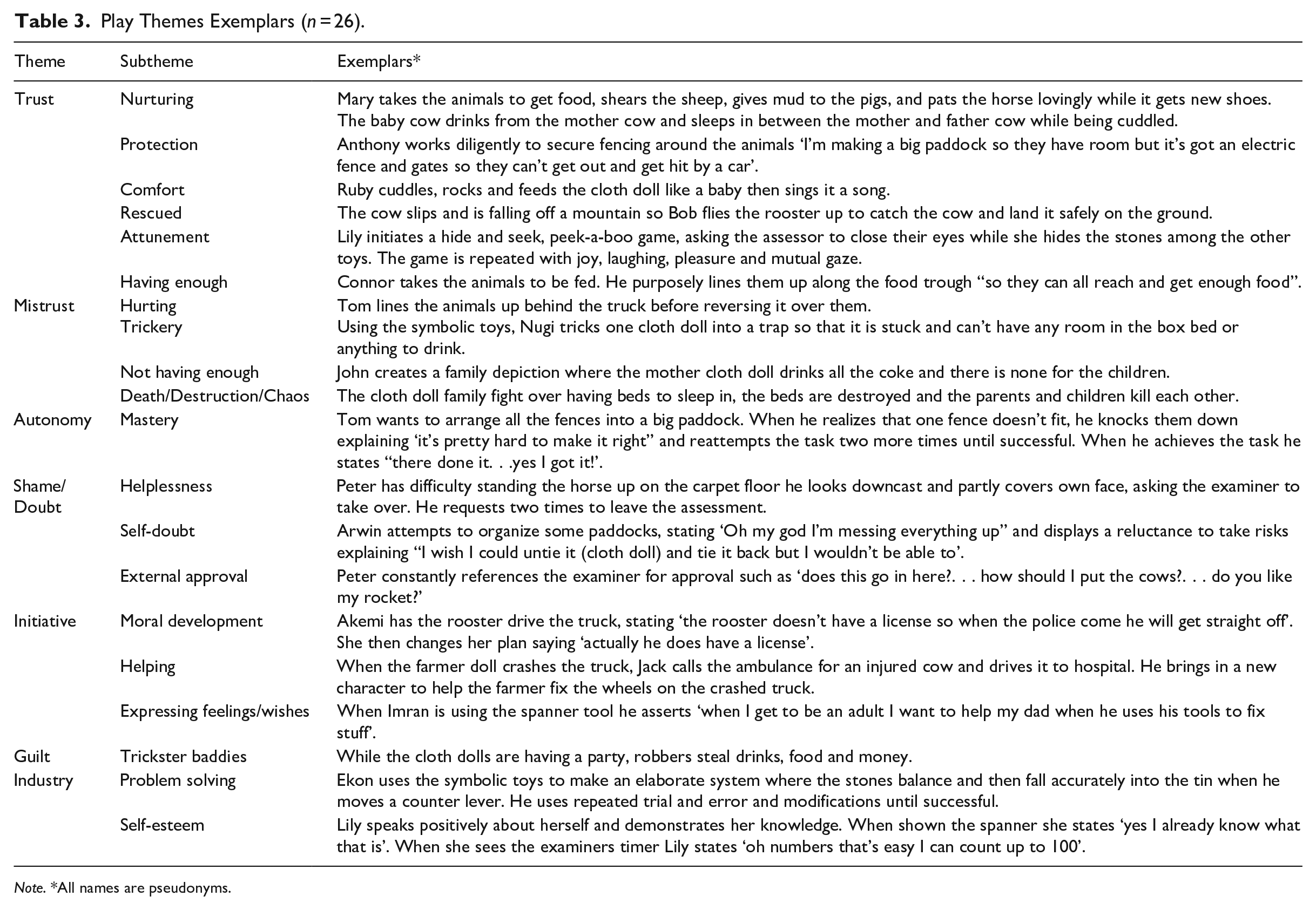
Note. *All names are pseudonyms.
Of the 30 children in the study, there were four (13.33%) children where play themes were not able to be identified. Table 4 presents a description of their play.
Description of Participant’s Play with No Identifiable Play Themes (n = 4).
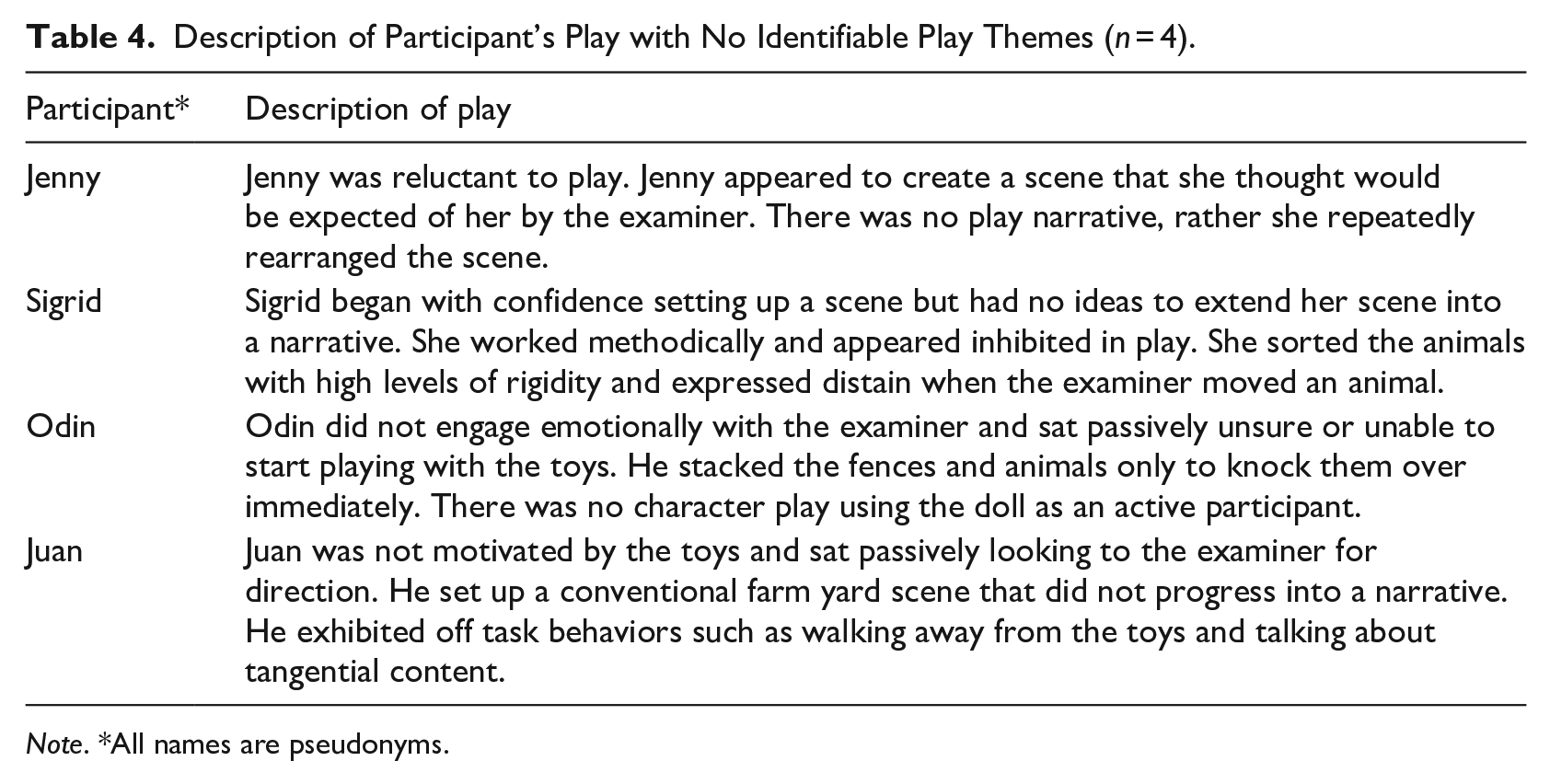
Note. *All names are pseudonyms.
Play themes were not able to be identified in the play of four participants, however there were commonalities to their play. Each child played functionally, rather than impose meaning and there were no elements of pretense, such as use of symbols, attribution of properties or absent objects (Stagnitti et al., 2000). The participants were inhibited and rigid in their play and demonstrated difficulty in symbolically transforming objects to represent something else. The doll was not used as an active toy in play by participants. Furthermore, the participants demonstrated low or limited affect in narrating the play as well as poor use of engaging the examiner. When compared to ChIPPA norm scores, three out of the four children performed below age expectation.
Aim 3. Pretend play ability and theme expression
Correlational analysis with ChIPPA scores and play theme frequencies could not be carried out due to the distribution of scores. Table 5 presents the descriptive statistics for the 26 children where play themes were identifiable and the four children where no play themes could be identified. Raw scores and standard scores are given for elaborate play variables and object substitution scores. No participants imitated the examiner so Number of Imitated Action scores are not given as all children scored 0 on this item. Standard scores are based on z scores with expected range for age being from −1 to +1. Scores below −1 indicate quality of play ability is below that expected for age. Ten children in the identifiable theme group completed the 30 minutes of the ChIPPA and no children from the no themes identifiable group completed the 30 minutes. Higher scores in PEPA, NOS and typical indicators are evidence of higher quality of play ability. As can be seen in Table 5, the children with no identifiable play themes were below expected ability for age, had lower typical indicators of play and a higher number of play deficits as noted on the Clinical Observations form. Participants in the identifiable themes group were within normal expected ability for age, had higher typical indicators of play and lower deficits noted in play.
Play Ability as Assessed on the ChIPPA (n = 30).
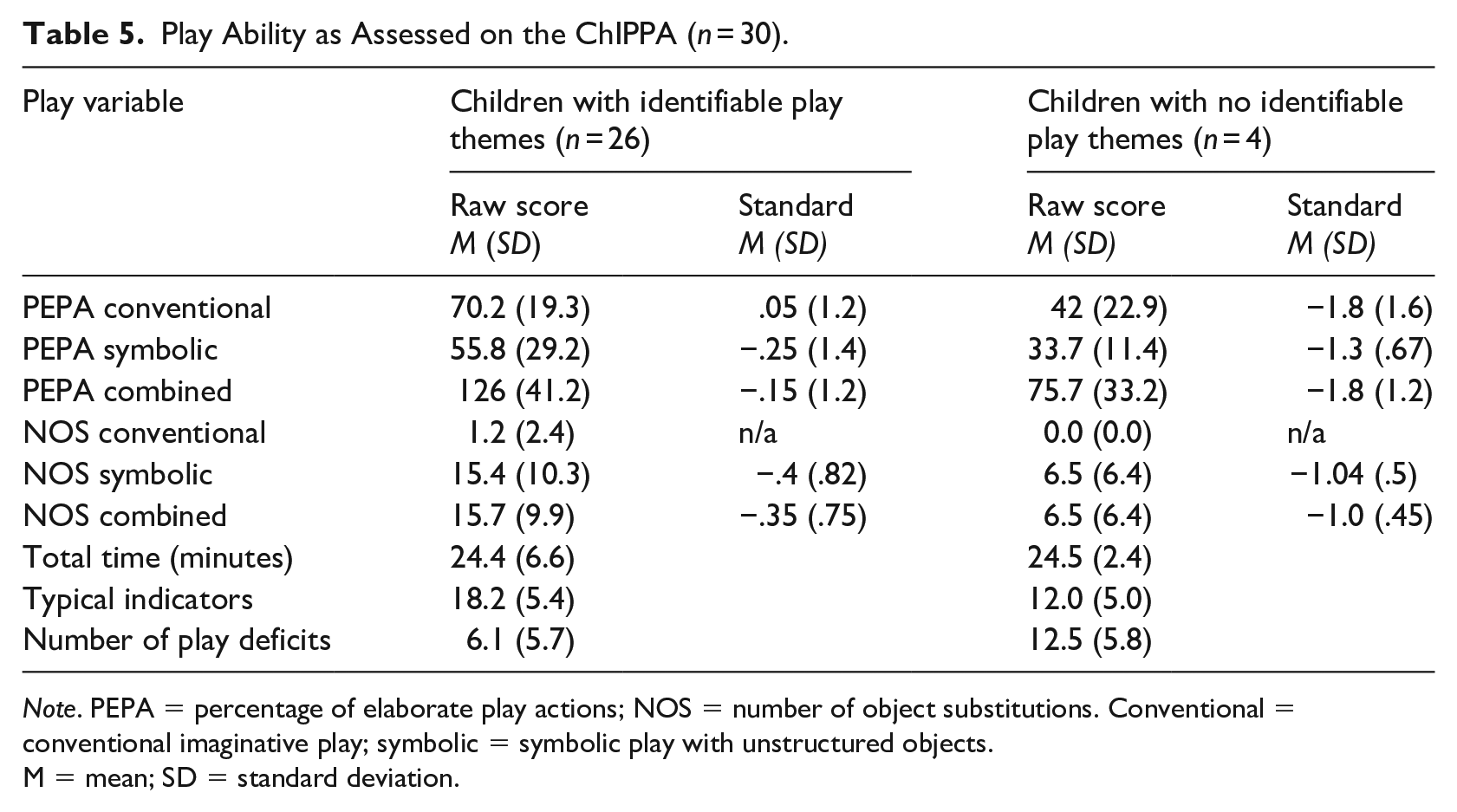
Note. PEPA = percentage of elaborate play actions; NOS = number of object substitutions. Conventional = conventional imaginative play; symbolic = symbolic play with unstructured objects.
M = mean; SD = standard deviation.
Discussion
The ChIPPA is traditionally used to measure a child’s ability to engage in spontaneous pretend play (Stagnitti, 2007). In this research study, the ChIPPA was also used to explore whether play themes could be identified. The findings showed that play themes could be identified within a 30-minute norm referenced standardized play assessment. This discussion focuses on play themes and time, toys and the therapeutic relationship.
Play theme assessment and time
Participants played for a maximum of 30 minutes within which time the examiner was able to classify play themes for 26 out of the 30 children. This study identified that by using the ChIPPA alongside Erickson’s (1995) developmental continuum as a guiding framework, therapists could quickly and efficiently determine a child’s pretend play ability as well as an approximation of thier social emotional state. In clinical work this could be used to form hypotheses which in turn inform the therapeutic intervention.
Play theme assessment and the therapeutic relationship
In non-directive play therapy, the key assumption about the processes of theme building is that it is a dynamic process, dependent upon a two-way relationship that strengthens over time spent together, where the child feels a sense of security, safeness and trust to reveal to the therapist their inner workings (Ryan & Edge, 2011). In this study, the ChIPPA was administered by the researcher who had no pre-existing relationship to the participants. Therefore the expression of the participants may have been expected to be inhibited. A key finding of this study is that most of the children began playing straight away and therefore a range of themes were able to be immediately captured. This is in line with Erickson’s observations when he noted that “it is common experience, and yet always astounding, that all but the most inhibited children go at such a task [i.e, playing with toys presented by an adult who is a stranger] with a peculiar eagerness” (1995, p. 71). This research indicates that a preliminary indication of a child’s current state of emotional wellbeing can be established in an initial assessment to inform the therapeutic approach.
Play theme assessment and toys
Alongside setting the therapeutic conditions for undertaking the assessment sits the physical environment, including the toys and expressive materials. In non-directive play therapy it is accepted that a variety of toys from a range of categories should be present, including but not limited to; real life toys, aggressive release toys, toys for creative expression, nurturing toys and dress up and role play props (Wilson & Ryan, 2005). This large selection of toys contrasts with the range of toys in the ChIPPA.
The play materials of the ChIPPA are standardized based on doctoral research into children’s toy preferences, gender neutrality and developmental appropriateness (Stagnitti et al., 1997). In the ChIPPA the child is presented with two sets of play materials, a conventional-imaginative farm set, as well as some symbolic unstructured objects. In Stagnitti’s (2013) clinical experience, it has been reported that children did not have any difficulty recognizing the ChIPPA materials as toys, including the conventional-imaginative play set as most children have similar toys at home (for example, animals, dolls and vehicles). The range of play materials allowed for play themes to be identified along the full range of Erickson’s (1995) development continuum. Many participants demonstrated a tremendous amount of detail in their stories and representations in the play assessment. The provision of a symbolic toy set in the ChIPPA in particular, warrants further discussion.
When referring to creative expressive play materials, Moustakas (1973) notes that objects have varied meanings to different children. He explains that in the imagination of the child blocks, sand, clay and other unstructured objects can be organized individually to represent a multitude of concepts as well as express interpersonal situations. In the ChIPPA, the symbolic toy are unstructured objects where the child may impose their own meaning. The children in this study were observed to transform the same objects into a wide and creative range of alternative symbols. Thus, the ChIPPA allows for limitless expression through the toys and the child’s imagination.
Play ability and therapeutic intervention
It is a misconception that all children develop the ability to play equally. As with all areas of development, knowing how to use toys, and being able to pretend in play is a complex cognitive skill, that not all children are afforded naturally (Stagnitti & Cooper, 2009). For children to access therapeutic interventions such as non-directive play therapy, they must be able to spontaneously initiate and sustain play using their imagination. The ChIPPA provides the evidence as to whether a child poses sufficient pretend play ability or if in fact an alternative is needed to firstly ameliorate the play deficit (Parson et al., 2020).
Limitations
A limitation of this study is the generalizability of the findings due to the small sample size. Some participants were aware that the researcher undertook therapeutic work in one of the school settings however the standardized nature of the ChIPPA reduced bias.
Conclusions and implications for practice
This study found that children’s play themes and pretend play ability can be identified using a time limited, standardized assessment, the ChIPPA. In clinical practice the ChIPPA may be used to establish a baseline measure of both play themes and play ability that can meaningfully guide the therapist to prescribe and align the model of play therapy with the needs of the child. As Winnicott stated half a century ago, “when a patient cannot play the therapist must attend to this major symptom before interpreting fragments of behavior” (1971, p. 47). In clinical samples it may be expected that a larger portion of children will have limited or reduced play ability. For children who have poor play ability, explicitly teaching this skill set using a prescriptive approach such as The Learn to Play Program (Stagnitti, 1998) may be a necessary therapeutic priority. Future research would be well placed to examine if assessment of a child’s play ability and play themes was able to accurately predict and inform the therapeutic approach.
Footnotes
Declaration of conflicting interest
The author(s) declared no potential conflicts of interest with respect to the research, authorship, and/or publication of this article.
Ethical approval
Ethical approval was granted by The Victorian Department of Education and Training (DET) and the Deakin University Human Research Ethics Committee (DU-HREC).
Funding
The author(s) received no financial support for the research, authorship, and/or publication of this article.
