



Abstract

International perspectives on vascular medicine
The Society for Vascular Medicine (SVM) continues to grow its international presence. Representing the SVM Marketing and Communications Committee, Dr Nichole Brunton met with two international pioneers of vascular medicine, Drs Raymond Verhaeghe of Belgium and Aldo Tabares of Argentina. Despite the 7000 miles that separate them, their successes and challenges mirror one another.
Dr Raymond Verhaeghe began his career in 1969 in Belgium. His training included 5 years of internal medicine training with 1 year of research with a focus in blood coagulation disorders and vascular disease. It was during this time he found his passion for vascular medicine, which led him to pursue additional training at Mayo Clinic in 1975. There, he collaborated with Dr John Shepherd, a leader in physiology who helped to pioneer modern understanding of autonomic control over the peripheral circulatory system. Afterwards, Dr Verhaeghe returned to Belgium where he brought this new information home to University Hospitals Leuven. He continued research throughout his career with a focus in peripheral artery disease (PAD), leading investigations into potential medical therapies.
Meanwhile, in Argentina, Dr Aldo Tabares began his training at the Hospital Privado Centro Médico de Córdoba before continuing his education in the United States for nearly 6 years. Early on in his career, he recognized a need for vascular medicine expertise in his home city of Córdoba, especially for disorders of coagulation. ‘As vascular physicians in our hospital, we took coagulation into our hands. We took thrombosis and we took bleeding. Nobody [had] formal training at that time in coagulation, so I decided to go to the Mecca of coagulation.’ His 2-year fellowship at University of North Carolina Chapel Hill was focused on coagulation and thrombosis, after which he trained and completed research at the Cleveland Clinic for an additional 4 years.
Drs Verhaeghe and Tabares both identified a crucial need in their institutions for specialization within thrombosis and hemostasis. They sought specialized training in these fields abroad, completing research and contributing to our current understanding of vascular medicine. Both then returned to their home countries and institutions, operating in a practice model consisting of inpatient and outpatient clinics. Their typical clinic panels span a broad range of vascular disorder, including both thrombosis and bleeding; each caring for patients suffering from PAD, vasculitis, venous thromboembolism, and coagulation disorders. And finally, both have served as teachers and leading experts in their careers.
Quite similar to the experience in the United States, they report a scarcity of vascular medicine providers in their respective countries and a growing need in their communities. For Dr Tabares, he and his colleagues care for a referral catchment area where there are approximately 6 million people to only a handful of vascular clinicians. To help remedy this, he has invested in the next generation of physicians by teaching at the medical school associated with his institution, training current internal medicine residents and vascular medicine fellows. His program is one of the only options available for formal vascular training in Argentina. The need for training options is similar in Belgium, where only one or two vascular specialists are available at large academic institutions.
In the past 30 years, Dr Verhaeghe and Dr Tabares recognize that the world of vascular medicine has dramatically changed with improved medical therapies, widespread availability of ultrasound technology, and the advent of new endovascular treatments. They have experienced first-hand the growing pains of establishing vascular medicine as an independent subspecialty. This process has been simultaneously helped and hindered by the relationship between vascular medicine and other subspecialties.
Owing to limited training options, it is common for clinicians providing vascular treatment to never receive formal training. As within the United States, care is provided by a variety of specialists including internists, cardiologists, and vascular surgeons. ‘We have a different approach’, Dr Verhaeghe states when discussing the overlap of vascular medicine with vascular surgery. ‘It is a different viewpoint’, Dr Tabares reinforced. Though both recognize the need for other subspecialties to help provide vascular care and the importance of differing vantage points, they also see that the consequential division has prevented vascular medicine from gaining independent momentum locally and abroad. Both perceive that while this divide exists, it will continue to be difficult to move ahead, and that multispecialty collaboration is needed to propel vascular medicine forward.
Although we may find ourselves practicing in isolated settings (sometimes as the only vascular specialist for hundreds of miles), we are all participants in a much larger shared experience of being vascular medicine specialists across the world. These shared joys and challenges can cross vast distances, transcend cultures, and, hopefully, build bridges to connect the global vascular medicine community in the near future.
In addition to Drs Tabares and Verhaeghe, the SVM has been fortunate to have many international members contributing to its Mission, training future vascular medicine specialists, and caring for patients with vascular disease across the globe. International members who have held leadership positions within the Society include former Trustee Dr Maria Teresa (Tes) Abola from the Philippines, who has trained dozens of vascular medicine specialists in her country, Dr Fernando Belcastro from Argentina who serves on the Task Force for Vascular Medicine Practice, Dr Wenzhu Li from China who serves on the Venous Task Force, Dr Farina Yusoff from Japan who serves on the Research, Quality & Publications Committee, Dr Gabriel Dimitrov from Italy who serves on the Task Force for Vascular Medicine Practice, and Dr Sean M McMurtry from Canada who serves on the Audit, Finance, and Fundraising Committee.
Intersocietal Accreditation Commission (IAC) update
The SVM is a longstanding partner of the IAC on matters related to accreditation and quality of vascular diagnostic and therapeutic services. The SVM was one of the first sponsoring organizations of the IAC with SVM’s first President, Dr Jess R Young, serving on the initial Board of Directors of the then Intersocietal Commission for the Accreditation of Vascular Laboratories (ICAVL, now IAC Vascular Testing). The SVM currently has representatives participating in the leadership/boards of multiple IAC divisions: Vascular Testing, Carotid Stenting, and Vein Center/Vascular Interventional. At the IAC Meeting on January 26–27, 2023 in Fort Lauderdale, Florida, the IAC Vascular Testing Board President Dr Tatjana Rundek congratulated outgoing SVM Representative Dr Timothy Crimmons on his years of service to the Board (Figure 1). Dr Raghu Kolluri was elected to the IAC Vascular Testing Board to replace Dr Crimmons and will serve alongside Dr Esther Kim as the second SVM representative to the Vascular Testing Board. Dr Kim was also elected Secretary of IAC Vascular Testing at the January meeting. Many other SVM members participate in the IAC, including Dr Michael Bacharach (SVM Representative, President, Carotid Stenting Board), Dr Thom Rooke (SVM Representative, Immediate Past President, Vein Center/Vascular Interventional Board), Dr Bryan Wells (Vascular Testing Board), and Dr Heather Gornik (IAC Board of Directors and Vascular Testing Board). The SVM looks forward to continuing its participation in the important programs of IAC in the years to come.
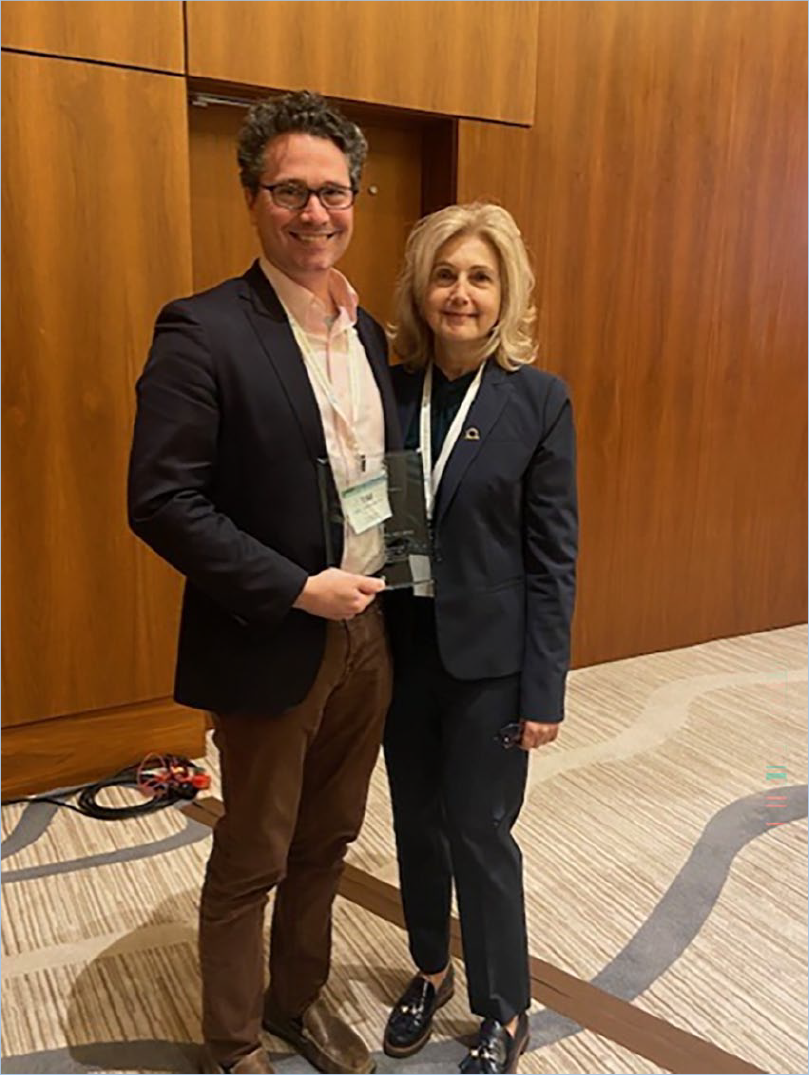
IAC Vascular Testing Board President Dr Tatjana Rundek congratulates outgoing SVM Representative Dr Timothy Crimmons on his years of service to the Board.
Save the date: 2023 Vascular Scientific Sessions
Register now for the 2023 Vascular Scientific Sessions, September 7–10, at the Grand Hyatt, Washington, DC, presented by the Society for Vascular Medicine. Don’t miss out on this chance to network with the vascular medicine community and learn about the latest research and advancements. Register today! Early Bird Pricing is available through June 23, 2023.
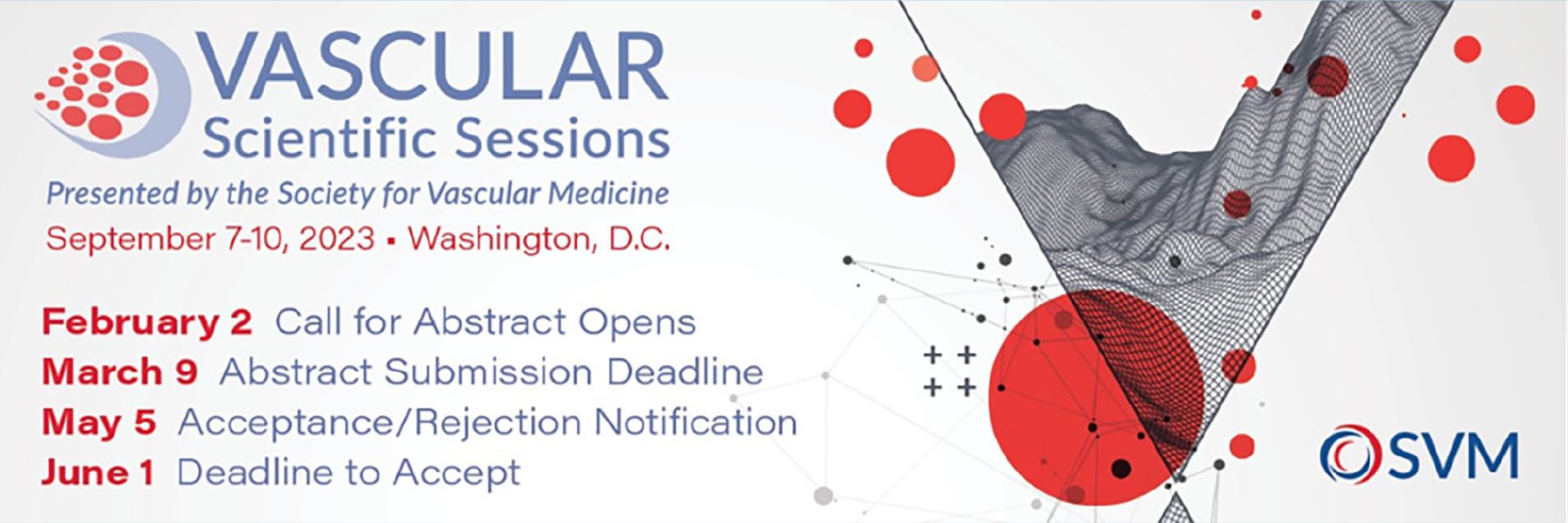
Scan QR Code to Register:

Footnotes
Declaration of conflicting interests
The authors declared no potential conflicts of interest with respect to the research, authorship, and/or publication of this article.
Funding
The authors received no financial support for the research, authorship, and/or publication of this article.
