



Abstract

A 55-year-old male carpenter had a history of hypertension and repeat hospitalizations with complaints of dizziness over a 1-year period. Computed tomography angiogram (CTA) showed that the left common carotid artery was penetrated by a metal nail, which had stopped at the 7th cervical anterior edge (Panel A, arrow). Catheter-directed angiography showed a filling defect of the left common carotid artery (Panel B, arrow). The preoperative physical examination was unremarkable. Upon review of cervical CT scans for this patient from 10 years ago, the nail was already present; however, the patient was asymptomatic and had no information as to when or how the nail was inserted.
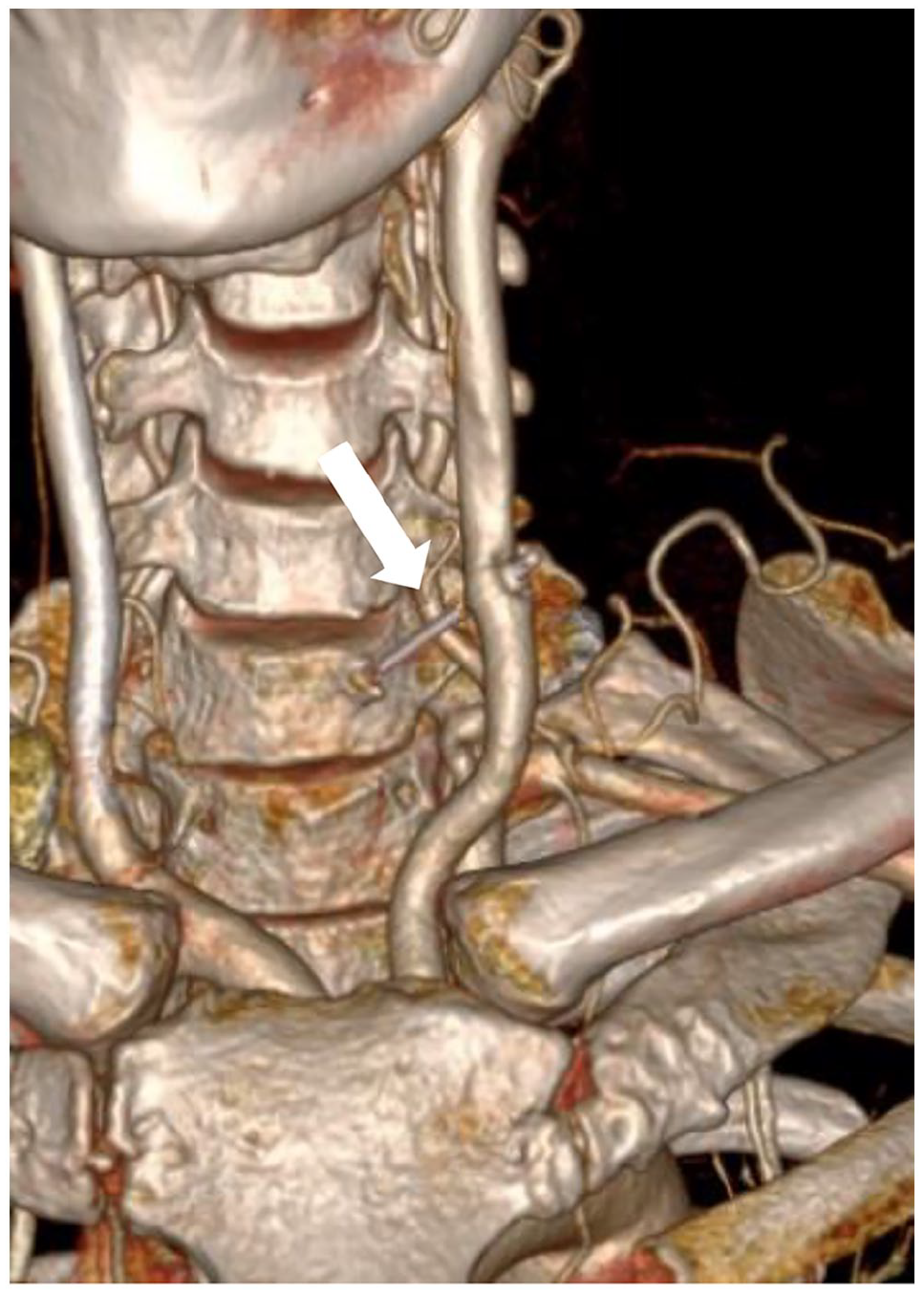
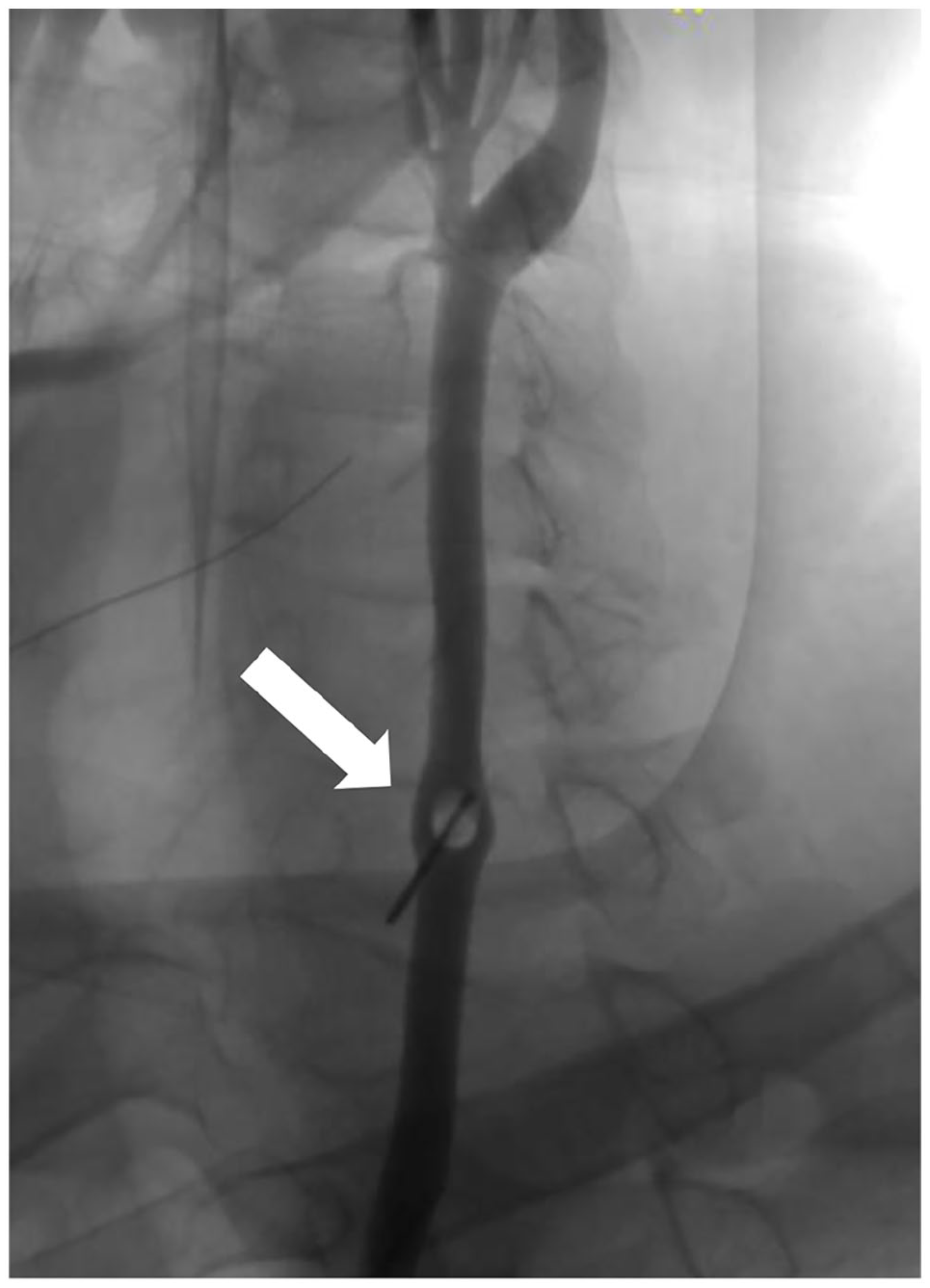
The carotid artery is the most important blood vessel in the neck, surrounded by many important organs. Most carotid artery injuries are acute and often life-threatening, with a fatality rate that can be greater than 50%.1,2 There is no guideline for carotid artery injury, and it is rarely reported in the literature. In this case, chronic carotid artery injury caused chronic stenosis of the carotid artery, thereby increasing the patient’s risk of cerebral infarction.
Surgery was performed 1 week after antiplatelet therapy. The carotid artery penetrated by the iron nail was surgically removed, and the iron nail was completely extracted (Panel C). Then, an expanded polytetrafluoroethylene (ePTFE) vascular graft (GORE-TEX, 8 mm-diameter) was connected and tetanus antitoxin and cefuroxime were used to prevent postoperative infection.
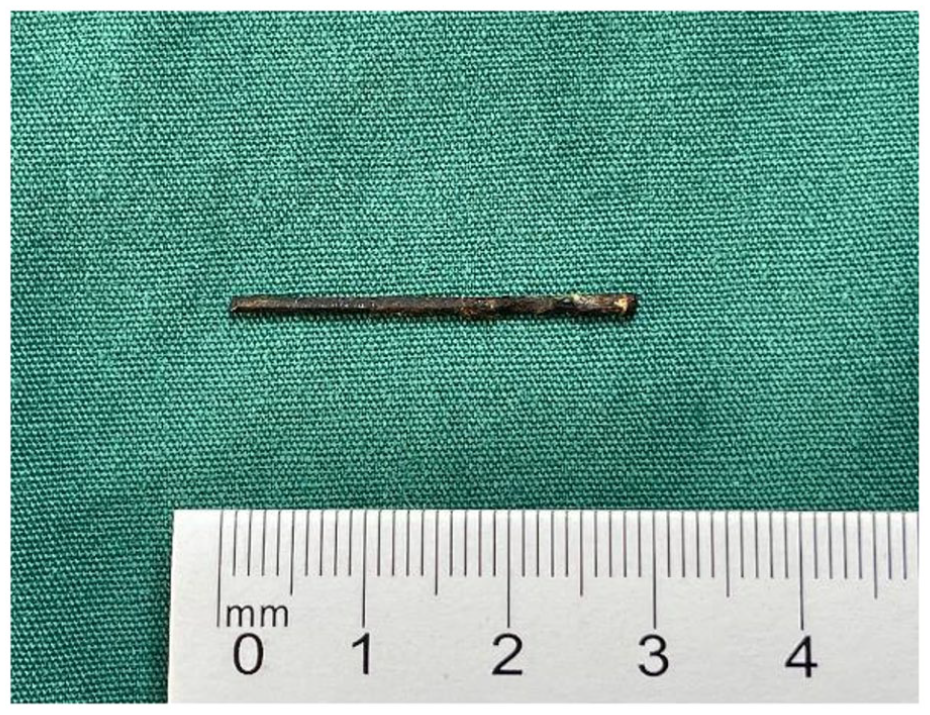
At 1-month follow-up, the patient did not have any complaints and postoperative CTA showed that the left carotid artery was unobstructed, with no signs of complication or infection.
‘Images in vascular medicine’ is a regular feature of Vascular Medicine. Readers may submit original, unpublished images related to clinical vascular medicine. Submissions may be sent to: Heather Gornik, Editor in Chief, Vascular Medicine, via the web-based submission system at http://mc.manuscriptcentral.com/vascular-medicine
Footnotes
Declaration of conflicting interests
The authors declared no potential conflicts of interest with respect to the research, authorship, and/or publication of this article.
Funding
The authors received no financial support for the research, authorship, and/or publication of this article.
