




Abstract

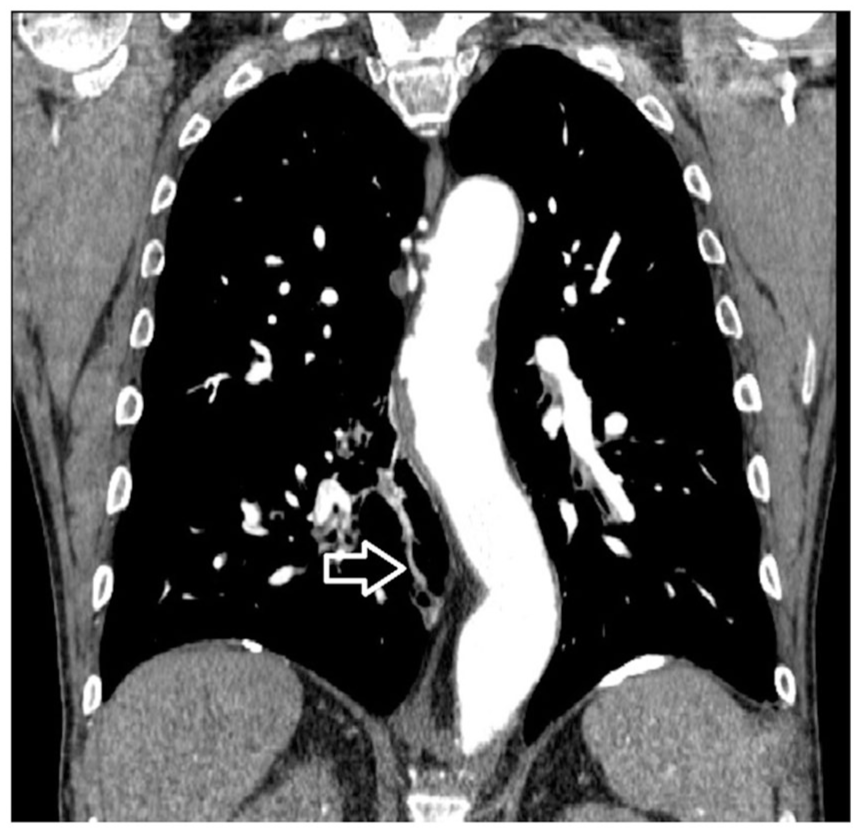
A 65-year-old man with hypertension presented to the emergency department in cardiogenic shock with retrosternal chest pain and shortness of breath. The electrocardiogram showed sinus tachycardia and inverted T-waves in the anterior leads while ultrasensitive cardiac troponin was positive. Posteroanterior chest radiograph displayed cardiomegaly, a prominent aortic knob, a dilated ascending aorta and main pulmonary artery as well as a right pleural effusion. Moreover, Fleischner’s lines (FL) (Panel A, arrowheads) were present in the right inferior lobe. Coronal computed tomography (CT) revealed a thrombus within a right lower segmental pulmonary artery (Panel B, open arrow) with features of the ‘reversed halo sign’ (RHS) in the wedge-shaped opacity (Panels C and D, white and black arrows, respectively), confirming the diagnosis of acute pulmonary embolism (PE) with distal pulmonary infarction. The patient received systemic thrombolysis with significant improvement and was discharged after 10 days on rivaroxaban.
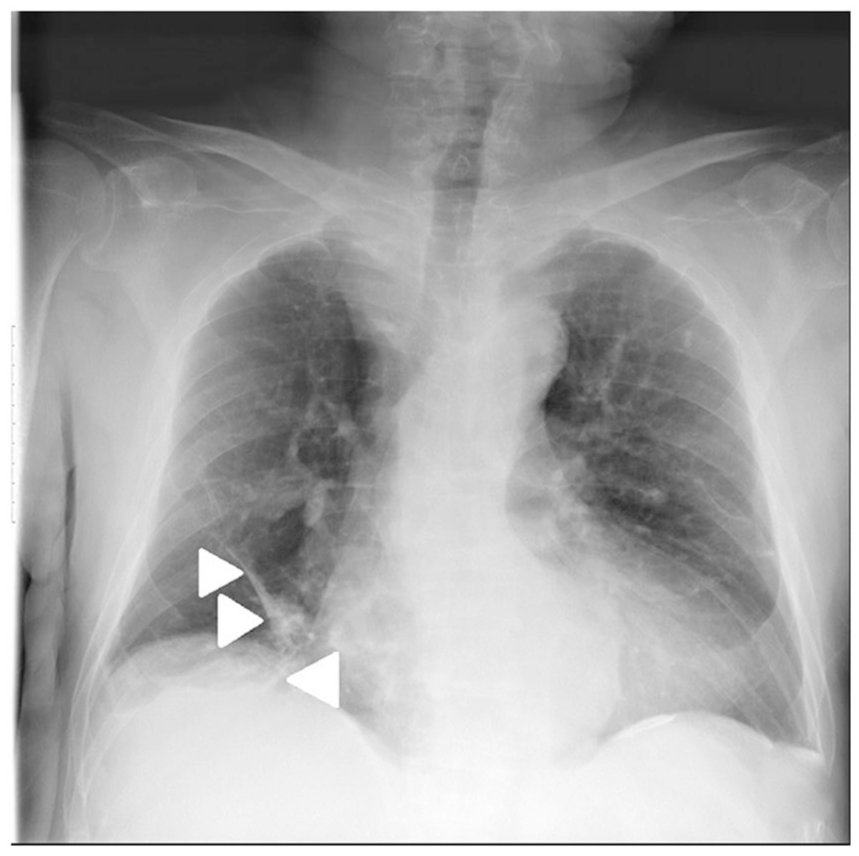
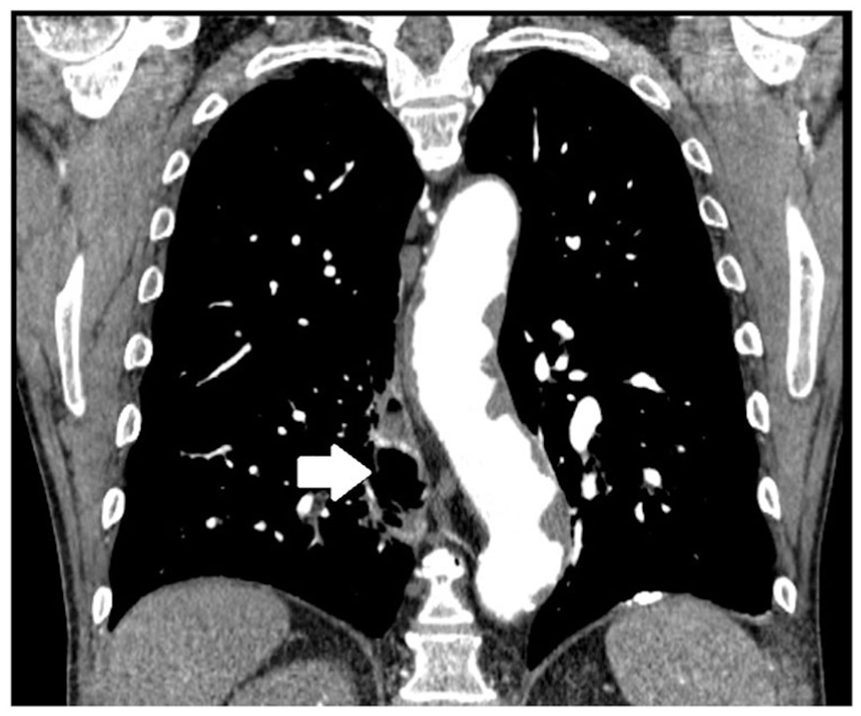
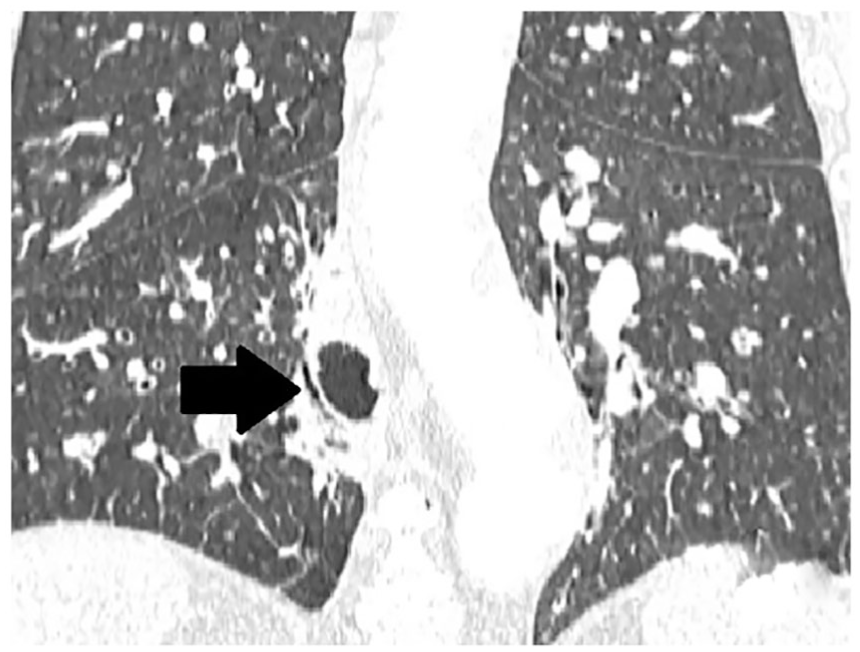
Both FL and the RHS are rare and non-specific findings in patients with acute PE. FL are long bands of focal atelectasis seen in patients with pulmonary infarction, often located at the lung bases and horizontally oriented. 1 The RHS is defined as a rounded area of ground-glass attenuation surrounded by a ring of consolidation via high-resolution CT. 2 Although both FL and the RHS have been occasionally reported alone, they have never been concurrently documented. In the CT era, chest X-ray remains helpful in making the diagnosis of acute PE. 3
‘Images in vascular medicine’ is a regular feature of Vascular Medicine. Readers may submit original, unpublished images related to clinical vascular medicine. Submissions may be sent to: Heather Gornik, Editor in Chief, Vascular Medicine, via the web-based submission system at http://mc.manuscriptcentral.com/vascular-medicine
Footnotes
Declaration of conflicting interests
The authors declared no potential conflicts of interest with respect to the research, authorship, and/or publication of this article.
Funding
The authors received no financial support for the research, authorship, and/or publication of this article.
