



Abstract

A 77-year-old man with a history of chronic hypertension was urgently referred to the emergency department with thoraco-abdominal pain. Clinical examination was unremarkable and included a blood pressure of 104/50 mmHg, heart rate of 84 beats per minute, and symmetrically palpable pulses. Thoraco-abdominal multidetector computed tomographic angiography demonstrated an uncomplicated type-B thoraco-abdominal aortic dissection with three lumens separated by intimal flaps: two false lumens (anterior and left side) and one true lumen (right side). This radiographic finding has been likened to the Mercedes-Benz mark (Panel A: arrowhead). As this triple-barreled type-B aortic dissection was uncomplicated, the patient was treated conservatively (medical treatment).
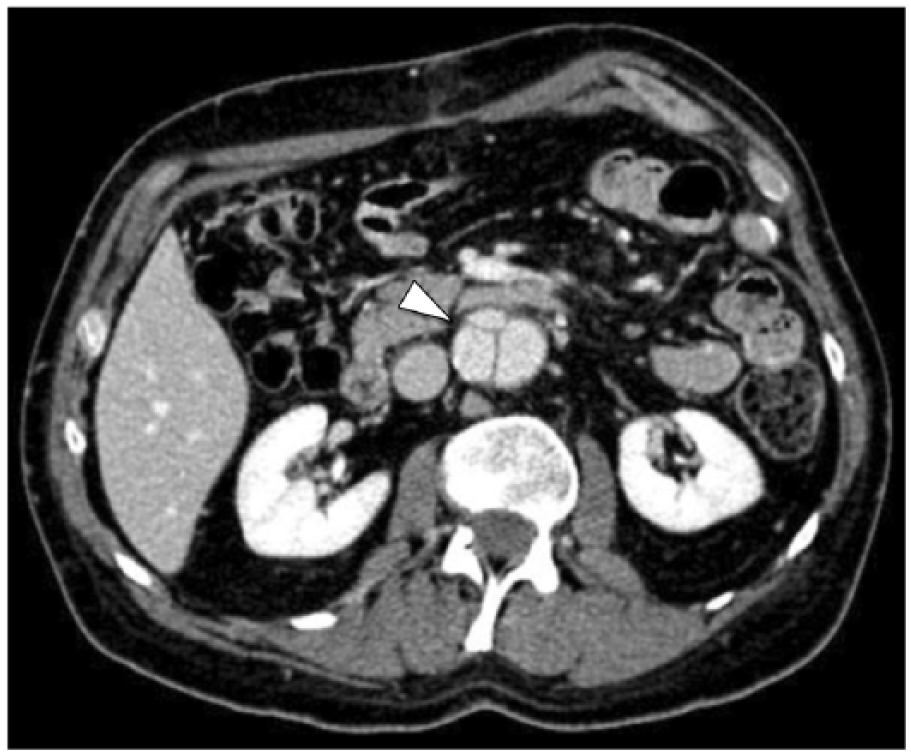
Triple-barrel dissection is a very rare sub-form of aortic dissection due to rupture of the outer lamina of the false lumen that is very thin and fragile. This unusual dissection often complicates Marfan’s syndrome. 1 It generally manifests within the descending thoracic and/or abdominal aorta 2 and is characterized by three lumens divided by two intimal flaps that create an appearance of the ‘Mercedes-Benz brand’. When affected patients are hemodynamically stable and without organ malperfusion, medical therapy is utilized.3,4 In all other cases, endovascular and surgical therapy become necessary. 5
‘Images in vascular medicine’ is a regular feature of Vascular Medicine. Readers may submit original, unpublished images related to clinical vascular medicine. Submissions may be sent to: Heather Gornik, Editor in Chief, Vascular Medicine, via the web-based submission system at http://mc.manuscriptcentral.com/vascular-medicine
Footnotes
Declaration of conflicting interests
The authors declared no potential conflicts of interest with respect to the research, authorship, and/or publication of this article.
Funding
The authors received no financial support for the research, authorship, and/or publication of this article.
