




Abstract
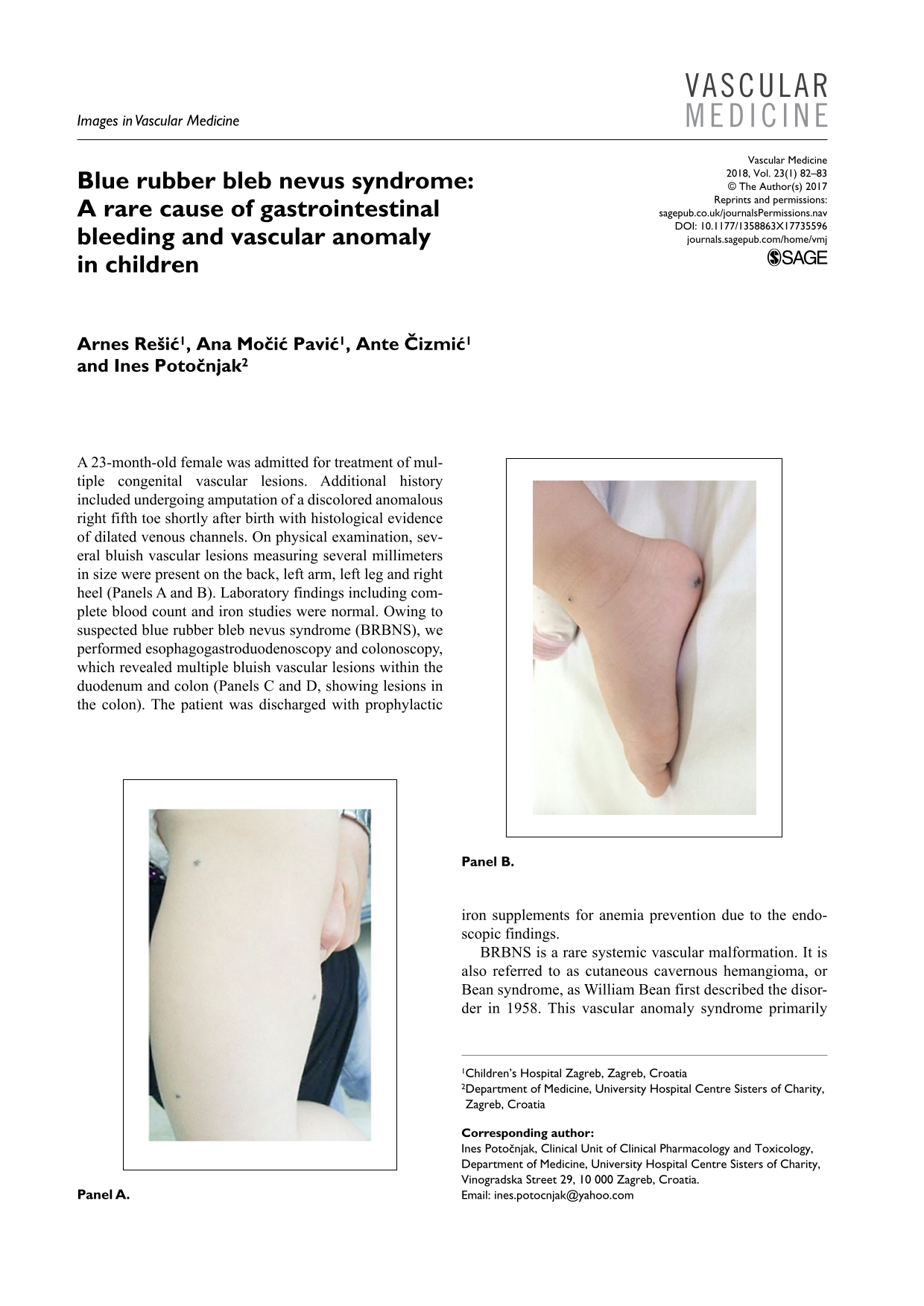
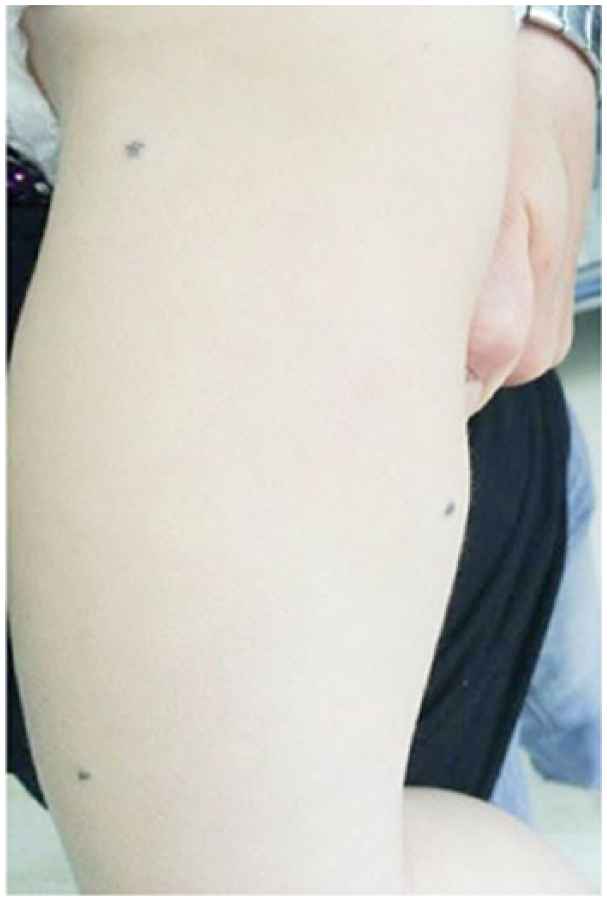
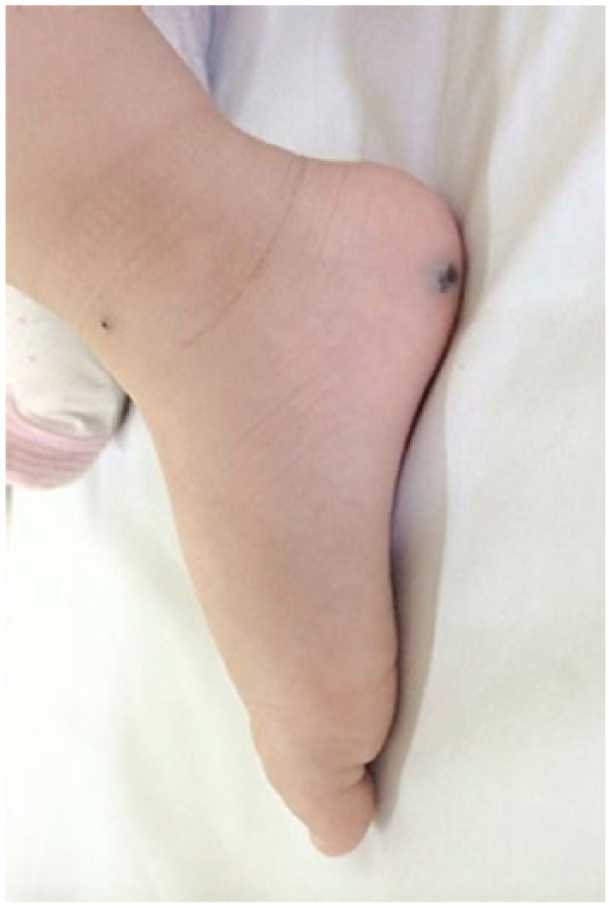
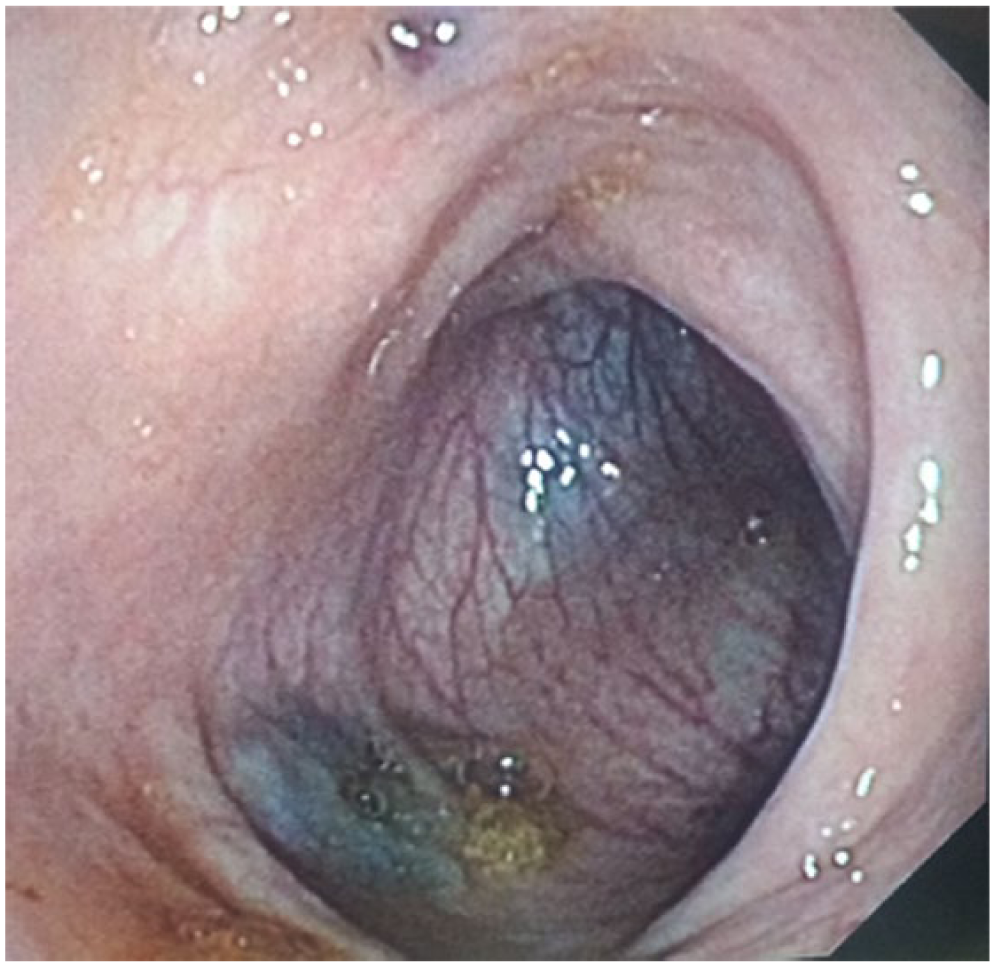
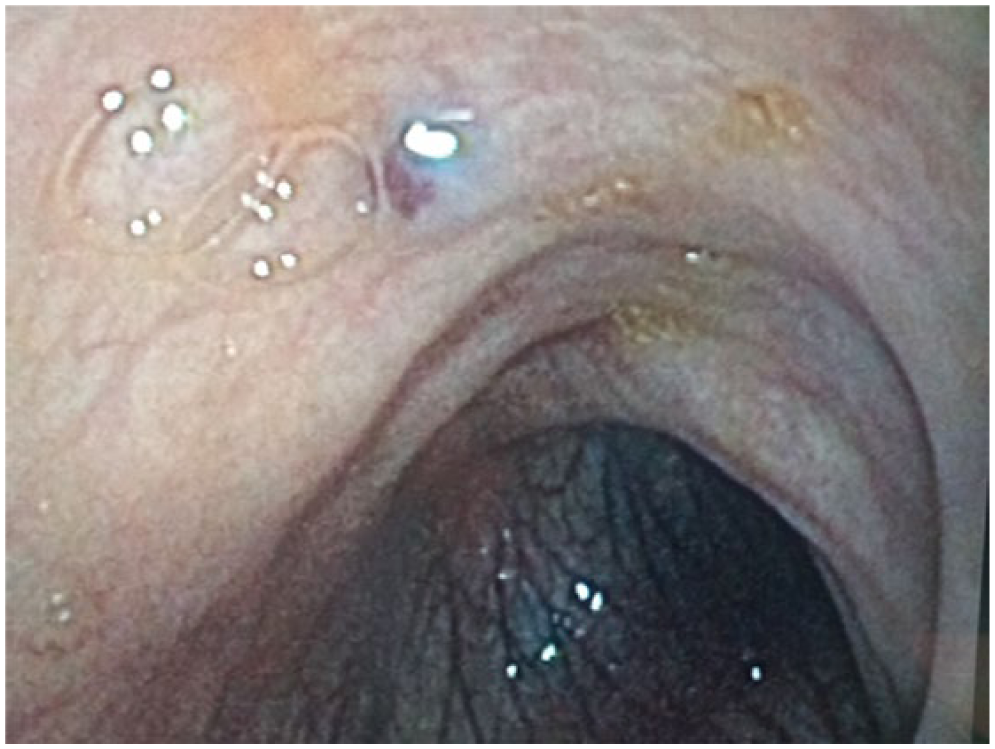
A 23-month-old female was admitted for treatment of multiple congenital vascular lesions. Additional history included undergoing amputation of a discolored anomalous right fifth toe shortly after birth with histological evidence of dilated venous channels. On physical examination, several bluish vascular lesions measuring several millimeters in size were present on the back, left arm, left leg and right heel (Panels A and B). Laboratory findings including complete blood count and iron studies were normal. Owing to suspected blue rubber bleb nevus syndrome (BRBNS), we performed esophagogastroduodenoscopy and colonoscopy, which revealed multiple bluish vascular lesions within the duodenum and colon (Panels C and D, showing lesions in the colon). The patient was discharged with prophylactic iron supplements for anemia prevention due to the endoscopic findings.
BRBNS is a rare systemic vascular malformation. It is also referred to as cutaneous cavernous hemangioma, or Bean syndrome, as William Bean first described the disorder in 1958. This vascular anomaly syndrome primarily affects the skin and gastrointestinal tract, less often other organs such as brain, liver, lung and skeletal muscles. It is characterized by multiple cutaneous lesions which are deep-blue, soft, easily compressible, and usually painless blebs. Skin lesions are often present at birth or in the neonatal period, but can also manifest later. On account of gastrointestinal lesions, occult bleeding and iron deficiency anemia are common. 1 The diagnosis of BRBNS is established by the presence of representative skin and endoscopic lesions with characteristic histology. BRBNS should be differentiated from hemangioma and other vascular anomalies with skin and visceral involvement. Most patients respond to conservative therapy, which includes iron supplementation, octreotide and blood transfusions. However, steroids, propranolol, interferon α2a, and sirolimus are sometimes used to decrease angiogenesis. Severe cases may require surgical excision.2,3 We emphasize the importance of identifying BRBNS in patients with a history of chronic anemia and cutaneous bluish vascular lesions or blebs.
‘Images in vascular medicine’ is a regular feature of Vascular Medicine. Readers may submit original, unpublished images related to clinical vascular medicine. Submissions may be sent to: Heather Gornik, Editor in Chief, Vascular Medicine, via the web-based submission system at http://mc.manuscriptcentral.com/vascular-medicine
Footnotes
Declaration of conflicting interests
The authors declared no potential conflicts of interest with respect to the research, authorship, and/or publication of this article.
Funding
The authors received no financial support for the research, authorship, and/or publication of this article.