




Abstract

The Society for Vascular Medicine (SVM) is a diverse community of talented scientists and clinicians dedicated to advancing vascular knowledge and care. In this feature, we shine the spotlight on two active SVM members and learn about their practice and Society involvement.
Putting the patient first
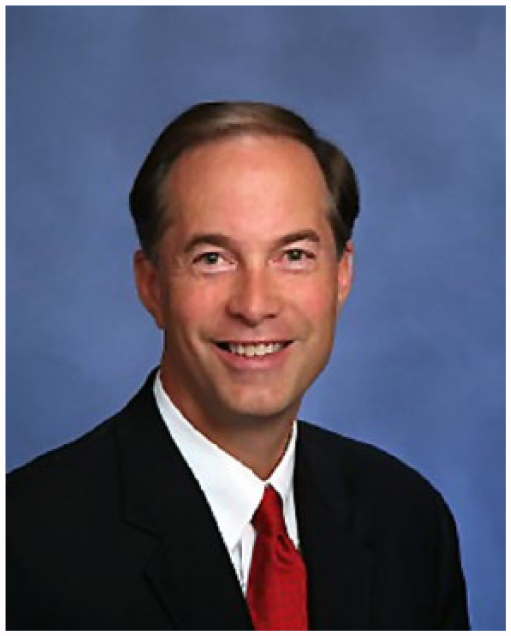
Director, Vascular Medicine
Perelman School of Medicine at the University of Pennsylvania
Tell us about your current vascular medicine practice
My philosophy regarding care of patients with vascular disease is simple, ‘Put the patient first’. As Director of the Penn Vascular Medicine Program for the past 20 years, I have strived to improve the care of patients with vascular disease. One of the missions of the Penn Vascular Medicine Program is to translate new findings in basic research into applied therapeutics and thus improve the care of patients with vascular disease. This program is distinguished from community-based clinical programs through collaborative efforts among basic scientists, clinicians and clinical research workers. Research provides patients with hope for a better life.
Solving critically important scientific medical problems often requires teams of researchers from different backgrounds to work together. This multidisciplinary research requires committed and supportive team players. One of the most exciting and rewarding experiences I have had in academic medicine is to work with a multidisciplinary research team to find novel insight into disease that changes and improves the care of patients. A successful clinic environment requires the same type of team effort and leadership which I endeavor to foster in order to provide the best possible care for patients.
Who has been a great influence on your career?
My academic career in vascular medicine was significantly shaped by the founding and early members of the SVM, including Alan Hirsch, William Hiatt, Mark Creager, Michael Criqui and Jeffrey Olin. They provided me with generous advice on research ideas and included me as an investigator in clinical studies. These luminaries in vascular medicine not only shine from many scientific accomplishments and care of patients but also are eager to cast light on younger trainees and colleagues to assist with career development. I cannot thank them enough for being a mentor and friend.
How have you been involved in the SVM?
My services to the SVM include being a member of the Board of Trustees, past secretary for the Board, member of the Vascular Medicine journal Editorial Board and a participant at the annual SVM meeting. Our Society is also well connected with other societies and associations to further the care of vascular patients. In this regard, I am former chair of the Peripheral Vascular Disease Committee of the American College of Cardiology and was a member of the American Board of Internal Medicine (ABIM) Cardiovascular Board. I was the founder and first chair of the Vascular Council of the American Society of Echocardiography that seeks to engage the vascular specialist in common imaging issues.
What are some fond memories of SVM involvement?
I have fond memories of SVM vascular meetings in other countries. My first trip to Scotland was for an international vascular meeting where members from the SVM met with European vascular societies. It was great meeting our European colleagues and recognizing for the first time how ‘small’ the vascular world is as diagnostic and therapeutic approaches were incredibly similar. The best part of this meeting was going to dinner and meeting our European ‘angiologist’ counterparts and solidifying friendship with other SVM members.
From your perspective, what are the benefits of involvement in the SVM?
The benefits of being a member of the SVM are many. They include expert updates in treatment of vascular disease, networking with colleagues and learning about new research initiatives. The SVM provides a forum for young members to present research and gain mentorship. Our Society provides an anchor to promote your career and assist you in the care of patients with vascular disease.
From research to vascular medicine
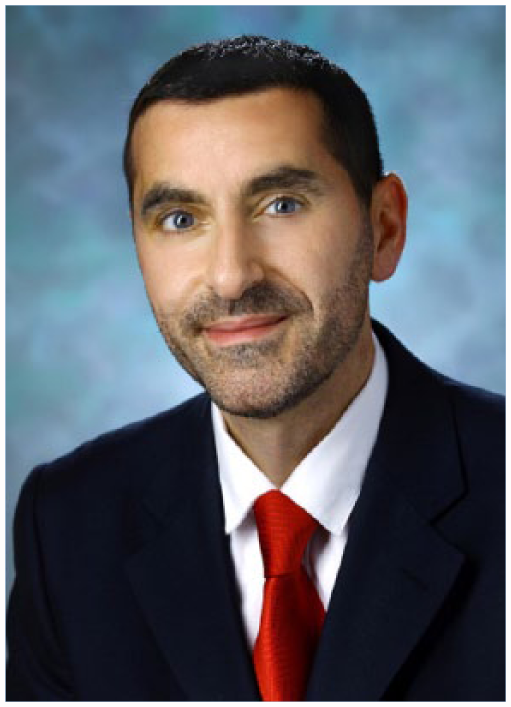
Associate Physician, Cardiovascular Medicine
Brigham and Women’s Hospital
Tell us about your pathway to vascular medicine
My interest in vascular medicine started with research. After completing my clinical training in internal medicine and endocrinology in Italy, I had the opportunity to come to the United States to join the vascular physiology laboratory of Dr Julio Panza at the National Heart, Lung, and Blood Institute for a research fellowship. My work focused on the in vivo investigation of mechanisms of endothelial dysfunction in patients with cardiometabolic risk factors and formed the basis for a long-term interest in translational vascular research. During that time, I had the opportunity to become familiar with the work of, and often collaborated with, other leading research laboratories at preeminent vascular centers such as Dr John Cooke’s at Stanford, Dr Mark Creager’s at Harvard, and Dr Joseph Vita’s at Boston University. After several years devoted full time to research, I decided to pursue clinical training in the United States, so I chose cardiovascular medicine as a natural extension of my scientific interests. My decision could not have come at a better time, as the NHLBI had just started sponsoring a multi-institutional K-12 program to form a new generation of academic vascular medicine specialists. As a result, I was able to combine a traditional cardiology fellowship with dedicated vascular medicine training at Northwestern to become a broad-based cardiovascular specialist.
How were you recruited to the Society?
I had my first contact with the activities of the SVM by participating in the annual scientific sessions. Because of my involvement in vascular research, I already knew several members and I felt that the SVM was the natural environment for professionals with an interest in vascular diseases. Once I became a trainee I realized the importance of becoming involved in person with the SVM to raise awareness of vascular disease and to improve the care of vascular patients. So I expressed my interest in helping the SVM to my fellowship director, Dr Mary McDermott, who got me involved.
How have you been involved in the SVM?
I have been a member of the publication committee and of the organizing committee for scientific sessions. Also, I am a member of the Editorial Board of Vascular Medicine, the official journal of the SVM.
From your perspective, what are the benefits of involvement in the SVM?
Given the relatively small size of our Society, its multidisciplinary frame, the outstanding scientific accomplishments of a multitude of members, and the cohesion among us, the benefits are likely too numerous to list! I will mention just a few: for trainees, it is an exceptional opportunity to contribute their perspective to the field and at the same time learn from the experience of internationally recognized thought leaders in a nurturing environment that strives to form the leaders of future generations. For early career and established vascular physicians, the SVM is a unique place where you can meet like-minded colleagues from multiple specialties and build a wide professional network; furthermore, becoming involved is an effective way to contribute to the advancement of vascular medicine, from the promotion of disease awareness among patients and non-vascular specialists to advocacy at the policy level. And, on a more personal note, it often is an opportunity to spend time with good friends!
SVM news
SVM hosts 28th Annual Meeting
Historic, eccentric New Orleans will play host to the SVM 28th Annual Meeting, June 14–18, 2017. The SVM meeting is the premier multidisciplinary education event in vascular medicine, with a world-class faculty and outstanding educational and networking opportunities.
The SVM Annual Meeting includes:
Founders’ Lecture by Mark Creager, MD, MSVM: What’s Past is Prologue. Building a Future for Vascular Medicine
Keynote Address by C. Noel Bairey Merz, MD, FACC, FAHA: Sex-Related Differences in Cardio-vascular Disease – Outlining the Key Issues from 10,000 Feet
Interdisciplinary Educational Sessions Covering All Aspects of Vascular Medicine
Latest in Vascular Medicine Science
Discussion of the Changing Healthcare Landscape and Implications for Vascular Medicine Providers
Aortic Aneurysm and Dissection
Anticoagulation Management – 2017 Edition
Vascular Disease in Women
Rapid Fire Sessions, including My Approach to … Vascular Medicine’s Top Complaints
Joint Session with the American Venous Forum: Updates in Treatment of Iliac Vein Outflow Obstruction
Joint Session with the American College of Phlebology: Focus on Phlebology and Lymphatic Medicine
Moderated Poster Session
Best of SVM Science Oral Abstract Session
Practical, Hands-On, How-to Workshops and Mini-Symposium on Starting and Expanding Your Vascular Medicine Career
Jay D. Coffman Young Investigator Award
Learn more about the meeting at www.vascularmed.org/AM17.
SVM unveils new website (vascularmed.org)
SVM unveiled its newly redesigned website on February 1, 2017. The new site’s modern, clean and professional design reflects input from our members, the hard work of the SVM Website Committee and the high quality you expect from the SVM. Improved navigation makes it easier for you to find the content you’re looking for. And of great interest to the subscribers of Vascular Medicine, the new SVM website has streamlined access to the journal. The Vascular Disease Patient Information Pages, a popular feature of the journal, are easy to access on the new site.
The site also provides links to two of the SVM’s tools for vascular medicine practitioners: The DVT Toolkit (www.mydeepveinthrombosis.com) and the AFib Decision Making Tool (www.mybloodclots.org).
Intersocietal Accreditation Commission Board of Directors
Dr. Mike Lilly and Dr. Lucy LaPerna.
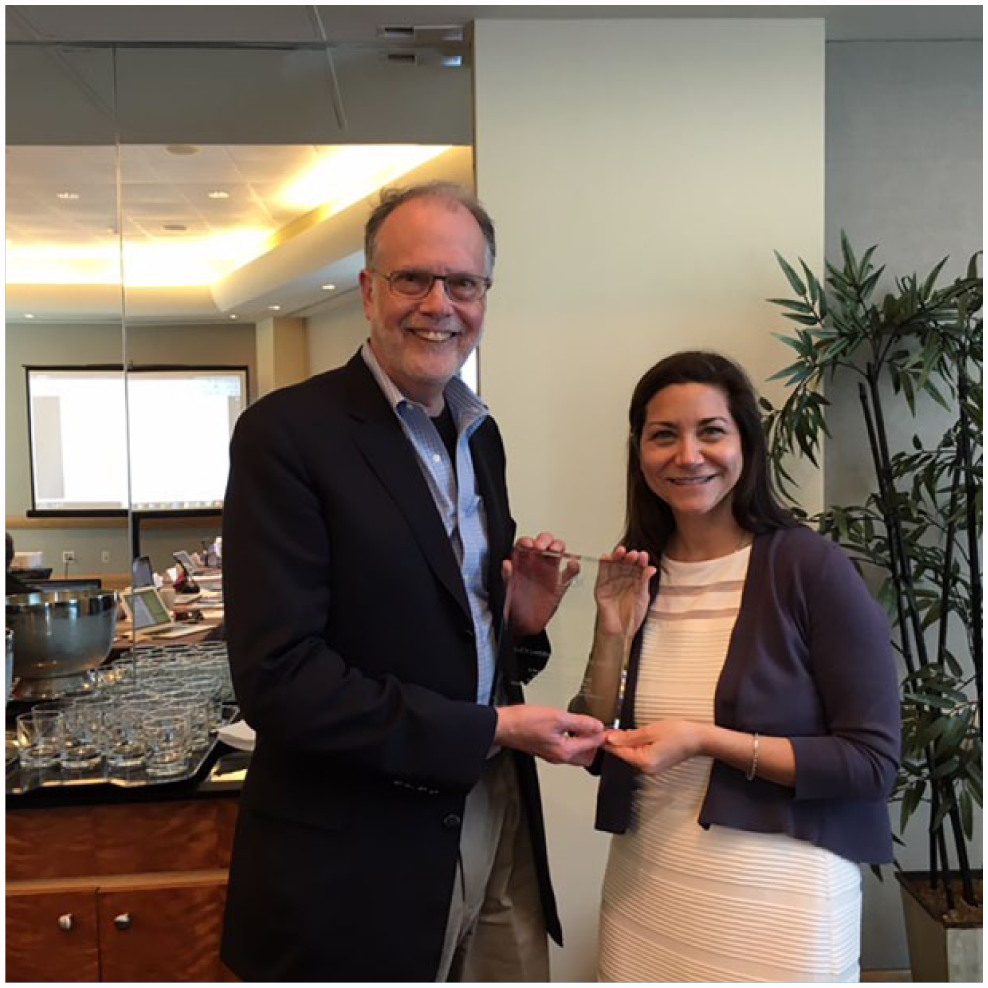
At the winter Board of Directors meeting of the Intersocietal Accreditation Commission Vascular Testing (IAC-VT) division, Dr Lucy LaPerna of Riverside Radiology Associates was recognized by IAC-VT president Dr Mike Lilly for her 6 years of service as a board member, representing the Society for Vascular Medicine. Dr Timothy Crimmins of Columbia University will join Dr Paul Wennberg of Mayo Clinic as a SVM representative to IAC-VT. The SVM was a founding member of IAC-VT (formerly ICAVL), and remains highly engaged in multiple IAC divisions including Vascular Testing, Carotid Stenting, and Vein Centers.