




Abstract

A key focus of SVM has been promoting efforts to increase availability of vascular medicine training. To assess the current landscape of vascular medicine training programs, the SVM conducted a member survey. The survey included questions regarding the program description, an assessment of the funding mechanisms, needs of the program, and availability of the program to serve as a resource for extramural rotations. We had a response from over 20 unique institutions that offered formal vascular medicine training. There were several known vascular medicine training programs that did complete the survey; however, the available information paints a broader picture of training programs that SVM members participate in. Among the responding programs, over 80% offer vascular medicine education to trainees in other subspecialty fellowships, over 60% offer a dedicated year of clinical vascular medicine training, and less than 50% were either primarily interventional based or primarily vascular research focused.
The response from these programs highlights several key issues within the field. The most notable was the challenge of securing funding that supports vascular medicine training. As shown in Figure 1, a variety of funding sources were used including institutional support, prior NIH Career Development (K12) funding, other training program resources, research funding, and industry support. When asked about the programmatic needs, the availability of funding was the most common response (Figure 2). It is clear from these responses that the lack of a consistent source of funding is a critical issue for our field. Many respondents without an existing formal training program at their institution reported that they would establish a program if such funding was available. Thus, if you fund it, they will create it.
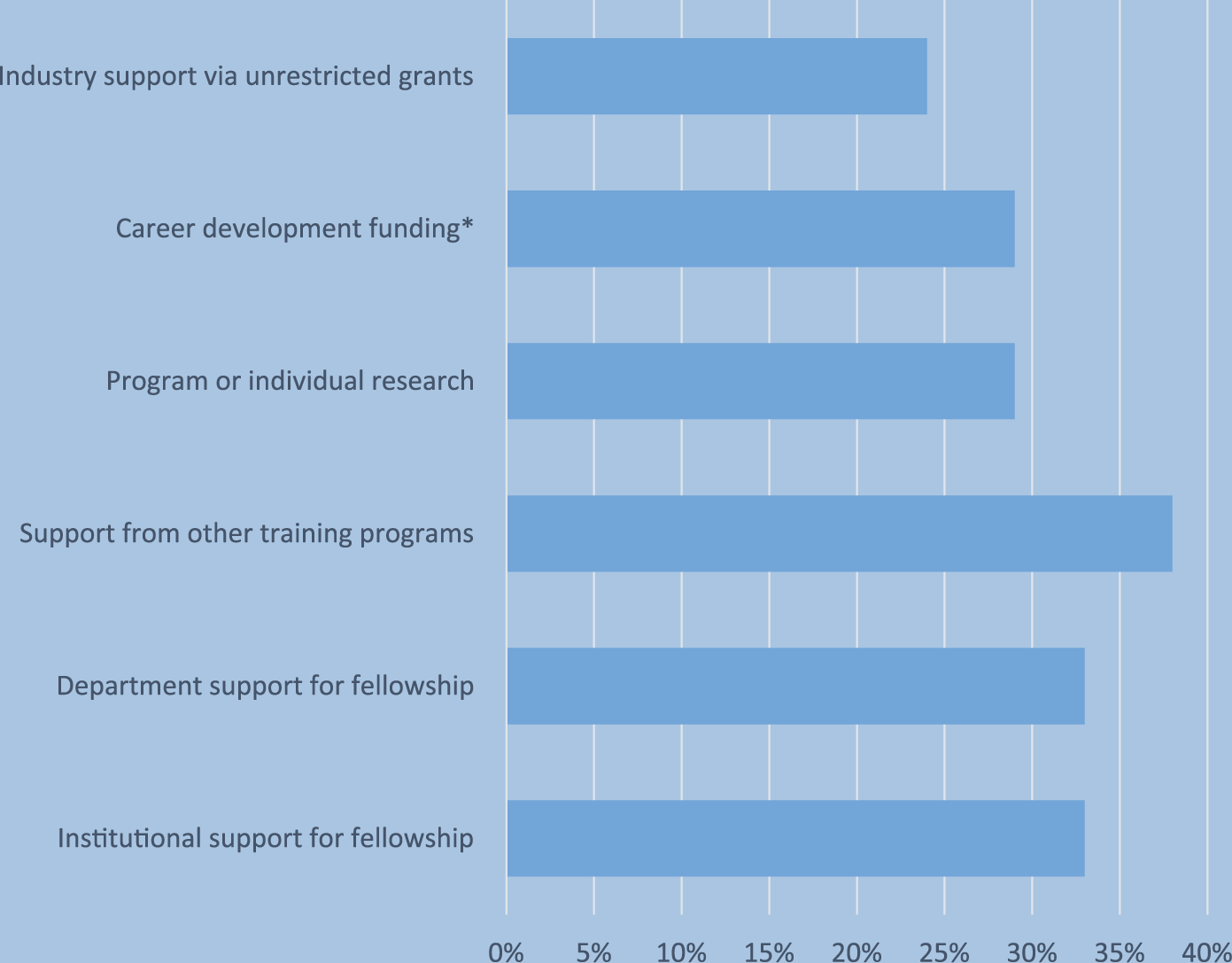
Funding sources of vascular medicine training programs (percentage of training program respondents). *Programs with prior funding from the NIH K12 Career Development Programs in Vascular Medicine.
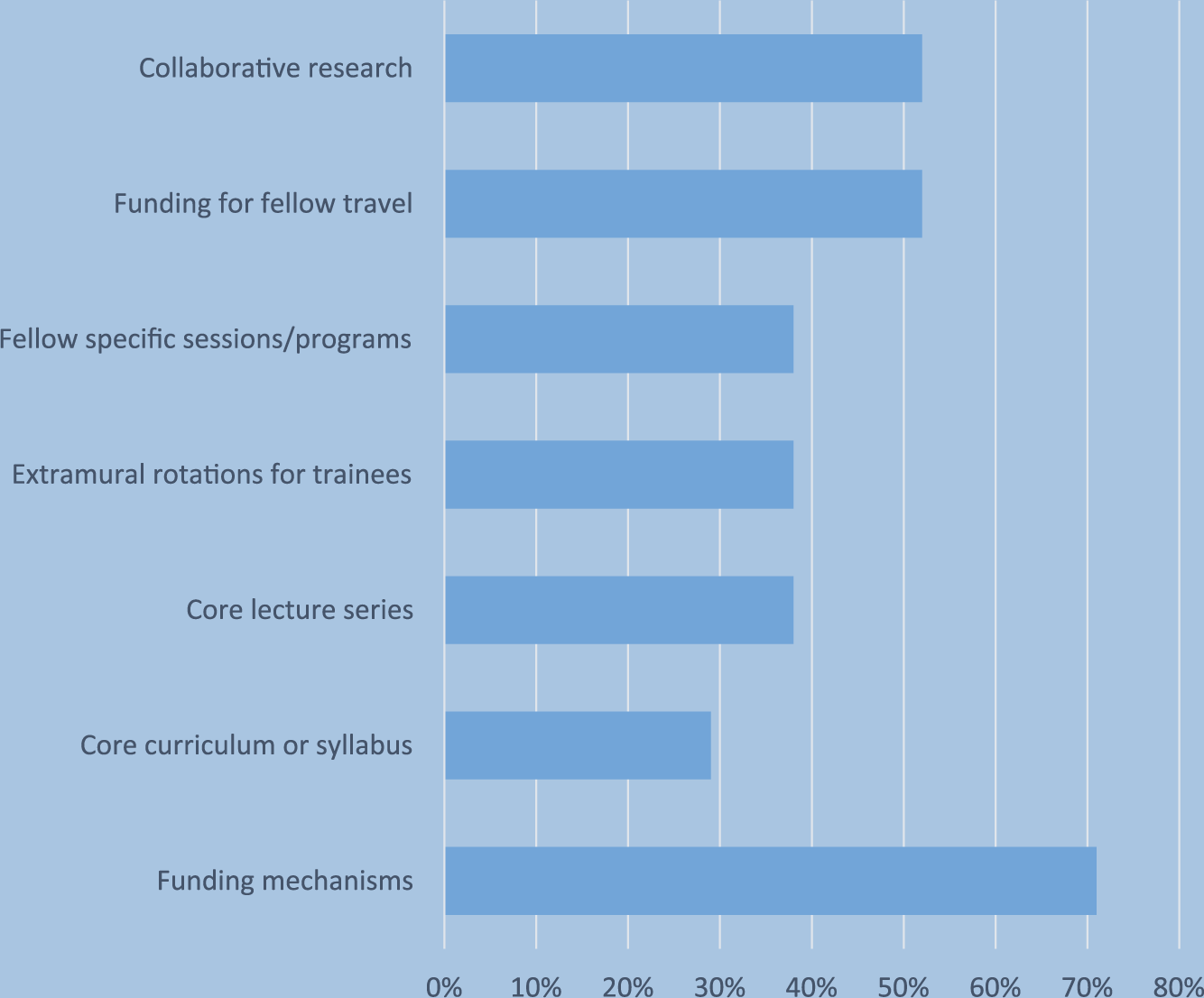
Identified needs of vascular medicine training programs (percentage of training program respondents).
The survey also provided insight into additional needs of these established training programs. The highly desired needs of these training programs included funding for fellow travel as well as collaborative research opportunities. Trainee-focused sessions at meetings, a system for extramural rotations, and a common core lecture series were identified as desired educational resources. Our society has the opportunity to continue leadership in developing these resources.
The survey also demonstrated that SVM members provide vascular medicine training to external programs. Many of the programs provide opportunities at their site institution for extramural rotations (Figure 3) including vascular medicine consultation, vascular laboratory, and endovascular exposure. About half of these programs could serve as a site for vascular research, venous care, thrombosis, wound care and vascular surgery rotations. As might be expected, few were able to serve as a site for lymphedema care – clearly another ongoing need within the field. The SVM may serve as a central site to provide information regarding available sites for extramural rotations in vascular medicine.
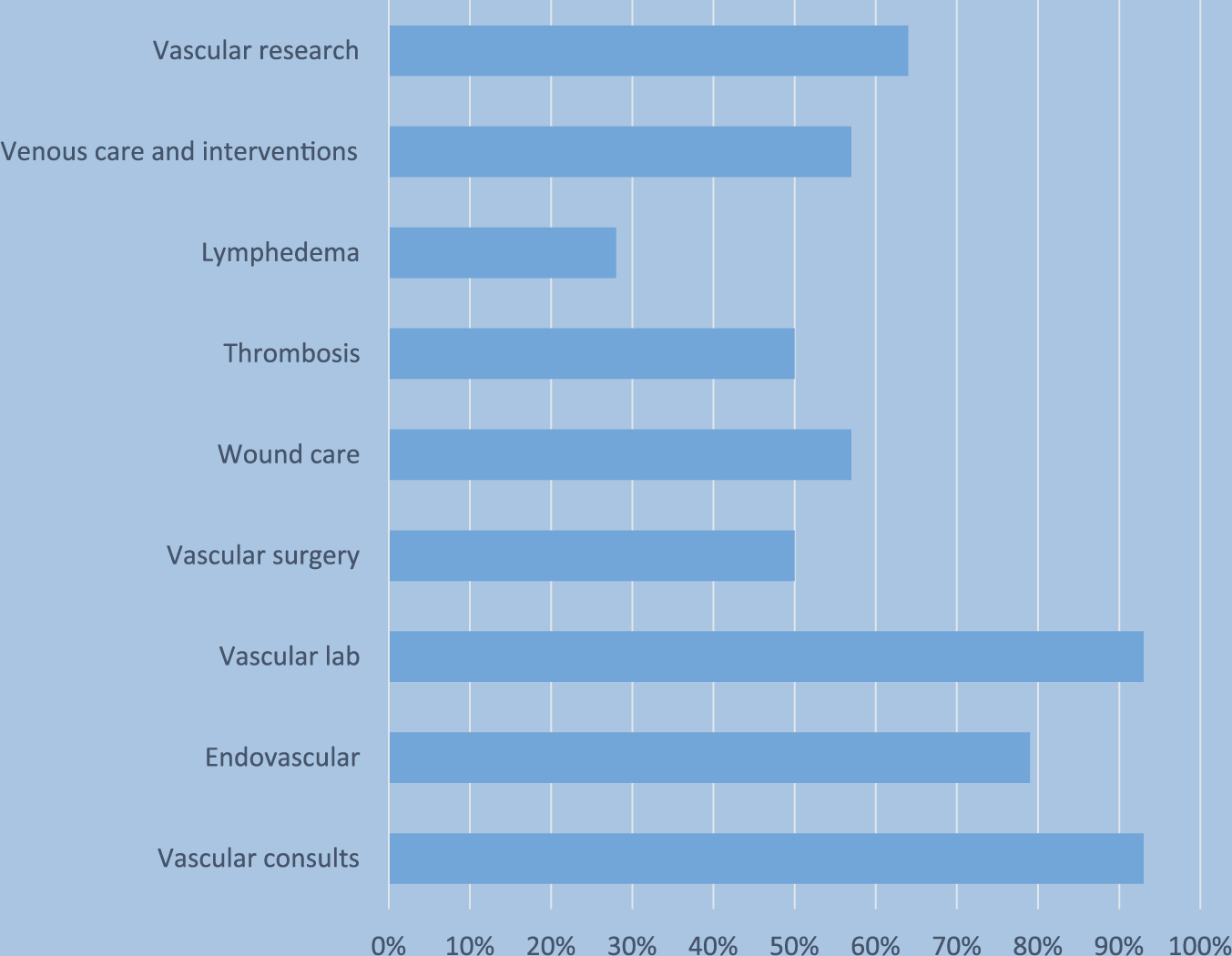
Specialized rotation services available to external trainees at vascular medicine training programs (percentage of training program respondents).
The Society for Vascular Medicine has played a vital role in education and helping to guide aspects of vascular medicine training. The society and its members have helped to provide guidance regarding the essential elements required of training programs in earlier training guideline documents 1 and in core competencies in more recent training guidelines. 2 As a society we need to continue to help shape the training requirements in the field of vascular (and endovascular) medicine. In addition, the society has played an active role in educating fellows with numerous activities, including a Fellow’s Course at the annual meeting for the second consecutive year that has been spearheaded by Drs Raghu Kolluri and Ido Weinberg. At this year’s annual meeting, there was a mini-symposium geared to help those interested in establishing training programs. This session included many interesting presentations on establishing a vascular medicine program or practice, as well as an overview of vascular medicine training and certification.
Owing to the efforts of many within SVM, a full understanding of the breadth of vascular medicine training has been recognized, beyond the traditional formal training programs. Over the past decade, vascular medicine has become an essential element of training in cardiovascular medicine. This is highlighted by the recent updated training document in vascular medicine by the American College of Cardiology (which was endorsed by the Society for Vascular Medicine). 2 We need to gain a better understanding of the status of vascular medicine training within this much larger group of cardiovascular medicine trainees to understand the current state and its needs. Such information would provide insight regarding the role our society may play in assuring the appropriate training and education of other providers in vascular medicine-related content and competencies. To help gain this additional insight, we hope to extend our survey to the program directors of cardiology and interventional cardiology training programs within the United States. This survey will focus on the ability of these programs to provide the various levels of training in both general vascular medicine and endovascular medicine (as outlined in the Core Cardiology Training Symposium (COCATS) document) and assess their current needs.
The future of our field lies in our expertise and our ability to educate and train those involved in providing vascular-related care. We have achieved great strides over the past decade in establishing formal certification in vascular medicine with the American Board of Vascular Medicine (www.vascularboard.org). However, our ultimate goal remains establishing formal certification in vascular medicine with the American Board of Internal Medicine (ABIM) and thus allow for potential funded fellowship slots with American Council on Graduate Medical Education (ACGME) approval. To help achieve this end it remains essential for us to help guide training in vascular medicine and foster new funding mechanisms with innovative collaborative ventures. We encourage all SVM members to get involved and develop creative solutions.
Footnotes
Declaration of conflicting interests
The author declared no potential conflicts of interest with respect to the research, authorship, and/or publication of this article.
Funding
The author received no financial support for the research, authorship, and/or publication of this article.