



Abstract
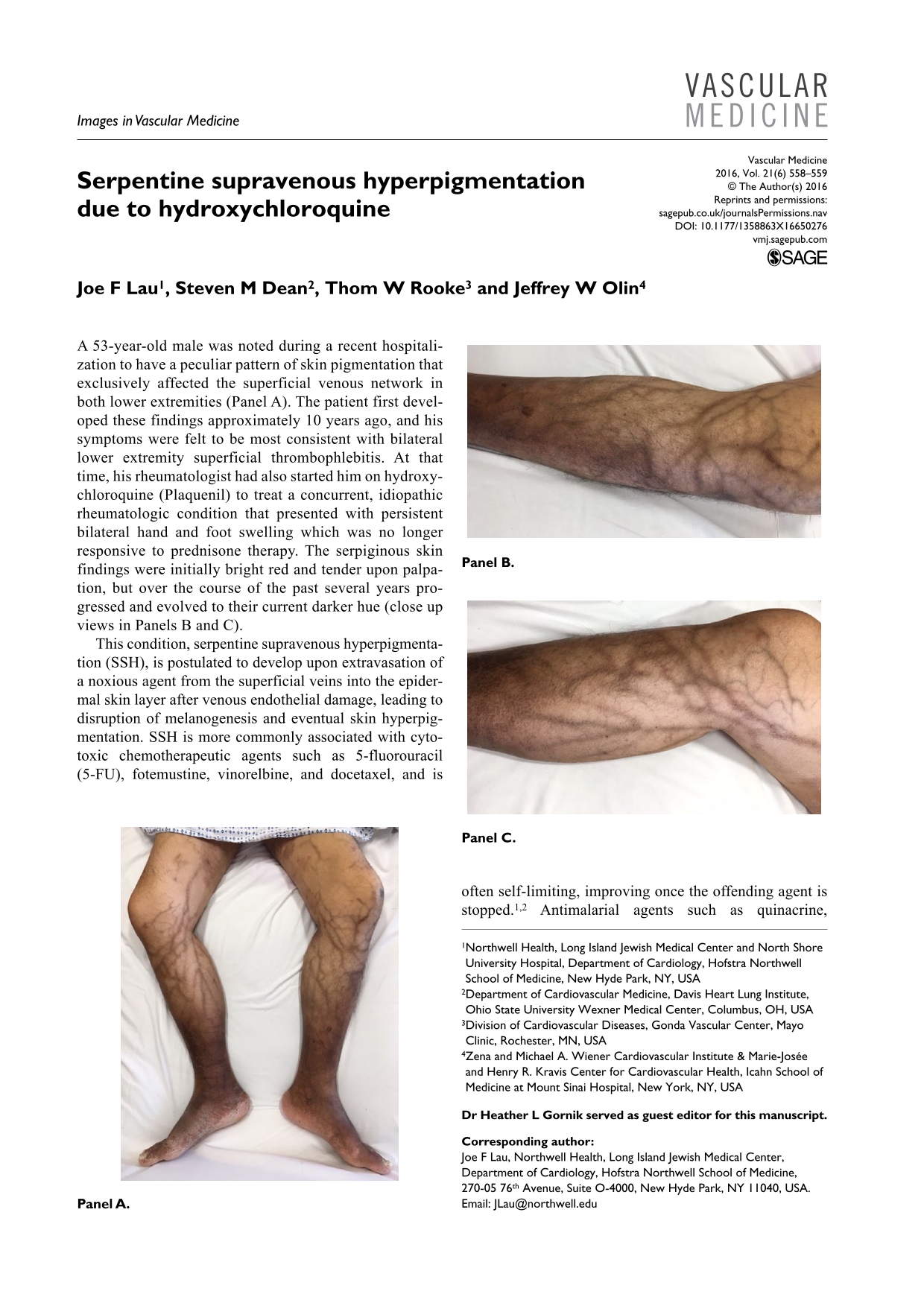
A 53-year-old male was noted during a recent hospitalization to have a peculiar pattern of skin pigmentation that exclusively affected the superficial venous network in both lower extremities (Panel A). The patient first developed these findings approximately 10 years ago, and his symptoms were felt to be most consistent with bilateral lower extremity superficial thrombophlebitis. At that time, his rheumatologist had also started him on hydroxychloroquine (Plaquenil) to treat a concurrent, idiopathic rheumatologic condition that presented with persistent bilateral hand and foot swelling which was no longer responsive to prednisone therapy. The serpiginous skin findings were initially bright red and tender upon palpation, but over the course of the past several years progressed and evolved to their current darker hue (close up views in Panels B and C).


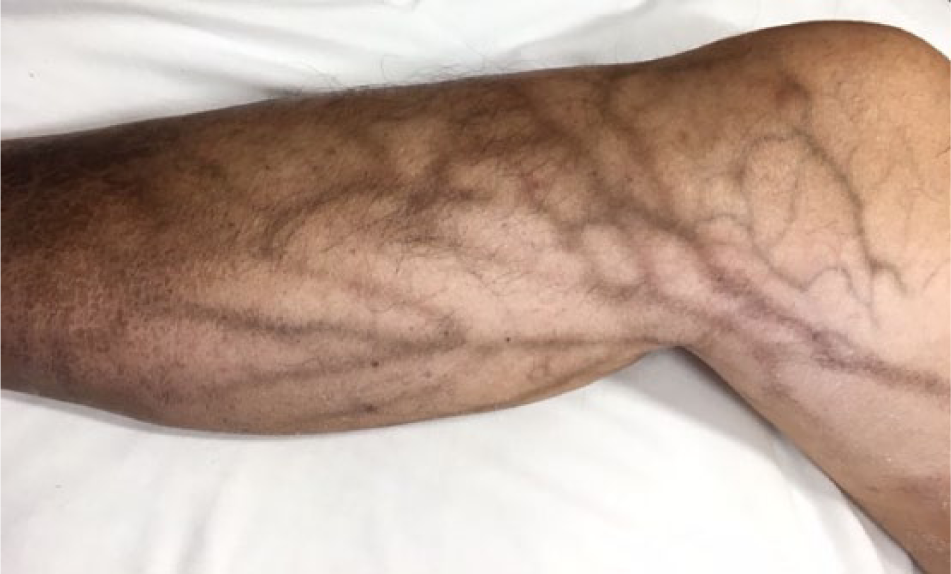
This condition, serpentine supravenous hyperpigmentation (SSH), is postulated to develop upon extravasation of a noxious agent from the superficial veins into the epidermal skin layer after venous endothelial damage, leading to disruption of melanogenesis and eventual skin hyperpigmentation. SSH is more commonly associated with cytotoxic chemotherapeutic agents such as 5-fluorouracil (5-FU), fotemustine, vinorelbine, and docetaxel, and is often self-limiting, improving once the offending agent is stopped.1,2 Antimalarial agents such as quinacrine, chloroquine, and hydroxychloroquine, can also induce skin pigmentation, 3 but have not been previously associated with SSH. Interestingly, skin pigmentation in this patient has persisted despite cessation of hydroxychloroquine therapy more than 8 years ago, and the patient has denied taking any other potentially cytotoxic agents associated with SSH. He no longer complains of leg pain and has been treated conservatively using knee-high compression stockings.
‘Images in vascular medicine’ is a regular feature of Vascular Medicine. Readers may submit original, unpublished images related to clinical vascular medicine. Submissions may be sent to: Heather Gornik, Editor in Chief, Vascular Medicine, via the web-based submission system at http://mc.manuscriptcentral.com/vascular-medicine
Footnotes
Declaration of conflicting interests
The authors declared no potential conflicts of interest with respect to the research, authorship, and/or publication of this article.
Funding
The authors received no financial support for the research, authorship, and/or publication of this article.