



Abstract

The Society for Vascular Medicine draws its strength from our diverse and talented community of members. We are shining the spotlight on some of our active SVM members, to learn about their career path to vascular medicine and our society and the nature of their vascular medicine practice.
Associate Professor of Medicine
University of Alberta
Mazankowski Alberta Heart Institute
Edmonton, Alberta, Canada
Fellow of SVM since 2006

Tell us about your pathway to vascular medicine
I was encouraged to study vascular medicine by my PhD supervisor, Dr Evangelos Michelakis, who as a trainee was interested and encouraged by Dr Alan Hirsch in Minneapolis. Evangelos was offered a job in Alberta immediately after finishing his cardiology training with Dr Stephen Archer, who moved to Edmonton in 1998 to be the Cardiology Divisional Director. Not having the chance to complete formal vascular medicine training was a disappointment for Evangelos, who encouraged me to pursue a vascular medicine fellowship. Dr Evangelos Michelakis was a great influence on my choice to study vascular medicine, and I had great teachers at Brigham and Women’s Hospital. I overlapped briefly with Dr Heather Gornik, and was mentored by Dr Mark Creager, Dr Joshua Beckman, and Dr Marie Gerhard-Herman. As a young faculty member, I have received much support from Dr Jim Froehlich and Dr Alan Hirsch.
I have a practice at an academic medical center in Edmonton, and have a mixed practice that balances clinical patient care, teaching and research. I see both general cardiology and vascular medicine patients in the hospital, but my ambulatory practice is largely vascular patients. I have a large portion of patients with thoracic aortic disease, but also see peripheral artery disease, venous thromboembolism, and unusual vascular disorders.
Why did you join the SVM?
Full disclosure – I was originally ‘volun-told’ by Dr Creager to join – but I have enjoyed the benefits of membership since, and made many friendships along the way.
How does the SVM impact your work?
I was at first a trainee (associate) member, then full member, then fellow (FSVM). I have served on the membership committee, and more recently on the scientific program committee and publications committee. The biggest benefit of involvement in SVM for me is having a community of like-minded physicians for networking and learning together. At my center, there are others who see some types of vascular patients, such as some hematologists who have a thrombosis interest, but there are no other vascular medicine physicians. So, it is wonderful to come to a meeting and engage with those who share the same background, same worldview, and same challenges. My best ever SVM experience was the meeting in La Jolla. It was a great meeting in a spectacular place. Great people, great content, and so much fun! And running north along the coast was a particular treat.
What are the biggest challenges and rewards of a vascular medicine practice?
The biggest challenge I have faced in vascular medicine practice has been carving out a distinct visible identity as a vascular medicine specialist, as opposed to a general cardiologist, and slowly building referral networks. Vascular medicine is less visible in Canada than the USA, but I suspect my experience would be similar to any vascular medicine physician starting in a ‘new’ market.
Vascular medicine is endlessly interesting, and since my expertise is different and complementary to that of my colleagues, I am often tapped for managing unusual or difficult cases. My training and experience in vascular medicine makes me a valuable asset for my clinical group. The key for the future is to inspire young clinical trainees and get them hooked on vascular medicine so that we can provide better care for all of our patients.
Staff Physician: Heart & Vascular Institute and Women’s Cardiovascular Center, Cleveland Clinic Foundation
Assistant Professor of Medicine: Cleveland Clinic Lerner College of Medicine and Case Western Reserve University Cleveland, Ohio, USA
Fellow of SVM since 2009

Tell us about your current vascular medicine practice
Well, as an introduction, I practice at the Cleveland Clinic where I completed my cardiology and vascular medicine fellowships. My clinical practice is heavily focused on vascular medicine. I see patients with a wide range of vascular diseases from venous insufficiency, lymphedema, deep venous thrombosis, to peripheral artery disease. My special interest is in the care of patients with rare arterial diseases including those with fibromuscular dysplasia (FMD) and genetically mediated arteriopathies such as vascular type Ehlers-Danlos and Loeys-Dietz syndrome. Most recently, I have developed quite an interest in spontaneous coronary artery dissection, a formerly mostly forgotten disease that has received growing interest, especially with connections to FMD and with new genetic findings. My background in FMD and other arteriopathies combined with training in cardiology has made me uniquely prepared to evaluate and care for these patients. As a wonderful and fun complement to my patient care activities, I am the associate director of the Noninvasive Vascular Lab at the Cleveland Clinic and am quickly following in the footsteps of my mentor, Dr Heather Gornik, as a ‘vascular ultrasound enthusiast.’
Tell us about your pathway to vascular medicine
I came to the Cleveland Clinic in 2005 for a general cardiology fellowship. In my first year, I was placed in Heather Gornik’s longitudinal cardiology clinic where I was first introduced to vascular medicine as a specialty. I fell under the spell of vascular medicine when I realized that most heart disease does not occur in isolation and that I could become a true cardiovascular physician who could care for patients comprehensively with the knowledge and the tools to address both the heart and the vasculature. After completing the 3-year cardiology fellowship, I went on to complete a vascular medicine fellowship and stayed on as a staff physician in both specialties.
How have you been involved in SVM?
First, let me just say that I love the Society for Vascular Medicine. It is the only medical society comprised of practitioners who are genuinely and primarily interested in the evaluation and care of patients with vascular disease. For this reason, I was very eager to help in any way to advance the Society. As a member of SVM since 2009, I’ve been involved as a presenter/speaker and committee member for the scientific sessions, and I have mentored first and second place Young Investigator Award winners. I have also been the chair of the website committee from 2013, which also allows me to be an ex officio member of the Board of Trustees. Most recently, I have also been involved as an associate editor of Vascular Medicine, the official journal for the Society for Vascular Medicine.
From your perspective, what are the benefits of involvement in SVM?
The benefits of involvement in SVM are multitude. For me, first and foremost, it’s an opportunity to be involved with other like-minded practitioners who are passionate about the advancement of care for patients with vascular disease. In this way, there are networking opportunities to collaborate in research and patient care. Being a member of SVM tells the professional world that I am a serious vascular practitioner.
Staff Cardiologist
OhioHealth Heart & Vascular Physicians Group
OhioHealth Vascular Institute
Columbus, Ohio, USA
Member of SVM since 2010
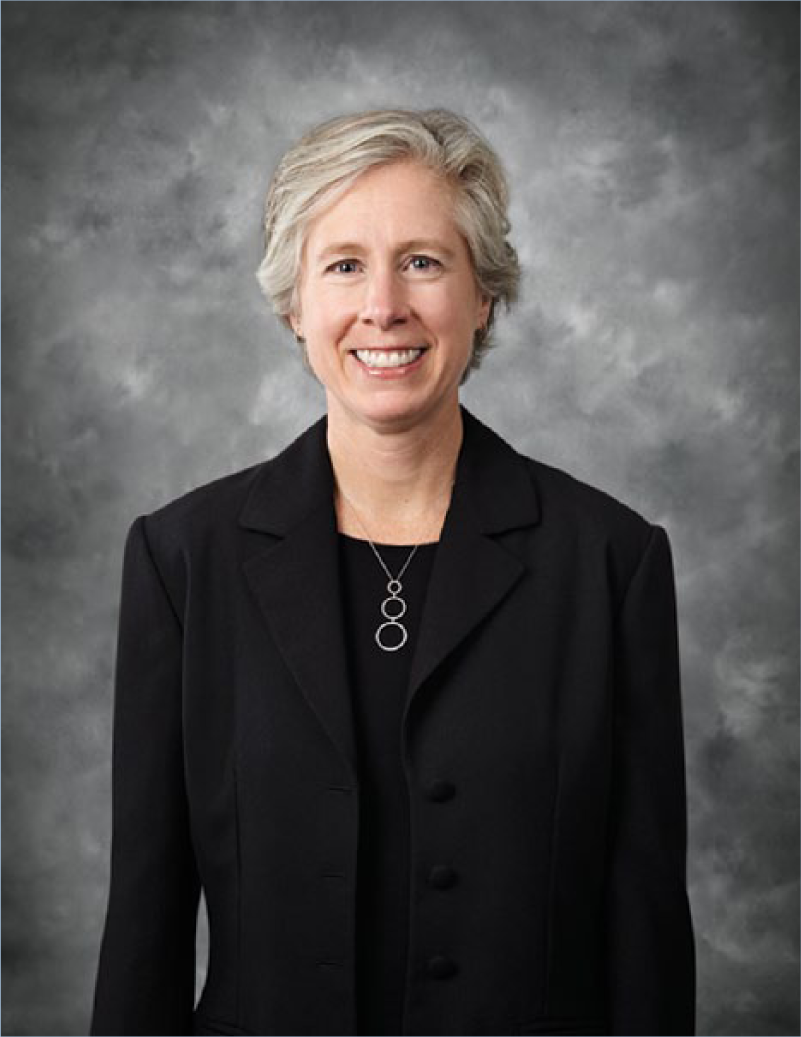
Tell us about your pathway to vascular medicine
My interest in cardiovascular medicine started from my relationship with my parents. I learned from my father, Dr John Robinson, who is a retired associate professor of cardiovascular medicine at The Ohio State University, and my mother, Carol Robinson, who is a retired assistant professor of nursing. My PhD advisor M. Sue O’Dorisio taught me the importance of basic science and clinical medicine working together. My parents and Dr O’Dorisio taught me about the importance of integrating all aspects of cardiovascular health and the value of communicating health messages with my patients.
As a medical student, I rotated on the vascular surgery service with Dr Bhagwan Satiani, where I was introduced to caring for patients with vascular diseases. My enjoyment of cardiology and pulmonary critical care led me to cardiovascular medicine training at Boston University. There is a long tradition of vascular medicine training at BU started by Dr Jay Coffman – his passion for research and mentorship is honored at the Young Investigator Award each year at the SVM. As a fellow, I spent extra time learning vascular medicine with Dr Robert Eberhardt. The complexities of vascular medicine, including the inter-connectivity with cardiology practice, held particular appeal.
Currently, I am a cardiovascular medicine specialist with OhioHealth in Columbus, Ohio and am a member of the OhioHealth Vascular Institute (OHVI). I have a busy clinical practice that includes consultations and non-invasive cardiovascular imaging for patients with diverse cardiovascular problems such as bicuspid aortic valve with aortopathy, FMD, carotid, and renovascular disease. My particular focus is on duplex ultrasound and physiologic testing, including vascular lab staff training and professional development. As a member of the OHVI, I have participated in research trials in the areas of peripheral artery disease and venous disease.
Why did you join the SVM?
Two words: Heather Gornik! So excited that she will be the next SVM president.
How does the SVM impact your work?
My participation in SVM provides a diverse community with common clinical interests and acumen. SVM members are dedicated to improving clinical outcomes for patients with vascular disease – whether rare (Takayasu’s, fibromuscular dysplasia) or common but undertreated (peripheral artery disease, venous thromboembolism/pulmonary embolism). I have learned beyond fellowship and continue to grow in my practice because I am involved with the SVM. I attend annual meetings where I get updates in arterial and venous disease as well as catch up with friends and colleagues from the VM community. In teaching, both clinical practice and imaging, SVM is an excellent resource.
One fond memory of my SVM involvement is presenting a case to Dr Jim Froehlich at Cases over Cocktails. I cared for a patient with an unusual presentation of thoracic aortic aneurysm with aortitis who we found to have IgG aortitis, a disease that has only recently been defined as a distinct clinical entity. It was a special opportunity to discuss with the SVM attendees and watch Dr Froehlich identify the correct diagnosis.
In 2014, I became the first social media editor for the Society’s journal, Vascular Medicine. My husband, Kirk Albers, and my Heart Health Doctors blog co-creator, Dr Kanny Grewal, introduced me to social media as a way to connect people with quality health information. Providing the most appropriate patient-centered treatments for vascular diseases can be challenging and requires significant negotiations and balance. The open access, patient-reviewed Vascular Disease Patient Information Page in Vascular Medicine is a great way to bridge information gaps. Patients can read about vascular conditions and be empowered in their health. Posting information on Twitter is a way to expand the reach of SVM to the broader cardiovascular provider and patient community. There is still a lack of awareness about even common vascular diseases and tweeting about the SVM resources is a way to reach beyond our specialty community. It is an exciting time to be involved in SVM; we have opportunities for fellows in training and early career vascular medicine providers to contribute to our social media presence and highlight the robust resources our society has on tap as far as clinical experience, research and interest. Follow our Twitter feed (along with 490 others and growing!) at @VMJ_SVM.