




Abstract

Congenital anomalies of the iliac artery are rare, and are usually discovered incidentally or by the presence of chronic lower limb ischemia. 1 We report a case of a 69-year-old male with pain and severe claudication (less than 100 m) mainly in the lower left limb. The ankle–brachial índex (ABI) at rest was 0.63 on the left and 0.80 on the right. After treadmill testing, the ABI decreased to 0.30 on the left and 0.36 on the right. The patient had undergone conservative treatment without success. An abdominal and lower extremity computed tomography (CT) scan and arteriography were performed, and revealed diffuse arterial calcification and an aberrant left common iliac artery with high-grade (>80%) stenosis (Panel A). The right common and external iliac arteries were not visualized, as the abdominal aorta terminated within the left common iliac artery. A stenotic cross-pelvic left-to-right collateral artery traversed anterior to the bladder and continued distally as the right common femoral artery (Panel B). No other renal or pelvic abnormalities were found. An endovascular approach was utilized via the right brachial artery, and two 8-mm self-expanding stents were successfully deployed within the left common iliac artery and the collateral artery anterior to the bladder (Panel C and Panel D). The procedure was uneventful, and the patient was discharged with improvement of the pain.
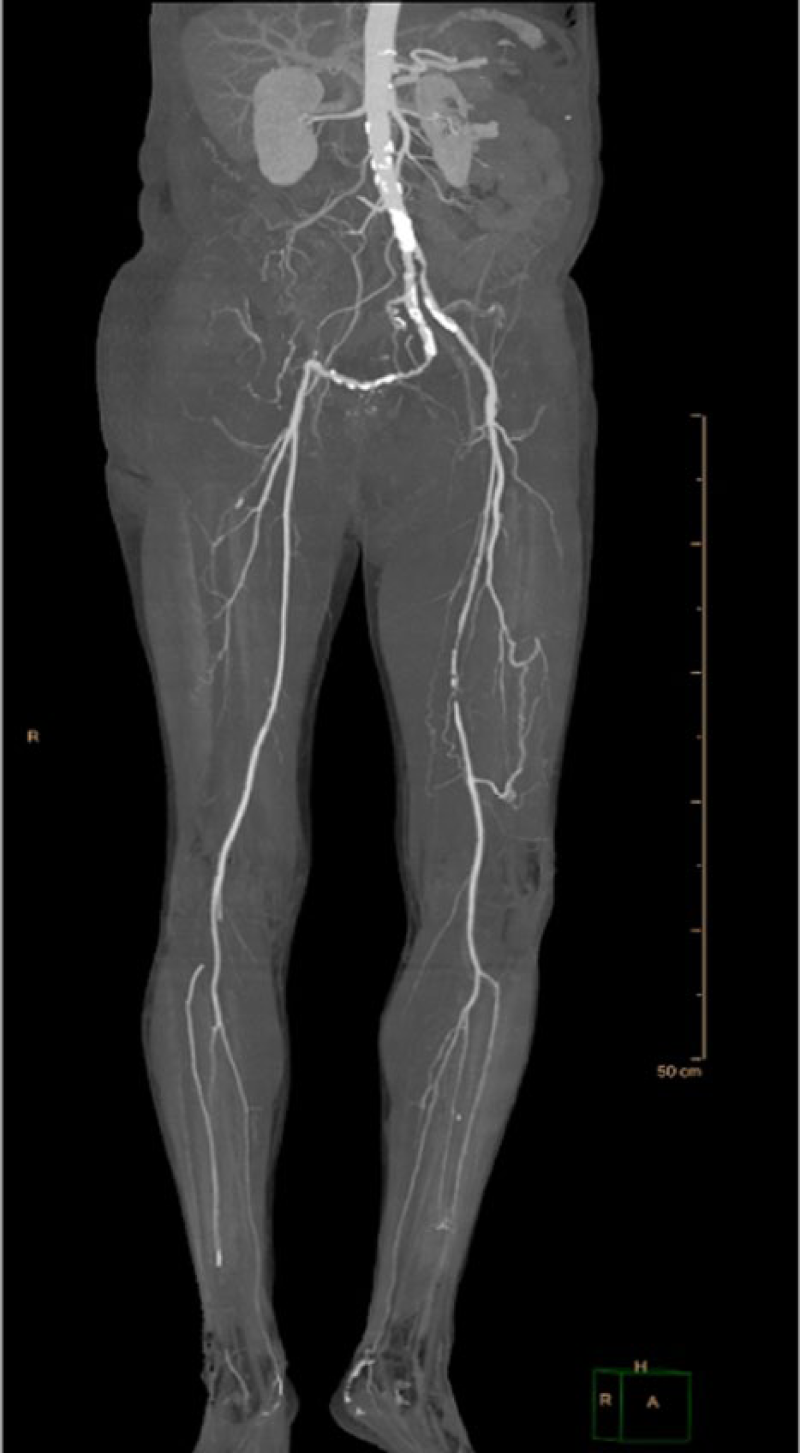
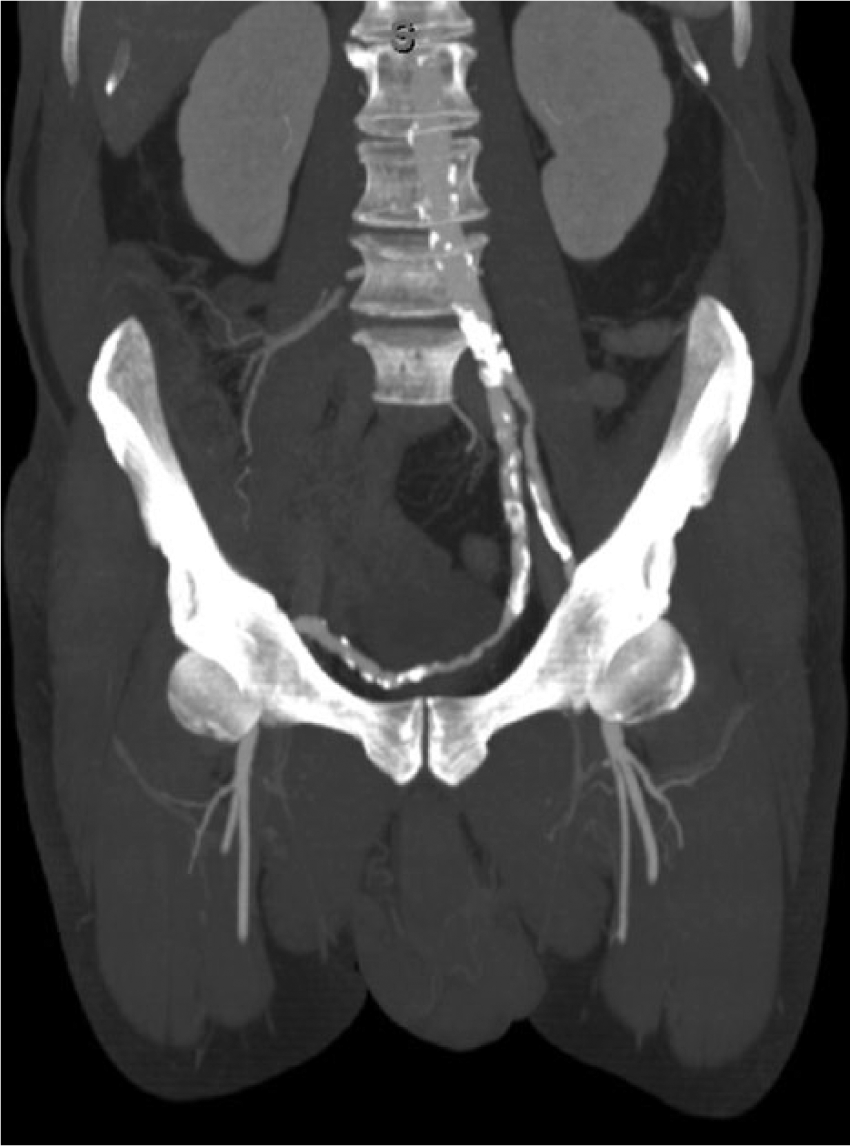
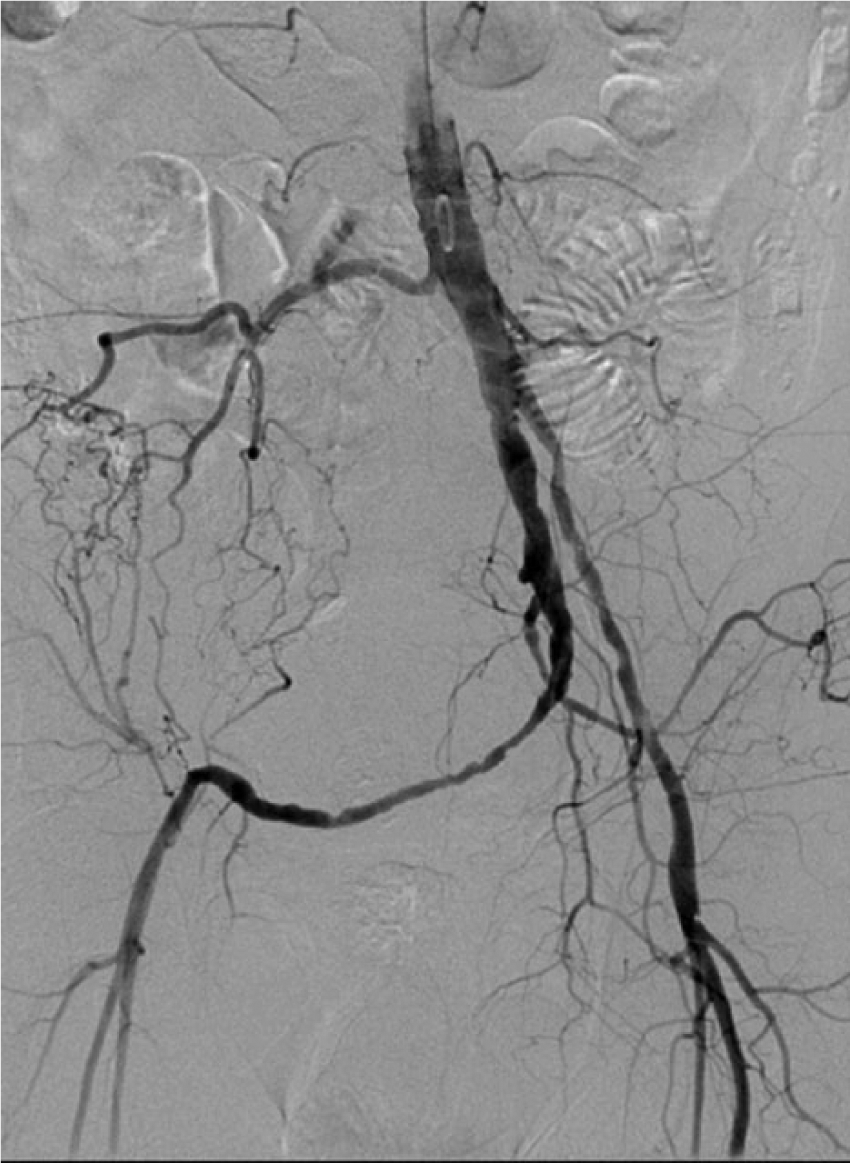
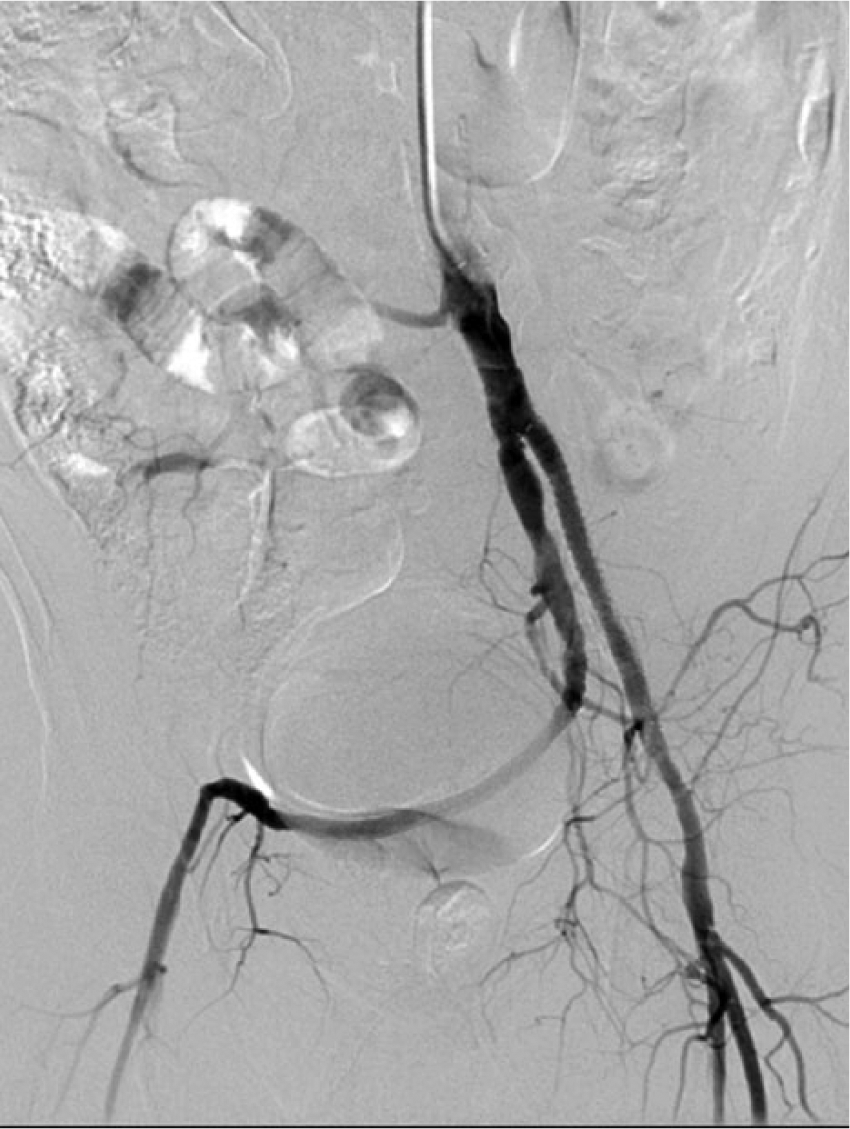
Congenital anomalies of the iliac artery are extremely rare. 1 In the largest series, with 8000 angiograms, only six anomalous iliac arteries were identified. 2 Iliac vascular malformations were predominately unilateral, right-sided, and described with urological abnormalities. 2 Hypoplasia or atresia of the common and external iliac arteries were the most frequent anomalies. 3 Some patients are asymptomatic with a normal physical examination, but most are symptomatic with lower limb claudication. 2 Previous cases of congenital iliac artery atresia have been described passing posterior to the right psoas muscle, into the pelvis. 2 In our case, the abnormal artery crossed from left to right, anterior to the bladder.
This is the first case report utilizing an endovascular approach to successfully treat a symptomatic anomalous iliac arterial system.
‘Images in vascular medicine’ is a regular feature of Vascular Medicine. Readers may submit original, unpublished images related to clinical vascular medicine. Submissions may be sent to: Heather Gornik, Editor in Chief, Vascular Medicine, via the web-based submission system at http://mc.manuscriptcentral.com/vascular-medicine
Footnotes
Declaration of conflicting interests
The authors declared no potential conflicts of interest with respect to the research, authorship, and/or publication of this article.
Funding
The authors received no financial support for the research, authorship, and/or publication of this article.