




Abstract

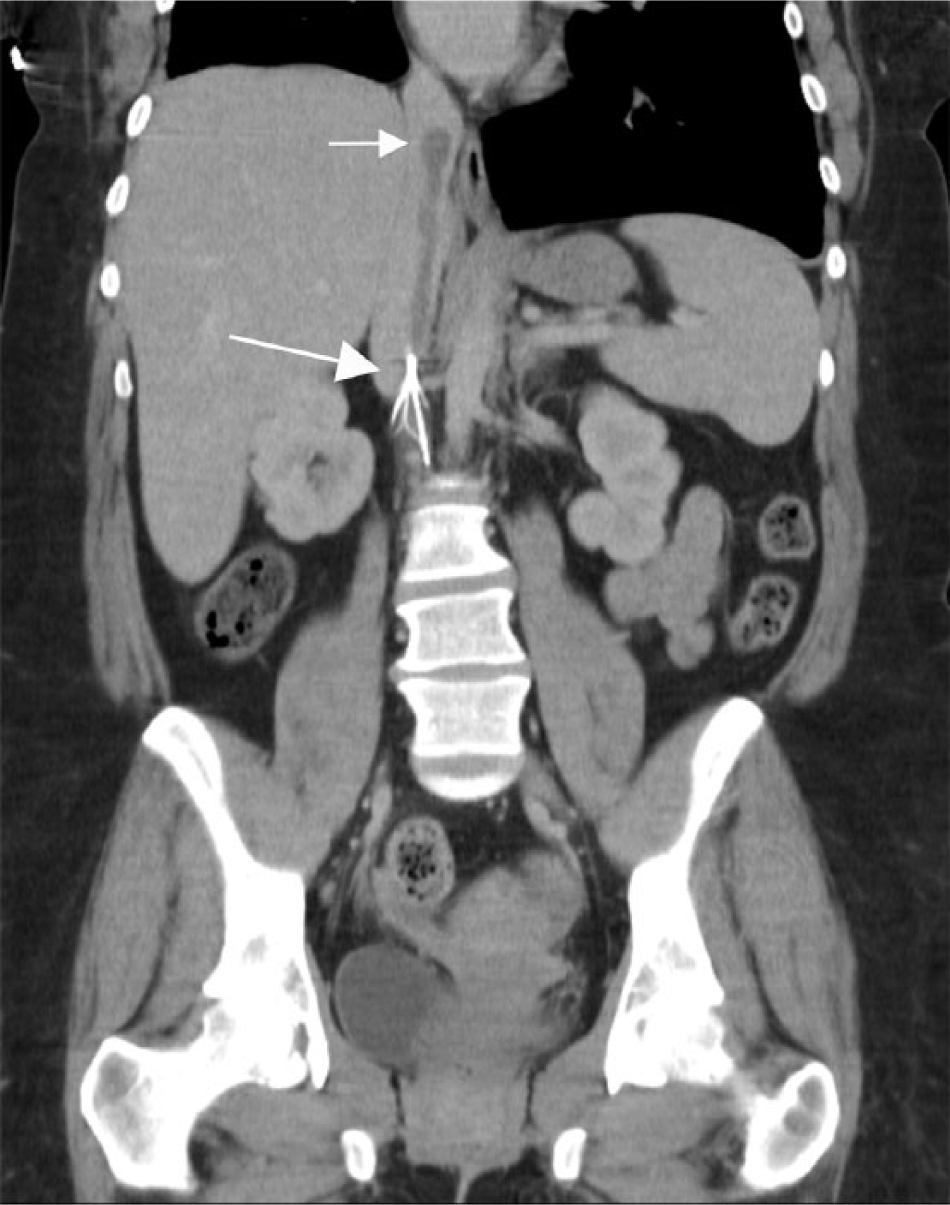
A 35-year-old female with a heterozygous mutation for factor V Leiden, antiphospholipid syndrome, and systemic lupus erythematosus on enoxaparin monotherapy presented with a chronic (>3 months old) 10-cm long floating thrombus attached to the cephalic end of an inferior vena cava (IVC) filter. A computed tomography angiogram showed the IVC thrombus extending cephalad from an infrarenal IVC filter to the hepatic venous confluence superiorly (Panel A: large arrow – IVC filter; small arrow – thrombus). She had a history of multiple prior arterial and venous thromboemboli and previously required pulmonary artery thromboendarterectomy for chronic pulmonary emboli (PE) with pulmonary hypertension. A Günther Tulip IVC filter (Cook Medical Inc., Bloomington, IN, USA) had been placed in 2002.
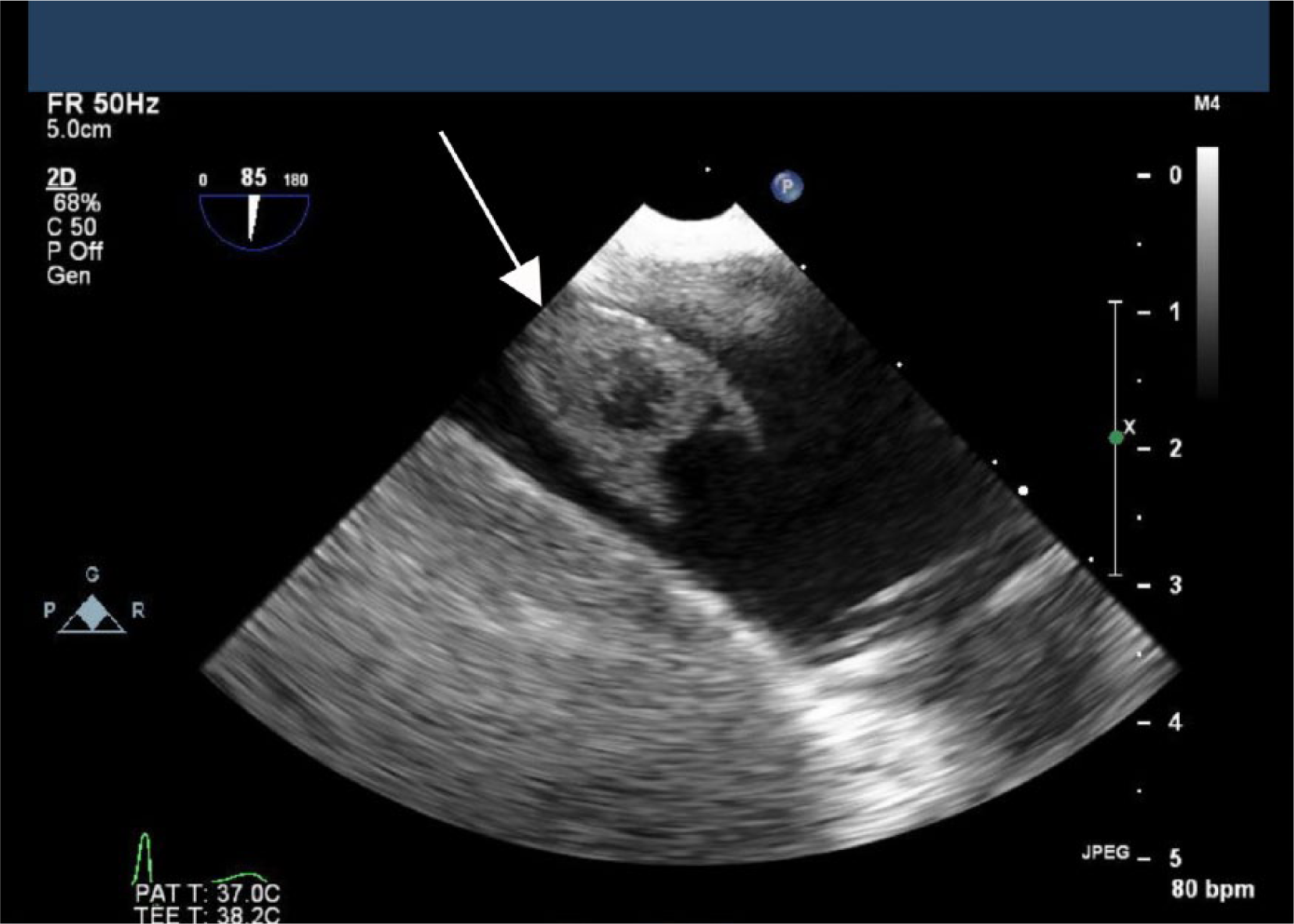
She was asymptomatic with no associated intrafilter or deep venous thrombus caudal to the filter. Transesophageal echocardiogram (TEE) demonstrated a large mobile thrombus within the inferior vena cava near the hepatic vein (Panel B: arrow). The lupus anticoagulant was persistently positive by both the dilute Russell viper venom time (dRVVT) assay and platelet neutralization procedure (PNP) using the activated partial thromboplastin time (aPTT) assay platform. Heparin platelet factor 4 testing for heparin-induced thrombocytopenia was negative on two occasions (December 2010 and April 2014). Owing to the risk of embolization, a minimally invasive approach was pursued.
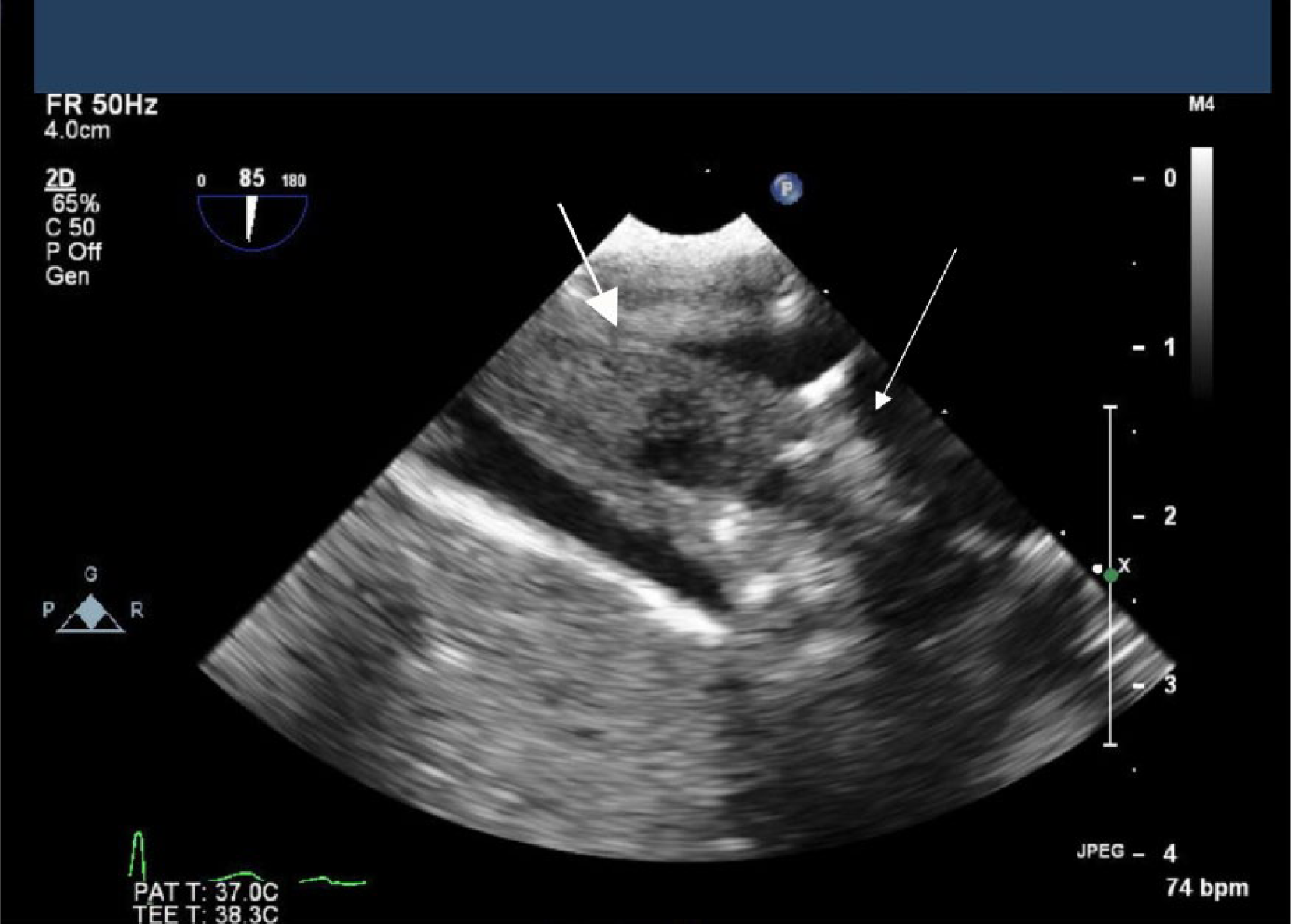
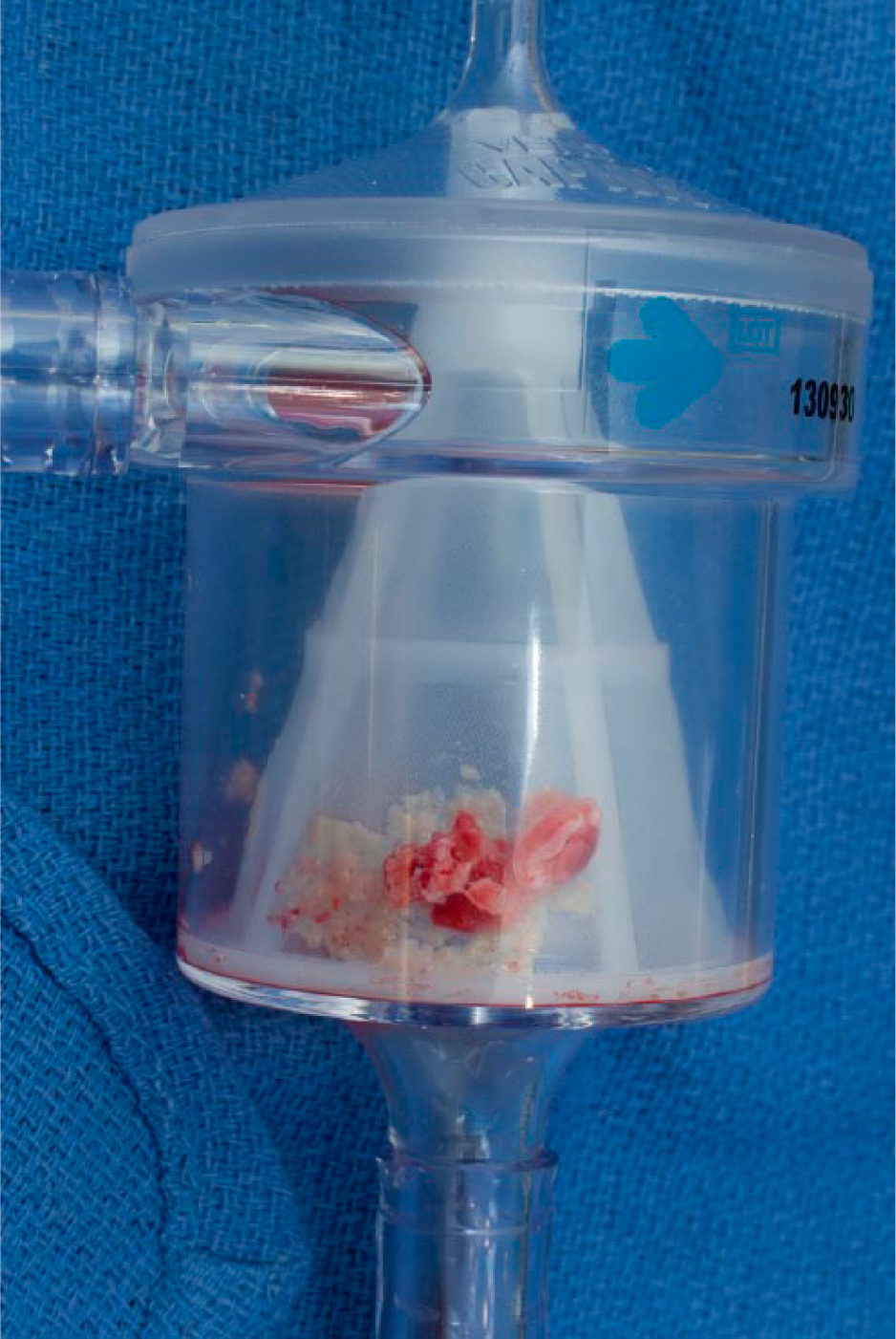
After right internal jugular (IJ) and femoral venous access was obtained, an AngioVac cannula (Angiodynamics, Latham, NY, USA) was inserted through the IJ and advanced to the thrombus with TEE guidance (Panel C: narrow arrow – AngioVac; wide arrow – thrombus). To assist with thrombus extraction, the thrombus was amputated at its origin on the IVC filter with an Amplatz GooseNeck snare (Covidien, Plymouth, MN, USA). The thrombus was then removed through the AngioVac device, with solid material observed in the bypass filters (Panel D). Completion studies demonstrated no residual thrombus. The patient tolerated the procedure well and was reinitiated on anticoagulation immediately postoperatively.
IVC filters carry a risk of long-term complications, including thrombosis.1,2 This is especially troublesome in patients with hypercoagulable states. The AngioVac cannula may be useful for removing acute and chronic thrombus material as a minimally invasive treatment for this difficult problem.
‘Images in vascular medicine’ is a regular feature of Vascular Medicine. Readers may submit original, unpublished images related to clinical vascular medicine. Submissions may be sent to: Heather L Gornik, Editor in Chief, Vascular Medicine, via the web-based submission system at http://mc.manuscriptcentral.com/vascular-medicine
Footnotes
Declaration of conflicting interest
The authors declare that there is no conflict of interest.
Funding
This research received no specific grant from any funding agency in the public, commercial, or not-for-profit sectors.