




Abstract

What is peripheral artery disease?
Peripheral artery disease (PAD) is narrowing of the arteries, which are the blood vessels that carry oxygen-rich blood away from the heart to the body. The narrowing is usually caused by atherosclerotic plaque. Atherosclerosis, or hardening of the arteries, affects arteries throughout the body. The symptoms depend on which part of the body is involved. When the leg arteries are blocked, the condition is called PAD.
Who is at risk for peripheral artery disease?
PAD is common, affecting between 8 and 12 million Americans. PAD becomes more common with age, particularly after age 50. It may affect more than 25% of people over age 70. Smoking is the most important risk factor for PAD. In fact, 80% of people with PAD are current or former smokers. Diabetes also greatly increases the risk for PAD; high blood pressure and high cholesterol also contribute.
What are the signs and symptoms of PAD?
The typical symptom of PAD is called “claudication,” which refers to pain in the leg that comes on with exercise and goes away with rest. The pain occurs because the leg muscles are not getting enough oxygen. However, most people with PAD do not have typical symptoms. They either have “atypical” leg pain or they have no symptoms at all.
How is PAD diagnosed?
The easiest way to diagnose PAD is with the ankle-brachial index (ABI). This test involves putting blood pressure cuffs on the arms and on the ankles as shown in Figure 1. A handheld ultrasound device (“Doppler”) is used to listen to the blood flow and measure the blood pressure. The blood pressure at the ankle should be higher than the pressure at the arm; the ratio should be higher than 1.0. If the ankle pressure is lower than the arm pressure, then the arteries in the leg are probably blocked, and the diagnosis of PAD is made.
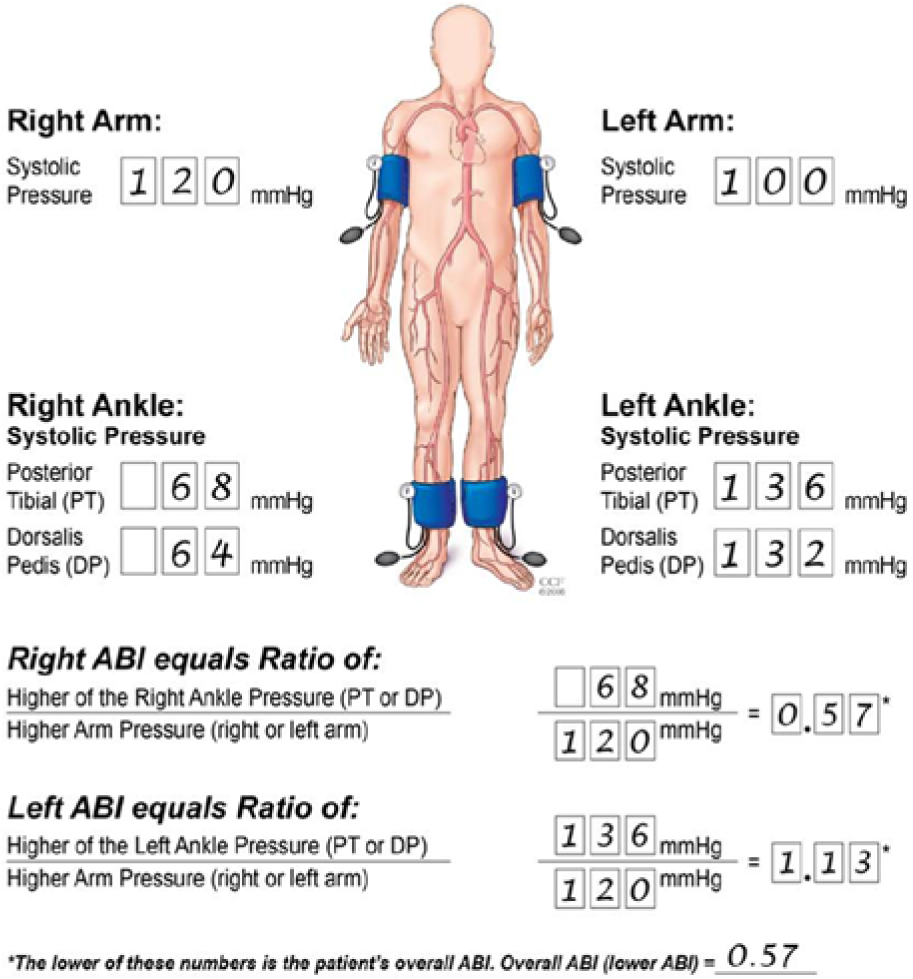
The Ankle-Brachial Index.
Several other tests are useful in the diagnosis and evaluation of PAD. In a more detailed blood pressure cuff test, the cuffs are placed at multiple areas on the legs to measure blood pressures and assess the blood flow. Another option is an arterial duplex scan, which uses ultrasound to determine the location of the blockages in the leg arteries and also the severity of the blockages. When more information is needed to plan a procedure to restore blood flow to the leg, a vascular specialist may order a CTA (computed tomographic angiography) or MRA (magnetic resonance angiography). An example of a CTA is shown in Figure 2.
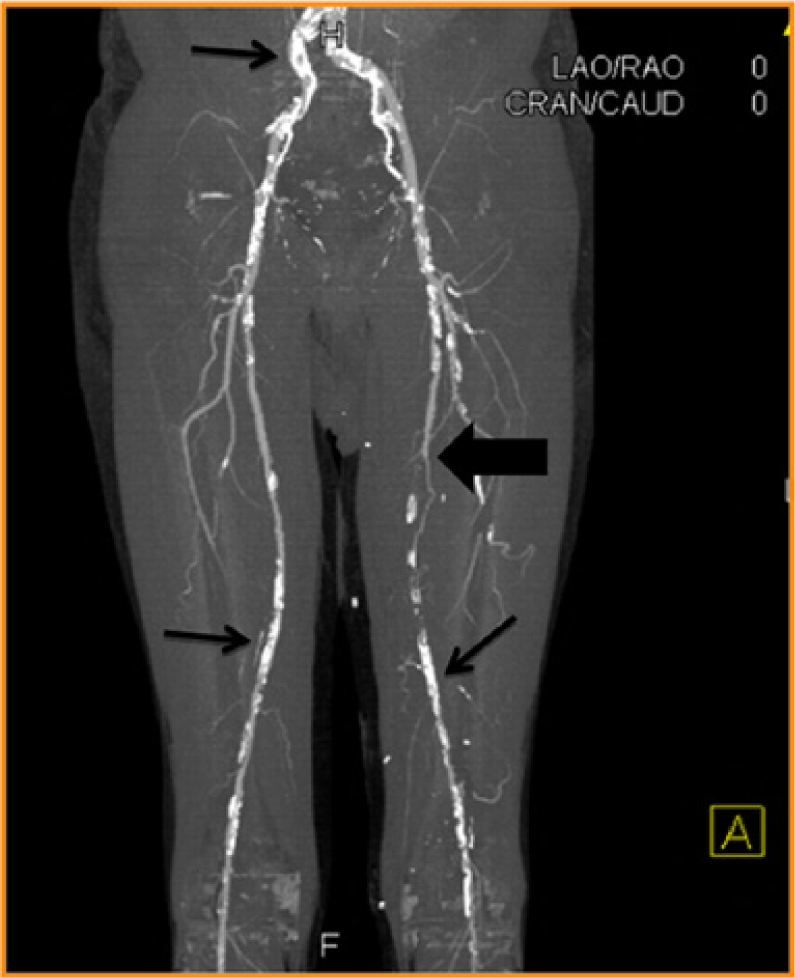
Computed Tomographic Angiography (CTA).
What are the risks of having PAD?
Usually, the leg symptoms in people with PAD will improve or stabilize with proper medical treatment and exercise, although a small percentage of patients with PAD can have worsening leg symptoms over time. It is important to know, however, that the risk of heart attack and stroke in people with PAD is much higher than in people without PAD. Thus, the medical treatment focuses on reducing this cardiovascular risk (i.e., risk of a heart attack and stroke). Taking good care of the feet, including having the patient look as his or her own feet daily, is also important because one of the other complications of PAD can be ulcerations (sores) which may not heal due to poor circulation.
How is PAD treated?
The two main goals in the treatment of PAD include (1) reducing the risk of heart attack and stroke, and (2) improving quality of life by easing the pain that occurs with walking. To achieve these goals, patients with PAD need regular medical follow-up with health care providers who are experienced in treating this condition. Table 1 lists key recommendations in the medical treatment of PAD.
Medical treatment of peripheral artery disease.
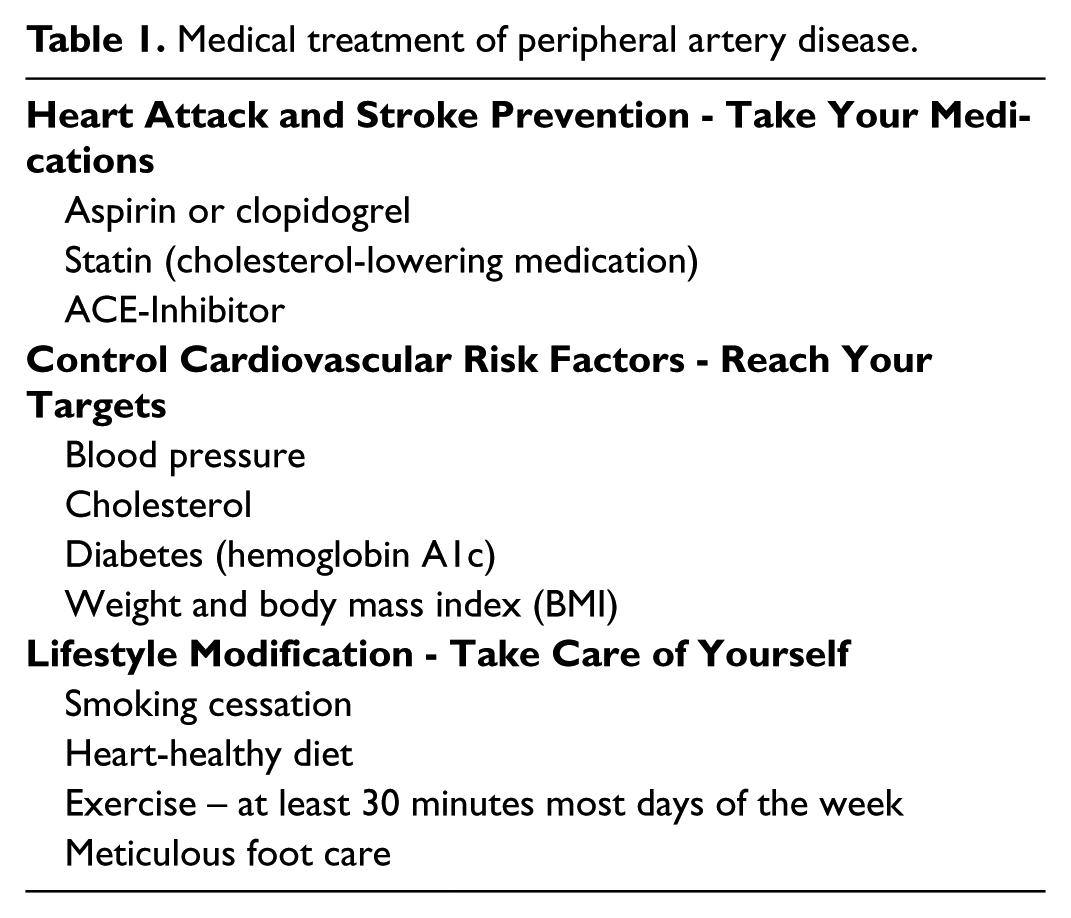
A blood-thinning medication (aspirin or sometimes clopidogrel) is usually prescribed to reduce the risk of heart attack and stroke. A “statin” cholesterol-lowering medication (such as atorvastatin or rosuvastatin) should also be prescribed to reduce the risk of heart attack and stroke. Quitting smoking is absolutely essential. Many resources are available to help with smoking cessation including medications (varenicline or bupropion), nicotine replacement, counseling, and hotlines such as 1-800-QUIT-NOW (1-800-784-8669). PAD treatment also includes controlling other risk factors such as high blood pressure and diabetes. A blood pressure medication called an ACE-inhibitor (such as ramipril or lisinopril) may be prescribed.
A supervised exercise program will improve the symptoms of pain in the legs with walking (claudication), allowing patients to walk farther. A structured program typically includes walking on a treadmill in a supervised setting at least three times per week. People with PAD should also walk at home for a total of at least 30 to 60 minutes every day. The usual prescription is called “Start/Stop” exercise: walk until the discomfort reaches a moderate level and then stop; wait until the discomfort goes away completely; and then start walking again. In some cases, a medication called cilostazol may be prescribed to improve the claudication symptoms.
For some patients with more severe PAD, the claudication symptoms may still cause problems in daily life, even after a few months of exercise and medications. Restoration of blood flow is necessary in more severe cases to relieve pain at rest or to heal a wound. To restore the blood flow, the first step is usually an angiogram. During this procedure, contrast (dye) is injected into the blood vessels and specialized X-rays are taken. Angioplasty with a balloon may be used to clear the blockages, and a metal strut called a stent may be inserted to prop open the vessel. If the balloon and stent procedure is not possible, then bypass surgery may be necessary.
How can PAD be prevented?
Everyone can reduce their risk for PAD and other cardiovascular diseases by not smoking, maintaining a healthy body weight, and getting regular exercise: at least 30 minutes per day of exercise on most days of the week. Getting checked for high cholesterol and diabetes is also important.
Summary
Peripheral artery disease is common, and the symptoms typically include leg discomfort with exercise. Patients with PAD can also have other symptoms such as non-healing wounds on the feet. A simple ABI test with a blood pressure cuff can diagnose PAD. Treatment for PAD includes smoking cessation, medications aimed at preventing heart attack and stroke, and exercise to alleviate the discomfort. Patients with more severe PAD, such as those with wounds that are not healing or those with symptoms that do not respond to medication and exercise, may need to undergo a procedure to restore blood flow to the leg (angioplasty or bypass surgery).
Footnotes
Declaration of conflicting interest
The author declares that there is no conflict of interest.
Funding
This research received no specific grant from any funding agency in the public, commercial, or not-for-profit sectors.