



Abstract
Prof. Susan Easton, the founding editor of the Journal, has in her introduction for the 100th issue set out the history of the International Journal of Discrimination and the Law, highlighted the contributions made and challenges faced in the early days and looked briefly to the future. This concluding piece intends to provide a complementary set of bibliographic snapshots. In doing so, not only does it help mark the 30th anniversary and the 100th issue but it also provides a contribution to the ongoing analysis of representation within legal academic publishing in the literature and within the industry.
Introduction
From its inception, the focus of the International Journal of Discrimination and the Law has been, in the words of the founding editor (earlier in this issue), “to explore the limits and potential of law in achieving equality and addressing the complexities of discrimination”, “to broaden the scope from the UK to consider how these problems were addressed in other jurisdictions”, and to cover discrimination law beyond as well as within the workplace. 1
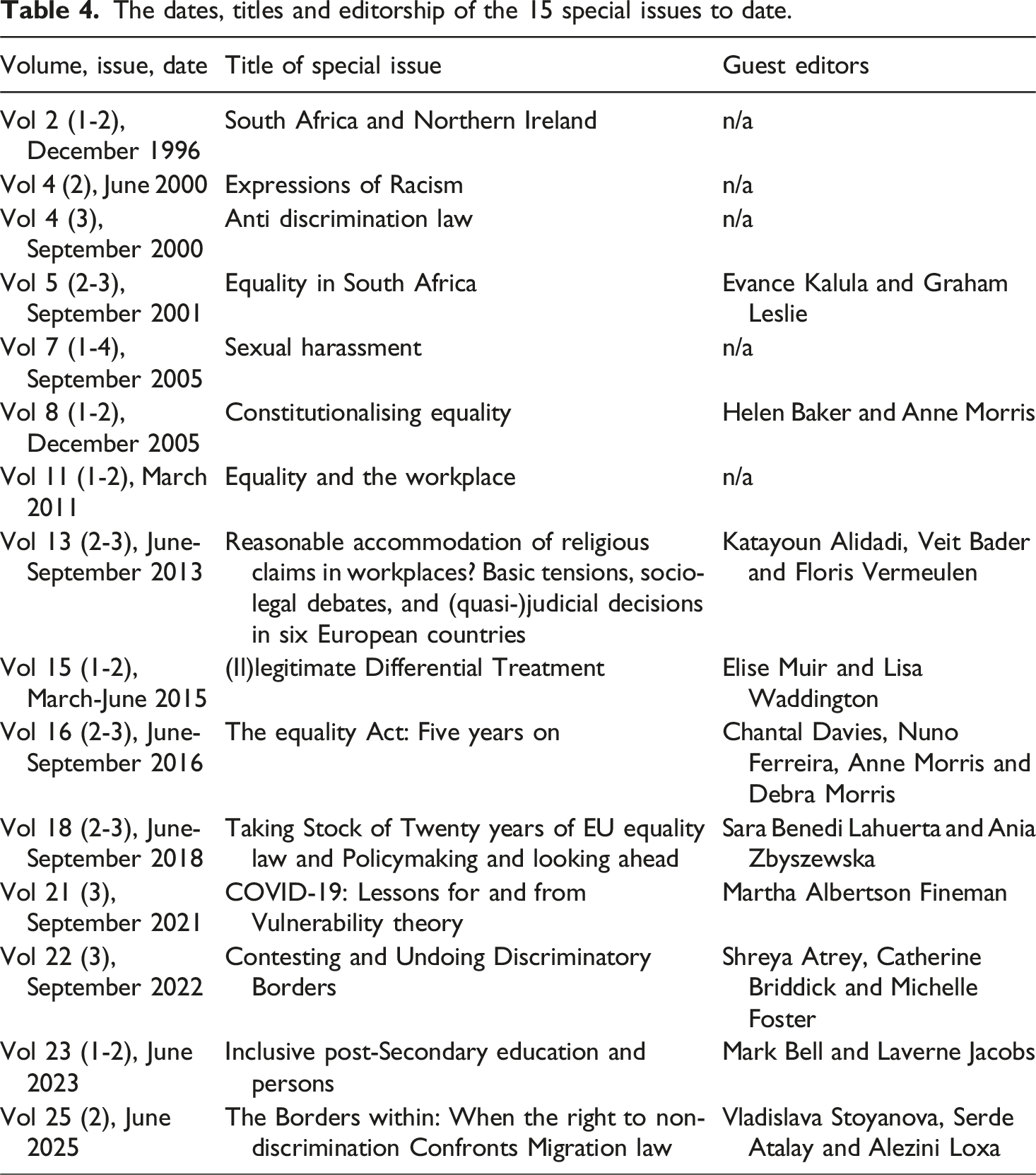
The first issue of the journal comprised a mix of articles, case notes, book reviews and conference news. The pattern continued (with the exception of conference news) through to volume 10 when the content became almost exclusively articles and case notes (later extended to legislation and policy notes). 2 Special issues have also been a feature with 15 being published from the first special issue in December 1996 to the most recent in June 2025. 3 In total there have, to date, been around 490 pieces published in the journal’s issues, across some 7500 pages. This article focuses on some bibliographic snapshots, from various time periods, with the intention of both helping to mark the 100th issue and to contribute to the emerging literature reflecting on representation particularly within law publications.
A note on methods and other literature
Boulanger, Creutzfeldt & Hendry recently conducted a bibliometric study of the Journal of Law and Society on the occasion of its 50th anniversary in 2024. 4 This article does not set out to apply all the methods employed by them, not least as the availability of data varies; in particular, the IJDL is, at the moment, a much younger journal which affects, inter alia, the size and appropriate use of the corpus. Furthermore, while similar citation data is not readily available, some demographic data is available and so can be presented here. Given the nature of the journal, this piece does seek, however, to provide a focussed contribution to the wider discussion about voices, themes, diversity and inclusivity highlighted in that piece and also by Barnes, Honkala and Wheeler in their study of gender representation in authorship in five UK Law journals (2016-2020). 5 Accordingly, while what is presented here is not as detailed an analysis as that undertaken by Boulanger, Creutzfeldt & Hendry, or for example by Donthu and others (in the context of the Journal of Business Research’s 45 anniversary) 6 - although such an exercise could be the province of future work - this article is intended to provide original, rigorous and tailored snapshots from the first 30 years.
As the availability of data varies, the time periods within the snapshots vary. The largest data set covers the full 99 previous issues and is drawn from the exportable article citation data (or bibliographic data - as opposed to data about the citation by others of the articles) as published on the publisher’s website and reformatted for analysis. This is supplemented by some information from this issue; by a separate extraction of the text of the abstracts of the pieces; and by a subset, with additional information, supplied by the current publishers covering the period from when they took over publication (and including onlinefirst publications). While the sex of the authors is not one of the recorded fields in the sets, Genderize. io
7
was used to provide an inference and to depersonalise the data (providing the opportunity of a broad brush indication rather than using more granular, and here, uncollected personal information). As Matias-Rayme et al note: Genderize.io is a web service that can be reached via API… implemented by the Danish company Demografix Aps, … It predicts a person’s gender using their given name and the statistical analysis of names and their association with genders. It uses machine learning algorithms and natural language processing techniques to make gender predictions.
8
As noted by, for example, Boulanger, Creutzfeldt & Hendry, ‘automatic gender classification is a highly problematic process that can only be used at a scale where misclassifications will cancel each other out’ 9 and accordingly this analysis is limited to a broad timescale rather than at a yearly, issue or even individual piece basis. The broader level, and the delinking from the pieces, also reduces the personal nature of any attribution.
The geographic information derives from the institution data in the shorter sub-set and from a separate analysis of the titles and abstracts of the articles. That analysis also provides an overview of the themes. The frequency analysis was conducted using a combination of LancsBox X 10 and Google Sheets and Microsoft Excel formulae and functions.
Snapshots of authorship
Table showing frequency of the contributors with the highest number of contributions to the journal (excluding general editorials) and where contributions ≥3 the nature of those contributions.
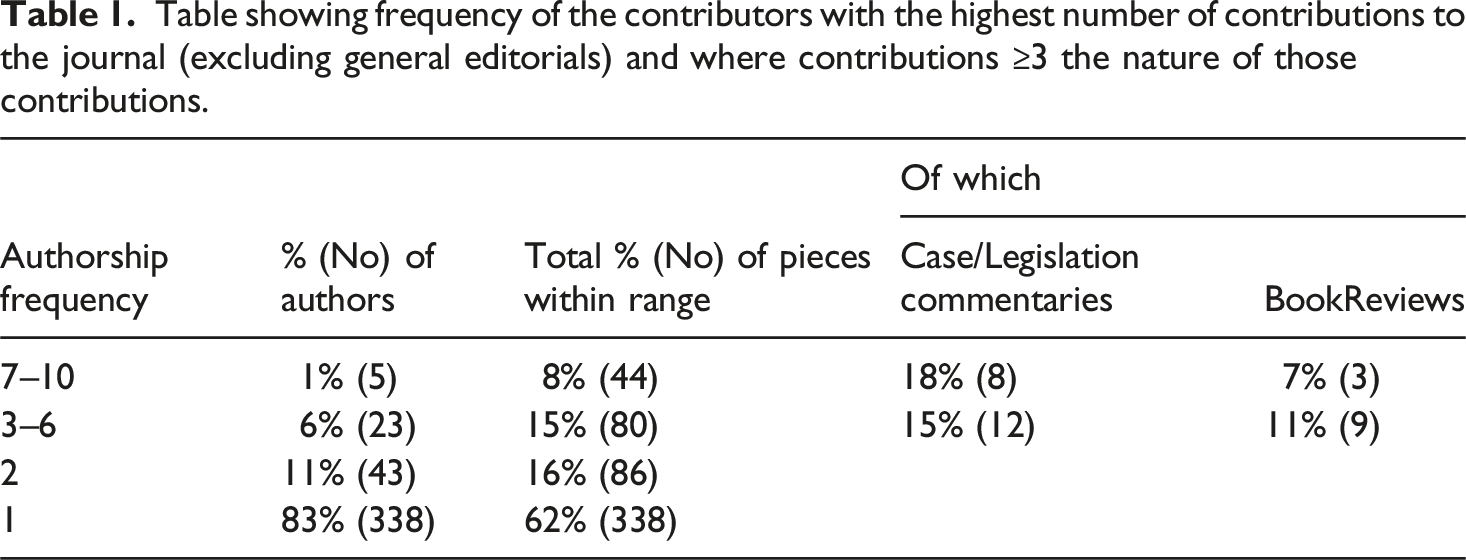
Co-incidentally, again excluding the general editorials, the average number of authors per piece is also a little over 1.3 (1.344), with over 78% of pieces being sole-authored and 97% having 3 or fewer authors. However, this picture changes if the 100 issues are divided into three parts as can be seen in Figure 1 below. IJDL sole authorship and co-authorship over three periods.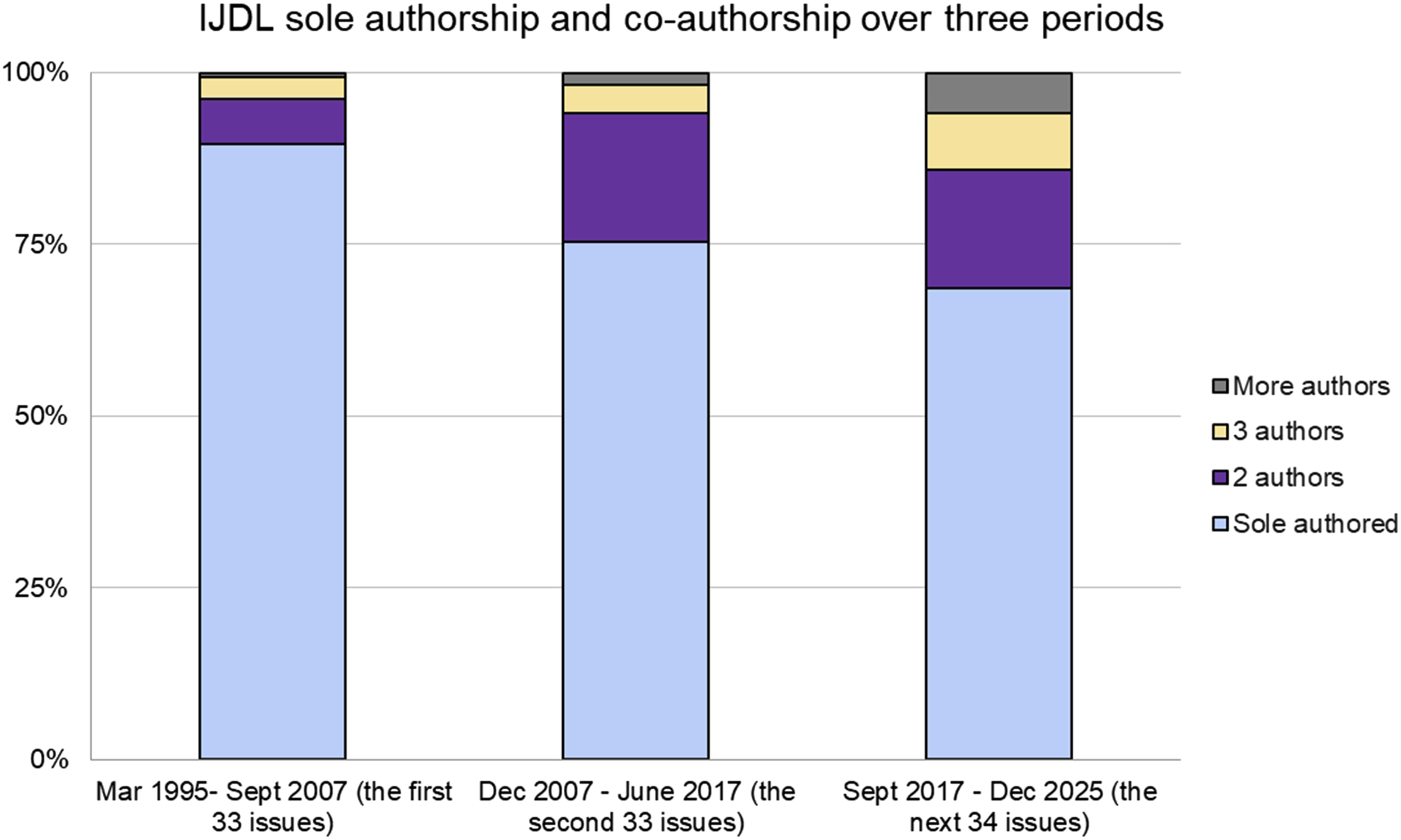
Sole-authored publications have fallen from nearly nine-out-of-ten in the first 33 issues to a little over two-thirds in the most recent 34 issues. Co-authorship almost tripled between the first 33 issues and the second 33 before falling back a little in the third tranche as multiple authorship increased (with papers authored by three people almost doubling while papers authored by a greater number, while still marking up a small proportion, increased nearly 10-fold from just over 0.6% to around 6%). A similar increase in co-authorship was noted by Boulanger, Creutzfeldt & Hendry in one of their supplementary blog posts accompanying their analysis of the Journal of Law and Society. 12
Co-authorship was also something commented on in the UK Research Excellence Framework Law Sub-panel report in 2022 where it was noted that ‘[t]he sub-panel received a considerable number of co-authored outputs’ but ‘[m]ultiple authorship was rarer and presented no problems of assessment in this sub-panel’. 13 Indeed, looking at the REF submission data, it would seem that the percentage of sole-authored outputs submitted to the law sub-panel was around 65% with just under 20% co-authored and 5% having three authors (much in line the most recent figures for the IJDL). 14 Co-authorship can help bring extra dimensions to outputs but is also disciplinary specific. While the UK REF sub-panel for Law described the number as considerable, co-authorship is more prevalent in the likes of Business and Management and Social Policy (as attested by the REF submission data in those areas which show under 10% sole authorship and close to 60% with up to 3 authors in the case of Business and just under 30% sole authored and close to 80% with up to 3 authors in the case of Social Policy) and even more so in the Sciences. 15
Gender
Another area where there is disparity in numbers across, and within, subject areas is gender representation. For example, official UK statistics for 2015 showed that the likes of Economics, Philosophy, Chemistry, Maths and Physics had under 30% female representation whereas Nursing, Education, Modern Languages, Social Work and Social Policy, and Psychology had under 40% male representation. 16 While figures and extent may vary, this is a global situation: a 2022 British Council report noted at the university student level that ‘worldwide, more women than men study in the fields of education, humanities and arts, social sciences, business and law, and health and welfare’ whereas men were ‘over-represented in the fields of information and communication technologies, engineering, manufacturing and construction, and agriculture’. 17 There may also be variance within specific fields such as the historic underrepresentation of women at the English Chancery Bar (and women judges in the Chancery division compared to the Family Division). 18 This is not limited to practice but occurs in academia too which can lead on to publication rates. However, even where numbers may be close to parity within a sub-area, publication rates may still be low. In the context of international public law, Dixon and Versteeg have shown that with regard to the International Journal of Constitutional Law between 2006 and 2020 ‘of the 1102 author entries, 25% were female authors, compared to the membership of International Society of Public Law (ICON-S), the international society of public law which is closely associated with the journal and is 47.5% female’. 19 In the case of a more generalist law journal, the study into the Journal of Law and Society ‘shows that the proportion of female contributors … increased, from approximately 20% in 1982 to almost 50% in 2016.’ 20
The IJDL by contrast may, perhaps, be expected, given its focus and history, to have a more equal and diverse authorship. Using the date of the change of publisher as a convenient threshold, which provides reasonably large groups for comparison when using the Genderize. io derived approximation, shows broad parity between the sexes both since 2011
21
and beforehand (Figure 2). IJDL Authors by gender 1995-2011 and 2011-2025.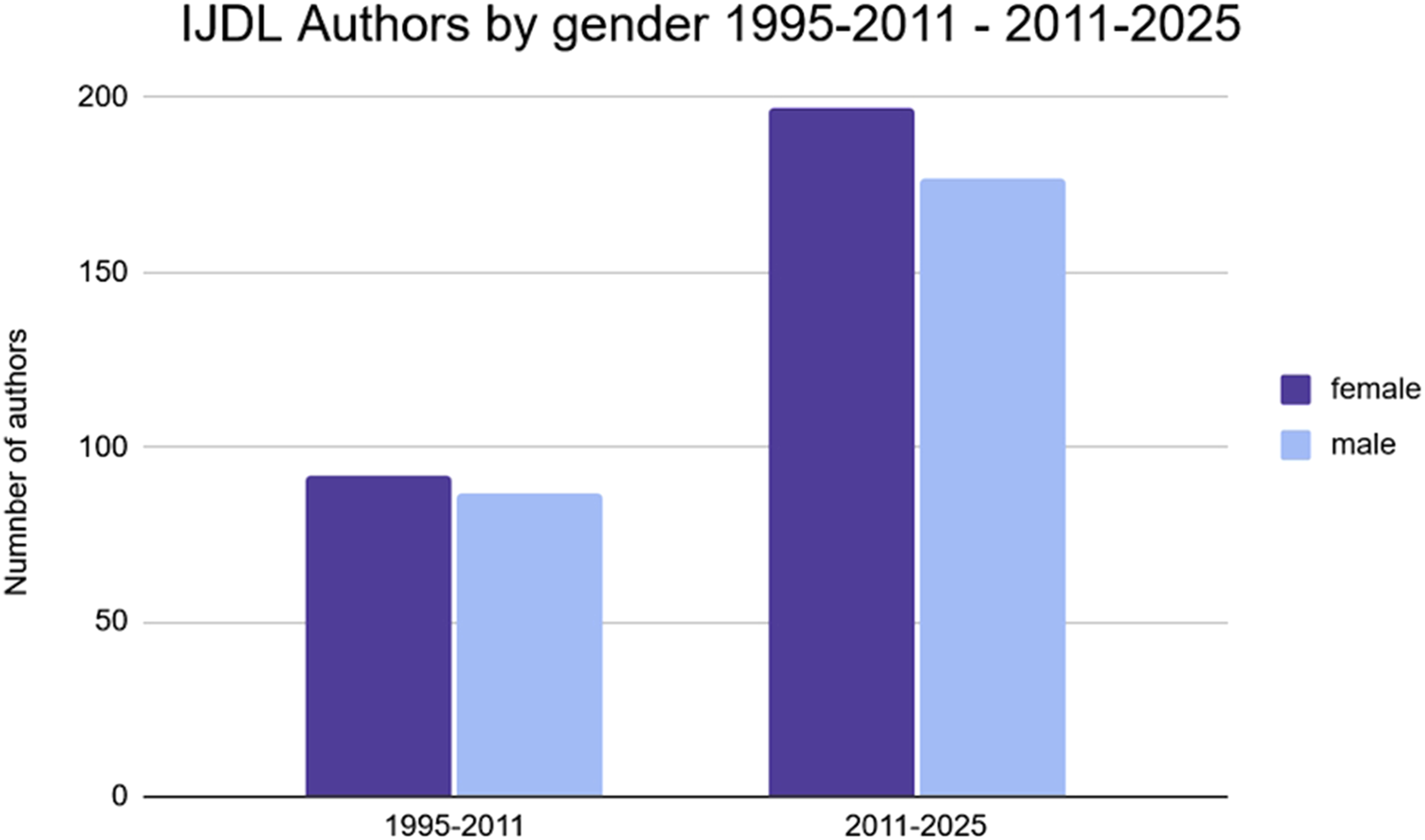
Geography
From the outset the IJDL was designed to be an international journal. As Prof. Easton notes in her brief history of the journal, “The unique selling point of the International Journal of Discrimination and the Law was that it covered a wide range of jurisdictions which distinguished it from other journals, as well as a wide range of areas of discrimination”. 22 As publisher-supplied data post 2011 includes country and institution, a snapshot of that is provided here (with more detailed analysis of geographic scope appearing in the next section which looks at snapshots of the pieces as opposed to of the authorship).
Table showing numbers of pieces by country of the authors’ institutions.
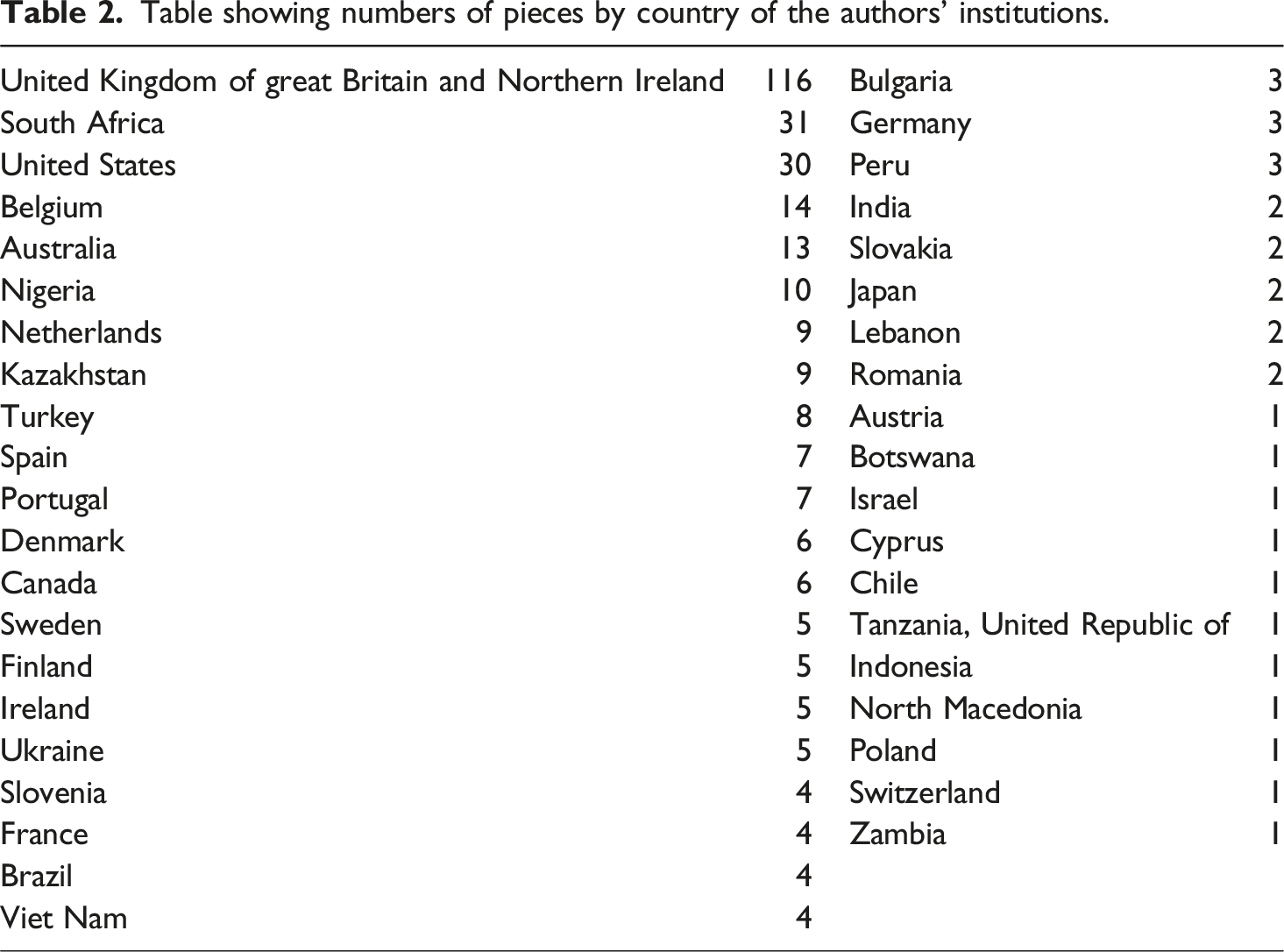
Indeed, when looking at the continental level, but disaggregating the UK and the rest of Europe, UK based authors contributed 34.9%, European based authors contributed 25.9%, followed by African and North American based authors at 13.25% and 10.8% respectively, with authors based in Asia at 8.7% and authors based in South America at 2.4%.
The data on institutions is far less clean, with multiple variations of affiliation and not all pieces had affiliations recorded in the dataset, but cleaning up that data provides a top five contributing institution list with the University of Western Cape (15) at the top followed by KU Leuven (9), University of Oxford (8), Robert Gordon University Aberdeen (6) and University of Limpopo (6) ahead of 156 other affiliations (predominantly universities but also including law practices). While there can thus be seen to be an element of concentration in the location of voice within the journal, that is a small proportion of the total. Where people are based may influence but does not determine what they have to say and so the focus of the next collection of snapshots moves from authorship onto the pieces themselves.
Snapshots of the pieces
When looking at the titles of articles, a picture can emerge of the geographic scope. Countries (or sub-divisions) which appear in titles of pieces in the journal from volume 1 issue 1 through to volume 25 issue 3 are visualised in Figure 3.
23
This will inevitably be a partial picture, and will not take account of the analogous value to other jurisdictions or the coverage of international law, but it provides a non-exhaustive indication. Countries (or sub-divisions) which appear in titles of pieces in the IJDL (Vol 1(1) - Vol 25(3)).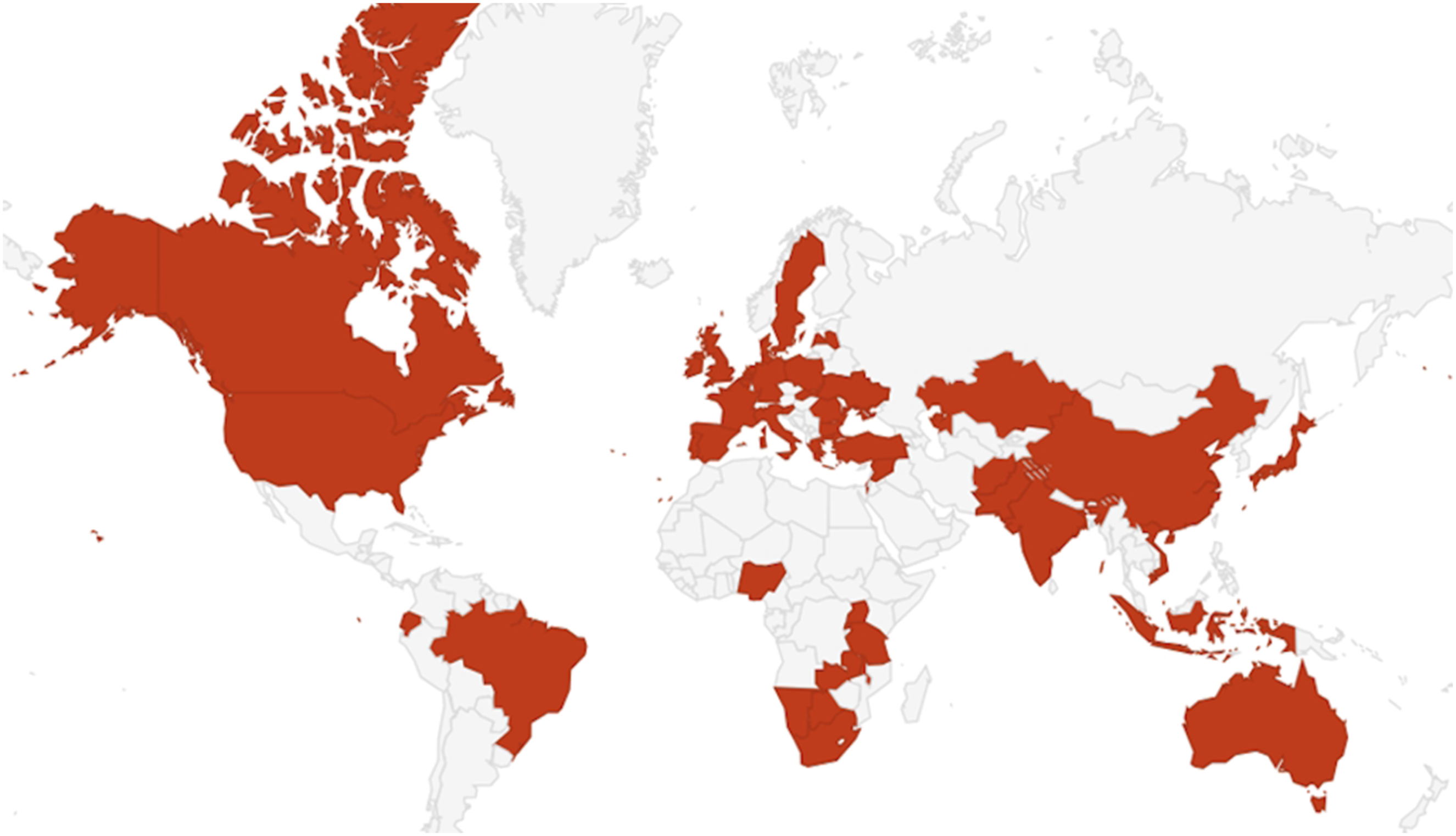
An analysis of the 55,290 words in the abstracts to date, using a frequency analyser, elicited no further countries but gives an indication of scale. 24 For example, to take the most frequently mentioned, the UK (and variants but not sub-divisions) appeared 102 times, Austral* 55 times, South Afr* 53 times, US* (and United States) 44 times, and Nigeri* 49 times (the asterisk wildcard allowed for the inclusion of e.g. adjectival and possessive variants).
The same dataset can provide an indication of the themes within the pieces. A wordcloud of the text of abstracts showing the 700 most used words (Figure 4) provides an overview of much of the content of the journal (as noted above it excludes some case notes, book reviews and fewer than a dozen abstractless articles).
25
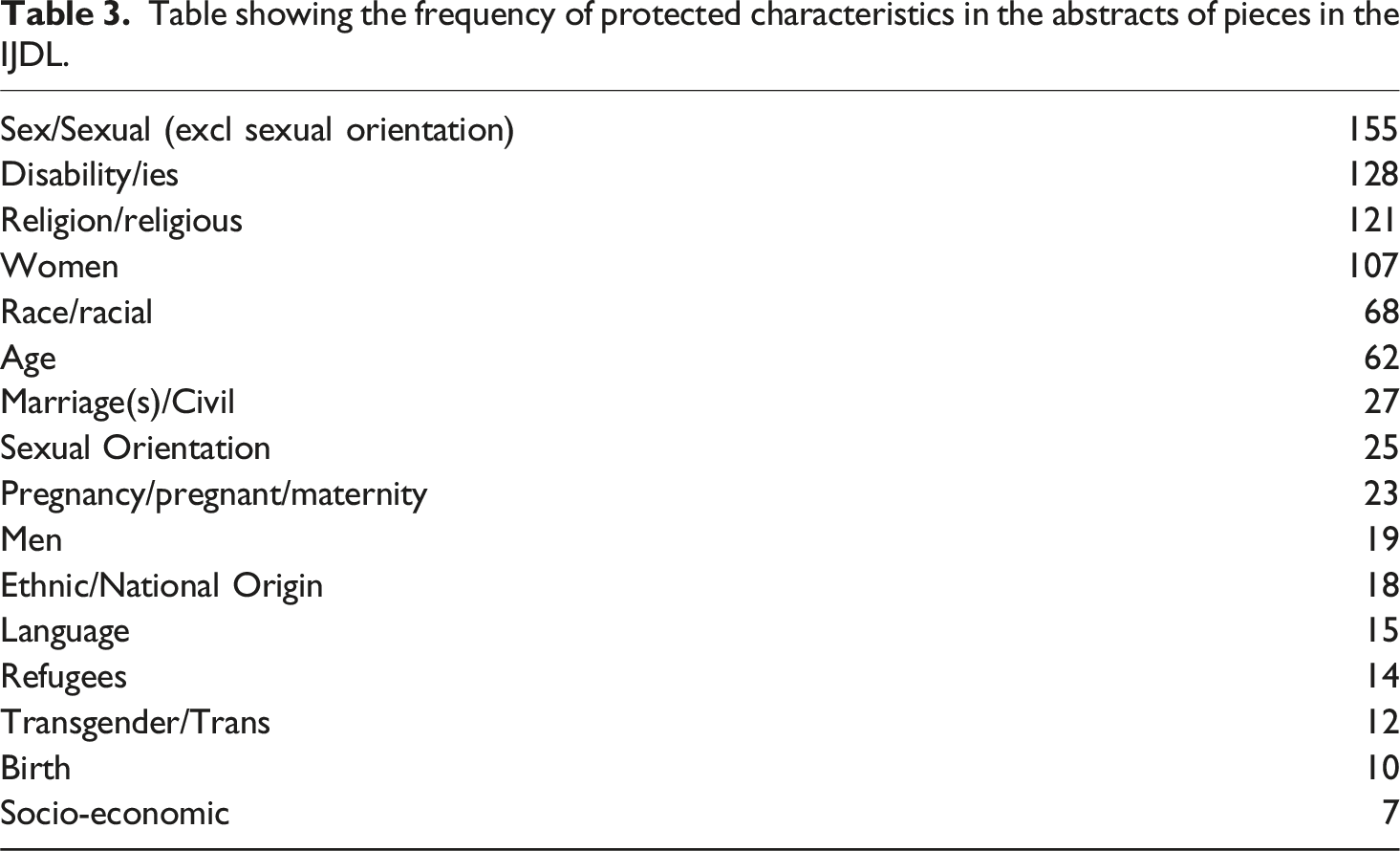
The focus of the journal on the use of law to protect against discrimination comes across clearly in the prominence of law and legal in the image. The scope of the journal beyond employment law is discernible through the appearance of ‘education’ as well as ‘employment’. Of the generally protected grounds or characteristics, ‘disability’, ‘gender’, ‘women’ and ‘religious’ all stand out. A wordcloud of the text of abstracts showing the 700 most used words in abstracts in the IJDL to date.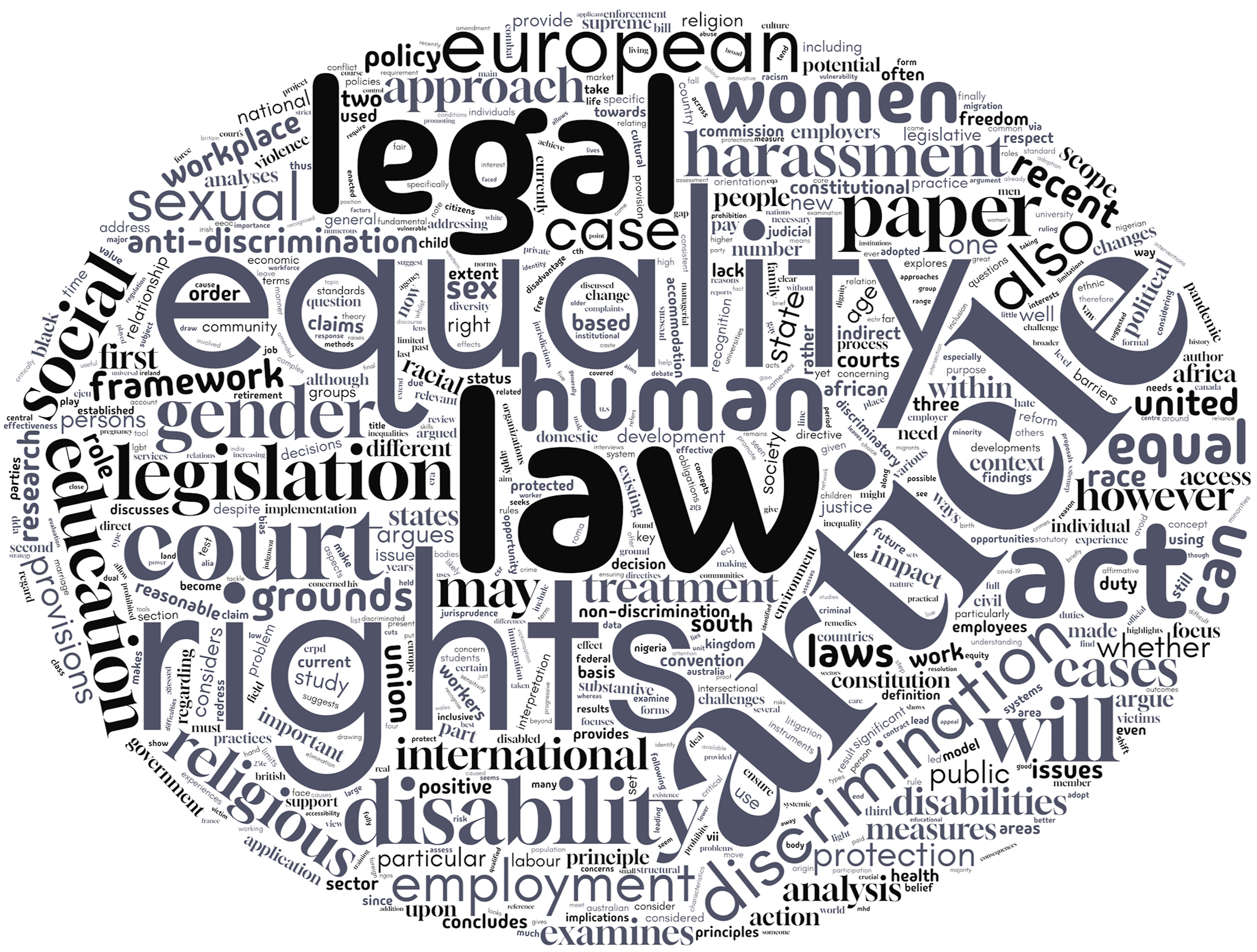
Table showing the frequency of protected characteristics in the abstracts of pieces in the IJDL.
Splitting the focus across the IJDL’s three decades and looking at the individual abstracts provides some indication of changing coverage over time (but it should be borne in mind that the numbers are relatively small (at under 100 abstracts in 1995-2005 and 2006-2015 and around 150 in 2016-2025) and influenced by special issues in the period). Figure 5 below includes a range of terms including protected characteristics, types of discrimination and some other terms (including some relating to method). Frequency of characteristics appearing in the abstracts of the IJDL 1995-2025.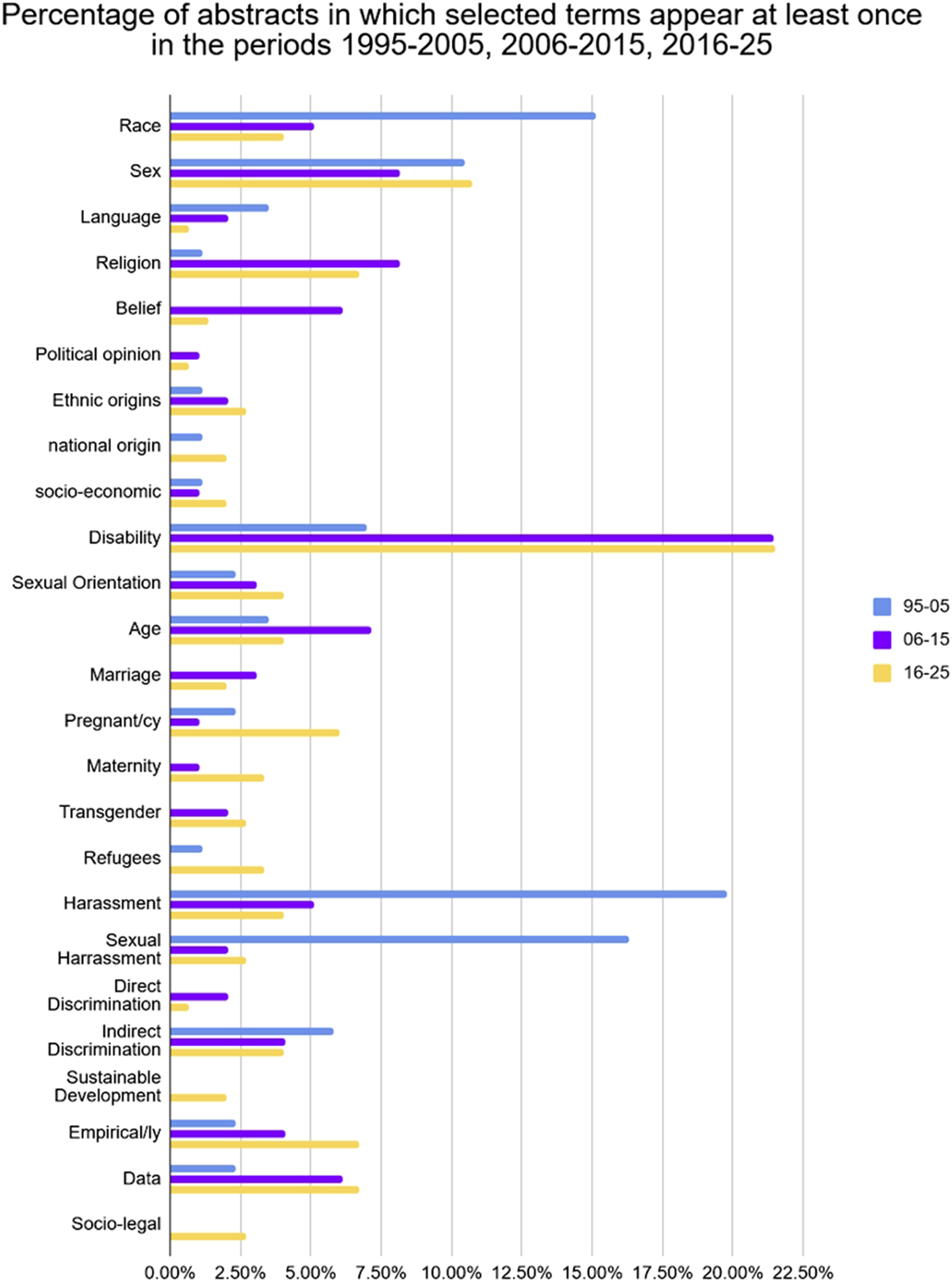
From this it can be inferred that there is a wide coverage but disability, sex and race are the most covered topics over the years, with disability sustaining a marked increase from 1995 to 2005 in the following two decades. While race looks to have fallen back each decade, if the ethnic and national origins phrasings are included the decline is less marked. A greater focus on religion and belief, as protection evolved, and in abstracts mentioning pregnant women/pregnancy is also marked. 27
Perhaps surprisingly harassment is covered less than in the first decade; and across the decades the focus is on, or at least includes, sexual harassment with a residual focus on other types of harassment, but it is still a notable topic. Perhaps less surprisingly, indirect discrimination appears more often than direct discrimination across the decades. A steady rise in references to empirical methods in the abstracts is evident but that is still very much a minority (in 2016–2025 it reached around 1 in 16, which in terms of absolute numbers saw pieces go into double figures). The most recent decade is also the first to see express mention of both ‘sustainable development’ and ‘socio-legal’ though in underlying concepts they both have a much longer pedigree in the journal, as noted in the latter case by Prof. Easton in her introduction.
As noted above, in the introduction, the main content of the journal comprises articles and case notes. While some case notes and other short matter appeared in earlier volumes,
28
a specific section was introduced in 2021 for ‘case notes, analyses of legislation and policy from around the world on the broad themes of discrimination, equality and social justice’, of between 2000 and 5000 words, under the section editorship of Prof. Lucy Vickers and Dr Rachel Horton.
29
Book reviews were more common in the early volumes but continued occasionally thereafter until the most recent in 2017; collectively they comprise just under 7% of the pieces up to the 99th issue and 1.6% of the pages (typically being two-four pages long but with one at 9 pages). Editorials comprise a similar percentage of the pages but make up over twice the number of pieces.
30
With the inclusion of those and some other short matter in mind, the average length of a piece at 15-and-a-half pages can be seen to be an understatement when it comes to articles and the shorter but still substantial case and legislation notes. The modal length of pieces (excluding the very short) is 22. A chart showing the numbers of pieces at various length ranges appears at Figure 6. Chart showing lengths of pieces in the IJDL.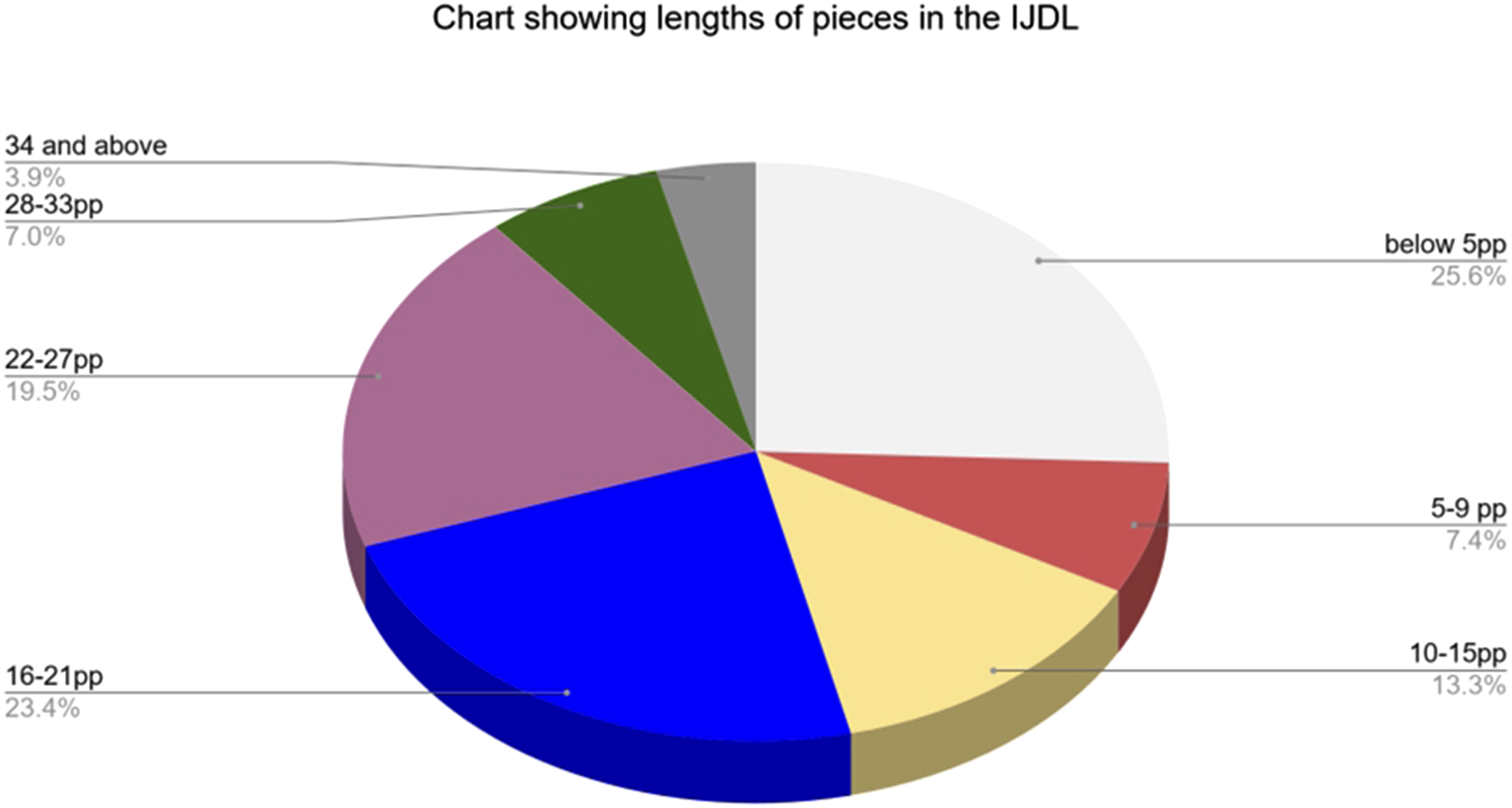
The dates, titles and editorship of the 15 special issues to date.
Conclusion
The snapshots in this article are intended to be one means to help mark this 100th issue of the International Journal of Discrimination and the Law as well as the journal’s 30th anniversary year. 2025 - and, indeed, the month of this publication - is also the 50th anniversary of the coming into force of the British Equal Pay Act 1970 (and the Equal Pay Act (Northern Ireland) 1970) as well as of the Sex Discrimination Act 1975. Furthermore, the previous month will have seen the 30th anniversary of the UK Disability Discrimination Act 1995 being enacted; and the year also marks, among others: the 50th anniversary of the Australian federal Racial Discrimination Act 1975; the 40th anniversary of the coming into force of the equality rights section 32 of the Canadian Charter of Rights and Freedoms (as well as the 50th anniversary of the passing of the Québec Charter of Human Rights and Freedoms); and the 25th anniversary of the assent to the South African Promotion of Equality and Prevention of Unfair Discrimination Act no. 4 of 2000. It is also the year which has seen, as noted in this year’s editorials to the journal (among many other places), an onslaught against DEI in the US across the public and parts of the private sector.
While it can be seen that the authorship of articles in the International Journal of Discrimination and the Law, in contrast to some other journals, has long been broadly gender balanced, and that its authorship and topics reach out across the world - and that using legislation to combat discrimination is well established across many parts of the world - there is no room for complacency. As Prof. Carlson notes, in the IJDL’s 30th Anniversary Virtual Special Issue, 33 in her commentary which accompanies the first article in the first issue of the journal, ‘[a] greater societal awareness of sexual harassment, not just in the context of women, has arguably been achieved, however many of those challenges as identified by Flynn in the first issue of the Journal still remain three decades later’. 34 The same may be said for other topics. What the future holds for discrimination law, and for universities across the global north and south, looks particularly uncertain at the moment but hopefully the IJDL will continue to speak to and hear from ‘academic lawyers, practitioners, campaigning groups, organisations and policy makers’ 35 across the breadth of topics and jurisdictions for many years to come. These snapshots show where the journal is now and may potentially be of use, or reassurance, to future authors seeking to place articles in the journal – as well as to authors of future studies into the journal or the wider legal publishing landscape.
Footnotes

Ethical considerations
Given the nature and design of this study, this piece has been subject to ethical screening (rather than review) under the policy of the author’s institution.
Funding
The authors received no financial support for the research, authorship, and/or publication of this article.
Declaration of conflicting interest
The authors declared the following potential conflicts of interest with respect to the research, authorship, and/or publication of this article: The author is one of the current editors of the journal.