



Abstract
There is increasing recognition that the environmental crisis places disproportionate burdens on already marginalised communities. It is also increasingly clear that environmental sustainability policies can increase inequality if not accompanied by broader policy measures to address inequalities. To seek to address these environmental inequalities, it is vital that the communities most impacted are at the centre of providing just environmental solutions that don’t further disadvantage them. Thinking beyond the silos of disciplines and creating better nexus between inclusive approaches, equality legislation and the environment is key to addressing climate injustice and environmental inequalities. This paper details findings of research underpinned by an innovative interdisciplinary approach undertaken by the authors in 2023. This distinctive approach has provided an evidence base to develop a novel co-produced Environmental Justice Framework for the public and private sector across a sub-region of the UK. Underpinned by existing theory and practice around equality impact assessments (within the UK context), environmental justice and co-production principles, the authors present a Framework which encourages a new interdisciplinary justice centred approach to environmental sustainability decision making. It is argued that this approach (which encourages context based application) could be usefully developed to provide a globally accessible framework for environmental justice.
Introduction
As we move on from COP29 and the world seeks to demonstrate commitment to the Sustainable Development Goals in a meaningful way, there is a clear need to ensure that disproportionate burdens do not continue to fall on already marginalised groups within society. Whilst sustainable development provides an overarching framework for environmental governance, some argue that the need for environmental justice could be more explicitly built into the sustainable development goals and targets which would require more particular focus on recognition of marginalised voices 1 .The Intergovernmental Panel on Climate Change (IPCC) recently reported that urgent action is needed to deal with increasing climate risk together with a recognition that the impact of the crisis disproportionately impacts on already disadvantaged communities. Similarly, any steps to mitigate this crisis need to be implemented fairly and equitably to avoid exacerbating inequalities and to ensure implementation success 2 . This increased focus on environmental inequalities and environmental justice is welcome and much needed on the world and domestic stage. There is also growing cautionary recognition that sustainability policies can increase inequality if not accompanied by broader policy measures to address inequalities 3 . Proceeding ethically and inclusively means engaging with those concerns in ways that negate them or at least ameliorate the most negative impacts through recognition of the importance of environmental justice. A critical part of this concerns formal processes of recognition - ensuring the visibility and accessibility of process by which those affected can have their say 4 . All possible efforts should be made to hear not only the widest range of voices, but those voices that can speak from the intersection of different identities 5 .
In response to embedded and emerging environmental inequalities and building on recommendations of a Sustainable and Inclusive Growth Commission established by local authorities, business stakeholders and academics in a subregion of England 6 , the authors of this paper undertook a 12-month research project (the Inclusive Environments project). The aim of this project was to develop an innovative interdisciplinary environmental justice framework (the Environmental Justice Framework) for use by public and private sector decision makers to ensure inclusivity and environmental justice is mainstreamed throughout the development, implementation and monitoring of environmental sustainability policy and actions. This paper details the findings of the Inclusive Environments project and explores how this work builds upon existing strengths and work across a sub-region in England to seek to address identified environmental challenges by uniquely bringing together a diverse range of partners and disciplines from industry, local government, community and voluntary sector, academia, and communities (particularly marginalised voices).
For environmental justice to address environmental inequalities, it is argued throughout this paper that there is a need for a co-produced, interdisciplinary framework approach (such as that suggested by the Inclusive Environments project) towards seeking solutions that truly work. Such a framework should encourage a context driven sharing of power in relation to environmental sustainability to place marginalised voices at the centre of the decision-making process. In doing this, it is vital that the process of gaining and interpreting knowledge is democratised, and that better understanding of environmental impacts is developed through improved collaboration with community voices to fully understand the impact of policy development and implementation. Ensuring that marginalised communities are at the heart of such cross-disciplinary dialogues will enable people to participate actively in shaping environmental policies and practices that affect their lives.
In its 2022 Report, the Sustainable and Inclusive Growth Commission recommended that a toolkit be developed to assist the public and private sector to mainstream inclusivity throughout environmental sustainability decision making across the specific sub-region of Cheshire and Warrington in England 7 . Implementing this recommendation, the authors commenced the Inclusive Environments project 8 using previously developed principles of co-production 9 in community and stakeholder engagement to seek to develop an environmental justice framework for environmental sustainability decision making (based on existing equality impact assessment approaches) for use by public and private sector organisations across the sub-region of Cheshire and Warrington. This Inclusive Environments research explored existing learning and understanding around the Public Sector Equality Duty under the UK Equality Act 2010 and underpinning equality impact assessment approaches as a means of achieving environmental justice. This paper explores how this research and the consequent framework can provide a just approach to mitigating environmental inequalities for use across the UK and beyond.
This paper will commence with consideration of the background context around environmental inequalities and environmental justice. It will then consider how an approach influenced by equality impact assessment methodology and underpinned by principles of co-production can support environmentally just decision making. This context will then be triangulated with the findings from the Inclusive Environments research 10 . Finally, this evidence base will be explored as a foundation to support a robust and potentially globally accessible Environmental Justice Framework 11 for public and private sector use. Whilst environmentally just approaches towards decision-making are not unique, the Inclusive Environments project pushes the boundaries in two ways. Firstly, it suggests an approach to environmental sustainability decision-making which draws from a range of interlinking disciplines previously largely unexplored (legal, social and environmental). Secondly, the suggested Environmental Justice Framework has itself been developed in line with the principles of co-production which it seeks to promote and with the voices of diverse stakeholders and marginalised communities central to the development process. This research and consequent framework suggest a new potentially highly impactful approach to addressing major social and environmental challenges.
Background to environmental justice as a response to environmental inequalities
Whilst the climate and broader environmental crisis are an issue of international, national, and local equity, at a global level countries clearly differ in their experience of the impacts of and contribution to this crisis 12 . Countries with more equal distributions of income, better rights and higher literacy rates tend to have higher environmental quality than those who do not, and environmental issues tend to affect the poor disproportionately 13 . Equally whilst the wealthy can protect themselves from the negative impacts of environmental degradation, those who are poorer lack the resource to mitigate the impact 14 .
The environmental justice (‘EJ’) movement was a response to a growing awareness of this concept of environmental inequalities and originally emerged from the US civil rights movement in the 1980s. EJ was born from the recognition that communities from poor and minority ethnic backgrounds were being disproportionately impacted by environmental issues and excluded from environmental decision making 15 . EJ has developed into a globally accepted approach to addressing broader environmental inequalities and within the US, the Biden administration has recently launched the Environmental Justice Office 16 . Furthermore, in April 2023, President Biden issued an Executive Order 17 on Revitalizing Environmental Justice for All which updated the definition of EJ to include ‘the just treatment and meaningful involvement of all people, regardless of income, race, color, national origin, Tribal affiliation, or disability, in agency decision-making and other Federal activities that affect human health and the environment …’
In the US, EJ has largely emerged as a response to environmental racism and therefore the two concepts are inextricably linked 18 . Broader literature in this area focuses on socioeconomic deprivation, and there have also been analyses by gender 19 , age 20 and disability 21 . There is also an increasing plea to acknowledge the large variety of inequalities along different dimensions including intersectionality when considering climate justice 22 .
Emerging largely from US research in this area, at its most basic, academics and theorists tend to break down the concept of EJ into concepts of distributive and procedural justice. For the purposes of this paper a basic dual framework will be utilised. Distributive justice focuses on the equitable distribution of environmental risks and benefits 23 . Procedural justice focuses on who gets to engage in fair and meaningful environmental decision making 24 . Although critical conceptualisation of EJ is beyond the scope of this paper, more recently the concept has been broadened to include distributive, procedural and recognition elements 25 ; sometimes referred to as the ‘three concepts of justice’ 26 . For some, procedural justice also includes access to justice and the ability to seek legal redress if environmental laws are breached 27 . Indeed, there is a broader (still mooted) EJ framework suggested which includes ‘distributive justice’ (fair and equitable distribution of environmental harms and benefits); ‘recognitional justice’ (recognition of and respect for marginalised groups, perspectives, and ways of knowing); and ‘representational justice’ (procedures to ensure representation of diverse perspectives in decision making) 28 .
Much of the existing focus has been on distributive justice and the disparate impact of the environmental crisis on marginalised communities 29 . However, over the last decade there has been an expansion of dialogue in relation to procedural elements of EJ, not just focusing on who participates but how they participate in environmental planning and decision making. Similarly, the importance of engaging the community voice in response to the environmental and climate crisis is becoming more central to EJ considerations 30 .
Discourse has moved beyond consideration of environmentally just responses to environmental inequalities, indeed there is growing recognition that environmental sustainability measures may themselves further exacerbate inequalities if implemented without engaging with distributive and procedural justice. Studies have suggested that vulnerable and marginalised communities may be at risk of material injury following climate change interventions and be further impacted by a lack of representation, recognition and by misrecognition as stereotyped victims in local, national, and international environmental sustainability conversations 31 . Indeed, studies synthesising evidence from existing literature suggest that many environmental sustainability policies are linked to both co-benefits and adverse side-effects and can either heighten or reduce socio economic inequalities depending on contextual factors, policy design and policy implementation 32 .
It is further argued that negative impacts of environmental sustainability policies and measures can be mitigated by a focus on procedural justice involving conscious effort, careful planning and multi-stakeholder engagement and the best results are achieved when inequality impacts are taken into consideration in all stages of policy making 33 .
The emerging dialogue around environmental justice in the UK
Environmental justice is understood to have diverse meanings across developed and developing countries 34 . Whilst Europe has not had an EJ movement comparable to the US, there is a steadily increasing body of UK work 35 . In the UK in particular, the focus is on issues of poverty, health, and social exclusion but with some intersectional considerations in relation to racial impact 36 . Indeed, whilst environmental inequalities in the UK have only been actively researched in the last three decades, it is now considered to have one of the best developed evidence bases in Europe although much of the research has focussed on small scale localised datasets 37 .
At a European level, the EJ movement has emerged in response to intergovernmental international agreements largely focusing on human rights including the right to a clean and safe environment; right to environmental information and participation in decisions affecting the environment. Internationally, these rights have been established through the UN Economic Commission for Europe (UNECE) and the Aarhus Convention on Access to Information, Public Participation in Decision making and Access to Justice in Environmental Matters. EU Directives have implemented the Aarhus convention giving citizens greater access to environmental information (2003/4/EC) and enhanced participation in decisions affecting the environment (2003/35/EC).
Unlike in the US, few laws and institutions specifically tackle environmental injustice in the UK. Some regulatory mechanisms on EJ, especially regarding access to EJ and public participation in environmental decision-making, are covered by the Environment Act 2021 and the UK ratification of the Aarhus Convention 38 . The Aarhus Convention came into force on 30 October 2001 with the UK ratifying it on 23 February 2005. In the UK, the Aarhus convention ‘acknowledges the role that members of the public play in protecting the environment. The Convention gives individuals and civil society groups, including environmental charities, certain rights and imposes obligations on signatory Parties (such as the UK government) and public authorities regarding access to information, public participation and access to justice’ 39 . However, even though the UK is a party to the Aarhus Convention, it has not been fully transposed into UK law. Similarly, whilst Section 19 of the Environment Act 2021 was modelled on the Public Sector Equality Duty under the Equality Act 2010 and imposes a duty on the government to have due regard to five environmental principles when making policy decisions, Lee has argued that this negatively impacts on public participation in environmental issues in the country 40 .
Despite the lack of a specific legislative framework, a significant level of national work focusing on EJ is routed in governmental activity and from 1992, ‘environmental equality’ was one of the UK government’s sustainable development indicators. It was also seen by some as integral to the levelling up agenda 41 . The Environment Agency in England regularly publishes specific reports addressing environmental inequalities 42 . In addition, there is an increasing corpus of secondary work in this area 43 . Several UK based NGOs have focused on the need to address environmental inequalities (e.g., Friends of the Earth, Friends of the Earth Scotland, Capacity Global, Groundwork UK, London Sustainability Exchange).
Notably in May 2019, the Institute for Public Policy Research established an Environmental Justice Commission building on its work on environmental breakdown and its Commission for Economic Justice. The Commission’s central aim was ‘to present an ambitious, positive vision shaped around people’s experiences and needs and develop a plan of action that integrates policy both to address the climate and environmental emergencies and to deliver economic and social justice’
44
. The Commission’s 2021 report placed people at the centre of its recommendations and the necessary approach to developing them. The report recommended six major shifts in the UK’s approach to addressing the climate and nature crisis to achieve distributive and procedural justice (see Figure 1). Six shifts in approach needed for a successful transition 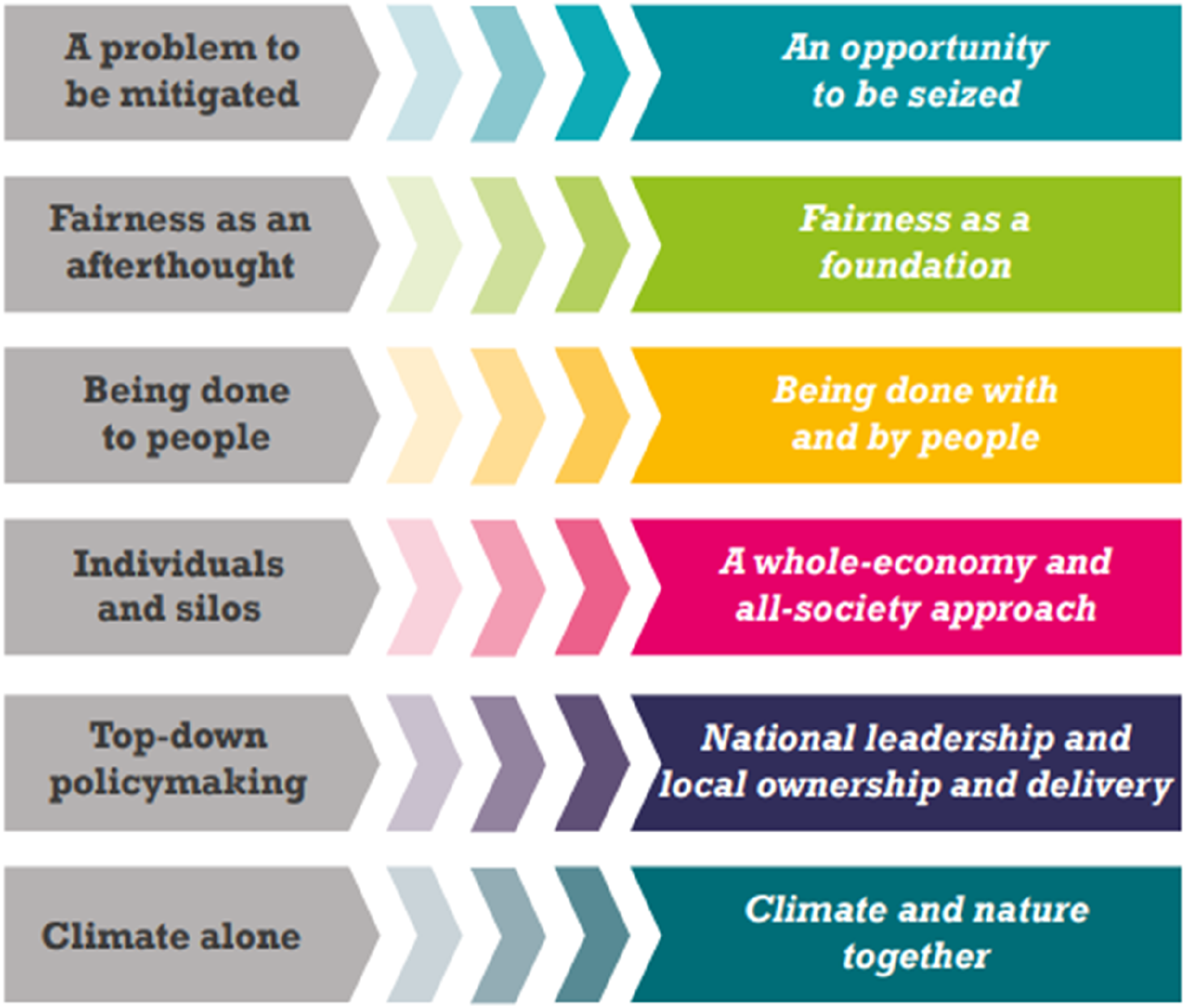
Following COP28 in 2023, COP29 in 2024 and the report of the Environmental Justice Commission, there is a push to ensure that the opportunity to increase focus on environmental inequalities and EJ is not missed at a domestic level.
Utilising impact assessments to ensure environmental justice
Whilst this context demonstrates support for environmentally just decision making within the UK, the lack of a legal framework to support this presents difficulties. Although, the UK human rights and environmental legislative framework has played some role in promoting and protecting marginalised communities from environmental inequalities 45 , this paper focuses on the less well explored link between UK equality legislation as a framework for environmental justice. This broader legislative context is considered further in the Inclusive Environments full report 46 . For EJ to truly evolve as a solution to environmental inequalities in the UK and beyond, a multi-disciplinary approach towards EJ solutions is required. Therefore, exploring how existing mechanisms can be utilised by the public and private sectors to ensure distributive and procedural justice in relation to environmental issues is key. This paper (and the Inclusive Environments research upon which it is based) argues that there is a need to explore means of potentially reframing existing impact assessment approaches to ensure EJ in developing, implementing, and evaluating environmental policy and decision making.
Others have argued that existing impact assessment tools could be better used to mitigate environmental inequalities and promote EJ 47 . Globally there are a range of potential impact assessment tools that are used in an environmental context 48 . In the US, use of impact assessments to ensure EJ is more advanced and environmental equity appraisal methods developed by the US Environmental Protection Agency have previously been applied by Executive Orders requiring all federal bodies to make EJ part of their working practices. However, even these focused methods have been criticised for concentrating on distributive justice concerns and then only in relation to a limited range of environmental concerns 49 . In comparison at a national level in the UK, there has been little consistent use of impact assessments to ensure procedural and/or distributive justice in the environmental decision-making process. Indeed, approaches have been at best piecemeal using existing tools which do not fully integrate social and environmental concerns.
This paper does not seek to provide a full scoping of impact assessments that are and could be used in an EJ context globally and/or nationally. Others have attempted to produce scoping summaries including Walker 50 and more recently Blue et al 51 . Walker described a wide range of impact assessment and policy appraisal tools used in the UK context 52 . A study originally completed for Friends of the Earth identified 16 different forms of impact assessment as potentially relevant to environmental justice concerns 53 . These were largely in relation to distributive rather than procedural justice (including environmental impact assessments (EIAs), strategic environmental assessments (SEAs), social impact assessments, health impact assessments, equality impact assessments (EqIAs), sustainability appraisal). Some of these assessments were statutory (such as EIAs, SEAs, sustainability appraisals, EqIAs in Scotland, and NI). However, others such as social impact assessments which consider the impact of a proposed action on the life of individuals and communities and explicitly analyse patterns of impact on people and communities, have no statutory status and are rarely used in the UK 54 . Further exploration of broader use of impact assessments within an EJ context can be found in the Inclusive Environment full research report 55 .
Underpinned by the Inclusive Environments research findings, this paper will particularly focus on the use of equality impact assessments (EqIAs) predominantly utilised by public sector bodies in England, Scotland and Wales as a means of meeting the Public Sector Equality Duty pursuant to the Equality Act 2010 (EA 2010). The Inclusive Environments research suggests EqIAs can be adapted as a foundational approach for ensuring procedural and distributive EJ by the public sector and beyond. Whilst Walker previously noted the potential for the use of EqIAs as a means of assessing the distributive impacts of ES measures and policy on marginalised communities, he concluded that there was little evidence of systematic use of EqIAs to assess impact in environmental decision making 56 .
The use of EqIAs is no longer mandatory in England (but remains so in Wales and Scotland). Nevertheless, the Public Sector Equality Duty (PSED) provides the legislative framework prompting application of EqIAs in relation to the ‘protected characteristics’ under the EA 2010.
In Britain, the Equality Act 2010 harmonised previous separate equality duties into a Public Sector Equality Duty (PSED) and extended this across the protected characteristics covered by the legislation. The general PSED under Section 149 of the Equality Act 2010 requires organisations to consider how they could positively contribute to the advancement of equality and good relations. As stated in the Equality and Human Rights Commission’s Guide to the PSED: ‘the broad purpose of the general equality duty is to integrate consideration of equality and good relations into the day-to-day business of public authorities’ 57 .
Under the PSED, public authorities must, in the exercise of their functions, have due regard to the need to: • eliminate unlawful discrimination, harassment and victimisation and other conduct prohibited by the EA 2010 • advance equality of opportunity between people who share a protected characteristic and those who do not • foster good relations between people who share a protected characteristic and those who do not
This general PSED is supported by specific duties implemented under secondary legislation and these differ between England, Scotland, and Wales. Neither Section 149 of the EA 2010 nor the specific regulations provide much detail or prescription about the approach a public body should take to comply with their legal obligations. Rather it has fallen to the national Courts to interpret and provide principles via case law on the PSED. Much of this case law has been around the meaning of ‘due regard’ in relation to the general equality duty aims (see inter alia: R (Brown) v Secretary of State for Work and Pensions (2008), Bracking v Secretary of State for Work and Pensions (2013)).
One of the main tools to help public bodies meet their obligations under the PSED are EqIAs. There are specific duties to assess equality impacts of policies in Scotland and Wales. However, while there is no legal obligation to carry out a process labelled as an EqIA in England, the steps that the courts have said public bodies need to take to demonstrate that they have had ‘due regard’ to equality under the PSED arguably include the main elements of an EqIA. Importantly, if public bodies don’t keep some sort of record of this, it will be hard to prove they have had due regard to equality under the PSED. In essence, this approach amounts to an EqIA.
An EqIA is a practical process enabling organisations to systemically draw on available evidence, data monitoring and consultation to assess and record the likely impact of their work on individuals or groups before making a decision and take action to mitigate and/or minimize the impact of such decisions, where appropriate.
A key element of an EqIA is that an organisation take account of equality as they develop policy and plans. Therefore, engaging with the EqIA at the end will result in a lack of proper consultation and opportunities for picking up issues and adjusting as part of the policy development will be missed. The case law interpreting the PSED has also made it clear that the legal obligation is a continuing cyclical duty and as such a public body must consciously consider the need to comply with the PSED not only when the policy is developed and decided upon but also when it is being implemented.
Recent legal challenge by means of judicial review of public authorities in the UK for breach of the PSED in relation to environmental decision making under s149 has demonstrated potential application as a tool to ensure distributive and procedure EJ (see inter alia: Gathercole v Suffolk CC (2020) and McLean’s (2024)).
The importance of co-production in developing an environmental justice framework
Whilst the jurisprudence and guidance in relation to the PSED suggest the need for consultation with marginalised communities to mitigate negative impacts, it is argued that often this does not go far enough in engaging community voices. It is argued that central to any EqIA process should be co-produced solutions for addressing inequalities. Similarly, at the heart of emerging EJ dialogue is the need for co-produced ES policy and decision making. Indeed, a robust equality impact assessment framework around ES arguably requires a co-production approach to understand distributional impacts and ensure procedural justice around decision making. White and Ross
58
led a systematic literature review, semi-structured interviews, and workshops with practitioners and experts by experiences to co-produce a working definition and set of principles for co-production: ‘Co-production is the building of respectful and empowering relationships alongside the sharing of ideas between those with lived experience and other stakeholders. Both contribute their knowledge, skills and experiences to cocreate actionable change’.
Djenontin and Meadow have recently focused on co-production of knowledge in climate and environmental management and considered co-production in this context to be the ‘contribution of multiple knowledge sources and capacities from different stakeholders spanning the science-policy-society interface with the goal of co-creating knowledge and information to inform environmental decision making’ 59 . Therefore, this form of participatory and inclusive knowledge generation is a form of co-production which seeks to place marginalised groups in a position to develop responses to the environmental crisis.
Notably, many of the barriers to effective co-production lie in the ‘asymmetry of power in environmental decision-making partnerships’ 60 and public involvement is often viewed as a battle against policy makers in the environmental arena 61 .The Environmental Justice Commission clearly pointed to the need for communities to play a meaningful role in environmental decision-making 62 . Equally it is argued that deliberation on EJ matters still excludes the most disempowered groups and limits discussion to a narrow range of options pre-determined by those in power 63 . Similarly, co-production around EJ is criticised as failing to affect policy when it presents a challenge to existing political and economic interests 64 .
Emerging dialogue also suggests that there is a need to work with communities on their own terms and Tubridy et al suggest that ‘an ideal model might involve technical experts taking on a supporting rather than a leading role and helping communities to navigate what will inevitably be complex processes of decision-making and planning.’ 65
It is worth noting that co-production places emphasis on fostering long-term, equal collaborations with stakeholders and communities working together as equal partners to design throughout the entirety of a project. It is through these means that co-production differs from other participatory approaches. For example, whilst multi-stakeholder consultation approaches do involve some participation through gathering input or feedback at specific points, the final decision-making is made by the lead organisation. Co-production emphasises equal partnerships where all parties actively shape decisions and outcomes throughout 66 . Compared to community-led impact assessments, where communities evaluate impacts and frame priorities independently, co-production involves communities and stakeholders collaboratively co-creating projects or solutions from the outset, as opposed to solely assessing their impacts. Similarly, while co-designed research approaches involve collaboratively developing goals, methods, and frameworks with input from non-academic stakeholders, co-production extends this collaboration to include shared responsibility for implementation, evaluation, and dissemination 67 .
The Inclusive Environments research and development of an environmental justice framework
Considering this background context, a three-pronged multi-disciplinary approach based on a recognition of synergies around emerging dialogue on EJ, EqIAs and co-production has underpinned the research upon which this paper is based.
In November 2020, the Cheshire and Warrington Sustainable and Inclusive Growth Commission (SIGC) was established which aimed to contribute towards realising Cheshire and Warrington’s ambition of becoming the most sustainable and inclusive sub-region in the UK. The SIGC is made up of elected representatives from each local authority across the sub-region and a local enterprise partnership board member, as well as representatives from carbon intensive industries and agriculture, finance and investment, energy, and experts from civil society including university, housing, and local nature sectors, and has also worked with expert advisers from beyond the Commission. The lead author sits on this Commission. The SIGC works across four themes: Inclusive Economy, Sustainable Transport, Sustainable Land Use, and Net Zero. For each of these themes the SIGC has developed an evidence base for Cheshire and Warrington’s current position, a vision representing where the Commission believes the sub-region should aim to be and a set of recommended actions to achieve these visions in a report published in 2022 68 .
Perhaps most importantly for the purposes of this paper, an inclusivity assessment (or Inclusivity Toolkit), was produced by the SIGC to ensure that all environmental sustainability actions in the 2022 report were assessed for impact on marginalised communities across the sub-region. This toolkit was expanded from existing EqIA templates broadening application beyond the public sector and the protected characteristics to include socio-economic status and other marginalised communities. This Inclusivity Toolkit was designed for internal use by the SIGC, and a process of action learning followed which clearly indicated a need for further research to provide an evidence base for refinement and enable broader application beyond the specific context. The Inclusive Environments research upon which this paper is based is a direct consequence of the SIGC recommendations around the need for an evidence-based inclusivity assessment framework.
Against this background context and building upon the recommendations of the SIGC, the Inclusive Environments research provided an interdisciplinary multi-layered, qualitative exploration of existing work around EJ across the sub-region of Cheshire and Warrington in England. Data collected from relevant stakeholders and marginalised community voices on experiences of and challenges to mainstreaming inclusivity through environmental sustainability measures and policy was triangulated with the broader EJ context.
Methodology
A systematic and rigorous approach to data collection and analysis across five core phases underpinned the Inclusive Environments research. The methodology and methods were selected to ensure that the voices of marginalised groups were platformed and central to the research process.
Phase 1 involved desk-based landscaping and evidence collation to establish the literature, existing challenges, and good practice around approaches to EJ in environmental sustainability decision making (including across the sub-region). This review focused on analysis, synthesis and theoretical development of the issues with consideration given to publicly accessible information. It sought to identify existing theoretical and limited empirical research in addition to government documentation to, identify and build on connections and gaps and enable the development of the empirical data collection methods at Phase 2.
Phase 2 involved a series of focus groups (‘the focus groups’) with community groups together with a series of semi-structured interviews (‘the interviews’) with key stakeholders/decision makers involved with developing and implementing environmental sustainability measures and policy across the sub-region.
Three focus groups were held with community groups representing marginalised voices across the sub-region. Marginalised communities were broadly defined as those communities, people or groups that experience social, political or economic discrimination and/or exclusion. Crucial to the involvement of community groups within this project was the community partnership that has been developed between the researchers and Cheshire West Voluntary Action (CWVA). Together, the researchers and CWVA have developed the Principles for Co-Production 69 as part of the Local Voices project. As a result of the connections made through this project, the researchers worked with CWVA to identify interest groups that represented marginalised groups impacted upon by environmental policies. All those in the focus groups had experience of marginalisation or vulnerability because of a social issue. For the purposes of the Inclusive Environments research, groups who held lived experience of poverty, being a refugee or asylum seeker and living in a rural community were engaged. In addition to their lived experience, the inclusion criteria for focus group participants included their engagement in an interest group in addition to them volunteering to share their views on EJ. Recruitment for the focus groups was based on an opportunistic sample which means that the researchers lacked control over ensuring demographic representation.
Interview participants were largely those with some remit for developing and/or implementing environmental initiatives/policy within their organisation and where an individual had a specific role within that organisation in relation to environmental sustainability at a sub-regional level and indeed in some cases at a global level. Seven individuals engaged with an in-depth interview. These individuals represented both private and public sector organisations as well as representative bodies. Purposive and convenience sampling was used to engage interview participants and utilised the researcher’s sub-regional network from the SIGC and beyond.
In Phase 3, a system of ‘triangulation’ was utilised to produce a more accurate and objective representation of the purpose of the study. Data from the landscaping and evidence collation (Phase 1) were triangulated with data collected from the focus groups and interviews (Phase 2). A system of theoretical sampling was utilised with concepts and themes being derived from the data and driving the next round of data collection 70 . To this end, the data collected from the focus groups were coded and categorised contemporaneously to determine emerging themes. This assisted the development of research questions for the interviews with stakeholders and vice versa. This meant that data collection was alternated with analysis after each focus group and interview. Using this developmental means of collecting data meant that triangulation of the important themes was attempted throughout. Data analysis was ongoing with themes emerging from the data rather than being imposed upon them.
At Phase 3, all data from the Phase 1 evidence collation and Phase 2 focus groups and interviews were triangulated and analysed and used to produce the Inclusive Environments research report 71 and develop a draft proposed framework for EJ for decision makers across the sub-region (the Environmental Justice Framework) 72 .
A system of co-production was seen as central to developing the research methodology and that marginalised communities identified as potentially most impacted from the environmental crisis and decision making should inform the development of sub-regional solutions. Therefore, at Phase 4 a series of four workshops with community groups and stakeholders with academic, professional or public interest in EJ and equality were held across the sub-region of Cheshire, Warrington and Derbyshire in England. In the workshops, the learning from the previous phases was shared alongside the draft proposed Environmental Justice Framework. At Phase 5, data from Phase 4 was used to modify the draft Framework to ensure it reflected the knowledge generated in workshops.
Ethical approval was vital to ensure appropriate conduct of the research and since the research centred on: • the challenges faced by those from marginalised and economically deprived communities in relation to environmental policy; and • a lack of stakeholder understanding as to how to mitigate these challenges and establish a nexus with community voices to provide solutions to ensure inclusive environmental sustainability policy, human participation was necessary to ensure that this data could be collected.
All participants engaged voluntarily in the research and were provided with a participation information sheet with consent implied from involvement. It was recognised that the focus groups could involve discussing potentially sensitive topics surrounding the experiences of marginalised communities, and therefore it was made clear that participants could withdraw from the focus group at any time and their anonymity was guaranteed in any future publication.
Given the project’s focus on collaboration with vulnerable marginalised groups, including those in poverty, it was necessary to consider how reflecting on their lived or living experience may cause distress and require sensitivity. The authors have extensive experience of co-production with vulnerable groups, and charities including data collection and management processes to promote and protect dignity. In addition, through the participant information sheet, participants were informed about potential risks, the right to take a break during events, the right to leave the focus group at any time, and with a list of organisations offering support with mental wellbeing. Personal reflections on exclusion and injustice were given on a voluntary basis, and the focus was on shared experience and perceptions.
Since focus group participants might feel inconvenienced by the project’s demands on their time, data collection was designed to minimise additional requirements on community voices. Vouchers were provided to focus group participants as a recognition of their contribution.
The Inclusive Environments Research findings
Whilst the Inclusive Environments research explored broader issues around understanding and obstacles in relation to environmental sustainability, this paper focuses on the data collected as an evidence base to develop an EJ framework. Therefore, the following is a summary of findings specifically around this element of the research. Wider findings can be accessed via the full Inclusive Environments report 73 .
The term ‘environmental sustainability’ is a broad and fluid term with no standard accepted definition 74 . Most research participants described activity they perceived to exemplify ES rather than seeking to define it as a concept. Providing examples of complex fluid terms in research is not unusual 75 . Indeed, the necessary lack of a definition may be one of the difficulties faced in bridging the gap in understanding around the ES agenda 76 . Some also focused on sustainability beyond the environmental focus and noted the need to apply an intersectional lens on economic, social, and environmental sustainability. This need to define sustainability more broadly by considering the SDGs is supported through the literature and global activity and policy. Whilst the SDGs were not referenced by participants in the response to a request to define ES, it was potentially in the minds of those recognising the need to consider sustainability more broadly 77 . Most perceived challenges to ES, and in line with the literature 78 , climate change was considered a dominant personal and organisational challenge. It was recognised that the media had ensured focus on the climate crisis and that other challenges to ES were less well understood and therefore less likely to have mitigation responses in place. However, in line with the wider literature 79 , the climate change challenge was also perceived to be too big and distant an issue for most people to address resulting in personal detachment from accountability.
Some participants felt that concern regarding the climate emergency was often transient and soon dissipated after extreme climate events with little focus on long-term consequences. Whilst the literature 80 had previously largely supported the view that perceiving climate change in a ‘psychologically distant’ manner led to a lack of support for mitigation and adaptive action, in recent studies there is a suggestion that psychological proximity or distance does not always lead to more or less concern about climate change action 81 . Similarly, there was a perceived lack of understanding of the wider consequences of the climate crisis in relation to social, health and economic considerations. Consequently, this distancing, transient focus, and lack of understanding was considered to have led to an unwillingness or inability of society to adapt and make the changes necessary to address the environmental emergency at a global and local level. Added to this, and despite studies suggesting an increasing focus on the business case for implementing ES measures 82 , was a perceived reticence or inability of the public and private sector to meet the additional financial cost of ES action.
Similarly, the socio-economic limitations on the ability of individuals to take personal responsibility was a concern and some suggested the need for financial or other incentivisation to support individual ES action. Scholarship highlights the need to incentivize people to mitigate environmental issues via an appropriate consideration of monetary incentives 83 and social incentives 84 . However, the literature does caution that monetary policies may not be sustainable in the long run 85 and may not change long term behaviour if the incentive is withdrawn 86 . It was also recognised in line with the literature 87 , that there were limitations other than financial ones which could prevent individuals engaging with ES measures.
A common theme was a perceived lack of local government action on environmental issues together with apparent failings in communication and engagement with impacted communities. This was considered to have led to decreased confidence in environmental decision making and community disengagement with environmental issues. This lack of confidence in the ability of decision makers to appropriately address the concerns of local communities regarding environmental issues alongside a perceived lack of communication between decision makers and the community is supported by emerging discourse 88 .
Supported by wider studies in this area 89 was stakeholder awareness of the impact that specific marginalised communities face in relation to the environmental crisis and environmental sustainability measures. During a cost-of living crisis and other demands on public spending, it was perceived there is a difficult balance to make when investing in ES. This may involve further disadvantage for those already socioeconomically disadvantaged. Some groups were perceived to have greater ‘adaptive capacity’ to respond to the effects of the climate emergency and that there is a need to develop this capacity for vulnerable groups. This required not only a financial response but also a recognition of the need to develop social and cultural capacity for marginalised communities. This feeds into a rapidly growing body of research in this area around adaptation and building resilience 90 . It was suggested that decision makers need to work with communities to develop resilience to mitigate environmental impacts considering particular vulnerabilities. Participants referenced specific vulnerabilities in relation to ES measures including income-based inequities, isolated and older communities, disabled people and those from minority ethnic groups. Transport was a common theme, with participants expressing concern that EV policy had the potential to have disparate impacts on marginalised communities particularly where focus on such policy was at the cost of supporting environmentally sustainable accessible local transport. Studies support the concern that EV policy has disparate impacts on marginalised communities 91 . Equally, the literature supports a growing recognition that public transport availability is most likely to impact the opportunities and employment of low-income people 92 .
Whilst participants were aware of, and could largely provide, examples if not definitions of environmental sustainability, the term ‘environmental justice’ was less well understood although, participants had recognised that societal inequalities exist around the impact of environmental challenges and environmental sustainability decision making. Supporting the literature 93 , the few participants who had an awareness had only previously linked it to global rather than local activity and issues.
Importantly for the purposes of this paper, participants were encouraged to explore proposals for how to develop environmentally just approaches to ES decision making. Many participants recognised the need for greater community engagement by ES decision makers with one summarising ‘you shouldn’t do things to people…you should do things with people.’ [Derek]
A person-centred rather than a ‘tick box’ approach to developing ES measures was suggested with community engagement leading the decision-making process rather than being an afterthought. This people centred approach in response to the climate and nature crisis was also at the heart of the recommendations made by the Environmental Justice Commission report
94
. In line with the literature
95
, it was also suggested that public and private sector organisations seek to develop a greater understanding of ‘who’ they need to talk to when developing ES measures rather than discussing in an ‘echo chamber’ lacking in diverse representation and in which marginalised voices were often drowned out. ‘We need to make sure that we are talking to the right people.’ [Focus Group Participant] ‘The people that turn up are the ones that are already interested…it needs to be much broader.’ [TARA]
Equally, it was felt that organisations not only need to develop understanding of ‘who’ to engage but also ‘how’ to engage community voices and that guidance and support was needed. It was reported that public sector engagement with community groups was already taking place in relation to some high-level programmes but there was a lack of a consistent approach in relation to ES decision making more generally. Where co-production was used by local government to develop general strategy and inform decision making, it was considered very effective. In line with the literature
96
, this community liaison activity and co-production work had provided some clear and important lessons at a local level from which to build. It was perceived that there was far less attempt at community engagement and co-production in relation to ES decision making by the private sector. However, in situations (such as planning) which necessitated this and in relation to global activity, this had often been rolled out very effectively. The literature suggests that across the Global South, there is an emerging recognition that private sector community engagement through Corporate Social Responsibility measures has the potential to contribute to the attainment of several Social Development Goals
97
. Further, recently updated OECD (Organisation for Economic Co-operation and Development) guidelines encourage positive contributions multinational enterprises can make to economic, environmental and social progress
98
. Supported by the literature
99
, it was considered that international organisations could use learning from community engagement work on ES in the Global South to inform activity at a localised UK level. Whilst participants perceived much of this private sector activity to lack consistency, it was considered that this could be easily adapted to provide for greater engagement on ES decision making. Participants felt that local government could usefully provide a supporting mechanism to encourage community engagement. This is supported by emerging studies (particularly from the Global South) which advocate for private/public partnerships in achieving integrated approaches towards community engagement
100
. Equally, it was considered that industry would be far more likely to engage with communities if provided with an easy means of collecting community views. ‘If you come with the voice and the data…the voices are what really sell it.’ [MICHAEL]
Much of the existing research in the UK has focused on frameworks for assessing the impacts of environmental decision making rather than process
101
. Therefore, whilst procedural justice via engagement with marginalised communities was considered by most participants as fundamental, it was also recognised that there needs to be a means of accessing accurate environmental impact data on communities. This would provide a solid evidence base to determine environmental impacts and the impact of proposed ES measures which would then assist in determining which communities need to be engaged in the decision-making process. ‘…there’s a huge number of areas where I don’t think we know what the impacts are.’ [DEREK]
Some participants referenced existing mapping tools providing data in relation to core environmental issues such as flooding and heat vulnerability and felt that it would be possible to map data around disadvantage onto this. However, there was concern that such mapping tools were inconsistent and often lacked sustainable funding to ensure they were maintained and up to date. The use, benefits and pitfalls of such data mapping tools using Geographic Information Systems (GIS) are explored in emerging international and national dialogue 102 . However, much of this work focuses on major issues such as health, flood hazards and heat impacts 103 .
Building on this perceived need for mechanisms to ensure procedural and distributive EJ, participants also explored substantive ideas for an EJ framework for ES decision making. Existing focus on EJ approaches across the sub-region was referenced in relation to public sector activity and particularly use of equality impact assessments (EqIAs) as a means of developing an EJ approach to ES. In line with Walker’s appraisal
104
, it was considered that EqIAs (if used effectively) could support distributive and procedural justice in ES decision making. It was perceived that whilst EqIAs were already being used by local authorities in relation to high level public programmes, use beyond this was inconsistent. Often, EqIAs were perceived to be of little use in ensuring EJ beyond some limited consultation requirements. Whilst it was felt that EqIAs could be adapted as an effective tool of EJ, it was perceived that it could be too burdensome to engage in such assessment for all ES decision making. ‘…Sometimes….doing too many assessments of project level…I worry that it’s a big burden and its’ just the quality of them…it always ends up being something that people try and just get past and tick the box…’ [DEREK]
Some felt that an EqIA approach could be adapted beyond public sector to private sector ES decision making but that a clear business case would be needed to ensure voluntary engagement and substantial guidance and support would be required. ‘…from a personal point of view [EqIAs in the private sector] makes sense…I think if I put my company hat on…they’d scream at that because of the regulatory burden we’re already under’ [MICHAEL]
Any such assessment tool should not be overly onerous and particularly for the private sector should be introduced in stages so that the benefits could be clearly seen to encourage compliance. ‘Rather than be onerous, something that helps us just challenge ourselves I think…’ [ALAN] ‘You have to do it in stages…slow down a bit…talk to them…see what they can do in phases and drive it that way…’ [MICHAEL]
Importantly, it was felt that an EJ framework should build on approaches already being taken in higher level decision-making at local authority level and then adapted for private sector use. ‘I think it’s having something embedded within an existing process or practice…’ [TARA]
Supporting existing studies
105
, a case study approach demonstrating how environmental impacts on marginalised communities had been successfully mitigated was suggested including demonstration of the benefits as well as negative impacts of ES measures being introduced. ‘…we spend so much time focusing on our negative impacts…but also what are the positive…. what are the positive impacts it’s going to have on different groups.’ [TARA]
Many participants also called for any such framework approach to be implemented at the design stage of the ES decision making process: ‘…having a kind of tool that will help in the design stage of projects where they’re having to factor that in as part of the analysis’ [MAEVE] ‘They need to talk to the communities from the start and take the community with them’ [Focus Group Participant]
Designing an environmental justice framework
Based on the findings explored above, the Inclusive Environments research sought to use reflections on EqIA guidance and practice, co-production principles, lessons from the Inclusivity Toolkit implemented by the SIGC, obligations under the PSED together with EJ theory to inform a justice centred approach to environmental sustainability decision making.
Although wider recommendations were made in the full Inclusive Environments report 106 , importantly for the purposes of this paper it was recommended that there is a need to develop a public and private sector EJ framework to inform environmental sustainability decision making which could be nationally accessible and potentially adapted for global use. In line with the data collected and to ensure familiarity and coherence with existing public sector processes, it was recommended that this Framework should be underpinned by principles of co-production and existing approaches to EqIAs.
The Inclusive Environments research findings pointed to the need to centre community voices (and particularly marginalised communities) in the ES decision making process. Local government and business were perceived to have a core role to play in supporting socially sensitive ES activity. The data clearly supported the need for public and private sector organisations to develop greater understanding of who to engage and how to engage communities in developing ES measures. Whilst there was a perceived lack of consistency in public and private sector engagement with communities on ES, there was also a sense that where this had taken place it had been successful. Building upon this success and establishing greater trust between communities and the public/private sector was key to ensuring meaningful collaboration. The research findings also pointed to the need to empower marginalised communities through building of knowledge and understanding around ES. Existing community networks and liaison mechanisms such as schools, church groups and charities were considered important community engagement resources and a link to accessing marginalised voices. Equally, a means of accessing sustained and accurate environmental impact data on communities is needed. The research findings supported the need for a framework to support environmentally just decision making based on existing mechanisms to promote public and private sector use. For the public sector the development of an adapted EqIA approach was seen as most appropriate to encourage use and build on familiar foundations.
Building upon these Inclusive Environments research findings and wider literature, an Environmental Justice Framework has been developed by the authors 107 . This Framework seeks to reduce inequalities in environmental sustainability development and implementation across the research sub-region and beyond.
In particular, the Framework will assist organisations in identifying the likely positive and negative impacts that ES measures may have on marginalised groups by ensuring that: • ES measures are planned and developed through early engagement with community voices from the marginalised groups. • inclusivity is mainstreamed through the planning and development of ES measures. • wherever possible, consideration is given not just to alleviating detrimental impacts on disadvantaged communities but to advancing equality of opportunity and benefits for marginalised groups in the development, planning and implementation of ES measures.
The Inclusive Environments Research and consequent Environmental Justice Framework
108
is underpinned by principles of co-production and particularly those developed by White and Ross
109
and advocates an ‘environmental justice cycle’ approach as summarised in Figure 2. Increasingly, the EJ movement is calling for transformative forms of justice that seek to redress inequalities within environmental policy and facilitate marginalised communities to not only benefit from but also shape, implement and evaluate interventions
110
. Discussion of co-production in the context of EJ has not only sought to address issues of community partnerships in the production of knowledge but also to transform the role of communities in developing plans and achieving more equitable outcomes as well as being part of the governance process
111
. In the Environmental Justice Commission research, participants expressed dissatisfaction at a disconnect between themselves as community members and decision-makers feeling often that decisions had already been made before any consultation
112
. In response to this emerging scholarship and the research findings upon which this paper is based, the Inclusive Environments Environmental Justice Framework has been developed in collaboration with community voices and public/private sector stakeholders. As a means of bridging the nexus between communities and decision makers, it necessitates/ highly recommends the appointment of a person to carry out the role as a ‘Lived Experience Lead’. As co-production initiatives develop in private, public and community sectors there is a growing number of people with expertise in co-production practice who can share learnings and advise others and their associated projects on how to co-produce (‘a Lived Experience Lead’). A Lived Experience Lead is a person with lived experience of a social issue and experience of co-producing projects. To ensure a co-produced environmentally just approach to ES, this Lived Experience Lead is recommended to co-lead the delivery of each stage of the Framework as set out in Figure 2. The environmental justice cycle (Davies et al., 2024b).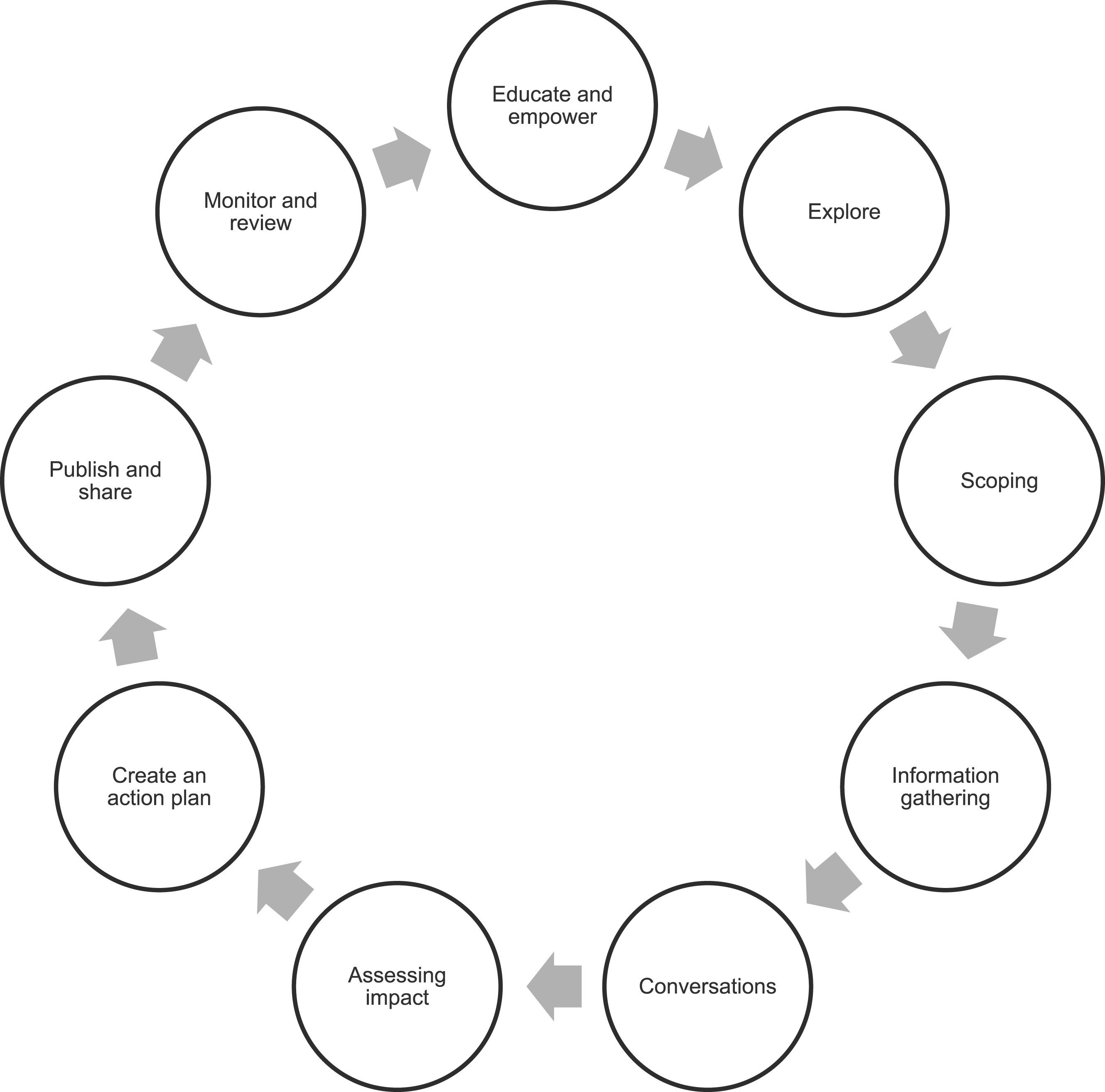
The detailed evidence-based Environmental Justice Framework is intended as a guide and organisations are encouraged to use this to develop their own context driven approaches towards collecting data, assessing and engaging. The Framework will be a dynamic tool, and organisational use will be evaluated to develop this further and provide case studies around good practice.
The Inclusive Environments research was a response to recommendations from the Cheshire and Warrington Sustainable and Inclusive Growth Commission 113 . Equally, the consequent research upon which the Environmental Justice Framework is based has been conducted with participants across this sub-region of England. With a large industrial cluster, Cheshire and Warrington has a high industrial carbon footprint, with CO2 emission per km2 of more than double that of the England and Northwest averages at 1.2 kg per kilometre 114 . Cheshire and Warrington has a strong economy worth £32 billion, but despite, the economic success of the sub-region, 5% of the population lived in the top 10% most deprived places in the country on the index of Multiple Deprivation areas 115 . Whilst the focus has been on the localised context, it is considered that through triangulation with wider scholarship and a deliberate context driven approach towards developing the Environmental Justice Framework, application is transferable beyond the sub-region and even UK context. Forthcoming work on developing the Framework further will focus on rolling out a series of Capacity Development Workshops aimed at piloting the suggested approach with community groups and stakeholders beyond the sub-regional and domestic context.
Conclusion
Global and national recognition of environmental limits mean that public and private organisations are increasingly aware of the need to act and develop policy in accordance with the Sustainable Development Goals. Environmental sustainability is a fluid and vague concept covering a broad range of activity from addressing flood risk, to recycling and beyond. There is also an increasing recognition that whilst the climate and broader environmental crisis are an issue of international, national, and local equity, particular communities will differ in their experience of the impacts of and contribution to this crisis. Therefore, organisations not only need to be aware of the impact of the environmental crisis on marginalised groups but also of the impact of environmental sustainability decision making on already disadvantaged communities.
The research detailed in this paper points to a range of environmental challenges that are of concern to both organisations and communities. It has also pointed to some of the obstacles perceived by organisations and communities to addressing these challenges. A central obstacle is the lack of a clear and consistent approach towards assessing and addressing the unequal impact of the environmental crisis on marginalised communities and a lack of engagement by decision makers with community voices when developing environmental sustainability initiatives and policy.
Despite some evidence of ad hoc good practice, the data and wider evidence clearly suggests a need for guidance on environmentally just approaches toward decision making. This paper details an innovative Environmental Justice Framework developed from an equality impact assessment approach and adapted for public and private sector use which can be utilized to address both distributional and procedural justice in environmental decision-making. This builds on approaches already being taken in higher level decision-making at local authority level in England, Scotland and Wales and could be adapted for global use. It is argued that this Framework underpinned by rigorous research and developed from interdisciplinary consideration of EJ theory, the Public Sector Equality Duty under the Equality Act 2010 and principles of co-production provides a fresh accessible means of achieving EJ. It is recognised that this requires adaptation of existing approaches to recognise marginalised communities beyond the listed protected characteristics in UK legislation such as those from low socio-economic groups, asylum seekers and rural communities. It also necessitates adjustment for the private sector and a move away from public sector tokenistic use of EqIAs towards an approach which is underpinned by principles of co-production.
To seek to address environmental inequalities, it is vital that the communities most impacted are listened to by decision makers and are at the centre of providing just environmental solutions that don’t further disadvantage them. In other words, decision makers must ensure that EJ is central to the development and implementation of environmental sustainability actions and policy. Thinking beyond the silos of disciplines and placing the community voice at the heart of the process and creating better nexus between inclusive approaches, equality legislation and the environment in a way which meaningfully implements the SDGs is key to addressing climate injustice and environmental inequalities. This paper has advocated such an interdisciplinary approach underpinned by systematic and rigorous research as a significant starting point to commence building an innovative globally accessible framework for environmental justice.
Footnotes
Declaration of conflicting interests
The author(s) declared no potential conflicts of interest with respect to the research, authorship, and/or publication of this article.
Funding
The author(s) disclosed receipt of the following financial support for the research, authorship, and/or publication of this article: University of Chester
