




Abstract
This article focuses on the question of how four Central Asian states (Kazakhstan, Kyrgyzstan, Tajikistan, and Uzbekistan) harmonize their laws with the global VAWG frameworks that these states subscribe to. Specifically, it centers on two international documents, CEDAW (its General Recommendations 19 and 35 on gendered violence) and the Beijing Declaration, and explores the questions of alignment of these frameworks within the Central Asian region. The assessment employs seven key parameters derived from these documents: 1) strengthening legal responses, 2) developing national strategies on gender equality and plans of action, 3) establishing state offices for women’s policy matters, 4) collecting national data on VAWG, 5) ensuring regular reporting, 6) setting up crisis centers and shelters, and 7) implementing training programs. The second part of the research incorporates insights from gender experts in the four Central Asian countries to enrich its analysis. The respondents were interviewed about the overall impact of the international legal framework in regulating VAWG in their respective countries, followed by their perspective on whether the region should adopt the the Istanbul Convention or develop its own regional framework to more effectively combat gender-based violence.
Introduction
In many parts of the world women and girls are exposed to various gender-related risks, and Central Asia is no exception, where violence against them is widespread. 1 The region’s long-standing patriarchal social structure, coupled with a growing commitment to traditionalist and religious values, that has only intensified with the region’s independence, 2 naturally has had a direct impact on the status and treatment of women. As a result, one can witness how women and girls in Central Asia are often subjected to various forms of gender-based violence, where among them the most common manifestations of violence against women and girls (VAWG) are domestic violence, 3 trafficking in women, 4 femicide, 5 sexual harassment 6 and others, as well as specific forms of VAWG, so-called prescribed by traditional customs of the peoples of Central Asia, such as bride kidnapping (“kyz ala kachuu”), 7 “kelinism” 8 and early marriage. 9 In order to tackle these issues, since the collapse of the communist regime and gaining their independence, four Central Asian countries began their modern journey towards gender equality and made progress in women’s rights by adopting national gender legislation and policies. As part of this process, Central Asian states participated in international initiatives that became a momentous turning point in this journey. The first and most significant event for women’s rights in Central Asian region transpired in 1995 when gender advocates from the four states, along with representatives from around the world, took part in the Beijing Declaration and Platform for Action (Beijing Declaration). This engagement resulted in the ratification of and accession to key international documents in the area of women’s human rights and gender equality; among them were the Beijing Declaration and Convention on the Elimination of All Forms of Discrimination Against Women (CEDAW). At the same time, the sole ratification or accession to international frameworks does not necessarily translate into tangible change for the status and rights of women within the states. 10 Rather, it is essential to assess the practical impact of these ratified documents in Central Asian states, where harmonization is necessary to ensure consistency between domestic and international standards. 11
The topic of gender-based violence in Central Asia is rather extensive, given the various forms in which it can manifest, as well as the fact that the region comprises several states with different legal and policy frameworks. At the same time, all four states share some common cultural and historical backgrounds, which influence the general understanding and attitude toward the problem and paint an overall picture of gender-based violence in the region. The literature review painted an extensive picture of gender-based violence research in Central Asia. Specifically, previous studies on VAWG in Central Asia have widely concentrated on understanding the sociological dimensions of this problem. 12 Other scholars in the region have examined the ethnographic history and perspectives, analyzing how cultural nuances and traditional and customary attitudes in Central Asian societies, taken to their extreme, contribute to the emergence and perpetuation of gender-based violence. 13 A particular part of the research is devoted to the view of VAWG in Central Asian countries through the prism of psychology and medical sciences, where the researchers tried to study the psychological profile of gender-based violence victims, how crisis centers can adversely affect victims’ help-seeking and explore the connection between health and violence. 14 In other instances, different studies explore women’s organizing and crisis centres’ role in Central Asian states in the fight against domestic violence. 15 As seen, previous studies have examined the problem from the perspective of different sciences, but they do not specifically cover the topic of legal and political regulation of gender-based violence in the region. Accordingly, there is a scarcity of academic sources with the analytical inclusion of normative frameworks and policy aspects of VAWG in the Central Asian region. 16 Most of such studies are based on reports of international or regional organizations 17 or NGOs 18 and other sources. 19 What is more, essentially minimal sources discuss the alignment of the domestic legislation of Central Asian republics with the VAWG-related international legal and policy framework. 20 The state of academic and secondary references highlighted a deficiency of sources in the academic space, specifically addressing the topic of how Central Asian states align their laws and policies with international women’s human rights standards. Thus, this gap underscores the need for a more integrated and comprehensive analysis of how these states implement international obligations in combating VAWG.
This study fills this void in the literature with an analysis of how four Central Asian states align their laws and policies with international women’s human rights standards, namely, with the VAWG-related international legal and policy agreements that they joined. Yet, the mixed methodology has made it possible for this study to examine the problem of gender-based violence in the region from different angles. The author analyzed the sources from the doctrinal and normative side, while the interviews with gender experts helped to obtain insights into the practical dimensions of the problem.
The scope of the study and research questions
The article focuses on the alignment between domestic laws and international women’s human rights legal standards, focusing on how four Central Asian states harmonize their laws with global VAWG norms underscored by CEDAW and Beijing Declaration, and addresses the following research questions: 1) How have Kazakhstan, Kyrgyzstan, Tajikistan, and Uzbekistan aligned their domestic laws and policies with the recommendations outlined in CEDAW (General Recommendations 19 and 35), and the Beijing Declaration to address VAWG? 2) What is the overall impact of the international women’s rights legal framework on regulating VAWG in these Central Asian countries, and does Central Asia need to join other international frameworks to more effectively combat VAWG?
To answer these questions, this article explores how the four analyzed countries align their laws and policies with CEDAW (General Recommendations 19 and 35 on VAWG) and the Beijing Declaration, identify any challenges they may face, and assess their efforts toward complying with women’s human rights standards related to VAWG.
The article starts by giving a general overview of the key provisions of CEDAW, its General Recommendations 19 and 35, along with the Beijing Declaration which are centered explicitly on gender-based violence and outline the essential steps and recommended measures that member states should take to address this problem effectively. The second part evaluates whether and how Central Asian countries have adhered to these recommendations. In particular, the assessment comprises how these four states have implemented provisions related to VAWG based on seven parameters derived from CEDAW, General Recommendations 19 and 35, and the Beijing Declaration which will be explained further in the Methodology section. Finally, the last part of the research enriches its analysis by incorporating insights from experts in four Central Asian states about the overall impact of the international legal and policy framework in regulating VAWG in their respective countries and provides insights into whether the current frameworks are sufficient or if there is a need for additional measures, such as joining the Convention on Preventing and Combating Violence against Women and Domestic Violence (Istanbul Convention) or developing a similar regionally focused document.
Methodology
The approach consisted of mixed qualitative research methods, 21 which helped to capture a comprehensive understanding of the complex legal and policy landscape and its practical implications in the Central Asian context. Firstly, the research applied a predominantly doctrinal analytical method. 22 In particular, the literature review involved an examination of legal instruments, academic articles, textbooks, and policy documents related to the VAWG subject. The literature collection process involved a thorough review of current academic and complementary research.
Further, the research involved legal analysis, specifically a normative investigation of legal documentation on VAWG under international human rights law. 23 It also included a comparative legal examination of the relevant domestic VAWG-related laws and national gender policies of the four Central Asian states, utilizing both primary and secondary legal sources. 24 This analysis covers the period from the dissolution of the Union of Soviet Socialist Republics (USSR) in 1991 to the present day. Priority was given to two documents within the international women’s human rights field: CEDAW (General Recommendations 19 and 35 on VAWG), as well as the Beijing Declaration. The reason for choosing these frameworks is their straight influence in shaping discussions on women’s rights and their direct attention to VAWG, as well as the fact that all four Central Asian states joined these two documents. 25 By narrowing the focus to these two frameworks, the study aims to provide an analysis of the efforts in addressing VAWG, as both CEDAW and the Beijing Declaration have played roles in building policies and actions taken by countries to address this matter. The assessment employs seven parameters that are identified as a result of a combination of specific recommendations from CEDAW (General Recommendations 19 and 35), as well as the Beijing Declaration: 1) strengthening legal responses, 2) developing national strategies on gender equality and plans of action, 3) establishing state offices for women’s policy matters, 4) collecting national data on VAWG, 5) ensuring regular reporting, 6) setting up crisis centers and shelters, and 7) implementing training programs. Although there might be more aspects and criteria for government action to consider, the inclusion of too many parameters could make the evaluation process overly complicated and dilute the focus from the most critical areas. Thus, the author narrowed the choice of the seven mentioned parameters for evaluation based on their alignment with the key recommendations provided by CEDAW, General Recommendations 19 and 35, along with the Beijing Declaration and Platform for Action. This allows for a focused and inclusive analysis of decisive areas about government actions against gendered violence.
Ultimately, the study was substantiated by qualitative, in-depth interviews 26 with experts providing insights on regulating gender-based violence in the Central Asian region. More specifically, semi-structured interviews 27 were conducted with 11 gender experts, including representatives from international and local women’s NGOs, gender activists, human rights lawyers, journalists, and researchers specializing in women’s rights and gender issues in Kazakhstan, Kyrgyzstan, Tajikistan, and Uzbekistan. These interviews were conducted between March - May 2023 and August - November 2023 using means of communication such as telephone, WhatsApp, and Telegram audio and video calls, Skype, Zoom, and other video communication platforms of the interviewee’s choice, 28 as well as receiving written responses via e-mail in exceptional cases. The respondents possess expertise in the field of gender-based violence and its legal and policy regulation in four Central Asian states. Cross-referenced semi-structured interviews offer valuable insights that complemented the overall analysis. The purpose of these semi-structured interviews was to provide rich contextual information that could deepen understanding of the complexities and gaps in addressing VAWG in four Central Asian countries. The respondents were interviewed about the overall impact of the international legal and policy framework in regulating VAWG in their respective countries, followed by their perspective on whether the region should adopt the Istanbul Convention or develop its own regional treaty to more effectively combat gender-based violence.
The criteria for selecting respondents have included their expertise based on both practical experience and academia/research, including individuals with human rights law, journalism, and activism backgrounds. Additional considerations involved the participation of experts in policy or legal advocacy, engagement with vulnerable communities affected by gender violence, and experience in the realm of women’s rights, gender, and VAWG in the context of four Central Asian countries. The interview questions covered the respondents’ experiences in women’s rights and gender-based violence, which helped to explore their perspectives on existing challenges and shortcomings within the states’ gender strategies and legislations.
Research ethics
Parts of the study involving humans have been conducted in accordance with the ethical guidelines of the Committee on Human Research (CHR) of Koç University. Prior CHR approval was obtained for conducting semi-structured interviews. Moreover, all respondents provided written or oral video/audio informed consent for their names to be publicly disclosed and utilized for this research. At the same time, all respondents participated in this study voluntarily, without any pressure or obligation. 29 The author recorded all answers in video, audio, and written formats to ensure data validity and reliability. Transcripts and video/audio recordings were accessed only by the author.
Research limitations
The analysis excluded the focus of the fifth Central Asian state, Turkmenistan. This exclusion is based on the methodology of the study, considering the limited availability and restricted access to data and sources on the topic in this country. 30 Furthermore, the scarcity of experts and their willingness to openly speak, attributed to the authoritarian regime, adds to this constraint. 31 The research was conducted until June 2024 and, therefore, could not encompass any legal or policy amendments adopted, and literature published after this date in the four states under discussion.
Insights from CEDAW, its Recommendations and the Beijing Declaration on VAWG
Two global women’s rights documents, CEDAW and the Beijing Declaration, among other issues related to gender equality, also specifically target the problem of VAWG and urge member states to pursue measures and initiatives to prevent and battle it. Both frameworks emphasize the need for governments to adopt a systematic approach in order to eliminate and prevent gender-based violence. 32 At one time, all four Central Asian states under analysis became participants in these documents and assumed obligations to address the problem of VAWG and promote gender equality within their jurisdictions. While CEDAW lays the groundwork for addressing gender-based discrimination as a binding international treaty, the Beijing Declaration builds upon this foundation by providing a detailed plan of action to battle VAWG directly, though its provisions are not obligatory. Moreover, the impact of CEDAW General Recommendations 19 and 35 cannot be underestimated, too, as they explicitly aim to provide guidelines for national responses to VAWG. In essence, the recommendations offer a tailored set of measures for member states to anticipate and address gendered violence.
The CEDAW, being an international treaty, takes a more general approach towards addressing gender inequalities, including VAWG. It does not contain articles solely focused on VAWG, but it recognizes that gender-based violence is a form of discrimination and thereby falls within the broader scope of gender equality. Yet, CEDAW mandates member countries to condemn all forms of discrimination against women and take measures to eliminate such occurrences, including addressing VAWG. Moreover, it emphasizes the need for an approach that should include legal and policy measures, as well as challenge societal attitudes and stereotypes, including VAWG, with a view to combat gender discrimination.
33
In their turn, General Recommendations 19 and 35 are specific guidance issued by the CEDAW Committee and focus concretely on gender-based violence problem. The recommendations highlight the obligations of state parties under CEDAW to take adequate measures to prevent and respond to VAWG, which is considered a form of gender-based discrimination. Moreover, among others, the documents mention different forms of gendered violence that are regarded as traditional attitudes or perpetuated by traditional practices.
34
The documents take a more specialized approach by providing a comprehensive list of recommended measures against gendered violence for member states, among them: − take adequate measures to combat all forms of gender-based violence, − protect women’s integrity and dignity through appropriate laws and support services, − encourage the collection of statistics and research on the extent, causes and consequences of violence, − eliminate prejudices through education, − provide remedies for victims, establish services for victims of gender-based violence, − protect women from harassment in the workplace, − ensure effective legal and preventive measures to safeguard women from violence, − report on all forms of gender-based violence,
35
− establish or mandate a coordinating body to monitor and assess the effectiveness of measures to prevent and eliminate gender-based VAWG.
36
The Beijing Declaration, for its part, was adopted at the 1995 Beijing Conference, 37 and in comparison to CEDAW, this document takes a more narrow and detailed approach when it comes to combating gender-based violence. Even though the document does not contain specific clauses alike a treaty and is not legally binding like CEDAW, it carries a vigorous message as a declaration of intent and dedication to fostering gender equality and respecting women’s rights. Within the framework of the Beijing Declaration, the Platform for Action sets out a roadmap with strategies and measures to address gender-based violence. In particular, its Strategic Objectives D1-D3, the text of the Declaration mentions different forms of gendered violence, such as domestic violence, sexual abuse, trafficking, and other gender-based harmful practices, and further encourages governments to bust a move to prevent and eliminate VAWG, support and protect the victims, and prosecute the perpetrators. 38 Some of the recommended steps include strengthening and expanding laws that cover civil, labor and administrative codes with the aim to ensure that those who commit acts are held responsible and that affected women have avenues for seeking redress and justice. 39 The text also stresses the importance of the introduction of measures that hold law enforcement agencies, security forces, and other government representatives accountable for their involvement in VAWG acts. 40 The UN mandates that governments create and implement their strategies and national action plans as part of an enforcement strategy. These plans are then monitored by the Commission on the Status of Women through different means, primarily by national reporting. 41 It is recommended by the Beijing Declaration that governments take steps to ensure effective coordination of all units by designating a state office responsible for combating VAWG or focusing on women’s policy matters. Ideally, these offices should collaborate with various institutional actors, including legislative bodies, academic and research institutions, international and local women’s NGOs. 42 Further, the document recommends for members to establish and support training programs that educate personnel about VAWG, not only in judiciary and police but also medical and immigration services. Therefore governments are strongly encouraged to undertake prophylactic activities, such as developing training and preventive programs and implementing rehabilitation initiatives. These national strategies and programs particularly should aim to familiarize servants with the objectives of the Declaration while also educate them on how to prevent abuses of power that can lead to violence. Finally, and no less important, as part of their efforts against VAWG, governments are encouraged to ensure that there are funded shelters and support services for survivors of violence and to actively work to raise awareness of the issue and inform them of available resources. 43
Evaluation of the harmonization of laws and policies in Central Asian countries
When considering the question of ratification and accession to international instruments to combat VAWG in the Central Asian region, it is fundamental to take into account the role of harmonization with these standards on the ground. Indeed, formal joining to global frameworks demonstrates a state’s commitment to women’s human rights and gender equality, yet it does not guarantee immediate changes in domestic laws and policies, especially by virtue of a weak compliance structure.
44
This is because the enforcement mechanisms of international human rights frameworks are limited, and states do not face any major ‘punishments’ or interventions if they continue violating practices.
45
Harmonization is an inherent element in this chain, as it involves the alignment of domestic laws, policies, and practices with the principles and standards set forth in international agreements or treaties. In simple terms, it signifies the process of ensuring consistency and alignment between domestic and international standards.
46
Therefore, the objective of this part is to assess the extent to which Central Asian states have aligned and adhered to the recommendations outlined in CEDAW, General Recommendations 19 and 35, and the Beijing Declaration. These factors were formulated on the basis of the abovementioned recommendations provided to member governments in the documents and served as a ground for assessing the progress and alignment of Central Asian countries with global standards in their efforts to combat VAWG.
47
1) Strengthening legal response - this parameter involves strengthening and expanding domestic legislation, incorporating a dedicated law addressing VAWG, with a particular emphasis on domestic violence, and encompassing penal and administrative codes aimed at holding perpetrators accountable and offering remedies for affected women.
All four Central Asian states have adopted specialized laws on domestic (family) violence, although, the real challenge lies in enforcing and implementing these laws and ensuring their effectiveness. At the same time, not all states have fully criminalized domestic violence despite the adoption of such laws, as recommended by CEDAW, General Recommendations 19 and 35 and the Beijing Declaration. 48 Kazakhstan’s legislation, including the 2009 Law on the Prevention of Domestic Violence, does not treat domestic violence as a distinct crime. In April 2024, the state did adopt new amendments to the legislation (“Saltanat’s Law”) aimed at better protecting women and girls from violence. 49 Indeed, bringing provisions on “beating” back to the criminal code is a good step forward, but this cannot be considered a full criminalization of domestic violence. The new criminal amendments lack certain aspects that are recommended by international standards for domestic violence definition: no distinct mention of violence within single-household or intimate partner relationships. 50 In addition, the provisions do not explicitly acknowledge the gendered nature 51 of domestic violence.
The Kyrgyz Republic adopted its first Law on Social and Legal Protection from Domestic Violence in 2003 to address domestic violence but faced challenges when it came to enforcement and budget constraints. Subsequently and as a result of those barriers, the country enacted an enhanced Law on the Protection and Defence against Domestic Violence in 2017, which provides comprehensive protection for victims. 52 Next, worth noting that the country became the first in the region to criminalize domestic violence. In particular, the criminal legal amendments in 2021 include provisions on domestic violence as a separate article in the Criminal Code with a maximum penalty of up to 5 years in prison (Article 177). 53 Additionally, the 2021 Code of Offenses also contains a similar provision on domestic violence that also covers economic abuse, apart from physical and psychological, but with a lesser penalty of three to 7 days of arrest (Article 70). 54 Such conflicting sets of norms could potentially create confusion or intentionality in the application of the law and might weaken protection for victims in severe cases of domestic violence. 55
In its turn, the Law on the Prevention of Family Violence was adopted by Tajikistan’s Akhbori Majlisi Oli (the Supreme Assembly of the Republic of Tajikistan) in 2013. 56 This law comprises forms of violence, such as physical, mental, sexual and economic abuse, although, the country has not yet defined domestic violence as an independent crime. Similar to Kazakhstani legislation, it is typically considered within other offenses like beatings (Article 116) and torture (Article 117), which do not account for family and intimate relationships, as well as no gender aspect is mentioned in the articles. 57 According to the country’s periodic report submitted to CEDAW in 2022, there are discussions in Tajikistan’s government in considering the criminalization of domestic violence as a separate offense. Nonetheless, this matter has been under consideration since the year of 2019, specifically, a working group is currently developing a draft Criminal Code that includes Article 153 titled “Domestic violence”. The draft article defines domestic violence and proposes different criminal penalties depending on the severity of the offense, ranging from mandatory and corrective labor to up to 10 years of imprisonment. 58 Despite the ongoing efforts since 2019 this draft has not yet been officially adopted yet.
Finally, the fourth state, Uzbekistan, adopted its specialized Law on the Protection of Women from Harassment and Violence in 2019, 59 and on April 6, 2023, the state achieved another marker by the recognition of domestic (family) violence as a distinct criminal offense under its criminal law. Article 126(1) of the Criminal Code now contains a thorough provision on family violence that includes all forms and aspects recommended by international standards. 60 Moreover, Article 59(2) of the administrative code comprehensively mentions manifestations of economic violence 61 apart from physical abuse. Similar conditions to the situation with Kyrgyzstan’s conflicting sets of norms may create ambiguity or even intentionality in the application of the law.
As observed, the Central Asian states’ compliance with the recommendations of the international frameworks in terms of legislation has been varied. While all of them have enacted specialized laws on domestic violence, as recommended by international standards, not all have fully recognized it as a distinct criminal offense. Looking from one side, even if Kyrgyzstan and Uzbekistan aligned their legislation as recommended, the collision of criminal and administrative laws may provide further issues in the application. On the other side, in Kazakhstan and Tajikistan ‘domestic violence’ clause is not mentioned in full and definitely in their criminal codes. Moreover, it is important to note that the adoption of domestic violence laws in Central Asian states often lacked practical implementation and did not address VAWG sufficiently, as victims do not receive justice, and many withdraw their complaints due to societal stigma, reconciliation under the pressure of perpetrators, fear of retaliation, and lack of trust in law enforcement.
62
2) Developing national strategies and plans of action - this parameter includes an assessment of whether a comprehensive national strategy and/or action plan has been formulated in a state to achieve gender equality in general, including to address VAWG.
The Uzbek Senate of the Oliy Majlis in 2021 also approved the Strategy for Achieving Gender Equality in the Republic of Uzbekistan until 2030. Paragraph 5 of the gender strategy focuses on ensuring equal rights and opportunities for women and men in oppression and violence prevention. The text of the document mentions a thorough list of measures to be implemented by 2030 to achieve this goal: improving the system of social rehabilitation and state financing for victims, providing support for victims’ safety and mental rehabilitation, maintaining records and identifying potential perpetrators, etc. 63 Turning to Kyrgyzstan, it is worth mentioning that during the initial stages, the first national gender equality programs were designed for short periods in the country. 64 Nevertheless, later on in 2012, with the adoption of the National Strategy of the Kyrgyz Republic to achieve gender equality by 2020, there was a shift towards long-term planning. This also included the introduction in 2022 of the latest National Strategy of the Kyrgyz Republic to Achieve Gender Equality until 2030 and a corresponding National Action Plan for the years of 2022-2024. Therefore, by 2030, the Kyrgyz government targets to considerably reduce gender-based violence cases and discrimination by establishing an effective system to prevent them per constitutional guarantees of non-discrimination. This involves a principle of zero tolerance for gender-based violence by law enforcement agencies, accessible judicial remedies for victims of abuse, adequate punishment for perpetrators of gender-based crimes, along with the creation of an effective system to provide services and assistance to victims. 65
The Republic of Kazakhstan, in 2016, introduced its latest Concept of Family and Gender Policy until 2030, which covers aspects of promoting gender equality and protecting family values. The concept includes a section that focuses explicitly on preventing VAWG and outlines a range of measures for government institutions, NGOs, and the media to address the problem under discussion. Within terms of its gender equality strategy, Kazakhstan views the fight against gendered violence as a priority that aligns with the sustainable development goal to reduce all forms of VAWG on its territory. As part of its gender policy, the Kazakhstani government aims to achieve a 50% decrease in domestic violence cases by a year of 2030. Although the Concept highlights measures to improve legislation in areas related to public life for attaining gender equality, for e.g., labor laws and protection of children’s rights, specific enhancements regarding gender-based violence, including criminalizing such acts, are not explicitly mentioned in the document. 66 Moreover, the text of the document simultaneously discusses issues related to strengthening the institution of the family and its values, which could potentially divert attention from gender issues. In turn, the Tajikistan’s government in 2021 adopted the National Strategy for Empowering Women in the Republic of Tajikistan between 2021 and 2030. As a corresponding plan of measures, the state also approved the Action Plan for 2021-2025, which aims to implement this strategy throughout its territory. 67 The national strategy and plan cover several general measures related to the eradication of VAWG, including improving legislation, but do not mention the intention of criminalization in relation to various forms of VAWG. Furthermore, as in Kazakhstan’s strategy for gender equality, the documents of Tajikistan, in addition to improving the position of women in general in public and private life, also focus on strengthening the status of women within the family, which may obscure the focus on solving problems in the area of gender-based violence.
Each country in Central Asia has adopted gender strategies and action plans in line with their international obligations to achieve gender equality and tackle gender-based violence as key priorities. However, the level of progress and dedication towards these objectives is different among the four countries. For example, gender policy documents in Kazakhstan and Tajikistan do not explain in detail measures to improve legislation on gender-based violence, in particular the criminalization of such acts, given that the latter has not been fully happened in these two states (while the gender strategy and action plan of Tajikistan are not publicly accessible). Overall, while progress has been made in the adoption of gender policy documents, sustained efforts and practical implementation have fallen short of productively addressing gender-based violence in the region.
68
3) Designating a state office focusing on women’s policy matters or VAWG - this parameter examines the existence of a dedicated state office or as a part of a body responsible for combating VAWG or overseeing women’s policy matters.
Per its international commitments, states should “set up a mechanism or body, or mandate an existing mechanism or body, to regularly coordinate, monitor and assess the national, regional and local implementation and effectiveness” of gender policies. 69 Such body functions should also cover the coordination of policy implementation on gender equality and VAWG between various institutional actors. These mechanisms could be established within the relevant institutional structures, e.g., under the auspices of the Ministry of Interior Affairs, the Ombudsman’s office or the Ministry of Social Affairs. 70 In Kyrgyzstan, the Gender Department of the Ministry of Labour, Social Security and Migration (MLSSM) is the authorized body tasked with duties such as coordinating and facilitating collaboration across sectors to implement gender policies. In early 2021, there were changes in the executive branch that resulted in a shift in the department’s focus toward addressing domestic violence. Moreover, as suggested by Recommendation 35, the MLSSM is responsible for overseeing the implementation, monitoring and evaluation of the national gender policy in the Kyrgyz Republic, including in the field of protection and defence against domestic violence. 71 Yet, the national institutional framework does not have clear mandates for the various parts to improve the situation of women, lacks human, technical and financial resources, and there is a frequent change of bodies responsible for gender issues. 72
In its turn, the Republic of Kazakhstan, since joining the Beijing Declaration in 1995, also established the National Commission on Women’s Affairs and Family and Demographic Policy in December 1998 through a presidential decree. Nevertheless, it is important to note that Kazakhstan’s special body does not fully align with international recommendations for an authorized gender affairs entity. Indeed, the Commission is responsible for developing recommendations, setting priorities, and collaborating with government and civil society institutions, yet it lacks certain key functions required by international standards. For instance, the Women’s Affairs Commission has neither monitored capabilities, nor assessment authority, which are typically associated with an authorized body in the field of gender policy. Moreover, the Commission does not fully comply with the recommendation on the coordination responsibility. Specifically, it has a coordinating responsibility but only coordinates the activities of commissions under akims (the head of the local executive body) of oblasts and cities of Kazakhstan. 73 Most importantly, the Commission’s functions cover combined issues related to women, family, and demography, which dilutes its emphasis on women’s issues and VAWG and causes its attention to spread across a range of topics. Thereby, such limitation impedes efforts to enhance gender equality and protect women’s rights despite indications in the state’s National Strategy that prerequisites exist for establishing such an entity.
Tajikistan formed a Committee on Women and Family Affairs under the Government of the Republic of Tajikistan that serves as the coordinator for implementing the National Strategy on women’s questions. Among other responsibilities, it is endowed to engage in strategies development to protect the rights and interests of women and families, conduct consultations, evaluate the effectiveness of action plans, raise awareness about gender policies, address gender-related concerns and collaborate with state institutions and NGOs. 74 Although, just like Kazakhstan’s women’s commission, Tajikistan’s Committee on Women and Family Affairs does not have fully specialized functions for VAWG policy as recommended by international recommendations. In other words, the women’s committee in Tajikistan is rather focused on the implementation of policy goals related to the family and labor rights of women rather than VAWG. Within the framework of the body’s duties, there is not a single mention of the management of issues related to VAWG. Lastly, in 2019, the Committee on Women and Gender Equality under the Senate (the upper house of parliament) was established in Uzbekistan. The main role of this committee is to develop proposals for implementing policies that support gender equality, improve legislation, and provide parliamentary oversight in this field. 75 However, it is unclear whether the committee has duties in coordinating and evaluating gender policies, particularly those related to the issue of gender-based violence.
In summary, all four governments established specialized offices related to women’s affairs, albeit under various official titles, with the purpose of oversight of government policy implementation on women’s issues and gender equality. However, none of these departments, with the exception of the MLSSM шт Kyrgyzstan, are fully vested with the recommended responsibilities of an authorized body for women’s affairs.
76
The Uzbek authority has the recommended responsibilities, but it remains unclear whether its Committee has received coordinating and evaluation capacity; Kazakhstan has all the responsibilities, but only partially, since it does not have full coordination functions; and the Tajik Committee does not have any narrowly focused functions related specifically to solving problems of gender-based violence. Therefore, no government, with the exception of the Kyrgyz Republic, adheres to international recommendations on the creation of effective government institutions to monitor the implementation of gender policies, specifically with regard to VAWG, to the fullest extent. Moreover, the bigger issue is that the disparity between stated intentions and actual implementation still looms wide. These institutions are often deficient in substance and mainly serve as symbolic structures, influenced more by financial considerations rather than by loyal commitment and tangible action towards gender equality and respect for women’s rights. As a result, activities and initiatives toward the completion of gender equality are often dependent on external assistance from international organizations, NGOs, and local individual civil society groups.
77
4) Collecting and registering national data on VAWG - this parameter indicates whether a country conducts national data collection and registration on cases of VAWG, monitoring trends and progress;
According to international recommendations, to effectively combat VAWG, countries should enhance their efforts in collecting gender statistics and ensuring that relevant data is readily available and easily accessible. 78 The availability of adequate and accurate gender statistics plays a role in developing targeted interventions, monitoring progress and formulating evidence-based policies that can effectively address gender-based violence and promote gender equality in the region. Furthermore, fostering transparency and collaboration between national institutions and NGOs focused on women’s questions can support and generate accurate data on VAWG, thereby can contribute to more efficient strategies and actions in the future. The Bureau of National Statistics under the Agency for Strategic Planning and Reforms in Kazakhstan maintains a database that contains a wealth of gender statistics. This includes both historical and up-to-date data on gender, including detailed information on VAWG. The gender statistics, among other indicators, cover details such as the age of victims, types and forms of violence experienced (including sexual, physical, and domestic violence), crimes targeting women, the availability of crisis centers, and individuals seeking assistance from these centers. 79
Similarly, the Kyrgyz Republic holds an inclusive database that covers various aspects of gender statistics. The National Statistical Committee sustains a range of gender-related data that is categorized under population demographics, governmental institutions and administration bodies, employment rates and unemployment figures, social protection measures, education and scientific research data, healthcare statistics as well as reports on violations of laws. Apart from them, the database devotes a separate section to gender-based violence, which provides information such as the number of public appeals made to crisis centers, elder councils (aksakal courts) or other specialized institutions concerning domestic violence issues. It also includes numbers on individuals who have committed violence (with protective orders issued) categorized by gender and territory. 80 Despite these advancements, the common problem in both Kyrgyzstan and Kazakhstan is that they do not cover other forms of VAWG that are common within their territories. Moreover, this includes no national statistics on bride kidnapping, which is especially widespread in these two states.
In Tajikistan’s case, the collection of gender statistics falls under the responsibility of the Agency on Statistics under the President. Although, the database primarily focuses on tracking gender indicators related to the Strategy of Enhancing the Role of Women in Tajikistan. These indicators encompass criteria such as women’s status in political spheres, promotion of employment opportunities for women, their involvement in the labor market and others. While some aspects of VAWG are included, the database provides only a limited number of indicators specifically related to gender-based violence. These indicators consist of data on the total number of registered crimes, profiles of perpetrators, the number of crimes committed against minors and information on convicted women and underage offenders. 81 This means that NGOs and crisis centers are primarily responsible for collecting data on incidents of VAWG in Tajikistan. 82
Uzbekistan also collects statistics related to gender by its dedicated national institution, the State Statistics Agency, which is responsible for gathering data, including on gender. According to the latest state report to CEDAW, the electronic database maintained by this agency records information regarding victims of violence and individuals with a tendency towards violence. 83 However, unlike neighboring countries, there is a deficiency of available information explicitly related to VAWG on the Web site of Uzbekistan’s statistics agency. 84 In many cases, these types of statistical information are gathered by women’s NGOs or international organizations.
It can be summarized that the four Central Asian countries have followed their international commitment to collect gender statistics, including data on VAWG, but to different degrees. On one hand, Kazakhstan and Kyrgyzstan have established comprehensive databases covering various aspects of gender indicators, whereas the data also encompasses detailed information on gender-based abuse. However, they are not enough, as they do not collect numbers on other common forms of gendered violence (including no numbers on bride kidnapping), except for domestic violence. On the other hand, the database of Tajikistan’s statistical agency includes some data on gendered violence but with limited indicators; likewise, in Uzbekistan, there is a lack of specific information on VAWG on its official statistical committee’s database. This means that none of the mentioned countries have official statistics specifically addressing gender-related offenses such as femicide, sexual harassment, bride-kidnapping, child marriage, cyber gender violence, or trafficking in women, while also taking into account that some of these forms of VAWG are not defined and categorized as separate offenses or aggravating factors in legislations of four states. At the same time, despite the fact that some of this data may be collected by other institutions, such as law enforcement agencies, it is often not publicly available or systematically recorded. Such a lack of official numbers on the sensitive matters of gender-based abuse reflects gaps in the legislation of the Central Asian states and creates barriers to effectively monitoring and addressing different forms of VAWG. 5) Periodic reporting - this parameter refers to whether a country submits periodic reports to international women’s human rights treaty bodies, such as the CEDAW Committee.
Regarding the provision of the national reports on progress matters of gender equality, including VAWG, it is worth mentioning that all four states under discussion conscientiously fulfill their international obligations by regularly submitting periodic reports to the CEDAW Committee. Typically, the periodic reports provide detailed assessments of the progress made, challenges that occurred, and actions taken by the member states to implement the provisions under the CEDAW. Kazakhstan submitted its most recent national report in 2018, which reflects the achievements made up until that point and outlines ongoing initiatives.
85
In their turn, Kyrgyzstan and Uzbekistan also fulfilled their obligations by submitting their reports to the CEDAW Committee in 2019 where they stressed their efforts and barriers in the promotion of gender equality and battle VAWG and other gender-related problems on their territory,
86
followed by Tajikistan, which, as of the latest available information, presented its country report to CEDAW in 2022.
87
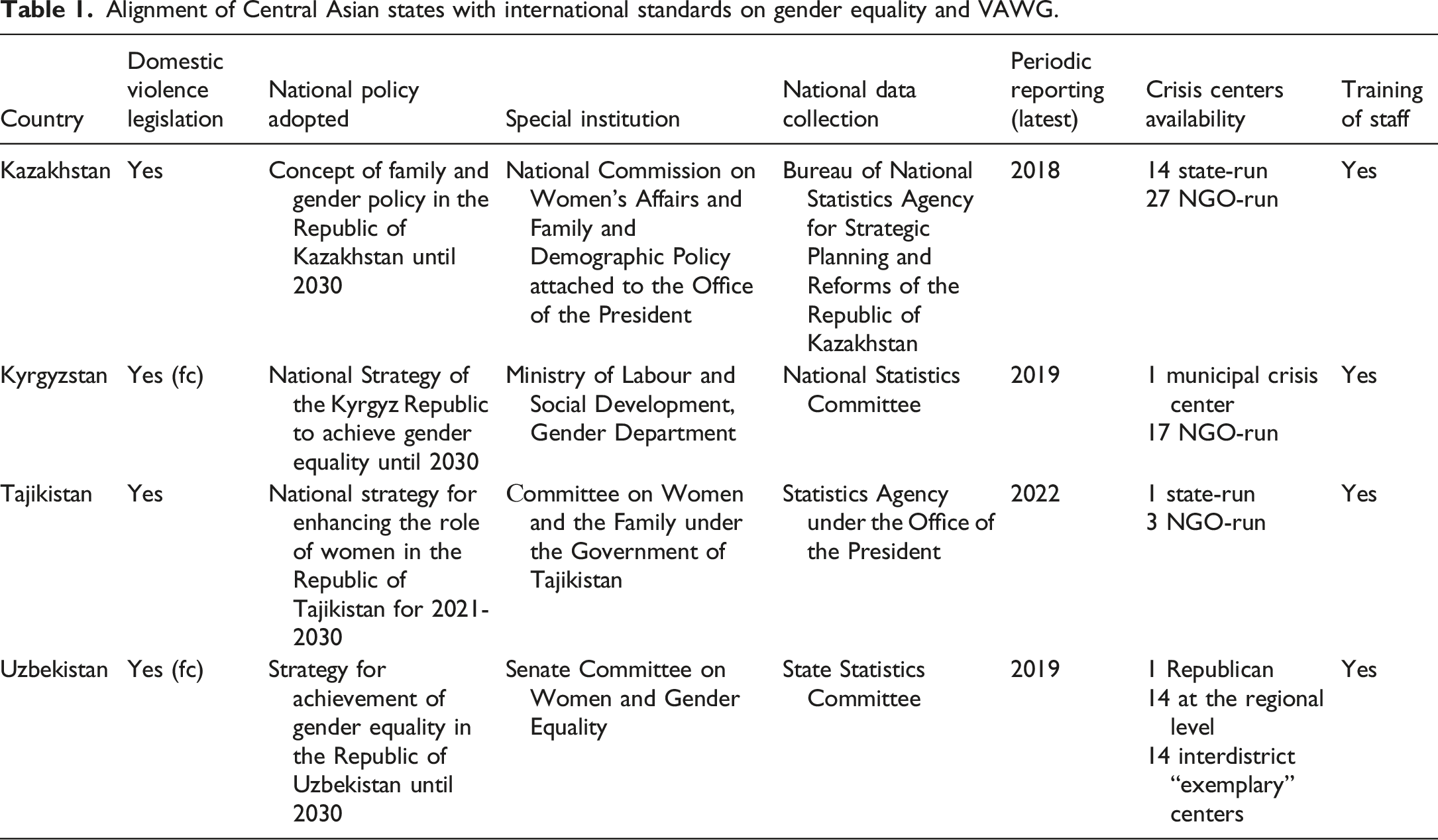
However, the common thread is that these periodic reports are not always submitted timely (see Table 1). 6) Providing crisis centers - this parameter evaluates whether government-run or non-governmental crisis centers and/or shelters are available to provide support and refuge to victims of violence. Alignment of Central Asian states with international standards on gender equality and VAWG.
As was mentioned earlier, it is recommended the states establish crisis centers and, ideally, with shelters as part of the VAWG victim support. As per the most recent state report to CEDAW in 2018, Kazakhstan had 30 crisis centers (with 18 of them having shelters) operating in all oblasts (regional administrative units) of the country, where these women’s centers were receiving state funding. At the same time, looking ahead to 2023, national statistics showed that the number increased to 41 crisis centers, with 14 of them being state-owned in Kazakhstan. 88 For its part, per the latest available data for 2021, the Kyrgyz Republic has 17 crisis centers, which are operating under NGOs and receiving sponsorship from international support or funds. 89 Yet, it should be mentioned that the capital city, Bishkek, established its first municipal crisis center named “Ayalzat” in 2021, 90 and there are plans to open the State Crisis Center in Bishkek in autumn 2023. 91 In contrast, the Republic of Tajikistan has a total of four crisis centers with shelters, with one of them being run by the state, and provides only one hotline for the whole country. However, noteworthy, maternity clinics offer lodging with 22 beds for individuals affected by gendered violence. At the same time, according to Tajikistan’s 2022 national report to CEDAW, an additional ten crisis centers are operating in the country. Then, one NGO established a crisis center specifically for women with disabilities in the Khatlon region, as well as in May 2020, the Ministry of Health and Social Protection opened a national social service center to assist victims of trafficking in persons and domestic violence. 92 Finally, regarding Uzbekistan, a presidential decree in July 2018 led to the establishment of rehabilitation and adaptation centers in the country’s oblasts (regional administrative units). The primary objective of such centers is to offer psychological, legal, and social assistance to victims of domestic violence. Out of the 200 planned centers, more than 160 were operational in 2019. 93 Two years later, as a part of the optimization activities the existing 197 centers were recreated that led to the establishment of 29 specialized centers for the rehabilitation and adaptation of women, 14 of them at the regional level, and other 14 interdistrict “exemplary” centers, while one center on the national level, thereby inaugurated as first Republican Center for the Rehabilitation and Adaptation of Women in Uzbekistan. 94
As seen above, Central Asian countries have established crisis centers or rehabilitation centers to demonstrate their adherence to international standards and efforts to combat gender-based violence. In the first case, one can observe that over the years, Kazakhstan and Kyrgyzstan have witnessed an increase in the number of crisis centers. Especially, Kazakhstan provides government assistance to support these centers, in contrast, most centers receive sponsorship from external sources or foundations, and currently only one municipal center is supported by government funding in the Kyrgyz Republic. Conversely, there are also rehabilitation centers in Tajikistan, but compared to other countries, their number is limited. Further, Uzbekistan has taken steps to optimize and create centers for the rehabilitation and adaptation of women; in addition, the country recently opened the Republican Center, which operates at the national level. Thus, all four countries, Kazakhstan, Kyrgyzstan, Tajikistan and Uzbekistan, have taken the first steps and recognized the importance of supporting crisis centers and shelters as part of their obligations under global agreements, yet, to varying extent. However, it is worth noting that not all these facilities receive national support; only a few are supported by the governments, while the majority of these centers and shelters rely on assistance from NGOs and international donors. In parallel, whilst the data indicates growth in the number of such facilities, their number in relation to population size and level of VAWG could be not sufficient. Moreover, given that most of these crisis centers are located in bigger cities, there could be a challenge of reaching rural populations. 7) Conducting training initiatives - this parameter specifies whether a country provides training programs for relevant personnel, such as law enforcement officers, judicial staff, medical personnel, social workers, and other professionals, to enhance their capacity to respond effectively to VAWG cases and support victims.
On the positive side, in recent decade, all four Central Asian states have begun to actively raise public awareness and train their officials on the topic of gender violence. One example is the annual participation of all four states in the annual 16 Days of Activism against Gender-Based Violence campaign. Moreover, the states are implementing systematic gender awareness training programs for various sectors of society; this covers the judiciary, law enforcement agencies, and healthcare personnel providing psychological assistance to victims, teachers, civil servants, and others. 95 It is also worth mentioning that, taking into account the growing Islamic sentiments in the societies, the Central Asian states have also extended their efforts to promote awareness at the level and within religious institutions. For instance, one of the training sessions took place in collaboration between the Spiritual Directorate of Muslims of the Kyrgyz Republic and the League of Defenders of the Rights of the Child. This training was focused on supporting the implementation of legislation aimed to prevent religious marriages involving minors. 96 In a similar vein, the Republic of Kazakhstan has launched a project called “Women and Religion” with a goal to educate girls based on traditions and progressive values in secular society. 97 On its part, Tajikistan’s government provided training for 270 religious leaders on the incorporation of tools for addressing gender-based violence into its faith communities. Through such initiatives, the government is attempting to raise awareness among society through organizations dedicated to resolving issues related to religious marriages and promoting gender sensitivity and education. 98 Indeed, the effectiveness of these training activities is another question and aspect that should be considered, as long-standing gender bias and stereotypes still persist within law enforcement and judiciary which influence how cases of gendered violence are handled across all four countries. 99 Further, it often discourages victims from pursuing charges and prioritizes reconciliation over justice. 100
Table 1 represents Central Asian states’ alignment with international standards outlined in CEDAW, General Recommendations 19 and 35, and the Beijing Declaration through seven indicators. (fc) – fully criminalized.
What is the role of international frameworks in addressing VAWG in Central Asia?
Continuing the discussion from earlier sections about the international framework concerning women’s rights and VAWG in Central Asia, interview participants from the region were questioned about the overarching impact of the international legal and policy framework on regulating VAWG in their respective Central Asian countries. They were asked about its utility and influence on the current state, legislation, and policies related to gender equality and VAWG in their corresponding states. From the viewpoints of respondents in Kyrgyzstan, Kazakhstan, Uzbekistan and Tajikistan, a common thread was traced that unanimously emphasized the weight of the international framework in VAWG regulation. All experts collectively agreed and acknowledged the obligations of the four countries to global agreements with an emphasis on CEDAW in the fight against violence targeting women and girls. However, it was noted that despite ratification and incorporation of these conventions’ principles into their national laws and policies, the actual implementation of these agreements in a place varies. Specifically, each nation encounters obstacles in translating these pledges into tangible progress for women and girls who face violence.
In further detail, Svetlana Dzardanova noted that, in the Kyrgyz Republic, the development of national strategies and action plans, laws, regulations and other instruments with regard to gendered violence are indeed shaped by international legal and policy standards. However, she raised the question of whether international law has truly made a difference and effectively impacted the situation with VAWG in Kyrgyzstan. While the country is definitely making efforts to bring national initiatives into line with international norms, Dzardanova implied that the practical impact of these efforts on reducing VAWG incidents in Kyrgyzstan might be uncertain or face implementation challenges. In contrast, Leila Nazgül Seiitbek pointed out that the international legal framework has had a limited impact on the regulation of VAWG in Kyrgyzstan. There have been very few cases reviewed under the CEDAW Committee, the reasons for which are versatile. These include challenges related to admissibility since not all instances of VAWG are necessarily linked to discrimination. Another issue that was pointed out is the limited access to lawyers with long-standing expertise in utilizing international legal tools to address cases of VAWG, which indicates a barrier to the effective use of international law to combat VAWG in Kyrgyzstan.
When asked about the impact of ratified international documents on VAWG in the Republic of Kazakhstan, Alexei Trochev acknowledged the ‘formal’ ratification of the CEDAW by Kazakhstan, signifying its international obligations. Although, he observed that this ratification did not bring significant changes on the ground: “Kazakhstan has ratified the CEDAW Convention. So, ratification meant there would be some international obligation on Kazakhstan. However, in fact, on the ground, it did not make a difference.”
The influence of international conventions alike CEDAW holds primarily bureaucratic and formal character and impacts only officials such as those in the Ministry of Justice who are responsible for reporting and monitoring obligations. These obligations include periodic review reporting, submitting annual reports of the Ombudsman for human rights, and addressing issues related to violence. Trochev described this impact as “bureaucratic” reporting, suggesting that the practical outcomes of these conventions may be limited to administrative and reporting processes within Kazakhstan. The involvement of various commissions, such as the National Commission on Women’s Affairs and Family and Demographic Policy, which primarily deals with demographic issues and social protection of women, especially families with many children, was also noted by the respondent
TJ1
101
from Tajikistan also emphasized the reporting aspect within the international legal framework concerning VAWG in her country. It has been highlighted that Tajikistan reports on international documents every 4 years, with VAWG issues being a significant focus in these reports. Through these reports, Tajikistan has received recommendations from the UN and statutory bodies, urging improvements in laws, specific prevention measures, the alteration of negative gender stereotypes, genuine assistance to victims, ensuring access to justice, and allocating sufficient resources. Overall, TJ1 acknowledged some progress, including the adoption of laws addressing domestic violence: “Yes, there is definitely progress. One of the results was the adoption of the laws… But on the other hand, these recommendations are being implemented very slowly; budgetary funds are not enough, since few are allocated. The government relies more on donors in this matter, and civil servants (state officials) themselves do not quite perceive this problem as they should, they are subject to stereotypes.”
Additionally, some Tajikistani state officials do not fully grasp the gravity of the issue, possibly by virtue of existing societal stereotypes, which further hinder the response needed to effectively combat VAWG in Tajik society.
In Uzbekistan, some expressed an overall positive view of the international legal framework’s impact on addressing gender issues and VAWG in the country. Farzona Khashimova stressed Uzbekistan’s active engagement with international treaties, particularly highlighting the significant role played by UN Women. She further noted that after joining the international treaties, Uzbekistan initiated national special programs with the aim of promoting women’s rights and gender equality. During this period, crisis centers were established, and training initiatives were conducted for government representatives and the general population, focusing on women’s education and empowerment. However, the real effectiveness of international law, especially concerning authoritarian regimes like Central Asian states, is questionable. Dilfuza Kurolova emphasized that political leaders give precedence to national legislation and agenda over international standards. This is evident in Uzbekistan’s long delay in criminalization of domestic violence until 2023, even though the country ratified CEDAW in 1995. For their part, the political will and strong domestic feminist movements were the main drivers to reveal and address the gender violence situation in Uzbekistan: “It happened, in my opinion, because of the political will and the internal strengths and pushing of fem communities like NeMolchi.
102
... Certainly, we should not undermine international law, but to say that it plays a big role 100 percent, I don’t think so. It plays some part in the decision making – yes. … International law plays a role, but maybe not so significant as it should be.” - mentioned the respondent.
Kurolova believes that international pressure played a secondary role, which means that it indeed contributed to government decision-making through reporting requirements and reputation concerns but was not the primary motivator for change in the country.
As it is seen, the interviewees’ perspectives from Central Asian countries highlighted doubtful relationships between international legal and policy frameworks and domestic efforts to prevent and eradicate VAWG in places. In Uzbekistan, there is a positive active engagement with international treaties, establishment of crisis centers, and training programs, yet the real impact of international women’s human rights framework, amid political prioritization of national agenda and political regime, has been circumscribed. Similarly, in the states of Kyrgyzstan and Kazakhstan, there is indeed alignment with international norms, but doubts exist regarding the practical impact on reducing VAWG due to potential implementation challenges and formal ratification of CEDAW that has not translated into significant changes on the ground, primarily manifesting as bureaucratic processes. Finally, Tajikistan’s focus is on reporting, again with slow implementation and limited budget that conjointly hamper comprehensive activities against VAWG.
Do we need the Istanbul convention in Central Asia?
Regionally, another challenge lies in the absence of any consideration for a regional legal document to regulate gender-based violence in Central Asia. Although the Istanbul Convention, a critical legal framework directed to address VAWG, has been awaiting accession by all countries, none of the Central Asian states have joined it. Namely, this lack of ratification brings a gap, given that the Istanbul Convention provides a comprehensive framework for tackling VAWG. The region’s hesitation to join the Convention might be partly attributed to the recent stance of Turkey, whereas Central Asian states with similar patriarchal values might interpret the Convention as a “threat” to traditional family customs. Despite not being members of the Council of Europe, other countries, including in Central Asia, have been encouraged by the Council to consider adopting the Istanbul Convention and its explanatory report as valuable tools providing in-depth knowledge on preventing and addressing gender-based violence. 103 104 As part of this discourse, the respondents from four states were questioned about their perspectives on whether the region should accede to the Istanbul Convention, or should they produce their unique regional agreement or other framework to more efficiently tackle gender-based violence.
Leyla Zuleikha Makhmudova in Kazakhstan emphasized the unique weight of the Istanbul Convention as an instrument against VAWG and noted that the document is a major achievement of the voices of feminist movements. Along with that, it was acknowledged that the document can certainly be of practical use in Central Asia. As an example, Makhmudova mentioned its use, especially in Kyrgyzstan, where feminists and practitioners leverage the convention as guidelines to document instances of sexual violence, especially during conflicts like the one in Osh in 2010. In other words, despite not being obligatory in Central Asia, the Istanbul Convention provisions are being actively utilized, which indicates its practical relevance. In addition, the respondent expressed frustration with the lack of transparency and understanding regarding the government’s considerations on accession to the convention in Kazakhstan: “Kazakhstan has been considering ratifying the convention for several years now… However, the process is not clear even for us, feminists and practitioners. Most of the updates I receive about the government’s decision on the Istanbul Convention come from intergovernmental organization specialists, who participate in closed government hearings. During these sessions, our government vaguely announces that they are considering the convention, which is seen as a positive move. However, the entire process lacks transparency, making it difficult to understand its current status.”
Makhmudova further shared her hopes for its approval by the region and emphasized the pressing need to document and record cases of sexual violence amid border conflicts, which are unfortunately common in the region. In short, there is a necessity for formal tools like the Istanbul Convention to gather information about such incidents, especially due to the ongoing political turmoil and constant border conflicts or clashes in the area.
Conversely, Alexei Trochev, when asked about this question, expressed some skeptical thoughts about the adoption of the Istanbul Convention in Kazakhstan and other Central Asian countries. He cited the growing religious beliefs among the younger population, particularly in Islam religion, as a potential barrier to acceptance and embracement of the convention. Moreover, no demand for the convention is anticipated from law enforcement agencies, political leaders and society as a whole in Kazakhstan. A permissive attitude prevails within law enforcement agencies, especially in cases of rape, and there is an absence of any discussion or interest surrounding the Istanbul Convention in the current social and political landscape of Kazakhstan. In this regard, Trochev suggested that a “generational change” might be needed for the principles of the convention to be accepted, namely, that only a significant event or change could potentially pave the way for its adoption specifically in Kyrgyzstan and Kazakhstan: “Honestly, I don’t see any demand from society, so I don’t perceive any push for it from law enforcement or political figures, at least in Kazakhstan’s law enforcement practice… Perhaps there needs to be a generational change, and if something significant occurs, I believe it might happen in Kazakhstan or Kyrgyzstan.” – said Trochev.
Respondents from Uzbekistan, Tajikistan and Kyrgyzstan also shared their diverse views on the need for the Istanbul Convention or other regional documents to more effectively combat VAWG. Niginakhon Saida Uralova, while acknowledging the need for treaties similar to the Istanbul Convention, expressed her doubtfulness about their feasibility, thereby suggesting that practical implementation might face challenges. Similarly, Dilfuza Kurolova saw the convention as a potent framework beneficial for Central Asian countries but noted concerns that signing it might lead to increased international pressure and obligations. The Convention requires concrete actions from member states, which can make compliance difficult for Central Asian states, raising questions about their willingness to sign if they are uncertain about meeting its requirements to the fullest extent. The potential benefits of joining the Istanbul Convention were also highlighted by Svetlana Dzardanova. The need for standardized procedures to protect from and prevent VAWG was emphasized. However, the expert supported the view that Central Asia could follow the example of Turkey, which might create other obstacles to adopting it: “Unfortunately, we see that Turkey itself withdrew from the Istanbul Convention in 2021, this is certainly a bad example for the countries of the region.”
Leila Nazgül Seiitbek also expressed support for the convention, seeing it as a valuable tool in the fight against VAWG in Central Asia. Additionally, there are benefits of a separate regional instrument, she mentioned. Finally, a nuanced view on the need for the Istanbul document or any other regional legal framework to combat VAWG in Central Asia was expressed by TJ1 from Tajikistan: “Yes and no. The strength of the Istanbul Convention is that it has real sanctions in case of non-compliance... In our region there is no such effective mechanism; we can still count on UN mechanisms, but they are not as effective.” - she was uncertain about the effectiveness of UN mechanisms compared to those outlined in the Istanbul Convention.
It is true that there is no perfect law that can regulate the problems of VAWG in the region and worldwide, but the existence of the law itself is a promising outset. Thus far, the Istanbul Convention represents the only robust and extensive response existing in the Eurasian geographic region that specifically addresses VAWG. It covers four important areas of action, the so-called “Ps”: prevention, protection, prosecution and policy. More importantly, it covers not only the legal but also the practical areas of responding to VAWG and provides a monitoring mechanism for member states to check and evaluate compliance with the provisions of the Convention.104 Indeed, one can say that the document could serve as a useful tool in these four states in the fight against gender-based violence, but it should always take into account the local context with cultural aspects, political and economic environment, and social dynamics that may influence its implementation and actual impact. As has been evidenced, the respondents from Central Asian states held varied opinions on adopting the Istanbul Convention and utilizing its tools in the fight against gender-based violence in the region. Without a doubt, most of the interview participants stressed the significance of treaties like the Istanbul Convention and its practical relevance, yet they also voiced frustrations and raised concerns about their practical implementation. Precisely, potential challenges and the necessity of transparent processes and societal acceptance for successful implementation and enforcement were highlighted. Furthermore, there are also obstacles that may arise from rooted religious and traditional beliefs, followed by the absence of societal demand, not to mention basic awareness about the document and issues on VAWG. Finally, the legally binding nature of the provisions of the Convention may lead to political problems associated with their implementation, given the form of government in the region. Overall, conceivably, a shift in generations and mindsets might be necessary to open doors and foster acceptance of the Istanbul Convention’s provisions or any similar framework.
Conclusion
A binary perspective of how gender issues are addressed was revealed after examining how closely domestic legislation and policies in Central Asian countries adhere to the Beijing Declaration and CEDAW recommendations. Firstly, one part of Central Asia – the Kyrgyz Republic and Uzbekistan - has made domestic violence fully criminally illegal; some other countries such as Kazakhstan and Tajikistan, even though they have laws addressing it, did not fully and distinctly make it a crime. Overall, laws in Central Asian states often lacked practical implementation and did not address VAWG sufficiently, as victims do not receive justice, and many withdraw their complaints under pressure. Secondly, there are gaps in the national gender policy frameworks. Kazakhstan and Tajikistan do not clearly outline plans for strengthening criminal legislative measures regarding VAWG, specifically criminalizing domestic violence, in their future measures. Moreover, obtaining sufficient state support and interest, as well as national budget allocations for combating gender-based violence is a big challenge for all four states. Third, efforts to establish authorized government bodies specifically focused on women’s issues vary across Central Asian countries. There is a problem of delegating monitoring and coordination duties to these bodies, which are often formal in nature rather than having a real effect. As a result of the low state involvement in VAWG issues, most of these issues rely on external support. Fourth, all Central Asian countries follow guidelines for collecting gender statistics, but not all of them monitor figures on forms of VAWG. Moreover, data on forms of violence such as femicide, bride kidnapping and harassment are missing in all countries. Fifth, four states’ periodic reports to CEDAW are being implemented, but there is room for improvement in timeliness. Sixth, all states have a number of crisis centers, but they are proportionately insufficient and unevenly distributed across the territory when considering both the overall population size and the specific needs of rural areas, whereas government support remains inconsistent, with women’s centers relying heavily on NGO support and external funding. Seventh, all four states conduct training activities that target various sectors of government and the public, but chronic gender biases and stereotypes in law enforcement and the justice system reduce the potent of these trainings.
Interviews unanimously acknowledged the influence of adopted international VAWG standards but stressed the formal nature of the national gender policies and pointed to obstacles to their implementation. The execution of the laws and policies in the four Central Asian states is hampered by feeble enforcement mechanisms and shortcomings in state’s interest and funding. Yet, the discussions about the adoption of a separate regional agreement like the Istanbul Convention concentrated on gendered violence and underscored the complexities associated with its adoption in Central Asia. Concerns were expressed regarding how it would be put into practice and whether governments are genuinely prepared for this action, especially considering the influence of religious and cultural beliefs, where one might perceive the Convention as conflicting with family traditions.
Footnotes
Declaration of conflicting interests
The author(s) declared no potential conflicts of interest with respect to the research, authorship, and/or publication of this article.
Funding
The author(s) received no financial support for the research, authorship, and/or publication of this article.
